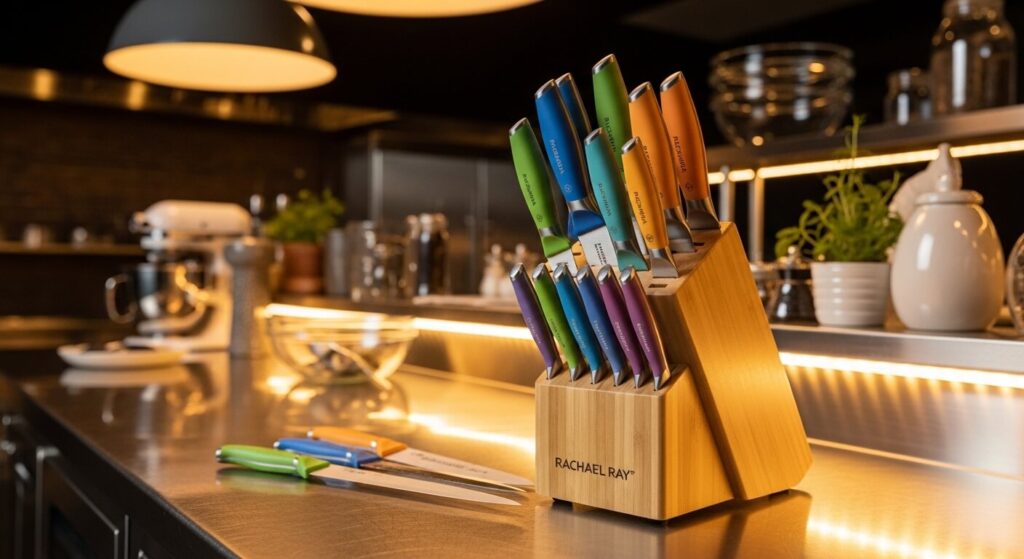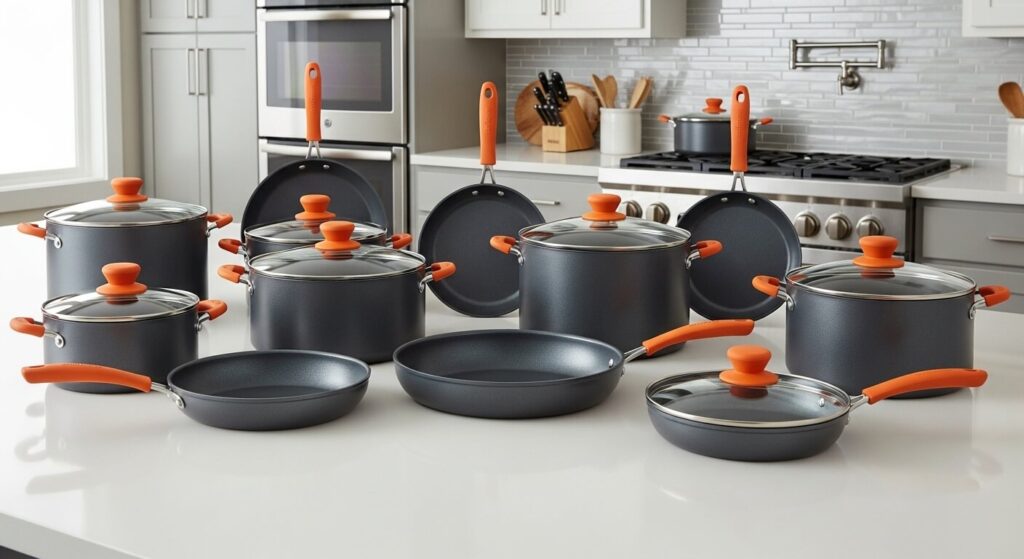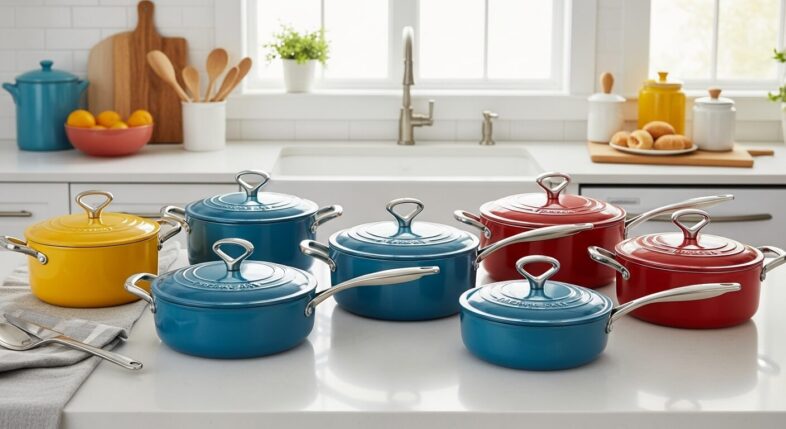
The best Rachael Ray cooking pots all do one thing really well: they make everyday cooking less of a hassle without draining your wallet. That’s the whole pitch, and honestly, it holds up. If you want the short version before the deep dive, here it is:
- Best overall pot: the Cucina stockpot or saucepan, pulled from her most consistently well-reviewed line
- Best pasta pot: the 8-Quart Hard-Anodized Oval Pasta Pot
- Best stainless steel pot: the Professional Induction Stainless stockpot
- Best cast iron pot: the NITRO Cast Iron pot
- Best budget pot: the Cook + Create stockpot
- Best stew and soup pot: the 4-Piece Porcelain Stew and Soup Set
Quick table before we get into it:
| Pot / Set | Material | Price Range | Best For | Standout Feature |
|---|---|---|---|---|
| Oval Pasta Pot | Hard-anodized aluminum | $40–$70 | Pasta lovers | Oval shape, won’t snap your spaghetti |
| Porcelain Stew Set | Porcelain-enamel | $50–$90 | Soups and stews | Comes with ladle and spoonula |
| Cucina Stockpot | Hard-anodized aluminum | $30–$60 (set pricing varies) | Everyday cooking | Reliable, comfortable handles |
| Professional Stainless Stockpot | Stainless steel | $60–$120 | Induction cooktops | Actually induction-ready |
| NITRO Cast Iron | Cast iron | $50–$90 | Searing, high heat | Cast iron results, way less upkeep |
| Cook + Create Stockpot | Aluminum, triple-layer nonstick | $25–$50 | Budget buyers, first kitchens | Lightweight, cheap, gets the job done |
So what ties all of this together? Even heating, comfortable handles you can actually grip, and prices that don’t make you wince. That’s basically Rachael Ray’s whole cookware philosophy in one sentence. Now let’s get into why that approach works, and then we’ll go pot by pot.
What Makes Rachael Ray Cooking Pots Some of the Best on the Market?
Rachael Ray pots earn their reputation through smart, practical design choices that actually solve problems home cooks deal with every day. Not flashy gimmicks. Real fixes. An oval pot that keeps your spaghetti from snapping in half. A stackable lid that doesn’t eat your whole cabinet. Bright handles that don’t scorch your hand when you’re stirring risotto for the fourteenth minute straight.
Innovative Design and Practical Features in Rachael Ray Pots
Here’s the thing about her cookware — it doesn’t look like it was designed by committee. It looks like it was designed by someone who actually cooks (which, to be fair, she does, constantly). A few signature touches show up again and again across her pot lineup:
- The oval pasta pot shape, which is honestly kind of genius once you think about it
- Universal, stackable lids that cut down on cabinet chaos
- Silicone-coated handles in colors that don’t scream “boring kitchen appliance”
- Tempered or shatter-resistant glass lids so you can watch your sauce without lifting anything
And look, some of this is just smart problem-solving. A pasta pot shaped like an oval instead of a circle fits long noodles without forcing you to break them in half before they hit the water. Nobody else was really doing that for years. She did.
Materials Used in Rachael Ray Cooking Pots
Four materials show up across her pot lineup, and each one brings something different to the table:
- Hard-anodized aluminum — lightweight, heats fast, heats evenly. The workhorse material across most of her sets.
- Stainless steel — heavier, more durable, and (this matters) the only material in her lineup that plays nice with induction cooktops.
- Porcelain-enamel — colorful, attractive, great for soups and stews, but a little more fragile if you’re rough with your cookware.
- Cast iron — the heavyweight champ for searing, now available in her NITRO line without the seasoning headache traditional cast iron demands.
Material matters more than people think. It’s not just about looks (though, sure, the colors help). It determines how fast your pot heats up, how evenly it cooks, how much it weighs when it’s full of soup, and whether it’ll even work on your stove in the first place.
Buying Rachael Ray Pots by the Set vs. by the Piece
You’ve got two paths here, and neither one is wrong.
Buying a full set gets you a coordinated look, a complete kitchen setup in one purchase, and usually a better price per piece than buying everything individually. That’s the move if you’re starting from scratch or replacing an entire mismatched collection.
Buying individual pots makes more sense if you’re filling one specific gap — maybe your stockpot died, or you just want to try the brand before committing real money to a full set. Smart way to test the waters, honestly.
Accessories and Tools That Pair with Rachael Ray Pots
A lot of her sets toss in extra tools you’ll actually use: the spoonula (equal parts spoon and spatula, weirdly useful), tongs, turners, sometimes a ladle. These aren’t filler. They’re usually color-matched to the pots and genuinely functional, not just bundled junk to pad out the box.
Best Rachael Ray Cooking Pots, Reviewed
The best Rachael Ray cooking pots span six standout picks, each one built for a slightly different kitchen need and budget. Let’s go through them.
1. Rachael Ray 8-Quart Hard-Anodized Covered Oval Pasta Pot — Best Pasta Pot
If you love pasta (and honestly, who doesn’t?), this is the one to know about. The oval shape is the whole point here — it’s built specifically to fit long noodles like spaghetti or linguine without snapping them in half before they even hit the boiling water. Simple idea. Weirdly satisfying once you actually use it.
It holds 8 quarts, and because of the oval footprint, it takes up less stovetop real estate than you’d expect from something that size.
Key features:
- Durable hard-anodized aluminum construction for quick, even heating
- Tempered glass lid so you can check on your pasta without lifting it
- Non-stick interior, great for low-fat cooking and easy cleanup
- Bright orange handles, coated in non-slip, heat-resistant silicone
- Stovetop-to-oven safe up to 400°F
- Limited lifetime warranty
Price: Sits in the budget-to-mid-range bracket for individual pots.
Pros:
- Solves an actual problem (broken noodles) that other pasta pots just ignore
- Easy to clean by hand
- Generous 8-quart capacity without hogging your whole stovetop
Cons:
- It’s shaped for one specific job — if you’re not cooking long pasta often, the oval shape doesn’t do much for you
- Nonstick coating means you’ll want to skip metal utensils
Who it’s for: Pasta-obsessed cooks, anyone with a smaller stovetop who still wants serious capacity, and basically anyone tired of breaking spaghetti in half like a barbarian.
2. Rachael Ray 4-Piece Porcelain Stew and Soup Set — Best Stew and Soup Pot
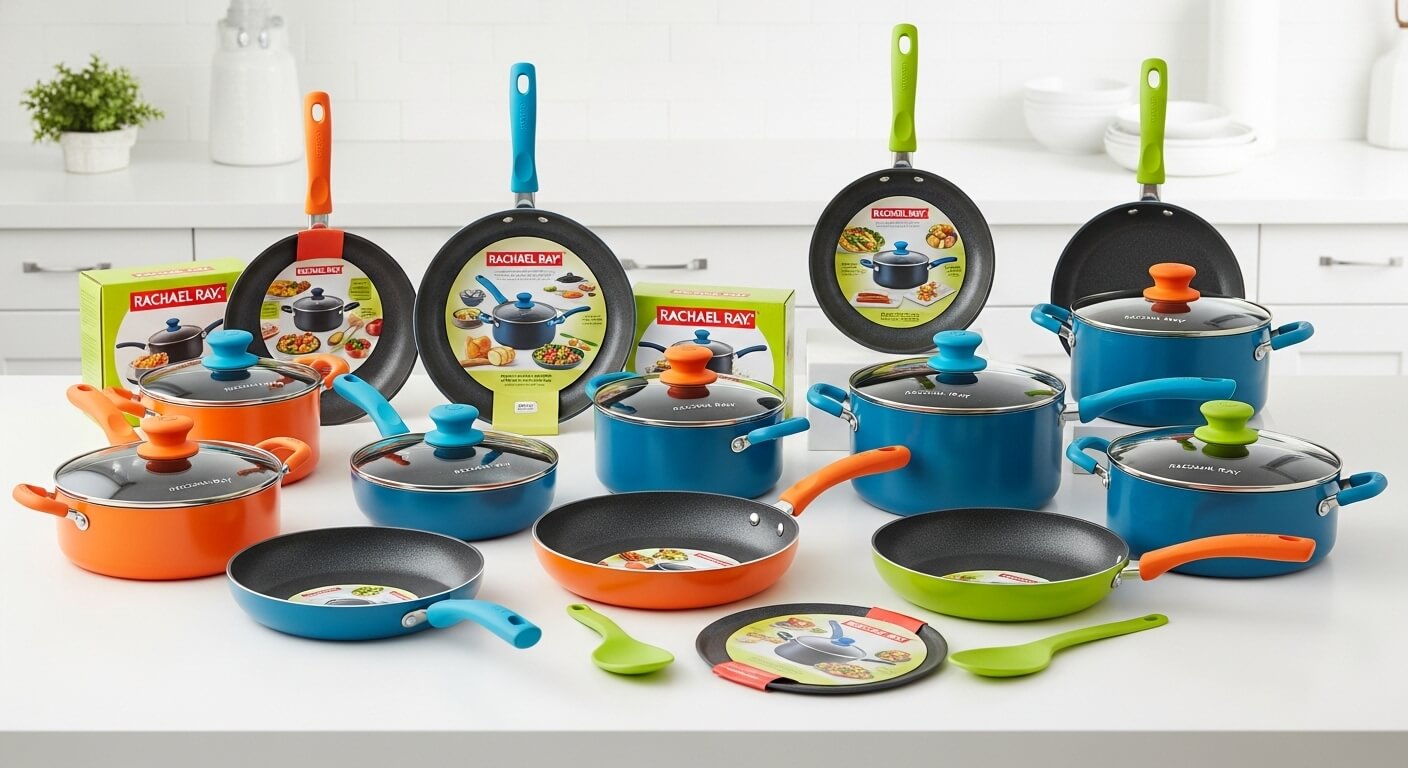
This one’s a 6-quart covered stockpot that comes with a ladle and a spoonula tossed in. The porcelain exterior is colorful (orange, typically, like most of her early lineup), and the interior nonstick coating holds up well over repeated use.
Key features:
- Long-lasting nonstick interior coating
- Even heat distribution — no scorched hot spots ruining your soup
- Silicone-covered orange handles
- Dishwasher safe
- Oven safe to 400°F
Price: Mid-range, but the bundled ladle and spoonula add real value here.
Pros:
- You get matching tools right out of the box — no separate ladle-hunting required
- Great for one-pot meals: soups, stews, chili, the usual suspects
- Even heating means less stirring paranoia
Cons:
- Porcelain exterior can chip if you’re not gentle with it
- Not really built for high-heat searing — stick to simmering and slow cooking
Who it’s for: Soup and stew people. Chili season regulars. Anyone who wants a complete kit instead of piecing together pot, ladle, and spoon separately.
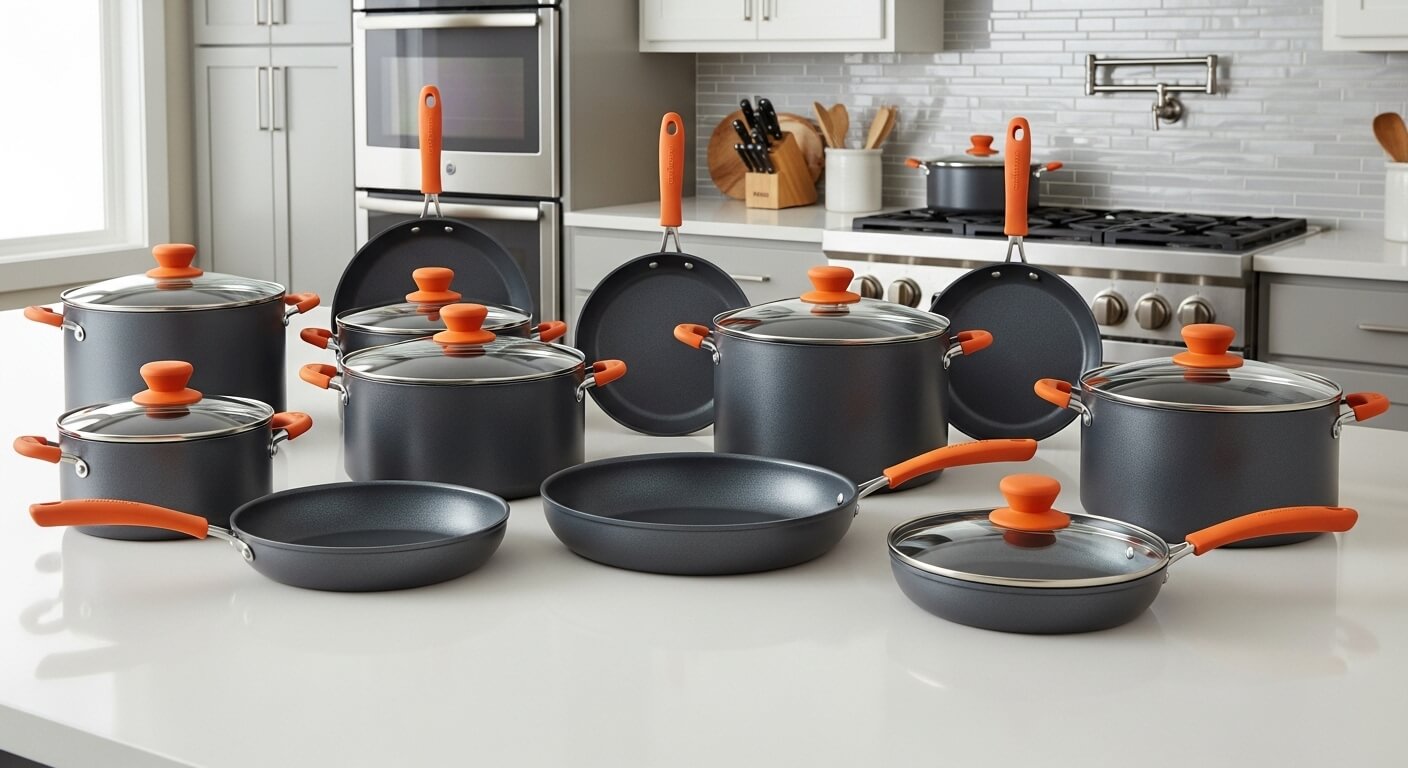
3. Rachael Ray Cucina Stockpot — Best Everyday Cooking Pot
Pulled from Rachael Ray’s Cucina line, which — full disclosure — tends to get the best long-term reviews of anything in her catalog. People genuinely keep these for years. One reviewer mentioned a previous Cucina set lasting almost a decade, which, for cookware in this price range, is pretty impressive.
Key features:
- Extra-durable hard-anodized aluminum for fast, even heat
- Enhanced nonstick coating for easy food release
- Comfortable silicone-grip handles in several color options
- Shatter-resistant glass lids
- Oven-safe to 400°F, dishwasher safe
Price: Mid-range, and you’ll usually get better value buying it as part of a full set rather than piece by piece.
Pros:
- Reliable, year-after-year performance based on long-term user feedback
- Comfortable to hold, even during longer cooking sessions
- Attractive without trying too hard
Cons:
- Not induction-compatible — a real limitation if that’s your cooktop
- Handles can get warm if you’re boiling water for an extended stretch (use a mitt, just to be safe)
Who it’s for: Everyday home cooks who want dependable cookware without paying premium prices. This is the “I just want pots that work” pick.
4. Rachael Ray Professional Hard-Anodized and Induction Stainless Steel Stockpot — Best Stainless Steel Pot
Here’s the fix for the induction problem mentioned above. This stockpot comes from Rachael Ray’s professional-tier line, built specifically with induction cooktops in mind — a 6-quart pot with lid, paired with a steamer insert for added versatility.
Key features:
- Induction-compatible stainless steel construction
- Steamer insert included
- Built for durability and consistent heat performance
- Designed to pair visually and functionally with the line’s hard-anodized frying pans
Price: Upper-mid-range. You’re paying a bit more, but you’re paying for induction compatibility, which (let’s be honest) most of her other pots don’t offer.
Pros:
- Actually works on induction cooktops — solves a gap in the rest of the lineup
- Steamer insert adds flexibility for veggies, dumplings, you name it
- Sturdy, professional feel without feeling like overkill
Cons:
- Pricier than the standard nonstick options
- Stainless steel shows water spots and needs a bit more attention during cleaning
Who it’s for: Anyone with an induction range who still wants Rachael Ray’s design language and color options instead of switching brands entirely.
5. Rachael Ray NITRO Cast Iron Pot — Best Cast Iron Pot
Cast iron, but easier. That’s the pitch, and it mostly delivers. This pot sears like traditional cast iron but skips the whole pre-seasoning ritual that scares so many people away from cast iron in the first place.
Key features:
- Sears like classic cast iron
- Easier cleanup than traditional cast iron
- No pre-seasoning required
- Oven safe to 500°F
- Induction-ready
Price: Mid-to-upper range for a single piece, competitive against other premium cast iron brands.
Pros:
- Removes the biggest cast iron headaches — seasoning, sticking, the whole maintenance routine
- 500°F oven-safe rating is genuinely high for this price point
- Induction-ready, so it covers that gap too
Cons:
- Still heavy. It’s cast iron — that’s just physics
- Not ideal for long-simmering acidic dishes (tomato sauce left in cast iron too long can pick up a metallic taste)
Who it’s for: People who want cast iron searing results without committing to the seasoning ritual that comes with traditional cast iron.
6. Rachael Ray Cook + Create Stockpot — Best Budget Pot
The entry-level option, and it’s exactly what it sounds like: built for beginners, small kitchens, and anyone who doesn’t want to spend a ton testing out a new cookware brand.
Key features:
- Thick-gauge aluminum for sturdy, reliable heating
- Triple-layer nonstick coating for better food release and scratch resistance
- Space-saving universal lid design
- Comfortable silicone-grip handles
- Oven safe to 400°F
Price: The cheapest entry point in the current Rachael Ray pot lineup, by a fair margin.
Pros:
- Lightweight and genuinely easy to store
- Strong value if you’re just starting out
- Universal lids mean less cabinet clutter
Cons:
- Independent testing has flagged some durability concerns with heavy, long-term use
- Not built for high-heat or commercial-style cooking — this is a “gentle weeknight dinner” pot, not a “searing steaks every night” pot
Who it’s for: First apartments, college kitchens, budget-conscious buyers, or anyone testing the brand before committing to a pricier set.
Cook + Create vs. Cucina: Which Budget Pot Should You Pick?
Honestly? If you can stretch your budget a little, go Cucina. It’s got the better track record, the sturdier feel, and reviewers who’ve owned theirs for years still say good things. Cook + Create is cheaper, and it’ll get the job done for light use — but it’s not built for the long haul the way Cucina seems to be. Think of Cook + Create as the “test the waters” option and Cucina as the “I’m actually committing to this brand” option.
Best Rachael Ray Cooking Pots by Material
The best Rachael Ray pot for you often comes down to material first, before you even think about price or color.
Best Rachael Ray Hard-Anodized Aluminum Pots
Go with the Oval Pasta Pot or the Cucina stockpot here. Both heat fast, both stay relatively light, and both hold up well for everyday cooking. This is the material doing most of the heavy lifting across her whole catalog.
Best Rachael Ray Stainless Steel Pots
The Professional Induction Stainless stockpot wins this category by default — it’s really the only stainless option built specifically for induction in her current lineup. Durable, heavier, and worth it if your cooktop demands it.
Best Rachael Ray Cast Iron Pots
NITRO Cast Iron, no contest. It’s the only cast iron option that skips the seasoning step, and the searing performance backs up the hype.
Best Rachael Ray Porcelain-Enamel Pots
The Porcelain Stew and Soup Set takes this one. Colorful, functional, and it comes with tools you’ll actually use.
Best Rachael Ray Cooking Pots by Use Case
Sometimes the material doesn’t matter as much as what you’re actually cooking. Here’s the breakdown by task.
Best Rachael Ray Pot for Cooking Pasta
The Oval Pasta Pot, obviously. Like I mentioned earlier, that shape isn’t just a gimmick — it genuinely keeps your noodles intact.
Best Rachael Ray Pot for Soups, Stews, and Chili
The Porcelain Stew and Soup Set. The bundled ladle alone makes this an easy recommendation for soup season.
Best Rachael Ray Pot for Induction Cooktops
The Professional Induction Stainless stockpot. And here’s a heads-up worth repeating: most of her nonstick hard-anodized pots are NOT induction-compatible. If you’ve got an induction range, check before you buy. Don’t assume.
Best Rachael Ray Pot for Searing and High-Heat Cooking
NITRO Cast Iron. The 500°F oven-safe rating alone puts it ahead of nearly everything else in her lineup for high-heat work.
Best Rachael Ray Pot for Small Kitchens or First-Time Buyers
Cook + Create. Cheap, light, easy to store. Not fancy, but it does what it needs to do.
Best Rachael Ray Cooking Pots Comparison Table
Here’s everything side by side, in case you just want the numbers without re-reading six product breakdowns.
| Pot / Set | Material | Capacity | Approx. Price | Induction-Ready? | Max Oven Temp | Best Use Case |
|---|---|---|---|---|---|---|
| Oval Pasta Pot | Hard-anodized aluminum | 8 qt | $40–$70 | No | 400°F | Pasta |
| Porcelain Stew Set | Porcelain-enamel | 6 qt | $50–$90 | No | 400°F | Soups, stews |
| Cucina Stockpot | Hard-anodized aluminum | Varies by set | $30–$60 | No | 400°F | Everyday cooking |
| Professional Stainless Stockpot | Stainless steel | 6 qt | $60–$120 | Yes | Varies | Induction cooktops |
| NITRO Cast Iron | Cast iron | Varies | $50–$90 | Yes | 500°F | Searing, high heat |
| Cook + Create Stockpot | Aluminum, nonstick | Varies by set | $25–$50 | No | 400°F | Budget, first kitchens |
How to Choose the Best Rachael Ray Cooking Pot for Your Kitchen
The right Rachael Ray pot for your kitchen comes down to four things: how many people you’re cooking for, what kind of stove you have, your budget, and how much maintenance you’re actually willing to do.
Matching Pot Capacity to Household Size
Cooking for one or two? Stick with smaller saucepans, somewhere in the 1.5 to 3-quart range. Got a family to feed? You’ll want something in the 6 to 8-quart range, which covers most of the stockpots on this list. Batch cooking or hosting? Go bigger, or just buy two pots instead of stretching one to its limit.
Checking Stovetop Compatibility Before You Buy
Worth repeating, because it trips people up constantly: most of Rachael Ray’s nonstick, hard-anodized pots will NOT work on induction cooktops. If induction is your setup, the Professional Stainless line or the NITRO Cast Iron pot are your real options. Everything else on this list is a no-go for induction. Period.
Care and Maintenance Tips for Rachael Ray Pots
A few things that’ll extend the life of whichever pot you pick:
- Hand-wash nonstick interiors when you can, even if the label says dishwasher safe — coatings last longer with gentler treatment
- Skip metal utensils on anything nonstick (wood or silicone only)
- For the NITRO Cast Iron pot, you can skip the seasoning ritual, but basic care still applies — dry it fully after washing
- Handle porcelain-enamel pots carefully; they chip if you’re rough with them, and chips can’t really be undone
Budget Tiers Across the Rachael Ray Pot Lineup
Three rough tiers to keep in mind: Cook + Create sits at the entry level, Cucina and Create Delicious land in the middle, and the Professional Stainless line along with NITRO Cast Iron sit at the premium end. Pick your tier first. Then pick the pot within it. Makes the whole decision a lot less overwhelming.