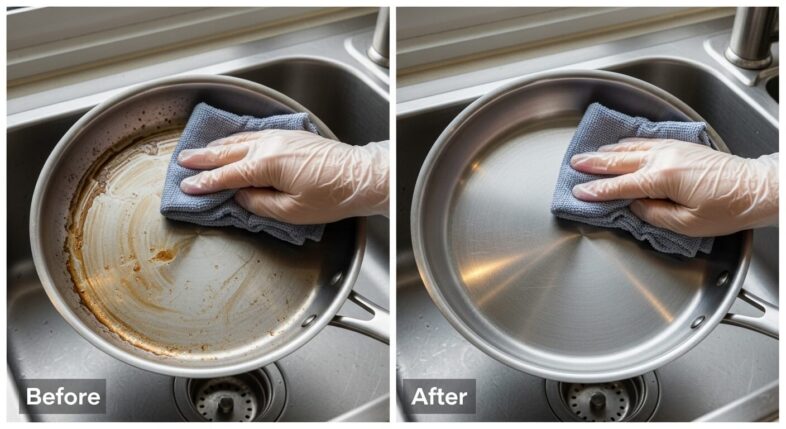
The fastest way to clean stainless steel cookware is hot soapy water, a soft sponge, and a hand-dry right after — every single time, no exceptions. That handles 90% of what you’ll ever deal with. The other 10%? Mineral spots, burnt-on disasters, rainbow discoloration — that’s what the rest of this guide is for.
Here’s something worth knowing up front, though: stainless steel cookware gets marketed as basically stain-proof. That’s… not quite true. It resists rust and corrosion like a champ. But staining? Discoloration? Chalky residue? All of that still happens, even on the nicest All-Clad in your cabinet. So let’s get into the why, and more importantly, the fix.
Why Stainless Steel Cookware Still Needs Careful Cleaning
Stainless earns its name from chromium, which forms an invisible layer that fights off rust. That part’s real, and it’s genuinely impressive. But “stainless” was never supposed to mean “stain-proof” — somewhere along the way, marketing blurred those two words together and people started expecting more than the metal actually promises.
Is Stainless Steel Cookware Really Stain-Resistant
Mostly, yes — for rust and corrosion. Not so much for mineral deposits, heat discoloration, or burnt food. Those are different problems entirely, and they happen to perfectly good stainless cookware on a totally normal basis. Don’t panic the first time you see a white spot. It’s not a defect. It’s just what hard water (or high heat, or that one time you forgot about the pasta) does to metal.
What Happens If You Clean It the Wrong Way
Here’s the thing — scratches don’t heal. Use steel wool once, twice, a handful of times, and those microscopic scratches pile up into a permanently dulled finish. No amount of polishing brings that back. Doesn’t matter if your cookware cost $40 or $400 — the damage works the same way on cheap stainless and expensive stainless alike. So get the basics right from day one.
How to Clean Stainless Steel Cookware Every Day
This is the routine. Memorize it, do it every time, and you’ll barely ever need the deep-cleaning tricks further down.
Hand-Washing Stainless Steel Cookware Step by Step
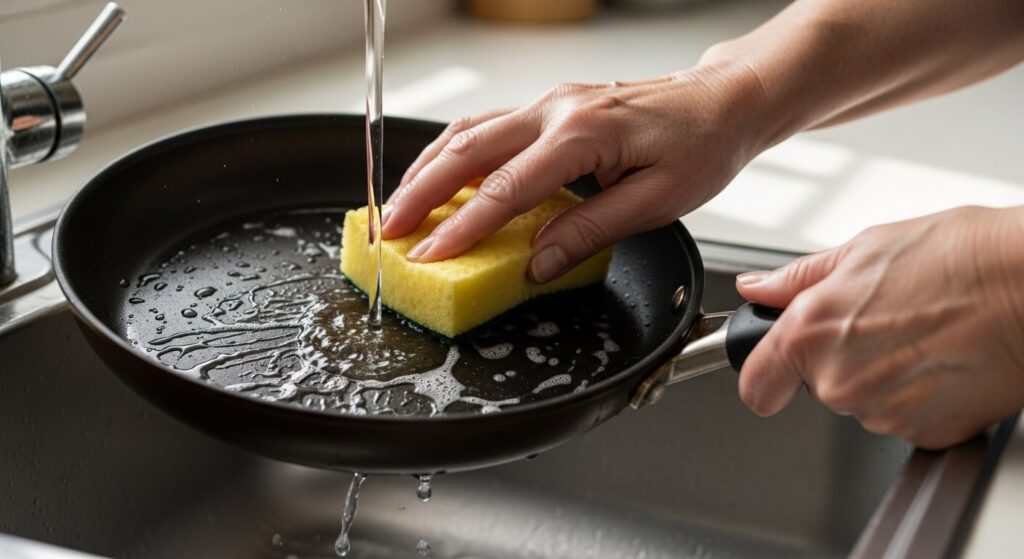
- Wash with hot, soapy water using a soft cloth or sponge.
- Rinse thoroughly — don’t leave soap film behind.
- Dry immediately, completely, with a soft cloth.
Three steps. That’s genuinely it. Skip step three, though, and you’ll start seeing water spots that look suspiciously like the mineral stains we’re about to talk about (because, well, they basically are).
Is Stainless Steel Cookware Dishwasher Safe
Technically, usually. Most stainless pots and pans survive a dishwasher cycle just fine. But — and a lot of cooking experts will tell you this — hand-washing is still the better call if you want to preserve that mirror finish long-term. If you’re going to run it through the dishwasher anyway, at least pull it out right after the cycle ends and dry it by hand. Letting it sit in a damp dishwasher is basically asking for spotting.
Why You Should Never Use Steel Wool or Abrasive Pads
Steel wool feels satisfying in the moment. It rips through stuck-on gunk like nothing. And that’s exactly the problem — it’s ripping through the surface of your cookware at the same time. Scratched permanently, every time, no exceptions. Need extra scrubbing power without the damage? Nylon scrubbers and nylon-net scouring pads do the job without leaving a mark.
How Water Hardness Affects Your Stainless Steel Cookware
This is the part most cleaning guides skip entirely, and it genuinely matters more than people realize.
Why Two Identical Pans Can Stain Completely Differently
Here’s something wild: buy the exact same stainless pan as your friend across the country, and your cleaning experience could be totally different — purely based on your zip codes. That’s not random. That’s water hardness, and it varies enormously depending on where you live.
Which US Regions Deal With the Hardest Water
According to USGS data, water hardness across the country breaks down roughly like this: soft water under 60 mg/L, moderately hard 60-120, hard 120-180, and very hard above 180. Most of the country actually falls in that hard-to-very-hard range. About 85% of American homes deal with hard water to some degree.
Some specifics, because vague regional gestures don’t help much: Las Vegas and San Antonio regularly test above 300 parts per million — that’s extreme. Indianapolis runs 12-20 grains per gallon thanks to limestone-heavy groundwater. Phoenix sits around 12-17 grains per gallon, fed by mineral-rich rivers running through desert terrain. Minneapolis isn’t far behind at 15+ grains per gallon.
On the flip side? Arkansas averages around 38 PPM — genuinely soft, one of the softest in the country. The Pacific Northwest and New England generally stay under 100 PPM thanks to granite and volcanic bedrock that just doesn’t dissolve into the water supply the way limestone does.
| Region | Typical Hardness | Why |
|---|---|---|
| Las Vegas, San Antonio | 300+ PPM | Limestone aquifers, arid evaporation concentrates minerals |
| Indianapolis, Phoenix, Minneapolis | 12-20 GPG (~200-340 PPM) | Limestone bedrock, mineral-heavy groundwater sources |
| Most of the Midwest/Southwest | 120-180+ PPM | Limestone, dolomite, chalk geology |
| Pacific Northwest, New England | Under 100 PPM | Granite and volcanic rock, doesn’t dissolve easily |
| Arkansas | ~38 PPM | Less limestone exposure in groundwater path |
So if you live in Phoenix and your neighbor’s cousin in Portland swears stainless never stains for them? They’re not lying. They’re just dealing with completely different water.
How to Check Your Own Water Hardness
Two easy ways. First, check your local water utility’s Consumer Confidence Report — usually published annually, usually free, usually right on the utility’s website. Second, grab a cheap test strip kit online, dunk it in your tap water, and read the result in a few seconds. Either way, takes five minutes and tells you exactly what you’re working with.
Should You Get a Water Softener Just for Your Cookware
Honestly? Probably not, just for this reason alone. A whole-home softener runs anywhere from $1,000 to $3,000, and that’s a lot to spend purely to keep your sauté pan looking shiny. But if you’re already considering one for your appliances, skin, or plumbing — your cookware staining less is a genuinely nice side benefit you’ll notice almost immediately.
Using Filtered Water as a Smaller-Scale Fix
If a full softener feels like overkill, filtered water for rinsing and boiling cuts down on mineral buildup without the big investment. Doesn’t eliminate the issue entirely if you’re cooking with unfiltered tap water most of the time, but it helps, especially in genuinely hard water areas.
How to Remove Chalky White Spots and Mineral Stains
So you’ve got the science. Now here’s the actual fix.
The Vinegar Method for Removing Mineral Stains
- Fill the pot or pan with a mix of 1 part vinegar to 3 parts water.
- Bring it to a boil, then let it cool completely.
- Wash with hot water and dry thoroughly.
Works like a charm for most mineral spotting. Cheap, fast, and you probably already have vinegar in the kitchen.
When Vinegar Isn’t Enough
If you’re in one of those extreme-hardness zip codes — Las Vegas, San Antonio, that range — vinegar sometimes just doesn’t cut it anymore, especially on cookware that’s gone a while between cleanings. That’s when a dedicated descaling product, or something like CLR, steps in. Stronger stuff for stronger water. Use it sparingly and rinse thoroughly afterward.
Do All Stainless Steel Cookware Brands Stain the Same Way
Short answer: no. Not even close, actually.
Why Stainless Grade Changes How Visibly Cookware Stains
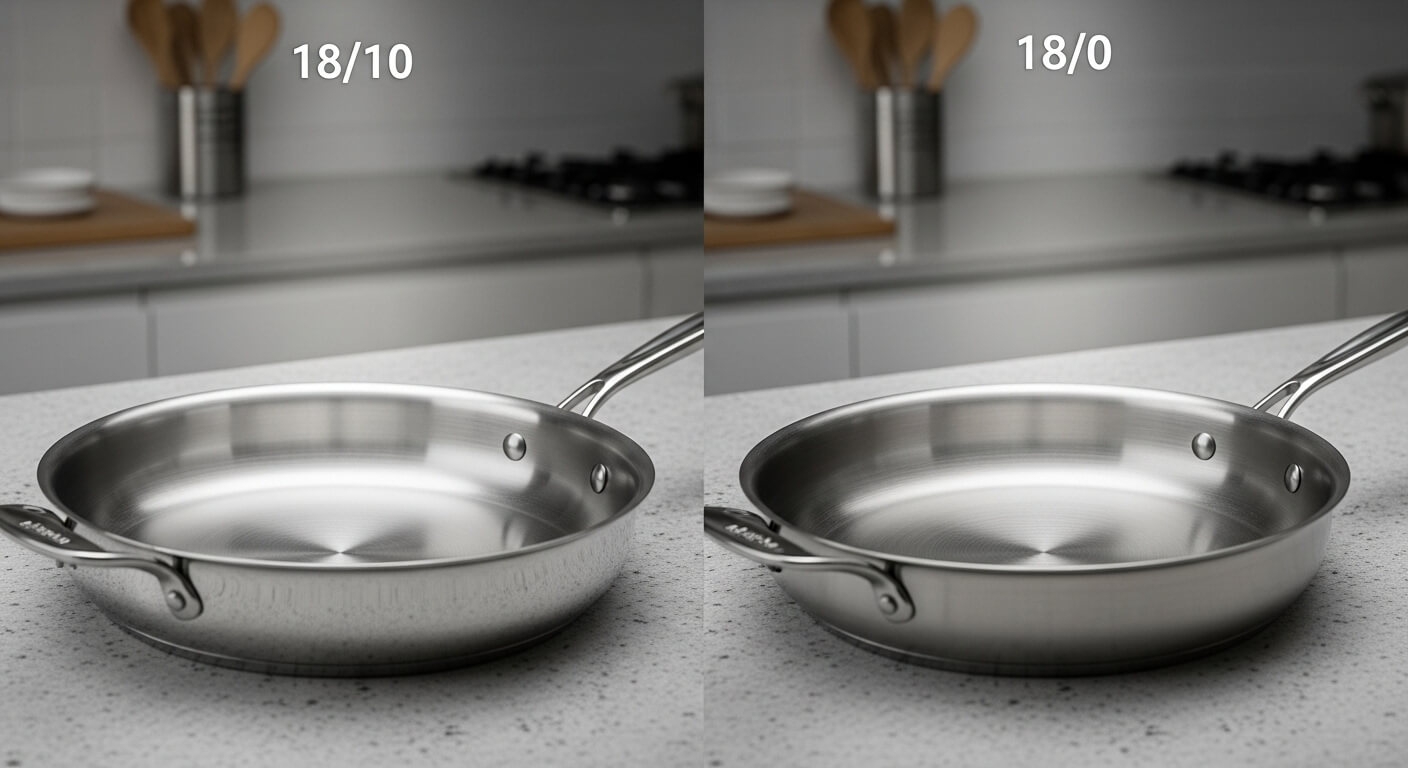
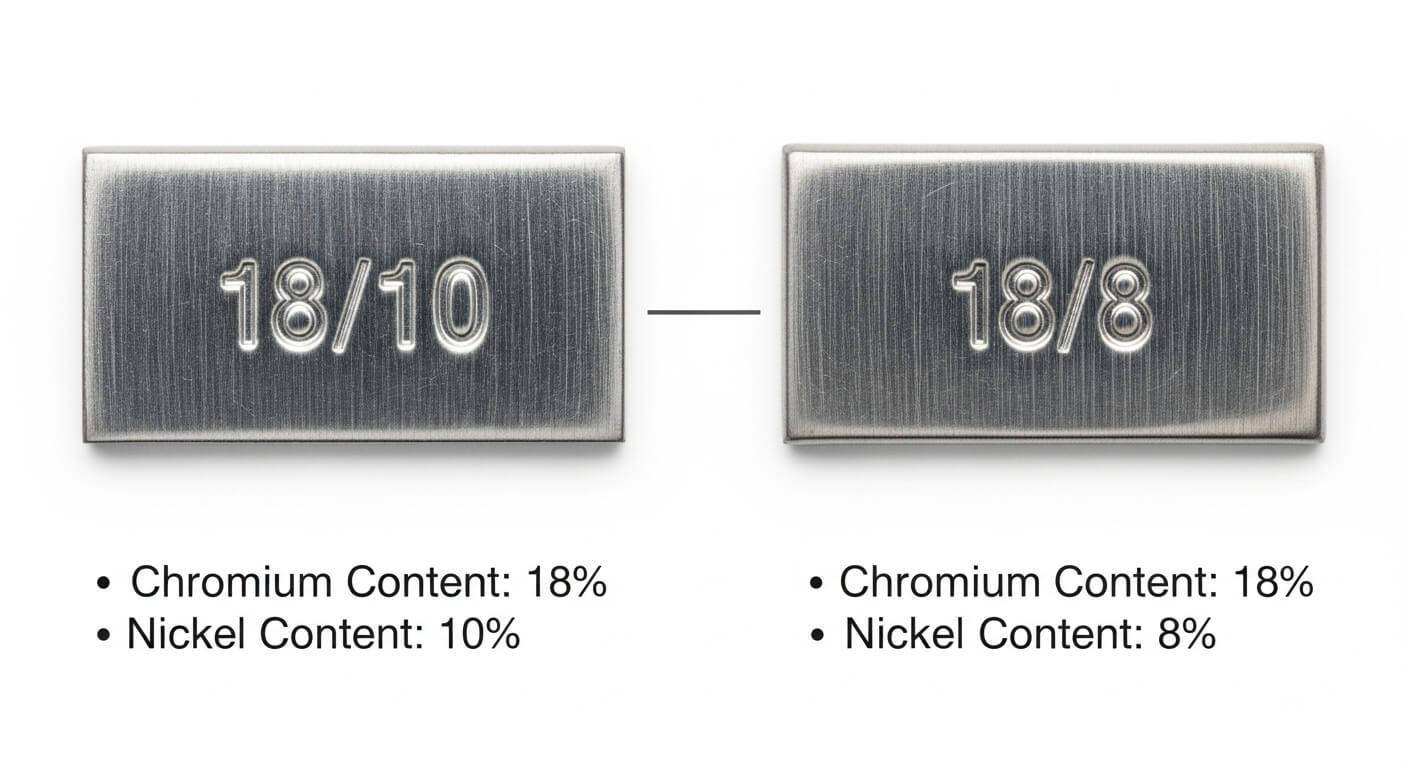
Remember 18/10 versus 18/0 stainless? That extra nickel in 18/10 (common on All-Clad, Hestan, and the higher-end Cuisinart and Calphalon lines) genuinely helps resist spotting and discoloration a bit better than lower-nickel grades. Cheaper stamped cookware, often 18/0 or sometimes not even labeled with a clear grade at all, tends to show mineral buildup and pitting faster under identical water conditions. Same tap water, different outcome, just based on what the pan’s actually made of.
Mirror-Polished vs. Brushed Finishes
Here’s a detail nobody mentions: mirror-polished surfaces — think All-Clad D3, D5, or Calphalon’s Premier Polished line — show water spots and fingerprints way more obviously than brushed or satin finishes do. Cuisinart’s MultiClad Pro, with its brushed exterior, just visually hides minor mineral residue better. Not because it’s cleaner. Because the texture camouflages it.
What This Actually Means for Your Routine
If you’ve got mirror-polished, high-nickel cookware, you’re going to need to dry it more obsessively to keep that showroom look. Doesn’t mean it’s less durable — it just shows imperfections more readily. Brushed-finish or lower-grade stuff can get away with a slightly more relaxed drying habit on the surface, but underneath, the same mineral buildup is happening regardless. Looks aren’t the same as what’s actually accumulating.
How to Remove Burnt-On and Stuck-On Food
Everybody’s done this. Walked away for two minutes, came back to a disaster.
The Baking Soda Soak Method
- Add hot water and a few tablespoons of baking soda directly to the pan.
- Let it soak for a few hours.
- Finish with a soft cloth and mild detergent.
The Baking Soda Paste Method
Mix baking soda with a small splash of water until it forms a paste. Rub directly onto the burnt spot. Good for targeted, stubborn areas rather than soaking the whole pan.
The Boil-and-Soak Method
- Fill the pan with warm, soapy water — enough to fully cover the stuck-on mess.
- Soak for about an hour.
- Put it on the burner, boil for up to 15 minutes.
- Let it cool, then scrub with a nylon scrubber.
- Wash with hot soapy water, rinse, dry.
Pick whichever method matches your patience level that day. All three genuinely work.
How to Remove Rainbow Stains and Heat Discoloration
Sear something on high heat and notice a weird blue-rainbow sheen afterward? That’s heat discoloration, not damage. Usually from overheating, sometimes from oil breaking down at high temps. Looks alarming. Isn’t, really.
Buff it out with vinegar or a dedicated stainless cleaner, and it’ll come right back to a shine. And to be clear — this is cosmetic. It doesn’t affect how the pan cooks or whether it’s safe to keep using. Annoying to look at, not a problem to actually worry about.
What Never to Use on Stainless Steel Cookware
Quick list, because this part matters more than almost anything else in this whole guide:
- Steel wool or metal scouring pads — permanent scratches, every time.
- Abrasive scouring powders — same problem, different format.
- Chlorine bleach — corrosive, can pit the surface with enough exposure.
- Ammonia-based cleaners — same deal, avoid entirely.
None of these are worth the five minutes they might save you. The damage outlasts the convenience by years.
How to Prevent Stains Before They Even Start
The best cleaning trick is needing to clean less in the first place.
Cool the Pan Before You Wash It
Cold water on a screaming-hot pan causes thermal shock, and thermal shock warps the base. Let it cool first. Always.
Clean It Soon, Not Eventually
Letting food dry onto the surface for a day (or longer) turns an easy wipe into a real scrubbing session. Clean it once it’s safely cool, and you’ll thank yourself later.
If you’ve got an All-Clad set specifically and want a deeper dive into care for that brand’s bonded construction, check out our guide on how to clean the All-Clad pots and pans cookware set. And if you’re still shopping and want to understand what separates good stainless cookware from the rest before you buy, our stainless steel cookware buying guide walks through grades, core materials, and construction quality in detail.