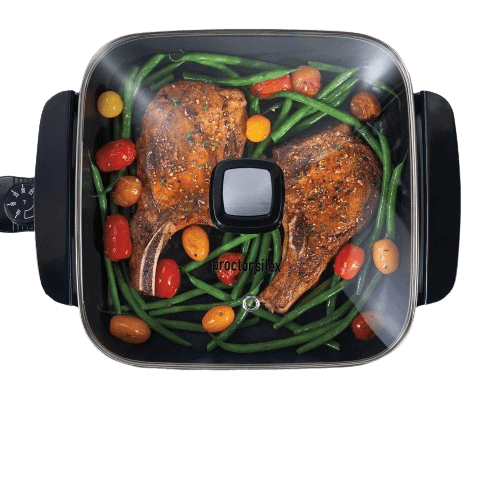
The Proctor Silex 38526 electric skillet is worth buying if you want a reliable, no-frills countertop skillet that handles everything from bacon at breakfast to braised pork chops at dinner — and you don't want to spend a lot to get there. Solid performance, easy cleanup, and a 3-year warranty that outpunches its price point. The main catch: there's genuine model confusion around this number, and depending on where you buy, you might get a slightly different version than you expected.
Proctor Silex 38526 vs 38526PS vs 38526MN
Proctor is no longer selling the Proctor Silex 38526. It came with a 12″ x 12″ (144 square inches) cooking surface and it was 2.5 inches deep. Instead, Proctor is selling the Proctor Silex 38526 in its place. It comes with a slightly smaller 11″ x 10.5″ (116 square inches) cooking surface but it is still 2.5 inches deep.
| Product Name | Cooking Surface Dimensions | Depth | Teflon Coating | Power | Current Status |
|---|---|---|---|---|---|
|
12″ x 12″(144 square inches) | 2.5 inches | Yes | 1200 Watts | Discontinued by Proctor Silex |
|
11″ x 10.5″(116 square inches) | 2.5 inches | Yes | 1500 Watts | Current production model |
| Proctor Silex 38526MN | 116 sq in | 2.5 inches | Yes | 1500W | Regional/retailer variant |
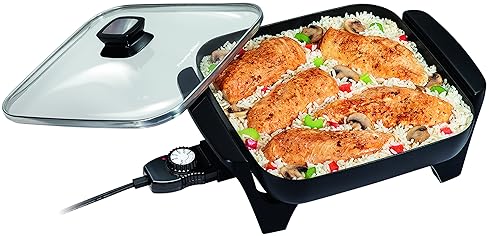

Unfortunately, the Proctor Silex 38526 does not use a ceramic coating like the best ceramic electric skillets do or a removable pan like the best electric skillets with a removable pan do either.
Bottom line up front: the 38526PS is what you'll actually receive from most retailers today. Walmart still lists "38526" with the original 144 sq in specs, which adds to the confusion. Check the spec sheet before you buy. The PS version trades a slightly smaller cooking surface for 300 more watts of power — not a bad tradeoff, honestly.
Now let's get into whether the thing actually works.
About the Proctor Silex Brand
The Proctor Silex 38526 comes from a company that's been making small kitchen appliances since 1960, and that track record matters more than people give it credit for. This isn't a fly-by-night brand slapping its name on imported hardware — Proctor Silex runs every appliance through performance testing in their engineering lab before it ships. Motors, switches, heating elements — all of it gets stress-tested before the product ever reaches a kitchen.
Their philosophy is pretty simple: no frills, no fuss, just appliances that do what they say they'll do. The 38526 embodies that. It's not going to win a design award. It's black, boxy, and purely functional. And for most cooks, that's exactly what they want.
What Changed Between the 38526 and the 38526PS
This is worth understanding before you click "add to cart" anywhere.
The original 38526 had a 12"x12" cooking surface — 144 square inches — and pulled 1200 watts. Proctor Silex discontinued it. The replacement, the 38526PS, has a slightly smaller 11"x10.5" cooking surface (116 square inches) but bumped the wattage up to 1500W.
What does that mean practically? You lose about 28 square inches of cooking real estate — roughly equivalent to one small chicken breast worth of space. But you gain faster, more powerful heating. For most households, the PS version is the better buy. The extra watts actually matter for high-heat cooking like searing and frying.
There's also a 38526MN floating around on Proctor Silex's website — same specs as the PS version, likely a regional or retailer-specific variant. If you see it, treat it as functionally identical to the PS.
Proctor Silex 38526 Electric Skillet Features and Performance Review
The Proctor Silex 38526 performs well across the features that matter most for an electric skillet at this price.
Adjustable Heat: 200°F to 400°F
The temperature range on this skillet is legitimately useful from end to end. Not just for cooking — for the whole arc of a meal.
Here's roughly how to think about the range:
- 200°F (Warm): buffet serving, keeping food at serving temp without overcooking
- 275–300°F: eggs, pancakes, omelets — anything delicate
- 325–350°F: grilled cheese, quesadillas, fish fillets
- 350–375°F: burgers, pork chops, chicken
- 400°F: bacon, high-heat searing, crispy-bottom hash browns
The indicator light system is simple and actually works. Set your temperature, add oil, and wait for the light to go out. When it does, you're at the target temp and ready to cook. No guessing. No thermometer required. Beginner-friendly in the best way.
Cooking Surface and Capacity
The 38526PS gives you 116 square inches at 2.5 inches deep. That's enough for a legitimate family-sized one-pan meal — four chicken thighs, a few pork chops, a whole pound of bacon — without stacking or crowding.
The 2.5" depth is more useful than it sounds. It means you can actually add liquid for braising, simmer a sauce, or cook something like a frittata that needs walls to hold its shape. This isn't just a flat frying surface. It's closer to a shallow pan that happens to not need a stove.
Per the source testing and user reports: fried chicken, pork chops, and hamburgers take roughly 20 minutes. Bacon and sausages clock in around 10 minutes. Those numbers hold up in real use.
The Teflon Nonstick Coating — Honest Assessment
Here's where I need to be direct, because a lot of skillet reviews gloss over this.
The 38526 uses a Teflon (PTFE) nonstick coating. Not ceramic. And yes, that matters to some buyers. Ceramic coatings are generally considered safer from a chemical standpoint and more environmentally friendly to produce. The 38526 doesn't offer that.
On the other hand? Teflon nonstick — when properly maintained — is genuinely excellent at what it does. Food releases cleanly. Cleanup is easy. The coating holds up well over time if you use it right.
The "if you use it right" part is the whole thing, though. Use wooden or plastic utensils only. Never metal. And if you're someone who reaches for a metal spatula out of habit, that habit will destroy this coating faster than you'd expect. Consider yourself warned.
Glass Lid: More Useful Than It Sounds
Clear tempered glass lid that fits snugly and holds heat in during cooking. You can watch your food cook without lifting the lid — which means you're not losing steam and heat every time curiosity strikes. For covered dishes, braises, and anything that benefits from trapped moisture, this matters.
The lid goes in the dishwasher too. That's a small win, but it's worth noting.
Cool-Touch Handles
Built-in handles that stay cool while the skillet is at full cooking temp. Simple concept, genuinely useful execution.
The practical benefit is that you can move this thing from your kitchen counter to the dining room table without waiting for it to cool down. Which connects to the two-in-one design covered in a second. But the safety angle is also real — no oven mitts required for transport.
Dishwasher Safe — With One Step Required
Remove the cord first. That's the only requirement before the whole skillet goes in the dishwasher. After that, it's fully submersible — skillet and lid, together.
Alternatively: hand wash in warm soapy water. The nonstick surface means cleanup is genuinely quick either way. No soaking. No scrubbing. A few passes with a soft cloth and it's done.
What you should never do: abrasive sponges, steel wool, harsh chemical cleansers. All of those will damage the Teflon coating and shorten the lifespan of the skillet significantly.
Two-in-One Design: Skillet and Serving Dish
This is a legitimately useful feature that doesn't get enough credit in most reviews.
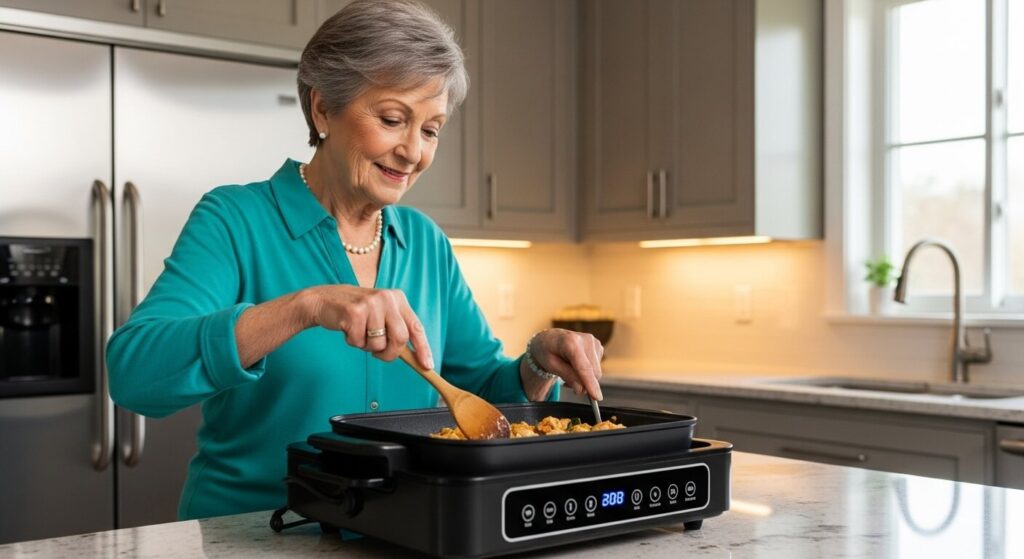
The skillet functions as a covered serving dish. Cook the food, move the skillet to the table, leave it on the warm setting, and everyone serves themselves. No transfer to a second dish. No extra bowl to wash. No food going cold between the kitchen and the table.
For buffets, family dinners, and any situation where food needs to stay warm for an extended period, this is where the 38526 punches above its price class.
It only comes in black — no color options if that matters to your kitchen aesthetic.
What Can the Proctor Silex 38526 Actually Cook?
More than you'd expect from something this cheap.
Breakfast
This is where most people start with an electric skillet, and the 38526 handles it well. Bacon and sausages at 400°F in about 10 minutes. Eggs and pancakes at 275–300°F. Omelets, hash browns, French toast — all fine.
The even heating is particularly good for pancakes, which can be temperamental on stovetops with hot spots.
Lunch and Dinner
Grilled cheese at 325°F is perfect in this skillet — even browning on both sides without burning. Hamburgers and pork chops at 350–375°F come out well, taking roughly 20 minutes. Fried chicken is probably its most impressive performance — 20 minutes, crispy exterior, cooked through.
Stir-fries work too. The 2.5" walls keep everything in the pan as you toss.
Braised and Simmered Dishes
Because of the 2.5" depth, you can add liquid and braise. Short ribs, chicken thighs in sauce, ratatouille — dishes that need to simmer in liquid for a while. This isn't the most obvious use case, but it genuinely works, and it means the skillet covers a wider cooking range than most people assume.
Buffet and Party Serving
Set it to 200°F. That's the warm setting. Food stays at serving temperature for hours without continuing to cook. Perfect for keeping mashed potatoes warm, holding a taco spread together, or keeping scrambled eggs at brunch temperature without drying them out.
Proctor Silex 38526: Pros and Cons
Honest breakdown. Not every con is a dealbreaker. Not every pro is unique to this skillet.
What it does well:
- Rapid, even heating — genuinely no hot spots in normal use
- Wide temperature range covering every cooking scenario from keep-warm to high-heat frying
- Dishwasher safe, easy cleanup regardless of what you cooked
- 3-year limited warranty — notably better than most competitors at this price
- Two-in-one design makes it practical for serving, not just cooking
- Cool-touch handles are a safety win
Where it falls short:
- Teflon, not ceramic — a meaningful limitation for buyers specifically seeking PTFE-free cookware
- No removable pan — less convenient for deep cleaning than electric skillets with detachable cooking surfaces
- Only available in black
- Slightly smaller cooking surface on the PS version (116 sq in vs. the original's 144 sq in)
- Not an induction appliance — it's countertop electric, which should be obvious but occasionally trips people up
38526 vs. 38526PS vs. 38526MN: Which One Are You Actually Buying?
This deserves its own section because it's the source of most buyer confusion around this product.
| Model | Surface | Depth | Wattage | Availability |
|---|---|---|---|---|
| 38526 (original) | 144 sq in (12"x12") | 2.5" | 1200W | Discontinued |
| 38526PS | 116 sq in (11"x10.5") | 2.5" | 1500W | Current — most retailers |
| 38526MN | 116 sq in | 2.5" | 1500W | PS variant, Proctor Silex site |
The original 38526 is discontinued. Proctor Silex no longer makes it. If you find one new somewhere, it's old stock — not necessarily a problem, but worth knowing.
The 38526PS is what you'll actually get from most retailers. Amazon, Target, and most online stores carry the PS. It's smaller by about 28 square inches but 300W more powerful.
Walmart currently lists "38526" with 144 sq in specs. This may be old stock of the original, or it may be a listing error. Check the actual product page specs before buying. Don't assume the model number alone tells you what you're getting.
The 38526MN is functionally identical to the PS and appears to be a variant code for specific retail channels. Same size, same wattage, same features.
Recommendation: unless you specifically need 144 square inches of cooking surface, the PS is the better buy. More wattage, current production, widely available.
How Does It Compare to Other Budget Electric Skillets?
The Ceramic Skillet Question
If you specifically want a ceramic nonstick coating — which avoids PTFE/Teflon entirely — the 38526 isn't your skillet. The best ceramic electric skillets use a different coating technology that some buyers strongly prefer from a health and environmental standpoint. The 38526 doesn't offer that. Simple as that.
The Removable Pan Question
Some electric skillets let you pop the cooking pan out of the base for easier cleaning — full submersion without worrying about the heating element. The 38526 doesn't do this. The best electric skillets with a removable pan are more convenient for thorough cleaning. The 38526 compensates with a fully dishwasher-safe design after cord removal, but it's not quite the same level of convenience.
vs. Hamilton Beach and Presto
Hamilton Beach's budget electric skillets tend to be in the same price range, often with slightly larger cooking surfaces but shorter warranties. Presto's options are also comparable in price — sometimes slightly less, with less consistent heat distribution in user reviews. The 38526's 3-year warranty specifically stands out against both.
Where to Buy and What to Expect to Pay
The suggested retail price is $43.95. In practice, you'll usually pay less.
- Amazon: regularly discounted, often below $35 — which also means you qualify for free shipping, since Amazon's threshold for free standard shipping is $35
- Walmart: carries both the original and PS versions — double-check specs before buying
- Proctor Silex directly: the 38526PS and 38526MN are listed on proctorsilex.com
- Most major retailers: 30-day return policies are standard; free shipping thresholds vary
At roughly $30–$44 depending on where you buy and when, this skillet represents genuinely good value for what you're getting — especially with that 3-year warranty attached.
Getting the Best Performance from the 38526
Preheat Before You Add Food
Set your temperature. Add a small amount of oil. Wait for the indicator light to go out. Then add your food. That's the whole sequence, and skipping the preheat step is the most common reason people end up with food sticking or cooking unevenly. The light going out is your signal — not a timer, not guesswork.
Temperature Guide by Food
| Food | Target Temp | Approx. Time |
|---|---|---|
| Eggs, pancakes | 275–300°F | 3–5 min |
| Grilled cheese | 325°F | 4–6 min |
| Burgers, pork chops | 350–375°F | ~20 min |
| Fried chicken | 375°F | ~20 min |
| Bacon, sausage | 400°F | ~10 min |
| Buffet warm-holding | 200°F | As long as needed |
Cleaning and Maintenance
Three rules. Stick to them.
First: wooden or plastic utensils only. Metal scratches Teflon. Every. Single. Time.
Second: let it cool before washing. Dropping a hot skillet into cold water causes warping — and a warped cooking surface heats unevenly.
Third: no abrasive scrubbers. Soft cloth, warm soapy water, or straight into the dishwasher after removing the cord. The nonstick does the work for you — you shouldn't need to scrub anything.