Skillet vs Saucepan: Which Pan Should You Use? (Complete Guide)
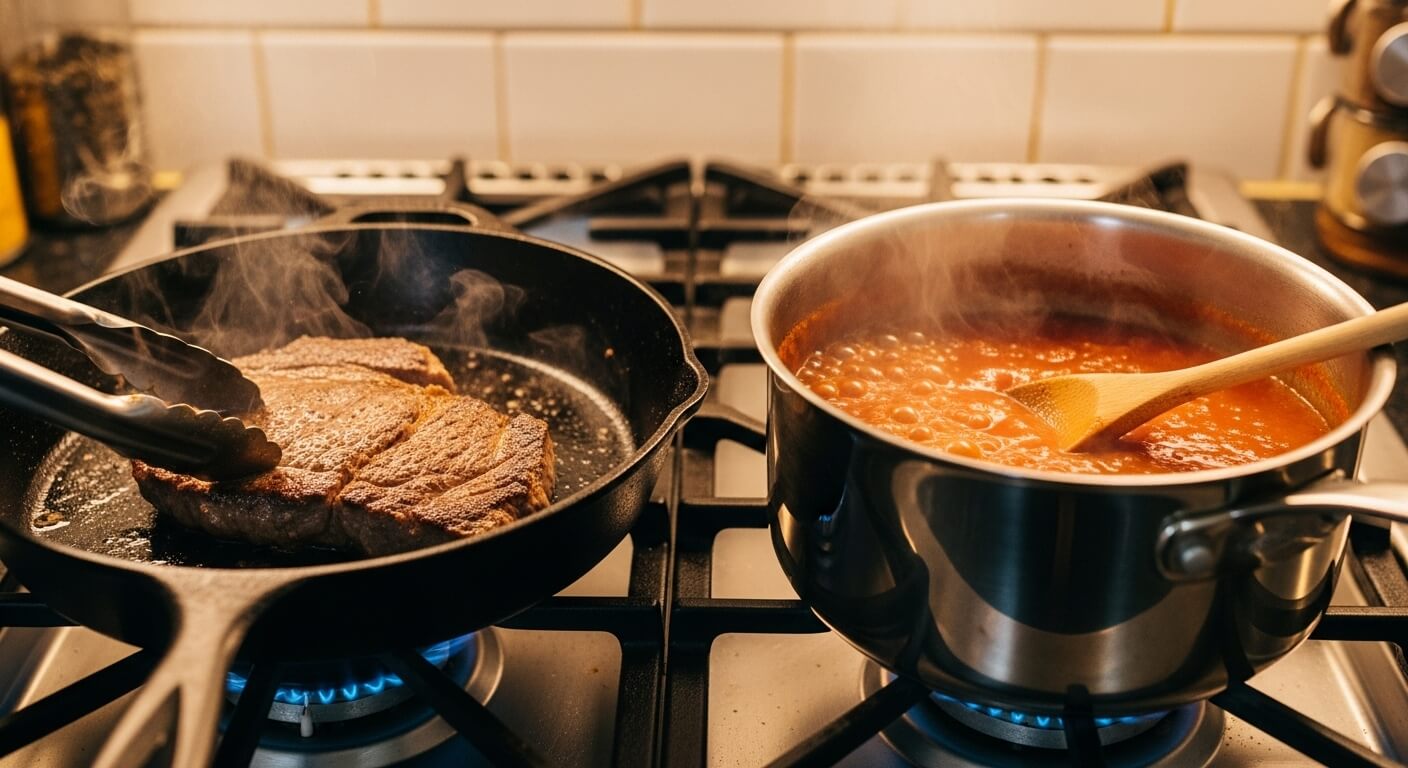
Skillet vs Saucepan Which Pan Should You Use (Complete Guide)

The main differences between the skillet and the saucepan are shape, cooking purpose, and liquid capacity — a skillet is wide, low, and open-topped, built for dry-heat cooking like searing and frying; a saucepan is tall, narrow, and lidded, built for liquid-based cooking like boiling, simmering, and sauce-making. These aren't competing pans. They don't do … Read more
Carbon Steel Skillet vs Stainless Steel Skillet: Which One Should You Choose?

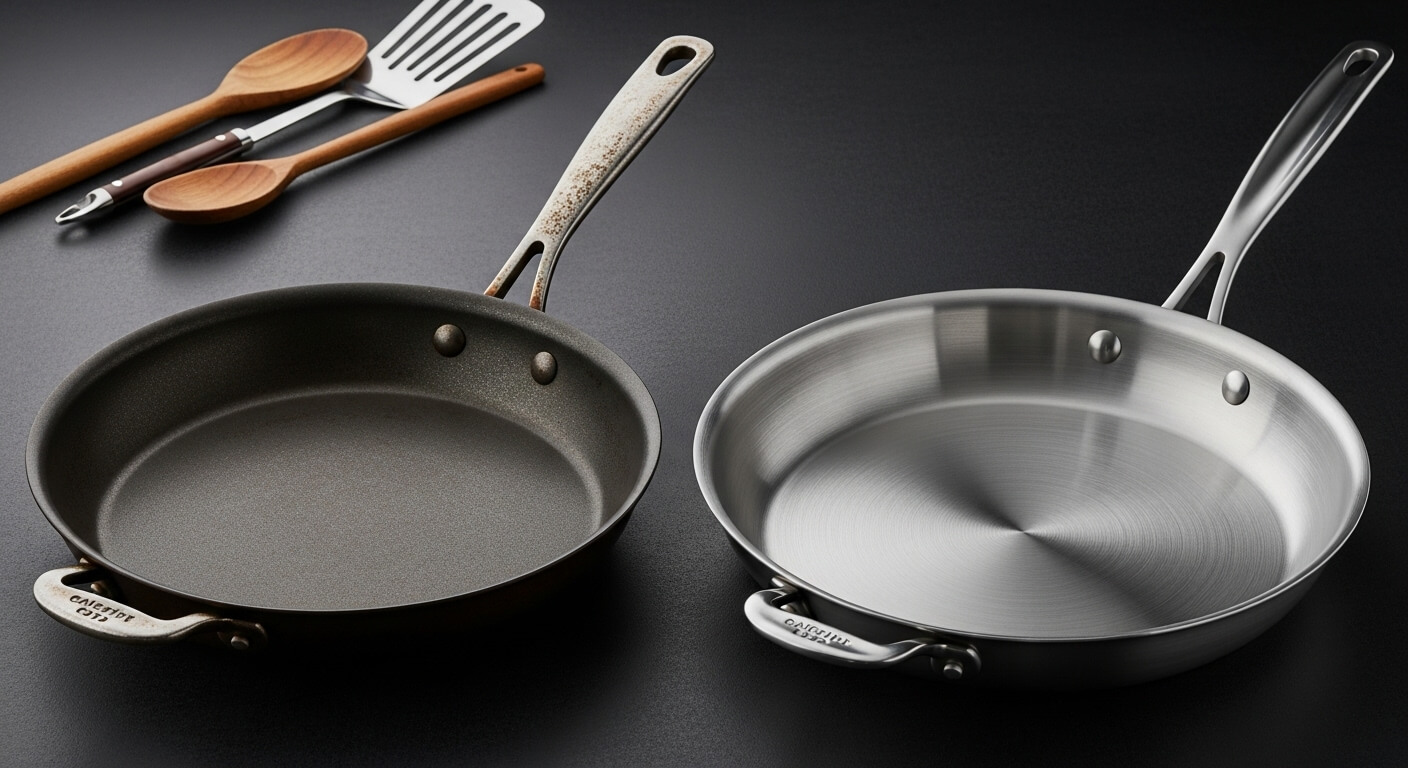
Carbon Steel Skillet vs Stainless Steel Skillet Which One Should You Choose

The main differences between carbon steel skillets and stainless steel skillets come down to three things: surface behavior, maintenance commitment, and how they handle acidic ingredients. Carbon steel is a reactive metal that builds a natural, seasoned patina over time — giving you a nonstick-like surface without any synthetic coating. Stainless steel is non-reactive, never … Read more

The Science of Polymerization: How Heat Actually Turns Oil into Skillet Seasoning

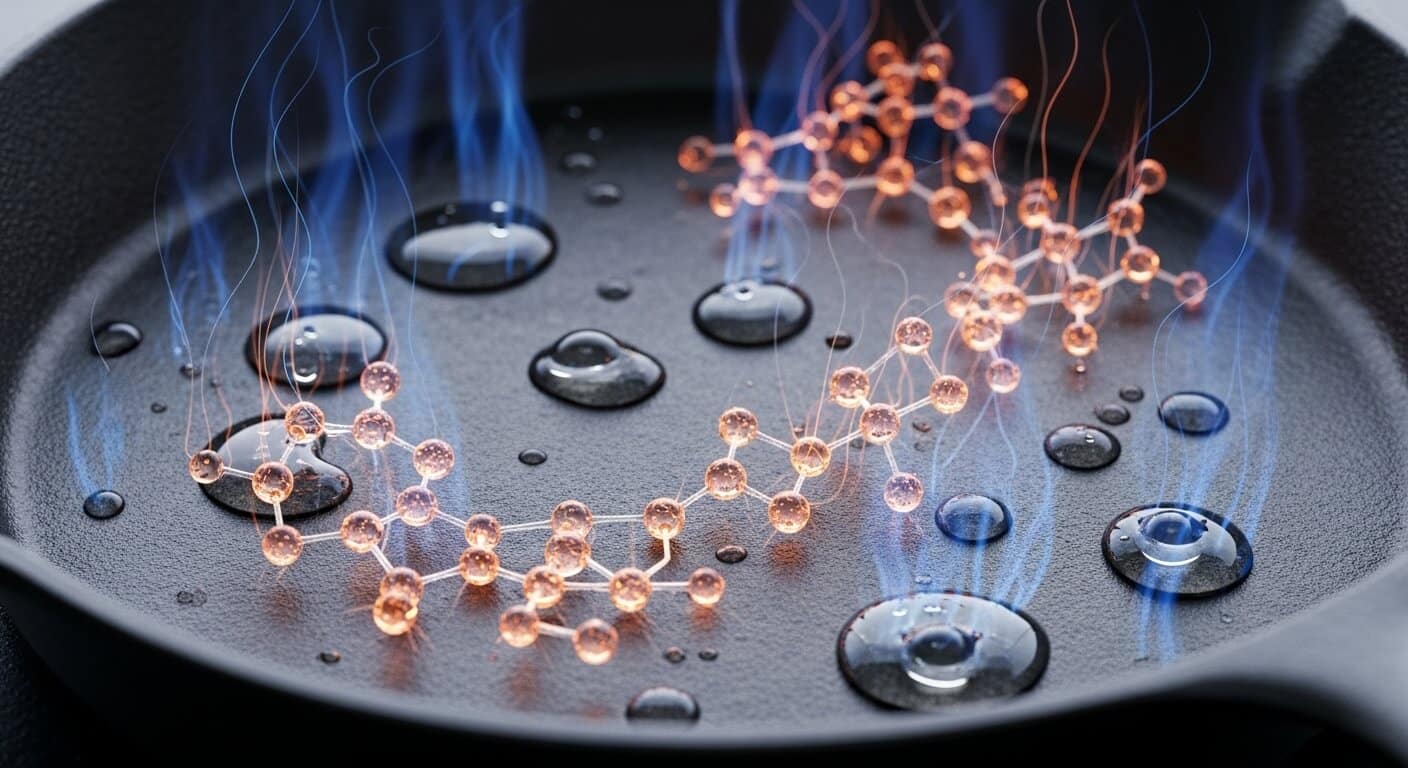
The Science of Polymerization How Heat Actually Turns Oil into Skillet Seasoning

Polymerization is the chemical process where oil molecules — exposed to high heat — break apart and re-bond into long, cross-linked polymer chains that fuse permanently to the metal surface of your pan, creating the hard, slick, protective layer known as seasoning. That's the short version. But if you want to actually understand why your … Read more

error: Content is protected !!