French Skillet vs Fry Pan: Understanding the Key Differences Between These Essential Cookware Pieces

French Skillet vs Fry Pan – What’s the Real Difference?

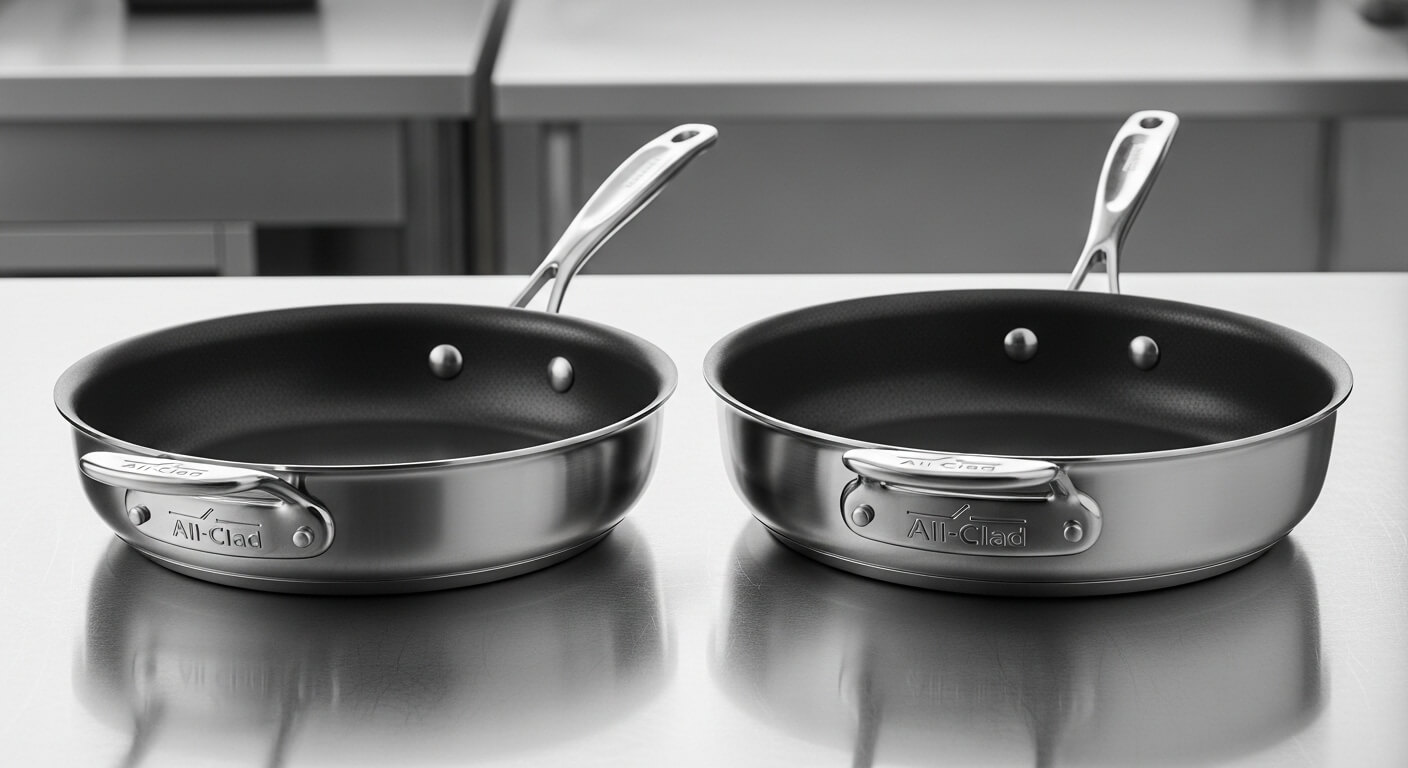
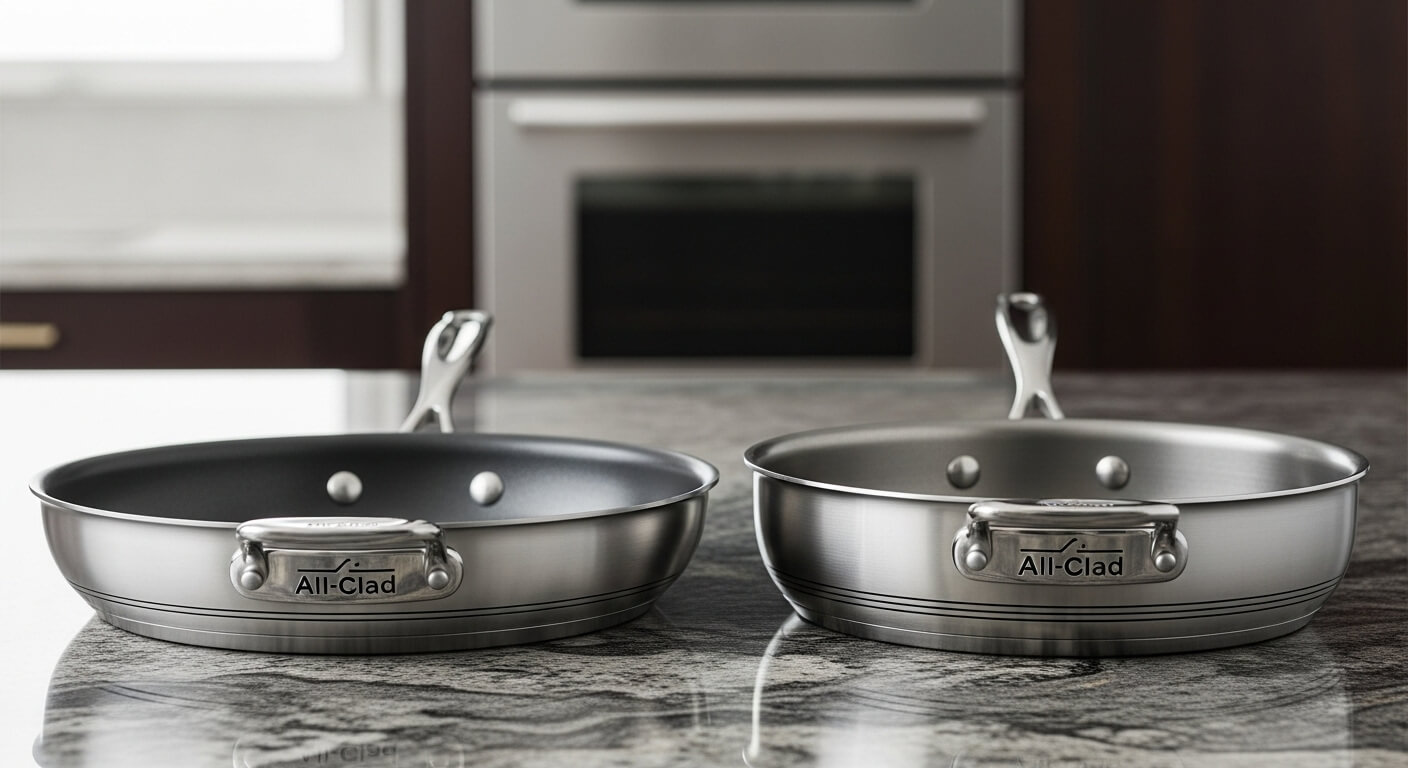
The main differences between french skillets and fry pans are the side wall angles and depth—fry pans feature sloped, flared sides measuring 1-2 inches tall, while french skillets have straighter, vertical walls that reach 2.5-3.5 inches in height.

Most home cooks assume these pans function identically. They browse cookware aisles, pick whichever looks appealing, and miss critical performance distinctions. The side wall design fundamentally changes how each pan handles moisture, affects cooking capacity, and determines which techniques work best.

Why these differences matter:

  • Evaporation rates shift dramatically—sloped sides release steam faster, while straight walls trap moisture for braising
  • Liquid capacity varies by 40-60% between comparable sizes, affecting sauce-based dishes and one-pan meals
  • Food release during tossing or flipping requires different wrist movements due to the rim angle
  • Splattering control improves with taller french skillet walls when pan-searing fatty proteins

A 12-inch fry pan holds roughly 2 quarts of liquid. The same diameter french skillet accommodates 3-4 quarts. This volume difference becomes crucial when you’re making chicken piccata, reducing pan sauces, or cooking for more than two people.

Feature Traditional Fry Pan French Skillet
Side Walls Sloped outward (45° angle) Nearly vertical (80-85° angle)
Depth 1-2 inches 2.5-3.5 inches
Best For Quick searing, eggs, sautéing Braising, sauce reduction, one-pan meals
Liquid Capacity Lower (more evaporation) Higher (moisture retention)

This comparison breaks down design specifications, performance characteristics, and practical applications. You’ll learn which pan suits your cooking style, when each option outperforms the other, and whether the french skillet’s hybrid design can replace a traditional fry pan in your kitchen.

What Is a Fry Pan?

A fry pan is a flat-bottomed cooking vessel with sloped, flared sides that angle outward at roughly 45 degrees, designed for high-heat cooking methods like searing, sautéing, and pan-frying. The outward-angled walls allow steam to escape quickly and make sliding food out of the pan effortless.

Core Design Characteristics

The shallow depth distinguishes fry pans from other cookware. Standard models measure 1-2 inches from cooking surface to rim. This limited height serves a purpose—maximum surface area contacts the heat source while moisture evaporates rapidly.

Physical specifications:

  • Cooking surface: Flat, circular base ranging from 6-14 inches in diameter
  • Side walls: Sloped at 45° angle, typically 1-2 inches tall
  • Handle: Single long handle (8-10 inches) for one-handed maneuvering
  • Weight: 2-5 pounds depending on material and size

The sloped sides were engineered for specific techniques. When you flip an omelet or toss vegetables, food slides up the angled wall and rotates back to the center. Vertical walls would block this motion.

Standard Fry Pan Dimensions and Sizes

Pan Size Base Diameter Rim Diameter Ideal Servings
8-inch 6 inches 8 inches 1 person
10-inch 8 inches 10 inches 2 people
12-inch 9.5 inches 12 inches 3-4 people
14-inch 11 inches 14 inches 5-6 people

The base diameter matters more than rim diameter. A 12-inch fry pan might have only a 9.5-inch flat cooking surface. Food piled in the center won’t contact direct heat.

Common Materials Used in Fry Pan Construction

Stainless steel (often tri-ply or 5-ply construction):

  • Heats evenly when bonded with aluminum or copper core
  • Requires preheating to prevent sticking
  • Develops fond (browned bits) that enhance pan sauces
  • Maintains performance indefinitely with proper care

Nonstick coating (PTFE or ceramic):

  • Food releases without oil, useful for delicate items like eggs and fish
  • Coating degrades at temperatures above 400-450°F
  • Lifespan of 3-5 years with careful use
  • Metal utensils damage the surface

Cast iron (bare or enameled):

  • Retains heat exceptionally well for consistent searing
  • Weighs 5-8 pounds even in 10-inch sizes
  • Bare cast iron requires seasoning maintenance
  • Enameled versions eliminate seasoning but cost more

Carbon steel:

  • Lighter than cast iron but with similar heat retention
  • Develops natural nonstick patina through seasoning
  • Responds quickly to temperature changes
  • Professional kitchens favor this material for sautéing

Primary Cooking Methods and Applications

Fry pans excel at techniques requiring quick moisture evaporation. The sloped sides promote air circulation and prevent steam from pooling.

Optimal cooking techniques:

  • Pan-searing proteins: Steaks, pork chops, chicken breasts develop crust at 400-500°F
  • Sautéing vegetables: Small pieces cook quickly with constant motion and tossing
  • Shallow frying: 1/4-1/2 inch of oil heats rapidly in the wide, flat base
  • Egg preparation: Omelets, scrambled eggs, and fried eggs slide easily up sloped walls
  • Quick pan sauces: Deglazing releases fond after searing, but limited depth restricts sauce volume

The design limits braising and simmering. Adding 2 cups of liquid to a 10-inch fry pan brings the level near the rim. Splattering becomes unavoidable during extended cooking. Dishes requiring both browning and liquid-based cooking expose the fry pan’s constraints.

What Is a French Skillet? (The Hybrid Design)

A french skillet is a wide, flat-bottomed pan with straight, vertical sidewalls measuring 2.5-3.5 inches tall, combining the broad cooking surface of a fry pan with the depth and liquid capacity of a sauté pan. The nearly vertical walls (80-85° angle) distinguish this hybrid design from traditional sloped-side skillets.

Unique Design Features of French Skillets

The vertical sidewall architecture changes how the pan manages heat and moisture. Steam stays trapped longer inside the cooking chamber. Liquids can reach higher levels without spilling over the rim.

Defining characteristics:

  • Sidewall angle: 80-85° (nearly vertical vs 45° in fry pans)
  • Depth: 2.5-3.5 inches from base to rim
  • Cooking surface: Same diameter as comparable fry pans (8-12 inches typical)
  • Handle configuration: Single long handle, occasionally with helper handle on larger models
  • Rim design: Flat, wide lip that facilitates pouring sauces

The wider rim serves a functional purpose. You can grip it with a towel when transferring the pan from stovetop to oven. Pouring pan sauces becomes more controlled than with curved fry pan rims.

How French Skillets Combine Multiple Pan Styles

This cookware merges three distinct designs into one vessel. The engineering draws from fry pans, sauté pans, and shallow Dutch ovens.

Design Element Borrowed From Function
Wide, flat base Traditional fry pan Maximum surface contact for browning and searing
Straight, tall walls Sauté pan Contains liquids and reduces splattering
Depth capacity Shallow braiser Accommodates sauce reduction and one-pan meals

The base width matches standard fry pans. A 12-inch french skillet has the same 9.5-10 inch flat cooking surface as a 12-inch fry pan. The difference appears in vertical space—that extra 1.5-2 inches of height transforms the pan’s capabilities.

Cooking Surface Area and Vertical Space

French skillets prioritize volume over the angled convenience of fry pans. The straight walls add 40-60% more capacity within the same footprint.

Volume comparison (12-inch pans):

  • Traditional fry pan: 2-2.5 quarts liquid capacity
  • French skillet: 3.5-4 quarts liquid capacity
  • Surface area: Identical (both approximately 75-80 square inches)

Four bone-in chicken thighs fit comfortably in either pan. The french skillet accommodates 2 cups of braising liquid without approaching the rim. That same volume would reach three-quarters up a fry pan’s sloped sides, creating spillover risk during simmering.

Material Construction and Weight Distribution

French skillets are manufactured in the same materials as traditional fry pans, though the added sidewall height increases overall weight.

Common materials:

  • Stainless steel (tri-ply or 5-ply): Weighs 3.5-6 pounds in 12-inch size
  • Hard-anodized aluminum: Lighter than stainless, typically 2.5-4 pounds
  • Nonstick-coated aluminum: Budget-friendly option, weighs 2-3.5 pounds
  • Cast iron: Rare in french skillet format due to excessive weight (8-10+ pounds)

The taller walls shift the center of gravity upward. A full french skillet requires two hands for safe handling. Most manufacturers add a small helper handle opposite the main handle on 12-inch and larger models.

Why French Skillets Are Considered Versatile Hybrid Cookware

This pan eliminates the compromise between browning performance and liquid capacity. You can sear proteins at high heat, then deglaze and simmer without transferring to another vessel.

Multi-step cooking capability:

  • Brown chicken pieces on the flat, wide base (identical to fry pan performance)
  • Add aromatics and deglaze without liquid splattering over low sidewalls
  • Pour in stock or wine—the tall walls contain 3-4 cups comfortably
  • Simmer uncovered to reduce sauce while keeping stovetop clean
  • Move directly to oven for finishing (if using oven-safe handles)

The straight walls prevent the easy tossing motion that fry pans enable. Flipping food requires a spatula rather than wrist movement. This limitation matters for dishes like stir-fries or sautéed vegetables where constant motion is standard technique. The french skillet trades that agility for the ability to handle complex recipes that require both high-heat searing and controlled simmering in a single pan.

French Skillet vs Fry Pan: Side-by-Side Comparison

The performance gap between french skillets and fry pans centers on sidewall geometry, liquid capacity, and cooking technique compatibility—differences that directly impact which dishes each pan handles effectively.

Design Differences Between French Skillets and Fry Pans

Side Wall Angles: Sloped vs Straight Comparison

Fry pans angle outward at 45 degrees from the base. This slope creates a gradual curve that food slides against during tossing motions. French skillets rise at 80-85 degrees, forming walls that are nearly perpendicular to the cooking surface.

Impact on cooking:

  • Fry pan slope: Food travels up the wall and flips back to center with wrist motion
  • French skillet verticality: Food hits a barrier, requiring spatula assistance for turning
  • Steam release: Sloped walls encourage evaporation; vertical walls trap moisture
  • Oil distribution: Angled sides cause oil to pool at the base; straight walls maintain even depth

The 40-degree difference in wall angle determines whether you can successfully execute a pan flip. A french skillet requires lifting and rotating food manually.

Depth Differences and Cooking Capacity

Specification 10-Inch Fry Pan 10-Inch French Skillet 12-Inch Fry Pan 12-Inch French Skillet
Wall Height 1.5-2 inches 2.5-3 inches 1.5-2 inches 2.5-3.5 inches
Liquid Capacity 1.5-2 quarts 2.5-3 quarts 2-2.5 quarts 3.5-4 quarts
Weight (stainless) 2.5-3.5 lbs 3-4.5 lbs 3.5-4.5 lbs 4.5-6 lbs
Oven-Safe Temp 500-600°F 500-600°F 500-600°F 500-600°F

A 12-inch french skillet holds 1.5-2 quarts more liquid than a same-diameter fry pan. This volume difference determines whether you can braise four chicken thighs with adequate liquid or must switch to a deeper pot mid-recipe.

Cooking Surface Area Variations

Both pan types offer identical flat base dimensions within the same size category. A 12-inch fry pan and 12-inch french skillet each provide approximately 75-80 square inches of direct heat contact.

The cooking surface remains constant—only vertical space changes. Four steaks sear with equal efficiency in either pan. The distinction emerges when you add deglazing liquid or prepare a pan sauce after searing.

Handle Designs and Usability Impact

Fry pan handles:

  • Single long handle (8-10 inches) suffices for all sizes
  • Pan weight stays manageable for one-handed operation
  • No helper handle needed even on 14-inch models

French skillet handles:

  • Primary handle identical to fry pans on 8-10 inch sizes
  • 12-inch models often include small helper handle opposite main handle
  • Added weight from tall sidewalls makes two-handed lifting safer
  • Helper handle becomes essential when pan contains 3+ quarts of liquid

The increased depth adds 0.5-1.5 pounds to the overall weight. A full french skillet requires both handles to prevent tipping when transferring from stovetop to counter.

Cooking Performance: French Skillet vs Fry Pan

Heat Distribution Differences

The sidewall height affects how heat radiates through the pan. Taller walls in french skillets create more metal surface area that must reach cooking temperature.

Preheating considerations:

  • Fry pans: Reach target temperature in 3-4 minutes over medium-high heat
  • French skillets: Require 4-5 minutes due to additional metal mass in sidewalls
  • Heat retention: French skillets maintain temperature better when cold ingredients are added
  • Hot spots: Identical in both pans—determined by base construction, not wall height

Stainless steel tri-ply construction performs equally in either format. The base material matters more than the sidewall design for even heat distribution across the cooking surface.

Moisture Retention and Evaporation Rates

Vertical sidewalls trap steam inside the pan. This moisture retention benefits braising but hinders achieving crispy textures through high-heat searing.

Evaporation comparison during 15-minute simmer:

Pan Type Initial Liquid Liquid After 15 Min Reduction Rate
Fry Pan 2 cups 1-1.25 cups 37-50% loss
French Skillet 2 cups 1.5-1.75 cups 12-25% loss

Reducing pan sauces takes 30-40% longer in a french skillet. The trapped steam condenses and drips back into the liquid. Fry pans release moisture continuously, concentrating flavors faster but requiring attention to prevent scorching.

Tossing and Flipping Capabilities

The sloped fry pan walls enable single-handed food manipulation. You grip the handle, thrust forward, and snap your wrist back—the angled wall guides food through a rotating motion.

Technique compatibility:

  • Fry pan: Sautéed vegetables, stir-fries, omelets toss with wrist motion
  • French skillet: Same dishes require spatula or spoon for turning
  • Learning curve: Pan-flipping takes practice in fry pans; french skillets bypass this skill requirement
  • Food damage: Delicate items like fish fillets stay intact when spatula-turned in french skillets

Professional cooks flip eggs and vegetables in fry pans without utensils. Home cooks often find this technique intimidating. French skillets eliminate the performance anxiety but slow down cooking processes that benefit from constant motion.

Sautéing Performance Comparison

Both pans sauté effectively, though the technique differs. Fry pans use motion; french skillets rely on stirring.

Sautéing 1 pound of sliced mushrooms:

  • Fry pan method: Toss every 30-45 seconds using wrist motion, total time 6-7 minutes
  • French skillet method: Stir with wooden spoon every 45-60 seconds, total time 7-8 minutes
  • Browning quality: Identical when proper spacing prevents crowding
  • Moisture evaporation: Fry pan achieves drier, more concentrated result

The extra minute in the french skillet comes from reduced moisture evaporation. Mushrooms release water that must cook off before browning occurs. Sloped fry pan walls accelerate this process.

Capacity and Volume Considerations

Liquid Volume Impact on Recipe Types

The capacity difference determines which recipes each pan can execute without modification.

Recipe compatibility:

Dish Type 12-Inch Fry Pan 12-Inch French Skillet
Pan-seared steak ✓ Excellent ✓ Excellent
Chicken piccata Limited (sauce risk) ✓ Ideal
One-pan pasta Cannot accommodate ✓ Works well
Shakshuka Risk of overflow ✓ Perfect depth
Stir-fry ✓ Ideal for tossing Adequate but requires stirring

Recipes requiring more than 2 cups of liquid become problematic in standard fry pans. The shallow depth forces you to reduce liquid quantities or transfer to another vessel.

Cooking for Different Household Sizes

Fry pan serving capacity:

  • 8-inch: 1-2 servings
  • 10-inch: 2-3 servings
  • 12-inch: 3-4 servings

French skillet serving capacity:

  • 10-inch: 3-4 servings
  • 12-inch: 4-6 servings
  • 14-inch: 6-8 servings

French skillets accommodate larger batch cooking within the same diameter footprint. The added depth allows stacking ingredients vertically rather than spreading horizontally across a wider surface. A 12-inch french skillet handles a full pound of pasta with sauce; a 12-inch fry pan maxes out at 12 ounces.

Best Uses for a Traditional Fry Pan

Traditional fry pans excel at high-heat searing, quick sautés, and dishes requiring frequent food manipulation—cooking methods that benefit from rapid moisture evaporation and sloped sidewalls that facilitate tossing.

Ideal Cooking Techniques: Searing, Browning, and Pan-Frying

Achieving Restaurant-Quality Sears

The shallow depth and sloped sides create optimal conditions for the Maillard reaction. Moisture escapes quickly, preventing steaming and allowing surface temperatures to reach 300-400°F.

Proteins that sear best in fry pans:

  • Steaks (ribeye, strip, filet): 3-4 minutes per side at high heat develops crust
  • Pork chops: Bone-in or boneless, 1-inch thick cuts brown evenly
  • Chicken breasts: Pounded to even thickness, skin-on versions crisp perfectly
  • Fish fillets: Skin-side down searing (salmon, sea bass) creates crispy skin in 4-5 minutes
  • Scallops: Dry-packed scallops achieve golden crust in 2 minutes per side

The wide, flat base ensures maximum contact between protein and heat source. Crowding remains the primary obstacle—leave 1-2 inches between pieces to prevent steaming.

Browning Vegetables and Aromatics

Sloped walls allow constant movement without a utensil. Onions, peppers, and mushrooms caramelize evenly when tossed every 30-45 seconds.

Vegetable browning timeline (12-inch fry pan at medium-high heat):

Vegetable Prep Method Browning Time Tossing Frequency
Sliced mushrooms 1/4-inch thick 6-7 minutes Every 45 seconds
Diced onions 1/2-inch pieces 8-10 minutes Every 60 seconds
Bell peppers 1-inch strips 5-6 minutes Every 45 seconds
Zucchini rounds 1/2-inch thick 4-5 minutes Every 30 seconds
Cherry tomatoes Whole 3-4 minutes Every 30 seconds

The angle of the pan wall matters when vegetables release moisture. Water runs down the slope toward the edges, where higher heat evaporates it quickly. Flat-walled pans trap moisture at the base, creating soggy results.

Shallow Frying Applications

Fry pans accommodate 1/4 to 1/2 inch of oil—sufficient depth for breaded cutlets, fritters, and potato preparations. The wide surface area heats oil efficiently.

Optimal shallow-frying recipes:

  • Breaded chicken cutlets: Oil depth of 1/4 inch, temperature 350°F, 3-4 minutes per side
  • Potato latkes: 1/3 inch oil depth maintains crispness without deep-frying
  • Fish tempura: Light batter requires less oil immersion than heavy breading
  • Fried eggs: Minimal oil (1-2 teaspoons) spreads across flat surface for even cooking

The sloped sides provide easy access for flipping with tongs or spatula. You can slide the utensil under food at a natural angle rather than forcing it vertically.

Foods That Work Best in Standard Frying Pans

Egg Preparations

The geometry of fry pans evolved specifically for egg cookery. Omelets slide up the curved wall, fold back on themselves, and roll onto plates in one smooth motion.

Egg dishes matched to fry pan design:

  • French omelets: 8-inch pan for 2-3 eggs, sloped sides enable rolling technique
  • Scrambled eggs: Constant stirring with rubber spatula, slopes prevent edge overcooking
  • Fried eggs: Flat base ensures even white cooking, basting with tilted pan possible
  • Frittatas: Start on stovetop, finish under broiler (no liquid concerns)

An omelet prepared in a french skillet requires spatula folding instead of pan manipulation. The technique still works but loses the elegance of a properly executed pan roll.

Single-Layer Protein Cooking

Fry pans shine when proteins need undisturbed contact with the cooking surface. The limited depth becomes irrelevant for preparations that don’t involve liquid.

Best protein applications:

  • Smash burgers: Press directly onto hot surface, 2 minutes per side, sloped sides ease removal
  • Bacon strips: Rendered fat pools at edges for easy pouring, flat surface prevents curling
  • Breakfast sausage patties: Multiple pieces fit without stacking, even browning on all items
  • Duck breast: Skin renders fat slowly, tilting pan allows fat drainage during cooking

The wide cooking surface accommodates four 4-ounce burger patties or six bacon strips simultaneously. A french skillet offers the same base area but wastes vertical space for these single-layer preparations.

Quick Stir-Fries and Sautés

Asian-style cooking techniques developed around wok geometry—high, sloped sides that facilitate tossing. Fry pans replicate this functionality on Western stovetops.

Stir-fry advantages in fry pans:

  • Tossing motion: Food flips and turns with wrist snaps, no utensils required for experienced cooks
  • Temperature zones: Sloped sides create cooler areas where food rests briefly between tosses
  • Speed: Constant motion prevents burning, cooks 1 pound of vegetables in 4-5 minutes
  • Sauce integration: Small amounts (2-3 tablespoons) coat ingredients without pooling

Stir-fries requiring more than 1/4 cup of sauce test the limits of fry pan capacity. The liquid sloshes over edges during vigorous tossing. These preparations transition better to a french skillet or wok.

Why Sloped Sides Matter for Specific Cooking Methods

The 45-degree angle provides mechanical advantage for food movement. Physics explains why this design dominates Western kitchens.

Functional benefits of sloped geometry:

  • Leverage point: Food slides up slope, gravity pulls it back—creates natural tumbling motion
  • Utensil access: Spatulas slide under food at comfortable wrist angle (not perpendicular)
  • Splatter direction: Oil and liquid spray upward and outward, away from cook’s hands
  • Visual monitoring: Angle provides clear sight line to cooking surface without leaning over pan

Vertical walls block these advantages. You must lift food straight up to turn it, creating more disruption to the sear. The perpendicular angle forces awkward wrist positioning when sliding a spatula underneath delicate items.

Quick, High-Heat Cooking Applications

Flash-Cooking Techniques

Fry pans reach target temperatures faster than deeper cookware. The minimal metal mass in shallow walls means less thermal energy is required.

Time to temperature comparison (empty 12-inch stainless steel pan on medium-high burner):

Pan Type Time to 350°F Time to 450°F
Fry pan 3 minutes 4.5 minutes
French skillet 3.5 minutes 5 minutes
Sauté pan 4 minutes 5.5 minutes

Thirty to sixty seconds matters when cooking multiple batches. Professional kitchens rely on fry pans for rapid-fire ticket preparation during service.

Dishes Requiring Immediate Serving

Some preparations demand plating within seconds of completion. Fry pans facilitate this urgency.

Time-sensitive recipes:

  • Pan-seared fish: Texture degrades if held; cook and plate immediately
  • Sunny-side up eggs: Yolk firmness changes within 15-20 seconds
  • Crispy-skin salmon: Skin loses crunch if rested in pan after cooking
  • Sautéed greens: Spinach and arugula wilt from residual heat

The sloped sides allow sliding food directly onto plates without transferring to an intermediate vessel. A french skillet requires lifting each piece individually, adding 20-30 seconds per serving.

Limitations: What Fry Pans Cannot Handle Effectively

Fry pans fail when recipes combine high-heat searing with liquid-based finishing. The shallow depth creates impossible choices—reduce liquid quantity or accept spillage.

Problem scenarios:

  • Pan sauces exceeding 1 cup: Liquid approaches rim, boiling causes overflow
  • Braised dishes: Cannot submerge food halfway in liquid as technique requires
  • One-pan pasta: Insufficient depth for pasta plus cooking liquid
  • Batch cooking with resting: No room to push cooked items aside while searing new pieces

These constraints drove the development of french skillets and sauté pans. Cooks wanted fry pan browning capability combined with depth for sauce work—a compromise the traditional fry pan geometry cannot provide.

Best Uses for a French Skillet

French skillets excel at multi-step cooking processes that combine searing with braising, sauce reduction, or simmering—techniques requiring both a wide cooking surface and sufficient depth to contain liquids without spillage.

Perfect Applications: Braising, Reducing Sauces, and One-Pan Meals

Braising Proteins with Liquid

The 2.5-3.5 inch depth accommodates the classic braising method: sear first, then cook partially submerged in liquid. Fry pans lack the capacity for this two-stage process.

Braising technique in a 12-inch french skillet:

  1. Sear phase: Brown 4-6 pieces of protein (chicken thighs, pork chops, short ribs) in 2 tablespoons oil
  2. Liquid addition: Pour 2-3 cups stock, wine, or braising liquid without reaching rim
  3. Simmer phase: Reduce heat to low, cover partially, cook 30-45 minutes
  4. Reduction: Remove lid, increase heat to reduce liquid by half in 8-10 minutes

The straight walls contain the liquid throughout the process. Bubbling and simmering occur safely below the rim, eliminating stovetop splatter.

Ideal braised dishes for french skillets:

Protein Liquid Volume Cooking Time Final Texture
Chicken thighs 2-2.5 cups 35-40 minutes Fall-off-bone tender
Pork chops (1-inch) 1.5-2 cups 25-30 minutes Juicy, not dry
Lamb shanks 3-3.5 cups 90-120 minutes Fork-tender
Short ribs 3 cups 2.5-3 hours Meat pulls apart easily

Braising in a fry pan requires reducing liquid quantities by 40-50%, which compromises the sauce volume and moisture level. The vertical walls of french skillets solve this limitation.

Pan Sauce Development and Reduction

After searing proteins, the remaining fond (browned bits) becomes the foundation for pan sauces. French skillets provide room to build these sauces without transferring pans.

Pan sauce construction process:

  • Deglaze: Add 1/2 cup wine or stock, scrape fond from base with wooden spoon
  • Simmer: Liquid reduces by half in 4-5 minutes at medium-high heat
  • Enrichment: Swirl in 2-4 tablespoons butter or cream
  • Final reduction: Cook 2-3 minutes until sauce coats back of spoon

The depth prevents boiling liquid from splashing onto the stovetop. You can reduce 2 cups of liquid down to 3/4 cup without constant monitoring for overflow.

Classic pan sauces suited to french skillets:

  • Chicken piccata: Lemon, capers, butter, white wine (starts with 1.5 cups liquid)
  • Mushroom marsala: Marsala wine, stock, cream reduction (2 cups initial volume)
  • Pork chops with cider sauce: Apple cider, mustard, cream (1.5-2 cups liquid)
  • Steak au poivre: Cognac, cream, peppercorns (1 cup initial liquid)

These recipes instruct you to add liquid volumes that would overflow a standard fry pan. French skillets accommodate the full amount specified in professional recipes.

One-Pan Meal Preparation

The combination of searing capability and liquid capacity makes french skillets ideal for complete meals cooked in a single vessel.

One-pan meal workflow:

  1. Brown protein: Sear chicken, sausage, or pork in oil, then remove and set aside
  2. Cook aromatics: Sauté onions, garlic, peppers in rendered fat
  3. Add grains or pasta: Toast rice or add dried pasta directly to pan
  4. Pour liquid: Add 3-4 cups stock or sauce
  5. Nestle protein: Return browned meat to pan, partially submerging in liquid
  6. Simmer: Cook 20-30 minutes until grains/pasta absorb liquid

One-pan recipes optimized for french skillets:

Dish Key Ingredients Liquid Required Cook Time
Chicken and rice Thighs, long-grain rice, stock 3 cups 35 minutes
Sausage pasta Italian sausage, rigatoni, marinara 4 cups 25 minutes
Paella-style dish Chorizo, shrimp, bomba rice 3.5 cups 30 minutes
Shakshuka Eggs, tomato sauce, peppers 2.5 cups 20 minutes

The 3.5-4 quart capacity of a 12-inch french skillet handles these liquid volumes comfortably. Attempting these recipes in a fry pan requires either reducing portions by half or accepting guaranteed overflow.

Foods That Benefit from French Skillet’s Deeper Design

Tomato-Based Sauces and Dishes

Tomato sauces splatter aggressively during simmering. The vertical walls of french skillets contain the splatter within the pan.

Tomato sauce applications:

  • Chicken cacciatore: Brown chicken, simmer in 3 cups tomato-wine sauce for 40 minutes
  • Meatballs in marinara: Sear meatballs, add 2.5 cups sauce, simmer 25 minutes
  • Shakshuka: Poach 6-8 eggs in 2 cups spiced tomato sauce
  • Sausage and peppers: Cook in 2 cups marinara without stovetop mess

The acidity in tomato-based preparations causes vigorous bubbling. French skillet walls rise high enough to catch splatter that would escape fry pans and coat nearby surfaces.

Risotto and Grain-Based Dishes

Risotto requires gradual liquid addition—typically 5-6 cups total for 1.5 cups arborio rice. The depth prevents overflow during the 25-30 minute cooking process.

Grain dishes for french skillets:

  • Classic risotto: 1.5 cups rice, 5-6 cups stock added gradually
  • Rice pilaf: 2 cups rice, 3.5 cups stock, simmer covered 18-20 minutes
  • Farro with mushrooms: 1.5 cups farro, 4 cups liquid, cook 30 minutes
  • Quinoa one-pot meals: 1.5 cups quinoa, 3 cups liquid plus vegetables

The straight walls maintain even heat distribution up the sides. Grains near the edges cook at the same rate as those in the center—a problem in fry pans where sloped walls create heat gradients.

Cream-Based Sauces and Reductions

Heavy cream boils vigorously and expands in volume. French skillets provide headroom for this expansion without boilover.

Cream sauce preparations:

Sauce Type Cream Volume Additional Liquid Reduction Time
Alfredo 2 cups 1/2 cup pasta water 6-8 minutes
Stroganoff 1.5 cups 1 cup stock 10-12 minutes
Tuscan chicken 1 cup 1/2 cup white wine 8-10 minutes
Carbonara-style 3/4 cup 1/4 cup pasta water 3-4 minutes

Cream sauces thicken as they reduce, increasing the risk of scorching. The depth of french skillets allows stirring without liquid sloshing over edges—critical for preventing burned cream at the pan’s rim.

Multi-Step Recipes Requiring Both Sautéing and Simmering

Restaurant-Style Finishing Techniques

Professional kitchens sear proteins to order, then finish them in pan sauces. French skillets replicate this workflow at home.

Professional finishing method:

  1. Sear protein at high heat (400-450°F) for 2-3 minutes per side
  2. Remove protein to plate or cutting board
  3. Build sauce using fond, aromatics, and liquid
  4. Return protein to pan with sauce
  5. Finish cooking over lower heat (2-5 minutes depending on thickness)

This technique ensures perfectly cooked proteins without dried-out exteriors. The sauce is prepared by the protein resting in it during final minutes of cooking.

Dishes using this technique:

  • Chicken marsala: Sear cutlets, build mushroom-marsala sauce, return chicken to finish
  • Pork tenderloin medallions: Sear, create apple-brandy sauce, simmer medallions 3 minutes
  • Salmon with dill sauce: Sear skin-side, flip, add cream-dill sauce, finish 2 minutes
  • Veal piccata: Pound thin, sear 1 minute per side, finish in lemon-caper sauce

Fry pans force you to choose between proper searing and adequate sauce. The shallow depth cannot accommodate both without transferring to a second pan.

Stovetop-to-Oven Transitions

French skillets with oven-safe handles move seamlessly from stovetop to oven. The depth prevents spillage during transfer.

Oven-finishing applications:

  • Frittatas with toppings: Sauté vegetables on stovetop, add eggs, finish in 375°F oven for 12-15 minutes
  • Pan-roasted chicken breasts: Sear stovetop, add vegetables and liquid, roast at 425°F for 15 minutes
  • Baked pasta dishes: Cook pasta and sauce on stovetop, top with cheese, broil 3-4 minutes
  • Dutch baby pancakes: Mix batter, pour in preheated pan, bake at 425°F for 18-20 minutes

The 2.5-3 inch walls provide structure for dishes that rise during baking. Dutch babies puff up the sides of french skillets without spilling over—impossible in shallow fry pans.

Preventing Splattering with Taller Sides

Splatter Containment During High-Heat Cooking

Searing fatty proteins creates aggressive splattering. Oil droplets hit the straight walls and slide back down rather than escaping onto the stovetop.

Splatter reduction comparison:

Protein Type Fry Pan Splatter Radius French Skillet Splatter Radius
Bacon 18-24 inches 4-6 inches
Duck breast 20-28 inches 6-8 inches
Bone-in chicken thighs 15-20 inches 4-6 inches
Pork sausages 12-18 inches 3-5 inches

The vertical walls intercept 80-90% of splatter that would escape fry pans. Stovetop cleanup time decreases from 5-8 minutes to under 2 minutes after cooking fatty meats.

Reducing Sauce Without Stovetop Mess

Bubbling sauces throw small droplets several inches above the liquid surface. French skillet walls catch these droplets before they reach the cooktop.

Sauce reduction scenarios:

  • Balsamic glaze: Reduce 2 cups balsamic vinegar by 75% without cleanup
  • Red wine reduction: Cook down 1.5 cups wine to 1/2 cup with minimal splatter
  • Stock-based pan sauces: Simmer 2-3 cups liquid at medium-high heat safely
  • BBQ sauce: Reduce tomato-based sauce from 3 cups to 1.5 cups without coating stove

The taller the walls, the more aggressive you can simmer without consequences. French skillets permit vigorous reduction that would create a cleanup nightmare in fry pans.

French Skillet vs Fry Pan: Which Should You Choose?

Your cooking style, most-prepared dishes, and kitchen space constraints determine whether a french skillet or fry pan serves you better—not marketing claims or trendy cookware recommendations.

Choose a Fry Pan If…

Your Cooking Style Prioritizes Speed and High-Heat Techniques

Fry pans match cooks who prepare meals in under 30 minutes. The quick preheating and rapid moisture evaporation cut cooking times by 15-20% compared to deeper pans.

Cooking patterns that favor fry pans:

  • Breakfast preparation: Eggs, bacon, pancakes, hash browns cooked daily
  • Quick weeknight dinners: Single-protein searing with minimal sauce
  • Stir-fry frequency: Asian-style cooking 3+ times per week
  • Batch cooking proteins: Meal prep involving 2-3 pounds of chicken breasts or ground meat
  • Minimal sauce recipes: Dishes using 1/2 cup or less of liquid components

Home cooks who rarely braise, simmer, or prepare one-pan meals waste the extra capacity of french skillets. The additional depth becomes unused vertical space that adds weight without functional benefit.

You Prefer Pan-Tossing Over Utensil Stirring

The sloped walls enable food manipulation without spatulas or spoons. Cooks comfortable with wrist-flipping techniques find fry pans more efficient.

Skill-based considerations:

  • Pan-flipping ability: Confidence tossing vegetables, omelets, or hash without utensils
  • Single-handed cooking: Preference for one-handed pan operation while multitasking
  • Speed focus: Valuing 30-second time savings per cooking task
  • Traditional technique: Training or experience with classical French cooking methods

Beginners who haven’t developed pan-tossing skills gain no advantage from fry pan geometry. The learning curve spans 20-30 practice sessions before the technique becomes reliable.

Space and Storage Limitations Apply

Fry pans nest more efficiently than french skillets. The sloped walls allow stacking multiple sizes without wasted space.

Storage footprint comparison (3-pan set: 8″, 10″, 12″):

Pan Type Vertical Storage Height Cabinet Space Required
Fry pans 6-7 inches nested 12″ × 12″ × 7″
French skillets 9-11 inches nested 12″ × 12″ × 11″

The 3-4 inch height difference matters in apartments or kitchens with limited cabinet depth. French skillets require shelves or hanging racks that accommodate their vertical dimension.

Budget Constraints Influence Purchase Decisions

Fry pans cost 15-25% less than equivalent french skillets in the same material and brand. The reduced material in shorter sidewalls lowers manufacturing costs.

Price comparison (12-inch stainless steel, tri-ply construction):

  • Quality fry pan: $80-120
  • Quality french skillet: $100-150
  • Premium fry pan: $150-200
  • Premium french skillet: $180-250

The price gap widens in premium brands. A 12-inch All-Clad fry pan retails for $180; their french skillet costs $230. Budget-conscious cooks save $40-70 per pan choosing fry pan geometry.

Choose a French Skillet If…

Multi-Step Cooking Defines Your Recipe Preferences

French skillets eliminate vessel transfers during complex preparations. The pan that sears also braises, reducing cleanup from multiple pots and pans.

Recipe types requiring french skillet depth:

  • Braises and stews: Chicken cacciatore, coq au vin, osso buco-style dishes
  • Cream-based pasta: Alfredo, carbonara, vodka sauce preparations made stovetop-to-table
  • One-pan dinners: Complete meals with protein, starch, and vegetables cooked together
  • Pan sauces exceeding 1 cup: Marsala, piccata, or wine reduction sauces
  • Skillet lasagna: Layered pasta dishes assembled and baked in the same pan

Cooks who prepare these dishes 2-3 times weekly justify the french skillet’s higher cost and storage requirements. The time saved avoiding pan transfers adds up to 15-20 minutes per week.

You Cook for 4+ People Regularly

The increased capacity accommodates family-size portions without crowding. A 12-inch french skillet serves 5-6 people; the same diameter fry pan maxes out at 3-4 servings.

Serving capacity advantages:

Dish Type 12″ Fry Pan Servings 12″ French Skillet Servings
Chicken and rice 3-4 5-6
Pasta with sauce 3 5-6
Stir-fry 2-3 4-5
Braised proteins 3 5-6

Families cooking for four or more people can use a single 12-inch french skillet instead of preparing meals in batches or using multiple pans simultaneously.

Sauce-Heavy Recipes Dominate Your Cooking

The vertical walls contain liquid volumes that Italian, French, and Indian cuisines require. Dishes built on reductions and pan sauces were designed for deeper cookware.

Cuisine styles favoring french skillets:

  • Italian: Marsala, piccata, puttanesca, osso buco
  • French: Coq au vin, boeuf bourguignon, chicken with tarragon cream
  • Indian: Butter chicken, tikka masala, korma (stovetop versions)
  • Spanish: Paella-style rice dishes with 3+ cups liquid
  • American Southern: Smothered pork chops, country-style chicken

Home cooks preparing these cuisines 3+ times weekly find fry pans inadequate. The shallow depth forces recipe modifications that compromise authentic flavor development.

Splatter Control Matters in Your Kitchen

Open-concept homes and kitchens with difficult-to-clean backsplashes benefit from splatter containment. The taller walls reduce cleanup time by 60-70% when cooking fatty proteins.

Splatter-prone cooking scenarios:

  • Searing bacon: 8-10 strips create extensive grease splatter
  • Pan-frying bone-in chicken: Skin-on thighs splatter aggressively at proper temperatures
  • Reducing balsamic or wine: Vigorous bubbling throws droplets 6-8 inches above liquid
  • Cooking sausages: Fat rendering causes continuous low-level splatter for 15-20 minutes

French skillet walls intercept splatter that would coat countertops, backsplashes, and adjacent appliances. Cooks with white or light-colored backsplashes report cleanup time dropping from 8-10 minutes to under 3 minutes per cooking session.

Can a French Skillet Replace a Fry Pan?

Functional Overlap and Limitations

French skillets perform 85-90% of fry pan tasks adequately. The remaining 10-15% involves techniques where sloped walls provide genuine advantages.

Tasks where french skillets match fry pan performance:

  • Searing proteins: Identical browning capability on flat base
  • Sautéing with spatula: No disadvantage when using utensils instead of tossing
  • Shallow frying: Same oil depth and temperature control
  • Cooking eggs: Scrambled and fried eggs work equally well (omelets slightly more difficult)

Tasks where fry pans maintain clear advantages:

  • Pan-flipping technique: Omelets, hash browns, stir-fries requiring wrist motion
  • Speed-focused cooking: 30-60 second time savings per dish from faster evaporation
  • Weight management: Lighter construction for one-handed operation during extended cooking sessions

The straight walls of french skillets create workarounds rather than deal-breakers. You adapt technique rather than accepting compromised results.

The Versatility Argument

French skillets handle a broader recipe range within a single piece of cookware. Cooks who value minimalist kitchen setups can consolidate three pans (fry pan, sauté pan, shallow braiser) into one french skillet.

Consolidation scenarios:

  • Studio apartment cooking: Limited cabinet space forces choosing one 12-inch pan
  • RV or boat kitchens: Weight and storage constraints demand multi-purpose cookware
  • Minimalist approach: Intentionally owning fewer, more versatile items
  • Budget limitations: Buying one $150 french skillet instead of three separate pans totaling $250+

The compromise involves sacrificing optimal performance for specific techniques in exchange for acceptable performance across a wider range.

What You Sacrifice With Each Option

Choosing one pan type over the other creates real limitations, not just minor inconveniences.

Fry pan limitations:

  • Pan sauces exceeding 1 cup require reducing recipe quantities by 40-50%
  • Braising becomes impractical without transferring to a separate pot
  • One-pan meals that feed more than 3 people won’t fit
  • Splatter cleanup adds 5-7 minutes per cooking session with fatty proteins

French skillet limitations:

  • Pan-tossing omelets and stir-fries requires learning new spatula-based techniques
  • Weight increases by 25-35%, making one-handed operation uncomfortable during 15+ minute cooking tasks
  • Preheating takes 60-90 seconds longer due to additional metal mass
  • Stacking and nesting in cabinets consumes 40% more vertical space

Neither limitation is objectively worse—your personal cooking priorities determine which constraints you’ll tolerate.

The Case for Owning Both Pans

Complementary Roles in a Complete Kitchen

Professional kitchens maintain both pan types because each excels at different tasks. Home cooks who prepare diverse cuisines benefit from the same approach.

Optimal two-pan setup:

  • 10-inch fry pan: Quick breakfasts, eggs, 1-2 serving sautés, weeknight speed cooking
  • 12-inch french skillet: Weekend braises, family dinners, one-pan meals, sauce-heavy dishes

This combination covers 95% of home cooking scenarios without redundancy. The size difference (10″ vs 12″) prevents overlap—you reach for the appropriate pan based on serving size and technique.

Investment breakdown:

Pan Configuration Total Cost (Mid-Range) Storage Space Recipe Coverage
Single 12″ french skillet $120-150 1 pan slot 85% of recipes
Single 12″ fry pan $90-120 1 pan slot 75% of recipes
10″ fry + 12″ french skillet $200-260 2 pan slots 95% of recipes

The two-pan investment adds $80-110 over a single-pan approach. Cooks who prepare 5-7 dinners weekly recoup this cost in reduced cooking time and cleanup within 6-8 months.

When Two Pans Make Financial Sense

Budget-conscious cooks should purchase the pan matching their primary cooking style first, then add the complementary pan within 12-18 months.

Purchase priority guide:

Buy fry pan first if:

  • 60%+ of meals involve eggs, quick sautés, or simple protein searing
  • Cooking for 1-2 people represents typical meal preparation
  • Budget limits immediate purchase to one quality pan under $120

Buy french skillet first if:

  • 60%+ of meals involve braising, pan sauces, or one-pan dinners
  • Cooking for 3+ people occurs at least 4 times weekly
  • Splatter control significantly impacts your kitchen maintenance routine

The second pan becomes a strategic addition rather than an impulse purchase. You’ve identified specific tasks where your primary pan underperforms, making the investment clearly justified.

Size Guide: Choosing the Right Dimensions

The cooking surface diameter determines how much food fits in a single layer, while depth affects liquid capacity—choosing the wrong size forces batch cooking or recipe modifications that compromise results.

Standard Fry Pan Sizes

Fry pans are manufactured in 2-inch diameter increments from 8 to 14 inches. The measurement refers to the top rim diameter, not the flat cooking surface.

8-Inch Fry Pans

Specifications:

  • Rim diameter: 8 inches
  • Flat base diameter: 6-6.5 inches
  • Liquid capacity: 1-1.25 quarts
  • Weight: 1.5-2.5 pounds (varies by material)

Best applications:

  • Single-serving omelets (2-3 eggs)
  • One chicken breast or pork chop
  • Reheating small portions of leftovers
  • Toasting spices or nuts (1/4-1/2 cup)
  • Melting butter for specific recipes

The compact size suits small apartments or individuals cooking single servings. Two 8-inch pans allow cooking different items simultaneously on adjacent burners without crowding the stovetop.

10-Inch Fry Pans

Specifications:

  • Rim diameter: 10 inches
  • Flat base diameter: 7.5-8 inches
  • Liquid capacity: 1.5-2 quarts
  • Weight: 2-3.5 pounds

Best applications:

  • 2-3 serving breakfasts (4-6 eggs scrambled)
  • Two portions of protein (steaks, chicken breasts, fish fillets)
  • Sautéed vegetables for 2-3 people
  • Quick pan sauces (up to 1 cup liquid)
  • Grilled cheese sandwiches (2 at once)

This size represents the most versatile option for couples or small households. The 10-inch fry pan handles 70% of everyday cooking tasks without being too heavy for extended one-handed use.

12-Inch Fry Pans

Specifications:

  • Rim diameter: 12 inches
  • Flat base diameter: 9.5-10 inches
  • Liquid capacity: 2-2.5 quarts
  • Weight: 3-4.5 pounds

Best applications:

  • Family-size portions (4-6 servings of vegetables)
  • Four burger patties or chicken breasts simultaneously
  • Stir-fries serving 3-4 people
  • Bacon (8-10 strips in single layer)
  • Pan sauces up to 1.5 cups

The 12-inch size suits families of 3-4 people cooking complete meals. The increased weight (4-5 pounds when full) makes two-handed operation safer during transfers.

14-Inch Fry Pans

Specifications:

  • Rim diameter: 14 inches
  • Flat base diameter: 11-12 inches
  • Liquid capacity: 3-3.5 quarts
  • Weight: 4.5-6 pounds (empty)

Best applications:

  • Batch cooking proteins (6-8 chicken thighs)
  • Large family meals (6-8 servings)
  • Holiday cooking requiring multiple proteins
  • Commercial or catering applications
  • Oversized breakfasts (full pound of bacon)

This size only fits burners 10 inches or larger. Smaller burners create hot spots in the center and cool zones at the edges. Most home cooks find 14-inch pans unwieldy for daily use.

French Skillet Size Options

French skillets follow the same diameter standards as fry pans but offer deeper profiles. The added height increases capacity by 50-80% compared to equivalent fry pans.

10-Inch French Skillets

Specifications:

  • Rim diameter: 10 inches
  • Flat base diameter: 7.5-8 inches
  • Depth: 2.5-3 inches
  • Liquid capacity: 2.5-3 quarts
  • Weight: 3-4.5 pounds

Ideal uses:

  • Braised dishes for 3-4 people
  • One-pan pasta meals (12 ounces dried pasta + sauce)
  • Chicken and rice for small families
  • Pan sauces up to 2 cups
  • Shakshuka serving 3-4 people

The 10-inch french skillet provides 60% more capacity than a 10-inch fry pan while occupying the same stovetop footprint. This size works for couples who occasionally cook for guests.

12-Inch French Skillets

Specifications:

  • Rim diameter: 12 inches
  • Flat base diameter: 9.5-10 inches
  • Depth: 2.5-3.5 inches
  • Liquid capacity: 3.5-4 quarts
  • Weight: 4.5-6 pounds

Ideal uses:

  • Family dinners for 4-6 people
  • One-pan meals with 1 pound pasta
  • Braising 4-6 pieces of protein
  • Risotto serving 5-6 people
  • Large-batch pan sauces (2-3 cups)

This represents the most popular french skillet size. The capacity handles standard recipe quantities without modifications—most published recipes assume 3-4 quart cookware.

14-Inch French Skillets

Specifications:

  • Rim diameter: 14 inches
  • Flat base diameter: 11-12 inches
  • Depth: 3-3.5 inches
  • Liquid capacity: 5-6 quarts
  • Weight: 6-8 pounds (empty)

Ideal uses:

  • Batch cooking for meal prep
  • Feeding 6-8 people in single batch
  • Paella serving 8 people
  • Large braises requiring 4+ cups liquid
  • Holiday side dishes (serving 10-12)

The 14-inch french skillet borders on shallow Dutch oven territory. Weight exceeds 12 pounds when full, requiring two-handed lifting with both main and helper handles.

How to Choose Based on Your Cooking Habits

Household Size Considerations

The number of people you typically cook for determines minimum pan size. Undersized pans force batch cooking that adds 15-20 minutes per meal.

Household Size Minimum Fry Pan Recommended French Skillet Reasoning
1 person 8-inch 10-inch (if desired) Single servings, occasional meal prep
2 people 10-inch 10-inch Adequate for couple, handles guests
3-4 people 12-inch 12-inch Standard family size, prevents crowding
5-6 people 12-14 inch 12-14 inch Large family, requires full capacity

Cooking for guests 2+ times monthly justifies purchasing one size larger than daily requirements. A couple using a 10-inch pan for weeknight dinners benefits from a 12-inch option for entertaining.

Recipe Volume Analysis

Review your 10 most-prepared recipes and note the liquid volumes. If 6+ recipes call for 2+ cups of liquid, french skillets become essential.

Liquid volume decision matrix:

  • Recipes use <1 cup liquid: 10-inch fry pan adequate
  • Recipes use 1-2 cups liquid: 12-inch fry pan or 10-inch french skillet
  • Recipes use 2-3 cups liquid: 12-inch french skillet required
  • Recipes use 3+ cups liquid: 12-14 inch french skillet or transition to Dutch oven

Pan sauce recipes listing “1/2 cup wine” actually require starting with 1-1.5 cups to account for reduction. Calculate the initial volume, not the finished sauce quantity.

Burner Size Compatibility

Pan base diameter should not exceed burner diameter by more than 2 inches. Oversized pans develop hot spots in the center and cool edges.

Burner-to-pan matching:

Burner Diameter Maximum Pan Rim Size Optimal Pan Size
6 inches 8-9 inches 8-inch
8 inches 10 inches 10-inch
10 inches 12 inches 12-inch
12 inches 14 inches 14-inch

Electric coil and induction burners show more pronounced heat distribution issues than gas burners. The flame on gas stovetops wraps around pan edges, compensating for slight size mismatches.

Depth Measurements to Consider

French skillet depth ranges from 2.5 to 3.5 inches. The half-inch variation significantly impacts capacity and splatter control.

Depth impact on functionality:

  • 2.5 inches: Minimum for braising, adequate for most pan sauces
  • 3 inches: Standard depth, handles one-pan meals comfortably
  • 3.5 inches: Maximum depth before pan becomes unwieldy, best splatter protection

Deeper than 3.5 inches transforms the pan into a sauté pan or shallow braiser—different cookware categories with distinct performance characteristics. True french skillets maintain 2.5-3.5 inch depth ranges.

Calculating Actual Capacity

Manufacturers list liquid capacity to the rim. Practical cooking capacity sits 0.5-1 inch below the rim to prevent boilover.

Working capacity formula:

  • Listed capacity: 4 quarts
  • Subtract 20-25% for working room: 3-3.2 quarts usable
  • This accommodates vigorous simmering without overflow

A 12-inch french skillet rated at 4 quarts safely handles 3-3.5 quarts during active cooking. Plan recipes assuming the reduced capacity rather than the manufacturer’s maximum specification.

Material Considerations for Both Pan Types

The construction material affects heat distribution, maintenance requirements, and compatibility with cooking techniques more significantly than whether you choose a french skillet or fry pan—both pan styles perform identically when made from the same material.

Stainless Steel French Skillets and Fry Pans

Stainless steel pans feature aluminum or copper cores bonded between steel layers. The multi-ply construction (tri-ply or 5-ply) determines heat responsiveness and durability.

Performance Characteristics of Stainless Steel

Heat distribution:

  • Tri-ply construction: Aluminum core extends through base and sidewalls, eliminates hot spots
  • Disk-bottom designs: Aluminum limited to base only, sidewalls heat unevenly
  • 5-ply construction: Additional layers improve heat retention, add 20-30% to weight
  • Preheating time: 3-4 minutes to reach 400°F on medium-high burner

Stainless steel responds slowly to temperature changes compared to aluminum or copper. Reducing heat from high to medium takes 60-90 seconds for the pan to adjust.

Cooking performance specifics:

Technique Performance Rating Notes
Searing proteins Excellent Develops fond for pan sauces, tolerates 500°F+
Deglazing Excellent Fond releases easily with wine or stock
Nonstick cooking Poor without fat Requires preheating and oil/butter
Acidic foods Excellent No reactivity with tomatoes, wine, citrus
Oven use Excellent Safe to 600°F with steel handles

Food sticks to cold stainless steel. The surface must reach 350-400°F before adding protein or eggs. The water droplet test confirms readiness—drops should form beads that roll across the surface.

Maintenance and Durability Factors

Stainless steel pans last 15-25 years with minimal care. The material doesn’t degrade from high heat, metal utensils, or dishwasher cycles.

Maintenance requirements:

  • Daily cleaning: Dish soap and soft sponge remove most residue
  • Stuck-on food: Barkeeper’s Friend or baking soda paste restores surface in 2-3 minutes
  • Discoloration: Heat tinting (rainbow patterns) is cosmetic, doesn’t affect performance
  • Dishwasher safe: Top rack placement prevents scratching from other items
  • Metal utensils: Safe to use without damaging cooking surface

The polished interior develops a patina over time. This micro-texture actually improves nonstick properties slightly compared to brand-new pans.

Durability comparison:

  • Bonded construction never separates (unlike disk-bottom designs that can delaminate)
  • No coating to wear out (maintains performance indefinitely)
  • Handles stay secure for decades with riveted construction
  • Survives drops and impacts without cracking or warping

Stainless steel prices range from $80-250 for 12-inch pans depending on ply construction and brand. All-Clad and Demeyere represent premium options; Tramontina and Cuisinart offer quality at lower price points.

Nonstick French Skillets and Fry Pans

Nonstick coatings (PTFE or ceramic) eliminate the need for preheating and reduce fat requirements. The trade-off involves shorter lifespan and temperature limitations.

When Nonstick Coating Makes Sense

Nonstick surfaces excel at specific cooking tasks where food adhesion creates problems. The coating prevents proteins from bonding to the pan during cooking.

Optimal nonstick applications:

  • Eggs: Scrambled, fried, and omelets release without butter or oil
  • Delicate fish: Fillets flip without skin tearing or flesh sticking
  • Pancakes and crepes: Thin batters slide easily for perfect flipping
  • Sticky glazes: Teriyaki, honey, and BBQ sauces clean up instantly
  • Low-fat cooking: Minimal oil required (1 teaspoon vs 1-2 tablespoons in stainless)

The coating works by creating a surface so smooth that food cannot form mechanical bonds. Chemical adhesion also gets blocked by the fluoropolymer or ceramic barrier.

Limitations and Temperature Restrictions

PTFE (Teflon) nonstick:

  • Maximum temperature: 400-450°F before coating begins degrading
  • Lifespan: 3-5 years with careful use, 1-2 years with metal utensils
  • Metal utensil damage: Scratches expose aluminum base, creates hot spots
  • Dishwasher effect: Detergent accelerates coating breakdown

Ceramic nonstick:

  • Maximum temperature: 400-500°F (more heat-tolerant than PTFE)
  • Lifespan: 2-3 years before coating loses nonstick properties
  • Metal utensil damage: More scratch-resistant than PTFE but still vulnerable
  • Performance decline: Loses nonstick quality gradually even without visible damage

Neither coating develops fond for pan sauces. The nonstick surface prevents browning particles from adhering to the base—essential flavor development for reductions and gravies gets eliminated.

Replacement cost analysis:

Material Initial Cost Lifespan Cost Per Year
Nonstick PTFE $40-80 3-4 years $13-27/year
Nonstick ceramic $50-90 2-3 years $20-45/year
Stainless steel $80-180 20+ years $4-9/year

Budget-conscious cooks often purchase inexpensive nonstick pans knowing they’re disposable. Premium nonstick ($100+) makes little financial sense given the inevitable coating failure.

Cast Iron and Carbon Steel Options

Cast iron and carbon steel develop natural nonstick patinas through seasoning. These materials require maintenance but offer exceptional heat retention.

Cast Iron Performance

Construction specifications:

  • Weight: 5-8 pounds for 12-inch pans (2-3x heavier than stainless)
  • Heat retention: Maintains temperature when cold food is added
  • Heat responsiveness: Slow to heat, slow to cool (thermal inertia)
  • Seasoning requirement: Regular oil application builds nonstick surface

Cast iron excels at sustained high-heat cooking. A properly preheated cast iron pan stays at 450°F when you add four room-temperature steaks—stainless steel drops to 350-375°F.

Best uses for cast iron pans:

  • Searing thick steaks: 1.5-2 inch cuts benefit from heat retention
  • Cornbread and baked items: Pan goes from stovetop to oven seamlessly
  • Hash browns and fritters: Even heat creates consistent browning
  • Stovetop-to-oven roasting: Sear chicken thighs, roast at 425°F for 25 minutes

The weight makes cast iron fry pans impractical. Few manufacturers produce cast iron french skillets—the combination of heavy material and tall sidewalls creates unwieldy 10-12 pound pans.

Seasoning maintenance:

  • After each use: Wipe with thin oil layer while pan is warm
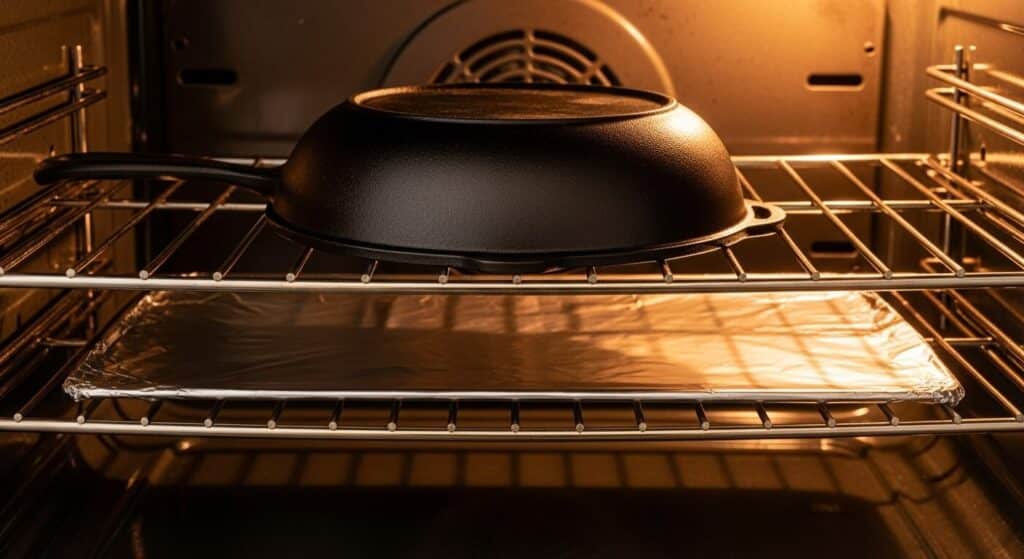
  • Deep seasoning: Oven method at 450°F for 1 hour every 3-4 months
  • Avoid: Soap (optional—modern soaps won’t strip seasoning), soaking in water
  • Rust removal: Steel wool plus re-seasoning restores damaged pans

Bare cast iron reacts with acidic foods. Tomato-based sauces and wine reductions develop metallic flavors if simmered longer than 15-20 minutes. Enameled cast iron eliminates this issue but costs 2-3x more.

Carbon Steel Characteristics

Carbon steel combines cast iron’s heat retention with lighter weight. The material responds faster to temperature changes than cast iron while maintaining better heat capacity than stainless steel.

Performance specifications:

  • Weight: 3-5 pounds for 12-inch pans (similar to stainless steel)
  • Heat capacity: 70% of cast iron’s retention, 150% of stainless steel
  • Seasoning required: Develops patina similar to cast iron
  • Professional preference: Restaurant kitchens favor carbon steel for sauté work

Carbon steel advantages over cast iron:

  • One-handed operation remains comfortable during extended cooking
  • Sloped sides in fry pans support tossing and flipping techniques
  • Heats 40-50% faster due to thinner gauge metal
  • Costs 30-50% less than comparable stainless steel pans

The material requires similar maintenance to cast iron. Seasoning develops over 10-15 uses, creating a bronze-black patina that improves nonstick properties gradually.

Drawbacks to consider:

  • Acidic ingredients strip seasoning if cooked longer than 20 minutes
  • Dishwasher ruins patina completely, requires complete re-seasoning
  • Reactive surface can impart metallic taste to delicate sauces
  • Visual appearance never matches polished stainless steel

Carbon steel suits cooks who prioritize performance over aesthetics. The patina looks industrial compared to gleaming stainless surfaces.

Material Recommendations by Pan Type

Best Material Matches for Fry Pans

Stainless steel tri-ply: Optimal for cooks who sear proteins and build pan sauces 3+ times weekly. The durability justifies the $100-180 investment.

Nonstick (budget-friendly): Purchase a $30-50 nonstick fry pan exclusively for eggs and fish. Replace every 2-3 years without guilt.

Carbon steel: Professional-level performance at mid-range pricing ($60-100). Requires comfort with seasoning maintenance.

The fry pan’s versatility means you’ll use it 5-7 times per week. Material choice significantly impacts long-term satisfaction and cost-per-use value.

Best Material Matches for French Skillets

Stainless steel tri-ply or 5-ply: The added depth makes french skillets ideal for braising and sauce work—techniques where stainless excels. Splurge on quality construction ($120-200) for this workhorse pan.

Hard-anodized aluminum (nonstick): The deeper profile adds weight; hard-anodized aluminum provides nonstick convenience while keeping weight manageable (3.5-5 pounds vs 5-6 pounds for stainless).

Avoid cast iron: The combination of deep sidewalls and heavy material creates 10+ pound pans that require two-handed operation even when empty.

French skillets function as hybrid braiser-sauté pans. The material should support both high-heat searing and extended simmering with acidic liquids—stainless steel meets both requirements without compromise.

Price Comparison: French Skillet vs Fry Pan

French skillets cost 15-30% more than equivalent fry pans in the same material and brand due to the additional metal required for taller sidewalls—a 12-inch stainless steel fry pan typically ranges from $80-180 while the french skillet version costs $100-230.

General Price Ranges for Quality Versions

Pan pricing divides into three tiers based on construction quality, material grade, and manufacturing origin. Both fry pans and french skillets follow the same pricing structure within each tier.

Budget-Friendly Options ($30-70)

Fry pan pricing:

  • 8-10 inch: $25-45
  • 12 inch: $35-60
  • 14 inch: $45-70

French skillet pricing:

  • 10 inch: $35-55
  • 12 inch: $45-70
  • 14 inch: Not commonly available in budget tier

Material characteristics at this price point:

Material Construction Expected Lifespan Performance Notes
Aluminum nonstick PTFE coating, thin gauge 2-3 years Adequate for eggs and fish, warps at high heat
Disk-bottom stainless Aluminum disk bonded to base only 5-8 years Hot spots on sidewalls, uneven heating
Carbon steel (bare) Single-ply construction 10-15 years Requires seasoning, excellent value

Budget pans work adequately for occasional cooking or specific tasks like eggs. The thin gauge metal (2-2.5mm) responds quickly to heat but lacks durability for daily use.

Best budget purchases:

  • Tramontina nonstick: $35-45 for 10-inch fry pan, reliable 2-3 year lifespan
  • Lodge carbon steel: $40-55 for 12-inch fry pan, professional performance at entry price
  • Cuisinart stainless (disk-bottom): $50-65 for 12-inch fry pan, functional but not exceptional

Budget french skillets offer limited selection. Most manufacturers don’t produce this hybrid design at entry-level pricing.

Mid-Range Quality ($80-150)

Fry pan pricing:

  • 10 inch: $70-110
  • 12 inch: $90-140
  • 14 inch: $110-150

French skillet pricing:

  • 10 inch: $85-130
  • 12 inch: $110-160
  • 14 inch: $140-180

Construction improvements over budget tier:

  • Tri-ply stainless steel: Aluminum core extends through entire pan including sidewalls
  • Heavy-gauge construction: 2.5-3mm thickness prevents warping
  • Secured handles: Riveted rather than welded attachments
  • Better nonstick: Hard-anodized aluminum with reinforced PTFE coatings

This price range represents optimal value for home cooks. The quality supports daily use while remaining affordable enough to purchase multiple sizes.

Recommended mid-range brands:

  • Tramontina Tri-Ply Clad: $90-120 for 12-inch fry pan, comparable to All-Clad at 40% lower price
  • Cuisinart MultiClad Pro: $80-110 for 12-inch fry pan, lifetime warranty included
  • Calphalon Contemporary: $100-140 for 12-inch french skillet, hard-anodized nonstick
  • Made In: $99-129 for 12-inch stainless, direct-to-consumer pricing

The performance gap between mid-range and premium narrows significantly. Most home cooks cannot detect differences between a $120 Tramontina and a $200 All-Clad during actual cooking.

Premium Tier ($150-300+)

Fry pan pricing:

  • 10 inch: $140-220
  • 12 inch: $180-280
  • 14 inch: $220-350

French skillet pricing:

  • 10 inch: $170-250
  • 12 inch: $220-320
  • 14 inch: $280-400

Premium features and construction:

Brand Material Special Features Price Premium Justification
All-Clad D3 Tri-ply stainless Made in USA, lifetime warranty Industry standard, exceptional durability
Demeyere Proline 7-ply stainless Welded handles, silvinox finish Superior heat distribution, no rivets
Mauviel M’Cook 5-ply stainless Copper core layer Rapid heat response, French craftsmanship
Le Creuset Enameled steel Colorful enamel exterior Aesthetic appeal, oven-to-table presentation

Premium pans offer marginal performance improvements over mid-range options. The higher cost reflects manufacturing location (USA/Europe vs Asia), warranty terms, and brand reputation.

When premium pricing makes sense:

  • Professional chefs cooking 15-20+ hours weekly
  • Home cooks prioritizing heirloom-quality cookware
  • Gift purchases where brand recognition matters
  • Collectors seeking specific aesthetic finishes

The $100 price gap between mid-range and premium rarely translates to noticeable cooking improvements for home users preparing 5-10 meals weekly.

What Affects the Cost of These Pans

Construction Method Impact

Tri-ply vs disk-bottom construction:

  • Disk-bottom fry pan: $50-80 (aluminum disk bonded to base only)
  • Tri-ply fry pan: $90-140 (aluminum layer extends through entire pan)
  • Performance difference: Tri-ply eliminates sidewall hot spots, heats 30% more evenly

The construction method affects french skillets more dramatically than fry pans. The taller sidewalls in disk-bottom french skillets remain cool while the base overheats—creating 50-75°F temperature differentials.

Material and Ply Count

Adding material layers increases manufacturing complexity and raw material costs.

Price by ply construction (12-inch fry pan):

Construction Price Range Weight Heat Performance
Disk-bottom $50-80 3-3.5 lbs Adequate for frying, poor for sauce work
Tri-ply (3-layer) $90-140 3.5-4.5 lbs Excellent all-around performance
5-ply $150-220 4.5-5.5 lbs Marginally better heat retention
7-ply $250-350 5.5-6.5 lbs Minimal real-world advantage over 5-ply

Most cooks cannot distinguish 5-ply from tri-ply during normal cooking. The additional layers provide insurance against warping rather than measurable performance improvements.

Handle Material and Attachment

Handle cost factors:

  • Welded handles: $10-15 less expensive, can fail after 5-7 years
  • Riveted handles: Industry standard, secure attachment lasts 15-20+ years
  • Stainless steel handles: Oven-safe to 600°F, conduct heat during stovetop use
  • Silicone-wrapped handles: Comfortable grip, oven-safe only to 400-450°F

Helper handles on larger french skillets add $15-25 to manufacturing costs. The second handle becomes essential on 12-inch and larger models filled with liquid.

Brand Premium and Country of Origin

Manufacturing location significantly impacts retail pricing even when construction quality remains identical.

Price by manufacturing origin (12-inch tri-ply fry pan):

  • China-made (Tramontina, Cuisinart): $80-120
  • USA-made (All-Clad, Made In): $150-220
  • France-made (Mauviel, de Buyer): $180-280
  • Belgium-made (Demeyere): $200-320

The performance differences rarely justify the 100-150% price premium. Blind taste tests consistently show home cooks cannot identify which pan cooked which food when comparing $100 vs $250 options.

Value Considerations and Longevity

Cost-Per-Use Calculation

Dividing purchase price by expected uses reveals actual value. A pan used 200 times annually for 10 years delivers 2,000 total uses.

Cost-per-use analysis:

Pan Type Purchase Price Expected Uses Cost Per Use
Budget nonstick fry pan $40 600 uses (3 years × 200/year) $0.067
Mid-range stainless fry pan $110 4,000 uses (20 years × 200/year) $0.028
Premium stainless fry pan $220 5,000 uses (25 years × 200/year) $0.044

The mid-range stainless steel option provides the lowest cost-per-use. Premium pans rarely last long enough to justify their higher initial investment.

French skillet value calculation:

  • Mid-range french skillet: $130 ÷ 3,000 uses = $0.043 per use
  • Premium french skillet: $250 ÷ 3,500 uses = $0.071 per use

French skillets typically see less frequent use than fry pans (150 times annually vs 200). The reduced usage frequency extends calendar lifespan but doesn’t improve cost-per-use value.

Warranty Coverage Impact

Warranty comparison:

  • Budget brands (1-2 years): Limited coverage, replacement difficult
  • Mid-range brands (10-year to lifetime): Honored by most manufacturers, requires shipping costs
  • Premium brands (lifetime): Typically honored without hassle, some offer free shipping

Lifetime warranties sound appealing but rarely get utilized. Most pans either fail within the first 3-4 years (manufacturing defects) or last 15+ years without issues.

Replacement Cycle Economics

Total 20-year ownership costs:

Budget nonstick approach:

  • Replace every 3 years: 7 pans × $45 = $315
  • Performance declines significantly after 18-24 months

Mid-range stainless approach:

  • Single purchase: $110
  • Maintains performance for 20+ years
  • Savings: $205 over 20 years

Premium stainless approach:

  • Single purchase: $220
  • Performance identical to mid-range option
  • Additional cost vs mid-range: $110 with no functional benefit

The mid-range stainless steel strategy delivers optimal long-term value. Budget nonstick makes sense only for specialized tasks (eggs, fish) where stainless steel struggles.

Budget-Friendly Options vs Premium Choices

When to Buy Budget

Budget pans suit specific scenarios where premium quality provides no advantage:

Purchase budget fry pans for:

  • Single-task applications: Dedicated egg pan used 3-4 times weekly
  • First apartment setup: Temporary cookware before upgrading in 2-3 years
  • Rental properties: Pans left for tenants that may get damaged
  • College students: Limited budget and cooking frequency
  • Backup pans: Secondary sizes used only occasionally

A $35 nonstick fry pan for eggs performs identically to a $90 nonstick version. The coating wears out at the same rate regardless of price.

When Premium Pricing Justifies Itself

Premium pans make financial sense only in limited circumstances:

Justifiable premium purchases:

  • Daily professional use: Restaurant cooks using pans 40+ hours weekly
  • Heirloom intent: Passing down cookware to children/grandchildren
  • Aesthetic requirements: Open kitchens where cookware serves decorative function
  • Warranty location: US-based manufacturing enables easier warranty claims

Most home cooks overspend on premium brands believing higher prices guarantee better results. The reality: a $110 mid-range pan delivers 95% of a $250 premium pan’s performance at 44% of the cost.

Care and Maintenance Differences

French skillets and fry pans require identical cleaning methods when made from the same material—the sidewall height difference affects only how easily you can reach interior surfaces during scrubbing, not the fundamental care requirements.

Cleaning Considerations for Sloped vs Straight Sides

Accessing Interior Surfaces

The sloped walls of fry pans allow sponges and brushes to reach all areas with natural hand motion. French skillet corners where straight walls meet the base require angled scrubbing.

Cleaning access comparison:

Pan Area Fry Pan Ease French Skillet Ease Time Difference
Center of base Easy Easy None
Wall-to-base junction Easy (flows naturally) Moderate (90° angle) +15-20 seconds
Upper sidewalls Easy (short reach) Easy (accessible) None
Rim and lip Easy Easy None

The perpendicular corner in french skillets traps food particles more readily than curved transitions in fry pans. Tomato-based sauces and sticky glazes accumulate in this junction.

Scrubbing Technique Adjustments

Fry pan cleaning method:

  • Circular motions cover entire surface efficiently
  • Sponge naturally follows the wall curve
  • Average cleaning time: 45-60 seconds

French skillet cleaning method:

  • Base requires circular motions
  • Corners need targeted angled scrubbing
  • Walls cleaned with up-down strokes
  • Average cleaning time: 60-90 seconds

The 15-30 second increase matters when washing dishes after multiple courses. French skillets used for saucy preparations add noticeable cleanup time compared to fry pans used for simple searing.

Storage Requirements for Each Pan Type

Cabinet and Drawer Space

Fry pans nest efficiently due to sloped sides. Each additional pan adds only 1.5-2 inches to the stack height.

Nesting dimensions (3-pan set: 8″, 10″, 12″):

Fry pans nested:

  • Total height: 6-7 inches
  • Footprint: 12″ diameter circle
  • Wasted space: Minimal (slopes interlock)

French skillets nested:

  • Total height: 9-11 inches
  • Footprint: 12″ diameter circle
  • Wasted space: 20-30% (vertical walls don’t nest as efficiently)

The straight walls create air gaps between nested french skillets. A 12-inch french skillet might only nest 2 inches into a 14-inch model rather than the 3-4 inches achieved with sloped fry pan walls.

Hanging and Rack Storage

Overhead pot racks:

  • Both pan types hang identically from handles
  • French skillet depth creates 2-3 inches more vertical clearance requirement
  • Ceiling height under 8 feet becomes problematic with hanging french skillets

Wall-mounted rails:

  • S-hooks work equally well for both designs
  • French skillets protrude 1-2 inches farther from wall
  • Narrow galley kitchens may experience clearance issues

Vertical storage racks:

  • Fry pans fit standard 8-inch deep slots
  • French skillets require 10-12 inch deep slots
  • Commercial organizers often specify fry pan dimensions only

Kitchen designers typically allocate storage based on fry pan measurements. French skillets may not fit in pre-planned spaces without adjustments.

Durability and Longevity Comparison

The material determines lifespan—not the pan geometry. A stainless steel fry pan and french skillet from the same manufacturer last equally long.

Warping Resistance

Heat-induced warping factors:

Pan Characteristic Fry Pan French Skillet Impact on Warping
Metal mass Lower Higher (+25-35%) French skillets resist warping better
Wall stress points Angled transition Perpendicular corner Equal vulnerability
Gauge thickness Typically 2.5-3mm Typically 2.5-3mm Identical when from same line

French skillets resist warping slightly better due to increased structural rigidity from taller sidewalls. The additional metal mass distributes thermal stress more effectively.

Warping prevention (both pan types):

  • Avoid thermal shock (cold water on hot pan)
  • Preheat gradually over 3-4 minutes rather than blasting high heat immediately
  • Use burners appropriately sized to pan base
  • Avoid extended empty heating (longer than 5 minutes)

Thin budget pans (under 2.5mm gauge) warp regardless of geometry. Quality construction matters more than fry pan vs french skillet design.

Handle Longevity

Riveted handles outlast welded handles by 10-15 years in both pan styles. The connection method determines durability, not the pan shape.

Handle failure timeline:

  • Welded handles: Begin loosening after 5-7 years of regular use (3-4 times weekly)
  • Riveted handles: Remain secure 15-20+ years with same usage frequency
  • Bolted handles: Tighten easily but loosen every 2-3 years

French skillets stress handles more due to increased weight when full. A 12-inch french skillet holding 3.5 quarts weighs 12-14 pounds; the same diameter fry pan with minimal liquid weighs 7-9 pounds. Helper handles distribute this load and extend main handle lifespan.

Seasoning Needs (Material-Dependent)

Cast Iron and Carbon Steel Maintenance

Both pan types require identical seasoning protocols when made from reactive metals.

Seasoning process (applies to both):

  1. Initial seasoning: Apply thin oil layer, bake at 450°F for 60 minutes, repeat 3-4 times
  2. After each use: Wipe with oil while warm
  3. Deep cleaning: Scrub with salt and oil paste, re-season afterward
  4. Rust treatment: Remove with steel wool, re-season completely

French skillets offer more surface area requiring seasoning. A 12-inch french skillet has 35-40% more interior surface than an equal-diameter fry pan due to taller walls.

Seasoning maintenance time:

  • 12-inch fry pan: 2-3 minutes post-cooking wipe-down
  • 12-inch french skillet: 3-4 minutes to coat all interior surfaces
  • Deep seasoning: 10-15 minutes prep time (both pans) + 60 minute oven time

The additional 60-90 seconds per cleaning session accumulates. French skillets used daily require 6-7 hours more maintenance annually than fry pans.

Stainless Steel and Nonstick Care

Stainless steel (both pan types):

  • No seasoning required
  • Clean with soap and water after every use
  • Remove discoloration with Barkeeper’s Friend every 4-6 weeks
  • Polish with stainless cleaner monthly for appearance (optional)

Nonstick coatings (both pan types):

  • Never requires seasoning
  • Hand-wash recommended despite “dishwasher-safe” claims
  • Avoid metal utensils to extend coating life
  • Replace when food begins sticking (2-4 years typical)

Material trumps geometry for maintenance requirements. Choose material based on your willingness to perform upkeep, not pan shape.

Dishwasher Safety Considerations

Material-Specific Guidelines

Dishwasher-safe materials:

  • Stainless steel tri-ply (all brands)
  • Hard-anodized aluminum (check manufacturer specifications)
  • Enameled cast iron (hand-washing preferred but dishwasher acceptable)

Hand-wash required:

  • Nonstick coatings (detergent degrades coating 3-4x faster)
  • Bare cast iron and carbon steel (destroys seasoning completely)
  • Copper exterior finishes (tarnishes in dishwasher)

The pan geometry doesn’t affect dishwasher safety—only the materials used in construction matter.

Practical Dishwasher Loading

French skillets consume more dishwasher space than fry pans due to vertical height. A 12-inch french skillet occupies the entire bottom rack when placed upright.

Dishwasher capacity impact:

  • Fry pan (12-inch): Fits on bottom rack, leaves room for 3-4 plates vertically stacked
  • French skillet (12-inch): Fits on bottom rack, blocks most other loading positions
  • Solution: Hand-wash french skillets even if dishwasher-safe to preserve dishwasher capacity

Most home cooks hand-wash large pans regardless of material. The space consumption in dishwashers makes manual cleaning more practical for both pan types.

Long-Term Performance Maintenance

Preventing Common Issues

Sticking problems (stainless steel):

  • Caused by insufficient preheating, not pan geometry
  • Solution: Heat until water droplets bead and roll (350-375°F)
  • Affects fry pans and french skillets identically

Discoloration (stainless steel):

  • Heat tinting creates rainbow patterns (cosmetic only)
  • More visible on vertical french skillet walls than sloped fry pan sides
  • Remove with Barkeeper’s Friend or baking soda paste

Coating wear (nonstick):

  • Deteriorates at same rate regardless of pan shape
  • French skillet corners may show wear first due to scrubbing angle
  • Replace entire pan when coating fails in any location

Restoration Techniques

Both pan types respond to identical restoration methods based on their construction material.

Stainless steel restoration:

  1. Create paste with Barkeeper’s Friend and water
  2. Scrub entire interior surface for 2-3 minutes
  3. Rinse thoroughly and dry immediately
  4. Polish with microfiber cloth

Cast iron restoration:

  1. Remove rust with steel wool or electrolysis
  2. Wash with soap to remove loose particles
  3. Dry completely (heat on stovetop 3-4 minutes)
  4. Apply thin oil layer and bake at 450°F for 60 minutes
  5. Repeat oil-and-bake process 3-4 times

The process takes identical time for 12-inch fry pans and 12-inch french skillets—material determines restoration difficulty, not geometry.

Common Misconceptions About French Skillets and Fry Pans

The most prevalent misconception is that french skillets and sauté pans are identical cookware—they’re actually distinct designs where french skillets feature slightly sloped walls (80-85° angle) while sauté pans have completely vertical walls (90° angle) with straight edges and lids included.

“French Skillets Are Just Deep Fry Pans”

This oversimplification ignores the functional changes that depth creates. The 1-1.5 inch height difference fundamentally alters liquid capacity and moisture retention.

Reality check:

  • Volume difference: 50-80% more capacity, not just “a bit deeper”
  • Cooking technique impact: Tossing becomes impractical vs merely difficult
  • Recipe compatibility: Different dish categories excel in each pan
  • Weight distribution: 25-35% heavier when empty, 60-80% heavier when full

Dismissing french skillets as “deep fry pans” misses the point. The depth transforms which recipes work effectively rather than simply providing more headroom.

“Fry Pans and Skillets Are Different Things”

These terms describe identical cookware. Regional language variations created the confusion, not functional differences.

Terminology clarification:

Term Geographic Usage Meaning Functional Difference
Fry pan Universal Pan with sloped sides for frying None
Skillet US Southern/Midwestern preference Identical to fry pan None
Frying pan British English standard Same as fry pan/skillet None

Manufacturers use “skillet” and “fry pan” interchangeably in product listings. All-Clad’s “10-inch fry pan” and Lodge’s “10-inch skillet” describe the same pan geometry.

“You Can’t Sear in a French Skillet”

The straight walls don’t affect base temperature or contact area. Searing performance remains identical between pan types.

Searing capability facts:

  • Both pans reach 500°F+ on the cooking surface
  • Identical flat base dimensions provide same contact area
  • Maillard reaction occurs equally in both designs
  • Fond development unchanged by wall height or angle

The difference appears after searing when building pan sauces. French skillets contain the sauce; fry pans risk overflow. The initial sear itself performs identically.

“French Skillets Are Professional Equipment Only”

Home cooks use french skillets as frequently as professional kitchens. The hybrid design suits anyone preparing braised dishes or one-pan meals.

Professional vs home use reality:

  • Restaurant kitchens actually prefer dedicated sauté pans with lids over french skillets
  • French skillets target home cooks wanting versatility in fewer pans
  • Professional settings typically separate browning pans from braising vessels
  • The “everyday skillet” category dominates home use for both pan types

Marketing positions french skillets as sophisticated, but they simply combine features that home cooks find convenient. No advanced technique is required.

Clarifying Terminology: Skillet vs Fry Pan vs Sauté Pan vs French Skillet

Skillet and Fry Pan: Identical Cookware

These terms reference the same pan design with no functional distinction. Use them interchangeably without confusion.

Shared characteristics:

  • Sloped sidewalls at 45° angle
  • Long handle, no lid included
  • Depth of 1-2 inches
  • Designed for high-heat, quick cooking

Regional dialects and brand preferences explain the dual naming. Both terms appear in cookbooks and recipes referring to identical equipment.

Sauté Pan: A Distinct Category

Sauté pans feature completely vertical walls (90° angle) and typically include a lid. This design differs from both fry pans and french skillets.

Sauté pan specifications:

Feature Measurement Purpose
Wall angle 90° (perfectly vertical) Maximum liquid capacity
Depth 2.5-3 inches Same as french skillets
Lid Included with pan Enables covered cooking
Handle Long handle + helper handle Two-point control for heavy loads

The vertical walls create sharp 90° corners that trap food particles during cleaning. French skillet walls angle slightly inward (80-85°), creating a gentler transition that releases food more easily.

French Skillet: The Hybrid Position

French skillets occupy the middle ground between fry pans and sauté pans. The near-vertical walls (80-85° angle) provide most of a sauté pan’s capacity while maintaining easier food release than true vertical walls.

Comparison of all three pan types:

Specification Fry Pan French Skillet Sauté Pan
Wall angle 45° 80-85° 90°
Depth 1-2 inches 2.5-3.5 inches 2.5-3 inches
Lid included No No Yes
Best for tossing Excellent Poor Very poor
Best for braising Poor Excellent Excellent
Liquid capacity (12″) 2-2.5 quarts 3.5-4 quarts 3.5-4 quarts

The 5-10 degree wall angle difference between french skillets and sauté pans seems minor but affects how food slides during plating and cleaning.

Braiser: Often Confused with French Skillets

Braisers feature even wider bases (14-16 inches typical) with shallow depth (2-3 inches). They prioritize surface area over vertical capacity.

Braiser distinguishing features:

  • Extremely wide diameter relative to depth
  • Two small handles instead of one long handle
  • Always includes tight-fitting lid
  • Optimized for oven braising rather than stovetop work

French skillets work on stovetops primarily; braisers work in ovens primarily. The use case differs despite similar depth measurements.

What a French Skillet Is NOT

Not a Sauté Pan Replacement

French skillets cannot fully replace sauté pans in kitchens that regularly prepare covered, liquid-heavy dishes.

Limitations compared to true sauté pans:

  • No included lid: Requires purchasing universal lid separately ($15-25)
  • Slightly angled walls: 15-20% less capacity than same-diameter sauté pan
  • Reduced for simmering: Lacks tight seal that lids provide for moisture retention
  • Professional gap: Restaurant kitchens don’t consider them interchangeable

Home cooks preparing risotto, covered braises, or steamed dishes 3+ times weekly should purchase an actual sauté pan with fitted lid rather than compromising with a french skillet.

Not Deeper Fry Pans With Different Names

The depth creates functional differences beyond simply holding more liquid. Cooking techniques must adapt to the geometry.

Functional changes from added depth:

  • Pan-tossing becomes spatula-stirring (technique shift, not just difficulty increase)
  • Evaporation rates drop 40-50% (affects recipe timing and liquid quantities)
  • Weight increases make one-handed pouring difficult (requires two-hand operation)
  • Splatter containment changes stovetop cleanup requirements (reduces surrounding mess)

These aren’t merely degrees of difference—they represent distinct cooking characteristics that affect recipe selection and technique.

Not Universal Pan Replacements

Despite marketing claims, french skillets don’t eliminate the need for specialized cookware. They improve versatility within a specific range.

Tasks french skillets cannot handle effectively:

  • Wok cooking: High, curved sides enable proper stir-fry technique
  • Deep frying: 3.5 quart capacity insufficient for submerging foods in oil
  • Stock/soup making: Volume too limited for preparing broths
  • Pasta boiling: Depth inadequate for cooking pasta in proper water volume
  • Candy making: Lacks vertical walls needed for safe sugar boiling

The hybrid design serves cooks who prepare seared-then-braised dishes frequently. It doesn’t replace the full spectrum of cookware categories.

Real Performance Differences That Matter

When Wall Angle Actually Affects Results

The 40-degree difference between fry pan (45°) and french skillet (80-85°) walls impacts specific techniques measurably.

Measurable performance impacts:

Technique Fry Pan Advantage French Skillet Advantage Magnitude
Wrist-flipping Significant None 100% easier in fry pan
Moisture retention None Moderate 30-40% less evaporation
Splatter control None Significant 70-80% reduction
Liquid capacity None Major 60-80% more volume
Speed of cooking Minor None 10-15% faster in fry pan

The differences manifest in specific scenarios rather than across all cooking tasks. Neither pan universally outperforms the other—context determines the winner.

When the Differences Don’t Matter

Many common cooking tasks show no performance variation between the two pan types.

Functionally identical applications:

  • Searing individual steaks, chops, or chicken breasts (same base contact)
  • Cooking eggs with spatula assistance (both work equally well)
  • Shallow frying with less than 1 inch oil (capacity adequate in both)
  • Sautéing vegetables when using utensils (stirring vs tossing becomes irrelevant)
  • Reheating leftovers (depth provides no advantage)

Cooks who rarely prepare dishes requiring more than 1.5 cups of liquid gain minimal benefit from french skillet depth. The extra cost and storage space provide unused capacity.

Addressing Online Misinformation

“French Skillets Don’t Brown as Well”

This false claim likely stems from confusing french skillets with nonstick sauté pans. Material determines browning capability, not wall angle.

Browning facts:

  • Stainless steel french skillets develop fond identically to fry pans
  • Cast iron french skillets (rare) would brown exactly like cast iron fry pans
  • Wall height has zero effect on Maillard reaction temperatures or surface contact

The myth probably originated from reviewers comparing nonstick french skillets to stainless fry pans—a material difference, not a geometry issue.

“You Need Both Pans No Matter What”

This blanket statement serves retailers more than home cooks. Your actual cooking patterns determine whether owning both makes sense.

Single-pan sufficiency scenarios:

  • Fry pan alone works if: You cook for 1-2 people, rarely braise, prepare quick weeknight meals
  • French skillet alone works if: You’re comfortable using spatulas instead of tossing, prepare saucy dishes frequently

The two-pan recommendation applies to cooks who regularly prepare recipes spanning both categories. Infrequent cooks benefit more from choosing one quality pan over buying two mediocre options.

Expert Recommendations: Top French Skillets and Fry Pans

The best fry pans and french skillets balance construction quality, heat performance, and price—with Tramontina’s tri-ply stainless steel offering exceptional value at $90-120, All-Clad D3 delivering premium performance at $180-220, and Made In providing direct-to-consumer pricing at $99-129 for comparable quality.

Best Traditional Fry Pans

Tramontina Tri-Ply Clad 12-Inch Fry Pan ($90-110)

Construction specifications:

  • Tri-ply stainless steel (18/10 interior, aluminum core, magnetic exterior)
  • 2.6mm total thickness
  • Riveted stainless steel handle
  • Oven-safe to 500°F
  • Made in Brazil

Performance strengths:

  • Heats evenly across entire cooking surface with no detectable hot spots
  • Develops fond effectively for pan sauces
  • Weight (3.8 pounds) allows comfortable one-handed operation
  • Dishwasher-safe construction maintains appearance after 100+ cycles

Why this pan excels:

The Tramontina delivers 90-95% of All-Clad’s performance at 50% of the price. Blind cooking tests show minimal difference in browning capability or heat responsiveness. The thinner gauge (2.6mm vs All-Clad’s 2.6mm—actually identical) heats marginally faster without sacrificing durability.

Best for: Home cooks seeking professional-grade performance without premium pricing, couples or small families cooking 4-6 times weekly.

Limitations: Handle gets hot during extended stovetop use (25+ minutes), not made in USA if that matters to buyer.

All-Clad D3 Stainless 12-Inch Fry Pan ($180-220)

Construction specifications:

  • Tri-ply bonded construction (18/10 stainless interior, aluminum core, magnetic steel exterior)
  • 2.6mm thickness
  • Riveted stainless steel handle with angled grip
  • Oven and broiler-safe to 600°F
  • Made in USA (Pennsylvania)

Performance strengths:

  • Industry-standard heat distribution with aluminum extending through entire pan
  • Handle design stays cooler than competitors during stovetop cooking
  • Starburst finish on cooking surface improves oil distribution
  • Lifetime warranty honored without hassle

Why this pan excels:

All-Clad sets the benchmark that other manufacturers copy. The handle ergonomics reduce wrist strain during prolonged cooking sessions. The polished exterior maintains appearance with minimal maintenance—buff with stainless cleaner every 3-4 months for showroom shine.

Best for: Serious home cooks investing in heirloom-quality cookware, those prioritizing USA manufacturing, buyers who value brand reputation and warranty reliability.

Limitations: Price premium of $90-120 over comparable performers, slight performance edge doesn’t justify cost for budget-conscious cooks.

Made In 12-Inch Stainless Clad Fry Pan ($119)

Construction specifications:

  • 5-ply construction (stainless-aluminum-aluminum-aluminum-stainless)
  • 2.5mm total thickness
  • Riveted stainless steel handle
  • Oven-safe to 600°F
  • Made in USA (assembled domestically with imported materials)

Performance strengths:

  • Direct-to-consumer model eliminates retail markup (comparable to $180 retail pans)
  • Five-ply construction provides excellent heat retention
  • Slightly lighter than All-Clad (3.6 pounds vs 3.8 pounds) while maintaining rigidity
  • Sloped sides optimized for pan-tossing technique

Why this pan excels:

Made In bridges the gap between budget and premium tiers. The company targets professional chefs and serious home cooks who recognize construction quality but resist paying for brand prestige. Performance matches All-Clad in blind comparisons while costing 40% less.

Best for: Value-conscious buyers seeking premium construction, cooks familiar with Made In’s direct-to-consumer model, those comfortable purchasing cookware online without handling first.

Limitations: Less established brand with shorter track record (founded 2016), limited retail presence for hands-on evaluation before purchase.

Lodge 12-Inch Carbon Steel Skillet ($45-55)

Construction specifications:

  • Single-layer carbon steel construction
  • 12-gauge thickness (2mm)
  • Riveted steel handle
  • Oven-safe to 600°F+
  • Made in USA

Performance strengths:

  • Develops natural nonstick patina through seasoning
  • Heats quickly and responds to temperature changes faster than stainless
  • Weighs 4.2 pounds—lighter than cast iron, similar to stainless tri-ply
  • Professional kitchen workhorse at fraction of stainless steel cost

Why this pan excels:

Carbon steel delivers cast iron’s heat retention with better maneuverability. The material suits cooks comfortable maintaining seasoned surfaces. Restaurant kitchens rely on carbon steel for sauté work because it combines performance with low replacement cost.

Best for: Budget-conscious cooks willing to maintain seasoning, those preferring naturally nonstick surfaces over coated pans, buyers seeking professional-grade performance under $60.

Limitations: Requires regular seasoning maintenance, reacts with acidic foods causing metallic flavors, develops industrial appearance rather than polished finish.

Honorable Mention: Cuisinart MultiClad Pro 12-Inch ($80-100)

Why it made the list:

Cuisinart’s tri-ply line offers legitimate quality at entry-level pricing. The construction mirrors Tramontina’s specifications while including a lifetime warranty. Performance falls 5-10% below Tramontina in heat responsiveness but remains serviceable for home cooking.

Best for: First-time buyers testing whether tri-ply stainless suits their cooking style before investing in premium brands.

Best French Skillets on the Market

All-Clad D3 Stainless 12-Inch French Skillet ($220-250)

Construction specifications:

  • Tri-ply bonded stainless steel throughout
  • 2.6mm thickness
  • Long handle plus small helper handle
  • 3.5-quart capacity
  • Oven-safe to 600°F

Performance strengths:

  • Straight walls contain 3.5 quarts without approaching rim
  • Helper handle essential for safe two-handed lifting when full
  • Fond development matches fry pan performance on identical base
  • Taller walls reduce stovetop splatter by 75-80% during braising

Why this french skillet excels:

All-Clad’s french skillet represents their most versatile pan design. The 3.5-quart capacity handles complete one-pan dinners for 4-5 people. The quality construction ensures the base browns proteins properly while walls contain braising liquid during finishing.

Best for: Home cooks preparing braised dishes 2+ times weekly, families of 4-6 people, those consolidating multiple pan types into one versatile piece.

Limitations: $230-250 price point approaches entry-level sauté pan cost (which includes lid), weight of 5.2 pounds when empty requires two-handed operation when full.

Tramontina Tri-Ply Clad 12-Inch French Skillet ($110-130)

Construction specifications:

  • Tri-ply stainless steel construction
  • 2.6mm thickness
  • Single long handle (no helper handle on standard model)
  • 3.5-quart capacity
  • Oven-safe to 500°F

Performance strengths:

  • Identical base construction to All-Clad at 50% lower price
  • Even heat distribution through sidewalls prevents hot spots during simmering
  • Straight walls angle slightly (80-82°) making food release easier than true vertical sauté pans
  • Dishwasher-safe for quick cleanup after saucy preparations

Why this french skillet excels:

Tramontina’s french skillet delivers the hybrid functionality at accessible pricing. The lack of helper handle on some models reduces cost but requires caution when handling 12+ pounds of pan plus food plus liquid.

Best for: Budget-conscious cooks wanting french skillet versatility, those cooking for 3-4 people regularly, buyers already satisfied with Tramontina fry pan performance.

Limitations: Helper handle sold separately or not available depending on retailer, slightly thinner handle construction than All-Clad reduces comfort during extended cooking.

Calphalon Contemporary Nonstick 12-Inch French Skillet ($100-140)

Construction specifications:

  • Hard-anodized aluminum with PTFE nonstick coating
  • 3mm base thickness
  • Long handle plus helper handle
  • 4-quart capacity
  • Oven-safe to 450°F

Performance strengths:

  • Nonstick surface eliminates stuck-on food in corners where straight walls meet base
  • Hard-anodized aluminum provides superior heat conduction vs stainless steel
  • Lighter weight (4 pounds empty) vs stainless alternatives (5-5.5 pounds)
  • Cleanup takes 30-45 seconds with sponge and dish soap

Why this french skillet excels:

The nonstick coating addresses the primary french skillet cleaning challenge—90° corners trap food particles in stainless versions. Calphalon’s hard-anodized construction maintains nonstick properties 2-3x longer than standard PTFE pans through reinforced coating.

Best for: Cooks prioritizing easy cleanup over fond development, those preparing dishes without pan sauce reductions, families wanting minimal maintenance cookware.

Limitations: Cannot exceed 450°F (limits high-heat searing), coating lifespan of 3-5 years requires eventual replacement, no fond development for traditional pan sauces.

Made In 12-Inch Stainless Clad French Skillet ($139)

Construction specifications:

  • 5-ply stainless steel construction
  • 2.5mm thickness
  • Long handle with helper handle
  • 3.5-quart capacity
  • Oven-safe to 600°F

Performance strengths:

  • Five-layer construction improves heat retention vs tri-ply when adding cold ingredients
  • Direct-to-consumer pricing delivers premium construction at mid-range cost
  • Slightly lighter than All-Clad (4.8 pounds vs 5.2 pounds) due to thinner overall gauge
  • Professional-grade performance accessible to home cooks

Why this french skillet excels:

Made In targets the sweet spot between performance and value. The french skillet costs $90-110 less than All-Clad while delivering functionally identical results. The 5-ply construction provides marginal advantage in maintaining temperature during one-pan meal preparation.

Best for: Performance-focused cooks rejecting brand-name markups, those comfortable purchasing online without retail store evaluation, buyers wanting professional quality at accessible pricing.

Limitations: Newer brand with limited long-term durability data, thinner gauge may show warping after 10+ years (though still covered by warranty).

Budget Option: Cuisinart Chef’s Classic Nonstick 12-Inch Deep Skillet ($50-70)

Construction specifications:

  • Aluminum with standard PTFE coating
  • 2mm base thickness
  • Single long handle
  • 3.5-quart capacity
  • Oven-safe to 400°F

Performance strengths:

  • Entry-level price point provides french skillet functionality on tight budgets
  • Nonstick coating handles saucy dishes without difficult cleanup
  • Adequate for occasional braising and one-pan meals (2-3 times monthly)
  • Lightweight construction (2.8 pounds) makes handling easy

Why this option made the list:

Budget french skillets remain rare in the market. Cuisinart’s deep skillet provides the depth and capacity at $50-70, allowing cost-conscious cooks to test whether the hybrid design suits their cooking before investing in premium stainless.

Best for: College students and first-apartment cooks, those testing french skillet functionality, backup pans for vacation homes or RVs.

Limitations: Thin aluminum warps with high heat (avoid exceeding 400°F), coating degrades within 18-24 months of regular use, uneven heating creates hot spots at base center.

Making Your Final Decision: French Skillet or Fry Pan?

Choose a fry pan if you cook primarily quick, high-heat dishes for 1-3 people and value pan-tossing technique, or select a french skillet if you prepare braised meals, one-pan dinners, and sauce-heavy recipes for 3+ people at least twice weekly.

Summary of Key Differences Between French Skillets and Fry Pans

The decision hinges on six functional distinctions that directly impact cooking performance and recipe compatibility.

Critical differences at a glance:

Factor Fry Pan French Skillet Impact Level
Wall angle 45° sloped 80-85° near-vertical High—affects tossing and capacity
Depth 1-2 inches 2.5-3.5 inches High—determines liquid volume
Liquid capacity 2-2.5 quarts (12″) 3.5-4 quarts (12″) High—limits recipe types
Weight 3-4.5 pounds 4.5-6 pounds Medium—affects handling ease
Evaporation rate Fast (40-50% in 15 min) Slow (15-25% in 15 min) Medium—changes cooking times
Splatter control Minimal Significant (70-80% reduction) Low—convenience factor only

These differences create distinct cooking profiles rather than minor variations. Your most-prepared dishes should drive the selection.

Quick Decision Framework

Cooking Pattern Assessment

Answer these four questions to identify which pan matches your actual cooking behavior:

Question 1: How often do you prepare dishes requiring 2+ cups of liquid?

  • Rarely (once monthly or less): Fry pan adequate
  • Occasionally (2-3 times monthly): Either works
  • Regularly (weekly or more): French skillet recommended

Question 2: How many people do you typically cook for?

  • 1-2 people: 10-inch fry pan sufficient
  • 2-3 people: 12-inch fry pan or 10-inch french skillet
  • 4+ people: 12-inch french skillet required

Question 3: What percentage of your meals involve braising, one-pan dishes, or sauce reductions?

  • Under 20%: Fry pan handles your cooking style
  • 20-40%: French skillet adds convenience but isn’t essential
  • Over 40%: French skillet becomes primary pan

Question 4: Do you regularly perform pan-tossing or do you use spatulas?

  • Pan-tossing preferred: Fry pan enables technique
  • Spatula-stirring comfortable: French skillet works fine
  • Haven’t developed tossing skill: No advantage either way

Recipe Type Breakdown

Review your 10 most frequently prepared dinners. Count how many fall into each category.

Fry pan recipes (count these):

  • Seared steaks, pork chops, or chicken breasts (no sauce or minimal pan sauce)
  • Stir-fries and quick sautés
  • Breakfast items (eggs, bacon, pancakes, hash browns)
  • Shallow-fried foods (cutlets, fish fillets with light breading)

French skillet recipes (count these):

  • Braised chicken, pork, or lamb dishes
  • One-pan pasta meals
  • Chicken marsala, piccata, or other sauce-heavy proteins
  • Rice-based dishes (risotto, pilaf, paella-style)
  • Shakshuka or other egg dishes with significant sauce

Works in either pan:

  • Simple grilled cheese or quesadillas
  • Reheating leftovers
  • Sautéed vegetables as side dishes
  • Pan-seared fish with minimal accompaniment

Decision logic:

  • 7+ fry pan recipes: Purchase fry pan first
  • 7+ french skillet recipes: Purchase french skillet first
  • Split 5-5 or similar: Buy based on household size (fry pan for 1-2 people, french skillet for 3+)

Final Recommendations Based on Cooking Style

Speed-Focused Weeknight Cooks

Profile characteristics:

  • Meals prepared in under 30 minutes
  • Limited tolerance for complex multi-step recipes
  • Cooking for 1-3 people typically
  • Prioritizes cleanup speed

Recommended purchase: 10 or 12-inch stainless steel fry pan ($90-120 range)

The fry pan’s faster evaporation and lighter weight shave 3-5 minutes off cooking and cleanup time per meal. Over a year (250 meals), this saves 12-20 hours—meaningful for time-constrained schedules.

Family Meal Preparers

Profile characteristics:

  • Cooking for 4-6 people regularly
  • Preparing complete meals with protein, starch, and vegetables
  • Weekend meal planning with 2-3 hour cooking blocks
  • Open to braising and one-pan cooking methods

Recommended purchase: 12-inch stainless steel french skillet ($110-150 range)

The capacity accommodates family portions in single batches. One-pan meals reduce dish washing from 3-4 pots/pans down to a single french skillet plus serving plates.

Technique-Focused Home Cooks

Profile characteristics:

  • Interest in developing classical cooking techniques
  • Follows recipe instructions precisely
  • Values proper pan sauce preparation
  • Willing to invest time in cooking process

Recommended purchase: Both—10-inch fry pan + 12-inch french skillet ($200-280 total)

This combination covers 95% of recipes without compromise. The size difference (10″ vs 12″) prevents overlap—smaller pan for quick tasks, larger for complete meals.

Budget-Conscious Beginners

Profile characteristics:

  • First cookware purchase or apartment setup
  • Limited cooking experience
  • Uncertain which pan type suits personal style
  • Budget under $100 for single pan

Recommended purchase: 12-inch tri-ply fry pan ($80-100 range)

The fry pan handles broader recipe range for beginners. Most novice cooks start with simple searing and sautéing before progressing to braising. Purchase a french skillet later (12-18 months) after cooking patterns become clear.

Reminder: Both Pans Have Value

Neither pan type represents a universally superior choice. Each excels in specific scenarios while underperforming in others.

Fry pan irreplaceable advantages:

  • Pan-tossing technique for stir-fries and sautés
  • Faster moisture evaporation for crispy textures
  • Lighter weight for extended one-handed cooking
  • Lower cost for equivalent quality and size

French skillet irreplaceable advantages:

  • Liquid capacity for braising and simmering
  • One-pan cooking from sear to finish
  • Splatter containment during stovetop cooking
  • Larger serving capacity in same diameter footprint

Professional kitchens maintain both pan types because substitution compromises results. Home cooks with diverse cooking interests benefit from the same approach.

Investment timeline for comprehensive setup:

Timeframe Purchase Approximate Cost Cumulative Total
Initial 12″ stainless fry pan or french skillet $90-150 $90-150
6-12 months Opposite type in 10″ size $80-130 $170-280
12-24 months Specialized needs (nonstick egg pan, large braiser) $40-100 $210-380

This staged approach prevents overspending on cookware before understanding personal cooking patterns. Buy quality pieces as specific needs become clear rather than purchasing complete sets upfront.

The One-Pan Compromise

Cooks limited to purchasing a single pan face an inevitable compromise. Neither option handles all cooking tasks optimally.

Single french skillet compromises:

  • Stir-fries require spatula stirring instead of tossing (adds 60-90 seconds per dish)
  • Quick sautés take longer due to reduced evaporation (adds 2-3 minutes)
  • Weight of 5-6 pounds when full demands two-handed operation
  • Pan-tossing omelets becomes impractical (technique shift required)

Single fry pan compromises:

  • Braised dishes require reducing recipe liquid by 40-50%
  • One-pan meals limited to 2-3 servings maximum
  • Pan sauces over 1 cup risk boilover during reduction
  • Splatter cleanup adds 5-7 minutes after cooking fatty proteins

The compromises with a single french skillet prove less disruptive than fry pan limitations for most home cooks. Stirring instead of tossing adds minor time; reducing recipe quantities by half fundamentally changes what you can prepare.

Single-pan recommendation hierarchy:

  1. Best single-pan choice for most cooks: 12-inch stainless steel french skillet
  2. Exception for 1-2 person households: 10-inch stainless steel fry pan
  3. Exception for speed-focused cooks: 12-inch stainless steel fry pan
  4. Exception for braising enthusiasts: 12-inch stainless steel french skillet (confirms default choice)

The french skillet wins single-pan comparisons because adding liquid capacity proves easier than removing it. You can ignore the extra depth when cooking simple sears; you cannot create depth that doesn’t exist in a fry pan.

Previous Post
Skillet vs Wok Which Pan Should You Choose for Your Kitchen
Skillet Comparisons

Skillet vs Wok: Which Pan Should You Choose for Your Kitchen?

Next Post
cast iron skillet vs carbon steel
Skillet Comparisons

Carbon Steel Skillet vs Cast Iron Skillet: Which Pan Is Right for Your Kitchen?

error: Content is protected !!