How Electric Skillets Reduce Safety Risks for Seniors with Arthritis
Electric skillets eliminate the most dangerous aspects of stovetop cooking for seniors with arthritis—heavy lifting, reaching over open flames, and transferring hot pots—while providing stable, counter-level cooking that requires minimal grip strength.
Look. Traditional stovetop cooking is an accident waiting to happen when you’ve got arthritis. You’re dealing with heavy pans, high heat, awkward reaching, and grip strength that’s maybe half what it used to be. That’s a bad combination.
Electric skillets change the equation completely.
Eliminating Heavy Lifting and Transferring Hot Cookware
Here’s what kills people with arthritis on stovetops. Lifting a heavy pan full of hot food from the burner to the counter or table. Your hands are weak, the pan’s hot, you’re nervous about spilling—it’s basically designed to go wrong.
With an electric skillet? The food cooks where you serve it. No transfer. No lifting a scalding pot of soup across your kitchen while your arthritic hands scream at you.
Weight you’re NOT lifting:
- Cast iron skillet: 5-8 lbs empty, 10-15 lbs with food
- Large pot of soup or stew: 8-12 lbs
- Roasting pan with chicken: 6-10 lbs
And you’re not just lifting—you’re moving it through space while it sloshes around. One weak grip, one spasm of pain, and you’ve got second-degree burns and a ruined dinner.
Stable, Non-Tipping Design Prevents Spills and Burns
Electric skillets sit flat and wide. Low center of gravity. They don’t tip easily like a tall pot on a burner can.
Ever bumped a pot handle on the stove? With arthritis making you clumsy (because pain and reduced sensation do that), it happens more than you’d like. On a stovetop, that bumped pot can tip, spill, cause burns. An electric skillet? It’s stable enough that you’d have to really try to knock it over.
The wider base distributes weight better too. Less wobble, more security.
Precise Temperature Control Reduces Cooking Hazards
Set it to 350°F. It stays at 350°F. No guesswork about “medium-high heat” or watching flames creep up the sides of your pan.
This matters because arthritis slows you down. You can’t react quickly when something starts burning. With precise temp control, things burn less often—you’re not constantly babysitting the heat level or making judgment calls about when to turn things down.
And here’s the thing. Consistent temperature means fewer cooking failures, which means less frustration, which means you actually keep cooking for yourself instead of giving up and eating garbage.
Lower Profile Makes Food Access Easier for Arthritic Hands
Stovetop burners sit at counter height or higher. You’re reaching up and over to get to your food.
Electric skillets sit ON the counter. The cooking surface is maybe 2-3 inches above the counter instead of 6-8 inches. That difference matters when your shoulders hurt, your elbows hurt, and reaching overhead feels like torture.
You can flip pancakes, stir vegetables, check doneness—all with your arms in a natural, comfortable position.
Key Safety Advantages of Electric Skillets Over Traditional Stovetop Cooking
Electric skillets provide multiple safety features that specifically address the physical limitations arthritis creates—from eliminating open flames to providing cool-touch handles and automatic temperature regulation.
Let’s break down why these things actually keep you safer.
No Open Flames or Red-Hot Burners to Navigate
Gas stoves have open flames. Electric coil burners glow red-hot. Both will burn you instantly if you touch them or get too close.
With an electric skillet, the heat is contained inside the pan. The exterior stays relatively cool (we’ll get to handles in a sec). You’re not reaching across or over active heat sources to get to other burners or grab ingredients.
Burn risks eliminated:
- Sleeves catching fire from gas flames
- Accidentally touching hot burner coils
- Steam burns from boiling water on back burners you’re reaching over
- Hair or towels getting too close to open flames
When you’ve got reduced sensation in your hands from arthritis (it happens), you might not feel heat as quickly. That delayed reaction time is dangerous around open flames or exposed burners.
Built-In Temperature Regulation Prevents Overheating
The thermostat in an electric skillet clicks on and off to maintain set temperature. It won’t just keep heating indefinitely like a burner will.
This prevents:
- Cooking oil from reaching flash point and catching fire
- Food from burning to the pan while you’re distracted by pain
- Dangerous overheating if you forget you left it on
It’s not foolproof (nothing is), but it’s way safer than “I turned the knob to medium and hope that’s right.”
Cool-Touch Handles Designed for Arthritic Grip
Most decent electric skillets have handles that stay cool during cooking. Not “kinda warm,” but actually cool enough to grab without pot holders if you need to.
And the handles are usually larger and more ergonomic than traditional cookware. They’re designed for lifting when full, which means they’re already optimized for grip—add some silicone grips (like we talked about in that other article) and you’ve got excellent control.
Compare that to a cast iron skillet where the handle gets scorching hot and you’re white-knuckling a pot holder hoping you don’t drop it.
Automatic Shut-Off Features for Added Protection
Some electric skillets have auto shut-off after a certain time period or if they overheat.
This is huge for seniors who might forget they’re cooking. Arthritis doesn’t just affect your hands—the chronic pain and fatigue mess with your memory and attention. You might start cooking and then sit down for “just a minute” and… an hour later you smell burning.
Auto shut-off catches that. Not perfect, but it’s a safety net.
Even Heat Distribution Reduces Cooking Errors
The entire cooking surface heats evenly. No hot spots. No cold zones. Your food cooks uniformly without you having to constantly move things around the pan.
Why does this matter for safety? Because you’re not hovering over the skillet stirring constantly and exposing yourself to heat and steam. Set it, check it occasionally, done.
Less active cooking time = less exposure to potential burns and injuries.
Understanding Arthritis-Related Cooking Challenges
Arthritis creates specific physical limitations that make traditional cooking dangerous—reduced grip strength, limited range of motion, pain-triggered involuntary releases, and decreased temperature sensation all conspire to cause kitchen accidents.
Let’s get specific about what’s actually happening.
Reduced Grip Strength and Heavy Pan Hazards
Your grip strength tanks with arthritis. We’re talking 50-70% reduction in severe cases.
A 10-pound pot doesn’t care that your hands hurt. Gravity still works the same. When your grip gives out—and it will eventually—that pot’s going down. If it’s full of hot soup or boiling water, you’re looking at serious burns.
Electric skillets weigh less (usually 5-7 lbs empty) and you’re not lifting them while they’re hot. You lift ingredients into and out of the skillet, not the skillet itself.
Limited Range of Motion and Stovetop Reaching
Arthritis limits how far you can reach, how high you can lift your arms, how much you can twist your wrists.
Stovetop cooking requires:
- Reaching across burners to access back pots
- Lifting pots up and over the edge of the stove
- Twisting to pour or transfer food
- Overhead reaching to cabinets while managing hot pans
An electric skillet sits in front of you on the counter. Everything’s in easy reach. No twisting, no overhead work, no reaching across heat sources.
Pain-Triggered Drops and Spill Risks
Arthritis pain spikes randomly. You’ll be holding something fine, then sudden sharp pain, and your hand involuntarily opens.
Not ideal when you’re holding a hot pan handle.
With counter-level electric skillet cooking, if you drop a utensil or need to let go quickly, the damage is minimal. The skillet’s still sitting there safely. You’re not dropping a pot from stovetop height.
Decreased Sensation and Burn Vulnerability
Arthritis inflammation and nerve compression reduce sensation in your hands. You literally can’t feel temperature as well.
You might grab something hot and not realize it’s burning you until it’s too late. Or touch a hot surface accidentally and have delayed reaction.
Electric skillets minimize exposed hot surfaces. The handle stays cool. The exterior doesn’t get nearly as hot as stovetop cookware. Less surface area that can burn you.
Fatigue During Meal Preparation
Chronic pain is exhausting. Fighting with heavy pots while your joints ache wears you out fast.
When you’re exhausted, you make mistakes. Drop things. Lose focus. Get careless.
Electric skillets reduce the physical effort required for cooking, which means less fatigue, which means fewer fatigue-related accidents.
Specific Electric Skillet Features That Help Arthritic Seniors
Electric skillets designed for ease of use include lightweight materials, ergonomic handles, glass lids for monitoring, non-stick surfaces, and detachable cords—all features that directly address arthritis limitations.
Not all electric skillets are created equal. Here’s what to look for.
Lightweight Construction Compared to Cast Iron and Stainless Steel
Quality electric skillets use aluminum construction with non-stick coating. Way lighter than traditional cookware.
| Cookware Type | Typical Weight (Empty) |
|---|---|
| Cast iron skillet | 5-8 lbs |
| Stainless steel pan | 3-5 lbs |
| Electric skillet | 3-5 lbs (but you don’t lift it when hot) |
The real advantage isn’t weight alone—it’s that you’re not lifting the electric skillet when it’s full of food. You only move it empty, for storage and cleaning.
Large Handles with Ergonomic Design
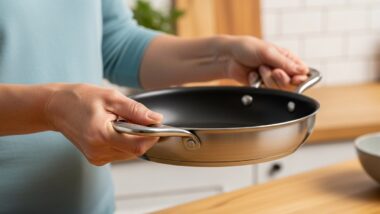
Electric skillet handles are engineered for safe transport when cool. They’re usually:
- Wider than standard pan handles (better for weak grips)
- Contoured to fit your palm
- Made from cool-touch materials
- Positioned for balanced lifting
Some have dual handles (one on each end) which is perfect for arthritis—you can lift with both hands, distributing weight evenly.
Glass Lids for Visual Monitoring Without Lifting
Can’t see through a metal lid. You’ve gotta lift it to check on food, releasing steam and heat into your face.
Glass lids let you monitor cooking progress without lifting. No steam burns. No temperature guessing. Just visual confirmation that things are cooking properly.
And when you DO need to lift the lid, most electric skillets have lid handles that stay cool and are easy to grip.
Non-Stick Surfaces Requiring Less Force for Cleaning
Cleaning is where a lot of seniors with arthritis give up on cooking. Scrubbing stuck-on food is painful and exhausting.
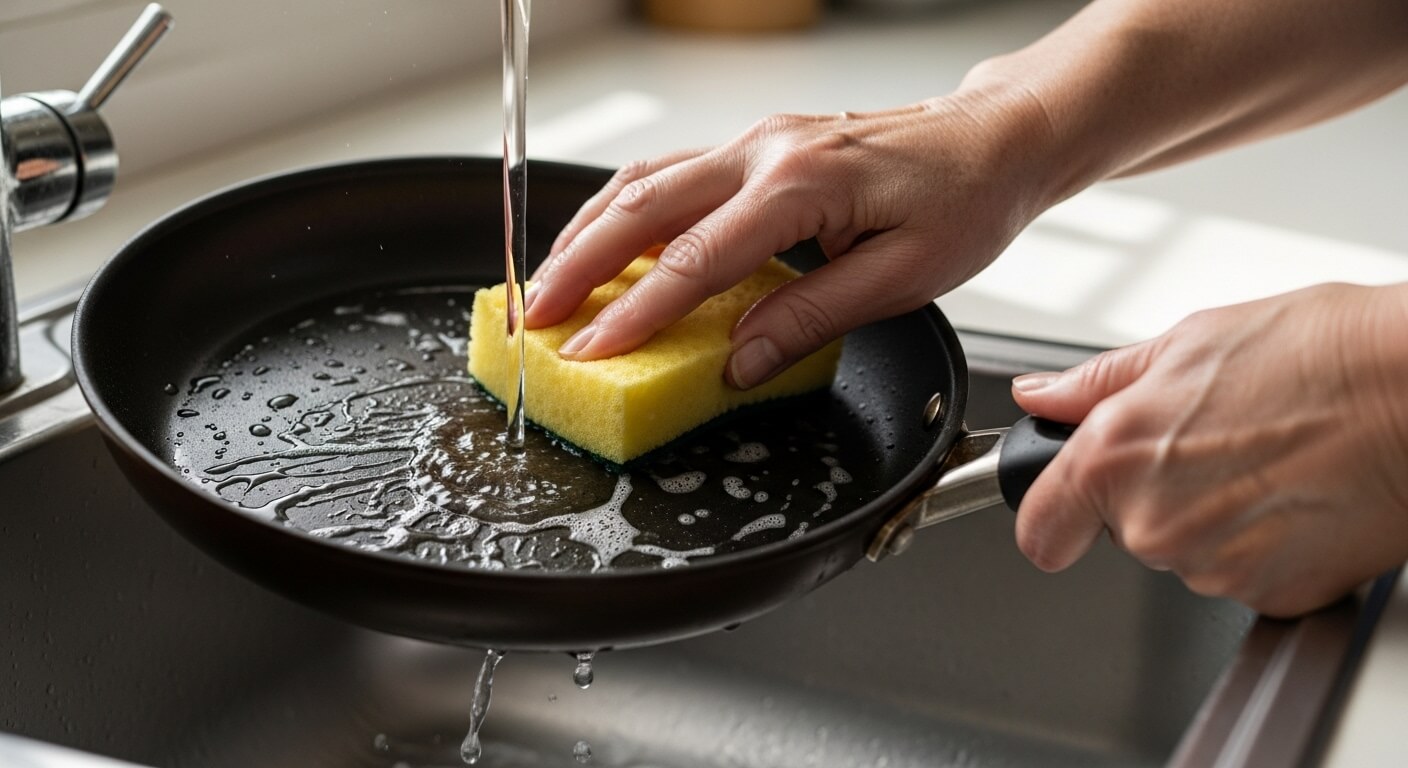
Non-stick electric skillet surfaces wipe clean with minimal effort. Most stuff slides right off with just a soft sponge and warm water. No death grip on a scrub brush required.
This isn’t a luxury. It’s the difference between cooking regularly versus surviving on microwave dinners because cleanup’s too hard.
Adjustable Legs and Positioning Options
Some electric skillets have adjustable or removable legs that let you change the cooking height.
Want it higher for standing cooking? Lower for seated work? Flat on the counter? You’ve got options.
Adaptability matters because arthritis changes day to day. What works on a good day might be impossible on a bad one.
Detachable Power Cords for Safety and Storage
The magnetic or detachable power cord is sneaky important.
Safety benefits:
- If you catch the cord, it disconnects instead of yanking the skillet off the counter
- No risk of tripping on a permanently attached cord
- Easy storage without cord tangling
For someone with limited mobility or balance issues (common with arthritis), preventing trip hazards is critical.
How Electric Skillets Enable Counter-Level Cooking
Counter-level cooking eliminates dangerous overhead reaching, allows seated meal preparation, improves visibility, and reduces awkward body positions that stress arthritic joints.
This is about working smarter, not harder.
Eliminating Overhead Reaching to Stovetop Burners
Standard stovetops sit at 36 inches high. You’re reaching UP to work.
With arthritis in your shoulders, elbows, or wrists, that overhead reaching is painful. You end up with compensatory movements—hunching, stretching awkwardly, putting stress on joints that already hurt.
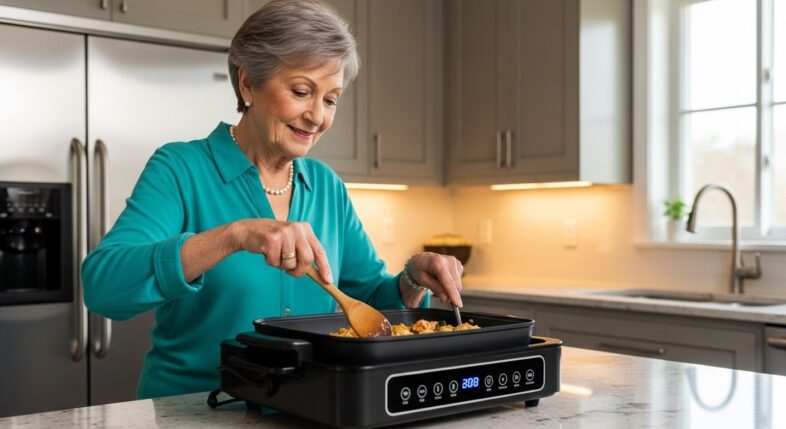
Electric skillets sit ON your counter at whatever height your counter is. But the working surface is right there in front of you. No reaching up. Your arms work in front of your body at a comfortable height.
Seated Cooking Options for Seniors with Limited Mobility
Can’t stand for 30 minutes while cooking? Don’t.
Pull up a chair to the counter. Put the electric skillet in front of you. Cook sitting down.
This is impossible with a stovetop (unless you’ve got a wheelchair-height kitchen, which most people don’t). It’s simple with an electric skillet.
Seated cooking advantages:
- Less fatigue
- Better focus on the actual cooking
- Reduced fall risk from standing too long
- Option to rest while food cooks
Better Visibility of Cooking Surface at Counter Height
Look down slightly at your electric skillet versus looking at an angle at stovetop burners.
Better visibility means:
- You notice when food’s burning before it’s ruined
- You can see if things need stirring or flipping
- You don’t have to lean over hot burners to check doneness
- Reduced eye strain (which matters more than you’d think when you’re already dealing with pain)
Reduced Bending and Awkward Body Positions
Ever try to lift a heavy pot off a stovetop while protecting your arthritic joints? You end up in weird positions—bent at odd angles, twisting your spine, stressing your knees.
Counter-level cooking means you’re working in neutral positions. Your body stays aligned. You’re not contorting yourself to manage hot cookware.
Better posture = less pain = more sustainable cooking habits.
Temperature Management Benefits for Arthritis Safety
Electric skillets provide precise, consistent temperature control through thermostats and digital displays—eliminating the guesswork and constant monitoring that make stovetop cooking difficult for people with arthritis.
Temperature control is where electric skillets really shine.
Digital vs. Dial Temperature Controls
Dial controls:
- Usually marked with actual temperatures (200°F, 300°F, 400°F)
- Turn to set, wait for indicator light
- Simple, intuitive
- Can be harder to turn if you’ve got severe hand arthritis
Digital controls:
- Press buttons to set exact temperature
- LED display shows current temp
- Easier for arthritic fingers (light touch vs. gripping and turning)
- Usually more precise
Both work. Digital is often easier for arthritis, but dial controls are simpler if you’ve got cognitive issues alongside physical ones.
Consistent Heat Without Manual Adjustment
Set it and forget it. Seriously.
The thermostat maintains temperature automatically. You’re not constantly tweaking knobs trying to find the sweet spot between “not hot enough” and “burning everything.”
This frees up your mental energy for actual cooking tasks instead of heat management. When you’re dealing with chronic pain that’s already taxing your focus, that matters.
Lower Burn Risk from Unpredictable Flame Variations
Gas flames fluctuate. They respond to air currents, gas pressure variations, and burner condition. What’s “medium” on Tuesday might cook differently than “medium” on Thursday.
Electric skillets don’t have that variability. 350°F is always 350°F.
Predictability = fewer burnt meals = fewer frustrating failures = you actually keep cooking instead of giving up.
Pre-Set Temperature Options for Common Foods
Some higher-end electric skillets have preset buttons.
“Pancakes.” “Bacon.” “Eggs.”
You press the button, it sets the right temp, done. No temperature guessing for someone who maybe hasn’t cooked in a while or whose memory isn’t what it used to be.
Visual Temperature Indicators
Most electric skillets have an indicator light that shows when they’ve reached set temperature.
Light on = still heating up. Light off = ready to cook.
Simple visual feedback removes uncertainty. You know exactly when to add food instead of guessing or waiting “just to be sure” (which leads to overheating).
Physical Demands: Electric Skillets vs. Traditional Cookware
Electric skillets require significantly less physical effort than traditional stovetop cooking—eliminating heavy lifting, reducing grip duration, and allowing one-handed operation for many tasks.
Let’s put some numbers to this.
Weight Comparison of Filled Cookware
Traditional stovetop cooking:
- Large pot with soup/stew: 12-15 lbs
- Cast iron skillet with chicken: 8-10 lbs
- Pasta pot with water and noodles: 10-12 lbs
Electric skillet cooking:
- Skillet itself: 4-6 lbs (but you’re not lifting it hot)
- Ingredients you’re adding: typically under 2 lbs per addition
- Serving directly from skillet: no weight transfer needed
The difference is massive. You’re eliminating 80% of the heavy lifting.
Lifting Heights and Transfer Distances
Stovetop scenario:
Lift pot from burner (36″ high) → transfer to counter (36″ high, but different location) or table (30″ high) → possible 3-6 foot horizontal movement while holding hot, heavy pot.
Electric skillet scenario:
Food cooks on counter or table where you’ll serve it. Zero lifting. Zero transfer. Zero horizontal carrying while hot.
One-Handed Operation Possibilities
Sometimes you need a hand free for balance, for holding a recipe, for whatever.
Electric skillets allow:
- One-handed stirring (skillet’s stable, not moving)
- One-handed ingredient addition
- One-handed temp adjustment
Try that with a pot on a stove. You’re usually using one hand to stabilize the pot while the other works. Not necessary with an electric skillet.
Grip Force Requirements
| Task | Stovetop Cooking | Electric Skillet |
|---|---|---|
| Lifting cookware | 10-15 lbs grip force | 0 lbs (don’t lift when hot) |
| Holding while stirring | 5-8 lbs (pot can shift) | 2-3 lbs (just utensil weight) |
| Pouring/draining | 8-12 lbs | Can tilt or use ladle (less force) |
Lower force requirements = less pain = longer cooking tolerance = better nutrition.
Sustained Holding Time During Cooking
How long are your hands under load?
Stovetop: You’re gripping pot handles intermittently throughout cooking, plus the major lift/transfer at the end. Total sustained grip time: 5-10 minutes over a 30-minute cooking session.
Electric skillet: You’re only gripping utensils for actual food manipulation. Total sustained grip time: 2-3 minutes for the same meal.
Less cumulative stress on inflamed joints.
Preventing Common Kitchen Accidents in Seniors with Arthritis
Electric skillets specifically prevent the most frequent kitchen injuries among seniors with arthritis—stovetop burns, pot transfer accidents, grease fires, steam injuries, and repetitive strain from heavy lifting.
These aren’t theoretical risks. They’re what actually sends people to the ER.
Reducing Stovetop Burns from Reaching Across Burners
Picture this: You’re trying to get to the back burner. You reach across the front burners—which are on and hot. Your sleeve brushes the flame or coil. Or your hand touches the edge of a hot pan.
Common accident. Really painful.
Electric skillets don’t have this issue. There’s one cooking surface. It’s right in front of you. Nothing to reach across or over.
Eliminating Pot-to-Plate Transfer Dangers
The moment of highest risk in stovetop cooking: moving a pot full of hot food from the stove to wherever you’re serving it.
Your hands are weak. The pot’s heavy and hot. You’re nervous, which makes you shaky. It’s a bad combination.
Electric skillet? Put the skillet on a trivet on your table. Cook. Serve directly from the skillet. Done.
No transfer. No risk.
Minimizing Grease Fire Risks
Grease fires happen when cooking oil gets too hot. On a stovetop with imprecise heat control and open flames, it’s relatively easy to accidentally overheat oil.
Electric skillets maintain set temperature. If you set it to 375°F (good for frying), it stays at 375°F. Oil smoke point for most cooking oils is 400°F+. You’ve got a safety margin built in.
And if something does catch fire, there’s no gas flame feeding it. Easier to smother and control.
Preventing Steam Burns from Lid Removal
Lifting a lid off a stovetop pot releases a burst of steam directly upward—often into your face and hands.
With an electric skillet on the counter, you’re above the steam release point. Lift the lid, steam goes up but you’re positioned higher and back. Less likely to get hit full-force.
Plus, glass lids let you monitor without lifting as often.
Avoiding Wrist Strain from Heavy Lifting
Repetitive heavy lifting destroys arthritic wrists.
Every time you lift a heavy pot, you’re stressing the small bones and inflamed tissues in your wrist. Do that twice a day, every day, and you’re accelerating joint damage.
Electric skillets remove most of that repetitive stress. Your wrists handle utensils and ingredients (measured in ounces), not cookware and full meals (measured in pounds).
Electric Skillet Cooking Techniques for Limited Hand Function
Specific cooking methods and tool choices maximize electric skillet benefits for seniors with arthritis—including using adaptive utensils, batch cooking, one-pan meals, and strategic pre-prep.
Work with your limitations, not against them.
Using Utensils That Work with Arthritic Hands
Your electric skillet’s only as good as the tools you’re using with it.
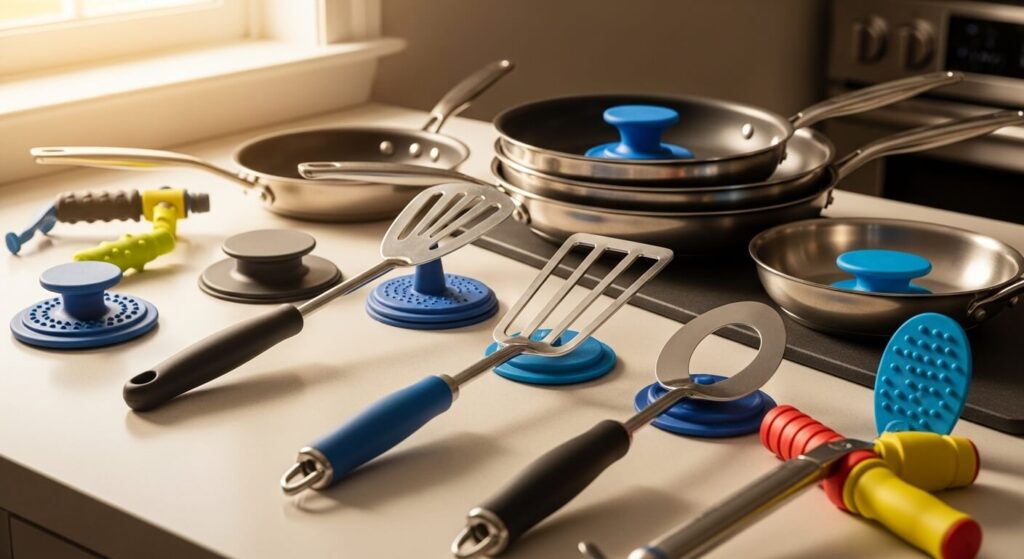
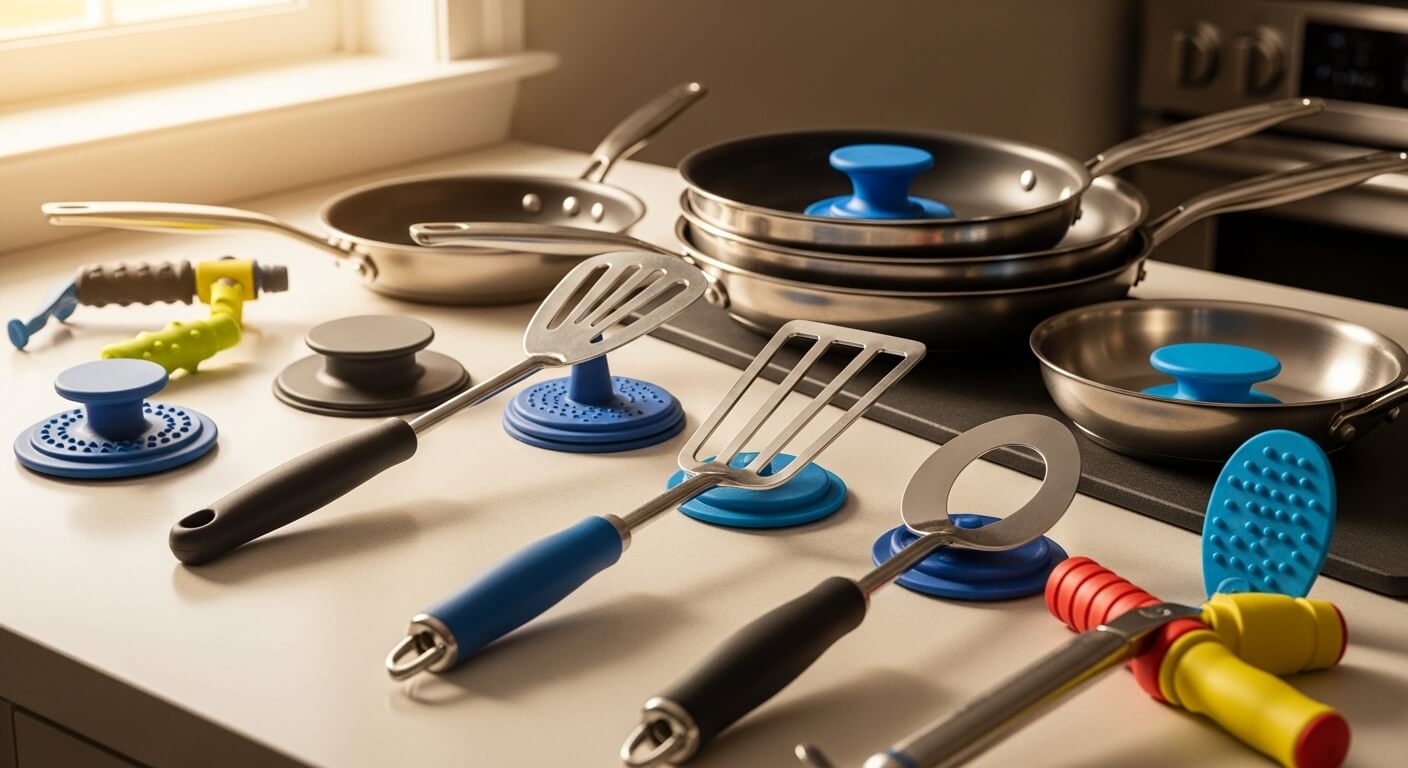
Best utensils for electric skillet cooking with arthritis:
- Long-handled spatulas and spoons (keep hands away from heat, less bending)
- Silicone-gripped handles (better purchase for weak hands)
- Lightweight nylon or silicone tools (won’t damage non-stick, easy to control)
- Angled utensils (reduce wrist strain)
Skip the heavy metal utensils. You don’t need them and they’re harder to handle.
Batch Cooking to Reduce Repetitive Tasks
Cook once, eat three times.
Make a big batch of whatever in your electric skillet. Portion it out. Reheat as needed.
This reduces:
- Number of times you’re cooking per week
- Total time standing and working
- Repetitive stress on joints
Plus, reheating in an electric skillet is dead simple. Low temp, add a splash of liquid if needed, done.
One-Pan Meal Strategies
Everything cooks in the skillet. Protein, vegetables, starch if you want.
Classic one-pan meals for electric skillets:
- Chicken with vegetables
- Stir-fry with rice
- Breakfast scrambles
- Fajitas
- Fried rice with protein
One pan = less cookware to manage = less grip strain = less cleanup = more sustainable cooking practice.
Pre-Prep Methods That Minimize Cooking Time
Do the hard work when your hands feel good. Save the actual cooking for when they don’t.
Prep strategies:
- Chop vegetables on good days, freeze in portions
- Buy pre-cut produce (yes, it costs more—it’s worth it)
- Use pre-cooked proteins when available
- Measure out spices in advance
Active cooking time in the electric skillet drops to 10-15 minutes when ingredients are prepped. Your hands can handle that even on bad days.
Adaptive Cooking Tools That Pair with Electric Skillets
Tools that make electric skillet cooking easier:
- Jar openers for getting into ingredients
- Electric can openers (no grip strength needed)
- Food processors for chopping (let the machine do it)
- Kitchen scissors instead of knives when possible
- Silicone oven mitts (easier to get on/off than traditional pot holders)
Build a complete adaptive kitchen toolkit. The electric skillet’s just one piece.
Types of Electric Skillets Best Suited for Arthritic Seniors
Different electric skillet designs serve different needs—rectangular skillets for versatility, griddles for easy flipping, multi-function models with inserts, and various coating options that affect ease of use and cleaning.
Not one-size-fits-all here.
Standard Rectangular Electric Skillets
The classic. Deep enough for most cooking, versatile, widely available.
Size considerations (small, medium, large)
Small (8-10 inch):
- Good for 1-2 people
- Lighter weight (easier to store and clean)
- Less counter space required
- Limited cooking capacity
Medium (12-14 inch):
- Sweet spot for most seniors
- Cooks meals for 2-4 people
- Versatile enough for most recipes
- Still manageable for cleaning
Large (16+ inch):
- Batch cooking champion
- Can be heavy even when empty
- Requires significant counter/storage space
- Might be too much for someone with severe arthritis
Go medium unless you’ve got a specific reason not to.
Depth options for different cooking needs
Shallow (1.5-2 inches deep):
- Best for pancakes, grilled cheese, quesadillas
- Easy to flip and manipulate food
- Limited for soups or stews
Medium depth (2.5-3 inches):
- Handles most cooking tasks
- Deep enough for stir-fries and skillet meals
- Still shallow enough for easy food access
Deep (3.5+ inches):
- Can function like a small roasting pan
- Good for braises and one-pot meals
- Harder to reach food at bottom (problematic for arthritis)
Medium depth is most versatile for arthritic hands.
Electric Griddles with Low Sides
Flat cooking surface with minimal sides (like a griddle or plancha).
Advantages for arthritis:
- Extremely easy to flip and slide food
- Wide open access (no walls to navigate around)
- Perfect for breakfast foods
- Simple to clean (flat = no corners)
Limitations:
- Can’t make soups or anything with liquid
- Grease can splatter more
- Less versatile than a sided skillet
Good as a second electric cooking appliance, maybe not your only one.
Multi-Function Electric Skillets with Inserts
Some electric skillets come with steamer inserts, divided sections, or interchangeable cooking surfaces.
Sounds great. Sometimes is. Sometimes it’s just more parts to manage, clean, and store.
Consider if:
- You actually WANT steamed vegetables regularly
- Storage isn’t an issue
- You’re okay with slightly more complex setup
Skip if:
- You’ve got limited storage
- Managing multiple pieces is difficult with your arthritis
- You want simplicity above all
Non-Stick vs. Ceramic Coating Options
Traditional non-stick (Teflon-type coatings):
- Most slippery (easiest cooking and cleaning)
- Can’t use metal utensils (scratches coating)
- Some people worry about safety (largely resolved in modern coatings)
- Needs replacement every 3-5 years as coating wears
Ceramic coatings:
- More scratch-resistant
- Can handle higher temps
- Still pretty non-stick (but not AS non-stick)
- Some people prefer for health reasons
For arthritis specifically? Traditional non-stick is usually better because the ultra-slick surface requires the least force for cooking and cleaning.
Features to Prioritize for Arthritis Needs
Must-haves:
- Temperature control (dial or digital)
- Glass lid
- Cool-touch handles
- Non-stick interior
Nice-to-haves:
- Dishwasher-safe parts
- Indicator light
- Adjustable legs
- Drip tray
Can skip:
- Fancy preset programs
- Multiple inserts
- Extremely large capacity
Setting Up an Arthritis-Friendly Electric Skillet Station
Creating a dedicated cooking space with proper height, nearby electrical access, organized tools, and adequate ventilation maximizes the safety and usability of electric skillets for seniors with arthritis.
Setup matters as much as the equipment itself.
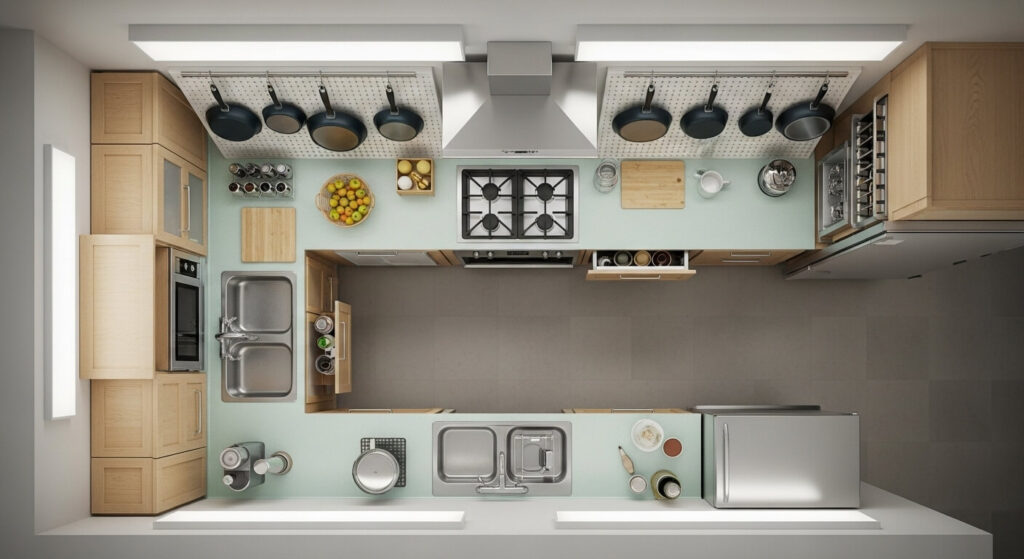
Optimal Counter Height and Workspace Layout
Standard counter height is 36 inches. That might or might not be ideal for you.
Ideal working height: Your elbows should be bent about 90 degrees when your hands are on the cooking surface. This minimizes shoulder and upper back strain.
If your counters are too high, consider:
- Using the skillet on your kitchen table instead (usually 30 inches)
- Getting a rolling cart at a custom height
- Working while seated at counter height with a tall stool
If your counters are too low (rare), add a sturdy riser or work on your table.
Workspace requirements:
- 24-30 inches of clear counter space for the skillet itself
- 12-18 inches on each side for ingredients and utensils
- Heat-resistant surface underneath
- Good lighting overhead
Proper Electrical Outlet Placement
You need an outlet within about 3 feet of where you’ll use the skillet (most cords are 24-36 inches).
Safety considerations:
- Outlet should be at counter level or slightly below (so cord doesn’t drape across workspace)
- Don’t use extension cords if possible (fire hazard)
- Make sure outlet is GFCI protected if near sink
- Consider having an electrician add an outlet if needed
Tripping on cords is a real risk when you’ve got mobility issues. Route cords carefully.
Organizing Utensils Within Easy Reach
Everything you need should be within arm’s reach without leaning or stretching.
Setup strategy:
- Utensils in a crock or holder 12 inches from skillet
- Spices and oils on a lazy Susan nearby
- Plates and serving dishes on same counter
- Trash/compost within easy reach
The goal: minimal movement while cooking. Every time you have to walk somewhere or reach for something, you’re at risk for fatigue-related accidents.
Heat-Resistant Surface Protection
Electric skillets don’t get as hot on the bottom as stovetop cookware, but they still get warm.
Protect your counters:
- Silicone trivet or mat (rated to 450°F+)
- Cork trivet
- Ceramic tile
- Heat-resistant cutting board
Don’t put it directly on laminate counters or wood. Not worth the risk of damage or fire.
Adequate Ventilation Considerations
Electric skillets produce steam, smoke (especially when cooking meat), and cooking odors.
Ventilation options:
- Cook near a window you can open
- Use a small fan to move air
- Set up under range hood if possible
- Portable range hood fan
Poor ventilation isn’t just unpleasant—it can set off smoke alarms and create respiratory issues.
Maintenance and Cleaning Advantages for Arthritic Hands
Electric skillets with non-stick surfaces and removable parts require minimal scrubbing force, can often go in the dishwasher, and clean up with simple wiping—major advantages for arthritic hands that can’t handle aggressive scrubbing.
Cleaning difficulty is where a lot of cooking plans fall apart.
Non-Stick Surfaces Requiring Minimal Scrubbing
Quality non-stick means food slides off with barely any encouragement.
Typical cleaning process:
- Let skillet cool slightly (not completely, easier to clean when warm)
- Wipe with soft sponge and warm soapy water
- Rinse
- Dry
Total scrubbing force required: almost none. Total time: 2-3 minutes.
Compare that to scrubbing burnt-on food from stainless steel or cast iron. Not happening with arthritic hands.
Dishwasher-Safe Components
Many electric skillets have removable cooking surfaces that are dishwasher-safe.
What’s usually dishwasher-safe:
- The pan/cooking surface (after removing heating element)
- Glass lids
- Sometimes handles (check manual)
What’s NOT dishwasher-safe:
- The heating element/temperature probe
- The base unit with electrical components
Being able to toss the pan in the dishwasher is huge. Zero hand effort required.
Removable Parts for Easier Handling
The ability to separate components means you’re handling smaller, lighter pieces during cleaning.
Instead of wrestling with a 6-pound complete unit, you’re dealing with:
- A 3-pound pan
- A 1-pound lid
- The base unit (which rarely needs cleaning)
Lighter parts = easier to manage with weak hands = more likely you’ll actually clean it properly.
Simple Wipe-Down Cleaning Methods
For the base unit with electrical components:
- Unplug
- Wipe exterior with damp cloth
- Clean temperature probe with slightly damp cloth (don’t submerge)
- Dry everything
- Done
No scrubbing. No soaking. No heavy lifting. Just basic wiping.
Reduced Elbow Grease Requirements
“Elbow grease” is exactly what you don’t have with arthritis.
Non-stick electric skillets eliminate probably 90% of the hard scrubbing required in cooking. The remaining 10% happens if you seriously burn something (and even then, soaking usually handles it).
This isn’t a minor convenience. It’s the difference between sustainable, independent cooking versus giving up because cleanup hurts too much.
Comparing Electric Skillets to Other Adaptive Cooking Solutions
Electric skillets provide better control and accessibility than slow cookers, easier monitoring than pressure cookers, more versatility than toaster ovens, and superior safety compared to induction cooktops for seniors with arthritis.
Other options exist. Here’s how they stack up.
Electric Skillets vs. Slow Cookers for Arthritis
Slow cookers (Crock-Pots) advantages:
- Set in morning, cook all day, come home to done food
- Very safe (low heat, contained, minimal supervision)
- Extremely easy to use
Slow cooker limitations:
- Heavy ceramic inserts (6-8 lbs even empty)
- Must plan meals 6-8 hours ahead
- Can’t brown or sear (limits flavor and texture)
- Limited cooking methods
Electric skillet advantages:
- Cook a meal in 20-30 minutes when you want it
- Lighter overall
- Can brown, sear, sauté, fry—full range of techniques
- Better for people who haven’t planned ahead
Best choice: Both. Use slow cooker for set-it-and-forget-it days. Use electric skillet when you want to cook now and want more control.
Electric Skillets vs. Instant Pots and Pressure Cookers
Pressure cooker pros:
- Fast cooking (30 minutes for pot roast)
- Hands-off once started
- Tenderizes tough meats
Pressure cooker cons for arthritis:
- Heavy (10-12 lbs for the unit, plus food)
- Complex controls (lots of buttons and settings)
- Inner pot can be difficult to remove when hot
- Pressurized steam release can be scary
Electric skillet wins for:
- Simplicity (one dial or simple buttons)
- Visual monitoring (can see food cooking)
- Lighter weight during use
- No scary steam release
Pressure cookers are great appliances, but they’re not particularly arthritis-friendly.
Electric Skillets vs. Toaster Ovens
Toaster oven advantages:
- Baking and roasting (which electric skillets can’t really do)
- No stooping to regular oven
- Good for reheating
Toaster oven limitations:
- Requires pulling hot racks and pans in and out (grip + heat + awkward angle)
- Limited to oven-style cooking
- Some require bending to see inside
- Pan management still needed
When to use each:
- Toaster oven: baking, roasting, toasting
- Electric skillet: stovetop-style cooking, one-pan meals, breakfast foods
They complement each other but aren’t interchangeable.
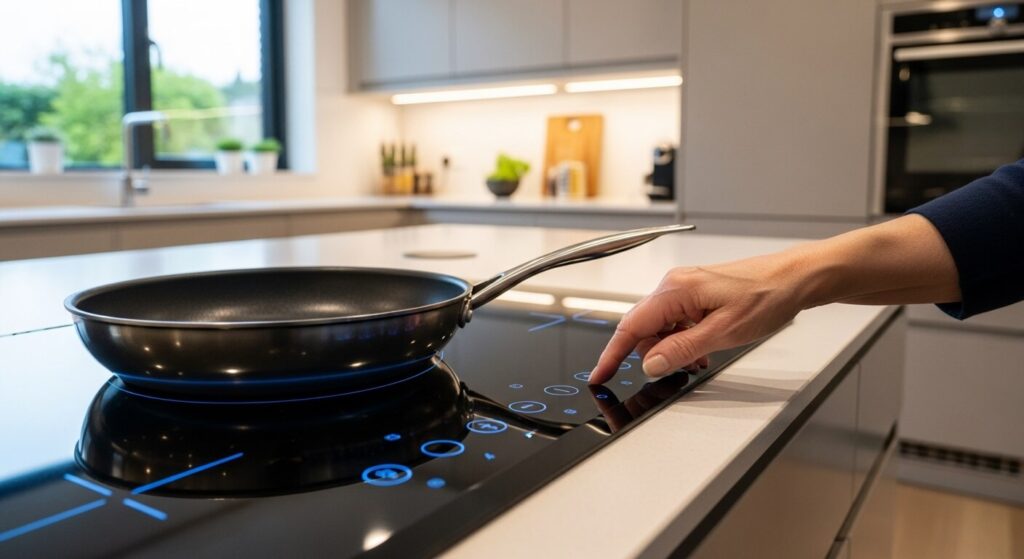
Electric Skillets vs. Induction Cooktops
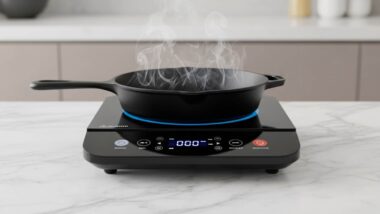
Induction is trendy right now. For good reason—it’s efficient and safe.
Induction advantages:
- Very precise temperature control
- Surface stays cool (only pan heats)
- Fast heating
- Energy efficient
Induction problems for arthritis:
- Still requires lifting heavy pots and pans
- Must transfer food from cooking location to serving location
- Requires magnetic cookware (your current pots might not work)
- More expensive
- Can be confusing to operate
Induction solves some stovetop problems but doesn’t eliminate the heavy lifting issue. Electric skillets do.
Why Electric Skillets Offer Superior Arthritis-Specific Benefits
Bottom line across all alternatives:
Electric skillets are the only option that:
- Eliminate hot cookware lifting and transferring
- Provide counter-level cooking in a stable platform
- Offer visual monitoring with precise temp control
- Come at affordable prices
- Require minimal learning curve
Other appliances have their place, but for pure arthritis-friendly cooking, electric skillets are hard to beat.
Medical and Occupational Therapy Perspectives on Safe Cooking
Occupational therapists routinely recommend electric skillets as adaptive equipment for arthritis patients because they reduce joint stress, prevent burns, and enable continued meal preparation independence when stovetop cooking becomes unsafe.
This isn’t just consumer advice. It’s clinical recommendation.
How OTs Recommend Electric Skillets for Arthritis Patients
Occupational therapists assess kitchen safety as part of comprehensive arthritis management.
Standard OT evaluation includes:
- Grip strength testing
- Range of motion assessment
- Balance and stability evaluation
- Burn risk factors
- Current cooking methods and difficulties
When they identify that stovetop cooking poses safety risks, electric skillets are often the first recommendation because they address multiple issues simultaneously.
Reducing Joint Stress During Meal Preparation
Every cooking task has a “joint cost”—how much stress it puts on arthritic joints.
Joint stress comparison:
| Task | Stovetop Cooking | Electric Skillet |
|---|---|---|
| Lifting | High stress (full pot weight) | Minimal (just ingredients) |
| Reaching | Moderate to high | Low (counter level) |
| Gripping duration | High (sustained holds) | Low (intermittent) |
| Wrist strain | High (lifting + pouring) | Low (mostly stirring) |
Lower cumulative joint stress = less pain = less inflammation = better long-term outcomes.
Maintaining Nutritional Independence Safely
Here’s what doctors and therapists know: Seniors who can’t cook for themselves eat worse.
They rely on:
- Pre-packaged processed foods (high sodium, low nutrition)
- Restaurant/takeout food (expensive, often unhealthy)
- Family members cooking (schedule conflicts, loss of autonomy)
- Skipping meals (malnutrition risk)
Electric skillets keep people cooking their own food safely. That translates to better nutrition, better health outcomes, and maintained quality of life.
When to Transition from Stovetop to Electric Cooking
Signs it’s time to make the switch:
- You’ve dropped hot pots or pans recently
- You’ve burned yourself on stovetop burners
- You avoid cooking because it’s too painful or scary
- You’re eating worse because cooking is too hard
- Family members are worried about your safety
Don’t wait for a serious injury. Proactive adaptation is smarter than reactive crisis management.
Cost-Benefit Analysis of Electric Skillets for Senior Safety
Electric skillets cost $25-80 typically and can prevent thousands in medical bills from kitchen burns while enabling better nutrition and independence—making them one of the highest-value adaptive equipment purchases for seniors with arthritis.
Let’s talk money.
Purchase Price Ranges and Value
Budget models ($25-40):
- Basic temperature control
- Standard non-stick coating
- Adequate for most cooking
- Might not last as long
Mid-range ($40-65):
- Better temperature precision
- Higher quality non-stick
- Glass lids usually included
- 3-5 year lifespan expected
Premium ($65-100+):
- Digital controls
- Superior build quality
- Longer warranties
- Extra features (dishwasher-safe, multiple cooking modes)
For most seniors, mid-range offers the best value. You’re getting quality without overpaying for features you won’t use.
Energy Efficiency Compared to Stovetop Cooking
Electric skillets are reasonably efficient.
They use about 1000-1500 watts during heating. Once at temperature, they cycle on/off, averaging maybe 500-800 watts.
Cost comparison (approximate):
- Electric skillet: $0.10-0.15 per hour of cooking
- Electric stovetop: $0.15-0.25 per hour
- Gas stovetop: $0.08-0.12 per hour
Electric skillets are slightly more efficient than electric stovetops, slightly less than gas. The difference is minimal—maybe $10-20 annually for typical use.
Reduced Risk of Expensive Kitchen Accidents
Potential costs of stovetop cooking accidents:
- ER visit for burns: $500-2,000+ (depending on severity)
- Lost work for caregivers taking you to appointments: $200-500
- Potential home damage from fires: $1,000-10,000+
- Ongoing treatment for severe burns: potentially much more
An $60 electric skillet that prevents even one ER visit has paid for itself 10-30 times over.
Long-Term Durability and Replacement Costs
Quality electric skillets last 5-10 years with normal use.
Lifespan factors:
- Quality of non-stick coating (wears first)
- Heating element durability
- How well you maintain it
Even if you replace every 5 years at $60 each, that’s $12 annually. Negligible cost for the safety and independence it provides.
Insurance and Medicare Coverage Considerations
Generally, electric skillets aren’t covered by Medicare or insurance because they’re considered standard kitchen appliances, not durable medical equipment.
Exceptions might include:
- Prescription from doctor as “medically necessary adaptive equipment”
- Part of occupational therapy treatment plan
- Some state Medicaid programs
Worth asking, but plan to pay out-of-pocket. Still worth every penny.
Meal Types Particularly Well-Suited to Electric Skillet Cooking
Electric skillets excel at breakfast foods, one-pan dinners, sandwiches, sautéed vegetables, and reheating—covering the majority of meals seniors with arthritis need to prepare independently.
What actually works well in an electric skillet?
Breakfast Foods (Eggs, Pancakes, Bacon)
Breakfast is electric skillet territory.
Perfect for:
- Scrambled eggs (no sticking, easy cleanup)
- Fried eggs (precise temp control)
- Pancakes (even heat, large surface area)
- French toast
- Bacon (grease drains to edges, less splatter than stovetop)
- Hash browns
Set temp to 325-350°F. Cook. Serve directly from skillet if you want.
Breakfast is often the hardest meal for seniors with arthritis (morning stiffness), and electric skillets make it manageable.
One-Pan Dinners and Stir-Fries
The whole meal cooks in one place.
Great one-pan options:
- Chicken with vegetables
- Beef stir-fry
- Pork chops with potatoes
- Sausage and peppers
- Shrimp scampi
Brown protein, add vegetables, season, done. Everything cooks together. Serve from the skillet or transfer to plates using a spatula (way easier than lifting a hot pan).
Grilled Sandwiches and Quesadillas
Flat cooking surface. Even heat. Perfect for pressed sandwiches.
- Grilled cheese
- Paninis (use a press or just flip)
- Quesadillas
- Grilled wraps
Easy to flip with a spatula. No coordination of multiple pans or pressing devices needed.
Sautéed Vegetables and Side Dishes
Vegetables love the even heat.
- Stir-fried vegetables
- Sautéed greens
- Skillet roasted potatoes
- Caramelized onions
The temperature control prevents burning while still getting good browning. And vegetables cook fast—10-15 minutes for most, which is good when you fatigue easily.
Reheating Leftovers Safely
Microwave reheating can be uneven (cold spots, hot spots).
Electric skillets reheat evenly. Add a splash of water or broth, low-medium heat, stir occasionally. Food comes out better than microwave and you have more control than stovetop.
Plus, for seniors worried about microwave safety or confused by settings, electric skillets are simpler.
Safety Protocols When Using Electric Skillets with Arthritis
Following specific safety practices—proper cord management, stable placement, correct use of pot holders, safe monitoring distances, and emergency procedures—maximizes the safety benefits of electric skillets for seniors with arthritis.
Good equipment plus bad practices still equals accidents.
Proper Cord Management to Prevent Tripping
Cords are trip hazards. Period.
Cord safety rules:
- Route cord BEHIND the skillet, not in front where you’re working
- Tape cord down to counter with painter’s tape if needed
- Never let cord dangle where you could catch it with your feet or walker
- Use cord shortener/wrapper if cord is excessively long
- Check that cord isn’t frayed or damaged before each use
If you use a walker or wheelchair, be extra careful. Catching a cord while moving can pull the skillet down or cause you to fall.
Safe Placement Away from Counter Edges
Electric skillets should sit at least 6 inches from the counter edge.
Why? So you can’t accidentally knock them off. So kids/pets can’t pull them down. So you’ve got working room in front.
Placement checklist:
- 6+ inches from front edge
- 3+ inches from side edges
- Not under cabinets (steam can damage them)
- On level surface (wobble = spills)
- Away from sink (water + electricity = bad)
Using Pot Holders and Trivets Correctly
Even though handles stay relatively cool, use pot holders anyway when moving the skillet (empty, for storage/cleaning).
Pot holder tips for arthritis:
- Silicone oven mitts (easier to get on than traditional pot holders)
- Long cuffed mitts protect forearms
- Machine washable options
- Non-slip grip surface
And always use a trivet under the hot skillet. Don’t trust that it won’t damage your counter.
Monitoring Cooking Without Hovering Over Heat
You don’t need to stand over the skillet constantly.
Safe monitoring:
- Check every 5-10 minutes for most foods
- Use glass lid to see without opening
- Set a timer so you don’t forget
- Position yourself to the side rather than directly over steam
Hovering invites fatigue and steam burns. Step away between checks.
Emergency Procedures for Spills or Malfunctions
If you spill:
- Unplug immediately if liquid could reach electrical components
- Don’t try to lift the skillet while it’s hot and you’re stressed
- Let it cool, then clean up
- Check that electrical components are dry before reusing
If something catches fire:
- Turn off heat/unplug if you can reach safely
- Cover with lid (starves fire of oxygen)
- Never throw water on a grease fire
- Use fire extinguisher if needed
- Call 911 if it doesn’t go out immediately
Have a fire extinguisher in your kitchen. Know how to use it.
Addressing Specific Arthritis Types and Electric Skillet Benefits
Different forms of arthritis create distinct challenges that electric skillets address in specific ways—rheumatoid arthritis benefits most from reduced lifting, osteoarthritis from adjustable positioning, and hand/wrist arthritis from decreased grip requirements.
Customize based on your specific condition.
Rheumatoid Arthritis and Reduced Lifting Requirements
RA causes systemic inflammation. Your joints are actively inflamed, swollen, painful.
Heavy lifting directly aggravates inflammation. Every time you lift a heavy pot, you’re potentially triggering a flare.
How electric skillets help RA specifically:
- Eliminate heavy lifting (primary benefit)
- Reduce grip duration (less sustained inflammation)
- Allow cooking during moderate flares (when stovetop would be impossible)
- Lower overall physical demand (conserves energy for joint healing)
For RA patients, electric skillets can mean the difference between cooking and not eating properly—which directly affects inflammation through nutrition.
Osteoarthritis and Joint-Friendly Cooking Heights
OA is mechanical wear and tear. Certain positions and movements wear cartilage faster.
Overhead reaching and awkward lifting accelerate OA damage.
Electric skillet benefits for OA:
- Counter-level work (neutral joint positions)
- Option to sit while cooking (reduces load on knee/hip OA)
- Consistent, predictable movements (no sudden jerks or awkward transfers)
- Less cumulative wear on damaged joints
Using an electric skillet won’t reverse OA, but it can slow progression by reducing joint trauma.
Psoriatic Arthritis and Easy-Clean Surfaces
PsA combines joint inflammation with skin issues.
Harsh scrubbing irritates psoriatic skin. Prolonged water exposure can trigger flares. You need minimal-contact cleaning.
Why electric skillets work for PsA:
- Non-stick surface = minimal scrubbing needed
- Quick cleanup (less water exposure)
- Dishwasher option (zero hand contact with cleaning)
- Smooth surfaces don’t catch or irritate skin
Hand and Wrist Arthritis Considerations
When arthritis hits your hands specifically, every kitchen task becomes a challenge.
Electric skillet advantages for hand/wrist arthritis:
- Large, ergonomic handles (better than traditional cookware)
- No sustained gripping of heavy objects
- Option to add silicone grips to handles
- One-handed operation possible for many tasks
- Reduced wrist flexion/extension during cooking
If your arthritis is primarily in your hands, an electric skillet is probably your single best kitchen investment.
Adapting Electric Skillet Use for Progressive Arthritis
As arthritis progresses from mild to moderate to severe, electric skillet setup and usage strategies should adapt—early stages focus on habit building, moderate stages on maximizing benefits, and advanced stages on combining with other adaptive equipment.
Arthritis changes. Your approach should too.
Early-Stage Arthritis: Building Good Habits
When arthritis is mild, you can still mostly cook normally. This is the time to start using electric skillets.
Why start early:
- Learn while you still have full function
- Build comfortable, efficient techniques
- Establish habits before they’re absolute necessities
- Prevent injury that could accelerate arthritis
Don’t wait until you’re desperate. Start when it’s a nice-to-have, so it’s automatic when it becomes a need-to-have.
Moderate Arthritis: Maximizing Electric Skillet Benefits
Pain’s worse. Strength is noticeably reduced. Some days you can cook, some days you can’t.
Strategies for moderate arthritis:
- Cook on good days, reheat on bad days
- Use adaptive utensils with your electric skillet
- Set up dedicated cooking station (don’t move skillet around)
- Keep frequently used items within arm’s reach
- Accept that some recipes are off the table now
This stage is about being realistic and working within your limitations.
Advanced Arthritis: Combining with Other Adaptive Equipment
Severe arthritis. Daily pain. Significant functional loss.
Electric skillets alone might not be enough. Combine them with:
- Jar openers
- Electric can openers
- Food processors for all chopping
- Pre-cut ingredients
- Ready-made sauces
- Someone to help with initial setup if needed
The goal is still independence in actual cooking, even if prep work needs assistance.
When Additional Assistance Becomes Necessary
Sometimes arthritis progresses past what adaptive equipment can compensate for.
Signs you need help beyond equipment:
- Can’t safely stand long enough to cook even simple meals
- Cognitive issues making following recipes impossible
- Dropping things frequently despite adaptive tools
- Burning yourself regularly
- Fear preventing you from cooking at all
At that point, it’s not about stubbornness. It’s about realistic safety. Meal delivery, family assistance, or moving to assisted living might be appropriate.
But for the vast majority of seniors with arthritis, electric skillets can extend independent cooking for years or decades.
Electric Skillet Accessories That Enhance Safety and Function
Specific accessories—silicone handle grips, long-handled utensils, splatter guards, tilting stands, and organized storage solutions—further improve electric skillet safety and usability for seniors with arthritis.
Make a good thing better.
Silicone Handle Grips for Electric Skillet Handles
(Remember our earlier discussion about these?)
Adding aftermarket silicone grips to electric skillet handles provides:
- Better friction for weak hands
- Cushioning that reduces joint pressure
- Larger diameter (easier to grip)
- Cool-touch enhancement
Even though electric skillet handles are already decent, grips make them better for arthritic hands.
Long-Handled Utensils for Distance from Heat
12-15 inch handles keep your hands farther from heat and steam.
Best long-handled tools for electric skillet use:
- Spatulas (for flipping and serving)
- Spoons (for stirring)
- Tongs (for turning meat/vegetables)
- Ladles (for serving soups/sauces)
Silicone or nylon heads won’t damage non-stick surfaces. Wood works too but is heavier.
Splatter Guards and Covers
Mesh splatter screens that sit over the skillet opening.
They let steam escape while catching grease splatter. Useful when cooking bacon, searing meat, or anything that pops and spits.
Protects you from burns. Keeps your cooking area cleaner. Simple addition, useful benefit.
Tilting Stands for Easy Draining
Some electric skillets have built-in pour spouts. Most don’t.
A tilting stand lets you prop one end up to drain grease or liquid without lifting the skillet.
How it helps arthritis:
- No need to lift and pour
- No straining through colander
- Grease flows to one end naturally
Niche accessory, but valuable if you cook a lot of greasy foods.
Storage Solutions for Counter Space Management
If you’re using your electric skillet daily (or near-daily), leave it out.
If you need to store it:
- Dedicated low shelf or cabinet (minimal lifting)
- Rolling cart that wheels into closet
- Counter appliance garage
- Sturdy box with handles
Avoid storing somewhere that requires overhead lifting or deep bending. Accessibility matters.
Real-World Success Stories and Usage Patterns
Seniors using electric skillets report regained confidence in cooking, fewer kitchen accidents, improved nutrition from preparing fresh meals, and maintained independence that would otherwise require caregiver assistance.
This stuff actually changes lives.
Seniors Who Regained Cooking Independence
Common pattern: Someone with arthritis stops cooking because it hurts or feels dangerous. Nutrition suffers. They rely on others or eat poorly. Quality of life tanks.
Then they get an electric skillet (often on recommendation from OT or family).
Suddenly they can cook again. Maybe not everything they used to make, but enough. Breakfast definitely. Simple dinners. Reheating with control.
Independence returns. Dignity improves. Health gets better from improved nutrition.
Caregiver Reports on Reduced Kitchen Accidents
Family members notice:
- Fewer burn injuries
- Less anxiety about leaving parent alone during mealtimes
- Better nutrition (they’re cooking real food again)
- Improved mood and sense of purpose
Caregivers can step back from daily cooking assistance while still knowing their loved one is eating well and staying safe.
Occupational Therapist Case Studies
OTs consistently report electric skillets as one of their most successful recommendations.
High compliance (people actually use them), clear benefits, low cost, immediate results. That’s a winning combination in rehab.
Transition Stories from Stovetop to Electric Cooking
Initial resistance is common. “I’ve cooked on a stove for 60 years, I’m not changing now.”
Then they try it once. Often at someone’s insistence.
The ease of use wins them over. The safety is obvious. The reduced pain during and after cooking seals the deal.
Within a week or two, most people prefer the electric skillet for the majority of their cooking.
Selecting the Right Electric Skillet for Individual Arthritis Needs
Choosing an electric skillet requires assessing your specific grip limitations, available counter space, household size, arthritis severity, and ideally testing models before purchase to ensure they meet your unique requirements.
Generic recommendations only go so far.
Assessing Personal Grip Strength and Limitations
Honestly evaluate what you can and can’t do.
Questions to answer:
- Can you grip and turn a dial, or do you need push-button controls?
- Can you lift 4-5 lbs empty (the skillet for cleaning), or do you need something lighter?
- Can you use both hands, or does one work better than the other?
- Do you have other conditions (tremors, limited vision) affecting use?
Match the skillet to your actual abilities, not what you wish you could do.
Evaluating Counter Space and Setup Requirements
Measure your counter space. Seriously, get a tape measure.
Then compare to skillet dimensions (including when lid is on).
Space considerations:
- Cooking footprint (length x width of skillet)
- Clearance above (for steam and opening lid)
- Storage location if not leaving out
- Proximity to electrical outlet
A 16-inch skillet might be great in theory but useless if you don’t have room for it.
Matching Skillet Size to Household Needs
Cooking for one: 10-12 inch skillet
Cooking for two: 12-14 inch skillet
Occasional cooking for guests: 14-16 inch skillet
Batch cooking for the week: 16+ inch skillet
Bigger seems better until you’re trying to clean it or store it with arthritic hands.
Prioritizing Features Based on Arthritis Severity
Mild arthritis priorities:
- Good temperature control
- Non-stick surface
- Glass lid
Moderate arthritis priorities:
- Everything above, plus:
- Lightweight construction
- Excellent handle design
- Dishwasher-safe parts
Severe arthritis priorities:
- Everything above, plus:
- Digital/button controls (no dial turning)
- Absolutely minimal weight
- Auto shut-off for safety
- Maximum handle grip width
Testing Before Purchasing When Possible
If you can test in-store or borrow from a friend, do it.
What to test:
- Can you comfortably reach the controls?
- Can you lift the lid with one hand?
- Does the handle feel secure in your grip?
- Can you see the cooking surface clearly?
Returns are possible but annoying. Testing prevents buying the wrong thing.
Integration with Comprehensive Arthritis Kitchen Adaptations
Electric skillets work best as part of a complete arthritis-friendly kitchen system that includes adapted utensils, complementary appliances, strategic organization, and balanced independence with appropriate support.
One piece of the puzzle, not the whole picture.
Combining Electric Skillets with Adapted Utensils
The best skillet in the world doesn’t help if you can’t use the tools with it.
Essential adapted utensils for electric skillet cooking:
- Ergonomic spatulas with thick, cushioned handles
- Lightweight tongs with spring assistance
- Easy-grip serving spoons
- Kitchen scissors (often easier than knives)
Build a complete toolkit that works together.
Coordinating with Other Electric Appliances
Create an all-electric kitchen setup:
- Electric skillet for stovetop-style cooking
- Slow cooker for hands-off meals
- Electric kettle for boiling water (no heavy lifting)
- Microwave for quick reheating
- Toaster oven for baking
Each appliance handles specific tasks. Together they cover everything you need.
Building a Complete Arthritis-Safe Kitchen
Full adaptation includes:
- Electric cooking appliances
- Adaptive utensils and tools
- Proper lighting (see what you’re doing)
- Organized, accessible storage
- Seating options for rest breaks
- Safety features (grab bars, non-slip mats)
The environment matters as much as the equipment.
Balancing Independence with Safety Support
Independence doesn’t mean doing everything alone.
Healthy balance:
- Cook independently with adapted equipment
- Accept help with heavy grocery shopping
- Use pre-prep services for chopping when needed
- Have emergency contacts available
- Regular check-ins from family/caregivers
It’s okay to need some support while maintaining cooking independence. That’s realistic, not failure.