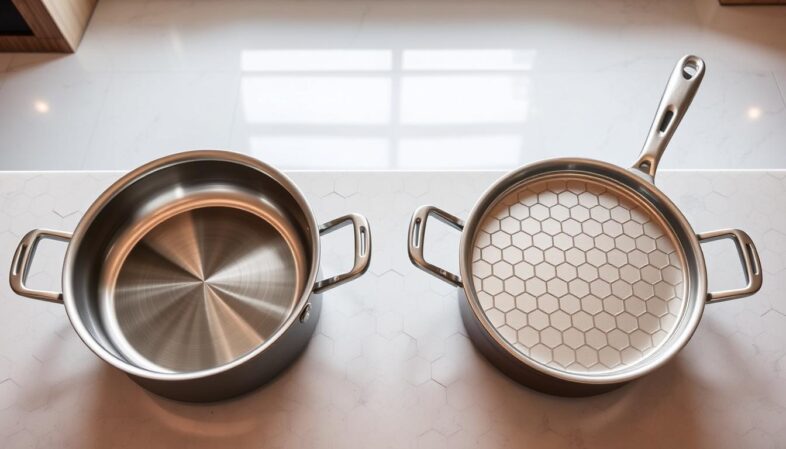
The main differences between the All-Clad D3 and HexClad cookware sets come down to construction: D3 is pure tri-ply stainless steel, while HexClad is a hybrid design with a hexagonal stainless lattice over a ceramic nonstick coating. One rewards technique, the other forgives it. If you already know how to cook on stainless, D3 is going to feel like coming home. If you want something a little more beginner-friendly that still sears decently, HexClad’s the safer bet. Neither is “better” in some universal sense — they’re just built for different cooks.
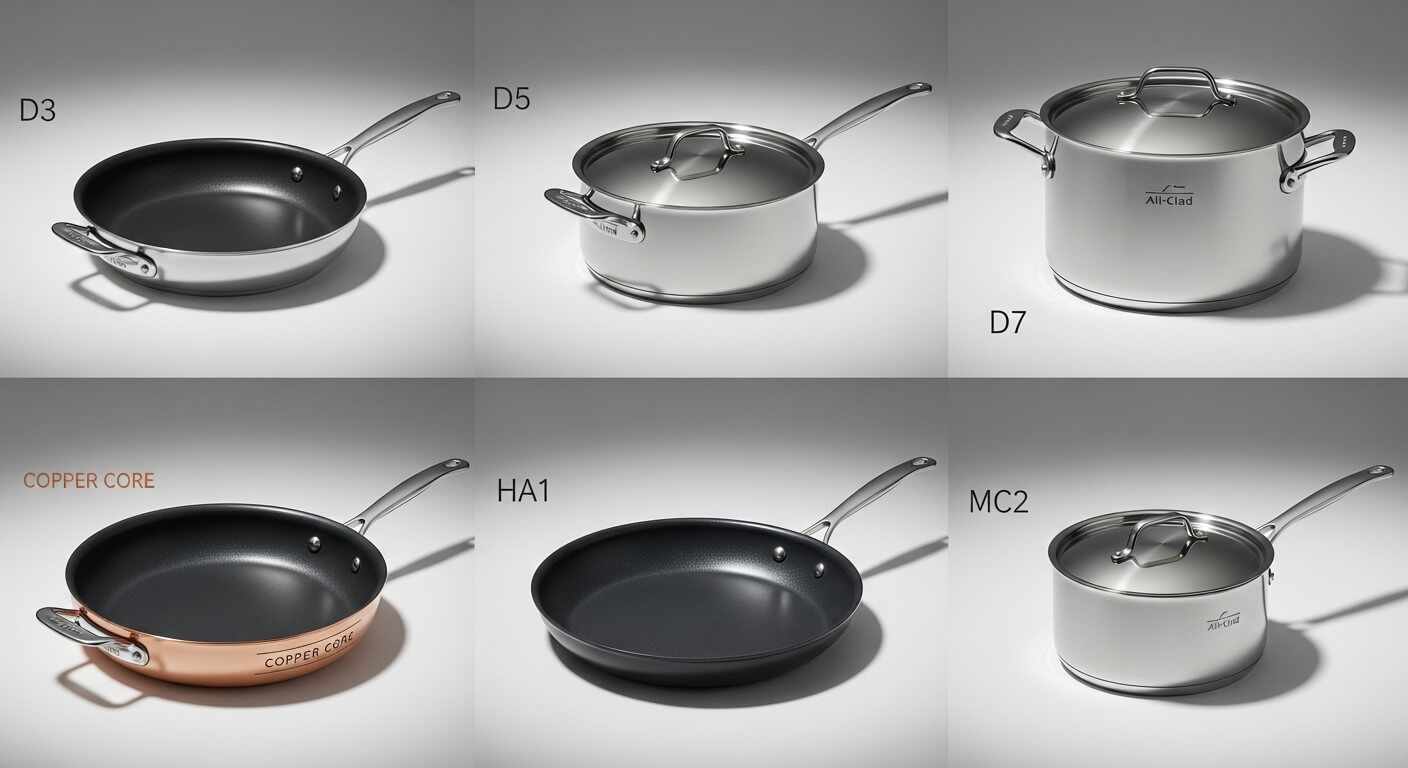
Before we get into it, if you want to see how D3 stacks up against All-Clad’s other lines, check out our breakdown of All-Clad D3, D5, and D7. That’s a different conversation than this one.
Evolution of Premium Cookware Technologies
Cookware technology didn’t always look like this. For decades, the premium market was basically stainless steel vs. nonstick, full stop. You picked your trade-off and lived with it.
All-Clad has been doing tri-ply since 1971, bonding aluminum between two layers of stainless steel. Simple idea. Hard to execute well, which is why it took decades for anyone to really nail it consistently. HexClad showed up in 2015 with a different pitch entirely — what if you didn’t have to choose? Stainless for searing, nonstick valleys for the egg-slide-out-easy stuff. On paper, sounds like cheating the system. In practice, it’s a genuinely different cooking surface than either parent material, and that matters more than people realize when they’re shopping.
Want the long version on D3 specifically? Here’s our full All-Clad D3 review.
Understanding Construction and Materials
D3 keeps it old-school: aluminum core, stainless steel exterior, bonded in three layers from base to rim. That’s it. No coating, no gimmicks. The aluminum does the heat-spreading work, the steel gives you a surface that’s tough enough for metal utensils and stays looking sharp for years.
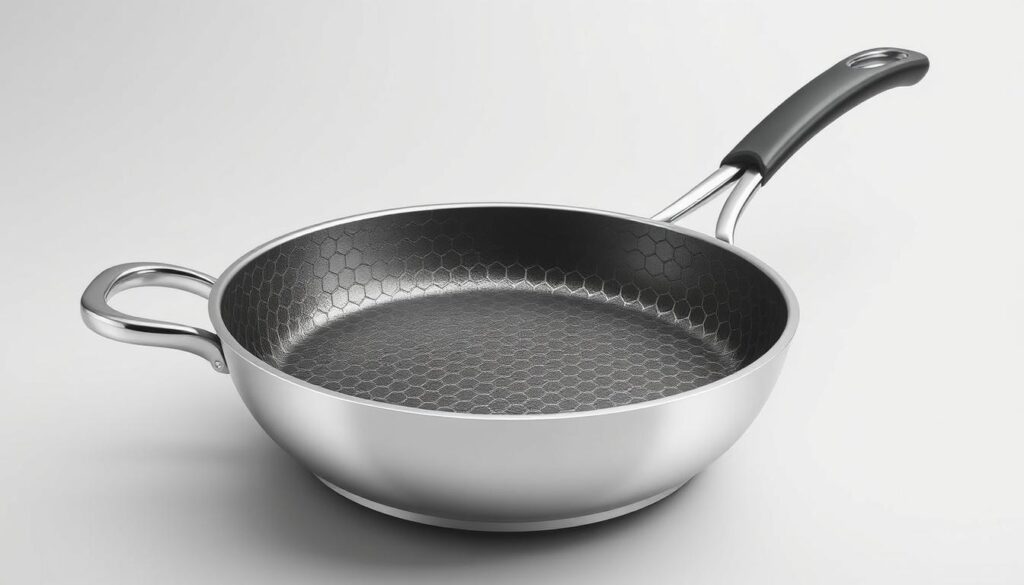
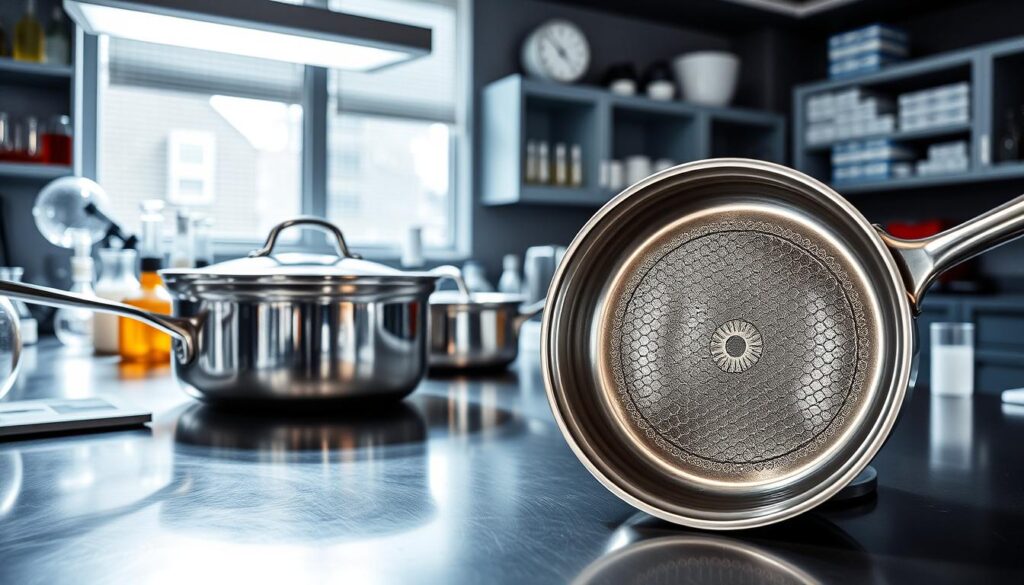
HexClad does something genuinely clever. A laser-etched hexagonal pattern of raised stainless steel sits on top, and tucked into the valleys between those ridges is a ceramic nonstick coating — currently their TerraBond formula, which is PTFE-free and PFAS-free. So you get stainless on the peaks (durable, sear-friendly) and nonstick in the low spots (easy release, easy cleanup). It’s a hybrid in the literal sense, not just marketing language.
Here’s the catch, though. That textured surface isn’t smooth like a traditional nonstick pan. Food sits up on those raised hexagons rather than flat against an even coating, which changes how things brown and release. Not worse, necessarily — just different. Worth knowing before you buy.
Design Features and Aesthetics
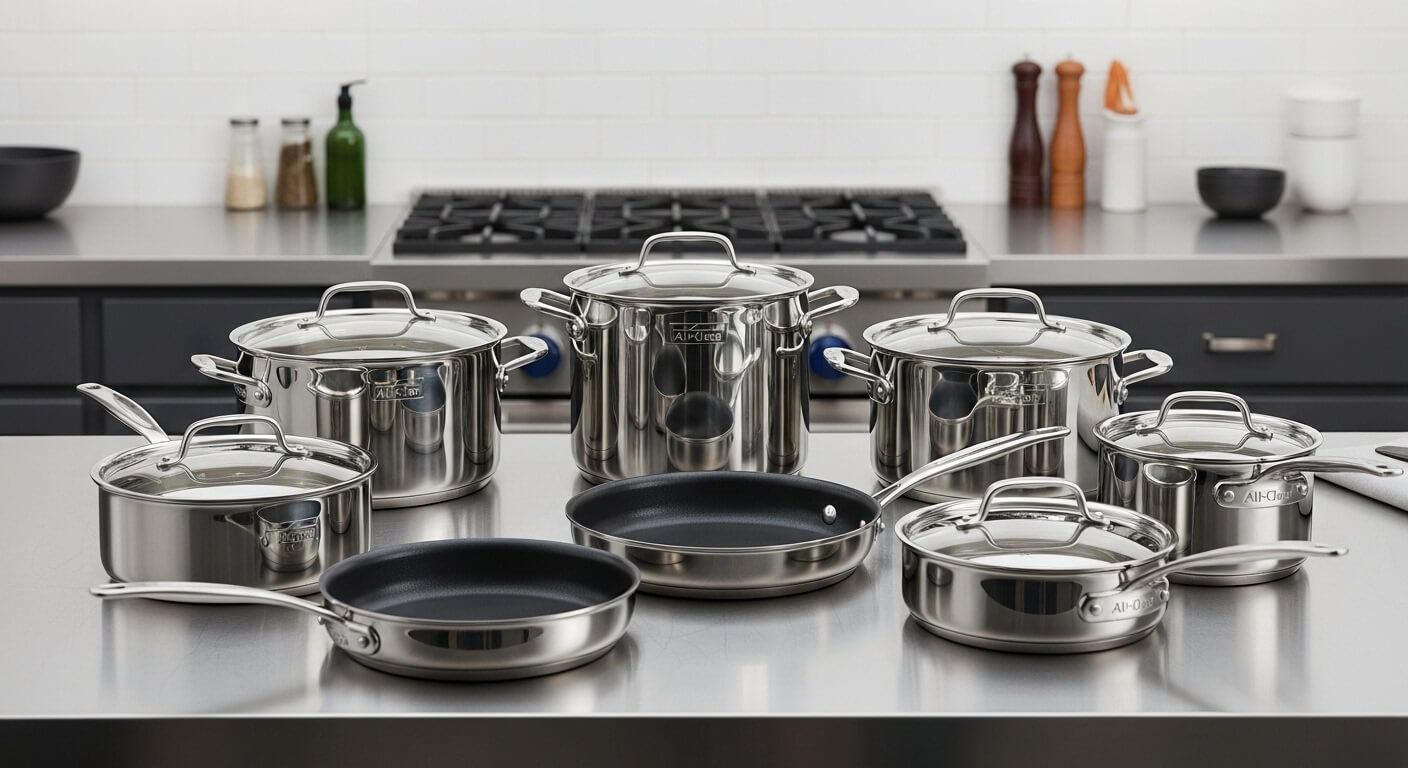
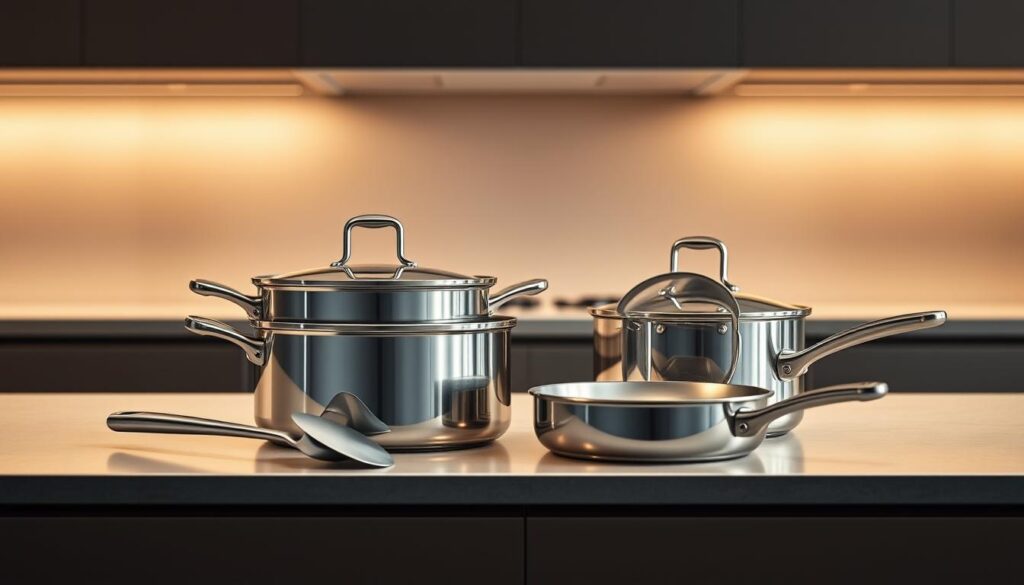
D3 looks the way you’d expect All-Clad to look: mirror-polished stainless, riveted handles, that classic restaurant-kitchen silhouette. Drops into any kitchen aesthetic without trying too hard. Timeless, if a little safe.
HexClad pans are more of a statement piece. That hexagonal pattern is visually distinctive — you’ll know a HexClad pan on sight, even from across a kitchen. Some people love that. Others find it a bit much for everyday cookware. Personal taste call, this one.
Heat Conductivity and Performance Testing
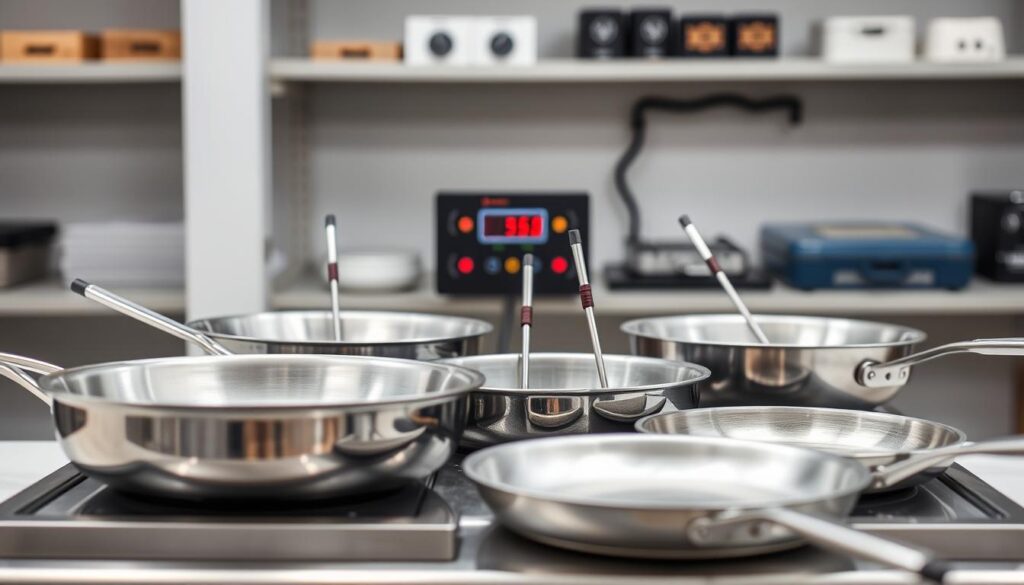
Both brands use an aluminum core sandwiched in steel, so the underlying heat-conduction physics are similar. Where they diverge is the cooking surface itself.
D3 gives you a flat, even, totally uninterrupted stainless surface. Heat moves predictably, and once you’ve learned to read the “water bead” test for preheating, you’ve basically mastered the pan. For a deeper dive into how D3 performs against other tri-ply options, see our All-Clad D3 cookware set breakdown.
HexClad’s raised ridges genuinely do boost searing contact on the steel parts of the surface — that’s the whole design premise, and it’s not just hype. But the nonstick valleys behave differently than the peaks, so heat response across the cooking surface isn’t quite as uniform as a flat stainless pan. Doesn’t ruin the cooking experience. Just means you adjust technique slightly.
Cooking Surface Analysis
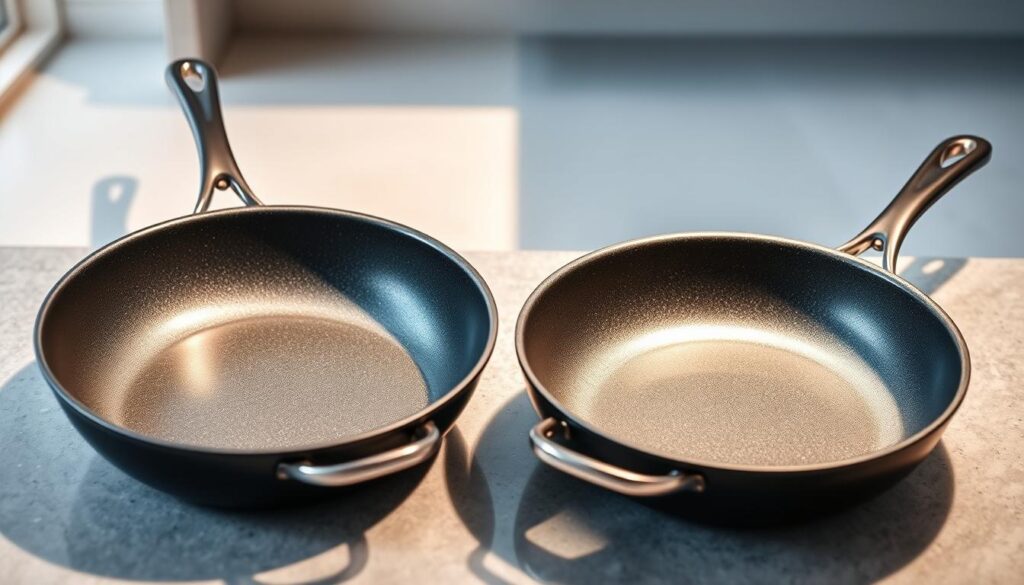
This is really the heart of the decision, so let’s not dance around it.
| All-Clad D3 | HexClad | |
|---|---|---|
| Surface type | Flat, polished stainless | Textured hex pattern, stainless + ceramic |
| Nonstick? | No | Yes (in the valleys) |
| Metal utensil safe | Yes | Yes |
| Best for | Searing, fond, pan sauces | Eggs, fish, easy release with decent sear |
| Learning curve | Moderate (need oil/heat technique) | Low |
D3 needs you to know what you’re doing — preheat properly, use enough fat, let food release on its own. Skip those steps and things stick. That’s not a flaw, it’s just how uncoated stainless behaves, and once you get it, you get it for good.
HexClad splits the difference. You’ll get easier release on delicate stuff like eggs or fish, plus a passable sear on steaks and chicken thanks to those stainless ridges. It’s not going to out-sear pure stainless on a hard fond, but it’s not trying to.
Durability and Longevity Assessment
All-Clad D3 has a track record that goes back five decades, and pieces from the 1980s are still in working kitchens today. There’s no coating to wear out, period. The metal is the surface, forever, as long as you don’t warp it or burn it black beyond recognition (and even then, a good scrub usually brings it back).
HexClad is newer territory, so the long-haul data is thinner. The hexagonal steel itself should hold up — it’s metal, after all. The open question is the ceramic coating in the valleys. Ceramic nonstick coatings, generally speaking, tend to lose some of their nonstick punch faster than PTFE does, and since HexClad only switched to its current TerraBond ceramic formula in 2024, nobody’s got a decade of real-world wear data yet. Could be fine. Could fade in 2-3 years. We just don’t know yet.
Temperature Tolerance and Versatility
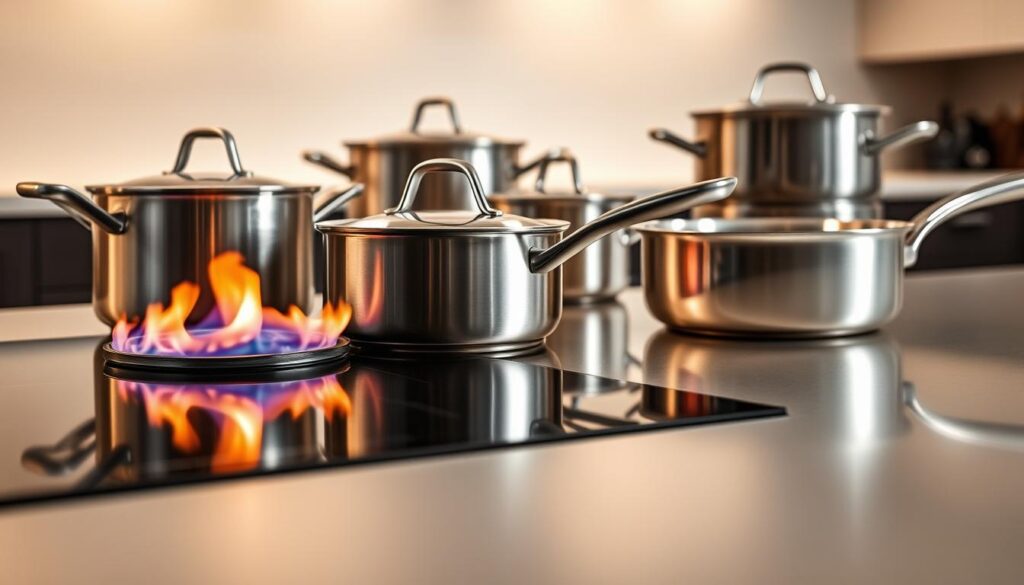
Both go on any cooktop, including induction. Both claim oven safety, though the numbers aren’t identical.
D3 is rated oven and broiler safe up to 600°F — full bonded metal construction means there’s nothing to degrade at high heat. HexClad’s hybrid pans are typically rated to around 400-500°F depending on the specific piece, since the ceramic coating is the limiting factor, not the steel. If you’re someone who finishes steaks under the broiler or does high-heat roasting, that gap actually matters.
Product Range and Options
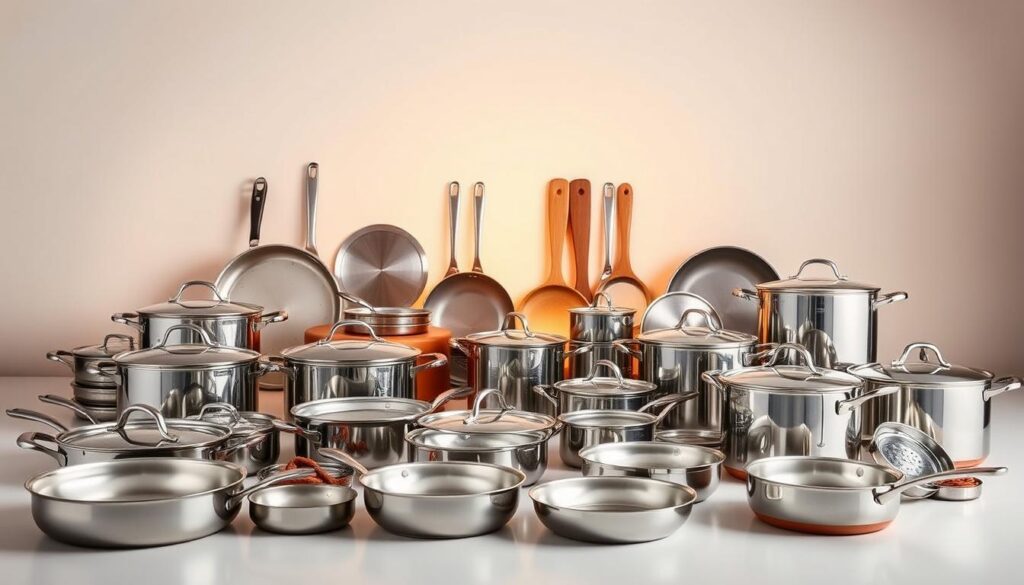
All-Clad’s D3 lineup is sprawling at this point. You’ve got the classic D3 Stainless line, plus D3 Everyday with upgraded comfort handles and roughly 30% more skillet surface area than standard D3. Sets range from compact 3-piece starter kits up through 14-piece collections with dutch ovens and multiple sauté pans.
HexClad’s range runs similarly broad — individual pans, fry pan bundles, and full sets that scale from a basic trio up to 13-piece collections with woks and multiple pot sizes. Less granular than All-Clad’s catalog, but plenty of options if you’re filling a kitchen from scratch.
Ease of Use and Maintenance
Here’s where HexClad pulls ahead for a lot of people, honestly. Dishwasher-safe (officially), and food doesn’t cling to the surface the way it can on bare stainless. Less babysitting required.
D3 wants more attention. Hand-wash only is the official recommendation, even though some people run it through the dishwasher anyway (your call, but it’ll dull the polish over time). Stuck-on bits need a soak and a non-abrasive scrub, occasionally a stainless cleaner to bring back the shine. More maintenance, no question — but also nothing that ever needs replacing. For more on caring for tri-ply cookware long-term, our care guide covers the specifics.
Price Analysis and Value Proposition
Both brands sit in the premium tier, and neither is what anyone would call a budget buy.
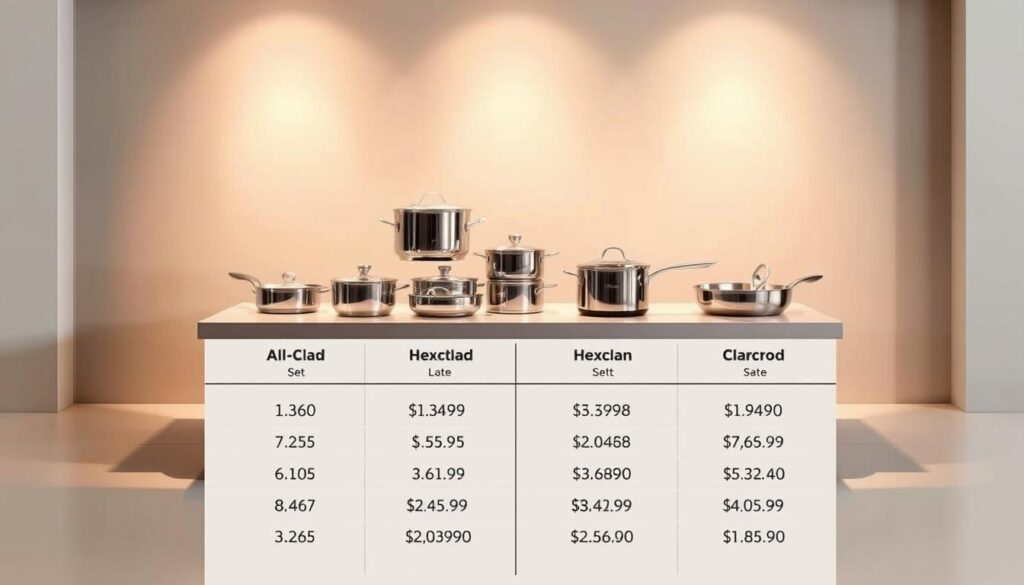
All-Clad D3 sets typically run somewhere between $300 for smaller starter configurations up past $1,500 for the larger, more comprehensive sets — though sale pricing is common and worth watching for, since “regular price” and “actual price” on All-Clad’s site are rarely the same number.
HexClad sets land in a comparable range overall, generally falling between mid-hundreds and low-thousands depending on piece count, with individual pans and smaller bundles available for people who don’t want to commit to a full set.
Value-wise: D3 is the better long-term bet if you cook often and care for it properly, since there’s no coating to eventually replace. HexClad’s value case is more about day-one convenience — less technique required, less cleanup hassle, decent results right out of the box.
Manufacturing Standards and Quality Control

All-Clad manufactures D3 domestically, in Canonsburg, Pennsylvania, a facility the company has operated since 1971. Each piece goes through that same bonding process the brand’s been refining for over fifty years. Consistency is the whole brand promise here.
HexClad’s manufacturing is more globally distributed, and the company doesn’t lean as heavily on a “made in the USA” identity. That’s not a knock on quality — third-party lab testing has consistently come back clean on PFAS for their current ceramic line — but it is a different manufacturing philosophy if that’s something you weigh heavily. For more on what separates premium tri-ply construction from the rest of the market, see our stainless steel cookware guide.
Real Kitchen Performance Tests
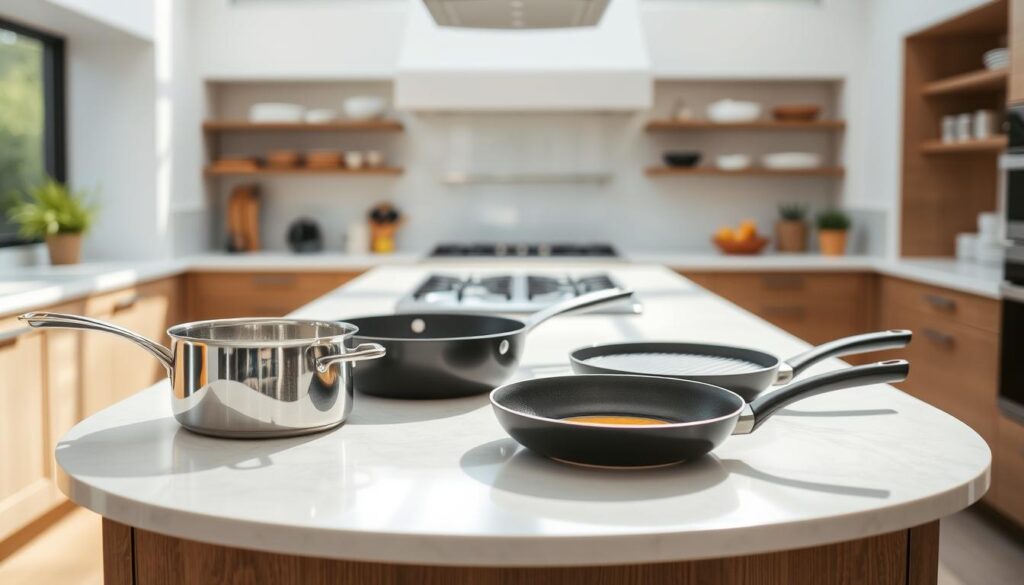
In actual side-by-side use — not lab conditions, just normal home cooking — the differences show up fast.
Searing a steak: D3 builds a better fond and crust once you’ve got the heat and oil dialed in. HexClad gets you 80-90% of the way there with way less risk of sticking if your timing’s off.
Eggs: HexClad wins, no real contest. The nonstick valleys make scrambled eggs and omelets close to effortless.
Pan sauces: D3, hands down. Building a sauce off browned bits stuck to the pan (deglazing) basically requires those bits to be there in the first place — nonstick surfaces are working against you here by design.
Curious how either stacks up against other major brands? Our cookware performance tests compare both against Cuisinart and Calphalon too.
Set Composition and Piece Selection
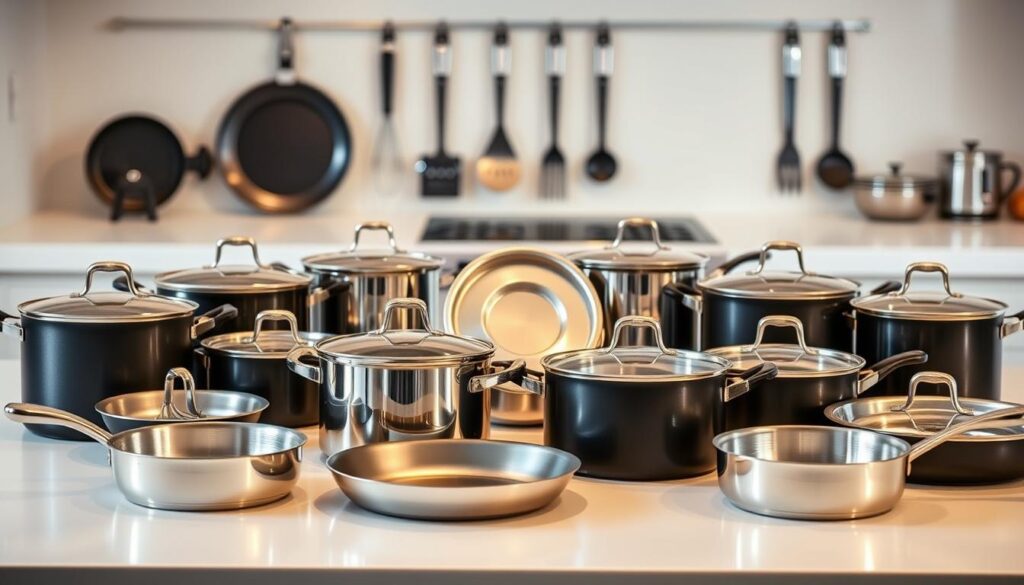
Most D3 sets follow a similar formula: a couple of skillets (8.5″ and 10.5″ are common), one or two saucepans with lids, a sauté pan, and a stockpot. Bigger sets add a dutch oven or a second sauté pan size. It’s a pretty traditional spread built around classic technique.
HexClad sets often include a wok option, which D3 generally doesn’t offer in standard sets — a small but real difference if stir-frying is part of your regular rotation. Beyond that, the piece breakdown (fry pans, sauce pots, a larger stockpot) looks fairly similar between the two brands.
Warranty Coverage Comparison
All-Clad backs D3 with a Limited Lifetime Warranty covering manufacturing defects — and because there’s no coating involved, “lifetime” actually means something close to what it sounds like. The metal itself just doesn’t wear out under normal use.
HexClad also offers a lifetime warranty on its Hybrid cookware. The asterisk worth noting: that warranty typically covers the metal construction and manufacturing defects, not necessarily the gradual decline of nonstick performance over years of use — which is a pretty standard exclusion across the nonstick category generally, not something unique to HexClad.
Who Should Buy All-Clad D3 vs. Who Should Buy HexClad
Go with D3 if you already know your way around stainless steel, or you’re willing to learn. You’ll get a pan that improves with patina, never needs recoating, and rewards good searing technique with restaurant-quality results. Best for people who cook a lot of steak, build pan sauces, or just want cookware that’ll outlive them.
Go with HexClad if you want a gentler learning curve without giving up on durability entirely. Good fit for people who cook a lot of eggs, fish, and delicate proteins, want dishwasher-safe convenience, and are fine trading a little bit of searing performance for everyday ease.
Honestly? A lot of serious home cooks end up with both — stainless for the steaks and sauces, hybrid nonstick for the eggs and fish. Not every kitchen needs to pick a single side.
PFAS and Coating Safety Considerations
All-Clad D3 has zero coating, so there’s no PFAS conversation to have — it’s just bonded metal, full stop.
HexClad’s current line uses its TerraBond ceramic coating, which the company states is PTFE-free and PFAS-free, and third-party lab testing has reportedly come back “Non-Detect” for PFAS compounds on the current formula. Worth flagging: HexClad’s earlier cookware lines used a PTFE-based coating before the 2024 switch to ceramic, and that older formulation became the subject of a 2024 class-action lawsuit in California alleging misleading “non-toxic” marketing. If you’re buying new today, you’re getting the updated TerraBond formula — but it’s a relevant data point if you’re considering a used or older HexClad pan.
How These Compare to Other Tri-Ply Cookware Brands
D3 isn’t the only tri-ply game in town — Cuisinart, Tramontina, and Made In all offer bonded stainless options at varying price points, generally undercutting All-Clad while sacrificing some fit-and-finish and brand cachet. HexClad’s hybrid approach is more unusual; few major brands have replicated the hexagonal-lattice nonstick concept at scale, which keeps HexClad fairly singular in its category rather than just one of many similar options.