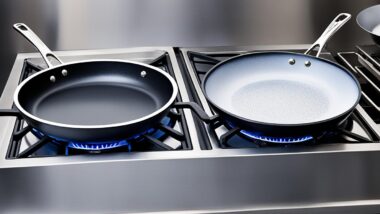
The main differences between the HexClad Hybrid and Misen Carbon Steel Fry Pans are their nonstick technology, price, and maintenance requirements — HexClad uses a laser-etched ceramic coating over tri-ply stainless steel and is dishwasher-safe, while Misen uses a coating-free nitrided carbon steel surface that’s completely PFAS-free but requires hand washing. Both pans sell in the $109–$219 range and work on induction, but they’re built on fundamentally different cooking philosophies.
Quick Verdict: HexClad Hybrid vs Misen Carbon Steel Fry Pan
Two good pans. Two very different approaches. Neither is perfect — but one is probably right for you.
Feature
HexClad Hybrid
Misen Carbon Nonstick
Price (12″)
$196 (with lid)
$129 (no lid)
Material
Tri-ply stainless + aluminum core
Nitrided carbon steel + aluminum core
Nonstick Type
TerraBond ceramic coating
Coating-free nitrided surface
Oven-Safe Temp
900°F (pan); 400°F (glass lid)
500°F
Induction Ready
Yes
Yes
Dishwasher Safe
Yes
No
Warranty
Lifetime
Not specified
Amazon Rating
4.2/5 (9,001 reviews)
3.5/5 (419 reviews)
Bottom line: HexClad is more convenient and better proven. Misen is cheaper and completely chemical-free. Your priorities decide the winner.
What Makes These Two Pans So Different
Here’s the core tension: HexClad puts a ceramic coating on top of stainless steel. Misen skips the coating entirely and changes the metal itself through a process called nitriding.
One approach adds a layer. The other transforms the surface at a molecular level.
That difference — coating vs. no coating — drives everything else: how you clean them, how long they last, what you can cook in them, and what you’ll pay. The price gap is real too. At 12 inches, Misen runs $67 cheaper, though it doesn’t include a lid. For some buyers, that’s a no-brainer. For others, the HexClad’s convenience and track record are worth every extra dollar.
Both pans landed on this comparison page because they occupy the same market — premium, health-conscious, induction-compatible skillets for serious home cooks. But they’re not actually competing on the same terms. This article breaks down exactly where each one wins, where it falls short, and who should buy which.
HexClad Hybrid Fry Pan: Full Review
What Is the HexClad Hybrid Fry Pan?
HexClad launched around 2016 and built its brand on a genuinely clever idea: use laser-etching to create a hexagonal grid pattern on the cooking surface, with stainless-steel peaks rising above ceramic-coated nonstick valleys. The theory is solid — the peaks handle searing and browning, the valleys handle release and cleanup. You get both in one pan.
Celebrity backing from Gordon Ramsay pushed HexClad into the mainstream. Whether that matters to your cooking is another question. What matters is whether the technology delivers — and for most users, at least initially, it does.
It’s worth noting that PFOA — one of the most widely studied harmful compounds in nonstick coatings — has been linked to health concerns in numerous studies. According to the Environmental Protection Agency, PFAS chemicals (the broader family that includes PFOA) are persistent in the environment and the human body and are associated with a range of health effects. HexClad’s TerraBond coating is PFOA-free, which matters for health-conscious buyers.
Built with tri-ply construction — an aluminum core between two layers of stainless steel — and finished with the hex laser-etch pattern on top. The aluminum core is what keeps heat even. Stainless on the outside means it plays nice with induction cooktops.
Lid (included): Tempered glass (oven-safe to 400°F)
Weight: 8″ = 1.5 lbs | 10″ = 3 lbs | 12″ = 4 lbs
The 12″ is noticeably heavy. Not a dealbreaker, but worth knowing before you buy.
HexClad Hybrid Fry Pan: Key Features
Laser-etched hex pattern — protects nonstick valleys from metal utensil damage
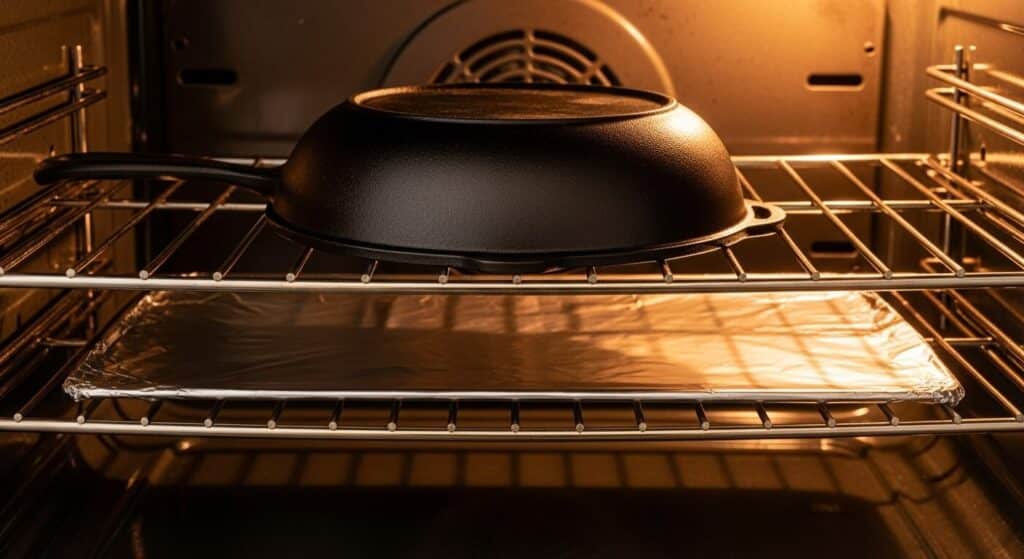
Oven-safe to 900°F — one of the highest ratings you’ll find in this category
Dishwasher-safe — unusual for any nonstick pan; hand washing still recommended
Metal-utensil safe — the stainless peaks absorb the contact, not the coating
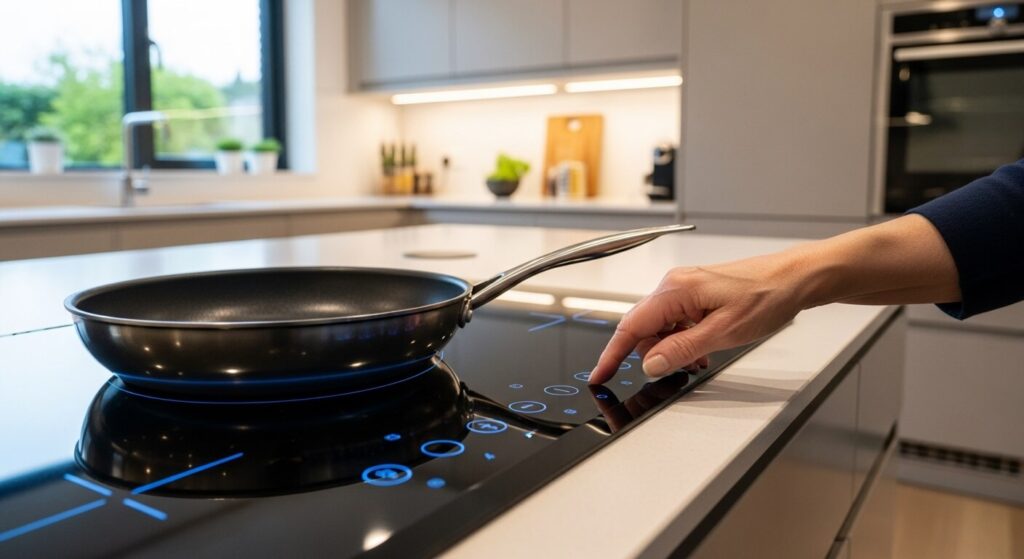
Induction compatible — works on all cooktops
Lifetime warranty — covers manufacturer defects for home use
That 900°F oven rating is genuinely impressive. Most ceramic-coated nonstick pans tap out around 400–500°F. HexClad’s hybrid construction — with those exposed stainless peaks — is what makes such a high temperature rating possible.
HexClad Hybrid Fry Pan: Sizes & Pricing
All prices include the tempered glass lid.
Size
Price
Capacity
Weight
7-inch
$129
—
—
8-inch
$143
1.5 L
1.5 lbs
10-inch
$169
2.6 qt
3 lbs
12-inch
$196
7 L
4 lbs
14-inch
$219
—
6.79 lbs
For context: All-Clad’s D3 Nonstick 12″ runs around $150–$180 without the lifetime warranty. Made In’s Blue Carbon Steel 12″ is around $119. HexClad is priced at the top of the premium tier.
HexClad Hybrid Fry Pan: Pros & Cons
Pros
900°F oven rating — far above most nonstick competition
Dishwasher-safe (rare for coated nonstick)
Metal utensils won’t immediately wreck the surface
Even, consistent heat from tri-ply construction
Lifetime warranty is genuinely reassuring
Works beautifully on induction
PFOA-free ceramic coating
Cons
Expensive — especially at 12″ and 14″
Coating degradation reported by long-term users
12″ weighs 4 lbs — heavier than most carbon steel alternatives
Ceramic nonstick valleys can still wear over years of use
Glass lid only rated to 400°F despite pan going to 900°F
Some users report food sticking as the coating ages
Who Is the HexClad Hybrid Fry Pan Best For?
Honestly? The convenience-first home cook. Someone who wants a single workhorse pan that handles eggs, sears steaks, goes in the oven, survives the dishwasher, and doesn’t demand much attention. If you hate seasoning, can’t stand hand-washing, and cook on induction — HexClad is hard to beat.
It’s also a strong pick for anyone who frequently finishes dishes in a high-temperature oven. That 900°F ceiling is a real differentiator. Most pans can’t touch it.
Misen Carbon Nonstick Fry Pan: Full Review
What Is the Misen Carbon Nonstick Fry Pan?
Misen launched in 2015 as a direct-to-consumer brand with one pitch: professional-quality cookware at honest prices. The Carbon Nonstick skillet is their most ambitious product — and the most misunderstood.
This isn’t traditional carbon steel. And it isn’t coated nonstick. It’s something in between: carbon steel that’s been heat-treated in a nitrogen-rich environment until the surface itself transforms into an iron nitride layer. No coating applied. No PFAS, PTFE, or PFOA — ever. The nonstick properties come from the metallurgical structure of the pan, not from anything layered on top.
The health angle is real. Research published in Environmental Health Perspectives has documented that certain synthetic nonstick coatings — particularly older PTFE-based ones — can release harmful particles when overheated above 500°F. Nitrided surfaces don’t carry this risk, which is a meaningful distinction for health-focused households.
Misen Carbon Nonstick Fry Pan: Construction & Materials
Material: Nitrided carbon steel with aluminum core
Nonstick mechanism: Iron nitride surface layer — permanently baked into the metal
No coating — nothing to chip, peel, or flake. Ever.
Handle: Precision-welded stainless steel with satin finish
Aluminum core: Adds responsiveness and keeps weight down vs. raw carbon steel
Nearly a full pound lighter than HexClad at 12″. If you cook with one hand, flip vegetables frequently, or just hate heavy pans, that difference is real.
Misen Carbon Nonstick Fry Pan: Key Features
Nitrided surface — the nonstick property is the metal, not a layer on it
No seasoning required out of the box — unlike traditional carbon steel (de Buyer, Matfer)
Improves with use — cooking naturally deposits micro-seasoning over time
Oven-safe to 500°F — stovetop to oven with one pan
Induction compatible — gas, electric, ceramic, induction all work
Rust-resistant — a huge upgrade from raw carbon steel; can sit in the sink overnight
PFAS/PTFE/PFOA-free — no exceptions
The no-seasoning-required point deserves emphasis. Traditional carbon steel cookware has a real learning curve — improper first seasoning can ruin a pan. Misen’s nitriding process skips all of that. You cook with it, it gets better. Simple.
Misen Carbon Nonstick Fry Pan: Sizes & Pricing
No lid included with any size.
Size
Price
Capacity
Weight
8-inch
$109
1.25 qt
1.61 lbs
10-inch
$119
2.5 qt
2.5 lbs
12-inch
$129
3 qt
3.02 lbs
Add roughly $20–$40 for a compatible lid if you need one. Even with that, the 12″ Misen is still cheaper than HexClad’s 8″.
Misen Carbon Nonstick Fry Pan: Pros & Cons
Pros
Nothing to chip, peel, or flake — ever
$67 cheaper than HexClad at 12-inch
Lighter than HexClad at every size
Fast to heat up, fast to cool down
Zero chemical coatings of any kind
Rust-resistant (unlike raw carbon steel)
Gets better the more you use it
Cons
Not dishwasher safe — hand wash only
Lid sold separately
Inconsistent nonstick performance, especially out of the box
Lower oven-safe temp (500°F vs. HexClad’s 900°F)
Smaller review sample on Amazon — harder to assess long-term reliability
Some early failures reported (possible quality control variance)
Not ideal for extremely delicate tasks (eggs, crepes) until broken in
Who Is the Misen Carbon Nonstick Fry Pan Best For?
Health-focused cooks who want nothing synthetic in their kitchen. Full stop. If PFAS-free isn’t just a nice-to-have but a firm requirement, Misen is one of the only pans in this price range that genuinely delivers.
It’s also great for anyone who cooks proteins at high heat — searing chicken thighs, pan-frying fish, browning ground beef. The fast heat response from the carbon steel body and aluminum core makes it sneaky good for high-heat work. Just don’t expect it to make flawless eggs on day one.
HexClad Hybrid vs Misen Carbon Steel: Head-to-Head Performance
Both pans can sear. But they feel different doing it.
HexClad’s stainless peaks develop fond nicely — that brown, flavorful crust on the bottom of the pan that makes pan sauces worth doing. The 900°F oven ceiling means you can finish a thick steak or whole chicken without switching vessels. Misen heats up faster and responds more quickly to temperature changes, which makes it feel more like a professional kitchen pan. Carbon steel retains heat well once it’s up to temp.
Verdict: Draw on searing quality. HexClad wins on oven temperature. Misen wins on heat responsiveness.
Nonstick Performance
Neither pan is a Teflon replacement. That’s the honest answer.
HexClad’s ceramic valleys work well when new — eggs slide, cleanup is easy, nothing dramatic. Over time, some users report the valleys starting to grab. Misen is nonstick out of the box but with variance — some pans perform beautifully from the start, others require a break-in period before they stop sticking.
A 2022 study from Consumer Reports found that ceramic nonstick coatings generally degrade faster than PTFE-based coatings — often losing effective nonstick properties within 1–3 years of regular use. That’s relevant context for HexClad’s long-term performance outlook.
Verdict: Draw — both have documented inconsistencies. Neither replaces a dedicated nonstick pan for very delicate cooking.
Heat Distribution
HexClad’s tri-ply construction is excellent here. The aluminum core extends all the way to the edges, minimizing hot spots. Consistent, predictable heat across the entire cooking surface.
Misen’s aluminum core also helps, but the carbon steel body is thinner overall. Slightly more prone to hot spots at the outer edges, especially on electric coil burners.
HexClad’s ceramic coating — no matter how protected by that hex pattern — is still a coating. Coatings degrade. Maybe slowly, maybe quickly depending on how you use it. The lifetime warranty covers defects, not normal wear. Misen’s nitrided surface is the metal itself. There’s nothing to wear through in the traditional sense.
In theory, Misen wins decisively on long-term durability. In practice, some units have failed early, suggesting quality control isn’t perfectly consistent.
Verdict: Misen has the structural advantage. Real-world results are mixed for both.
Weight & Handling
Pan
12″ Weight
HexClad Hybrid
4.0 lbs
Misen Carbon Nonstick
3.02 lbs
Almost a full pound difference. At 12 inches, that matters — especially for older cooks, anyone with wrist issues, or people who regularly toss food in the pan.
Verdict: Misen wins. Not close.
Maintenance & Care
HexClad
Misen
Dishwasher safe
Yes
No
Metal utensils OK
Yes
Use cautiously
Soap safe
Yes
Yes (mild soap fine)
Dry immediately
No
Recommended
HexClad wins this category without much debate. Dishwasher-safe nonstick is rare and genuinely convenient. Misen requires hand washing, immediate drying, and a little more attention — not high maintenance, but more than HexClad.
Verdict: HexClad wins.
Price & Value
At 12 inches: HexClad with lid = $196. Misen without lid = $129. Add $25 for a lid on Misen and you’re still at $154 — $42 less than HexClad.
But factor in durability. If HexClad’s coating degrades in 3–4 years and you need to replace it, the cost-per-year math changes. If Misen’s nitrided surface truly lasts a decade or more, it’s one of the better values in premium cookware.
Verdict: Misen is cheaper upfront. Long-term value depends on how each pan holds up for you specifically.
What Real Customers Are Saying
HexClad Hybrid: What 9,001 Reviews Tell You
4.2 out of 5 stars is genuinely solid for a pan at this price. The pattern in the reviews is pretty clear:
Loves it: Cooks who use it for searing meats, stir-fries, and oven finishing — especially on induction. The surface handles these tasks well consistently.
Not happy: Long-term users who noticed the coating degrading after 1–2 years of daily use. Some reported peeling. The lifetime warranty helps, but replacing a pan every few years defeats the premium value proposition.
HexClad’s rating comes from a large, statistically meaningful sample. When 9,000+ people give something 4.2 stars, you can trust that number. It’s not cherry-picked.
Misen Carbon Nonstick: What 419 Reviews Tell You
3.5 out of 5 stars on 419 reviews is trickier to interpret. Small sample. Higher variance. Two clear camps in the reviews:
Loves it: Praises fast, even heating and the chemical-free construction. Clean-up is easy once the pan is seasoned in.
Frustrated: Significant sticking from day one. Some pans reportedly failed within weeks. Given that Misen positions this as a “built to last a lifetime” product, early failures are a real credibility problem.
The lower rating and smaller review count suggest Misen’s Carbon Nonstick is still proving itself. 700+ units sold per month means there’s real demand — but the QC inconsistency is a legitimate concern.
HexClad Hybrid vs Misen Carbon Steel: Which Pan Should You Buy?
Choose the HexClad Hybrid If…
You want a single everyday pan that handles everything without fuss
Dishwasher convenience is non-negotiable in your kitchen
You regularly finish dishes in a very hot oven (above 500°F)
You use metal spatulas and don’t want to think about utensil rules
You cook on induction and want a proven, well-reviewed option
Budget is secondary to reliability and convenience
Choose the Misen Carbon Nonstick If…
Avoiding PFAS and synthetic coatings entirely is a firm requirement
You want carbon steel cooking performance without the traditional seasoning ritual
Budget matters — you’ll save $42–$67 vs. HexClad at comparable sizes
You cook proteins at high heat and want fast, responsive heat control
You’re comfortable hand-washing and giving the pan a little more attention
You don’t need a lid included
The Honest Bottom Line
Neither pan is perfect. Both have documented issues with nonstick consistency over time. That’s not a knock on either brand — it’s just the honest state of nonstick cookware in 2024.
For most home cooks, HexClad is the safer choice. Better reviewed, more convenient, backed by a stronger warranty, and easier to live with day-to-day. The higher price is real, but so is the peace of mind.
For health-focused, hands-on cooks who want no synthetic chemistry anywhere near their food — Misen is a compelling option. The nitrided surface technology is genuinely interesting, and if you get a good one, it’ll outlast any coated pan. The “if” is doing some work there, admittedly.
Frequently Compared Alternatives
HexClad vs. All-Clad Nonstick
All-Clad’s HA1 Nonstick 12″ runs around $150–$175 and uses PTFE-based nonstick over d3 tri-ply construction. It’s oven-safe to 500°F — well below HexClad’s 900°F ceiling. The build quality is excellent and All-Clad’s track record in professional kitchens is long. If you want a more traditional nonstick experience at a similar price point, it’s worth a look.
Misen Carbon Nonstick vs. Traditional Carbon Steel (de Buyer, Matfer)
Traditional carbon steel pans — particularly the de Buyer Mineral B and Matfer Bourgeat — are the professional kitchen standard for a reason. Excellent heat retention, great sear, and they truly last decades. But they require careful initial seasoning, react to acids (wine sauces, tomatoes), and rust if left wet. Misen’s nitrided surface eliminates all three pain points. It’s carbon steel for cooks who want the performance without the learning curve. If you’re already comfortable with traditional carbon steel, de Buyer is worth considering at a similar or lower price.
Is There a Better Option in This Price Range?
Possibly. Made In’s Blue Carbon Steel Skillet runs around $119 for the 12″ and has a strong following among home cooks who want the traditional carbon steel experience with good quality control. GreenPan’s ceramic nonstick lines offer PTFE-free cooking at lower price points than HexClad, though without the hex-pattern protection. Tramontina’s Professional Nonstick is frequently cited as the best value traditional nonstick pan on the market. Worth comparing depending on what you prioritize.