Cleaning a cast iron skillet correctly is the difference between a pan that lasts a lifetime and one that rusts in a drawer after six months.
Most people either overthink it or completely ignore it. Neither works.
The Importance of Cleaning Cast Iron Skillets
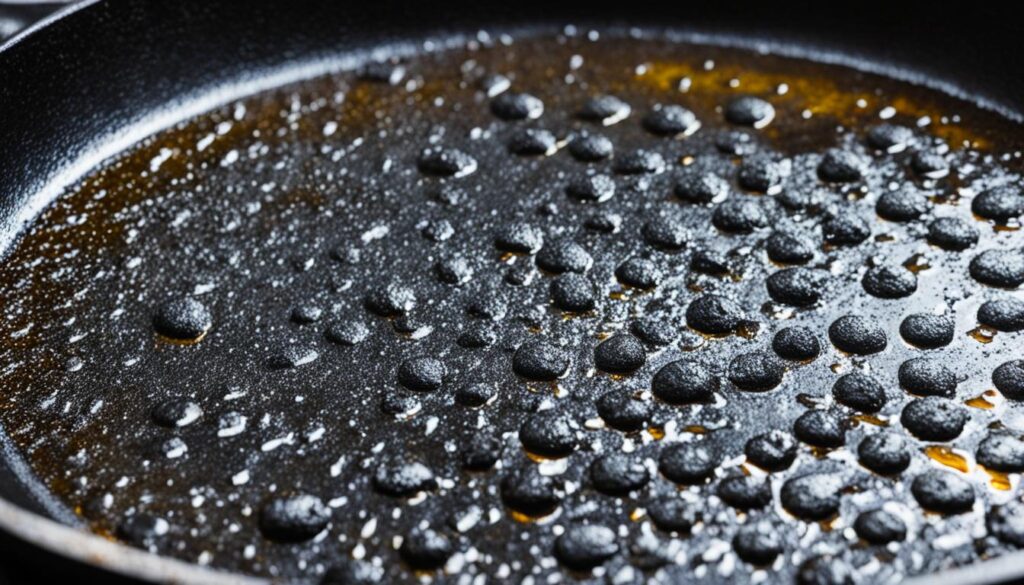
Here’s what most people don’t realize: cast iron is porous. It absorbs oil during cooking—which is actually a good thing—but it also means food particles and moisture can work their way into the surface if you’re not paying attention.
Ignore cleaning and you get rust. Fast.
Why this actually matters day-to-day:
- Rust prevention — bare iron oxidizes quickly, even from ambient humidity
- Non-stick performance — a healthy seasoning layer is what makes eggs slide around like magic
- Food safety — old residue sitting in a porous surface isn’t something you want near your food
- Longevity — five minutes of cleaning now versus hours of rust removal later
That’s the trade-off. Not a hard one.
Tools You Need to Clean a Cast Iron Skillet
You don’t need a cabinet full of stuff. Honestly, most of this you probably already own.
| Tool | What It’s For | Worth It? |
|---|---|---|
| Stiff-bristle brush | Everyday scrubbing | Yes, get a dedicated one |
| Chain mail scrubber | Stuck-on food without stripping seasoning | Absolutely |
| Plastic scraper | Lifting baked-on bits gently | Cheap and useful |
| Coarse kosher salt | Natural abrasive that doesn’t need water | Already in your kitchen |
| Paper towels | Drying and applying oil | Better than cloth—no fibers left behind |
| Flaxseed or vegetable oil | Post-wash seasoning layer | Small bottle lasts months |
Steel wool? Save that for rust restoration only. A chain mail scrubber handles everything else aggressively enough without wrecking your seasoning layer.
And don’t share your cast iron brush with your regular dish brush. Cross-contamination of soap residue is a real thing.
Routine Cleaning for Cast Iron Skillets
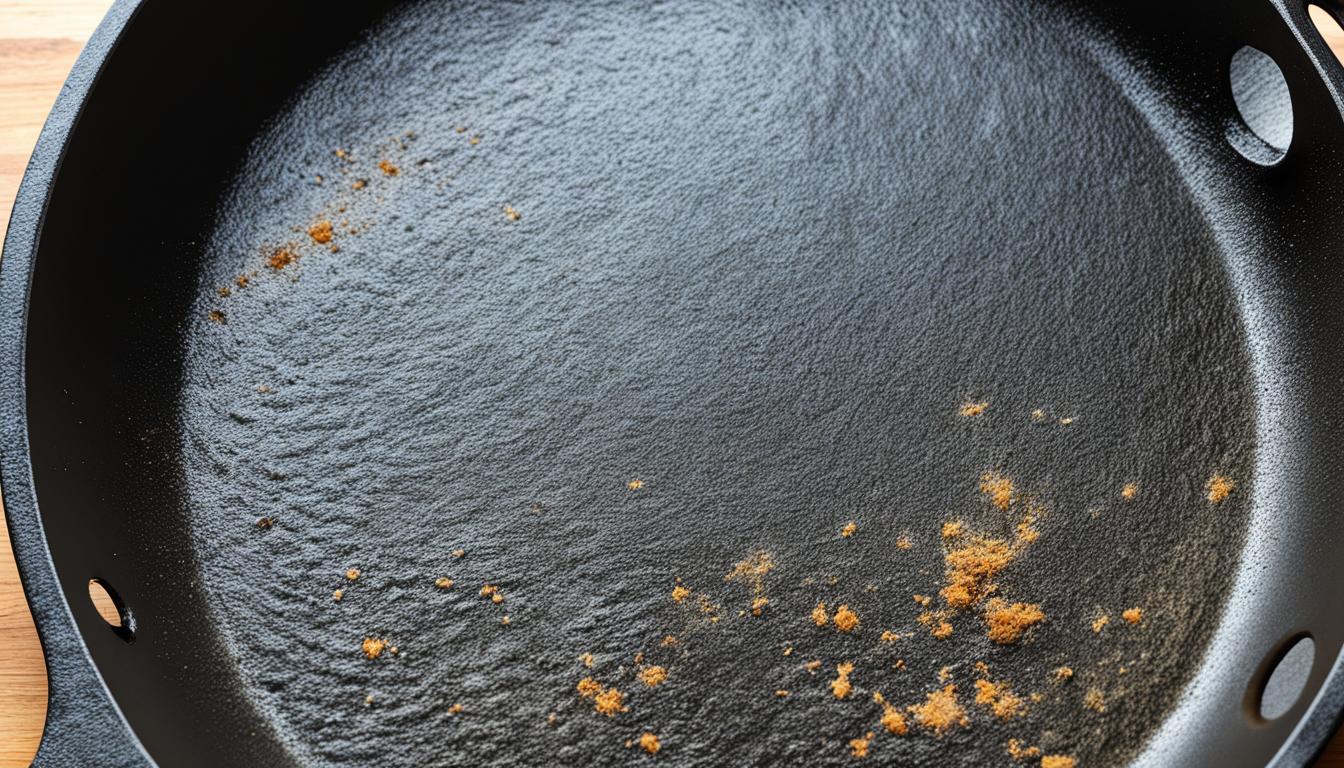
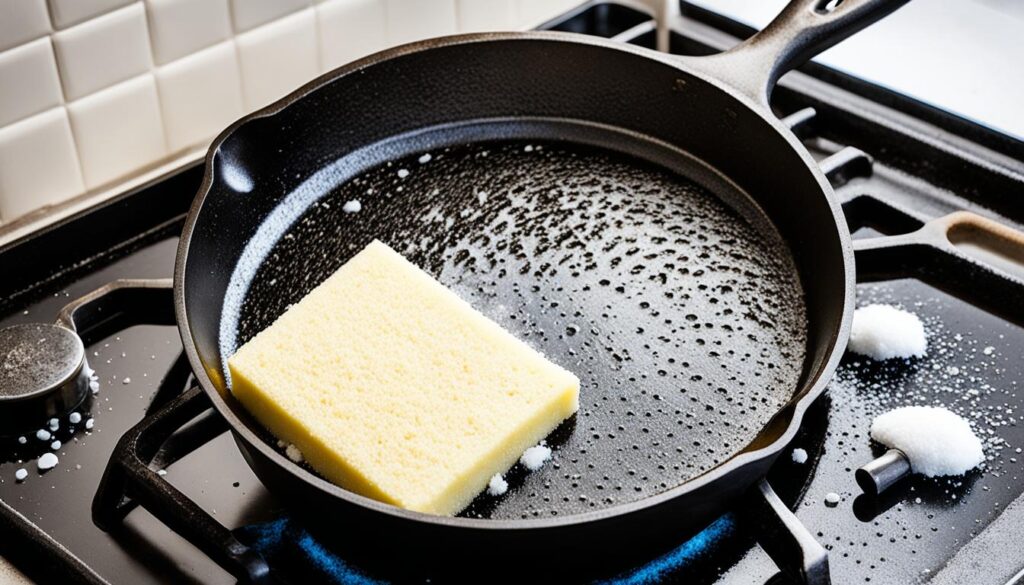
Routine cleaning after every cook is the whole game. Get this right and you’ll rarely deal with anything worse.
Step 1 — Clean it while it’s still warm
Don’t walk away and come back an hour later. Warm skillets release food easily. Cold ones grip it like glue. Let it cool enough to handle safely, then get moving.
Step 2 — Hot water, stiff brush, quick scrub
No soaking. Run hot water, scrub with the brush or chain mail scrubber, and you’re done in under two minutes for most cooks. The goal is removing food residue—not sterilizing the thing.
Step 3 — Never, ever soak it
Even five minutes submerged invites rust. Rinse it, scrub it, move on.
Step 4 — Dry it completely
Pat dry with paper towels first. Then put it on the stove over low heat for two or three minutes. This drives off any moisture hiding in the pores. Don’t skip this step—it’s the one that prevents rust.
Step 5 — Thin oil coat while it’s still warm
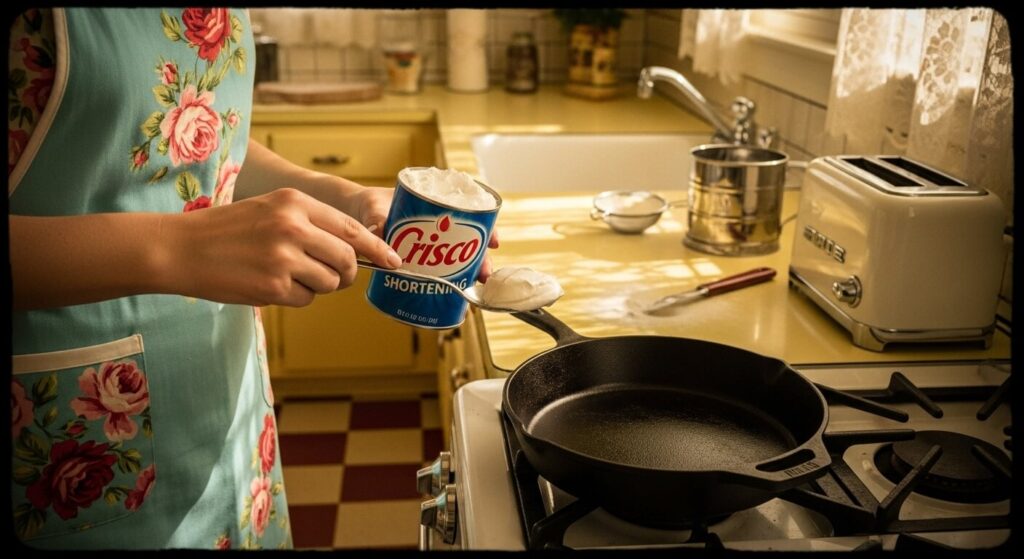
A tiny amount of flaxseed, vegetable, or Crisco on a paper towel, rubbed over the entire surface. Then buff it until it looks almost dry. If it looks greasy, you used too much—wipe it back down. Excess oil turns sticky and gummy over time.
Five steps. Five minutes. Every single time.
Dos and Don’ts of Cast Iron Cleaning
Do these things:
- Clean while the pan is still warm—always
- Use hot water and a stiff brush for routine messes
- Dry on the stove over low heat, not on a dish rack
- Apply a light oil coat after every single wash
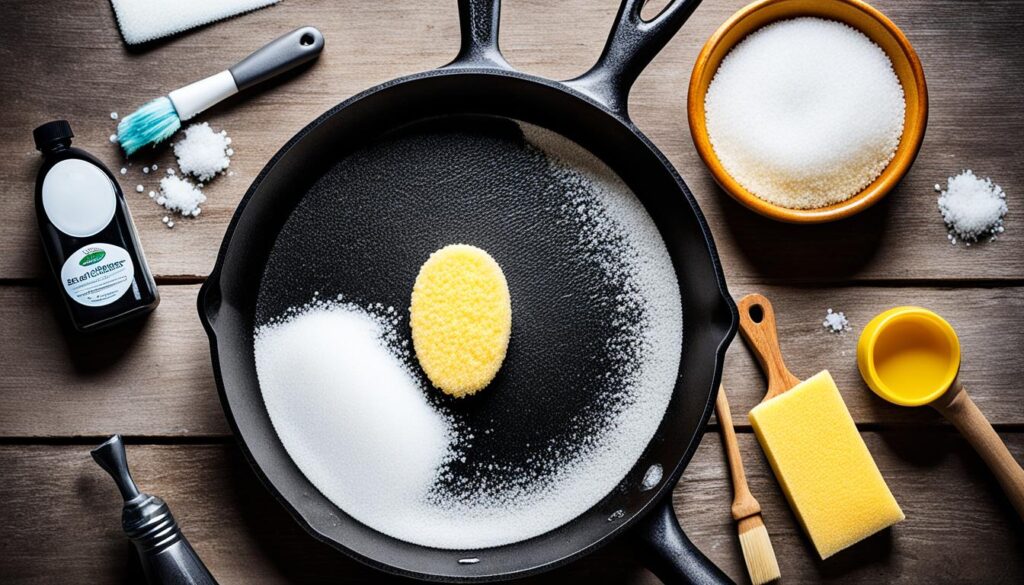
- Use coarse kosher salt as a scrubbing abrasive when needed
- Store in a dry spot with good air circulation
Don’t do these things:
- Soak it—ever
- Run it through the dishwasher (this destroys seasoning and causes immediate rust)
- Use bleach or harsh chemical degreasers
- Leave it wet on a dish rack to air dry
- Store it with a tight-fitting lid that traps moisture inside
The soap debate—here’s the real answer
A small drop of mild dish soap used occasionally won’t kill your skillet. The old “never use soap” rule came from an era when soap contained lye, which aggressively stripped iron. Modern dish soap in small amounts? Fine. But it’s genuinely unnecessary for routine cleaning, and using it habitually will gradually dull your seasoning. Hot water and a brush handles the vast majority of situations without soap.
Removing Baked-On Food and Tough Stains
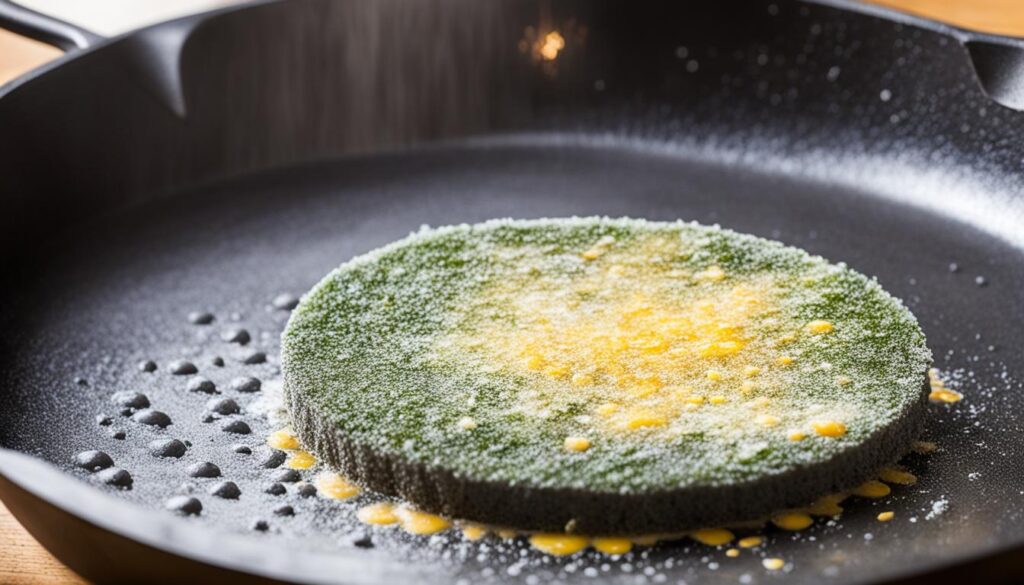
Burnt sugar, stuck eggs, scorched sauce—it happens. Here’s what actually works.
Salt scrub method
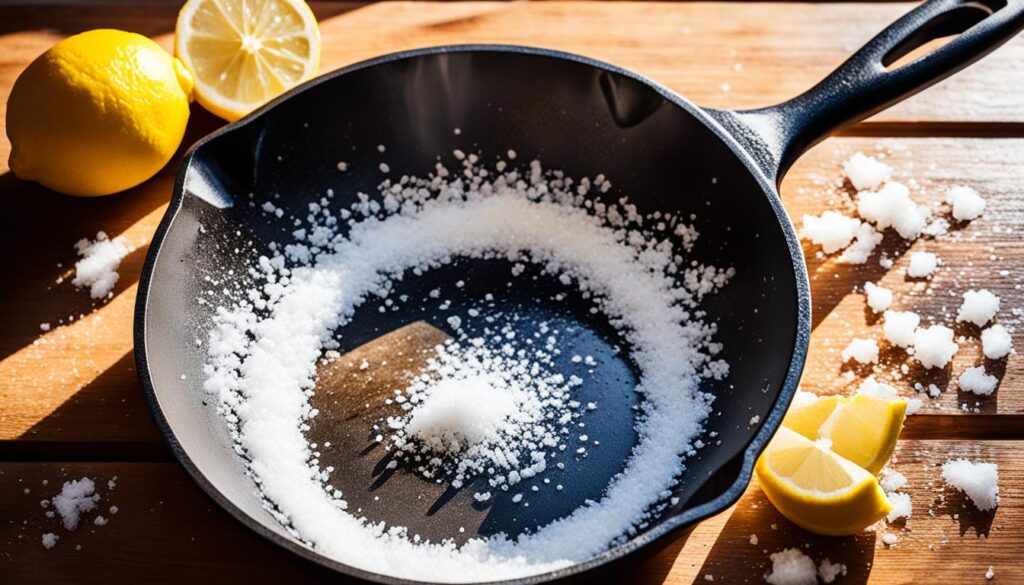
Pour a generous heap of coarse kosher salt into the skillet. Use a folded paper towel or—this sounds odd but it works—a cut potato to scrub in circles. The salt lifts stuck bits without water or chemicals. Rinse after and dry normally.
Boiling water method
Add about an inch of water to the skillet and bring it to a boil on the stove. Steam and heat loosen most stuck food within a few minutes. Use a wooden spoon or plastic scraper to help it along, pour out the water, then clean and dry as usual. Simple and effective.
Baking soda paste
Mix baking soda with a small amount of water until you get a thick paste. Apply it to the problem area, let it sit for a few minutes, then scrub. Baking soda is mildly abrasive, cuts through grease well, and won’t strip seasoning aggressively.
Chain mail scrubber
If you cook cast iron regularly, this is worth owning. Aggressive enough to lift stubborn residue, but it won’t tear through a good seasoning layer the way steel wool does.
What about black carbon buildup on the outside?
Harmless. Completely normal. Scrub it off if it bothers you aesthetically, but it has zero effect on cooking performance. Some people call it character. They’re right.
After any deep cleaning session—always re-season. One round in a 450°F oven with a thin oil coat for an hour restores what you lost.
Restoring Rusty Cast Iron Skillets
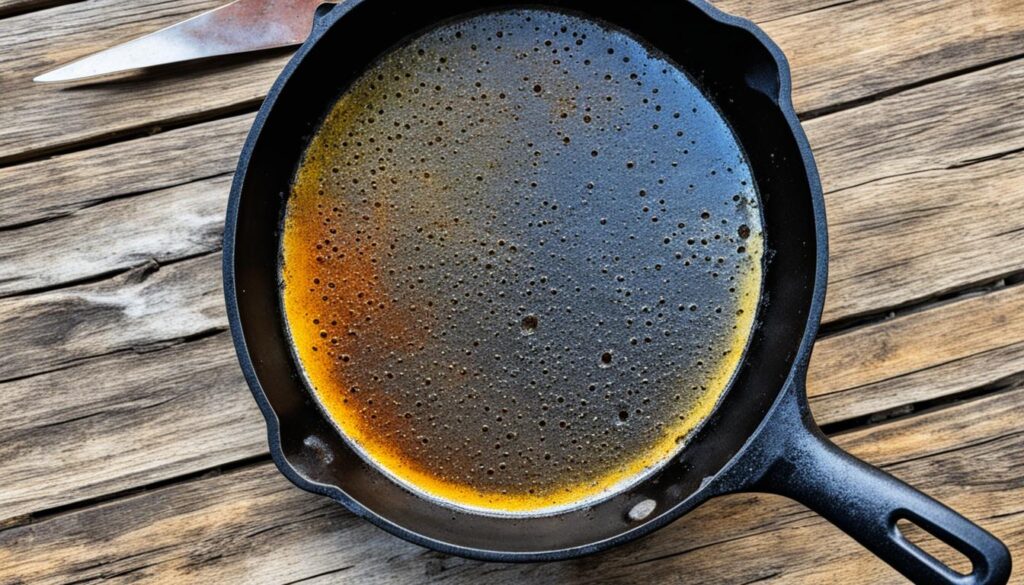
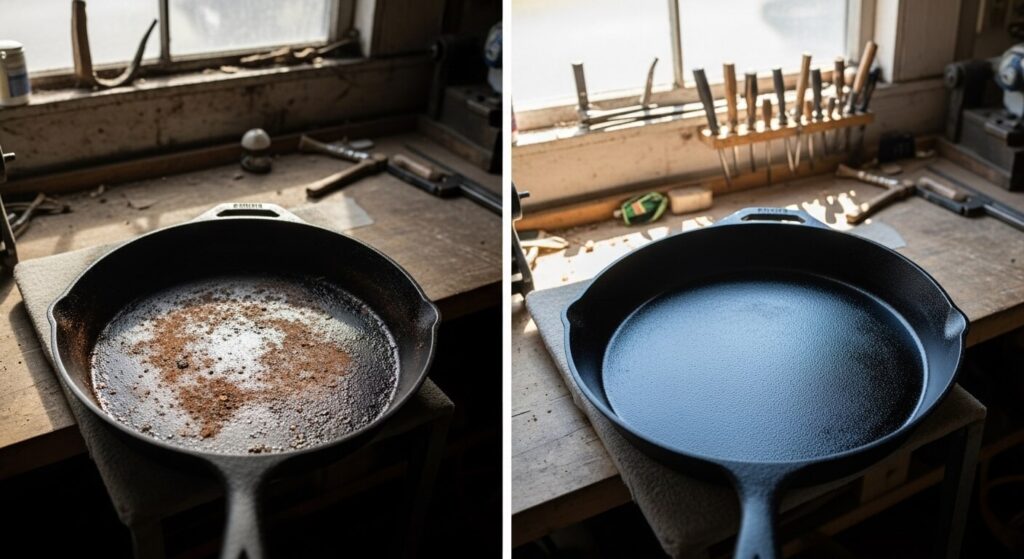
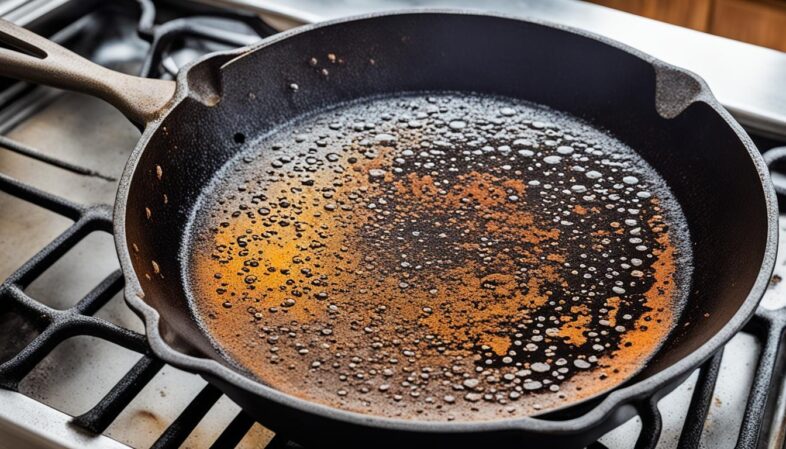
Rust is not a death sentence. Cast iron is remarkably forgiving—even skillets that look completely destroyed can come back if you’re willing to put in the work.
Is it worth restoring?
- Surface rust, intact metal underneath? Restore it. Always.
- Found at a garage sale covered in rust for a few dollars? Absolutely restore it.
- Cracked, warped, or deeply pitted? That’s structural damage—different story.
The full restoration process:
Step 1 — Scrub the rust aggressively
This is the one situation where steel wool is appropriate. Scrub under running water until all visible rust is gone. You’ll strip the seasoning entirely in the process. That’s fine—you’re starting fresh.
Step 2 — Rinse and dry completely
Rinse well, then put it on the stove over medium heat for five to ten minutes. You need every trace of moisture gone before the next step.
Step 3 — Thin oil coat on every surface
Cover the entire skillet—inside, outside, handle, bottom—with a very thin layer of flaxseed oil or Crisco. Buff it until it looks almost dry. No pooling, no drips.
Step 4 — Bake it
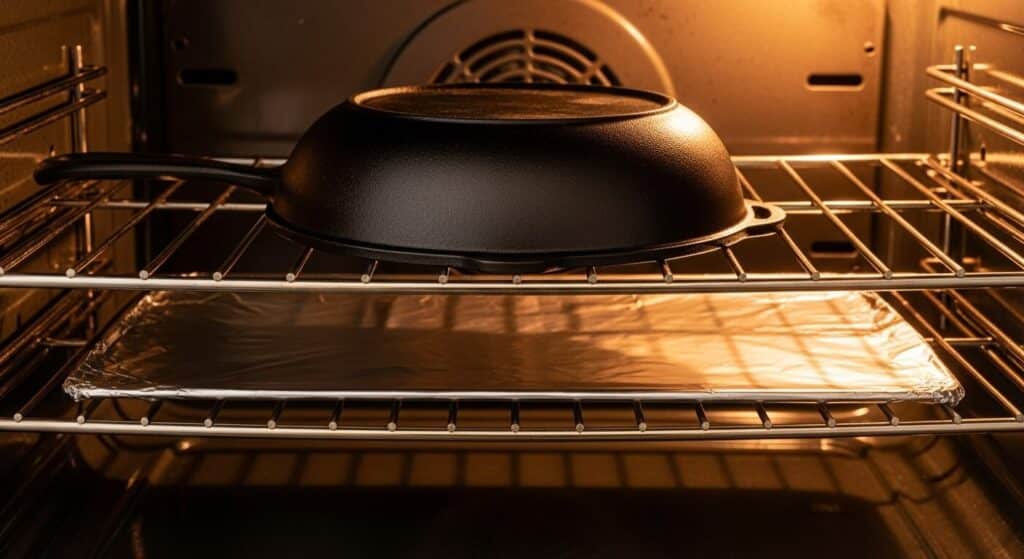
Place upside down in a 450-500°F oven for one full hour. Put foil on the lower rack to catch drips. Let it cool completely inside the oven—don’t rush this part.
Step 5 — Repeat
Do three to six rounds of seasoning to build a real base layer. Each layer bonds to the one before it. By round four, you’ll have a functional cooking surface again. By round six, it’ll look like a different pan entirely.
Eco-Friendly Cast Iron Cleaning Options
Cast iron cleaning is already pretty low-impact by default. Hot water and a brush—no chemicals needed. But here are even greener approaches.
Kosher salt scrub — Zero chemicals, completely natural, works well on stuck food. Just salt and a paper towel. Rinse after, dry on the stove, done.
Baking soda — Non-toxic, effective on grease, costs almost nothing. Paste form works best for stubborn spots.
The cut potato trick — Half a potato dipped in coarse salt, used to scrub the skillet. The oxalic acid in the potato combined with the salt abrasive lifts both rust and food residue. Odd? Sure. But it works, and it’s about as natural as it gets.
Vinegar soak for rust — Equal parts white vinegar and water. Soak rusty sections for no longer than 30 minutes—check every ten to fifteen minutes because vinegar is acidic and will begin eating the iron if left too long. Once rust dissolves, rinse immediately, dry on the stove, and re-season right away.
What to avoid from an eco standpoint: chemical rust removers, industrial degreasers, and single-use plastic scrubbing pads you’ll toss after one wash.
Also worth noting—cast iron itself is one of the most sustainable pieces of cookware you can own. No synthetic non-stick coating to flake off, no need to replace it every few years. One skillet, cared for properly, outlasts everything else in the kitchen by decades.
What to Cook in a Cast Iron Skillet to Build Seasoning
What you cook actively builds or degrades your seasoning layer. Most people don’t think about this—but it changes how you approach the pan.
Foods that build seasoning well:
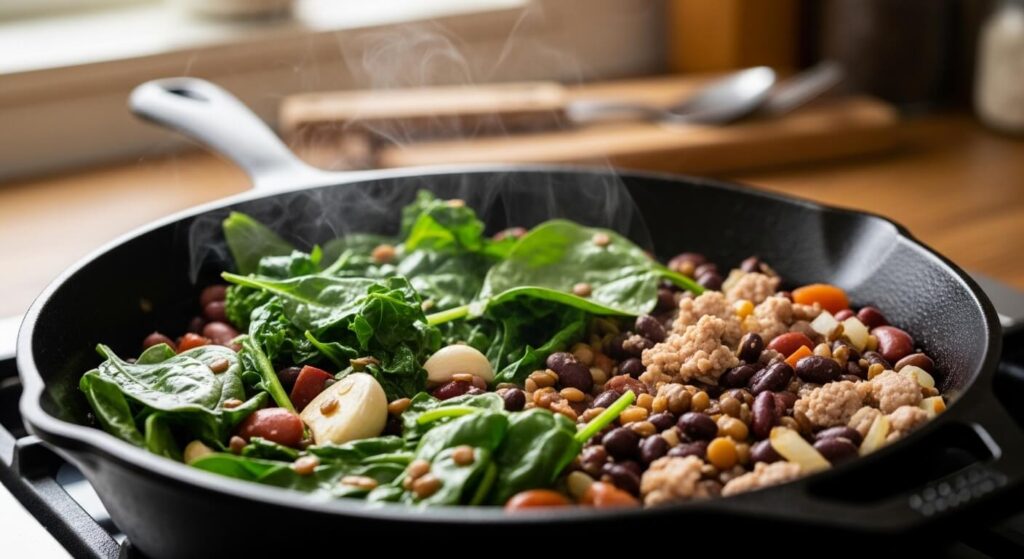
- Bacon and fatty meats — rendered fat bakes into the iron at high heat, building layers every single time
- Pan-fried chicken — same principle, lots of fat and sustained heat
- Sautéed vegetables in oil — avocado or vegetable oil at medium-high heat works well
- Cornbread — butter plus high oven heat is genuinely great for seasoning
- Seared steak — high heat with oil is one of the best seasoning-building cooks you can do
Foods that break down seasoning:
- Tomatoes, tomato paste, marinara — highly acidic, strips seasoning over time
- Citrus-based sauces — same issue
- Wine reductions — acidic and corrosive to the seasoning layer
- Anything that simmers in water for a long time
This doesn’t mean you can never cook acidic food in cast iron. Just don’t make a tomato-based braise in it every week and expect the seasoning to hold up. Use it for the fatty, high-heat cooks regularly, and the occasional acidic dish won’t do lasting damage.
How to Store a Cast Iron Skillet
Storage is where a lot of people quietly undo all their good cleaning work. A clean, well-seasoned skillet stored wrong will rust just as fast as a neglected one.
What actually works:
- Bone dry before storage — any moisture at all causes rust. Non-negotiable.
- Dry location — not under the sink, not in a cabinet that traps humidity
- Paper towel between stacked pans — prevents moisture buildup and protects the seasoning surface from scratching
- Hanging is ideal — good airflow, no contact with other pans, easy to grab
- Don’t seal it in a tight space — air circulation prevents moisture from accumulating
One practical trick: store the skillet in the oven if you use it regularly. The ambient warmth keeps moisture away, and it’s always ready to go. Some people just leave cast iron on a back burner permanently. That works too—and honestly, the more you use it, the better it performs.
Seasoning and Maintaining Cast Iron
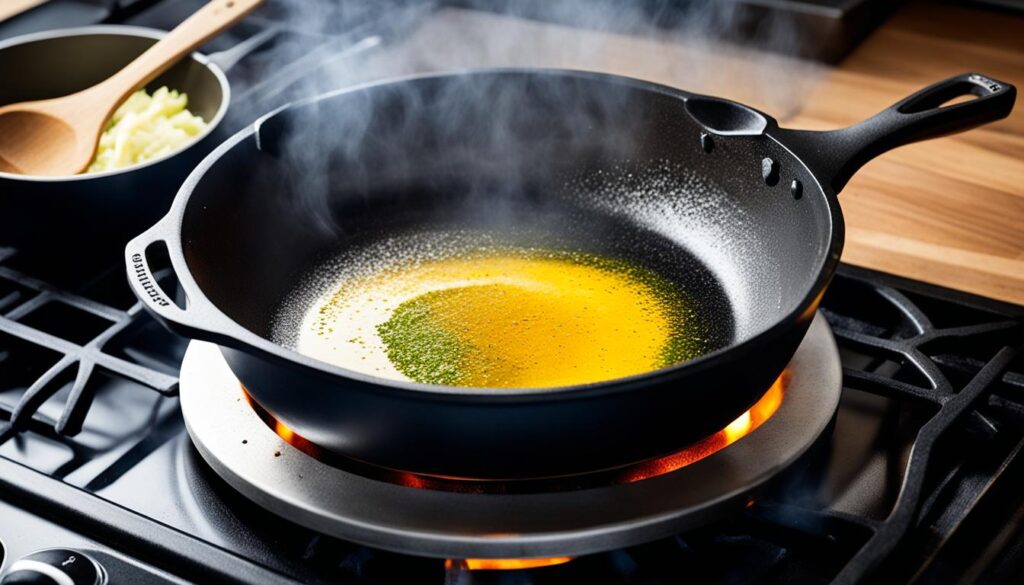
Seasoning is what separates a pan that performs well from one that frustrates you every time you cook on it. Everything else—the cleaning, the drying, the storage—supports this one thing.
What seasoning actually is
Thin layers of polymerized oil baked onto the iron surface. Not a single coating—dozens of micro-thin layers accumulated over time and repeated use. The more you cook with fat at high heat, the better it gets.
How to season from scratch:
- Clean thoroughly and dry completely on the stove
- Apply a very thin coat of oil to every surface—inside, outside, handle, bottom
- Buff until it looks almost dry. No visible oil, no shine, no pooling
- Place upside down in a 450-500°F oven for one hour
- Let it cool completely inside the oven—don’t pull it early
- Repeat three to six times to build a proper base layer
Best oils for seasoning:
| Oil | Smoke Point | Notes |
|---|---|---|
| Flaxseed oil | ~225°F | Builds a very hard layer—best for base seasoning |
| Crisco/shortening | ~360°F | Easy to apply, consistent results |
| Vegetable oil | ~400°F | Works well, accessible |
| Avocado oil | ~520°F | Great for high-heat seasoning rounds |
| Coconut oil | ~350°F | Works, but the smell is polarizing |
Skip olive oil—the smoke point is too low for oven seasoning and it turns rancid in the pores.
Day-to-day maintenance
The thin oil coat after every wash is your maintenance routine. That one step, done consistently after every cook, means you’ll almost never need a full re-seasoning session. It takes about 20 seconds.
If the skillet starts sticking, looks dull, or develops grey patches—do one or two rounds of oven seasoning. That’s usually enough to bring it back.
Check out the Best Extra Large Electric Skillets if you want to compare cast iron against other skillet options for different cooking situations.
Cast iron rewards consistent, simple care. Clean it right, dry it completely, keep that oil layer going—and this pan will genuinely outlast you.