The Dual Benefits of Cast Iron Cookware for Seniors
Cooking in cast iron helps seniors with arthritis meet their daily iron needs by leaching bioavailable iron directly into food while requiring less hands-on manipulation than other cookware types.
Here’s the thing—most seniors face a sneaky double problem. Iron levels drop (happens to about 10% of older adults). And arthritis makes cooking harder. Way harder.
Cast iron solves both. Sounds too simple, right?
But it’s real. The iron from your skillet gets into your food. Not a lot—but enough to matter. And because cast iron holds heat so well, you’re not constantly stirring, adjusting, hovering over the stove.
Less work. More iron. That’s the deal.
What you’ll get from this guide:
- Why seniors struggle with iron (and why it matters)
- The science behind iron leaching from cookware
- Specific techniques for arthritic hands
- Which pans work best
- Recipes that actually help
Skip the supplements for a minute. Let’s talk cookware.
Understanding Iron Deficiency in Seniors
Iron deficiency in seniors happens because aging bodies absorb iron less efficiently, medications interfere with uptake, and many older adults eat less overall—creating a perfect storm for low iron levels.
Why Seniors Are at Higher Risk for Iron Deficiency
Your stomach acid decreases as you age. Not glamorous, but true. And stomach acid helps you absorb iron from food.
Common culprits:
- Reduced stomach acid production (happens to almost everyone over 60)
- Medications like proton pump inhibitors—Prilosec, Nexium, that stuff
- Chronic conditions (kidney disease, heart failure, inflammatory diseases)
- Blood loss from ulcers or regular aspirin use
- Just eating less food overall
Here’s what happens. You need acid to convert iron into a form your body can use. Less acid? Less iron absorbed. Period.
And medications. So many seniors take PPIs for heartburn. These drugs wreck iron absorption. Absolutely crush it.
Then there’s appetite. Many older adults just don’t feel hungry like they used to. Smaller portions mean less of everything—including iron.
Daily Iron Requirements for Older Adults
Men over 50 need 8 mg of iron daily, while women over 50 also need 8 mg (because post-menopause, requirements drop from the 18 mg needed during reproductive years).
That’s actually less than younger women need. But—and this is key—seniors have a harder time getting that 8 mg because absorption tanks.
Two types of iron exist:
Heme iron (from meat, fish, poultry)
- Absorbed at 15-35% efficiency
- Your body loves this stuff
- Easiest to use
Non-heme iron (from plants, fortified foods, and yes—cast iron cookware)
- Absorbed at 2-20% efficiency
- Needs help from vitamin C
- Harder for your body to process
Cast iron contributes non-heme iron. Not the superstar type. But when you’re falling short? Every bit counts.
Symptoms of Iron Deficiency in the Elderly
Iron deficiency in seniors causes fatigue that feels different from normal tiredness—it’s a bone-deep exhaustion that doesn’t improve with rest, plus brain fog, weakness, and increased fall risk.
Most people blame aging. Wrong.
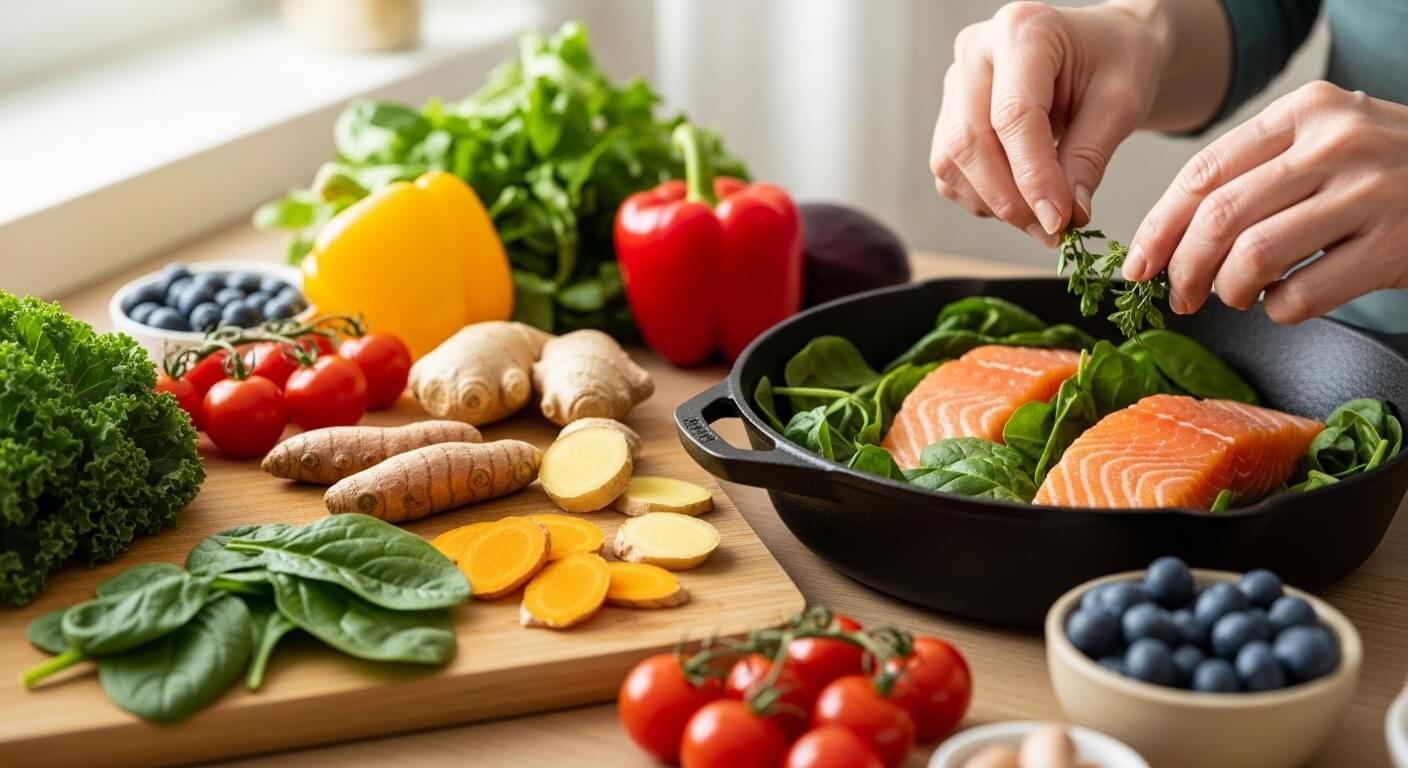
Watch for these:
- Exhaustion that sleep doesn’t fix
- Brain feels fuzzy (trouble concentrating, memory slips)
- Weakness in muscles—especially legs
- Getting dizzy when you stand up
- Pale skin (check inside your lower eyelids)
- Cold hands and feet constantly
- Shortness of breath doing things that used to be easy
The scary part? Iron deficiency makes everything else worse. Got heart problems? Low iron stresses your heart more. Arthritis pain? Fatigue makes it feel worse.
And falls. Seniors with low iron fall more often. The weakness, the dizziness—it’s dangerous.
How Cast Iron Cookware Increases Dietary Iron
Cast iron transfers iron into food through a process where small amounts of elemental iron leach from the pan’s surface into whatever you’re cooking, with the amount varying based on acidity, moisture, and cooking time.
The Science Behind Iron Leaching from Cast Iron
The iron literally comes off your pan and goes into your food. Not a lot. Not visible. But measurable.
What makes iron transfer happen:
Acidity wins—Tomato sauce, vinegar-based dishes, citrus? These pull the most iron from your pan. The acid reacts with the iron surface. Chemistry in action.
Moisture matters—Wet foods leach more iron than dry foods. Soups and stews beat searing a dry steak.
Time counts—Longer cooking = more iron transfer. A 3-minute egg? Minimal. A 2-hour stew? Significant.
New pans give more—Freshly seasoned cast iron transfers more iron than well-worn, heavily seasoned pans (the seasoning layer acts like a barrier).
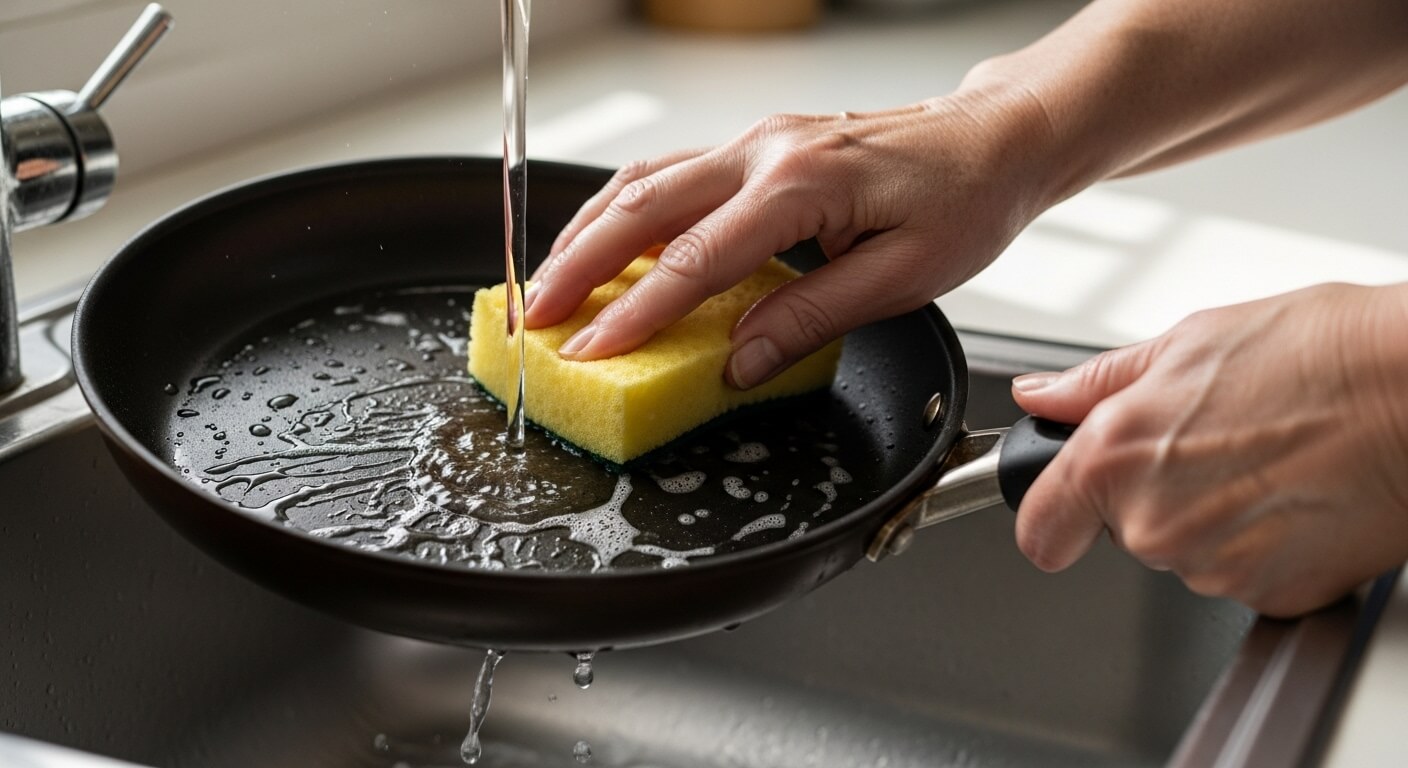
Research backs this up. A study in the Journal of Food Science found that spaghetti sauce cooked in cast iron for 20 minutes increased iron content by nearly 2 mg per serving. That’s substantial.
But here’s the catch. The iron isn’t evenly distributed. You can’t count on getting X amount every time.
How Much Iron Can You Get from Cooking in Cast Iron?
You can get anywhere from 0.5 to 6 mg of additional iron per serving when cooking in cast iron, depending on what you’re making—with acidic, moist dishes cooked for longer periods providing the most.
Not a magic bullet. Let’s be clear.
Realistic expectations:
- Tomato-based dishes: 1-6 mg added iron per serving
- Applesauce (very acidic): 3-7 mg per half cup
- Scrambled eggs: 1-2 mg
- Chili or stew: 1-3 mg
- Plain rice: 0.5-1 mg
Variables matter. Your specific pan. How new it is. Your exact recipe. The pH of your ingredients.
Don’t rely on cast iron alone to fix severe deficiency. But as part of your strategy? It helps. Definitely helps.
Think of it this way—if you cook most meals in cast iron and choose iron-friendly recipes, you might add 2-4 mg of iron to your daily intake. That’s 25-50% of your daily needs. Not bad for just using different cookware.
Best Foods to Cook in Cast Iron for Maximum Iron Absorption
Acidic, moist foods cooked for extended periods in cast iron absorb the most iron—think tomato sauce, chili, stews, and dishes with vinegar or citrus.
Top iron-leaching foods:
- Tomato sauce (the champion—acidic and wet, cooked long)
- Chili with tomatoes
- Vegetable stew with acidic vegetables
- Applesauce (incredibly effective)
- Soups with vegetables and broth
- Braised meats in wine or tomato base
- Eggs (decent, especially if you add tomatoes)
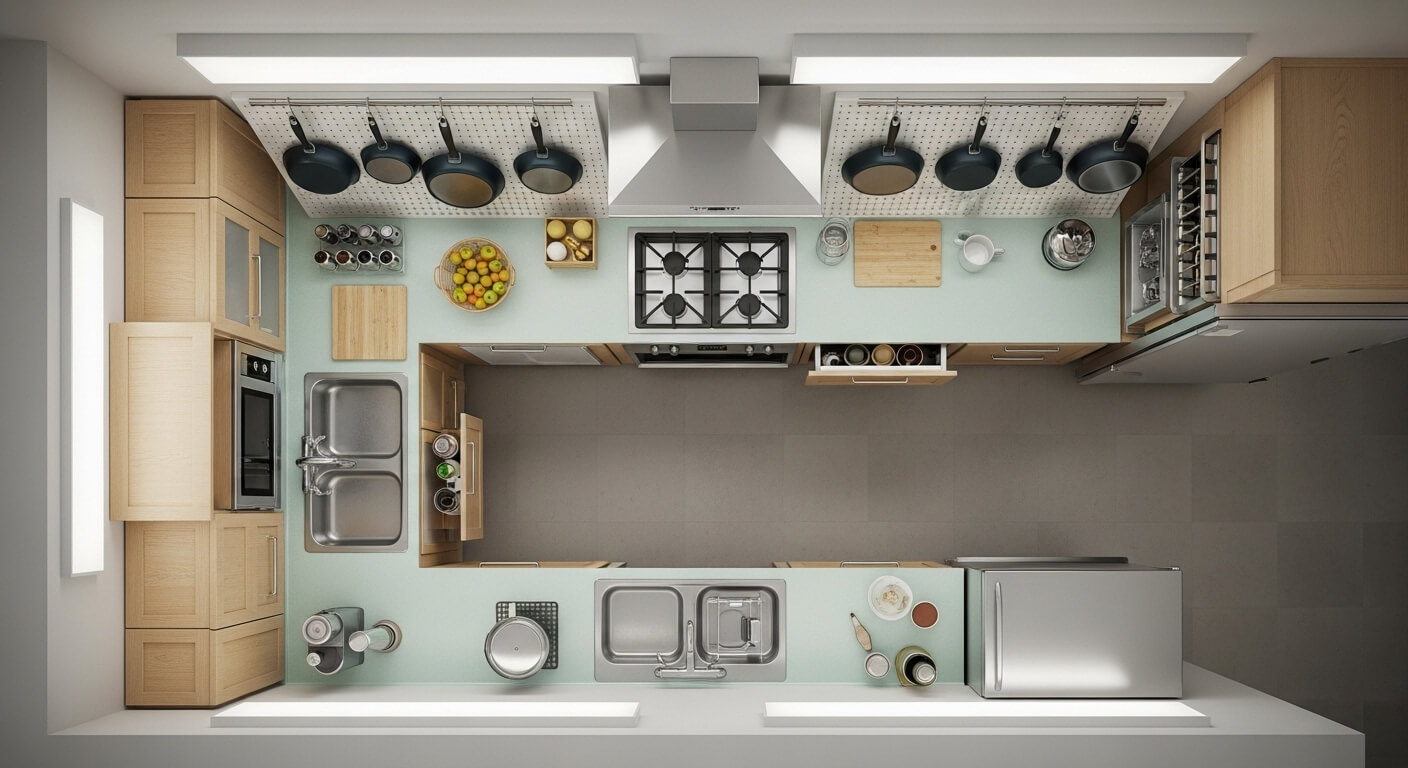
Skip these in cast iron (for iron purposes—they’re fine otherwise):
- Plain rice or pasta (minimal transfer)
- Quick-seared proteins (not enough time)
- Foods you’ll cook under 5 minutes
- Very oily dishes (oil reduces contact with iron surface)
And don’t cook highly acidic foods too long in new cast iron. You’ll strip the seasoning and get a metallic taste. 20-45 minutes? Perfect. Three hours? Maybe not.
Understanding Arthritis Challenges in the Kitchen
Arthritis affects cooking by causing pain, stiffness, and reduced grip strength in hands and wrists—making tasks like lifting pots, chopping vegetables, and stirring food difficult or impossible.
How Arthritis Affects Cooking and Kitchen Tasks
Your hands hurt. Simple as that.
What arthritis does to your cooking:
- Grip strength drops (can’t hold things firmly)
- Fine motor control gets worse—buttoning, pinching, grasping
- Wrists and fingers stiffen up (especially morning and evening)
- Shoulders complain when you reach or lift
- Standing for prep work exhausts you
- Opening jars becomes a whole ordeal
It’s not just pain. It’s frustration.
You know how to make your favorite dishes. You’ve made them for decades. But now your hands won’t cooperate. The jar won’t open. The heavy pot feels impossibly heavy.
Rheumatoid arthritis and osteoarthritis both cause problems—just different ones. RA attacks joints with inflammation. OA wears down cartilage. Either way, cooking gets harder.
Common Cooking Challenges for Seniors with Arthritis
Seniors with arthritis struggle most with lifting heavy cookware, maintaining grip on handles and utensils, repetitive stirring motions, and the constant standing required for meal preparation.
The big pain points:
Lifting and carrying pans from stove to sink. From counter to oven. Even just repositioning on the burner.
Gripping handles that are too thin, too hot, or positioned awkwardly. Your hand cramps. You worry about dropping things.
Repetitive motions like stirring, whisking, chopping. After 30 seconds your wrist screams.
Opening containers—jars, cans, packages. Everything’s sealed too tight.
Safety fears—what if you drop a hot pan? What if your hand gives out holding boiling water?
So you stop. You eat cereal. Heat up frozen meals. Order delivery.
Not because you don’t want to cook. Because cooking hurts too much.
The Nutritional Impact of Arthritis
Arthritis leads to poor nutrition because the physical difficulty of cooking pushes people toward convenient processed foods that are typically lower in essential nutrients like iron.
Here’s the cycle. Cooking hurts. So you choose easy options.
Microwave dinners. Canned soup. Sandwiches. Crackers and cheese.
These aren’t terrible. But they’re not complete. And they’re typically low in iron. Very low.
What happens:
- Fresh vegetables get skipped (too much prep work)
- Lean meats get replaced with processed options
- One-pot meals disappear (seem too complicated)
- Dietary variety plummets
- Nutrient deficiencies develop
Including iron deficiency.
And the less you cook, the weaker you get. The weaker you get, the harder cooking becomes. Vicious circle.
Why Cast Iron Works Well for Seniors with Arthritis
Cast iron works well for seniors with arthritis because it holds heat consistently (reducing stirring and monitoring), naturally develops non-stick properties (minimizing scrubbing), and enables complete one-pot meals that cut down on dish-handling.
The Ergonomic Advantages of Cast Iron for Arthritis Sufferers
Even heat distribution is the killer feature. Cast iron heats slowly—yeah, that’s annoying—but once hot, it stays hot everywhere. No hot spots. No constant stirring to prevent burning.
Set it and forget it. Almost.
You can walk away. Sit down for a minute. Your food won’t scorch in one spot while staying raw in another.
Non-stick properties develop naturally with proper seasoning. You’re not scraping crusty bits with steel wool. Not fighting stuck-on food. A gentle wipe usually does it.
Less scrubbing = happy hands.
Durability means you buy it once. No replacing worn-out non-stick coatings. No worrying about scratches. Drop it? It’s fine (your floor might not be, but the pan’s fine).
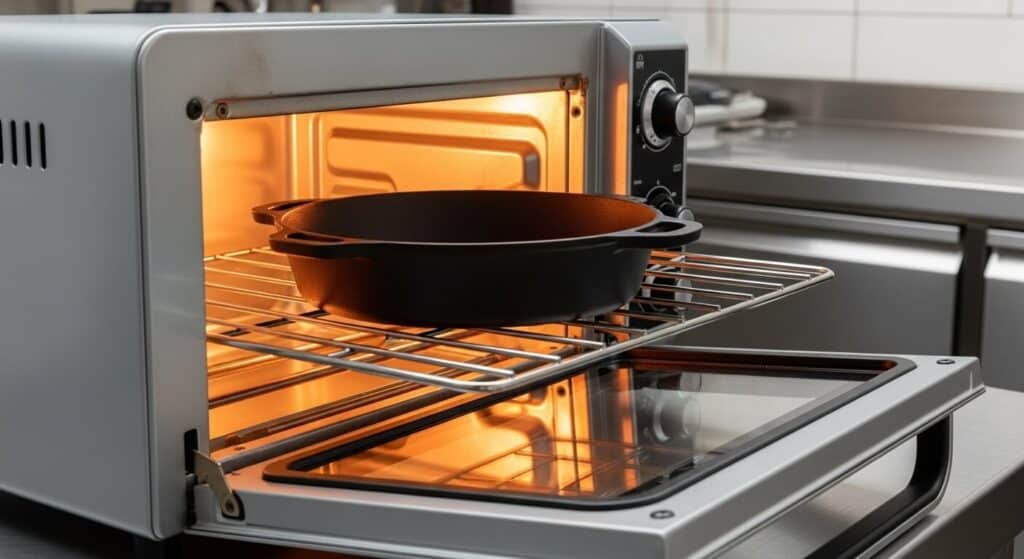
Oven-to-stovetop versatility cuts down on pan transfers. Start on the stove, finish in the oven. One pan. One move (or zero moves—stick it in the oven from the start).
Heat Retention Benefits That Reduce Cooking Strain
Cast iron’s heat retention means you can lower the temperature once the pan is hot and it’ll maintain cooking temperature—reducing the need for constant adjustment, monitoring, and stirring that strains arthritic joints.
Once cast iron gets hot, it stays hot. For a long time.
You can turn the heat way down. Or off completely. The food keeps cooking. This is huge.
Why this matters:
No hovering over the stove. No turning dials every two minutes. No emergency stirring when temperature spikes.
Energy-efficient too. Lower heat settings mean less energy used.
And forgiving. Forget to stir for a few minutes? Probably fine. With thin aluminum pans? Burnt.
The thermal mass of cast iron gives you margin for error. When your hands hurt and you need a break, the pan doesn’t punish you for it.
One-Pot Cooking Advantages with Cast Iron
One-pot meals in cast iron eliminate the need to transfer food between multiple pans, reducing the lifting, carrying, and washing that aggravates arthritis pain.
Everything in one pan. Start to finish.
Brown the meat. Add the vegetables. Pour in the liquid. Done.
No sautéing onions in one pan while boiling pasta in another. No transferring ingredients back and forth. No juggling multiple hot pans.
Cleanup? One pan. One utensil. Maybe a cutting board.
Your hands only have to grip one handle. Lift one item. Wash one piece of cookware.
This alone makes cast iron worth it. Fewer dishes means less pain. Period.
Choosing the Right Cast Iron Cookware for Arthritis
The right cast iron for arthritis is lighter weight (8-inch or 10-inch skillets), features helper handles for two-handed lifting, and comes pre-seasoned to eliminate difficult initial preparation.
Size and Weight Considerations
Weight is the deal-breaker for many seniors. Cast iron is heavy. No way around it.
But not all cast iron weighs the same.
Smart sizing for arthritis:
| Pan Size | Weight | Best For |
|---|---|---|
| 8-inch skillet | 4-5 lbs | Single servings, eggs, small meals |
| 10-inch skillet | 5-8 lbs | Most versatile for 1-2 people |
| 12-inch skillet | 8-10 lbs | Bigger meals but getting heavy |
| 5-quart Dutch oven | 13-15 lbs | Soups/stews (manageable when you slide vs. lift) |
Start with an 8-inch or 10-inch skillet. Honestly. The 12-inch is tempting because you can cook more. But can you safely lift 10 pounds when it’s full of food?
Probably not.
Smaller pans mean smaller portions—but you can always cook twice if needed. Better than dropping a pan.
Lighter alternatives exist:
- Stargazer (made in USA, lighter design)
- Smithey (thinner walls)
- Butter Pat Industries (lighter heritage designs)
These run pricier. But if standard Lodge feels too heavy, they’re worth considering.
Handle Design and Grip Comfort
Handle design determines whether you can actually use the pan comfortably—look for long handles that provide leverage, helper handles for two-handed lifting, and avoid pans with short stubby handles that require a tighter, more painful grip.
Helper handles save the day. These are the little loop handles opposite the main handle. Use both. Lift with both hands. Distribute the weight.
Don’t be a hero. Two hands always.
Longer handles give you more leverage. You’re not gripping as tightly. Less strain on your hand.
Avoid short handles (under 5 inches). They force your hand too close to the heat. And they require a death grip.
Add grip improvements:
- Silicone handle covers (Lodge makes them, cheap)
- Thick pot holders that bulk up the handle
- Welding gloves (strange but effective—heat-resistant and thick)
Your hand should fit comfortably around the handle without squeezing hard. If you’re white-knuckling it, wrong pan.
Pre-Seasoned vs. Unseasoned Cast Iron
Pre-seasoned cast iron is essential for seniors with arthritis because unseasoned pans require extensive scrubbing, multiple seasoning cycles, and significant hand strength to prepare—tasks that are painful or impossible with joint problems.
Buy pre-seasoned. Always.
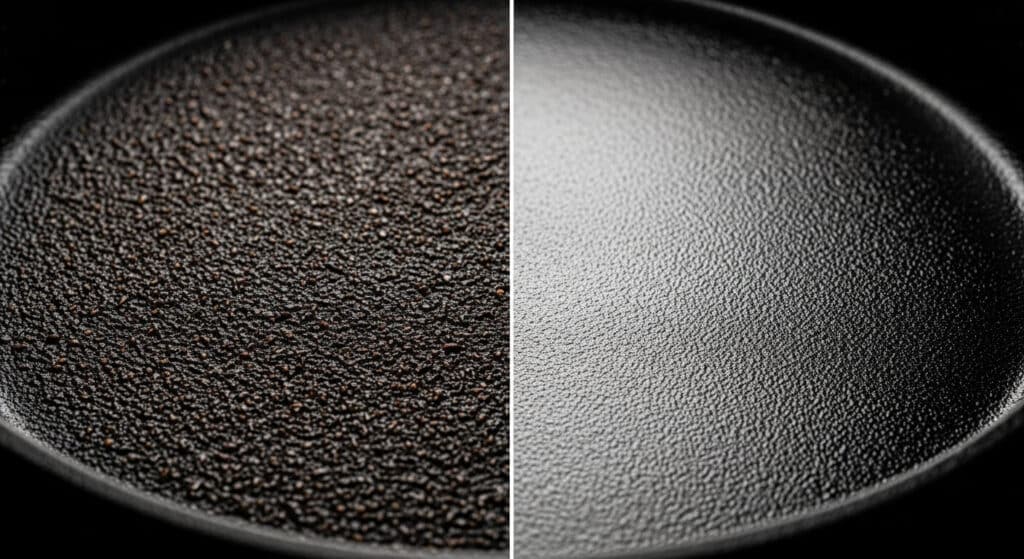
Unseasoned cast iron arrives looking gray and rough. You have to scrub it (hard). Season it (multiple times). Build up the coating.
Nope. Not with arthritis.
Pre-seasoned pans come ready to use. Black surface. Protective coating already applied. Cook immediately.
Every major brand offers pre-seasoned:
- Lodge (most common, affordable)
- Victoria (another budget option)
- Field Company (premium, smoother)
- Smithey (smooth as glass)
The seasoning will improve over time as you cook. But you don’t have to do hours of prep work first.
Enameled Cast Iron as an Alternative
Enameled cast iron offers easier cleaning and no seasoning maintenance but costs significantly more, weighs slightly more than traditional cast iron, and leaches less iron into food due to the enamel coating.
Le Creuset. Staub. Lodge Enameled. These have a glass-like coating baked onto the cast iron.
Pros for arthritis:
- Zero seasoning maintenance
- Dishwasher safe (though hand washing is gentler)
- Nothing sticks if you use a little oil
- Pretty colors (if you care)
Cons:
- Expensive (like really expensive—$100-400 for a Dutch oven)
- Heavier than regular cast iron
- The enamel blocks iron transfer (you lose the iron-boosting benefit)
- Can chip if you drop it
If your priority is easy maintenance and you don’t need extra iron, enameled works. But for this specific purpose—boosting iron intake—regular cast iron wins.
Adaptive Techniques for Using Cast Iron with Arthritis
Adaptive techniques for cast iron with arthritis include sliding pans instead of lifting them, using both hands with helper handles, adding grip-enhancing accessories, and organizing your workspace to minimize reaching and bending.
Safe Lifting and Handling Strategies
Never lift with one hand. Never.
Proper lifting technique:
- Use both hands (main handle and helper handle)
- Keep the pan close to your body
- Lift with your legs, not your back
- If it’s too heavy, slide it
Slide the pan to the sink. Slide it from one burner to another. Use a trivet next to the stove and slide the pan onto it.
You don’t get points for lifting. You get hurt.
When transferring oven to stovetop:
- Put on thick oven mitts
- Use both hands
- Move slowly (no rushing)
- Set down on a trivet or cool burner immediately
Consider keeping certain items on the stove permanently. A small trivet. A spoon rest. Reduces the need to fetch things.
Tools and Accessories That Make Cast Iron Easier to Use
Essential helpers:
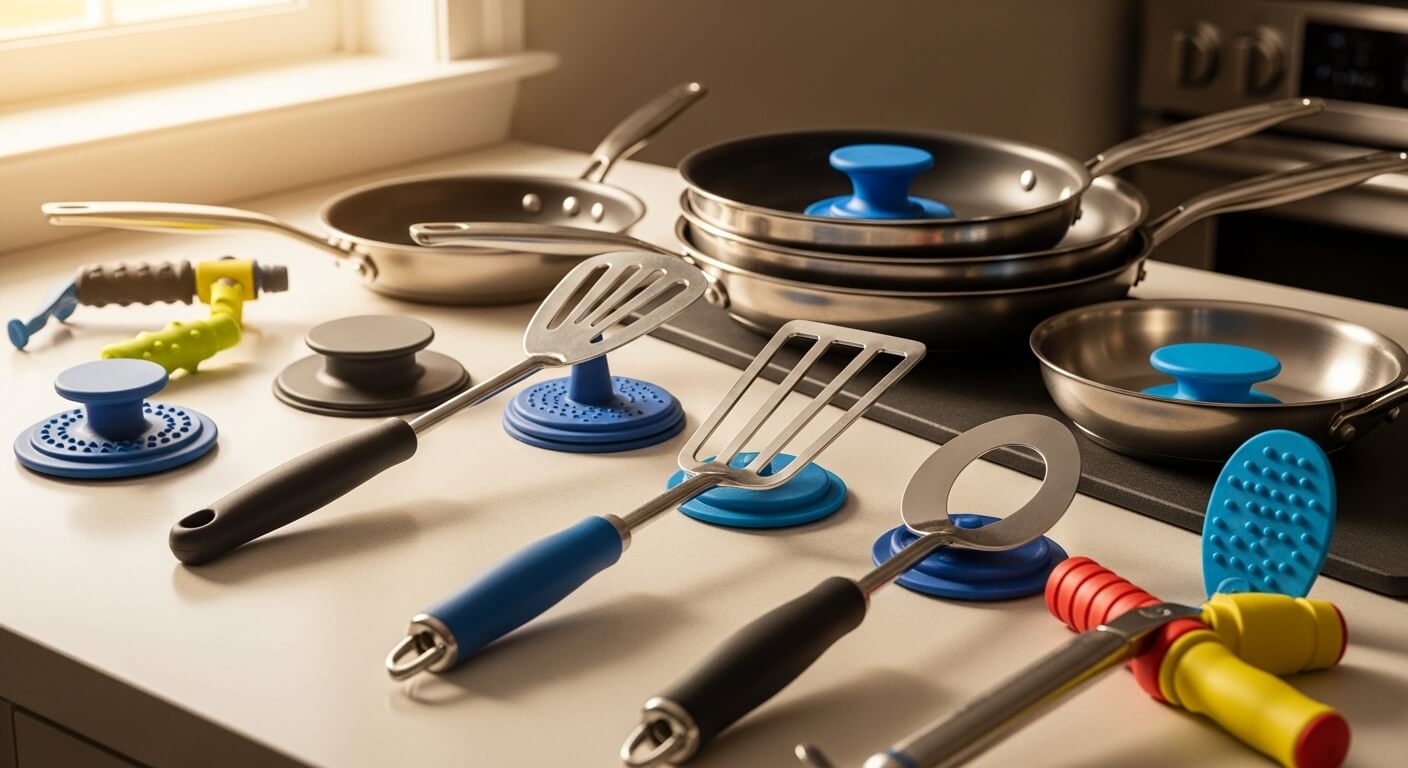
Silicone handle covers ($5-10)—Slip over the handle. Adds cushioning. Makes gripping easier. Heat-resistant to 450°F.
Long-handled utensils (12-15 inches)—Keep your hand away from heat. Reduce reaching. Bamboo or silicone work well.
Chain mail scrubbers ($10-15)—Clean cast iron without harsh scrubbing. Rinse under water, wipe with chain mail, done. Way easier than steel wool.
Sturdy trivets—Metal ones. Set them next to your stove. Pan slides from burner to trivet. No lifting.
Pot handle extenders—Slide onto short handles to extend length. Gives more leverage. (Less common but exists.)
Kitchen setup tools:
- Lazy Susan on counter (rotate instead of lift)
- Counter-height rolling cart (bring ingredients to you)
- Lightweight cutting boards (less weight to manage)
Reducing Strain During Cooking
Reducing strain means working smarter—sit while prepping vegetables, take frequent breaks during cooking, and prepare ingredients in advance so you’re not standing at the stove for extended periods.
Sit down. Seriously.
Get a tall stool or chair. Sit while chopping. Sit while stirring (if your stove allows it). Stand only when necessary.
Break up tasks:
Morning: Chop vegetables. Put in containers.
Afternoon: Brown meat. Let it rest.
Evening: Combine everything and cook.
Cooking doesn’t have to happen all at once. Spread it out. Your hands will thank you.
Rest your hands between tasks. Made eggs for breakfast? Rest your hands 30 minutes before starting lunch prep. Don’t power through.
And ask for help. Family member visiting? That’s your sous chef. Opening jars, lifting heavy items—delegate.
Cleaning and Maintenance Tips for Limited Mobility
Cast iron cleaning for arthritic hands means using hot water and a chain mail scrubber immediately after cooking (while food is loose), drying with a towel instead of scrubbing, and applying thin oil layers with paper towels rather than cloths.
Simplified cleaning process:
- Rinse with hot water while the pan is still warm (food comes off easily)
- Wipe with chain mail scrubber (no pressure needed)
- Dry with a towel (or set on warm burner for 1 minute)
- Wipe with oiled paper towel
- Done
Takes 2 minutes. No hard scrubbing. No wrestling with stuck food.
Skip soap if you can. Hot water usually handles it. If you need soap, a tiny drop won’t hurt modern seasoning—but you probably don’t need it.
For stubborn stuck bits—add water to the pan, set on low heat for 5 minutes. Everything loosens. Wipe out.
Don’t let it soak overnight. That’s asking for rust. Clean it same-day.
Seasoning maintenance is minimal. Every few months, rub oil on the cooking surface. Stick it in a 400°F oven for an hour. That’s it.
Optimizing Iron Absorption from Cast Iron Cooking
Optimizing iron absorption from cast iron means pairing the iron-rich foods you cook with vitamin C sources, timing meals properly, and avoiding iron blockers like coffee and tea for at least an hour after eating.
Combining Cast Iron Cooking with Iron-Rich Foods
Don’t rely only on the iron from the pan. Cook iron-rich foods in the cast iron. Double benefit.
Best iron-rich foods to cook in cast iron:
- Red meat (beef, lamb)
- Dark meat poultry
- Liver (if you can stomach it—loaded with iron)
- Clams, oysters, mussels
- Spinach and Swiss chard
- Beans and lentils (especially when combined with tomatoes)
- Fortified cereals (weird to cook, but you can make granola)
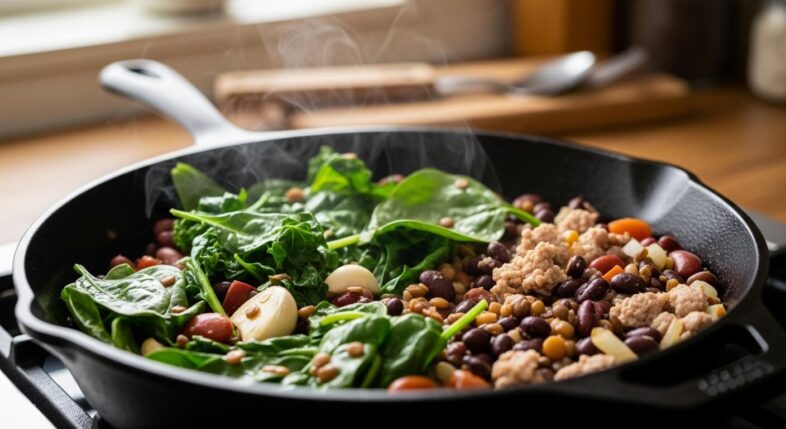
Cooking spinach in cast iron with tomatoes? You’re getting iron from the spinach, iron from the pan, and the acid from the tomatoes helps with absorption. Triple win.
Enhancing Iron Bioavailability
Vitamin C dramatically increases your body’s ability to absorb iron—add just 25-75 mg of vitamin C to your iron-rich meal (a few slices of bell pepper, some strawberries, or a glass of orange juice) and absorption can triple.
Vitamin C sources to add to meals:
- Bell peppers (especially red)
- Tomatoes (bonus: they leach iron from the pan)
- Broccoli
- Citrus fruits
- Strawberries
- Kiwi
Squeeze lemon over your cast iron-cooked spinach. Toss bell peppers into your chili. Serve stew with a side of broccoli.
Timing matters. Eat the vitamin C with the meal. Not hours later.
Cook at lower temperatures when possible (under 400°F). High heat can destroy some vitamin C in vegetables. Medium heat preserves more nutrients.
Foods That Inhibit Iron Absorption
Calcium, coffee, tea, and whole grains all inhibit iron absorption—so avoid consuming these items within 1-2 hours of your iron-rich cast iron meals to maximize the iron your body actually absorbs.
Iron blockers to avoid during meals:
Calcium—Don’t drink milk with your iron-rich dinner. No cheese on top. Calcium and iron compete for absorption. Both lose.
Save dairy for 2 hours later.
Coffee and tea—The tannins bind to iron. Makes it unavailable. Morning coffee? Fine. Coffee with your cast iron-cooked steak? Bad idea.
Wait at least an hour after eating.
Whole grains and legumes—Contain phytates that bind iron. Still eat them (they’re healthy). Just don’t combine them with your highest-iron meals.
Work around it:
- Drink coffee between meals, not with meals
- Take calcium supplements at different times than iron-rich meals
- Soak beans before cooking (reduces phytates)
You can’t avoid everything. But being strategic helps.
Practical Cast Iron Recipes for Seniors with Arthritis
Practical cast iron recipes for arthritis focus on one-pot meals with minimal prep, longer cooking times that require less stirring, and acidic ingredients that boost iron transfer from the pan.
Easy One-Pan Meals That Boost Iron Intake
Simple Tomato Chicken Skillet
Brown 2-3 chicken thighs in your 10-inch skillet (5 minutes per side). Remove. Add a jar of marinara sauce. Return chicken. Simmer 25 minutes.
Minimal stirring. Minimal handling. Loads of iron from the acidic tomatoes.
Beef and Vegetable Stew
Brown 1 lb stew meat (or use pre-cut). Add canned diced tomatoes, baby carrots, pre-cut potatoes, beef broth. Simmer 90 minutes.
Walk away. Check occasionally. That’s it.
One-Skillet Chili
Brown ground beef. Add canned beans, canned tomatoes, chili seasoning packet. Simmer 30 minutes.
Opening cans is easier than chopping vegetables. No shame in shortcuts.
Arthritis-Friendly Breakfast Ideas in Cast Iron
Basic Scrambled Eggs with Tomatoes
Crack eggs in bowl (easier than one-handed cracking). Pour into preheated cast iron. Add diced canned tomatoes. Stir gently 2-3 times. Done in 5 minutes.
The tomatoes add iron leaching and vitamin C.
Dutch Baby Pancake
Mix 3 eggs, 1/2 cup flour, 1/2 cup milk in blender. Pour into hot buttered skillet. Bake 20 minutes at 425°F.
No flipping. No standing over the stove. Just pour and bake.
Baked Oatmeal
Mix oats, milk, cinnamon, and dried fruit in your skillet. Bake 25 minutes.
Prep the night before. Pop in oven in the morning. Sit while it cooks.
Low-Effort Dinner Solutions Using Cast Iron
Sheet Pan (Cast Iron) Sausage and Peppers
Slice pre-cooked sausage. Add jarred roasted peppers. Drizzle olive oil. Bake 25 minutes at 400°F.
Almost zero prep. One pan. Big flavor.
Cast Iron Meatloaf
Mix 1 lb ground beef, 1 egg, breadcrumbs, ketchup. Press into 10-inch skillet. Top with more ketchup. Bake 35 minutes.
No meatloaf pan needed. The cast iron gives it a crusty edge.
Baked Salmon with Lemon
Place salmon fillets in buttered skillet. Top with lemon slices. Bake 12-15 minutes.
Delicate handling required—but minimal stirring or flipping.
Soups and Stews That Maximize Iron Transfer
Classic Tomato Soup
Two cans crushed tomatoes, one can chicken broth, garlic powder, basil. Simmer 30 minutes. Blend if you want (or don’t).
Acidic. Moist. Long cooking time. Maximum iron transfer.
White Bean and Kale Soup
Canned white beans, pre-washed kale, chicken broth, canned tomatoes. Simmer 25 minutes.
High in iron from the beans. Extra iron from the pan.
Beef Barley Soup
Pre-cooked beef chunks (or rotisserie chicken), pearl barley, frozen mixed vegetables, beef broth, canned tomatoes. Simmer 45 minutes.
Hearty. Filling. Iron-rich. Makes multiple servings.
Monitoring Your Iron Levels While Using Cast Iron
Monitor iron levels by watching for increased energy and improved concentration within 2-3 months of regular cast iron cooking, and get blood work done every 6-12 months to track ferritin and hemoglobin levels.
Signs Your Iron Intake Is Improving
What to watch for:
Week 2-4—Probably nothing yet. Iron stores take time to rebuild.
Week 6-8—You might feel slightly less exhausted. Not huge. But noticeable.
Month 3-4—Energy improves. Brain fog lifts. You can do more without crashing.
Month 6—This is where you really see differences. Stamina returns. Color improves.
Physical signs:
- Pink returns to your skin (less pale)
- Nails stop being brittle
- Hair loss slows (if that was happening)
- You’re not freezing all the time
But here’s the thing. Iron deficiency took months or years to develop. Fixing it takes months too.
Don’t expect miracles in week one.
When to Test Iron Levels
Get a complete iron panel every 6-12 months if you’re using cast iron to address deficiency—the panel should include serum iron, ferritin, total iron-binding capacity (TIBC), and transferrin saturation to give a complete picture.
Don’t just check hemoglobin. That’s not enough.
Ferritin is the gold standard. Measures your iron stores. Should be at least 30 ng/mL (though many experts say 50-70 is optimal).
Hemoglobin measures current red blood cell iron. Normal range: 12-16 for women, 14-18 for men.
Transferrin saturation shows how much iron is moving around. Should be 20-50%.
Get baseline bloodwork before you start cooking in cast iron regularly. Test again in 3-6 months. Compare.
If your levels aren’t improving, cast iron alone isn’t enough. Time to talk supplements with your doctor.
Avoiding Iron Overload
Iron overload is rare but serious—seniors with hemochromatosis (a genetic condition) or those taking iron supplements should monitor levels closely because excessive iron damages organs including the liver and heart.
Who needs to worry:
- People with hemochromatosis (affects 1 in 200 people)
- Those already taking iron supplements
- Anyone with ferritin levels consistently over 300 ng/mL
Symptoms of too much iron:
- Joint pain (ironic, right?)
- Fatigue (wait, that’s also low iron—confusing)
- Bronze or gray skin tone
- Abdominal pain
- Irregular heartbeat
Most seniors won’t get iron overload from cast iron cooking. You’d have to be cooking every single meal in cast iron, eating tons of red meat, and taking supplements.
But check your levels. That’s why testing matters.
Additional Health Benefits of Cast Iron Cooking for Seniors
Cast iron cooking supports overall senior health by making home-cooked meals easier to prepare, preserving nutrients better than some other cooking methods, and encouraging dietary variety that combats multiple nutritional deficiencies.
How Cast Iron Supports Overall Nutrition
Beyond iron, cast iron helps you eat better generally.
Versatility matters. One pan handles eggs, stir-fries, baked goods, roasts, soups. You’re not limited to specific foods.
More variety = better nutrition across the board.
Cast iron’s even heating preserves nutrients that get destroyed by hot spots and burning. Vitamins stick around when food cooks gently.
And psychologically—having good cookware makes you want to cook. Sounds silly. But it’s true. When your tools work well, cooking feels possible instead of frustrating.
The Connection Between Better Nutrition and Arthritis Management
Better iron levels reduce the fatigue that makes arthritis feel worse, and home-cooked meals allow you to incorporate anti-inflammatory foods that may ease joint pain.
Here’s the connection. Arthritis hurts. Fatigue makes pain feel worse. Iron deficiency causes fatigue.
Fix the iron, reduce the fatigue, pain becomes more manageable.
Plus—home cooking lets you add anti-inflammatory foods:
- Fatty fish (omega-3s)
- Colorful vegetables (antioxidants)
- Turmeric and ginger
- Olive oil
Processed foods tend to be pro-inflammatory. Home cooking gives you control.
And the confidence factor. When you can cook for yourself, you maintain independence. Independence supports mental health. Mental health affects how you perceive physical pain.
It’s all connected.
Building Confidence and Independence in the Kitchen
Successfully cooking meals in cast iron builds confidence that extends beyond the kitchen—maintaining cooking ability helps seniors feel capable, independent, and in control of their health and daily living.
Losing the ability to cook is depressing. Let’s be honest.
You’ve cooked for yourself (and probably others) for decades. Suddenly arthritis makes it too hard. So you stop. You feel useless. Dependent. Less capable.
Getting back to cooking—even simple cooking—reverses that.
Psychological benefits:
- Sense of accomplishment (I made dinner!)
- Independence (not relying on others)
- Purpose (taking care of yourself)
- Social connection (cooking for family, friends)
And the pride factor. Serving a home-cooked meal feels good. Matters to your self-image.
Cast iron makes it possible again. Not easy—but possible.
Combining Cast Iron Cooking with Other Iron-Boosting Strategies
Combine cast iron cooking with iron-rich foods, vitamin C sources at meals, and potentially supplements (under medical supervision) for the most effective approach to raising iron levels in seniors.
When to Consider Iron Supplements
Consider iron supplements when cast iron cooking and dietary changes don’t raise ferritin levels after 3-6 months, or when anemia is moderate to severe and needs faster correction.
Signs you need supplements:
- Ferritin under 15 ng/mL (that’s very low)
- Hemoglobin under 10 g/dL (that’s anemic)
- Symptoms aren’t improving after 6 months of diet changes
- You have conditions causing ongoing blood loss
Types of iron supplements:
Ferrous sulfate—Cheapest. Most common. Can cause constipation and stomach upset.
Ferrous gluconate—Gentler on stomach. Slightly less absorbable.
Heme iron polypeptide—Most expensive. Best absorbed. Easiest on digestion.
Iron bisglycinate—Good middle ground. Well-absorbed, fewer side effects.
Take iron supplements on an empty stomach with vitamin C (orange juice works). Avoid taking with calcium, coffee, or tea.
And tell your doctor. Iron supplements interact with lots of medications.
Dietary Changes to Complement Cast Iron Use
Iron-rich foods to prioritize:
| Food | Iron Content | Notes |
|---|---|---|
| Beef liver | 5 mg per 3 oz | Most concentrated source |
| Oysters | 8 mg per 3 oz | Also high in zinc |
| White beans | 8 mg per cup | Need vitamin C for absorption |
| Dark chocolate | 3 mg per oz | Yeah, chocolate counts |
| Spinach | 3 mg per half cup cooked | Cook in cast iron with tomatoes |
Meal planning strategy:
Breakfast—Fortified cereal with strawberries (iron + vitamin C)
Lunch—Spinach salad with bell peppers and grilled chicken
Dinner—Beef stew cooked in cast iron with tomatoes
Snack—Handful of pumpkin seeds (good iron source)
Shopping tip: Buy pre-cut vegetables if chopping is difficult. Buy rotisserie chicken. Use canned beans. Shortcuts are fine.
Working with Healthcare Providers
Tell your doctor you’re cooking in cast iron to increase iron intake. Sounds obvious. Many people don’t mention it.
Your doctor needs to know:
- Baseline iron levels
- Other supplements you’re taking
- Medications that affect iron
- Your target iron range
- How often to retest
Some medications reduce iron absorption (antacids, PPIs, antibiotics). Your doctor might adjust timing or dosages.
If you have multiple specialists, make sure they’re all aware. Your rheumatologist (arthritis doc) should know. Your primary care doctor should know. Cardiologist if you have one.
Don’t self-treat severe anemia. That needs medical supervision.
Making the Transition to Cast Iron Cooking
Start your cast iron transition by purchasing one pre-seasoned 10-inch skillet, mastering simple recipes like scrambled eggs and one-pot stews, and gradually building confidence before expanding your cast iron collection.
Starting Your Cast Iron Journey with Arthritis
First purchase: One 10-inch pre-seasoned skillet. That’s it.
Don’t buy a whole set. Don’t get the Dutch oven yet. Start small.
Cook eggs in it three times. Get comfortable with the weight, the heat, the handling.
Week 1: Just eggs and toast. Learn how your stove and the pan work together.
Week 2: Add a one-pot pasta dish. Something simple—pasta, jarred sauce, maybe some frozen vegetables.
Week 3: Try a longer-cooked meal. Chicken thighs in tomato sauce. Chili.
Build slowly. Don’t expect to master it in a weekend.
Building Skills and Comfort Over Time
Skills develop. Patience required.
You’ll screw up. Food will stick. You’ll burn something. The seasoning might look weird. Normal. Everyone does this.
Common beginner mistakes:
- Using too high heat (cast iron doesn’t need high heat)
- Not preheating long enough (give it 5-7 minutes)
- Adding food to cold pan (always preheat)
- Panicking when things don’t go perfectly
Each time you cook, you learn. How your burner heats. How much oil you need. How long things actually take.
After 20-30 meals, it becomes intuitive.
Celebrate small wins. Made scrambled eggs that didn’t stick? Victory. Cooked a meal sitting down because the pan held heat? Win.
Progress isn’t linear. Some days will be easier than others. Arthritis flares happen.
Creating an Arthritis-Friendly Kitchen Setup
Store your cast iron within easy reach—not in a low cabinet where you have to bend and lift, and not on a high shelf that requires stretching.
Optimal setup:
- Cast iron stored on stovetop or counter (always accessible)
- Utensils in a crock next to the stove (no digging in drawers)
- Trivets positioned beside burners (for easy sliding)
- Ingredients on pull-out shelves (no reaching deep into cabinets)
- Tall stool nearby (sit while cooking)
Rearrange your kitchen for your body. Not for how it’s “supposed” to look.
Modifications that help:
- Lazy Susan in corner cabinets (rotate, don’t reach)
- Drawer organizers (find things without digging)
- Magnetic knife strip (no knife block to wrestle with)
- Electric can opener (seriously, get one)
Your kitchen should work for you.
Common Concerns About Cast Iron Cooking for Seniors with Arthritis
“Isn’t Cast Iron Too Heavy for Me?”
Cast iron is heavy—but manageable with proper technique, the right size pan, and realistic expectations about your abilities.
Truth: Yes, it’s heavy.
A 10-inch skillet weighs about 5-7 pounds empty. Add food? Closer to 8-10 pounds.
But you’re not doing bicep curls with it. You’re using both hands, keeping it close to your body, sliding it more than lifting it.
Weight management:
- Start with 8-inch pans (lighter)
- Use both hands always
- Slide, don’t lift
- Consider lighter brands (Stargazer, Smithey)
- Accept that some pans are too heavy (the 12-inch might not work for you—that’s okay)
Don’t force it. If a pan feels too heavy, it is too heavy. Try smaller.
“Will I Get Too Much Iron from Cast Iron Cookware?”
Iron overload from cast iron cooking alone is extremely rare—you’d need to cook every meal in cast iron, eat tons of red meat, and possibly take supplements to reach problematic levels.
Most seniors are more worried about getting enough iron than too much.
When to be cautious:
- Diagnosed hemochromatosis (genetic condition)
- Ferritin levels consistently over 300
- Already taking iron supplements
- Have liver disease
For most people? Not a concern.
The iron from cast iron is non-heme iron—absorbed at 2-20% efficiency. Your body regulates absorption. When stores are full, you absorb less.
Still—test your levels every 6-12 months. That’s just smart.
“Is Cast Iron Maintenance Too Difficult with Arthritis?”
Cast iron maintenance is actually simpler than most cookware when you use the right techniques—hot water rinse, quick wipe with chain mail, dry, and a thin oil coating takes 2-3 minutes with minimal hand strain.
The myth is that cast iron is high-maintenance. The reality is different.
What you don’t have to do:
- Scrub for 10 minutes
- Use soap (usually)
- Season it every time
- Baby it
What you actually do:
- Rinse with hot water
- Wipe with chain mail or soft sponge
- Dry
- Wipe with oiled paper towel
- Done
Faster than scrubbing stuck food off regular pans.
And properly seasoned cast iron is naturally non-stick. Less sticking = less scrubbing.
“Can I Really Make a Difference in My Iron Levels This Way?”
Cast iron cooking can contribute 2-4 mg of iron daily to your diet when used consistently—that’s 25-50% of your daily iron needs, which can make a meaningful difference for seniors with mild to moderate deficiency.
Realistic expectations:
Cast iron won’t fix severe anemia alone. But combined with iron-rich foods? Yeah, it helps.
Studies show measurable increases in iron content of food. The iron is bioavailable (your body can use it).
Success factors:
- Cook most meals in cast iron (not just occasionally)
- Choose acidic, moist recipes
- Combine with dietary iron sources
- Include vitamin C at meals
- Give it 3-6 months to see changes
Don’t expect miracles in two weeks. But over months? Absolutely makes a difference.
Individual response varies. Some people absorb iron better than others. Some have conditions that complicate things.
Test your levels. Track how you feel. Adjust accordingly.
Resources and Support for Seniors Using Cast Iron
Where to Find Arthritis-Friendly Cast Iron Cookware
Recommended brands:
Lodge (affordable, widely available)—Pre-seasoned. Helper handles on larger pans. Good starter option. Runs $20-60.
Stargazer (lighter weight)—Thinner construction. Easier to handle. Smooth surface. Around $60-80.
Smithey (premium, lighter)—Beautiful finish. Lighter than Lodge. $100-150.
Field Company (smooth, lighter)—Thinner walls. Lighter weight. Nice handles. $100-125.
Online shopping is easiest—no carrying heavy pans through stores. Amazon, direct from manufacturers, or specialty cookware sites.
Read reviews specifically mentioning weight and handle design.
Support Communities and Educational Resources
Online communities:
- r/castiron on Reddit (tons of tips, very active)
- Cast Iron Collector forums (collectors but helpful for users too)
- Facebook groups for cast iron cooking (search “cast iron cooking group”)
Arthritis resources:
- Arthritis Foundation (arthritis.org) has kitchen adaptation info
- National Institute on Aging (cooking safely section)
Iron deficiency education:
- Iron Disorders Institute (irondisorders.org)
- Your doctor or nutritionist
Don’t try to figure it all out alone. People are happy to help.
Adapting Cast Iron Cooking as Arthritis Progresses
Arthritis changes. Sometimes it gets worse.
When to modify:
Hands weaker—Switch to smaller pans. Use more assistive devices.
Shoulders worse—Lower your cooking surface. Use a countertop burner at a comfortable height.
Overall mobility declining—Cook larger batches less often. Freeze portions. Ask for help with heavy lifting.
Alternatives if cast iron becomes too difficult:
- Carbon steel (lighter but similar properties)
- Lightweight non-stick for some meals
- Prepared meal services for days you can’t cook
The goal is nutrition and independence—not rigidly sticking to cast iron if it stops working for you.
Stay flexible. Adjust as needed. That’s not failure. That’s smart adaptation.