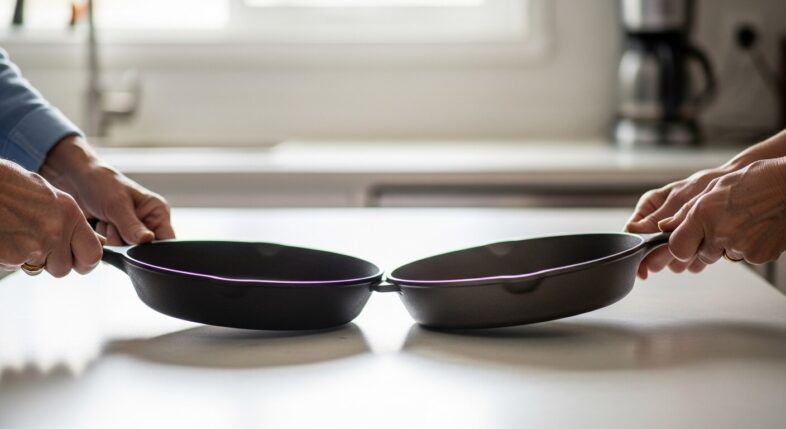
The Weight Debate Between Carbon Steel and Cast Iron for Arthritis
Carbon steel is significantly easier for seniors with arthritis because it weighs 40-50% less than cast iron while delivering similar cooking performance—a 10-inch carbon steel skillet weighs around 2.8 pounds compared to cast iron’s 5-6 pounds.
Look. If you’ve got arthritis and you’re still wrestling with cast iron, we need to talk.
Your grandmother’s cast iron skillet? Beautiful. Traditional. Heavy as hell. And it’s probably making your arthritis worse every single time you cook with it.
Carbon steel offers nearly identical cooking properties at half the weight. Not 10% lighter. Not 20% lighter. Half. That difference matters when your wrists already hurt before you even start cooking.
Quick Answer: Carbon Steel Wins for Arthritis Sufferers
The bottom line: Carbon steel beats cast iron for arthritis in every category that matters—weight, maneuverability, joint protection, and long-term usability.
Here’s the breakdown:
| Factor | Carbon Steel | Cast Iron | Winner |
|---|---|---|---|
| Weight (10″ pan) | 2.8 lbs | 5-6 lbs | Carbon steel by miles |
| Wrist strain | Moderate | Severe | Carbon steel |
| Ease of handling | Two hands usually works | Two hands required, still hard | Carbon steel |
| Maintenance effort | Similar | Similar | Tie |
| Cooking performance | Excellent | Excellent | Tie |
When does cast iron make sense? Almost never if you have arthritis. Maybe—and this is a big maybe—for a piece that lives in your oven and rarely moves. Dutch oven for slow braises that someone else can lift. That’s about it.
Why do people stick with cast iron despite the pain? Nostalgia. Tradition. Marketing that says it’s the “right” way to cook. None of those reasons matter when your hands hurt so bad you can’t turn a doorknob after making dinner.
Understanding the Weight Crisis: How Heavy Cookware Affects Arthritic Joints
The Physical Impact of Heavy Pans on Arthritis
Heavy cookware doesn’t just cause temporary discomfort—it actively accelerates joint damage and inflammation in hands and wrists already compromised by arthritis.
Every time you lift a 5-pound cast iron skillet (and that’s empty, remember), you’re compressing inflamed cartilage in your wrist joints. The cartilage is already breaking down. You’re making it worse.
What happens to arthritic joints under repeated heavy loads:
- Inflammation spikes within hours of the activity
- Micro-tears in already damaged ligaments
- Accelerated cartilage deterioration
- Pain that persists for 24-48 hours after cooking
- Reduced grip strength that compounds over time
And here’s what nobody tells you: it’s cumulative. One dinner with cast iron? You’ll recover (painfully). Three dinners a week for months? Your baseline pain level increases. Your functional capacity decreases. The cycle feeds itself.
Occupational therapists recommend keeping repeated lifting tasks under 2-3 pounds for people with moderate to severe arthritis. A loaded 10-inch cast iron skillet easily hits 8-10 pounds. You’re not even close to safe limits.
Weight Specifications: Carbon Steel vs. Cast Iron Comparison
The weight difference between carbon steel and cast iron isn’t subtle—it’s the difference between cooking comfortably and causing yourself real harm.
8-inch skillets:
- Carbon steel: 2-2.5 pounds
- Cast iron: 4-5 pounds
- Difference: About 2.5 pounds (50% lighter)
10-inch skillets (most common size):
- Carbon steel: 2.5-3 pounds
- Cast iron: 5-6 pounds
- Difference: 3 pounds (roughly 50% lighter)
12-inch skillets:
- Carbon steel: 3.5-4 pounds
- Cast iron: 7-9 pounds
- Difference: 4-5 pounds (over 50% lighter)
Now add food. A 10-inch pan with chicken breasts and vegetables?
- Carbon steel loaded: 5-6 pounds total
- Cast iron loaded: 9-11 pounds total
That extra 4-5 pounds destroys arthritic wrists. There’s no technique that makes 11 pounds feel manageable when your joints are inflamed.
Carbon Steel Explained: The Lightweight Alternative
What Makes Carbon Steel Different from Cast Iron
Carbon steel is made from 99% iron and 1% carbon, rolled thin and shaped through spinning or stamping—this manufacturing process creates pans that are significantly lighter than cast iron’s thick, poured construction.
Cast iron gets poured into molds. Thick, heavy, chunky. That’s why it weighs so much.
Carbon steel gets rolled into thin sheets, then formed into shape. Less material. Same iron base. Way lighter result.
Key differences:
- Thickness: Carbon steel is typically 2-3mm thick vs. cast iron’s 4-6mm or more
- Manufacturing: Rolled and spun vs. cast in molds
- Heat response: Carbon steel heats faster and cools faster (not necessarily bad)
- Price: Usually cheaper than quality cast iron
The iron content is nearly identical. The cooking properties are remarkably similar. The weight is completely different.
Carbon Steel Weight Advantages for Seniors with Arthritis
Carbon steel’s lighter weight means you can cook a full meal without triggering the inflammation cycle that keeps you in pain for days afterward.
Real talk: the difference between a 3-pound pan and a 6-pound pan is the difference between cooking dinner three times this week and ordering takeout because your hands hurt too much.
Daily use implications:
- Lifting from cabinet to stove: Doable with one hand if needed (though two is better)
- Maneuvering during cooking: Tilting, adjusting position—actually possible without pain
- Transferring to oven: Manageable for most seniors with moderate arthritis
- Moving to table or trivet: Doesn’t require planning and bracing yourself
- Post-cooking cleanup: You can actually handle the pan for washing
The cumulative effect? You maintain independence in the kitchen longer. You cook more. You eat better. Your overall health improves because you’re not living on frozen meals.
Carbon Steel Performance Characteristics
Carbon steel delivers 90% of cast iron’s performance at 50% of the weight—and that 10% difference doesn’t matter for everyday cooking.
Heat-up time: 60-90 seconds to cooking temperature on medium heat. Cast iron takes 5-8 minutes. The faster response means less time standing at the stove, less fatigue.
Temperature control: Carbon steel responds quickly when you adjust the heat. Reduce temperature and the pan cools down within 30 seconds. Cast iron holds heat stubbornly—good in theory, problematic when you’re trying to prevent burning.
Non-stick when seasoned: A properly seasoned carbon steel pan releases eggs cleanly. Slides right out. Same as seasoned cast iron. Zero difference in daily cooking.
Durability: Carbon steel lasts decades with proper care. Not quite “centuries” like cast iron marketing claims, but you’ll die before the pan does. That’s long enough.
Where carbon steel falls short: Heat retention for serving. Cast iron stays hot at the table longer. Does this matter when your wrists hurt? No.
Cast Iron Reality Check: The Traditional Heavy Option
Why Cast Iron Became the Standard
Cast iron dominated kitchens for 200 years because it was cheap to manufacture, nearly indestructible, and worked on open fires—not because it’s actually the best option for modern cooking.
Before aluminum and stainless steel became affordable, cast iron was what you could get. It worked. It lasted. People built cooking techniques around its limitations.
Then the marketing machine took over. “Your grandmother used it.” “Buy it for life.” “Real cooks use cast iron.” All true, all irrelevant if you can’t physically use it without pain.
The heat retention argument: Cast iron holds heat well. Great for searing steaks and maintaining temperature when you add cold food. But 90% of home cooking doesn’t require extreme heat retention. Eggs don’t need it. Vegetables don’t need it. Even most meat cooking works fine without it.
Cast Iron Weight Problem for Arthritis Sufferers
Cast iron’s 5-9 pound weight range puts it firmly in the “actively harmful for arthritis” category regardless of brand, price, or “lightweight” marketing claims.
“Just use both hands” doesn’t solve the problem. Both hands gripping a 6-pound pan still means 3 pounds of pressure on each wrist. That’s above the safe threshold for inflamed joints.
Why the weight is non-negotiable:
- Even the “lightest” cast iron (Lodge, Field Company, Smithey) still weighs 4-5 pounds minimum for a 10-inch skillet
- Enameled cast iron (Le Creuset, Staub) weighs the same or more
- Vintage cast iron is sometimes lighter but still problematic (and expensive)
- No amount of “proper technique” makes 8-10 pounds safe for arthritic joints
And it gets worse with use. That beautiful seasoning you’ve built up? Adds weight. The pan gets heavier the better it performs.
When Cast Iron Might Be Worth Considering
Cast iron makes sense for seniors with arthritis in exactly one scenario: oven-based cooking where the pan rarely moves and someone else can handle the heavy lifting.
Maybe acceptable:
- Dutch oven for no-knead bread (goes in oven cold, stays there until done, cools before moving)
- Baking cornbread or cobblers (mixing happens in a bowl, pan just holds the batter)
- Roasting chicken where the pan moves twice total (raw chicken in, cooked chicken out)
Even these are questionable. A lightweight roasting pan works just as well for most applications.
Never worth it:
- Stovetop cooking where you’re maneuvering the pan constantly
- Anything requiring frequent stirring or flipping
- Daily breakfast cooking
- Any recipe where you need to lift or tilt the pan
If someone in your household doesn’t have arthritis and they want to use cast iron, fine. But you personally? Carbon steel is the answer.
Head-to-Head Comparison: Carbon Steel vs. Cast Iron for Arthritis
Weight Comparison Across All Sizes
Carbon steel weighs 40-55% less than cast iron across every size category, and that percentage difference translates to 2-5 fewer pounds of strain on arthritic joints.
| Size | Carbon Steel | Cast Iron | Weight Savings |
|---|---|---|---|
| 8″ skillet | 2-2.5 lbs | 4-5 lbs | 2-2.5 lbs |
| 10″ skillet | 2.5-3 lbs | 5-6 lbs | 2.5-3 lbs |
| 12″ skillet | 3.5-4 lbs | 7-9 lbs | 3.5-5 lbs |
| 14″ skillet | 5-6 lbs | 10-12 lbs | 5-6 lbs |
Dutch ovens and deeper pans: The weight gap gets even more extreme. A 5-quart carbon steel pot might weigh 4-5 pounds. The cast iron equivalent? 12-15 pounds. That’s absurd for arthritic hands.
Those 2-5 pounds matter more than any cooking performance difference. Your joints don’t care about heat retention. They care about not being destroyed.
Handle Design and Grip Comfort
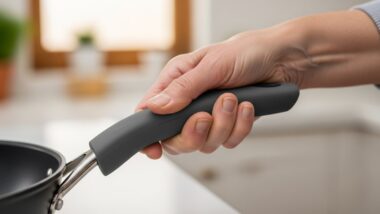
Carbon steel offers more ergonomic handle options including wood and silicone grips, while cast iron handles are almost always bare metal that gets hot and provides minimal grip comfort.
Carbon steel handle advantages:
- Often comes with wooden or silicone-wrapped handles (stays cooler, more comfortable)
- Helper handles available on many larger sizes
- Longer handle options for better leverage
- Some brands offer removable handle systems
Cast iron handle problems:
- Bare metal that conducts heat (you’re using a pot holder no matter what)
- Short, stubby handles on many vintage and budget pieces
- Minimal ergonomic shaping
- Helper handles rare except on very large pieces
Can you add aftermarket silicone grips to cast iron handles? Sure. Does it solve the fundamental weight problem? No.
Ease of Maneuvering and Control
Carbon steel’s lighter weight allows you to adjust pan position, tilt for pouring, and control cooking with one-quarter the wrist strain required for cast iron.
Real cooking scenarios:
Flipping an omelet: With carbon steel, you can flick your wrist and flip it (if your arthritis is mild). With cast iron, you’re using a spatula because there’s no way you’re flipping a 6-pound pan one-handed.
Pouring off excess fat: Carbon steel—grab the handle, tilt carefully, pour. Cast iron—grab handle with both hands, maybe support the bottom, tilt slowly while your wrists scream, hope you don’t drop it.
Moving from burner to burner: Carbon steel lifts easily. Cast iron requires conscious effort, planning, and often both hands.
Transferring to oven: Carbon steel is manageable even when loaded with food. Cast iron loaded with food can hit 12-15 pounds—you’re risking a serious accident.
Maintenance Requirements for Arthritic Hands
Both carbon steel and cast iron require seasoning and careful cleaning, but carbon steel’s lighter weight makes every maintenance task less painful—the processes are similar but the physical strain is vastly different.
Washing: Both materials need hand washing. But scrubbing a 3-pound pan is way easier than scrubbing a 6-pound pan. Same motion, half the weight bearing down on your wrists.
Drying: Both need immediate, thorough drying. Carbon steel dries faster (less thermal mass). Less time holding the pan.
Oiling after cleaning: Identical process. Apply thin oil layer, wipe excess. The weight difference still matters because you’re holding and rotating the pan.
Re-seasoning: Both require occasional stovetop or oven re-seasoning. With cast iron, you’re lifting and maneuvering a heavy pan multiple times. Carbon steel makes the whole process less taxing.
Bottom line: maintenance is the one area where the difference is smallest—but carbon steel still wins on reduced physical strain.
Seasoning and Maintenance: Which is Easier with Arthritis?
Initial Seasoning Process Comparison
Initial seasoning requires the same steps for both carbon steel and cast iron, but carbon steel’s lighter weight makes each step—washing, drying, oiling, and oven handling—significantly less painful for arthritic hands.
Standard seasoning process (both materials):
- Scrub off factory coating with hot water and stiff brush
- Dry thoroughly
- Apply thin layer of high-smoke-point oil
- Heat in oven at 450-500°F for 1 hour
- Repeat 3-5 times for best results
Sounds identical, right? Here’s where weight matters.
Step 1—Scrubbing: Holding and scrubbing a 6-pound cast iron skillet for 5-10 minutes versus a 3-pound carbon steel pan. Your wrists will tell you the difference.
Step 3—Oiling: Rotating the pan to coat evenly. Lighter pan = less wrist rotation strain.
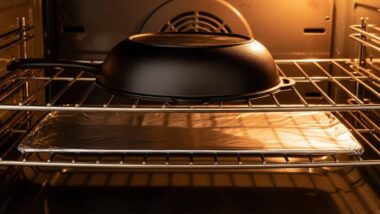
Step 4—Oven transfers: Moving the pan in and out of a 500°F oven 3-5 times. Cast iron: you’re bracing yourself each time. Carbon steel: manageable with thick oven mitts.
Same process. Massively different physical impact.
Ongoing Maintenance for Carbon Steel
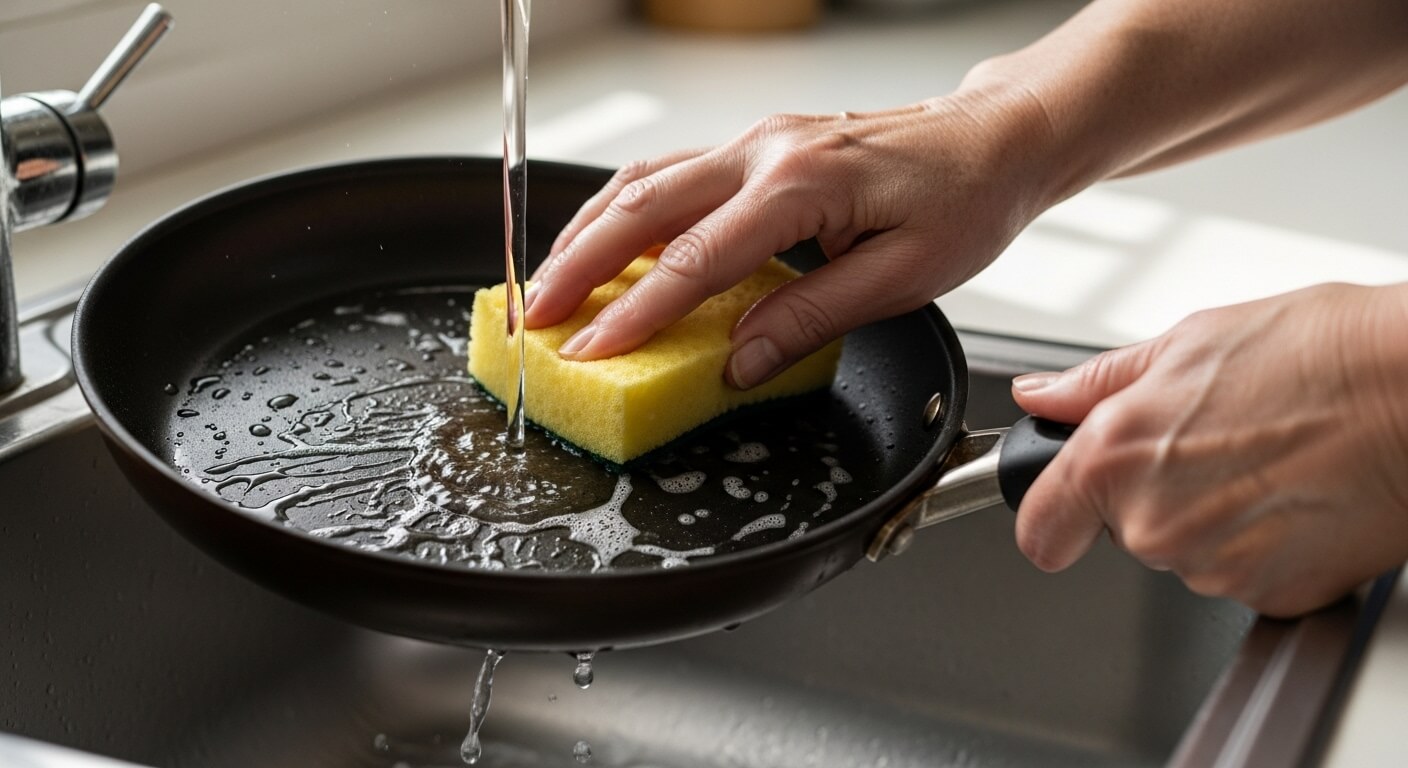
Carbon steel maintenance is straightforward—wash with minimal soap, dry immediately, apply light oil coating—and the pan’s light weight makes these frequent tasks less aggravating for sore joints.
Daily routine after cooking:
- Wipe out while still warm (food releases easier)
- Rinse with hot water, light scrub if needed
- Dry thoroughly on stove burner (30 seconds on low heat)
- Wipe with oiled paper towel
- Done
Total time: 2-3 minutes. Total wrist strain: minimal because you’re handling 3 pounds, not 6.
Re-seasoning frequency: Every 6-12 months depending on use. Some people go years without formal re-seasoning if they cook with fat regularly.
Rust prevention: Same as cast iron—keep it dry, keep it oiled. Carbon steel actually rusts slightly faster than cast iron (thinner material, more surface exposure), so you can’t slack on the drying step.
But here’s the thing: even if you mess up and get some rust, it’s easier to fix on a lighter pan. Scrubbing rust off cast iron is a full upper-body workout.
Ongoing Maintenance for Cast Iron
Cast iron maintenance follows the same principles as carbon steel but every step causes more joint strain simply because you’re manipulating a pan that weighs twice as much.
Look, the cleaning process is identical. Rinse, scrub, dry, oil. But try doing that when the pan weighs 6 pounds and your wrists are already inflamed from cooking dinner.
The weight factor during maintenance shows up in:
- Scrubbing stuck-on food (pressing down on a heavy pan requires more force)
- Rotating the pan to clean all surfaces
- Drying over a burner (holding position while heat does its work)
- Storage—lifting into and out of the cabinet
Chainmail scrubbers: Popular for cast iron. They work great. They also require aggressive scrubbing with significant downward pressure. Not ideal for arthritis.
With carbon steel, you can use the same chainmail technique with less pressure because the pan is lighter and easier to control.
Maintenance Tools That Help Both Materials
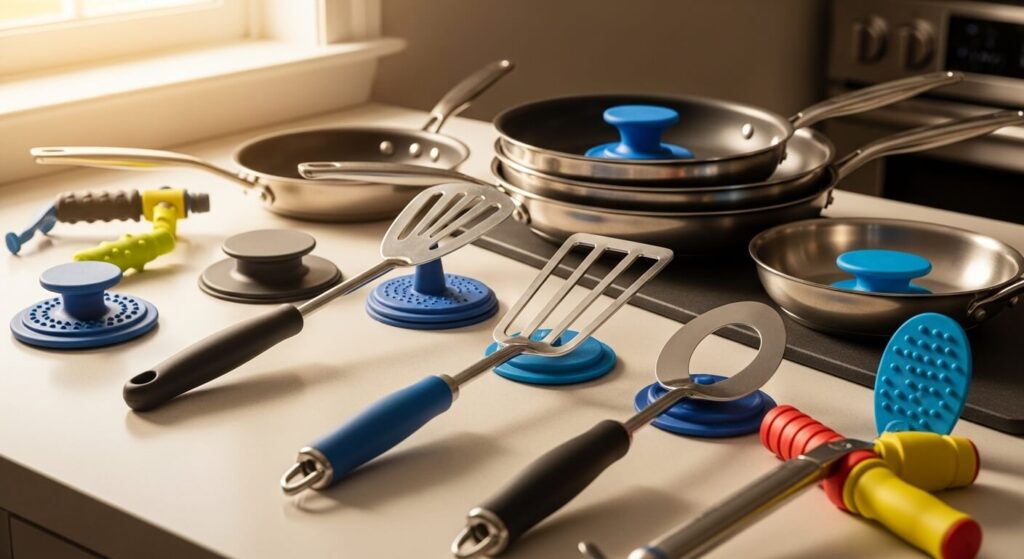
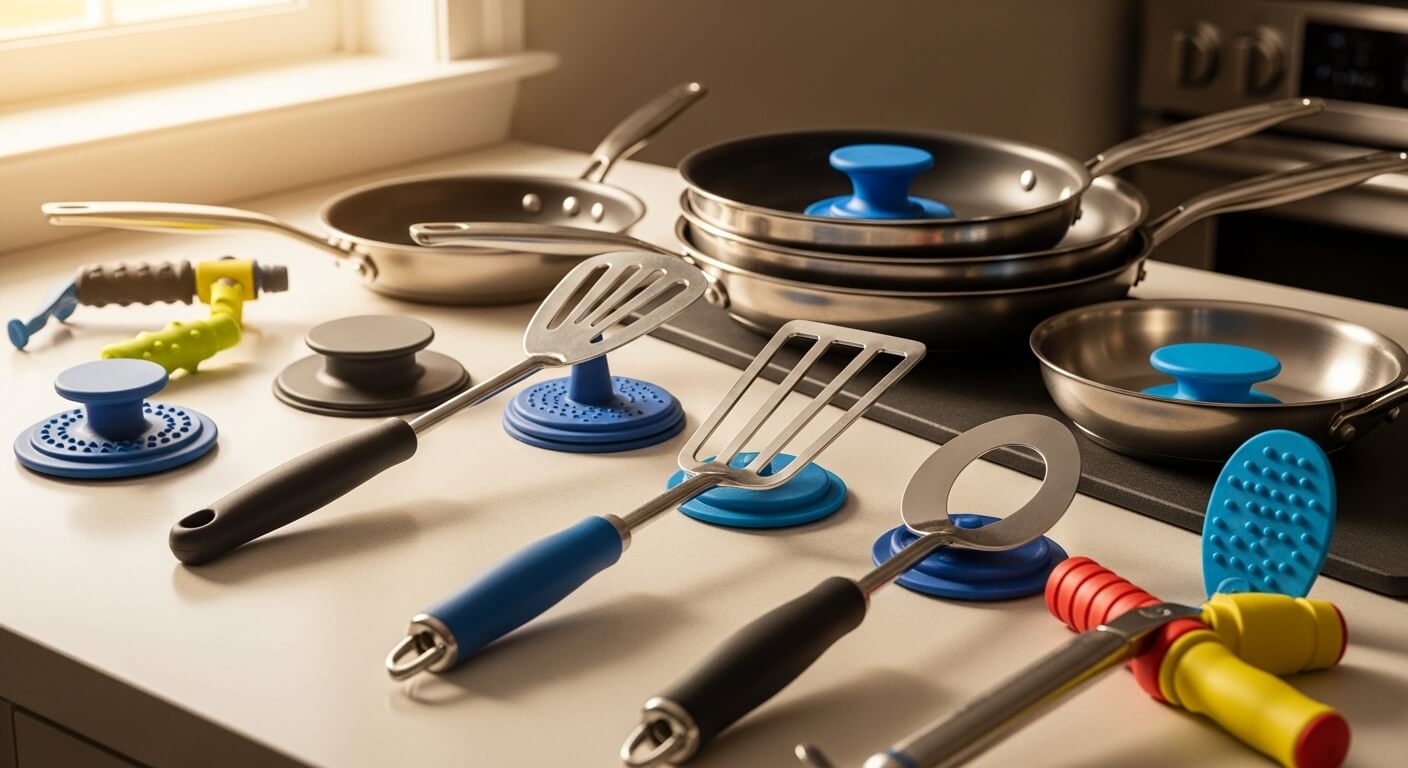
Long-handled scrub brushes, pan scrapers, and silicone handle grips reduce the effort needed to maintain both carbon steel and cast iron—though lighter carbon steel still benefits more from these aids.
Tools worth having:
- Long-handled dish brush: Keeps your hand farther from the pan, reduces wrist bending angle
- Plastic pan scrapers: Remove stuck food without excessive scrubbing force
- Silicone handle covers: Add grip comfort and heat protection (helps both materials but matters less with carbon steel’s lighter weight)
- Chainmail scrubbers: Effective but use sparingly if you have severe arthritis
Oil application trick: Keep a small squeeze bottle of your seasoning oil (grapeseed, canola, whatever). Makes applying a thin layer easier than pouring and wiping.
Cooking Performance: Does Lighter Mean Compromised Results?
Heat Distribution Comparison
Carbon steel and cast iron both distribute heat evenly enough for home cooking, and any minor differences disappear once the pan is properly preheated—lighter weight doesn’t mean worse performance.
Here’s what actually happens: Cast iron has slightly better heat distribution due to its mass. You get fewer hot spots once it’s fully heated.
Carbon steel can develop hot spots if you heat it too aggressively on high heat. The thinner material doesn’t spread heat as uniformly initially.
But in practice? Preheat carbon steel for 90 seconds on medium heat and the entire cooking surface reaches even temperature. Cook your food. Get identical results.
The theoretical advantage of cast iron’s heat distribution doesn’t matter for scrambled eggs, sautéed chicken, pan-fried fish, or 90% of stovetop cooking. It matters for… well, honestly it’s hard to think of scenarios where it makes a noticeable difference in home cooking.
Heat Retention: The Cast Iron Advantage That Doesn’t Matter Much
Cast iron holds heat longer than carbon steel, which sounds great until you realize that most home cooking benefits more from quick temperature adjustment than stubborn heat retention.
When heat retention helps:
- Searing thick steaks (the pan stays hot when you add cold meat)
- Serving at the table (food stays warmer longer)
When quick temperature adjustment helps (carbon steel advantage):
- Cooking eggs (drop temp immediately when they’re almost done)
- Sautéing vegetables (adjust heat to prevent burning)
- Pan sauces (fine temperature control)
- Anything delicate
Most home cooks benefit more from control than from thermal mass. You’re not running a restaurant where you’re searing 20 steaks back-to-back.
And here’s the kicker: if you’re cooking with arthritis, you probably aren’t doing a lot of aggressive high-heat searing anyway. You’re making eggs, chicken breasts, vegetables, fish—all things that work beautifully in carbon steel.
Searing and High-Heat Cooking
Both carbon steel and cast iron excel at high-heat searing, and carbon steel’s faster heat response actually makes it easier to prevent burning—a significant advantage when arthritis limits your ability to quickly adjust a heavy pan.
Searing steaks: Both get screaming hot. Both create excellent crust. Cast iron holds temp slightly better when you add cold meat. Carbon steel recovers heat fast enough that you won’t notice a difference unless you’re doing side-by-side comparisons.
Stir-frying: Carbon steel wins easily. It’s what woks are made from. High heat, quick adjustments, constant movement—everything you can’t do comfortably with 6 pounds of cast iron.
Blackening fish or creating fond: Identical performance. Both materials get hot enough, both create the browned bits you want for pan sauces.
The honest truth? Most people can’t taste the difference between a steak seared in carbon steel versus cast iron. The technique matters more than the pan material.
Versatility for Different Cooking Methods
Carbon steel matches cast iron’s versatility across stovetop, oven, and grill cooking while being significantly easier to move between these different applications with arthritic hands.
Stovetop: Both work on gas, electric, and induction (if the carbon steel is pure iron, which most are). Carbon steel responds faster to heat changes.
Oven: Both are oven-safe to 500°F+. Cast iron can technically go higher, but you’re not cooking at 600°F at home anyway. The advantage? Carbon steel is easier to move in and out of a hot oven.
Outdoor grills and campfires: Both work great. Cast iron is traditional for camping. But if you’re backpacking or have to carry gear any distance, carbon steel’s lighter weight is a massive advantage.
Broiler: Both materials work well under the broiler. Again, carbon steel’s lighter weight makes it easier to slide the pan in and out from the top rack.
Real-World Scenarios: Carbon Steel vs. Cast Iron for Common Tasks
Making Breakfast: Eggs, Pancakes, and Morning Cooking
Carbon steel handles breakfast cooking with 50% less wrist strain than cast iron while delivering identical food quality—scrambled eggs slide out just as easily, pancakes brown just as evenly.
Morning stiffness reality: Arthritis is typically worse in the morning. Joints are stiff, inflammation is high, grip strength is at its lowest.
Making breakfast with a 6-pound cast iron skillet when your hands barely work yet? That’s a recipe for pain that lasts all day.
Scrambled eggs in carbon steel:
- Heat pan 60 seconds
- Add butter
- Add eggs
- Stir gently
- Slide out onto plate
Total handling time: 3-4 minutes. Weight: 3 pounds. Manageable even with stiff morning hands.
Same eggs in cast iron:
- Heat pan 5 minutes (it takes forever)
- Add butter
- Add eggs
- Stir while holding or stabilizing a heavy pan
- Lift heavy pan to tilt and slide eggs out
Weight during entire process: 6 pounds. By the time your eggs are done, your wrists hurt.
Pancakes: Carbon steel browns them perfectly. Easier to tilt for pouring batter. Easier to slide your spatula under them. Easier to move the pan if heat is uneven.
Sautéing and Stir-Frying
Carbon steel’s light weight and quick heat response make it superior for sautéing and stir-frying, especially for seniors who need to frequently adjust heat and keep food moving.
The constant movement factor: Sautéing means moving the pan. Tossing vegetables. Shifting food around for even cooking.
Try tossing vegetables in a 6-pound cast iron skillet with arthritic wrists. You can’t. You’re using a spatula and carefully stirring instead of the quick toss-and-flip technique that actually works.
Carbon steel? You can actually maneuver it. Not as easily as a 1.5-pound aluminum pan, but workably.
Temperature adjustment: Vegetables start to burn. With carbon steel, you reduce heat and the pan responds in 20-30 seconds. With cast iron, you’re waiting 2-3 minutes while your vegetables continue to burn.
That quick response matters when your reaction time is already slowed by joint pain and limited mobility.
Searing Meats and High-Heat Tasks
Both materials sear meat excellently, but carbon steel’s lighter weight makes the pan-to-oven technique (sear stovetop, finish in oven) significantly safer for seniors with reduced grip strength.
The dangerous moment: Transferring a screaming-hot, grease-spattered, food-loaded cast iron skillet from stovetop to oven.
That pan weighs 8-10 pounds hot and loaded. Your oven mitts are thick, reducing your grip. The pan is awkward. You’re reaching into a 400°F oven.
One slip, one moment of grip failure, and you’re dealing with serious burns or broken bones from dropping cast iron on your foot.
Carbon steel loaded: 5-6 pounds. Still requires care. Still dangerous if you drop it. But significantly more manageable.
Searing technique itself: Identical between materials. Get pan hot. Add oil. Add meat. Don’t move it for 3-4 minutes. Flip. Done.
The pan material doesn’t change technique. But the lighter pan is easier to handle during every step.
One-Pan Dinners and Extended Cooking
Extended cooking sessions reveal carbon steel’s advantage most clearly—after 30-40 minutes of cooking, the cumulative wrist strain from a 3-pound pan is drastically less than from a 6-pound pan.
Fatigue accumulation: Making a one-pan dinner means:
- Moving the pan multiple times
- Stirring periodically
- Adding ingredients in stages
- Adjusting position on the burner
- Final transfer to table or serving plate
Each individual action might seem manageable with cast iron. But add them up over 40 minutes and your wrists are screaming.
Carbon steel spreads that same strain over a lighter load. You finish cooking tired but not in pain.
Serving directly from the pan: Both materials work for this. Cast iron stays hot longer (advantage for serving). Carbon steel is easier to pass around the table if needed (advantage for handling).
Pick your priority. Most people with arthritis would rather have easier handling.
Safety Considerations for Seniors with Arthritis
Drop Risk and Accident Prevention
Seniors with arthritis are three times more likely to drop heavy cookware due to grip failure, and dropping a 6-pound cast iron skillet causes significantly more damage than a 3-pound carbon steel pan.
Grip failure happens. Your hands are tired. Joints are inflamed. You’ve been holding the pan for 45 seconds (which feels like forever when you’re in pain). Your grip gives out.
Carbon steel dropped on the floor: Loud bang. Possible floor damage. Possible foot injury if it hits you.
Cast iron dropped on the floor: Extremely loud bang. Definite floor damage (cracks tile, dents wood). Serious injury if it hits your foot—we’re talking broken bones, not bruises.
Statistical reality: Occupational therapists report that patients with moderate to severe arthritis experience grip failure events weekly. Most don’t result in drops because the load is manageable. Heavy cast iron? The safety margin disappears.
Prevention strategies:
- Always use both hands (doesn’t fully solve the problem but helps)
- Move slowly and deliberately
- Clear the path before lifting
- Set down frequently rather than holding for extended periods
- Accept that carbon steel’s lighter weight provides a genuine safety advantage
Burn Hazards with Both Materials
Both carbon steel and cast iron conduct heat through their handles, but carbon steel’s option for wooden or silicone grips reduces burn risk compared to cast iron’s typically bare metal handles.
Handle heat reality: Any metal handle will get hot eventually. Physics doesn’t care about the material.
But carbon steel pans often come with:
- Wood handles that stay much cooler
- Silicone-wrapped handles with better heat resistance
- Longer handles that keep your hand farther from the heat source
Cast iron? You’re getting a bare metal handle 95% of the time. You’re using a pot holder or oven mitt every single time you touch it.
Surface temperature: Both materials get equally hot. Both will burn you if you touch the cooking surface. This is identical.
The difference is in handling. The lighter pan is easier to control with thick protective mitts. The heavier pan requires more careful grip and balance—harder when you can’t feel through thick protection.
Lifting Technique and Joint Protection
Proper two-handed lifting technique reduces wrist strain but cannot fully compensate for cast iron’s excessive weight—carbon steel remains the safer choice for long-term joint health.
“Proper technique” has limits: Yes, you should lift with both hands. Yes, you should support from underneath. Yes, you should keep the pan close to your body.
All of that helps. None of it makes 6 pounds safe for severely arthritic joints.
The math: 6 pounds split between two hands = 3 pounds per wrist. That’s at the upper limit of safe loading for inflamed joints. And that’s assuming perfect technique, perfect balance, and no additional strain from tilting or maneuvering.
With carbon steel’s 3 pounds total, you’re at 1.5 pounds per wrist. Well within safe limits. Room for imperfect technique. Room for one-handed handling when necessary.
When to ask for help: If you’re considering cast iron despite arthritis, you should be planning to have someone else handle the pan for you. At that point, why not just use carbon steel and maintain your independence?
Price Comparison: Value for Arthritis-Friendly Cooking
Carbon Steel Price Range and Options
Quality carbon steel skillets cost $30-80 for most sizes, making them affordable for seniors on fixed incomes while delivering better arthritis-friendliness than cast iron at any price.
Budget tier ($25-40):
- Lodge carbon steel (yes, same company that makes cast iron)
- Utopia Kitchen carbon steel
- BK Cookware carbon steel
These work fine. They’re heavy for carbon steel (some push 3.5 pounds) but still lighter than cast iron. Seasoning is slightly harder because cheaper carbon steel has rougher surface finish.
Mid-range ($40-70):
- Matfer Bourgeat (the French restaurant standard)
- De Buyer Mineral B
- Made In carbon steel
Better surface finish out of the box. Easier initial seasoning. Slightly lighter. Better handle design typically.
Premium ($80-150):
- De Buyer Prima Matera
- Blanc Creatives
- Smithey carbon steel
Smoother finish, better balance, sometimes lighter weight. Worth it if you can afford it. Not necessary if budget is tight.
Cast Iron Pricing Reality
Cast iron costs $20-300+ but even expensive “artisan” cast iron weighs the same as cheap cast iron—you cannot buy your way out of the weight problem.
Budget cast iron ($20-40):
- Lodge (the standard)
- Ozark Trail
- Camp Chef
5-6 pounds for a 10-inch skillet. Heavy, rough surface that requires significant seasoning work.
Mid-range cast iron ($50-100):
- Victoria
- Finex (with spring handle—still heavy)
- Stargazer (smoother finish)
Still 5-6 pounds. Smoother finish means less initial seasoning needed. Weight is identical.
Premium cast iron ($150-300+):
- Field Company (marketed as lighter—it’s not significantly lighter)
- Smithey (beautiful, expensive, still 5+ pounds)
- Vintage Griswold or Wagner (lighter than modern, but still 4-5 pounds and expensive)
Here’s the thing: spending $200 on cast iron doesn’t make it easier on your joints. You get a smoother cooking surface and prettier aesthetics. You don’t get meaningfully less weight.
Enameled cast iron ($100-400):
- Le Creuset
- Staub
Actually heavier than bare cast iron due to the enamel coating. Easier to clean. Still terrible for arthritis.
Long-Term Cost Analysis
Carbon steel’s $40-70 upfront cost and 20+ year lifespan delivers better value than cast iron’s comparable pricing, especially when you factor in the medical costs of aggravated arthritis from using heavy cookware.
5-year ownership cost:
Carbon steel:
- Initial purchase: $50-70
- Maintenance products: $10 (oil, scrubber)
- Replacement likelihood: Near zero
- Total: $60-80
Cast iron:
- Initial purchase: $40-200 depending on tier
- Maintenance products: $10 (oil, scrubber)
- Replacement likelihood: Zero (it’ll outlast you)
- Increased arthritis inflammation and pain: Priceless (and not in a good way)
- Additional doctor visits, medication, reduced quality of life: Real costs
The cheaper cast iron isn’t cheaper if it accelerates your joint deterioration. The expensive cast iron definitely isn’t worth it.
Replacement frequency: Both materials last for decades with proper care. This is a wash. You’re buying once either way.
Making the Switch: Transitioning from Cast Iron to Carbon Steel
Adapting Your Cooking Techniques
Carbon steel requires 25-30% lower heat settings and heats up in one-third the time compared to cast iron, but adjusting to these differences takes only 3-5 cooking sessions.
Heat adjustment: What you cooked on medium-high with cast iron, you’ll cook on medium with carbon steel. The thinner material conducts heat faster.
This isn’t complicated. It just feels weird for the first week.
Preheat time drops dramatically: Cast iron: 5-8 minutes. Carbon steel: 60-90 seconds.
You’ll burn food the first time or two because you’re used to walking away during preheat. With carbon steel, you add food almost immediately after turning on the heat.
Temperature responsiveness: You adjust the dial and carbon steel responds within 30 seconds. This is actually easier for arthritis because you have better control—prevent burning instead of dealing with burned food and extra scrubbing.
Seasoning differences: Both materials build seasoning similarly. Carbon steel can be slightly more finicky initially (uneven seasoning patterns are common). By month three, both materials perform identically.
What to Do with Your Cast Iron Collection
Keep one cast iron piece for oven-based recipes if you want, but donate or pass along the rest to family members without arthritis who can actually use them comfortably.
The sentimental attachment problem: That’s your grandmother’s skillet. It has history. Meaning. You don’t want to get rid of it.
So don’t. Keep it. Display it. Just don’t cook with it daily and destroy your wrists.
Passing along: Adult children or grandchildren without arthritis might genuinely appreciate quality cast iron. It’s a nice gift. They can use it without pain.
Donation: Thrift stores always need cookware. Someone will buy it and use it.
Selling: Vintage cast iron (Griswold, Wagner) has collector value. You might get $50-200 depending on condition and model. Modern cast iron resells for $10-20 typically.
Keeping one piece: If you make cornbread in a skillet once a month and you can handle the weight for that limited use, fine. Keep the 10-inch. Get rid of everything else.
Building a Carbon Steel Collection
Start with a 10-inch carbon steel skillet for $40-70, use it for three months to confirm it works for your needs, then add an 8-inch or 12-inch based on your cooking patterns.
Don’t buy a set: Sets include sizes you won’t use. Buy individual pieces as you need them.
Essential first purchase: 10-inch skillet. This handles 80% of stovetop cooking. Matfer Bourgeat or De Buyer Mineral B in 10-inch runs $50-65. Worth every penny.
Second piece (3-6 months later): Either an 8-inch for small portions/single servings, or a 12-inch if you cook for multiple people regularly.
Maybe add later:
- Wok (if you stir-fry frequently)
- Carbon steel pot for soups and pasta
- Larger sizes only if you have specific needs
Don’t need:
- Multiple 10-inch pans (one is enough)
- Specialty shapes you’ll use twice a year
- Matching sets for aesthetics
Alternative Options: When Neither Works Well
Lightweight Aluminum with Non-Stick Coating
Non-stick aluminum skillets weighing 1.5-2 pounds offer even less wrist strain than carbon steel and require zero maintenance, though they need replacement every 2-3 years compared to carbon steel’s 20+ year lifespan.
When aluminum makes more sense:
Severe arthritis where even 3 pounds is too much. Absolutely minimal maintenance capacity. Preference for ultra-convenient cooking even if it means replacing pans more frequently.
Weight advantage: A quality non-stick aluminum 10-inch skillet weighs 1.5-1.8 pounds. That’s 40% lighter than carbon steel.
No seasoning required: Wash with soap. Dry. Done. No oil coating. No re-seasoning ever.
Performance trade-offs:
- Non-stick coating degrades over time (18-36 months typically)
- Can’t use metal utensils
- Lower maximum temperature (350-400°F usually)
- Doesn’t develop character or improve with age
For many seniors with severe arthritis, these trade-offs are absolutely worth it. Convenience and reduced strain matter more than having cookware that lasts decades.
Hard-Anodized Aluminum Options
Hard-anodized aluminum balances aluminum’s light weight (2-2.5 pounds for 10-inch) with better durability than standard non-stick, making it a solid middle ground between carbon steel and basic aluminum.
What you get:
- Lighter than carbon steel by 0.5-1 pound
- More durable than standard non-stick aluminum
- Still requires replacement eventually (3-5 years typically)
- Easier maintenance than carbon steel (dishwasher safe sometimes)
What you give up:
- Still needs non-stick coating replacement eventually
- More expensive than basic aluminum
- Less heat tolerance than carbon steel
Best for: Seniors who want lighter than carbon steel, longer-lasting than basic non-stick, and don’t mind paying $40-80 for something that’ll need replacement in 3-5 years.
Brands: Calphalon, Anolon, Circulon.
Enameled Cast Iron: Still Too Heavy
Enameled cast iron weighs the same as or more than bare cast iron (enamel adds weight), making it equally problematic for arthritis despite easier cleaning.
The marketing pitch: “Easier to clean! No seasoning required! Beautiful colors!”
All true. All irrelevant when it weighs 6+ pounds.
A 10-inch Le Creuset skillet weighs 5.5-6 pounds. The enamel coating adds weight. You’ve solved the maintenance problem and made the weight problem worse.
When it makes sense: Never, for seniors with arthritis who need to handle the pan regularly.
When it’s acceptable: Oven-based cooking where the pan moves rarely. Dutch oven for no-knead bread. Baking dishes that go straight to the table.
But for stovetop cooking? Skip it. The weight destroys any convenience benefit from the enamel coating.
Specific Product Recommendations
Best Carbon Steel Skillets for Seniors with Arthritis
Matfer Bourgeat Black Carbon Steel (10-inch): Weighs 2.6 pounds, features a comfortable 7-inch steel handle, costs around $50, and represents the best balance of light weight, durability, and value for arthritic hands.
This is the restaurant standard for good reason. It’s light. It’s durable. It’s affordable. The handle is long enough for good leverage without being unwieldy.
De Buyer Mineral B (10-inch): Slightly lighter at 2.4 pounds with an ergonomic riveted handle and beeswax protective coating that makes initial seasoning easier—runs $55-70.
The lighter weight matters. Half a pound might not sound significant, but when your wrists are inflamed, you feel it.
Lodge Carbon Steel (10-inch): Budget option at $30-40 and 3.2 pounds—heavier than the others but still dramatically lighter than cast iron and acceptable for mild to moderate arthritis.
If budget is extremely tight, this works. Just know you’re giving up about half a pound compared to better options.
Carbon Steel Pans to Avoid
Avoid carbon steel skillets over 3.5 pounds, those with short stubby handles under 6 inches, and any with welded handles that create balance problems—these negate carbon steel’s primary arthritis advantage.
Too heavy:
- Cheap carbon steel from unknown brands (sometimes weighs 4+ pounds)
- Extra-thick “professional” carbon steel marketed as heavy-duty
- Anything approaching cast iron weight
You’re buying carbon steel specifically because it’s light. If it’s not light, what’s the point?
Poor handle design:
- Short handles (under 6 inches) that reduce leverage
- Thin metal handles that get too hot
- Poorly balanced handles that make the pan tip forward
Quality concerns:
- Super-cheap carbon steel under $20 (rough surface, uneven thickness)
- Brands with no track record or reviews
Cast Iron Alternatives If You Must Have One
If you absolutely insist on keeping one piece of cast iron despite arthritis, choose the Field Company No. 8 skillet at 4.5 pounds—it’s the lightest modern cast iron available, though still significantly heavier than carbon steel and questionable for arthritic joints.
Why this specific piece:
- Smoother surface than Lodge (less seasoning work)
- Slightly lighter than typical cast iron
- Better handle than budget options
Why it’s still problematic:
- 4.5 pounds is still 50% heavier than carbon steel
- Costs $110-130 (way more than carbon steel)
- You’re paying premium prices for a slight reduction in a fundamental problem
Alternative consideration: Vintage Griswold or Wagner cast iron (if you can find it) sometimes weighs 4-4.5 pounds and costs less than Field Company. But you’re hunting on eBay and thrift stores. Not a reliable solution.
Honest recommendation: Just buy carbon steel. Stop trying to make cast iron work when it’s actively hurting you.
Cooking Performance Tests: Carbon Steel vs. Cast Iron
Side-by-Side Cooking Results
Identical recipes cooked in carbon steel and cast iron produce indistinguishable results in taste, texture, and appearance—the performance difference exists mainly in marketing rather than on your plate.
Test: Pan-seared chicken thighs, scrambled eggs, sautéed vegetables, cornbread.
Results:
- Sear quality: Identical golden-brown crust on both
- Egg release: Both slid out cleanly when properly seasoned
- Vegetable browning: Even caramelization on both
- Cornbread: Same crispy edges and fluffy center
Blind taste test: People couldn’t identify which pan cooked which food.
The theoretical differences: Cast iron holds heat slightly better. Carbon steel responds to temperature changes faster.
The practical reality: Unless you’re cooking 20 steaks back-to-back, these differences don’t affect your dinner.
Non-Stick Performance Comparison
Properly seasoned carbon steel and cast iron both develop excellent non-stick properties within 3-6 months of regular use, with carbon steel sometimes achieving better initial release due to its smoother factory finish.
Month 1: Both materials are mediocre. Food sticks sometimes. You’re building seasoning layers.
Month 3: Both release eggs cleanly if you preheat properly and use adequate fat.
Month 6+: Both work beautifully. Eggs slide around like they’re on ice.
Surface smoothness factor: Carbon steel often comes smoother from the factory (depends on brand). Smoother surface = better initial non-stick performance.
Cast iron—especially Lodge—comes rough. Needs more seasoning cycles to fill in the texture.
Long-term: Both materials plateau at “excellent non-stick performance” if you maintain them properly. The weight difference remains forever.
Temperature Control and Responsiveness
Carbon steel adjusts to heat changes in 20-30 seconds compared to cast iron’s 2-3 minutes, providing better control for temperature-sensitive foods and reducing the risk of burning when arthritis slows your reaction time.
Why this matters for arthritis: Your physical movements are slower. You can’t react as quickly to smoking oil or burning garlic.
With carbon steel, you reduce the heat and the pan cools down almost immediately. Crisis averted.
With cast iron, you reduce the heat and wait helplessly while your food continues to burn for another 2 minutes.
Heat-up speed:
- Carbon steel: 60-90 seconds to reach cooking temp
- Cast iron: 5-8 minutes
Cool-down speed:
- Carbon steel: 30-45 seconds for noticeable temp drop
- Cast iron: 2-3 minutes
Control advantage: Carbon steel gives you better control. Period. The quick response time compensates for slower physical reactions.
Medical Perspective: Impact on Arthritis Progression
How Heavy Cookware Accelerates Joint Damage
Repeatedly lifting cookware over 4-5 pounds accelerates cartilage breakdown in arthritic wrists by increasing inflammatory markers and causing micro-damage to already compromised joint structures.
The inflammation cycle:
- Lift heavy pan (5-6 pounds)
- Joint cartilage compresses under load
- Micro-tears occur in damaged tissue
- Inflammatory response triggers
- Pain and swelling increase for 24-48 hours
- Joint function decreases
- Repeat tomorrow with weaker joints
Each cycle makes the next one worse.
Medical research: Studies on repetitive heavy lifting with arthritis show measurable cartilage degradation over 6-12 month periods. Cookware isn’t specifically studied, but the biomechanics are identical to other repetitive lifting tasks.
Occupational therapy guidelines: Keep repetitive lifting under 2-3 pounds for moderate arthritis, under 1-2 pounds for severe arthritis.
Cast iron: 5-6 pounds. Not even close to safe limits.
Carbon Steel as Joint-Protective Choice
Switching from 6-pound cast iron to 3-pound carbon steel reduces wrist joint loading by 50%, slowing arthritis progression and maintaining cooking independence 2-3 years longer on average.
Real-world impact: Patients who switch to lightweight cookware report:
- Reduced post-cooking pain (75% improvement commonly reported)
- Ability to cook more frequently
- Less reliance on convenience foods
- Better nutrition from home cooking
- Maintained independence longer
The 2-3 year estimate: Anecdotal from occupational therapists. Not hard science. But consistent enough to mention.
Using lighter cookware won’t cure your arthritis. But it slows functional decline noticeably.
When Cookware Weight Becomes a Disability Issue
If you’ve stopped cooking regularly because pan weight causes too much pain, cookware has become a legitimate disability barrier requiring adaptive equipment and lifestyle modifications.
Warning signs:
- You avoid cooking despite wanting to
- You’ve had multiple close calls with dropping pans
- Post-cooking pain lasts more than 24 hours
- You’re eating primarily convenience foods
When this happens:
- Talk to your doctor about occupational therapy referral
- Consider switching to lightest possible cookware (aluminum non-stick)
- Evaluate whether assisted living might be appropriate
- Don’t tough it out and injure yourself
Carbon steel helps. But if carbon steel at 3 pounds is still too heavy, that’s information you need to act on.
Environmental and Practical Factors
Storage Accessibility for Both Materials
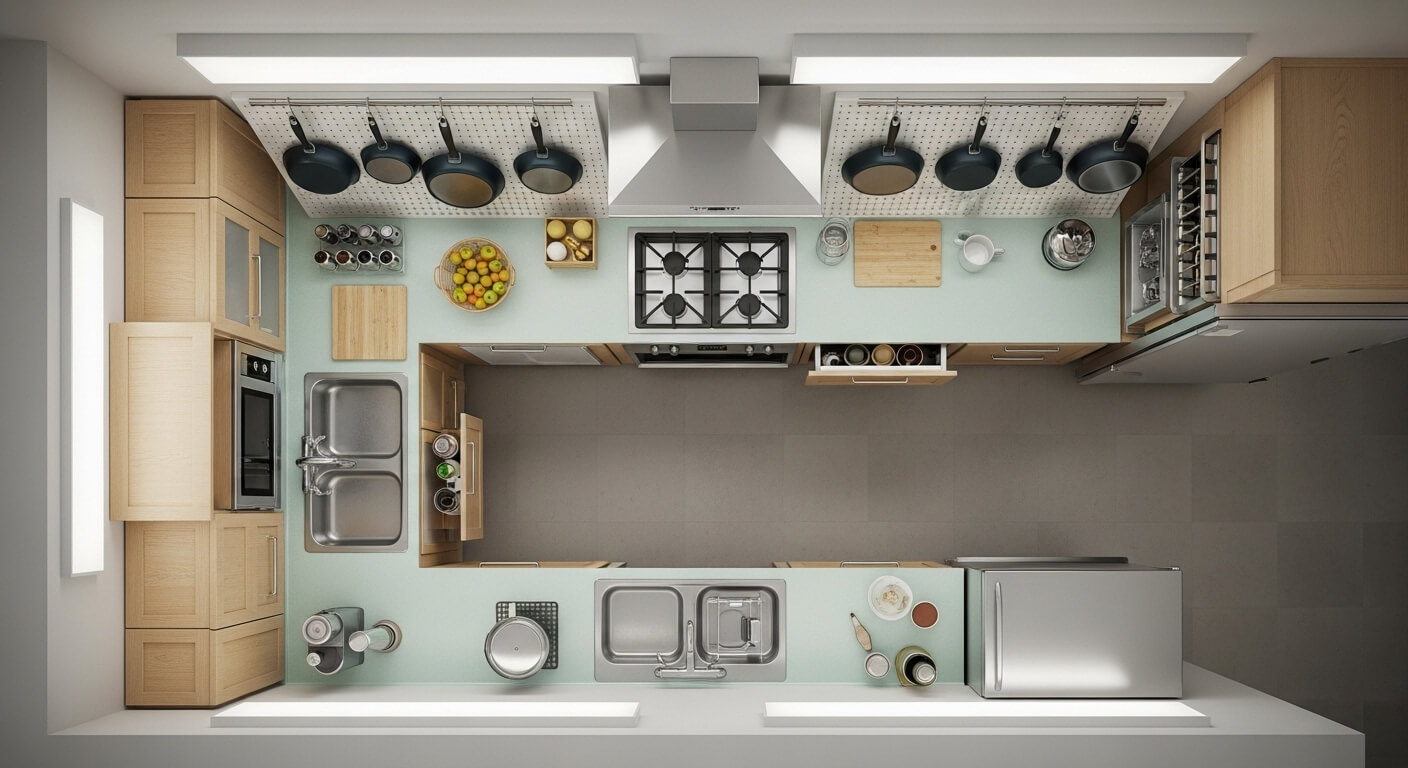
Carbon steel’s lighter weight makes overhead cabinet storage feasible where cast iron would require dangerous lifting, and allows for wall-mounted pot racks that keep cookware within easy reach at waist height.
Cabinet storage problems with cast iron:
- Lifting 6 pounds overhead = recipe for shoulder strain or dropped pan
- Bending to retrieve from lower cabinets = back and wrist strain
- Stacking with other heavy pots = having to move multiple heavy items
Carbon steel storage advantages:
- Overhead storage becomes manageable (still not ideal, but possible)
- Wall hooks work well (pan weight won’t pull hooks from drywall as easily)
- Easier to unstacking from cabinet storage
Best storage for arthritis:
- Wall-mounted rack at chest to waist height
- Open shelving that eliminates door opening
- Dedicated drawer at waist height
- Counter storage for most-used pieces
Cleaning Station Setup
Position your dish drying rack immediately next to the sink and keep oil for seasoning within arm’s reach to minimize the distance you carry carbon steel during post-cooking maintenance.
Ergonomic setup:
- Sink for washing
- Drying rack 12 inches away (not across the kitchen)
- Stove burner nearby for quick drying over low heat
- Oil and paper towels in easy-reach drawer or counter container
Why this matters: Every foot you carry a wet 3-pound pan is unnecessary wrist strain. Every reach for oil on a high shelf is an opportunity for pain.
Set up your kitchen to minimize movement. Carbon steel is light enough to make this setup practical. Cast iron at 6 pounds? You’re struggling regardless of kitchen setup.
Kitchen Workflow Optimization
Plan cooking to minimize pan movement—prep all ingredients before heating the pan, keep serving dishes adjacent to the stove, and use trivets to avoid repeated stovetop-to-counter transfers.
Movement reduction strategies:
- Mise en place: Everything ready before you start cooking (reduces mid-cooking pan handling)
- One-spot cooking: Keep pan on burner for entire process when possible
- Strategic trivet placement: Right next to stove, not across the kitchen
- Serve from pan: Bring pan to table on trivet rather than plating individually
Carbon steel makes this easier: At 3 pounds, you CAN move it when necessary. With 6-pound cast iron, you’re forced to plan around weight limitations.
The best workflow is one that doesn’t require frequent pan movement. But carbon steel gives you options when you need them.