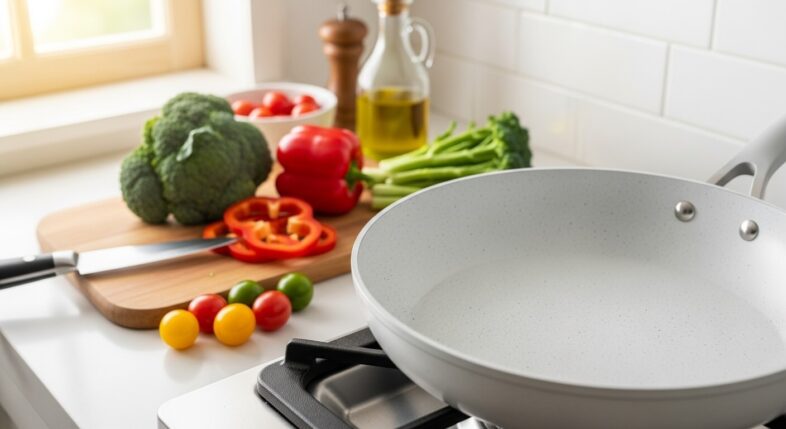
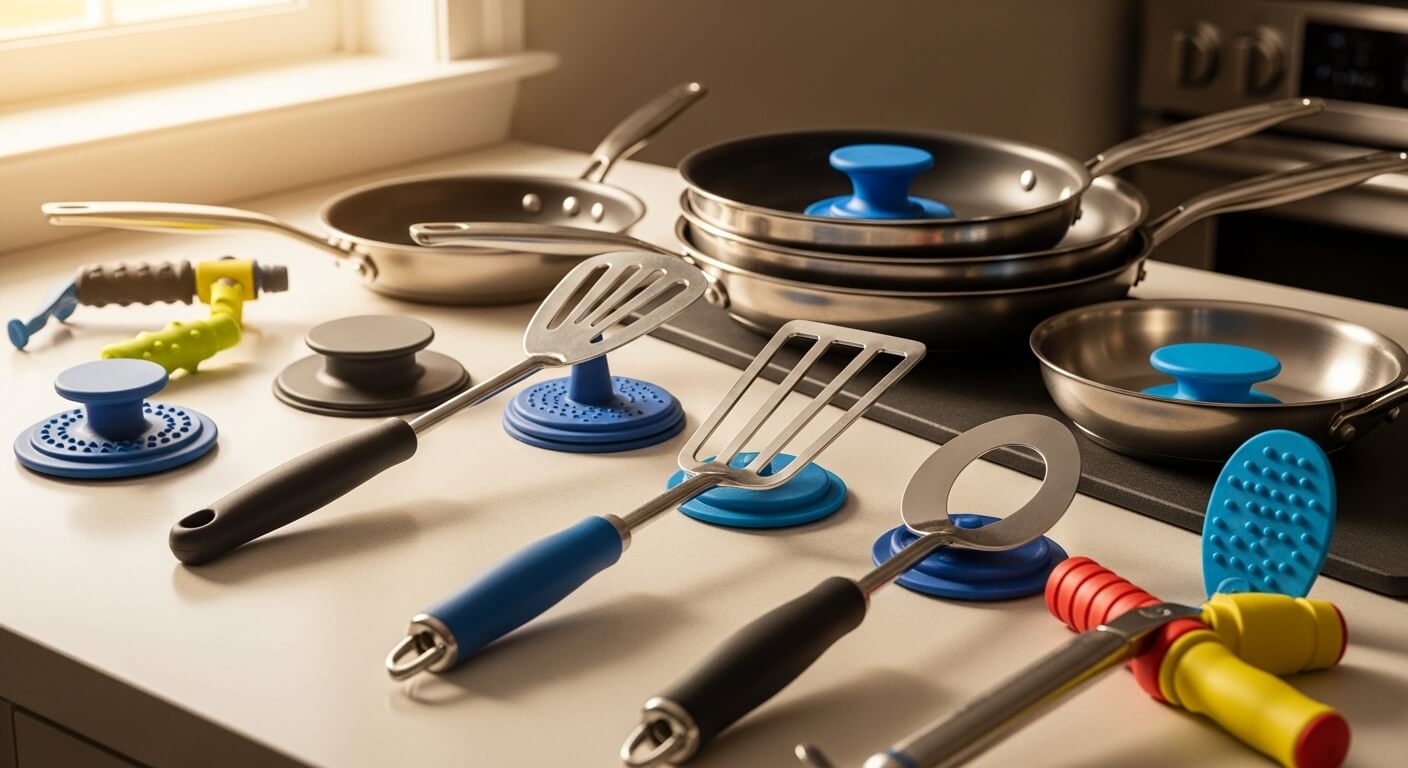
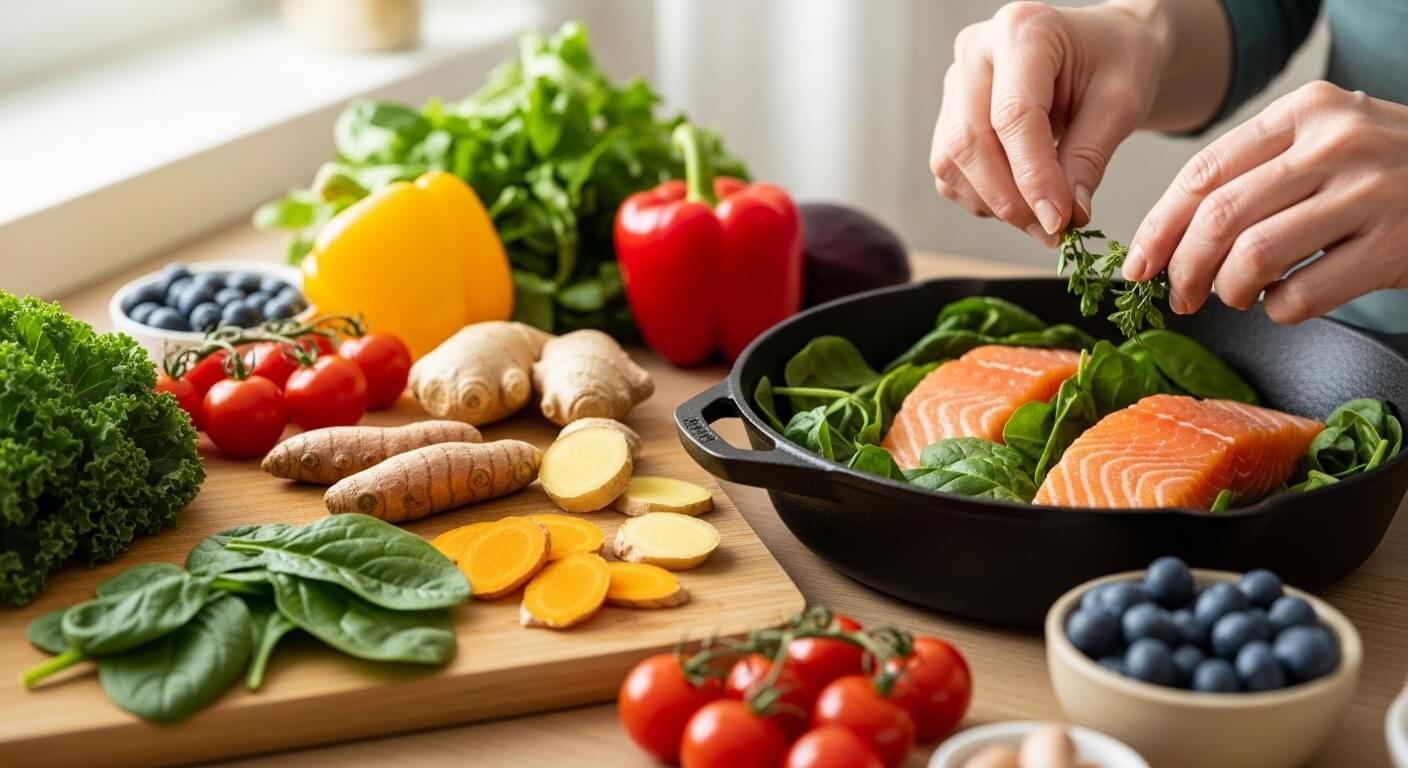
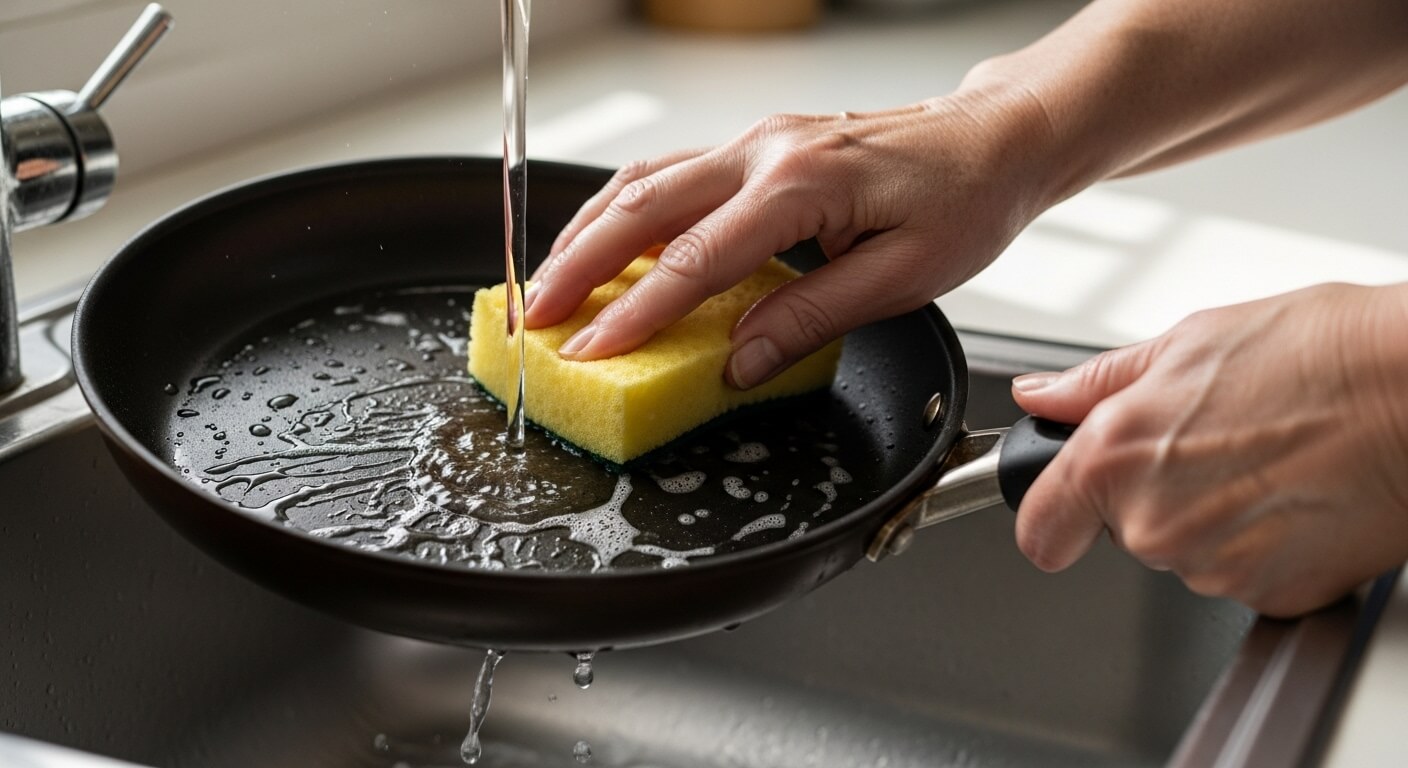
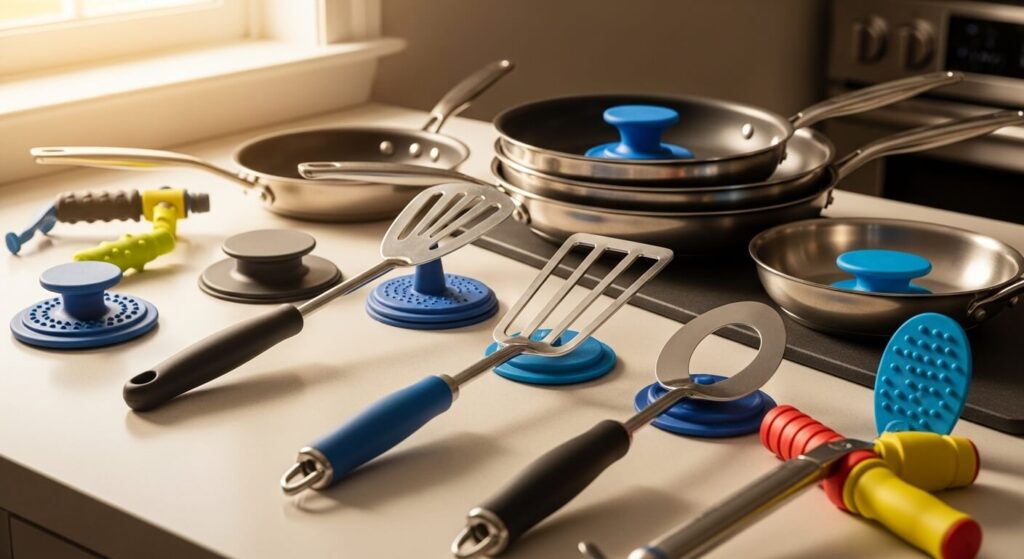
Non-toxic cookware coatings—including pure ceramic, lead-free enamel, and naturally seasoned surfaces—protect seniors from chemical exposure while providing the lightweight, easy-release properties that arthritic hands require for safe, pain-free cooking.
Here’s the deal. You’re already managing arthritis pain. You don’t need cookware adding toxic chemicals to the mix.
Understanding Non-Toxic Cookware Coatings for Seniors with Arthritis
Non-toxic cookware coatings are chemical-free surfaces that don’t release harmful compounds during cooking—essential for seniors whose aging bodies are more vulnerable to toxin accumulation and who need lightweight, easy-to-clean pans that accommodate arthritic limitations.
What Makes a Cookware Coating Non-Toxic and Safe for Seniors
Simple test: if the coating breaks down and releases chemicals when heated, it’s toxic. Period.
Non-toxic means the coating material is inert—it doesn’t react with food, doesn’t off-gas when hot, doesn’t leach particles into your meals. Materials like glass, pure ceramic, properly fired enamel, and natural iron seasoning pass this test. Most synthetic polymer coatings fail it.
Key characteristics of truly non-toxic coatings:
No PFAS (per- and polyfluoroalkyl substances—the “forever chemicals”)
Zero heavy metals like lead, cadmium, or unsafe levels of aluminum
Stable at cooking temperatures (won’t break down and release fumes)
Food-safe certifications from legitimate third-party testers
Transparent ingredient disclosure from manufacturers
The “non-toxic” label isn’t regulated by the FDA for cookware. Anyone can slap it on their product. You need actual verification, not marketing promises.
The Link Between Cookware Coatings and Senior Health Concerns
Your body doesn’t detoxify as efficiently at 65 as it did at 25. Liver function declines. Kidney filtration slows. Toxic compounds accumulate instead of being flushed out.
Seniors cooking daily meals in toxic non-stick pans are getting repeated exposure to chemicals that build up over years. PFAS compounds, for instance, have half-lives of 2-4 years in the human body—meaning it takes that long for your body to eliminate half of what you’ve absorbed. Keep adding more every day and you’re looking at serious accumulation.
Health risks specific to seniors:
Compromised immune systems can’t fight chemical damage as effectively
Multiple medications may interact with toxins in unexpected ways
Bone loss (osteoporosis) can be accelerated by some cookware chemicals
Respiratory conditions worsen with polymer fume exposure
Cognitive decline may be linked to certain heavy metal exposures
And here’s what nobody talks about: seniors spend more time cooking at home. Retirees aren’t grabbing takeout five nights a week. You’re using that cookware daily, sometimes multiple times a day. Exposure adds up fast.
Why Arthritis-Safe Cookware Requires Both Non-Toxic and Ergonomic Features
Non-toxic doesn’t automatically mean arthritis-friendly. Some of the safest cookware is also the heaviest, most difficult to maneuver.
Pure cast iron? Chemically safe. Also weighs 8-10 pounds and will destroy your wrists. Uncoated stainless steel? No toxins. But food sticks like crazy, requiring aggressive scrubbing that kills arthritic hands.
You need the overlap: non-toxic AND lightweight, non-stick enough that you’re not fighting stuck food, handles you can actually grip. That’s the sweet spot for seniors with arthritis. Finding cookware in that intersection is the entire challenge.
Common Toxic Cookware Coatings Seniors Should Avoid
Traditional non-stick coatings containing PFOA, PFAS, and PTFE pose the greatest toxic risks for seniors, along with ceramic glazes that may contain lead or cadmium—especially in vintage, imported, or decorative cookware not intended for daily cooking use.
PFOA and PFAS: The “Forever Chemicals” in Traditional Non-Stick Pans
These are the villains. The chemicals that prompted this entire conversation about cookware safety.
Health Risks of PFOA Exposure for Seniors
PFOA (perfluorooctanoic acid) was used in manufacturing Teflon and similar non-stick coatings for decades. It’s linked to kidney cancer, testicular cancer, thyroid disease, high cholesterol, and pregnancy complications. For seniors—cancer risk and thyroid problems are the big concerns.
Your thyroid is already struggling if you’re over 60 (thyroid function naturally declines). Adding PFOA exposure that disrupts thyroid hormones? Recipe for problems. Weight gain, fatigue, depression, cognitive fog—all can be thyroid-related, all can be worsened by PFOA.
Cancer risk increases with age anyway. Why add a known carcinogen through your cookware?
How PFAS Accumulates in the Body Over Time
PFAS is the broader category (PFOA is one specific PFAS compound). There are thousands of PFAS chemicals. They’re called “forever chemicals” because they don’t break down—not in the environment, not in your body.
Every time you cook with PFAS-containing non-stick pans, tiny amounts transfer to your food. Microscopic, but consistent. Day after day, year after year. Your body stores these chemicals in blood and organs. They accumulate. Studies have found PFAS in 97% of Americans’ blood—it’s everywhere.
For seniors who’ve been using traditional non-stick cookware for 30-40 years? Your body burden is likely significant. Switching to non-toxic cookware now won’t remove what’s already there, but it stops adding more.
Identifying Cookware That Contains PFOA or PFAS
Here’s where it gets tricky. PFOA was phased out around 2013. Manufacturers now claim “PFOA-free” and act like problem’s solved. Wrong.
They just switched to other PFAS compounds. GenX, PFBS, PFNA—different names, similar problems. So “PFOA-free” doesn’t mean PFAS-free. Read carefully.
Brands that don’t explicitly state “PFAS-free” in their marketing
Older cookware from before 2015
Red flag marketing phrases:
“PFOA-free” but no mention of other PFAS
“Safe when used as directed” (what does that even mean?)
No ingredient disclosure at all
Teflon and PTFE Coatings: Understanding the Risks
Teflon is a brand name. PTFE (polytetrafluoroethylene) is the actual chemical. Many people use the terms interchangeably.
When Teflon Becomes Dangerous: Temperature Thresholds
PTFE is stable and relatively safe at normal cooking temperatures (below 400°F). Above that? It starts breaking down and releasing toxic fumes.
The problem: it’s easy to exceed 400°F. An empty pan on high heat hits 500°F in 2-3 minutes. You’re searing a steak, making a stir-fry, even just preheating on medium-high—you’re potentially hitting dangerous temperatures without realizing it.
And here’s the senior-specific concern: if you forget the pan on the stove (happens more as we age), temperatures skyrocket and fume release accelerates. Those fumes cause what’s called polymer fume fever in humans. In birds, they’re fatal (which is why bird owners can’t use Teflon—the fumes kill pet birds within minutes).
Polymer Fume Fever and Respiratory Concerns for Seniors
Symptoms of polymer fume fever: flu-like illness, fever, chills, headache, cough, chest tightness. Usually resolves in 24-48 hours. But for seniors with existing respiratory conditions—COPD, asthma, reduced lung capacity—this can be serious.
Your lungs don’t recover from insults as well as they used to. Repeated exposure to PTFE fumes may cause permanent damage or exacerbate existing conditions.
PTFE-Free Alternatives for Arthritis Sufferers
The good news: PTFE-free non-stick options exist that work almost as well and are genuinely safer.
Ceramic non-stick coatings provide similar easy-release properties without the polymer chemistry. They’re not as durable as PTFE (typically 2-3 years vs. 5+ for PTFE), but they’re safer. That’s the trade-off.
Hard-anodized aluminum develops natural non-stick properties without coatings. Carbon steel and cast iron build up seasoning layers that work like non-stick surfaces—completely natural, zero chemicals.
Lead and Cadmium in Ceramic Glazes and Coatings
This is the sleeper issue. Most people worry about non-stick chemicals and ignore heavy metals. Big mistake.
How Heavy Metals Leach from Cookware into Food
Ceramic cookware gets its color from metal oxide pigments in the glaze. Some of those pigments historically contained lead or cadmium. When the glaze is properly fired at high temperatures, the metals are locked in the glassy ceramic matrix and don’t leach. But.
If the glaze is improperly fired (too low temperature, wrong formulation), if it’s damaged (cracks, chips, crazing), or if it wasn’t food-safe to begin with (decorative pieces used for cooking), those heavy metals can leach directly into your food—especially with acidic foods like tomatoes or vinegar.
Leaching risks increase with:
Older cookware (pre-1970s especially)
Handmade pottery without food-safe certification
Imported cookware from countries with lax standards
Bright colors (reds, oranges, yellows often use cadmium or lead pigments)
Damaged or crazed glazes
Vintage and Imported Cookware: Hidden Toxic Risks
That beautiful vintage enamel pot from your grandmother? Might be toxic. Lead was commonly used in enamel glazes until regulations tightened in the 1970s-80s.
Imported cookware from certain countries (no shade but Mexico, China, and India have documented issues) sometimes fails safety tests for heavy metals. Not all imported cookware—many companies comply with U.S. standards. But enough don’t that you should verify safety before using.
Testing Your Existing Cookware for Heavy Metal Contamination
Home lead test kits (available at hardware stores for $10-20) can detect lead in cookware glazes. Swab the cooking surface, wait for color change. Pink/red = lead present.
These kits won’t detect cadmium or other heavy metals. For comprehensive testing, you’d need laboratory analysis ($50-150 per piece). Worth it for valuable or frequently-used items you’re concerned about.
If a home test shows positive for lead? Discard the cookware. Don’t donate it, don’t repurpose it for non-food use. Throw it out so nobody else gets exposed.
Aluminum Cookware and Alzheimer’s Concerns
This one’s controversial. The aluminum-Alzheimer’s link has been studied for decades with mixed results.
Current Research on Aluminum Exposure and Brain Health
Early studies in the 1960s-70s found elevated aluminum in the brains of Alzheimer’s patients. This sparked concern about aluminum cookware, antiperspirants, antacids—everything with aluminum.
Current consensus: the evidence is inconclusive. Some studies show correlations, others don’t. The Alzheimer’s Association states that aluminum exposure from cookware is probably not a major risk factor. But “probably” isn’t “definitely,” and for seniors already concerned about cognitive decline, why take chances?
Anodized vs. Non-Anodized Aluminum: Safety Differences
Anodization seals the aluminum. The process creates a hard, non-reactive oxide layer on the surface that prevents aluminum from leaching into food. Hard-anodized aluminum cookware is considered safe—the aluminum is locked away.
Regular aluminum (non-anodized) can leach, especially when cooking acidic foods. If you’re avoiding aluminum, skip bare aluminum pans. Hard-anodized is fine for most people, or just use other materials entirely.
Safest Non-Toxic Cookware Coatings for Seniors with Arthritis
Pure ceramic, lead-free enamel, and properly seasoned cast iron or carbon steel represent the safest non-toxic coating options that also provide adequate non-stick properties for arthritis-friendly cooking—though each requires specific care and has weight considerations.
Ceramic Coatings: Natural Non-Stick Without Chemicals
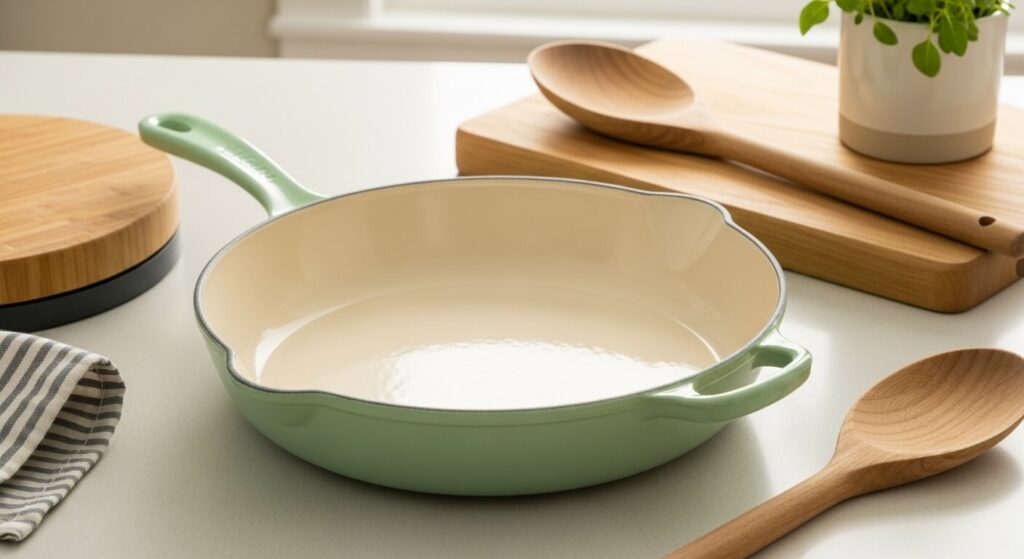
Ceramic-based non-stick is the sweet spot for many seniors. Lighter than cast iron, non-stick without chemicals, and reasonably affordable.
Pure Ceramic vs. Ceramic-Coated Cookware
Pure ceramic (100% ceramic construction): Heavy, fragile, expensive. Think baking dishes and casseroles, not skillets. Rarely used for stovetop cookware because it’s brittle and doesn’t handle thermal stress well.
Ceramic-coated (metal body with ceramic non-stick layer): This is what you’ll actually buy. Aluminum or stainless steel base with a sol-gel ceramic coating sprayed on. The coating is the non-stick part—silicon oxide (sand, basically) bonded to the metal.
The coating is genuinely non-toxic. No PFAS, no PTFE, no polymers. Just inorganic minerals. Won’t release fumes at any temperature you’d use for cooking.
Durability and Longevity of Ceramic Non-Stick Surfaces
Here’s the honesty: ceramic non-stick doesn’t last as long as PTFE. You’ll get 2-3 years of good performance with proper care, maybe 5 years if you’re extremely gentle. Then the non-stick properties fade and food starts sticking.
This isn’t a coating failure or safety issue—it’s just wear. The smooth ceramic surface gets microscopically rougher with use, reducing slip. The pan is still perfectly safe to use, just less non-stick.
For seniors, this means budgeting for replacement every few years. Annoying but manageable.
Best Ceramic Cookware Brands for Arthritis-Friendly Handling
GreenPan: Pioneer in ceramic non-stick. Lightweight, good handle ergonomics, widely available. Mid-range price ($50-100 per piece).
Caraway: Trendy, attractive, legitimately non-toxic. Lighter weight options good for weak hands. Pricier ($150-200 per piece).
Ozeri: Budget-friendly ceramic pans ($25-40). Quality is hit-or-miss but fine for occasional use.
Look for models with:
Weight under 3 pounds for a 10-12 inch skillet
Silicone or stay-cool handles
Oven-safe ratings (more versatile)
Brands that publish safety certifications
Maintenance Requirements for Ceramic Coatings
Ceramic is fussier than traditional non-stick. Rules to follow:
Hand wash only. Dishwashers degrade the coating faster
Low to medium heat. High heat doesn’t improve cooking and damages the surface over time
Wooden or silicone utensils. Metal can scratch
Never use cooking spray. The propellants and additives create buildup that ruins non-stick properties (use real oil or butter)
Avoid sudden temperature changes. Don’t put a hot pan under cold water—thermal shock can damage the coating
Follow these rules and you’ll maximize coating life. Ignore them and you’ll be buying new pans in a year.
Enameled Cast Iron: Heavy-Duty Non-Toxic Coating
Enamel-coated cast iron combines cast iron’s heat retention with a glass-like coating that prevents rust and eliminates seasoning maintenance.
How Enamel Coating Protects and Seals Cast Iron
Enamel is powdered glass fused to the cast iron at extremely high temperatures (1500°F+). The result is a permanent, non-reactive coating that’s chemically inert—it’s literally glass.
The enamel seals the porous iron underneath, preventing rust and eliminating the need for seasoning. Food acids don’t react with enameled surfaces (unlike bare cast iron where tomatoes and vinegar can damage seasoning).
Lead-Free Enamel: What to Look For
Modern enameled cast iron from reputable brands (Le Creuset, Staub, Lodge) is lead-free. They use titanium and other safe pigments instead of lead-based colors.
But vintage pieces and cheaper imports might not be. Same testing advice as ceramic glazes—use a lead test kit if you’re unsure, especially on brightly colored vintage pieces.
Weight Considerations for Seniors with Joint Pain
This is the killer. Enameled cast iron is HEAVY. A 10-inch skillet weighs 6-7 pounds empty. Add food and you’re at 10+ pounds.
For seniors with severe arthritis, this might be too much. You need strong wrists, functional shoulders, and good back mechanics to lift these safely. If you’re already struggling with lighter pans, enameled cast iron probably isn’t your solution.
When it works:
You cook mostly in the oven (less lifting required)
You have help available for moving pans
Your arthritis is mild and you can handle the weight
You’re using smaller pieces (1-2 quart saucepans instead of 5-quart Dutch ovens)
Caring for Enameled Cast Iron to Prevent Chipping
Enamel is glass. Glass chips. Drop the pan, bang it against metal, thermal shock it—you’ll chip the enamel. Once chipped, the underlying iron is exposed and will rust.
Prevention strategies:
Avoid metal utensils (use wood or silicone)
Don’t stack enameled pans without protection (cloth between them)
Hand wash (dishwasher jostling can cause chips)
Let pans cool before washing
Store carefully where they won’t get knocked around
Small chips aren’t safety issues (the exposed iron isn’t toxic) but they’re annoying and will grow over time.
Hard-Anodized Aluminum: Sealed and Non-Reactive
Anodized aluminum is aluminum that’s been electrochemically treated to create a hard, non-reactive surface layer.
The Anodization Process and Why It’s Safer
Anodization uses electrical current to oxidize the aluminum surface, creating aluminum oxide—a ceramic-like layer that’s extremely hard (harder than stainless steel) and completely seals the aluminum underneath.
This oxide layer won’t react with food, won’t leach aluminum, and is stable at cooking temperatures. It’s not a coating that can chip off—it’s an integral part of the metal itself, grown from the aluminum surface.
Non-Stick Properties Without Chemical Coatings
Hard-anodized aluminum isn’t naturally non-stick like Teflon, but it’s significantly more non-stick than stainless steel. With proper preheating and adequate fat, foods release reasonably well.
Some hard-anodized cookware adds a non-stick coating on top (often PTFE or ceramic). If you’re going for non-toxic, make sure you’re getting plain hard-anodized without additional coatings—or get hard-anodized with ceramic non-stick (which maintains non-toxic status).
Lightweight Benefits for Arthritic Hands
This is why hard-anodized works for seniors. A 12-inch hard-anodized skillet weighs 2.5-3 pounds—similar to ceramic-coated aluminum, much lighter than cast iron or stainless steel.
You get decent non-stick performance and non-toxic cooking in a package arthritic hands can actually lift and maneuver. Strong contender for best all-around choice.
Stainless Steel: Uncoated and Chemical-Free
Stainless steel is the gold standard for non-toxic cookware. Zero coatings, completely inert, will last literally forever.
Why Stainless Steel Is Considered the Safest Option
It’s metal. That’s it. No coatings to worry about, no chemicals to leach, no fumes to release. Stainless steel is an alloy of iron, chromium, and nickel that’s completely stable and non-reactive.
You can heat it to any temperature, cook any food (acidic, alkaline, doesn’t matter), abuse it with metal utensils—and it remains chemically safe. From a pure toxicity standpoint, stainless steel is unbeatable.
Nickel Content Concerns for Sensitive Individuals
Most stainless steel cookware is 18/10 or 18/8 (18% chromium, 10% or 8% nickel). The nickel is necessary for corrosion resistance and that nice shiny finish.
Some people are allergic to nickel. For them, stainless steel cookware might cause reactions (though nickel leaching from cookware is minimal). If you have known nickel sensitivity, consider nickel-free stainless steel (200-series instead of 300-series) or use different materials entirely.
For the vast majority of seniors, nickel content in stainless steel cookware isn’t a concern.
Cooking Techniques to Prevent Food Sticking
Stainless steel has one major drawback: food sticks. Badly. If you don’t know the techniques, cooking eggs or fish on stainless steel is an exercise in frustration.
The method that actually works:
Preheat the pan properly (medium heat, 2-3 minutes)
Test with water droplet—should form a ball and roll around (Leidenfrost effect)
Add fat (oil or butter)
Let fat heat until shimmering
Add food and DON’T TOUCH IT for 60-90 seconds
Food will release naturally when ready to flip
This technique works but requires patience and practice. For seniors with cognitive decline or who want simple, foolproof cooking, stainless steel might be frustrating.
Best Stainless Steel Grades for Cookware Safety
18/10 stainless (304 grade): Standard for quality cookware. Good corrosion resistance, safe, durable.
18/0 stainless (400-series): Nickel-free option. Slightly less corrosion-resistant, magnetic (works on induction). Good alternative for nickel-sensitive individuals.
Avoid really cheap stainless steel (unmarked or low-grade). Quality matters for even heating and longevity.
Carbon Steel: Natural Seasoning as a Non-Toxic Coating
Carbon steel is the professional chef’s secret weapon. It’s like cast iron’s lighter, more responsive cousin.
How Seasoning Creates a Non-Stick Surface
Seasoning is polymerized oil. You heat oil on the metal surface until it bonds and hardens into a slick, non-stick layer. It’s completely natural—just oil converted through heat into a plastic-like protective coating.
This seasoned surface is non-toxic (it’s literally cooked cooking oil), provides non-stick properties, and protects the steel underneath from rust. Win-win-win.
Building and Maintaining Carbon Steel Seasoning
New carbon steel pans need initial seasoning (some come pre-seasoned). The process:
Scrub the pan to remove factory coating
Dry completely
Apply thin layer of high-smoke-point oil (grapeseed, avocado, flaxseed)
Heat in oven at 450°F for 1 hour
Repeat 3-5 times
Maintenance is easier than people think:
Wash with hot water and soft brush (soap is fine for modern seasoning)
Dry immediately
Apply thin oil coat before storing
Cook with fat regularly (this maintains seasoning)
If you mess up seasoning (it gets sticky or food sticks), just strip it off and re-season. No big deal.
Weight and Handling Advantages Over Cast Iron
A 12-inch carbon steel skillet weighs 4-5 pounds vs. 8-9 pounds for cast iron. That’s significant when you’re dealing with arthritis.
Carbon steel also heats faster and responds to temperature changes more quickly (thinner metal = better responsiveness). You get cast iron’s benefits—great searing, high heat, natural non-stick—without quite as much weight penalty.
Still heavier than ceramic or hard-anodized aluminum, but manageable for many seniors who find cast iron too heavy.
Green and Eco-Friendly Non-Stick Coating Technologies
Newer coating technologies like sol-gel ceramics, diamond-reinforced surfaces, and water-based non-stick formulations offer non-toxic alternatives to traditional PTFE, though long-term durability and performance data remains limited compared to established options.
Sol-gel is the process used to make ceramic non-stick coatings. “Sol-gel” refers to the solution-to-gel transformation that creates the coating—silicon compounds dissolved in liquid, applied to the pan, then converted to hard ceramic through heat.
It’s the same stuff discussed in the ceramic coating section, just explained from a technical angle. The point: it’s a legitimate chemical process, not marketing fluff. The coatings are genuinely non-toxic because they’re inorganic minerals, not synthetic polymers.
Diamond-Infused Coatings: Durability Without Chemicals
Some manufacturers add diamond particles to non-stick coatings (usually ceramic or proprietary blends). The diamonds increase hardness and scratch resistance.
Does it work? Sort of. Diamond-infused coatings do last longer than standard ceramic. Whether they last enough longer to justify the premium price (usually 30-50% more expensive) is debatable.
Are they non-toxic? Depends on the base coating. If it’s diamond particles in a PTFE matrix, still toxic. If it’s diamonds in ceramic, non-toxic. Read the specs carefully.
Similar concept to diamond—titanium particles added to coatings for increased durability. Titanium is chemically inert and non-toxic, so titanium-reinforced ceramic coatings maintain non-toxic status.
Longevity improves (maybe 4-5 years instead of 2-3 for standard ceramic), but these coatings still wear out eventually.
Water-Based Non-Stick Coatings: The Latest Innovations
Newer non-stick coatings use water-based application processes instead of solvent-based (which creates more VOC emissions during manufacturing). The end result is often PTFE-based but manufactured more cleanly.
Here’s the thing: “water-based” refers to the manufacturing process, not the final coating safety. You can have water-based PTFE (still contains PFAS) or water-based ceramic (non-toxic). The application method doesn’t determine toxicity—the coating material does.
Don’t be swayed by “water-based” as a selling point unless you’ve confirmed what the actual coating material is.
Identifying Truly Non-Toxic Cookware: Certifications and Labels
Third-party certifications from NSF International, FDA food-contact compliance, and transparent PFAS-free claims verified by independent testing provide the most reliable indicators of non-toxic cookware—not unsubstantiated marketing terms like “green” or “eco-friendly.”
Third-Party Safety Certifications to Look For
Independent testing beats manufacturer claims every time.
FDA Approval and What It Really Means
The FDA doesn’t “approve” cookware. They regulate materials that contact food, but it’s mostly a passive system—manufacturers are responsible for ensuring their products meet FDA standards. The FDA only steps in when problems are reported.
“FDA-approved” on cookware is technically meaningless (because FDA doesn’t approve cookware). What you want is “FDA food-contact compliant” or “meets FDA standards for food contact surfaces.” This means the manufacturer has verified their materials are on the FDA’s safe list.
It’s better than nothing but not as rigorous as you’d hope.
NSF International Certification for Cookware
NSF is a legitimate third-party testing organization. NSF certification means independent labs have tested the cookware and verified it meets specific safety standards.
NSF/ANSI Standard 51 covers food equipment materials. If cookware carries this certification, it’s been tested for material safety, including heavy metal leaching and coating integrity.
Not all cookware gets NSF certification (it costs money and takes time), so lack of certification doesn’t automatically mean unsafe. But presence of certification is a strong positive signal.
Prop 65 Warnings: Understanding California Standards
California’s Proposition 65 requires warnings on products containing chemicals known to cause cancer or reproductive harm. You’ve seen these warnings—they’re on everything from coffee to furniture.
For cookware, a Prop 65 warning might indicate lead, cadmium, or PFAS content. Or it might be precautionary overwarning (lawyers advise companies to include warnings to avoid liability, even for trace amounts).
Presence of Prop 65 warning isn’t automatically disqualifying, but it should prompt questions. What chemical triggered the warning? At what level? Can the manufacturer provide test results showing actual safety?
Misleading Marketing Terms in Cookware Industry
Cookware marketing is full of feel-good terms that sound great but mean nothing.
“PFOA-Free” vs. “PFAS-Free”: Critical Differences
We covered this earlier but it’s worth repeating because the distinction is critical.
PFOA-free: Doesn’t contain that one specific chemical. Might contain dozens of other PFAS compounds.
PFAS-free: No per- or polyfluoroalkyl substances at all. This is what you want.
Manufacturers love to advertise “PFOA-free” in huge letters and bury “contains other PFAS” in fine print (if they mention it at all). Don’t fall for it.
“Non-Toxic” Claims Without Third-Party Verification
Any company can call their product “non-toxic.” There’s no legal definition, no standard to meet, no verification required. It’s pure marketing.
Look for actual evidence: third-party test results, certifications from recognized organizations, transparent ingredient disclosure. Words without proof mean nothing.
“Green” and “Eco-Friendly” Buzzwords to Question
“Green” refers to environmental impact, not health safety. A pan might be “green” because it’s made from recycled materials or manufactured with renewable energy—but still contain toxic coatings.
Don’t conflate environmental friendliness with body safety. They’re related but different concerns.
How to Research Cookware Safety Before Purchasing
Do your homework. Don’t rely on marketing.
Steps that actually work:
Search “[brand name] + PFAS test results” or “[brand name] + heavy metal testing”
Check Environmental Working Group (EWG) database for consumer product ratings
Look for published test results from independent labs (not manufacturer-funded tests)
Read reviews specifically mentioning health concerns (not just cooking performance)
Contact manufacturers directly asking for safety certifications and test results
Check for recalls or safety warnings in FDA and CPSC databases
Takes 20 minutes. Worth it to avoid toxic exposure for the next 5-10 years.
Health Benefits of Non-Toxic Cookware for Seniors
Switching to non-toxic cookware reduces daily chemical exposure by eliminating PFAS, heavy metals, and polymer fumes—particularly important for seniors whose reduced detoxification capacity, multiple medications, and existing health conditions make them more vulnerable to toxic accumulation.
Reducing Chemical Exposure During Daily Cooking
Most seniors cook at home more than younger adults. That’s three meals a day, seven days a week, cooked in the same pans. If those pans are leaching chemicals, you’re getting exposed 20+ times per week.
Switching to non-toxic cookware doesn’t remove toxins you’ve already accumulated (that requires time and your body’s natural elimination processes), but it stops the ongoing exposure. Your body can start catching up on detoxification instead of constantly dealing with new inputs.
Protection for Compromised Immune Systems
Aging immune systems don’t fight off cellular damage as effectively. Chemical exposures that a healthy 30-year-old body might handle without issue can cause real problems at 70.
PFAS, for instance, suppresses immune function. Studies show people with higher PFAS levels have weaker responses to vaccines and higher infection rates. For seniors already dealing with age-related immune decline, adding PFAS exposure through cookware is piling on.
Non-toxic cookware removes one source of immune stress. Not a cure-all, but every little bit helps when your immune system is struggling.
Medication Interactions with Toxic Cookware Residues
Here’s something most doctors don’t think about: how do the chemicals from your cookware interact with your prescription medications?
We don’t have great data on this because it’s not studied systematically. But we know PFAS affects liver enzymes that metabolize many common medications. We know heavy metals can interfere with drug absorption. We know polymer fumes stress the respiratory system, which matters if you’re taking inhalers or other respiratory medications.
The interactions might be subtle—medication slightly less effective, side effects slightly worse—but when you’re managing multiple conditions with multiple drugs, those subtle effects compound.
Long-Term Health Preservation Through Safe Cooking
You’re planning to cook for yourself for the next 10, 20, 30 years. Health span matters as much as lifespan. What’s the point of living to 95 if you’re sick and declining from 75 onward?
Reducing toxic exposures—including cookware chemicals—is part of preserving health span. You’re stacking the odds in your favor. No guarantees, but better odds.
Arthritis-Specific Features in Non-Toxic Cookware
Non-toxic cookware optimized for arthritis weighs under 3 pounds for 10-12 inch skillets, features ergonomic handles at least 1.5 inches in diameter with silicone grips, and provides enough natural non-stick performance to minimize the forceful scrubbing that aggravates inflamed joints.
Lightweight Non-Toxic Options for Weak Grip Strength
Weight is the number one factor for arthritis-friendly cookware. Second is handle design. Everything else is negotiable.
Comparing Weights: Ceramic vs. Hard-Anodized vs. Carbon Steel
Cookware Type
12-inch Skillet Weight
Arthritis-Friendly?
Ceramic-coated aluminum
2-3 lbs
Yes – lightest option
Hard-anodized aluminum
2.5-3 lbs
Yes – good balance
Carbon steel
4-5 lbs
Maybe – depends on severity
Stainless steel
4-6 lbs
Challenging for weak hands
Enameled cast iron
6-7 lbs
No – too heavy for most
Bare cast iron
8-9 lbs
Definitely not
These are generalizations. Individual products vary. Always check actual weight specs before buying.
Maximum Safe Weight for Cookware with Arthritis
If you’re struggling to lift a gallon of milk (8.3 pounds), you can’t safely handle cookware heavier than about 5 pounds when loaded with food. Set your maximum accordingly.
For severe arthritis, stick with cookware under 3 pounds empty. This gives you room to add 2-3 pounds of food and still be under 6 pounds total weight—manageable for most people with moderate arthritis.
Ergonomic Handles on Non-Toxic Pans
Handle design matters as much as pan weight. Thin metal handles dig into arthritic knuckles. Handles that heat up burn your hands. Short handles don’t provide leverage.
Stay-Cool Handle Materials That Are Also Non-Toxic
Handles should stay cool enough to touch (briefly) without pot holders. This usually means:
Silicone-coated metal handles: Metal core for strength, silicone exterior for insulation and grip. Non-toxic (silicone is inert), effective, common on quality cookware.
Phenolic resin handles: Hard plastic-like material that resists heat. Generally safe (not giving off toxic fumes), though some people avoid all plastics on principle.
Wood handles: Traditional and non-toxic. Can loosen over time, usually not oven-safe, but perfectly safe material-wise.
Avoid bare metal handles (they get hot) and cheap plastic handles (can melt or emit odors when heated).
Handle Shapes That Reduce Joint Strain
Fat handles beat thin handles. You want at least 1.5 inches in diameter—thick enough that your hand doesn’t have to close tightly to grip.
Best handle shapes:
Oval cross-section with silicone coating (comfortable palm grip)
Contoured handles with finger indentations (guides proper grip)
Loop-style helper handles opposite the main handle (two-handed lifting)
Worst handle shapes:
Thin round metal (hard to grip, digs into hands)
Flat handles with sharp edges
Very short handles (no leverage)
Non-Stick Performance Without Toxic Chemicals
Here’s the reality check: non-toxic non-stick doesn’t work quite as well as PTFE. Nothing is as slippery as Teflon. If you’re comparing, non-toxic options will always come up slightly short.
How Well Do Non-Toxic Coatings Prevent Sticking
Ceramic non-stick: When new, almost as good as PTFE. After 1-2 years, noticeably less slippery. Still better than bare stainless steel, not as good as fresh Teflon.
Seasoned cast iron/carbon steel: With proper seasoning and technique, very good for most foods. Eggs can be tricky. Not perfect but functional.
Hard-anodized aluminum: Moderately non-stick with proper preheating and fat. Better than stainless, not as good as ceramic or PTFE.
Bare stainless steel: Minimal non-stick properties. Requires technique and patience. Not ideal for arthritis (too much potential for stuck food requiring aggressive scrubbing).
Realistic Expectations for Chemical-Free Non-Stick
You’ll use slightly more oil or butter. Foods might stick occasionally despite your best efforts. Cleanup takes a bit more care. These are acceptable trade-offs for avoiding toxic exposure—but they are trade-offs.
Don’t expect magic. Expect functional cookware that’s safer for your body and requires minor cooking adjustments.
Transitioning from Toxic to Non-Toxic Cookware
Replace your most-used toxic cookware first—typically one large skillet, one saucepan, and one stockpot cover 80% of daily cooking—then gradually phase out remaining pieces as budget allows rather than attempting an expensive complete replacement all at once.
Assessing Your Current Cookware Collection
Pull everything out. Every pot, every pan. Line them up and evaluate honestly.
Signs Your Cookware Is Degrading and Releasing Toxins
Visual indicators of compromised coatings:
Scratches or gouges in non-stick surfaces
Peeling or flaking coating
Discoloration or darkening of the coating
Warped pans (heat distribution is off, might be overheating coating)
Visible rust on cast iron or carbon steel
Cracks or crazing in ceramic glazes
Food sticking where it used to release easily
Any of these signs means the coating is breaking down. As it breaks down, it’s more likely to leach chemicals or release particles into your food.
When to Immediately Discard Damaged Non-Stick Pans
Flaking or peeling non-stick coating? Throw it out today. You’re literally eating bits of PTFE or whatever coating material is flaking off. That’s not “might be harmful”—that’s definitely getting chemicals in your food.
Same with heavily scratched or gouged pans. The coating is compromised, chemicals can leach, and you’re getting inconsistent heating that might overheat the remaining coating.
Damaged means done. No second chances with toxic cookware.
Prioritizing Which Pieces to Replace First
You probably can’t afford to replace everything at once (quality non-toxic cookware isn’t cheap). Strategic replacement is key.
Most-Used Items vs. Occasional Cookware
What do you use every day? That’s what you replace first.
For most people:
Primary skillet (10-12 inches, used for eggs, sautéing, pan-frying)
Medium saucepan (2-3 quarts, used for oatmeal, rice, small batches)
Large pot (6-8 quarts, used for pasta, soup, stocks)
Those three pieces probably handle 70% of your cooking. Get those replaced with non-toxic versions and you’ve dramatically reduced your exposure.
That turkey roaster you use once a year? That can wait.
Budget-Friendly Replacement Strategies
Option 1: One quality piece at a time. Buy the best non-toxic skillet you can afford ($80-150). Use it until you can afford the next piece. Slow but you end up with a great collection.
Option 2: Budget set now, upgrade later. Buy a complete non-toxic set for $150-250 (brands like Ozeri or Greenlife). It won’t last forever but gets you into safe cookware immediately. Replace individual pieces with higher-quality versions as they wear out.
Option 3: Mixed strategy. Quality skillet now ($100), budget saucepan and pot ($60 total). Covers your bases without breaking the bank.
Proper Disposal of Toxic Cookware
Don’t donate toxic cookware to charity. Don’t pass it along to family. You’re just shifting the exposure to someone else.
Disposal options:
Regular trash (for most cookware—it’s household waste)
Scrap metal recycling (for damaged metal pans without non-stick coatings)
Manufacturer take-back programs (some brands will recycle their old cookware)
Smash the non-stick coating before trashing (so nobody pulls it out of the garbage and uses it). Sounds dramatic but it prevents someone else getting exposed.
Cooking Techniques for Non-Toxic Arthritis-Safe Cookware
Using moderate heat settings, preheating pans properly, and adding adequate healthy fats maximizes the non-stick performance of non-toxic coatings while protecting both the cookware surface and your joints from the aggressive scrubbing required when food sticks.
Using Healthy Fats to Enhance Non-Stick Properties
Fat is your friend when cooking on non-toxic surfaces. It fills in microscopic surface irregularities, creates a physical barrier between food and pan, and conducts heat evenly.
Best Oils and Fats for Non-Toxic Coatings
High-smoke-point oils for higher-heat cooking:
Avocado oil (520°F smoke point)
Refined coconut oil (450°F)
Grapeseed oil (420°F)
Refined olive oil (465°F)
Lower-heat options:
Butter (350°F smoke point—good for medium heat)
Extra virgin olive oil (375°F—fine for sautéing)
Ghee (485°F—clarified butter, higher smoke point)
Match your fat to your cooking temperature. Burning oil creates smoke, residue, and potential coating damage.
Oil Smoke Points and Coating Safety
When oil smokes, it’s decomposing. This creates polymerized residue that builds up on your pan and actually reduces non-stick performance over time.
On ceramic coatings especially, burned oil residue is difficult to remove and permanently diminishes slip. Use oils appropriate to your heat level and your coatings will last longer.
Temperature Management to Protect Non-Toxic Coatings
Most non-toxic coatings perform best at low to medium heat. High heat isn’t necessary for most cooking and it shortens coating life.
Maximum Safe Temperatures for Different Coating Types
Coating Type
Max Stovetop Temp
Max Oven Temp
Notes
Ceramic
Medium-high (375°F)
450°F
Higher temps accelerate wear
Enameled cast iron
High (no limit)
500°F+
Can handle anything
Hard-anodized
High (500°F+)
400-450°F
Check manufacturer specs
Seasoned iron/steel
High (no limit)
500°F+
Seasoning might smoke above 500°F
Stainless steel
High (no limit)
500°F+
No coating to damage
Low and Slow Cooking Benefits for Seniors
Beyond protecting coatings, lower-heat cooking is generally healthier. Less aggressive heating means fewer advanced glycation end products (AGEs) in food—compounds linked to inflammation and aging.
Lower heat also means more forgiving cooking. You’re less likely to burn food or overcook it, which matters if arthritis medications affect your reaction time or focus.
Utensil Selection to Preserve Non-Toxic Surfaces
Metal utensils will scratch ceramic, damage seasoning, and can even scratch enameled surfaces if you’re aggressive.
Wood, Silicone, and Nylon: Safe Utensil Materials
Wood: Traditional, gentle, non-reactive. Can harbor bacteria in cracks (wash thoroughly). Not dishwasher-safe. Cheap and functional.
Silicone: Heat-resistant to 400-500°F, dishwasher-safe, very gentle on coatings. Can retain odors from strong foods. Good choice overall.
Nylon: Heat-resistant to about 400°F, inexpensive, reasonably gentle. Lower-grade nylon can melt—get quality utensils.
All three are acceptable for non-toxic cookware. Personal preference drives choice.
Avoiding Metal Utensils That Damage Coatings
Even “metal-safe” ceramic or hard-anodized coatings wear faster with metal utensils. Every tiny scratch accumulates and eventually the surface isn’t smooth anymore.
If you must use metal (some people insist), use only on stainless steel, plain cast iron, or carbon steel where surface scratches don’t matter.
Cleaning and Maintaining Non-Toxic Cookware Coatings
Hand washing with mild soap and soft sponges preserves non-toxic coatings 2-3x longer than dishwasher cleaning, while avoiding abrasive scrubbers and harsh chemicals protects both the coating integrity and the non-toxic properties that make safe cookware worthwhile.
Gentle Cleaning Methods That Preserve Coatings
Ceramic and other non-toxic coatings are more delicate than PTFE. They need gentler care.
Hand Washing vs. Dishwasher Safety
Hand wash your non-toxic cookware. Just do it.
Yes, some manufacturers claim dishwasher-safe. Yes, technically you can put them in the dishwasher. But dishwasher detergents are harsh (alkaline chemicals designed to strip grease), water pressure is aggressive, and the heat-dry cycle creates thermal stress.
All of this degrades coatings faster. Ceramic non-stick that should last 3 years might last 18 months if you dishwasher it regularly.
Five minutes of hand washing preserves your $80-150 investment. Worth it.
Non-Toxic Cleaning Products for Cookware
Ironically, cleaning toxic cookware with toxic cleaners defeats the purpose.
Safe cleaning products:
Plain dish soap (any brand, unscented if you’re sensitive)
Baking soda paste for stuck-on food
White vinegar for mineral deposits
Bar Keeper’s Friend (for stainless steel only—too abrasive for coatings)
Avoid:
Oven cleaners (way too harsh)
Abrasive powders like Comet (scratch coatings)
Bleach-based cleaners
Steel wool or metal scrubbers
Avoiding Abrasive Scrubbers That Damage Surfaces
Soft sponges, microfiber cloths, or silicone scrubbers only. No abrasive pads, no steel wool, no green Scotch-Brite pads (those are too aggressive for non-toxic coatings).
If food is stuck, soak the pan in warm soapy water for 15-30 minutes. The stuck food will soften and release without scrubbing. For seniors with arthritis, soaking beats scrubbing every time anyway—less hand strain.
Restoring Non-Toxic Coatings When They Degrade
Some coatings can be restored. Some can’t.
Re-Seasoning Carbon Steel and Cast Iron
Lost seasoning? Happens. Food suddenly sticking, pan looking mottled or rust spots appearing—time to re-season.
Strip the old seasoning with oven cleaner (outside, wear gloves) or the self-cleaning oven cycle. Then re-season from scratch using the process described earlier (thin oil layers, high heat, multiple coats).
Takes an afternoon but restores the pan to like-new condition. Cast iron and carbon steel can be restored indefinitely.
When Ceramic Coatings Can’t Be Restored
Once ceramic non-stick degrades, it’s done. You can’t re-coat it at home. The coating is manufactured at industrial temperatures you can’t replicate.
Some companies offer re-coating services (send in your pan, they strip and recoat it). Costs $40-60 per piece plus shipping. Sometimes worth it for expensive pans, usually not worth it for budget pieces.
Accept that ceramic coatings have a lifespan. Budget for replacement every 3-5 years.
Storage Practices to Extend Coating Life
Don’t stack coated pans directly on each other. The bottom of one pan sits on the cooking surface of the pan below—scratching, rubbing, damaging the coating.
Protection methods:
Pan protectors (felt or fabric discs) between stacked pans
Hang pans instead of stacking (if you have space)
Store in drawers with dividers (keeps pans separated)
Seems fussy but seriously extends coating life.
Non-Toxic Cookware Sets vs. Individual Pieces
Complete non-toxic cookware sets offer cost savings of 30-50% compared to individual pieces but often include items you won’t use—for seniors with arthritis, buying 3-4 individual pieces you’ll actually use daily provides better value than a 10-piece set with redundant pans.
Benefits of Complete Non-Toxic Cookware Sets
Sets are cheaper per piece. A 10-piece set might cost $300 vs. $600 to buy the same pieces individually. Manufacturers want to sell sets, so they discount heavily.
Other advantages:
Everything matches (aesthetics matter to some people)
Consistent performance across pieces
Often better warranty coverage on sets
Simplified decision-making (you’re done shopping)
Disadvantages:
Includes pieces you won’t use (how often do you need a 1-quart and a 2-quart saucepan?)
Lids might not fit perfectly (counted as separate “pieces” in the set count)
Quality might be lower to hit price points
Essential Individual Pieces for Arthritis-Friendly Cooking
If you’re buying individual pieces, get what you’ll actually use:
Core three:
10-12 inch skillet (daily eggs, sautéing, pan-frying)
2-3 quart saucepan with lid (oatmeal, rice, small batches)
6-8 quart stockpot with lid (pasta, soup, large batches)
Useful additions:
8-inch skillet (one-egg breakfasts, small portions)
3-4 quart sauté pan with lid (between skillet and stockpot size, very versatile)
Those five pieces cover 95% of home cooking. Everything else is specialized.
Mixing Coating Types for Different Cooking Tasks
You don’t need all the same material. Strategic mixing works.
Example setup:
Ceramic non-stick skillet for eggs and delicate foods
Stainless steel saucepan for liquids and reheating (cleaning is easier, durability is better)
Enameled cast iron stockpot for soups and stews (heat retention and even cooking matter more than weight when you’re not lifting it often)
Match the pan type to the task. Don’t force yourself to use one material for everything.
Budget Considerations for Non-Toxic Arthritis-Safe Cookware
Quality non-toxic cookware ranges from $50-150 per piece for premium brands like GreenPan or Le Creuset, while budget-friendly options like Ozeri or Greenlife cost $25-40 per piece—both are genuinely non-toxic, with price differences reflecting durability and warranty coverage rather than basic safety.
Premium Brands vs. Affordable Non-Toxic Options
Expensive doesn’t always mean better. But sometimes it does.
High-End Non-Toxic Cookware Worth the Investment
Le Creuset enameled cast iron: $200-400 per piece. Lifetime durability. If you can handle the weight, these pans will outlive you.
Caraway ceramic: $150-200 per piece. Attractive, lightweight, good non-stick performance. Trendy brand with actual substance.
All-Clad stainless steel: $150-300 per piece. Lifetime warranty. Professional-grade quality that you’ll use for decades.
These are worth it IF you cook frequently, take care of your equipment, and can afford the investment. The math works over 20-30 years.
Budget-Friendly Safe Alternatives
Ozeri ceramic: $25-40 per piece. Genuinely PFOA and PFAS-free. Won’t last as long as premium brands (2-3 years vs. 5+ years) but perfectly functional.
Greenlife ceramic: $30-50 per piece. Similar quality to Ozeri. Good starter non-toxic cookware.
Lodge enameled cast iron: $50-80 per piece. Less expensive than Le Creuset, nearly as good quality.
These work. They’re legitimately non-toxic. They just require replacement sooner.
Cost Per Use Analysis for Senior Cooks
If you cook twice a day, every day, you’ll use a skillet 700+ times per year.
Premium skillet ($150) lasting 10 years: $0.02 per use Budget skillet ($35) lasting 3 years: $0.02 per use
Same cost per use! Budget option requires replacement three times, premium lasts the whole period. Different cash flow, same long-term cost.
For seniors on fixed incomes, budget now with replacement later might work better than big upfront expense. Both strategies are valid.
Where to Find Deals on Non-Toxic Cookware
Best times to buy:
Black Friday / Cyber Monday (40-60% off common)
Post-Christmas clearance (January)
Mother’s Day / Father’s Day sales
End-of-line color clearances (brand discontinuing a color, deep discounts on remaining stock)
Where to look:
Manufacturer websites (direct sales often best prices)
HomeGoods / TJ Maxx (hit or miss but occasionally great finds)
Amazon warehouse deals (returned items, inspected and discounted)
eBay for unused or barely-used premium brands
Never pay full retail for cookware. Sales happen constantly.
Special Considerations for Seniors with Multiple Health Conditions
Seniors managing diabetes, heart disease, kidney conditions, or osteoporosis need non-toxic cookware that also supports condition-specific cooking requirements—like low-fat preparation capabilities, minimal added sodium, and lightweight handling that prevents falls and fractures.
Diabetic-Friendly Cooking with Non-Toxic Cookware
Blood sugar management requires consistent, predictable cooking. Non-stick surfaces (ceramic, seasoned iron) let you cook with minimal added fats—important for calorie control and blood sugar stability.
The lighter-weight non-toxic options (ceramic, hard-anodized) also matter if diabetic neuropathy affects your hands and grip—you need cookware you can handle safely even with reduced sensation.
Heart Health and Low-Fat Cooking on Non-Toxic Surfaces
Good non-stick lets you cook with one teaspoon of oil instead of three tablespoons. For heart disease management where every gram of saturated fat matters, this is significant.
Ceramic and seasoned surfaces work well for low-fat cooking. Stainless steel not as much (requires more fat to prevent sticking).
Kidney Disease and Cookware Material Interactions
Kidney disease means watching phosphorus, potassium, and sodium intake. The cookware itself doesn’t add these minerals (you’re not eating the pan), but ease of cooking affects whether you follow dietary restrictions.
Non-stick non-toxic cookware makes low-sodium cooking more palatable. Food browns better, develops more flavor with less salt. Matters when you’re trying to stick to 1500mg sodium daily.
Osteoporosis and the Need for Lightweight Non-Toxic Options
Osteoporosis makes falls dangerous. Breaking a hip at 75 with fragile bones can be life-threatening. Dropping a heavy pan on your foot can fracture bones.
Lightweight non-toxic options (ceramic-coated or hard-anodized aluminum under 3 pounds) reduce both fall risk and injury severity if you do drop something. Safety consideration beyond just cooking performance.
Non-Toxic Coating Safety for Different Cooking Methods
Ceramic coatings excel on electric and induction cooktops but can develop hot spots on gas burners, while enameled cast iron handles all heat sources equally well—understanding how non-toxic coatings perform on your specific stove type prevents coating damage and ensures safe cooking temperatures.
Stovetop Cooking: Coating Safety on Gas, Electric, and Induction
Different stove types heat differently. Your coating needs to match.
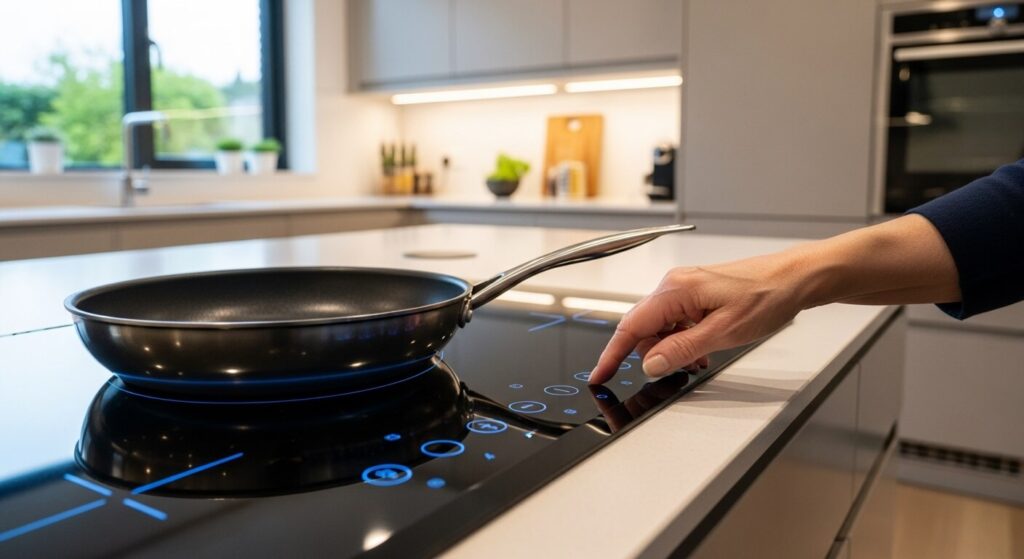
Induction-Compatible Non-Toxic Cookware
Induction requires magnetic cookware. Cast iron, carbon steel, and magnetic stainless steel work. Aluminum and copper don’t (unless they have magnetic discs bonded to the bottom).
Most ceramic-coated cookware has aluminum cores—which means it won’t work on induction unless specifically labeled “induction compatible” (meaning it has a magnetic layer added).
Check before buying if you have induction.
Gas Flame Exposure and Coating Integrity
Gas flames heat unevenly (hot spots at flame contact points) and can overheat the pan sides (flames licking up the edges). This is harder on coatings than electric heating.
Best for gas:
Enameled cast iron (handles heat stress well)
Stainless steel (uncoated, nothing to damage)
Thick-gauge cookware that distributes heat more evenly
More careful with gas:
Ceramic coatings (hot spots can cause uneven wear)
Thin pans (overheat easily on gas)
Oven-Safe Non-Toxic Coatings and Temperature Limits
Most non-toxic cookware is oven-safe to at least 350°F. But check handles—silicone handles often max out at 400°F, while metal handles go higher.
Typical oven limits:
Ceramic coatings: 450°F (higher temps accelerate coating degradation)
Enameled cast iron: 500°F+
Stainless steel: 500°F+
Carbon steel: 500°F+
Hard-anodized with non-stick: 400-450°F (depends on handle material)
If you roast frequently above 400°F, choose materials with higher limits.
Broiling Considerations for Non-Toxic Cookware
Broiling subjects cookware to extreme radiant heat from above. This can exceed 550°F.
Broiler-safe:
Bare cast iron
Stainless steel
Enameled cast iron (check manufacturer specs—some limit this)
Not broiler-safe:
Most ceramic non-stick (too much heat, coating degrades rapidly)
Anything with plastic or silicone components
Environmental Impact of Non-Toxic Cookware Choices
Choosing PFAS-free cookware prevents “forever chemicals” from entering water supplies during manufacturing and disposal, while selecting durable non-toxic options like stainless steel or cast iron reduces landfill waste compared to non-stick pans that require replacement every 2-5 years.
PFAS Contamination in Water Supplies from Cookware Production
PFAS manufacturing contaminates water around production facilities. Communities near PTFE-coating plants have documented groundwater contamination affecting thousands of residents.
Buying PFAS-free cookware doesn’t directly clean up these sites, but it reduces demand for PFAS production, which long-term reduces the number of contamination sites.
Your individual choice matters little. Collective consumer choices matter a lot. Economics drives manufacturing decisions.
Sustainable Manufacturing of Non-Toxic Coatings
Ceramic coating production has lower environmental impact than PTFE production. No fluorinated compounds, no forever chemicals, simpler chemistry.
Cast iron and carbon steel are mined materials with their own environmental costs, but they last essentially forever (reducing long-term impact per year of use).
Stainless steel is highly recyclable (up to 85% of stainless steel is made from recycled content).
There’s no perfect choice, but non-toxic options generally have better environmental profiles than PTFE-coated cookware.
End-of-Life Disposal and Recycling Options
Most cookware ends up in landfills. Metal components could be recycled, but mixed materials (metal pan with ceramic coating and plastic handles) make recycling difficult.
Best disposal practices:
Remove handles if possible (separate materials)
Take bare metal pans to scrap recycling
Check with manufacturer for take-back programs
Donate still-functional cookware (if non-toxic and undamaged)
It’s not perfect. But it’s better than everything going to landfills.
Country of Origin and Manufacturing Standards
European-manufactured cookware typically meets stricter heavy metal limits and PFAS restrictions than US standards require, while Chinese-manufactured cookware quality varies dramatically—reputable brands with third-party testing produce safe products, but unbranded imports often fail safety tests for lead and cadmium.
Domestic vs. Imported Non-Toxic Cookware Safety
Made in USA doesn’t automatically mean safer. But it often means more consistent quality control and adherence to safety standards (because enforcement is stronger).
Imported cookware can be perfectly safe IF from reputable brands that do third-party testing. The brand matters more than the origin country.
European Standards for Cookware Coatings
European Union regulations on PFAS are stricter than US standards. EU is actively working toward PFAS bans in consumer products.
European-made cookware (especially from France, Germany, Belgium) often exceeds US safety standards. Premium pricing reflects this, but you’re getting verified safety.
Chinese-Manufactured Cookware: Safety Concerns and Quality Variations
China produces everything from the highest-quality to the most dangerous cookware. You can’t generalize.
Safe Chinese-manufactured cookware:
Major brands with US offices and testing (GreenPan, Scanpan, many others)
Products with NSF or other third-party certification
Cookware that provides detailed safety documentation
Risky Chinese imports:
Unbranded products sold on marketplaces
Extremely cheap pricing (if it seems too good to be true…)
No safety certifications or testing documentation
Decorative cookware not intended for food use
Country of origin is one data point. Not the only data point.
Testing Your Cookware for Toxins at Home
Home lead test kits costing $10-20 detect lead in cookware glazes with 90%+ accuracy, while professional lab testing ($50-150 per piece) provides comprehensive analysis of heavy metals, PFAS, and coating composition—worth it for vintage, imported, or suspect cookware you use frequently.
DIY Lead Testing Kits for Cookware
3M LeadCheck and similar swab tests are widely available. Follow instructions carefully (some kits work better on different surface types).
Testing procedure:
Clean the cooking surface thoroughly
Activate the test swab per instructions
Rub swab on the cooking surface for 30 seconds
Check for color change (usually pink/red indicates lead)
False negatives are possible (lead might be present but not detected). False positives are rare. If the test shows positive, assume lead is present.
Visual Inspection for Coating Damage and Degradation
You don’t need tests to see obvious problems.
Damage indicators:
Visible scratches through coating to metal beneath
Flaking or peeling of any coating material
Discoloration that doesn’t clean off
Rough texture where it should be smooth
Cracks in enamel or ceramic glazes
Any of these = time to replace or at minimum stop using for food prep.
When to Send Cookware for Professional Lab Testing
DIY tests only check for lead. If you’re concerned about cadmium, PFAS, or other contaminants, you need laboratory analysis.
Good candidates for lab testing:
Vintage family heirlooms you want to continue using
Expensive cookware you’re unsure about
Pieces where you’ve noticed odd odors or flavors
Cookware from unknown sources or questionable provenance
Cost is $50-150 depending on analysis complexity. Companies like EOS (Environmental Occupational Safety) do consumer cookware testing.
Non-Toxic Bakeware and Specialized Cooking Vessels
Stainless steel or uncoated aluminized steel baking sheets, ceramic or glass baking dishes, and silicone molds provide non-toxic alternatives to non-stick bakeware—while pressure cookers and slow cookers with stainless steel or ceramic inserts ensure safe cooking for meal prep that helps manage arthritis-related fatigue.
Safe Non-Stick Baking Sheets and Cake Pans
Most non-stick bakeware is PTFE-coated. Same problems as non-stick skillets but maybe worse (baking often involves high oven temps that can degrade coatings).
Non-toxic baking alternatives:
Bare aluminum baking sheets lined with parchment paper (aluminum doesn’t leach through paper, food never contacts metal)
Stainless steel baking pans (nothing sticks if you oil properly)
Ceramic or glass baking dishes (Pyrex, CorningWare)
Silicone baking mats and molds (silicone is inert, heat-stable)
All work fine. Pick based on what you’re baking.
Non-Toxic Roasting Pans for Holiday Cooking
Large roasting pans are often cheap thin metal with dubious coatings. Your Thanksgiving turkey deserves better.
Safe roasting options:
Stainless steel roasting pans with racks (clean up fine if you deglaze and soak)
Enameled cast iron roasters (heavy but beautiful and functional)
These are occasional-use items, so the investment goes farther (cost per use is low over many years).
Pressure Cooker and Slow Cooker Insert Safety
Electric pressure cookers (Instant Pot and similar) typically have stainless steel inner pots. Safe. Some have non-stick coatings—read specs carefully.
Slow cooker inserts are usually ceramic (safe) or occasionally non-stick coated (check whether it’s PTFE or ceramic coating).
Replacement inserts are available if your current insert is questionable. $30-50 gets you a guaranteed safe insert for the cooker you already own.
Addressing Common Myths About Non-Toxic Cookware
Not all non-stick coatings contain dangerous chemicals—ceramic and naturally seasoned surfaces provide non-stick properties without PFAS—while concerns about stainless steel nickel leaching and cast iron providing beneficial iron involve complex nuances that require understanding context and individual health factors.
“All Non-Stick Coatings Are Toxic”: Fact vs. Fiction
Fiction. PTFE-based non-stick is problematic. Ceramic non-stick, seasoned cast iron, and hard-anodized surfaces all provide non-stick properties without toxic chemicals.
The confusion comes from people using “non-stick” and “Teflon” interchangeably. They’re not the same. Non-stick is a property. Teflon is one method of achieving that property. There are non-toxic methods too.
“Stainless Steel Leaches Nickel”: Understanding the Reality
Technically true but practically irrelevant for most people.
Stainless steel does leach microscopic amounts of nickel into food—we’re talking parts per billion. For people with severe nickel allergies, this might trigger reactions. For the other 99% of the population, the amounts are insignificant and don’t cause health issues.
If you have confirmed nickel sensitivity, avoid stainless steel. Otherwise, it’s a non-issue.
“Ceramic Coating Is Always Safe”: Important Caveats
Ceramic coating free of PFAS and heavy metals is safe. But not all ceramic is created equal.
Cheap imported ceramic cookware sometimes fails heavy metal tests. Decorative ceramic never intended for cooking might have unsafe glazes. “Ceramic-inspired” or “ceramic-like” might be marketing language for something that’s not actually ceramic.
Verify the specific product. Don’t assume all ceramic is automatically safe.
“Cast Iron Provides Beneficial Iron”: Balancing Nutrition and Safety
True that cooking in cast iron increases dietary iron. Whether this is beneficial depends on your iron status.
Iron supplementation through cookware is good if:
You’re anemic or iron-deficient
You’re pregnant or menstruating heavily
You’ve been advised to increase iron intake
Iron supplementation is bad if:
You have hemochromatosis (iron overload disorder)
You have healthy or high iron levels already
You’re a post-menopausal woman (less iron need, more risk of excess)
Check your iron status before assuming extra iron is beneficial. Too much iron is as problematic as too little.
Resources for Seniors Choosing Non-Toxic Cookware
Environmental Working Group’s consumer product database, Consumer Reports testing results, and organization like Mamavation that specifically test cookware for PFAS and heavy metals provide evidence-based guidance for evaluating non-toxic cookware claims.
Consumer Advocacy Organizations for Cookware Safety
Environmental Working Group (EWG): Maintains databases of consumer products including cookware. Ratings based on ingredients and company transparency. Free to access.
Consumer Reports: Tests cookware for performance AND safety. Subscription required ($10/month) but comprehensive and trustworthy.
Mamavation: Blog that investigates cookware safety, often sending products for independent lab testing. Focuses on PFAS and heavy metal testing.
Independent Testing Labs and Their Findings
Universities and private labs occasionally publish cookware safety studies. Search Google Scholar for “cookware PFAS testing” or “cookware heavy metal leaching” to find recent peer-reviewed research.
These studies often test popular brands and publish results—free information you can use to guide purchases.
Senior-Focused Product Review Sites
Senior-specific review sites often consider arthritis, weight, and handle ergonomics alongside general performance. Less common than general cookware reviews but more relevant to your specific needs.
Search for “arthritis-friendly cookware” or “best cookware for seniors” to find reviews that actually address your concerns.
Non-Toxic Cookware Recommendations by Cooking Style
Daily cooks need durable workhorse pieces like hard-anodized skillets and stainless steel saucepans, occasional cooks can prioritize lightweight ceramic options, while grandparents cooking with kids should choose nearly indestructible enameled cast iron that handles rough treatment.
For Seniors Who Cook Multiple Meals Daily
Durability and performance matter most. You need cookware that works well and lasts.
Recommended setup:
Hard-anodized aluminum skillet (lightweight, durable, good non-stick)
Carbon steel or enameled cast iron for roasting and braising
This combination handles high-frequency use without constant replacement.
For Occasional Cooks with Arthritis
Ease of use trumps durability. You need cookware that makes the actual cooking easier even if it requires replacement sooner.
Recommended setup:
Ceramic non-stick skillets (lightest weight, best non-stick for minimal cooking)
One good stainless steel stockpot (occasional pasta/soup cooking doesn’t require premium)
Silicone bakeware for occasional baking (flexible, naturally non-stick, lightweight)
For Seniors Cooking for One or Two People
Smaller portions, smaller cookware. Standard pieces are often too large.
Recommended pieces:
8-inch ceramic skillet (perfect for one-egg breakfasts or small sautés)
1-2 quart saucepan (right-sized for single portions)
3-quart sauté pan (between skillet and stockpot, versatile for small households)
Smaller pieces are lighter (easier for arthritis) and more appropriate for the actual amounts you’re cooking.
For Grandparents Cooking with Grandchildren
Kid-resistant cookware that’s safe even if misused.
Recommended setup:
Enameled cast iron (can’t be damaged by young helpers)
Stainless steel mixing bowls and prep pieces
Silicone utensils and bakeware (kids can’t hurt themselves or the cookware)
Safety and durability matter more than optimal performance when teaching kids to cook.
Emerging Research on Cookware Coatings and Senior Health
Recent studies linking PFAS exposure to accelerated aging biomarkers and immune senescence suggest cookware choice impacts not just toxin exposure but biological aging—while new coating technologies promise PFAS-free non-stick that matches Teflon’s performance by 2025-2026.
Latest Studies on PFAS Exposure and Aging
2023-2024 research shows PFAS accelerates cellular aging markers. Telomere shortening, increased oxidative stress, accelerated immunosenescence—all correlated with PFAS blood levels.
For seniors already experiencing age-related decline, additional PFAS exposure from cookware might accelerate the aging process. Preliminary data, needs more research, but concerning enough that minimizing PFAS exposure seems prudent.
New Coating Technologies in Development
Companies are working on PFAS-free synthetic coatings that match Teflon’s performance. Some promising candidates in testing stages now.
Whether these will be truly non-toxic (or just different chemicals with unknown long-term effects) remains to be seen. I’m cautiously optimistic but also skeptical—we’ve been burned before by “safe” coatings that turned out problematic.
Long-Term Health Tracking Studies
Longitudinal studies tracking cookware users and health outcomes over decades are starting to emerge. Hard to isolate cookware as the variable (too many confounding factors), but patterns are becoming visible.
Expect more data in the next 5-10 years as researchers mine existing health databases for cookware-exposure correlations.
Working with Healthcare Providers on Cookware Choices
Doctors, occupational therapists, and nutritionists can provide personalized guidance on cookware selection based on your specific health conditions, medications, and arthritis severity—though many healthcare providers lack training on environmental health factors and may need education about cookware safety concerns.
Questions to Ask Your Doctor About Cookware Safety
Most doctors won’t proactively discuss cookware. You need to ask.
Good questions:
“Given my medications, are there cookware chemicals I should avoid?”
“Does my iron status mean I should or shouldn’t use cast iron?”
“Are there interactions between PFAS and my current treatments?”
“Should my kidney disease affect my cookware choices?”
Don’t expect definitive answers (this isn’t standard medical training), but start the conversation.
Occupational Therapist Recommendations for Arthritis-Safe Non-Toxic Options
OTs are trained in adaptive equipment. They can assess your specific arthritis limitations and recommend cookware that matches your capabilities.
An OT can tell you whether you can safely handle 4-pound carbon steel or if you need to stay under 3 pounds. They can evaluate handle grips and suggest modifications. They bridge the gap between what’s theoretically good and what actually works for your body.
Nutritionist Input on Cooking Methods and Coating Safety
Registered dietitians understand how cooking methods affect nutrition. They can guide you toward non-toxic cookware that also supports your dietary needs—like low-fat cooking on ceramic non-stick or iron supplementation through cast iron if appropriate for your nutritional status.
Get your health team involved. They’re there to help you stay healthy and independent—and cookware is part of that equation.