Is 18/10 stainless steel cookware actually good, or is that just marketing talk? Short answer: it’s good. Really good, for most kitchens. But “good” doesn’t mean “perfect for everyone,” and that’s what this whole article’s about.
Quick Answer: Is 18/10 Stainless Steel Cookware Good or Bad
Here’s the deal upfront. 18/10 stainless steel cookware is a premium-grade material, and for the vast majority of home cooks, it’s a genuinely smart buy. The catch? You’ll pay more for it, and it won’t work on induction cooktops unless the manufacturer bonds a magnetic layer underneath.
Feature
Rating
Quick Note
Durability
Good
Resists dents, warping, scratches — built to last
Corrosion resistance
Good
Nickel content keeps rust and pitting away for years
Shine retention
Good
Holds that polished look way longer than lower grades
Price
Bad-ish
You’re paying a real premium here, no way around it
Induction compatibility
Bad (on its own)
Needs a bonded magnetic base — check before buying
Heat conductivity
Neutral
Depends entirely on the core, not the grade itself
Food safety
Good
Non-reactive, non-porous, no metallic taste transfer
So yeah. Mostly good, a couple of real tradeoffs. Keep reading and you’ll know exactly which camp you fall into.
What Is 18/10 Stainless Steel Cookware
Breaking Down the 18/10 Composition
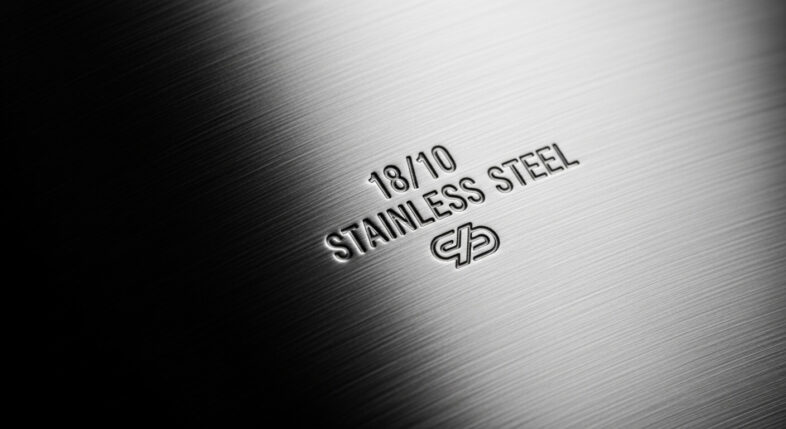
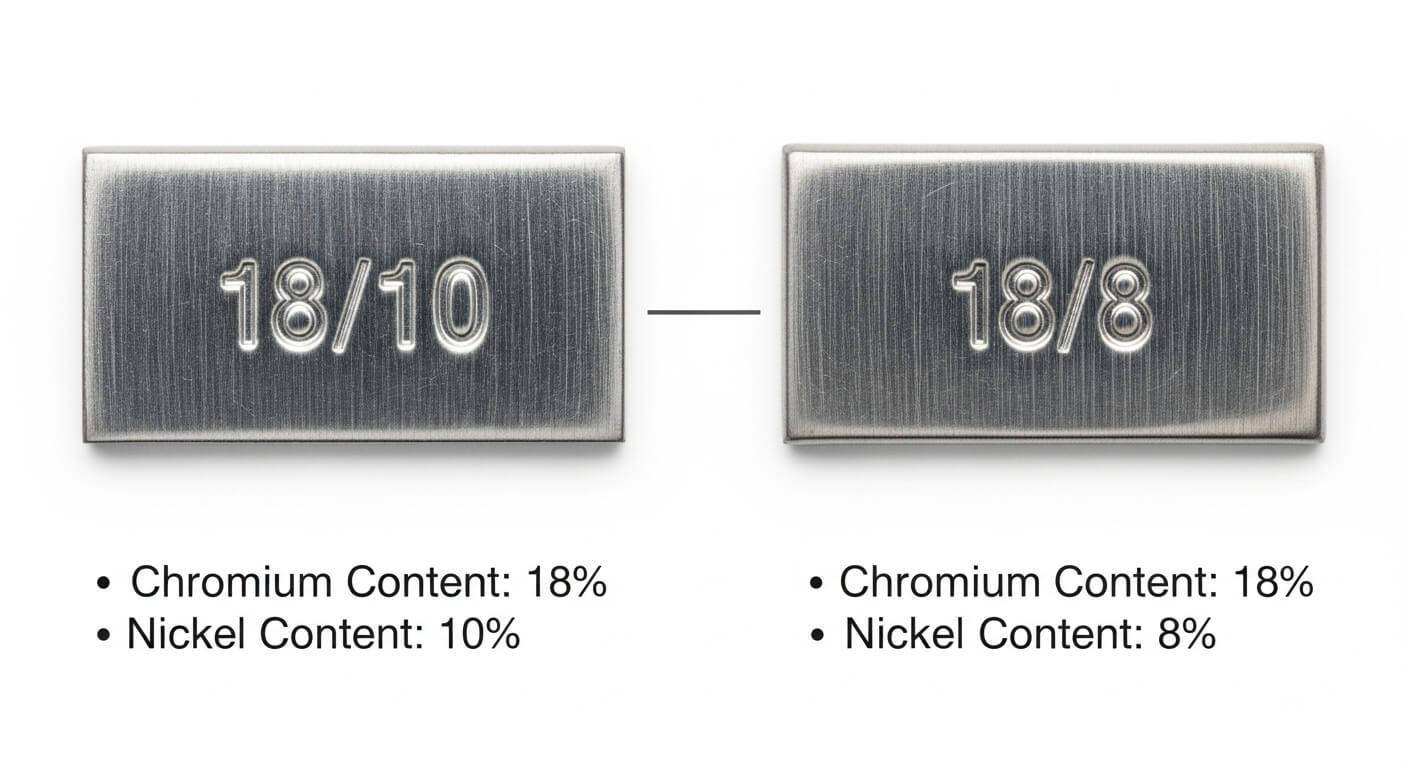
The number isn’t random. 18/10 means 18% chromium and 10% nickel. That’s it. That’s the whole code.
Chromium’s the MVP here — it’s what makes stainless steel “stainless” in the first place, forming a thin, practically invisible layer on the surface that blocks rust from ever getting a foothold. Nickel’s job is different. It adds shine, it adds toughness, and it stabilizes the metal’s internal structure so it doesn’t corrode or pit over time.
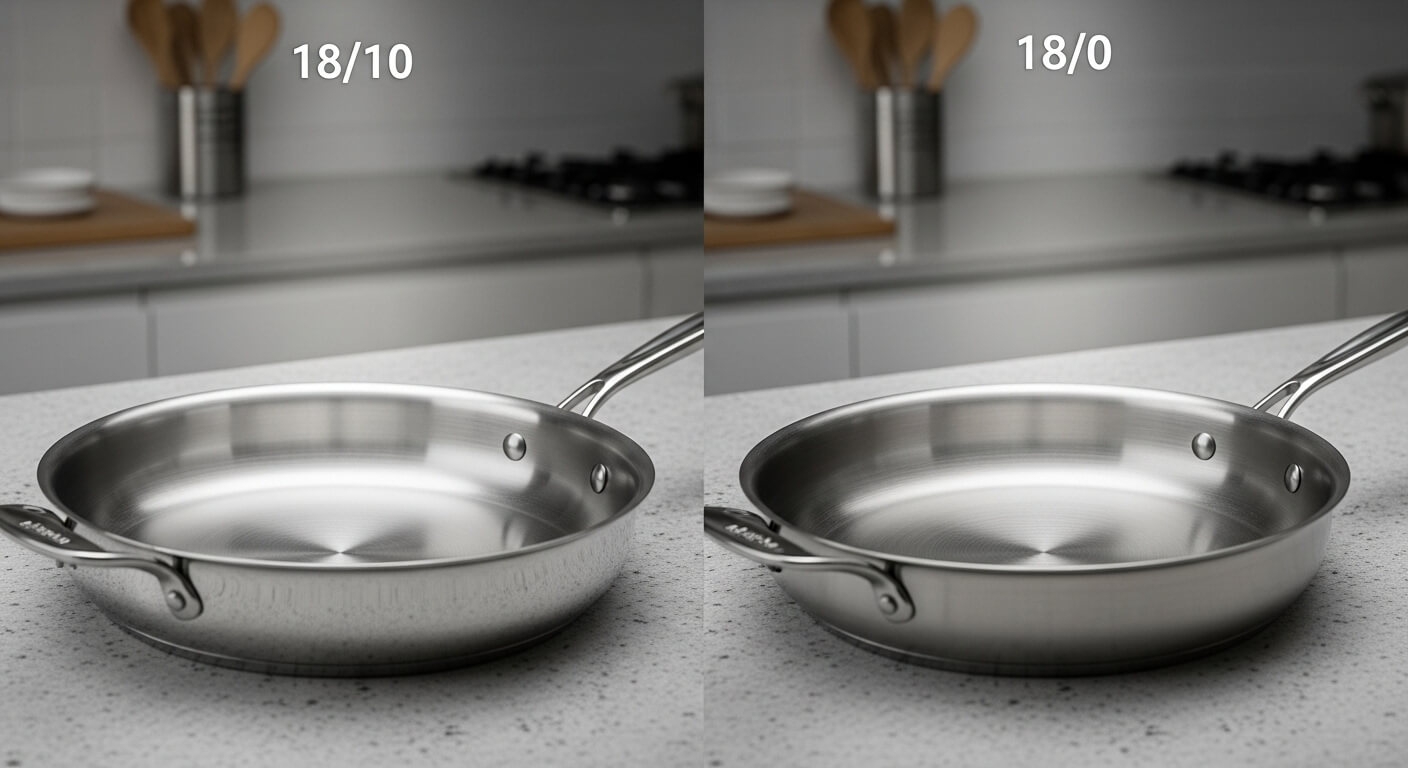
Compare that to 18/8 (same chromium, just 8% nickel — close cousin, slightly less shine retention) or 18/0 (zero nickel, fully magnetic, budget-friendly but more prone to staining). 18/10 sits at the top of that ladder. Not because the others are bad. Just because it’s got the most nickel doing the most work.
Why 18/10 Is Considered the Premium Cookware Standard
Walk into any serious kitchen — restaurant, culinary school, your friend’s overly-organized home setup — and you’ll see 18/10 everywhere. It’s the benchmark. The default “if you want the good stuff” grade.
Part of that reputation comes from food safety. 18/10 falls under the 304 stainless steel family, which is the same family used in medical equipment and food-processing machinery. That’s not a coincidence. When something’s trusted in a hospital setting, it’s probably fine simmering your marinara.
The Pros of 18/10 Stainless Steel Cookware
Pro 1: Superior Corrosion and Rust Resistance
This is the big one. The nickel content gives 18/10 serious staying power against pitting, rust, and surface staining — even after years of contact with acidic ingredients.
Cooking a lot of tomato sauce? Citrus marinades? Wine reductions? None of that is going to eat away at an 18/10 pan the way it might with a lower grade. You can leave a tomato-based sauce simmering for hours and not worry about discoloration or that weird metallic aftertaste creeping into your food. It just… doesn’t happen. Not with this grade.
Pro 2: Long-Term Durability and Structural Strength
18/10 shrugs off the stuff that wrecks cheaper cookware. Dents. Warping. Scratches from regular use. It handles all of it without breaking a sweat (so to speak — it’s a pan, not a person).
High heat tolerance plays into this too. You can sear a steak at screaming-hot temperatures, and the pan won’t warp or degrade the way some lower-quality materials might. That’s a big part of why it’s the go-to for restaurant kitchens — searing and browning happen constantly, and the cookware needs to take that abuse daily without falling apart.
Pro 3: Lasting Shine and Premium Appearance
Here’s something people don’t think about until they own it: 18/10 just looks expensive. And it keeps looking that way.
The high nickel content means it polishes up to a mirror-like shine, and — this is the important part — it holds that shine for years, not months. Pull out a five-year-old 18/10 pan and it can still look almost new with basic care. Try that with a budget set and you’ll usually see dulling way sooner.
Does this matter if you’re just cooking dinner alone on a Tuesday? Not really. Does it matter if you’re hosting, gifting, or just like opening your cabinet to something that looks nice? Absolutely.
Pro 4: Non-Reactive and Food-Safe Construction
The surface is smooth and non-porous, meaning it doesn’t harbor bacteria the way more porous materials can. It also won’t leach anything into your food — no weird chemical aftertaste, no reactivity with acidic or alkaline ingredients.
This matters more than people realize. Ever cook something acidic in cheap aluminum and get that metallic edge to the flavor? Doesn’t happen here. 18/10 stays neutral. Your tomato sauce tastes like tomato sauce. Your wine reduction tastes like wine, not wine-plus-pan.
Pro 5: Easy to Clean and Low Maintenance Over Time
Smooth surface, no pores for grime to hide in — cleanup is genuinely easier than you’d expect from “premium” cookware. A lot of people assume nicer stuff means more babying. Not really the case here.
It tolerates the dishwasher better than lower grades too, though (and I’ll say this once, then move on) hand-washing is still the gentler long-term move if you want that shine to last as long as possible.
Pro 6: Long-Term Value Despite Higher Upfront Price
Single 18/10 pieces typically run $40 to $150, and full sets land somewhere between $200 and $900, depending on the brand and construction. That’s not cheap. Nobody’s pretending it is.
But stretch that cost over the life of the cookware — we’re talking 15, 20, sometimes 30 years of use if you take care of it — and the per-year cost actually competes pretty well against buying a cheap set every three or four years because it warped, dulled, or started rusting. Bottom line: the upfront sting fades fast once you do the math over a decade.
The Cons of 18/10 Stainless Steel Cookware
Con 1: Higher Price Compared to Other Stainless Grades
No sugarcoating this. 18/10 costs more than 18/8, and a lot more than 18/0 — often 20 to 40% more for a comparable piece. That premium comes straight from nickel pricing. Nickel trades at roughly $7 to $10 a pound, while the iron base in stainless steel costs under fifty cents a pound. Pull more nickel into the alloy, watch the price climb.
Is it worth it? Sometimes. Not always. Depends entirely on how you use your cookware and what you’re willing to spend.
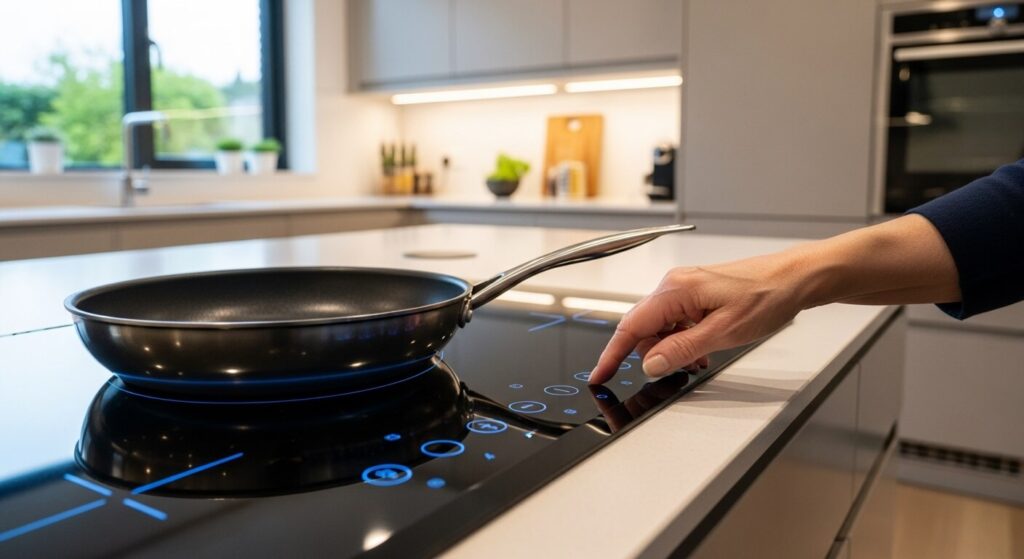
Con 2: Not Naturally Compatible With Induction Cooktops
Here’s a snag people run into constantly, and it catches folks off guard. 18/10’s nickel content makes it non-magnetic. Induction cooktops need magnetic cookware to generate heat. So on its own? 18/10 won’t work on induction. Period.
Manufacturers get around this by bonding a magnetic layer (often 18/0, ironically — the cheaper grade) to the base of 18/10 pans, giving you the best of both: a premium cooking surface with a magnetic bottom. But — and this is important — not every 18/10 pan has that. Always check the label or spec sheet before assuming it’ll work on your stove. Don’t just assume. Check.
Con 3: Poor Heat Conductivity Without Proper Cladding
This trips people up. They think “premium grade” automatically means “cooks better.” It doesn’t. Not by itself.
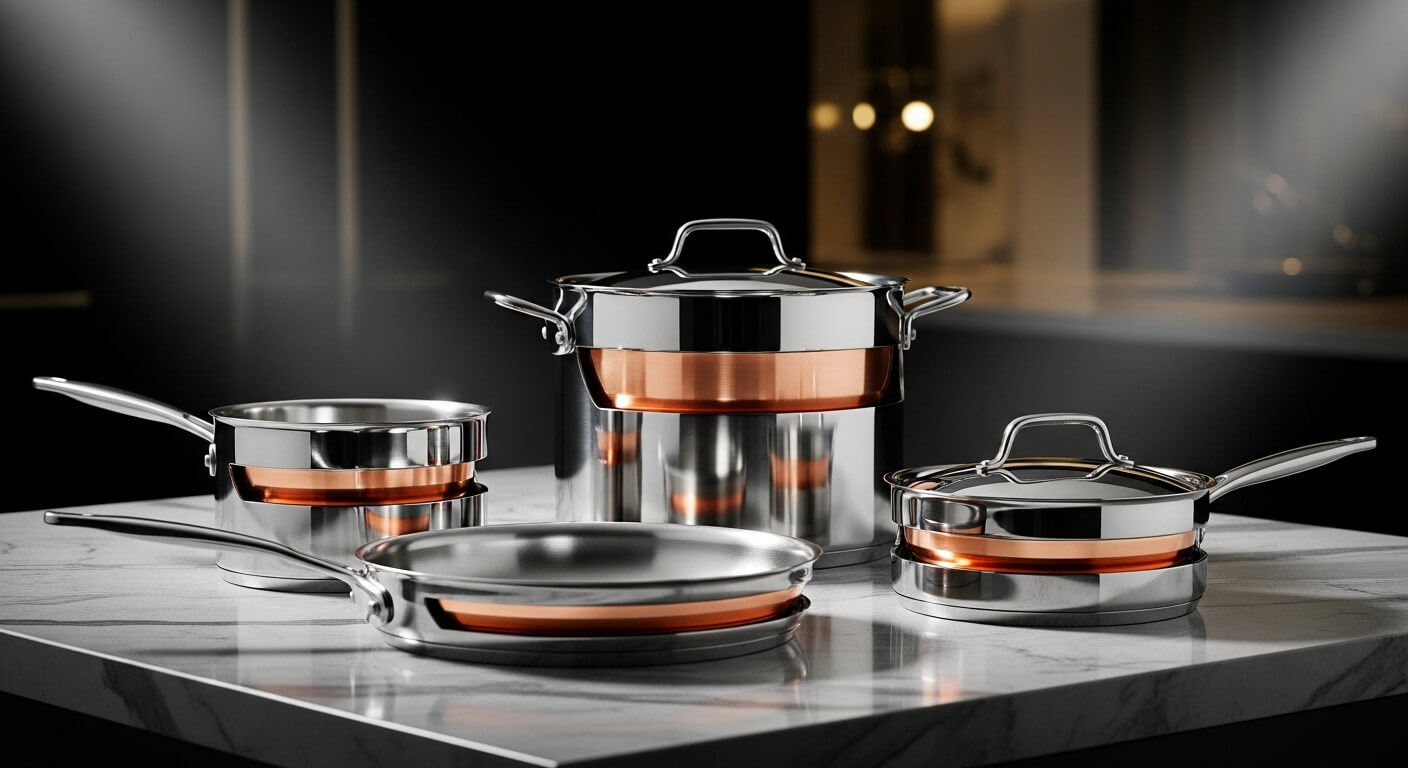
Stainless steel — any grade, 18/10 included — is actually a mediocre heat conductor on its own. The even heating you want comes from an aluminum or copper core sandwiched between layers of steel, not from the nickel content. So a cheap, single-layer 18/10 pan with no core can actually cook worse than a well-built 18/8 pan with a thick aluminum core. Grade isn’t everything. Construction matters just as much, maybe more.
Con 4: Visible Fingerprints and Water Spots
Small thing, but worth mentioning. That gorgeous high-gloss finish? It shows fingerprints and water spots more obviously than a satin or brushed finish would. Cosmetic issue, nothing more — doesn’t affect cooking performance or food safety in any way. Just something to know if you’re particular about your cookware looking spotless on the shelf.
A quick wipe-down after washing handles it. Takes ten seconds. Not a dealbreaker, just a minor annoyance for the neat freaks among us (no judgment, I’m one of them).
Con 5: Heavier Construction in Some Multi-Ply Designs
Multi-ply 18/10 cookware — the kind with several bonded layers for better heat distribution — can run heavier than simpler stainless or non-stick alternatives. Not dramatically so, but enough that it’s worth a mention if you’ve got wrist or grip issues, or if you’re shopping for someone who does.
Worth testing in-hand before buying a large stockpot or sauté pan, especially the bigger sizes. A 12-inch skillet in multi-ply construction has some real heft to it.
Is 18/10 Stainless Steel Cookware Worth the Investment
Weighing the Pros and Cons of 18/10 Stainless Steel Cookware Together
Pros
Cons
Excellent corrosion and rust resistance
Higher price tag, sometimes a lot higher
Built to last decades with basic care
Not induction-ready unless specifically built for it
Holds its shine and looks premium for years
Heat conductivity depends on core, not grade
Non-reactive, totally food-safe
Shows fingerprints and water spots easily
Strong long-term value despite the upfront cost
Can run heavy in multi-ply construction
Look at that list honestly, and the pros stack up pretty well against the cons. Most of the downsides are either minor (fingerprints, weight) or solvable with the right purchase decisions (checking for induction compatibility, picking proper clad construction). The price is really the only con that doesn’t have a workaround — you either pay it or you don’t.
Who 18/10 Stainless Steel Cookware Is Best Suited For
Serious home cooks who use their cookware constantly, not just on holidays.
Anyone working with acidic ingredients a lot — tomato sauces, citrus, wine-based dishes.
Buyers who want cookware that’ll genuinely last decades, maybe even get handed down someday.
People who care about how their kitchen looks (and there’s nothing wrong with that).
Professional or fine-dining kitchens where daily wear and presentation both matter.
Gift-givers looking for something that feels substantial, not disposable.
Who Should Consider a Different Stainless Steel Grade Instead
Strict budget shoppers who need solid cookware without the premium price tag.
Induction cooktop owners who don’t want to hunt for bonded-base, induction-specific 18/10 pieces.
Anyone buying heavy-duty utility cookware — big stockpots, steamer baskets — where showroom shine just isn’t the point.
First-time kitchen owners who need the basics covered before investing in the premium stuff.
How to Get the Most Out of 18/10 Stainless Steel Cookware
Choosing the Right Construction to Maximize 18/10 Performance
Don’t just buy based on the grade stamped on the box. Look at the construction too — that’s honestly just as important, if not more.
Tri-ply or fully clad construction means the aluminum or copper core runs through the entire pan, not just the bottom. Better, more even heating, full stop.
Check the base thickness. Thicker bases resist warping and hold heat steadier over long cook times.
If you need induction, look specifically for “induction-ready” or “induction-compatible” labeling — don’t assume, ever, just because it says 18/10 on the box.
Reputable brands will list their ply count and core material right in the product description. If they don’t? That’s worth asking about before you buy.
Simple Habits That Extend the Life of 18/10 Stainless Steel Cookware
Hand-wash when you can. The dishwasher’s fine occasionally, but frequent harsh detergent cycles will dull that shine faster than you’d like.
Don’t let salty or acidic liquids sit in the pan for days at a time. Hours, fine. Days? Push your luck and you might regret it.
Preheat properly before adding oil or food — cold pan, hot oil, that’s the classic mistake that leads to sticking.
Avoid letting the pan sit empty on high heat for long stretches. Even 18/10 has limits, and an empty hot pan is just asking for trouble.
A baking soda paste handles most discoloration if it ever shows up. Cheap, easy, works every time.