How Induction-Ready Skillets Improve Safety for Arthritic Seniors
Induction-ready skillets combined with induction cooktops eliminate burn risks from open flames and hot surfaces, provide instant temperature control, keep cooking areas cool, and offer automatic safety features—all critical advantages for seniors whose arthritis causes slower reactions and coordination issues.
Here’s the deal. Traditional cooking is dangerous when you’ve got arthritis. Gas flames you might accidentally touch. Electric coils that glow red-hot and stay that way for 20 minutes after you turn them off. Heavy pans that wobble on uneven grates.
Induction changes everything.
Eliminating Open Flames and Hot Burner Surfaces
No flames. No glowing coils. No scorching-hot metal grates.
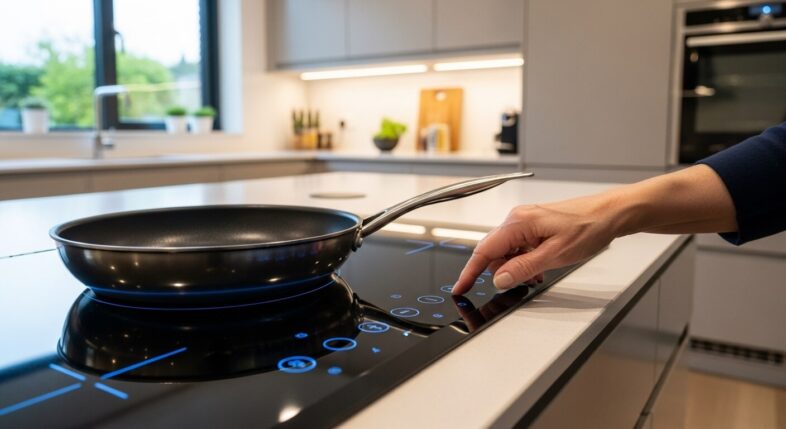
The induction cooktop surface stays cool (or barely warm) during cooking. The only thing that heats up is the pan itself—and only the bottom of the pan where it contacts the magnetic field.
What this means for arthritis:
- You can’t burn yourself on the cooktop if you accidentally touch it
- No risk of clothing catching fire from gas flames
- Reduced sensation in your hands (common with arthritis) becomes less dangerous
- If you drop something on the cooktop, it won’t burn or smoke
Touch the cooktop surface right next to an active pan. It’s cool. That’s not magic—it’s physics working in your favor.
Instant Heat Control Reduces Burn Risk
Turn the power down. Heat drops immediately. Turn it off. Heating stops that second.
Compare that to electric coils (which take 5-10 minutes to cool down) or gas (where you’re adjusting flame height manually and hoping you got it right).
For arthritic hands with slow reaction time:
- Something starts burning? Kill the heat instantly
- Pain spike causes you to pull your hand back? Pan stops heating right away
- Forget you left something on? It’s not cooking for 20 minutes before you remember
Speed of response matters when your physical responses are already slowed by joint pain and inflammation.
Cool Cooking Surface Around the Pan
The cooktop only heats the area directly under the pan. The surface around it stays cool.
This creates a safe zone where you can rest utensils, set down pot holders, even lean your hand for support if you need balance.
Traditional cooktops: The entire burner area gets hot, plus radiant heat spreads. You’re playing “the floor is lava” with your kitchen counter.
Induction: Just the pan heats. Everything else is safe to touch.
Automatic Shut-Off Features for Memory Issues
Chronic pain messes with memory and focus. You start cooking, sit down for “just a minute,” and… an hour later you smell burning.
Most induction cooktops have automatic shut-off timers. Set it for 30 minutes, and the cooktop turns off automatically when time’s up.
Additional safety features:
- Pan detection (won’t turn on unless compatible pan is present)
- Overheat protection (shuts off if temperature gets dangerous)
- No-pan timeout (turns off after a few minutes if you remove the pan)
These aren’t luxuries. They’re safeguards for when pain or fatigue compromises your attention.
Reduced Kitchen Heat and Improved Comfort
Induction doesn’t radiate heat into your kitchen like gas and electric burners do.
Less ambient heat means:
- More comfortable cooking (heat makes arthritis pain worse)
- No need for air conditioning to compensate
- Less sweating and dehydration
- You can cook in summer without turning your kitchen into a sauna
Comfort matters. When you’re comfortable, you cook more. When you cook more, you eat better.
Understanding Induction Cooking Technology and Arthritis Benefits
Induction cooking uses electromagnetic energy to heat cookware directly while leaving the cooking surface cool—this fundamental difference from gas and electric cooking creates multiple safety and usability advantages specifically beneficial for people with arthritis.
Let’s get into how this actually works.
How Induction Heating Works Without Flames
Induction cooktops contain electromagnetic coils under a glass-ceramic surface. When you turn on a burner and place a magnetic pan on it, alternating current flows through the coil and creates a rapidly oscillating magnetic field.
This magnetic field induces electrical currents (eddy currents) in the pan’s metal. Those currents create resistance, which generates heat—directly in the pan itself.
The key point: The pan becomes the heating element. The cooktop is just the control mechanism.
No combustion. No heating element. Just magnetism and physics.
Why Electromagnetic Cooking Is Safer for Seniors
Because the heating happens in the cookware, not the cooktop, you eliminate most traditional cooking hazards.
Safety advantages:
- Can’t burn yourself on the cooking surface
- No carbon monoxide risk (unlike gas)
- No residual heat after turning off
- Won’t ignite grease or food that spills on the cooktop
- More precise control than any other cooking method
For someone with arthritis who has reduced sensation, slower movements, and coordination challenges, these aren’t minor improvements. They’re life-changing.
The Relationship Between Induction and Cookware
Here’s the catch. Not all cookware works with induction.
The pan must be magnetic. If a magnet sticks to the bottom, it’ll work on induction. If not, it won’t.
Induction-compatible materials:
- Magnetic stainless steel
- Cast iron
- Enameled cast iron
- Carbon steel
- Aluminum or copper with magnetic steel base plate
Won’t work:
- Pure aluminum
- Pure copper
- Glass
- Ceramic (without magnetic base)
This is why you need induction-ready skillets specifically. Your old non-magnetic pans are useless on induction cooktops.
Energy Efficiency and Cost Savings
Induction is 85-90% efficient. Gas is about 40%. Electric coils are 65-75%.
What does that mean in real terms? Induction heats faster, uses less electricity, and costs less to operate.
Monthly savings: Depending on how much you cook, induction can save $10-30/month on energy bills compared to electric, more compared to gas.
Over a year, that’s real money. Over a decade, it pays for the equipment.
Lightweight Induction-Ready Skillet Advantages
Induction-ready skillets designed for seniors with arthritis typically use lightweight aluminum construction with magnetic steel base plates—providing induction compatibility without the excessive weight of solid stainless steel or cast iron options.
Weight matters. A lot.
Material Composition for Reduced Weight
The lightest induction-ready skillets use aluminum bodies with a thin magnetic stainless steel or carbon steel disc bonded to the bottom.
Weight comparison (10-inch skillet):
- Pure aluminum (non-induction): 1.5 lbs
- Aluminum with magnetic base: 2 lbs
- Full stainless steel (tri-ply): 3-4 lbs
- Cast iron: 5-8 lbs
That 2-lb aluminum induction skillet gives you induction compatibility at near-aluminum weight. Best of both worlds.
Magnetic Base Without Excessive Bulk
The magnetic base plate only needs to be thick enough to respond to the electromagnetic field. We’re talking 2-3mm typically.
This adds minimal weight while providing full induction functionality.
Engineering benefit: Manufacturers can keep the pan body thin and light (for easy handling) while ensuring the base works perfectly with induction.
Comparing Induction Skillet Weight to Traditional Cookware
Let’s be real about what you’re lifting.
| Cookware Type | 10-inch Skillet Weight | Arthritis-Friendly? |
|---|---|---|
| Aluminum with magnetic base | 2-2.5 lbs | Yes |
| Hard-anodized aluminum induction | 2.5-3 lbs | Yes |
| Tri-ply stainless steel | 3-4 lbs | Moderate arthritis only |
| Cast iron | 5-8 lbs | Skip it |
Stick to the top two categories. Your wrists will thank you.
Lifting and Maneuvering Benefits for Weak Joints
Every pound matters when you’re lifting with inflamed joints.
A 2-lb skillet vs. a 4-lb skillet doesn’t sound like much. But when you’re lifting it 20 times during cooking (to add ingredients, check food, pour, serve), that cumulative difference is massive.
Math: 20 lifts × 2 lbs extra = 40 lbs of cumulative unnecessary joint stress per cooking session.
Go light. Always.
Precise Temperature Control for Arthritic Cooking
Induction cooktops offer digital temperature control with instant response and consistent heat—eliminating the constant knob-turning and guesswork that makes traditional cooking difficult for arthritic hands.
Precision beats power when you’re dealing with arthritis.
Digital Controls vs. Manual Knob Turning
Most induction cooktops use touch controls or simple buttons. No knobs to grip and turn.
Why this matters for arthritis:
- Turning knobs requires grip strength and wrist rotation (both painful)
- Touch controls need just a light tap
- Many have memory settings (one touch to your preferred temperature)
- No fine motor control needed
Some models still use knobs (usually cheaper ones). Skip those if hand arthritis is significant.
Consistent Heat Without Constant Adjustment
Set it to 300°F. It maintains 300°F. No cycling up and down like electric burners. No flame fluctuations like gas.
Benefit for arthritis: You’re not constantly reaching to adjust heat. Set it once, walk away, come back when food’s done.
Less adjustment = less reaching = less pain = more sustainable cooking.
Preventing Overcooking and Kitchen Accidents
Precise heat control prevents the “forgot about it and now it’s burnt” scenario.
You set medium heat for sautéing. On gas or electric, “medium” is a guess. On induction, medium is an exact temperature that doesn’t waver.
Result: Food cooks evenly without burning. You don’t have to hover over it constantly making adjustments. Your arthritic joints get a break.
Lower Temperatures for Safer Food Handling
Induction heats so efficiently that you often use lower settings than you would on gas or electric.
Lower temperatures mean:
- Less splattering (fewer grease burns)
- Cooler handles (even stay-cool handles stay cooler)
- More time to react if something goes wrong
- Less aggressive cooking (gentler on the food too)
Ergonomic Design Features in Induction Skillets
Induction-ready skillets designed for seniors incorporate stay-cool handles, balanced weight distribution, and non-stick surfaces that reduce the physical effort required for cooking—features that directly address arthritis limitations.
Not all induction skillets are arthritis-friendly. Here’s what to look for.
Handle Design for Induction Compatibility
Induction pans can use any handle material since the cooktop doesn’t radiate heat like gas or electric burners.
This freedom lets manufacturers optimize for comfort:
- Larger, more ergonomic grips
- Soft-touch silicone coatings
- Phenolic (heat-resistant plastic) handles
- Hollow stainless steel designs that stay cool
Traditional cookware often compromises handle design because of radiant heat from burners. Induction doesn’t have that limitation.
Stay-Cool Handle Technology
With induction, handles genuinely stay cool during cooking because heat isn’t radiating up from the burner.
Reality check: The handle will eventually warm from heat conducting through the pan body, but it takes way longer than on gas or electric.
For short cooking tasks (10-15 minutes), you can often grab the handle bare-handed. For longer cooking, it’s still much cooler than traditional cookware.
Balance and Weight Distribution
Good induction skillets balance empty or full.
Because the magnetic base adds weight to the bottom, manufacturers have to carefully balance the overall design so the pan doesn’t feel front-heavy or tip easily.
Test for balance: Hold an empty induction skillet by the handle. It should feel stable, not like it’s trying to tip forward.
Non-Stick Surfaces and Easy Release
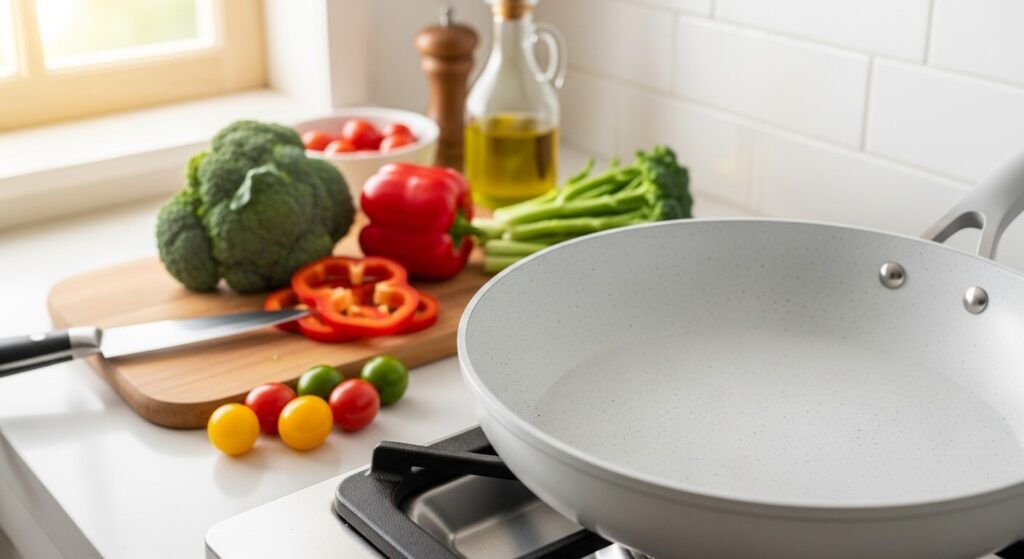
Most arthritis-friendly induction skillets have non-stick coatings.
Why non-stick matters with induction:
- Food releases easily (less stirring/scraping needed)
- Cleanup requires minimal scrubbing force
- You can use less oil (lighter cooking)
- Works perfectly with induction’s precise temperature control
PTFE (Teflon-type) or ceramic coatings both work. Choose based on your preference.
Reduced Physical Demands of Induction Cooking
Induction cooking minimizes the physical effort required for meal preparation through faster heating, more even temperature distribution, easier cleanup, and shorter overall cooking times—all reducing the cumulative strain on arthritic joints.
Less work for the same results. That’s the promise.
No Heavy Pot Lifting to Different Burners
With gas and electric, you sometimes move pots between burners to adjust heat (big burner for boiling, small burner for simmering).
Induction? Just adjust the power level. Same burner, different heat. The pan stays put.
Arthritis benefit: No lifting hot, heavy pans and repositioning them on different burners.
Minimal Stirring Due to Even Heat
Induction provides incredibly even heat distribution across the entire pan bottom.
No hot spots. No cold zones. Food cooks uniformly without you having to constantly stir to prevent burning.
Translation: Your arthritic hands spend less time gripping and moving utensils. You can cook and then rest your hands while food cooks evenly on its own.
Less Stovetop Cleaning Required
The cooktop surface doesn’t get hot enough to bake on spills.
Something boils over? It sits on the cool surface. You wipe it up with a damp cloth after cooking. Done.
Compare that to scraping burnt crud off electric coil drip pans or scrubbing gas burner grates. Not happening with induction.
Cleaning time: 30 seconds to wipe the smooth glass surface vs. 10-15 minutes scrubbing traditional burners.
Shorter Cooking Times Reduce Fatigue
Induction heats faster than any other cooking method.
Speed comparisons:
- Boiling 1 quart of water: Induction 3-4 minutes, electric 8-10 minutes, gas 6-8 minutes
- Preheating pan: Induction 60-90 seconds, electric 5-6 minutes, gas 3-4 minutes
Faster cooking = less time standing = less joint fatigue = more sustainable long-term.
Safety Features Specific to Induction Cooking
Induction cooktops include built-in safety mechanisms like pan detection sensors, overheat protection, automatic timers, and safety locks—features that prevent accidents when arthritis affects memory, coordination, or reaction time.
Safety features you didn’t know you needed until you’ve got them.
Pan Detection Sensors
The cooktop won’t turn on unless it detects a compatible magnetic pan in the right position.
What this prevents:
- Accidentally turning on an empty burner
- Small non-magnetic objects (like spoons) triggering the burner
- Burner staying on if you remove the pan
You literally can’t burn yourself on an active induction burner that doesn’t have a pan on it. Because it won’t activate.
Overheat Protection Systems
Built-in sensors monitor pan temperature. If it exceeds safe limits (usually around 500-550°F), the cooktop automatically reduces power or shuts off.
Why this matters:
- Prevents fires if you forget about cooking
- Protects your pan from damage
- Additional safety layer when pain or medication affects your attention
Timer Functions and Auto Shut-Off
Set a timer for any burner. When time’s up, that burner turns off automatically.
Usage for arthritis:
- Set 20-minute timer for simmering soup
- Set 5-minute timer for searing meat
- Walk away and let the cooktop manage itself
No relying on your memory (which chronic pain degrades). The cooktop remembers for you.
Child Safety Locks (Also Help Prevent Accidents)
Lock the control panel so burners can’t be accidentally activated.
This isn’t just for households with kids. It’s useful for anyone who might accidentally brush against touch controls and change settings or turn on burners.
Real scenario: You’re cleaning the cooktop. Your hand slides across the controls. Burner turns on. With safety lock? Not happening.
Visual and Audio Alerts
Most induction cooktops provide clear feedback:
- Display shows power level clearly
- Beep when you adjust settings
- Warning sound if pan is removed
- Hot surface indicator (even though surface is barely warm)
For seniors with vision or hearing issues: Look for models with both visual AND audio feedback. Redundancy helps.
Choosing the Right Induction-Ready Skillet for Arthritis
Selecting an arthritis-friendly induction skillet requires testing magnetic compatibility, choosing appropriate sizes based on lifting capacity, evaluating handle ergonomics, deciding between non-stick and stainless options, and balancing budget with necessary features.
Don’t just buy the first induction skillet you see.
Testing for Magnetic Compatibility
Simple magnet test. If a refrigerator magnet sticks firmly to the pan bottom, it’ll work on induction.
Test before buying:
- Bring a small magnet to the store
- Check the entire bottom surface (some pans have magnetic centers only)
- Stronger magnetic pull = better induction performance
If shopping online, verify “induction-ready” or “induction-compatible” is explicitly stated.
Size Selection Based on Strength Capacity
Match pan size to what you can actually lift when full.
Size guide for arthritis:
- 8-inch skillet: Best for single servings, lightest option
- 10-inch skillet: Good all-purpose size, manageable for most
- 12-inch skillet: Only if you’ve got decent strength and use two hands
Remember, you’re lifting ingredients plus the pan weight. A 10-inch pan with food can easily hit 4-5 lbs total.
Handle Types and Grip Considerations
Best handle features for arthritis:
- Soft silicone coating (cushions grip, increases friction)
- Wider diameter (1.25-1.5 inches thick is easier to grip than thin handles)
- Ergonomic contours (match natural hand shape)
- Long enough for two-handed lifting if needed
Avoid:
- Thin metal handles
- Smooth plastic without texture
- Short stubby handles (can’t get a good grip)
Non-Stick vs. Stainless Steel Options
For arthritis? Non-stick wins almost every time.
| Feature | Non-Stick | Stainless Steel |
|---|---|---|
| Weight | Lighter | Heavier |
| Cleanup effort | Minimal | Significant scrubbing |
| Cooking ease | Food releases easily | Can stick, requires technique |
| Best for arthritis | Yes | Only for mild cases |
Stainless steel has durability advantages, but non-stick has usability advantages that matter more for arthritic hands.
Budget-Friendly vs. Premium Choices
Budget ($25-50): Basic induction-ready non-stick. Works fine, might need replacement every 2-3 years.
Mid-range ($50-100): Better non-stick coating, more ergonomic handles, improved durability.
Premium ($100-200+): Top-tier materials, lifetime warranties, superior balance and construction.
For arthritis, mid-range usually hits the sweet spot. You get meaningful quality improvements without overpaying for features you won’t use.
Induction Cooktop Setup for Arthritic Users
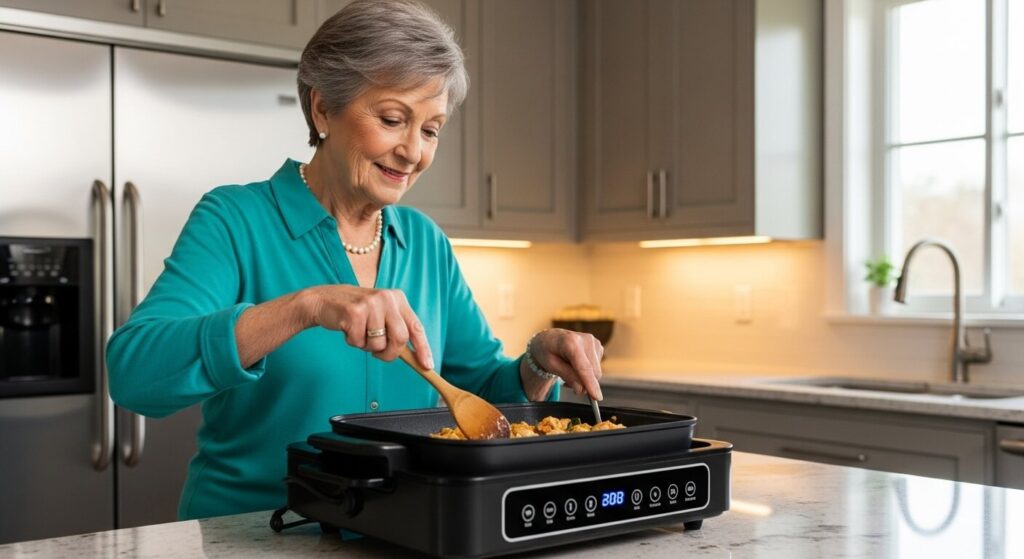
Portable induction cooktops offer counter-level cooking that’s easier to access than standard stovetops, while built-in units provide permanent solutions—both options benefit seniors with arthritis when properly positioned and installed.
Setup matters as much as equipment.
Portable vs. Built-In Induction Units
Portable induction cooktops:
- Single or double burner units
- Plug into standard outlet
- Can position anywhere on counter
- Store when not in use
- Cost $60-150 typically
Built-in induction cooktops:
- Replace existing stovetop
- Professional installation usually required
- Permanent solution
- Cost $500-2000+
For arthritis: Start with a portable unit. Test whether induction cooking works for you before committing to expensive installation.
Counter-Height Cooking Advantages
Portable induction units sit on your counter, bringing the cooking surface lower and closer than a traditional stovetop.
Height benefits:
- Less reaching overhead
- Better visibility of cooking surface
- Can sit on a stool while cooking
- Reduced strain on shoulders and back
Standard stovetops sit at 36 inches. Counter cooking can be at whatever height works best for you.
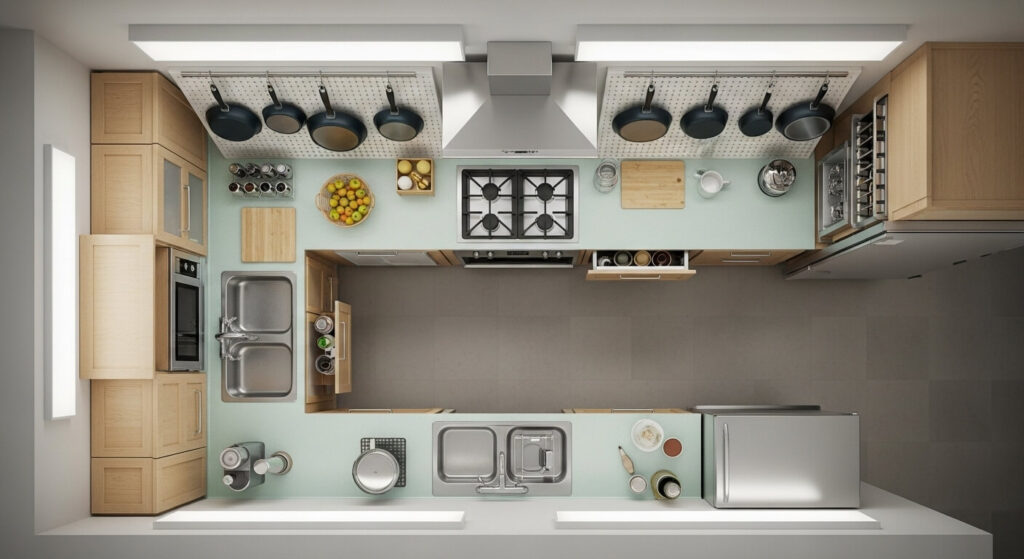
Placement for Optimal Accessibility
Ideal portable induction setup:
- Near sink for easy water access
- Close to food prep area
- Adequate counter space around the unit
- Within reach of storage for pans and utensils
Don’t stick it in a corner where you’re reaching awkwardly. Center it in your most-used workspace.
Electrical Requirements and Installation
Portable units: standard 120V outlet, 15-20 amp circuit. Plug and go.
Built-in cooktops: usually require 240V dedicated circuit. Professional electrician needed unless you’ve got electrical skills and permit.
For renters or those avoiding renovation: Portable is the way to go. Zero installation, fully reversible.
Transitioning from Gas or Electric to Induction
Switching to induction cooking involves a learning period for temperature adjustments, evaluating which existing cookware works, and gradually integrating induction into your cooking routine—most seniors adapt within 1-2 weeks with proper guidance.
Change isn’t instant. Give yourself time.
Learning Curve and Adjustment Period
Induction feels different. Faster response, different power level meanings, instant on/off.
Typical learning timeline:
- Week 1: Everything seems too fast, you burn stuff
- Week 2: Starting to get the hang of lower power settings
- Week 3-4: Cooking confidently, appreciating the control
Don’t give up after one burnt dinner. There’s a learning curve, and it’s worth pushing through.
Temperature Setting Differences
Induction power levels don’t directly correspond to gas or electric settings.
General conversion:
- Electric “high” = Induction 7-8 (out of 10)
- Electric “medium” = Induction 4-5
- Electric “low” = Induction 2-3
Start lower than you think you need. You can always increase power. Can’t un-burn food.
Cookware Compatibility Assessment
Raid your kitchen. Test every pan with a magnet.
Likely compatible:
- Most stainless steel pans
- All cast iron
- Some multi-clad cookware
Definitely not compatible:
- Aluminum pans (unless they have magnetic base)
- Copper pans
- Glass/ceramic cookware
You’ll probably need to buy at least a couple new pans. Budget for it.
Gradual Integration Strategies
Don’t try to cook everything on induction immediately.
Integration plan:
- Week 1: Boil water for tea/coffee on induction
- Week 2: Make simple one-pan meals
- Week 3: Expand to more complex cooking
- Week 4+: Induction becomes your default
Keep your old cooktop available during transition if possible (easier with portable induction units).
Material Science: What Makes Skillets Induction-Ready
Induction-ready skillets must contain ferromagnetic materials—typically magnetic stainless steel, cast iron, or aluminum/copper with magnetic steel base plates—that respond to electromagnetic fields by generating heat through induced electrical currents.
Let’s get technical (but not too technical).
Magnetic Stainless Steel Construction
Not all stainless steel is magnetic. The 18/10 (or 304) stainless used in many pans isn’t magnetic enough for induction.
Induction-compatible stainless:
- 18/0 stainless steel (no nickel, magnetic)
- 400-series stainless (magnetic)
- Multi-clad with magnetic stainless layers
Look for “induction-ready” or “magnetic stainless” in product descriptions.
Cast Iron and Enameled Cast Iron
All cast iron works on induction. It’s highly magnetic.
But remember—cast iron is heavy. A 10-inch cast iron skillet weighs 5-8 lbs empty.
For arthritis: Enameled cast iron (like Le Creuset) is slightly lighter and easier to clean, but still too heavy for most people with significant arthritis.
Skip cast iron unless you’ve got minimal joint issues.
Aluminum with Magnetic Base Plates
This is the sweet spot for arthritis.
Manufacturers bond a magnetic stainless steel or carbon steel disc to the bottom of lightweight aluminum pans.
Result: Induction compatibility at near-aluminum weight. You get the best of both worlds.
Carbon Steel Options
Carbon steel is magnetic and lighter than cast iron (but heavier than aluminum).
A 10-inch carbon steel pan weighs about 3-4 lbs—manageable for moderate arthritis.
Considerations:
- Requires seasoning (like cast iron)
- Not non-stick initially
- Develops non-stick properties with use
Good option if you want durability without excessive weight.
Materials to Avoid for Induction
These absolutely won’t work:
- Pure aluminum
- Pure copper
- Glass
- Ceramic (without magnetic base)
- Some titanium cookware
Don’t try to force non-magnetic pans to work with induction. It’s not happening.
Heat Distribution in Induction-Ready Skillets
Induction cooking provides exceptionally even heat distribution across the entire pan bottom, eliminating hot spots and reducing the need for constant stirring—a significant advantage for arthritic hands that tire quickly from repetitive motions.
Even heating is sneaky important.
Even Heating Reduces Hot Spots
The electromagnetic field distributes uniformly across the burner coil.
Result: The entire pan bottom heats evenly. No super-hot center with cooler edges like you often get with gas burners.
Food cooks uniformly without you having to constantly move it around the pan.
Edge-to-Edge Temperature Consistency
With quality induction-ready skillets, temperature variation across the cooking surface is typically within 10-15°F.
Compare that to gas (which can have 50°F+ variation from center to edge) or cheap electric coils (similar problems).
For arthritis: Consistent temperature means less babysitting. Food doesn’t burn in one spot while staying raw in another.
Impact on Stirring Requirements
Even heat = less stirring needed.
Traditional cooking: Stir constantly to prevent hot-spot burning and ensure even cooking.
Induction cooking: Stir occasionally just to ensure even seasoning distribution and to check doneness.
Your arthritic hands aren’t constantly gripping and moving utensils. They get to rest.
Benefits for Arthritis Pain Management
Less active cooking time = less cumulative joint stress = less pain during and after cooking.
It’s not dramatic on any single cooking session. But over weeks and months, the reduced repetitive strain makes a real difference in managing chronic arthritis pain.
Cleaning and Maintenance Advantages
Induction cooktops feature smooth glass surfaces that wipe clean in seconds, with no burner grates or drip pans to scrub—while induction-ready skillets often include dishwasher-safe options that eliminate hand-washing for arthritic users.
Cleanup can make or break whether you keep cooking.
Smooth Cooktop Surface Easy to Wipe
The induction cooktop is flat glass. No crevices, no removable parts, no grates.
Cleaning process:
- Let cooktop cool (takes like 2 minutes)
- Spray with cleaner or just use damp cloth
- Wipe
- Done
Total time: 30-60 seconds. Total effort: minimal.
No Grates or Burner Parts to Clean
Gas stoves have grates, burner caps, and all sorts of components that need regular cleaning.
Electric stoves have drip pans that catch spills and burn them on.
Induction? Nothing. Just smooth glass.
For arthritic hands: No gripping small parts, no scrubbing burnt-on grease, no wrestling with heavy grates.
Spills Don’t Bake Onto Cool Surface
Something boils over on a gas or electric burner? It bakes on immediately.
On induction? The surface around the pan is cool. Spills sit there until you wipe them up. They don’t carbonize.
Reality check: Spills directly under the pan can cook from heat transfer, but it’s way less than with traditional burners.
Dishwasher-Safe Skillet Options
Many induction-ready non-stick skillets are dishwasher-safe.
Dishwasher benefits for arthritis:
- Zero hand scrubbing required
- No grip strength needed
- Thorough cleaning without effort
Check manufacturer specs, but most non-stick induction pans handle dishwashers fine.
Comparing Induction to Traditional Cooking Methods
Induction cooking surpasses gas and electric methods for seniors with arthritis through superior safety features, precise control, faster heating, and easier cleanup—though it requires initial investment in compatible cookware and potentially new cooktop equipment.
Let’s do a real comparison.
Induction vs. Gas Cooking for Seniors
Gas advantages:
- Immediate visual feedback (you see the flame)
- Works during power outages
- Familiar if you’ve cooked with gas for decades
Gas disadvantages for arthritis:
- Open flame burn risk
- Carbon monoxide concerns
- Difficult-to-clean grates
- Imprecise temperature control
- Radiant heat makes kitchen hot
Winner for arthritis: Induction. The safety benefits outweigh gas’s minimal advantages.
Induction vs. Electric Coil Burners
Electric coil advantages:
- Cheap
- Works with any cookware
- Simple technology
Electric coil disadvantages:
- Slow heating and cooling
- Stays hot for 15+ minutes after turning off
- Uneven heating
- Drip pans require heavy cleaning
- Imprecise temperature control
Winner for arthritis: Induction by a landslide.
Induction vs. Glass-Top Electric Ranges
Glass-top electric advantages:
- Smooth surface (easier to clean than coils)
- Looks modern
- Works with any cookware
Glass-top electric disadvantages:
- Still slow to heat and cool
- Surface stays dangerously hot after turning off
- Less precise than induction
- Uses more energy
Winner for arthritis: Induction. Similar smooth surface, way better performance and safety.
Why Induction Wins for Arthritis Safety
Bottom line across all comparisons:
- Cool cooking surface (can’t burn yourself)
- Instant control (responds immediately)
- Faster cooking (less time standing)
- Easier cleaning (less joint stress)
- Precise temperature (less hovering and adjusting)
These benefits specifically address arthritis limitations in ways traditional cooking methods can’t match.
Common Concerns About Induction Cooking Addressed
Typical hesitations about induction cooking—noise levels, learning curves, upfront costs, pacemaker safety, and EMF concerns—have practical solutions and often prove less significant than anticipated once users gain experience with the technology.
Let’s tackle the objections head-on.
Noise Levels and Fan Sounds
Induction cooktops have cooling fans. They make noise.
Reality: It’s a gentle hum or whir, typically 40-50 decibels. About as loud as a quiet conversation.
Some pans (especially thin ones) can vibrate slightly and create a buzzing sound when first heating. Usually stops once pan is fully heated.
For hearing-sensitive seniors: It’s noticeable but not problematic for most people. If you’re very noise-sensitive, test before buying.
Learning New Cooking Techniques
“I’ve cooked on gas for 60 years. Why change now?”
Because your hands hurt and gas cooking is becoming dangerous. That’s why.
Learning curve reality:
- First week: frustrating
- Second week: starting to click
- Third week: wondering why you didn’t switch sooner
Most seniors adapt faster than they expect.
Initial Investment Costs
Portable induction cooktop: $60-150
Quality induction-ready skillet: $40-80
Total initial investment: $100-230
Not nothing. But compared to:
- One ER visit for burns: $500-2000
- Months of takeout because you’re scared to cook: $300-600/month
- Long-term energy savings: $10-30/month
The investment pays back fast.
Pacemaker Safety Considerations
This is real and requires attention.
Official guidance: Most pacemaker manufacturers recommend staying 12-24 inches away from operating induction cooktops.
Practical reality: You’re standing at the stove, not hovering directly over it. Most users maintain safe distance naturally.
What to do: Consult your cardiologist before using induction if you have a pacemaker or other implanted medical device. Get specific clearance.
Electromagnetic Field Concerns
Induction cooktops create electromagnetic fields (EMFs). Some people worry about health effects.
Scientific consensus: The EMFs from induction cooking are low-frequency and dissipate rapidly with distance. No proven health risks at normal usage distances.
Field strength: Drops to background levels within about 12 inches from the cooktop.
For context, hair dryers create similar EMF levels and you hold those right against your head.
Specific Skillet Features That Aid Arthritis
Arthritis-friendly induction skillets incorporate dual handles for stability, helper handle designs for versatility, integrated pour spouts and straining lids for easier serving, and measurement markings that prevent overfilling—features that directly reduce physical demands.
Features matter beyond just basic induction compatibility.
Dual-Handle Induction Skillets
Two handles instead of one. Splits weight 50/50 between your hands.
(We covered this extensively in the dual-handle pan article earlier, but it bears repeating—dual handles are clutch for arthritis.)
For induction specifically: Since induction pans can use any handle material (no radiant heat to worry about), you get more ergonomic dual-handle options than with gas or electric.
Helper Handle Designs
One regular handle plus a smaller assist handle on the opposite side.
When this works:
- One hand is significantly worse than the other
- Pan is light enough for one-handed use when not full
- You want the option of two-handed lifting for heavy loads
Not as good as full dual handles, but better than single handle alone.
Pouring Spouts and Straining Lids
Some induction skillets have built-in pour spouts or lids with straining holes.
Arthritis benefits:
- Pour without tilting as much (spouts direct flow)
- Drain pasta without transferring to colander (use straining lid)
- Less lifting and manipulation required
Measurement Markings for Portion Control
Interior markings showing cup measurements.
Why this helps:
- Prevents overfilling (which makes pan too heavy)
- Helps with portion control for health
- Visual feedback without measuring cups
Simple feature, useful benefit.
Cooking Techniques Optimized for Induction
Induction’s precise temperature control and rapid heat response enable cooking techniques that reduce physical effort—including one-pan meals, low-temperature sautéing, precise simmering, and fast boiling with minimal supervision.
Work smarter with induction.
One-Pan Meals for Simplified Cooking
Everything cooks in one skillet. Protein, vegetables, starch if you want.
Induction advantage: Precise control lets you cook different components at different times without burning earlier additions.
Start with protein at higher heat. Reduce heat and add vegetables. Lower heat more and add sauce. All in one pan, all controlled precisely.
Lower Temperature Sautéing
Induction heats so efficiently you can sauté at lower temperatures than gas or electric.
Benefit: Less splattering, less aggressive cooking, more time to react if something goes wrong.
Gas sautéing: 400-450°F typical
Induction sautéing: 325-375°F achieves same results
Precise Simmering Control
Maintaining a gentle simmer is tricky on gas or electric. Too high and you’re boiling. Too low and it stops simmering.
Induction? Set it to simmer and it stays there. Perfect every time.
For arthritis: Set it and walk away. No constant adjustment needed.
Fast Boiling Without Supervision
Need boiling water? Crank induction to high. Water boils in 3-4 minutes.
Then reduce to simmer with one touch. No waiting for burner to cool down like electric, no adjusting flame height like gas.
Time savings: 5-7 minutes faster than traditional methods on average.
Energy Efficiency Benefits for Seniors
Induction cooking reduces electricity costs through 85-90% energy efficiency, lowers air conditioning expenses by minimizing waste heat, and decreases cooking time—creating meaningful monthly savings for seniors on fixed incomes.
Money matters when you’re on Social Security.
Lower Electricity Bills
Energy comparison (1 hour of cooking):
- Induction: $0.10-0.15
- Electric coil: $0.20-0.30
- Glass-top electric: $0.15-0.25
Monthly savings (cooking 1 hour daily): $3-6 on average
Not life-changing, but it adds up. Over a year, that’s $36-72 back in your pocket.
Reduced Air Conditioning Costs
Induction doesn’t radiate heat into your kitchen like gas and electric.
Summer benefit: Less AC needed to compensate for cooking heat. Especially significant in hot climates.
Additional savings: $10-20/month in summer depending on climate and AC usage.
Faster Cooking Saves Time and Energy
Less cooking time = less energy consumed = lower bills.
Plus, your joints appreciate shorter time standing and working.
Environmental Benefits
85-90% efficiency means less overall energy consumption.
For seniors who care about environmental impact, induction is the most sustainable cooking method available.
Portable Induction Units for Flexibility
Single-burner portable induction cooktops provide cooking flexibility for seniors with arthritis through counter-level operation, easy storage, travel capability, and low initial investment compared to full cooktop replacement.
Portable units are underrated.
Single-Burner Portable Cooktops
Typical specs:
- 1800 watts power
- 10 power levels
- Timer function
- $60-120 price range
Enough for most daily cooking. Compact, affordable, no installation.
Taking Induction Cooking to Different Locations
Portable benefits:
- Use at the kitchen table (even lower than counter)
- Take to bedroom or wherever you’re most comfortable
- Bring when visiting family (cook your own meals your way)
- Use outdoors if you want
Flexibility matters when mobility varies day to day.
Counter Space Optimization
When not cooking, unplug it and store it.
Storage:
- Slide into cabinet
- Tuck in pantry
- Store on shelf
Counter stays clear for prep work. Only bring out cooktop when actively cooking.
Storage When Not in Use
Most portable units are about 14″ × 11″ × 2.5″ and weigh 5-7 lbs.
Easy to move and store even with arthritis. Nothing like wrestling a 40-lb cast iron grill grate off a gas stove.
Occupational Therapy Recommendations
Occupational therapists increasingly recommend induction cooking for arthritis patients as part of comprehensive kitchen adaptation plans because it addresses multiple safety and ergonomic concerns simultaneously while maintaining cooking independence.
Professional consensus is building around induction.
How OTs Prescribe Induction Cooking
OTs include cooking method in their kitchen safety assessments.
Evaluation criteria:
- Current burn/injury risks
- Physical capacity (strength, range of motion)
- Cognitive status (memory, attention)
- Living situation and support available
When induction addresses multiple identified risks, it’s recommended.
Joint Protection Principles Applied
Core OT principles that induction supports:
- Minimize force required (lightweight pans, precise control)
- Reduce repetition (less stirring, less adjusting)
- Use optimal biomechanics (counter-height portable units)
- Respect pain (easier cooking = sustainable cooking)
Kitchen Safety Assessments
OTs visit homes and identify hazards. Gas burners with open flames flag immediately for seniors with arthritis.
Recommended solutions often include:
- Switch to induction (first choice)
- Add safety features to existing setup (second choice)
- Modify cooking methods (third choice)
Combining with Other Adaptive Equipment
Induction works best as part of complete adaptation:
- Induction cooking (safe heat)
- Lightweight induction-ready pans (manageable weight)
- Ergonomic utensils (comfortable grip)
- Adaptive cutting tools (safe prep)
- Organized storage (accessible equipment)
Real-World Success Stories
Seniors who switch to induction cooking consistently report fewer kitchen accidents, renewed cooking confidence, reduced energy bills, and maintained nutritional independence—with family caregivers noting significant safety improvements and reduced worry about unsupervised cooking.
This isn’t theory. Real people getting real results.
Seniors Who Switched to Induction
Common pattern: Someone with worsening arthritis becomes scared of their gas stove or frustrated with electric burners that stay dangerously hot.
They try a portable induction cooktop (often at someone else’s suggestion). Within weeks, it becomes their primary cooking method.
The combination of safety and control wins them over.
Caregiver Reports on Safety Improvements
Adult children worry about aging parents cooking alone. Gas stoves especially create anxiety.
After induction adoption, caregivers report:
- Fewer calls about near-miss accidents
- Less visible burn marks on parents’ hands/arms
- Parents cooking more often (because it’s easier)
- Reduced anxiety about kitchen fire risk
Peace of mind has value.
Reduced Kitchen Accidents and Burns
OTs and home health nurses note significant drops in cooking-related injuries after induction adoption.
Not zero—people still make mistakes—but frequency and severity both decrease.
Most common remaining issue: Minor burns from touching the hot pan itself (not the cooktop). Solvable with better pot holder use and technique refinement.
Regained Cooking Independence
Loss of cooking ability often triggers a cascade: poor nutrition, depression, reduced sense of purpose, increased dependence on others.
Induction helps reverse this by making cooking safe and manageable again.
People cook their own meals. Feel capable. Eat better. Mental and physical health improve.
Cost Analysis: Induction Investment vs. Benefits
Initial induction investment typically ranges from $100-250 for portable units plus compatible cookware, with payback through energy savings, injury prevention, and maintained independence occurring within 6-12 months for most seniors with arthritis.
Let’s do the math.
Portable Induction Cooktop Prices
Budget tier: $60-80 (basic features, works fine)
Mid-range: $80-120 (better controls, more features)
Premium: $120-200 (commercial-grade, extensive features)
Recommendation: Mid-range. The extra $20-40 over budget models gets you meaningful improvements.
Induction-Ready Skillet Costs
One quality induction-ready non-stick 10-inch skillet: $40-80
If you’re building a set:
- 8-inch skillet: $30-50
- 10-inch skillet: $40-80
- 12-inch skillet: $50-100
Total for basic 2-pan set: $70-130
Long-Term Savings on Energy
$3-6/month electricity savings
$10-20/month summer AC savings (varies by climate)
Annual savings: $50-150 depending on usage and location
Pays for itself in roughly one year just from energy savings alone.
Safety Value and Injury Prevention
One prevented ER visit pays for induction setup 5-10 times over.
One month of avoided meal delivery/takeout (because you can cook safely) pays for it 2-3 times over.
Intangible value:
- Maintained independence
- Better nutrition
- Reduced caregiver burden
- Peace of mind
Can’t put a price on those, but they’re the real value proposition.
Selecting an Induction Cooktop for Arthritis Needs
Choosing an arthritis-friendly induction cooktop requires evaluating control types, burner sizes, button versus touch interfaces, and display clarity—with portable single-burner units often providing the best balance of features and affordability for seniors.
What to actually buy.
Power Level Options and Controls
Most induction cooktops offer 10-20 power levels.
For arthritis: 10 levels is plenty. More than that just complicates things.
Control features to prioritize:
- Clear power level display
- Simple up/down buttons or slider
- Timer function
- One-touch boost button
Size and Burner Configuration
Portable single-burner: Most versatile for arthritis. Move it where you need it.
Built-in options:
- 2-burner: Good for small kitchens
- 4-burner: Full replacement for traditional stove
- 5+ burner: Overkill for most seniors
For arthritis: Single portable burner covers 80% of cooking needs at 10% of the cost of built-in units.
Touch Controls vs. Physical Buttons
Touch controls:
- Smooth, easy to clean
- Light touch needed
- Can be accidentally activated
Physical buttons:
- Tactile feedback
- Harder to clean around
- Can’t be accidentally triggered
For arthritis: Depends on your specific limitations. Severe hand arthritis? Touch might be easier. Tremors or reduced sensation? Buttons might be better.
Test if possible.
Display Readability and Accessibility
Good displays have:
- Large, high-contrast numbers
- Bright LED or LCD
- Clearly labeled functions
- Positioned where you can see while standing/sitting at cooktop
Avoid: Tiny displays with low contrast that require bending over to read.
Skillet Capacity and Arthritis Limitations
Induction skillet selection should prioritize lifting capacity over cooking capacity, with small 8-inch skillets for minimal arthritis, medium 10-inch for moderate cases, and large 12-inch only for those with good upper body strength and two-handed technique.
Size matters. Too big is too heavy.
Small Skillets for Single Servings
8-inch induction skillets weigh about 1.5-2 lbs empty, 3-4 lbs with food.
Best for:
- Single-person households
- Severe arthritis with very limited strength
- Quick meals (eggs, grilled cheese, small portions)
Limitations: Can’t cook for multiple people or batch-cook
Medium Skillets for Versatile Cooking
10-inch is the sweet spot. Weigh 2-2.5 lbs empty, 4-6 lbs with food.
Best for:
- 1-2 person households
- Moderate arthritis
- Most daily cooking tasks
Versatility: Handle everything from single eggs to stir-fries for two.
Large Skillets and Weight Considerations
12-inch skillets: 2.5-3.5 lbs empty, 6-9 lbs with food.
Only get this size if:
- Cooking for 3+ people regularly
- You have good grip strength
- You can use two hands for all lifting
Otherwise, stick with 10-inch and cook in batches if needed.
Matching Size to Induction Burner
Portable induction burners typically accommodate 6-12 inch cookware.
Efficiency note: Pan should roughly match burner diameter. Too small, and you’re wasting energy. Too large, and outer edges don’t heat evenly.
Check your cooktop’s max pan size before buying oversized skillets.
Handle Materials and Heat Resistance
Induction-compatible skillets offer superior handle options compared to traditional cookware because cooktop surfaces stay cool—allowing silicone-coated, phenolic, and hollow stainless designs that provide better ergonomics and stay cooler during cooking.
Handle material freedom is an underrated induction benefit.
Silicone-Coated Handles
Soft, grippy, cool to touch. Perfect for arthritis.
Advantages:
- Cushions grip (reduces pressure points)
- High friction (easier to hold)
- Stays cool (even after extended cooking)
- Available in colors (easier to see)
Slight downside: Can feel “floppy” to some people. Personal preference thing.
Stainless Steel Stay-Cool Designs
Hollow stainless or air-gap designs that don’t conduct heat.
Works well on induction because:
- No radiant heat from burner to warm handle
- Heat transfer from pan is slow
- Stays comfortable for typical cooking times
Firmer feel than silicone, still arthritis-friendly.
Bakelite and Phenolic Options
Classic heat-resistant plastics. Used on cookware for decades.
Characteristics:
- Genuinely stay cool
- Firm grip
- Durable
- Usually black or dark brown
Traditional but effective.
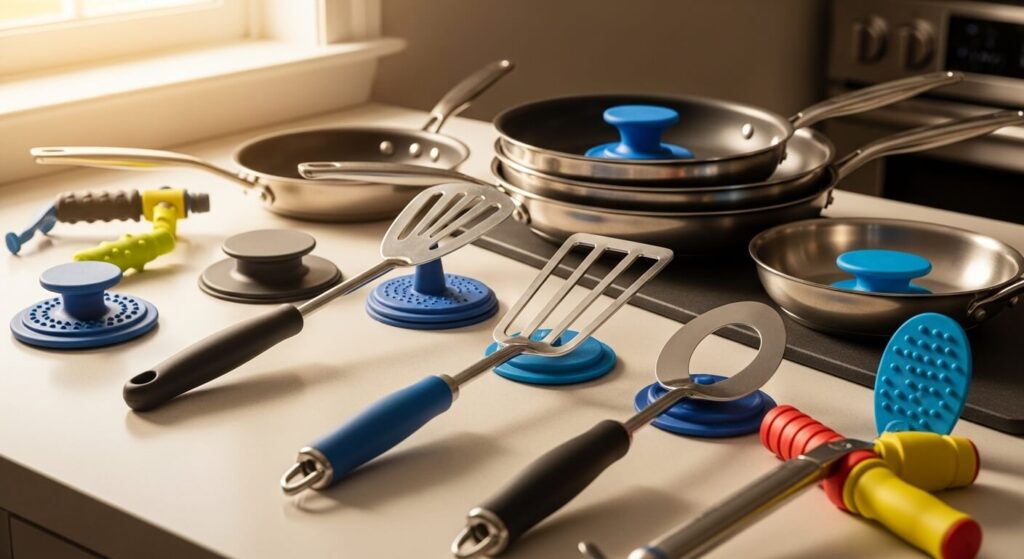
Adding Aftermarket Handle Grips
Don’t like your skillet’s handles? Add silicone sleeves.
Benefits:
- Increases handle diameter
- Adds cushioning
- Improves grip
- Costs $5-10
Makes any handle more arthritis-friendly.
Non-Stick Coating Benefits for Weak Hands
Non-stick coatings on induction skillets dramatically reduce the physical effort required for cooking and cleaning—food releases without scraping, cleanup requires minimal scrubbing force, and less oil use lightens overall pan weight.
Non-stick is your friend.
PTFE (Teflon) Non-Stick Properties
Modern PTFE coatings are safe (the harmful chemicals were removed years ago).
Performance:
- Extremely slippery
- Food releases with minimal prompting
- Wipe-clean easy
- Lasts 2-5 years with proper care
For arthritis: The ultra-slick surface requires the least effort for both cooking and cleaning.
Ceramic Non-Stick Alternatives
Ceramic coatings appeal to people avoiding PTFE.
Characteristics:
- Good non-stick (but not AS slick as PTFE)
- Can handle higher temps
- More scratch-resistant
- Often marketed as “healthier”
Reality: Both PTFE and ceramic work fine for arthritis. Choose based on personal preference.
Easy Food Release Reduces Effort
Non-stick means food slides off. No scraping, no wrestling with stuck-on eggs or cheese.
Arthritis benefit: Your weak, painful hands don’t have to fight with spatulas trying to free stuck food.
Cooking becomes gentle and manageable instead of a strength battle.
Simple Cleanup for Limited Hand Function
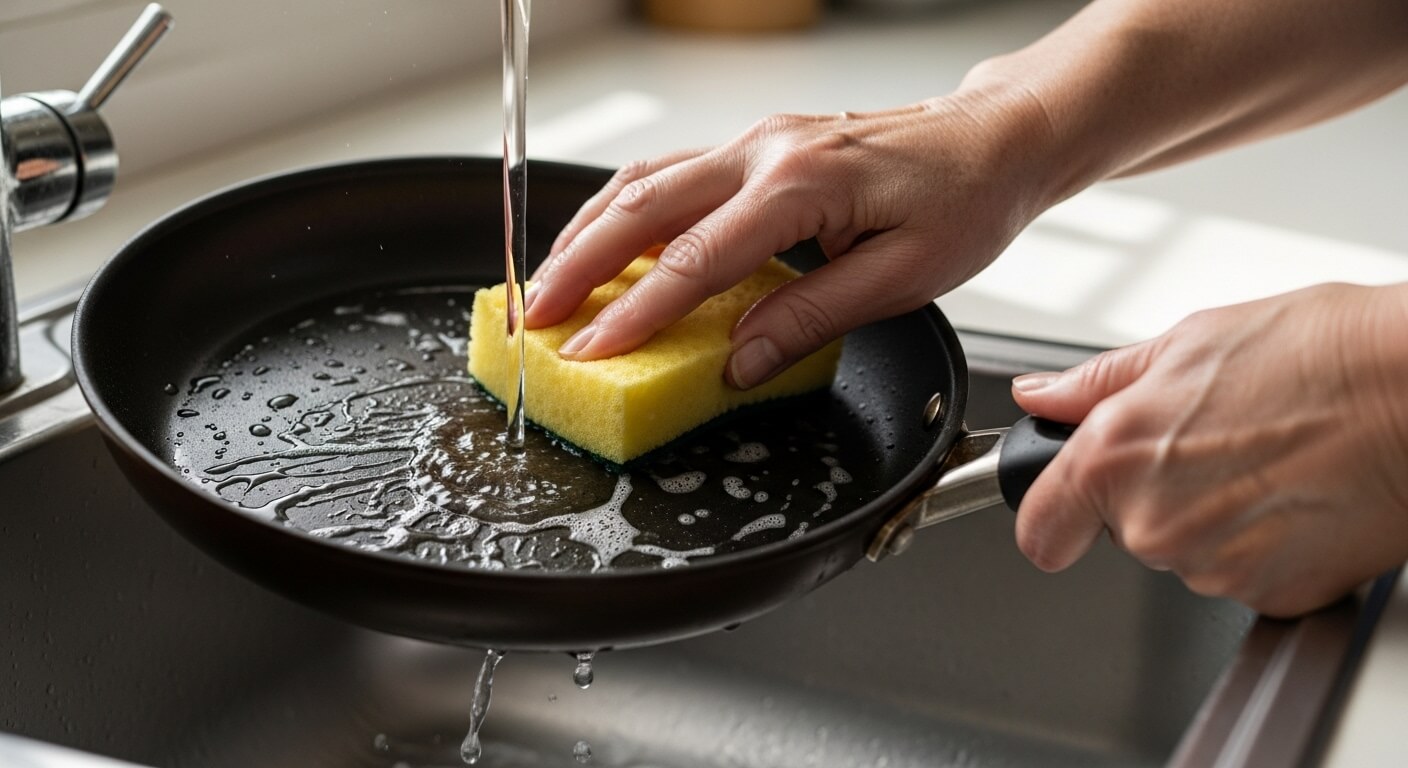
Wipe with soft sponge and warm soapy water. Done.
No death-grip scrubbing with abrasive pads. No elbow grease. No joint pain from aggressive cleaning.
Most non-stick pans: 30-second cleanup. That’s sustainable for arthritic hands.
Induction-Safe Cast Iron Considerations
Cast iron works on induction but weighs 5-8 pounds for typical skillets—making it generally unsuitable for seniors with moderate to severe arthritis despite its excellent heat retention and cooking properties.
Cast iron and arthritis usually don’t mix.
Weight Issues with Cast Iron
A 10-inch cast iron skillet weighs 5-8 lbs empty. Add food and you’re at 8-12 lbs total.
For arthritic wrists: That’s too much. Period.
The superior cooking properties don’t matter if you can’t safely lift and pour from the pan.
Enameled Cast Iron as Lighter Alternative
Enameled cast iron (Le Creuset, Staub, etc.) is slightly lighter. Maybe 4-7 lbs for a 10-inch skillet.
Still heavy. Still problematic for most arthritis cases.
Plus: Way more expensive ($100-300+).
When Cast Iron Makes Sense
Only consider cast iron if:
- You have mild arthritis with good remaining strength
- You cook collaboratively (someone helps lift)
- You primarily sear/cook without moving pan much
- You’re committed to building strength through use (risky approach)
Otherwise, skip it.
Pre-Seasoned vs. Bare Cast Iron
This doesn’t matter for arthritis considerations—both weigh the same.
But if you’re going cast iron route, get pre-seasoned. One less maintenance task for hands that struggle with upkeep.
Multi-Layer Construction Benefits
Tri-ply and multi-clad induction skillets bond layers of different metals for superior heat distribution and retention—though they add weight compared to single-layer aluminum construction, creating a tradeoff between performance and arthritis-friendliness.
Engineering details that actually matter.
Tri-Ply and Multi-Clad Designs
Construction: Stainless steel exterior + aluminum core + magnetic stainless interior (or various combinations).
Purpose: Combine different metal properties:
- Stainless for durability and induction compatibility
- Aluminum for even heating
- Multiple layers for heat retention
Result: Excellent cooking performance.
Heat Retention Properties
Multi-layer pans hold heat longer after you reduce power or turn off burner.
Advantage: Food continues cooking evenly with less active heating.
For arthritis: Can turn off heat early and let residual heat finish cooking (saves energy, less time at stove).
Durability and Longevity
Quality multi-clad pans last decades. Often have lifetime warranties.
Value proposition: Pay more upfront, never replace.
For seniors on fixed incomes, this can make sense if budget allows initial investment.
Weight vs. Performance Tradeoffs
Here’s the conflict: Multi-clad construction adds weight.
10-inch skillet comparison:
- Single-layer aluminum induction: 2 lbs
- Tri-ply construction: 3-4 lbs
Is the extra 1-2 lbs worth the performance improvement? Depends on your strength level and cooking needs.
For severe arthritis: No. Go lightweight.
For mild arthritis: Maybe. Test before committing.
Lid Compatibility and Safety
Induction skillet lids should feature glass construction for visual monitoring, adequate steam vents, easy-grip handles, and proper fit to prevent dangerous spills—features that reduce the need for repetitive lid lifting that stresses arthritic hands and wrists.
Lids matter more than you’d think.
Glass Lids for Visual Monitoring
See inside without lifting.
Arthritis benefit: Check cooking progress visually instead of lifting lid repeatedly (which strains wrists and risks steam burns).
Must-have feature for anyone with hand arthritis.
Steam Vents and Pressure Release
Lids need steam vents to prevent pressure buildup.
Safety: Prevents lid from suddenly popping off or spewing scalding steam when you lift it.
Most lids have small vent holes in the knob or around the edge.
Easy-Grip Lid Handles
Lid handles (knobs) should be:
- Large enough to grip (2+ inches wide)
- Cool-touch material
- Textured or contoured for secure hold
Avoid: Tiny metal knobs that get hot and are impossible to grip with arthritic fingers.
Proper Fit to Prevent Spills
Lid should fit snugly without being difficult to remove.
Too loose = lid shifts during cooking, can fall off when tilting
Too tight = you need excessive force to remove (not good for arthritis)
Test fit before buying if possible. Lid should lift off with gentle upward pull, not tight suction.
Combining Induction Skillets with Other Cookware
Building an induction-ready cookware collection requires strategic selection of pots and pans for different tasks, specialty items when justified, and accessible storage solutions—creating a complete cooking system that supports arthritic limitations.
One skillet isn’t enough for complete cooking.
Building an Induction-Ready Set
Essential pieces for most seniors:
- 10-inch induction skillet (primary workhorse)
- 2-3 quart induction saucepan with lid (soups, oatmeal, pasta)
- 8-inch induction skillet (small portions, eggs)
Total investment: $120-250 for quality pieces
That covers 90% of daily cooking.
Pots and Pans for Different Tasks
Additional pieces if needed:
- Large stockpot for batch cooking (if you can handle the weight)
- Sauté pan with high sides (one-pan meals)
- Small milk pan (warming liquids)
Buy based on what you actually cook, not what a “complete set” includes.
Specialty Items Worth Considering
Might be useful:
- Dutch oven (if you can manage the weight—even empty they’re heavy)
- Grill pan (if you miss grill marks)
- Wok (if you do a lot of stir-frying)
Probably skip:
- Double boiler
- Crepe pan
- Paella pan
- Other specialty items you’ll rarely use
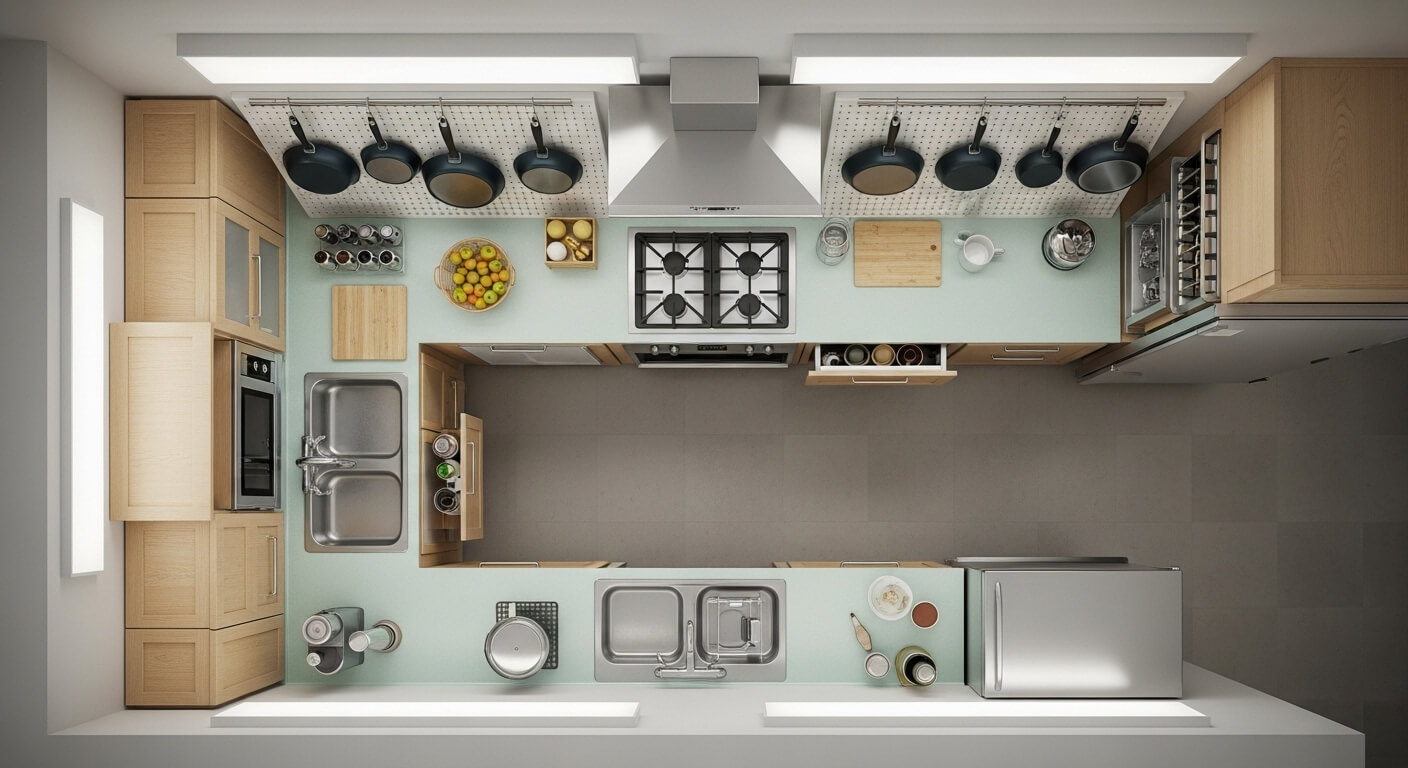
Storage Solutions for Multiple Pieces
Induction cookware stores like any other cookware, but magnetic bases can stick together.
Storage tips:
- Use pan protectors between stacked pieces
- Hang frequently-used pans if accessible
- Keep primary skillet out on stove (one less thing to store/retrieve)
Don’t buy more pieces than you have accessible storage for.
Daily Cooking Tasks Made Easier
Induction skillets simplify common cooking tasks—breakfast preparation becomes faster and safer, reheating leftovers requires minimal effort, one-dish dinners reduce cleanup, and meal prep proceeds more efficiently with precise temperature control.
How induction helps actual daily cooking.
Breakfast Preparation with Induction
Morning cooking made simple:
- Eggs: precise low heat prevents burning, non-stick ensures easy release
- Pancakes: even heat means uniform cooking, no hot-spot burning
- Bacon: controlled temperature reduces spattering
Arthritis benefit: Morning stiffness is when your hands work worst. Induction’s ease helps you actually eat breakfast instead of skipping it.
Reheating Leftovers Safely
Low, gentle heat reheats food without burning or drying out.
Process:
- Put leftovers in induction skillet
- Set to low power (2-3 out of 10)
- Cover with lid
- Walk away for 5-10 minutes
No microwave hot spots. No dried-out edges. Even, controlled reheating.
One-Dish Dinners
Cook protein and vegetables in the same skillet.
Typical one-pan meal:
- Sear chicken at medium-high (5-6 minutes)
- Reduce heat and add vegetables (10 minutes)
- Add sauce and simmer (5 minutes)
- Serve directly from pan
One skillet, one cooktop setting (adjusted as needed), minimal cleanup.
Meal Prep and Batch Cooking
Induction’s speed helps when prepping multiple meals.
Efficiency gains:
- Boil water for multiple dishes faster
- Precise heat prevents burning during long cooking sessions
- Cool cooktop surface gives you more workspace
- Less fatigue from shorter active cooking times
Prep on good days, reheat on bad days.
Addressing Progressive Arthritis
Induction cooking adapts to worsening arthritis through early adoption of good habits, maximizing benefits during moderate stages, combining with extensive adaptive equipment for advanced cases, and transitioning to assistance when necessary—supporting cooking independence at each disease stage.
Arthritis gets worse. Your cooking setup should adapt.
Early-Stage Arthritis Adaptations
When arthritis is mild, start using induction proactively.
Benefits of early adoption:
- Learn while you still have full function
- Establish safe habits before they’re critical
- Prevent accidents that could accelerate joint damage
Don’t wait until you’re desperate.
Moderate Arthritis Cooking Solutions
Pain is significant. Strength is reduced. Some tasks are becoming difficult.
Induction helps by:
- Eliminating high-risk activities (reaching over flames, handling very hot pans)
- Reducing physical effort (faster cooking, less stirring, easier cleanup)
- Providing precise control (compensates for reduced dexterity)
This is where induction really shines for arthritis.
Advanced Arthritis and Maximum Assistance
Severe arthritis. Daily pain. Significant functional loss.
Induction plus:
- Ultra-lightweight pans only (under 2 lbs)
- Extensive use of adaptive utensils
- Pre-prepped ingredients (minimal knife work)
- Simplified recipes (3-4 ingredients max)
- Family assistance with heavy lifting
Induction enables continued participation in cooking even when you can’t do it all independently.
Future-Proofing Your Kitchen
Set up your kitchen for arthritis progression.
Smart investments:
- Portable induction (can move as mobility changes)
- Counter-height work surface (can sit while cooking)
- Pull-out shelves (access pans without bending)
- Good lighting (helps as vision declines too)
Build a system that works now and adapts later.
Safety Protocols for Induction Cooking
Safe induction cooking requires proper pan placement centered on burners, avoiding metal utensils on glass cooktops, correct pot holder use, adequate monitoring without hovering, and knowing emergency shutdown procedures—protocols that prevent accidents for users with arthritis-related limitations.
Don’t just buy equipment. Use it right.
Proper Pan Placement on Burner
Center the pan over the burner coil.
Why centering matters:
- Ensures even heating
- Maximizes efficiency
- Prevents pan from sliding off during cooking
Most cooktops have circles marking the burner locations. Use them.
Avoiding Metal Utensils on Cooktop
Don’t set metal spoons, spatulas, or knives directly on the induction cooktop surface.
Risk: Small metal objects can heat up if they’re magnetic. Not a huge risk, but why chance it?
Safe practice: Use a spoon rest or plate next to the cooktop for utensil storage.
Using Pot Holders Correctly
Even though induction cooktop surfaces stay cool, the pan gets hot.
Always use pot holders when:
- Moving the pan
- Tilting to pour
- Removing from cooktop after extended cooking
Don’t get complacent about the cool cooktop and forget the pan itself is hot.
Monitoring Cooking Progress
You don’t need to hover, but do check periodically.
Good monitoring practice:
- Check every 5-10 minutes for most cooking
- Use glass lid to monitor without lifting
- Set timers so you don’t forget
Induction is safer, not foolproof.
Emergency Shutdown Procedures
Know how to kill power fast.
Emergency steps:
- Press main power button (turns off all burners immediately)
- If unavailable, press individual burner off button
- If controls unresponsive, unplug unit (portable) or flip breaker (built-in)
Practice this once so you know what to do in panic situations.
Medical Equipment Compatibility
Induction cooktops create electromagnetic fields that may affect pacemakers and other implanted medical devices—requiring consultation with healthcare providers and maintaining recommended distances during use for seniors with these devices.
Medical devices and induction need discussion.
Pacemaker Safety Guidelines
Standard recommendation: Maintain 12-24 inches distance between pacemaker and active induction cooktop.
Practical reality: You naturally stand back from the cooktop. Most people don’t lean directly over it.
Documented cases: Very few verified incidents of interference, but manufacturers err on side of caution.
Insulin Pump Considerations
Insulin pumps also use electronics that could potentially be affected.
Guidance: Similar to pacemakers—maintain reasonable distance, don’t lean directly over active burners.
Most insulin pumps are worn at waist level, which naturally maintains safe distance from cooktop.
Metal Implant Concerns
Joint replacements, metal plates, screws, etc.
Good news: These aren’t electronic, so electromagnetic interference isn’t an issue.
Magnetic heating: Won’t affect internal metal implants because they’re too far from the magnetic field and typically non-magnetic materials anyway.
Consulting Healthcare Providers
Before using induction if you have:
- Pacemaker
- Implantable cardioverter-defibrillator (ICD)
- Insulin pump
- Other implanted electronic devices
Get specific clearance from your cardiologist or device manufacturer. Show them specs of the induction cooktop you’re considering.
Most doctors will okay it with distance precautions, but don’t assume—ask.
Long-Term Kitchen Planning
Incorporating induction cooking into aging-in-place strategies, understanding home resale impacts, applying universal design principles, and coordinating with other kitchen modifications creates a comprehensive approach to maintaining cooking independence through progressive arthritis.
Think bigger picture.
Aging in Place Considerations
Induction supports staying in your home longer.
How it helps:
- Safer cooking reduces injury risk (major reason for forced moves)
- Easier use extends cooking independence
- Lower physical demands match declining capacity
- Adaptable to changing needs (portable units especially)
Safe cooking at home beats assisted living for most people.
Resale Value Impact
Does induction affect home value?
Built-in induction cooktops: Often seen as premium feature, can add value.
Portable units: No impact on resale (they’re just appliances).
For seniors planning to age in place, resale value isn’t the priority—functionality is.
Universal Design Principles
Induction aligns with universal design—features that work for everyone, regardless of ability.
Universal design elements:
- Easy-to-use controls
- Clear visual feedback
- Reduced physical demands
- Safer operation
Good for arthritis. Also good for anyone else who uses the kitchen.
Coordinating with Other Modifications
Induction works best with complementary modifications:
Kitchen updates to consider:
- Counter-height seating
- Pull-out shelves in cabinets
- Task lighting
- Lever-handle faucets
- Accessible storage
Create a complete arthritis-friendly kitchen, not just better cooking equipment.