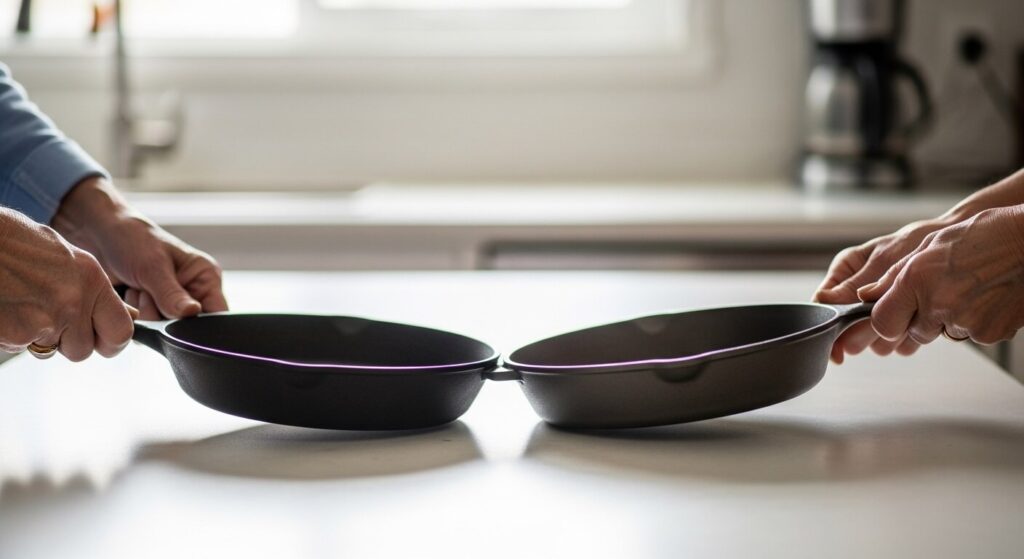
The main differences between the de Buyer Mineral B Pro and the de Buyer Mineral B are the handle design, price, and available sizes — everything else is nearly identical. Same carbon steel body. Same beeswax coating. Same seasoning process. But that handle? It changes everything about the daily cooking experience.
If you’re in a hurry: the Mineral B Pro has a cast stainless steel handle with a heat stop that stays cooler on the stovetop. The standard Mineral B has a carbon steel handle that gets hot fast. That’s the core trade-off. The Pro costs roughly $30–$37 more per size, and it tops out at 11 inches — no 12.5″, no 14″.
Now let’s get into the details.
Quick Comparison: Mineral B Pro vs Mineral B Carbon Steel
| Feature | Mineral B Pro | Mineral B |
|---|---|---|
| Handle material | Cast stainless steel (heat stop) | Carbon/stainless riveted |
| Handle stays cool? | Yes — noticeably | No — gets hot |
| Sizes available | 8″, 9.5″, 11″ | 8″, 9.5″, 10.25″, 11″, 12.5″, 14″ |
| Price range | ~$100–$135 | ~$63–$155 |
| Induction compatible | Yes | Yes |
| Oven safe | 400°F / 10 min | 400°F / 10 min |
| Dishwasher safe | No | No |
| Reviews (Amazon) | 4.4★ (1,174) | 4.5★ (15,663) |
| Made in | France | France |
The de Buyer Mineral B Carbon Steel Fry Pan: What You’re Actually Getting
The standard Mineral B is the pan that put de Buyer on most home cooks’ radar. It’s been around long enough to rack up over 15,000 Amazon reviews — and that’s not nothing.
What It Is
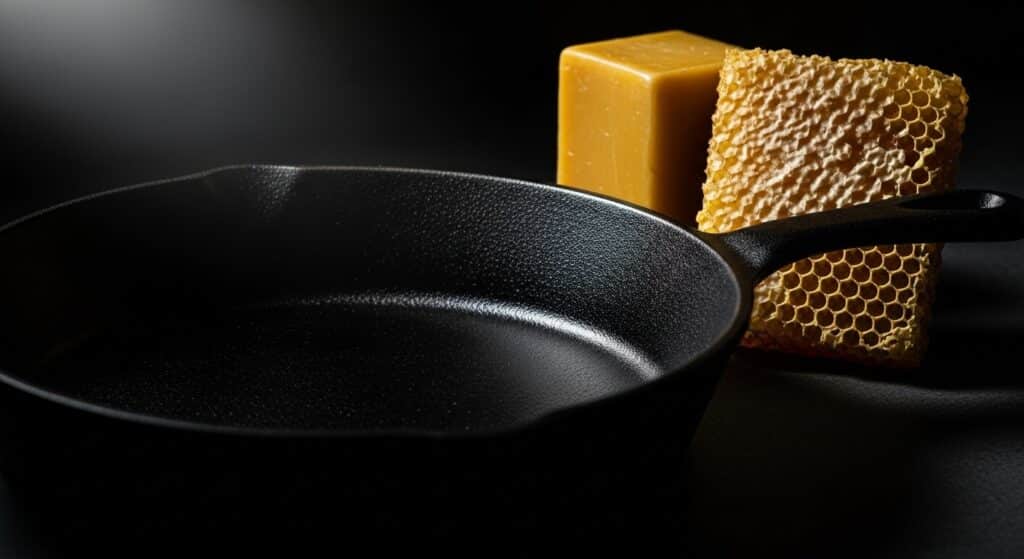
Carbon steel. That’s the whole pitch. The Mineral B is made from a material that’s roughly 99% iron and 1% carbon, coated in beeswax from the factory to prevent rust during shipping. You wash that off, season it properly, and what you’ve got is a pan that gets genuinely non-stick over time — without any Teflon, PFAS, or synthetic coatings in sight.
It’s lighter than cast iron (meaningfully so at larger sizes) and more heat-responsive than stainless steel. That responsiveness is what chefs love. Turn the heat down, the pan reacts. Fast.
According to a carbon steel cookware guide from Serious Eats, carbon steel heats up faster than cast iron and offers better maneuverability, making it a preferred choice in professional kitchens worldwide.
Features Breakdown
Cooking Surface & Material
- Natural carbon steel — no synthetic coatings, ever
- Develops a natural non-stick patina with use
- Responds to heat changes faster than cast iron
- Works on every heat source: gas, electric, ceramic, induction
Handle
- Riveted carbon/stainless steel hybrid
- It gets hot. Plan accordingly. A kitchen towel or silicone grip is non-negotiable
- Fine on the stovetop if you’re paying attention — not ideal for frequent oven-to-stovetop movement
Size Range — this is where the Mineral B wins outright:
- 8″ (~$62.94)
- 9.5″ (~$79)
- 10.25″ (~$95)
- 11″ (~$105)
- 12.5″ (~$125)
- 14″ (~$155)
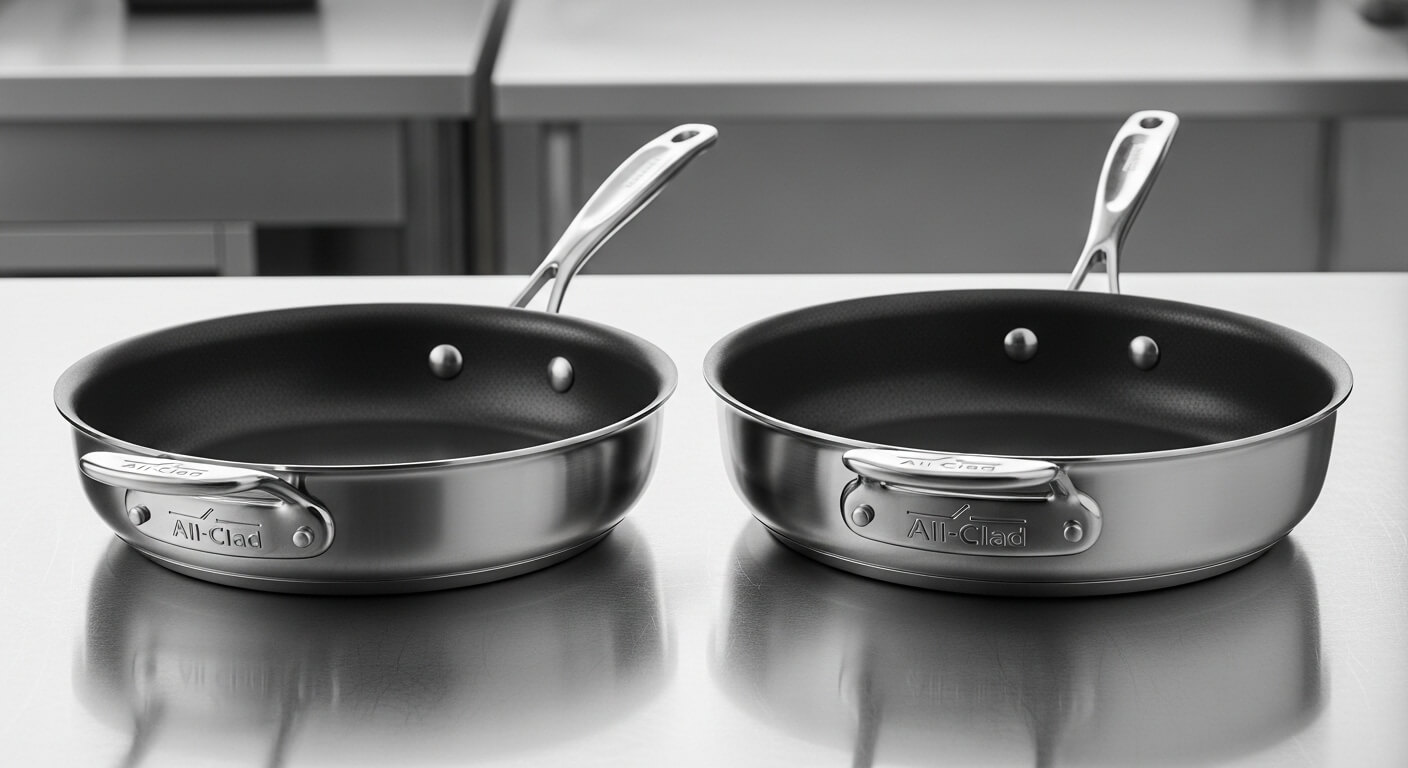
The 12.5″ and 14″ options don’t exist in the Pro line. Worth knowing.
Oven Safety
- Up to 400°F — but only for about 10 minutes
- Not ideal for slow roasting or braising
Maintenance
- Hand wash only
- No harsh soaps (they strip seasoning)
- Dry immediately to prevent rust
- A light oil wipe after each wash keeps it happy
Mineral B Pros and Cons
Pros
- More affordable across every comparable size
- Six size options, including the large-format 12.5″ and 14″
- Proven track record — 15,663 reviews at 4.5 stars
- Builds better seasoning with every cook
- Faster heat response than cast iron
- Zero synthetic coatings
Cons
- Handle gets hot. Fast.
- Heavier than expected at larger sizes (the 12.5″ hits ~6.35 lbs)
- Susceptible to rust if you’re careless about drying
- Metal utensils can scratch the seasoning
- Seasoning process intimidates beginners
Who Should Buy the Mineral B?
This pan is for you if you need a big pan (12.5″ or 14″ — no competition from the Pro here), or you’re working with a tighter budget and willing to manage a hot handle. Also great if you’re new to carbon steel and want to try the material without dropping $110+ on your first attempt.
The de Buyer Mineral B Pro Carbon Steel Fry Pan: The Upgraded Version
Same soul. Better handle. Higher price. That’s the Mineral B Pro in a sentence.
What Makes It “Pro”
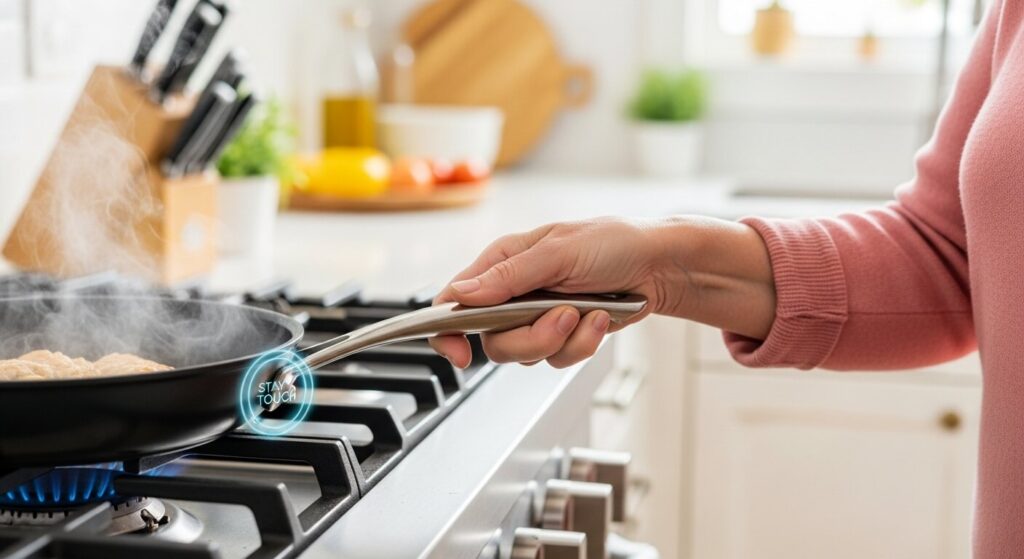
Honestly? The handle. That’s it. The cooking body — the actual carbon steel pan — is functionally identical to the standard Mineral B. What the Pro version adds is a cast stainless steel handle with de Buyer’s heat stop technology built in. The handle stays significantly cooler on the stovetop compared to the standard model.
For anyone who’s grabbed a carbon steel handle bare-handed and immediately regretted it, this is a real upgrade.
A study published by the American Burn Association found that cooking-related contact burns account for a significant share of household burn injuries — so a handle that runs cooler isn’t just a comfort feature, it’s a practical safety consideration.
Features Breakdown
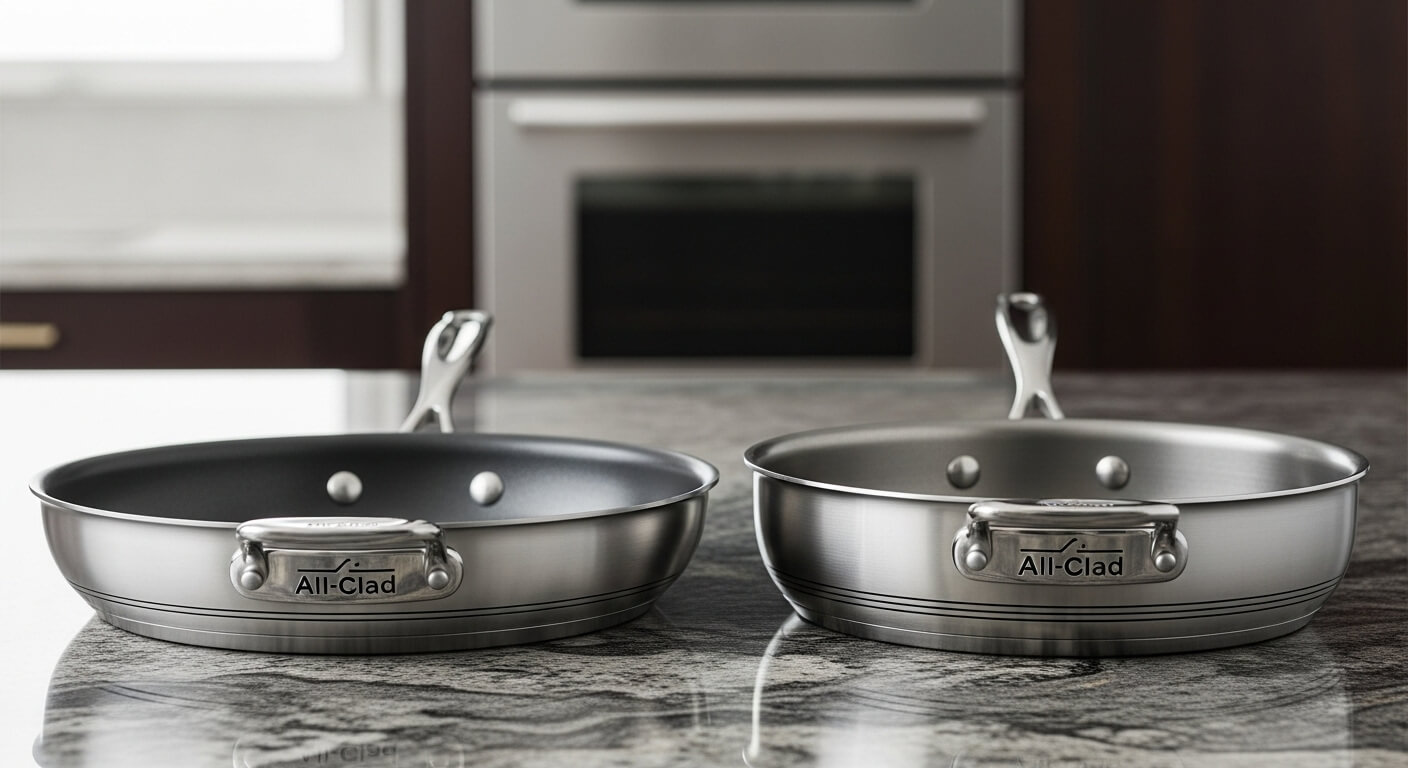
The Handle — The Whole Point
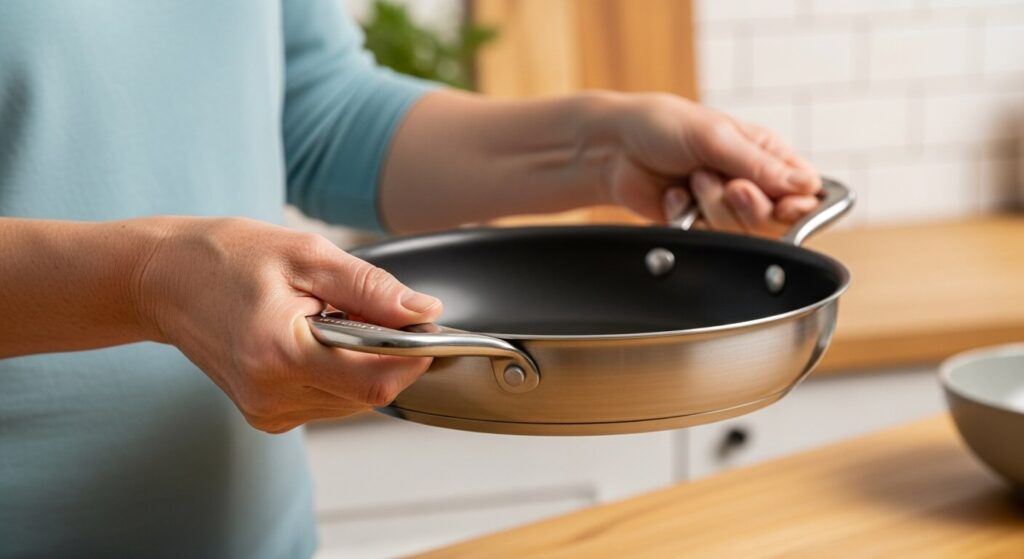
- Cast stainless steel with French curve ergonomics
- Heat stop technology: the handle stays noticeably cooler during stovetop cooking
- Better suited for oven-to-stovetop transitions
- More comfortable grip for extended cooking sessions
- Still gets warm eventually — it’s not magic — but dramatically cooler than the standard
Cooking Surface & Material
- Identical carbon steel to the standard Mineral B
- Same beeswax coating out of the box
- Same seasoning behavior — improves with repeated use
- Same zero-synthetic-coating philosophy
Size Range — smaller selection:
- 8″ (~$100)
- 9.5″ (~$110)
- 11″ (~$134.95)
That’s it. Three sizes. No 12.5″, no 14″. If you need a large-format pan, this isn’t your answer.
Oven Safety
- Same 400°F limit for 10 minutes as the standard
- The stainless handle does make the transition smoother in practice
Maintenance
- Identical to the standard Mineral B: hand wash, no harsh soaps, dry immediately, light oil coat
Mineral B Pro Pros and Cons
Pros
- Handle stays cooler — this genuinely matters day to day
- More ergonomic grip, especially during longer sessions
- Same excellent carbon steel cooking performance
- Easier stovetop-to-oven workflow
- 4.4 stars with strong customer satisfaction
Cons
- $30–$37 premium over the standard at each size
- Only three sizes available — no large-format options
- Still has the same oven limitations (400°F, 10 min)
- Some users report scratching with metal utensils
- Mixed feedback on weight — it doesn’t feel dramatically lighter
Who Should Buy the Mineral B Pro?
Daily cooks. People who move fast in the kitchen and don’t want to think about whether they can touch the handle. The Pro is also the right call if you’re frequently transitioning from stovetop to oven — that stainless handle makes the process less fussy. Cooking in the 8–11″ range? Great fit.
Professional chefs tend to prefer it for exactly that reason. Less friction during service.
de Buyer Mineral B Pro vs Mineral B: The Direct Head-to-Head
Handle: This Is the Whole Debate
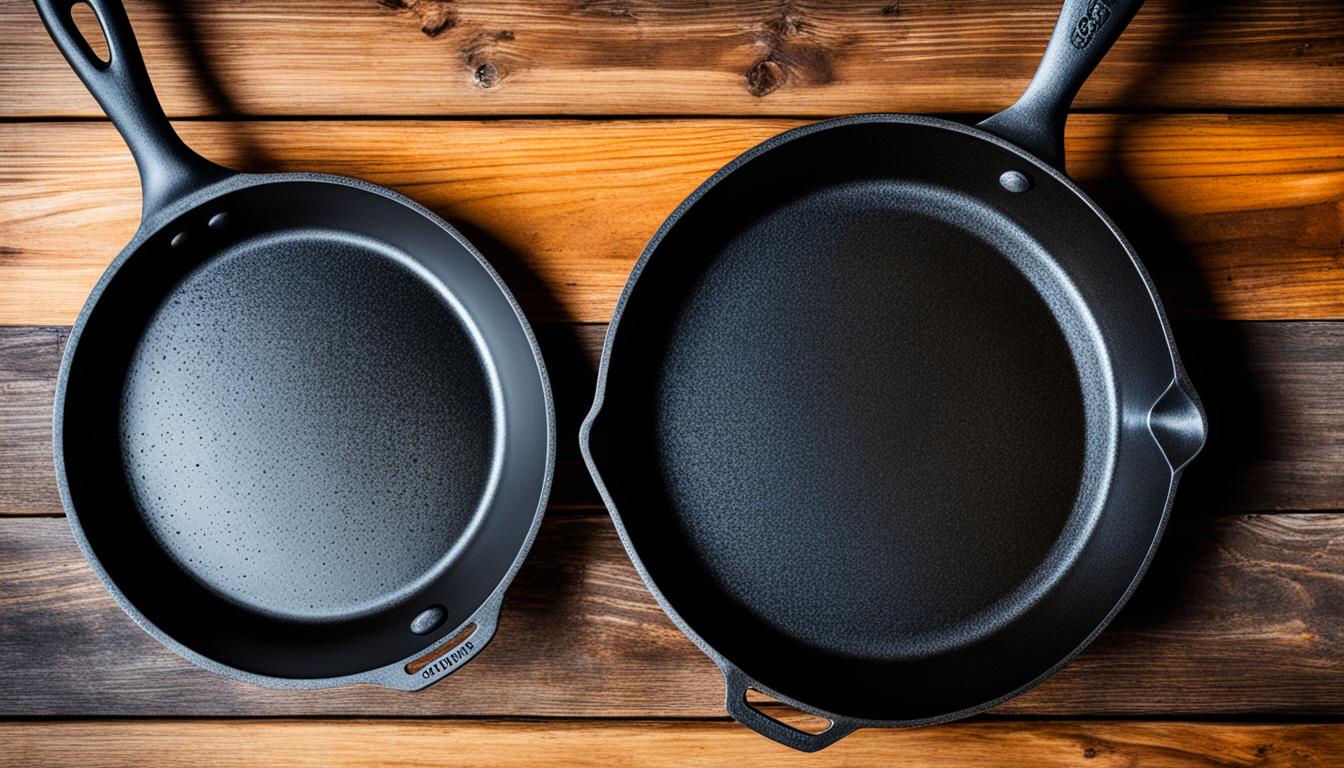
The standard Mineral B handle is riveted carbon/stainless steel. It gets hot. Not dangerously hot in the first minute, but by the time your steak has seared for 4 minutes per side? That handle is not something you grab bare-handed.
The Pro’s cast stainless handle with heat stop technology changes this completely. Customers consistently call it out as the single most noticeable upgrade. You can grab it mid-cook, reposition the pan, do what you need to do — without a towel in your other hand.
Worth $30 extra? For some cooks, absolutely. For others — if you’re already using a towel out of habit — maybe not.
Cooking Performance: Identical
Look, the pans cook the same. Searing a ribeye, sautéing vegetables, frying eggs once properly seasoned — you won’t notice a difference between the Pro and the standard in the actual cooking results. It’s the same material, same thickness, same heat behavior.
According to Cook’s Illustrated’s testing, carbon steel pans consistently outperform both cast iron and stainless steel in heat-up speed while delivering comparable searing ability — a combination that puts the Mineral B line in a strong position regardless of which version you choose.
Size Availability: Standard Mineral B Wins
No contest here.
| Size | Mineral B | Mineral B Pro |
|---|---|---|
| 8″ | ✓ | ✓ |
| 9.5″ | ✓ | ✓ |
| 10.25″ | ✓ | ✗ |
| 11″ | ✓ | ✓ |
| 12.5″ | ✓ | ✗ |
| 14″ | ✓ | ✗ |
If you need the 12.5″ or 14″ — and many people do, especially for family cooking or batch-cooking proteins — the standard Mineral B is your only option in this line.
Price: How Much Extra Are You Paying?
| Size | Mineral B | Mineral B Pro | Difference |
|---|---|---|---|
| 8″ | ~$62.94 | ~$100.00 | +$37 |
| 9.5″ | ~$79.00 | ~$110.00 | +$31 |
| 11″ | ~$105.00 | ~$134.95 | +$30 |
Roughly $30–$37 more for the handle upgrade. That’s the math. Whether that’s worth it depends entirely on how much the handle bothers you.
Weight: Basically the Same
The 9.5″ Mineral B comes in at about 3 lbs. The 9.5″ Mineral B Pro? About 3.17 lbs. Negligible. If someone tells you the Pro is noticeably heavier, they’re imagining things. The weight difference only becomes meaningful at larger sizes — and those only exist in the standard line anyway.
Carbon Steel vs. Cast Iron vs. Stainless — Where Does the Mineral B Fit?
This matters for context. A lot of people comparing these two de Buyer pans are also wrestling with whether carbon steel is right for them at all.
Why Carbon Steel Works
- Lighter than cast iron (the 9.5″ Mineral B is 3 lbs; a comparable Lodge cast iron is closer to 5)
- Faster heat response — you have more control
- Gets naturally non-stick without synthetic coatings
- Improves with every cook — genuinely gets better over years
Research published in the journal Food Quality and Preference has shown that Maillard reaction browning — the chemical process that gives seared meat its crust and flavor — performs best in high, consistent heat, which carbon steel delivers more efficiently than many alternatives.
vs. Cast Iron
Cast iron holds heat longer once it’s up to temperature. But it’s slower to respond, heavier, and frankly overkill for most stovetop cooking. The Mineral B gives you most of cast iron’s searing ability at a fraction of the weight.
vs. All-Clad Stainless
Stainless doesn’t season. It doesn’t become non-stick. It requires more fat and more technique to prevent sticking. The Mineral B, once properly seasoned, is just easier to cook on day to day — and handles higher heat without complaint.
How to Season Both Pans (Standard Mineral B and Pro — Same Process)
Don’t skip this section. The seasoning is what makes or breaks the carbon steel experience.
First Seasoning: Step by Step
- Wash off the beeswax — hand wash with warm water and a small amount of dish soap, just this once
- Dry completely — towel dry, then put it on low heat for 2–3 minutes to evaporate any remaining moisture
- Heat gradually — bring it up to medium-high slowly
- Apply oil thinly — grapeseed, flaxseed, or vegetable oil; just enough to coat the bottom and sides with a paper towel (wipe off excess — too much oil is the #1 mistake)
- Heat until smoking — about 10 minutes; the pan will darken
- Cool for 10 minutes — don’t rush this
- Wipe dry, reheat — bring back to medium-high for 2 more minutes, then let cool
That’s one round. Doing it 3–4 times before your first real cook gives you a solid base.
Common Seasoning Mistakes
- Too much oil — causes sticky, gummy spots. Thin layers only.
- Rushing the heat — warping risk increases if you crank it too fast
- Using soap after seasoning — strips the patina you just built
- Storing it wet — rust appears fast on bare carbon steel
What to Cook First
Fatty proteins. Bacon is the classic first cook — the fat does a lot of the seasoning work for you. Eggs come later, once you’ve got 4–6 layers of seasoning built up. Don’t rush to eggs on day one and then complain the pan sticks.
What Real Customers Are Saying
Mineral B (15,663 Reviews, 4.5★)
Customers consistently praise the non-stick surface after proper seasoning, noting that food — including eggs — slides off cleanly once the pan is broken in. Heat distribution gets called out positively, with multiple reviewers noting it heats faster than cast iron. One customer mentioned having 6 coats of seasoning and finding the surface excellent.
On the downside: rust shows up in reviews from people who stored the pan wet or didn’t dry it immediately. Weight is polarizing at larger sizes — the 12.5″ at over 6 lbs is legitimately heavy. Some report scratching with metal utensils.
Mineral B Pro (1,174 Reviews, 4.4★)
The handle is praised almost universally. Customers specifically note it stays cooler and makes the pan easier to handle mid-cook. Cooking performance gets the same positive marks as the standard line — unsurprisingly, since it’s the same pan.
Scratch complaints appear here too. Weight gets mixed feedback. A few customers describe it as heavy for its size — though at 3.17 lbs for the 9.5″, that’s more perception than reality.
According to a 2023 consumer satisfaction study by Statista on cookware preferences, handle comfort and ergonomics rank among the top three purchase factors for premium cookware buyers — which helps explain why the Pro commands a $30+ premium despite identical cooking performance.
Which de Buyer Carbon Steel Pan Is Right for You?
Buy the Mineral B Pro if:
- Handle comfort is a daily priority for you
- You cook in the 8–11″ range
- You move pans from stovetop to oven regularly
- The $30–$37 premium is within budget
Buy the Standard Mineral B if:
- You need 12.5″ or 14″ — full stop
- Budget matters and you’re comfortable with a hot handle
- You want more size flexibility
- You’re new to carbon steel and want to start with lower stakes
Both pans are genuinely excellent. Both are made in France. Both will last decades with proper care. The choice really does come down to the handle and the size you need — nothing more complicated than that.