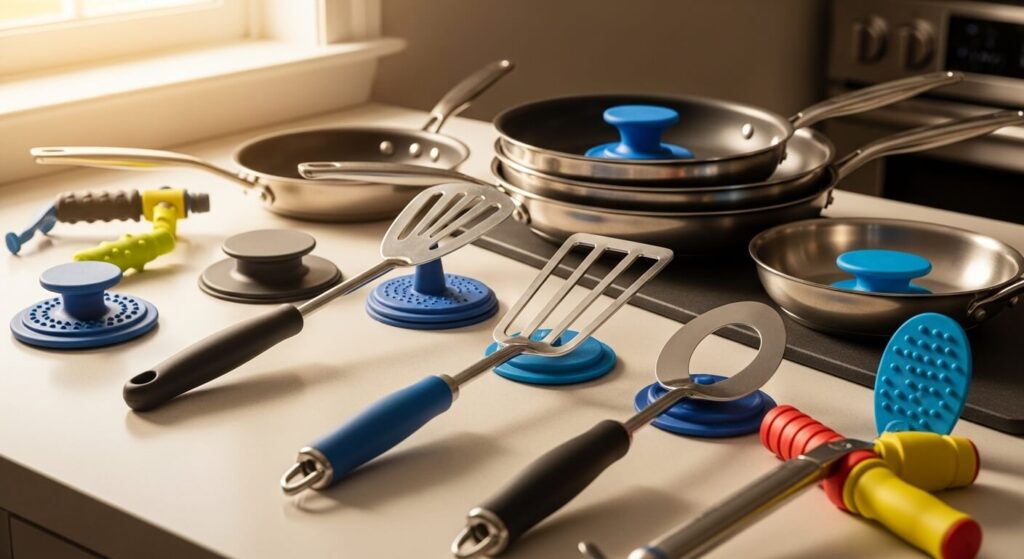
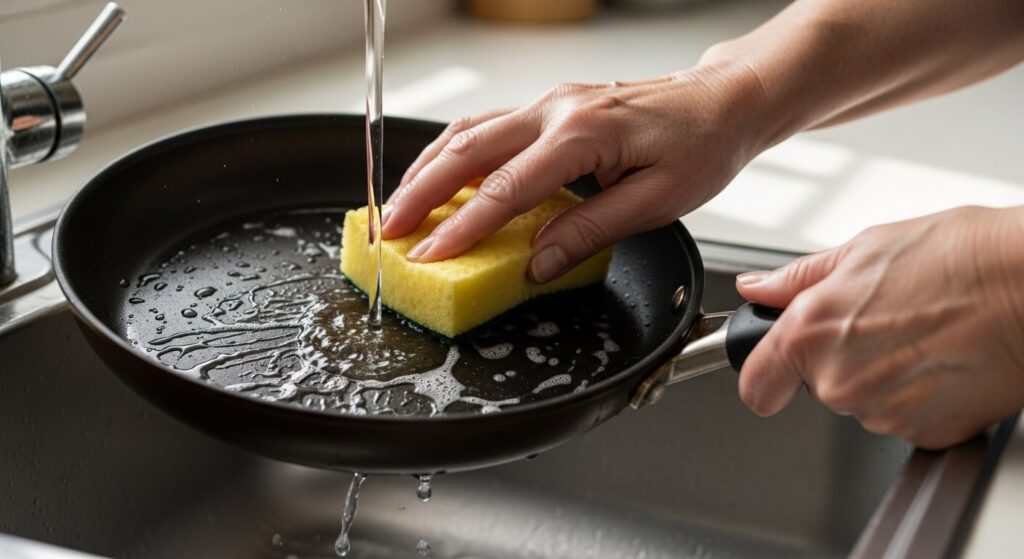
The Misen Carbon Nonstick skillet and the de Buyer Mineral B Carbon Steel Fry Pan are both excellent coating-free, chemical-free pans — but they’re built for very different cooks. Buy the Misen if you want nonstick performance from day one with minimal upkeep. Buy the de Buyer Mineral B if you want maximum searing power and a pan that genuinely improves over a lifetime of use.
That’s the short version. Here’s everything else.
Quick Comparison: Misen Carbon Nonstick Skillet vs De Buyer Mineral B Carbon Steel Fry Pan
| Feature | Misen Carbon Nonstick™ | De Buyer Mineral B |
|---|---|---|
| Material | 3-ply nitrided carbon steel + aluminum core | 99% iron, 1% carbon |
| Weight (10–11″) | ~2.4 lbs | ~4.2–4.8 lbs |
| Nonstick Out of Box | Yes — no seasoning needed | No — requires initial seasoning |
| Rust Resistant | Highly rust-resistant | Prone to rust without care |
| Oven Safe | Up to 500°F | Classic: 10 min at 400°F; PRO: unlimited |
| Price (10–11″) | ~$95–$119 | ~$55–$140 (Classic to PRO) |
| Warranty | Lifetime | Lifetime |
| Made In | USA (designed) | France |
Who Should Buy Which Pan
The Misen Carbon Nonstick is the better pan for most home cooks. The de Buyer Mineral B is the better pan for serious cooks who want to invest in something they’ll use for decades. Neither answer is wrong — it just depends on you.
Choose the Misen Carbon Nonstick if you:
- Want a pan that works right out of the box — no seasoning ritual
- Cook eggs, fish, or delicate proteins daily
- Don’t want to think about rust or careful drying after every wash
- Are switching away from Teflon and want an easy transition
- Cook on induction and need a lighter, responsive pan
Choose the de Buyer Mineral B if you:
- Want a traditional carbon steel pan that builds an incredible patina over time
- Sear steaks and proteins at high heat and want serious heat retention
- Don’t mind (or actually enjoy) caring for your cookware
- Want a pan you can pass down — genuinely
- Are looking for serious value, especially with the Classic version
Misen Carbon Nonstick Skillet — Full Review
What Makes the Misen Carbon Nonstick Skillet Different
The Misen Carbon Nonstick was launched in summer 2025. It’s not a traditional carbon steel pan — and that’s the point. Misen built it specifically to solve the two biggest frustrations people have with standard carbon steel: the need to season before use and the constant threat of rust.
They did this through nitriding — a process where the carbon steel surface is superheated in a nitrogen-rich environment. The result is an extremely hard, corrosion-resistant surface that’s naturally nonstick without any PTFE, PFOA, or synthetic coatings whatsoever. Zero coatings to chip. Zero chemicals to leach. This matters more than ever right now.
Research by the Ecology Center found that 79% of tested nonstick cooking pans were coated with PTFE — often without clear disclosure on the packaging. And as of January 1, 2025, Minnesota became the first state to ban the sale of nonstick cookware coated with PFAS, with Vermont, Connecticut, Rhode Island, and Colorado moving toward similar bans. The regulatory and health landscape around coated nonstick pans is shifting fast. Pans like the Misen — coating-free, chemical-free — are exactly where the market is heading.
The Misen is also 3-ply construction: an aluminum core sandwiched between two layers of nitrided carbon steel. That aluminum core is what makes the pan so light and heat-responsive. It’s a fundamentally different design from traditional carbon steel — closer in philosophy to clad stainless cookware, adapted for carbon steel’s advantages.
Misen Carbon Nonstick Key Features
Nitrided surface — nonstick from day one. No seasoning required. Eggs and fish slide off on the first use. The surface is also impervious to metal utensils — Misen actually recommends a stainless steel fish spatula.
3-ply aluminum core construction. Lighter, faster-heating, more even heat distribution than solid carbon steel. The 10-inch weighs just 2.4 lbs.
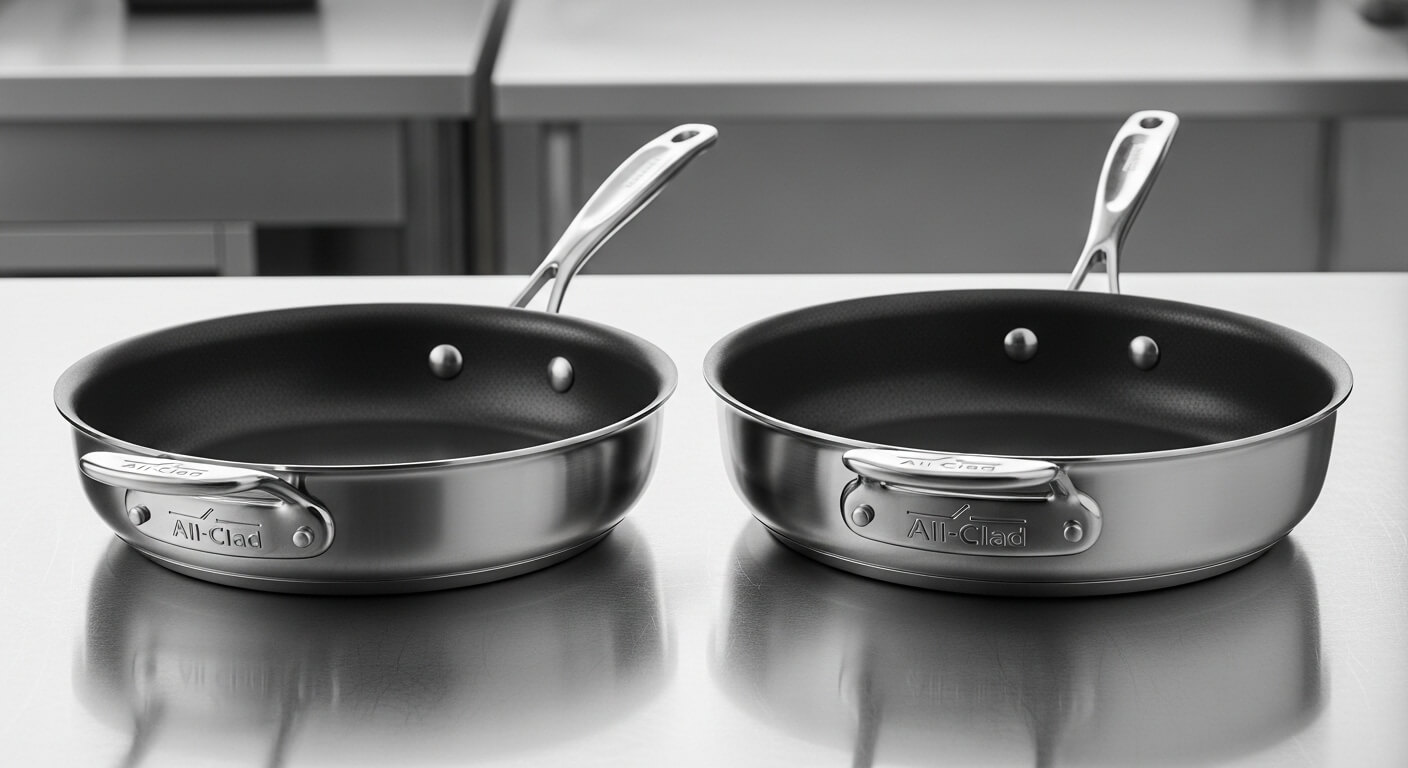
Highly rust-resistant. Unlike traditional carbon steel, you can soak the Misen overnight without concern. Reviewers at The Kitchn noted the pan weighs almost 3 pounds less than a comparable Lodge cast-iron skillet, and the rust resistance makes it far more forgiving for everyday use.
PFAS/PTFE/PFOA free. Completely. Not just “PFOA-free” (which, as Consumer Reports found, can still contain measurable PFAS) — but coating-free entirely.
Oven-safe to 500°F. Works on gas, electric, ceramic, and induction cooktops.
Metal utensil safe. Because the nonstick comes from nitriding — not a deposited coating — metal tools can’t scratch or damage it.
Misen Carbon Nonstick Specs
| Size | Pan Diameter | Cooking Surface | Weight |
|---|---|---|---|
| 8″ | — | — | — |
| 10″ | 10.75″ | 9″ | 2.4 lbs |
| 12″ | 12.4″ | 10″ | 3.0 lbs |
- Thickness: 3.0mm base, tapering to 2.5mm sidewalls
- Handle: Stainless steel, precision-welded
- Oven safe: Up to 500°F
- Dishwasher safe: No — hand wash recommended
Misen Carbon Nonstick Price
- 8-inch: ~$75–$85
- 10-inch: ~$95–$105
- 12-inch: ~$115–$125
Sets with accessories (fish spatula, pan scrapers) are available directly from Misen’s website for modest savings.
Misen Carbon Nonstick Pros and Cons
Pros:
- Nonstick from the first use — no prep needed
- Dramatically lighter than traditional carbon steel at 2.4 lbs (10-inch)
- Rust-resistant enough to soak overnight
- No coatings, no PFAS, no Teflon
- Metal utensil safe
- Even heat distribution from aluminum core
- Works on all cooktops including induction
- Nonstick performance improves with use
Cons:
- Shallower sides (1.75″) — not ideal for deep sautéing
- More expensive than the de Buyer Classic at comparable sizes
- Less heat retention than solid carbon steel
- Aerosol cooking sprays can leave residue that builds up over time
- New product — no decades-long track record yet
Who Is the Misen Carbon Nonstick Best For
This pan is built for home cooks who want to stop using Teflon but don’t want to adopt traditional carbon steel’s learning curve. It’s the right choice if you want a coating-free, chemical-free pan that performs like nonstick from the start — without babying it.
The Kitchn’s review noted the pan excelled in formal testing, with an over-easy egg sliding out cleanly, salmon skin crisping evenly, and intentional metal-on-metal scraping having no effect on the surface. For busy home kitchens, that kind of low-stakes reliability is worth a lot.
It’s also sneaky good for anyone who cooks on induction — the light weight and fast heat response make it one of the more pleasant pans to use on induction cooktops.
De Buyer Mineral B Carbon Steel Fry Pan — Full Review
What Is the De Buyer Mineral B
De Buyer has been making cookware in France since 1830. Nearly 200 years. The Mineral B is their flagship carbon steel pan — a single stamped plate of 99% iron and 1% carbon, no coatings, no aluminum core, no shortcuts. It arrives coated in natural French beeswax (de Buyer has installed beehives at their factory in Val d’Ajol) as a protective finish. You wash the wax off, season the pan, and you’re off. The nonstick performance builds with every cook.
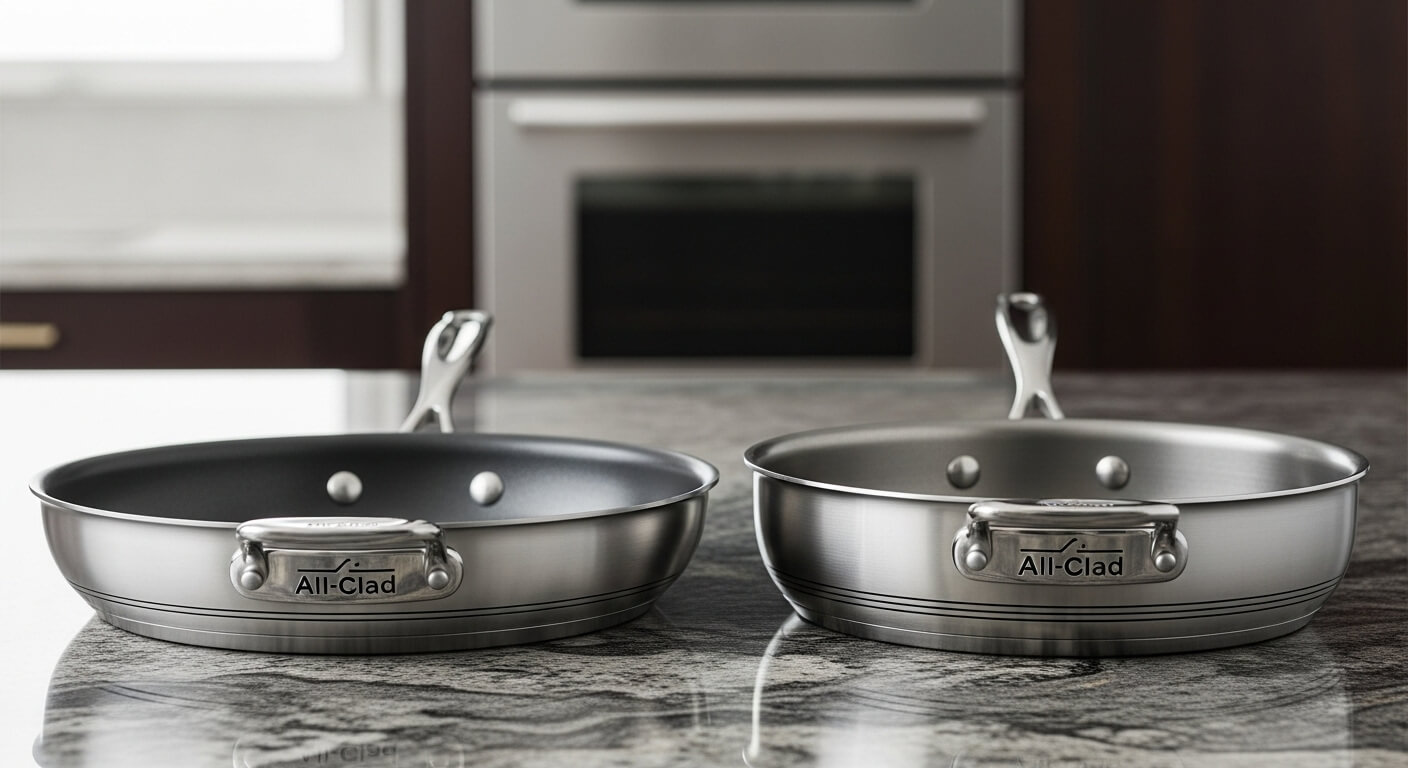
This is not a pan for someone who wants convenience out of the box. It never has been. It’s a pan for people who understand that the best things in a kitchen take time to develop.
Here’s what’s interesting from a health angle: a systematic review published in PMC on cooking with iron pots found it can increase the iron content of food and improve iron intake in people at risk of iron deficiency anemia. The World Health Organization recognizes iron deficiency anemia as the most common nutritional deficiency globally. Cooking with iron cookware — including carbon steel and cast iron — is one of the simplest ways to get trace dietary iron naturally. Not a reason to buy a pan, necessarily. But not nothing, either.
De Buyer Mineral B Key Features
99% iron, 1% carbon. Single-layer solid steel. No coatings, no aluminum core, no layers. The simplest possible construction.
Natural beeswax finish. Ships protected by French beeswax — eco-conscious, food-safe, and it helps kickstart the initial seasoning. Not a chemical anti-rust treatment.
Seasoning-dependent nonstick. The Mineral B is not nonstick out of the box. It requires a proper initial seasoning before it performs well with delicate foods. But here’s the thing — once it’s seasoned? A well-used Mineral B develops a patina that many serious cooks swear is better than any coated surface.
Superior heat retention. Solid steel means more thermal mass. When a cold steak hits a properly preheated Mineral B, it doesn’t lose heat like a lighter pan would. That’s the difference between a sear and a steam.
Classic French “lyonnaise” profile. Curved, flared sides designed for tossing and sliding food. The French-curved handle keeps your hand well away from the heat and distributes weight naturally.
Riveted handle. Not welded — riveted. Indestructible connection. It won’t loosen. Ever.
Mineral B Classic vs. PRO:
- Classic: Epoxy-coated steel handle. Oven-safe for flash use only — up to 10 minutes at 400°F. Most affordable option.
- PRO: Cast stainless steel handle with Heat Stop technology. Fully oven-safe at any temperature. Preferred by professional chefs.
Lifetime warranty. Made in France.
De Buyer Mineral B Specs
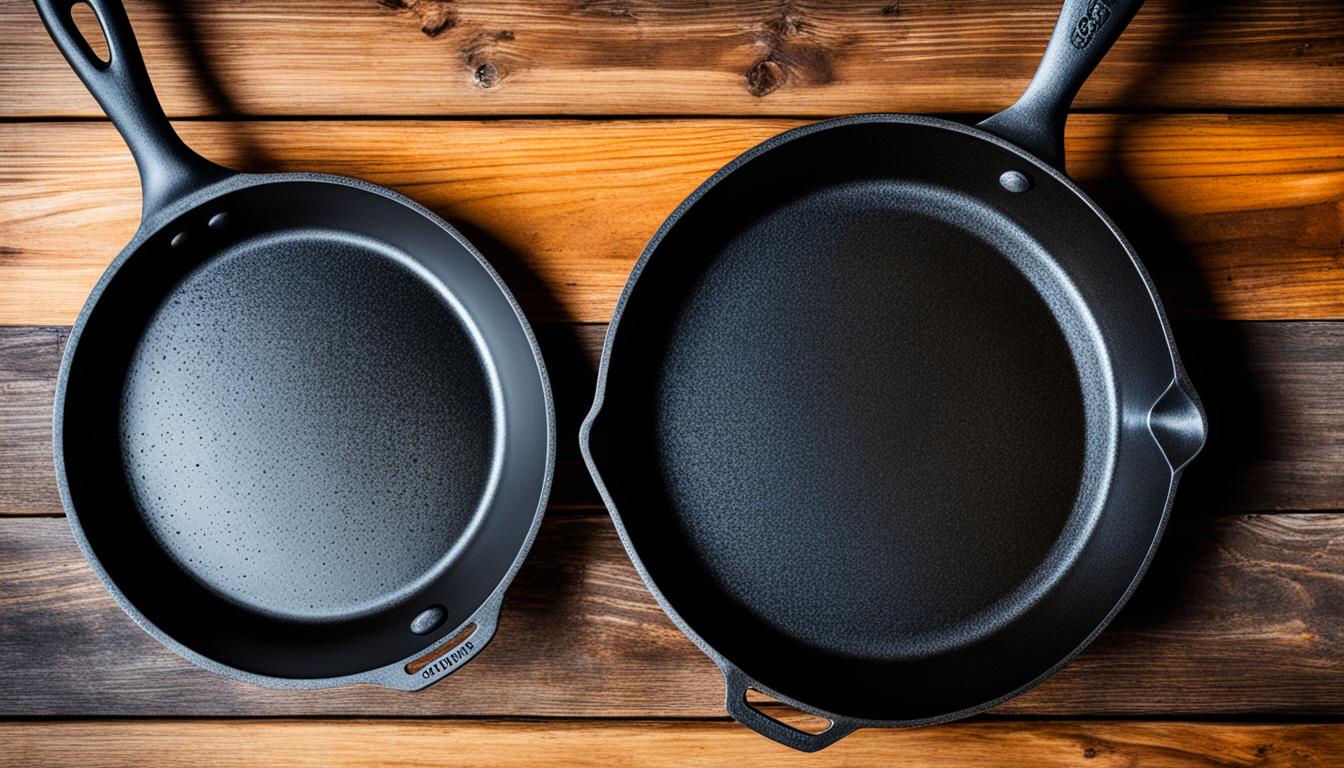
Mineral B Classic:
| Size | Cooking Surface | Weight |
|---|---|---|
| 8″ | 5.5″ | 2.2 lbs |
| 10.25″ | 7.3″ | 4.2 lbs |
| 11″ | 8.3″ | 4.8 lbs |
| 14″ | 10.25″ | 7.8 lbs |
- Thickness: 2.5–3mm solid carbon steel
- Material: 99% iron, 1% carbon
- Oven safe: Classic — 10 min at 400°F / PRO — unlimited
- Dishwasher safe: No — hand wash only, no soap
De Buyer Mineral B Price
- Mineral B Classic (10.25″): ~$55–$75
- Mineral B Classic (11″): ~$70–$85
- Mineral B PRO (11″): ~$120–$140
- Mineral B PRO (12.5″): ~$150–$170
The Classic is one of the best value propositions in quality cookware at any price point. Period.
De Buyer Mineral B Pros and Cons
Pros:
- Nearly 200 years of proven design — French culinary institutions rely on it
- Superior heat retention for high-heat searing
- Natural nonstick patina that improves with every cook
- Solid steel — no coatings, no aluminum, no complexity
- Fully oven-safe at any temperature (PRO version)
- Exceptional value on the Classic version
- Wide size range up to 14 inches
- Lifetime warranty, made in France
- True heirloom quality — designed to be passed down
Cons:
- Not nonstick out of the box — requires a seasoning session before first use
- Heavy — the 11-inch weighs 4.8 lbs, nearly double the Misen
- Prone to rust if left wet or stored in humidity
- Acidic ingredients strip the seasoning
- Classic version’s epoxy handle limits oven use to 10 minutes at 400°F
- Steeper learning curve for new carbon steel cooks
- Slower to heat and less even distribution on burners with hot spots
Who Is the De Buyer Mineral B Best For
This pan is built for cooks who are in it for the long game. If you want something that gets better every time you use it — and we mean measurably, noticeably better — the Mineral B delivers that in a way no nitrided pan can match. The seasoning patina that builds on a well-used Mineral B is genuinely impressive.
According to Francis Pascal, executive chef and owner of Venador Luxury Private Dining, “French brigade kitchens built their reputations on carbon steel, and Asian wok cooking is defined by it.” That’s not marketing copy. That’s the professional kitchen reality.
If you sear proteins regularly, cook at high heat, and don’t mind a bit of care — this is your pan. It’s also the right call if you want the most size options: the 14-inch Mineral B is a category with very few competitors.
Misen Carbon Nonstick vs De Buyer Mineral B: Head-to-Head
Construction — Different Philosophies, Both Valid
The Misen is 3-ply clad: aluminum sandwiched between nitrided carbon steel layers. The de Buyer is monoply solid steel: one stamped plate, full stop.
The Misen’s aluminum core gives it faster heat response and lighter weight. The de Buyer’s solid construction gives it more thermal mass, better heat retention, and the capacity to build a deeper seasoning patina. These aren’t one better than the other — they’re genuinely different tools optimized for different goals.
Weight — A Big Deal
Misen 10-inch: 2.4 lbs. De Buyer Mineral B 10.25-inch: 4.2 lbs. That’s nearly double. The de Buyer 11-inch hits 4.8 lbs.
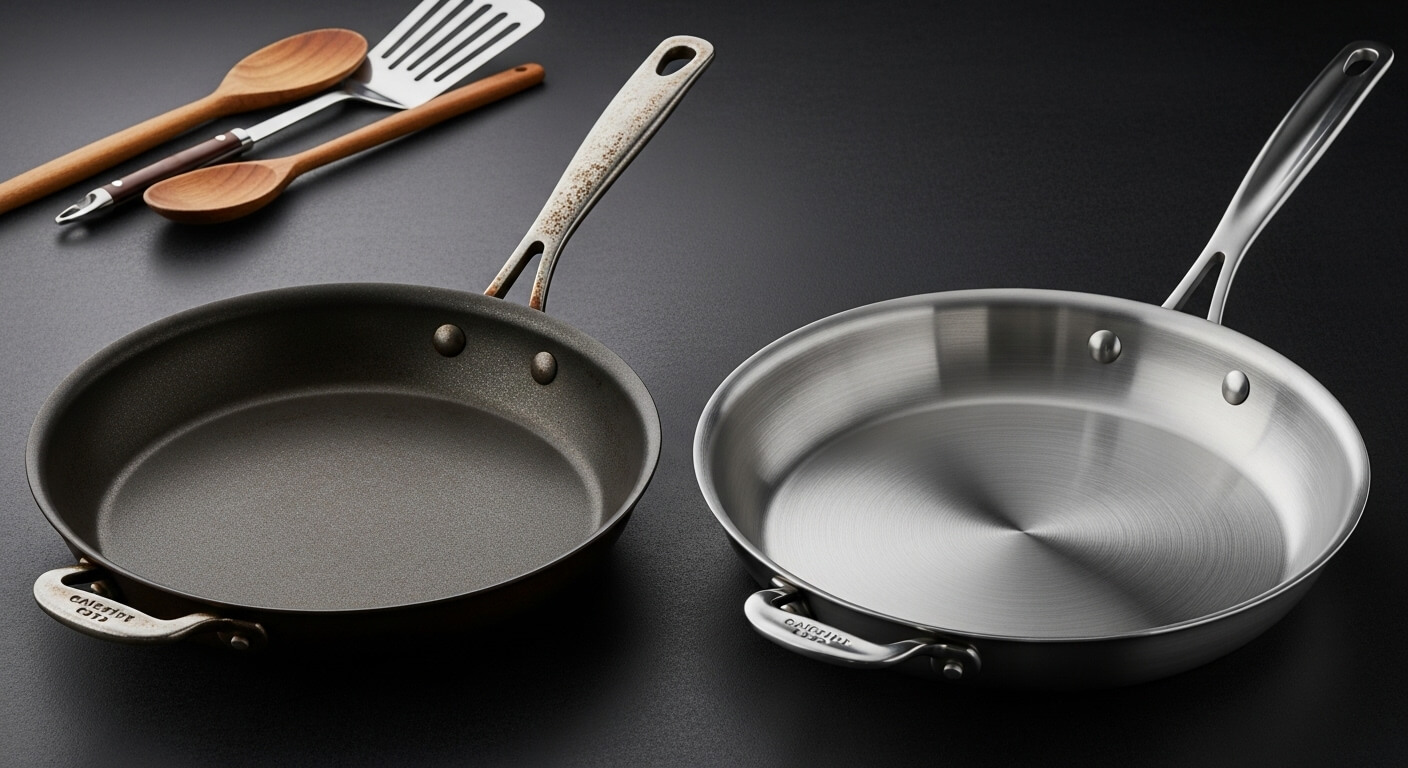
For daily use — tossing vegetables, cooking multiple times a day — the Misen’s weight advantage is real. But the de Buyer’s heft isn’t just extra weight. It’s thermal mass. It helps the pan stay stable on the burner and hold heat when cold food hits the surface. Experienced cooks learn to appreciate it. Beginners often don’t.
Nonstick Performance
Out of the box? Misen wins easily. Eggs slide off, fish doesn’t stick, pancakes flip cleanly. No prep. The de Buyer Mineral B, fresh from the box with beeswax still on it, will stick like you’ve never seen.
Over time? The gap closes. A properly seasoned Mineral B — months, years of use — develops a naturally nonstick patina that many experienced cooks describe as surpassing any coated surface. It’s slower to get there, but it’s arguably deeper and more durable once it arrives.
The Misen’s nonstick also improves with use, and its baseline is strong. For most home cooks, the Misen stays the more reliably nonstick pan throughout its life. But long-term? The Mineral B has a ceiling that’s hard to argue with.
Searing and Heat Retention
This is where the de Buyer wins cleanly. Solid steel retains heat better than a clad aluminum core pan. When a cold steak hits a preheated Mineral B, the pan holds its temperature — you get a hard sear, the Maillard reaction fires, and you get restaurant-quality browning.
The Misen heats up faster and responds more quickly to temperature changes. That’s ideal for eggs, fish, sautéed vegetables — delicate tasks where precision matters. Less ideal for batch-cooking chicken thighs or aggressive searing. If searing is your primary goal, the Mineral B is the better tool. Not a close call.
Maintenance and Care
No competition here. The Misen is dramatically easier to care for.
Misen care: Wash with soft cloth and a drop of dish soap. Can soak overnight. Skip the oil wipe-down. Basically normal pan behavior.
De Buyer Mineral B care: Hand wash only (no soap), dry immediately, wipe with oil before storing, avoid acidic ingredients until seasoning is established, re-season if rust appears. Not burdensome for experienced cooks — but it is a genuine additional commitment.
Oven Compatibility
Misen Carbon Nonstick: Oven-safe to 500°F. The stainless handle goes right in.
Mineral B Classic: Limited — up to 10 minutes at 400°F only. The epoxy handle is the constraint, and it’s a real one if you finish steaks in the oven.
Mineral B PRO: Fully oven-safe at any temperature. Cast stainless handle, no limits.
If oven use matters, the Mineral B Classic has a meaningful limitation. The PRO resolves it — but at a higher price that puts it into Misen territory.
Price Reality
The Mineral B Classic (10.25-inch at ~$55–$75) is the clear value leader. For a French-made, lifetime-warranty, solid carbon steel pan — that’s genuinely hard to beat.
The Misen Carbon Nonstick costs more than the Classic but brings out-of-the-box nonstick, rust resistance, and lighter weight that the Classic can’t match.
The Mineral B PRO is priced comparably to or above the Misen and adds unlimited oven safety with a fully stainless handle.
Durability and Longevity
Both carry lifetime warranties. Both are built to last. But the Mineral B has a documented track record that the Misen — a product that launched in 2025 — simply can’t yet match. De Buyer has been making this pan in essentially the same form since 1830. People inherit well-seasoned Mineral B pans from their parents. That’s the track record.
The Misen’s nitrided surface is genuinely harder and more durable than traditional nonstick coatings. It won’t chip or peel. The nonstick won’t degrade the way Teflon does. But it’s a new product. Time will tell.
Misen Carbon Nonstick Skillet vs De Buyer Mineral B: Which Carbon Steel Pan Wins?
The Misen Carbon Nonstick skillet is the right pan for most home cooks — it delivers immediate results, forgives mistakes, and makes the transition from Teflon completely painless.
The de Buyer Mineral B Carbon Steel Fry Pan is the right pan for cooks who are serious about the craft, patient with the process, and want a pan that rewards years of use with something special.
Bottom line: If you cook frequently, care about your cookware, and want the best possible sear — get the Mineral B (PRO if you use your oven). If you want coating-free nonstick with no learning curve and no rust anxiety — get the Misen.
Both are lifetime pans. Neither is a bad choice. One is just better for you.