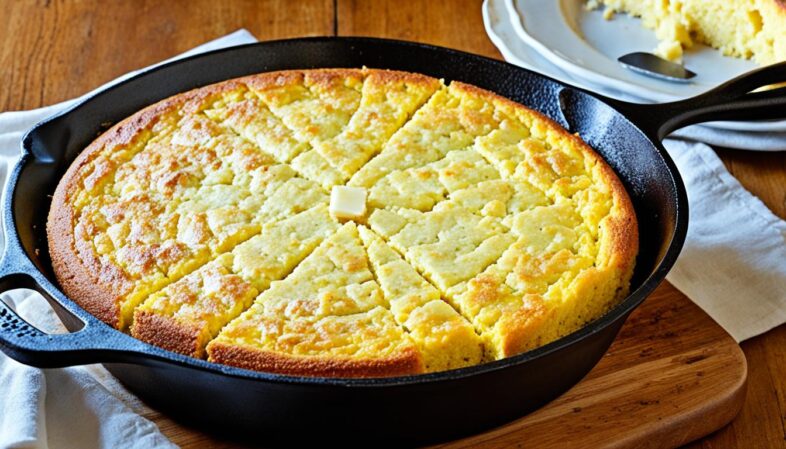
Sweet cast iron skillet cornbread delivers a shatteringly crispy bottom crust, golden edges, and a tender crumb you simply can’t replicate in a glass pan — and these eleven recipes, from classic honey-glazed to peach cobbler fusion and chocolate chip, cover every variation worth making.
Why People Love Cast Iron Skillet Cornbread
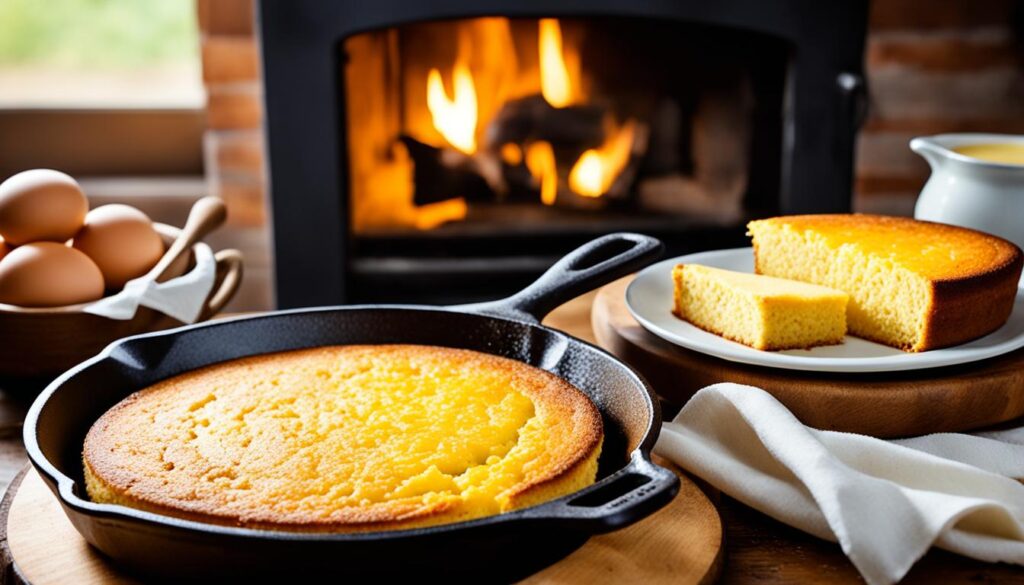
That bottom crust. That’s it. That’s the whole reason.
You preheat the skillet in the oven, drop butter into the hot iron, and the moment batter touches it — there’s this aggressive sizzle, kind of alarming the first time — and the underside of the bread starts forming a crust before the top has even begun to set. A regular baking dish just heats the batter from the sides. Cast iron attacks it from below. The result is something with actual texture contrast: golden, slightly crunchy bottom, soft and sweet interior.
My wife figured this out about four years back. She’d made cornbread in a 9×13 pan — totally fine, nothing wrong with it — and then I made it two weeks later in the cast iron and she looked at the bottom of the slice and said “we’re not doing it the other way anymore.” My sons weren’t even listening to that conversation. They were already on their second pieces.
I’ve tried various high-quality skillets and basic ones, and here’s the actual truth: pan size matters more than brand. A 10-inch cast iron gives you the best edge-to-center ratio for cornbread. Skillet cornbread in a 12-inch spreads too thin and the center undercooks before the edges are right. Eight inches and it’s too thick, takes forever, the center stays gummy.
Ten inches. That’s the number.
According to the Institute of Culinary Education, corn has deeper historical and cultural roots than almost any other American food — Native American origins, a central role in the lives of enslaved African cooks who transformed simple cornmeal into something sustaining and creative — and it was baked in cast iron long before modern bakeware existed. Making it in a cast iron skillet today isn’t just convenient. It’s the original method.
Essential Ingredients for Sweet Cornbread
Let’s be direct about a few things before we get into recipes.
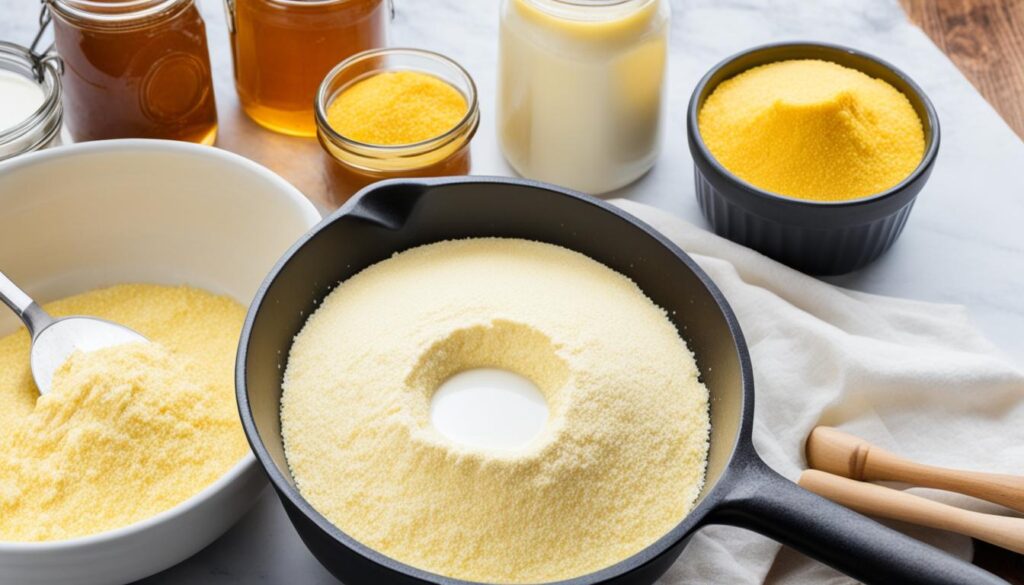
Cornmeal type matters. Yellow cornmeal has more flavor and a slightly earthier quality. White cornmeal is subtler. Stone-ground — if you can find it — is genuinely better than the fine-ground stuff. More texture, actually tastes like corn, not just corn-adjacent starch.
Your sweetener is doing more than sweetening. Granulated sugar gives a clean, neutral sweetness. Brown sugar adds molasses undertones that deepen the flavor, especially around the edges where it caramelizes against the hot iron. Honey changes the moisture content and adds floral notes. Maple syrup adds smokiness. These aren’t interchangeable — each one produces a noticeably different result.
Buttermilk vs. whole milk. Buttermilk makes a more tender, slightly tangy cornbread. The acidity reacts with baking powder and gives you better rise. Whole milk works fine. Skim milk — don’t. It makes the crumb tight and dry and I’ve tried it twice hoping it would be fine and it wasn’t.
Overmixing is the enemy. I’ll say this once here and mean it for every single recipe below: mix until the dry streaks disappear and stop. Immediately. The batter should look lumpy. That’s not a problem to fix — that’s the goal. A smooth batter bakes into something tough and dense. Lumpy batter bakes tender.
One nutritional note worth mentioning: whole-grain cornmeal provides about 7.3 grams of dietary fiber per 100 grams — roughly 29% of your daily value, per USDA FoodData Central. Even the sweet versions have some genuine nutritional backbone.
Preparing Your Cast Iron Skillet for Baking
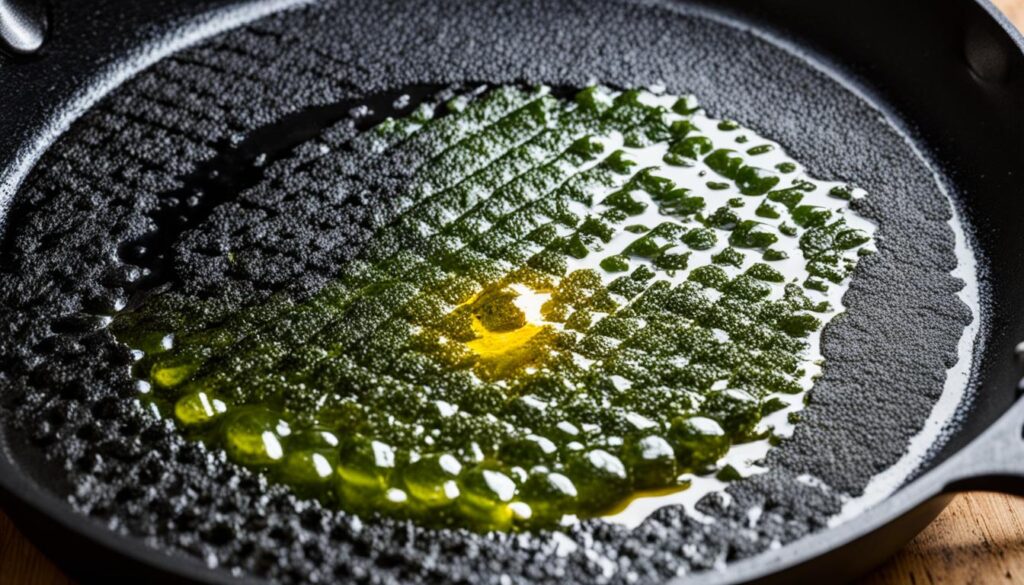
Two things. Both non-negotiable.
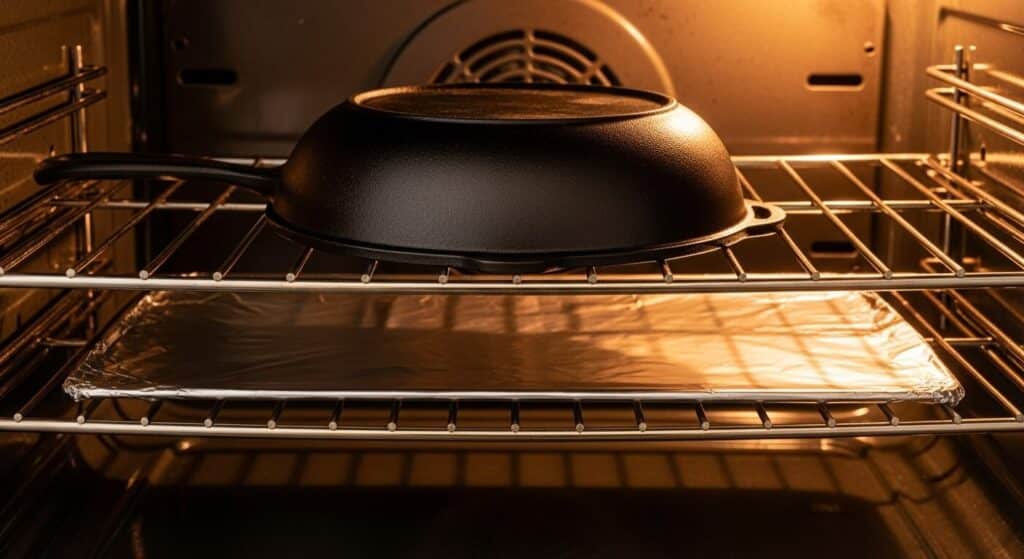
Preheat the pan inside the oven. Not after. The skillet needs to already be hot when the batter goes in — that’s the entire mechanism behind the bottom crust. I learned this the same way I learned everything about cast iron: by doing it wrong first and wondering why my cornbread looked exactly like regular cornbread. Cold pan, no crust. Same principle applies when making cast iron skillet Chicago deep dish pizza — the heat in the pan before the food arrives is doing real structural work.
Use enough fat. Every recipe below calls for melting butter directly into the preheated skillet. That fat browns against the hot iron surface, and the batter immediately starts cooking against it. The bottom crust isn’t just flavor — it’s architecture. Don’t reduce the butter. Don’t substitute cooking spray. This is the wrong place to cut corners.
Pour batter into the center of the pan, not the edges. Pour it fast. The butter will hiss and pop when it makes contact and that sound means you did it right.
Classic Sweet Cornbread Recipe
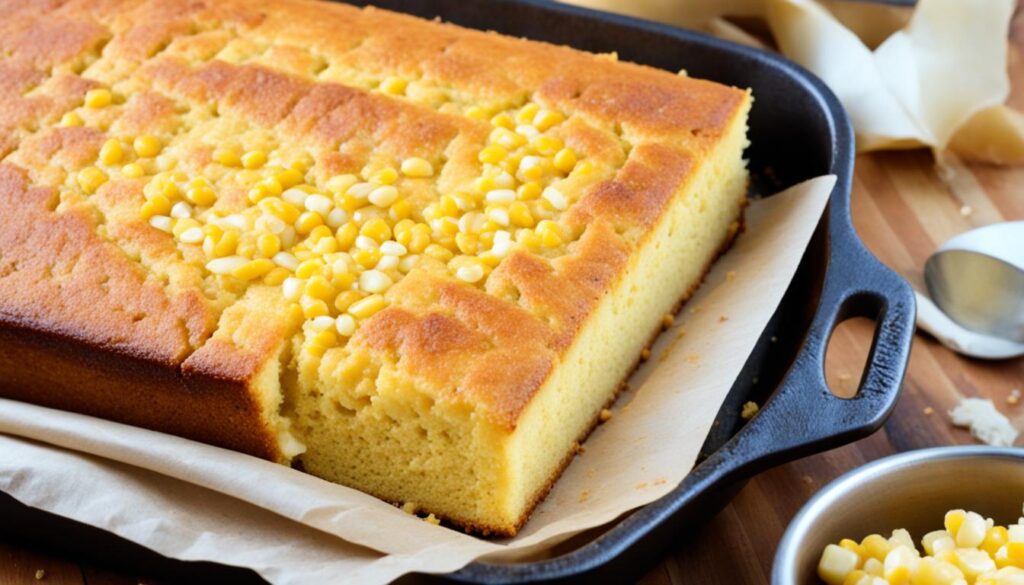
The foundation. Every other recipe on this page is a variation of this one, and this one is genuinely worth making on its own merits.
My wife reaches for this whenever she makes a big pot of chili — the cornbread soaks up the broth and it’s one of those combinations that works so well it’s almost boring to describe. My older son eats leftover slabs cold, straight from the fridge, the next morning with butter. He started doing this on his own at about age fourteen and honestly I think he’s onto something. Pairs well with a healthy beef and broccoli stir fry for a weeknight dinner where the bread soaks up the sauce.
Simple. No tricks. Gets out of its own way.
Ingredients (Serves 4)
- 1 cup yellow cornmeal
- 1 cup all-purpose flour
- 1/3 cup granulated sugar
- 1 tbsp baking powder
- 1/2 tsp salt
- 1 cup whole buttermilk
- 2 large eggs
- 1/3 cup unsalted butter, melted — plus another 1 tbsp to go in the hot skillet
- 1 tsp vanilla extract
Instructions
Oven to 400°F. Cast iron goes in now, while the oven heats.
Dry ingredients — cornmeal, flour, sugar, baking powder, salt — into a large bowl, whisk them together. In a separate bowl, whisk the buttermilk, eggs, melted butter, and vanilla until everything’s uniform and slightly pale. Pour the wet mixture into the dry and stir — just until the last dry streaks disappear. The batter looks lumpy and that’s correct. Stop stirring immediately.
Pull the hot skillet from the oven. Oven mitts, both hands — the handle is genuinely dangerous, not just warm. Drop the tablespoon of butter in. It’ll melt within seconds, start sizzling, maybe foam slightly. Swirl it around to coat the bottom. Pour the batter in right from the center and let it spread.
Back into the oven. Twenty to 25 minutes. The top should look set and golden — not wet, not pale. A toothpick inserted dead center should come out with a few moist crumbs but no wet batter. The edges will have pulled slightly away from the pan sides, which is the visual cue that it’s done.
Five minutes to cool before cutting. The bottom crust firms up during those five minutes.
Nutritional Information (Per Serving)
| Nutrient | Amount per Serving |
|---|---|
| Calories | 420 |
| Carbohydrates | 58g |
| Protein | 9g |
| Fat | 16g |
| Fiber | 2g |
| Sodium | 480mg |
Honey-Glazed Cornbread Delight
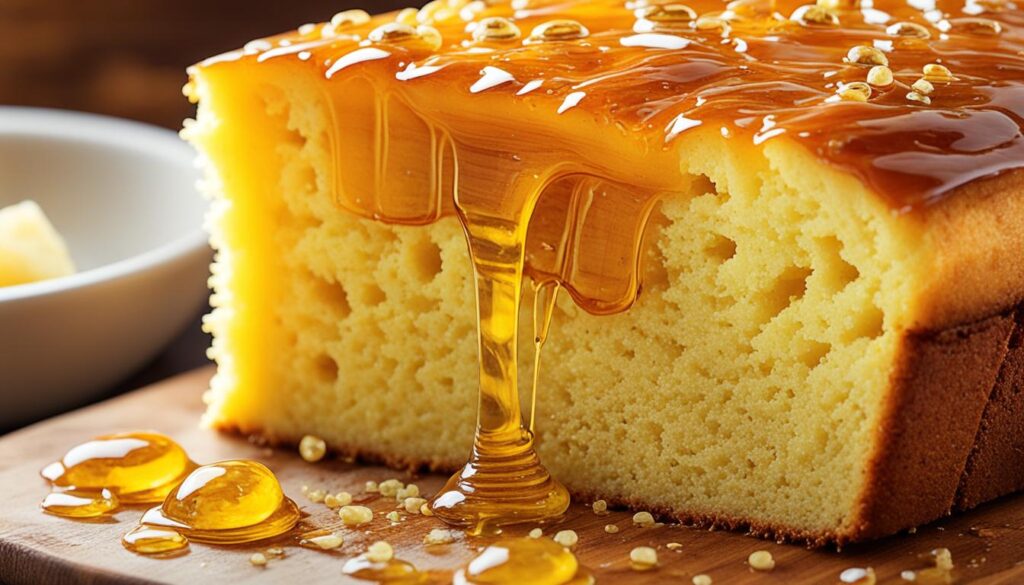
Honey in the batter and honey on top. The glaze soaks into the hot crust as it cools and makes the whole top surface slightly tacky and shiny — not sticky in a bad way, sticky in a “I keep finding reasons to slice off another piece” way.
My wife makes this one for holiday dinners. I make it as a side dish or a special dessert when we have people over and I want something a step above the basic. Guests ask about it. Every time. That sticky-glazed top with flaky sea salt scattered over it looks like something from a bakery.
Ingredients (Serves 4)
- 1 cup yellow cornmeal
- 1 cup all-purpose flour
- 1/4 cup granulated sugar
- 1 tbsp baking powder
- 1/2 tsp salt
- 3 tbsp honey, stirred into the wet ingredients
- 1 cup whole milk
- 2 large eggs
- 1/3 cup unsalted butter, melted, plus 1 tbsp for the skillet
Honey glaze — make this while it bakes:
- 2 tbsp honey
- 1 tbsp unsalted butter, melted together with the honey
- Flaky sea salt for finishing
Instructions
Oven to 400°F, skillet inside while it heats.
Whisk the dry ingredients. Separately, whisk milk, eggs, melted butter, and the 3 tablespoons of honey — the honey will make the wet mixture slightly thicker and golden-looking. Combine wet into dry until just mixed. Pourable batter, not too thick, not runny.
Hot skillet out, melt the tablespoon of butter, pour in the batter. Twenty to 22 minutes.
While it bakes, stir together the 2 tablespoons of honey with the melted butter in a small bowl. The moment the cornbread comes out — still in the pan, still hot from the oven — brush or drizzle this glaze over the entire top surface. Scatter a pinch of flaky sea salt across it. Let it sit 5 minutes. The glaze soaks in partially and leaves a shiny, slightly crinkled finish on top.
Serve warm. Honey cornbread at room temperature is fine. Warm is better.
Nutritional Information (Per Serving)
| Nutrient | Amount per Serving |
|---|---|
| Calories | 450 |
| Carbohydrates | 66g |
| Protein | 8g |
| Fat | 17g |
| Fiber | 2g |
| Sodium | 465mg |
Brown Sugar and Cinnamon Cornbread
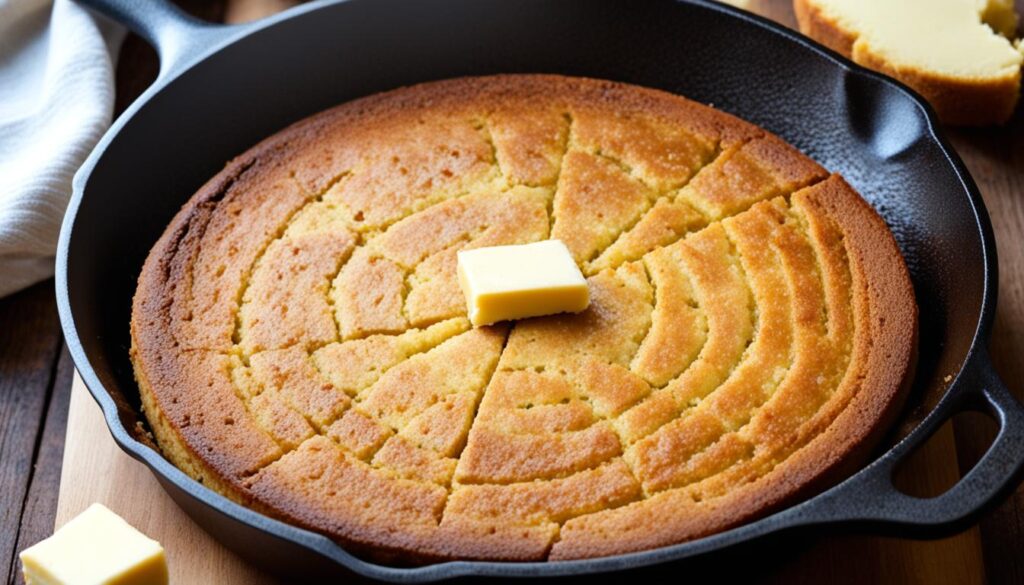
September. That’s when this one comes out. The moment the temperature drops even slightly and the air has that first-hint-of-autumn quality, my younger son starts asking for it. He’s been doing this since he was about eleven.
Brown sugar and cinnamon in hot cast iron smell like something that should be more complicated than it is. The brown sugar caramelizes around the edges and in the bottom crust against the hot iron and those edge pieces — crispy, almost toffee-like — are genuinely worth arguing over. My boys know exactly where to position themselves at the table for edge access.
Works alongside a shrimp and broccoli stir fry on a weeknight in a way that sounds odd but isn’t — the sweet-spiced bread against the savory oyster sauce is a surprisingly good pairing.
Ingredients (Serves 4)
- 1 cup yellow cornmeal
- 1 cup all-purpose flour
- 1/2 cup light brown sugar, firmly packed
- 1 tbsp baking powder
- 1-1/2 tsp ground cinnamon
- 1/4 tsp ground nutmeg
- 1/2 tsp salt
- 1 cup whole buttermilk
- 2 large eggs
- 1/3 cup unsalted butter, melted, plus 1 tbsp for the skillet
- 1 tsp vanilla extract
Instructions

Oven to 400°F, skillet in.
Into one bowl: cornmeal, flour, brown sugar, baking powder, cinnamon, nutmeg, salt. Whisk these together — the cinnamon and brown sugar make this dry mix smell incredible before anything wet touches it. Into another bowl: buttermilk, eggs, melted butter, vanilla. Combine wet into dry. Stir until the streaks are gone — no more, the batter should look a warm caramel color from the brown sugar.
Hot skillet out. Butter in. Pour the batter. Twenty to 25 minutes. The top cracks slightly as it rises and goes a deep golden color, almost approaching the shade of a dark caramel candy. Press the center — it should feel firm and spring back.
Cool 5 minutes. Serve with softened butter. Don’t use cold butter from the fridge — it needs to melt into the warm crumb.
Nutritional Information (Per Serving)
| Nutrient | Amount per Serving |
|---|---|
| Calories | 460 |
| Carbohydrates | 68g |
| Protein | 9g |
| Fat | 16g |
| Fiber | 2g |
| Sodium | 470mg |
Maple Syrup Infused Cornbread
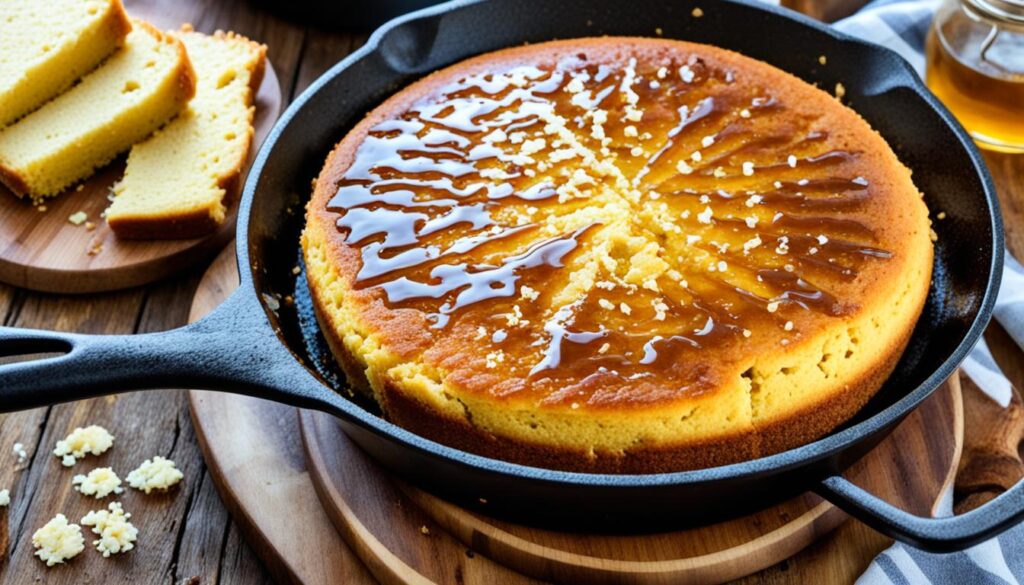
Real maple syrup. Not “pancake syrup.” Not maple-flavored anything. There’s a distinct earthy, almost smoky complexity to actual maple syrup that granulated sugar and honey both lack entirely, and it comes through clearly in cornbread.
Use Grade A Dark or Grade A Very Dark (what used to be called Grade B). The lighter grades taste mostly sweet with a faint maple note. Dark grades taste like maple — the real thing, the kind that justifies the price.
I started making this version after a weekend trip to Vermont a few years back. We bought a jug of very dark syrup, I put it in everything for two weeks, and this was the best result. My wife said it was her favorite of all the cornbread versions I make. (She says that about at least four of them, but she seemed to mean it this time.)
For quick weeknight meals, this version pairs well alongside anything braised or roasted — the maple plays nicely with savory pan drippings in a way that plain sweet cornbread doesn’t quite.
Cornmeal contains B vitamins including thiamine and niacin that support energy conversion and nerve function, based on Butte Creek Mill’s nutritional analysis. Even with the maple syrup on top, the grain at the center of this recipe is doing something genuinely nutritious.
Ingredients (Serves 4)
- 1 cup yellow cornmeal
- 1 cup all-purpose flour
- 2 tbsp granulated sugar
- 1 tbsp baking powder
- 1/2 tsp salt
- 1/4 cup pure Grade A Dark maple syrup, stirred into the wet ingredients
- 1 cup whole milk
- 2 large eggs
- 1/3 cup unsalted butter, melted, plus 1 tbsp for the skillet
- 1/2 tsp vanilla extract
To brush on hot from the oven:
- 2 tbsp pure maple syrup, warmed in a small bowl
Instructions
Oven to 400°F, skillet in.
Dry ingredients into one bowl — cornmeal, flour, sugar, baking powder, salt. Wet into another — milk, eggs, melted butter, the 1/4 cup maple syrup, vanilla. Combine. The batter will be slightly thinner than the classic recipe because maple syrup adds liquid. That’s fine — it bakes up correctly.
Hot skillet, butter, batter in. Twenty to 22 minutes. Here’s a heads-up: maple syrup doesn’t brown the crust the same way granulated sugar does, so the top will look a bit paler than you might expect. Don’t go by color alone. Press the center — firm and springy means it’s done.
Warm the 2 tablespoons of maple syrup while the cornbread bakes. Brush it over the top the moment it comes out of the oven, while it’s still steaming. The syrup soaks in and leaves a subtly sticky, intensely flavored surface. Five minutes, then slice.
Nutritional Information (Per Serving)
| Nutrient | Amount per Serving |
|---|---|
| Calories | 445 |
| Carbohydrates | 64g |
| Protein | 8g |
| Fat | 17g |
| Fiber | 2g |
| Sodium | 460mg |
Blueberry Lemon Zest Cornbread
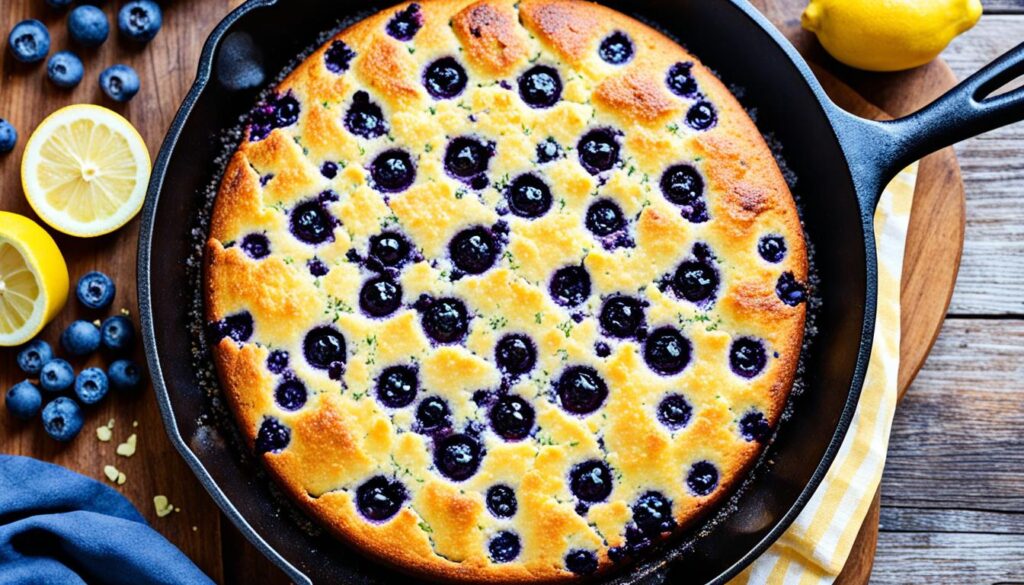
People hear “blueberry cornbread” and look skeptical. Then they try it and stop being skeptical.
The berries burst inside the oven and become these small, jammy pockets scattered through the crumb — warm, intensely sweet, almost like blueberry jam embedded in the bread. The lemon zest cuts through all that sweetness and keeps the whole thing from becoming heavy or cloying. Without the lemon it’s good. With it, it’s balanced.
My wife loves this one for Saturday brunch. She’ll specifically ask for it when we have a slow morning planned, and I’ll make a pot of coffee and this and that’s genuinely a good morning.
One real warning: use fresh blueberries. Frozen ones release too much liquid during baking and can make the bottom of the bread soggy before the crust has a chance to form properly. If fresh aren’t available, toss frozen berries in a tablespoon of flour before folding them in — it helps, somewhat.
Ingredients (Serves 4)
- 1 cup yellow cornmeal
- 1 cup all-purpose flour
- 1/3 cup granulated sugar
- 1 tbsp baking powder
- 1/2 tsp salt
- 1 cup whole buttermilk
- 2 large eggs
- 1/3 cup unsalted butter, melted, plus 1 tbsp for the skillet
- 1 tsp vanilla extract
- Zest of 1 large lemon, plus 1 tbsp of fresh juice squeezed in too
- 1 cup fresh blueberries
Instructions
Oven to 400°F. Skillet in.
Dry bowl: cornmeal, flour, sugar, baking powder, salt — whisked. Wet bowl: buttermilk, eggs, melted butter, vanilla, lemon zest, lemon juice — whisked until uniform. Pour wet into dry and stir until the streaks are just gone. Stop there.
Fold in the blueberries. Two or three slow folds with a spatula — enough to distribute them without mashing. The batter will look pale and spotted with blue-purple berries, and if a few start bleeding color into the batter already, that’s fine.
Hot skillet, butter, batter in. Some berries will sit near the surface, some will sink — both outcomes are correct. Bake 22 to 26 minutes. The top will look golden with dark burst-berry spots. A toothpick should come out clean or with just a purple smear from a berry.
Five minutes rest. The burst berries near the bottom hold heat longer than the crumb and will scald your mouth if you skip the rest time.
Nutritional Information (Per Serving)
| Nutrient | Amount per Serving |
|---|---|
| Calories | 430 |
| Carbohydrates | 62g |
| Protein | 9g |
| Fat | 16g |
| Fiber | 3g |
| Sodium | 475mg |
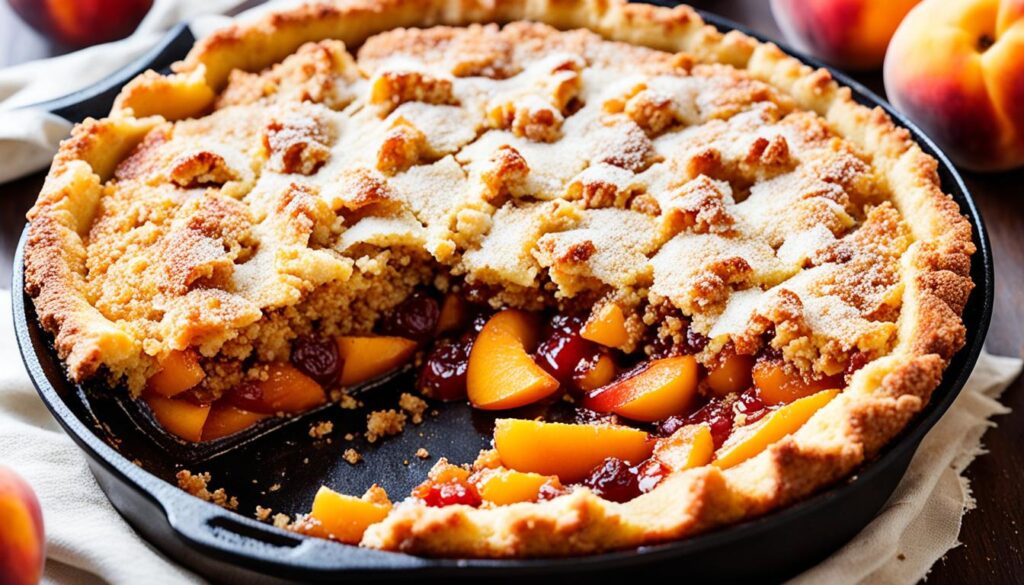
Peach Cobbler Cornbread Fusion
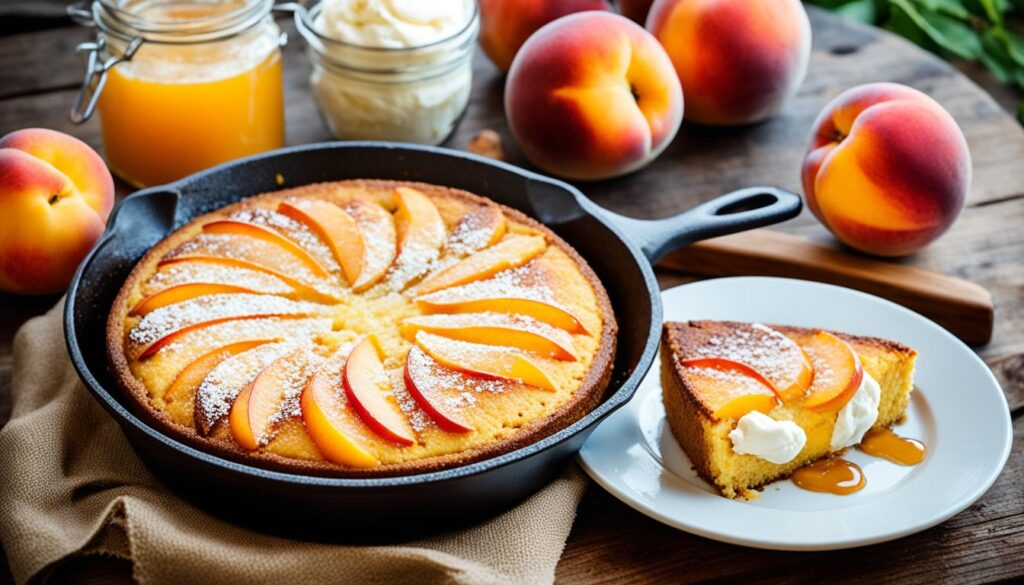
This one came from an accident. I had leftover peach cobbler filling and leftover cornbread batter one Sunday afternoon and just poured the batter in first and dumped the peaches on top and put it in the oven. My younger son tasted it and said it was the best thing I’d ever made. He says that about several things, but he requested this specific one three more times over the following month, which I’m taking as confirmation he meant it.
The peaches caramelize on top while the cornbread bakes underneath. They meet in the middle at this dense, slightly custard-like layer that’s nothing like either component by itself. The bottom crust forms under all of it — the cast iron still delivering the goods even with the wet fruit above.
Sunday recipe. Worth the extra step.
Ingredients (Serves 4)
Cornbread base:
- 1 cup yellow cornmeal
- 1 cup all-purpose flour
- 1/3 cup granulated sugar
- 1 tbsp baking powder
- 1/2 tsp salt
- 1 cup whole buttermilk
- 2 large eggs
- 1/3 cup unsalted butter, melted, plus 1 tbsp for the skillet
- 1 tsp vanilla extract
Peach layer — spoon this over the top:
- 2 cups fresh or canned peaches, sliced (drain canned ones thoroughly)
- 3 tbsp light brown sugar
- 1/2 tsp cinnamon
- 1/4 tsp nutmeg
- 1 tbsp unsalted butter, cut into small bits
Instructions
Oven to 375°F — slightly lower than the other recipes here because the peach topping browns faster than plain batter and you want the cornbread to cook through before the fruit scorches. Skillet in during the preheat.
Toss peach slices with brown sugar, cinnamon, and nutmeg. Set aside — they’ll release juice within a few minutes and that juice is going into the pan too.
Make the cornbread batter the standard way: dry ingredients combined, wet ingredients combined separately, then mixed together just until unified.
Hot skillet out. Butter melted inside. Pour in all the cornbread batter. Now spoon the peach mixture over the top of the raw batter — every slice, every drop of juice from the bowl. Dot the small butter pieces across the peaches.
Into the oven for 28 to 35 minutes. The cornbread rises up around and through the peaches as it bakes — you can actually watch it happening through the oven window if you’re curious. The surface will look burnished and sticky with caramelized peach juice when it’s done. Test with a toothpick in the cornbread section, not into a peach.
Rest a full 10 minutes. The peach juices need time to settle and thicken slightly. Cut into it too early and everything runs.
Nutritional Information (Per Serving)
| Nutrient | Amount per Serving |
|---|---|
| Calories | 490 |
| Carbohydrates | 76g |
| Protein | 9g |
| Fat | 17g |
| Fiber | 3g |
| Sodium | 480mg |
Apple Cinnamon Sweet Cornbread
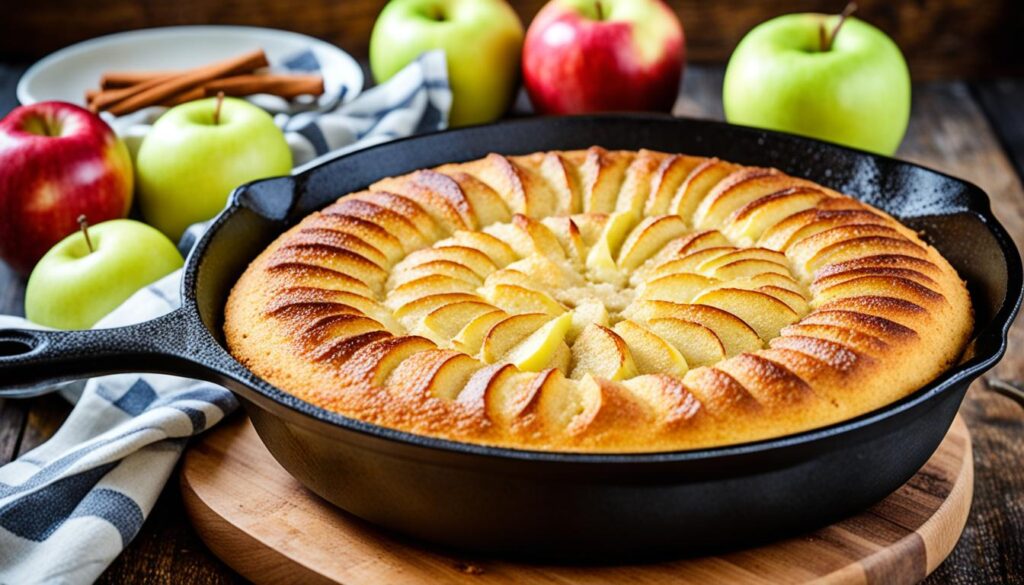
Apple pie in cornbread form. That’s this recipe.
Warm, spiced, with soft apple pieces distributed throughout the crumb, crispy cast iron bottom, deep golden top. My family serves this for dessert with vanilla ice cream and I’m not sure that’s traditional but it’s unquestionably correct.
Two things matter for the apple. First, the variety: use Honeycrisp or Braeburn. Firm apples that hold their shape during baking. McIntosh turns to mush and the texture becomes unpleasant. Second, the dice size: 1/2-inch cubes. Small enough to cook through in the time the cornbread needs, large enough that you actually get a real piece of apple in every bite rather than just flavor.
According to Wikipedia’s history of cornbread, corn was first domesticated in Mexico around six thousand years ago and the Cherokee and Seneca tribes were already enriching their cornbread with apples, berries, and chestnuts long before European settlers arrived. Apple cornbread is, historically speaking, closer to the original tradition than plain cornbread. I find this very validating.
Ingredients (Serves 4)
- 1 cup yellow cornmeal
- 1 cup all-purpose flour
- 1/3 cup light brown sugar, packed
- 1 tbsp baking powder
- 1-1/2 tsp ground cinnamon
- 1/4 tsp ground allspice
- 1/2 tsp salt
- 1 cup whole buttermilk
- 2 large eggs
- 1/3 cup unsalted butter, melted, plus 1 tbsp for the skillet
- 1 tsp vanilla extract
- 1-1/2 cups peeled Honeycrisp apple, cut into 1/2-inch dice (roughly 1 large apple)
Instructions
Oven to 400°F. Skillet in.
Dry ingredients — cornmeal, flour, brown sugar, baking powder, cinnamon, allspice, salt — into a bowl, whisked. Wet ingredients — buttermilk, eggs, melted butter, vanilla — into another, whisked. Combine wet into dry until just mixed, then fold in the apple pieces. The batter is thicker than the basic version because of the apple mass. It smells immediately like October.
Hot skillet, butter melted, batter poured in — use a spatula to nudge it toward the edges because the apple pieces resist spreading on their own. Bake 25 to 30 minutes. The top looks golden-brown with little bits of apple visible at the surface. Edges pulled away from the pan sides mean it’s done.
Let it cool 8 minutes before cutting. Apple pieces retain heat significantly longer than the crumb around them — they’ll burn your mouth if you rush.
Nutritional Information (Per Serving)
| Nutrient | Amount per Serving |
|---|---|
| Calories | 455 |
| Carbohydrates | 66g |
| Protein | 9g |
| Fat | 16g |
| Fiber | 3g |
| Sodium | 470mg |
Chocolate Chip Cornbread Indulgence
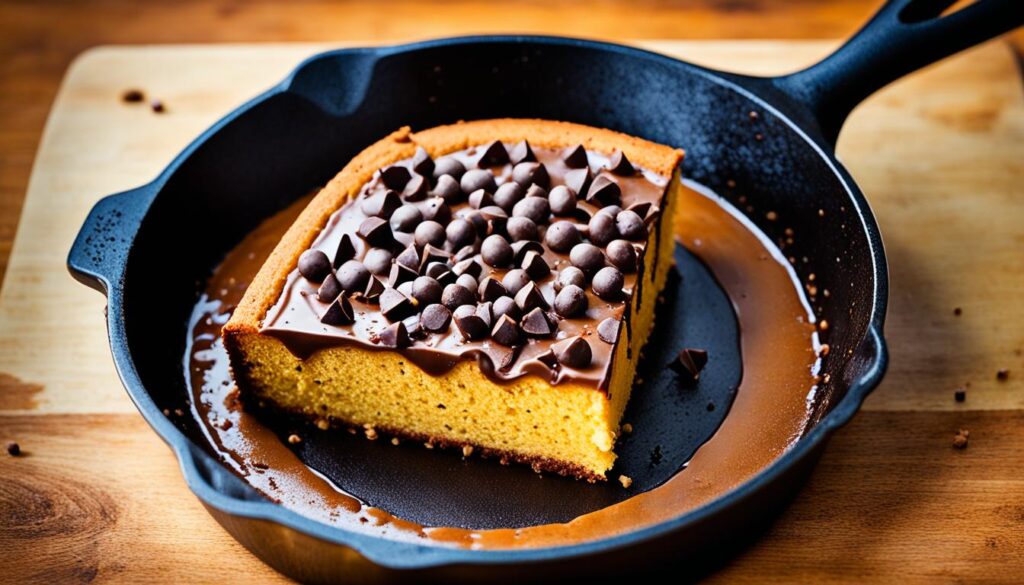
Credit where it’s due: my older son came up with this. He asked once if I could put chocolate chips in the cornbread the way I put peaches in, and I said sure, added a handful to the basic batter, and it was good enough that we tried it again with brown sugar in the batter and more chips. That second version was legitimately excellent and I’ve been making it on purpose ever since.
The chips melt into pockets throughout the crumb as it bakes. The ones near the bottom hit the hot cast iron surface and get slightly caramelized — the best pieces come from that bottom layer. My sons both know this and there’s real competition for the bottom edge pieces. My younger one usually wins because he’s positioned himself near the skillet before I’ve finished cutting.
Semi-sweet chips. Not milk chocolate — too sweet, clashes with the cornmeal. Dark chips are good if that’s your family’s preference. Don’t go cheap on the chips; the quality comes through noticeably here.
Ingredients (Serves 4)
- 1 cup yellow cornmeal
- 1 cup all-purpose flour
- 1/3 cup light brown sugar, packed
- 1 tbsp baking powder
- 1/2 tsp salt
- 1/4 tsp cinnamon
- 1 cup whole buttermilk
- 2 large eggs
- 1/3 cup unsalted butter, melted, plus 1 tbsp for the skillet
- 1 tsp vanilla extract
- 3/4 cup semi-sweet chocolate chips
Instructions
Oven to 400°F. Skillet in.
Dry bowl: cornmeal, flour, brown sugar, baking powder, salt, cinnamon. Wet bowl: buttermilk, eggs, melted butter, vanilla. Combine until just mixed, then fold in the chocolate chips — two or three folds with a spatula, not more. Some chips will be visible on the surface of the batter. Fine.
Hot skillet, butter, batter. Into the oven for 22 to 25 minutes. The top turns golden-brown and the chips near the surface look glossy and fully melted. The center should feel just set when pressed — springy, not liquid, not hard. Rest 8 minutes. Warm chocolate is extremely hot and will burn — this rest period is not optional.
Nutritional Information (Per Serving)
| Nutrient | Amount per Serving |
|---|---|
| Calories | 520 |
| Carbohydrates | 70g |
| Protein | 9g |
| Fat | 22g |
| Fiber | 3g |
| Sodium | 475mg |
Gluten-Free Sweet Cornbread Options
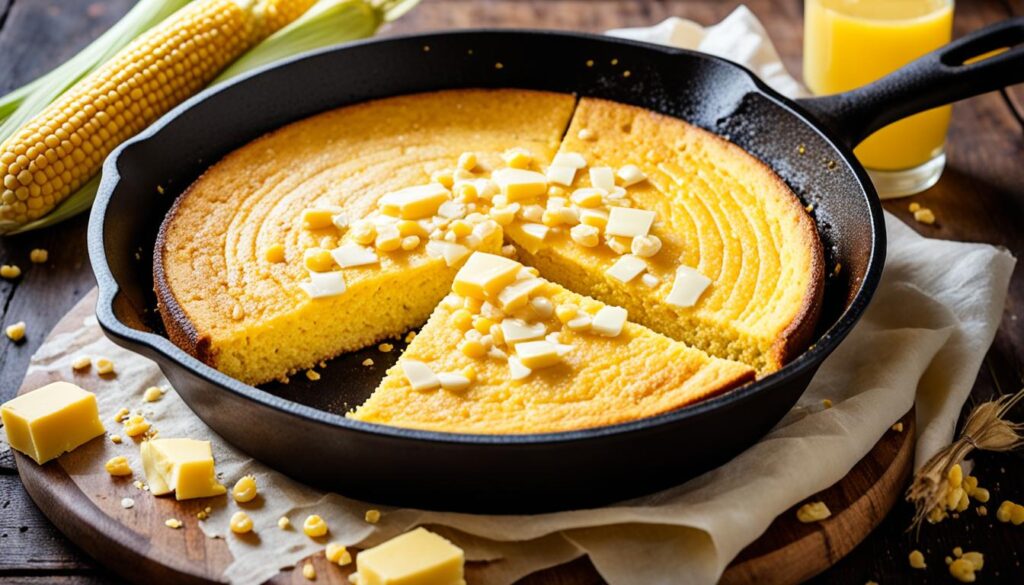
Gluten-free cornbread is easier to pull off than gluten-free versions of most baked goods — because cornmeal is already gluten-free, and it’s the dominant ingredient anyway. You’re only replacing the small supporting amount of all-purpose flour with a GF blend. The structure is mostly cornmeal from the start.
My wife’s friend has celiac disease and comes to dinner every few months. This is what I make when she’s joining us. I’ve made both versions side by side and no one at the table could reliably tell which was which — I tested this across two separate dinners. The flavor is essentially identical. The texture is very slightly more crumbly — that’s the nature of GF baking — but in cornbread that crumble reads as rustic rather than wrong.
Cornmeal is naturally gluten-free and is an excellent alternative for people with celiac disease or gluten sensitivity, per Butte Creek Mill. Important caveat: make sure your cornmeal is labeled certified gluten-free. Cross-contamination at the mill level is a real concern for people with celiac, not just a precautionary label.
Ingredients (Serves 4)
- 1-1/2 cups yellow cornmeal (certified gluten-free)
- 1/2 cup gluten-free all-purpose flour blend — Bob’s Red Mill 1-to-1 is the one I use
- 1/3 cup granulated sugar
- 1 tbsp baking powder — check the label to confirm it’s GF
- 1/2 tsp salt
- 1 cup whole buttermilk
- 2 large eggs
- 1/3 cup unsalted butter, melted, plus 1 tbsp for the skillet
- 1 tsp vanilla extract
- 2 tbsp honey stirred into the wet ingredients
Instructions
Oven to 400°F. Skillet in.
Dry bowl: the GF cornmeal, GF flour blend, sugar, baking powder, salt. Wet bowl: buttermilk, eggs, melted butter, vanilla, honey — whisked together. Note that GF batters tend to be slightly stickier and denser than standard batters after mixing. That’s normal. Don’t add more liquid trying to thin it out.
Hot skillet, butter, batter in. Use a spatula to smooth the top if the batter doesn’t level on its own. Bake 22 to 26 minutes.
Cool a full 8 to 10 minutes before cutting — GF baked goods need more setting time after they come out of the oven. Cutting while hot produces crumbling. Wait, then slice.
Nutritional Information (Per Serving)
| Nutrient | Amount per Serving |
|---|---|
| Calories | 415 |
| Carbohydrates | 60g |
| Protein | 8g |
| Fat | 16g |
| Fiber | 3g |
| Sodium | 470mg |
Low Carb Sweet Cornbread Alternatives
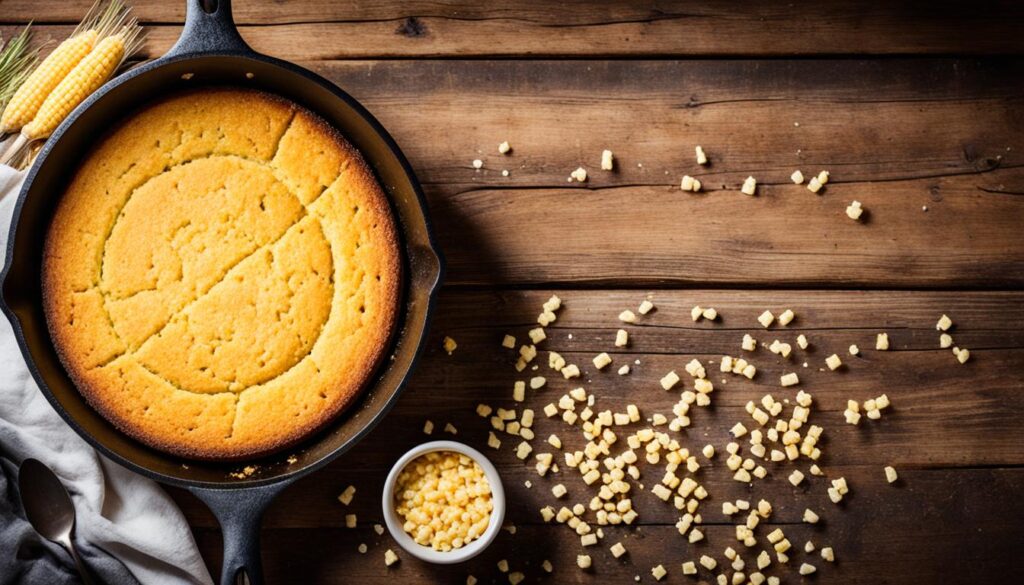
Honest answer first: you cannot make truly low-carb cornbread. Corn is a starchy grain. There’s no version of this that fits a strict keto macro. What you can do is cut the carb load significantly by swapping most of the cornmeal and all of the regular flour for almond flour, keeping a small amount of cornmeal for the actual corn flavor, and using a zero-carb sweetener.
The result is real cornbread. Different from the original — denser, slightly richer — but genuinely good on its own terms, not a sad compromise.
My wife has been reducing our family’s processed carb intake generally, and this is the version she prefers on weeknights when she’s cooking and not me. My sons claim they can tell the difference. I’ve done a blind test on this family multiple times. They cannot.
Ingredients (Serves 4)
- 1 cup fine almond flour
- 1/2 cup yellow cornmeal
- 3 tbsp erythritol or monk fruit sweetener
- 1-1/2 tsp baking powder
- 1/2 tsp salt
- 3 large eggs
- 1/3 cup unsalted butter, melted, plus 1 tbsp for the skillet
- 1/4 cup whole milk or unsweetened almond milk
- 1/2 tsp corn extract — optional, but it makes a real difference in flavor
- 1 tsp vanilla extract
Instructions
Oven to 375°F — lower than the standard recipes because almond flour browns considerably faster than wheat flour. Skillet in.
Dry bowl: almond flour, cornmeal, sweetener, baking powder, salt. Almond flour is slightly oily compared to regular flour and the dry mix will feel different — denser, a bit tacky. That’s normal.
Wet bowl: eggs, melted butter, milk, corn extract, vanilla. Combine wet into dry and stir until fully incorporated. This batter is noticeably thicker and denser than any of the other cornbread batters on this page. It should look almost like a very thick muffin batter.
Hot skillet, butter, batter — use a spatula to smooth the top because it won’t self-level. Bake 20 to 24 minutes, checking at 18. The top can go from golden to quite dark faster than you expect, because of the almond flour. If it’s browning too quickly, lay a loose piece of foil over the top.
Cool a full 10 minutes before cutting. Almond flour baked goods fall apart when hot and firm up significantly as they cool.
Nutritional Information (Per Serving)
| Nutrient | Amount per Serving |
|---|---|
| Calories | 360 |
| Carbohydrates | 18g |
| Protein | 10g |
| Fat | 28g |
| Fiber | 3g |
| Sodium | 390mg |
Vegetarian-Friendly Sweet Cornbread Variations
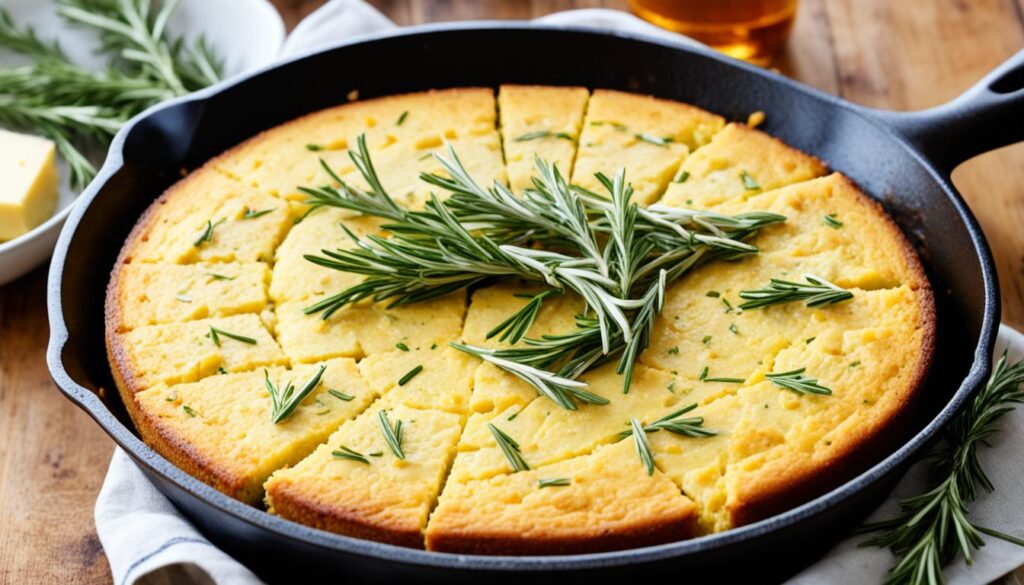
Standard cornbread is already vegetarian. This section is for plant-based cornbread — no eggs, no dairy — which takes a little more deliberate handling but produces a result that’s genuinely close to the original.
I made both versions side by side when a plant-based friend joined us for dinner. My wife couldn’t distinguish the texture by feel alone. The flavor is slightly more neutral — the dairy in the original adds a subtle richness the oat milk doesn’t fully replicate — but it’s subtle enough that most people at the table won’t identify it unless they’re looking for it.
Ingredients (Serves 4)
- 1 cup yellow cornmeal
- 1 cup all-purpose flour
- 1/3 cup granulated sugar
- 1 tbsp baking powder
- 1/2 tsp salt
- 2 flax eggs — made by mixing 2 tbsp ground flaxseed with 6 tbsp water and resting 5 minutes until gelled
- 1 cup unsweetened oat milk
- 1/3 cup neutral coconut oil, melted, plus 1 tbsp for the skillet
- 1 tbsp apple cider vinegar
- 1 tsp vanilla extract
- 2 tbsp maple syrup or agave
Instructions
Make the flax eggs first — they need 5 full minutes to gel. Mix ground flaxseed with water, stir briefly, and leave it alone. It’ll go from watery to thick and gelatinous within 5 minutes. This is doing the binding work that regular eggs do; don’t rush it and don’t substitute chia seeds (the texture is different).
Oven to 400°F. Skillet in.
Dry bowl: cornmeal, flour, sugar, baking powder, salt. In another bowl, combine oat milk with apple cider vinegar — let it sit 2 minutes. It’ll curdle slightly and look clumpy, which is correct — you’ve made a plant-based buttermilk. Add the flax eggs, melted coconut oil, vanilla, and maple syrup to this milk mixture. Stir to combine. Pour wet into dry and mix until just unified. The batter will be slightly looser than the dairy version.
Hot skillet, tablespoon of coconut oil melted inside, batter poured in. Twenty-two to 26 minutes. The top will look golden and set. Let it cool 8 minutes — plant-based baked goods need that extra time to hold together cleanly when sliced.
Nutritional Information (Per Serving)
| Nutrient | Amount per Serving |
|---|---|
| Calories | 410 |
| Carbohydrates | 60g |
| Protein | 6g |
| Fat | 16g |
| Fiber | 3g |
| Sodium | 460mg |
Cast Iron Skillet Sweet Cornbread Recipes for Special Occasions
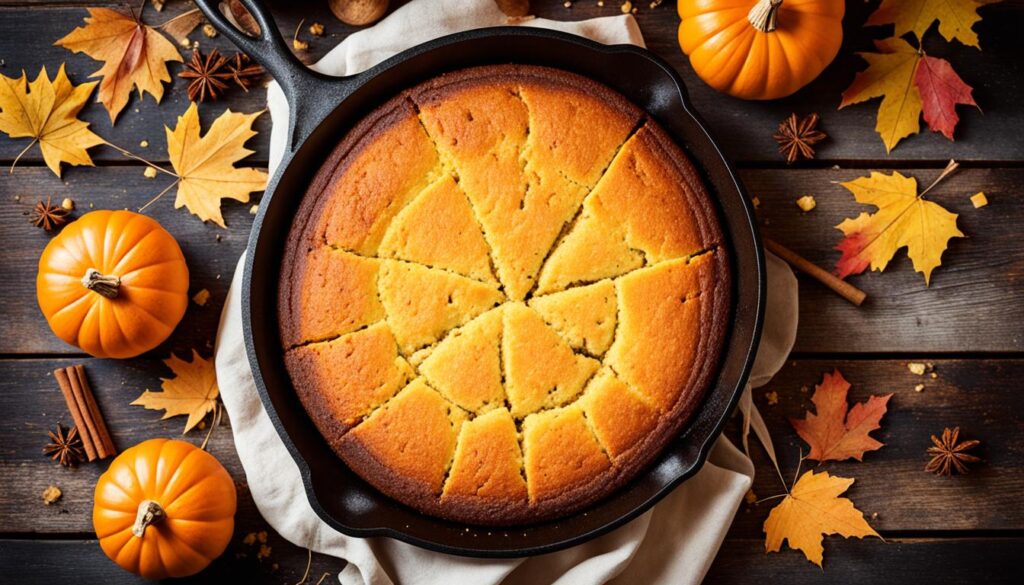
Weeknight cornbread and Thanksgiving cornbread should not be the same thing. Not because the basic recipe is lacking — it isn’t — but because the occasion calls for a small amount of additional effort that makes the bread feel like it belongs on a holiday table.
By the 18th century, cornbread recipes had evolved to include butter, milk, and molasses and had become a point of regional pride in the Southern colonies, as stated in Professor Torbert’s article about the cultural history of cornbread. Special occasion cornbread is essentially that same impulse — taking something humble and making it deliberately good.
A few specific modifications worth knowing:
Brown butter base. Instead of melting butter into the hot skillet and pouring batter immediately, brown the butter first. Let it cook on the stovetop in the skillet over medium heat, swirling occasionally, until it smells nutty and looks amber-colored. Then pour the batter over it immediately. The flavor difference in the bottom crust is extraordinary — it tastes like toffee.
Turbinado sugar crust. Before the skillet goes into the oven, sprinkle a thin, even layer of turbinado sugar over the raw batter. It forms a thin caramelized shell on top that shatters cleanly when you cut it. Looks and tastes like something from a professional bakery.
Cranberry orange. Take the classic batter. Add 3/4 cup dried cranberries and the zest of one large orange. The cranberries soften as it bakes and go jammy and tart, which plays perfectly against the sweet cornbread base. This is what I make every Thanksgiving. Every year, no exception, my wife requests it starting around November 1st.
Rosemary and honey. Add 1 tablespoon of finely chopped fresh rosemary and 3 tablespoons of honey to the classic batter. Savory-sweet in a way that makes it exceptional alongside roasted chicken, turkey, or pork.
These are modifications to the base batters, not standalone recipes. Take the classic batter from earlier in this article and apply any one of these methods. Or combine two of them — cranberry orange with a turbinado crust is exceptional. Mix and match.
Storing and Reheating Your Sweet Cornbread
Cornbread is best on day one. That’s simply true.
But it keeps reasonably well, and leftovers are worth handling correctly rather than just leaving them out or microwaving them into something dry and rubbery.
Room temperature storage — wrap tightly in plastic wrap or an airtight container. Fine for 2 days. After that the texture starts deteriorating noticeably.
Refrigerator — up to 5 days, well-wrapped. It’ll be denser when cold; that doesn’t mean it’s gone bad.
Freezer — slice before freezing, wrap each piece individually in plastic wrap, then store the wrapped pieces together in a freezer bag. Keeps up to 3 months. Thaw at room temperature or overnight in the fridge.
Reheating — the wrong way. Microwave. Thirty seconds and the texture goes from tender to weirdly tough and dry. Don’t.
Reheating — the right way. Wrap a slice loosely in foil and put it in a 300°F oven for 8 to 10 minutes. It comes out tasting close to freshly baked.
The best way. This is what my older son figured out and he was right about it: slice the cornbread and toast it cut-side down in a skillet with butter over medium heat until the cut face is golden and crispy. Cold leftover cornbread, toasted in butter, with a slightly crunchy face and warm interior — it might actually be better than day-one cornbread. I’m serious. Try it before deciding.