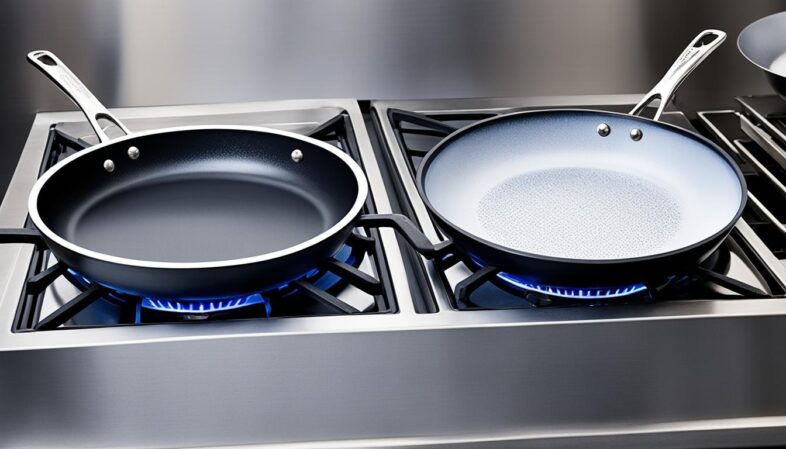
A ceramic skillet is the safer pick for high-heat households and anyone avoiding synthetic coatings — but a Teflon skillet outlasts it and costs less, so the honest answer is: it depends on who’s doing the cooking.
I know that’s not the clean answer anyone wants. But these two pans are genuinely good at different things, and pretending there’s a winner is how you end up with the wrong skillet.
Understanding Nonstick Cookware
Nonstick cookware does exactly what it sounds like — food releases cleanly without gripping the surface. No soaking. No scrubbing. Less oil. It’s why most home cooks have at least one nonstick pan buried somewhere in the cabinet.
Two materials dominate this space right now:
- Ceramic — a silica-based sol-gel coating bonded to an aluminum or steel base
- Teflon (PTFE) — polytetrafluoroethylene, a synthetic fluoropolymer, the stuff that’s been coating pans since the 1950s
Both cut down on sticking. Both need less fat than stainless. That’s basically where the similarities end.
What actually makes nonstick coatings work? The coating creates a low-surface-energy barrier — food molecules can’t bond to it the way they bond to bare metal. Eggs slide. Fish lifts cleanly. You don’t spend ten minutes with a sponge after dinner. The quality of that barrier — durability, heat stability, chemical behavior — is what makes these two pans feel so different over time.
The Basics of Ceramic Skillets
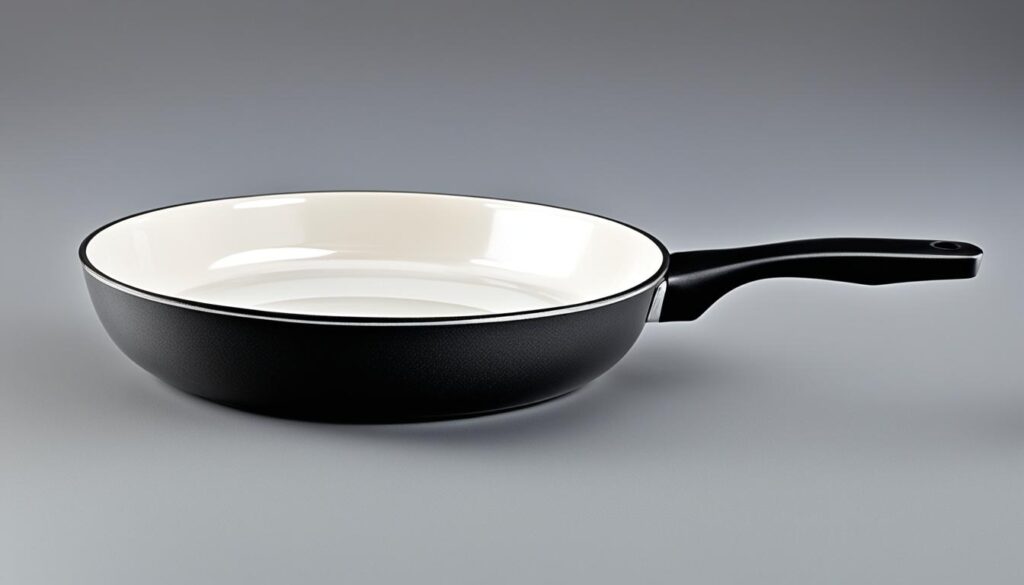
Here’s the first thing to get straight: ceramic skillets aren’t actually made of ceramic. Not the whole pan, anyway. The base is aluminum. The “ceramic” part is a sol-gel coating — silica-based, applied through a chemical bonding process — that ends up smooth, often white or cream-colored, and feels vaguely ceramic-ish. It’s not fired clay. It’s a coating.
That matters because a lot of marketing leans hard on the word “ceramic” to imply something more natural or artisanal than it actually is. The coating is real and it does work — just understand what you’re actually buying.
What ceramic skillets actually offer:
- No PTFE, no PFOA — genuinely free of synthetic fluoropolymers
- Heat tolerance up to roughly 450–500°F before the coating starts to degrade
- Non-porous surface that resists bacteria and cleans up easily
- Tends to be marketed as the “healthier” or “greener” option
- Loses nonstick performance faster — figure 1 to 3 years of reliable use with regular cooking
When a ceramic pan is new, the nonstick performance is legitimately great. Eggs glide around without any coaxing. But ceramic degrades faster than Teflon. That slickness fades — sometimes within a year if you’re cooking daily or running the pan hot. It’s not a flaw exactly, just the nature of the coating.
One thing worth watching: the word “ceramic” on a label doesn’t guarantee PTFE-free construction. Some pans use a hybrid. If avoiding PTFE entirely is the goal, read the actual product specs, not just the front of the box.
Teflon Skillets: A Closer Look
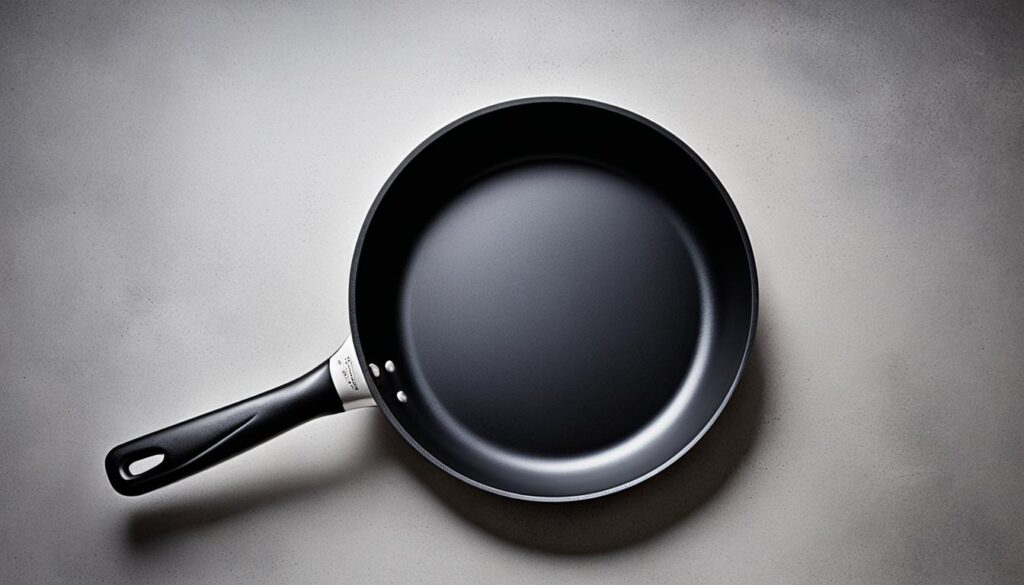
Teflon is a brand name owned by Chemours (formerly DuPont). The material itself is PTFE — polytetrafluoroethylene — and it’s been coating cookware since the late 1950s. There’s a good chance most of the nonstick pans you’ve used throughout your life were PTFE-based. The diner skillet, grandma’s egg pan, the cheap one from the grocery store. All Teflon or something close to it.
What Teflon does well:
- Durable nonstick surface — 3 to 5+ years with reasonable care
- Consistent food release year after year, not just when new
- Available at every price point, including very affordable entry-level options
- Multi-layer coatings (some brands offer 3-layer, 5-layer construction) add longevity
- Performs reliably under moderate heat — best kept under 500°F
The PFOA controversy is worth addressing directly. PFOA was a processing aid used in older PTFE manufacturing — not an ingredient in the coating itself — and it raised real health and environmental concerns over the years. It’s been phased out. Modern Teflon pans, anything made after 2013 or so, don’t use PFOA in production. That chapter is closed.
PTFE itself is FDA-recognized as safe below 500°F. The coating is chemically stable and doesn’t react with food. Where things get dicey is above 570°F — at those temperatures, the polymer starts to break down and releases fumes. Those fumes can cause flu-like symptoms in people (polymer fume fever — real, unpleasant, short-lived) and are fatal to pet birds. An empty pan left on high heat can hit those temps in minutes. So don’t do that.
Ceramic Skillet vs Teflon: Performance Comparison
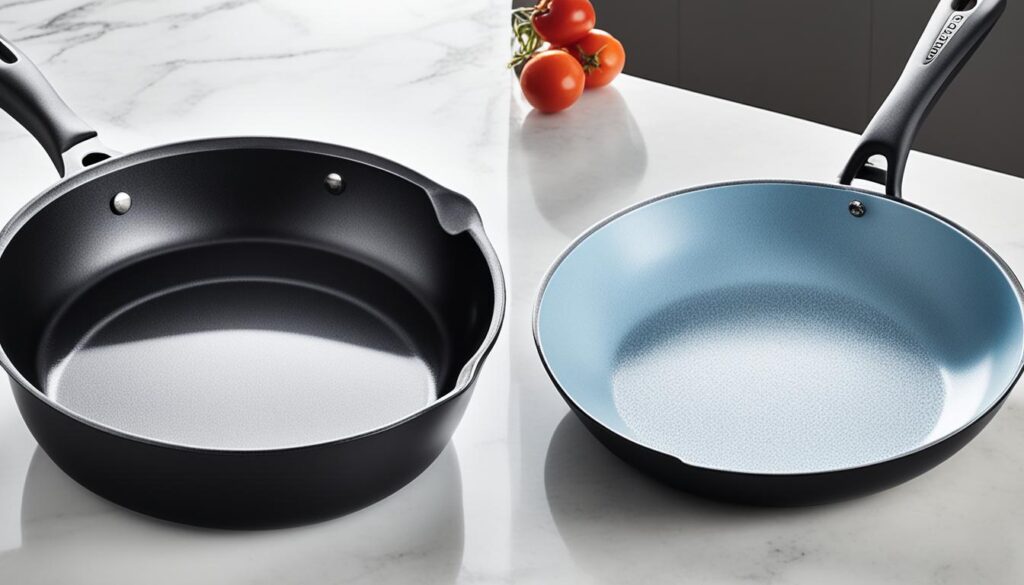
Put them side by side on the same burner and the differences become clear pretty fast.
| Feature | Ceramic | Teflon |
|---|---|---|
| Nonstick quality out of the box | Excellent | Excellent |
| Long-term nonstick durability | 1–3 years | 3–5+ years |
| Max safe temperature | ~450–500°F | ~500°F (avoid preheating empty) |
| Metal utensil resistance | Low | Low to Medium |
| Dishwasher safe | Occasionally | Rarely recommended |
| Heat distribution | Good (aluminum base) | Good (aluminum base) |
| Induction compatible | Depends on base material | Depends on base material |
Longevity. Teflon wins, and it’s not close. Ceramic starts losing that initial slickness within a year or two under regular use — especially if it sees high heat or metal utensils. Teflon holds up longer under the same conditions. That’s just the reality.
High heat. Ceramic has the edge. It doesn’t carry the same off-gassing risk as Teflon at elevated temperatures. Neither pan is designed for searing — use cast iron or stainless for that — but if you cook at higher heat regularly, ceramic is the safer material.
Fresh out of the box. Dead even. Both are impressively slick when new.
Once the coating’s damaged. Neither recovers. A scratched nonstick pan is a pan on its way out. Replace it.
Health and Safety Considerations
This is the question that actually brings most people to this comparison. Is one of these going to hurt me?
The straightforward version: neither is particularly dangerous when used correctly. But they have different risk profiles.
Ceramic:
- Contains no PTFE or PFOA — the coating is silica-based and chemically inert at cooking temperatures
- Won’t release toxic fumes even if you accidentally overheat it
- Budget ceramic pans from unknown brands sometimes contain trace amounts of lead or cadmium in the pigments used for color — stick with established brands and you won’t have this problem
- Chemically, it’s the more inert option of the two
Teflon (PTFE):
- All modern pans are PFOA-free — this hasn’t been an issue since 2013
- Below 500°F, PTFE is FDA-recognized as safe and doesn’t react with food
- Above 570°F, fumes become a concern — polymer fume fever in people, fatal to birds
- Scratched or flaking Teflon isn’t considered a major health hazard in small quantities, but replacing a visibly damaged pan is the right call
The bottom line on safety: Ceramic is the more cautious choice, full stop. If you cook at normal household temperatures and don’t preheat empty pans, modern Teflon is considered safe by regulatory standards. But if you run hot, you’re forgetful about the stove, or you have birds in the kitchen — ceramic removes the risk entirely.
Environmental Impact of Ceramic and Teflon Cookware
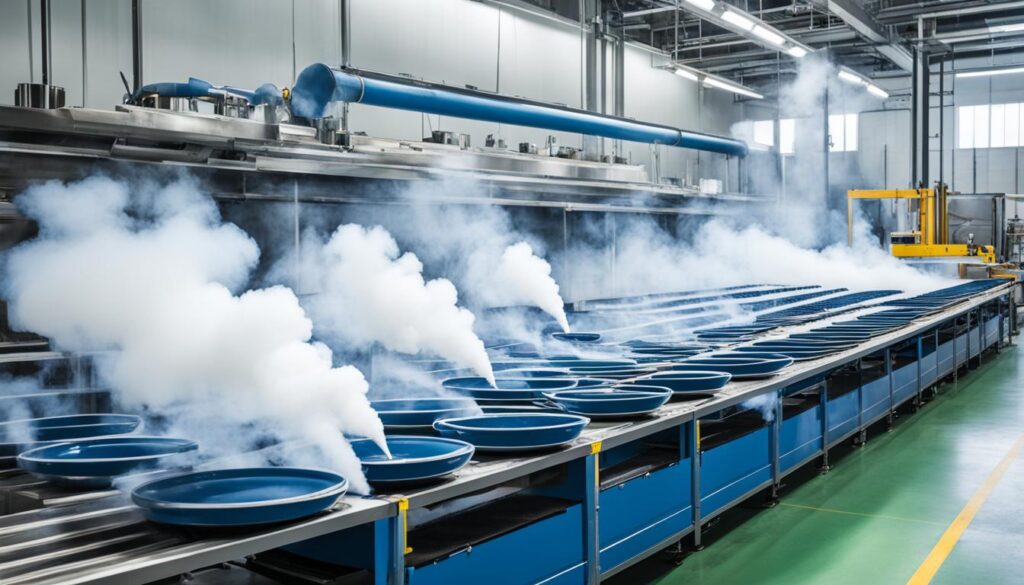
Neither option has a clean environmental record. That’s the honest framing here.
The case against Teflon:
- PFAS chemicals — the broader family that includes PTFE — have raised serious environmental concerns, not just PFOA but related compounds throughout the manufacturing chain
- These chemicals persist in soil and water; they’ve been detected in water supplies globally
- The production process is the bigger problem, not the pan sitting in your cabinet
Ceramic looks cleaner — but has its own issues:
- The sol-gel manufacturing process uses fewer hazardous chemicals overall
- Lower-impact production is a genuine advantage
- But cheap ceramic pans degrade fast, which means more replacements, more manufacturing, more waste
Here’s the thing about “eco-friendly” ceramic marketing: a pan that lasts 18 months before losing its nonstick isn’t actually better for the environment than a quality Teflon pan that lasts five years. Durability matters in this calculation. Buy ceramic if you’re committed to it — but buy quality.
Best Uses for Each Skillet Type
Not every pan is right for every kitchen or every cook. These aren’t interchangeable.
Ceramic makes more sense when:
- Avoiding PTFE is a priority — dietary, ethical, or health-related
- There are pet birds in the home (the PTFE fume risk is real and serious for birds)
- Cooking is occasional rather than daily — the coating holds up better with less stress
- Low-to-medium heat cooking is the norm: eggs, fish, sautéed vegetables
- The household runs hot and forgets pans on the burner — ceramic is more forgiving at high temps
Teflon makes more sense when:
- Daily, heavy cooking is the routine and durability matters
- Budget is a real consideration
- Consistent nonstick performance over multiple years is the priority
- Cooking style involves pancakes, omelets, crêpes, or other tasks where the pan gets used hard and often
What neither pan does well: high-heat searing, getting a crust on meat, cooking that needs a very hot surface. For that, reach for cast iron or stainless.
Cooking Versatility: What Can You Make?
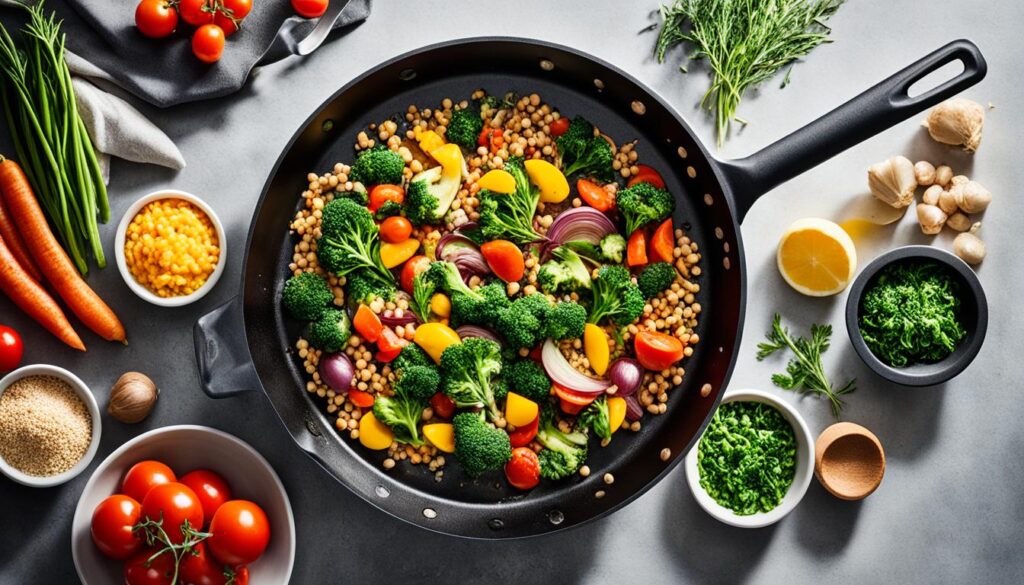
A lot, actually. Both pans cover a solid range of everyday cooking without much fuss.
What both handle well:
- Eggs — scrambled, fried, French omelets. This is the home base for nonstick. Both pans do it well.
- Fish fillets — delicate skin releases cleanly without tearing
- Pancakes and crêpes — consistent browning, clean lift
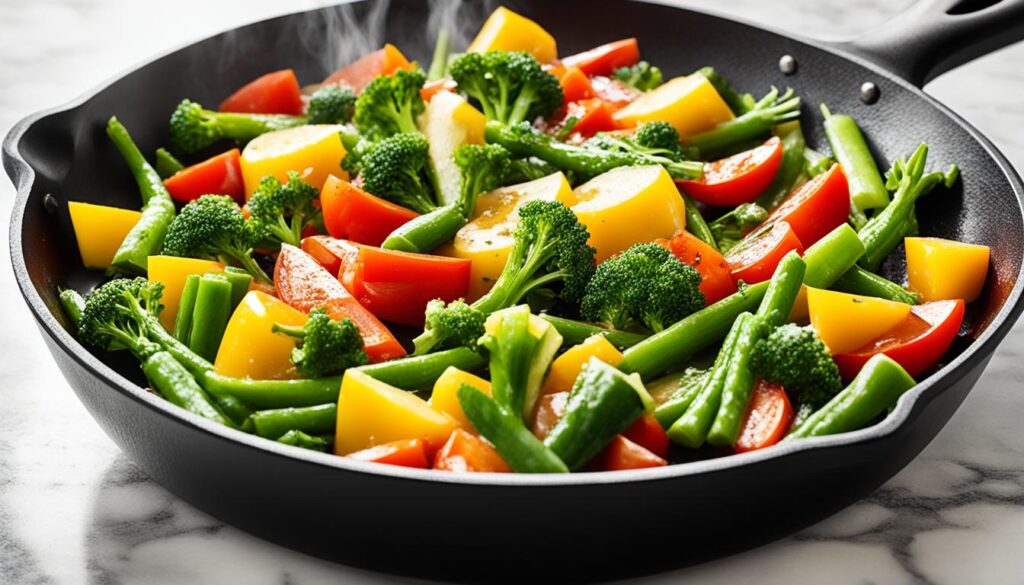
- Sautéed vegetables — medium heat, minimal oil, easy cleanup
- Quesadillas — flat even contact, no sticking
- Reheating — gentle, non-reactive surface, nothing scorches
For something that takes full advantage of a good nonstick at medium heat, this Healthy Beef and Broccoli Stir Fry works great in either pan.
What to avoid in both:
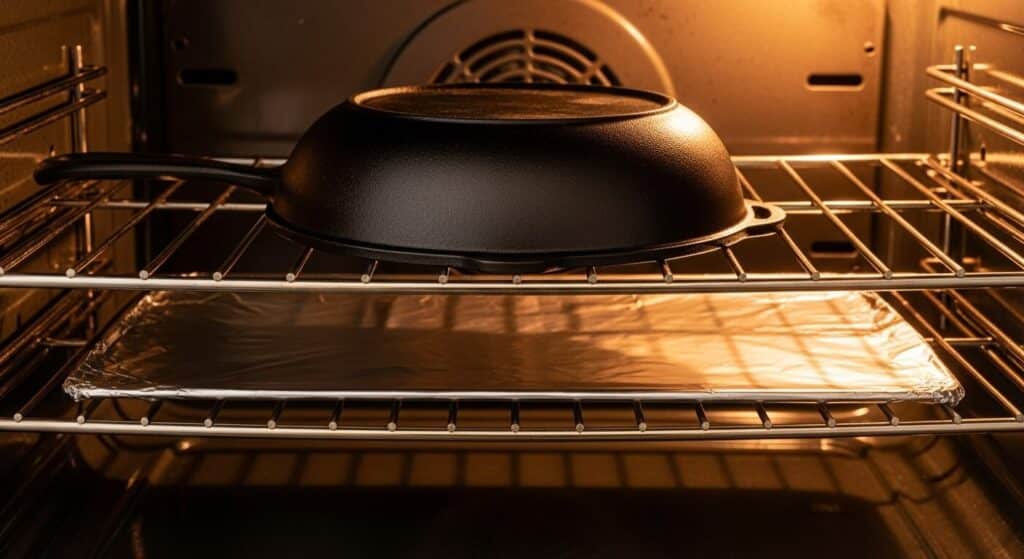
- Oven temperatures above 450°F — always check the manufacturer’s listed maximum
- Aerosol cooking sprays — they leave a polymer residue that bakes onto the surface and degrades the coating faster than regular oil or butter
- Long-simmered acidic dishes (tomato sauce, citrus-heavy braises) — especially rough on ceramic
Maintenance and Care Tips
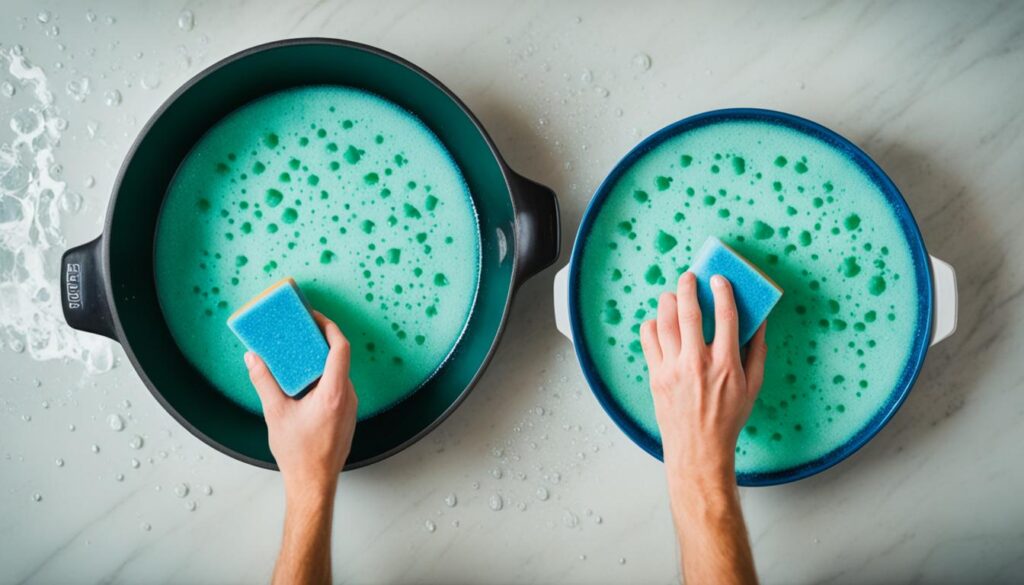
Most nonstick pans don’t fail because of the coating — they fail because of how they’re washed and stored. The pan’s usually fine. The habits aren’t.
Rules that apply to both:
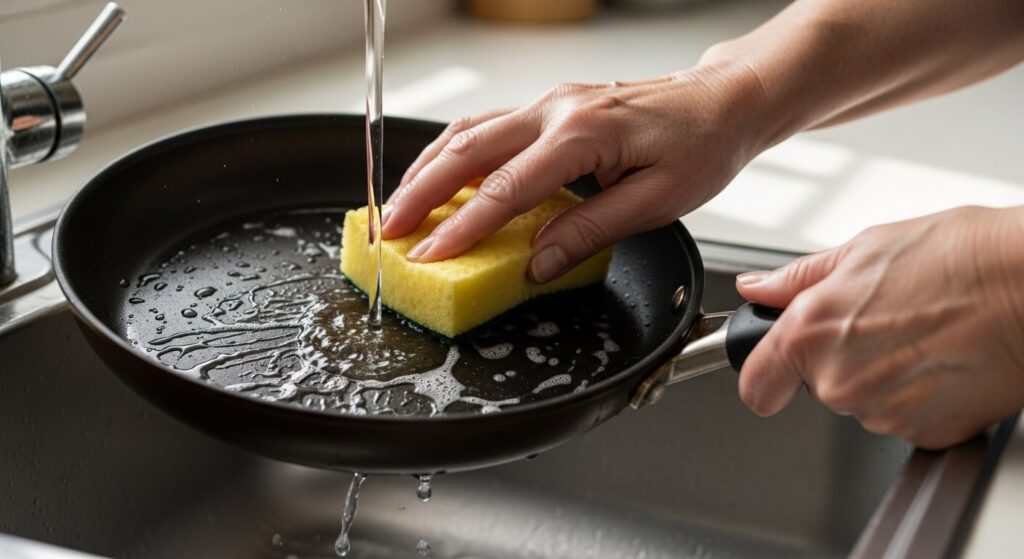
- Hand wash only. A dishwasher will degrade both coatings — the heat, the harsh detergent, the mechanical action. Hot water, mild dish soap, a soft sponge. That’s it.
- No metal utensils. Silicone, wood, or nylon. Metal scratches both coatings, regardless of what the packaging claims.
- Let it cool before washing. Dunking a hot pan in cold water causes thermal shock — it warps the base and stresses the coating. Two minutes on the counter first.
- Medium heat is enough. Neither pan needs a high flame to cook well. Preheat on medium for 60 seconds and you’re set.
- No aerosol cooking spray. A small amount of butter or oil works better and won’t leave residue.
Ceramic only:
- More sensitive to rapid temperature changes than Teflon — avoid going straight from stovetop to cold water
- A very thin coat of oil rubbed in after washing (then wiped out) can extend coating life
- Use a cloth or folded paper towel between pans when stacking — the aluminum base of other cookware scratches the coating
Teflon only:
- No abrasive scrubbers, ever — not even the rough side of a sponge
- Visible flaking or peeling means it’s time to replace the pan. Don’t wait on it.
Price Comparison: Ceramic vs Teflon Skillets
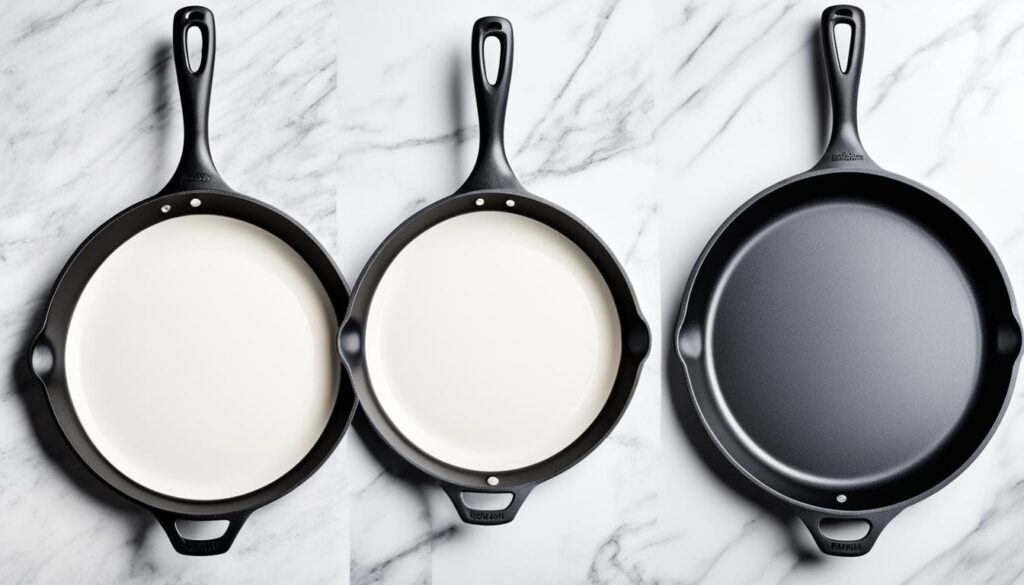
Teflon is cheaper at every tier. That’s consistent across brands and sizes.
| Price Tier | Ceramic | Teflon |
|---|---|---|
| Budget | $20–$40 | $15–$30 |
| Mid-range | $40–$80 | $30–$60 |
| Premium | $80–$150+ | $60–$120+ |
The sticker price isn’t the whole story, though. Durability changes the cost-per-year math considerably. A $25 Teflon pan that performs well for four years works out cheaper annually than a $35 ceramic pan that loses its nonstick surface in 18 months.
Premium ceramic brands — GreenPan, Caraway, Our Place — charge more because their coatings last longer and the materials are cleaner. They’re worth the price if you’re committed to PTFE-free cooking and willing to treat the pan carefully. For the average cook who wants reliable nonstick without overthinking it, a quality mid-range Teflon pan is the better value.
How to Choose the Right Skillet for Your Kitchen
There’s no universal right answer. The better question is: what kind of cook are you, actually?
Lean toward ceramic if:
- You want zero synthetic fluoropolymers in your kitchen, full stop
- You have pet birds — no negotiating this one, PTFE fumes are fatal to them
- You cook at low to medium heat and hand wash consistently
- You’re an occasional cook rather than someone making dinner every single night
- Replacing the pan every few years doesn’t bother you
Lean toward Teflon if:
- You cook daily and want performance that holds up without babying the pan
- Budget is real and you want the best nonstick per dollar spent
- You’re fine with modern PTFE safety standards — because the science supports them
- Longevity matters more to you than coating material
Think about your actual habits. Do you preheat on high because you’re impatient? Do you grab whatever spatula is closest, including the metal one? Do you throw pans in the dishwasher without thinking? Neither pan is going to last long under those conditions — but Teflon will survive slightly better.
Pan size: a 10-inch skillet handles most tasks for one or two people. 12-inch if you’re cooking for a family or doing any kind of stir-fry work.
Alternatives to Ceramic and Teflon Skillets
Worth knowing about, especially if coating-based nonstick isn’t clicking for you.
Cast iron — Heavy. Practically indestructible. Builds a natural nonstick surface over years of seasoning and use. Terrible for acidic foods. Amazing for searing, baking in the oven, camping. Not the right tool for delicate eggs until it’s very well-seasoned. Takes time to get good at using it, but then you never buy another pan.
Carbon steel — Cast iron’s lighter, more responsive sibling. Preferred by a lot of professional cooks. Needs seasoning the same way. Heats and cools faster than cast iron. Great for fish, high-heat cooking, and anything that benefits from quick temperature control.
Stainless steel — No coating at all. Dishwasher safe. Will genuinely last decades. Not naturally nonstick, so it requires technique — proper preheating, the right amount of fat, patience with the timing. There’s a learning curve. But once you have it, stainless does almost everything.
Enameled cast iron — Non-reactive, oven-safe to very high temperatures, doesn’t need seasoning. Heavy and expensive. Excellent for braises, stews, and slow cooking. Doesn’t replace a nonstick for eggs or fish.
For a recipe that really shows off what carbon steel can do, try this Shrimp and Dumpling Stir-Fry — the results are noticeably different from nonstick.
For most home cooks, the practical answer is one reliable nonstick (whichever type you choose) plus one cast iron or stainless skillet for high-heat tasks. Those two pans together cover the overwhelming majority of everyday cooking.