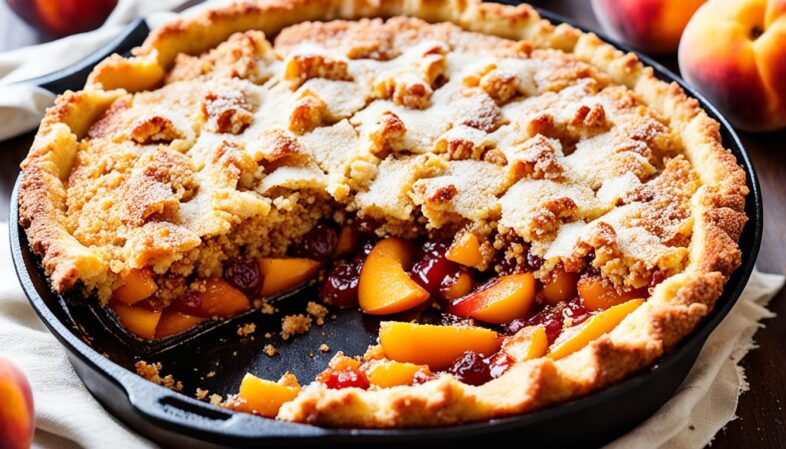
Cast iron skillet peach cobbler produces a caramelized, bubbling fruit base and golden biscuit topping that no glass dish or ceramic bakeware can match — and these 8 recipes are the ones that earn repeat requests at my table every summer.
I need to tell you about my father-in-law before anything else. He made peach cobbler every summer for probably forty years in the same cast iron skillet. Never measured a thing. He’d look at the peaches, pour some butter in, make the biscuit topping by some internal calculation I never fully understood, and pull something perfect out of the oven every single time. I watched him do it at least a dozen times trying to reverse-engineer it. Never could. When he passed the skillet to my wife and she passed it to me, I spent about two years trying to recreate that cobbler from memory and intuition. I gave up and started measuring things.
My wife still says his was better. I believe her. But she eats mine without complaint, which I’ve decided counts.
My sons have no frame of reference for that original cobbler. They just want to know if there’s ice cream.
There is always ice cream.
Getting Started with Cast Iron Skillet Peach Cobblers
Cast iron skillet peach cobbler works because the preheated pan caramelizes the fruit filling immediately on contact — the bottom layer of peaches darkens and concentrates against the hot cast iron in a way that no glass or ceramic dish produces.
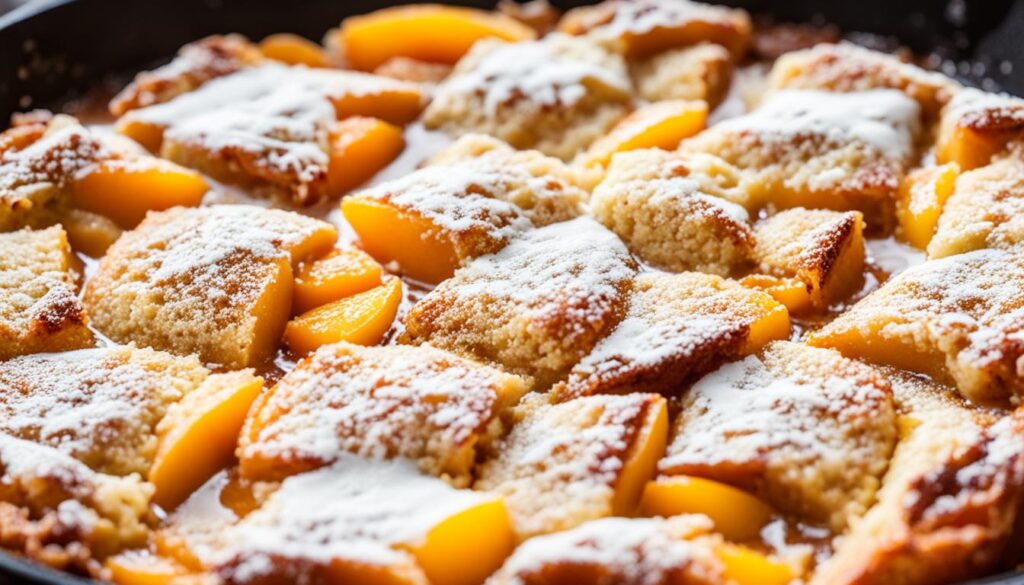
Here’s what most people get wrong the first time. They put cold peaches into a cold or warm skillet, add the biscuit topping, and bake everything from a cold start. The result is fine. It’s technically cobbler. But the base is pale and soft, the filling is syrupy rather than caramelized, and the thing doesn’t taste like the cobbler you’ve been chasing.
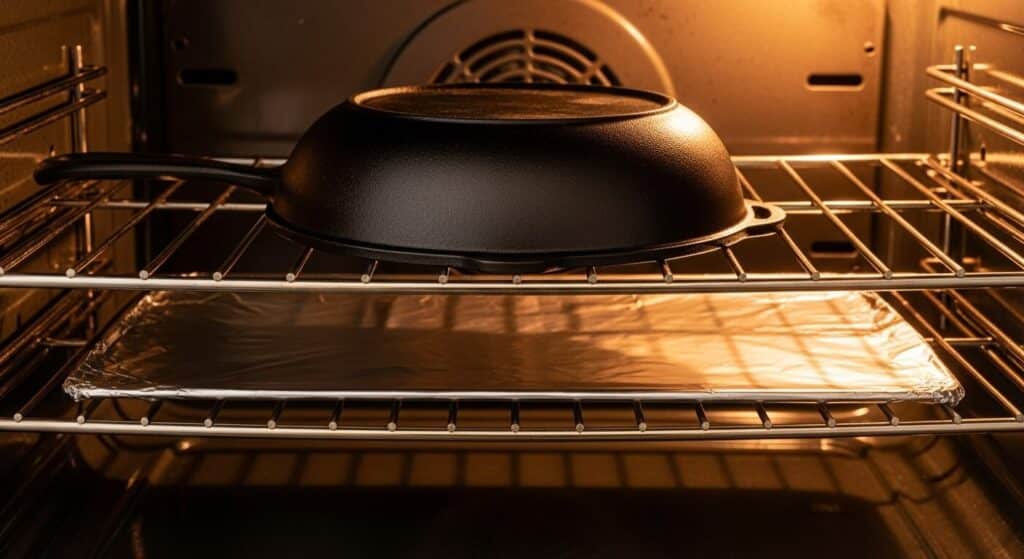
The correct method: preheat the cast iron skillet in the oven for a full five minutes before anything goes in. The peach filling should sizzle when it hits the pan surface. That sizzle is caramelization beginning immediately. That caramelization is the difference.
Fruit goes in hot. Biscuit topping goes over the fruit. The peach juices bubble up through the gaps in the topping as it bakes, creating the rustic, uneven surface that defines good cobbler. A smooth biscuit topping that’s been carefully spread to cover every inch traps steam, produces a pale layer, and defeats the purpose entirely.
According to the USDA FoodData Central, one medium fresh peach provides about 58 calories, 2.3 grams of fiber, and meaningful amounts of vitamins A and C. This won’t make your cobbler a health food. But the fruit is doing real nutritional work underneath the butter and sugar.
The History of Southern Peach Cobbler
Southern peach cobbler originated as a practical frontier dessert — a way to cook abundant summer fruit when proper pie tins and lard for pastry were scarce — and the cast iron skillet has been its traditional vessel from the beginning.
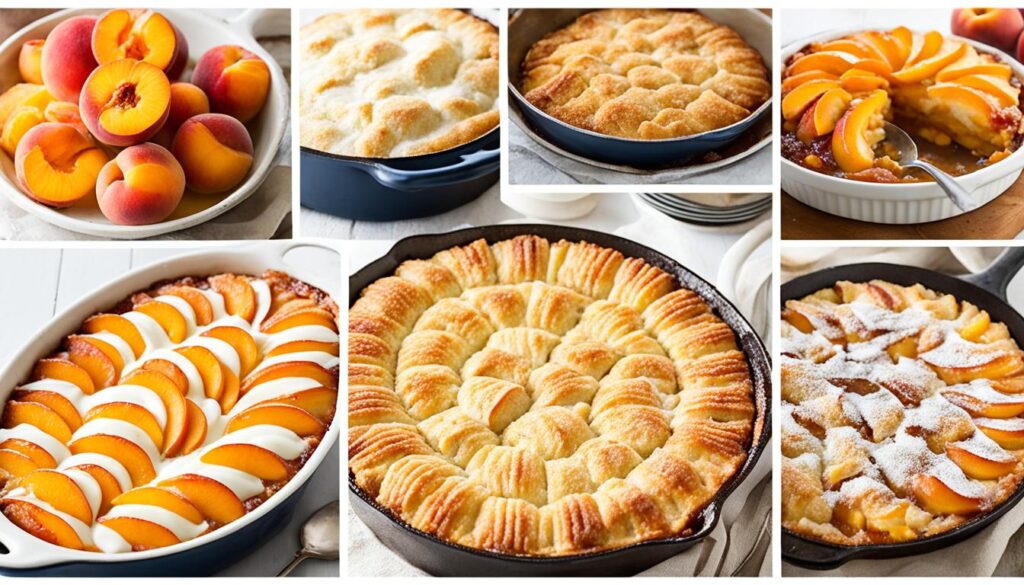
The name “cobbler” probably comes from the cobblestone appearance of the biscuit or dumpling topping — irregular lumps that expand and brown during baking without ever forming a smooth surface. This was never meant to look polished. The roughness is the point. A perfect, smooth cobbler topping is a contradiction in terms.
My father-in-law’s version was pure continuation of this tradition. He grew up in rural Georgia. The peaches came from his backyard. The measurements came from decades of repetition and feel rather than any written recipe. When I asked him once to write it down, he looked at the notepad I handed him for about ten seconds, then handed it back blank and said he wasn’t sure how. I think about that every time I make this.
The New Georgia Encyclopedia documents the deep cultural significance of peaches in Southern food traditions — and cobbler is arguably the most personal expression of that tradition, made in home kitchens from fruit grown close by.
Benefits of Using a Cast Iron Skillet for Cobbler
Cast iron skillets produce better cobbler than glass or ceramic because the thermal mass caramelizes the fruit filling at the base in a way that thinner bakeware can’t achieve — the direct heat contact transforms the bottom layer into something concentrated and slightly sticky and deeply flavored.
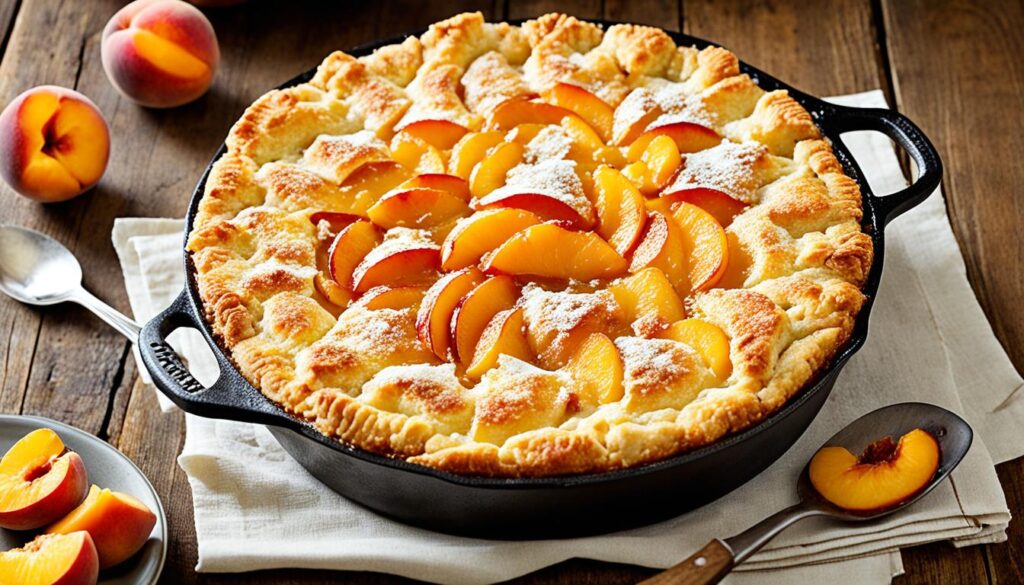
Here’s what’s actually happening at the base of the pan. Peach filling — sugar, butter, fruit juice — contacts the preheated surface and caramelizes immediately. The sugars brown. The butter deepens. The juice reduces and concentrates. In a glass baking dish, this process happens slowly and partially. In a preheated cast iron skillet, it happens fast and fully.
The base layer of cobbler in cast iron tastes different from the base layer in glass. Richer, with a slight bitterness from the caramelization that cuts the sweetness and makes the whole thing more interesting. My wife identifies this quality by name when she eats it. She grew up eating cobbler made in cast iron and can taste when something is off.
The same caramelization principle that makes this Chicago-style deep dish pizza so good applies directly here — sustained high heat from a heavy preheated pan creates something that lighter bakeware can’t replicate.
A well-seasoned skillet also releases the cobbler cleanly and contributes trace amounts of dietary iron to the acidic fruit filling. Minor nutritionally. Real nonetheless.
Essential Ingredients for a Classic Peach Cobbler
The essential ingredients are fresh or canned peaches, butter, sugar, flour, baking powder, milk, and salt — every variation in this article builds on this base.
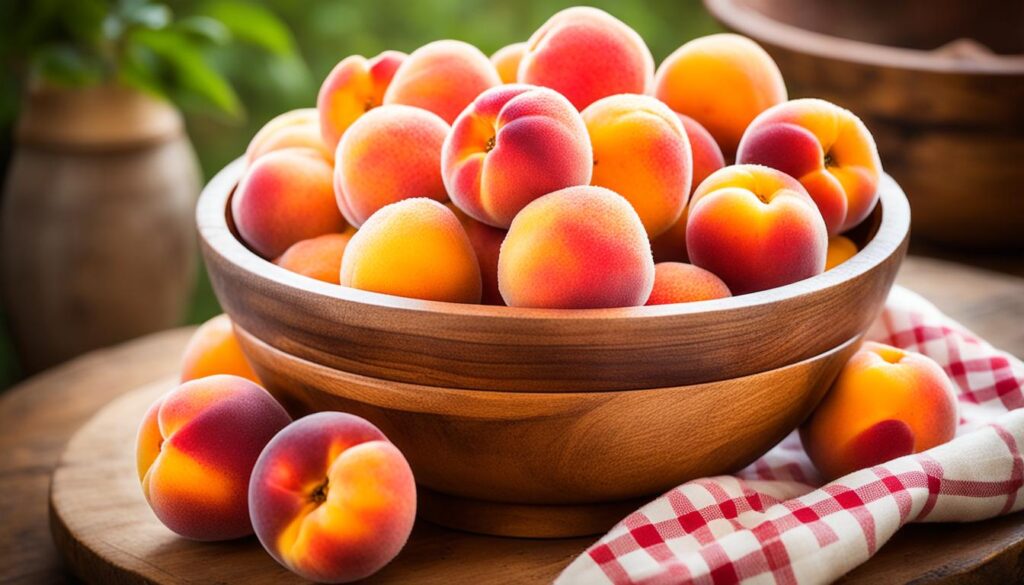
Fresh versus canned. My honest position: peak-season fresh peaches — July and August, ripe enough to smell across the kitchen — make noticeably better cobbler. More fragrant, more complex, better texture after baking. Canned peaches in juice (not syrup) make genuinely excellent cobbler the other ten months of the year. I won’t pretend otherwise. Drain the can partially, not completely — a little of the canning juice in the filling adds flavor.
Butter. Real butter, not margarine, not a substitute. The butter in the biscuit topping and caramelized base is load-bearing. Don’t negotiate on this.
Brown sugar in the filling, white sugar in the biscuit topping. Brown sugar in the fruit layer caramelizes more deeply and adds a molasses quality that pairs well with peach. White sugar in the topping caramelizes at a higher temperature and keeps the biscuit from browning before it bakes through. Swapping these produces noticeably worse results.
Spices should support the peach, not compete with it. A teaspoon of cinnamon in the filling. Maybe a quarter teaspoon of nutmeg. More than that and you stop tasting peach. The fruit is the star.
1. The Basic Cast Iron Skillet Peach Cobbler Recipe
This is the foundation. Not the most impressive recipe in this list, not the one I’d make for company trying to show off — but the one I make most, the one my whole family eats without complaint, and the one you should make first before attempting any variation.
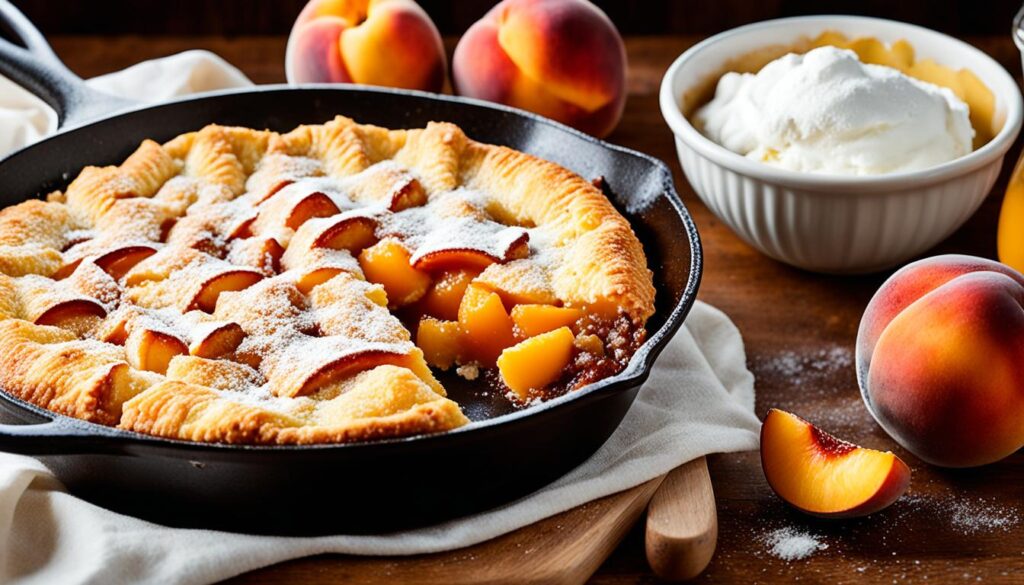
My wife calls this one “the right one.” Meaning it tastes the way cobbler is supposed to taste. Not her father’s version — she’s clear about that — but right. I accept right.
Ingredients
Peach filling:
- 2 lbs fresh peaches, peeled, pitted, and sliced — about 4-5 medium peaches — or 2 cans (15 oz each) sliced peaches in juice, partially drained
- 1/3 cup granulated sugar
- 1/3 cup packed brown sugar
- 1 teaspoon cinnamon
- 1/4 teaspoon nutmeg
- 1 tablespoon lemon juice
- 1 tablespoon cornstarch
Biscuit topping:
- 1 cup all-purpose flour
- 1/2 cup granulated sugar
- 1-1/2 teaspoons baking powder
- 1/4 teaspoon salt
- 1/2 cup whole milk
- 6 tablespoons unsalted butter, melted
For the pan:
- 2 tablespoons unsalted butter
Instructions
Preheat the oven to 375°F with the 10-inch cast iron skillet inside. Full five minutes. Not three. Five.
Toss the peach slices with both sugars, cinnamon, nutmeg, lemon juice, and cornstarch in a bowl. Mix until the cornstarch is fully incorporated — no white streaks. The filling should look glossy and smell like concentrated peach. Set it aside.
Mix the biscuit topping: flour, sugar, baking powder, and salt whisked together. Add the milk and melted butter. Stir until just combined. Lumpy is correct. Smooth means overmixed means dense topping. Leave the lumps alone.
Remove the hot skillet from the oven. Drop the 2 tablespoons of butter in — it should sizzle and foam immediately, coating the surface. Pour the peach filling in. The edges should start sizzling on contact with the hot pan — that sound is what you’re looking for. Spoon the biscuit batter over the top in rough, uneven dollops. Leave gaps between them. Don’t cover everything. The peach juice needs those gaps to bubble through during baking.
Into the 375°F oven for 40 to 45 minutes. The biscuit topping should be deep golden brown — not tan, not pale, deep golden — and the filling should be visibly bubbling through the gaps and around the edges. Rest 10 minutes before serving. The filling is still actively setting as it comes out of the oven and needs those 10 minutes to thicken properly.
Nutrition Info (per serving, serves 4)
| Nutrient | Amount per Serving |
|---|---|
| Calories | 520 |
| Carbohydrates | 84g |
| Protein | 5g |
| Fat | 19g |
| Fiber | 3g |
| Sodium | 310mg |
2. Bourbon-Infused Peach Cobbler Delight
About three years ago I was making a cocktail in the kitchen and had bourbon left in the jigger. The peach filling for cobbler was in the bowl next to me. I made a decision without thinking too hard about it and poured it in. My wife tasted the result before it even came out of the oven — she’d dipped a spoon into the bubbling filling through one of the biscuit gaps — and looked at me with an expression that meant I was expected to always do this.
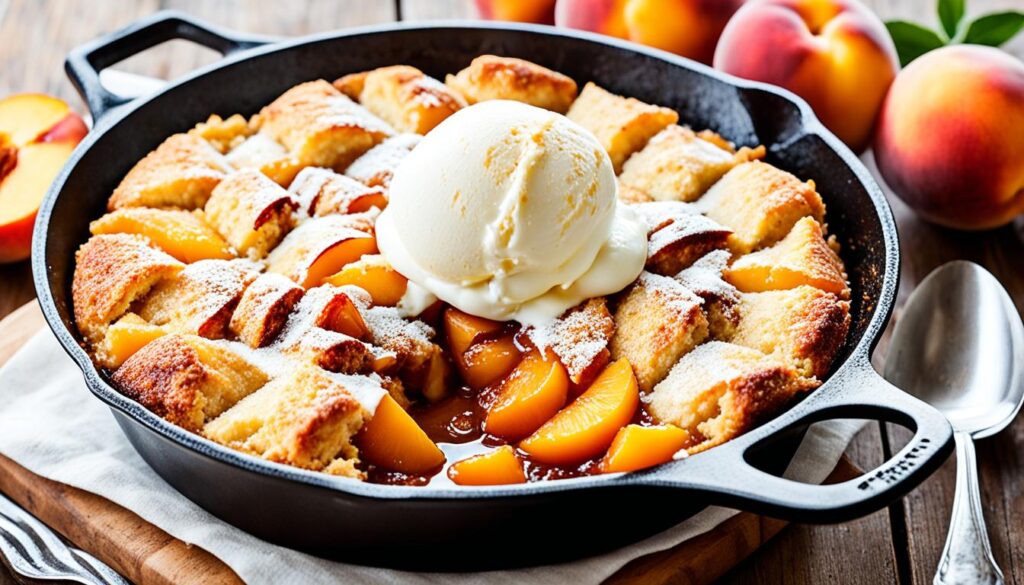

The bourbon cooks down during baking. What remains isn’t booziness — it’s warmth and vanilla undertone and a depth that makes the peach filling taste more complex without tasting like anything you can specifically identify. My sons don’t detect it. My wife does and requests it by name. I keep a bottle in the baking pantry specifically for this cobbler and the occasional pecan pie. My sons find this suspicious.
Ingredients
Peach filling:
- 2 lbs fresh peaches, peeled, pitted, and sliced
- 1/3 cup granulated sugar
- 1/3 cup packed brown sugar
- 3 tablespoons bourbon
- 1 teaspoon cinnamon
- 1/4 teaspoon vanilla extract
- 1 tablespoon cornstarch
- 1 tablespoon lemon juice
Biscuit topping:
- 1 cup all-purpose flour
- 1/2 cup granulated sugar
- 1-1/2 teaspoons baking powder
- 1/4 teaspoon salt
- 1/2 cup whole milk
- 6 tablespoons unsalted butter, melted
For the pan:
- 2 tablespoons unsalted butter
Instructions
Toss the peach slices with both sugars, bourbon, cinnamon, vanilla, cornstarch, and lemon juice. Stir until the cornstarch is dissolved. Let this sit for 15 minutes while the oven and skillet preheat — the bourbon draws out the peach juice fast and within a few minutes you’ll see it pooling in the bowl, fragrant and slightly darker than plain juice.
Preheat oven to 375°F with the cast iron skillet inside. Five full minutes.
Make the biscuit topping the same way as the basic recipe — lumpy, just combined. Assemble the same way: butter in the hot pan, peach-bourbon filling in (edges sizzle — good), biscuit batter over the top in rough dollops with gaps.
Bake 40 to 45 minutes until deep golden topping and active bubbling. The smell during the last 15 minutes of baking — bourbon and caramelized peach and warm biscuit — is one of the better things that can happen in a kitchen. Rest 10 minutes. Vanilla ice cream is not optional with this version. It’s required.
Nutrition Info (per serving, serves 4)
| Nutrient | Amount per Serving |
|---|---|
| Calories | 545 |
| Carbohydrates | 86g |
| Protein | 5g |
| Fat | 19g |
| Fiber | 3g |
| Sodium | 310mg |
3. Double Butter Crust Peach Cobbler
My older son started lobbying for a double-biscuit cobbler when he was about 14. His position was that the biscuit was the best part of cobbler and he didn’t understand why there was only one layer of it. I told him that’s how cobbler works. He pointed out that nobody had ever explained to him why that should be a rule.
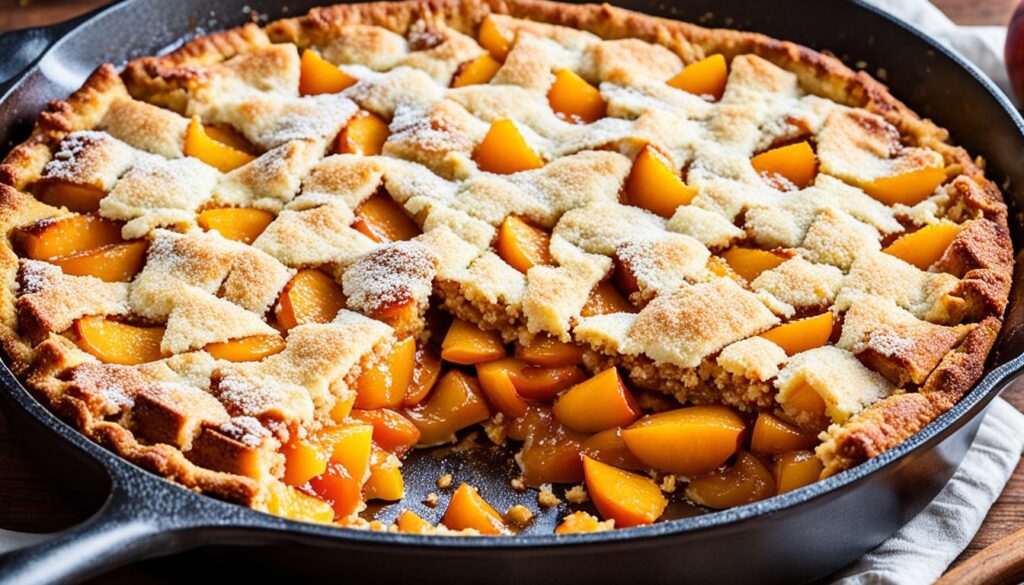
He’s 17 now and still making this argument. I eventually gave him the answer he wanted by creating this version. Two biscuit layers — one at the bottom, peach filling in the middle, second biscuit topping on top. The bottom layer soaks up peach juice during baking and becomes something entirely different from the top layer: soft and almost pudding-like, saturated with sweetened caramelized peach liquid. The top layer stays crisp and golden. Two textures, one dish. He was right. I told him so.
Ingredients
Peach filling:
- 2 lbs fresh peaches, peeled, pitted, and sliced
- 1/3 cup granulated sugar
- 1/3 cup packed brown sugar
- 1 teaspoon cinnamon
- 1/4 teaspoon nutmeg
- 1 tablespoon lemon juice
- 1 tablespoon cornstarch
Double biscuit batter:
- 2 cups all-purpose flour
- 1 cup granulated sugar
- 3 teaspoons baking powder
- 1/2 teaspoon salt
- 1 cup whole milk
- 3/4 cup (1-1/2 sticks) unsalted butter, melted and slightly cooled
For the pan:
- 2 tablespoons unsalted butter
Instructions
Preheat oven to 375°F with the cast iron skillet inside for five minutes.
Mix the peach filling and set aside. Mix the double biscuit batter — same method as the basic recipe, just combined and lumpy, twice the amounts.
Hot skillet out of the oven, butter melted in it. Pour roughly half the batter into the hot buttered skillet. The batter should sizzle at the edges as it hits the hot surface. Leave it in the hot pan for 90 seconds — the edges should look set and slightly opaque before the filling goes in. This partial set keeps the bottom layer from dissolving completely into the fruit.
Spoon the peach filling evenly over the bottom batter layer. Then drop the remaining batter over the top in rough dollops. The two batter layers won’t be neatly separated — the filling will push through in spots, the top batter will sink in places. It’ll look a little chaotic. That’s how it should look.
Bake 45 to 50 minutes until the top biscuit layer is deeply golden and a skewer inserted into just the top biscuit comes out clean. The bottom layer is supposed to be soft and wet from the peach juice — that’s not a mistake, it’s the point. Rest 10 minutes.
Nutrition Info (per serving, serves 4)
| Nutrient | Amount per Serving |
|---|---|
| Calories | 720 |
| Carbohydrates | 112g |
| Protein | 8g |
| Fat | 28g |
| Fiber | 3g |
| Sodium | 480mg |
4. Caramel Pecan Peach Cobbler Indulgence
My wife described this version as “what cobbler would look like if it were trying to impress someone.” I took that as a compliment, decided to keep making it, and have served it at more dinner parties than any other dessert in my rotation.
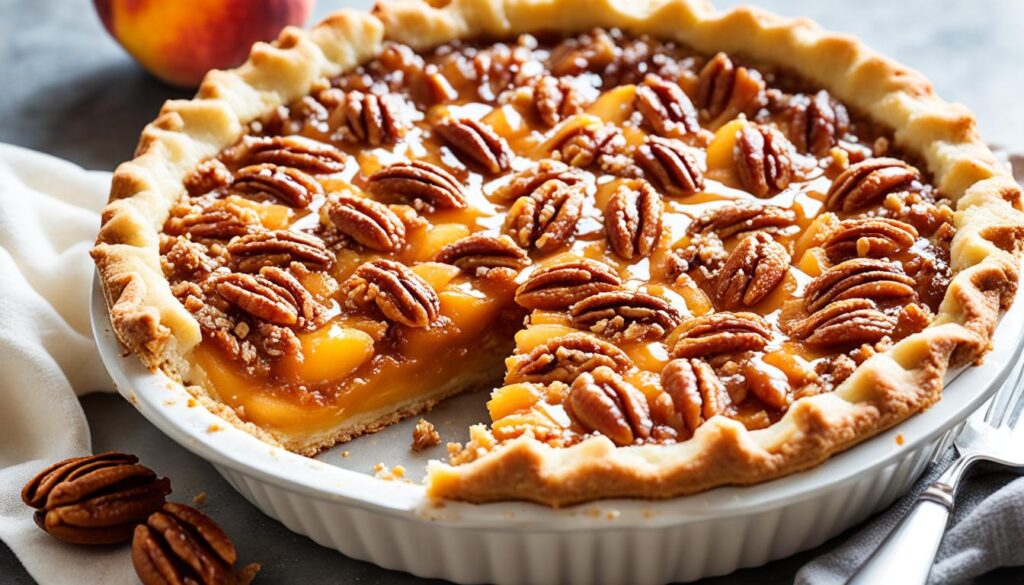
The caramel pecan topping goes on in the last 15 minutes of baking — after the biscuit has set — so the pecans toast rather than burn and the caramel firms into a sticky, crackly layer over the golden topping. The visual when it comes out of the oven is genuinely impressive for something that takes maybe eight extra minutes of work.
Research published in the American Journal of Clinical Nutrition found that regular pecan consumption is associated with improved cardiovascular markers including reduced LDL cholesterol. This does not make caramel pecan cobbler a health food. But the pecans are contributing something beyond texture.
Ingredients
Peach filling:
- 2 lbs fresh peaches, peeled, pitted, and sliced
- 1/3 cup packed brown sugar
- 1/4 cup granulated sugar
- 1 teaspoon cinnamon
- 1 tablespoon lemon juice
- 1 tablespoon cornstarch
Biscuit topping:
- 1 cup all-purpose flour
- 1/2 cup granulated sugar
- 1-1/2 teaspoons baking powder
- 1/4 teaspoon salt
- 1/2 cup whole milk
- 6 tablespoons unsalted butter, melted
Caramel pecan layer:
- 1/2 cup pecans, roughly chopped
- 1/4 cup packed brown sugar
- 2 tablespoons unsalted butter
- 2 tablespoons heavy cream
- Pinch of salt
For the pan:
- 2 tablespoons unsalted butter
Instructions
Preheat oven to 375°F with the cast iron skillet inside. Mix peach filling and biscuit batter. Assemble in the hot skillet the standard way — butter in, peaches in with their sizzle, biscuit dollops over the top with gaps. Into the oven for 25 minutes.
While it bakes, make the caramel pecan topping. Small saucepan over medium heat — brown sugar, butter, cream, and salt. Stir constantly. It’ll bubble and look thin at first. After 3 to 4 minutes it’ll coat the back of a spoon and smell like toffee — deep, slightly bitter, concentrated sweetness. Off the heat, pecans stirred in.
At 25 minutes, pull the cobbler from the oven. The biscuit will be set but still pale. Spoon the caramel pecan mixture over the topping, spreading it loosely. Back in the oven for 15 to 18 more minutes.
When it comes out, the biscuit should be deep golden under the caramel, the pecans should smell toasted, and the caramel surface should look dark and glossy and slightly crackled around the edges of the pan. That combination — the smell, the color, the crackle — is what makes people go quiet for a second when they first see it. Rest 10 minutes.
Nutrition Info (per serving, serves 4)
| Nutrient | Amount per Serving |
|---|---|
| Calories | 680 |
| Carbohydrates | 96g |
| Protein | 6g |
| Fat | 31g |
| Fiber | 4g |
| Sodium | 340mg |
5. Chocolate Chip Peach Cobbler Fusion
My older son suggested this about two years ago. He suggests chocolate additions to everything — I’ve mentioned this elsewhere and it’s worth repeating because it’s a defining characteristic of living with him. His hit rate on chocolate suggestions is maybe 30 percent. This was one of the hits. I told him so immediately and he has cited it in at least three subsequent arguments about whether I should take his food suggestions more seriously. He has a point.
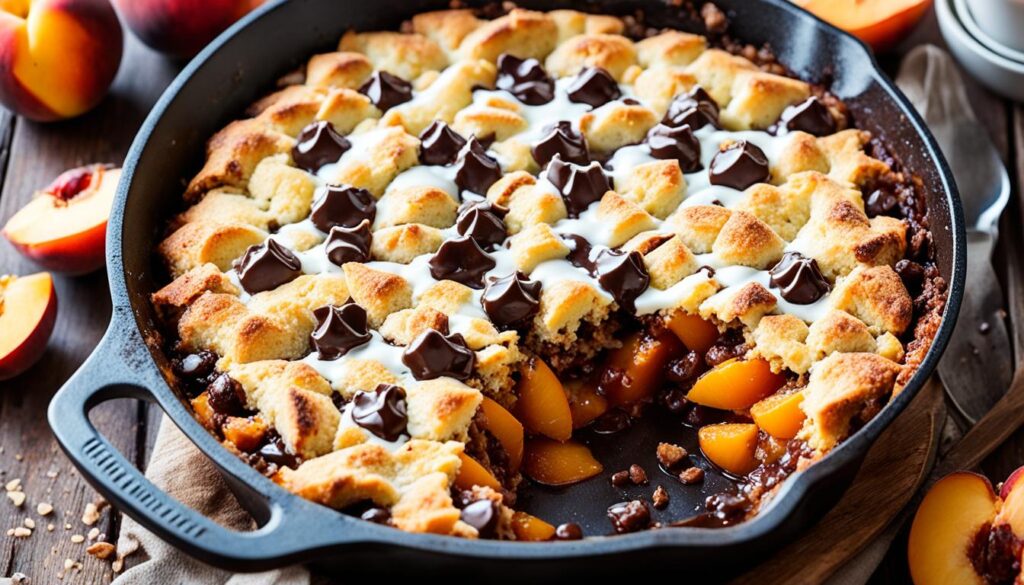
Chocolate chips in the biscuit topping melt during baking into soft pockets distributed throughout the base. The chips near the surface spread slightly and develop a glossy, slightly crackled appearance. The chips deeper in the topping stay more intact and you hit them in pockets as you eat. The combination with the sweet-tart peach filling underneath is genuinely better than it sounds.
Ingredients
Peach filling:
- 2 lbs fresh peaches, peeled, pitted, and sliced
- 1/3 cup granulated sugar
- 1/4 cup packed brown sugar
- 1 teaspoon cinnamon
- 1 tablespoon lemon juice
- 1 tablespoon cornstarch
Chocolate chip biscuit topping:
- 1 cup all-purpose flour
- 1/2 cup granulated sugar
- 1-1/2 teaspoons baking powder
- 1/4 teaspoon salt
- 1/2 cup whole milk
- 6 tablespoons unsalted butter, melted
- 1/2 cup semi-sweet chocolate chips
For the pan:
- 2 tablespoons unsalted butter
Instructions
Preheat oven to 375°F with the cast iron skillet inside. Mix the peach filling and set aside.
Make the biscuit batter as usual — just combined, still lumpy. Fold the chocolate chips in with two or three gentle turns of a spatula. Not stir — fold. Vigorous stirring breaks the chips and distributes them unevenly. You want intact chips in a roughly even distribution.
Assemble in the hot skillet: butter in, peach filling in with its sizzle, chocolate chip batter spooned over the top in rough dollops with gaps left between them.
Bake 40 to 45 minutes until the biscuit topping is golden and the peach filling is actively bubbling through the gaps. The chocolate on the surface will look melted and spread — slightly glossy patches against the golden biscuit. That’s how it’s supposed to look.
Rest 10 minutes. The chocolate stays soft and melted longer than you’d expect — the cobbler retains heat well and the chips near the surface are essentially liquid for the first five minutes out of the oven.
Nutrition Info (per serving, serves 4)
| Nutrient | Amount per Serving |
|---|---|
| Calories | 600 |
| Carbohydrates | 92g |
| Protein | 6g |
| Fat | 24g |
| Fiber | 4g |
| Sodium | 320mg |
6. Cream Cheese Swirl Peach Cobbler
My wife requests this one specifically on evenings when she’s had a difficult week and wants something that feels genuinely indulgent. That’s a narrow use case. It comes up more often than you’d think.
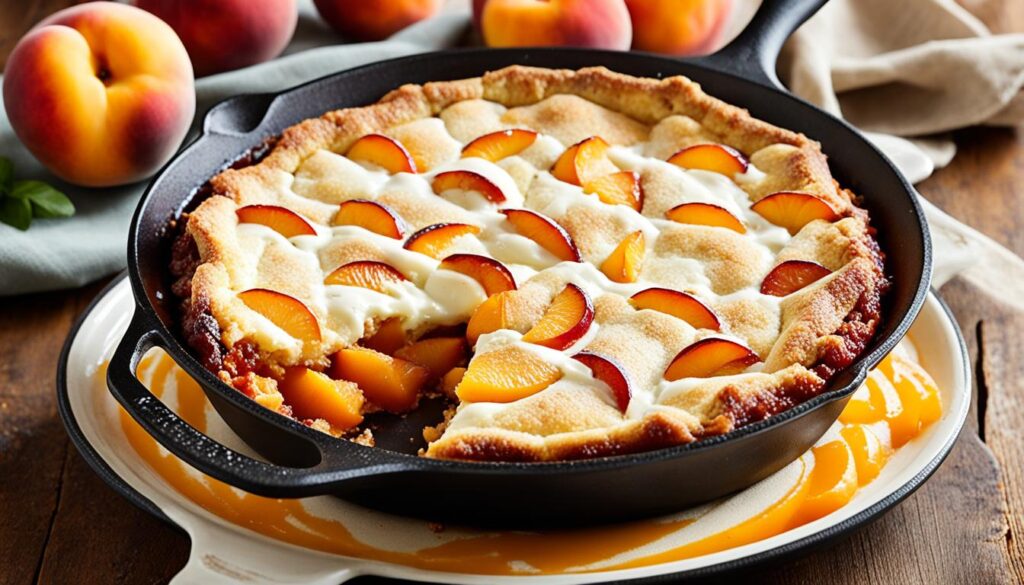
The cream cheese swirled through the biscuit topping melts into tangy, slightly dense pockets that interrupt the sweet peach filling in the best possible way. But — and this is the part I had to learn the hard way — the cream cheese must be at true room temperature. Not slightly less cold than the refrigerator. Actually soft, actually warm. Cold cream cheese dropped onto biscuit batter sits in stiff lumps that never smooth out, never integrate, and produce hard cold pockets in the finished cobbler instead of the soft swirls you’re after. I served that version once. My wife was polite about it. I knew.
According to the National Institutes of Health, peaches contain chlorogenic acid and other phenolic compounds with meaningful antioxidant activity — which gives the fruit layer here more nutritional standing than most cobbler discussions suggest.
Ingredients
Peach filling:
- 2 lbs fresh peaches, peeled, pitted, and sliced
- 1/3 cup granulated sugar
- 1/4 cup packed brown sugar
- 1 teaspoon cinnamon
- 1/4 teaspoon vanilla extract
- 1 tablespoon lemon juice
- 1 tablespoon cornstarch
Biscuit topping:
- 1 cup all-purpose flour
- 1/2 cup granulated sugar
- 1-1/2 teaspoons baking powder
- 1/4 teaspoon salt
- 1/2 cup whole milk
- 6 tablespoons unsalted butter, melted
Cream cheese swirl:
- 6 oz cream cheese, genuinely at room temperature
- 3 tablespoons powdered sugar
- 1/2 teaspoon vanilla extract
For the pan:
- 2 tablespoons unsalted butter
Instructions
Preheat oven to 375°F with the cast iron skillet inside. Leave the cream cheese out at room temperature for at least two hours before starting — not the last minute before cooking, two hours minimum.
Beat the cream cheese with powdered sugar and vanilla until completely smooth and almost glossy. No lumps at all. Set aside.
Make the peach filling and biscuit batter. Assemble in the hot skillet: butter in, peach filling in, biscuit batter dolloped over the top.
Drop small teaspoons of the cream cheese mixture across the biscuit batter surface — six or seven drops scattered around. Drag a knife through both in slow S-curves. Three or four passes and stop. Over-swirling makes everything disappear into the batter and you lose the visual completely. Three passes is enough.
Bake 40 to 45 minutes. The cream cheese areas will look slightly different from the surrounding biscuit — a little paler, slightly sunken, with a creamier sheen where the cheese has softened into the topping. Rest 10 minutes.
Nutrition Info (per serving, serves 4)
| Nutrient | Amount per Serving |
|---|---|
| Calories | 620 |
| Carbohydrates | 86g |
| Protein | 7g |
| Fat | 27g |
| Fiber | 3g |
| Sodium | 390mg |
7. Brown Sugar and Cinnamon Peach Cobbler
This is my favorite. Out of these eight recipes, out of the sixty-plus times I’ve made some version of cast iron peach cobbler over the past several years, if I’m making cobbler on a Tuesday night in August with ripe peaches from the farmers market and nobody is watching, this is what I make.
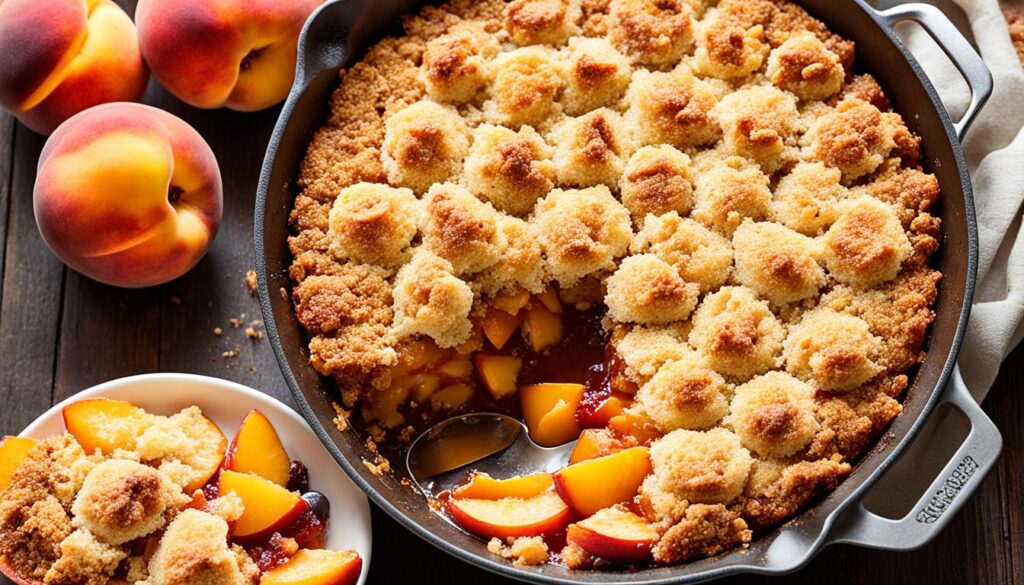
Brown sugar throughout — in the filling and the biscuit topping. More cinnamon than the basic recipe calls for. The brown sugar caramelizes against the cast iron edges faster and darker than white sugar, turning the perimeter of the cobbler into something toffee-adjacent and slightly sticky that’s the best bite in the whole dish. My wife agrees this is the best version. My older son wants chocolate chips in it. My younger son wants caramel pecans on it. I make it straight. It doesn’t need anything else.
This is also, I think, the closest I’ve come to what my father-in-law made. Not identical — his had something I still can’t identify, some quality from forty years of cooking in the same seasoned skillet — but close enough that my wife got quiet the first time she ate it. That silence was worth more to me than any compliment.
Ingredients
Peach filling:
- 2 lbs fresh peaches, peeled, pitted, and sliced
- 1/2 cup packed dark brown sugar
- 1-1/2 teaspoons cinnamon
- 1/4 teaspoon nutmeg
- 1/8 teaspoon allspice
- 1 tablespoon lemon juice
- 1 tablespoon cornstarch
Brown sugar biscuit topping:
- 1 cup all-purpose flour
- 1/3 cup packed brown sugar
- 1/4 cup granulated sugar
- 1-1/2 teaspoons baking powder
- 1 teaspoon cinnamon
- 1/4 teaspoon salt
- 1/2 cup whole milk
- 6 tablespoons unsalted butter, melted
For the pan:
- 2 tablespoons unsalted butter
Instructions
Preheat oven to 375°F with the cast iron skillet inside.
Toss the peach slices with dark brown sugar, the full 1-1/2 teaspoons of cinnamon, nutmeg, allspice, lemon juice, and cornstarch. More cinnamon than the basic recipe. You should smell it when you lean over the bowl. Let it sit for 10 minutes — the dark brown sugar draws out peach juice fast and the filling will already look glossy and concentrated by the time it goes in the pan.
Mix the biscuit topping with both sugars and the extra cinnamon. The dry mixture should smell like snickerdoodle dough before any liquid goes in. Add milk and melted butter, stir until just combined and lumpy.
Hot skillet, butter in, peach filling in. The brown sugar filling caramelizes faster at the edges than a white sugar version — within a few minutes the very edge of the filling where it contacts the hot pan should look dark and glossy. That darkening is the caramelization you want. Biscuit batter in rough dollops over the top.
Bake 38 to 42 minutes — slightly less time than the basic recipe, because brown sugar browns faster. Deep amber at the edges of the biscuit topping. The very edge of the filling touching the cast iron should look almost candied. Rest 10 minutes.
Nutrition Info (per serving, serves 4)
| Nutrient | Amount per Serving |
|---|---|
| Calories | 545 |
| Carbohydrates | 89g |
| Protein | 5g |
| Fat | 19g |
| Fiber | 3g |
| Sodium | 315mg |
8. Mascarpone and Honey Peach Cobbler Luxury
My father-in-law came to visit last summer. The first evening he arrived I made this cobbler — honey in the filling, cornmeal in the biscuit topping, mascarpone cream on the side. He ate a full bowl, then a second, then sat with the skillet in front of him scraping the caramelized edges with a spoon. He didn’t say anything about it for a long time. Then he said “the pan helps.”
He was right. But I’ll take it.
The honey in the filling changes the flavor in ways that are hard to describe except that the peach tastes more like peach — concentrated and floral and complex. The USDA’s food composition research documents over 180 identified aromatic compounds in raw honey, which explains why it adds complexity that plain sugar can’t replicate. Use good honey here — local or raw if you can find it. The quality shows.
Ingredients
Peach filling:
- 2 lbs fresh peaches, peeled, pitted, and sliced
- 3 tablespoons honey
- 3 tablespoons granulated sugar
- 1 teaspoon cinnamon
- 1/4 teaspoon vanilla extract
- 1 tablespoon lemon juice
- 1 tablespoon cornstarch
Cornmeal biscuit topping:
- 3/4 cup all-purpose flour
- 1/4 cup fine cornmeal
- 1/2 cup granulated sugar
- 1-1/2 teaspoons baking powder
- 1/4 teaspoon salt
- 1/2 cup whole milk
- 6 tablespoons unsalted butter, melted
Mascarpone cream:
- 8 oz mascarpone, at room temperature
- 2 tablespoons honey
- 1/2 teaspoon vanilla extract
- 1/4 cup heavy cream
For the pan:
- 2 tablespoons unsalted butter
Instructions
Preheat oven to 375°F with the cast iron skillet inside.
Toss the peach slices with honey, granulated sugar, cinnamon, vanilla, lemon juice, and cornstarch. The honey makes the peach juice that forms in the bowl thicker and more aromatic than a plain sugar maceration. Let it sit 10 minutes.
Mix the cornmeal biscuit topping: flour, cornmeal, sugar, baking powder, and salt together. The cornmeal creates a slightly grainy texture in the dry mixture — that’s what adds crunch to the finished topping. Add milk and melted butter, stir until just combined. Lumpier than a plain flour batter, which is correct.
Assemble in the hot skillet: butter in, honey-peach filling in (edges sizzle immediately and the honey intensifies the caramelization smell on contact), cornmeal biscuit batter dolloped over the top with gaps.
Bake 40 to 45 minutes until the topping is deep golden with a slightly textured, grainy surface from the cornmeal. While it bakes, make the mascarpone cream: stir mascarpone, honey, and vanilla together until smooth. Add the heavy cream and stir gently — don’t whip it, just incorporate — until it reaches a soft, spoonable consistency. Serve it cold alongside the hot cobbler rather than on top.
Rest the cobbler 10 minutes. The mascarpone cream goes on the side, served with a spoon. Cold against hot. Soft against crisp. The contrasts are the point.
Nutrition Info (per serving, serves 4)
| Nutrient | Amount per Serving |
|---|---|
| Calories | 680 |
| Carbohydrates | 88g |
| Protein | 9g |
| Fat | 34g |
| Fiber | 3g |
| Sodium | 330mg |
Tips for Perfecting Your Cast Iron Skillet Peach Cobbler
The things I’ve learned from making these eight recipes more times than I can accurately count.
Preheat the skillet every single time. Five minutes in the oven at recipe temperature. No shortcuts here. The peach filling must sizzle when it touches the pan surface — that sizzle is caramelization starting immediately. No sizzle means no caramelization at the base and the cobbler tastes like it was made in a glass dish. Which it shouldn’t.
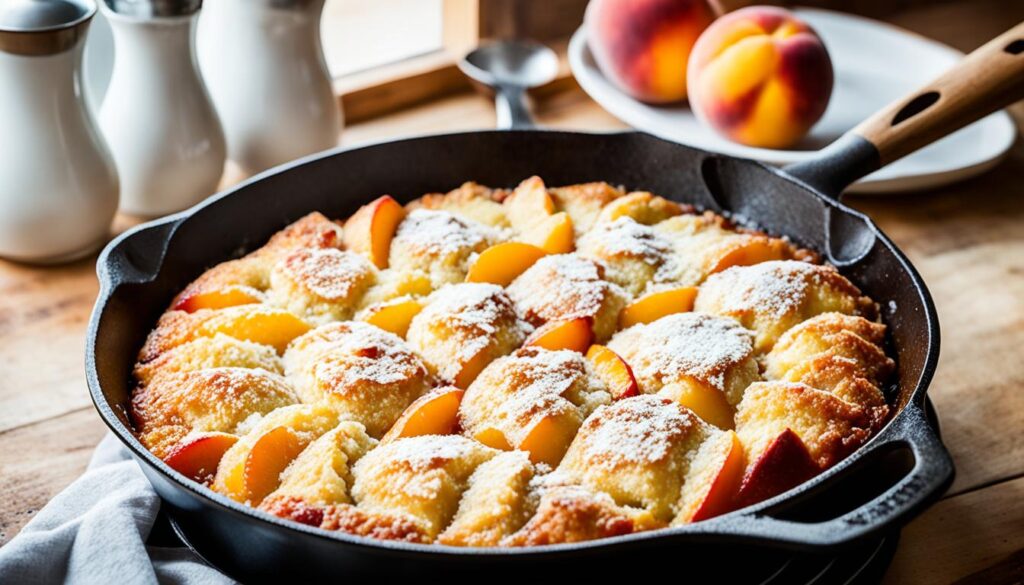
Leave the biscuit topping rough. Gaps between the dollops let peach juice bubble through during baking. A smooth, even layer of biscuit traps steam underneath, produces a pale soggy bottom, and defeats the whole point of using cast iron. Rough, uneven, with visible gaps. That’s the correct look before it goes in the oven.
Rest it 10 minutes. The filling is still actively bubbling and the cornstarch is still thickening when the cobbler comes out. Serve it immediately and the filling is loose and pours off the plate. Ten minutes of resting and it holds. Worth the wait.
Watch the biscuit, not the clock. The difference between perfectly golden and too dark is about three minutes at cobbler temperatures. Start checking at 35 minutes. Pull it when the topping is deep golden brown — the filling will finish setting during the rest.
If you’re building a full menu around this dessert, this stir fry recipe is light enough that people actually want dessert afterward. Heavier mains compete with cobbler. This one doesn’t.
Serving and Presentation Ideas
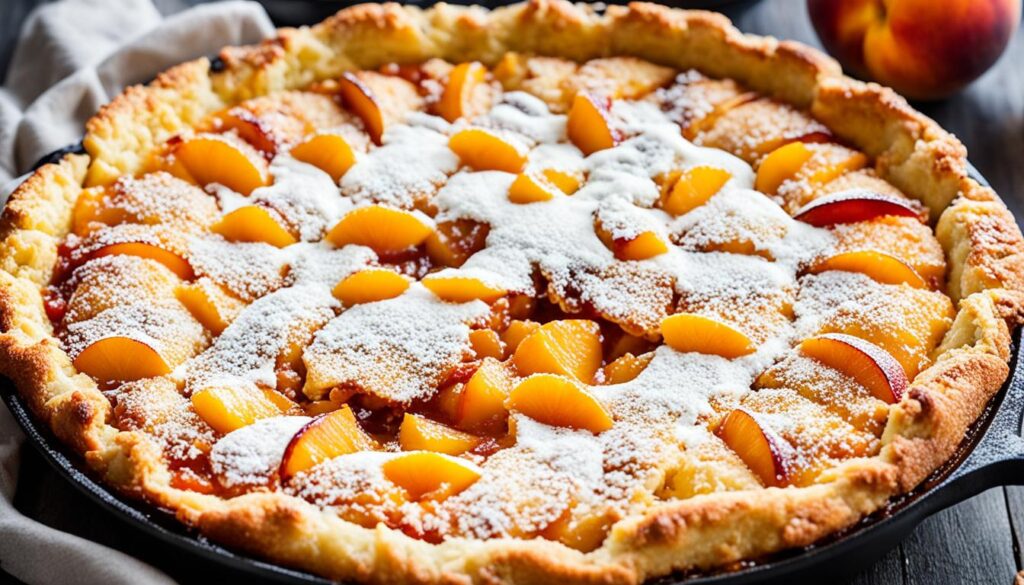
Cast iron cobbler gets served from the skillet. That’s the presentation. The bubbling peach filling and irregular golden biscuit topping in a black cast iron pan is the visual — nothing needs improvement.
Vanilla ice cream alongside. Always. The contrast between warm cobbler and cold ice cream melting into the caramelized filling is the reason this dessert exists. Whipped cream is acceptable. Mascarpone cream, as in recipe 8, is the elegant choice.
A few small additions that actually improve the finished dish: toasted pecans scattered over the top right before serving, for crunch the cobbler doesn’t otherwise have. A drizzle of good honey over individual portions, especially for the brown sugar version. Flaky sea salt on top of the vanilla ice cream — sounds strange, works immediately.
The cobbler keeps covered at room temperature for one day. Refrigerate after that. Reheat individual portions at 300°F for 10 minutes rather than microwaving — the microwave produces a soggy topping and the oven revives the crust. Five extra minutes. Worth it.
When planning the full meal, the shrimp and broccoli stir-fry works well as a main course before cobbler — light enough that nobody arrives at dessert too full to enjoy it, which is the only real criterion for what to serve before cast iron peach cobbler.