Table of Contents
- 1 French Skillet vs Regular Skillet – Which One Do You Need?
- 2 What Is a French Skillet? Definition and Key Characteristics
- 3 What Is a Regular Skillet? Understanding Traditional Skillet Design
- 4 French Skillet vs Regular Skillet: Side-by-Side Comparison
- 5 Best Uses for a French Skillet
- 6 Best Uses for a Regular Skillet
- 7 Pros and Cons: French Skillet vs Regular Skillet
- 8 Material Options: French Skillet vs Regular Skillet Considerations
- 9 Size Guide: Choosing the Right French Skillet vs Regular Skillet
- 10 Price Comparison: French Skillet vs Regular Skillet
- 11 Can a French Skillet Replace a Regular Skillet (or Vice Versa)?
- 12 Cleaning and Maintenance: French Skillet vs Regular Skillet
- 13 Making Your Decision: French Skillet vs Regular Skillet
French Skillet vs Regular Skillet – Which One Do You Need?
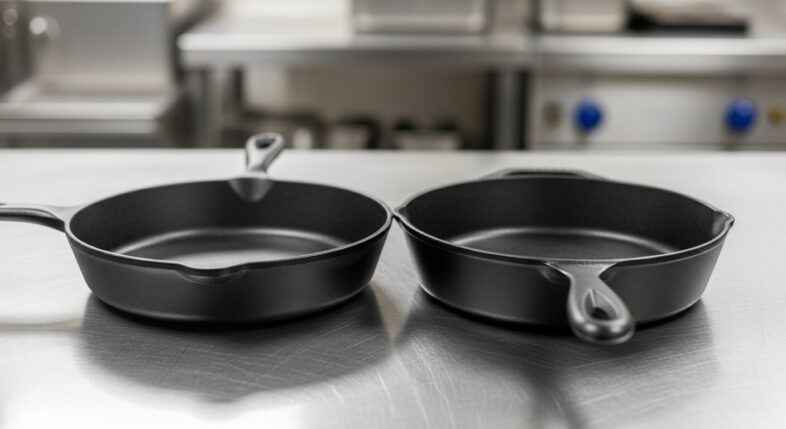
The main differences between french skillets and regular skillets come down to side design, cooking capacity, and versatility. French skillets feature straight, vertical sides that stand 2.5-3 inches tall, while regular skillets have sloped, flared sides measuring just 1-2 inches high. This structural variation affects everything from how much liquid you can hold to which cooking techniques work best.
Most home cooks own a regular skillet but have never used a french skillet. That’s a missed opportunity. The taller sides of a french skillet create 30-40% more usable volume than a regular skillet of the same diameter. You can braise chicken thighs in wine sauce without spillage. Stir-fries stay contained instead of flying onto your stovetop.
Regular skillets excel at different tasks. Their shallow, angled sides make flipping eggs effortless. A quick wrist motion sends a pancake airborne and back down perfectly. Try that same move with a french skillet’s high walls, and your breakfast ends up on the floor.
This comparison breaks down:
- Precise design specifications that separate these two pan types
- Cooking methods each skillet handles best (and worst)
- Material considerations that affect performance differently
- Whether owning both makes sense for your kitchen
The right skillet transforms how you cook. A french skillet turns weeknight dinners into complete one-pan meals. Regular skillets deliver restaurant-quality sears on steaks and fish. Understanding which pan suits your cooking style means less frustration and better results every time you turn on the stove.
What Is a French Skillet? Definition and Key Characteristics
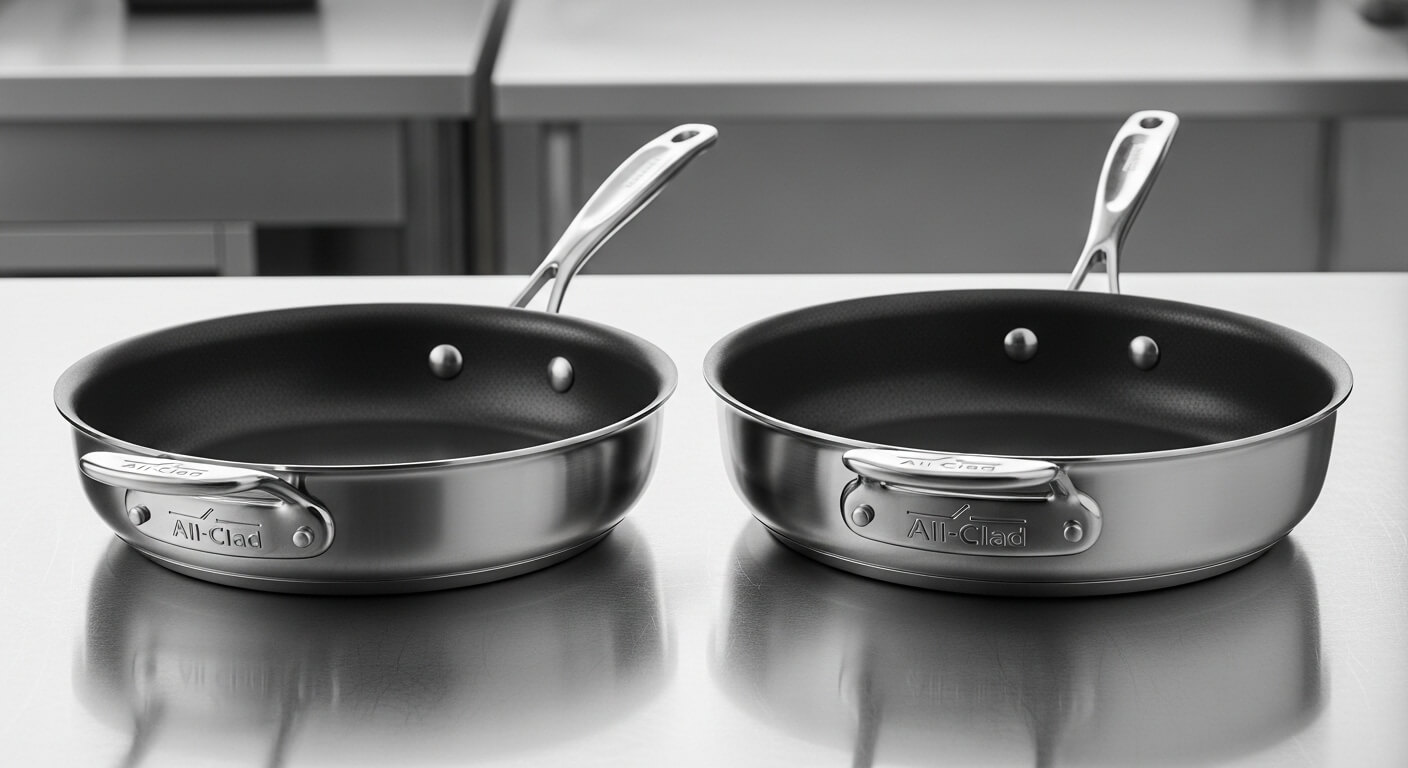
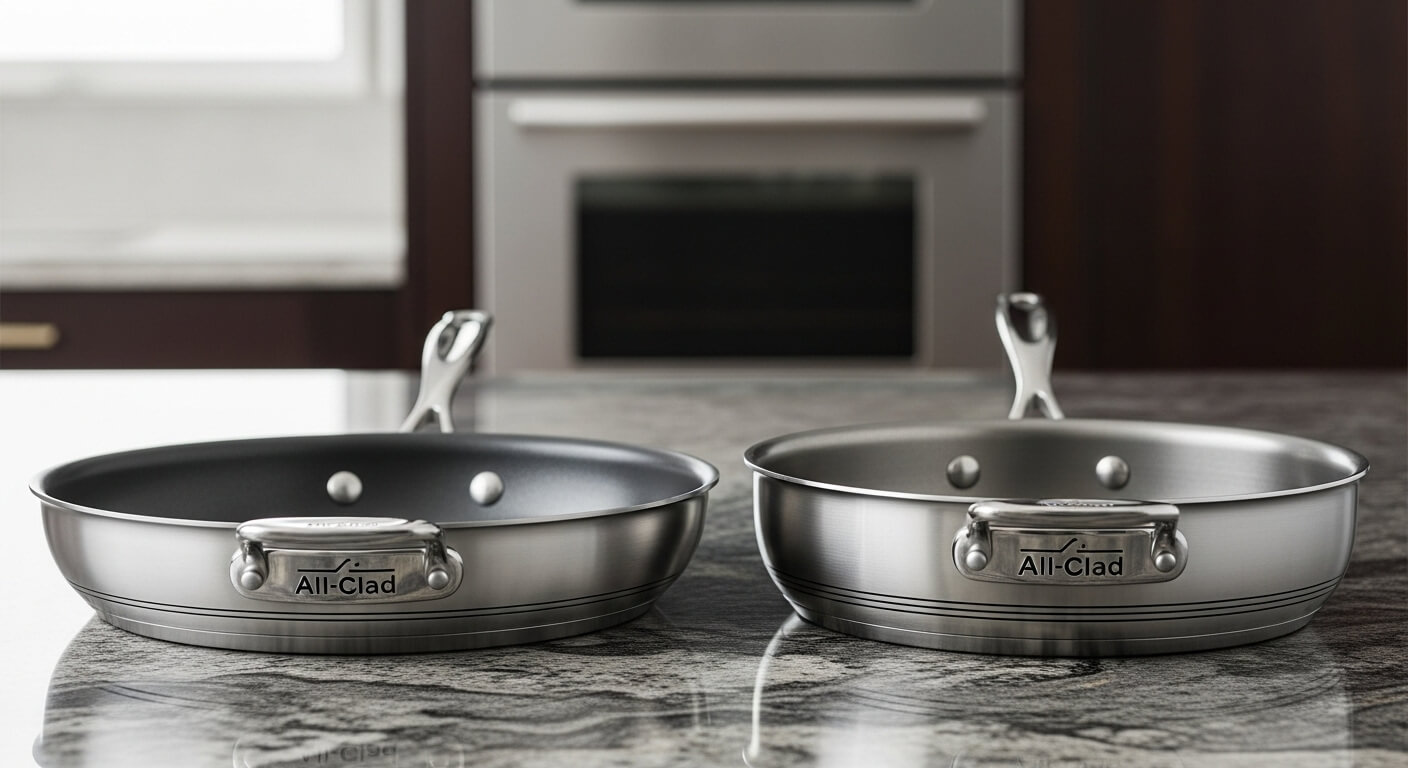
A french skillet is a wide, flat-bottomed pan with straight, vertical sides that measure 2.5-3 inches in height. The design creates a hybrid between a traditional skillet and a sauté pan. Chefs sometimes call these pans “chef’s pans” or “everything pans” because the shape handles multiple cooking methods.
The straight sides distinguish french skillets from every other pan type. No flare. No slope. Perpendicular walls that rise directly from the cooking surface. This geometry increases the pan’s volume without requiring a larger diameter. A 12-inch french skillet holds nearly as much as a 5-quart dutch oven.
Design Features That Define French Skillets
Construction elements include:
| Feature | Specification | Purpose |
|---|---|---|
| Side Height | 2.5-3 inches | Contains liquids and reduces splatter |
| Side Angle | 90 degrees (vertical) | Maximizes cooking surface and volume |
| Cooking Surface | Flat, wide base | Even heat distribution across entire diameter |
| Handle Design | Long main handle + helper handle | Supports heavier weight when full |
| Lid Inclusion | Usually included | Enables braising, simmering, and moisture retention |
The cooking surface spans the full diameter without tapering. A 10-inch french skillet provides the complete 10 inches for browning meat or vegetables. Regular skillets lose usable space where the sides curve inward. That difference matters when searing four chicken breasts simultaneously.
French skillets typically weigh 3-5 pounds in stainless steel construction. Cast iron versions push 7-9 pounds. The extra material in those tall sides adds heft. Many manufacturers add a small helper handle opposite the main handle. Lifting a french skillet loaded with braised short ribs and sauce requires two hands.
Common Materials and Sizes
Material options for french skillets:
- Stainless steel with aluminum core – Most versatile, works on all cooktops including induction
- Hard-anodized aluminum – Lighter weight, excellent heat conductivity, non-reactive to acidic foods
- Enameled cast iron – Superior heat retention, no seasoning required, heaviest option
- Carbon steel – Professional-grade performance, requires seasoning, develops natural non-stick patina
Standard diameters range from 10 to 14 inches measured across the top rim. The 12-inch size dominates home kitchens. It accommodates meals for 4-6 people without crowding ingredients. Smaller 10-inch models work for couples or side dishes. The 14-inch french skillet handles large family portions but demands serious storage space.
Capacity varies by manufacturer, but most 12-inch french skillets hold 4-5 quarts when filled to the rim. That volume supports cooking methods beyond simple sautéing. Poaching fish in wine sauce. Reducing tomato sauce from crushed tomatoes. Braising lamb shanks with aromatics. The straight sides keep everything contained while moisture slowly evaporates.
What Is a Regular Skillet? Understanding Traditional Skillet Design
A regular skillet is a flat-bottomed pan with sloped, flared sides that curve outward from the base to the rim. Most people call these “frying pans,” and they represent the most common pan design in American kitchens. The angled sides typically rise 1-2 inches from the cooking surface before flaring outward at a 45-degree angle.
This classic design dates back centuries. The sloped profile serves one primary function: easy access to food while cooking. You can slide a spatula under an egg without hitting a vertical wall. Flipping pancakes requires minimal effort because the low, angled rim creates clearance for wrist-based tossing motions.
Core Design Elements of Regular Skillets
Structural characteristics:
| Feature | Specification | Purpose |
|---|---|---|
| Side Height | 1-2 inches at lowest point | Allows easy food access and flipping |
| Side Angle | 45-degree outward flare | Facilitates tossing and spatula maneuverability |
| Cooking Surface | Flat base, tapers toward edges | Concentrates heat in center for searing |
| Handle Design | Single long handle | Lightweight enough for one-handed control |
| Lid Availability | Usually sold separately | Most cooking methods don’t require coverage |
The cooking surface narrows as the sides slope upward. A 12-inch regular skillet measures 12 inches across the top rim but offers only 9-10 inches of flat cooking area at the base. Food naturally slides toward the center where heat concentrates. This taper benefits high-heat searing but limits how many items fit comfortably.
Regular skillets weigh less than french skillets of equivalent diameter. A 12-inch stainless steel regular skillet typically weighs 2-3 pounds. Cast iron versions reach 5-8 pounds depending on wall thickness. The reduced material in shorter, sloped sides makes these pans easier to maneuver with one hand.
Material Construction Options
Popular materials for regular skillets:
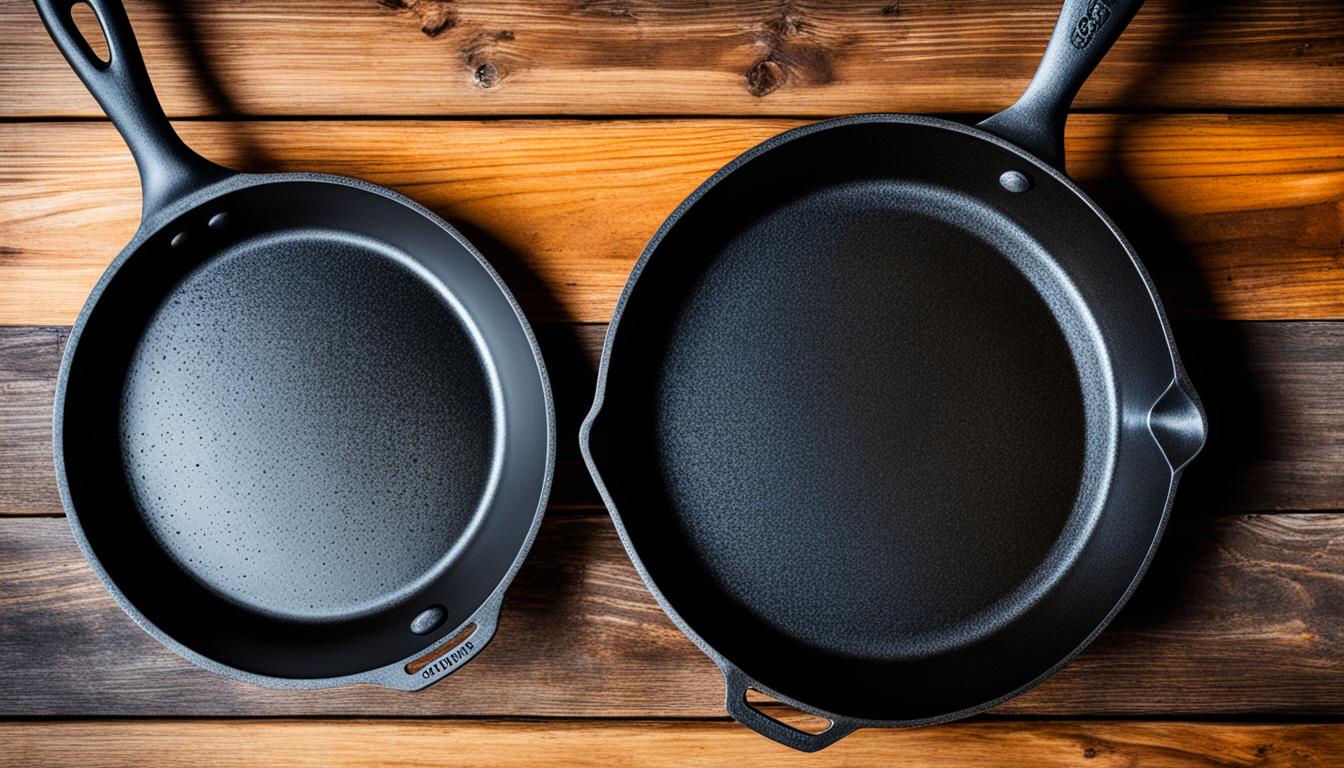
- Cast iron (bare) – Exceptional heat retention and searing capability, requires seasoning maintenance, oven-safe to any temperature
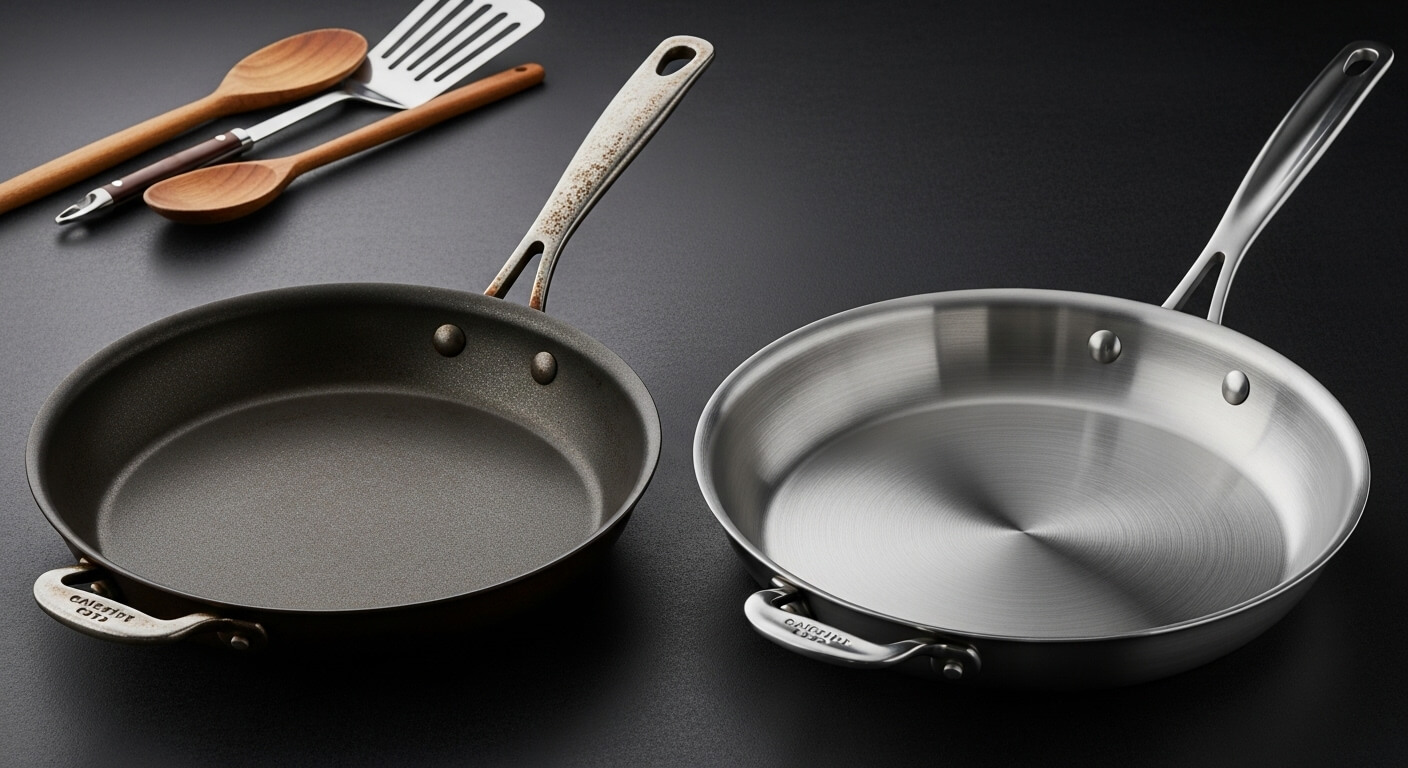
- Stainless steel (tri-ply) – Non-reactive surface ideal for deglazing, dishwasher-safe, develops fond for pan sauces
- Non-stick (PTFE or ceramic) – Requires minimal oil, works for delicate foods like fish and eggs, limited to medium heat
- Carbon steel – Restaurant standard for high-heat cooking, naturally non-stick when properly seasoned, lightweight compared to cast iron
- Copper core – Superior heat responsiveness, expensive, requires polishing to maintain appearance
Traditional regular skillets come in 8, 10, and 12-inch diameters. The 10-inch size dominates as the household standard. It handles two steaks, four eggs, or one pound of ground meat without overcrowding. Eight-inch models suit single portions or small side dishes. Twelve-inch and larger regular skillets accommodate batch cooking but become unwieldy for everyday tasks.
Capacity and Lid Considerations
Most regular skillets hold 1-2 quarts when filled to the rim. The shallow sides and outward flare limit liquid capacity significantly. Cooking methods that involve substantial amounts of liquid—like braising or reducing sauces—become impractical. Splatter increases when frying because those low sides provide minimal containment.
Lids get sold separately for regular skillets in most cases. Manufacturers assume buyers will use these pans for quick, high-heat cooking where coverage isn’t required. Universal lids work if you need one occasionally. The lack of an included lid reflects the intended use: fast sautéing, pan-frying, and searing rather than simmering or braising.
French Skillet vs Regular Skillet: Side-by-Side Comparison
The fundamental contrast between french skillets and regular skillets centers on side geometry, which cascades into differences in capacity, weight, and cooking performance. French skillets maximize volume through vertical walls while regular skillets prioritize accessibility through sloped sides.
Design Differences Between French Skillets and Regular Skillets
Structural comparison at 12-inch diameter:
| Design Element | French Skillet | Regular Skillet |
|---|---|---|
| Side Angle | 90° (vertical/straight) | 45° (sloped/flared) |
| Side Height | 2.5-3 inches | 1-2 inches |
| Flat Cooking Area | 12 inches (full diameter) | 9-10 inches (tapers inward) |
| Total Weight | 3.5-5 lbs (stainless) | 2-3 lbs (stainless) |
| Handle Configuration | Main + helper handle | Single long handle |
| Wall Thickness | Heavier gauge for stability | Standard gauge for maneuverability |
The straight sides of a french skillet create perpendicular walls that rise directly from the cooking surface. No taper exists between the base and rim. Regular skillets curve outward as they ascend, creating an hourglass profile when viewed from above. This angled design reduces the effective cooking area by 15-25% compared to the advertised diameter.
Weight distribution differs substantially between these pan types. French skillets concentrate mass in taller walls, raising the center of gravity. Lifting a full french skillet requires engaging core muscles and using both hands. Regular skillets stay balanced during one-handed maneuvers because less material sits above the cooking surface.
Capacity and Volume: French Skillet vs Regular Skillet
Liquid capacity comparison:
| Pan Size | French Skillet Capacity | Regular Skillet Capacity | Difference |
|---|---|---|---|
| 10-inch | 3-3.5 quarts | 1-1.5 quarts | +133% |
| 12-inch | 4-5 quarts | 1.5-2 quarts | +150% |
| 14-inch | 6-7 quarts | 2-2.5 quarts | +180% |
A 12-inch french skillet holds the same volume as a medium dutch oven. You can simmer three pounds of chicken thighs in two cups of liquid without reaching the rim. Regular skillets of identical diameter max out at shallow braising with barely enough liquid to cover halfway up the ingredients.
The vertical walls prevent spillage during vigorous stirring. Tossing vegetables in a french skillet keeps ingredients contained even with aggressive motion. Regular skillets send food over the edge when you attempt similar techniques because the low, flared sides offer minimal containment above 1.5 inches.
Cooking Performance Differences
Heat distribution varies between french and regular skillets due to surface area and mass. French skillets spread heat across a larger flat base, creating more even temperature zones. The additional metal in taller sides acts as a heat reservoir, stabilizing temperature when cold ingredients hit the pan. Regular skillets heat faster but lose temperature more rapidly when food is added.
Evaporation rates differ by 40-60% between these pan types. The open design of a regular skillet allows moisture to escape quickly, concentrating flavors and creating crispy textures. French skillets trap steam between the tall sides, maintaining humidity even without a lid. This moisture retention benefits braising but hinders crisping.
Performance characteristics:
- Browning and searing – Regular skillets excel due to faster moisture evaporation and concentrated heat in the center
- Sauce reduction – French skillets provide controlled evaporation with more surface area for gentle simmering
- Stir-frying – French skillets contain high-heat tossing; regular skillets allow easier wrist-flipping but risk spillage
- Temperature recovery – French skillets maintain steady heat; regular skillets require reheating between batches
Stirring mechanics change dramatically between pan types. The tall walls of a french skillet force you to use vertical stirring motions with a spoon or spatula. Circular stirring works, but tossing by shaking the pan becomes difficult. Regular skillets accommodate both stirring and the professional chef’s wrist-flip technique where food briefly goes airborne before landing back in the pan.
Access to food during cooking presents another practical difference. Spatulas slide easily under food in regular skillets because the angled sides create clearance. French skillet walls sit perpendicular to the base, forcing you to angle spatulas more steeply. This geometric constraint makes flipping delicate items like fish fillets more challenging without breaking them.
Best Uses for a French Skillet
French skillets perform best when recipes require substantial liquid, covered cooking, or multiple ingredients cooked together in one pan. The high straight sides contain splatter while accommodating larger volumes than regular skillets of the same diameter.
When to Choose a French Skillet Over a Regular Skillet
Optimal cooking scenarios:
| Cooking Method | Why French Skillet Excels |
|---|---|
| Braising | 3-inch sides hold enough liquid to partially submerge meat while reducing over low heat |
| Pan-roasting | Oven-safe with lid traps moisture; transitions from stovetop sear to oven finish seamlessly |
| Shallow frying | Contains 1-2 inches of oil without risk of overflow; reduces stovetop mess |
| One-pan meals | Accommodates protein, vegetables, grains, and sauce without overcrowding |
| Simmering sauces | Large surface area reduces sauces evenly; tall sides prevent boil-over |
Braising demands the volume that french skillets provide. Brown short ribs on high heat, then add wine and stock until liquid reaches halfway up the meat. The straight sides keep everything contained during the two-hour simmer. Regular skillets can’t hold enough braising liquid without filling to the rim.
Pan-roasting starts on the stovetop and finishes in the oven. Sear chicken thighs skin-side down in a french skillet, flip them, add vegetables around the perimeter, then slide the entire pan into a 425°F oven. The included lid keeps moisture circulating. Twenty-five minutes later, dinner is complete in one vessel.
Shallow frying with 1-1.5 inches of oil works better in french skillets than regular skillets. The vertical walls contain splatter when you lower breaded chicken cutlets into hot oil. Temperature stays more consistent because the oil volume remains sufficient even after adding cold food. Regular skillets require less oil due to shallow capacity, but that smaller volume drops temperature more dramatically.
Specific Dishes That Excel in French Skillets
Recipes optimized for french skillet design:
- Chicken cacciatore – Brown four chicken pieces, then simmer in tomato sauce with peppers and onions
- Shakshuka – Poach six eggs in spiced tomato sauce; tall sides prevent sauce from reducing too quickly
- Risotto – Stir arborio rice in 4-5 cups of gradually added stock; straight sides contain vigorous stirring
- Skillet lasagna – Layer noodles, sauce, and cheese in the wide base; lid melts cheese without oven
- Curry dishes – Simmer meat or vegetables in 2-3 cups of coconut milk sauce without spillage
- Paella – Wide cooking surface accommodates rice layer; sides keep liquid contained during absorption
Dishes with substantial sauce benefit most from french skillet geometry. Beef stroganoff requires browning meat, then simmering in sour cream sauce. The 4-quart capacity holds two pounds of beef strips plus three cups of sauce. Stir continuously without losing sauce over the edges.
Stir-fries with sauce—not dry stir-fries—work better in french skillets than regular skillets. Cook kung pao chicken with the traditional sauce ratios. The vertical walls catch everything when you toss vegetables with sauce at high heat. Dry stir-fries that rely on constant food movement suit regular skillets better.
One-pan pasta dishes require the volume french skillets provide. Add uncooked pasta, liquid, vegetables, and protein simultaneously. Everything cooks together as the pasta absorbs liquid. Regular skillets lack the capacity for this technique unless you use minimal pasta quantities.
Braised pork chops demonstrate french skillet advantages clearly. Sear four thick-cut chops until golden. Remove them temporarily, then build a pan sauce with shallots, white wine, and cream. Return chops to the pan, add the lid, and simmer for 15 minutes. The high sides prevent sauce reduction while the chops finish cooking through gentle heat.
Best Uses for a Regular Skillet
Regular skillets deliver superior results when recipes demand quick cooking, high heat searing, or frequent food flipping and tossing. The sloped sides facilitate rapid moisture evaporation and easy access to ingredients during active cooking.
When to Choose a Regular Skillet Over a French Skillet
Ideal cooking applications:
| Cooking Technique | Why Regular Skillet Performs Better |
|---|---|
| High-heat searing | Tapered design concentrates heat in center; moisture evaporates instantly for proper crust formation |
| Flipping foods | Low, angled sides allow spatula clearance and wrist-tossing motions |
| Fast sautéing | Lightweight construction enables one-handed pan movement; ingredients cook quickly without steaming |
| Crisping and browning | Open design promotes rapid evaporation; prevents trapped steam that causes sogginess |
| Deglazing | Sloped sides make scraping fond easier; concentrated surface area intensifies pan sauce flavors |
Searing steaks requires immediate moisture evaporation to develop a proper crust. Regular skillets accomplish this through their open, shallow design. Water vapor escapes rapidly instead of condensing on tall walls. The tapered base concentrates heat where the steak makes contact, creating temperatures hot enough for Maillard reaction.
Flipping technique becomes natural in regular skillets. Slide a spatula under an omelet at a shallow angle without hitting perpendicular walls. The 45-degree sides provide clearance for your wrist to rotate the pan, sending the omelet airborne for a clean flip. French skillets force you to use two utensils or awkward angled spatula movements.
Quick sautéing benefits from the lightweight build of regular skillets. Toss green beans over high heat while shaking the pan with one hand. The 2-3 pound weight allows continuous motion without arm fatigue. French skillets at 4-5 pounds become cumbersome during extended stovetop sessions requiring constant pan movement.
Specific Dishes That Excel in Regular Skillets
Recipes matched to regular skillet design:
- Pan-seared steaks – High heat creates caramelized crust; sloped sides allow easy flipping without piercing meat
- French omelets – Rapid cooking over medium-high heat; sides enable smooth rolling and folding technique
- Smash burgers – Extreme heat crisps edges; flat spatula access allows pressing and scraping without obstruction
- Pan-fried fish fillets – Delicate flesh flips cleanly with angled spatula approach; skin crisps from maximum evaporation
- Hash browns – Moisture evaporates quickly creating crispy exterior; easy flipping for even browning
- Stir-fried vegetables (dry) – Constant tossing keeps vegetables moving; no sauce means spillage risk is minimal
- Seared scallops – Intense heat browns exterior in 90 seconds per side; low sides provide unrestricted access
Classic French omelets demand regular skillet geometry. Beat three eggs, pour into heated butter, then continuously shake the pan while stirring with a fork. The combination of sloped sides and light weight enables the specific technique required. Once curds form, tip the pan to roll the omelet onto itself. French skillet walls block this rolling motion.
Pan-fried pork chops achieve restaurant-quality results in regular skillets. Pat chops dry, season aggressively, then sear in smoking-hot oil. Flip once after four minutes when the crust releases easily from the pan. The shallow profile lets moisture escape so chops brown instead of steam. Deep french skillet walls trap humidity, preventing proper crust development.
Smash burgers require a completely different approach than traditional burgers. Press a 3-ounce ball of ground beef flat against the searing-hot surface using a sturdy spatula. The concentrated heat of a regular skillet’s tapered base creates maximum contact for aggressive crust formation. After two minutes, slide the spatula underneath at a shallow angle to scrape up all the caramelized bits. Vertical french skillet walls make this scraping motion nearly impossible.
Crispy-skinned salmon depends on rapid moisture removal. Place the fillet skin-side down in a regular skillet heated to medium-high. Press gently with a spatula for the first 30 seconds to ensure even contact. The open design allows steam to escape immediately. Skin turns golden and crispy within 5-6 minutes. French skillets hold moisture near the surface, creating steamed rather than crispy skin.
Vegetables that require constant movement—like Brussels sprouts halves or cubed sweet potatoes—cook better in regular skillets. The ability to shake and toss continuously prevents sticking while promoting even browning. French skillet height restricts this motion, forcing you to use utensils instead of wrist action.
Pros and Cons: French Skillet vs Regular Skillet
The advantages and disadvantages of french skillets versus regular skillets stem directly from their structural differences, affecting everything from cooking versatility to daily handling and maintenance requirements.
Advantages of French Skillets
Primary benefits:
| Advantage | Practical Impact |
|---|---|
| Greater versatility | Handles braising, searing, sautéing, shallow frying, and simmering in one pan |
| Superior liquid capacity | Holds 3-5 quarts vs 1-2 quarts in regular skillets of same diameter |
| Reduced splatter | 3-inch vertical walls contain oil and sauce; minimizes stovetop cleanup |
| Included lid | Enables moisture-retention cooking methods without purchasing separately |
| Larger cooking surface | Full diameter remains flat; no space lost to sloped sides |
| Better heat retention | Additional metal mass stabilizes temperature during cooking |
French skillets eliminate the need for multiple pans in many recipes. Brown meat, build a sauce, add vegetables, then cover and simmer—all in the same vessel. This consolidation reduces both cooking time and cleanup. Regular skillets force you to transfer ingredients between pans for complex dishes.
The 4-5 quart capacity of a 12-inch french skillet matches many dutch ovens. Braise short ribs, make chicken curry, or simmer pasta in sauce without transferring to a larger pot. This volume accommodates family-sized portions that regular skillets simply cannot hold.
Splatter containment becomes significant when shallow frying or cooking fatty proteins. Bacon releases grease that hits french skillet walls and drips back down rather than spraying across your stovetop. Regular skillet edges sit low enough that splatter frequently escapes, creating mess on burners and counters.
Disadvantages of French Skillets
Notable limitations:
| Disadvantage | Real-World Consequence |
|---|---|
| Heavier weight | 4-5 lbs when empty; 8-10 lbs when full; requires two-handed lifting |
| Difficult tossing | High walls prevent wrist-flipping technique; must use utensils instead |
| Reduced food access | Perpendicular walls force steep spatula angles; flipping delicate items becomes harder |
| Slower heating | Additional metal mass requires 2-3 minutes longer to reach cooking temperature |
| Higher cost | Premium pricing due to extra material and included lid; typically $20-60 more than regular skillets |
| Storage challenges | Height and helper handle demand more cabinet space |
The weight of french skillets creates genuine handling issues. Pouring off excess liquid from braised meat requires tilting a 10-pound pan with both hands while maintaining control. Regular skillets at half the weight allow one-handed pouring with a secure grip.
Flipping eggs, pancakes, or fish fillets becomes awkward in french skillets. The vertical walls block the natural arc your wrist makes when attempting to flip food. You must lift items higher to clear the rim, increasing the risk of breaking delicate foods. Regular skillet geometry supports the wrist-flip motion that professional cooks use.
Preheating time extends by 50-75% compared to regular skillets. A french skillet requires five minutes over medium heat to reach proper searing temperature. Regular skillets need just two to three minutes due to less metal mass. This difference compounds when cooking multiple batches of food that require starting with a hot pan.
Advantages of Regular Skillets
Core strengths:
- Lightweight maneuverability – 2-3 lbs enables one-handed operation; reduces arm fatigue during active cooking
- Superior for flipping – Sloped sides accommodate spatula angles and wrist-tossing motions naturally
- Faster heat response – Reaches cooking temperature in 2-3 minutes; cools quickly when removed from heat
- Easy food access – Shallow height and angled walls allow unrestricted spatula movement
- Better for crisping – Open design maximizes evaporation; prevents steam accumulation that causes sogginess
- Affordable pricing – Standard models cost $30-80; quality options available at lower price points than french skillets
- Compact storage – Low profile and single handle fit easily in standard cabinets
The single-handed control regular skillets provide matters during extended cooking sessions. Sauté mushrooms for 12 minutes while continuously shaking the pan to prevent sticking. Your arm handles the 2.5-pound weight without strain. French skillets at double that weight would cause fatigue within minutes.
Heat responsiveness gives you precise control over cooking. Regular skillets adjust temperature rapidly when you increase or decrease burner output. This quick response prevents overcooking delicate proteins like fish or shrimp. French skillets hold heat longer, which benefits some dishes but creates risk when cooking requires immediate temperature changes.
Crispy textures form more reliably in regular skillets. Hash browns develop a golden crust because moisture escapes freely. The shallow profile prevents steam from condensing and dripping back onto food. French skillets trap humidity between tall walls, requiring extra time to achieve similar crispness.
Disadvantages of Regular Skillets
Significant drawbacks:
- Limited liquid capacity – 1-2 quarts maximum; braising and simmering become impractical
- Frequent splatter – Low sides fail to contain oil spray; increases stovetop and surrounding mess
- No included lid – Must purchase separately; adds $15-30 to total cost for covered cooking
- Reduced versatility – Excels at quick cooking but struggles with one-pan meals requiring volume
- Smaller cooking area – Sloped sides reduce usable flat surface by 15-25% of stated diameter
Braising becomes nearly impossible in regular skillets. The 1.5-2 quart capacity barely holds enough liquid to partially cover meat. As liquid reduces during cooking, meat sits exposed and dries out. French skillets maintain adequate liquid levels throughout the braising process.
Splatter control requires active management when using regular skillets. Frying bacon without a splatter screen sends grease across the stovetop. Pan-searing chicken thighs spatters oil onto surrounding counters. The low 1-2 inch sides provide minimal containment for active cooking methods.
Lid shopping adds complexity and expense. Regular skillets rarely include lids, forcing you to find universal lids that fit properly. Poor-fitting lids allow steam to escape, defeating the purpose of covered cooking. French skillets solve this problem by including precisely matched lids from the manufacturer.
Material Options: French Skillet vs Regular Skillet Considerations
Material choice affects performance differently in french skillets versus regular skillets due to variations in weight distribution, heat mass, and surface area that require heating.
Stainless Steel French Skillets vs Regular Skillets
Performance comparison in stainless steel construction:
| Factor | French Skillet | Regular Skillet |
|---|---|---|
| Preheating time | 4-5 minutes to reach proper searing temp | 2-3 minutes with less metal mass |
| Temperature stability | Maintains heat when cold food added | Loses 50-75°F when ingredients hit pan |
| Fond development | Larger flat surface creates more caramelized bits for deglazing | Concentrated fond in center where heat focuses |
| Cleaning difficulty | Tall sides harder to scrub; more surface area to clean | Shallow profile allows easy sponge access |
Stainless steel french skillets excel at maintaining consistent temperature during braising or simmering. The additional metal in 3-inch walls acts as a thermal reservoir. Add cold stock to deglaze, and temperature drops only 30-40°F before recovering. Regular skillets with less mass cool more dramatically, requiring extra time to return to cooking temperature.
Tri-ply construction (stainless-aluminum-stainless) works identically in both pan types but affects weight differently. A 12-inch tri-ply french skillet weighs 4.5-5 pounds compared to 2.5-3 pounds for a regular skillet. That extra weight provides benefits for slow cooking but creates handling challenges during quick sautéing.
Maintenance demands remain similar across both pan types when constructed from stainless steel. Both are dishwasher-safe, though hand-washing preserves finish longer. Barkeeper’s Friend removes stuck-on food and discoloration equally well from french or regular skillets. The taller sides of french skillets simply require more scrubbing time to reach all interior surfaces.
Cast Iron: French Skillet vs Regular Skillet
Cast iron characteristics by pan type:
- Weight differential – 12-inch cast iron french skillet weighs 9-11 lbs; regular cast iron skillet weighs 6-8 lbs
- Heat retention comparison – French skillet maintains temperature 15-20 minutes after removing from heat; regular skillet holds heat 10-12 minutes
- Seasoning coverage – French skillet vertical walls harder to season evenly; oil pools at bottom during oven seasoning
- Oven safety – Both handle 500°F+ without issue; french skillet lid adds covered roasting capability
- Rust risk – Taller french skillet sides trap moisture in corners if not dried thoroughly
Cast iron french skillets push weight into impractical territory for many cooks. Lifting an 11-pound empty pan becomes strenuous. Fill it with braised chicken and vegetables, and total weight exceeds 15 pounds. Regular cast iron skillets remain manageable at 6-8 pounds, allowing one-handed maneuvering for most adults.
The superior heat retention of cast iron french skillets benefits dishes that require extended cooking at stable temperatures. Chicken cacciatore simmers evenly for 45 minutes without temperature fluctuation. Regular cast iron skillets provide similar retention but cool faster due to less thermal mass in shorter walls.
Seasoning maintenance becomes more challenging with french skillet geometry. During stovetop seasoning, oil runs down vertical walls before polymerizing. This creates uneven coating unless you actively spread oil up the sides every few minutes. Regular skillets with sloped sides naturally distribute oil more evenly through gravity and heat convection.
Non-Stick Coated Options Compared
Non-stick coatings solve different problems in french versus regular skillets. French skillets with non-stick interiors simplify cleanup after braising or cooking saucy dishes that typically leave residue. Regular non-stick skillets focus on preventing delicate foods like eggs and fish from sticking during high-heat cooking.
Non-stick considerations:
| Aspect | French Skillet Impact | Regular Skillet Impact |
|---|---|---|
| Coating durability | Stirring utensils contact walls more; coating wears faster on vertical surfaces | Less wall contact; coating lasts longer with proper care |
| Temperature limits | PTFE coatings limit to 400-450°F; restricts high-heat searing | Same limits but matters more since high heat is primary use |
| Cleaning ease | Eliminates scrubbing of tall corners | Makes egg and fish cleanup effortless |
The temperature limitations of non-stick coatings affect regular skillets more severely than french skillets. Regular skillets thrive at 450-500°F for proper searing. Non-stick versions cap at 400-450°F maximum, compromising their core strength. French skillets operate effectively at medium heat for most applications, making non-stick coating restrictions less problematic.
Ceramic non-stick coatings offer higher heat tolerance (500°F+) but sacrifice durability. These coatings degrade within 12-18 months regardless of pan type. PTFE-based non-stick lasts 3-5 years with gentle use but imposes stricter temperature limits.
Carbon Steel Alternatives
Carbon steel performs similarly in both french and regular skillet designs once properly seasoned. The material develops natural non-stick properties through repeated use and maintenance. French skillet versions weigh less than cast iron equivalents while providing comparable heat retention. Regular carbon steel skillets match the lightweight maneuverability that makes traditional skillets practical for daily cooking.
Carbon steel characteristics:
- Weight advantage – 12-inch carbon steel french skillet weighs 5-6 lbs vs 9-11 lbs in cast iron
- Heat responsiveness – Adjusts temperature faster than cast iron; slower than stainless steel
- Seasoning requirements – Both pan types need initial seasoning and periodic maintenance
- Reactivity concerns – Acidic ingredients (tomatoes, wine) can strip seasoning equally in either pan type
Professional kitchens favor carbon steel regular skillets for high-heat applications requiring constant pan movement. The 2-3 pound weight enables the tossing and flipping techniques that define restaurant cooking. Carbon steel french skillets serve better for recipes transitioning from stovetop to oven, where the natural non-stick surface and oven-safe construction shine.
Size Guide: Choosing the Right French Skillet vs Regular Skillet
Selecting the correct size requires understanding that french skillets and regular skillets at identical diameters provide vastly different cooking capacities and serve different household sizes.
Common French Skillet Sizes
French skillet dimensions and applications:
| Diameter | Capacity | Cooking Surface | Best For |
|---|---|---|---|
| 10-inch | 3-3.5 quarts | 10 inches flat | 2-3 people; side dishes; small braises |
| 12-inch | 4-5 quarts | 12 inches flat | 4-6 people; family meals; complete one-pan dinners |
| 14-inch | 6-7 quarts | 14 inches flat | 6-8 people; batch cooking; large gatherings |
The 12-inch french skillet dominates as the standard household size. It accommodates four chicken breasts laid flat without overlap, or six bone-in thighs with room for vegetables around the perimeter. The 4-5 quart capacity handles enough sauce or braising liquid for complete family meals without requiring secondary pans.
Ten-inch french skillets work for couples or individuals cooking small-batch recipes. Braise two pork chops in apple cider sauce. Simmer enough pasta for two servings directly in the pan with sauce. The 3-3.5 quart volume suffices for modest portions but feels cramped when cooking for more than three people.
Fourteen-inch models serve specific scenarios rather than daily cooking. Holiday meals for eight guests. Batch-cooking braised beef for meal prep. Paella for a dinner party. The 6-7 quart capacity and wide surface area provide genuine utility but demand significant storage space. Most home kitchens lack cabinet room for regular use of this size.
Common Regular Skillet Sizes
Regular skillet dimensions and typical uses:
| Diameter | Capacity | Flat Cooking Area | Ideal Applications |
|---|---|---|---|
| 8-inch | 0.75-1 quart | 6-7 inches | Single portions; small omelets; toasting spices |
| 10-inch | 1-1.5 quarts | 7-8 inches | 2-3 people; standard breakfast cooking; quick sautés |
| 12-inch | 1.5-2 quarts | 9-10 inches | 3-4 people; multiple steaks; larger batch cooking |
The 10-inch regular skillet functions as the universal standard in American kitchens. Two eggs cook side-by-side without crowding. One pound of ground beef browns evenly without steaming. A single chicken breast sears properly with adequate space around the edges. This size balances capacity with maneuverability for everyday cooking.
Eight-inch regular skillets serve individuals or specific tasks that require controlled cooking space. Fry a single egg. Sear one pork chop. Toast cumin seeds before grinding. The compact size heats rapidly and stores easily but limits versatility. Most cooks find this size too restrictive as their only skillet.
Twelve-inch regular skillets expand capacity while maintaining the lightweight handling that defines these pans. Four burger patties fit comfortably. Three salmon fillets sear without overlap. The 1.5-2 quart volume still restricts saucy dishes but handles shallow pan sauces adequately. Weight increases to 3-4 pounds depending on material, approaching the threshold where one-handed operation becomes difficult.
Equivalent Cooking Capacity Comparison
Volume matching across pan types:
| To Match This French Skillet | You Need This Regular Skillet |
|---|---|
| 10-inch french skillet (3.5 qt) | 14-inch regular skillet (2.5 qt) – still 30% less capacity |
| 12-inch french skillet (4.5 qt) | No equivalent exists in regular skillets; closest is 14-inch at 2.5 qt |
A 10-inch french skillet holds more than any standard regular skillet regardless of diameter. The vertical walls create volume that sloped sides cannot match. Even a 14-inch regular skillet—rarely found in home kitchens—provides only 2.5 quarts compared to 3.5 quarts in a 10-inch french skillet.
Cooking surface area tells a different story. A 12-inch regular skillet offers 9-10 inches of flat space once you account for sloped sides. A 10-inch french skillet provides the full 10-inch diameter flat. For recipes requiring maximum surface contact—like searing multiple steaks—the smaller french skillet actually accommodates more food than a larger regular skillet.
Practical capacity examples:
- Braising chicken – 10-inch french skillet holds 4 thighs with liquid; 12-inch regular skillet holds 4 thighs but insufficient liquid
- Stir-frying vegetables – 12-inch regular skillet handles 1 lb of vegetables; 10-inch french skillet handles 1.5 lbs without spillage
- Pan-searing steaks – 12-inch regular skillet fits 2-3 steaks (8-10 oz); 12-inch french skillet fits 3-4 steaks with full surface contact
Volume requirements should drive size selection for french skillets. Calculate the total amount of liquid your typical recipes require, then choose a pan with 20-30% extra capacity to prevent boil-over. Regular skillet sizing depends more on surface area needed for browning ingredients in a single layer.
Most home cooks find a 12-inch french skillet and 10-inch regular skillet provide complementary capabilities without redundancy. The french skillet handles volume-intensive recipes and one-pan meals. The regular skillet manages quick cooking and high-heat searing. Both sizes store efficiently in standard cabinets.
Price Comparison: French Skillet vs Regular Skillet
French skillets cost $20-80 more than regular skillets of comparable size and material because they require 40-60% more raw material in their taller walls and typically include fitted lids.
Budget-Friendly Options
Entry-level pricing by pan type:
| Pan Type | Price Range | What You Get | Limitations |
|---|---|---|---|
| Regular skillet | $25-45 | Non-stick coating or thin stainless steel; single layer construction | Warps at high heat; coating degrades within 1-2 years |
| French skillet | $50-70 | Non-stick with aluminum core; includes glass lid | Heavier than regular but acceptable quality for occasional use |
Budget regular skillets from brands like T-fal, Cuisinart, or AmazonBasics deliver functional performance for $30-40. These pans use thin aluminum with non-stick coating or single-ply stainless steel. Heating proves uneven, with hot spots forming in the center. The construction suffices for eggs, pancakes, and basic sautéing but struggles with high-heat searing.
Entry-level french skillets start around $50-60 for non-stick versions from the same manufacturers. The higher price reflects increased material costs and the included lid. A $60 Cuisinart french skillet provides adequate performance for braising and one-pan meals but won’t last a decade. The non-stick coating will degrade before the pan structure fails.
Quality gaps widen significantly between $30 and $50 regular skillets. A $30 non-stick pan uses thin aluminum that warps after six months of regular use. A $45 hard-anodized option maintains its shape and provides better heat distribution. That $15 difference translates to years of additional usable life.
Mid-Range Investment
Quality options in the $75-150 range:
- Regular skillets – Tri-ply stainless steel (All-Clad D3, Tramontina): $80-120 for 12-inch; fully clad construction; lifetime durability
- French skillets – Stainless steel with aluminum core: $100-150 for 12-inch; includes stainless lid; oven-safe to 500°F
- Cast iron options – Lodge regular skillet: $35-50; Le Creuset enameled french skillet: $200-280
- Carbon steel – Matfer Bourgeat or Misen: $60-90 for regular; $80-110 for french skillet
Mid-range stainless steel regular skillets from All-Clad, Tramontina, or Cuisinart Multiclad Pro deliver professional performance at accessible prices. An $85 Tramontina 12-inch tri-ply regular skillet heats evenly from edge to center. The construction withstands metal utensils, dishwasher cycles, and oven temperatures to 500°F. These pans last 20+ years with basic care.
French skillets in this price bracket provide similar construction quality but cost $100-140 for 12-inch sizes. The additional $20-40 covers extra material and manufacturing complexity. A $120 Cuisinart Multiclad Pro french skillet performs identically to its $85 regular skillet counterpart in terms of heat distribution and durability.
Cast iron pricing diverges dramatically between bare and enameled versions. A $40 Lodge cast iron regular skillet requires seasoning but lasts generations. Enameled cast iron french skillets from Le Creuset or Staub cost $200-280, justified by the convenience of maintenance-free cooking and aesthetic appeal. The functional performance difference doesn’t match the 5-6x price increase.
Carbon steel occupies an interesting middle ground. A $70 Matfer Bourgeat carbon steel regular skillet provides 90% of cast iron’s performance at 60% of the weight. French skillet versions cost $80-100, maintaining the $10-30 premium over regular skillets while offering similar versatility improvements.
Premium French Skillets vs Regular Skillets
High-end brand pricing:
| Brand | Regular Skillet (12″) | French Skillet (12″) | Premium Justification |
|---|---|---|---|
| All-Clad D5 | $180-220 | $240-280 | Five-layer construction; superior heat retention |
| Demeyere | $200-240 | $280-340 | Proprietary alloy; flat base technology |
| Hestan NanoBond | $190-230 | $260-310 | Titanium-reinforced surface; 4x harder than steel |
| Mauviel M’Heritage | $220-280 | Not widely available | Copper exterior; French craftsmanship |
Premium regular skillets justify their cost through advanced construction methods and materials. All-Clad D5 uses five layers of metal (stainless-aluminum-stainless-aluminum-stainless) instead of three. This provides more even heating and superior heat retention. A $200 D5 regular skillet performs measurably better than an $85 D3 model during extended cooking sessions.
French skillets at premium price points face scrutiny regarding value. A $280 All-Clad D5 french skillet cooks braised chicken identically to a $120 Cuisinart french skillet. The extra $160 buys more refined construction and lifetime warranty coverage, but functional performance differences remain minimal for most home cooking applications.
Demeyere represents the pinnacle of stainless steel cookware engineering. Their Proline regular skillets cost $200-240 and feature welded handles, rivetless interiors, and proprietary InductoSeal base technology. French skillet equivalents push $300-340. These pans target serious home cooks and professionals who cook daily and demand absolute consistency.
Whether premium options are worth the investment:
Premium regular skillets make sense for cooks who sear proteins multiple times weekly. The superior heat distribution and retention justify the cost through consistent results. Premium french skillets provide diminishing returns because most braising and simmering recipes succeed equally well in mid-range options. The extra $100-200 buys refinement rather than capability.
One exception exists: copper-core construction. Brands like Hestan or Mauviel offer copper-core regular skillets that respond to temperature changes within seconds. This responsiveness matters for delicate sauce work where precise control prevents breaking or scorching. French skillets benefit less from copper cores because most recipes using them require steady rather than rapidly adjusted heat.
Can a French Skillet Replace a Regular Skillet (or Vice Versa)?
A french skillet can replace a regular skillet for 70-80% of cooking tasks, but you’ll sacrifice efficiency in high-heat searing, quick sautéing, and any technique requiring frequent flipping or tossing.
Using a French Skillet as Your Only Skillet
What you gain in versatility:
| Cooking Method | Performance in French Skillet Only |
|---|---|
| Braising and simmering | Excellent – primary strength of the design |
| One-pan meals | Excellent – capacity handles complete dinners |
| Searing steaks | Good – achieves proper crust but harder to flip |
| Sautéing vegetables | Good – contains ingredients but reduces tossing speed |
| Eggs and omelets | Fair – works but rolling technique becomes awkward |
| Pan-frying fish | Fair – cooks properly but delicate flipping is difficult |
French skillets handle the majority of home cooking scenarios adequately. Brown ground beef for tacos. Scramble eggs for breakfast. Sear pork chops before finishing in the oven. These tasks work fine despite the pan not being optimized for them. The straight sides create minor inconveniences rather than deal-breaking limitations.
Braising becomes effortless when a french skillet serves as your only pan. No need to brown meat in one pan, then transfer to a dutch oven for simmering. Complete the entire process in one vessel. This workflow simplification justifies the compromises in other cooking methods for cooks who braise frequently.
Cooking techniques that become more challenging:
- Wrist-flipping foods – Vertical walls block the natural arc; must use two utensils instead
- Quick vegetable stir-fries – Weight and height slow down the constant motion professional techniques require
- Sliding foods onto plates – High rim forces you to lift items over the edge rather than sliding them off
- Rapid temperature changes – Extra metal mass responds more slowly when adjusting heat up or down
The 4-5 pound weight of a 12-inch french skillet creates fatigue during extended cooking sessions. Sautéing mushrooms for 15 minutes while shaking the pan continuously becomes uncomfortable. Regular skillets at 2-3 pounds allow this technique without arm strain.
Who Should Consider This Approach
Ideal candidates for french skillet as sole pan:
- Cooks who prepare braised dishes, curries, and saucy one-pan meals 3-4 times weekly
- Small kitchens with limited storage space requiring multi-purpose cookware
- Home cooks who rarely use high-heat searing or professional flipping techniques
- Meal preppers who batch-cook large quantities in a single session
Someone who makes chicken cacciatore, beef stew, and Thai curry regularly will find a french skillet covers their cooking style completely. The occasional compromise when making eggs or searing a steak matters less than the daily convenience of having the right tool for saucy, braised dishes.
Using Only Regular Skillets in Your Kitchen
Techniques you can still accomplish:
Regular skillets handle every cooking method that doesn’t require substantial liquid volume. Sear proteins perfectly. Sauté vegetables with proper browning. Cook eggs and pancakes effortlessly. Make pan sauces after deglazing. Shallow-fry cutlets in 0.5 inches of oil. Stir-fry dishes with minimal sauce work fine.
What you’ll miss without a french skillet:
| Recipe Type | Limitation with Regular Skillet Only |
|---|---|
| Braised short ribs | Insufficient liquid capacity; meat dries out during long cooking |
| Chicken and rice | Can’t fit protein, rice, and 3 cups of liquid simultaneously |
| Shakshuka | Sauce reduces too quickly; eggs sit exposed rather than nestled |
| One-pot pasta | Pasta and sauce overflow; requires cooking in batches |
| Curry dishes | Splatter from simmering sauce coats stovetop |
Braising quality suffers significantly when attempted in regular skillets. Two pork chops fit, but the 1.5 quart capacity holds barely enough liquid to reach halfway up the meat. As liquid reduces, the exposed portions dry out and toughen. Covering with a lid helps but doesn’t solve the fundamental capacity problem.
Splatter becomes a persistent annoyance when cooking saucy dishes in regular skillets. Tomato sauce pops and sprays beyond the low sides. Curry simmers and spatters oil onto surrounding surfaces. The cleanup time increases by 5-10 minutes after each cooking session compared to using a french skillet with contained splatter.
Who This Works Best For
Regular skillet as primary pan suits:
- Cooks who focus on quick weeknight dinners under 30 minutes
- People who rarely prepare braised dishes or recipes with substantial liquid
- Those who value lightweight maneuverability and easy flipping above versatility
- Households of 1-2 people where volume capacity matters less
A couple cooking grilled cheese, scrambled eggs, seared salmon, and stir-fried vegetables will never miss a french skillet. Their cooking style emphasizes speed and simplicity. The regular skillet’s strengths align perfectly with recipes that require 10-20 minutes of active cooking.
The Case for Owning Both Types
Most experienced home cooks eventually acquire both a regular skillet and a french skillet because they serve complementary rather than redundant roles. Use the regular skillet for breakfasts, quick sautés, and high-heat searing. Reserve the french skillet for weekend braises, one-pan dinners, and any recipe involving more than 2 cups of liquid.
Most practical combination for home cooks:
- 10-inch regular skillet (stainless steel or cast iron) – Daily workhorse for quick cooking and searing
- 12-inch french skillet (stainless steel with lid) – Weekend cooking and family meals requiring capacity
This pairing costs $150-250 total for quality mid-range options. The investment covers essentially every cooking scenario without redundancy. Store both in the oven between uses if cabinet space is limited. The combination eliminates the compromises inherent in choosing only one pan type.
Cabinet space constraints make the single-pan approach tempting. A french skillet at 3 inches tall demands more vertical clearance than a 1.5-inch regular skillet. Weigh this storage consideration against cooking frequency. If you cook fewer than four meals weekly at home, a single versatile french skillet may suffice. Daily cooks benefit from having specialized tools matched to different techniques.
Cleaning and Maintenance: French Skillet vs Regular Skillet
French skillets require 30-50% more cleaning time than regular skillets due to greater interior surface area and perpendicular walls that trap food residue in corners where sides meet the base.
Cleaning Difficulty Comparison
Surface area and accessibility differences:
| Cleaning Aspect | French Skillet | Regular Skillet |
|---|---|---|
| Interior surface area | 40-60% more wall space to scrub | Minimal wall surface; mostly flat base |
| Corner accessibility | 90-degree angles trap food particles | Sloped transition prevents residue buildup |
| Sponge reach | Must angle sponge vertically to clean full wall height | Natural sponge angle reaches all surfaces easily |
| Scrubbing time | 3-5 minutes for thorough cleaning | 2-3 minutes for equivalent cleanliness |
| Drying time | Water pools in bottom; requires extra attention | Slopes naturally drain excess water |
The vertical walls of french skillets demand deliberate scrubbing motions. Food residue clings where the flat base meets the perpendicular sides at a 90-degree angle. A sponge must be positioned vertically and moved in up-and-down strokes to dislodge stuck-on material. Regular skillets allow circular scrubbing motions that follow the natural curve from base to rim.
Starchy foods like rice or pasta leave particularly stubborn residue in french skillet corners. The straight geometry creates defined edges where starches concentrate and harden. Soaking for 10-15 minutes loosens these deposits before scrubbing. Regular skillets rarely develop this corner-accumulation problem because their sloped design doesn’t create sharply defined edges.
Hand-washing techniques for each pan type:
- French skillets – Fill with hot soapy water immediately after cooking; let soak 5-10 minutes; use stiff sponge with vertical strokes along walls; pay special attention to base-wall junction
- Regular skillets – Deglaze with water while still hot; use circular scrubbing motions; residue releases easily without extended soaking
Dishwasher Safety Considerations
Stainless steel french and regular skillets both tolerate dishwasher cleaning without damage. The high-pressure spray reaches all surfaces of regular skillets easily. French skillet interiors may retain water spots on vertical walls if the dishwasher spray pattern doesn’t hit them directly. Hand-drying immediately after the cycle prevents spotting.
Non-stick coated pans of either type should be hand-washed regardless of manufacturer claims about dishwasher safety. Dishwasher detergents contain abrasives that gradually degrade non-stick surfaces. This degradation occurs at the same rate in french and regular skillets, making hand-washing equally important for both.
Cast iron and carbon steel pans must be hand-washed and immediately dried to prevent rust. French skillet geometry creates a rust risk at the base-wall junction where water pools if not thoroughly dried. Regular cast iron skillets drain more effectively due to their sloped sides, reducing rust formation likelihood.
Long-Term Maintenance Needs
Seasoning requirements for raw cast iron and carbon steel:
| Maintenance Task | French Skillet Challenge | Regular Skillet Advantage |
|---|---|---|
| Initial seasoning | Oil runs down vertical walls before polymerizing; requires multiple thin coats | Sloped sides hold oil in place naturally during oven seasoning |
| Stovetop maintenance | Must actively spread oil up 3-inch walls after each use | Oil distribution happens naturally during cooking and wiping |
| Re-seasoning bare spots | Vertical surfaces lose seasoning faster from scraping | Sloped areas maintain seasoning longer |
Carbon steel and cast iron french skillets demand more attentive seasoning maintenance. During stovetop seasoning after cleaning, apply a thin layer of oil, then wipe excess with paper towels while the pan remains warm. The vertical walls require you to rub oil upward against gravity. Oil naturally wants to run down to the base, leaving walls under-seasoned.
Regular skillets with sloped sides allow oil to spread evenly during the wiping process. Gravity works with you rather than against you. A single pass with an oiled paper towel coats the entire interior surface adequately. This maintenance takes 30 seconds compared to 90 seconds for a french skillet.
Expected Lifespan With Proper Care
Durability by material and pan type:
- Stainless steel – Both french and regular skillets last 20+ years; no practical difference in longevity
- Cast iron (bare) – Both types last multiple generations; french skillets require more vigilant rust prevention
- Non-stick coating – French skillet coatings wear faster (2-3 years) due to increased utensil contact with walls; regular skillets last 3-5 years
- Carbon steel – Similar lifespan (15-20+ years) for both; french skillet seasoning demands more maintenance effort
Non-stick coatings degrade faster in french skillets because cooking utensils contact the vertical walls more frequently during stirring. Each contact point gradually wears the coating. Regular skillets concentrate utensil contact on the flat base, leaving wall coatings relatively untouched. This translates to 12-24 months less usable life for non-stick french skillets compared to regular skillets with similar use patterns.
Stainless steel construction shows no meaningful lifespan difference between french and regular skillets. Both types develop patina and minor scratching over years of use, but the metal itself remains structurally sound indefinitely. Handles may loosen on either pan type after 15-20 years of thermal cycling, but this is repairable with new rivets or welding.
Warping affects thin aluminum or copper-bottom pans regardless of side design. French skillets with inadequate base thickness warp just as readily as regular skillets when exposed to high heat then shocked with cold water. Quality tri-ply or five-ply construction in either pan type resists warping throughout their usable life. The side design has no impact on warping susceptibility—base construction quality determines this entirely.
Making Your Decision: French Skillet vs Regular Skillet
Your cooking method preferences should drive the choice between french skillets and regular skillets more than price, brand, or material considerations.
Key Questions to Ask Yourself
Evaluate your cooking patterns:
| Question | Choose French Skillet If… | Choose Regular Skillet If… |
|---|---|---|
| How often do you braise or simmer? | 2+ times weekly | Rarely or never |
| Do you make one-pan meals regularly? | Yes, prefer minimal cleanup | No, cook components separately |
| How important is flipping technique? | Don’t use wrist-flipping | Essential for your cooking style |
| What’s your typical cooking time? | 30-60 minute recipes | Under 20 minutes most meals |
| How many people do you cook for? | 4+ regularly | 1-2 people primarily |
Cooks who prepare chicken cacciatore, beef stew, curry, or braised pork chops multiple times per week will use a french skillet constantly. The capacity and versatility justify the higher cost and weight. Those same features become drawbacks if your cooking focuses on quick sautés, eggs, and pan-seared proteins.
Budget constraints matter less than usage patterns. A $70 french skillet that gets used four times weekly provides better value than a $200 regular skillet that sits unused. Match the tool to your actual cooking behavior rather than aspirational recipes you rarely attempt.
Storage space and weight tolerance:
- Limited cabinet space – Regular skillets nest inside other pans; french skillets demand dedicated storage due to height
- Physical strength concerns – French skillets at 4-5 lbs become heavy when full; regular skillets at 2-3 lbs stay manageable
- Cooktop size – French skillet bases match regular skillets; both require same burner space
Recommendations by Cooking Style
For the home cook who makes one-pan meals:
Choose a 12-inch stainless steel french skillet with lid as your primary pan. The 4-5 quart capacity accommodates complete dinners with protein, vegetables, and sauce. Add a small 8-inch regular skillet for eggs and single-portion quick cooking. Total investment: $120-180 for quality mid-range options.
This combination handles weeknight chicken and rice dishes in the french skillet while reserving the regular skillet for breakfast and lunch. The specialization prevents compromises in either cooking method.
For the technique-focused cook:
Prioritize a 10 or 12-inch stainless steel or cast iron regular skillet. Master high-heat searing, proper fond development, and wrist-flipping techniques. Add a 3-4 quart saucier or sauté pan for recipes requiring liquid volume. This setup provides more control over individual techniques than a single french skillet attempting to do everything.
Professional cooking techniques emphasize speed and precision. Regular skillets respond to temperature changes faster. Lighter weight enables the constant movement that restaurant cooking demands. French skillet versatility becomes less valuable when you own specialized tools for each cooking method.
For small-space cooking:
Select one 12-inch french skillet in your preferred material. Accept the minor compromises in flipping and quick sautéing. The volume capacity and included lid eliminate the need for multiple pans. Store in the oven between uses to maximize counter and cabinet space.
Studio apartments and small kitchens force prioritization. A french skillet consolidates three tools—regular skillet, saucier, and shallow braiser—into one vessel. That consolidation outweighs the handling and technique compromises.
For the minimalist kitchen:
A 10-inch cast iron regular skillet plus a 12-inch french skillet in stainless steel covers 95% of cooking scenarios. The cast iron handles high-heat searing and can substitute as a baking dish. The french skillet manages everything requiring liquid or multiple ingredients. Two quality pans cost less than five mediocre specialty pieces.
French Skillet vs Regular Skillet: Final Verdict
Choose a french skillet when:
- You braise, simmer, or make saucy dishes 3+ times weekly
- One-pan dinners appeal to your cooking and cleanup preferences
- Cooking for 4+ people requires maximum capacity
- You rarely use wrist-flipping or aggressive tossing techniques
- Versatility matters more than specialization
Choose a regular skillet when:
- Quick cooking under 20 minutes dominates your meal preparation
- High-heat searing and proper crust development are priorities
- You frequently flip foods or use professional sauté techniques
- Cooking for 1-2 people means capacity is less critical
- Lightweight handling and maneuverability enhance your cooking experience
Why many cooks benefit from owning both:
The structural differences between french and regular skillets create distinct performance profiles that don’t overlap significantly. A french skillet excels at contained, liquid-based cooking while a regular skillet dominates quick, high-heat applications. Owning both eliminates compromises and matches the right tool to each recipe.
Most home cooks eventually accumulate both pan types naturally. You buy a regular skillet first for everyday cooking. Two years later, frustration with splatter during braising or insufficient capacity for family meals drives a french skillet purchase. The investment makes sense because these pans serve different rather than redundant purposes.
The total cost of one quality french skillet ($100-140) plus one regular skillet ($60-100) remains lower than a complete set of mediocre cookware. Focus budget on these two essential pieces rather than spreading resources across seven rarely-used specialty pans. Quality in your primary tools delivers better results than quantity in your collection.