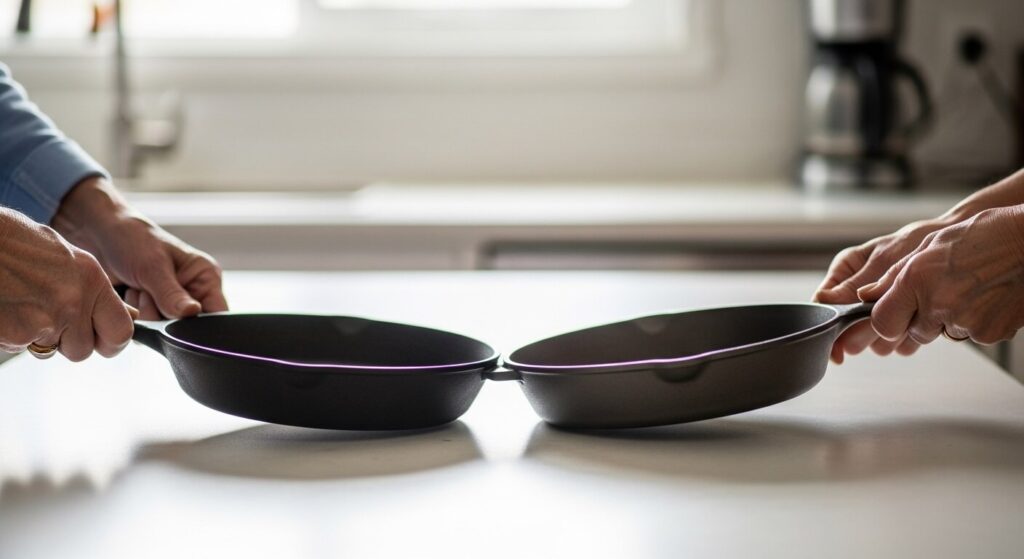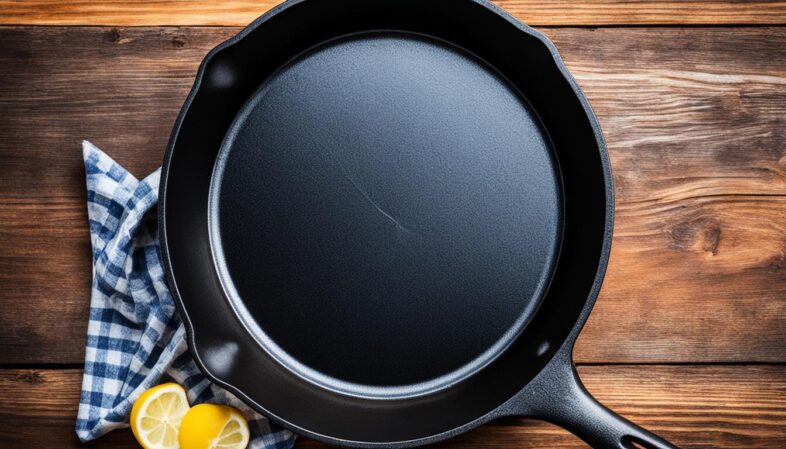
The black coating on a cast iron skillet is seasoning — layers of polymerized oil bonded to the iron that create a natural, protective, low-stick cooking surface.
Not paint. Not a chemical treatment. Just oil that’s been heated past its smoke point enough times that it hardens into something closer to plastic than grease.
The Composition of the Black Coating
Seasoning is polymerized oil — and that’s a specific, chemical thing worth understanding.
When oil heats past its smoke point on cast iron, the fatty acid chains break apart and re-bond into a hard polymer matrix. Similar to plastic in structure, but built entirely from natural fats. That polymer fills the microscopic pores across the iron’s surface and creates a smooth, semi-non-stick layer you can actually cook on.
More layers = darker color, slicker surface.
What the coating actually consists of:
- Polymerized fatty acids — the structural backbone of any seasoning layer
- Carbon deposits from cooking — these deepen the black color over time
- Iron oxide compounds — in thin, controlled amounts, these bond into the surface rather than flaking off like rust
- Trace cooking residue — proteins, sugars, and fats that have baked into the surface over repeated use
And it’s never just one layer. A well-seasoned pan has dozens of thin polymerized coats stacked on each other, built over months or years of regular cooking. That’s why pans handed down through families cook better than brand-new ones.
Why Cast Iron Turns Black
Cast iron turns black from a combination of heat exposure, oil polymerization, and carbon buildup — all working together over time.
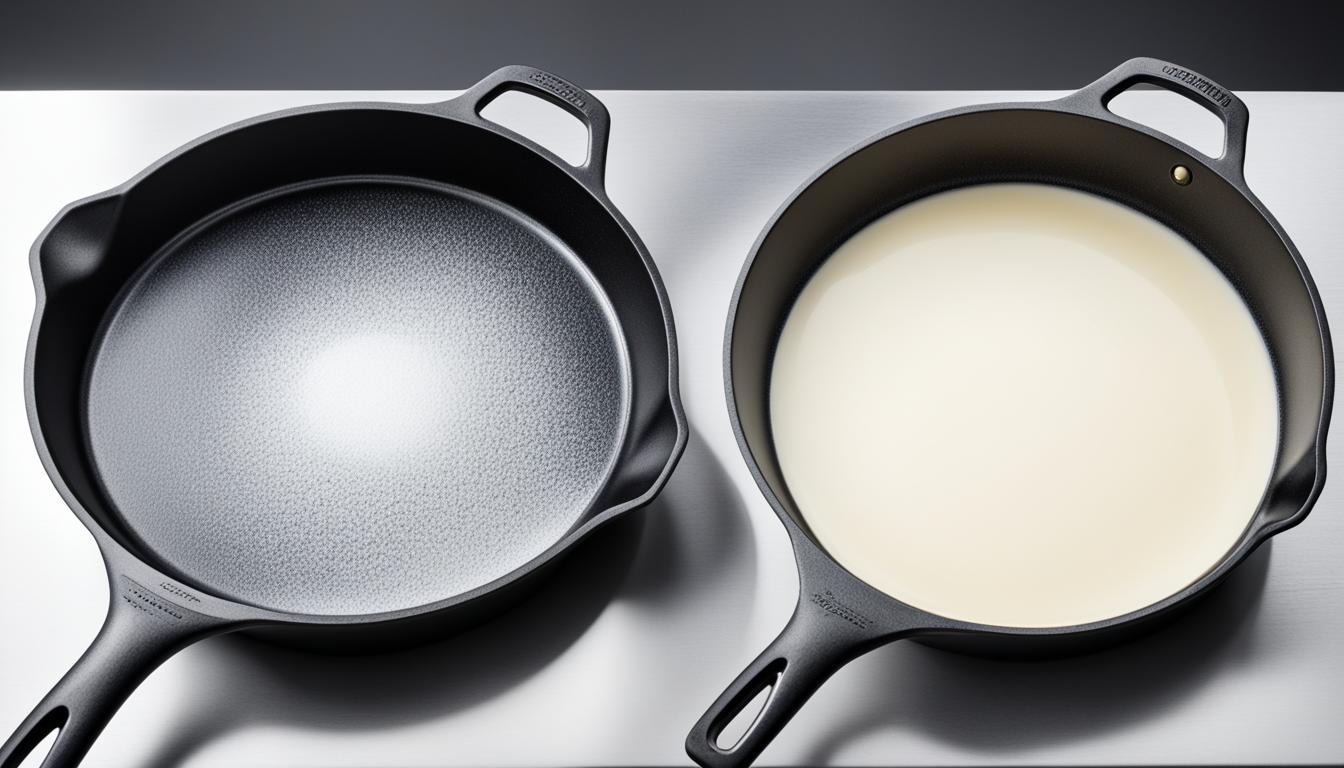
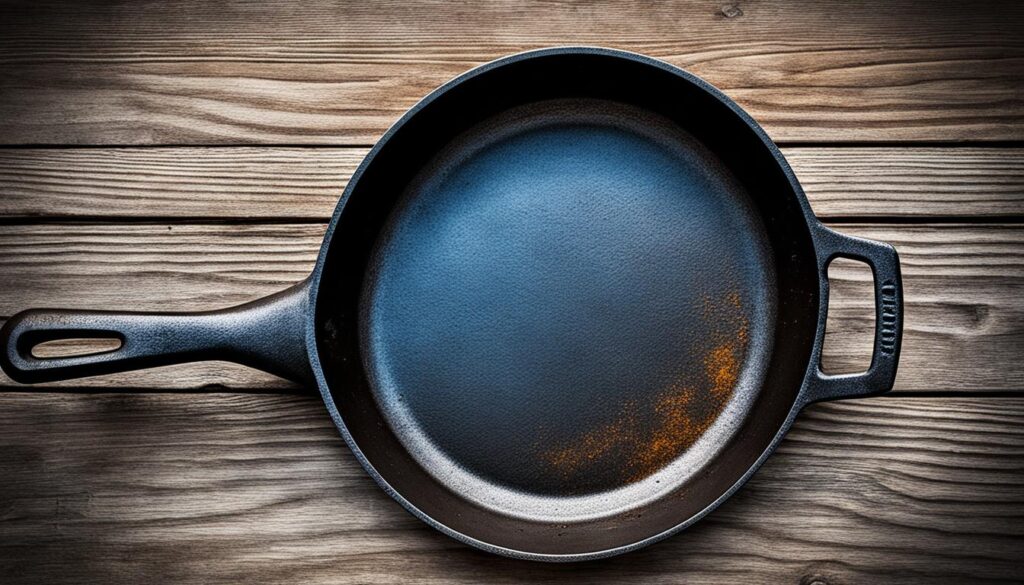
Fresh out of the box, cast iron is gray. Sometimes with a matte factory pre-seasoning that reads more brown than black. The deep, rich black comes later. Here’s what drives it:
Heat is doing most of the heavy lifting. Every cook at high heat polymerizes oil further. Each session lays down micro-thin layers you can’t even see individually.
Carbon from food adds up. Searing steak, frying bacon, cooking potatoes — all of it deposits carbon into the surface. Sounds unpleasant. It’s actually what makes old cast iron perform so well.
Controlled oxidation plays a role too. This is different from rust. Uncontrolled iron oxidation from moisture exposure gives you orange, flaky rust. The thin iron oxide compounds formed during proper seasoning integrate into the surface and actually protect it. They don’t flake. They stay.
The darker the pan, the more seasoning it carries. That mirror-black surface on a pan that’s been in someone’s kitchen for 30 years? That’s decades of cooking, not a coating applied at a factory.
Best Oils to Use for Seasoning
Not all oils season equally. What you want is high smoke point combined with strong polymerization — which means oils high in polyunsaturated fats.
| Oil | Smoke Point | Polymerizes Well? | Notes |
|---|---|---|---|
| Flaxseed oil | ~225°F | Excellent | Best for building initial layers — apply very thin |
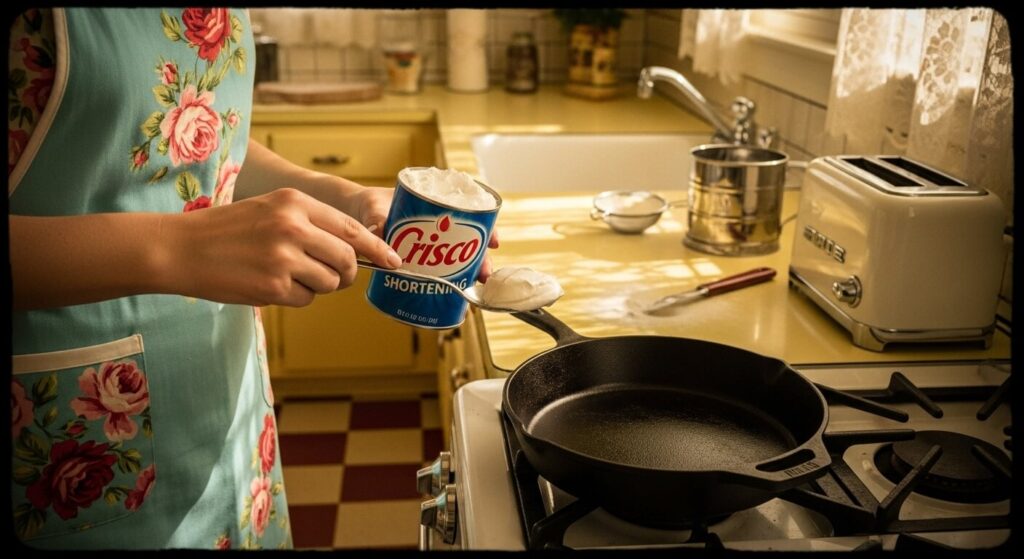
| Crisco/shortening | ~360°F | Yes | Classic for a reason — easy to apply evenly |
| Canola oil | ~400°F | Decent | Reliable everyday option |
| Vegetable oil | ~400°F | Decent | Works fine, nothing special |
| Avocado oil | ~520°F | Good | Great for high-heat oven seasoning |
| Coconut oil | ~350°F | Okay | Can go rancid faster than others |
| Olive oil | ~375°F | Poor | Low polyunsaturated content — not ideal for seasoning |
Flaxseed oil has a dedicated following in cast iron circles, and it earns it. It polymerizes hard and fast, building durable layers quickly. The catch: applied too thick, it flakes. Always go thin — almost embarrassingly thin.
The non-negotiable rule: thin coat, high heat, wipe off the excess before the pan goes in the oven. Too much oil doesn’t season better. It just gets sticky and gummy and you end up starting over.
Is the Black Coating Harmful?
No — a properly seasoned cast iron surface is completely safe to cook on.
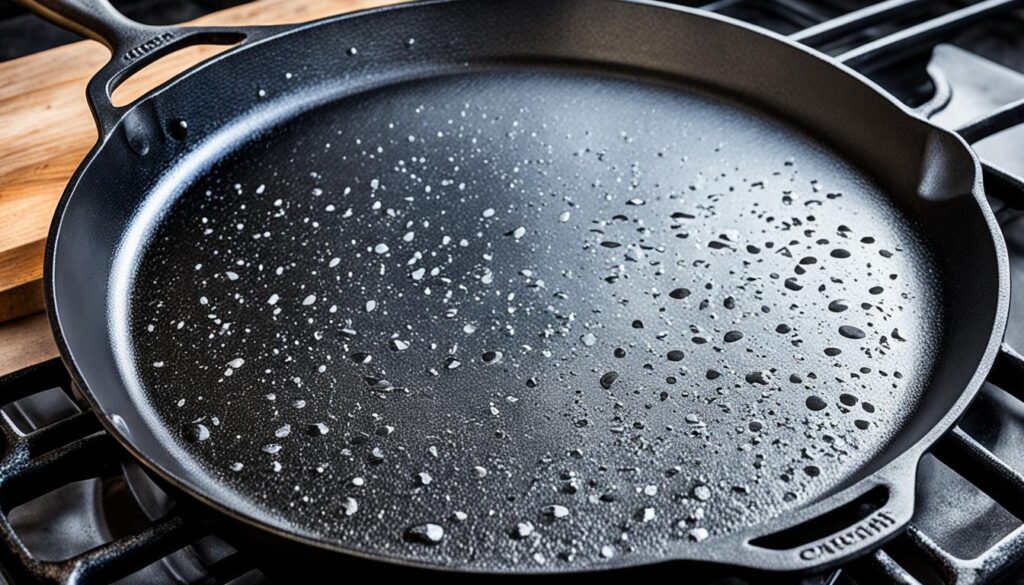
Polymerized oil is chemically inert. It doesn’t leach anything into food. And unlike non-stick coatings, there’s no PTFE, no PFOA, none of that synthetic chemistry involved. It’s hardened fat. That’s it.
Two things are worth knowing though:
Flaking seasoning — if chunks of black coating are coming off into your food, something went wrong during the seasoning process. Usually too much oil applied at once, or moisture that got trapped under the layers. Strip the pan down and re-season properly. It’s not a health issue, but it needs fixing.
Bitter-tasting residue — sometimes burnt carbon deposits build up unevenly and affect flavor. Not harmful, just unpleasant. A scrub with coarse salt or a chain mail scrubber clears it up fast.
The coating is safe. If something looks or tastes wrong, it’s a maintenance problem — not a toxicity concern.
Differentiating Between Seasoning and Residue
Not everything black on a cast iron pan is good seasoning. This distinction matters.
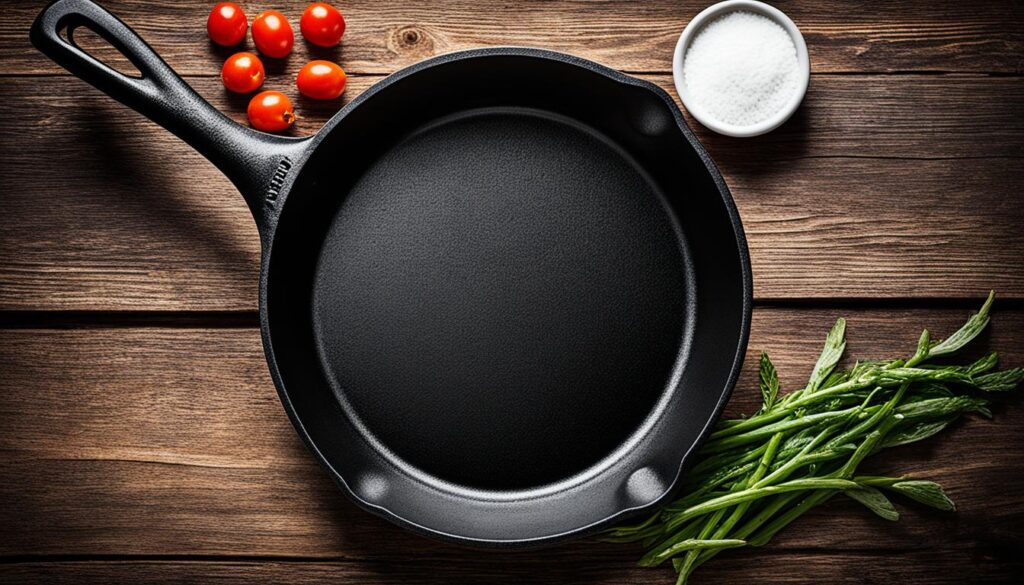
Good seasoning:
- Smooth and even surface — almost shiny when the pan is dry
- Doesn’t transfer to a paper towel when you wipe it
- Feels slick, not sticky
- Color is consistent across the cooking surface
Bad residue or failed seasoning:
- Flaky patches, especially around edges and the sides
- Comes off on food or a white cloth
- Tacky or sticky even after the pan has fully cooled
- Dark spots surrounded by lighter gray patches — uneven buildup
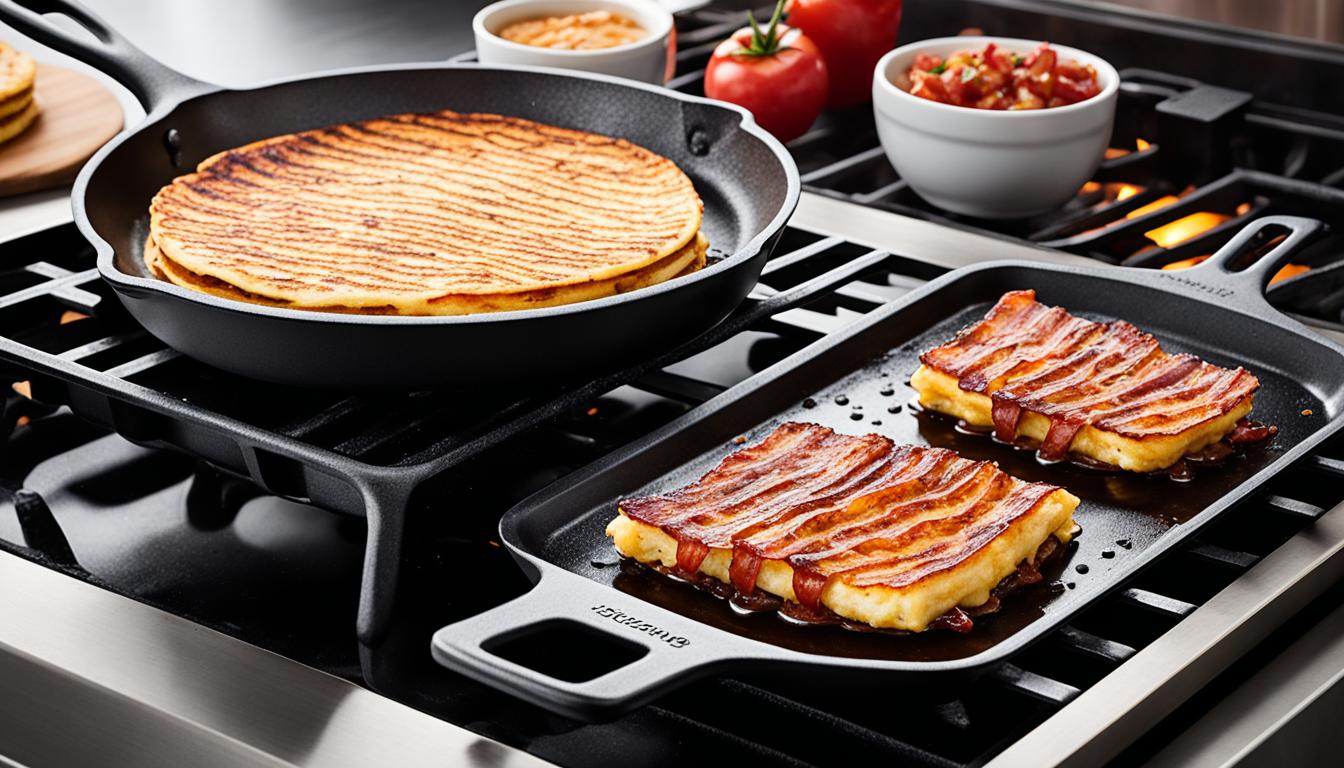
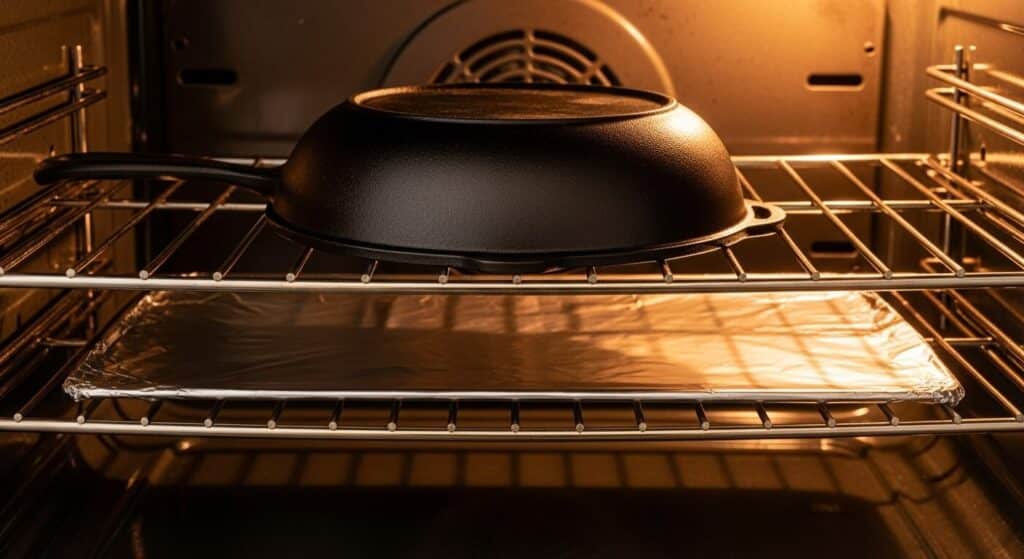
The sticky issue is extremely common with beginners. It means oil went on too thick and didn’t fully polymerize — it baked into a gummy layer instead of hardening. Fix it by putting the pan upside down in a 450°F oven for an hour. Sometimes that finishes the polymerization. If it’s still tacky after that, strip and start over.
Flaking is a different problem. That usually comes from moisture getting under existing seasoning layers, or from thermal shock — like running a screaming-hot pan under cold water. Which you should never do, by the way.
How to Build Up Seasoning Over Time
The honest answer? Cook with the pan. Regularly. That’s the most effective seasoning method there is.
But if you’re starting fresh — new pan or one you’ve just stripped down — here’s what actually works:
The Oven Method (Building a Base)
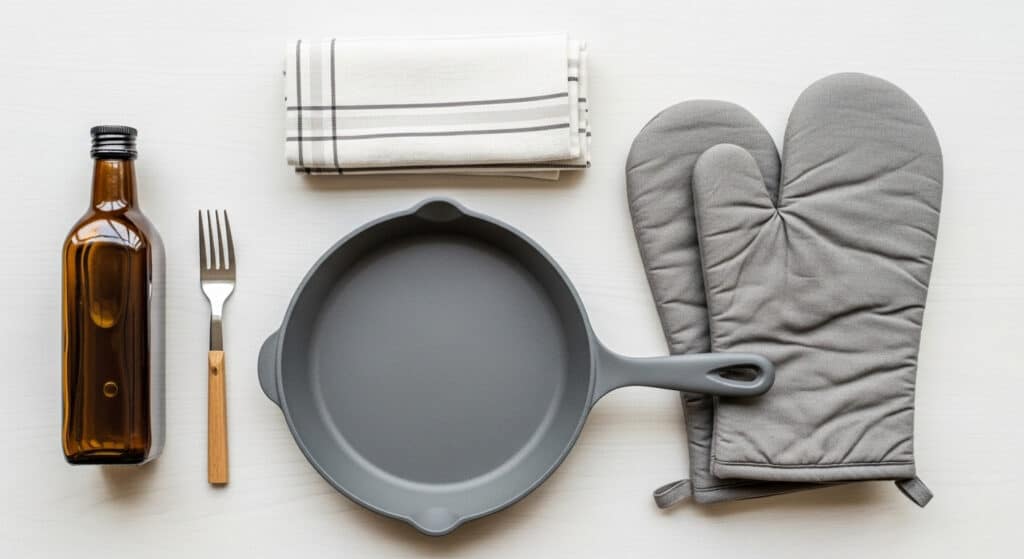
- Wash the pan with soap and hot water — the only time soap is appropriate
- Dry it completely, then put it on the stove over medium heat for a few minutes to drive off any remaining moisture
- Apply a very thin coat of oil everywhere — inside, outside, handle, the whole thing
- Wipe off as much as you can with a clean cloth. It should look almost dry — not shiny, not wet
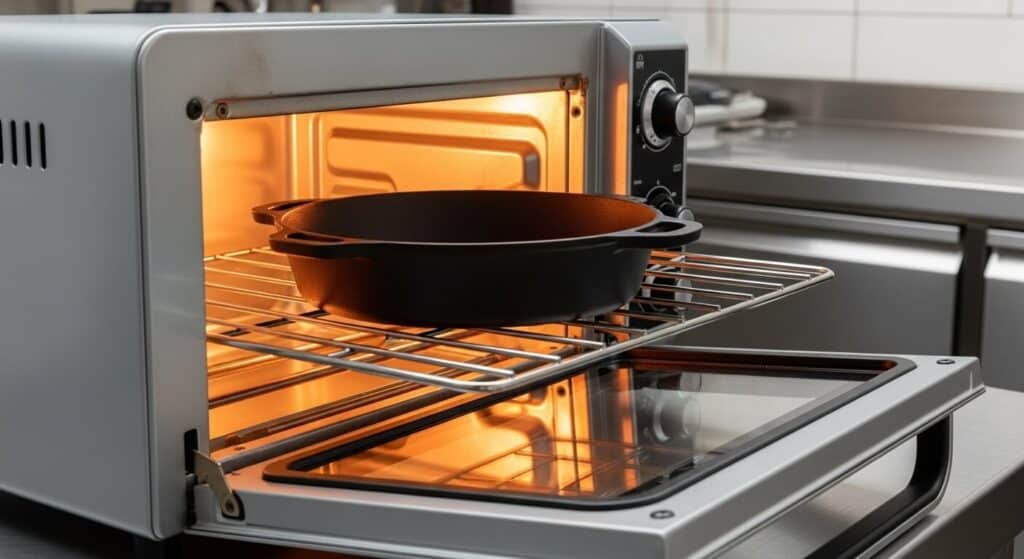
- Place upside down in a 450–500°F oven for one hour
- Let it cool completely inside the oven
- Repeat three to six times
Three to six rounds builds a workable base. Not the same as a pan that’s been cooking for 20 years, but solid enough to use without food bonding constantly.
The Cooking Method (Best for Long-Term Buildup)
After the initial base, cooking is what builds real depth. Specifically:
- Bacon and fatty meats — nothing seasons cast iron faster than rendered animal fat
- Pan-fried potatoes — the combination of starch and fat is excellent for building layers
- Cornbread baked with oil — a classic for good reason
- Sautéed vegetables in oil — simple, consistent, effective
Stay away from acidic ingredients while you’re still building up layers. Tomatoes, citrus, wine-based sauces — these strip seasoning faster than you can build it on a new pan. Once the pan is well-seasoned, occasional acidic cooking is fine. But early on, it works against you.
Maintaining Your Cast Iron Skillet’s Coating
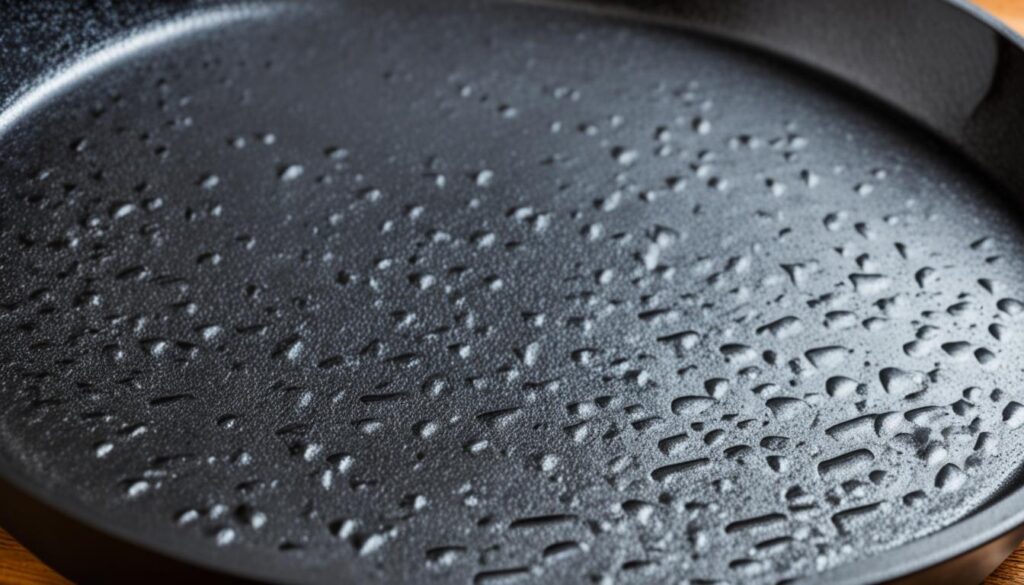
Maintenance gets overthought. It’s not complicated — people just convince themselves it is.
The actual requirements:
- Dry it completely every single time — this isn’t optional. Moisture starts rust fast.
- Wipe a thin layer of oil on after drying — a few drops, buffed almost to nothing
- Store somewhere dry — if stacking pans, a paper towel between them prevents moisture transfer
- Use it regularly — a pan sitting unused in a cabinet degrades faster than one cooked in weekly
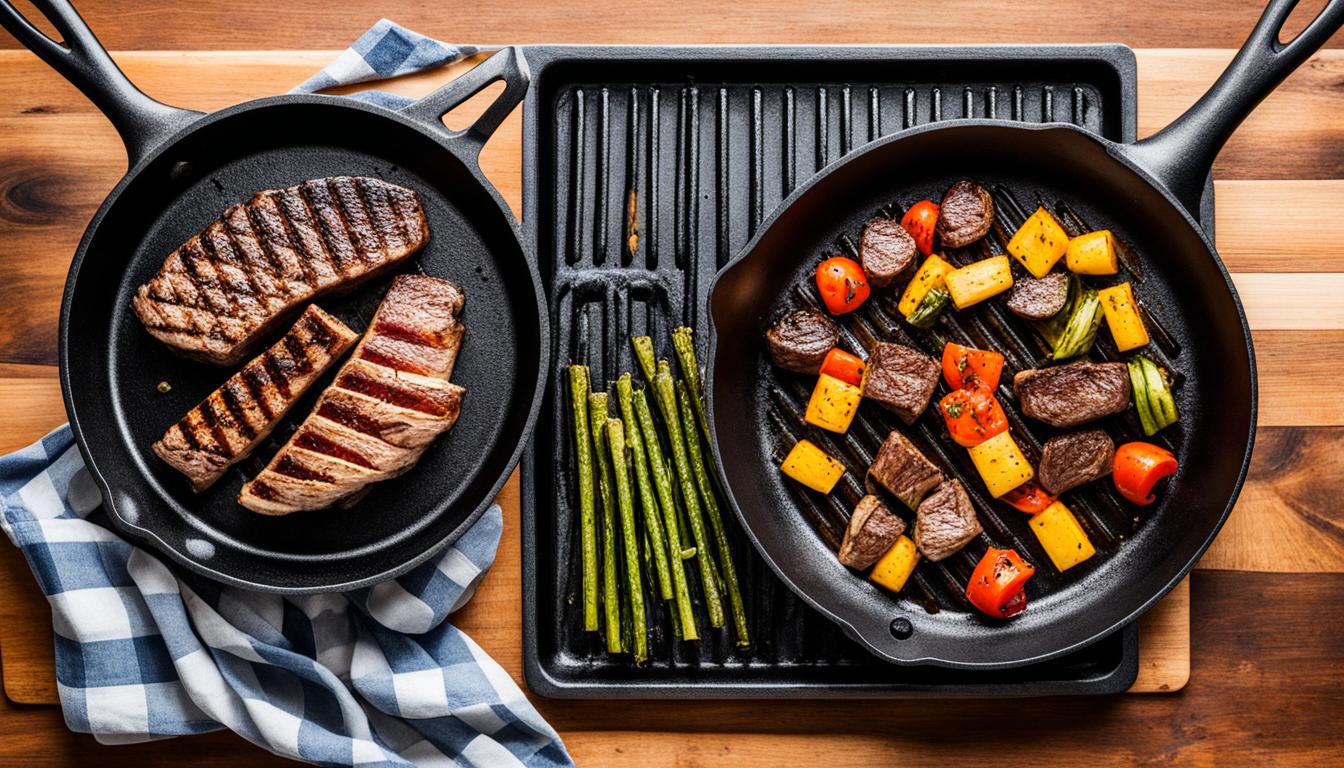
What you don’t need to do: full re-seasoning sessions after every cook. A quick oil wipe before storage handles routine maintenance. That’s genuinely all it takes.
Thermal shock is the other thing worth avoiding. Don’t preheat an empty pan on high heat for extended periods. Don’t put a hot pan under cold running water. Cast iron handles heat well — but rapid, extreme temperature changes stress the seasoning and can crack the iron itself.
And don’t let it soak. A few seconds of water contact is fine. Ten minutes submerged is asking for rust.
Cleaning Methods for Cast Iron Skillets
The “never use soap” rule is largely outdated advice. It came from an era when household soaps were lye-based and genuinely stripped seasoning. Modern dish soap — used quickly and in small amounts — won’t damage a well-seasoned pan. What you’re actually avoiding is prolonged soaking and aggressive abrasives.
For everyday cleaning:
- Hot water and a stiff brush or chain mail scrubber
- A small amount of mild dish soap if needed — rinse quickly, don’t let it sit
- Dry immediately on the stovetop over low heat
- Light oil wipe while the pan is still slightly warm
For stuck-on food:
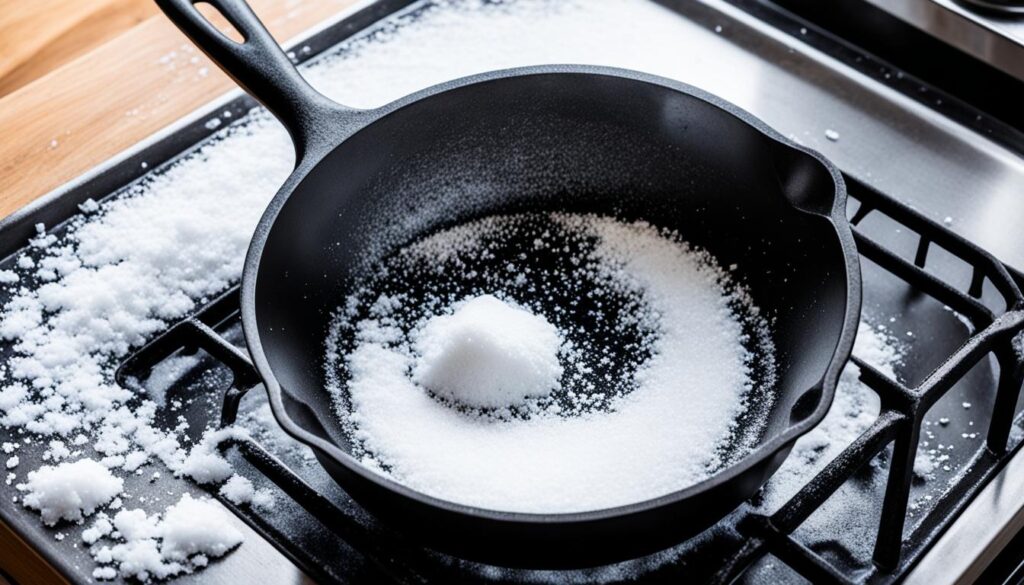
- Coarse kosher salt with a little oil, scrubbed in circles with a paper towel or cloth
- Or add water to the pan, heat it on the stove until the food loosens, then scrape with a wooden or metal spatula
- Chain mail scrubbers are genuinely excellent for this — aggressive enough to clean, gentle enough not to strip layers
What to skip entirely:
- Steel wool — too aggressive, removes seasoning along with the mess
- Soaking in water — even for 20 minutes on a humid day
- The dishwasher — just no
- Leaving it wet while it air-dries — always dry actively, on heat
The salt scrub method earns a specific mention because it handles heavy carbon buildup without touching the underlying seasoning. It’s the right tool for a pan that’s cooked something particularly messy.
Restoring a Damaged Black Coating
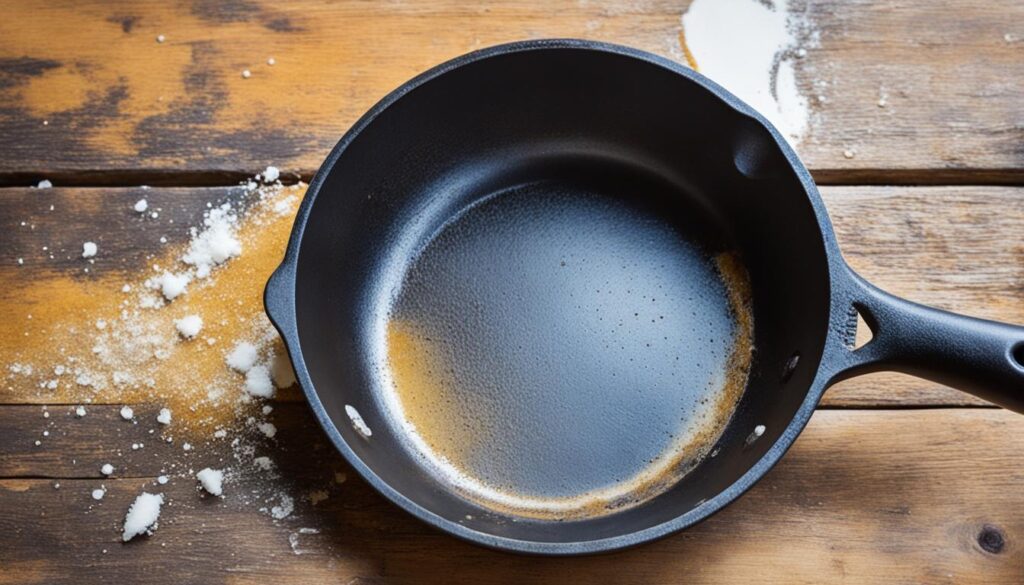
Rust, flaking, stickiness — all of it is fixable. Cast iron is about as forgiving as cookware gets, as long as you’re willing to put in the work.
Surface Rust
Light rust (orange-brown spots, not deep pitting) is a surface problem with a surface solution:
- Scrub with steel wool or a rust eraser until bare, gray metal shows
- Rinse, then dry completely on the stovetop
- Apply a thin oil coat immediately and begin the oven seasoning process
Don’t let bare cast iron sit after stripping. Raw iron oxidizes within minutes in humid air. Strip it and season it in the same session.
Flaking or Sticky Seasoning
Strip everything down and start from scratch. Trying to build new seasoning on top of failed layers just creates more failed layers on top of bad ones.
Ways to strip a pan completely:
- Oven self-clean cycle — put the pan in, run the cycle, let everything burn off completely. The pan comes out gray and raw. Aggressive, but effective.
- Lye bath — works well for pans with heavy, decades-old buildup. Requires proper safety equipment and careful handling.
- Electrolysis — the best method for serious rust or extreme buildup. Needs a bucket, washing soda, and a battery charger. Overkill for most situations, but it works exceptionally well on heavily damaged pans.
After stripping by any method: treat it exactly like a new pan. Full re-seasoning from the beginning.
Deep Pitting
Heavily rusted pans sometimes have actual pits in the iron surface — not just discoloration. Light pitting improves with use, as seasoning fills in some of the texture over time. Deep pitting doesn’t fully disappear, but a pitted pan still cooks. It just won’t have the glassy-smooth surface of a pan that was maintained properly.
Common Misconceptions About Cast Iron Care
A lot of cast iron advice circulating online is decades out of date. Here’s what actually needs correcting:
“Never use soap.” Outdated. Old lye soaps stripped seasoning — modern dish soap used briefly doesn’t. Quick wash, fast rinse, immediate drying. That’s fine.
“Cast iron is high-maintenance.” It really isn’t. Dry it, wipe it with oil, store it properly. Most of the intimidating reputation comes from people who learned the hard way after ignoring basic care.
“A rusty pan is ruined.” Not even close. Surface rust is a surface problem. Steel wool and re-seasoning handles it. People have fully restored pans that looked like they’d spent years sitting outside.
“Acidic food is off-limits.” Not on a well-seasoned pan. A quick tomato sauce is fine. A three-hour braise in acidic liquid is where you’d want a different pan — but that’s a practical choice, not a rule.
“Cast iron is non-stick.” Low-stick, yes. Non-stick like Teflon? No. Eggs will still stick if the pan isn’t preheated properly or doesn’t have enough fat in it. Managing expectations here saves a lot of frustration.
Cooking Tips to Improve Your Skillet’s Seasoning
How you cook has as much impact on seasoning quality as how you clean. A few things that actually make a difference:
Preheat before you add anything. Cast iron heats unevenly and takes time to get there. Three to five minutes over medium heat before adding food prevents sticking and protects the seasoning. Cold cast iron and high-moisture food is a recipe for stripped patches.
Use enough fat. A thin layer of butter, oil, or lard before most cooks keeps food from bonding to the surface — and adds to the seasoning over time. It doesn’t need to be a lot. Just enough.
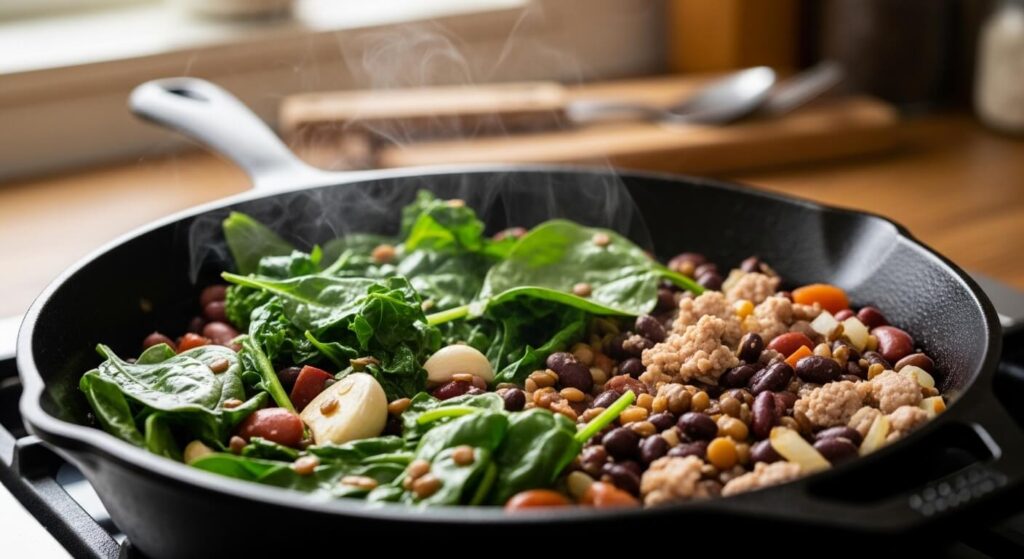
Cook fatty foods as often as you can. Bacon, sausage, ground beef — rendered animal fat coats the surface during cooking. You’re essentially seasoning the pan while you’re making dinner. Hard to beat that.
Go stovetop-to-oven when the recipe allows. Steaks, cornbread, frittatas — transferring the skillet from burner to oven applies even heat across the whole surface. Better for food, and better for seasoning development long-term.
Metal utensils are fine. Spatulas, spoons, tongs — a well-maintained seasoning layer is tougher than it looks. You’re not going to scrape it off with a fish spatula. Use what works.
The cast iron pan sitting in your cabinet right now will cook better in two years than it does today — if you use it consistently. That’s the whole point. It’s one of the only pieces of cookware that genuinely improves the more you cook with it.