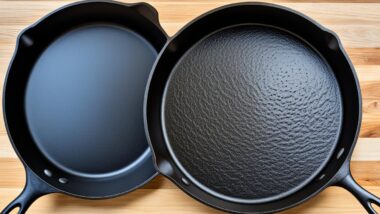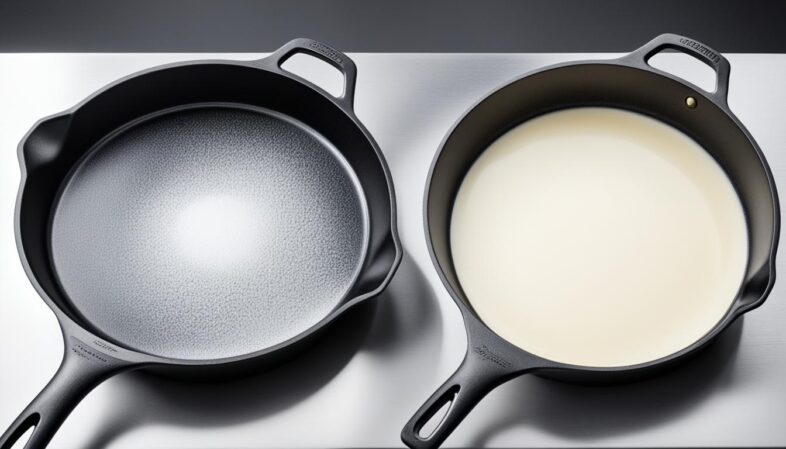
Cast iron wins for durability and high-heat cooking, but ceramic is the better pick if you want easy cleanup and a lighter pan. Neither is universally “better” — it really depends on how you cook.
Understanding Cast Iron and Ceramic Cookware
These two couldn’t be more different if they tried.
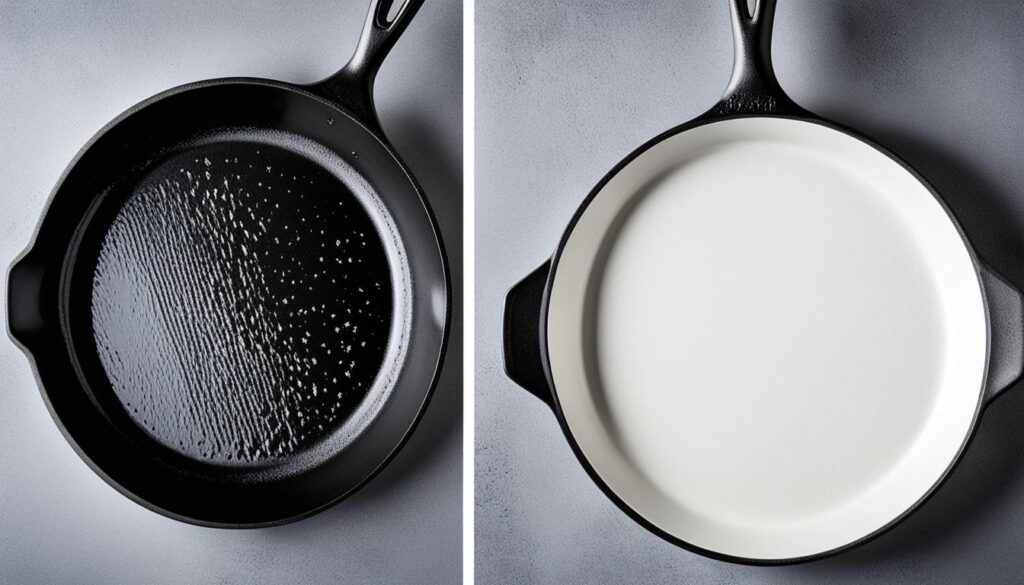
Cast iron is old. Ancient, really — it’s been used in kitchens for centuries, and the basic design hasn’t changed much. Thick, heavy, bare iron (or coated with enamel). No fancy chemistry. Just dense metal that holds heat like nothing else.
Ceramic is modern. And here’s something most people don’t realize — when you buy a “ceramic pan,” you’re almost never buying solid ceramic. You’re buying a metal pan (usually aluminum) with a silica-based coating baked onto it. That glossy, smooth surface is the ceramic layer. The pan underneath is just aluminum.
Important distinction. Because it changes everything about how you care for it, how long it lasts, and what you can realistically do with it.
The basics side by side:
| Cast Iron | Ceramic-Coated | |
|---|---|---|
| Core material | Iron | Usually aluminum |
| Surface | Bare iron or enamel | Silica-based coating |
| Weight | 8–12 lbs | 2–5 lbs |
| Lifespan | Generational | 2–5 years |
| Oven temp limit | Unlimited | ~400–450°F |
| Starting price | ~$25 | ~$35 |
Two totally different products solving the same basic problem — food sticking to metal.
Durability and Longevity
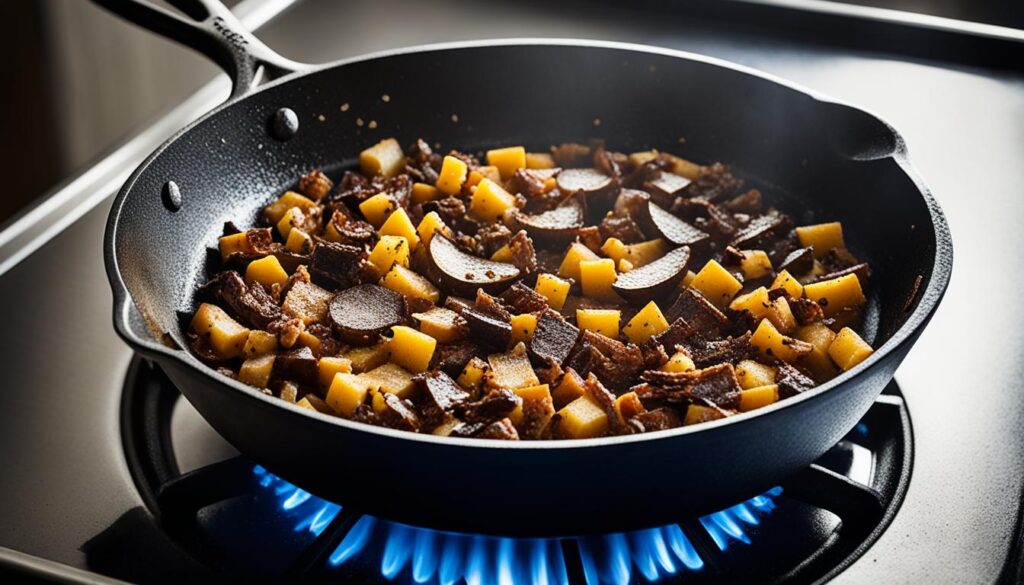
Cast iron outlives you. That’s not an exaggeration — there are pans from the 1800s still being used right now, passed down through families, cooking breakfast on Sunday mornings like it’s nothing. A Lodge skillet you buy today could outlast your grandchildren if you treat it reasonably well.
Ceramic coating doesn’t come close. Two to five years of regular use and the surface starts breaking down — scratches, chips, patches where food suddenly sticks again. It’s not a flaw exactly. It’s just the nature of a coating on metal. Things wear. And when a ceramic coating goes, it’s gone. You can’t fix it. You replace the pan.
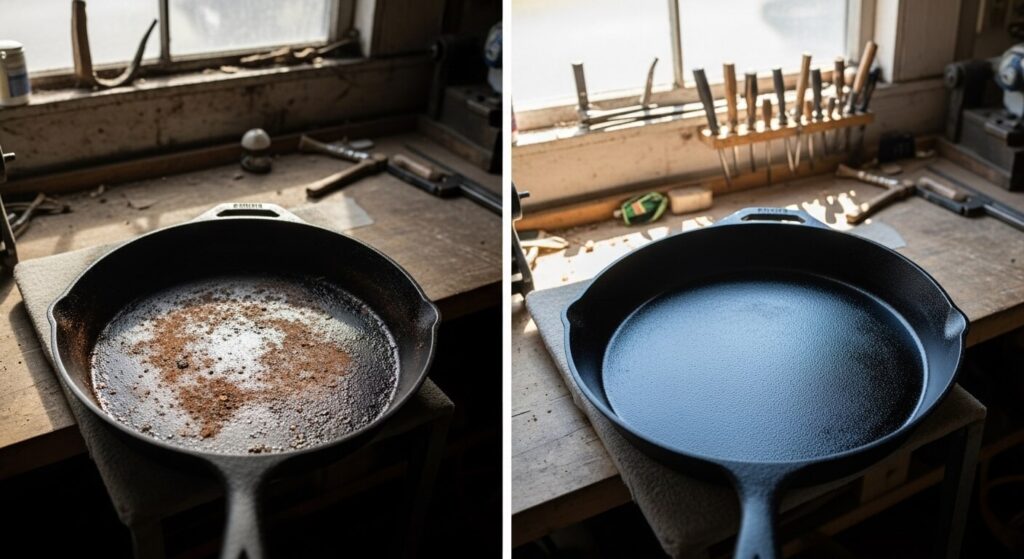
Cast iron can rust if you neglect it — leave it wet in the sink, ignore it for months. But rust is fixable. A little steel wool, re-seasoning in the oven, and it’s back. Enameled cast iron (Le Creuset, Staub) is somewhere in the middle — the enamel can chip with serious abuse, but it’s far tougher than ceramic nonstick.
For things like cast iron skillet deep dish pizza where you’re running screaming-hot temps and sliding the pan in and out of a 500°F oven — cast iron handles that without a second thought. A ceramic pan would be degraded after a handful of sessions like that.
Winner: Cast iron. Not even a debate.
Heat Retention and Distribution
Here’s where cast iron’s weight actually becomes an advantage.
All that mass? It’s thermal mass. Heat energy stored in the metal itself. You get a cast iron skillet screaming hot and drop a cold steak on it — the temperature barely moves. The pan just absorbs the cold steak and keeps cooking. That’s exactly what you want for a hard sear with a proper crust.
Ceramic heats faster. Responsive, quick to change — which sounds good until you realize it also means it drops temperature fast. Put something cold in a ceramic pan and you feel it. The heat backs off. Fine for eggs. Not ideal for searing.
- Cast iron: Takes 5–8 minutes to fully preheat. Holds temperature under load. Slower to adjust.
- Ceramic: Heats in 2–3 minutes. Responsive. Drops when loaded with food.
One wrinkle worth knowing — cast iron’s heat distribution across the cooking surface is actually uneven. Hot spots near the burner edges, cooler in the middle on some burners. Ceramic-coated aluminum spreads heat more evenly. So cast iron retains better but distributes worse. Both things are true at the same time.
For something like a quick healthy beef and broccoli stir-fry where you want rapid, responsive heat to flash-cook vegetables without steaming them, ceramic’s lighter body actually works in your favor.
Non-Stick Properties Compared
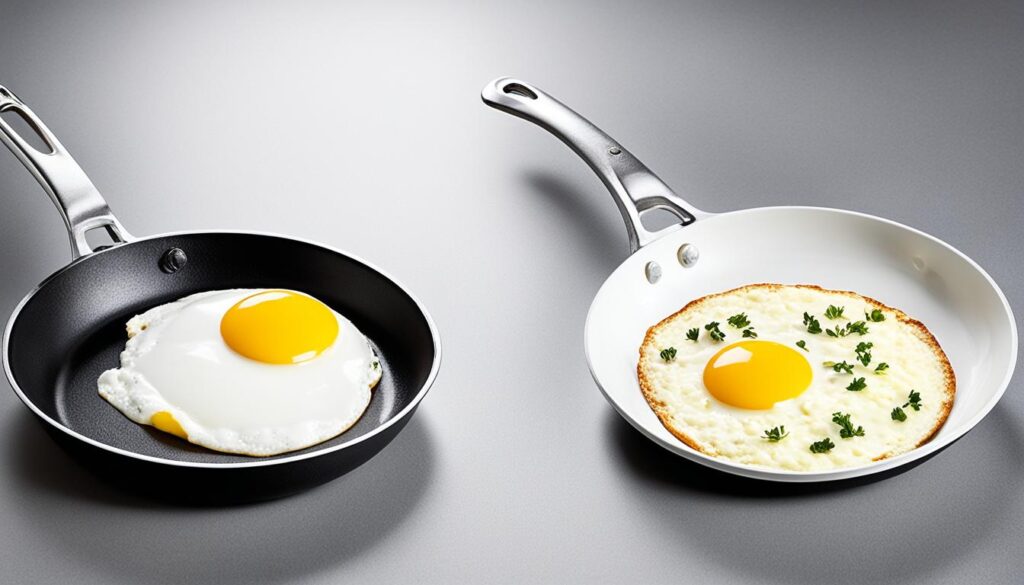
Opposite trajectories. That’s the whole story here.
Brand new ceramic pan? Slippery as anything. Eggs slide without butter. Fish lifts cleanly. Minimal fat, minimal effort, minimal cleanup. It’s genuinely impressive out of the box.
Brand new cast iron? Might stick. Could be frustrating. Definitely requires more fat, lower heat, and patience while you build up that seasoning layer over weeks and months of cooking.
But flip the clock forward two years.
The ceramic coating has scratches. Dull patches. Spots where food grabs. The nonstick quality is 60% of what it was on day one, declining. The pan that felt like magic now requires more butter than the regular pan you have.
The cast iron? Better than it was on day one. More seasoned, more naturally slick, more broken in. A well-used cast iron pan develops a cooking surface that genuinely doesn’t require much — eggs, fish, pancakes, whatever.
One legitimate limitation: acidic foods strip cast iron seasoning. Tomato sauce, wine reductions, citrus — they eat at the polymerized oil layer and leave you with a pan that needs re-seasoning. Not a dealbreaker, but worth knowing. For a Chinese Chicken Cabbage Stir-Fry with soy-based sauce, you’re generally fine. Add a bunch of vinegar to that same pan regularly and you’ll notice.
Maintenance and Care Requirements
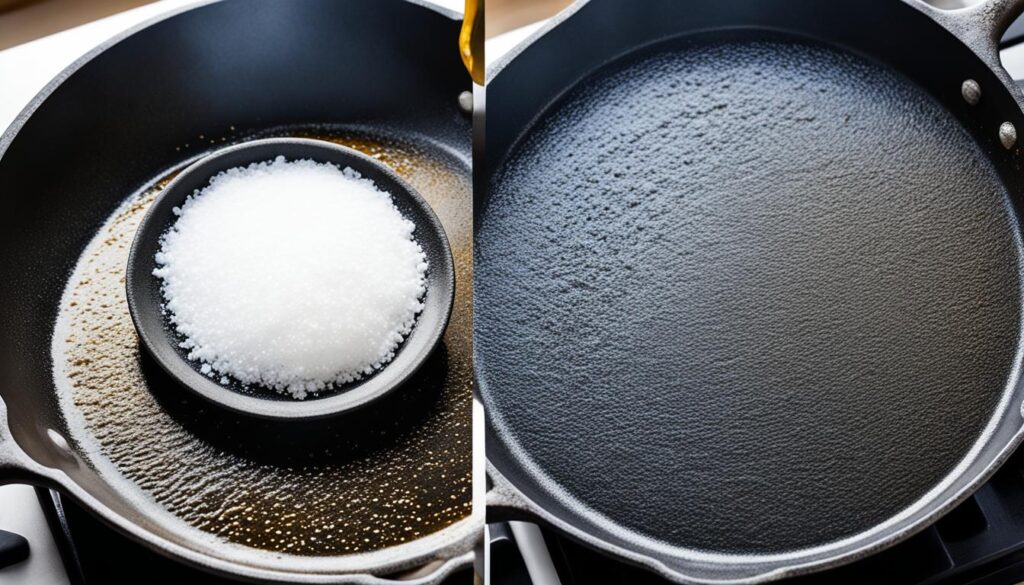
Cast iron has a reputation for being high-maintenance. Mostly overblown.
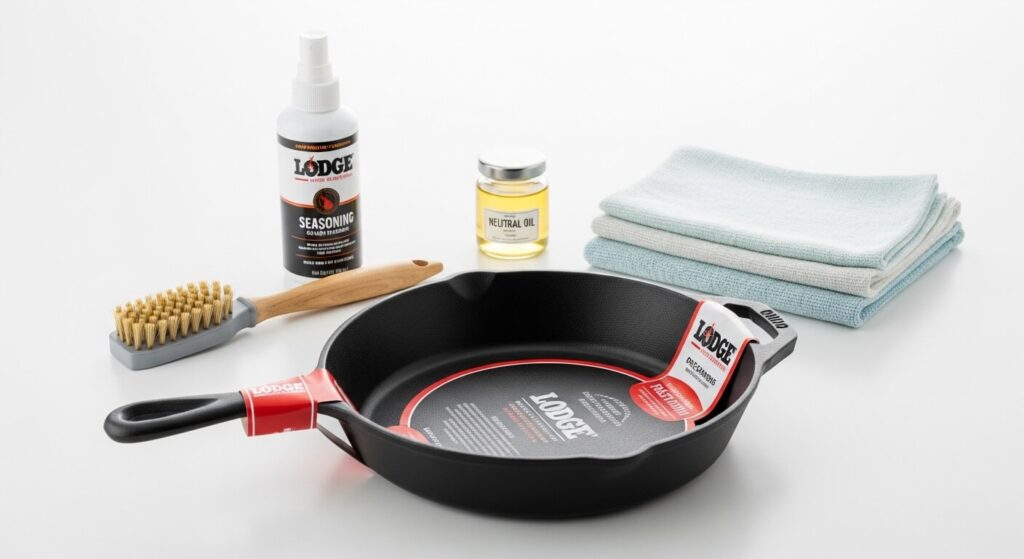
Yes, there’s a process. Rinse it while it’s still warm, dry it immediately — either with a towel or 30 seconds on the stove over low heat — then rub a tiny bit of oil on the surface. Done. That’s the whole routine. Two extra minutes compared to a regular pan.
The rules:
- Don’t soak it — prolonged water contact causes rust
- Dry it completely — every single time, no exceptions
- Light oil after drying — a thin layer, barely visible, not a puddle
- Avoid harsh soap — mild soap occasionally is fine; don’t scrub with something abrasive unless you’re stripping for re-seasoning
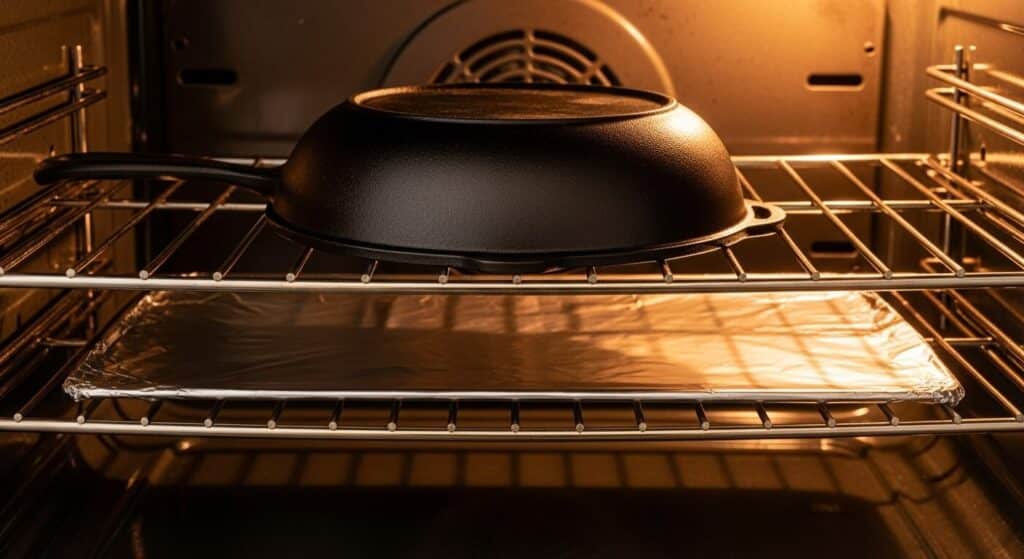
- Re-season occasionally — an hour in a 450°F oven with a thin oil coat, a few times a year if needed
Ceramic pans feel simpler but actually impose their own set of limits:
- Handwash only — dishwashers wreck the coating faster
- Silicone or wood utensils only — metal scratches and that damage is permanent
- No high heat — over 450°F starts breaking down the coating even if you can’t see it yet
- Don’t stack without cloth or pads between pans — surface contact causes micro-scratches
So. Cast iron asks for a consistent 2-minute ritual. Ceramic asks you to remember a list of things not to do every time you cook. Different kinds of demands. Neither is actually hard once it becomes habit.
Versatility in Cooking Applications
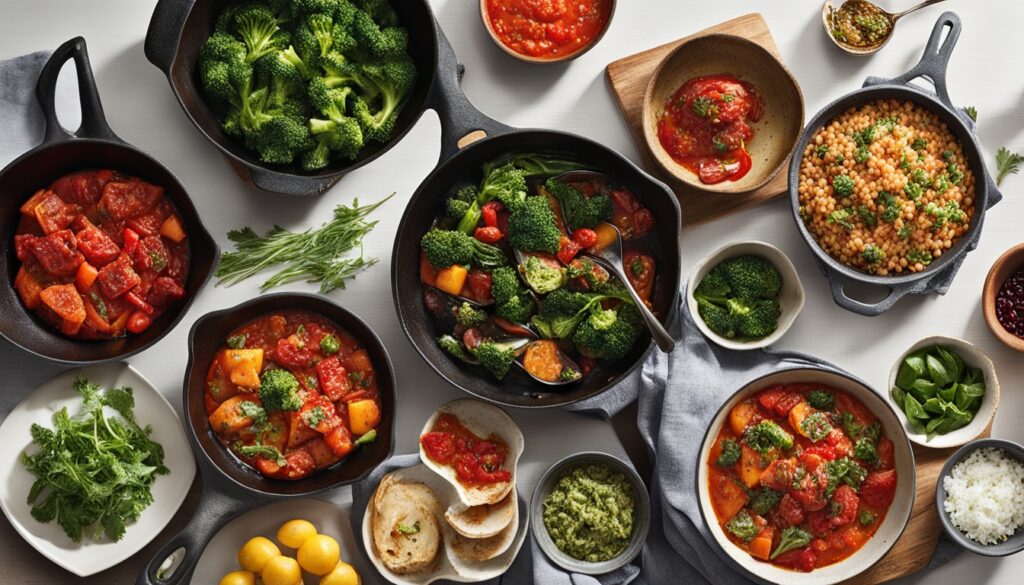
Cast iron goes anywhere. Stovetop, oven, broiler, grill grates, campfire, directly in coals if you want to get dramatic about it. There is no temperature limit that applies in normal cooking. Your oven maxes at 550°F? Take it there. Under the broiler at full blast? No problem whatsoever.
Ceramic tops out around 400–450°F depending on the brand. No campfires. No broiler (at least not for extended time). Mostly a stovetop tool that can handle moderate oven use.
| Cooking method | Cast Iron | Ceramic |
|---|---|---|
| Gas or electric stovetop | ✅ | ✅ |
| Oven at 500°F+ | ✅ | ❌ |
| Broiler | ✅ | Rarely safe |
| Grill / campfire | ✅ | ❌ |
| Delicate proteins | Possible (with seasoning) | ✅ Easy |
| High-heat searing | ✅ Excellent | Limited |
| Skillet baking | ✅ | Not ideal |
For something like a shrimp and dumpling stir-fry with delicate ingredients you don’t want to shred on a sticky surface, ceramic’s smooth coating makes cooking and cleanup easier. But the minute you want to start something on the stove and finish it in a 500°F oven? That’s cast iron territory.
Weight and Maneuverability in the Kitchen
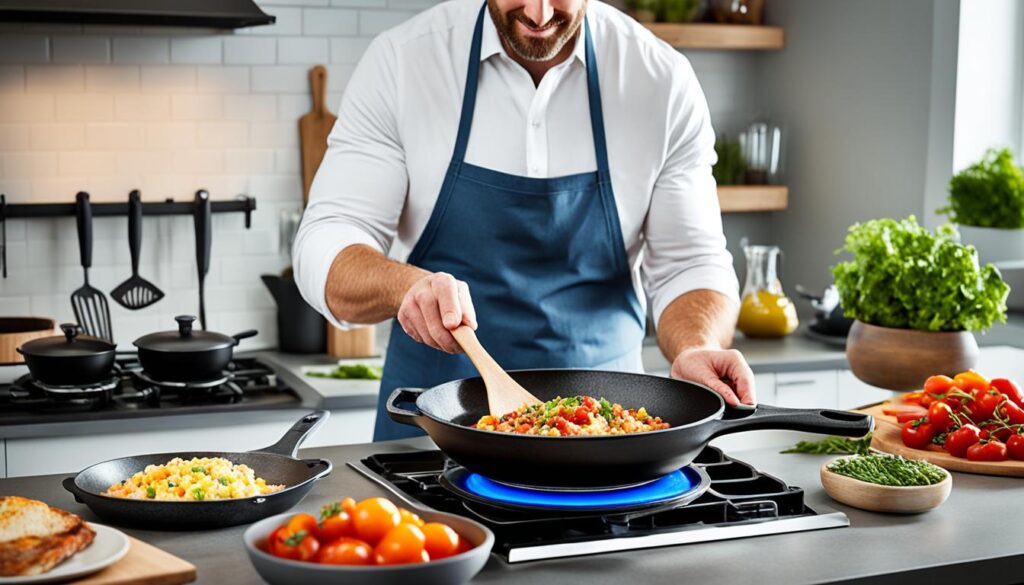
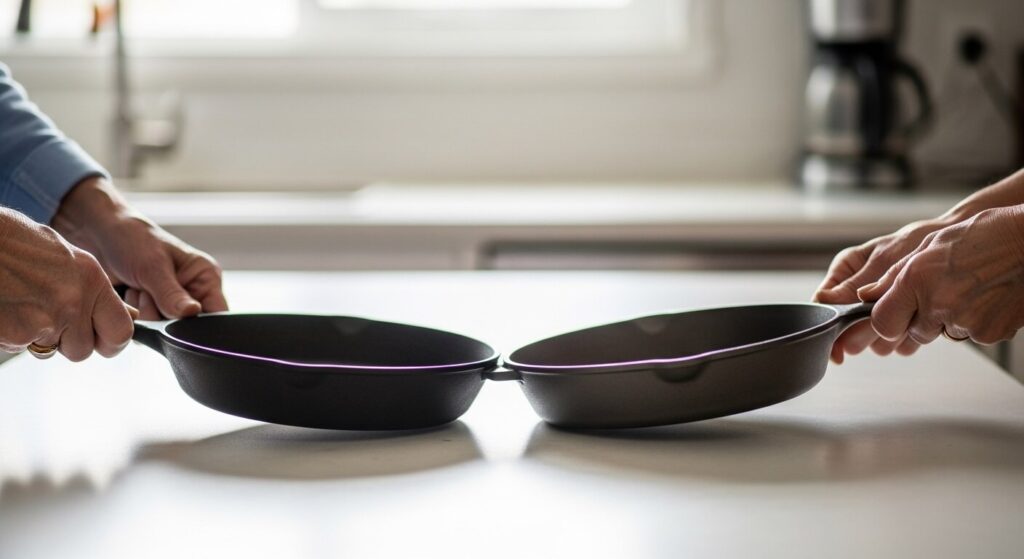
A 12-inch cast iron skillet weighs 8 to 10 pounds. Some go heavier. Pick one up one-handed, tilt it to drain grease, flip it toward your cutting board — you feel every ounce of it.
A ceramic pan the same size? Maybe 3 pounds.
That gap matters more than people expect until they’ve spent two hours cooking a big meal and their wrist is done. It matters a lot if you have arthritis, grip strength issues, or any wrist injury. It matters if you cook for long periods regularly.
Some people genuinely love how cast iron feels in the hand — that heft, that solidity. Fine. Valid preference. But for tossing vegetables, flipping pancakes, or just moving the pan around with one hand while you do something else with the other — ceramic is dramatically easier.
Who should pay attention to this:
- Arthritis or wrist problems → seriously consider ceramic, the weight difference is real
- Anyone who flip-tosses food frequently → ceramic without question
- Cooking primarily on a back burner and rarely moving the pan → cast iron is manageable
Health and Safety Considerations
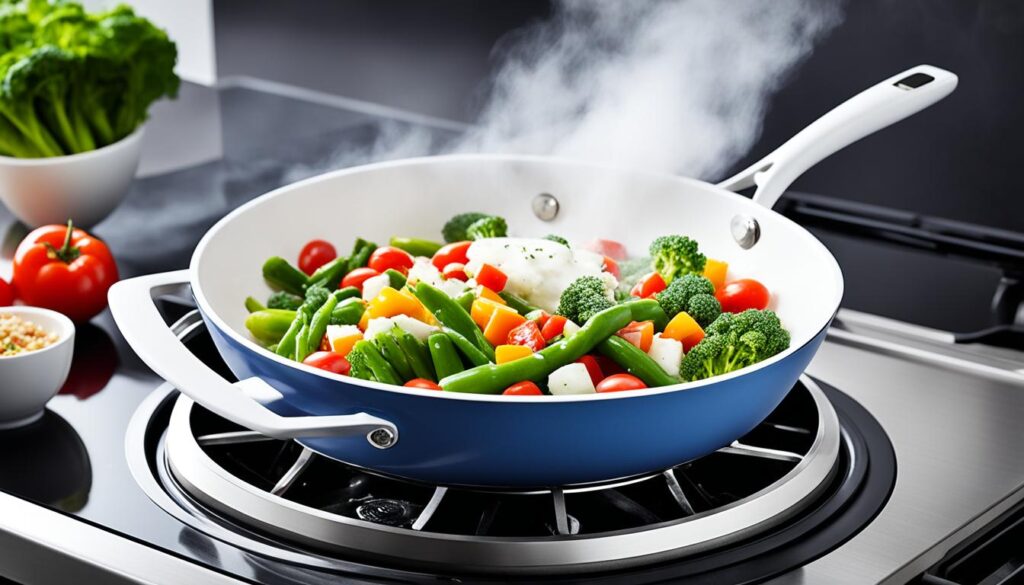
Most people switch to ceramic because they’re trying to avoid PTFE — the coating in traditional nonstick pans that releases fumes when overheated. Ceramic sidesteps that completely. The coating is silica-based, not polymer-based. No PTFE, no PFOA, no off-gassing at normal cooking temperatures. That’s a real benefit.
What the marketing doesn’t mention: once a ceramic coating chips and degrades, you’re cooking on whatever metal is underneath. In most pans, that’s aluminum. Small amounts potentially migrating into food. Probably not a major health concern, but it’s the reason you shouldn’t keep using a heavily degraded ceramic pan.
Cast iron’s health angle is different. Cooking in bare cast iron adds trace amounts of dietary iron to food. For most people that’s a non-issue — possibly even a slight benefit if you run low on iron. People with hemochromatosis (iron overload condition) should be aware of it. Otherwise, not a concern.
Practical safety summary:
- Ceramic is safe while the coating is intact — replace it when it noticeably degrades
- Cast iron is safe indefinitely — no coating to degrade or worry about
- Enameled cast iron: safest cast iron variant, food never contacts bare iron
- Never overheat ceramic — 450°F+ breaks down the coating even when it looks fine
Aesthetic Appeal and Design Options
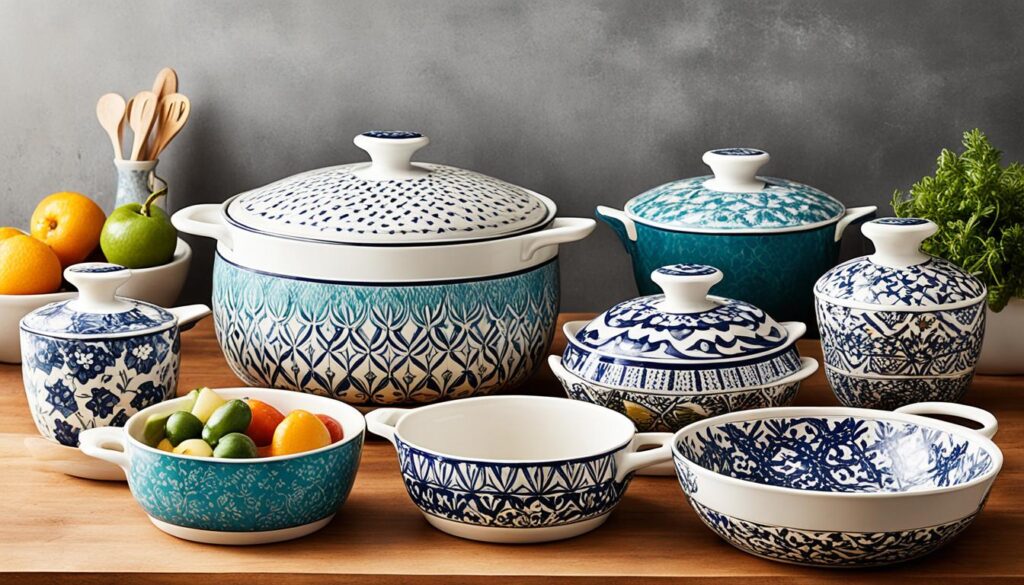
Ceramic wins this category completely and it’s not particularly close.
Brands like Caraway, Our Place, and GreenPan sell ceramic pans in sage green, cream, navy, terracotta, matte black, slate, and a dozen other colors. They look good hanging on a pot rack. They look good on open shelves. People photograph them for social media. That’s a real thing that happens.
Cast iron is black. Or very dark gray. Functional, almost industrial — which suits certain kitchens beautifully. Enameled cast iron opens up color options (Le Creuset’s flame orange, Staub’s deep cherry), but those start around $150 and climb steeply from there.
If you have a curated kitchen with a specific color palette and open storage, ceramic gives you options cast iron simply can’t match at a reasonable price.
Price Point and Value for Money
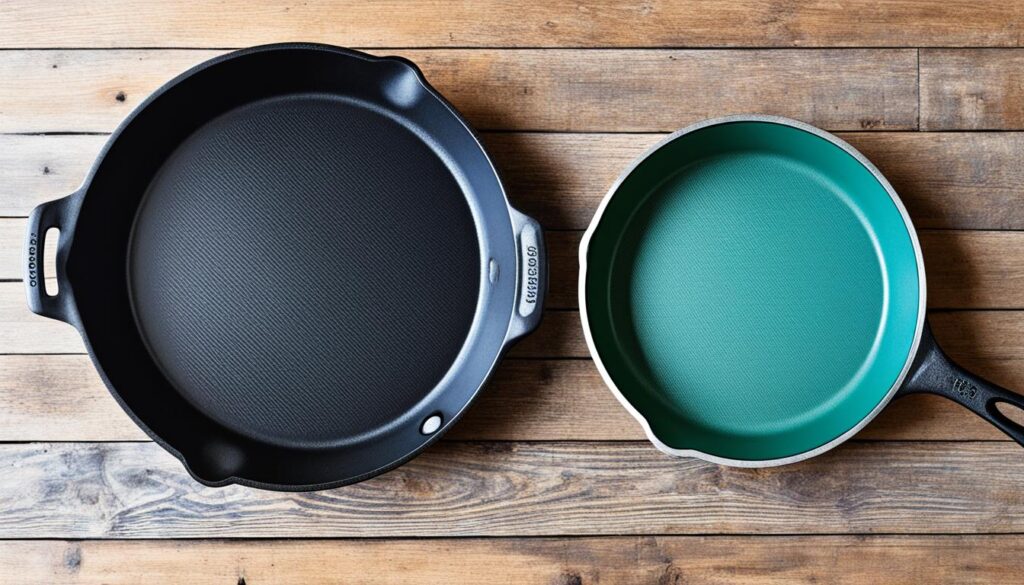
The upfront numbers favor ceramic slightly in the mid-range. The long-term numbers? Cast iron by a mile.
A Lodge 12-inch cast iron skillet runs about $30. American-made, pre-seasoned, lasts forever. Buy it once. Use it for decades. The math is absurdly good.
Ceramic pans range from $40 to $150 depending on brand and quality. But they need replacing — realistically every 2–4 years with regular use. That $60 ceramic pan is $20/year at minimum, compounding indefinitely.
Rough 10-year cost estimate:
| Pan | Upfront | Replacements needed | Total ~10 years |
|---|---|---|---|
| Lodge cast iron | $30 | 0 | $30 |
| Budget ceramic | $45 | 3–4 | $135–$180 |
| Mid-range ceramic | $70 | 2–3 | $140–$210 |
| Premium ceramic | $120 | 1–2 | $120–$240 |
| Enameled cast iron (Le Creuset) | $200 | 0 | $200 |
The Lodge wins on cost over any meaningful time horizon. It’s not even a fair fight.
That said — if you’re going premium cast iron (Field Company, Le Creuset, Staub), you’re spending more upfront. Still a good long-term value, but the entry price is higher.
Compatibility with Cooktop Types (Induction, Gas, Electric)
Gas and electric stovetops? Both pans work fine. No compatibility issues to think about there.
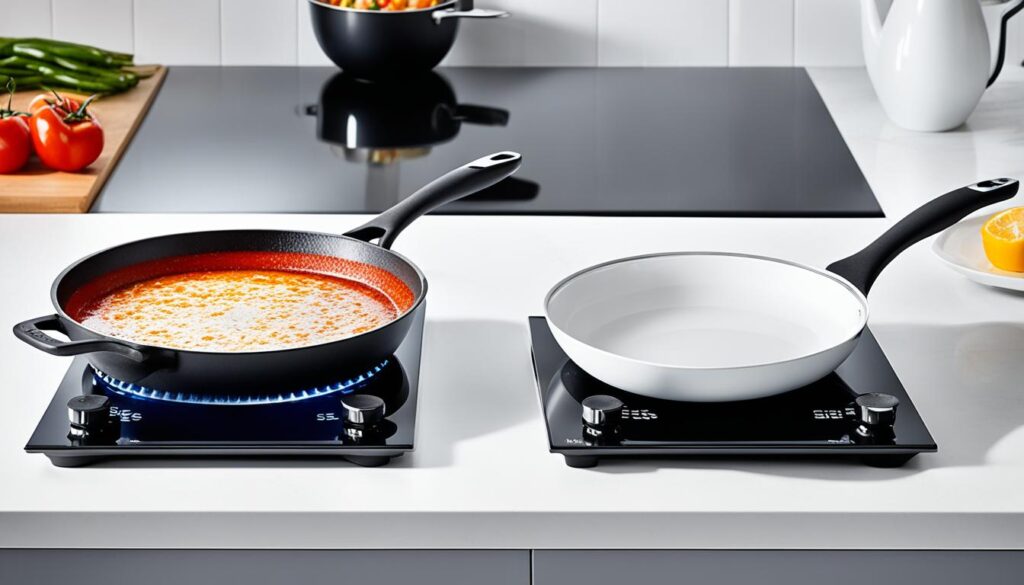
Induction is where things split. Induction cooktops work by creating a magnetic field that heats the pan directly — which means the pan has to be magnetic. Cast iron always is. It works on every induction cooktop, guaranteed.
Ceramic pans built on aluminum bases don’t work on induction at all. Aluminum isn’t magnetic. Some ceramic pans are built with stainless steel bases or special induction-compatible layers, and those work fine — but you have to check. It’s not a given.
If you’re cooking on induction and considering ceramic, look for explicit “induction compatible” labeling before buying. If you pick up a ceramic pan and a magnet sticks to the bottom, it works. If the magnet slides right off — doesn’t work.
One more thing: cast iron on glass-ceramic cooktops can scratch the surface if you drag the pan. Lift, don’t slide. Ceramic pans are gentler on glass surfaces.
Cooking Performance for Specific Dishes
Some pans just belong to certain tasks. Here’s the honest breakdown:
Reach for cast iron when cooking:
- Steaks and thick chops — nothing sears a crust like cast iron at high heat
- Smash burgers — you need flat, ripping-hot metal with no give
- Cornbread and skillet cakes — even retained heat builds the perfect crust
- Blackened proteins — cast iron handles the smoke and char without complaint
- Anything going from stove to high-heat oven
Reach for ceramic when cooking:
- Scrambled eggs or omelets — low-fat, low-effort, zero sticking
- Delicate fish fillets — they lift cleanly, don’t shred
- Pancakes — smooth surface, consistent browning
- Quick vegetable sautés — responsive heat, easy toss
- Sauces with tomato or wine — won’t strip a coating the way it strips cast iron seasoning
Environmental Impact and Sustainability
Cast iron is about as sustainable as cookware gets. Make it once, use it indefinitely — possibly across multiple generations. No replacement cycle, no degraded coatings going into landfills every few years, no repeat manufacturing.
Ceramic coating has a built-in expiration date. When the surface degrades — and it will — the pan gets replaced. That’s new aluminum smelted, new coatings applied, old pans discarded. Not a catastrophic environmental footprint, but more than cast iron.
If you’re already replacing traditional PTFE nonstick with ceramic, you’re making a meaningful improvement — PTFE production and disposal carries environmental concerns that ceramic coatings don’t. But if you’re comparing ceramic to cast iron on sustainability alone, cast iron wins cleanly.
Best Brands and Products to Consider
Not every brand is worth your money. These are:
Cast Iron:
- Lodge — Start here. $25–$35, American-made, pre-seasoned, genuinely excellent. The 10.25″ and 12″ skillets are the workhorses. No reason to spend more until you want to.
- Field Company — Machined smoother than Lodge, noticeably lighter. Around $175. Worth it if cast iron weight is your hesitation.
- Staub — French enameled cast iron, exceptional quality, heavy lids that baste food as it cooks. $150–$300. For people who braise a lot.
- Le Creuset — The benchmark. Expensive ($200+), beautiful, lasts forever. Justified if you’ll actually cook with it for 30 years.
Ceramic:
- GreenPan — Pioneer in ceramic nonstick, widely available, solid performance in the $40–$80 range
- Caraway — Excellent heat distribution, striking design, good coating longevity for the category ($75–$100 per pan)
- Our Place Always Pan — Versatile hybrid design, cult following, genuinely useful if you want one pan doing multiple jobs
- Xtrema — Solid ceramic (not coated aluminum), no metal base at all, the choice for people who want genuinely zero-metal cooking
If you want a countertop option with more precise temperature control than a stovetop pan, the best ceramic electric skillets are worth a look — completely different form factor but same coating benefits.
Making the Right Choice for Your Kitchen
No universal answer. But the decision tree is pretty simple.
Buy cast iron if:
- You sear meat regularly and want real crust
- You bake in your skillet or move pans from stove to oven
- You want to buy once and never think about it again
- You’re working with a tight budget and want maximum long-term value
Buy ceramic if:
- You cook eggs, fish, or delicate proteins most mornings
- Wrist or grip strength is a concern — the weight difference is significant
- You want to avoid PTFE-based nonstick without giving up the nonstick experience
- Your kitchen has an aesthetic and you actually care how the pan looks
Buy both if:
- You cook a variety of things and want the right tool for each
- You can spend $80 total on a Lodge and a decent ceramic — that combination covers nearly everything a home cook will ever run into
Honestly? The $30 Lodge plus a $50 ceramic pan is one of the best kitchen investments most people can make. Two pans, total $80, handles 90% of what you’ll ever cook. That’s the move.