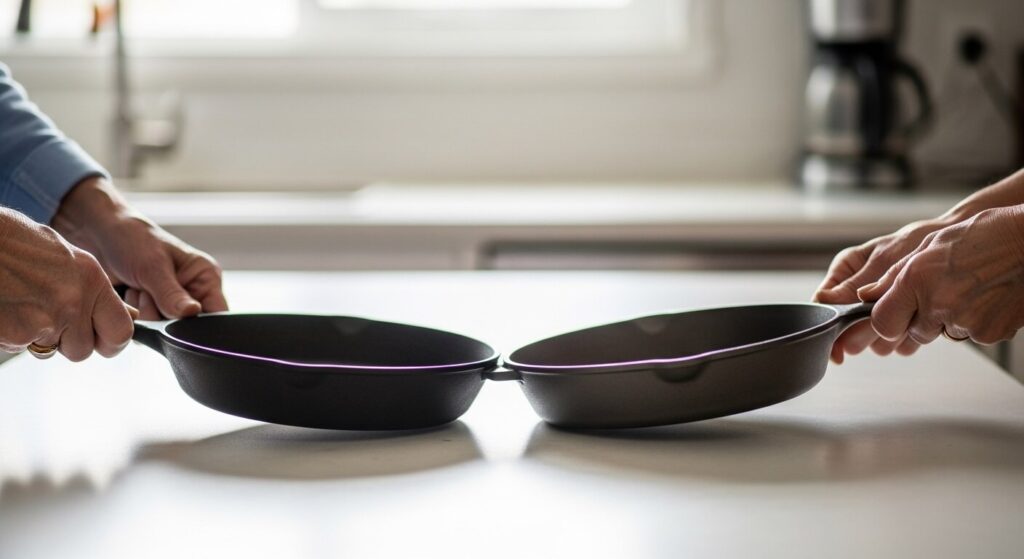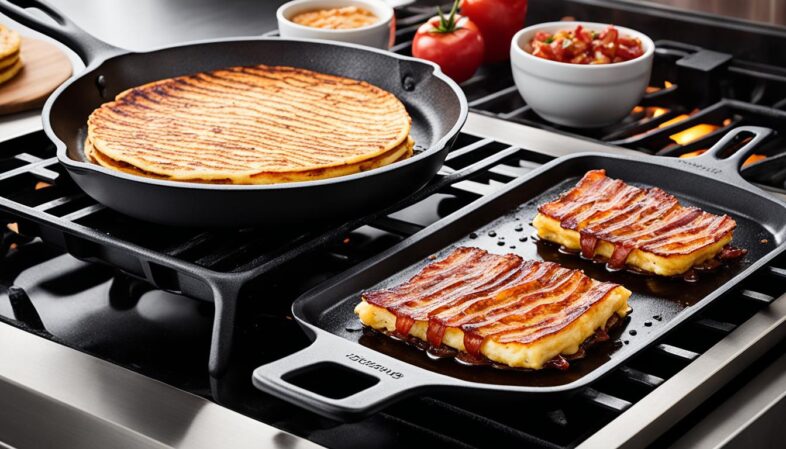
A cast iron skillet is better for most home cooks — but a griddle wins if you’re regularly cooking for a crowd or living on breakfast foods. It really depends on what you’re making.
Both are cast iron. Both are heavy, durable, and built to last decades. But they’re not interchangeable, and buying the wrong one is an easy mistake to make.
Here’s what you need to know.
Understanding Cast Iron Cookware
Cast iron is one of the oldest cooking materials around — and it’s still here because it works.
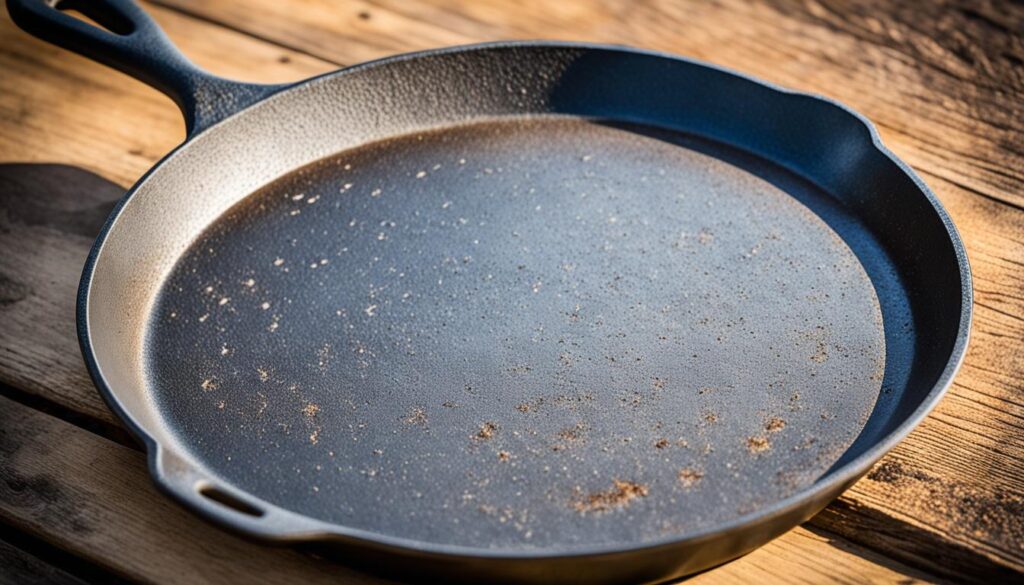
The material itself is an iron-carbon alloy, poured into molds and cooled into shape. Dense. Heavy. Virtually indestructible with basic care. What makes it special is thermal mass — cast iron holds heat rather than just conducting it, which means your food keeps cooking at a consistent temperature even when you add cold ingredients.
A few things that define cast iron cookware:
- Seasoning — a polymerized layer of oil that acts as natural non-stick coating
- Reactivity — it can interact with acidic foods (tomatoes, citrus), though a well-seasoned pan handles this fine
- Weight — most pieces run 5–12 lbs, sometimes more
- Oven-safe — no plastic handles, no limits. Most cast iron is safe to 500°F+
Cast iron improves with use. That’s genuinely rare in cookware.
The Versatility of Cast Iron Skillets
A cast iron skillet does more things than almost any other pan in your kitchen.
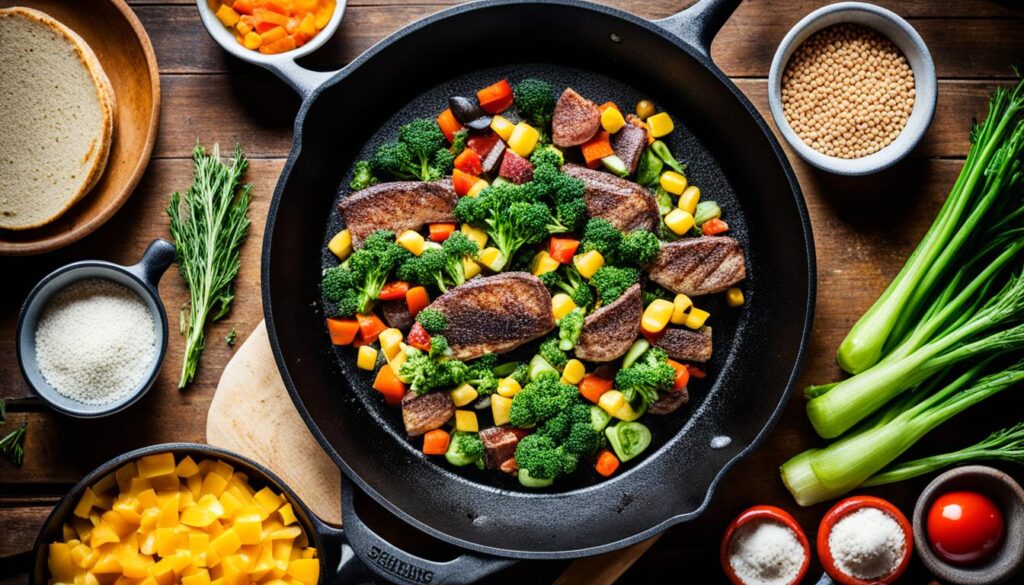
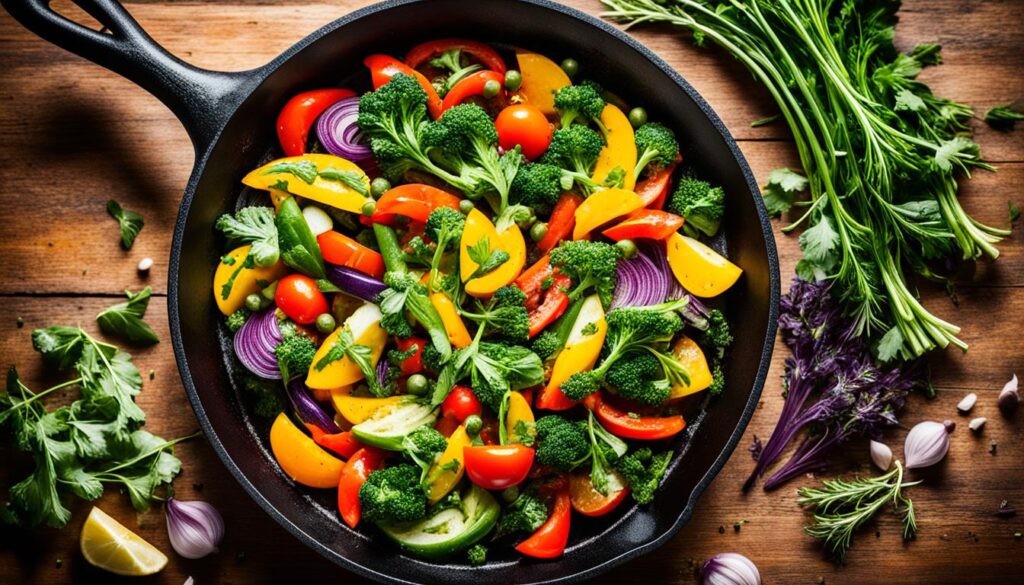
The shape is the key advantage. High, sloped sides mean you can sear, sauté, fry, bake, braise, and simmer — all in one pan. Skillets come in sizes from 6″ to 15″, though 10″ and 12″ are the sweet spots for most kitchens.
What you can actually cook in one:
- Steaks and chops — screaming hot sear, finish in the oven. Perfect crust every time.
- Cornbread and skillet cakes — goes stovetop to oven without thinking about it
- Fried chicken — deep enough for shallow frying, holds temperature under load
- Eggs — once properly seasoned, genuinely non-stick
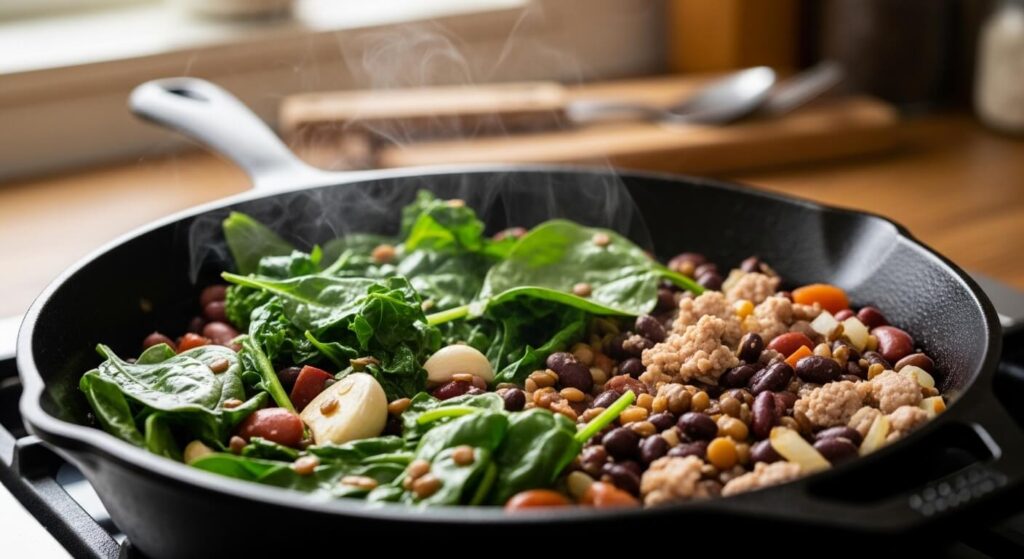
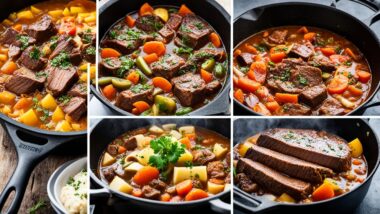
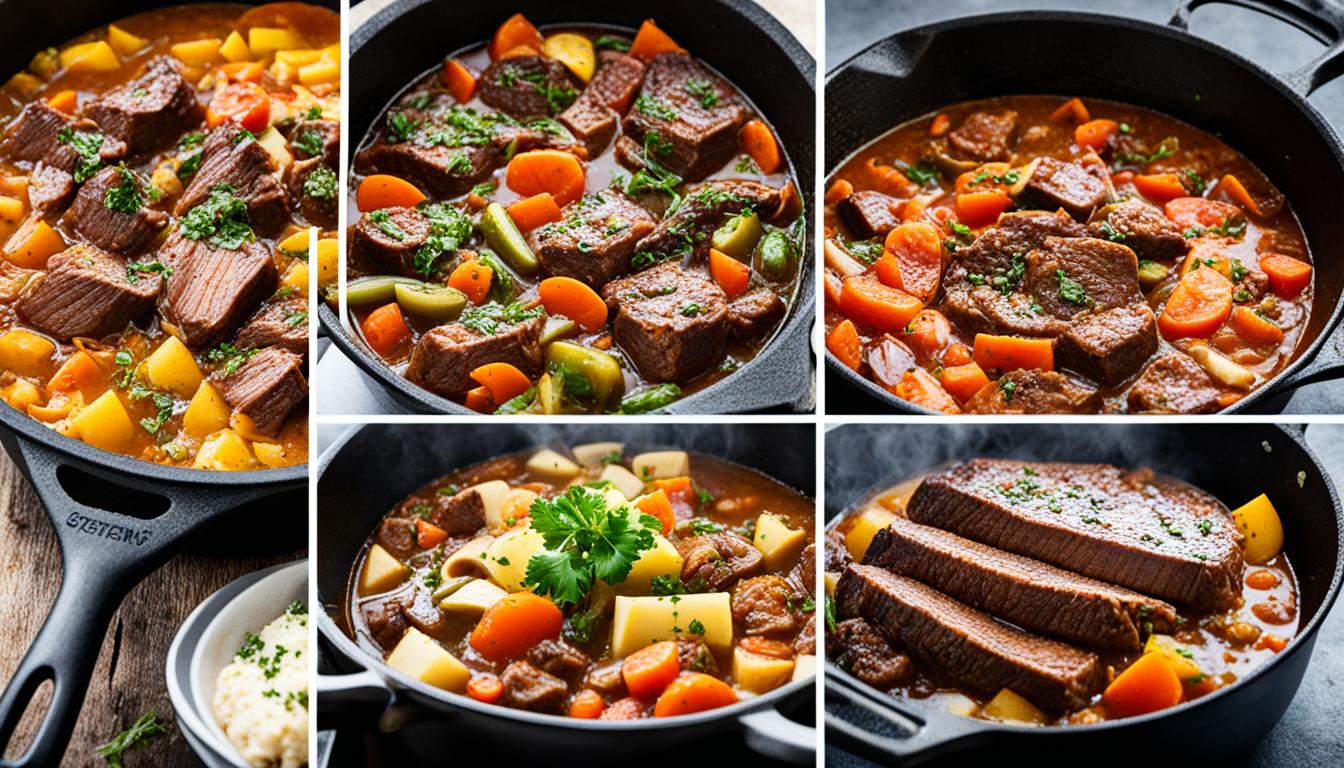
- Soups and stews — the high sides make this viable in a way a griddle never could be
- Pizza — check out this Cast Iron Skillet Chicago Deep Dish Pizza Recipe for proof
The skillet moves from burner to broiler to table. One pan. That’s hard to beat.
Exploring Griddle Cooking
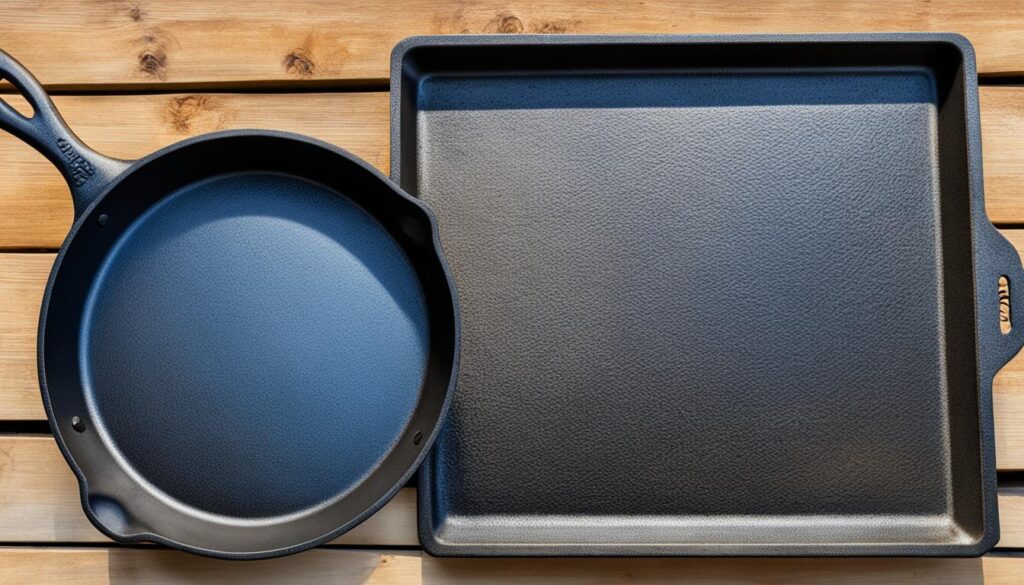
A griddle is flat — completely flat — with either no sides or very low ones.
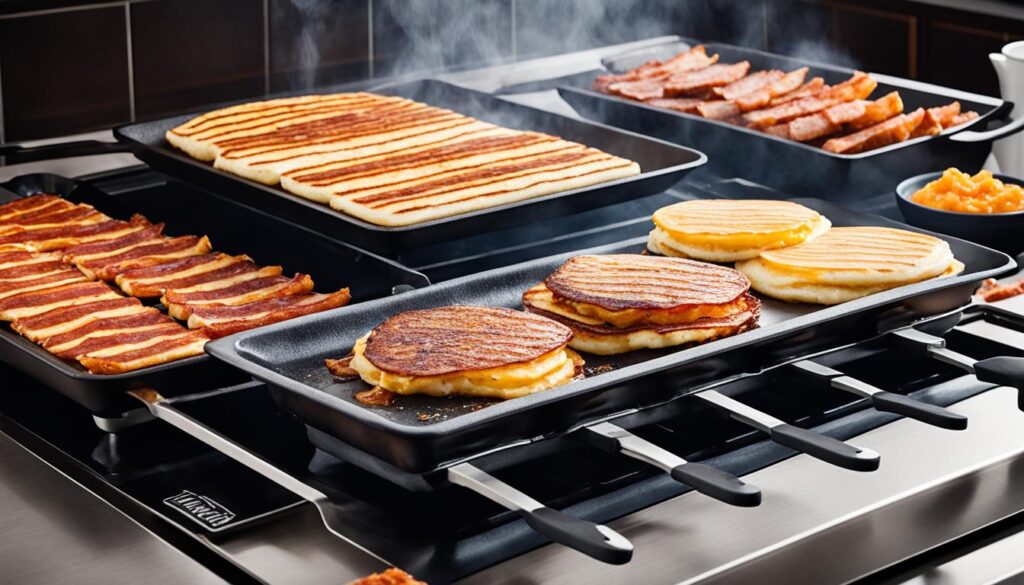
That flat surface is the whole point. You get maximum contact between food and hot iron, which means better browning across the entire surface. Pancakes come out even. Bacon lies completely flat. Sandwiches press down without fighting curved walls.
Griddles come in a few forms:
- Stovetop griddles — single burner (round) or dual burner (rectangular, sits across two burners)
- Reversible griddle/grill combos — griddle on one side, ridged grill on the other
- Outdoor griddles — standalone units like the Blackstone, with large flat cooking surfaces and separate burners
Good for:
- Pancakes, French toast, crepes
- Bacon and sausage
- Grilled cheese, quesadillas, smash burgers
- Batch cooking — eggs for a whole family at once
Not great for anything that needs containment — sauces, braises, soups. The low or absent sides make that obvious.
For high-heat stir-fry situations where you need the right pan, a skillet wins — but if you want ideas for flat-surface cooking techniques, this Chinese Chicken Cabbage Stir-Fry Recipe shows what good high-heat cooking looks like.
Cast Iron Skillet vs Griddle: Head-to-Head Comparison
Here’s the fast version before we break each category down.
| Category | Cast Iron Skillet | Cast Iron Griddle |
|---|---|---|
| Versatility | High — does almost everything | Moderate — great for flat foods |
| Surface area | Smaller, contained | Much larger cooking surface |
| Heat retention | Excellent | Excellent |
| Heat distribution | Good, uneven on single burner | Better across wide surface (dual burner) |
| Sides | Yes — 2–3″ tall | None or very low |
| Best for | Searing, baking, frying, braising | Breakfast foods, smash burgers, batch cooking |
| Storage | Easier (stackable) | Bulky, harder to store |
| Price | $25–$100+ | $30–$120+ |
Neither one is objectively superior. But one of them probably fits your cooking habits better.
Heat Distribution and Retention
Both hold heat well — but distribution is where they differ.
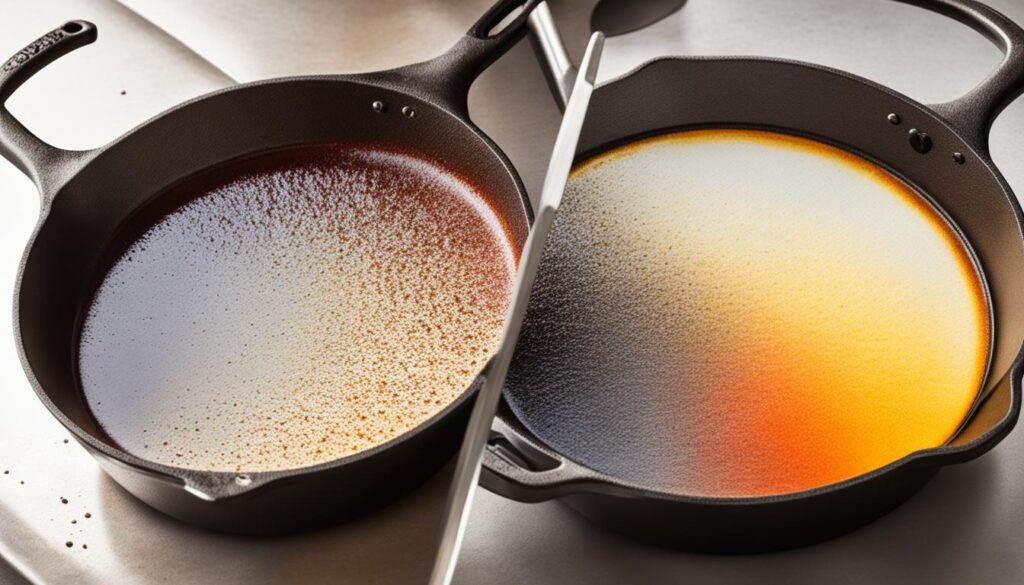
Cast iron heats slowly and unevenly at first. On a round burner, a 12″ skillet will have a hotter center and cooler edges until the whole pan equilibrates. That takes a few minutes of preheating — but once it’s there, it holds.
Griddles have the same issue, amplified. A large rectangular griddle across two burners can have noticeable hot spots over each burner and cooler zones in between. Good griddle technique means knowing your surface — where to put the bacon vs the pancakes.
Bottom line on heat:
- Preheat both longer than you think you need to (5–10 minutes)
- Skillets reach temperature faster due to smaller mass
- Griddles benefit from being on two burners simultaneously
- Both retain heat far better than stainless or non-stick once up to temp
For something like a Shrimp and Broccoli Stir Fry where consistent high heat matters throughout cooking, the skillet’s heat retention is genuinely valuable.
Seasoning and Maintenance
Same basic process. Different surface area to deal with.
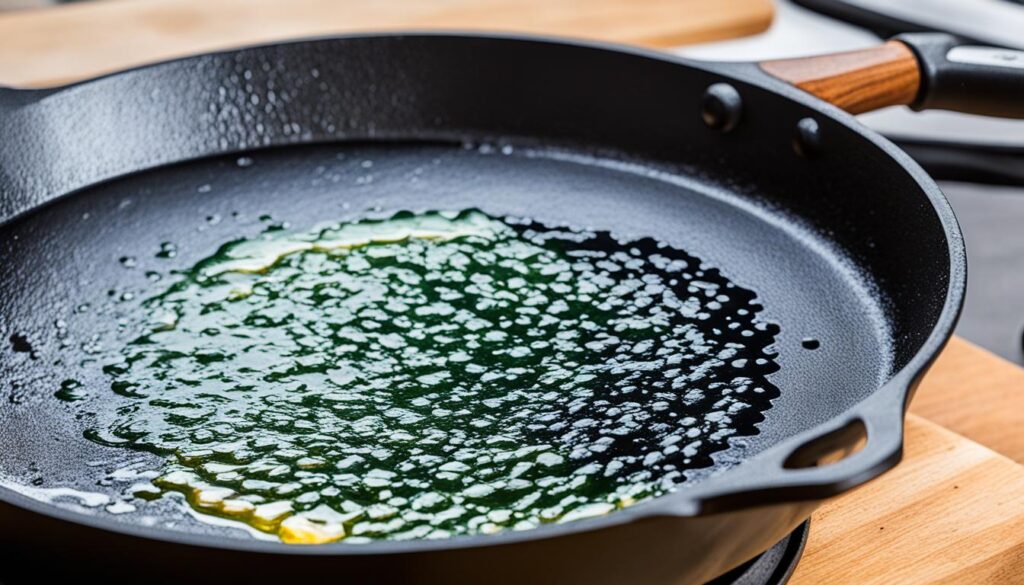
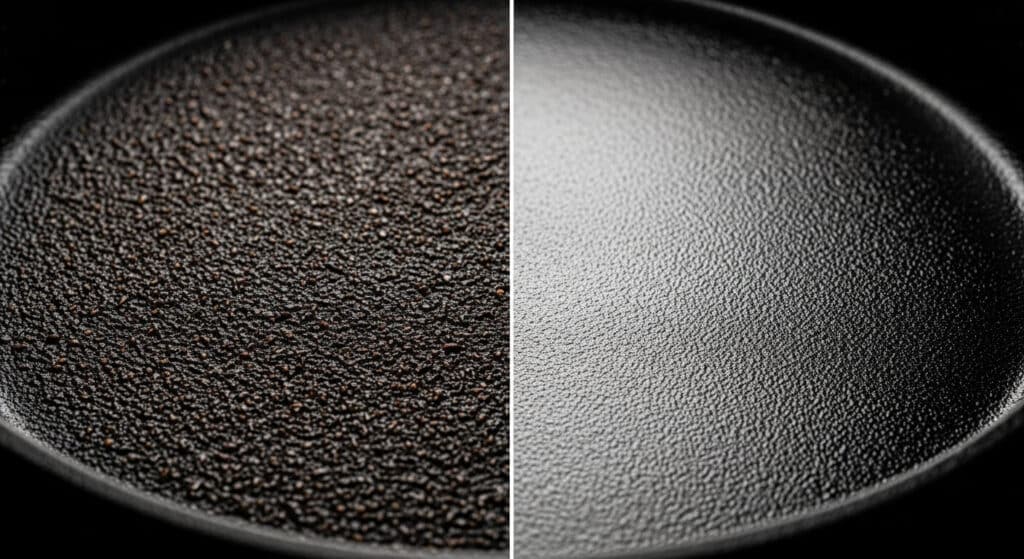
Seasoning is just baked-on oil — polymerized fat that fills the microscopic pores of cast iron and creates a slick, protective surface. It builds over time. Every time you cook with fat, you’re adding to it.
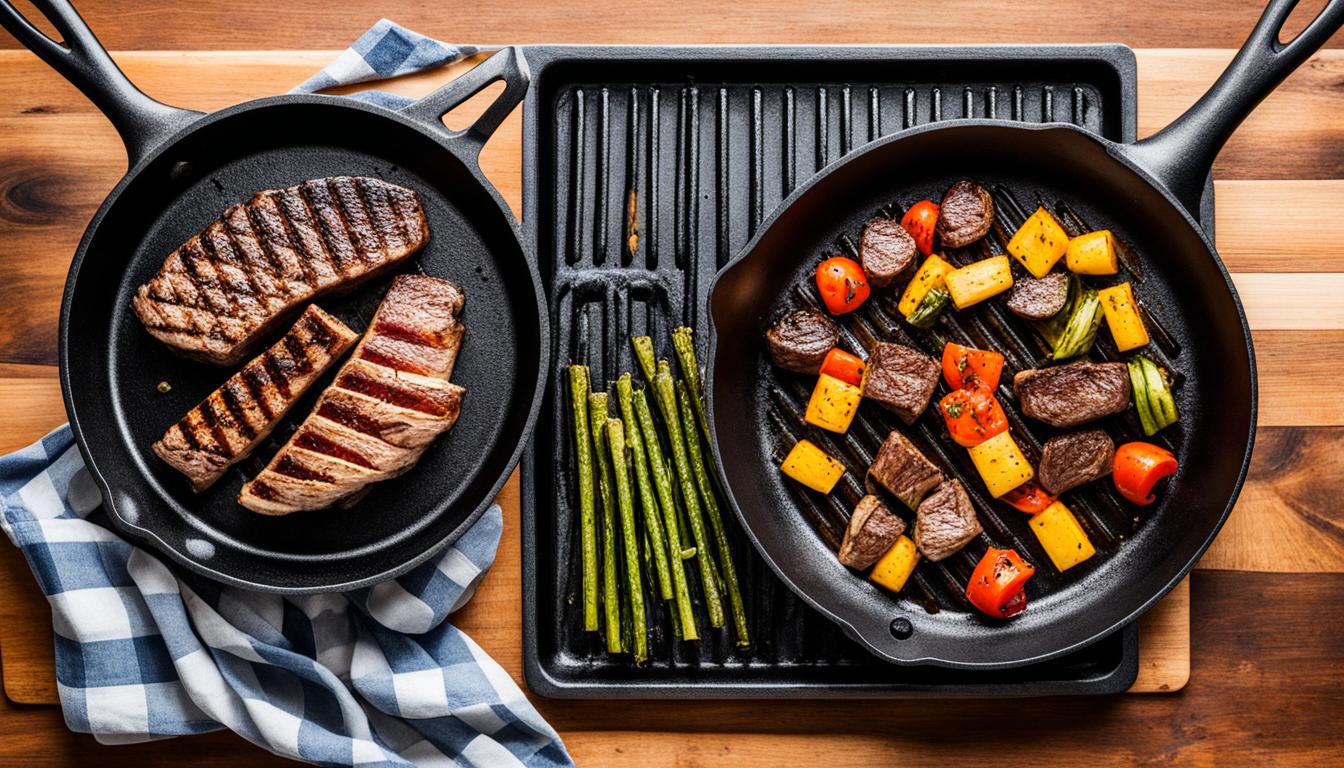
How to season either piece:
- Wash and dry completely
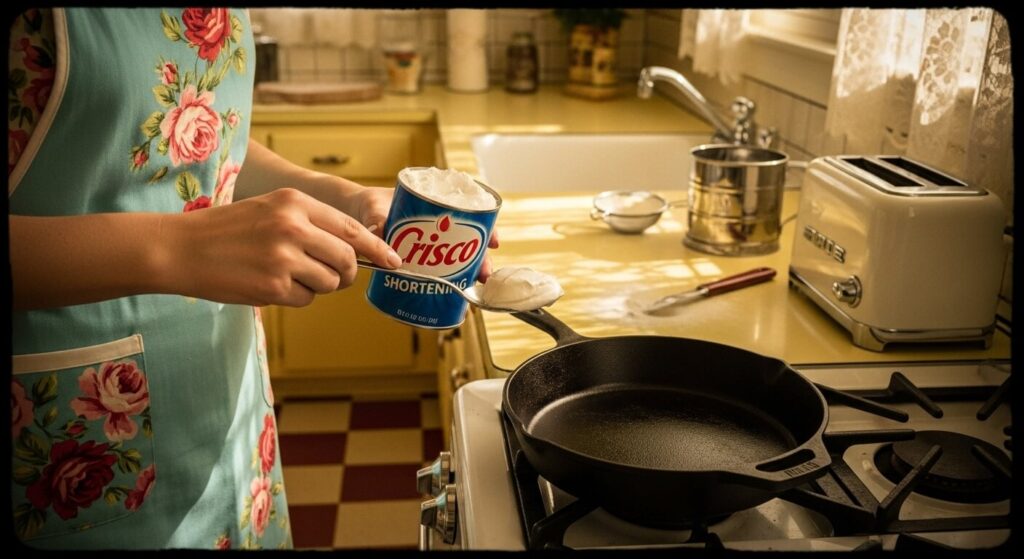
- Apply a thin layer of neutral oil (flaxseed, vegetable, or shortening) all over
- Wipe off almost all of it — thinner is better
- Bake upside down at 450–500°F for an hour
- Cool in the oven
For a full breakdown, the Best Ways to Season a Cast Iron Skillet guide covers every method in detail.
Day-to-day maintenance:
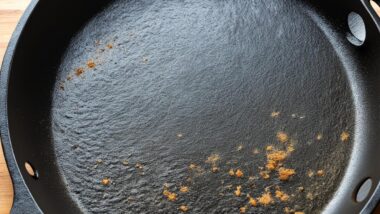
- Clean while warm with hot water and a stiff brush
- Soap is fine occasionally — the “never use soap” rule is outdated
- Dry immediately and completely (rust forms fast)
- Apply a light coat of oil after drying if you’re not cooking again soon
Griddles are a bit more work here. More surface area means more oil needed during seasoning, more scraping after cooking, more space to dry. Not hard — just more of it.
This Shrimp and Dumpling Stir-Fry Recipe is actually great for building seasoning — the fat content helps condition the pan while you cook.
Cooking Surface Area Comparison
This is where griddles genuinely win.
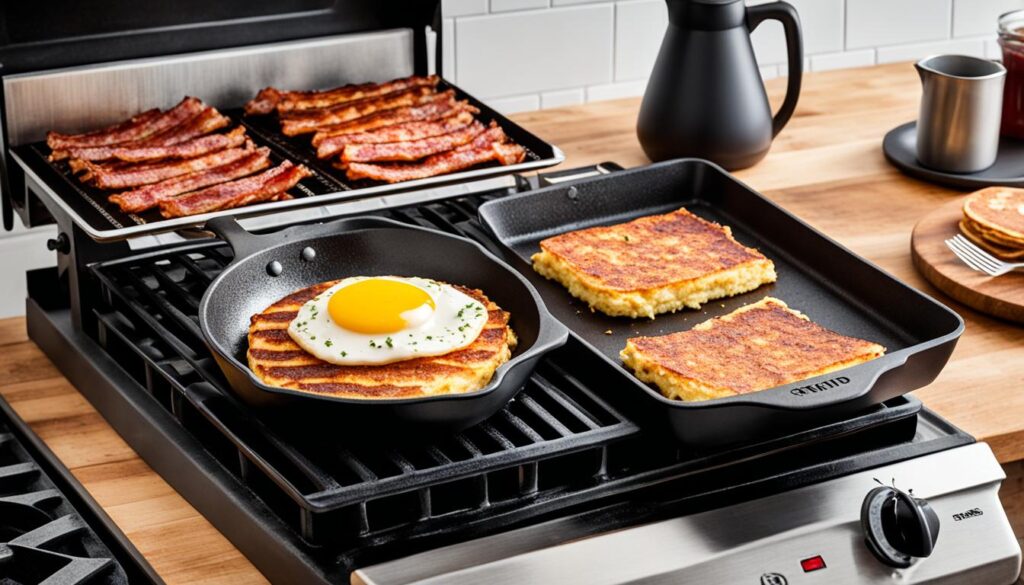
A 12″ skillet gives you roughly 113 square inches of usable cooking surface — and that’s generous, given the curved sides eat into the flat cooking area.
A standard dual-burner griddle (around 10″ x 18″) gives you ~180 square inches. Some larger ones hit 20″+ on the long side.
| Pan | Approximate Cooking Surface |
|---|---|
| 10″ skillet | ~78 sq in |
| 12″ skillet | ~113 sq in |
| Single burner griddle (10″) | ~78 sq in |
| Dual burner griddle (10″x18″) | ~180 sq in |
| Outdoor griddle (Blackstone 22″) | ~363 sq in |
For a family of four making pancakes on a Sunday — the griddle isn’t a convenience, it’s a necessity. You’d be making three separate batches with a skillet.
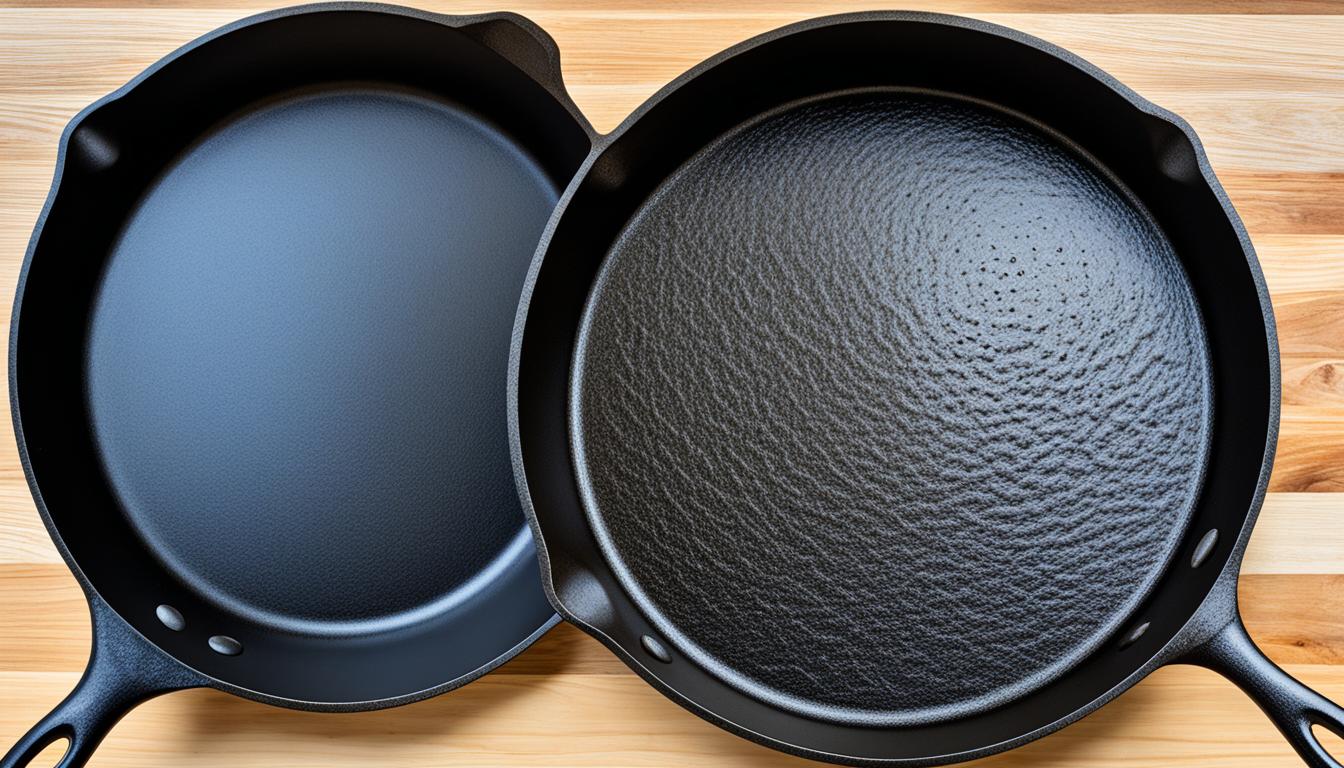
For a solo cook doing a steak? The skillet handles it perfectly, and the smaller surface means faster preheating and better heat concentration.
Versatility in Cooking Techniques
The skillet wins this one. Not close.
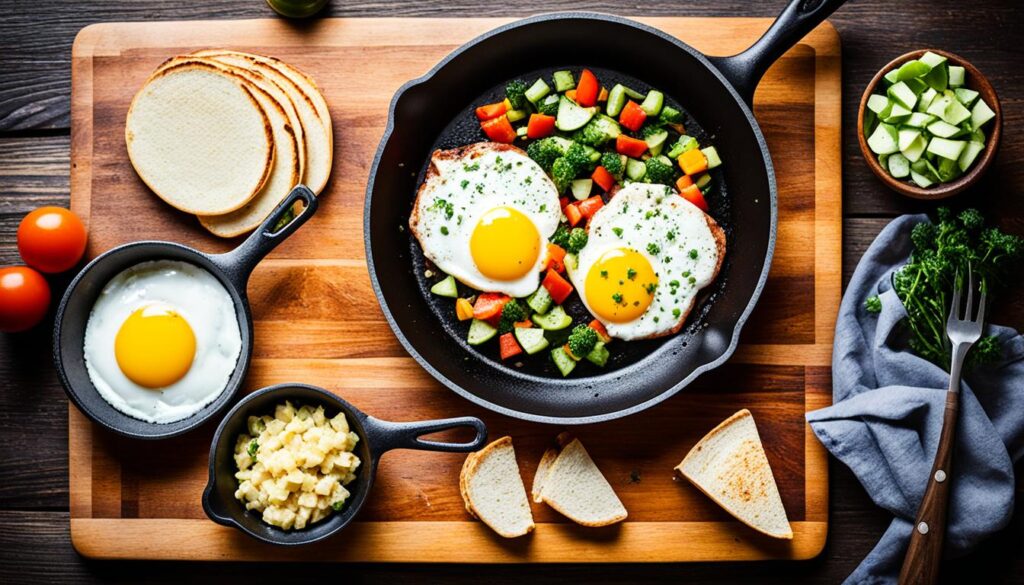
What a skillet can do that a griddle simply can’t:
- Braising — needs tall sides to hold liquid
- Deep frying — same reason
- Baking — cornbread, cobblers, frittatas, upside-down cakes
- Soups and sauces — obvious
- Camping stews over a fire — a griddle over an open flame loses everything
A griddle has specific advantages — the flat surface, the wide area — but it’s a specialist. A skillet is a generalist that happens to also sear beautifully.
If you had to pick one piece of cast iron to own? The skillet. Every time.
Price and Value Comparison
Cast iron is cheap for what it is. Compared to a quality stainless or carbon steel pan, cast iron is a bargain — and it lasts longer than either.
| Item | Budget Range | Mid-Range | Premium |
|---|---|---|---|
| Cast iron skillet (12″) | Lodge ~$35 | Field Co. ~$125 | Finex ~$175 |
| Stovetop griddle | Lodge ~$40 | Lodge Pro ~$65 | Le Creuset ~$200+ |
| Reversible griddle/grill | Lodge ~$50 | Cuisinart ~$70 | — |
A few things worth noting:
- Budget cast iron is genuinely good. Lodge makes excellent cookware at $25–$60. No need to spend $150 unless you want to.
- Pre-seasoned vs bare — most modern cast iron ships pre-seasoned. Fine to use immediately, gets better over time.
- Weight varies by price — premium brands sometimes machine-grind their surfaces smoother, which affects initial non-stick performance but not longevity.
The best value for most people: a 12″ Lodge skillet (~$35) and a Lodge reversible griddle (~$50). That’s $85 for cookware that’ll outlast you.
Durability and Longevity
Cast iron doesn’t wear out. That’s the honest answer.
People cook on 100-year-old cast iron skillets daily. The same cannot be said for Teflon non-stick, anodized aluminum, or most stainless cookware. Cast iron is irreplaceable in this category.
What can actually damage it:
- Thermal shock — pouring cold water into a screaming hot pan can crack it. Let it cool first.
- Rust — neglect causes surface rust, but this is recoverable with steel wool and re-seasoning
- Warping — rare, but extreme sustained heat on an uneven burner can eventually warp thinner pieces
- Dropping — cast iron can crack or chip if dropped on a hard floor. It’s brittle despite being tough.
Both skillets and griddles share this durability. The griddle’s larger, thinner surface makes warping slightly more of a concern — especially cheaper single-burner round griddles.
But honestly? Buy either one from a reputable brand, take basic care of it, and you’re set for life.
Health Benefits of Cooking with Cast Iron
There are real ones — and one overblown one.
The real benefits:
- No synthetic coatings — unlike Teflon, cast iron doesn’t release potentially harmful fumes at high heat. At 500°F+, non-stick coatings degrade. Cast iron doesn’t.
- Dietary iron — acidic foods cooked in cast iron absorb trace amounts of iron from the pan. The research is real. Not dramatic amounts, but measurable.
- Less oil needed — a well-seasoned pan needs minimal added fat
- High-heat capable — searing at proper temperatures (450°F+) creates better Maillard reaction browning, which means better flavor without added ingredients
The overblown one:
Some people claim cast iron is meaningfully non-stick in the way Teflon is. It’s not. A properly seasoned pan releases eggs and fish well — but it’s not the same. Manage expectations.
Neither skillet nor griddle has a health advantage over the other. Same material, same properties.
Outdoor Cooking and Camping Applications
Cast iron was made for this.
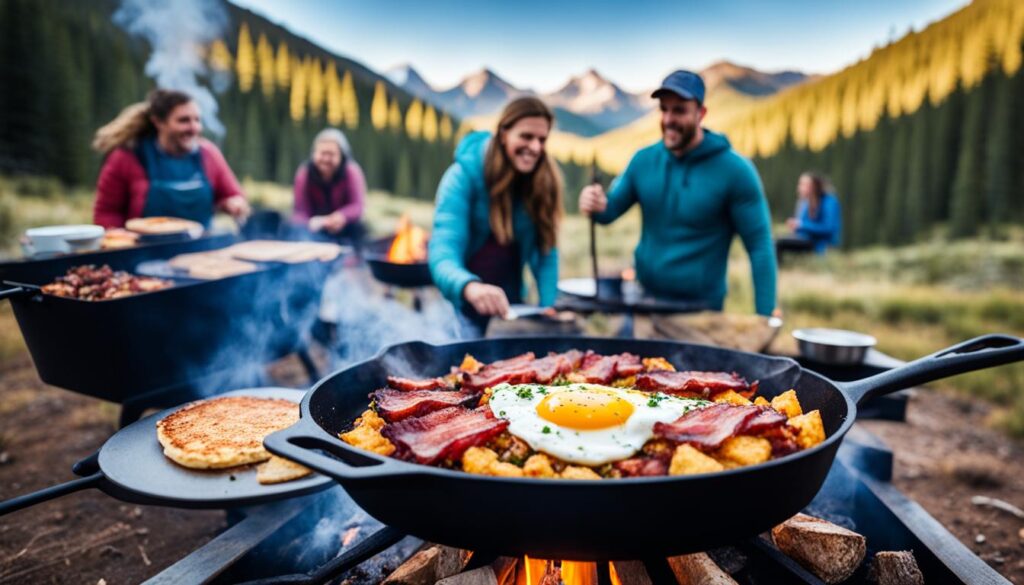
No plastic parts. No coatings to worry about. Works directly on campfire coals, camp stoves, charcoal grills — anything that produces heat. Cast iron is the original outdoor cookware and it’s still the best for most applications.
Skillet outdoors:
- Camp stews, chili, eggs, fish fillets
- Baking over coals (with a lid or foil)
- Sits flat on grill grates or directly in coals
- Dutch oven cooking is an extension of this — same material
Griddle outdoors:
- Dominates for campsite breakfast — pancakes, bacon, eggs for a group
- Works great on a two-burner camp stove
- The Blackstone-style outdoor griddle has basically taken over tailgating and backyard cooking
- Harder to pack for backcountry camping (too big and heavy)
For car camping or backyard cooking, a griddle is honestly sneaky good. Set it up over two burners, cook breakfast for six people, done. The skillet can’t match that.
For actual backcountry use? A 10″ skillet. Nothing else makes sense.
Best Cast Iron Skillets to Buy
These are the ones worth your time.
Lodge 12″ Cast Iron Skillet — The standard. Pre-seasoned, affordable (~$35), widely available. The cooking surface is slightly rougher than premium options, but it gets smoother with use. Most home cooks don’t need more than this.
Field Company No. 10 Skillet — Lighter than Lodge, machined-smooth cooking surface, beautiful fit and finish. Around $125. Worth it if you cook daily and care about the details.
Finex 12″ Cast Iron Skillet — Octagonal shape, coil spring handle (stays cooler), polished surface. Around $175. Genuinely excellent. Overkill for casual cooks.
Le Creuset Enameled Cast Iron Skillet — Enamel coating means no seasoning required, easier cleanup, works with acidic foods without worry. Expensive ($150–$200+). The right tool for cooks who hate maintenance.
What to skip: Generic no-name skillets from Amazon. Cast iron quality varies and a cheap unknown brand may warp, have casting defects, or develop rust problems quickly. Stick with established names.
For more options at various price points, the Best Extra Large Electric Skillets guide also covers cookware considerations worth reading if you cook for crowds.
Best Griddles to Buy
Fewer options, but a few clear winners.
Lodge 10.5″ Round Griddle — Good for a single burner, fits most stoves. Compact and easy to store. Around $20. Fine for one or two people.
Lodge 20″ x 10.5″ Reversible Griddle/Grill — This is the one most people should buy. Griddle on one side, ridged grill on the other. Fits two burners. Covers most use cases. Around $50.
Cuisinart 9.25″ Cast Iron Round Griddle — Good alternative to Lodge for the single-burner round. Comparable quality, similar price.
Blackstone 22″ Tabletop Outdoor Griddle — Not cast iron (rolled steel), but worth mentioning. If you want an outdoor cooking setup for groups, this is the standard. Around $130.
Camp Chef Reversible Pre-Seasoned Cast Iron Griddle — Great for outdoor use on a two-burner camp stove. Solid construction, fits Camp Chef stove systems well. Around $60.
Making the Final Decision: Skillet or Griddle?
The skillet is better for most people. That’s the direct answer.
But “most people” isn’t everyone.
Get the skillet if:
- You cook a variety of things (meats, eggs, sauces, baked dishes)
- You cook for 1–3 people most of the time
- You want one pan that does almost everything
- You bake, braise, or fry regularly
- Storage space is limited
Get the griddle if:
- You cook breakfast foods constantly
- You regularly cook for 4+ people at once
- Smash burgers, quesadillas, and pancakes dominate your cooking
- You have a two-burner setup to take advantage of the surface area
- Outdoor or tailgate cooking is a regular thing
Get both if:
You cook a lot. Seriously — these two pieces together cover nearly everything. A 12″ skillet and a reversible griddle for under $100 total is one of the best kitchen investments you can make.
The reality: most people start with a skillet, use it constantly, and eventually add a griddle when they notice what it can’t do. That’s a perfectly reasonable approach. Start there.