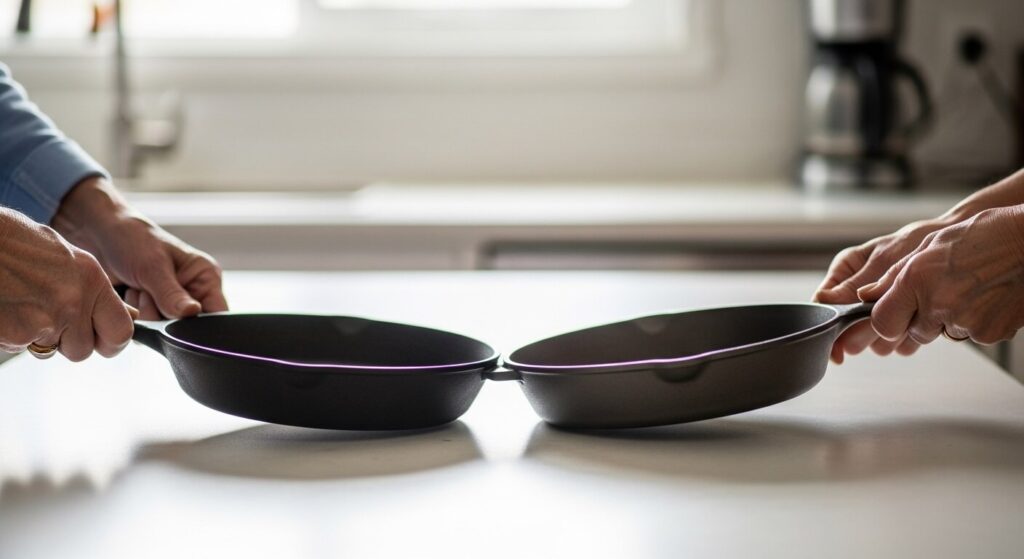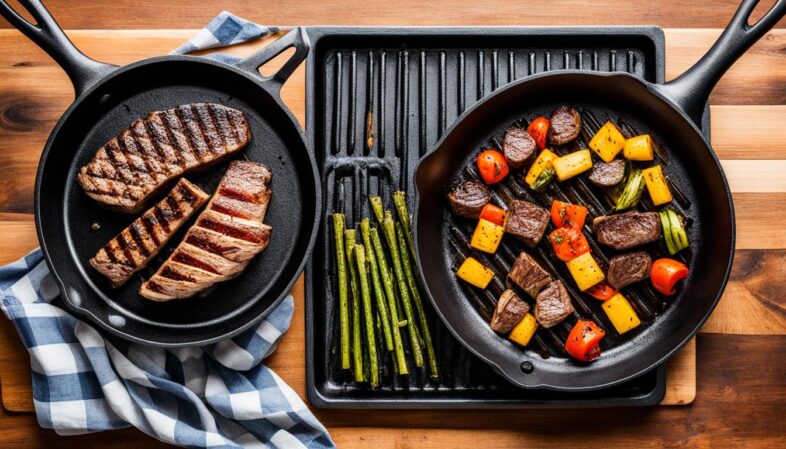
A cast iron skillet is the better all-around pan. A grill pan is better if you specifically want grill marks indoors. That’s really the whole debate in two sentences—but the details matter depending on how you actually cook.
Kitchen Cookware Essentials
Most kitchens don’t need both. Most kitchens probably should have both. Contradictory? A little. But here’s the thing—they’re built for genuinely different jobs, and once you understand that, the choice gets easier.
Cast iron skillet: flat, heavy, handles everything from eggs to cornbread to a 600°F sear.
Grill pan: ridged surface, creates char marks, mimics outdoor grilling without leaving your kitchen.
Both are cast iron staples. Both can last decades. Both get screaming hot and hold that heat like nothing else in your cabinet. Where they split is in what they do with that heat—and that’s what actually matters when you’re standing at the stove at 6pm trying to get dinner done.
| Feature | Cast Iron Skillet | Grill Pan |
|---|---|---|
| Grill marks | No | Yes |
| Works in oven | Yes | Sometimes |
| Best for | Nearly everything | Meats, thick veggies |
| Smoke output | Moderate | Pretty high |
| Price range | $25–$200+ | $30–$180 |
Understanding Cast Iron Skillets
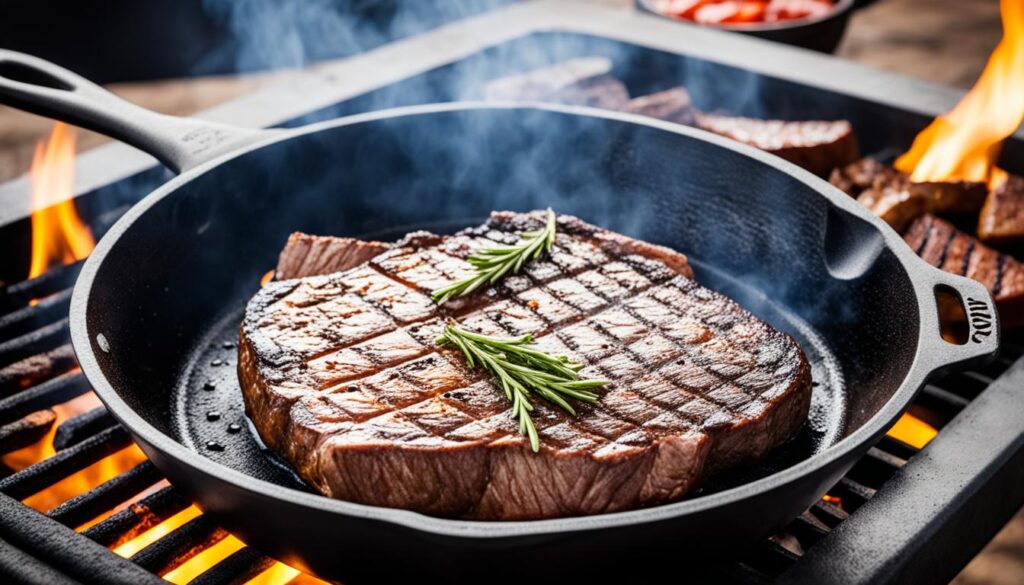
A cast iron skillet is exactly what it sounds like—a flat, thick, heavy pan made from molten iron poured into a mold. The design hasn’t changed much in over a century. Turns out it didn’t need to.
What makes it work so well is density. Cast iron holds heat longer than stainless steel, aluminum, or ceramic. Drop a cold steak on a properly preheated cast iron skillet and it barely loses temperature. That’s the whole secret to a proper sear—consistent, sustained heat that doesn’t flinch when cold protein hits the surface.
What a cast iron skillet actually does well:
- Holds heat through thick and thin—literally
- Works on gas, electric, induction, campfire, oven, you name it
- Oven-safe well past 500°F (no plastic handles melting, no coating degrading)
- Gets better the more you cook in it—not worse
- Can genuinely last a lifetime, or two
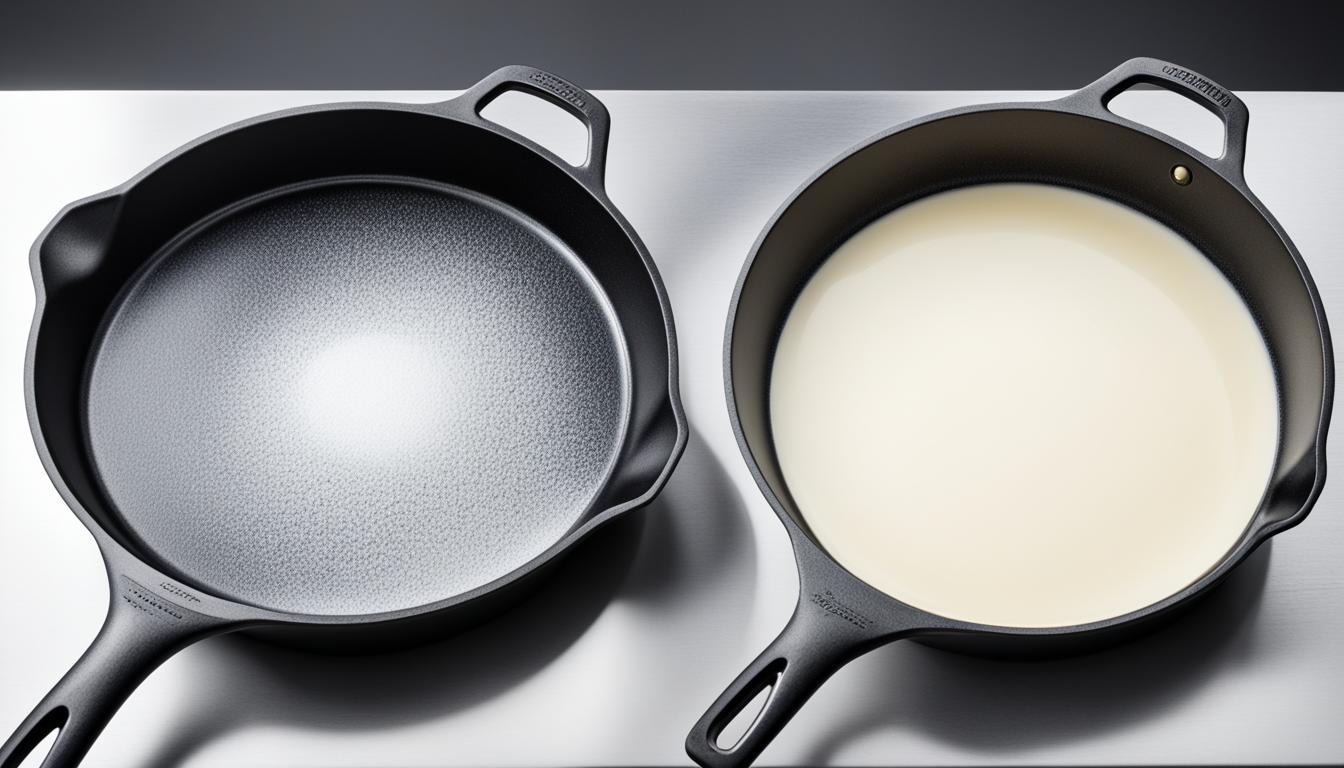
Weight is a real consideration though. A 12-inch Lodge runs close to 8 pounds. Fine on the burner, slightly less fine when you’re pouring off liquid or flipping something one-handed. Not a dealbreaker—just worth knowing.
Two types to know about:
Traditional cast iron — rough texture, heavier, needs regular seasoning, holds heat like a furnace. This is what most people mean when they say “cast iron.”
Enameled cast iron — porcelain coating, no seasoning needed, easier to clean. The cooking surface doesn’t get quite as intense, and it costs significantly more. Le Creuset territory.
For most home cooks, traditional wins. The $30 Lodge skillet competes with pans that cost ten times as much. That’s not hype—it’s just true.
Exploring Grill Pans
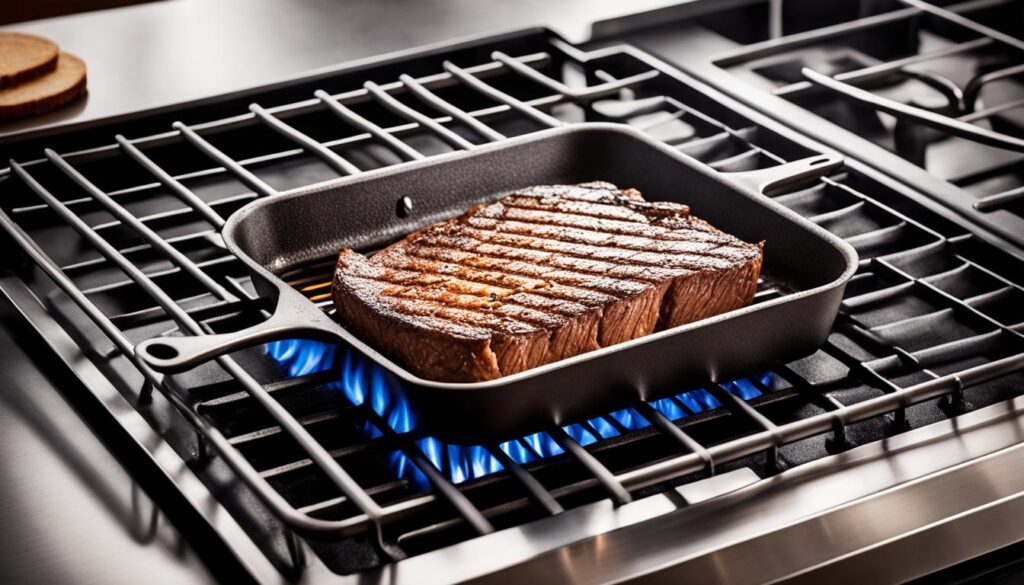
The grill pan’s whole pitch is this: outdoor grill results, indoor convenience. Raised ridges sear the contact points, fat drips into the valleys below, and you get those crosshatch marks that make a chicken breast look like it came off a Weber at a summer cookout.
And honestly? That pitch holds up—within limits.
Where grill pans genuinely deliver:
- Grill marks on steaks, chicken, fish, pork chops
- Slightly smokier flavor profile compared to a flat pan
- Fat drains away from food during cooking
- Visual results that are hard to get any other way indoors
Where they fall completely flat:
- Anything involving liquid—sauces, braises, eggs
- Baking. Don’t try it.
- Large batch cooking—the ridges eat up usable surface area
- Foods that need full flat-surface contact (pancakes, anyone?)
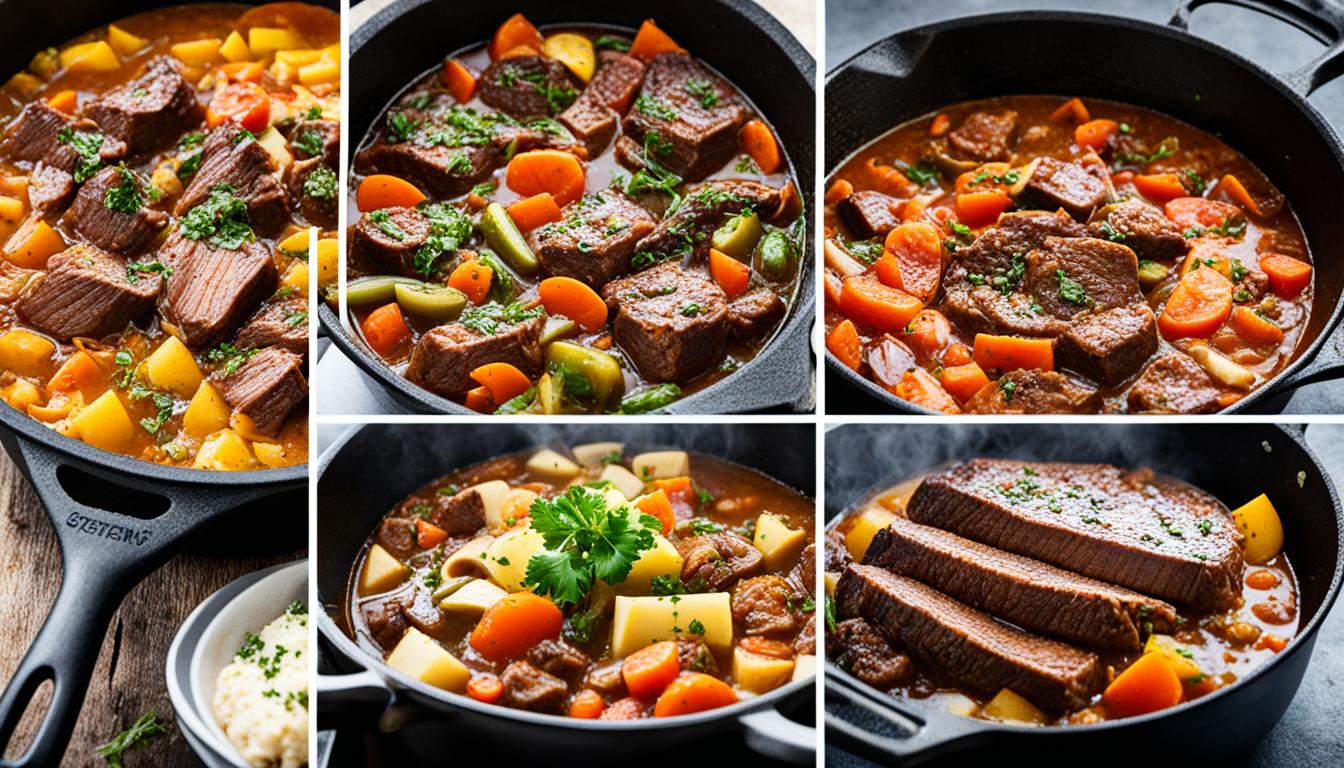
Most grill pans come in cast iron or hard-anodized aluminum. Cast iron versions retain heat better and last longer. Aluminum heats faster, cools faster, and is significantly lighter—better for everyday use if weight bothers you.
Square versus round is mostly preference. Square gives you marginally more surface area. Round fits standard burners more evenly. Either works fine.
Heat Retention and Distribution Properties
Cast iron skillets win here, and it’s not particularly close.
The flat, solid cooking surface of a skillet maintains contact with the heat source across the entire base. Every inch of that pan is getting hot. Grill pans, by contrast, have ridges—which means air gaps—which means the heat delivery is less consistent across the surface.
The ridges themselves get very hot. But the valleys? Cooler. It creates an uneven cooking environment that a flat skillet simply doesn’t have.
Thermal breakdown:
| Property | Cast Iron Skillet | Cast Iron Grill Pan |
|---|---|---|
| Preheat time | 4–7 min | 5–8 min |
| Heat retention | Excellent | Good |
| Surface consistency | Good (improves over time) | Moderate |
| Recovery after adding food | Fast | Slower |
Hot spots are a real thing with cast iron—it doesn’t spread heat as evenly as copper or thick aluminum. But that improves as seasoning builds up, and experienced cooks learn to rotate and position food accordingly. It becomes second nature pretty quickly.
The flat surface also means better Maillard reaction. More contact = more browning = better crust. A grill pan gives you sear marks specifically where the ridges touch. The spaces between? Those don’t brown the same way.
Versatility in Cooking Techniques
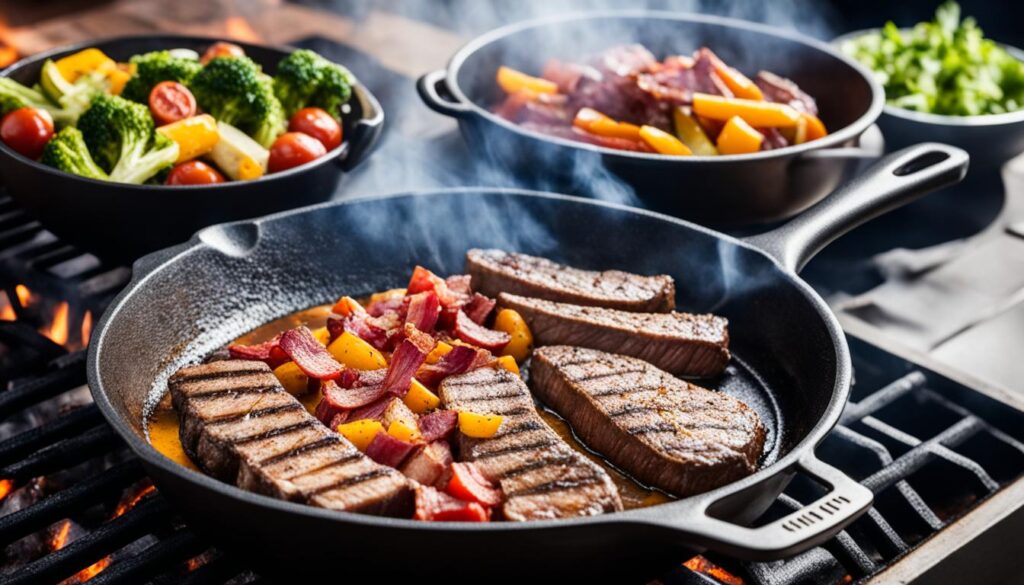
Cast iron skillet. Not even a competition.
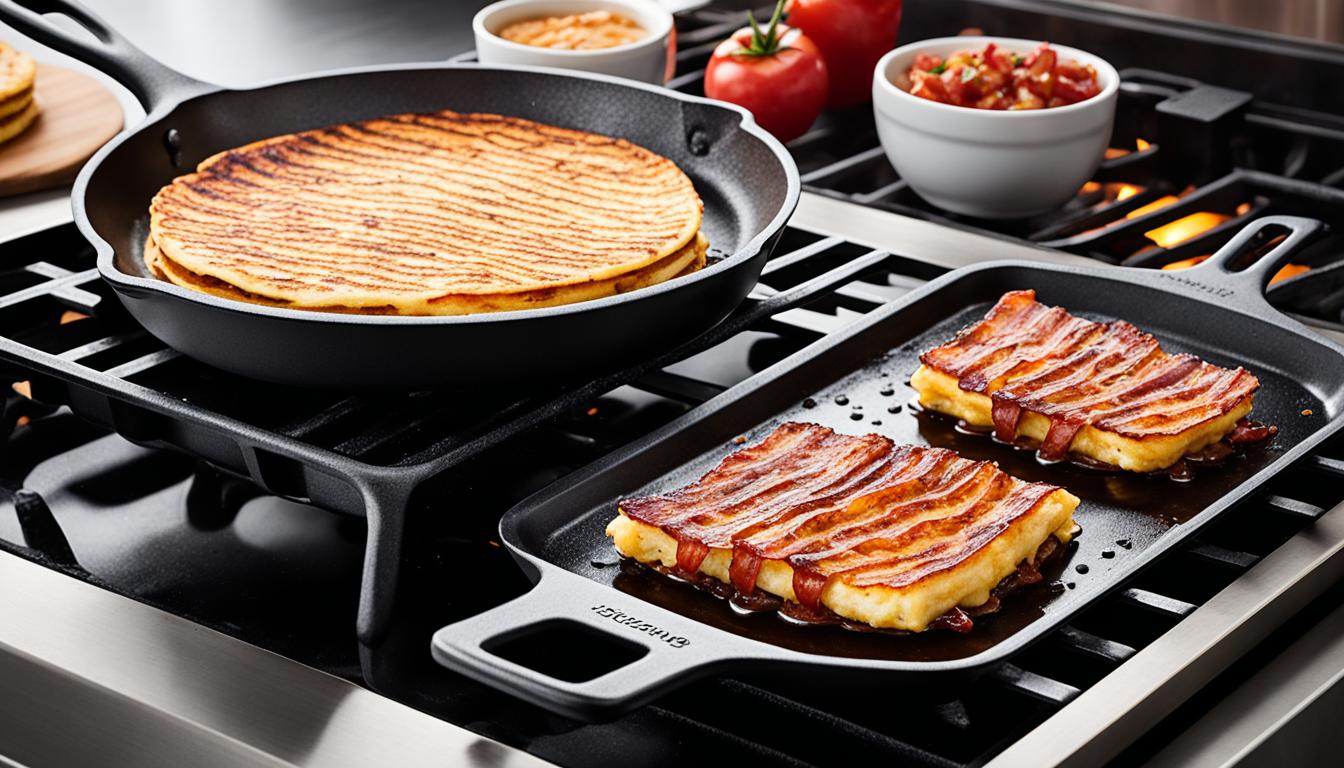
What you can actually cook in a cast iron skillet:
- Seared steaks, chops, fish fillets
- Fried chicken (entire batches)
- Cornbread, skillet cookies, pan pizzas
- Eggs—once the seasoning is dialed in
- Stir-fries
- Pan sauces built directly from drippings
- Roasted vegetables
- Frittatas and shakshuka
- Deep frying when you need it
Grill pans do proteins and thick vegetables well. Asparagus, zucchini, portobello mushrooms, corn on the cob—they all come out great. Beyond that, the use cases drop off quickly.
The pan sauce problem is worth highlighting. Those drippings and fond that collect after searing a steak? In a skillet, you deglaze right there and build something spectacular in under five minutes. In a grill pan, those drippings fall into the ridges and become smoke, not sauce. That’s a real loss if you cook this way regularly.
Maintenance and Seasoning Requirements
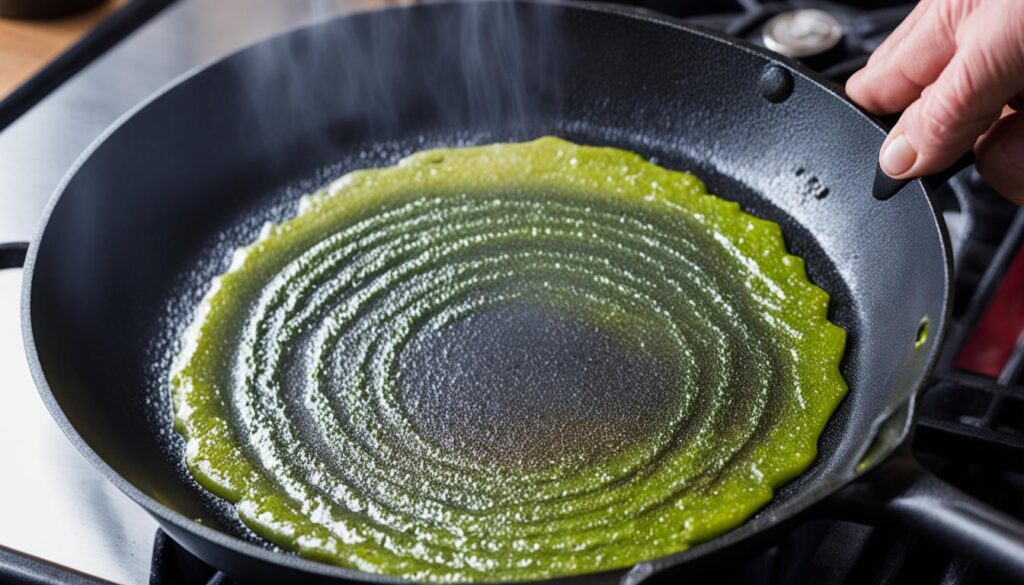
People are far more intimidated by cast iron maintenance than they should be. It’s actually straightforward once the basic rules click.
The core routine:
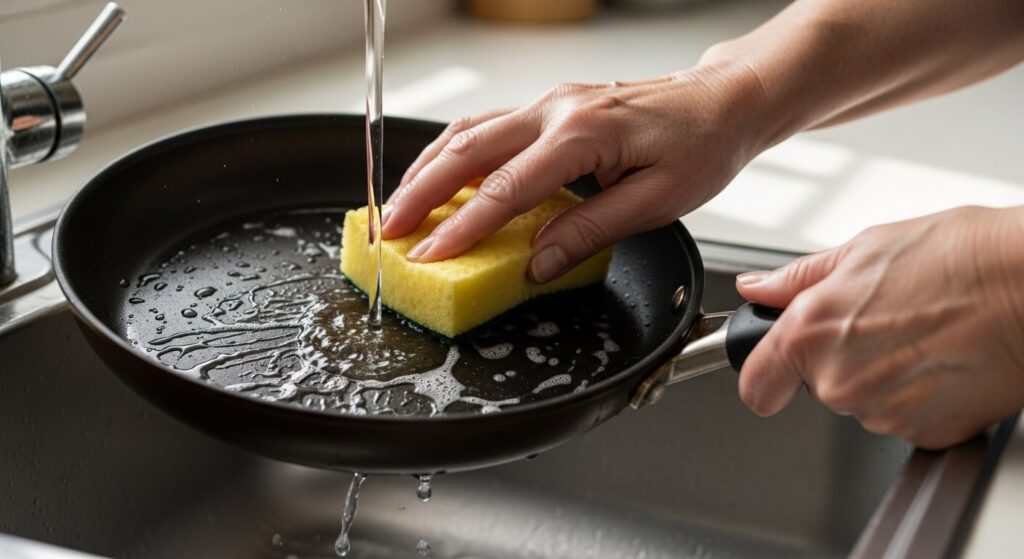
- Clean while the pan is still warm—not blazing hot, not fully cooled
- Light soap occasionally is fine (ignore the people who say never)
- Dry completely and immediately—moisture is the enemy
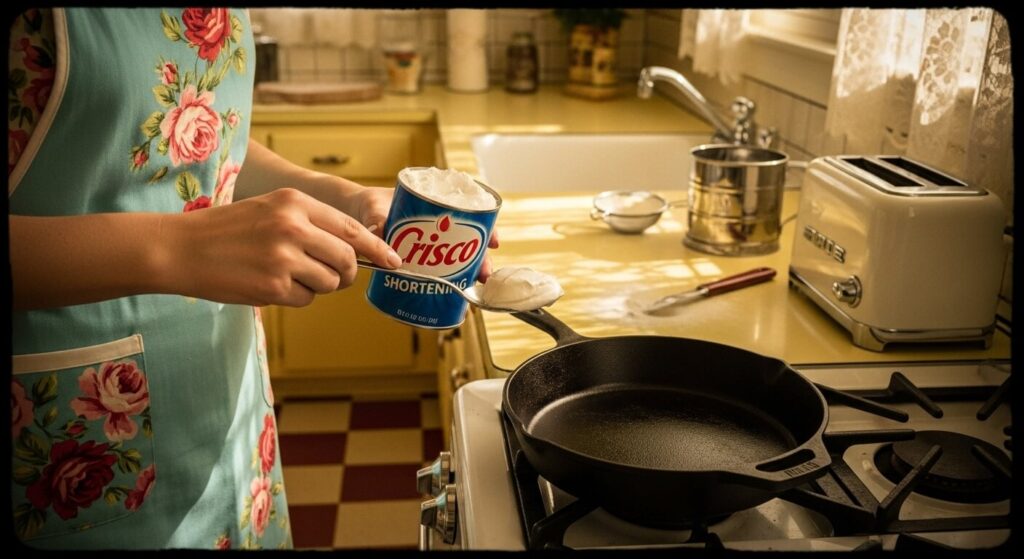
- Wipe a very thin layer of oil over the surface while it’s still warm
- Store somewhere dry
Seasoning is polymerized oil that’s baked into the iron surface over time. It builds up into a slick, naturally non-stick layer. Cook bacon in it. Cook fatty foods. The more you use it, the better it gets. Old cast iron skillets are often better than new ones for exactly this reason.
Check out this seasoning guide if you’re starting from scratch or bringing a rusty pan back to life.
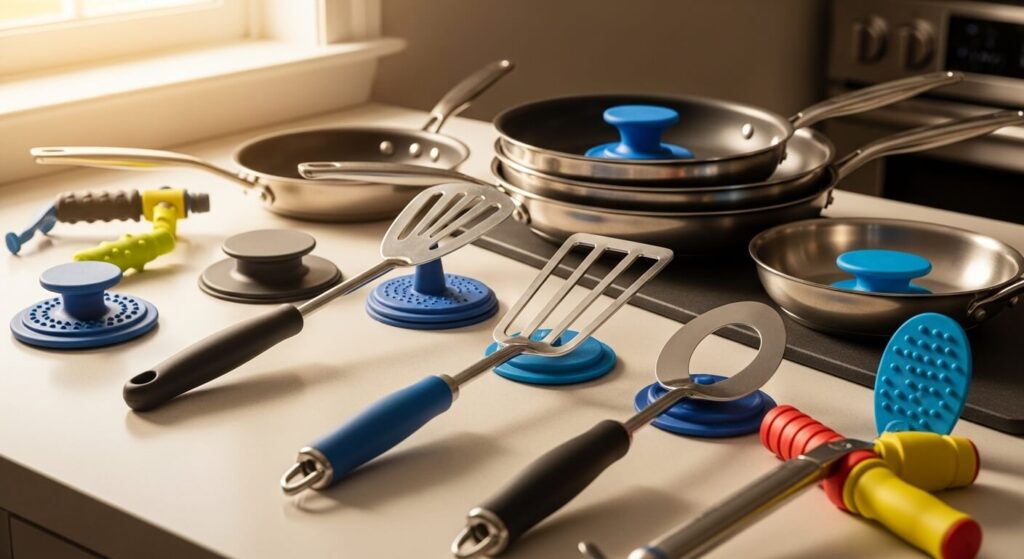
Grill pans follow the same basic care rules—but the ridges make cleaning genuinely annoying. Food bits lodge in the grooves. You need a stiff bristle brush or chainmail scrubber to get them fully clean. Some people skip grill pans entirely just because of the post-dinner cleanup situation. That’s a legitimate reason.
| Maintenance Task | Cast Iron Skillet | Grill Pan |
|---|---|---|
| Daily cleaning | Straightforward | Tedious |
| Re-seasoning | Simple, flat surface | Fiddly around ridges |
| Rust risk | Low with basic care | Same risk level |
| Dishwasher | Hard no | Also hard no |
Health Benefits and Cooking with Less Oil
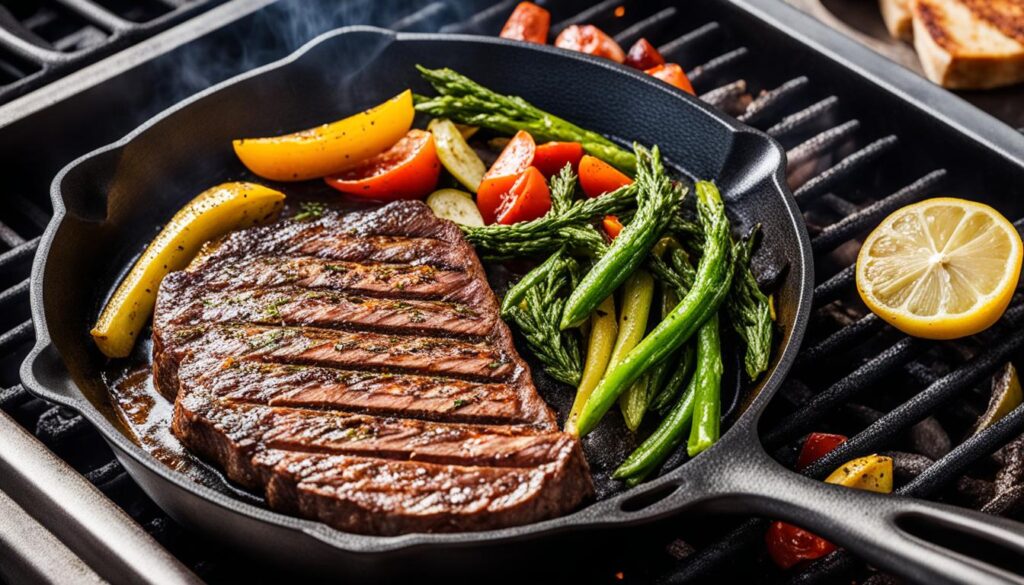
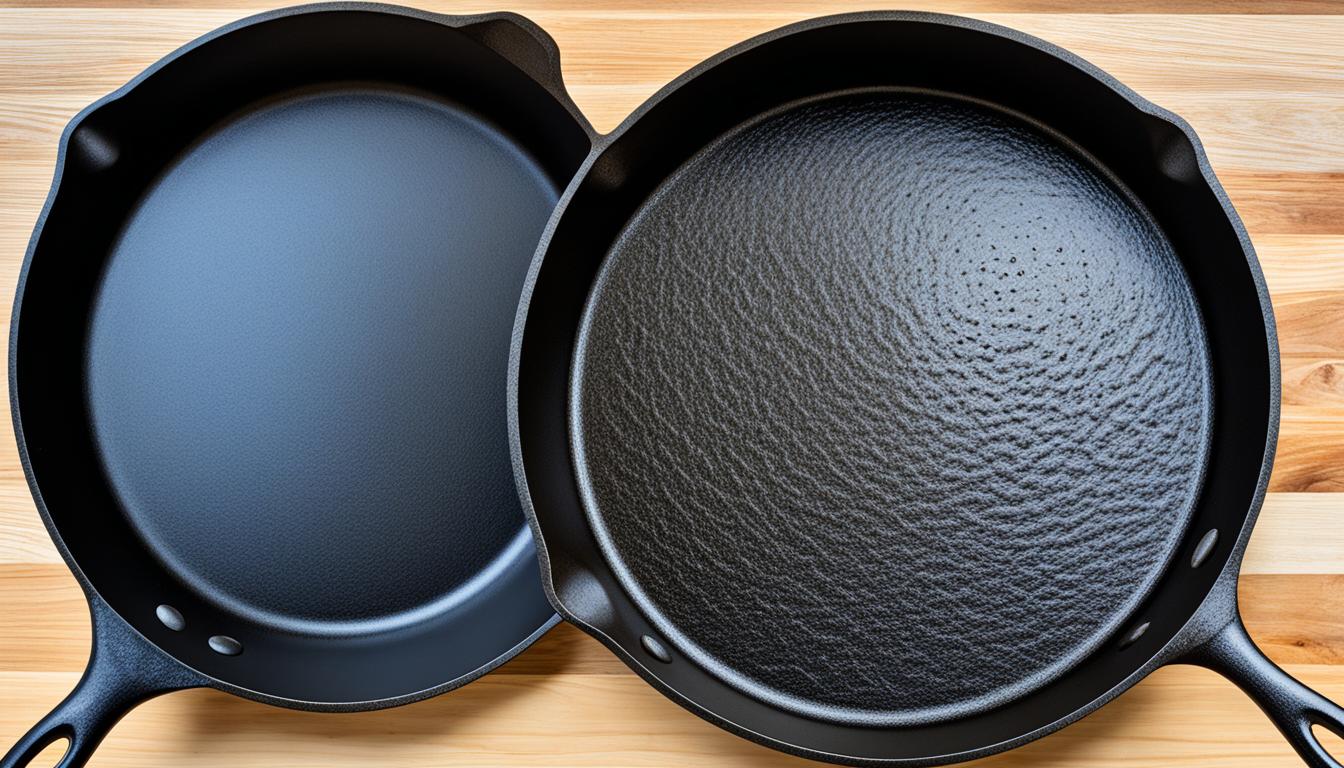
Here’s something most people don’t think about when comparing cookware: cast iron actually transfers trace amounts of dietary iron into your food during cooking. Not massive amounts—but measurable ones, particularly with acidic foods like tomato-based sauces. For anyone dealing with iron deficiency, that’s a real side benefit worth knowing about.
Neither pan requires much oil once properly seasoned. A well-conditioned skillet can cook eggs with just a light wipe of butter. Not bad for a pan that costs $30.
The grill pan does have a specific advantage for lower-fat cooking—fat drains off into the ridges instead of pooling around your food. If you’re cooking chicken thighs or fatty cuts and you’d rather that fat not sit in contact with the food the whole time, the grill pan handles that naturally.
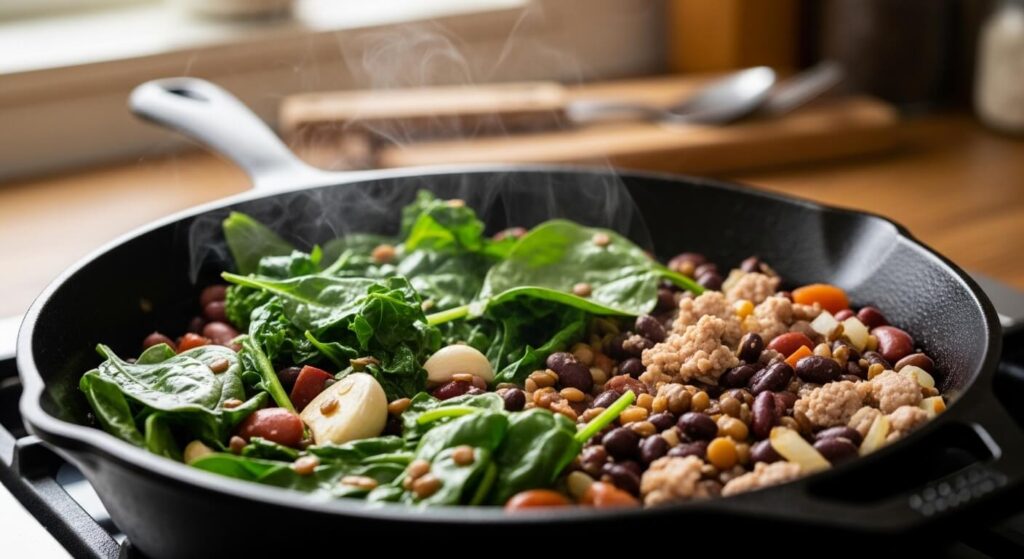
For everyday healthy cooking—something like a Shrimp and Broccoli Stir Fry—a seasoned skillet barely needs any oil at all.
Also worth noting: cast iron doesn’t have synthetic coatings. No PTFE, no PFOA, none of the chemicals associated with non-stick degradation. Just iron and oil. For people who think about what’s touching their food, that matters.
Durability and Longevity Comparison
Cast iron doesn’t wear out. That’s the short version.
Skillets from the 1800s are still in regular use. The iron doesn’t degrade, doesn’t scratch from metal utensils, doesn’t have a coating that eventually chips or flakes. Treat it reasonably well and there’s genuinely no reason it ever needs replacing.
Grill pans—especially cast iron ones—are also very durable. But the ridges introduce a vulnerability that flat pans don’t have. Drop an enameled grill pan at the wrong angle and a ridge can chip. Over time, ridge edges can wear differently than the valleys. It’s not fragile, but it’s not as bombproof as a flat skillet either.
Hard-anodized aluminum grill pans are lighter and work well, but the surface degrades over years of use. Five to ten years before you’re thinking about a replacement is realistic.
Honest lifespan breakdown:
- Cast iron skillet: indefinite with basic care
- Cast iron grill pan: very long life, some ridge vulnerability
- Aluminum grill pan: solid 5–10 years, then replaceable
One rule for both: don’t thermal shock them. A screaming-hot cast iron pan dropped into cold water can crack. Let it cool first. Every time.
Performance on Different Heat Sources
Both cast iron options work across every major heat source—that flexibility is one of cast iron’s defining advantages over most other cookware materials.
Gas — Both perform excellently. Direct flame heats ridges fast. Open a window though, especially with the grill pan.
Electric coil — Works, but takes longer to heat evenly. The coils don’t cover the full pan base, so preheat longer than you think you need to.
Induction — Cast iron is magnetic, so both work. A few grill pans have ridged undersides that reduce contact with the induction element—worth checking before purchasing.
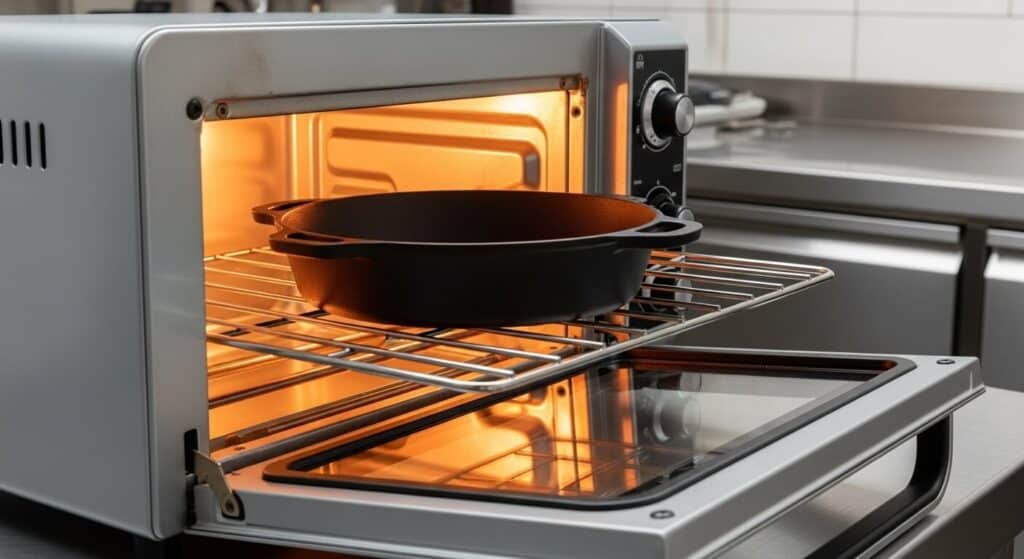
Oven — The skillet is genuinely excellent here. You can sear on the stovetop and finish in the oven without switching pans. Grill pans can handle oven temperatures, but they’re really designed for stovetop use.
Campfire / outdoor cooking — Both handle it fine. The flat skillet is more practical outdoors—stable, versatile, easy to cook multiple things at once.
Smoke is worth addressing directly. Grill pans smoke significantly more than flat skillets. Fat drips onto hot cast iron and burns. At high heat, this happens fast—and a lot. Without solid ventilation, a grill pan session indoors can fill your kitchen in minutes. Turn on the exhaust fan. Open windows. Maybe open a door.
Aesthetic Appeal and Presentation
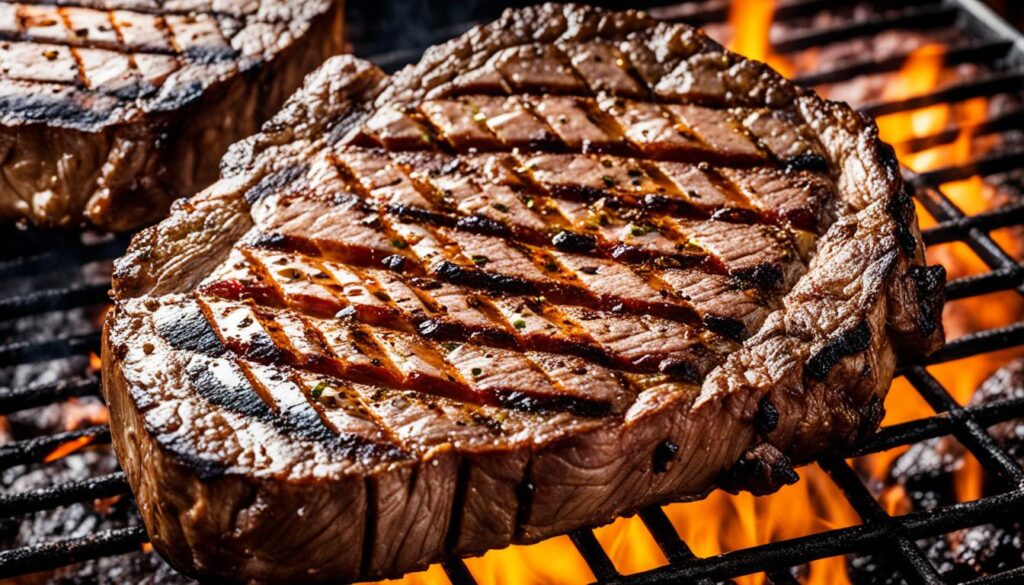
Presentation is part of the meal. Anyone who says otherwise hasn’t noticed that food just tastes better when it looks good.
Grill marks are visually striking in a way that’s hard to replicate. Perfect crosshatch lines on a tuna steak or chicken breast signal something—quality, technique, effort. Restaurants use grill marks for a reason. A grill pan gets you that at home.
The cast iron skillet has its own kind of visual appeal—it’s just different. Bringing a sizzling skillet steak to the table is dramatic in a different way. A round of golden cornbread served straight from a seasoned pan looks rustic and intentional. It’s a different aesthetic—hearty versus precise.
Grill pan = clean, restaurant-grill presentation.
Skillet = honest, home-cooked character.
Both work. Depends on the vibe you’re going for.
Cost Considerations and Value for Money
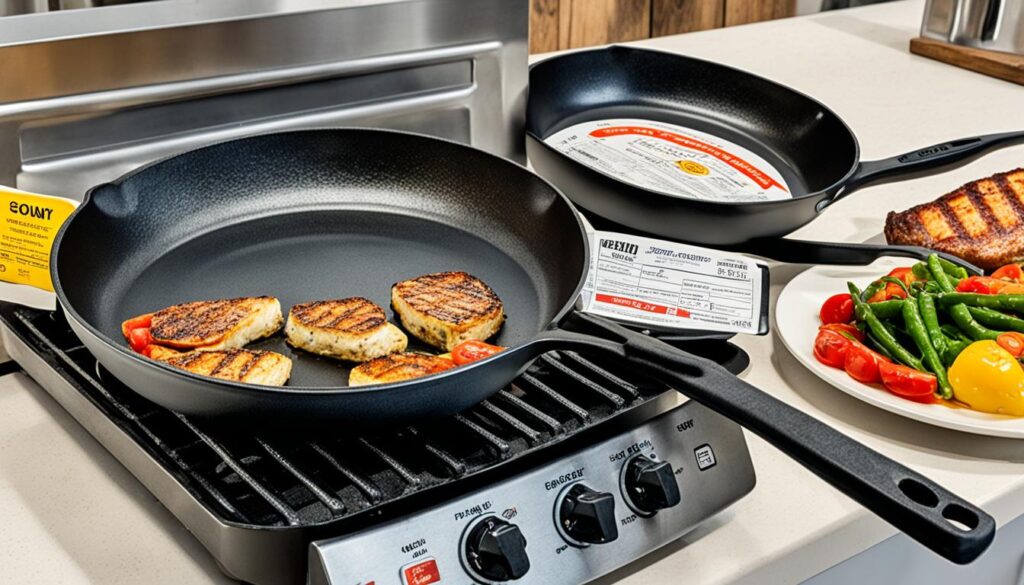
Cast iron is one of the best value propositions in cookware, full stop. A Lodge 12-inch skillet is around $30–$40 and will genuinely outlast you. If you use it for 30 years, you’re spending a dollar a year on your primary cooking surface. Hard to argue with that math.
| Pan Type | Entry Price | Mid-Range | Premium |
|---|---|---|---|
| Cast iron skillet | $25–$40 | $60–$80 | $100–$250+ |
| Cast iron grill pan | $30–$50 | $60–$90 | $100–$180 |
| Aluminum grill pan | $25–$40 | $50–$80 | $80–$120 |
Spending more gets you smoother factory seasoning, better fit and finish, and sometimes significantly lighter weight (Field Company, Stargazer). Those are real improvements. But the Lodge holds its own against pans at five times the price for most cooking purposes—that’s genuinely rare in the cookware world.
Enameled options from Le Creuset or Staub are beautiful and worth it if cookware is something you genuinely care about. Paying $250–$400 for a skillet is hard to justify on function alone, though. That’s more about ownership experience and aesthetics.
If the budget is limited: Lodge skillet, full stop. It’s the standard recommendation because it keeps earning it.
Best Brands and Product Recommendations
Don’t overthink this category. A handful of brands consistently outperform everything else across price points.
Cast Iron Skillets:
- Lodge — American-made, widely available, proven across decades. The 12-inch is the right size for most households. Start here.
- Stargazer — Smoother cooking surface straight from the box than Lodge. Pricier, but a noticeable upgrade if you care about that.
- Field Company — Significantly lighter than traditional cast iron without sacrificing performance. Worth it if weight is a genuine issue.
- Le Creuset — The premium enameled option. Beautiful, low-maintenance, expensive. Long-term investment piece.
Grill Pans:
- Lodge Cast Iron Grill Pan — Same reliability as their skillets. Square shape adds usable surface area.
- Le Creuset Signature Grill Pan — Enameled cast iron, easier cleanup than bare cast iron, premium price tag.
- All-Clad Hard-Anodized Grill Pan — Premium aluminum option with excellent heat distribution and serious durability.
- Cuisinart Chef’s Classic Grill Pan — Solid budget-friendly aluminum option. Lighter, easier to handle, good for everyday use.
For electric cooktop setups, the best ceramic electric skillets roundup covers a different but related category worth knowing about.
Making the Right Choice for Your Kitchen
The answer depends almost entirely on your actual cooking habits—not what you think you might cook someday.
The cast iron skillet makes sense if:
- You cook a wide variety of dishes throughout the week
- You make sauces, do any baking, or finish things in the oven
- You want one pan that handles most situations competently
- Budget matters and you want the best return on investment
- You cook outdoors or camp
The grill pan makes sense if:
- You cook proteins most nights and want them to look grilled
- You live somewhere outdoor grilling isn’t practical year-round
- You already own a good skillet and want to expand your toolkit
- Presentation and visual results matter to your cooking
Get both if:
- You cook frequently enough that the right tool for each job is worth having
- Grill marks matter to you but so does everything else a skillet does
Most home cooks should start with the skillet. It’s more forgiving, handles more situations, and is genuinely easier to maintain day-to-day. The grill pan is a great addition—but it’s an addition, not a replacement.
That distinction is the whole answer, really.