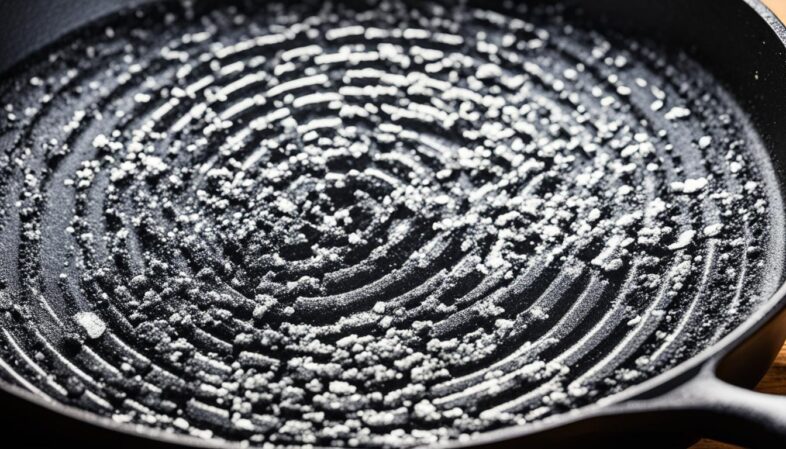
A cast iron skillet is made of iron alloyed with carbon — usually 2–4% carbon — and that specific combination is what gives it the dense, heavy structure and legendary heat retention that’s kept it on stovetops for centuries.
The History of Cast Iron Cookware
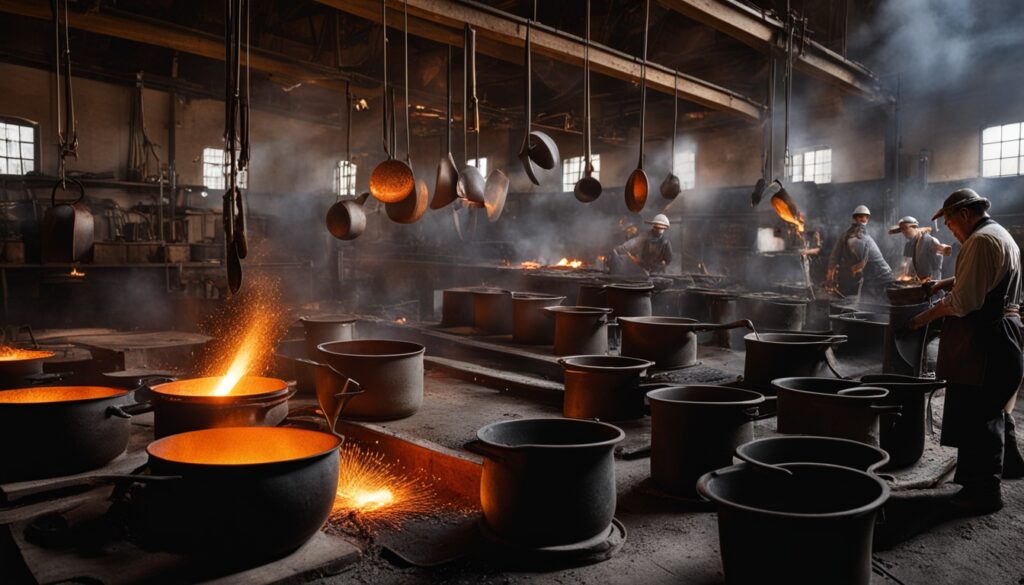
Most people think cast iron is some rustic American frontier thing. It’s not. Not even close.
The Chinese were casting iron pots in the 5th century BC. Europe didn’t catch on until the 14th or 15th century, when heavy three-legged pots called “spiders” became standard hearth cookware. Bulky. Functional. Built to last.
The Industrial Revolution changed everything. Foundries in England and the U.S. started churning out flat-bottomed skillets designed for wood-burning stoves. Griswold and Wagner emerged in the late 1800s as the dominant American brands — their skillets were lighter, machined smoother, and better finished than anything that came before. If you find one at an estate sale, buy it. Collectors pay serious money for good vintage pieces.
Then aluminum nonstick pans arrived and cast iron fell out of fashion for a few decades. Seemed like it might fade out entirely. It didn’t.
The comeback has been real. Lodge — founded in 1896 — still leads the American market. Premium brands like Finex, Field Company, and Stargazer have entered with machined, smoother-finished options that split the difference between vintage quality and modern manufacturing. Cast iron isn’t going anywhere.
If you’re looking to put a well-seasoned skillet to work, this Chinese Chicken Cabbage Stir Fry is a solid starting point — high heat, fast cook, cast iron at its best.
What Is a Cast Iron Skillet Made Of? – Composition of Cast Iron Skillets
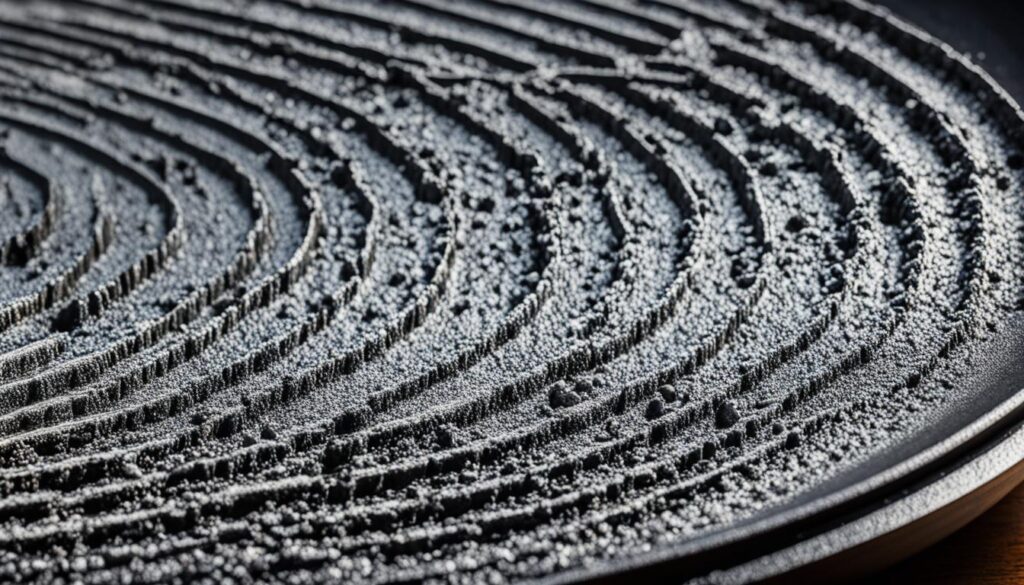
Cast iron is an iron-carbon alloy. That’s the short answer. But the exact composition determines how the pan behaves, how it seasons, and how long it lasts.
Here’s what’s actually in that skillet:
| Element | Typical Content | Why It Matters |
|---|---|---|
| Iron (Fe) | 95–98% | Base metal, provides structure and density |
| Carbon (C) | 2–4% | Lowers melting point, makes casting possible |
| Silicon (Si) | 1–3% | Controls carbon distribution, affects hardness |
| Manganese (Mn) | 0.5–1% | Reduces brittleness, improves toughness |
| Sulfur & Phosphorus | Trace amounts | Smelting byproducts — kept as low as possible |
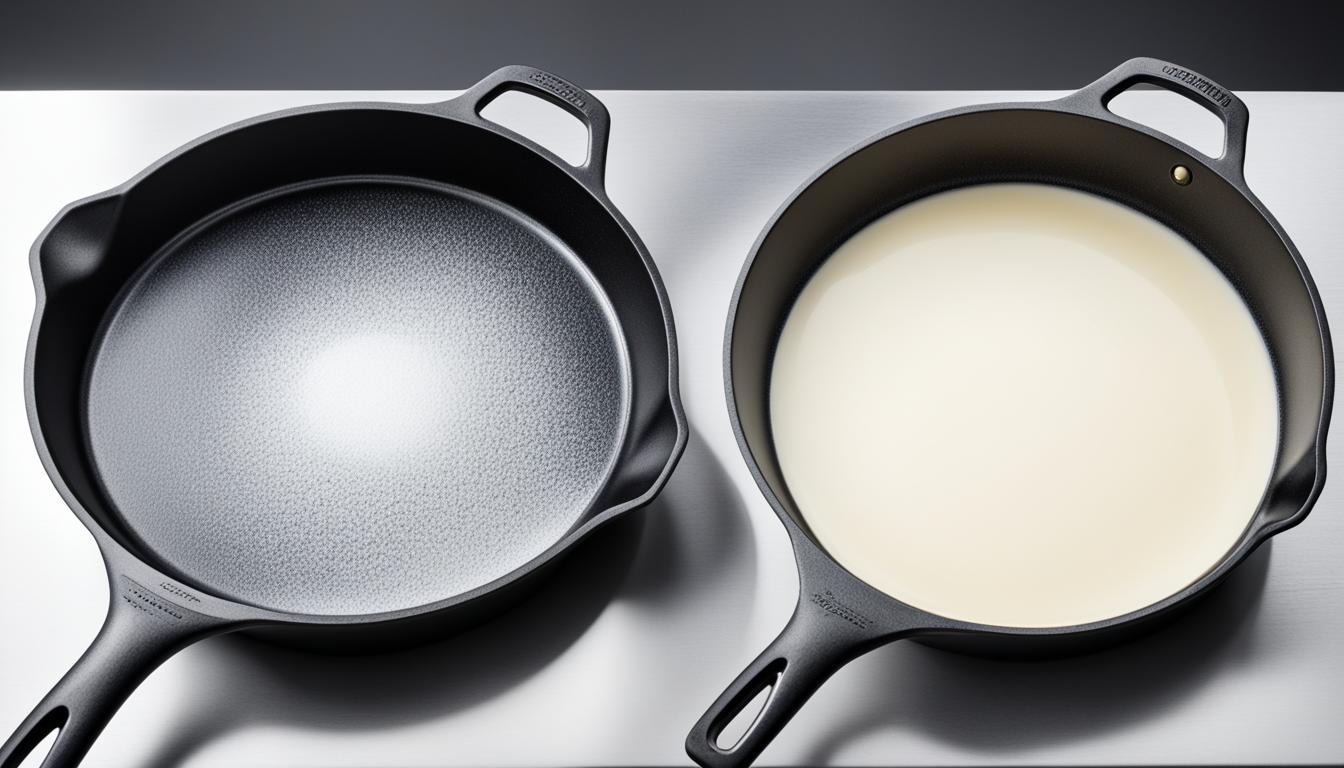
The carbon content is the defining characteristic. Steel has under 2% carbon. Cast iron sits at 2–4%. That difference might sound minor — it’s not. Higher carbon lowers the melting point (critical for pouring into molds), increases hardness, and creates a graphite microstructure distributed throughout the iron matrix.
Those graphite flakes matter more than most people realize. The surface of cast iron is microscopically porous, and those pores are what allow polymerized oils to bond during seasoning. That’s the actual science behind why a well-used cast iron pan develops such a good cooking surface over years of use.
One honest caveat: cast iron is brittle. Unlike steel, it doesn’t flex — it fractures. Thermal shock (cold water into a screaming hot pan) is one way to crack it. Dropping it on concrete is another. Neither happens often, but it’s worth knowing.
Before that seasoning can do its job, you need to build it properly — check out the Best Ways to Season a Cast Iron Skillet for a full breakdown of what actually works.
How Are Cast Iron Skillets Manufactured?
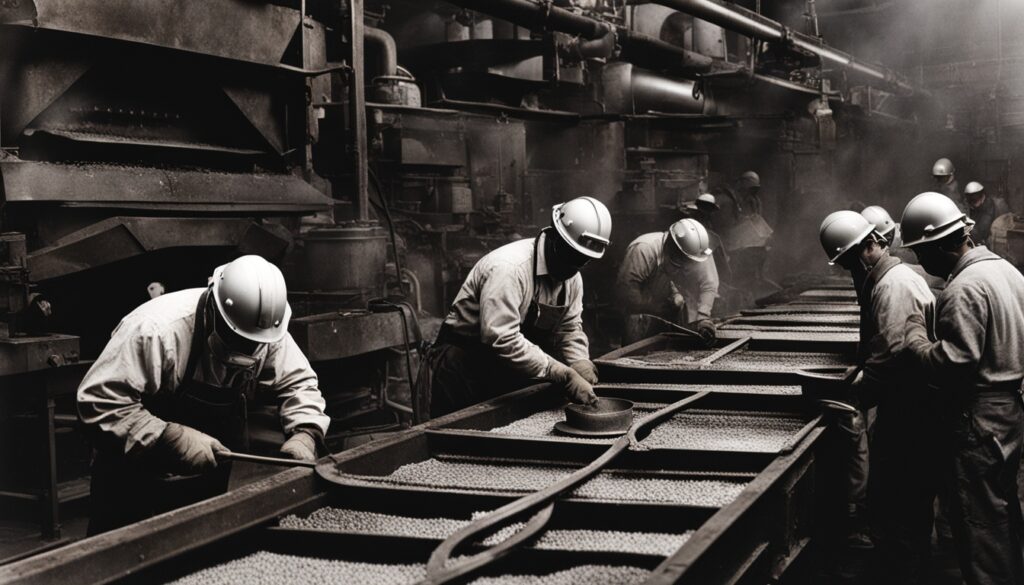
The core manufacturing method hasn’t changed much in centuries. Sand casting. It works, it scales, and it produces a durable result.
Sand Casting: How It Actually Works
- Pattern creation — A template of the skillet shape gets pressed into densely packed sand, forming a negative mold cavity
- Mold assembly — Two sand mold halves are joined together
- Melting — Raw iron (pig iron, scrap iron, or a blend) melts in a furnace at roughly 2,600–2,800°F
- Pouring — Molten iron pours into the sand mold and cools
- Shakeout — The sand mold breaks apart after solidification — each mold is single-use
- Cleaning — Excess metal from pour channels gets ground off, surface debris removed
- Finishing — The pan gets its final treatment: bare seasoning or enamel coating
The Smooth vs. Rough Surface Question
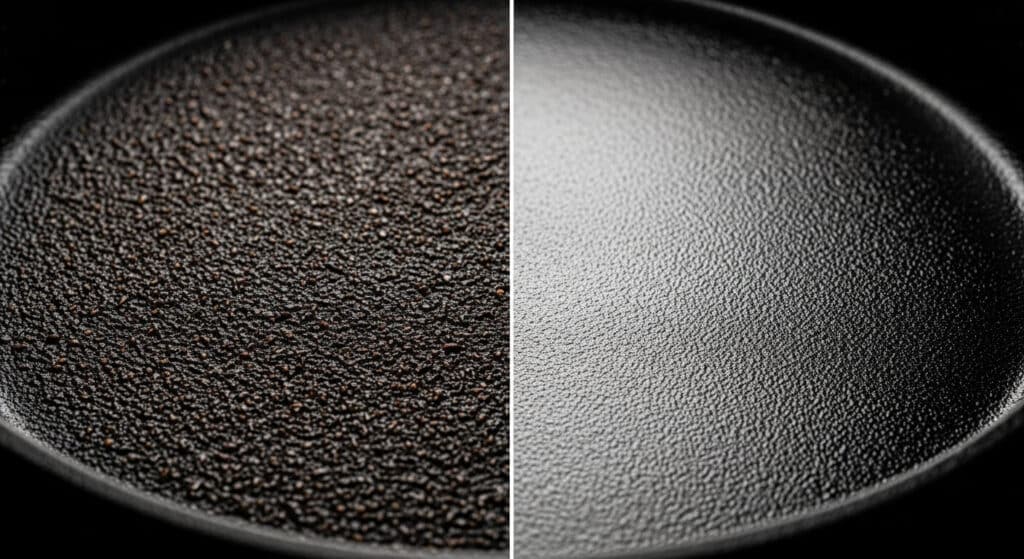
Here’s something most buyers don’t know going in: pre-1950s American cast iron (Griswold, Wagner) was machined smooth after casting. That extra polishing step produced a nearly glass-like cooking surface.
Modern budget skillets skip it. The result is that familiar pebbly, rough texture you’ll notice on a new Lodge. It’s not a defect — it works fine and smooths out with enough use and cooking — but it’s not the same as a machined finish.
Field Company and Stargazer have brought back machined surfaces if that matters to you. Worth the premium for some people. Not worth it for others.
What Separates Good Casting from Bad
- Consistent wall thickness — Uneven walls create hot spots
- Low surface porosity — Too porous and oil won’t bond correctly during seasoning
- Uniform carbon distribution — Affects both cooking performance and long-term durability
Unique Properties of Cast Iron Cookware
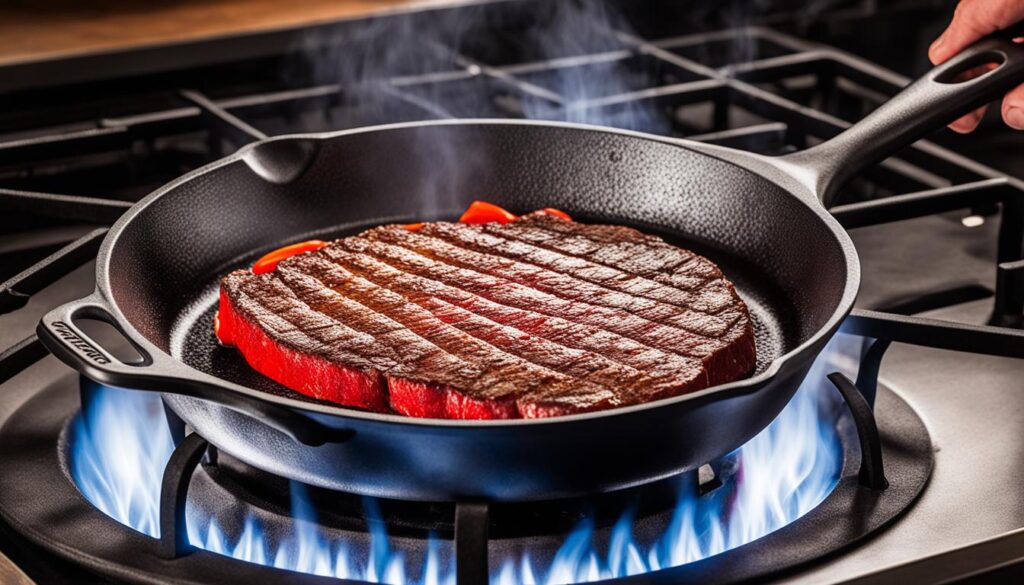
Cast iron behaves differently from every other common cookware material. Understanding those differences makes you a better cook with it.
Heat Retention vs. Heat Conductivity — Not the Same Thing
This is where people get confused. Cast iron retains heat brilliantly. It conducts heat poorly. Both are true at the same time.
All that mass — a 12-inch Lodge weighs roughly 8 pounds — stores enormous thermal energy. Lay a cold steak into a properly preheated cast iron pan and the surface temperature barely drops. Do the same in a thin aluminum pan and you lose heat immediately. That’s why you get a gray, steamed result instead of a hard brown crust.
But iron is a genuinely poor conductor compared to copper or aluminum. Heat spreads slowly from the center outward. The spot directly over your burner will be much hotter than the edges — especially early in the preheat. This is why people complain about hot spots. It’s not a defect. It’s physics.
The fix: preheat for 5–10 minutes on medium before increasing heat. Or use the oven, where heat surrounds the pan from all sides equally.
Other Properties That Actually Matter in the Kitchen
- Thermal mass — Temperature holds steady even after adding cold food repeatedly
- High heat tolerance — Handles 500°F+ oven temperatures, broiler use, and open flame without issue
- Reactivity — Bare cast iron reacts with acidic foods: tomatoes, citrus, wine. Seasoning helps, but it’s not a perfect barrier
- Induction compatible — Cast iron is ferromagnetic and works on induction cooktops without any special configuration
- Weight — Not ideal for people with wrist issues or anyone who needs to toss food in the pan
Benefits of Cooking with Cast Iron
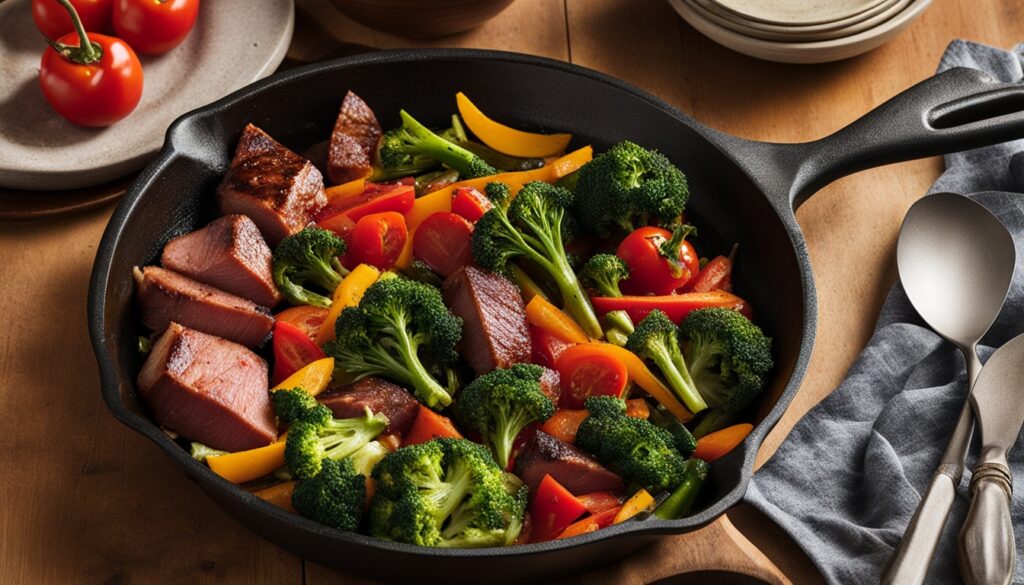
The case for cast iron isn’t complicated. It just does a few things exceptionally well.
Searing That’s Hard to Beat
High heat tolerance plus thermal mass equals a hard, consistent sear. Steaks, pork chops, chicken thighs, duck breasts — anything you want properly browned benefits from cast iron in a way that most other pans genuinely can’t match.
It Goes Everywhere
One pan, serious range:
- Start a frittata on the stovetop, finish it in the oven
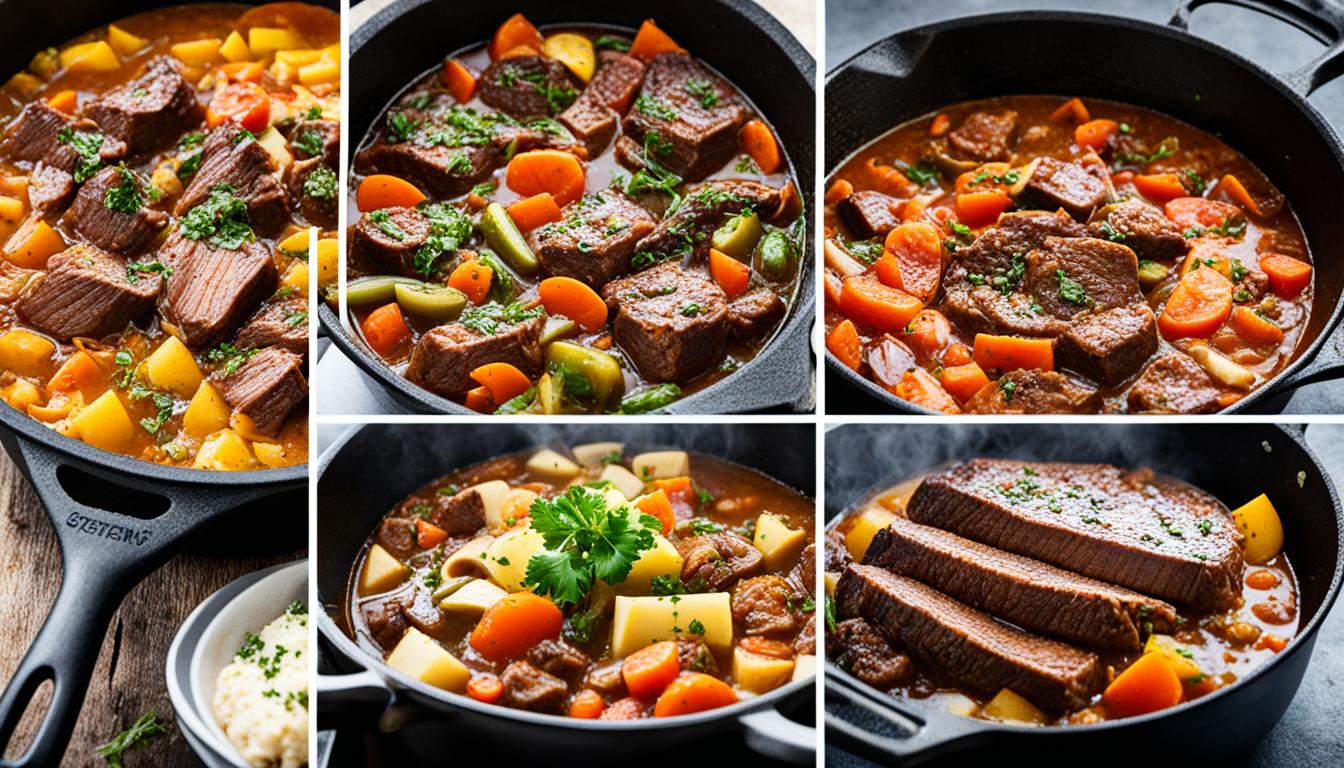
- Sear a roast, braise it in the same pan, serve straight from it
- Bake cornbread with a crackling crust the oven can’t produce in a regular baking pan
- Use it as a makeshift pizza stone
- Cook over an open campfire without a second thought
The Improvement Factor
This is the part that surprises people. Cast iron gets better the more you use it. Every cook adds to the seasoning layer. A 20-year-old skillet that’s been used consistently cooks better than a brand new one — that’s basically the opposite of how nonstick pans work, and it’s one of the main reasons people become genuinely attached to their cast iron.
Durability
Cast iron doesn’t warp. It doesn’t scratch in a way that renders it unsafe. It doesn’t have a coating that degrades with use. Short of an actual crack, a cast iron skillet is effectively indestructible with basic maintenance. Finding a fully functional 80-year-old Griswold at a flea market isn’t unusual.
Iron Leaching
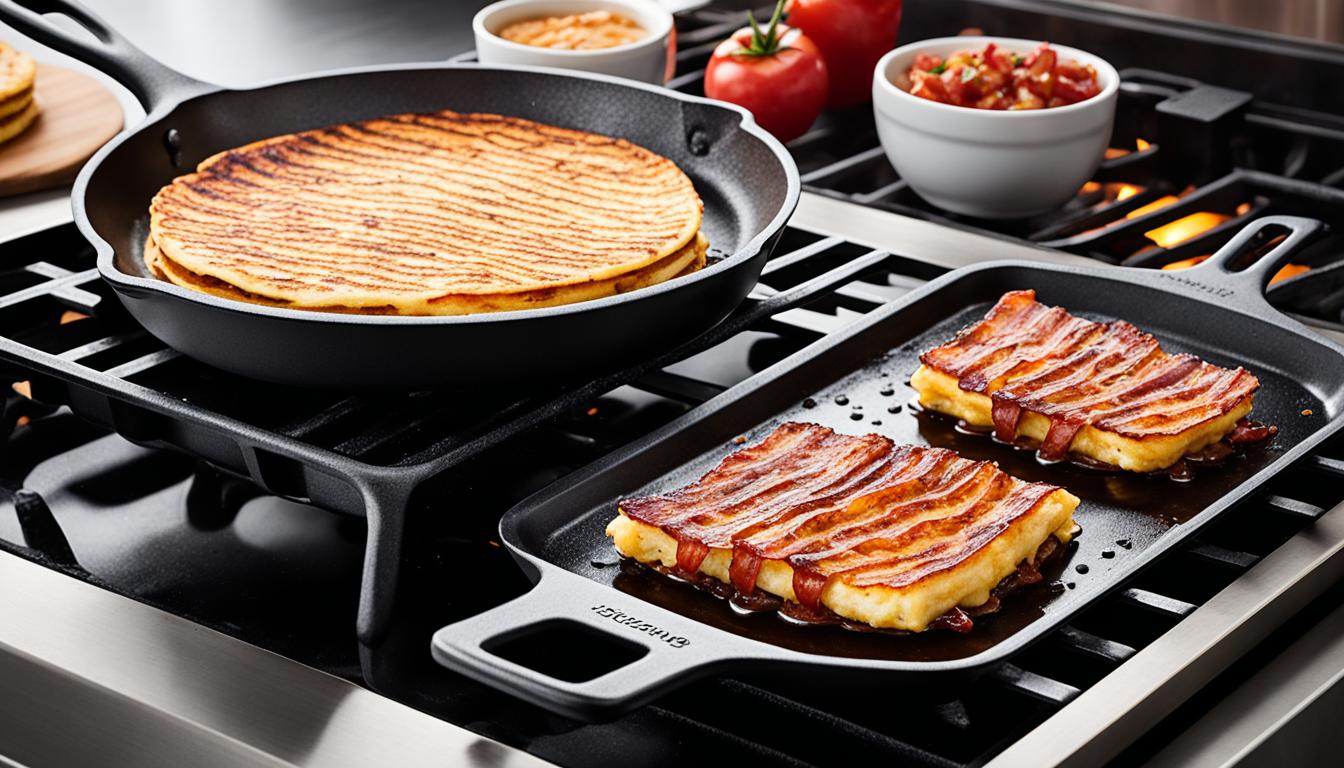
Small amounts of dietary iron transfer into food cooked in bare cast iron — more so with acidic foods and longer cook times. For most people, that’s a minor benefit. If you have hemochromatosis or any iron metabolism disorder, it’s worth discussing with a doctor.
How to Season a Cast Iron Skillet
Seasoning is polymerized oil. That’s the whole concept. Thin layers of oil baked onto the iron surface until they cure into a hard, semi-nonstick coating. Nothing mystical about it.
The Process, Step by Step
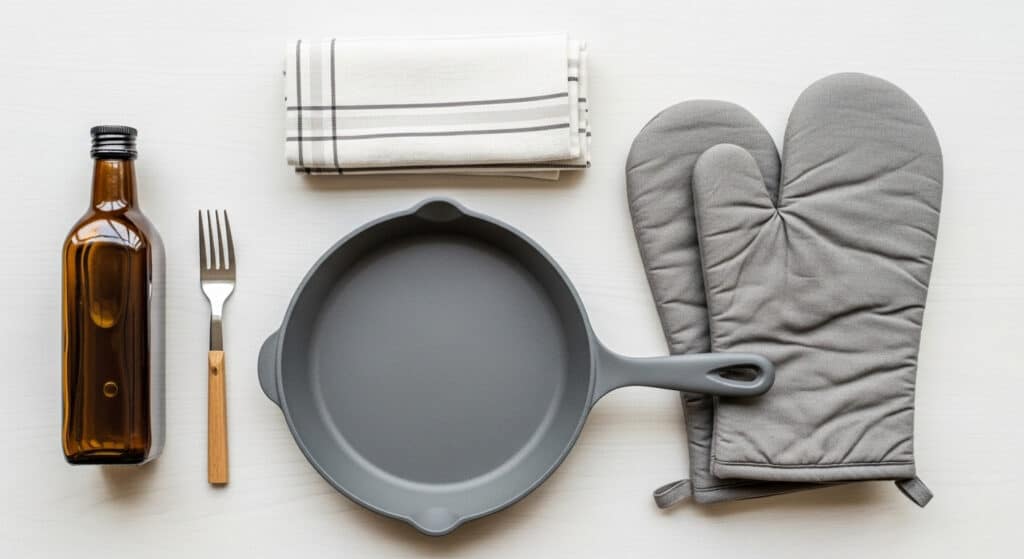
- Wash the pan with soap and water, dry it completely (soap is fine here)
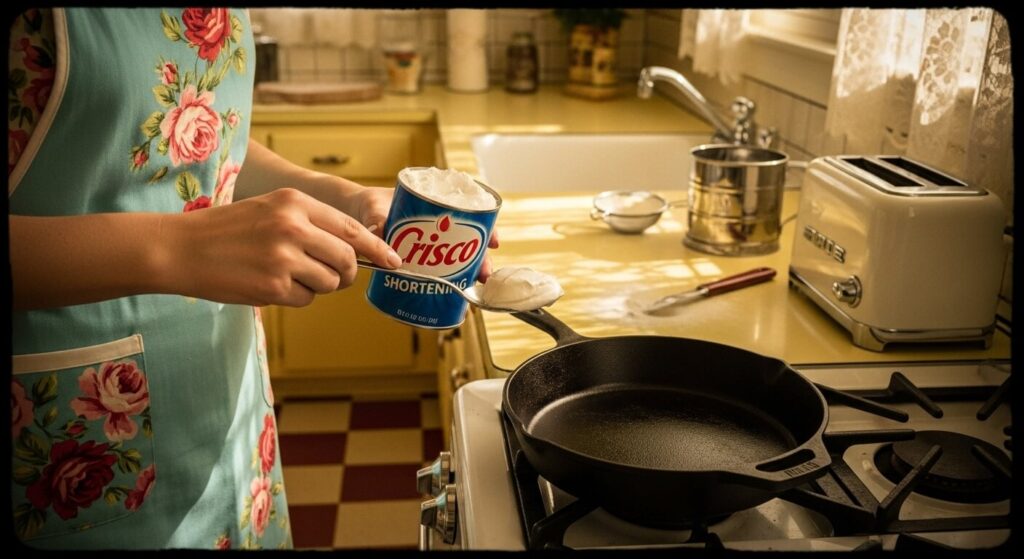
- Apply a very thin oil coat — flaxseed oil, Crisco, or refined coconut oil all work well. Wipe on, then wipe almost all of it back off. Thinner than feels right
- Bake upside down at 450–500°F for one hour, with foil on the rack below to catch drips
- Cool completely in the oven with the door cracked
- Repeat 3–6 times to build a solid base
What Works, What Doesn’t
Worth using:
- Crisco or vegetable shortening — reliable, consistent, forgiving
- Flaxseed oil — excellent polymerization (some people find it flakes eventually, but it’s widely used)
- Cooking bacon, fatty meats, and fried foods regularly — honestly the best seasoning method there is
Skip these:
- Olive oil — smoke point too low, goes rancid in the pores
- Butter — same issue
- Thick oil application — pooled oil turns sticky and gummy, not hard
The Best Ways to Season a Cast Iron Skillet goes deeper on oil choices and recovery seasoning if you’re dealing with a stripped or rusty pan.
Enameled vs. Bare Cast Iron
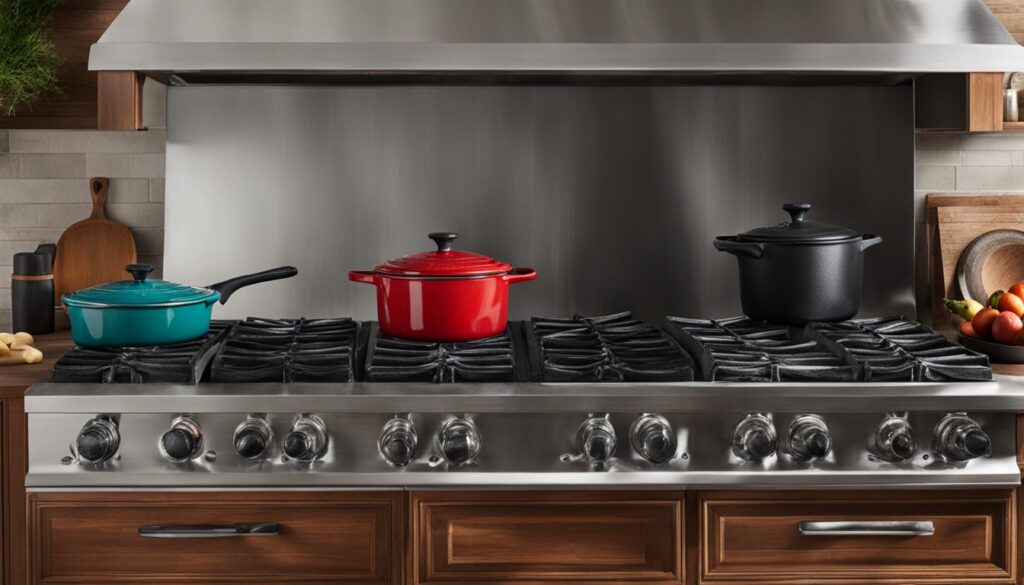
Same base material underneath. Very different experience on top.
| Feature | Bare Cast Iron | Enameled Cast Iron |
|---|---|---|
| Seasoning required | Yes | No |
| Acidic food safe | Partially — can strip seasoning | Fully safe |
| Rust risk | Yes, without maintenance | No |
| Price | Budget to mid-range | Mid to high (Le Creuset, Staub run $200–$400+) |
| Heat tolerance | Very high — campfire safe | High, but check manufacturer specs |
| Longevity | Decades with basic care | Decades, but enamel chips |
| Dishwasher safe | No | Technically yes, though hand washing is better |
Bare Cast Iron — The Right Fit If:
You cook a lot of high-heat proteins. You want a pan that develops a nonstick surface over time. You’re cooking over open flame or at temperatures that would stress an enamel coating. You don’t mind a bit of ongoing maintenance.
Enameled Cast Iron — The Right Fit If:
You’re doing braises, stews, soups, and long-simmered tomato sauces. You want zero maintenance. You’d rather not think about seasoning. Le Creuset and Staub are the benchmarks — the price is real, but so is the quality. Lodge makes a budget enameled option that punches well above its price point.
The main enameled drawback: chipping. Drop an enameled Dutch oven at the wrong angle and you can chip the interior coating. That’s not a recoverable problem the way surface rust on bare cast iron is. Once the enamel is chipped through to bare iron, you’ve got a pan that’s harder to use safely with acidic foods.
Health Considerations of Cast Iron Cooking
A few things worth addressing directly — some are real considerations, some are overblown.
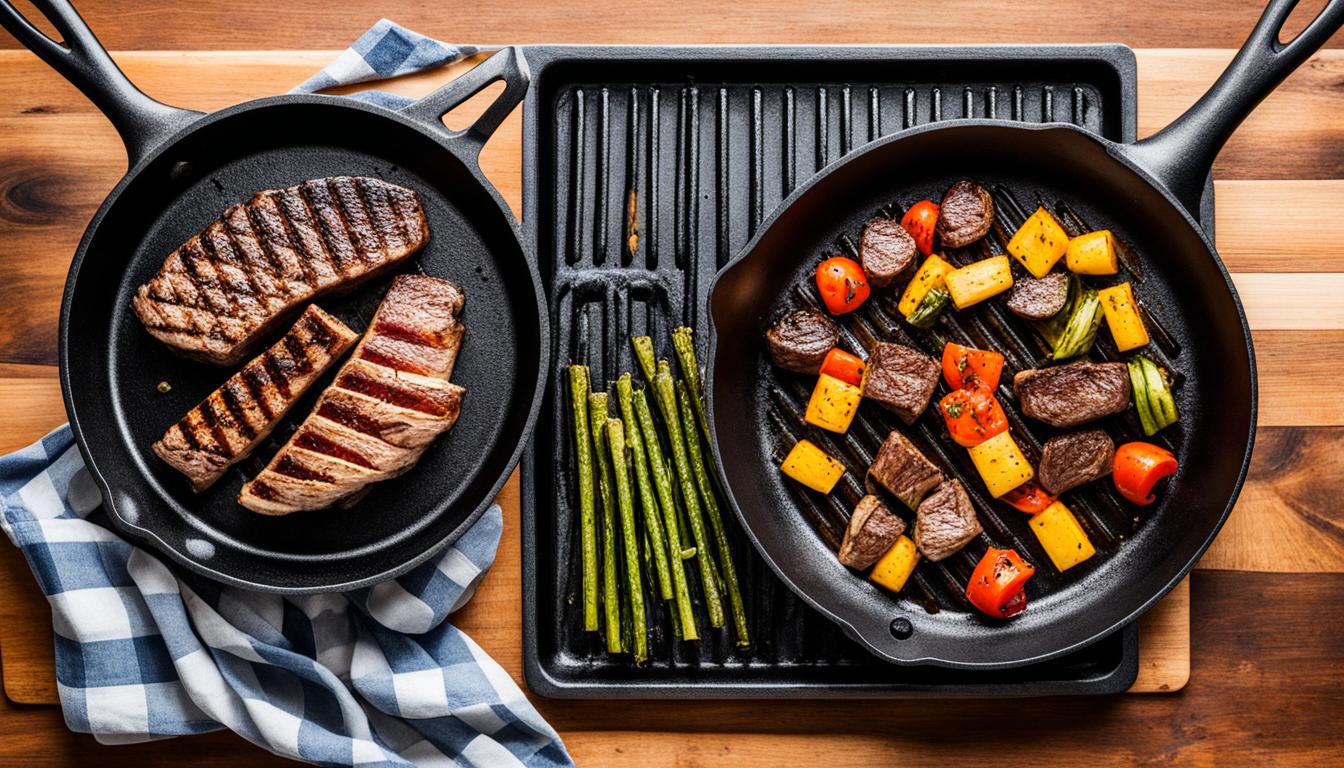
Iron leaching — Documented and real. Acidic foods (tomatoes, wine-based sauces) cooked for longer periods in cast iron absorb measurably more iron than the same foods cooked in stainless. For most people, this is neutral to mildly positive. For people with iron overload conditions, it’s worth being aware of.
No synthetic coatings — Bare cast iron contains no PTFE, no PFOA, none of the synthetic nonstick chemistry that raises health questions at high temperatures. That’s a genuine advantage over traditional nonstick pans, especially for high-heat cooking.
Seasoning smoke — When seasoning or re-seasoning at high temperatures, the pan will smoke. That’s normal. Not harmful in a ventilated kitchen. Open a window, run the exhaust fan, and it’s fine.
The soap myth — Modern dish soap will not destroy cast iron seasoning. The old concern was about lye-based soaps that actually stripped iron. Standard dish soap doesn’t work that way. A quick wash, thorough dry, light oil wipe — that’s a perfectly fine cleaning routine.
Caring for Your Cast Iron Skillet
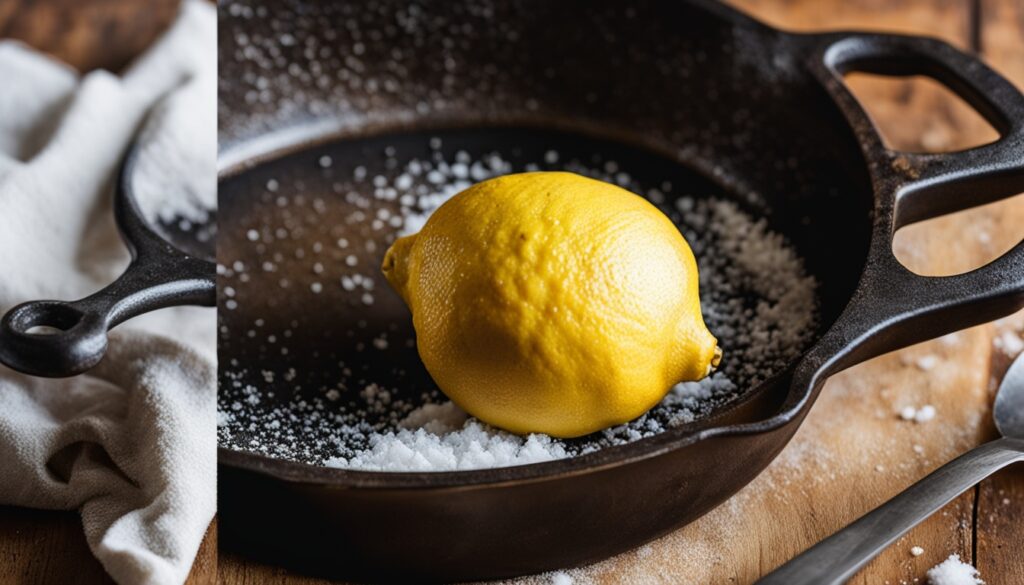
The maintenance routine for cast iron is genuinely simple. A few habits matter a lot. Most of the worry people have about it is unnecessary.
After Every Cook
- Rinse while the pan is still warm — Food releases more easily, cleanup is faster
- Use a stiff brush or chain mail scrubber — Both are effective; avoid steel wool on a well-built seasoning
- Dry immediately and completely — This isn’t optional. Cast iron can start surface rusting within hours of being left wet
- Wipe with a thin oil coat — Just a light pass on the cooking surface after drying; it takes 30 seconds and keeps the seasoning in good shape
Hard Nos
- Soaking in water — Rust forms fast. Don’t leave it sitting in water for any length of time
- Dishwasher — Strips seasoning, invites rust, shortens the pan’s life considerably
- Thermal shock — Pouring cold liquid into a very hot pan. Cracking is uncommon but it does happen
- Leaving wet overnight — Even on a humid day, surface rust can develop quickly on exposed iron
Rust Isn’t the End
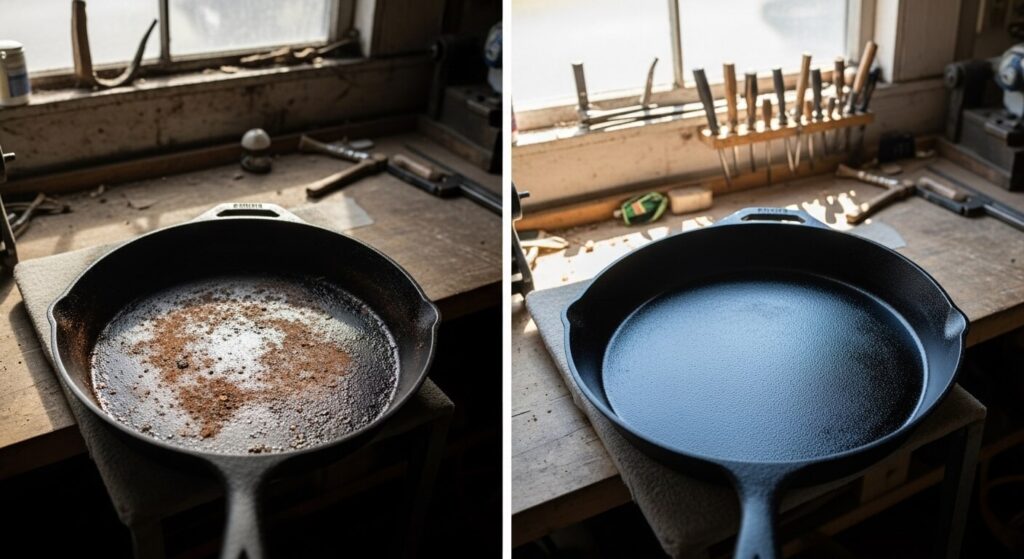
Surface rust looks alarming. It isn’t. Scrub it off with steel wool and a little dish soap, rinse, dry completely, and re-season. The whole process takes about 30 minutes. Even heavily rusted pans rescued from garage sales can be fully restored.
The one unrecoverable problem: a crack. Cracked cast iron can’t be safely repaired for cooking use. If it’s cracked through, it’s done.
Best Recipes to Cook in a Cast Iron Skillet
Cast iron performs best with specific cooking techniques. Here’s where it stands out from other cookware.
Proteins and High-Heat Cooking
Steaks — The definitive cast iron application. Preheat for 8–10 minutes, get it screaming hot, dry-brined steak, no moving it for 3–4 minutes per side. The crust development is hard to replicate in anything else.
Chicken thighs — Start skin-side down in a warm pan, let the fat render slowly before flipping. Finish in the oven. The skin comes out properly crisp.
Pork chops — Same approach as steak. Hard sear, oven finish, rest before cutting.
Baked Goods
This surprises a lot of people. Cast iron is exceptional for baking.
- Cornbread — Preheat the greased skillet in the oven so batter hits a hot surface immediately. The bottom and sides get a crust that a standard baking pan can’t produce
- Skillet cookie — One giant chocolate chip cookie baked directly in the pan. Crisp edges, soft center
- Focaccia — Crispy bottom, airy interior, very little work involved
One-Pan Meals and Braises
Sear the meat, deglaze, add braising liquid, cover, and finish in the oven — all in the same pan. Less cleanup and better flavor development from the fond built during searing.
For a dish that puts all of that to work, the Cast Iron Skillet Chicago Deep Dish Pizza is worth trying — cast iron’s heat retention gives the crust a crunch that’s genuinely hard to achieve otherwise.
High-heat stir fries are another strong application. The Chinese Chicken Cabbage Stir Fry and the Shrimp and Dumpling Stir Fry both benefit from the kind of sustained high heat that cast iron holds better than most pans.