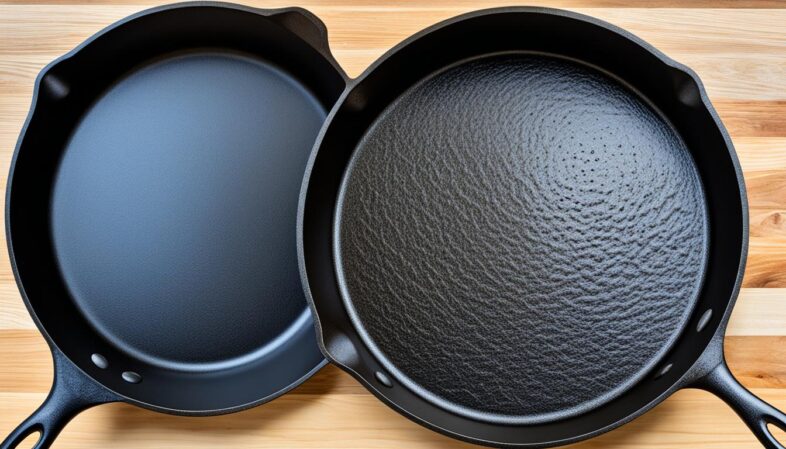
Cast iron wins on longevity and versatility. Teflon wins on convenience. Depending on how your kitchen actually runs, one is going to fit your life significantly better than the other — and that’s what this whole comparison is really about.
The Basics of This Kitchen Cookware Showdown
Here’s the short version: cast iron and Teflon (non-stick) are the two most popular pan materials in home kitchens, and they couldn’t be more different in how they work, what they demand from you, and how long they last.
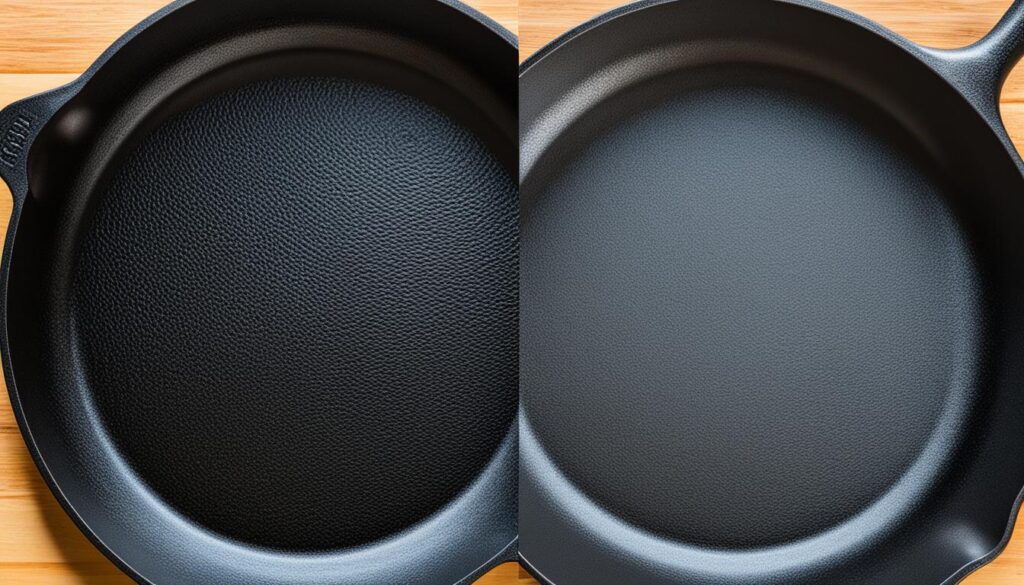
| Feature | Cast Iron | Teflon (Non-Stick) |
|---|---|---|
| Material | Iron alloy, usually pre-seasoned | Aluminum or steel base + PTFE coating |
| Non-stick out of the box? | Not really — needs seasoning first | Yes, immediately |
| Oven-safe? | Completely — any temperature | Usually up to 400–500°F |
| Weight | Heavy (5–12 lbs typical) | Light (2–4 lbs typical) |
| Lifespan | Decades, potentially forever | 3–5 years average |
People get tribal about this. “Cast iron only!” Or the opposite — “Non-stick is just easier, stop making cooking hard.” Both camps have a point, and both miss something.
The Basics of Non-Stick and Cast Iron Cookware
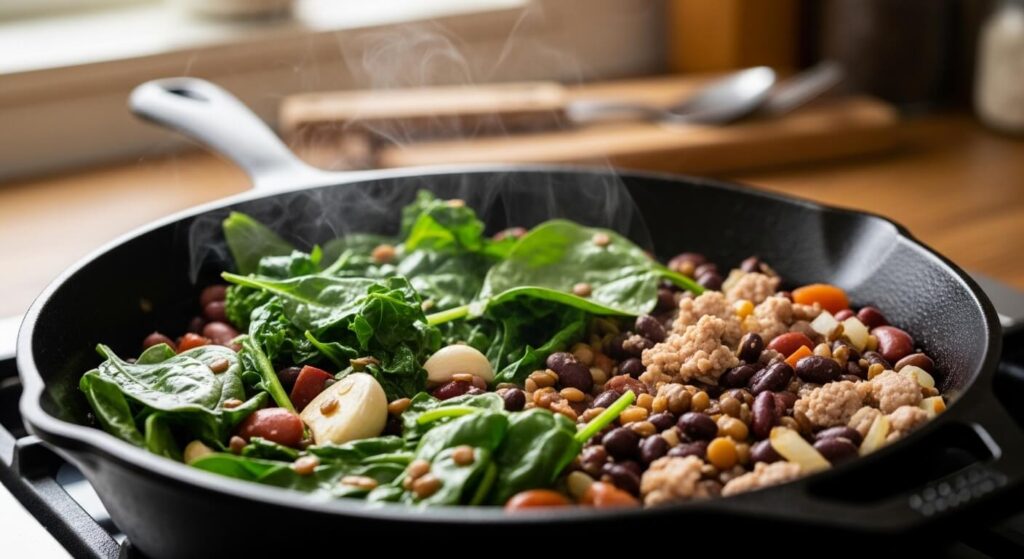
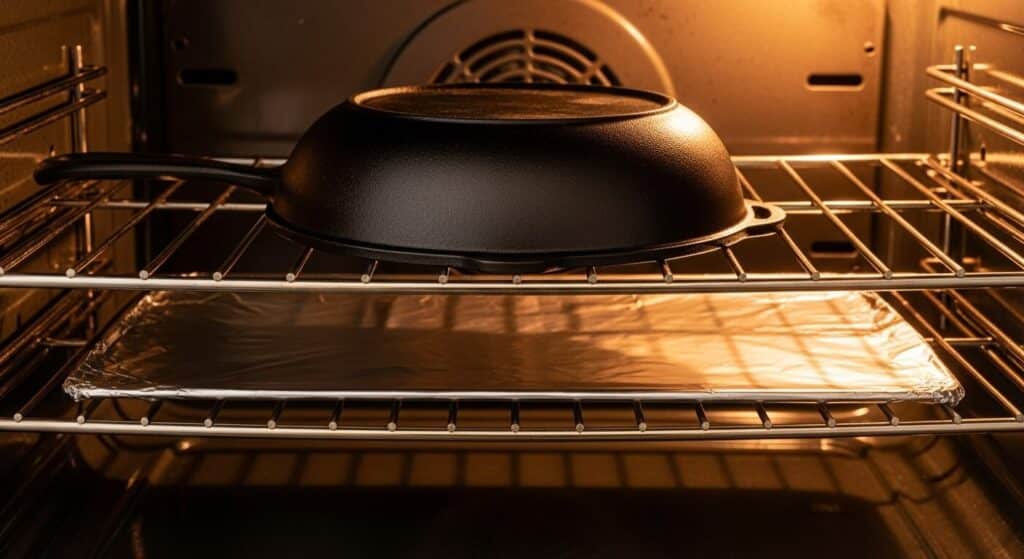
Cast iron has been around for a very long time — centuries, actually. It’s what it sounds like: iron that’s been melted and poured into a pan mold. Raw surface, heavy construction, built to take serious heat. You season it by baking thin layers of oil onto the surface until they polymerize, which builds up a natural non-stick finish over time. Some people inherit cast iron pans that are decades old and still cook beautifully. That seasoning? Built up over years of use. The older, the better.
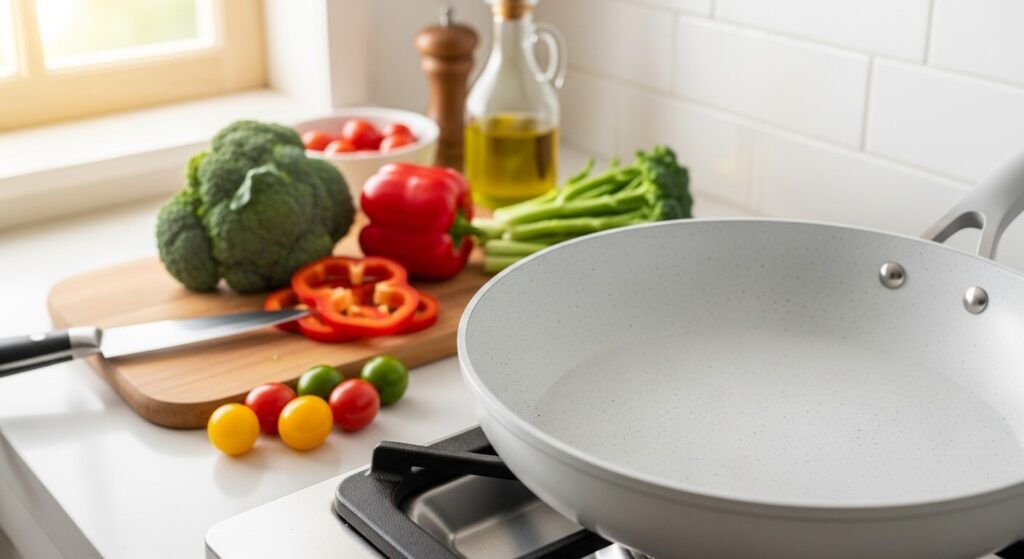
Teflon is a brand name — the coating itself is PTFE (polytetrafluoroethylene), a synthetic material that happens to be extraordinarily slippery. DuPont discovered it by accident in the 1930s, and by the 1960s it was on cookware. Food genuinely does not stick to it. Not with any oil, not with any technique. That’s the appeal.
The core difference comes down to this:
- Cast iron builds performance over time — more seasoning layers mean better non-stick properties and better cooking results
- Teflon delivers performance immediately — no break-in period, no maintenance ritual, just works
- Cast iron handles extreme heat without complaint; Teflon starts degrading above 500°F
- Teflon is significantly lighter, which matters more than it sounds
Neither is universally superior. They do different things well, and knowing which one matches how you cook is genuinely useful.
Heat Distribution and Cooking Performance
Cast iron gets unfairly criticized for heat distribution — here’s a more accurate picture of how both pans actually perform.
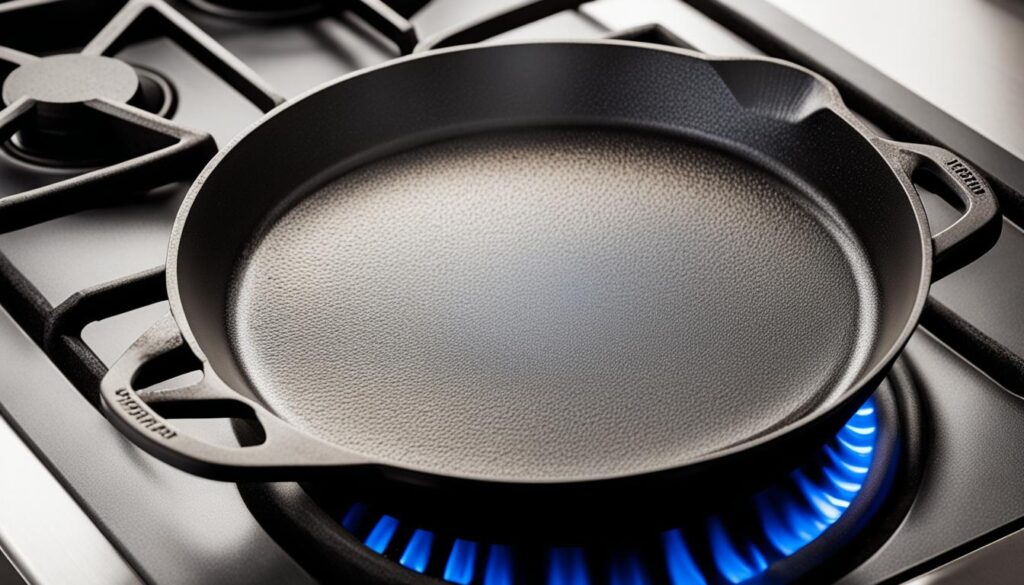
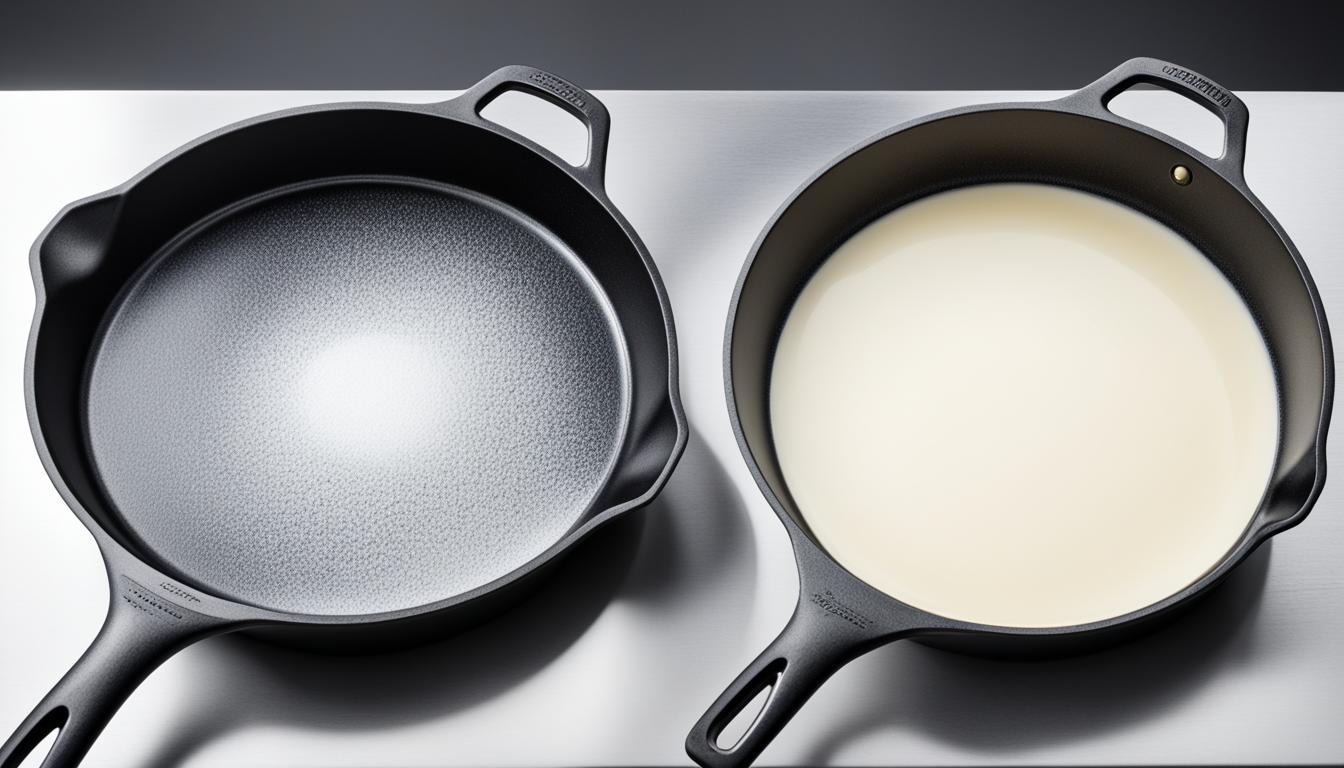
Cast iron does have hot spots early on. The center of the pan heats up before the edges do, which can cause uneven cooking if you throw food in too soon. The fix is simple: preheat properly. Give it 4–5 minutes on medium heat, and the entire surface evens out. After that, it holds heat better than almost any other pan material. You can drop a cold steak straight from the fridge onto properly preheated cast iron and the temperature barely drops. That’s thermal mass at work — and it’s exactly what makes cast iron so good for hard sears.
Teflon-coated aluminum pans heat faster and more evenly right from the start. Aluminum conducts heat well. For eggs, crepes, and pancakes — dishes where you need gentle, consistent heat across the whole surface — that matters. A lot.
Where Each Pan Shines
Cast iron is genuinely better for:
- Searing steaks, pork chops, burgers — anything that needs a hard crust
- Baking cornbread, skillet cookies, or a Chicago-style deep dish pizza (the crust that comes out of cast iron is something else)
- Blackening spiced fish or chicken
- Deep frying — the thermal mass keeps oil temperatures stable
- Anything going stovetop-to-oven in one pan
Teflon handles these better:
- Scrambled eggs, omelets, frittatas
- Thin fish fillets where skin sticking is a problem
- Pancakes and crepes that need consistent surface temperature
- Quick weeknight sautés where you don’t want to think about sticking
- Reheating without adding oil
Temperature pacing is the key with cast iron. Preheat it right, and it performs at a level a Teflon pan can’t match for high-heat work. Skip the preheat, and food sticks to it stubbornly.
Durability and Longevity Comparison
When it comes to how long each pan holds up, cast iron wins by a wide margin — and it’s not particularly close.
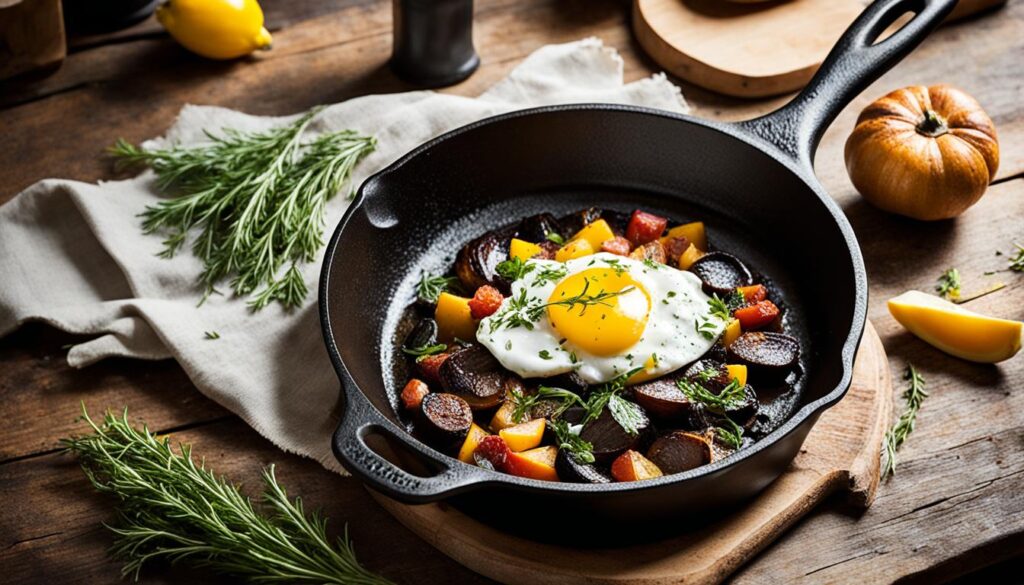
Cast iron doesn’t wear out. The metal itself doesn’t degrade, doesn’t scratch, doesn’t thin over time. People cook on 80-year-old Lodge skillets. They cook on pans they found at estate sales, stripped down, re-seasoned, and returned to fully functional condition. Badly neglected cast iron — rusted, sticky, almost black from burned buildup — can be restored in an afternoon. It is, practically speaking, indestructible.
Teflon? Different story entirely.
The coating — however well-made — has a finite life. Most non-stick pans show meaningful wear within 3–5 years of regular home use. You’ll see it: scratches from spatulas, thinning in the center, food starting to stick in spots where it didn’t before. Once the coating degrades past a certain point, the pan doesn’t perform anymore. There’s no restoring it.
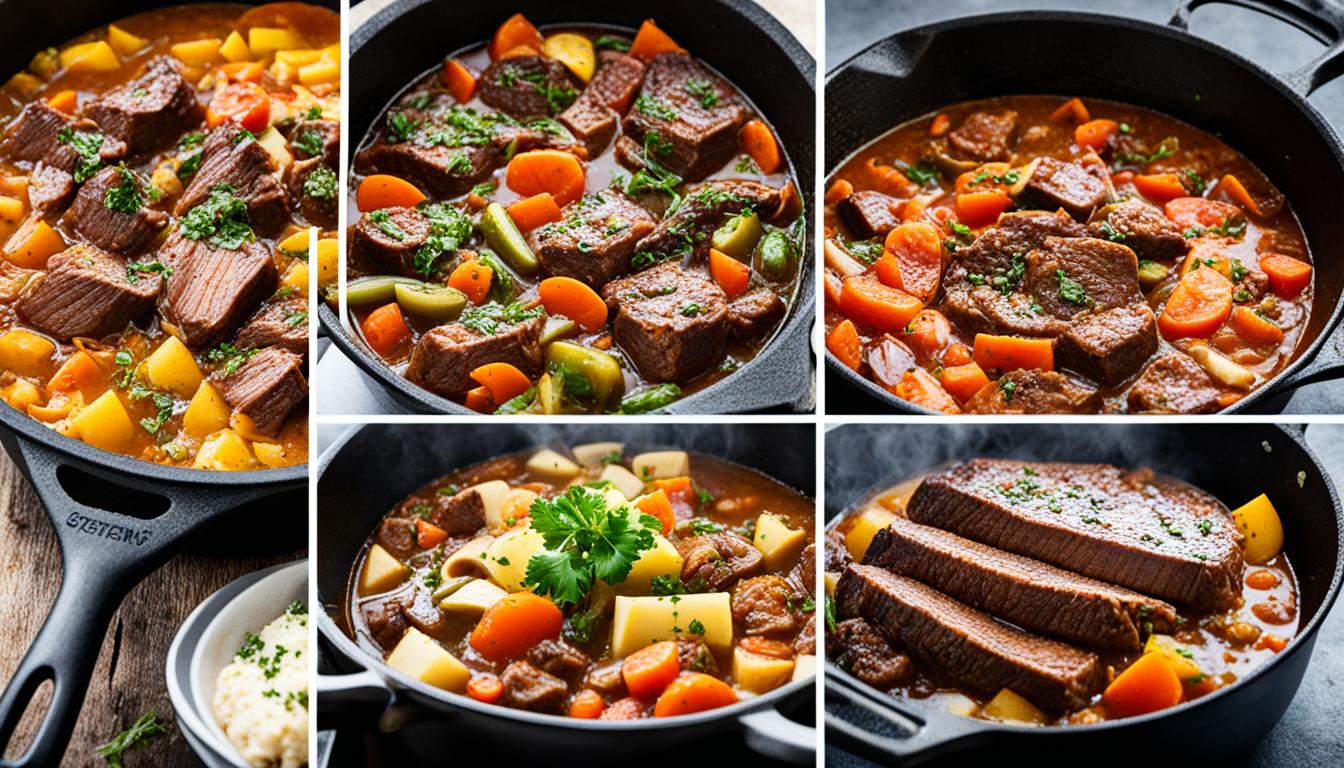
What kills non-stick coatings fastest:
- Metal utensils of any kind — spatulas, whisks, forks, all of them
- Dishwasher cycles (yes, even the ones labeled “dishwasher safe” — the heat and detergent combination shortens coating life substantially)
- High-heat cooking above 500°F
- Aerosol cooking sprays — they leave a residue buildup that’s hard to remove and accelerates coating breakdown
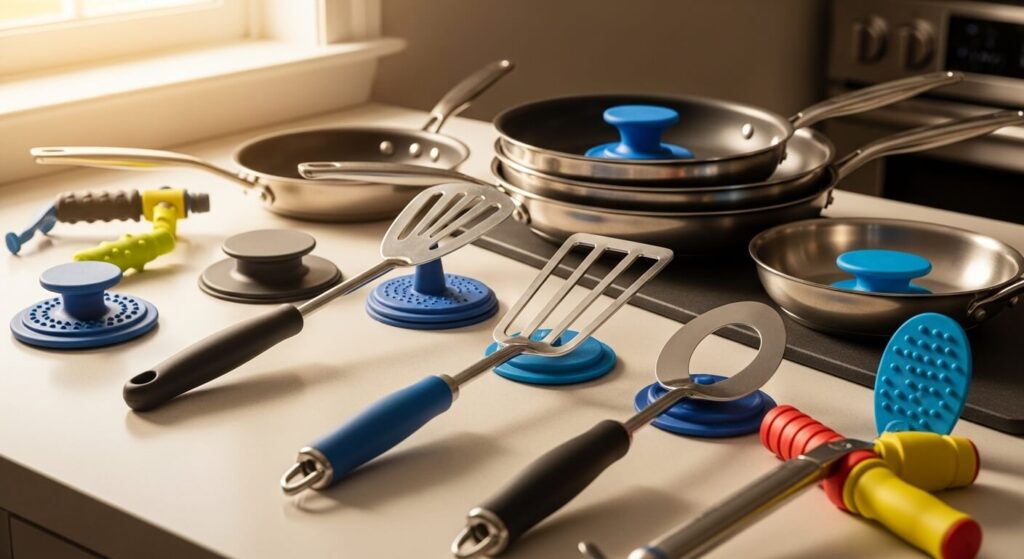
- Stacking pans without felt or foam protectors between them
Cast iron has essentially no equivalent list. Heat it, drop it, stack it. It doesn’t care.
Versatility in Cooking Methods and Recipes
Cast iron is the more versatile pan, and it’s not a matter of opinion — it’s just what the material allows.
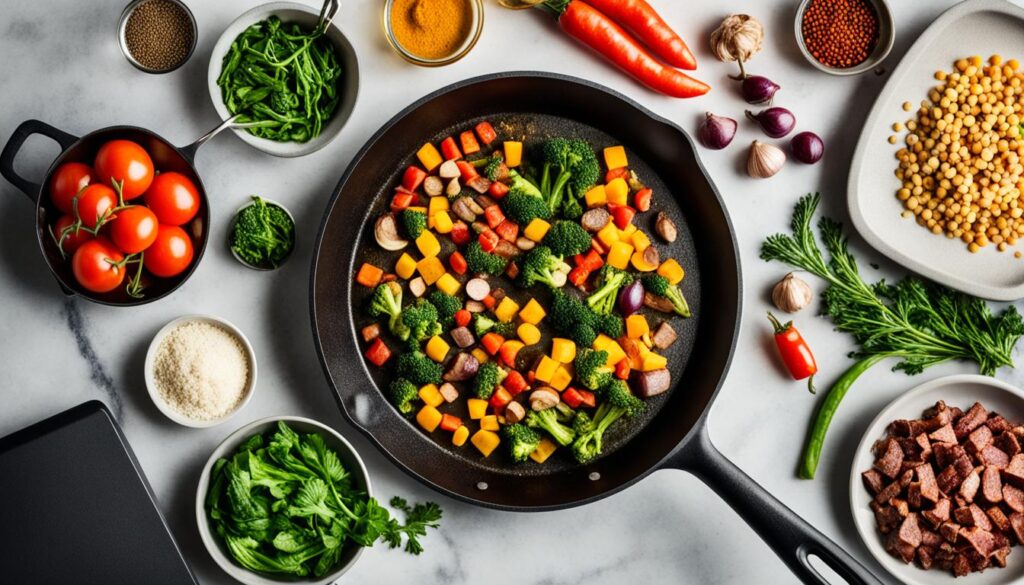
It works on every heat source without exception: gas burners, electric coils, induction cooktops, standard ovens, broilers, outdoor grills, campfires. Any temperature, any environment. There’s nothing you can put a cast iron skillet on that will damage it.
Non-stick pans have real limitations here. Most are oven-safe only to 400–500°F — which rules them out for a lot of oven-finishing techniques. Many aren’t broiler-safe at all. Induction compatibility varies by how the base is constructed.
Where cast iron’s range actually matters in practice:
- Building a pan sauce with fond (the caramelized browned bits) after searing meat — that flavour development doesn’t happen in Teflon
- Baking cornbread with a bottom crust that’s actually crispy
- Making a Chicago-style deep dish pizza with a properly browned crust
- Deep frying with stable oil temperatures that thin non-stick pans can’t maintain
- Skillet fruit cobblers and upside-down cakes that go straight from stovetop to oven
Teflon is a more specialized tool. It’s excellent at low-to-medium heat cooking where non-stick performance is the priority. But its temperature ceiling is a real constraint, and if you cook anything that benefits from serious heat, you’ll feel that ceiling regularly.
If you could only own one pan, cast iron does more. Not even close.
Cast Iron Skillet vs Teflon: Health and Safety Considerations
Both pans are safe to cook with — but each comes with specific usage conditions worth understanding.
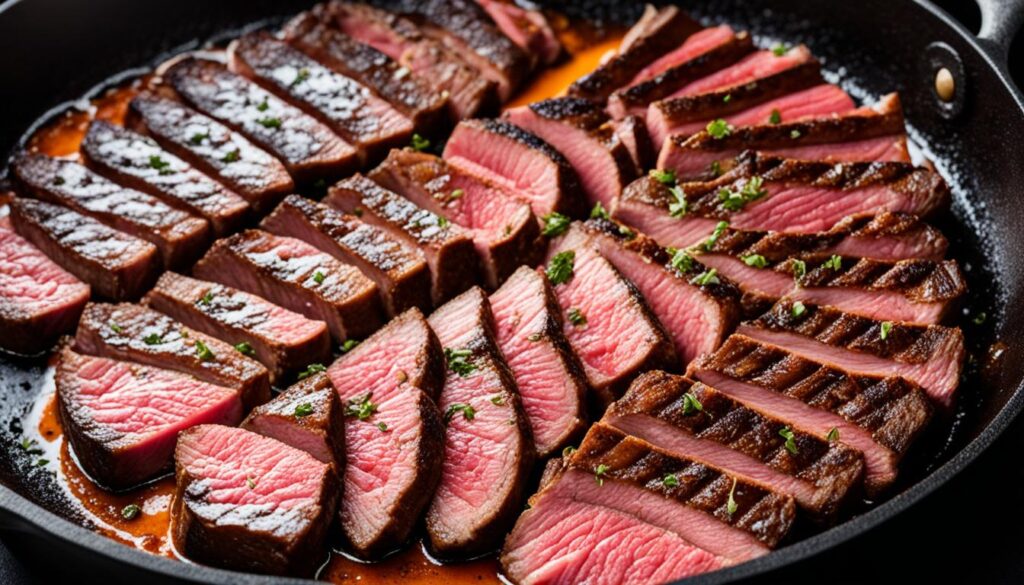
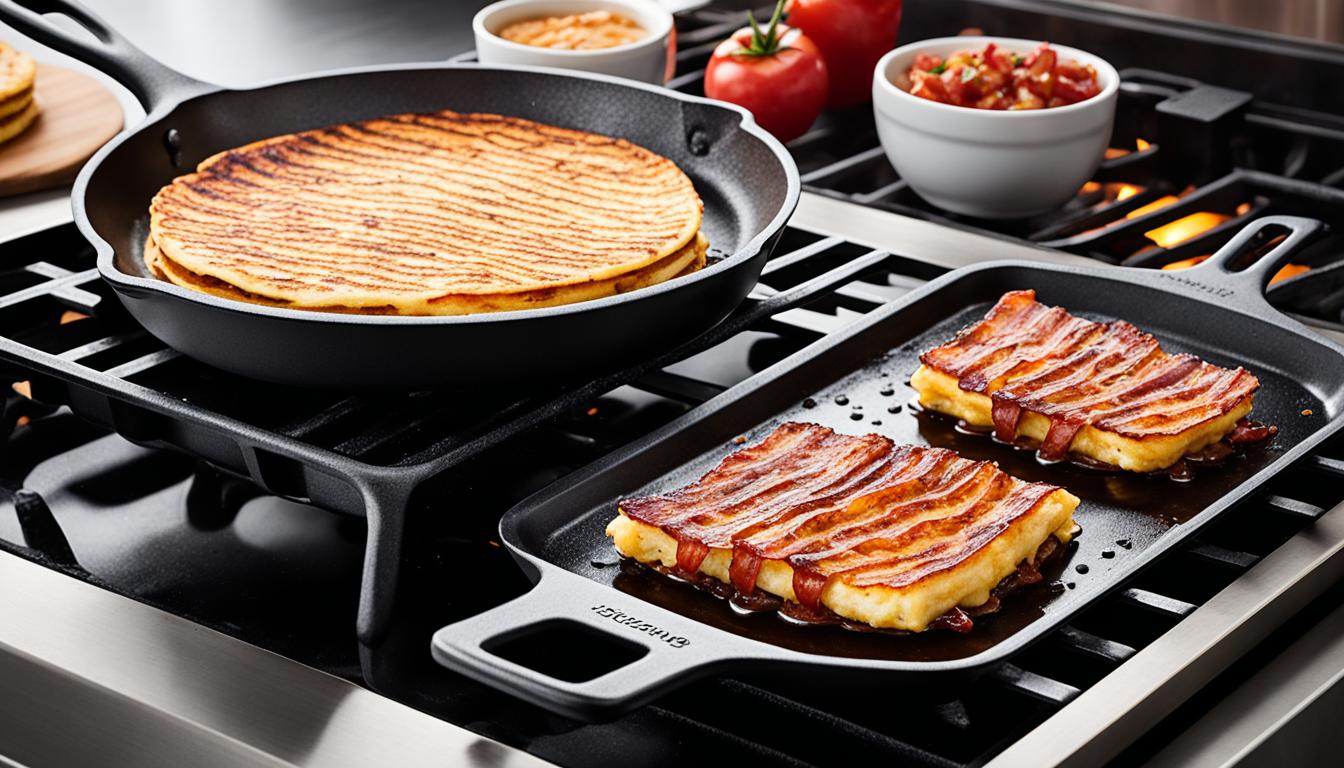
The Teflon health conversation used to center on PFOA — a processing chemical used in older manufacturing that was linked to health concerns. PFOA was phased out of production by 2013 across the industry. Modern non-stick coatings don’t contain it, and PTFE itself is considered chemically inert and safe at normal cooking temperatures.
The real safety issue with Teflon is overheating. When the coating reaches temperatures above roughly 570°F, it starts to break down and release fumes. At extreme temperatures, those fumes can cause flu-like symptoms in people — and they’re genuinely toxic to pet birds, which have highly sensitive respiratory systems. The practical rule is simple: don’t preheat an empty non-stick pan on high heat, and don’t use non-stick for anything that requires screaming-hot cooking.
Cast iron raises a different health consideration — a mostly positive one. Cooking in cast iron transfers small amounts of dietary iron into food, particularly when cooking acidic things like tomatoes or citrus-based dishes. For most people, this is either neutral or mildly beneficial. If you have hemochromatosis (a condition involving iron overload), it’s worth noting.
Quick summary on safety:
- Both pans are safe with correct usage
- Teflon requires temperature discipline — no high-heat or empty preheating
- Cast iron contributes trace iron to food, which is generally fine
- Scratched, flaking non-stick coating is a sign to replace the pan — not because flaking PTFE is acutely dangerous in small amounts, but because the pan no longer functions properly
Maintenance and Care Requirements
Teflon is dramatically easier to clean day-to-day. Cast iron asks more of you — but less than most people assume.
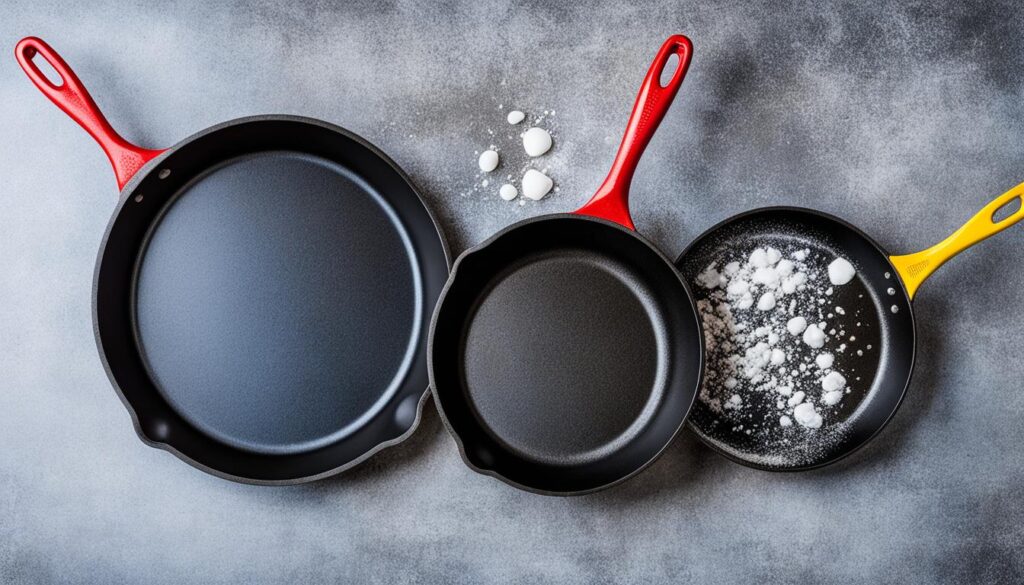
Non-stick is genuinely low-effort. Food doesn’t stick, so cleaning is mostly just wiping or a quick rinse. You’re done in under a minute. That ease of cleanup is real, and for busy households it has legitimate value.
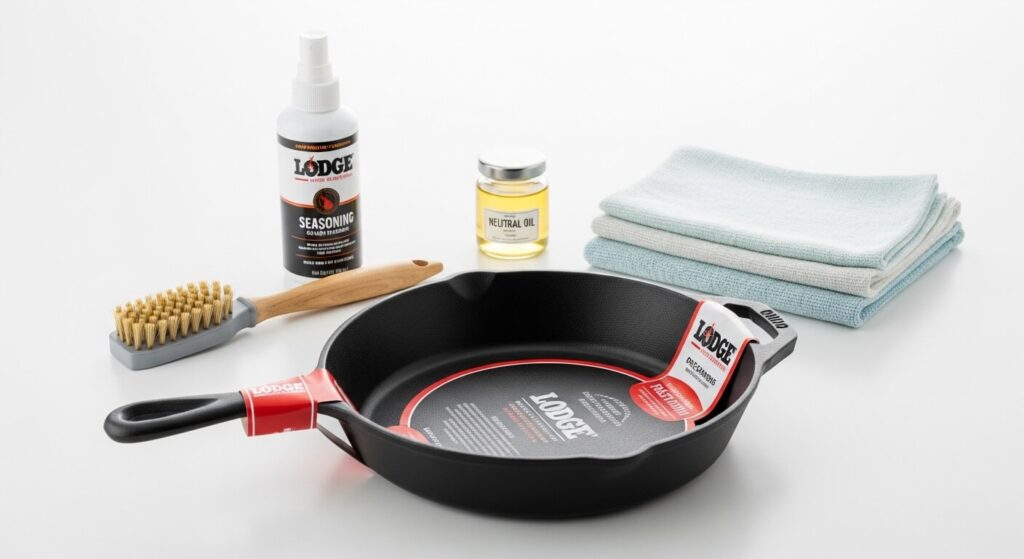
Cast iron takes more thought. Check out these maintenance tips for cast iron skillets and the full guide to seasoning cast iron skillets for the complete process — but here’s the short version:
Cast Iron Care — The Basics
- Wash with warm water and a stiff brush right after cooking — don’t let it soak
- A small amount of dish soap is fine occasionally (the “never use soap” rule is outdated — the concern was old lye-based soaps, not modern detergents)
- Dry it immediately and thoroughly — cast iron rusts quickly when left wet
- Wipe a thin coat of neutral oil over the surface while it’s still warm
- Store somewhere dry
The seasoning process sounds intimidating but really isn’t. Each time you cook with oil and apply that post-wash oil wipe, you’re adding microscopic layers of polymerized fat to the surface. Over months of regular use, the pan gets noticeably more non-stick on its own. The more you use it, the better it gets.
What Damages Each Pan
| What to Avoid | Cast Iron | Teflon |
|---|---|---|
| Dishwasher | Strips seasoning completely | Degrades coating significantly |
| Metal utensils | Fine — no effect | Scratches and ruins coating |
| Soaking in water | Causes rust | Unnecessary but not harmful |
| High heat | No problem, even beneficial | Damages coating above 500°F |
| Extended acidic cooking | Can temporarily strip seasoning | No issue |
Teflon care: gentle handling, hand-washing preferred, avoid high heat. That’s essentially it. Cast iron care takes a couple of extra minutes after cooking — dry it, oil it. Once it’s a habit, it becomes completely automatic.
Cost Analysis: Initial Investment and Long-Term Value
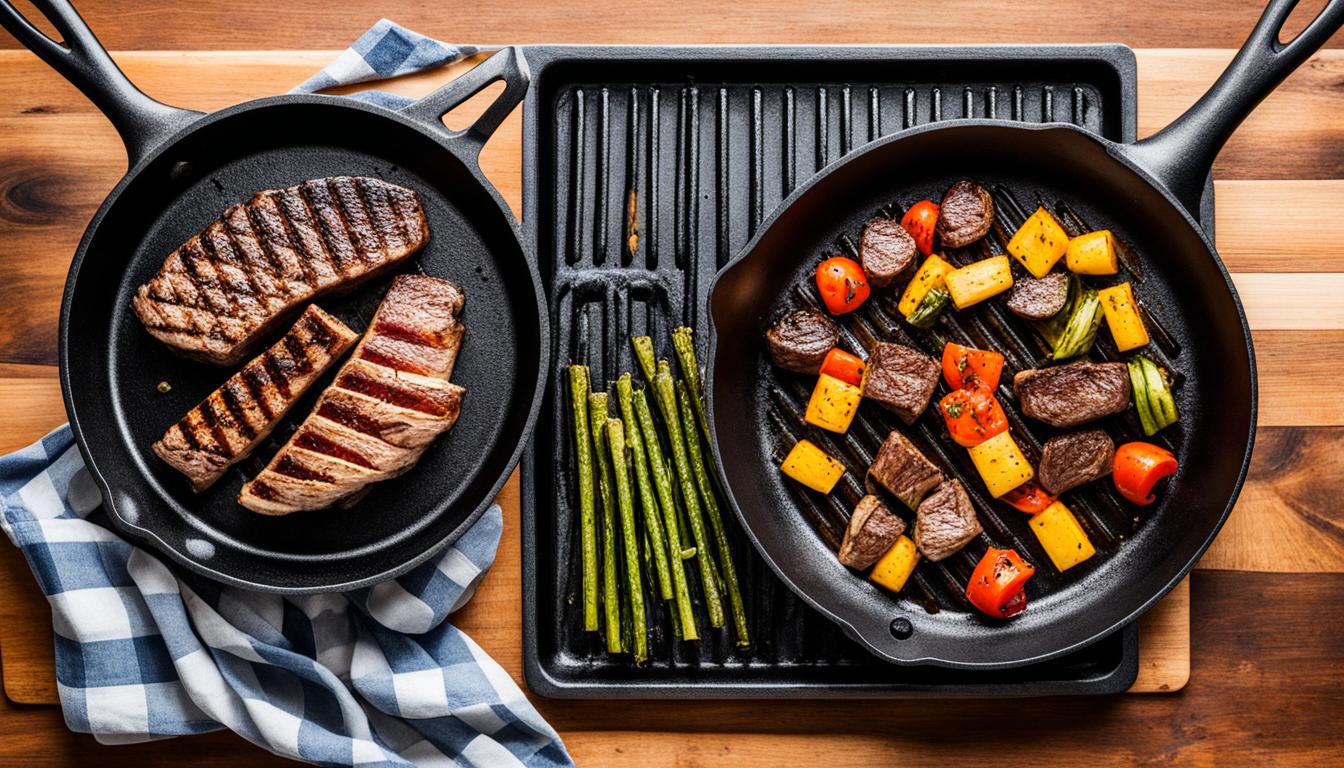
Cast iron costs more to get started on the premium end — but over time, it’s substantially cheaper than repeatedly replacing non-stick pans.
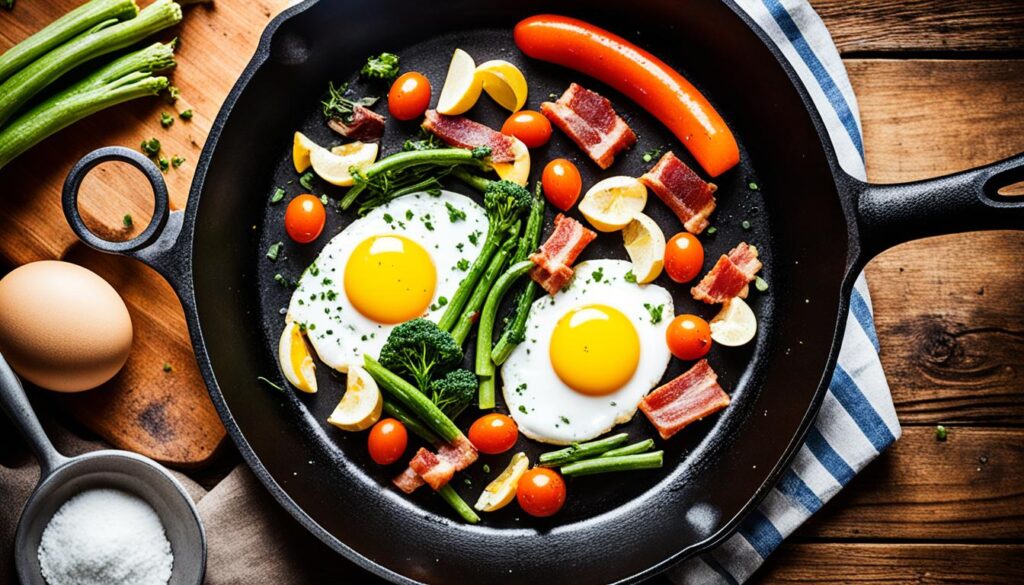
| Pan Type | Budget | Mid-Range | Premium |
|---|---|---|---|
| Cast iron skillet (10″) | $25–$35 (Lodge) | $50–$80 | $150–$350 (Le Creuset, Finex) |
| Non-stick skillet (10″) | $20–$35 | $50–$80 | $100–$200 |
The entry prices are nearly identical. The long-term math is where cast iron separates itself.
A $30 Lodge cast iron skillet bought today will still be functional in 2075. A $30 non-stick pan will need replacing in 3–4 years. If you cook most nights, you’ll go through somewhere between 10 and 15 non-stick pans over 50 years — at $30–$80 per pan. That’s a lot of money spent on something cast iron handles indefinitely.
Even premium non-stick pans from All-Clad or Zwilling hold up better than budget options, but they still have a coating lifespan. You’re replacing them eventually — you’re just replacing them less often.
The value case for cast iron is strong if you’re willing to maintain it. If you really don’t want to think about it and would rather replace pans periodically, the Teflon math can still work out fine for your priorities — convenience has real value.
Environmental Impact and Sustainability
Cast iron is significantly more sustainable than non-stick cookware, primarily because of how long it lasts.
A cast iron pan that gets used for 100 years represents one manufacturing event and essentially zero disposal waste. Iron is a recyclable material. The upfront environmental cost of casting and processing it is real, but spread across a century of use, the per-year footprint is minimal.
Non-stick pans are a recurring disposal problem. PTFE coatings are difficult to recycle — most municipal recycling programs won’t accept them. So every 3–5 years, another pan goes into landfill. Scale that across millions of households replacing non-stick cookware on a regular cycle, and the cumulative waste is substantial.
The manufacturing side matters too. PTFE production involves chemical processes that have historically had environmental consequences. The industry has improved significantly since the PFOA phase-out, but synthesizing polymer coatings is inherently more chemically intensive than melting and casting iron.
If environmental footprint is a meaningful factor in how you shop: cast iron is the clearer choice.
Weight and Ease of Use
Teflon wins on ease of handling — and this is worth taking seriously rather than dismissing.
A 10″ cast iron skillet typically weighs 5–8 pounds. A comparable non-stick pan is around 2–3 pounds. That gap shows up constantly:
- Flipping omelets or pancakes — the wrist motion that works effortlessly with a light pan becomes a chore with cast iron
- Moving a full skillet from the stove to the oven
- Cooking for anyone with wrist problems, hand pain, or reduced grip strength
- Everyday cooking for older adults or kids learning their way around a kitchen
There’s also the preheat time difference. Non-stick is ready in about 90 seconds. Cast iron needs 4–5 minutes of proper preheating before it’s ready to cook. For a quick weeknight dinner, that time difference is real.
If the weight genuinely discourages you from using a pan, that’s a legitimate reason to go non-stick. A pan you avoid using is worth nothing.
Worth knowing: carbon steel is worth considering as a middle-ground option. It performs similarly to cast iron — high heat, seasoned surface, oven-safe — but weighs noticeably less. Some people find it a better daily driver.
Best Brands and What to Look For When Buying
Quality varies significantly at both ends of the price spectrum — here’s what’s actually worth your money.
Cast Iron: Top Picks
- Lodge — The go-to recommendation for most people. Made in the US, runs $25–$40, genuinely well-constructed. The interior surface is rougher than some premium options, but it smooths out with use. Best starting point, full stop.
- Le Creuset / Staub — Enameled cast iron, meaning the surface is coated in enamel rather than requiring oil seasoning. No maintenance ritual, handles acidic foods well, and comes in excellent colors if that matters to you. Expensive. Worth it for people who want cast iron performance without the upkeep.
- Finex / Stargazer — Premium American-made bare cast iron with noticeably smoother cooking surfaces than Lodge. Better straight out of the box. Higher price reflects it.
Non-Stick: Worth the Money
- All-Clad — Genuinely better non-stick performance and durability than most competitors. Expensive but measurably longer-lasting.
- Zwilling / Demeyere — German engineering, solid build quality, tends to outlast budget non-stick by a meaningful margin.
- Made In — Good value at the mid-range price point. Solid PTFE coating, well-constructed base.
- T-fal / Tramontina — Fine budget options. They’ll need replacing in a few years, but they work well while they last.
Key Buying Criteria
For cast iron, look for:
- Pre-seasoned surface (standard now, and genuinely helpful)
- Smoother interior cooking surface — less texture means better out-of-box performance
- A helper handle on larger skillets (the second small handle opposite the main one) — makes moving a full pan much safer
For non-stick, look for:
- Thicker gauge base — more even heating and longer coating life
- PFOA-free certification (standard since 2013, but still worth confirming)
- Oven-safe to at least 400°F
- Riveted handles rather than screwed or glued — they hold up longer
Making the Right Choice for Your Kitchen Needs
The right pan depends entirely on your cooking style, physical situation, and how much you want to think about maintenance.
Cast iron is the better fit if you:
- Sear meat regularly and care about crust quality
- Cook across a range of methods — stovetop, oven, grill
- Want to buy once and not replace it
- Don’t mind a short learning curve for care and preheating
- Cook food that benefits from high, sustained heat
Non-stick makes more sense if you:
- Cook eggs and delicate fish as daily staples
- Want zero-maintenance cleanup
- Have wrist pain, limited hand strength, or other physical considerations
- Prefer a pan that works immediately with no warm-up period
- Cook low-to-medium heat dishes most of the time
Honest answer? Buy both. A 10″ or 12″ cast iron for searing, baking, and anything that needs serious heat. A 10″ non-stick for eggs, fish, and quick weeknight cooking. Together they cover virtually everything a home kitchen throws at you — and the combined cost is still less than a single premium all-clad set.