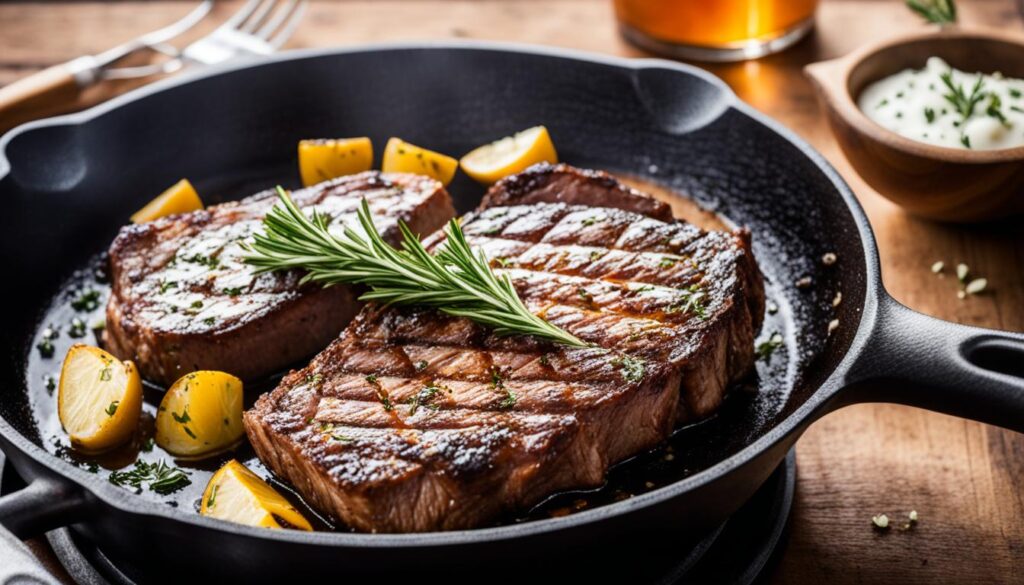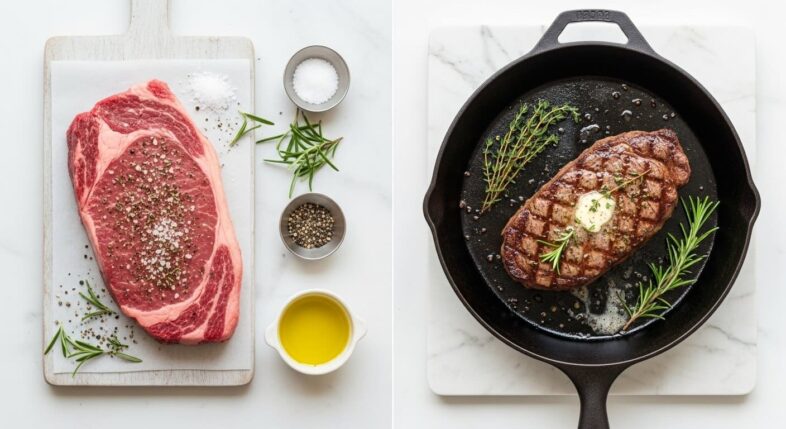
To cook a steak in a cast iron skillet with butter, sear a room-temperature, seasoned steak in hot oil for 3-4 minutes per side, then add butter and aromatics to baste continuously until reaching your desired internal temperature. Remove at 5 degrees below your target doneness and rest for 5-10 minutes before slicing against the grain. This method produces a restaurant-quality crust with a tender, flavorful interior. Cast iron’s superior heat retention creates the perfect searing environment, while butter basting adds richness and complex flavor notes. You’ll master the complete process, from selecting the right cut to achieving precise doneness.
What You Need to Cook a Perfect Steak in a Cast Iron Skillet with Butter
Cooking steak in a cast iron skillet with butter requires only basic equipment and simple ingredients. Success depends more on technique than tools.
Essential Equipment
- Cast iron skillet (10-12 inches for one or two steaks)
- Kitchen tongs (avoid piercing the meat with forks)
- Instant-read meat thermometer (digital models read within 2-3 seconds)
- Oven mitts (cast iron handles get extremely hot)
Ingredients for Butter-Basted Cast Iron Steak
| Ingredient | Amount (per steak) | Purpose |
|---|---|---|
| Steak | 8-16 oz | Main protein |
| High smoke-point oil | 1-2 tablespoons | Initial searing |
| Butter | 2-4 tablespoons | Basting and flavor |
| Coarse salt | 1-2 teaspoons | Seasoning |
| Black pepper | ½-1 teaspoon | Seasoning |
| Garlic cloves (optional) | 3-4 cloves, smashed | Aromatic |
| Fresh herbs (optional) | 2-3 sprigs thyme/rosemary | Aromatic |
Avocado, vegetable, or canola oil work best because they tolerate high heat without smoking. Unsalted butter gives you better control over the final salt level.
How to Choose the Right Steak for Cast Iron Cooking
The best steaks for cast iron cooking with butter are well-marbled cuts between 1 and 1.5 inches thick. Thickness matters significantly because thinner cuts overcook before developing a proper crust.
Best Steak Cuts for Cast Iron Skillet with Butter
- Ribeye – Abundant marbling creates exceptional flavor and stays tender
- New York strip – Balanced fat content with robust beef taste
- Filet mignon – Lean and tender, benefits greatly from butter basting
- Sirloin – Budget-friendly option with good flavor when properly cooked
Steak Thickness and Weight Guidelines
Aim for steaks that measure 1 to 1.5 inches thick and weigh 8-16 ounces. Thicker cuts allow proper crust development without overcooking the interior. Steaks thinner than ¾ inch cook too quickly for effective butter basting. Cuts exceeding 2 inches require oven finishing to reach the center without burning the exterior.
Fresh vs Frozen Considerations
Fresh steaks produce better results because they’re easier to dry completely before searing. Frozen steaks must be fully thawed in the refrigerator (24-48 hours) before cooking. Never attempt to cook a frozen or partially frozen steak using this method—the temperature differential prevents proper crust formation.
Preparing Your Steak Before Cooking
Proper steak preparation involves bringing meat to room temperature, removing surface moisture, and applying generous seasoning. These steps directly impact crust quality and even cooking.
Bringing Steak to Room Temperature
Remove steaks from refrigeration 30-45 minutes before cooking. Room temperature meat cooks more evenly because the cold center won’t stay raw while the exterior chars. A cold steak also lowers the pan temperature when added, reducing sear quality.
Patting the Steak Dry
Thoroughly dry both sides and edges with paper towels immediately before cooking. Surface moisture turns to steam, which prevents browning and creates a gray, steamed appearance instead of a golden-brown crust. Press firmly to absorb all visible wetness.
Seasoning Your Steak
Apply coarse salt and freshly ground black pepper liberally to both sides right before the steak hits the pan. Use approximately 1 teaspoon of salt and ½ teaspoon of pepper per side for a standard 12-ounce steak. Press the seasonings into the meat gently. Some chefs prefer salting 40 minutes in advance, which draws out moisture that then reabsorbs with dissolved salt, but the immediate seasoning method works perfectly for this technique.
Preparing Your Cast Iron Skillet for Steak
Cast iron skillets excel at cooking steak with butter because they retain and distribute heat more effectively than other cookware. Proper preheating makes all the difference.
Why Cast Iron Is Ideal for Cooking Steak with Butter
Cast iron maintains consistent high temperatures even when cold steak hits the surface. The thick metal distributes heat evenly, eliminating hot spots that cause uneven cooking. A well-seasoned cast iron surface develops natural non-stick properties that improve with use. The pan’s ability to transition from stovetop to oven (if needed) adds versatility.
Preheating Your Cast Iron Skillet
Heat your empty cast iron skillet over medium-high to high heat for 3-5 minutes. The pan is ready when water droplets instantly evaporate and dance across the surface before disappearing. You should feel intense heat radiating from the pan when holding your hand 4-5 inches above it. Don’t rush this step—inadequate preheating results in sticking and poor searing.
Step-by-Step: How to Cook a Steak in a Cast Iron Skillet with Butter
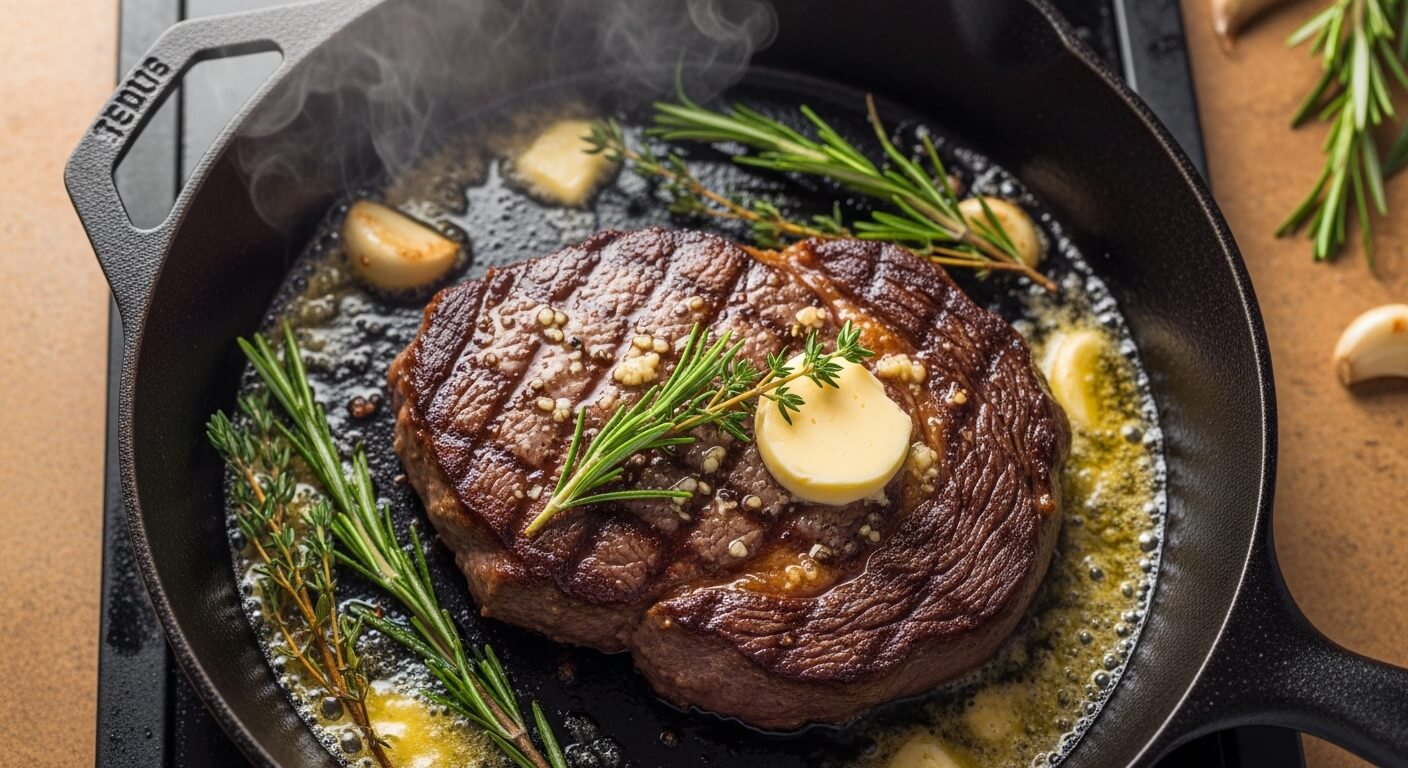
This butter-basted cast iron method requires eight distinct steps executed in precise order for optimal results. Each step builds upon the previous one.
Step 1: Add Oil to Your Hot Cast Iron Skillet
Pour 1-2 tablespoons of high smoke-point oil into your preheated skillet. Swirl to coat the bottom evenly. The oil should shimmer and move fluidly across the pan within seconds. Oil creates the initial searing surface and prevents sticking before butter enters the equation. Butter alone would burn at the high temperatures required for proper searing.
Step 2: Sear the First Side of Your Steak
Lay the steak in the skillet away from your body to prevent oil splatter burns. Don’t move, press, or flip the steak for 3-4 minutes. The meat will release naturally from the pan when a proper crust forms. Trying to flip prematurely causes tearing and sticking. A properly seared first side displays a deep golden-brown color with a slightly crispy texture.
Step 3: Flip and Sear the Second Side
Use tongs to flip the steak exactly once. Sear the second side for 3-4 minutes using the same hands-off approach. Multiple flips prevent proper crust development and reduce the effectiveness of butter basting, which happens next.
Step 4: Add Butter to the Cast Iron Skillet
Drop 2-4 tablespoons of cold butter into the pan, placing it beside the steak rather than directly on top. Add smashed garlic cloves and fresh herb sprigs if using. The butter melts rapidly, foaming and browning slightly as it combines with the meat juices and oil. This creates the basting liquid.
Step 5: Baste Your Steak with Butter
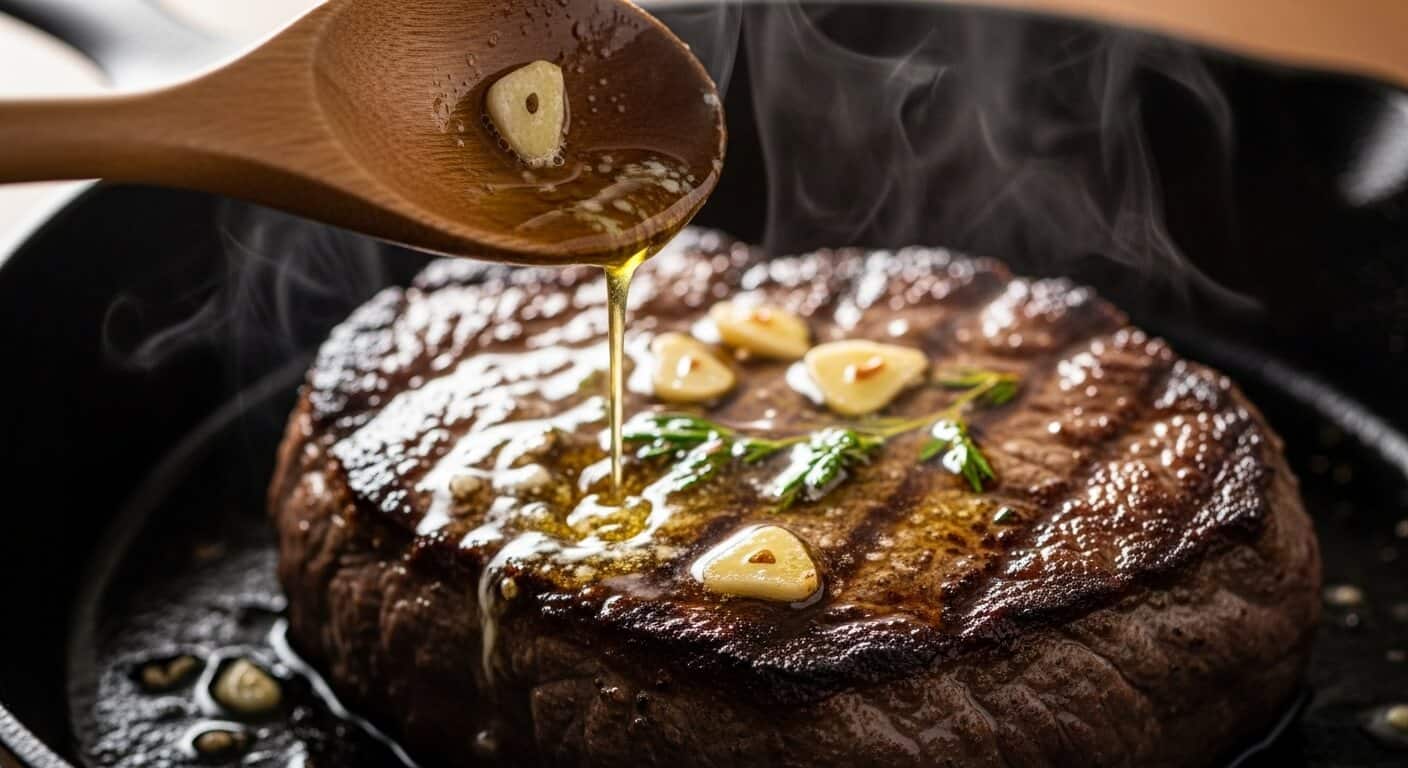
Tilt the skillet toward you at a 30-45 degree angle so the melted butter pools at the lower edge. Use a large spoon to scoop the hot butter and pour it continuously over the top surface of the steak. Baste for 30-60 seconds, maintaining a steady rhythm. This process intensifies flavor, promotes even cooking, and creates additional crust development on the top surface.
The butter carries the aromatic compounds from garlic and herbs directly onto the meat. Each spoonful adds layers of richness while helping the steak reach target temperature more quickly.
Step 6: Check Internal Temperature
Insert your instant-read thermometer into the thickest part of the steak from the side, angling toward the center. Target these internal temperatures:
| Doneness | Temperature | Center Color |
|---|---|---|
| Rare | 120-125°F | Bright red, cool |
| Medium-rare | 130-135°F | Warm red center |
| Medium | 135-145°F | Warm pink center |
| Medium-well | 145-155°F | Slightly pink |
| Well-done | 155°F+ | No pink |
Remove the steak 5 degrees before your target temperature because carryover cooking continues during resting.
Step 7: Optional Oven Finish for Thicker Steaks
Steaks exceeding 1.5 inches may require oven finishing to cook the center without burning the crust. After completing the initial sear and butter basting (Steps 1-5), transfer the entire cast iron skillet to a preheated 400-450°F oven. Cook for 3-7 minutes, checking temperature every 2 minutes. This method works particularly well for filet mignon and thick ribeyes.
Step 8: Rest Your Steak
Transfer the steak to a cutting board or plate. Wait 5-10 minutes before slicing. Resting allows the proteins to relax and juices to redistribute throughout the meat. Cutting immediately causes those flavorful juices to flood out onto the plate instead of staying in each bite. Tenting loosely with foil is optional but not necessary.
Timing Guide: How Long to Cook Steak in Cast Iron Skillet with Butter
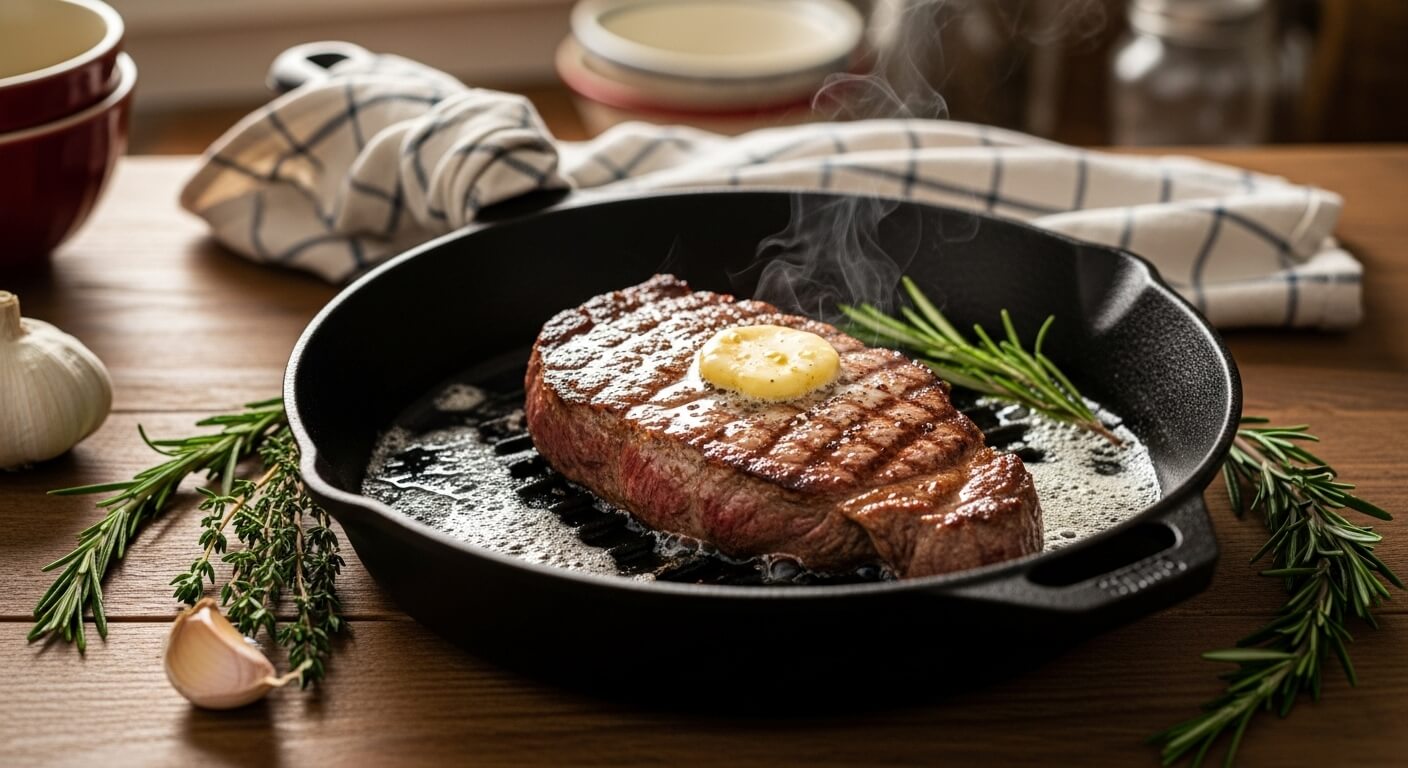
Total cooking time for steak in a cast iron skillet with butter ranges from 8-15 minutes depending on thickness and desired doneness. These guidelines assume a properly preheated pan.
Cooking Times by Thickness
| Thickness | First Side | Second Side | Butter Basting | Total Stovetop Time |
|---|---|---|---|---|
| 1 inch | 3 minutes | 3 minutes | 30-45 seconds | 6.5-7 minutes |
| 1.5 inches | 4 minutes | 4 minutes | 60 seconds | 9 minutes |
| 2 inches | 4 minutes | 4 minutes | 60 seconds + oven | 8 minutes + 4-6 minutes |
Total Cooking Time by Doneness Level
These times apply to 1.5-inch thick steaks:
- Rare: 8-9 minutes total
- Medium-rare: 9-10 minutes total
- Medium: 10-12 minutes total
- Medium-well: 12-14 minutes total
- Well-done: 14-16 minutes total
Temperature checking remains more reliable than time-based cooking. Variations in initial meat temperature, exact heat level, and steak composition affect timing significantly.
Tips for Perfectly Cooking Steak in a Cast Iron Skillet with Butter
These techniques separate amateur results from professional-quality steak. Small adjustments yield dramatic improvements.
Temperature Control Tips
Start with high heat for the initial sear. Once you add butter, reduce to medium-high to prevent burning. Watch the butter closely—if it turns dark brown or black, the temperature is too high. Golden brown butter with a nutty aroma indicates perfect temperature. If smoke fills your kitchen, ventilate immediately and reduce heat.
Butter Burning Prevention
Add butter only after both sides have seared completely, never at the beginning. Cold butter can be added more safely than room temperature butter because it melts gradually. If butter begins smoking or smells acrid, remove the pan from heat temporarily, add a small amount of fresh oil to cool the mixture, then resume cooking at slightly lower heat.
Achieving a Perfect Crust
Three factors create an excellent crust:
- Completely dry surface – Any moisture prevents browning
- Screaming hot pan – Inadequate heat steams rather than sears
- Patience – Meat releases naturally when the crust forms properly
Never press down on the steak with your spatula. This squeezes out juices and doesn’t improve contact with the pan.
Multiple Steaks Technique
Cook only two steaks maximum in a 12-inch cast iron skillet to maintain proper temperature. Overcrowding causes the pan temperature to drop, resulting in steaming instead of searing. Position steaks with at least 2 inches between them. For multiple steaks, you may need to add an extra tablespoon of butter to ensure adequate basting liquid.
Common Mistakes When Cooking Steak in Cast Iron with Butter
Most cast iron steak failures stem from temperature management issues and impatience. Recognize these errors before they happen.
Not Preheating the Skillet Long Enough
An insufficiently heated pan won’t create a proper sear. The steak will stick, cook unevenly, and develop a gray exterior instead of a brown crust. Wait the full 3-5 minutes even though it seems excessive.
Using Cold Steak from the Refrigerator
Cold steak centers remain raw while exteriors overcook. The temperature shock also lowers pan heat dramatically, reducing sear quality. Always rest steaks at room temperature for 30-45 minutes first.
Flipping Too Often
Each flip resets crust development and releases accumulated heat. Flip exactly once for this method. Constant flipping works for some techniques but interferes with butter basting.
Adding Butter Too Early
Butter burns at temperatures required for initial searing (350-400°F). Add it only after both sides have developed color and crust. This timing allows butter to contribute flavor without scorching.
Skipping the Resting Period
Cutting into steak immediately after cooking releases all the juices onto the plate. Those juices carry flavor and moisture that should stay in the meat. The 5-10 minute wait significantly improves texture and taste.
Using Too Small a Cast Iron Skillet
Steaks need space. An 8-inch skillet barely accommodates one steak and makes butter basting awkward. A 10-12 inch skillet provides proper working room and better heat distribution.
Not Drying the Steak Surface
Surface moisture creates steam pockets that prevent browning. Even if steaks look dry, press paper towels firmly against all surfaces right before cooking. This single step dramatically improves crust quality.
Variations and Flavor Enhancements
Compound butters and alternative seasonings transform basic cast iron steak into complex flavor experiences. These additions complement the traditional method perfectly.
Compound Butter Options
Mix softened butter with additional ingredients, then chill before using:
Garlic Herb Butter
- 4 tablespoons butter
- 3 cloves minced garlic
- 2 tablespoons chopped fresh parsley
- 1 tablespoon chopped fresh thyme
- Salt and pepper to taste
Blue Cheese Butter
- 4 tablespoons butter
- 3 tablespoons crumbled blue cheese
- 1 teaspoon Worcestershire sauce
- Fresh cracked black pepper
Café de Paris Butter
- 4 tablespoons butter
- 1 teaspoon Dijon mustard
- 1 clove minced garlic
- 1 teaspoon mixed herbs (tarragon, chives, parsley)
- ½ teaspoon anchovy paste
- Pinch of paprika
Use compound butter in place of regular butter during basting, or add a pat on top of the rested steak.
Seasoning Variations Beyond Salt and Pepper
- Montreal steak seasoning – Coarse black pepper, garlic, coriander, and red pepper flakes
- Coffee rub – Finely ground coffee, brown sugar, chili powder, and cumin
- Peppercorn crust – Coarsely crushed mixed peppercorns pressed into surface before cooking
Apply these rubs using the same timing as basic salt and pepper.
Adding Pan Sauce After Cooking Your Cast Iron Steak
After removing the steak to rest, reduce heat to medium and add:
- ¼ cup red wine or beef broth to deglaze, scraping browned bits
- 2 tablespoons cold butter swirled in to finish
- 1 teaspoon Dijon mustard for tang (optional)
- Salt and pepper to taste
Simmer for 2-3 minutes until slightly thickened, then drizzle over sliced steak.
Serving Your Butter-Basted Cast Iron Steak
Proper slicing and plating maximize the visual appeal and eating experience of cast iron steak with butter. Presentation matters less than technique but enhances the meal.
Slicing Techniques
Locate the grain direction—the parallel lines of muscle fibers running through the meat. Cut perpendicular to these lines (against the grain) in ¼ to ½-inch thick slices. Cutting with the grain creates chewy, stringy pieces. Angle your knife at 45 degrees for wider, more attractive slices that showcase the gradient from crust to pink center.
Plating Suggestions
- Arrange slices in a shingled pattern, slightly overlapping
- Drizzle remaining butter from the pan over the top
- Garnish with a fresh herb sprig or flaky sea salt
- Include the crispy garlic cloves from the butter basting as an edible garnish
Side Dish Pairings
Classic accompaniments complement the rich, buttery steak:
- Roasted potatoes or mashed potatoes
- Creamed spinach or sautéed green beans
- Caesar salad or arugula salad with lemon vinaigrette
- Grilled asparagus with parmesan
- Roasted Brussels sprouts with bacon
Cleaning and Maintaining Your Cast Iron Skillet After Cooking Steak
Clean your cast iron skillet while still warm using hot water and minimal soap, then dry completely and apply a thin oil layer. Proper maintenance ensures decades of reliable use.
Proper Cleaning Method
- After the skillet cools slightly (but remains warm), rinse with hot water
- Use a brush or non-abrasive scrubber to remove stuck-on bits
- For stubborn residue, sprinkle coarse salt and scrub with a damp cloth
- Small amounts of mild soap are acceptable and won’t damage seasoning
- Rinse thoroughly and dry immediately with a towel
- Place on a burner over low heat for 2-3 minutes to evaporate any remaining moisture
Never soak cast iron or leave it wet—this causes rust.
Re-seasoning Your Skillet
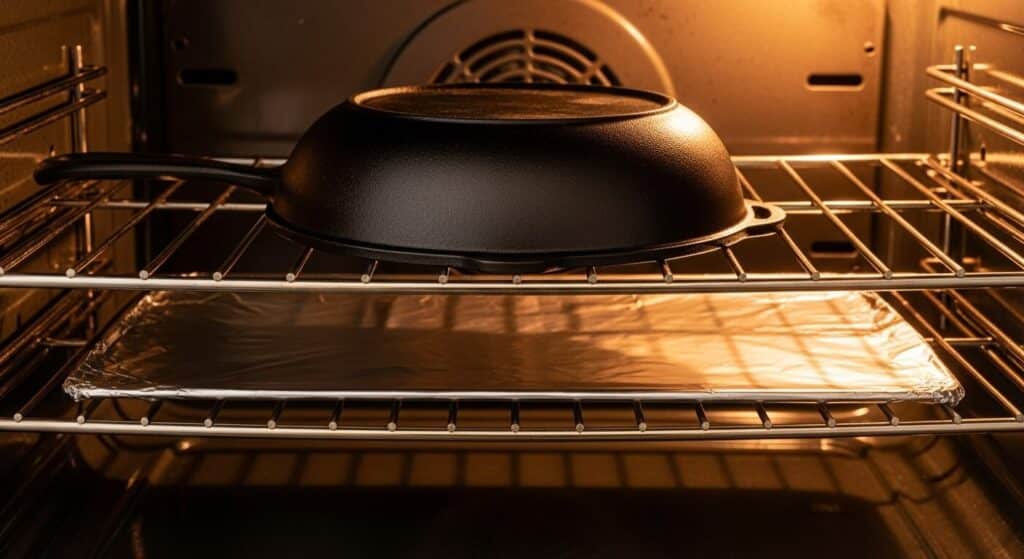
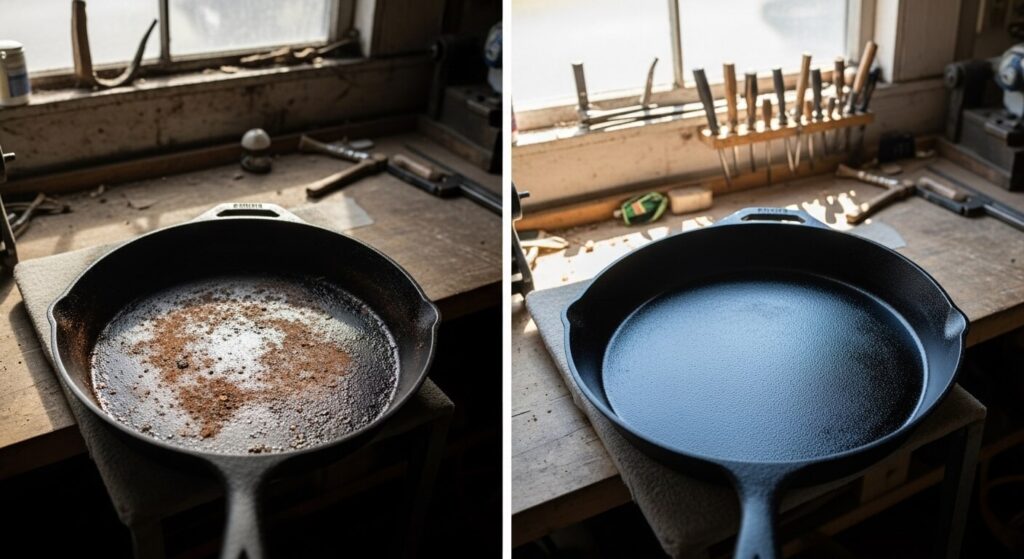
If the surface appears dull or food starts sticking, apply a thin layer of vegetable oil or flaxseed oil. Wipe off excess oil with a paper towel—the surface should look dry, not greasy. Place the skillet upside down in a 450°F oven for one hour. This polymerizes the oil, building the non-stick patina.
Storage Tips
Store in a dry location. Place a paper towel between stacked pans to protect the seasoning. Avoid storing with the lid on, which can trap moisture and cause rust. A well-maintained cast iron skillet improves with age and use.
Frequently Asked Questions About Cooking Steak in Cast Iron Skillet with Butter
These common questions address the most frequent concerns when cooking steak in cast iron with butter.
Should I use salted or unsalted butter for cast iron steak?
Unsalted butter provides better control over the final salt level since you’ve already seasoned the steak. Salted butter works perfectly if you reduce the initial seasoning slightly. The choice affects flavor balance but both produce excellent results.
Can I cook a frozen steak in a cast iron skillet with butter?
No, frozen steak must be fully thawed first. Frozen or partially frozen meat won’t develop a proper crust because the extreme temperature difference prevents the Maillard reaction. The exterior chars before the center thaws, resulting in a burnt outside and raw middle.
Do I need to use oil if I’m using butter?
Yes, oil is essential for the initial high-heat searing phase. Butter burns at approximately 350°F, while proper searing requires 400°F or higher. Oil has a higher smoke point and creates the crust. Butter adds flavor during the lower-temperature basting phase.
Why does my butter burn when cooking steak in cast iron?
Butter burns because the pan temperature exceeds butter’s smoke point (350°F). Add butter only after completing both sides’ initial sear, and reduce heat to medium-high during basting. Using cold butter instead of room temperature butter also helps because it melts gradually.
What’s the best oil to use before adding butter?
Avocado oil (smoke point 520°F), refined canola oil (400°F), or vegetable oil (400-450°F) all work excellently. Avoid olive oil (375°F) and unrefined oils, which smoke at the temperatures required for proper searing.
How do I prevent my steak from sticking to the cast iron skillet?
Sticking results from inadequate preheating, insufficient oil, or wet steak surface. Preheat for the full 3-5 minutes, dry the steak thoroughly, and ensure oil coats the pan completely. Steak naturally releases when the crust forms—premature flipping attempts cause tearing.
Can I cook a steak in a cast iron skillet without butter?
Absolutely. The butter basting adds flavor and richness but isn’t mandatory. You can cook an excellent steak using only oil. The butter distinguishes this particular method and creates a more complex taste profile.
Should I finish my steak in the oven after cooking in cast iron?
Steaks thicker than 1.5 inches benefit from oven finishing because it cooks the center without over-crusting the exterior. Transfer the pan to a 400-450°F oven after butter basting. Thinner steaks cook through completely on the stovetop.
How many times should I flip my steak?
Flip exactly once when using this butter-basting method. The first side sears for 3-4 minutes, then you flip, sear the second side, and add butter. Multiple flips interrupt crust development and make butter basting impractical.
What’s the best way to tell when my steak is done?
An instant-read thermometer provides the only reliable doneness indicator. Insert it horizontally into the side of the steak, angling toward the center. Remove the steak 5 degrees below your target temperature to account for carryover cooking during the resting period.