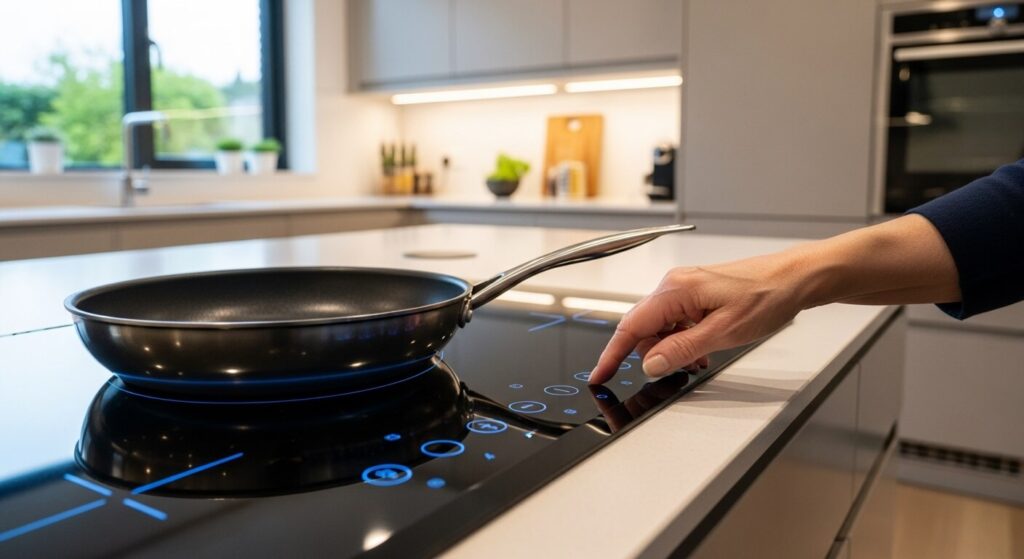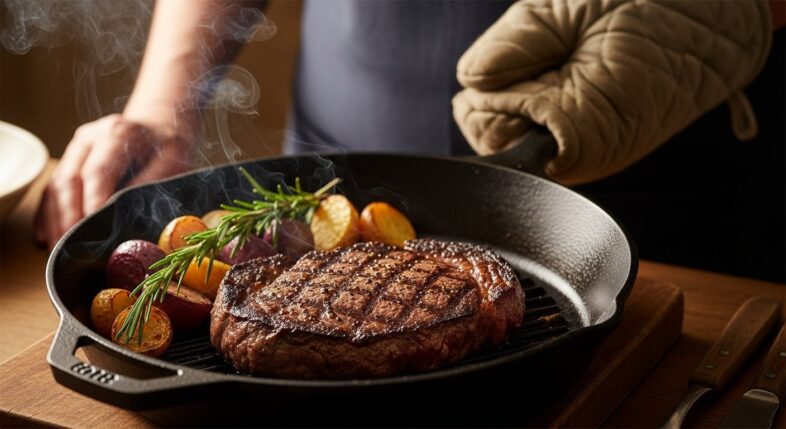
Low-Impact Searing How Seniors Enjoy Cast Iron Flavor Despite Arthritis

Low-Impact Searing: How Seniors Enjoy Cast Iron Flavor Despite Arthritis

Seniors can achieve authentic cast iron searing flavor by switching to lightweight carbon steel or hard-anodized aluminum skillets (2-4 pounds instead of 7-8), using oven-finishing techniques that minimize stovetop handling, and adopting single-flip methods that reduce repetitive wrist strain.

Look—nobody wants to give up that perfect restaurant-quality crust on steak just because their hands don’t cooperate anymore. The good news? You don’t have to. Cast iron flavor without cast iron weight is completely possible.

Achieving Cast Iron Flavor Without Traditional Cast Iron Weight

The Maillard reaction (that’s the browning that creates flavor) doesn’t care what your pan weighs—it cares about heat retention and surface temperature, both of which lighter materials can deliver just fine.

Lightweight Alternative Skillets That Deliver Searing Results

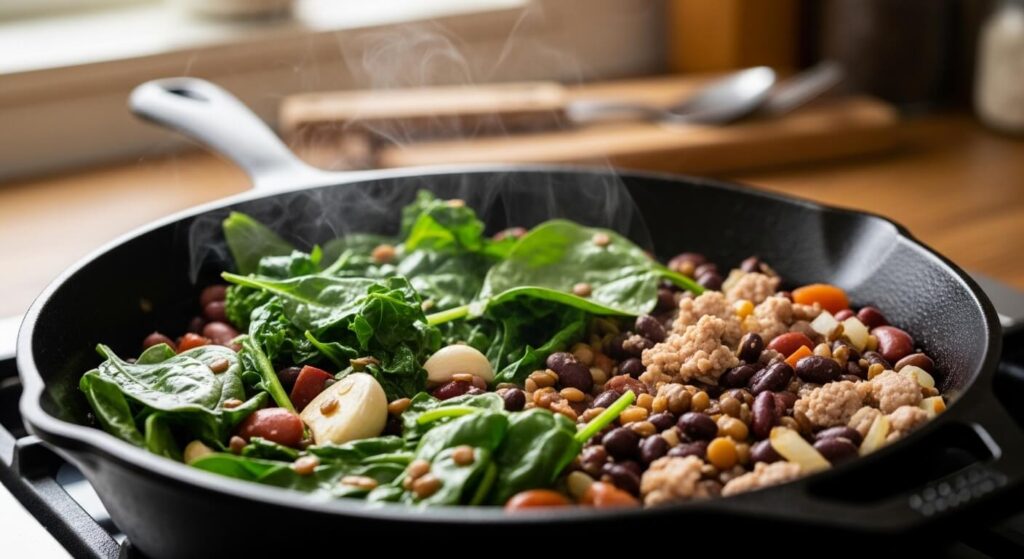
Carbon steel nails it. Seriously.

It’s 40% lighter than cast iron but performs almost identically for searing. A 12-inch carbon steel skillet weighs about 4 pounds versus 8 pounds for cast iron. That’s half the wrist strain right there.

Hard-anodized aluminum works too—even lighter at 2-3 pounds for a 12-inch pan. The aluminum core heats fast and distributes evenly, while the anodized surface handles high temperatures without warping or releasing anything nasty into your food.

Tri-ply stainless (steel-aluminum-steel layers) splits the difference. Around 3-4 pounds, excellent heat distribution, and you get the added bonus of dishwasher-safe cleanup.

Carbon Steel: The Arthritis-Friendly Cast Iron Substitute

Here’s what works about carbon steel for arthritic hands:

  • Weight is manageable even one-handed (if you’re having a good day)
  • Seasoning builds up just like cast iron, creating natural nonstick
  • It heats faster than cast iron, which means less time standing at the stove
  • Handles are often longer and more ergonomic than cast iron’s stubby ones
  • You can find options with helper handles for two-handed lifting

The seasoning process is identical to cast iron. Thin layer of oil, heat it until it smokes, let it cool, repeat. But because carbon steel is thinner, it heats more evenly during seasoning—less chance of sticky spots or uneven coating.

Enameled Cast Iron Pros and Cons for Seniors

Enameled cast iron looks beautiful. It’s also still heavy as hell.

Pros: no seasoning required, easier cleanup, acid-friendly for pan sauces.

Cons: still weighs 6-8 pounds, enamel can chip if you drop it (which happens more often with weak hands), and it costs 3x what regular cast iron or carbon steel costs.

Honestly? Skip it for searing. The weight negates any convenience from easier cleaning.

Modern Nonstick Technology for High-Heat Cooking

Traditional nonstick can’t handle searing temps. Period.

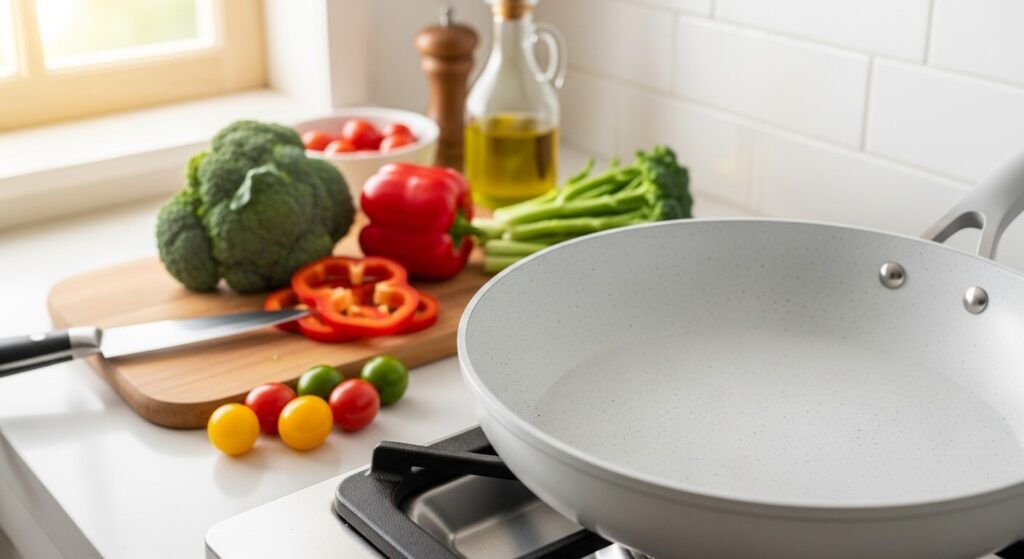
But newer ceramic-titanium coatings and PTFE-free options can go to 500°F+. That’s hot enough for proper searing, though you won’t get quite the same depth of crust as cast iron or carbon steel.

The trade-off: zero-stick performance, incredibly easy cleanup, lightweight construction. For seniors with severe arthritis, this might be the best compromise between effort and results.

Understanding Why Traditional Cast Iron Challenges Arthritic Hands

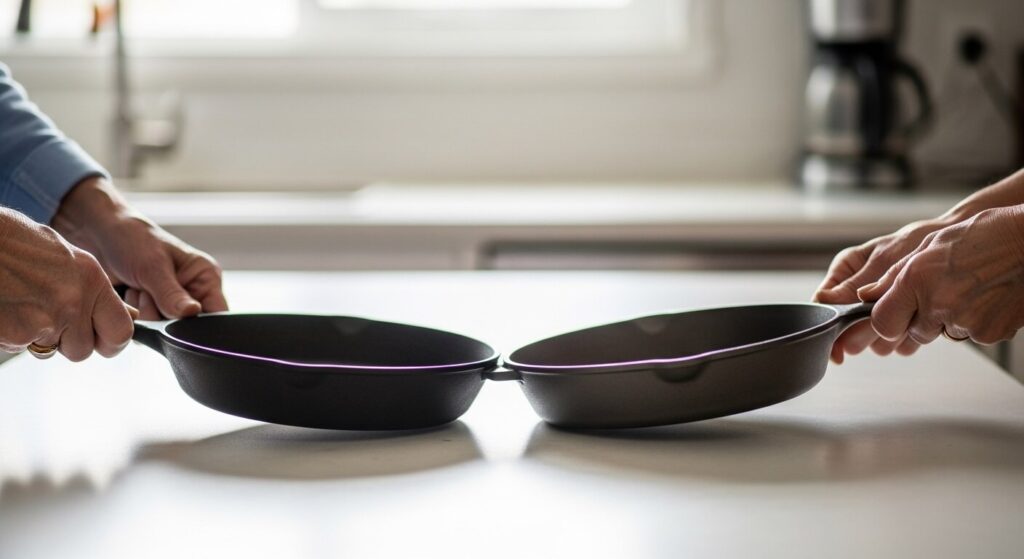
Cast iron wasn’t designed with arthritis in mind—it was designed to be indestructible and cheap, and weight was just an accepted consequence of the material.

The Weight Problem: 5-8 Pounds of Joint Stress

Wrist Strain from Lifting Heavy Skillets

Your wrist joint isn’t built to repeatedly lift 8 pounds at arm’s length. That’s the reality.

Each time you pick up a cast iron skillet, you’re loading your wrist with weight while it’s extended—the worst possible leverage for the joint. Do this daily for years and you’re accelerating cartilage breakdown.

Two-Handed Carrying Requirements

Two hands means you can’t open the oven, adjust the burner, or grab a utensil while moving the pan.

This creates inefficiency and increases total handling time. More handling equals more joint stress. The math’s simple.

Pouring and Tilting Difficulties

Pouring off excess fat or tilting to baste? With cast iron, this requires significant wrist and forearm strength.

If you’ve got arthritis in your wrists or elbows, this motion ranges from uncomfortable to impossible depending on the day.

Long-Term Joint Damage from Repeated Use

Here’s the thing nobody talks about—repeated stress on arthritic joints accelerates degeneration. It’s not just about today’s pain. It’s about preserving function for next year and the year after.

Every unnecessarily heavy lift is damage you can’t undo.

Grip Challenges with Standard Cast Iron Handles

Hot Handle Heat Transfer Issues

Cast iron handles get scorching hot. Always have, always will.

This means pot holders or thick oven mitts, which reduce your grip security and require more squeeze force to maintain control. More squeeze equals more pain in arthritic finger joints.

Narrow Handle Design Problems

Most cast iron handles are 1-1.5 inches wide. Too narrow for comfortable gripping with inflamed knuckles.

You end up pinch-gripping instead of palm-gripping, which concentrates pressure on the exact joints that hurt most.

Helper Handle Limitations

That little helper handle opposite the main handle? Often too small to actually help.

It’s usually just a nub—maybe 2 inches long. Not enough to get your whole hand around, so you’re back to pinch-gripping.

Lack of Ergonomic Contouring

Flat, straight handles don’t conform to your hand shape. They don’t distribute pressure across your palm—they concentrate it in a line.

Better-designed cookware uses contoured, wider handles that spread the load. Cast iron typically doesn’t bother.

Maintenance Demands That Aggravate Arthritis

Scrubbing and Cleaning Effort

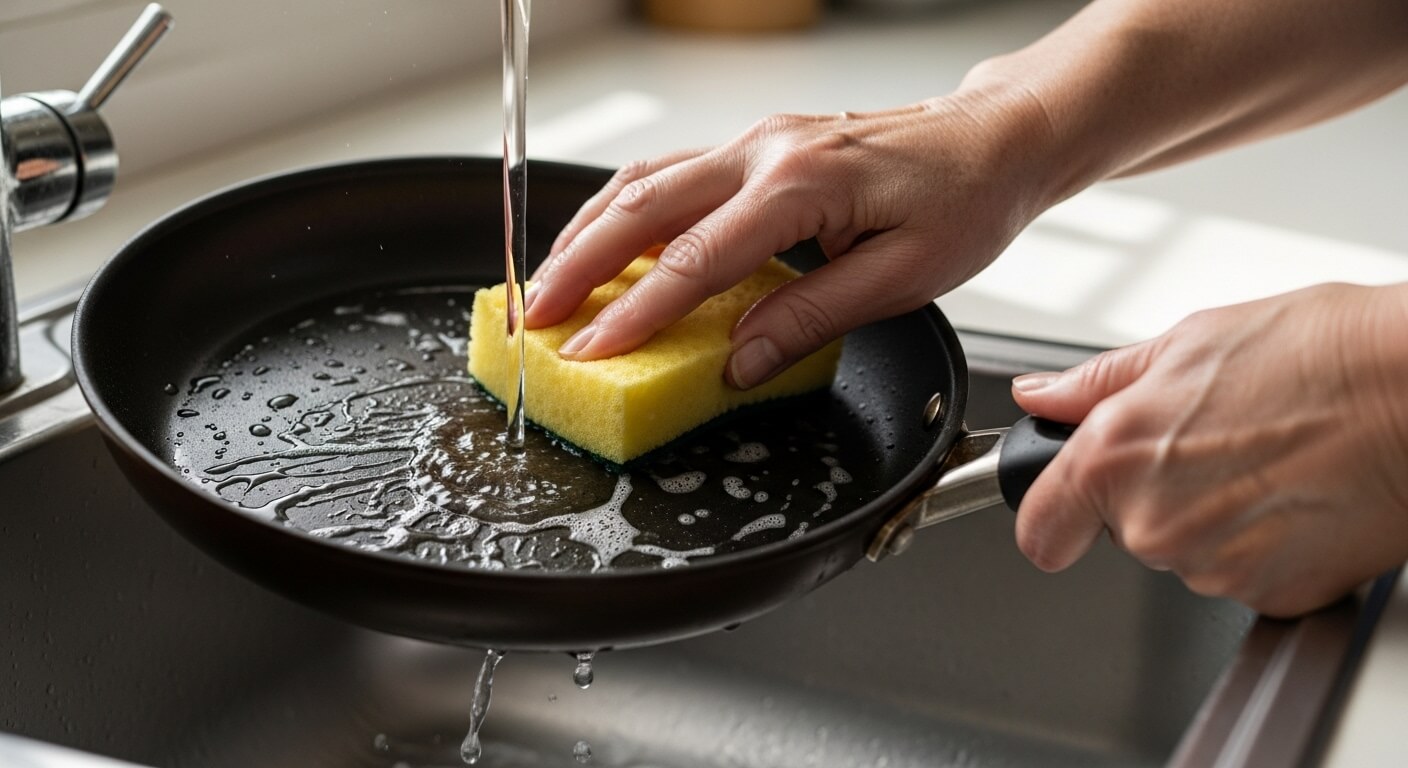
Cast iron needs scrubbing—usually with coarse salt or a chainmail scrubber. Both require applying significant pressure with your hands.

For arthritic hands, scrubbing anything vigorously is asking for a flare-up.

Seasoning Process Hand Strain

Building and maintaining seasoning requires regular oil application, spreading thin layers evenly, and handling the pan while it’s being heated and cooled.

Each seasoning session means multiple lifts, multiple wipes, multiple opportunities for hand strain.

Drying and Storage Lifting

Cast iron can’t air-dry—it’ll rust. So you’re lifting it while it’s wet (heavier) to towel-dry it, then lifting it again to put it in storage.

With lighter cookware, you can air-dry or dishwasher-dry. One less lift.

Regular Maintenance Frequency

Cast iron demands consistent care. Use it, clean it, dry it, oil it. Every single time.

Miss a step and you’re dealing with rust or lost seasoning. The maintenance burden adds up when your hands already hurt.

High-Heat Cooking Concerns for Seniors

Burn Risk from Heavy Pan Handling

Heavier pans are harder to control. When you’re struggling to hold a hot, heavy skillet, your chances of bumping it against your arm or sloshing hot oil onto yourself increase dramatically.

Burns take longer to heal as you age. Prevention matters more.

Steam and Splatter Exposure

High-heat searing creates steam and splatter. If you can’t quickly move the pan away from yourself due to weight or grip issues, you’re more exposed.

Lightweight pans you can maneuver confidently reduce this risk.

Difficulty with Quick Pan Movements

Restaurant cooks flip and toss food in pans. That requires wrist strength and control you might not have with arthritis.

Heavy cast iron makes this essentially impossible. Lighter pans at least give you the option on good days.

Emergency Response Limitations

If something goes wrong—oil catches fire, food starts burning, whatever—can you quickly remove a heavy cast iron pan from heat?

If the answer’s no, you’re cooking with a safety hazard.

Low-Impact Searing Techniques for Arthritis Relief

Low-impact searing reduces the physical demand of achieving a good crust by using oven-finishing methods, longer lower-heat techniques, and strategic planning that minimizes how often you’re handling hot, heavy pans.

Oven-Searing Methods That Minimize Handling

Reverse Sear Technique for Meats

Cook low in the oven first (250°F until nearly done), then sear briefly on high heat at the end. Total stovetop time? Maybe 2-3 minutes per side.

This flips the traditional sear-then-roast method. You’re handling the pan for maybe 6 minutes total instead of 20+ minutes of active stovetop cooking.

Sheet Pan Searing at High Heat

Preheat a sheet pan in a 500°F oven. Add oiled protein. Flip once after 4-6 minutes. Done.

You’re using oven mitts and both hands to handle the sheet pan, distributing weight better than a single-handled skillet. Plus sheet pans weigh less—typically 2-3 pounds versus 7-8 for cast iron.

Broiler-Finishing for Crust Development

Cook however you want—stovetop, oven, whatever. Then finish under the broiler for 2-3 minutes to develop crust.

Top-down heat browns beautifully. No flipping required for the browning phase.

Hands-Free Temperature Management

Oven cooking is set-and-forget. You’re not standing at the stove adjusting heat, checking temperature, managing hot spots.

Set timer, walk away, come back when done. Your hands rest while food cooks.

Stovetop Modifications for Easier Searing

Lower Heat, Longer Time Approaches

Medium-high heat (375-400°F pan surface) instead of maximum heat (500°F+) still achieves Maillard browning—just takes 30-40% longer.

But that extra time costs you nothing if you’re not actively handling the pan. And lower heat means less smoke, less splatter, safer overall.

Pre-Heating Strategies to Reduce Active Time

Get your pan hot before you start cooking. Properly pre-heated pans need less mid-cook adjustment.

This turns active cooking into passive cooking—you’re supervising, not manipulating.

Using Lids to Trap Heat and Reduce Flipping

Lid-on for the second side cooking traps heat and creates convection currents that cook the top surface while the pan cooks the bottom.

Result? Often you don’t need to flip at all, or you flip once and cover instead of flipping multiple times.

One-Flip Searing Methods

Perfect the single flip. First side gets full crust development—4-6 minutes undisturbed. Flip once. Second side another 3-5 minutes. Done.

One flip means two hand actions (one to flip, one to plate) instead of 4-6 flips that traditional recipes sometimes call for.

Hybrid Cooking Approaches

Stovetop Start, Oven Finish

Sear 2 minutes per side on stovetop for color. Transfer to 400°F oven to finish cooking through.

You get the crust from stovetop searing but minimize the time you’re actively handling a hot pan. The oven does the heavy lifting (metaphorically).

Grill Pan Alternatives

Grill pans create sear marks with ridges that lift food off the pan surface. Less contact means food releases easier—less forceful scraping required with your spatula.

Not quite the same as flat-pan searing, but close enough and easier on your hands.

Air Fryer Searing Options

Modern air fryers hit 450-500°F. High enough for legitimate browning on proteins and vegetables.

Zero pan handling. You open the basket, flip if needed (with tongs, not your hands near heat), close it, and wait. That’s it.

Instant Pot Sauté Function Benefits

Electric pressure cookers with sauté modes let you brown directly in the pot before pressure cooking.

One vessel, controlled heat, no heavy pan to move around. The pot stays stationary—you’re just adding and removing food.

Portion Control for Lighter Pan Loads

Single-Serving Searing Benefits

Cooking one chicken breast weighs less than cooking three. Obvious but important.

Lighter food load means easier pan handling even if the pan itself isn’t lightweight. Every ounce you can eliminate helps.

Smaller Proteins Require Less Pan Weight

Match pan size to food size. An 8-inch pan for one pork chop instead of a 12-inch pan.

Smaller pans weigh less—maybe 2 pounds instead of 4 pounds. And they heat faster, so less total cooking time.

Batch Cooking Considerations

Sear several portions one day when hands feel good. Refrigerate. Reheat throughout the week.

You’re concentrating the hand strain into one cooking session instead of spreading it across seven days—but you’re only experiencing it once.

Reducing Total Cook Weight

Think about it—8-ounce steak plus 4-pound pan equals 4.5 pounds total. 4-ounce cutlet plus 2-pound pan equals 2.25 pounds total.

Half the weight means half the joint stress.

Lightweight Cookware Options for Searing Success

Lightweight searing cookware prioritizes materials that retain heat well enough for Maillard browning while weighing 50-70% less than traditional cast iron—specifically carbon steel, hard-anodized aluminum, tri-ply stainless, and advanced materials like titanium.

Carbon Steel Skillets for Arthritis

Carbon steel is the secret weapon for arthritis-friendly searing.

Weight Comparison: 3-4 Pounds Versus 7-8

Real numbers: Lodge 12-inch cast iron weighs 8 pounds. De Buyer 12-inch carbon steel weighs 4.6 pounds.

That’s 3.4 pounds less—nearly half. Your wrists notice immediately.

Heat Retention and Distribution

Carbon steel is thinner than cast iron (2mm versus 4-5mm typically), so it doesn’t hold heat quite as long once you remove it from the burner.

But for searing? It holds plenty of heat. The difference matters more for slow-cooking than for high-heat quick searing.

Seasoning Process Similarities

If you’ve seasoned cast iron, you can season carbon steel. Same process, same oils, same results—a naturally nonstick surface that improves with use.

The thinner material means more even seasoning and faster heat-up during the seasoning process.

Ergonomic Handle Options Available

Many carbon steel pans come with longer handles (8-10 inches) that give better leverage. Some include helper handles standard.

Matfer Bourgeat, De Buyer, and Lodge all make carbon steel with decent handles—way better than traditional cast iron nubs.

Hard-Anodized Aluminum for High Heat

Aluminum gets a bad rap. Hard-anodized aluminum deserves better.

Temperature Tolerance Up to 500°F

Quality hard-anodized pans handle 500°F oven temps easily. That’s plenty for any searing application.

The anodization process creates a hard, non-reactive surface that won’t leach aluminum into food—addressing the main health concern people have.

Lightweight Construction Benefits

A 12-inch hard-anodized skillet weighs 2.5-3 pounds typically. That’s less than half what cast iron weighs.

For severe arthritis, this might be the only option that’s manageable one-handed.

Nonstick Coating Considerations

Many hard-anodized pans include nonstick coating. This isn’t necessary for searing (bare anodized aluminum works fine), but it makes cleanup dramatically easier.

Trade-off: coated versions can’t go quite as hot, and coatings eventually wear out.

Durability for Daily Searing

Hard-anodized aluminum lasts 5-10 years with regular use. Not lifetime like cast iron, but long enough to justify the investment.

When it does wear out, it’s light enough that disposal and replacement aren’t physical challenges.

Stainless Steel Clad Cookware

Multi-Ply Construction Advantages

Stainless steel alone is terrible at conducting heat—it creates hot spots and doesn’t retain heat well. But clad construction (steel exterior, aluminum core, steel interior) fixes both problems.

All-Clad and Tramontina make excellent clad pans that distribute heat nearly as evenly as cast iron.

Heat Distribution Without Excessive Weight

A 12-inch tri-ply skillet weighs 3.5-4.5 pounds. Heavier than aluminum, lighter than cast iron.

The aluminum core conducts heat efficiently while the steel provides durability and oven-safe performance to 500°F+.

Dishwasher-Safe Convenience

This is huge for arthritis—throw it in the dishwasher, no hand scrubbing required.

Stainless won’t rust, won’t lose seasoning, doesn’t care about dishwasher detergent. Easy maintenance wins.

Long-Term Investment Value

Quality clad stainless costs $100-200+ for a good pan. But it lasts literally decades with minimal care.

Amortized over 20+ years, the per-year cost is actually lower than replacing cheaper pans every few years.

Titanium and Advanced Material Skillets

Ultra-Lightweight Options Under 2 Pounds

Titanium pans weigh ridiculously little—a 12-inch titanium skillet might weigh 1.5 pounds. That’s barely anything.

But they’re expensive ($200-400) and relatively uncommon, so finding them takes effort.

High-Temperature Capabilities

Titanium handles heat to 900°F+. Complete overkill for home cooking, but it means you’ll never worry about overheating the pan.

The material itself is inert and safe—medical-grade titanium is what goes into surgical implants.

Cost-Benefit Analysis

Here’s where it gets tricky. Titanium pans cost 5-10x what carbon steel costs. Are they 5-10x better?

No. But if money isn’t a constraint and you want the absolute lightest option, they’re worth considering.

Availability and Selection

Limited brands make titanium cookware for home use. Snow Peak, Keith, and a few others dominate the market.

Selection is way smaller than mainstream materials. You get what’s available, not necessarily what you want.

Equipment Modifications for Arthritis-Friendly Searing

Modifying existing equipment with silicone handle covers, using helper tools like long-handled spatulas and pan stabilizers, and optimizing stove setup reduces arthritis impact without requiring complete cookware replacement.

Adding Ergonomic Handles to Existing Skillets

Silicone Handle Covers

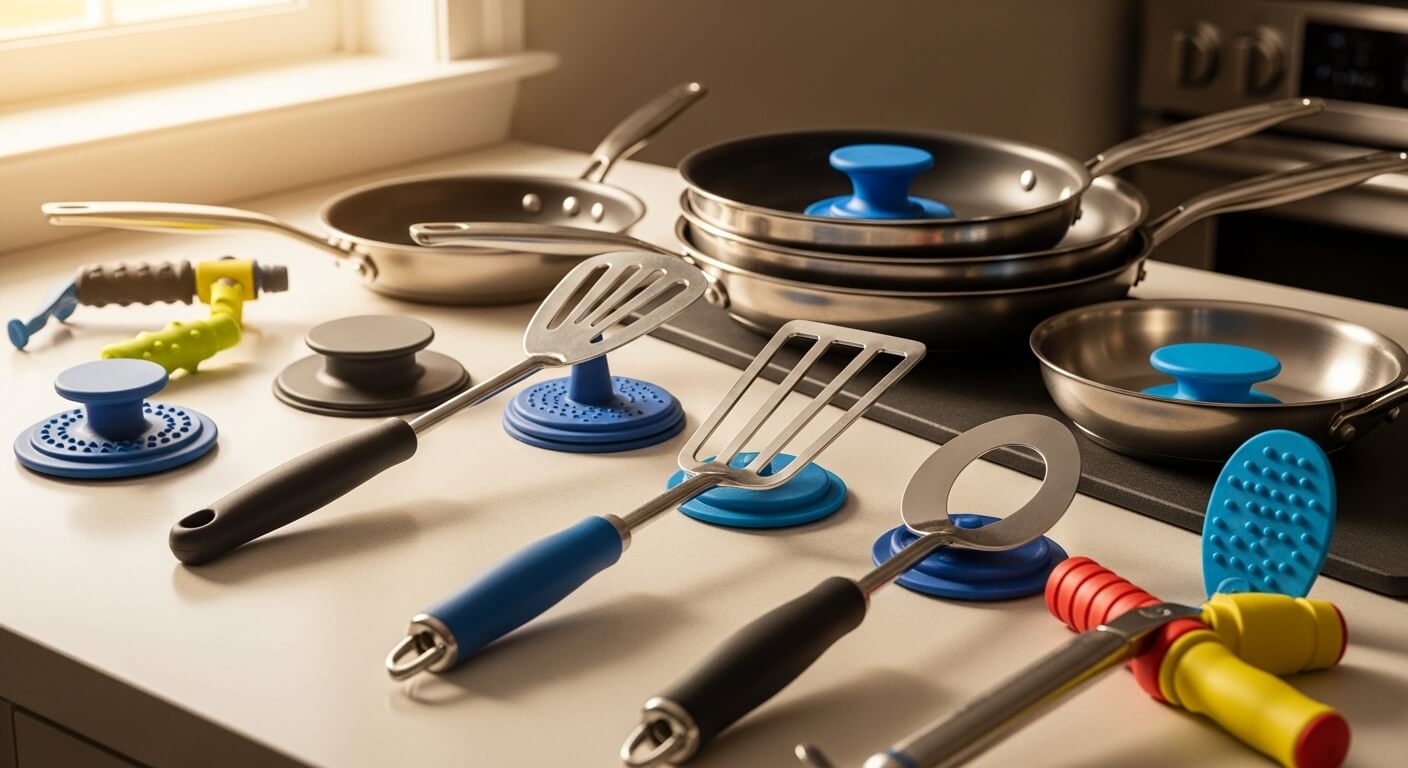
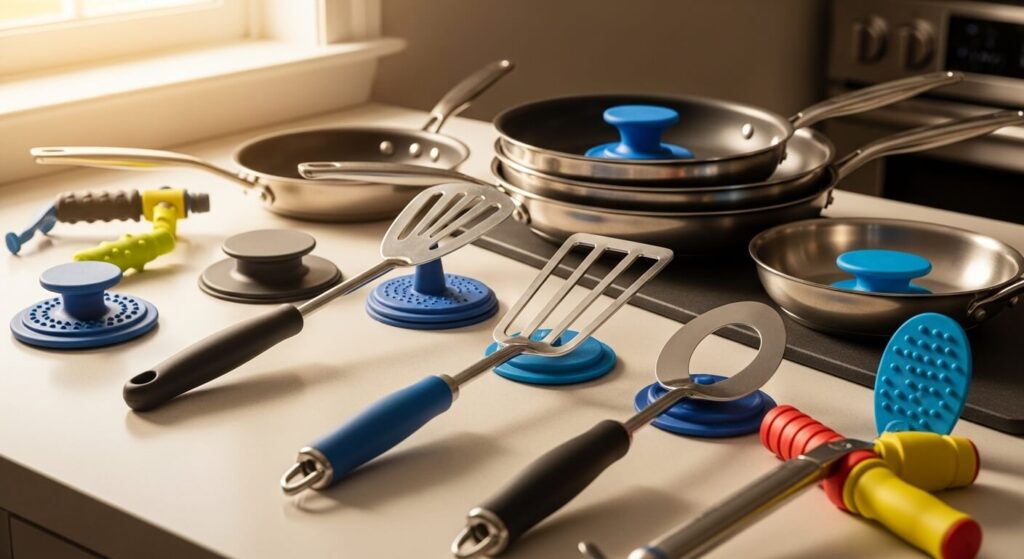
Slip-on silicone covers add bulk to thin handles (easier gripping) and provide heat protection so you don’t need pot holders.

They cost $5-15 per cover. Cheap modification that makes immediate difference.

Heat-Resistant Grip Attachments

Some companies make ergonomic grips that attach to pan handles with screws or clamps. These reshape the handle into a more hand-friendly contour.

Lodg

e makes an aftermarket handle for their cast iron that’s much more ergonomic than the original.

DIY Handle Improvements

Wrap handle with heat-resistant silicone tape (used in plumbing) or bicycle handlebar tape. Builds up diameter, adds cushioning.

Not pretty, but functional and cheap—$10 in materials from hardware store.

When Replacement Makes More Sense

If you’re spending $30-40 on handle modifications for a $40 pan, just buy a better pan with a good handle to start.

Math sometimes favors replacement over modification.

Using Helper Tools for Pan Management

Long-Handled Spatulas and Tongs

12-14 inch spatulas and tongs keep your hands further from heat and give better leverage for flipping.

The extra length means less leaning over the pan—better for your back and shoulders, too.

Pan Holders and Stabilizers

Silicone hot pads with raised edges can stabilize a pan on the counter while you’re loading or unloading food.

Prevents rolling or sliding, which reduces how tightly you need to grip to maintain control.

Oven Mitts with Better Grip

Traditional oven mitts are slippery. Silicone-lined mitts or mitts with grippy palms provide more secure hold with less squeeze force.

Better grip means less hand fatigue and less chance of dropping hot pans.

Two-Handed Lifting Aids

Some pot holders come as connected pairs—you use both hands simultaneously to lift, distributing weight across both arms instead of stressing one wrist.

Works best for transferring pans from stovetop to counter or oven.

Stove Setup Optimization

Keeping Skillets on Burners Between Uses

If you use the same pan daily, leave it on the stove (cool, obviously). Eliminates storage lifting and retrieval lifting.

Not always practical, but when possible it saves two lifts per day—14 per week.

Counter-Adjacent Cooling Stations

Trivet or heat-proof mat right next to the stove. Minimal carry distance—maybe 12 inches instead of 4 feet to the main counter.

Shorter carry means less time supporting weight, less chance of losing control.

Trivet Placement for Easy Transfers

Put trivet in position before you start cooking. One less thing to fiddle with while holding a hot pan.

Small preparation step that reduces stress during the actual cooking.

Minimizing Carry Distances

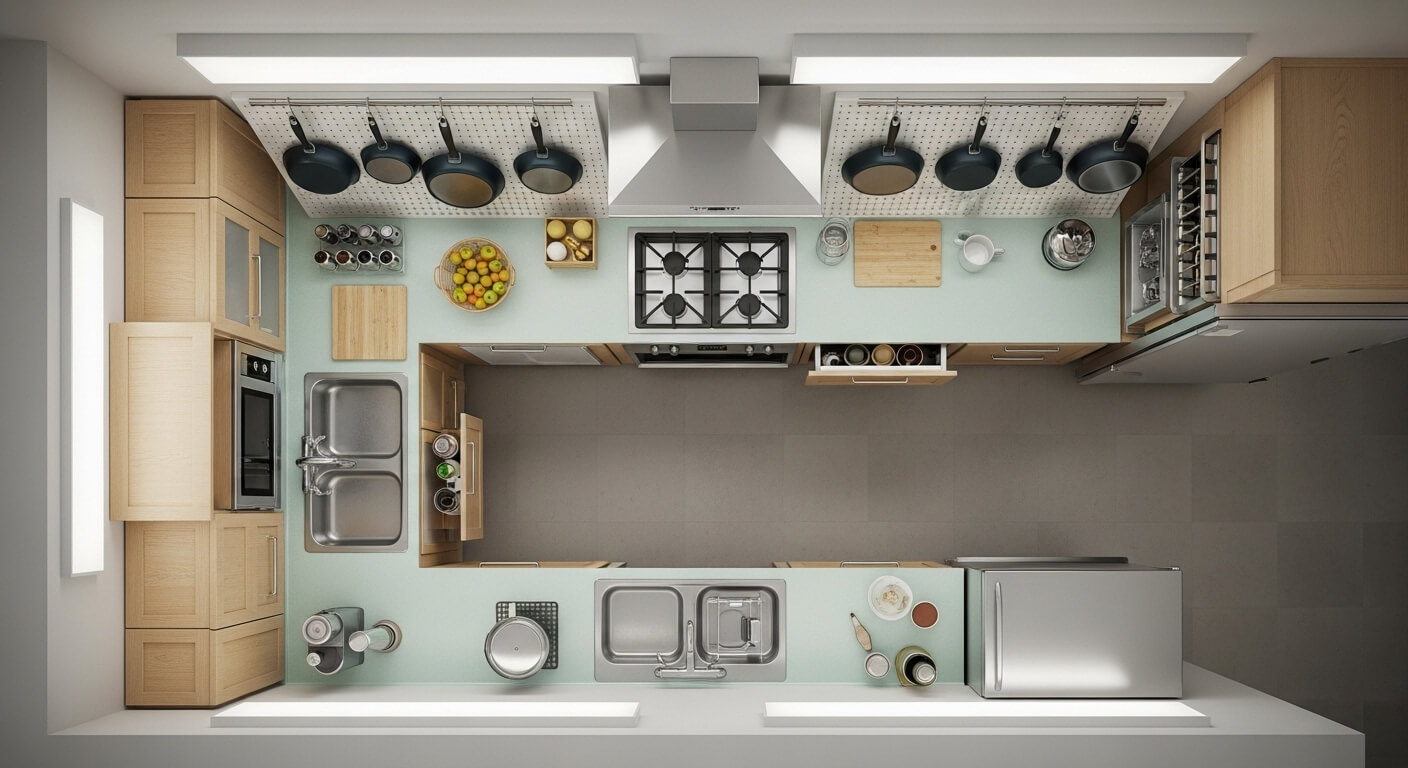
Rearrange your kitchen so commonly-used items are within arm’s reach of the stove. Less walking while carrying hot, heavy things.

This applies to plates, utensils, ingredients—everything. Efficiency equals less physical stress.

Adaptive Cooking Tools

Lightweight Metal Utensils

Aluminum or titanium spatulas weigh ounces instead of the 3-4 ounces stainless steel utensils weigh.

Seems minor but when you’re holding a spatula for 10 minutes while tending food, those ounces matter.

Angled Spatulas for Easier Flipping

Offset or angled spatulas let you slide under food more easily—less wrist bending required. Your wrist stays closer to neutral position.

Better for arthritis than straight spatulas that require more wrist flexion.

Spring-Loaded Tongs

Spring-loaded tongs open automatically when you release pressure. You’re only squeezing to grip, not fighting to keep them open.

Regular tongs require constant squeeze force in both directions. Spring-loaded saves effort.

Long-Handle Options for Distance

As mentioned earlier, length matters. 12-14 inch tools versus 8-10 inch tools keep you further from heat and give better leverage.

Worth upgrading even if your current tools work—the ergonomic benefit compounds over time.

Protein Selection and Prep for Low-Impact Searing

Choosing thinner cuts like chicken cutlets and fish fillets reduces cooking time and pan handling, while proper room-temperature resting and pre-seasoning eliminate mid-cook interventions that require touching hot pans.

Best Proteins for Arthritis-Friendly Searing

Thin-Cut Steaks and Chops

Half-inch thick cuts cook in 6-8 minutes total. One-inch thick cuts take 12-15 minutes. The difference in hand strain is significant.

Thin cuts also weigh less—lighter food makes lighter total pan weight during cooking.

Chicken Cutlets and Tenders

Pounded chicken breast (quarter-inch thick) cooks in 4-5 minutes total. Perfect for low-impact searing.

Tenders are naturally thin—no pounding required. They’re also small, so you can use a smaller, lighter pan.

Fish Fillets and Scallops

Most fish fillets are naturally thin. Salmon, cod, halibut—all cook quickly with minimal handling.

Scallops are even better—90 seconds per side. In and out in 3 minutes flat.

Plant-Based Protein Options

Tofu slices, tempeh, portobello mushroom caps—all sear beautifully and weigh almost nothing.

Lighter protein means you can use a lighter pan or fit more in one cooking session.

Pre-Cooking Preparation That Reduces Handling

Room Temperature Resting Benefits

Cold protein hits a hot pan and drops the temperature dramatically. You need higher heat longer to compensate, which means more active cooking time.

Room-temp protein (sit out 20-30 minutes) cooks faster and more evenly. Less time at the stove.

Pat-Dry Techniques for Better Searing

Surface moisture prevents browning—the energy goes to evaporating water instead of creating crust. Dry protein browns in half the time.

Pat dry with paper towels before seasoning. This prep step saves time and handling later.

Pre-Seasoning to Eliminate Mid-Cook Steps

Season before cooking. Don’t try to season mid-cook while managing a hot pan with one hand.

Salt, pepper, whatever spices you want—all go on before the protein touches the pan.

Portion Sizing for Single Flips

Uniform thickness means uniform cooking. Uneven pieces require adjusting position in the pan, multiple flips to even things out.

Pound to even thickness or cut to uniform size. Preparation effort pays off in reduced cooking effort.

Marinating for Tenderness and Flavor

Shorter Cooking Times from Tenderization

Tenderized meat cooks faster. Marinades with acidic components (vinegar, citrus, yogurt) break down proteins externally.

Faster cooking equals less time handling hot pans. Win.

Reduced Need for High Heat

Well-marinated proteins develop flavor from the marinade itself, not just from the sear. This means you can use slightly lower heat and still get delicious results.

Lower heat equals less smoke, less splatter, easier overall.

Flavor Development Without Excessive Searing

If you’ve marinated for 2-4 hours, you don’t need a super-aggressive sear to create flavor—the marinade handled some of that.

Light sear for texture, marinade for flavor. Division of labor.

Anti-Inflammatory Marinade Ingredients

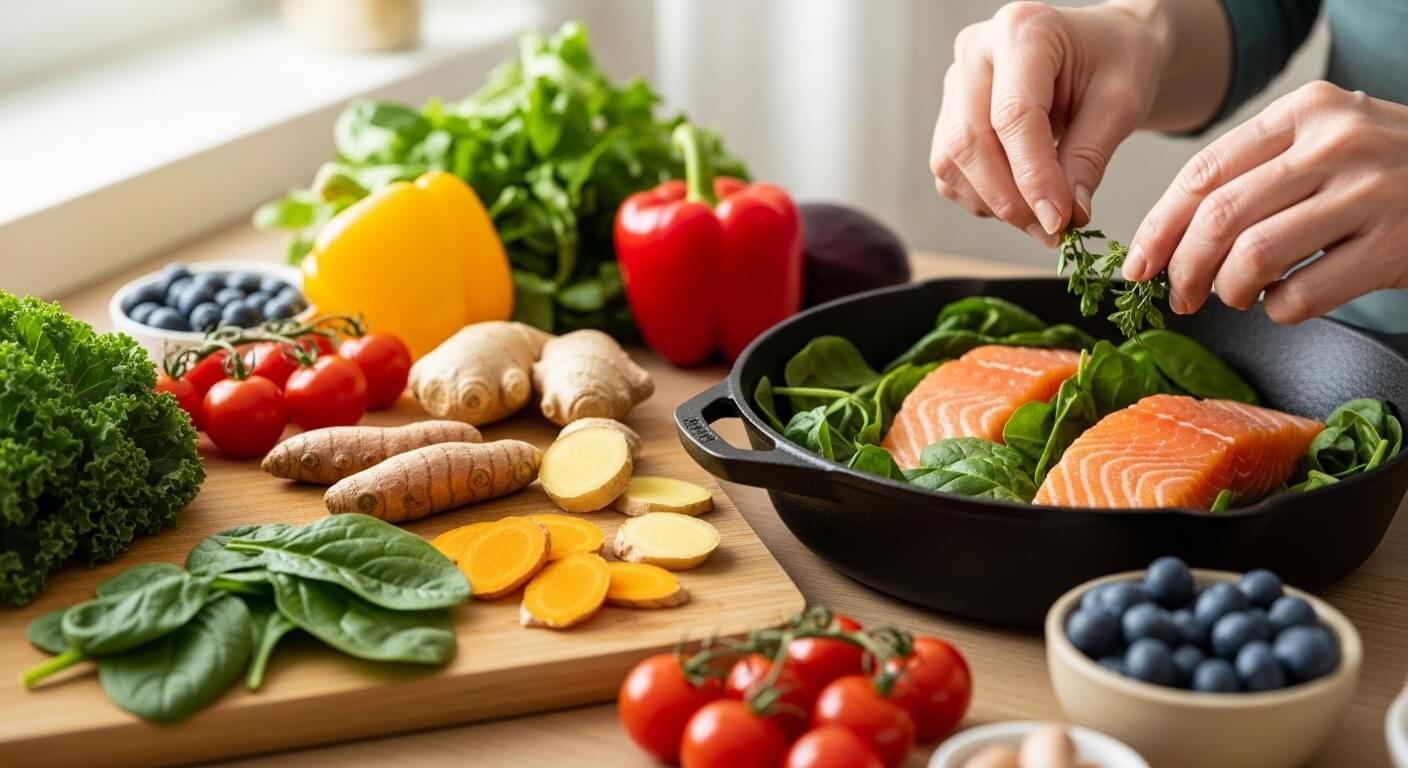
Turmeric, ginger, garlic, olive oil—all have anti-inflammatory properties and all work great in marinades.

You’re not just tenderizing meat, you’re adding ingredients that fight your arthritis. Smart cooking.

Thickness Considerations

Thinner Cuts Cook Faster

This point bears repeating because it’s that important. Thick proteins mean long cooking times and extended pan handling.

Request thin cuts at the butcher counter or pound them thin yourself (on days when your hands can handle it).

Reducing Total Cooking Time

Every minute less at the stove is less strain on your hands, less standing time for your back and knees.

Thin proteins can cut cooking time by 50% or more. That’s substantial.

Even Cooking Without Constant Monitoring

Thin proteins cook through quickly enough that you don’t need to worry about gray bands of overcooked meat surrounding raw centers.

This means less temperature anxiety, less thermometer checking, less fiddling generally.

Pounding Techniques for Uniform Thickness

Put protein between plastic wrap or in a freezer bag. Pound with meat mallet or heavy pan (on good hand days) until even.

Or ask your butcher to do it—many will for free or a small fee.

Temperature Management for Easier Searing

Managing searing temperature with medium-high heat instead of maximum heat, proper pre-heating to reduce mid-cook adjustments, and strategic use of oven finishing creates excellent browning with 40-50% less stovetop handling time.

Lower-Temperature Searing Methods

Medium-High Versus Maximum Heat

Full-blast heat creates tons of smoke, aggressive splatter, and burns food faster than you can react if you’re not hovering over it.

Medium-high (75% heat on most stoves) browns beautifully with way less drama. And it gives you margin for error—arthritis-friendly cooking.

Achieving Maillard Reaction at 350-400°F

The Maillard reaction starts around 285°F and accelerates between 300-400°F. You don’t need 500°F+ to get browning.

Lower temp just means slightly longer sear time—which is fine when you’re not actively manipulating the pan constantly.

Longer Searing Time, Less Intensity

Six minutes at medium-high versus four minutes at maximum heat. Yes, it’s longer. But it’s passive time—you’re waiting, not working.

That’s the trade-off for reduced splatter and easier heat management.

Reduced Smoke and Splatter

Lower heat means less violent oil reactions. Oil smokes at specific temperatures—stay below the smoke point and you get way less smoke.

Less splatter means less mid-cook wiping and cleanup. Less overall mess to deal with.

Proper Pre-Heating for One-Flip Success

Heat Testing Without Thermometers

Water droplet test: flick a drop of water in the pan. If it sizzles immediately and evaporates in 1-2 seconds, you’re ready.

If it just sits there, not hot enough. If it balls up and rolls (Leidenfrost effect), too hot.

Visual Cues for Readiness

Oil shimmers and flows like water when the pan’s hot enough. If oil pools and looks thick, keep heating.

Also watch for wisps of smoke (not clouds—wisps). That’s your visual cue that the pan’s approaching searing temp.

Consistent Results Through Patience

Rushing the preheat is the number one cause of sticking and uneven browning. Patient preheating—3-5 minutes depending on pan material—makes everything easier.

Better preheat means less mid-cook fiddling. That’s less work for your hands.

Using Oven for Even Heating

Starting Proteins in Cold Oven

Controversial but it works: put protein in a cold oven, set to 250°F, let it heat up gradually. Once it reaches temp (45-60 minutes later), crank to 500°F for 5 minutes to brown.

Zero stovetop handling. All oven. Unorthodox but legitimate.

Slow Temperature Rise Benefits

Gradual heating cooks proteins more evenly—no temperature shock, less moisture loss, more tender results.

For seniors who prioritize ease over speed, this method wins.

Finishing Under Broiler for Crust

Any cooking method can finish under the broiler. Stovetop, oven, sous vide—doesn’t matter. End with 2-3 minutes under the broiler.

Broiler is top-down radiant heat. Creates crust without flipping. Perfect for arthritis.

Minimal Stovetop Time Required

Hybrid methods can reduce stovetop time to 5 minutes or less per cooking session. The rest happens hands-off in the oven.

This is the key to sustainable searing with arthritis—minimize active handling, maximize passive cooking.

Heat Retention Strategies

Resting Pan Off Heat During Prep

If you’re preheating while you prep ingredients, pull the pan off the burner once it’s hot. Resting off-heat for 2-3 minutes won’t cool it significantly but eliminates wasted energy.

Also reduces time the handle is getting hot—safety benefit.

Maintaining Temperature Between Batches

Searing multiple batches? Leave pan on medium between batches instead of full heat. Prevents overheating and reduces temperature recovery time needed.

Also creates more forgiving timing—you’re not racing to get the next batch in before the pan cools.

Covered Cooking to Preserve Heat

Mentioned before but worth repeating: lids trap heat. Covered second-side cooking often needs lower burner settings because you’re not losing heat to the air.

Lower settings mean less aggressive heating, easier temperature control.

Energy-Efficient Cooking Methods

Bonus: these low-impact methods also use less energy. Lower heat, shorter burner time, residual heat usage—all save electricity or gas.

Your wallet benefits alongside your joints.

Oil and Fat Selection for Low-Impact Searing

Choosing high-smoke-point oils like avocado (520°F) or refined coconut oil prevents smoking and reduces splatter, while proper oil quantity (thin film, not pooling) and strategic butter addition after searing creates flavor without the burn risk of high-heat dairy.

High Smoke Point Oils for Safety

Avocado Oil (520°F)

Highest smoke point of common cooking oils. You can sear aggressively without smoke filling your kitchen.

Mild flavor, healthy fat profile (monounsaturated), widely available. Perfect searing oil.

Refined Coconut Oil

Refined coconut oil (not virgin—that’s only 350°F) handles 450°F easily. Slight coconut flavor that works well with certain proteins.

Solid at room temperature, so it’s easier to scoop with arthritic hands than pouring from a bottle.

Grapeseed Oil Benefits

Neutral flavor, 420°F smoke point, inexpensive. Good all-purpose searing oil.

Lighter than olive oil (which smokes at 375-400°F depending on quality), cheaper than avocado oil.

Avoiding Low Smoke Point Options

Skip butter, extra virgin olive oil, unrefined nut oils for actual searing. Save these for finishing.

They smoke, they burn, they create acrid flavors. Not worth the hassle.

Proper Oil Amount for Searing

Thin Film Versus Pooling

You need enough oil to create contact between pan and protein—maybe 1-2 tablespoons for a 12-inch pan. Not a quarter-inch deep pool.

Too much oil splat ters more, creates greasier results, and wastes money.

Reducing Splatter Through Technique

Thin oil layer, dry protein, proper temperature—this combination minimizes splatter.

Also helps to let oil settle for 10-15 seconds after adding it before adding protein. Let it get evenly hot.

Even Distribution Methods

Swirl pan to coat bottom evenly. Or use a brush to spread oil (on days when your hands can handle the brush manipulation).

Even coating prevents hot spots and sticking.

Oil Misting for Control

Oil sprayers (Misto-style pump sprayers) give you precise control and use minimal oil. Great for arthritis—one-handed pump operation.

Aerosol sprays work too but often contain propellants. Pump sprayers are cleaner.

Butter and Finishing Fats

Adding After Searing for Flavor

Butter in the pan for the last 30 seconds of cooking. It foams, browns, tastes amazing.

But at searing temps, butter burns immediately. Save it for the end—baste the protein with the foaming butter off-heat.

Compound Butter Techniques

Make compound butter (butter mixed with herbs, garlic, etc.) ahead of time. Top hot protein with a disk of it. Melts and flavors without you handling the pan at all.

Pre-made flavor bomb that requires zero mid-cook effort.

Reducing Burn Risk

Anything you add mid-cook is a potential hand injury waiting to happen—hot pan, your hands near it, trying to add ingredients. Minimize this.

Compound butter on the plate eliminates the risk entirely.

Flavor Enhancement Without High Heat

Finishing fats add richness without requiring high temperatures. This principle applies beyond butter—flavored oils, pan sauces, chimichurri, whatever.

Cook simply, finish flavorfully. Easier on your hands.

Anti-Inflammatory Fat Choices

Omega-3 Rich Oils

Flaxseed oil, walnut oil (both too low smoke point for searing but great for finishing), and fish oil (okay, that’s weird in a pan, but omega-3s from fish itself count).

These fats actively reduce inflammation while adding flavor.

Extra Virgin Olive Oil Considerations

EVOO for drizzling after cooking, not during high-heat searing. Smoke point’s too low (375-405°F depending on quality).

But it’s loaded with anti-inflammatory polyphenols. Use it—just not for the sear itself.

Avoiding Trans Fats and Damaged Oils

Repeatedly heated oils (like deep-fry oil reused multiple times) and any oil heated past its smoke point contain damaged fats that increase inflammation.

Fresh oil, used once, not overheated. That’s the standard.

Joint Health Benefits from Fat Selection

Diet affects arthritis. This isn’t pseudo-science—omega-3s reduce inflammatory markers measurably. Good fats help your joints.

Cooking with arthritis-friendly fats is treating your condition while making dinner.

Timing and Technique for Minimal Handling

Mastering single-flip searing technique based on visual release cues, adopting hands-off set-and-forget timing methods, and incorporating rest periods between cooking steps reduces total hand contact with hot pans by 60-70%.

The Perfect Single-Flip Sear

When to Flip: Visual and Tactile Cues

Edges browning and protein releases easily when you slide a spatula under it. That’s your cue.

If it’s sticking, it’s not ready. Forcing it tears the crust. Wait another minute.

Releasing When Ready Principle

Proteins stick initially, then release as the sear develops. This is universal—works for fish, chicken, steak, everything.

Trust the process. Resist the urge to check constantly.

Avoiding Premature Flipping

Biggest mistake in searing: flipping too early because you’re impatient or anxious. This tears the crust, creates ugly presentation, and often requires multiple re-flips to fix.

One patient flip beats three impatient ones. Less work for your hands.

Second Side Timing

Second side usually needs 20-30% less time than first side. The protein’s already partially cooked from the first side, so it finishes faster.

If first side took 5 minutes, second side might only need 3-4. Watch for doneness cues.

Hands-Off Cooking Methods

Set-and-Forget Approach

Add protein to hot pan. Set timer. Walk away. Don’t hover, don’t peek, don’t fidget.

Timer goes off, flip, set timer again, walk away again. That’s the entire hands-on work—two flip actions.

Trusting the Process

This requires practice and confidence. You need to know your equipment and your timing.

But once dialed in, it’s liberating. You’re free to sit down, rest, do other prep—not chained to the stove.

Audio Cues for Doneness

Searing sounds change as protein cooks. Initial violent sizzle calms to gentle bubbling when first side is nearly done.

Learn to recognize these audio cues—they’re as reliable as visual ones and don’t require you to hover over the pan.

Smell-Based Timing

You can smell when browning is happening. Sweet, nutty, toasty scents indicate Maillard reaction in progress.

Acrid or sharp smells indicate burning—turn heat down. Your nose is a cooking tool.

Reducing Total Active Cooking Time

Efficient Mise en Place

Everything prepped and ready before you turn on the stove. Protein seasoned, oil measured, tools in reach, plates ready.

Efficient prep means continuous cooking without pauses. Less total time standing, less total time handling hot pans.

Continuous Cooking Without Breaks

Once you start, finish. Don’t cook one side, then realize you need to prep something else, then come back. That extends total cooking time and requires reheating the pan.

Straight through from start to finish is fastest and easiest on your body.

Batch Prep Strategies

Prep multiple proteins at once. Sear all of them in one session (on a good hand day). Refrigerate what you don’t eat immediately.

Concentrated effort beats distributed effort when you’re managing arthritis.

Speed Versus Stress Balance

Faster isn’t always better if it increases stress on your joints or creates safety issues. Sustainable pace beats maximum speed.

Cook at the pace your hands can handle comfortably. That’s the right speed.

Rest Periods That Save Hands

Letting Proteins Rest Before Cutting

All proteins benefit from 5-10 minute rest after cooking. Juices redistribute, temperature evens out.

This built-in rest period is time for your hands to recover from cooking before you’re plating and serving.

Pan Cooling Time for Safe Handling

Never wash a hot pan—thermal shock can warp it. Let it cool 10-15 minutes minimum.

This forced wait gives your hands recovery time. Don’t fight it—embrace it as built-in rest.

Multi-Tasking During Rest

While protein rests, make a quick pan sauce (if your hands can handle it) or prep sides.

Or just sit down. Rest is productive—it prevents overuse injuries and flare-ups.

Carryover Cooking Benefits

Thick proteins continue cooking during rest due to residual heat. You can pull them from heat slightly early (accounting for carryover), which reduces total cooking time.

Shorter cooking means less time handling the pan. Five degrees of carryover can save you 1-2 minutes of cooking time.

Searing Specific Foods with Arthritis Adaptations

Each protein type has specific adaptations—steaks benefit from reverse searing, chicken from pounding thin, fish from skin-down methods, and vegetables from high-heat roasting instead of stovetop searing.

Steak and Beef Cuts

Ribeye, Strip, and Tenderloin Options

Tender cuts need less cooking time than tougher cuts. Ribeye’s fat content means it browns faster—good for quick searing.

Strip and tenderloin are leaner but naturally tender. All three work great for arthritis-friendly quick searing.

Thickness Recommendations

Three-quarter inch to one inch maximum. Thicker than that and you’re stuck at the stove too long achieving proper internal temp.

Request specific thickness at butcher counter. They’ll accommodate.

Bone-In Versus Boneless Handling

Boneless is lighter and easier to maneuver in the pan. Bone-in tastes better (arguably) but adds weight and awkward shape.

For arthritis cooking, boneless wins on practicality.

Achieving Restaurant Crust at Home

Restaurant crust comes from sustained high heat and good pan contact. You can achieve this at home with proper preheat and patient cooking.

The difference between home and restaurant is often just confidence—restaurants flip once and trust it, home cooks fidget.

Chicken Breast and Thighs

Pounding for Even Cooking

Chicken breasts are thick at one end, thin at the other. This guarantees uneven cooking unless you pound them even.

Put between plastic wrap, pound to half-inch uniform thickness. Now they cook in 8-10 minutes total instead of 15-20.

Skin-On Benefits for Easier Flipping

Skin provides structure. It’s easier to flip skin-on chicken without it falling apart than skinless.

Also, crispy chicken skin is delicious. Don’t skip it just because you’re focused on ease—it actually helps.

Boneless for Lighter Pan Weight

Bone adds weight and no real benefit for quick searing. Boneless breast or boneless thighs are the move.

Save bone-in for braises and slow cooking where the bone contributes to the dish.

Safe Internal Temperatures

Chicken to 165°F. No exceptions. Pinkness in chicken is not acceptable—don’t try to cook it rare like beef.

Use a thermometer. Guessing risks food poisoning, which is worse than overcooked chicken.

Fish and Seafood Searing

Delicate Fish Handling Techniques

Fish is fragile. Use a wide, thin spatula (fish spatula—they exist for a reason). Slide under gently.

Don’t press down. Don’t poke. Minimal contact until it’s time to flip.

Skin-Down Method for Stability

Skin-on fish filets: start skin-side down. Skin protects the flesh and provides structure for flipping.

Most of the cooking happens skin-side down—4-5 minutes. Then flip for just 1-2 minutes flesh-side. Easy.

Scallop Searing Simplicity

Scallops are the easiest protein to sear. Dry them well (moisture is the enemy). Hot pan, 90 seconds per side. Done.

Golden brown exterior, translucent center. Perfect every time with minimal handling.

Shrimp Quick-Sear Approach

Shrimp cook in literally 2-3 minutes total. High heat, 90 seconds per side, don’t overcook (they get rubbery).

This is ideal for arthritis—minimal pan time, fast results.

Vegetable Searing for Flavor

Portobello Mushrooms as Meat Alternative

Meaty texture, takes searing beautifully. Gill-side down first to brown, then flip. Substantial enough to feel like a real meal.

Weighs nothing—lighter than any protein. Easy on the pan, easy on your hands.

Zucchini and Summer Squash

Slice thick (half-inch rounds), sear cut sides. Takes 3-4 minutes per side. High heat makes them sweet and caramelized instead of soggy.

Light vegetables, light pan required. Perfect combination.

Asparagus and Green Beans

Dry them well, high heat, 4-5 minutes total with occasional stirring. They char and blister—incredible flavor.

Or oven-sear at 500°F—spread on sheet pan, roast 10 minutes, flip, 5 minutes more. Zero stovetop handling.

Root Vegetable High-Heat Roasting

Carrots, parsnips, turnips—cut thick, toss with oil, roast at 450°F for 30-40 minutes, flipping once.

This is oven searing. High-heat Maillard browning without any stovetop work. Completely hands-off except for the one flip.

Dealing with Smoke and Splatter

Managing smoke and splatter through proper ventilation, mesh splatter guards that allow steam release, controlled oil temperature, and protective clothing prevents burns and reduces cleanup effort.

Ventilation Setup for Safer Searing

Range Hood Use and Maintenance

Turn the hood on before you start cooking, not when smoke appears. Prevention beats reaction.

Clean the filter monthly—grease buildup reduces effectiveness. Most filters are dishwasher-safe.

Window Opening for Cross-Breeze

Window near the stove plus hood creates cross-ventilation. Fresh air comes in the window, smoke goes out the hood.

Works way better than hood alone.

Portable Fans for Smoke Direction

Point a small fan toward the hood from across the room. It pushes smoke toward the exhaust.

Cheap ($20), effective, requires zero installation.

Air Quality Considerations

Cooking smoke irritates lungs, especially in seniors. Good ventilation isn’t optional—it’s health-protective.

If you find yourself coughing during cooking, your ventilation needs improvement.

Splatter Guards and Screens

Mesh Screens That Allow Steam Release

Fine mesh splatter screens catch oil droplets but let steam escape. Critical—if steam can’t escape, you’re basically steaming the protein instead of searing it.

Look for screens with very fine mesh (not the coarse ones).

Reducing Oil Splatter Injuries

Splatter burns hurt and they take forever to heal on senior skin. Prevention is everything.

Screens block 80-90% of splatter. That’s the difference between minor annoyance and actual injuries.

Easy-Clean Options

Stainless steel mesh screens are dishwasher-safe. Silicone-edged ones wipe clean easily.

Avoid screens with wooden handles—they’re not dishwasher-safe and deteriorate faster.

Storage and Accessibility

Flat screens store easily—hang on a hook or lay flat in a drawer. They should be within easy reach because you’ll use them every time you sear.

If storage is awkward, you won’t use it. Make it convenient.

Controlling Oil Temperature

Preventing Smoking Through Heat Management

Oil smokes when it exceeds its smoke point. Simple as that. Stay below the smoke point, no smoke.

For avocado oil at 520°F smoke point, even full-blast home burner won’t reach that. For olive oil at 375°F, medium-high heat will.

Monitoring Without Constant Attention

Once the pan’s preheated and you add oil, you’re mostly done adjusting. Only tweak if you see excessive smoke.

Set it and leave it—trust your initial heat setting.

Visual Smoke Indicators

Wisps of smoke: fine, you’re at the edge of searing temp. Billowing clouds: too hot, turn it down immediately.

Use your eyes. They’re reliable indicators.

Adjusting Heat Mid-Cook

If smoke appears, reduce heat slightly. The pan retains enough heat to keep searing while the burner cools down.

Small adjustments, not dramatic swings. 25% heat reduction usually fixes smoke issues.

Protective Clothing and Equipment

Long-Sleeved Cooking Shirts

Cotton long sleeves protect your arms from splatter. Old long-sleeve tee works fine.

Yes, it’s warmer. Trade-off for burn prevention.

Aprons with Full Coverage

Bib apron protects chest and stomach from splatter. Grease on clothes happens, burns on skin are worse.

Get one you can throw in the washing machine—it’ll get grease-stained quickly.

Oven Mitts Versus Pot Holders

Oven mitts provide more coverage but reduce dexterity. Pot holders require more hand strength.

Try both, see what works for your specific arthritis presentation. No wrong answer—whatever keeps you safe.

Face Protection for Severe Splatter

If you’re searing something particularly splattery (skin-on chicken thighs come to mind), safety glasses aren’t ridiculous.

Hot oil in the eye is a medical emergency. Glasses prevent it.

Cleaning and Maintenance for Seared Skillets

Easier skillet cleaning uses deglazing while pans are hot, soaking instead of scrubbing, and choosing dishwasher-safe materials when possible—reducing post-cooking hand strain by 50-60%.

Easier Cleaning Methods for Arthritic Hands

Deglazing While Pan Is Hot

Immediately after removing food, while pan’s still hot, pour in quarter-cup water or wine. It’ll steam and bubble violently—that’s fine.

The steam loosens stuck-on bits. After 30 seconds, wipe with a paper towel (using tongs to hold it—don’t burn your hands).

Soaking Instead of Scrubbing

Pour hot water in the pan after deglazing. Let it sit 15-30 minutes. Most residue will soften and wipe away.

Soaking is passive. Scrubbing is active and hard on hands. Choose passive.

Using Bar Keeper’s Friend

For stuck-on bits that soaking doesn’t fix, Bar Keeper’s Friend (oxalic acid powder) works magic on stainless steel.

Sprinkle it in, add water to make paste, let sit 5 minutes, wipe. Minimal scrubbing required.

Dishwasher-Safe Skillet Benefits

If you’re buying new, prioritize dishwasher-safe materials. Stainless steel, hard-anodized aluminum (check manufacturer specs), some enameled options.

Zero hand scrubbing required. Huge win for arthritis.

Maintaining Searing Surfaces

Carbon Steel Re-Seasoning

Carbon steel needs occasional re-seasoning like cast iron. Thin oil layer, heat until it smokes, cool, repeat.

Do this every few months or when food starts sticking. It’s work, but less work than cast iron because carbon steel heats faster.

Stainless Steel Polishing

Bar Keeper’s Friend also polishes stainless to a shine. Nice but not necessary for performance.

Skip it if your hands hurt. Functional matters more than pretty.

Nonstick Coating Care

Never use metal utensils on nonstick (scratch the coating). Never heat empty (damages coating). Hand wash if possible (dishwashers are harsh on nonstick).

But honestly, if hand washing hurts too much, dishwasher it anyway—you can replace a $40 nonstick pan every few years.

Preventing Rust and Damage

Carbon steel rusts if left wet. Dry immediately after washing, wipe with thin oil layer.

Or switch to stainless if rust maintenance is too annoying. Stainless doesn’t rust.

Reducing Cleanup Frequency

Proper Storage Between Uses

Dry, seasoned carbon steel can go several uses between washings if you’re just searing similar foods. Wipe it out, wipe it down with oil, store it.

This isn’t for everyone (some people need things clean clean), but it’s traditional and it works.

Wipe-Clean Maintenance

Hot pan, paper towel with tongs, wipe out residue. That’s often sufficient between serious washings.

Reduces hand work significantly.

When to Deep Clean

Deep clean when visual inspection shows buildup, or when food starts sticking more than usual.

You’ll know. Don’t force a schedule if it’s not needed.

Protective Coating Application

Thin oil wipe-down after cleaning prevents rust (carbon steel) and keeps seasoning intact. It’s quick—30 seconds.

This small maintenance step prevents bigger restoration work later.

Assistive Cleaning Tools

Long-Handled Brushes

Dish brush with 8-10 inch handle keeps your hands away from hot surfaces and reduces wrist bending.

Better leverage too—less force required.

Chainmail Scrubbers for Less Effort

Stainless steel chainmail (yes, like medieval armor) scrubs off stuck bits with less elbow grease than traditional scrubbers.

Works great on cast iron and carbon steel. Not for nonstick—too abrasive.

Scrub Daddy and Ergonomic Sponges

Scrub Daddy changes texture with temperature—firm in cold water (good scrubbing), soft in warm water (gentle cleaning).

Ergonomic shape fits your palm better than flat sponges. Easier gripping.

Electric Brush Options

Power scrubbers for dishes exist—battery-powered rotating brushes. They do the scrubbing work, you just guide them.

Expensive ($30-60) but legitimately helpful for severe hand arthritis.

Recipe Modifications for Low-Impact Searing

Traditional seared recipes adapt easily to arthritis-friendly methods by incorporating oven-finishing, using one-pan approaches that combine protein and vegetables, and pre-searing proteins during weekly batch cooking sessions.

Adapting Traditional Seared Recipes

Pan-Roasted Chicken Modifications

Traditional pan-roasted chicken: sear all sides stovetop, finish in oven. Lots of flipping, lots of handling.

Modified: sear skin-side down only (4-5 minutes), flip once, straight to oven. Two flips total instead of six.

Simplified Steak au Poivre

Classic steak au poivre requires making a pan sauce with cream and brandy—lots of pan manipulation.

Simplified: sear steak normally, remove to rest, make sauce separately in a small saucepan. Two vessels instead of one, but way less heavy-pan handling.

Easy Pan-Seared Salmon

Salmon sticks like crazy if you rush it. Modified method: cold nonstick pan, salmon skin-side down, turn heat to medium. As pan heats, salmon cooks gently and releases easily.

Once skin is crispy (6-8 minutes), flip for 1 minute flesh-side, done. One flip, minimal sticking.

Lighter Versions of Classics

Any recipe calling for cast iron can use carbon steel or stainless instead. Weight is the variable you’re changing—technique stays the same.

Don’t feel bound to traditional equipment when lighter options exist.

One-Pan Seared Meals

Protein Plus Vegetables

Sear protein first, remove to rest. Add vegetables to the same pan (now flavored with protein drippings), cook them. Return protein at the end to heat through.

One pan, complete meal, logical sequence.

Deglazing for Pan Sauce

After removing protein and vegetables, deglaze the pan with wine, broth, or water. Reduce slightly, season, pour over food.

This uses the flavorful fond (stuck bits) instead of scrubbing it away. Easier cleanup, better flavor.

Complete Nutrition, Minimal Handling

Protein, vegetables, starch (optional)—all from one pan. You’ve touched the pan maybe three times total: adding protein, flipping protein, adding vegetables.

Efficient cooking equals less hand strain.

Timing Sequential Additions

Protein first (needs highest heat), then hardy vegetables (moderate heat), then delicate vegetables or greens (low heat, quick cook).

Understanding this sequence lets you build complete meals logically.

Pre-Seared Meal Prep

Searing Proteins in Advance

Sunday: sear four chicken breasts, two steaks, batch of shrimp. Refrigerate.

Monday-Thursday: reheat one protein per day with fresh sides. You’re searing once instead of four times.

Refrigeration and Reheating

Seared protein keeps 3-4 days refrigerated. Reheat gently (300°F oven or low stovetop) to avoid overcooking.

You won’t get fresh-seared crust, but the flavor’s still there.

Maintaining Crust Quality

Reheat in dry heat (oven) rather than microwave (which steams and softens crust). 10 minutes at 300°F revives most proteins well.

Not perfect, but good enough for weeknight meals.

Weekly Batch Searing Sessions

One cooking session per week beats daily cooking if your arthritis is severe. Concentrate the effort, rest the rest of the week.

Not everyone can or wants to do this, but it’s an option.

Slow-Cooker and Instant Pot Integration

Searing Before Slow Cooking

Many slow cooker recipes benefit from initial searing for color and flavor. Do this, but do it efficiently—quick sear, straight into the slow cooker.

The slow cooker does the rest of the work.

Using Sauté Function on Pressure Cookers

Instant Pots and similar electric pressure cookers have sauté modes that hit searing temps. You can brown directly in the pot.

One vessel for sear and pressure cook. Less dish-washing, less overall handling.

Minimal Transfer Between Vessels

Every transfer is an opportunity for spills, burns, and joint strain. Minimize them.

Cooking entirely in one vessel from start to finish is ideal when possible.

Flavor Development Shortcuts

Searing isn’t the only way to develop flavor. Pressure cooking, slow cooking, and braising all create delicious results through different chemical processes.

Don’t feel obligated to sear everything. Sometimes stewed or braised is easier and just as good.

Building Confidence with Low-Impact Searing

Starting with easier proteins like ground meat patties and thin cutlets, gradually building skills by mastering one technique before adding complexity, and tracking improvement helps seniors develop sustainable searing confidence despite arthritis.

Starting with Easier Proteins

Ground Meat Patties

Burgers are incredibly forgiving. Press into patties, season, sear 4 minutes per side. Hard to mess up.

Ground meat is cheap, so mistakes don’t cost much. Perfect for practice.

Thin Chicken Cutlets

Pounded chicken breast cooks fast, flips easily, shows you clear visual cues for doneness (color changes from pink to white).

Master this before attempting thick steaks.

Firm Fish Like Halibut

Halibut is sturdy enough that it won’t fall apart on flipping, unlike delicate sole or flounder.

Good training fish that builds confidence before you tackle expensive proteins.

Tofu and Tempeh Practice

Cheap, cooks fast, very forgiving. If you ruin it, you’re out $3.

Perfect for learning heat management and timing without stress.

Gradual Skill Building

Mastering One Technique Fully

Get really good at pan-searing chicken breast before you try reverse-searing ribeye. Build skills sequentially, not simultaneously.

Depth beats breadth when you’re learning.

Adding Complexity Slowly

Week one: plain seared chicken. Week two: seared chicken with pan sauce. Week three: seared chicken with vegetables. Week four: try a different protein.

Incremental progression prevents overwhelm.

Celebrating Small Successes

You seared a steak without burning it? That’s worth celebrating. Perfection isn’t the goal—competence is.

Arthritis makes cooking harder. Acknowledge when you do it well anyway.

Tracking Improvement

Keep notes. “Chicken breast, 4 minutes per side, perfect doneness.” Now you have data for next time.

Your personal reference library beats following generic recipes that might not work with your equipment.

Understanding Common Mistakes

Flipping Too Early

The number one mistake everyone makes. Food sticks because it’s not ready to release yet.

Patience fixes this. Wait 30 more seconds when you think it’s time to flip.

Overcrowding the Pan

Cramming six chicken breasts in a 10-inch pan drops the temperature dramatically. Everything steams instead of sears.

Leave space. Cook in batches if necessary.

Insufficient Pre-Heating

Adding protein to a lukewarm pan guarantees sticking and uneven cooking. Preheat matters enormously.

Three to five minutes of preheating feels like forever but it’s essential.

Heat Too High or Too Low

Too high: burnt exterior, raw interior. Too low: gray, steamed appearance instead of brown crust.

Medium-high is the sweet spot for most searing. Adjust from there.

Developing Timing Intuition

Learning Your Equipment

Your stove, your pans—they’re unique. Gas versus electric, thick-bottomed versus thin, aluminum versus steel. All heat differently.

Recipes provide general timing. Your equipment provides actual timing. Learn the latter.

Recognizing Doneness Cues

Visual (browning, opacity changes), tactile (firmness when poked), audio (sizzle intensity), smell (toasty Maillard aromas). All indicate doneness.

The more cues you recognize, the less you need thermometers and timers.

Building Mental Database

After cooking salmon five times, you’ll internalize “salmon needs 4 minutes skin-side, 90 seconds flesh-side in my pan at my medium-high setting.”

This knowledge is more valuable than any recipe.

Trusting Experience Over Recipes

Eventually you’ll realize recipes are guidelines, not laws. Your experience trumps generic instructions.

That’s when cooking becomes intuitive instead of stressful.

Nutritional Benefits of Proper Searing

Proper searing creates the Maillard reaction that preserves vitamins and minerals while adding flavor without sodium, enhances protein digestibility, and allows seniors to meet daily protein requirements through palatable high-quality proteins.

Maillard Reaction and Nutrient Preservation

Crust Formation Science

Maillard reaction is a chemical process between amino acids and reducing sugars that creates hundreds of flavor compounds. It’s not just browning—it’s flavor creation.

Happens between 300-500°F. Below that, no Maillard. Above that, you cross into burning.

Vitamin and Mineral Retention

Quick, high-heat cooking preserves more vitamins than long, slow cooking. Water-soluble vitamins (B, C) especially benefit from minimal cooking time.

Searing locks these in.

Protein Denaturation Benefits

Denaturation (protein structure change from heat) makes proteins easier to digest. Cooked protein is more bioavailable than raw.

This matters for seniors whose digestive systems may be less efficient.

Digestibility Improvements

Properly cooked protein breaks down easier during digestion, meaning your body absorbs more of the available amino acids.

You’re getting more nutrition from the same amount of food.

Anti-Inflammatory Cooking Methods

Avoiding Char and Burning

Charred, blackened food contains compounds (HCAs, PAHs) that increase inflammation. Light golden-brown is the goal.

Sear for flavor, not for carbonization.

Proper Temperature Control

Medium-high heat creates browning without burning. This produces Maillard compounds (good) while avoiding char (bad).

Temperature control is inflammation control.

Healthy Fat Selection

Saturated and trans fats increase inflammation. Monounsaturated and omega-3 fats reduce it.

Using avocado oil or olive oil for cooking impacts your inflammation levels positively.

Adding Anti-Inflammatory Ingredients

Garlic, turmeric, ginger, rosemary—all have anti-inflammatory properties. Season your seared proteins with these.

You’re not just adding flavor—you’re adding medicine.

Protein Intake for Seniors

Muscle Maintenance Requirements

Seniors need 1.0-1.2 grams of protein per kilogram body weight daily (higher than younger adults’ 0.8g/kg) to prevent sarcopenia.

For a 150-pound person, that’s 68-82 grams daily. Hard to achieve without regular protein-rich meals.

High-Quality Protein Sources

Animal proteins (meat, fish, eggs) provide all essential amino acids. Plant proteins often lack one or more (though combinations work).

Seared proteins are typically high-quality sources.

Searing for Palatability

Flavor matters. Boiled chicken breast might be healthy, but if it’s gross, you won’t eat it.

Seared chicken breast is delicious, so you’ll actually consume the protein your body needs.

Meeting Daily Protein Goals

Three meals with 20-25 grams protein each hits the 60-75 gram target easily. One seared protein per day helps achieve this.

Consistency matters more than individual meal perfection.

Flavor Without Excessive Sodium

Building Flavor Through Browning

Maillard reaction creates savory, meaty, complex flavors that satisfy without salt. You need less seasoning when searing develops flavor naturally.

This helps seniors managing blood pressure or heart conditions.

Reducing Salt Dependency

Over-reliance on salt for flavor is common. Proper searing technique reduces how much salt you need for food to taste good.

Health benefit plus easier compliance with low-sodium diets.

Herb and Spice Enhancement

Dried herbs and spices (sodium-free) add tremendous flavor. Combine these with searing and you barely miss salt.

Experiment with combinations: smoked paprika, garlic powder, black pepper, cumin, coriander.

Natural Umami Development

Umami (savory taste) comes from glutamates. Searing creates glutamates. So does aged cheese, mushrooms, tomatoes.

Layer umami sources for deeply satisfying flavor without sodium.

Cost Considerations for Equipment Upgrades

Equipment upgrades range from budget carbon steel pans under $50 to premium titanium options over $200, with long-term value calculations favoring durable materials that reduce replacement frequency and health costs from easier cooking.

Budget-Friendly Lightweight Options

Carbon Steel Under $50

Lodge carbon steel: $30-40 for a 12-inch skillet. De Buyer Mineral B: $40-50. Both excellent quality, way less than premium stainless.

Best bang-for-buck in lightweight searing pans.

Mid-Range Aluminum Pans

Hard-anodized aluminum from Calphalon or Circulon: $50-80 for quality 12-inch pan. Dishwasher-safe, lightweight, durable.

Good middle ground between cheap and expensive.

Multi-Purpose Investments

One good 12-inch skillet handles 80% of your searing needs. Don’t buy a full set—buy the one pan that matters most.

$50 well-spent beats $200 poorly distributed across pans you won’t use.

When to Splurge

If budget allows, splurge on the pan you’ll use daily. Economy on pans you’ll use occasionally.

Priority-based spending makes sense for fixed incomes.

Long-Term Value Calculations

Durability Versus Initial Cost

$150 stainless pan that lasts 20 years costs $7.50 per year. $30 nonstick pan that lasts 3 years costs $10 per year.

Expensive doesn’t always mean lower long-term cost, but often does.

Replacement Frequency

Nonstick needs replacement every 2-5 years (coating wears out). Stainless and carbon steel last decades with care.

Factor replacement into your purchasing decision.

Health Impact Worth

Can you put a price on reduced pain? If a $100 pan means you keep cooking for yourself and avoid pre-made meals (cost, nutrition, independence loss), it’s worth it.

Health value exceeds monetary value.

Quality of Life Pricing

Lighter pan means less pain means better mood means better quality of life. That has value that’s hard to quantify but absolutely real.

Invest in tools that reduce daily suffering.

Selling or Donating Old Cast Iron

Recouping Some Investment

Used cast iron sells easily—$20-40 per pan depending on condition and brand. Facebook Marketplace, Craigslist, OfferUp all work.

That’s $20-40 toward your lightweight replacement pan.

Helping Others Who Can Use Heavy Pans

Someone younger with strong hands would love your old cast iron. It’s quality cookware—just not right for you anymore.

Pass it along. Feel good about it.

Decluttering Benefits

Fewer pans means easier storage, less decision fatigue, simpler kitchen.

Minimalism has real benefits for seniors managing limited energy.

Environmental Responsibility

Reusing and rehoming is better than trashing. Cast iron lasts generations when cared for.

Someone will use it for another 50 years.

Prioritizing Essential Upgrades

Most-Used Skillet First

That 10-inch or 12-inch pan you use daily? Upgrade that first. Immediately improves your daily cooking experience.

Specialty pans can wait.

Specialty Pans Later

Fish spatula, grill pan, small saucier—nice to have but not essential. Get the workhorse skillet sorted first.

Essentials before luxuries.

Building Collection Over Time

One pan every few months as budget allows. No rush to replace everything immediately.

Gradual improvement is still improvement.

Avoiding Unnecessary Purchases

You don’t need eight different pans. Three good pans (small, medium, large) cover almost everything.

More pans equals more storage, more cleaning, more decisions. Keep it simple.

Working with Healthcare Providers on Cooking Adaptations

Occupational therapists assess kitchen tasks and recommend equipment modifications, physical therapists provide hand-strengthening exercises that support cooking activities, and arthritis support groups offer peer-reviewed equipment recommendations and technique tips.

Occupational Therapy for Kitchen Tasks

Searing Technique Evaluation

OTs watch you cook and identify movements that stress your joints. They’ll catch things you don’t notice—awkward wrist angles, compensatory movements, inefficient technique.

Professional assessment beats self-diagnosis.

Equipment Recommendations

OTs know adaptive equipment. They’ll recommend specific brands and models based on what works for other patients with similar limitations.

Their expertise saves you trial-and-error purchasing.

Adaptive Strategy Development

Beyond equipment, OTs teach technique modifications—different ways to hold utensils, position your body, sequence tasks.

Technique changes are free and immediately applicable.

Home Visit Assessments

Some OTs do home visits to evaluate your actual kitchen. They see your space, your equipment, your workflow—recommendations become very specific.

This costs more but delivers tailored solutions.

Physical Therapy Integration

Hand Strengthening Exercises

Putty exercises, finger extensions with rubber bands, wrist curls with light weights. PT prescribes specific exercises for your weak points.

Stronger hands handle cooking better.

Grip Improvement Programs

Grip strength impacts everything in cooking. PT focuses on maintaining or improving grip through targeted exercises.

Even modest improvements make real differences in what you can handle.

Wrist Stability Work

Wrist stability exercises improve your control when lifting pans. Less wobbling, more confidence, safer handling.

Ten minutes daily of PT exercises can maintain function that would otherwise decline.

Supporting Cooking Activities

PT isn’t just about exercise—it’s about maintaining functional capacity for activities that matter to you. If cooking matters, PT should incorporate cooking-relevant movements.

Tell your PT that maintaining cooking ability is a goal.

Discussing Cooking Goals with Doctors

Maintaining Independence Importance

Cooking independence directly relates to overall independence. Doctors understand this connection.

Frame equipment and modifications as tools for maintaining independent living, not just kitchen conveniences.

Nutritional Needs and Home Cooking

Home cooking enables better nutrition, which impacts arthritis management, cardiovascular health, diabetes control—everything.

Your doctor should support modifications that keep you cooking.

Pain Management During Meal Prep

If cooking triggers pain flares, discuss this with your doctor. Medication timing, anti-inflammatory protocols, or activity modification might help.

Cooking shouldn’t be suffering.

Medication Timing Around Cooking

Some arthritis meds work best taken with food. Cooking when medication is most effective (1-2 hours after taking it) means you’re cooking at your best.

Strategic timing can make real differences.

Connecting with Arthritis Support Groups

Recipe Sharing Among Peers

Other people with arthritis have figured out techniques and recipes that work. They’ll share them freely.

Collective wisdom beats individual discovery.

Equipment Reviews and Recommendations

Real-world reviews from people with arthritis matter more than general Amazon reviews. They’re testing equipment with the same limitations you have.

“This pan is too heavy for arthritic hands” is information you need.

Technique Tips from Experience

Someone else figured out the perfect way to flip with minimal wrist rotation, or how to hold a pan handle with inflamed knuckles.

Learn from their trial and error instead of doing your own.

Emotional Support for Challenges

Losing cooking ability is emotionally difficult. People who’ve been through it understand in ways that non-arthritis folks can’t.

Support groups provide both practical help and emotional validation.

Safety Protocols for High-Heat Cooking

High-heat cooking safety protocols include two-handed pan transfers, awareness of steam release directions, grease fire protocols that avoid water, and recognition of physical limitations that indicate when to stop or ask for help.

Preventing Burns and Injuries

Safe Pan Transfer Methods

Both hands when possible. One on handle, one supporting the pan base (with pot holder). Slow, controlled movements.

No rushing. Ever.

Steam Release Awareness

Steam rises. Tilt lids away from your face and hands. When uncovering, stand to the side, not directly over the pan.

Steam burns are worse than dry heat burns—the moisture transfers heat more efficiently to skin.

Hot Oil Safety

Never add water to hot oil—it spatters violently. Never move a pan full of hot oil unless absolutely necessary.

Let oil cool before disposing. Never pour hot oil down the drain (clogs pipes).

Emergency Response Planning

Know where your fire extinguisher is. Know how to use it (PASS: Pull, Aim, Squeeze, Sweep).

If oil ignites, smother with lid or dump baking soda on it. Never water.

Kitchen Fire Prevention

Knowing When to Use Fire Extinguisher

Small oil fire in pan: smother with lid. Fire spreading beyond pan: extinguisher or evacuate and call 911.

Don’t be a hero. If you can’t put it out in 5 seconds, get out and call for help.

Grease Fire Protocols

Cut the heat immediately. Cover with lid if possible. If lid’s not available, dump baking soda or salt (not flour—it’s combustible).

Never water. Water spreads oil fires.

Smoke Alarm Placement

One smoke alarm in or near the kitchen (but not right above the stove—too many false alarms). Test monthly.

Working smoke alarm saves lives. Seniors have slower reaction times in emergencies—early warning matters more.

Exit Route Clarity

Can you get out of the kitchen quickly if needed? Clear path, no obstacles, no rugs to trip on.

Think through evacuation before you need it.

Recognizing Physical Limitations

Stopping When Pain Increases

If your hands start hurting mid-cook, stop. Turn off heat, walk away for 10 minutes.

Pushing through pain turns minor flares into major ones.

Asking for Help Appropriately

“Can you lift this pan for me?” is a reasonable request. Don’t martyr yourself—accept help when offered.

Independence is good. Injury from refusing help is bad.

Scheduling Cooking During Best Times

Cook when your arthritis is least active—usually a few hours after morning meds kick in. Avoid cooking during peak pain times.

Work with your body’s rhythms, not against them.

Rest Days and Simple Meals

Some days you skip searing and have a sandwich. That’s fine. Not every meal needs to be a production.

Rest days prevent injury and burnout.

Creating Safer Cooking Environment

Clear Counters and Pathways

No clutter. Clear paths from stove to sink to counter. Nothing to trip over or bump into while carrying hot pans.

Tidy kitchen is safer kitchen for seniors.

Proper Lighting

Bright, shadowless light. You need to see what you’re doing, especially when handling hot pans.

Dim lighting increases accident risk. Install brighter bulbs or under-cabinet lighting.

Non-Slip Mats

Anti-fatigue mats with non-slip backing. Stable footing matters when you’re maneuvering hot, heavy objects.

Mats also reduce standing fatigue, which reduces accidents from tiredness.

Accessible Fire Safety Equipment

Extinguisher within 10 feet of stove (but not right next to it where fire could block access). Easy to grab, mounted at accessible height.

Box of baking soda near stove for small grease fires.

Alternative Cooking Methods That Mimic Searing

Air fryers, broiler-only cooking, outdoor grilling, and sous vide with torch finishing provide searing-like results with dramatically less pan handling, reduced standing time, and minimal wrist and hand strain.

Air Fryer High-Heat Cooking

Achieving Crispy Exteriors

Air fryers hit 400-450°F and circulate air rapidly. This creates browning similar to searing through high heat and moisture evaporation.

Not identical to pan-searing but closer than most people expect.

No Pan Handling Required

Load basket, set timer, press start. Pull basket at halfway point to shake or flip. That’s it.

Zero hot pan lifting. Zero wrist strain from pan weight.

Oil Spray Technique

Light oil spray on protein (use pump sprayer or aerosol) before air frying. This promotes browning without sitting in pooled oil.

Mimics the oil-contact effect of pan searing.

Temperature and Time Adjustments

Air fryers cook faster than conventional ovens (better air circulation) but slower than direct pan contact. Expect 20-30% longer than pan-searing times.

Test and adjust based on your specific model.

Broiler-Only Cooking

Top-Down Heat Benefits

Broilers are upside-down grills—radiant heat from above. This creates browning on the top surface without flipping.

For flat proteins, you can flip once mid-way to brown both sides. Or accept single-side browning.

Sheet Pan Under Broiler

Protein on parchment-lined sheet pan. Broil 4-6 inches from heat. Watch carefully—broilers are aggressive and can burn quickly.

This method requires almost zero handling beyond the initial load and final removal.

Distance from Heat Control

Closer to heat element = more aggressive browning and faster cooking. Further away = gentler cooking.

Adjust based on protein thickness and desired browning level.

Minimal Flipping Requirements

Some proteins (fish especially) can broil without any flipping. Others benefit from one flip.

Way less flipping than stovetop searing.

Outdoor Grilling Considerations

Lighter Grill Pans

If you’re grilling, use aluminum foil pans or perforated grill baskets instead of heavy cast iron grill pans.

These weigh ounces instead of pounds.

Gas Versus Charcoal Accessibility

Gas grills have easier temperature control (turn a knob) versus charcoal (managing fuel and airflow). For arthritis, gas wins on convenience.

Pellet grills (wood pellets) are even easier—set digital temperature, walk away.

Standing Duration Challenges

Grilling typically requires standing outside for 15-30 minutes. Can your back and knees handle that?

If not, grilling might not be your best option despite the hands-off cooking.

Weather and Seasonal Limitations

Can’t grill in rain, snow, or extreme cold comfortably. Seasonal method for many climates.

Recognize the limitations before investing heavily in grilling equipment.

Sous Vide with Torch Finishing

Precise Temperature Control

Sous vide cooks proteins in water bath at exact temperature—145°F for medium steak, every time. Impossible to overcook.

Then torch the surface for 30 seconds per side for crust.

Quick Torch Searing

Kitchen torch creates intense heat focused on surface. Thirty seconds browns the exterior while the interior stays perfect from sous vide.

Minimal hand strain—holding a lightweight torch briefly beats manhandling heavy pans.

Minimal Pan Use

No pan required at all for this method. Vacuum bag for sous vide, torch for browning, done.

Ultimate low-impact searing method.

Advanced but Effective

Requires equipment investment ($100-150 for sous vide circulator, $30-40 for torch). Learning curve exists.

But for severe arthritis, this might be the only sustainable way to achieve restaurant-quality protein. Worth considering.

Previous Post
Anti-Inflammatory Skillet Recipes for Seniors Eating to Combat Arthritis Pain
Seniors

Anti-Inflammatory Skillet Recipes for Seniors: Eating to Combat Arthritis Pain

Next Post
The Senior’s Guide to Arthritis-Friendly Skillet Breakfasts for One or Two
Seniors

The Senior’s Guide to Arthritis-Friendly Skillet Breakfasts for One or Two

error: Content is protected !!