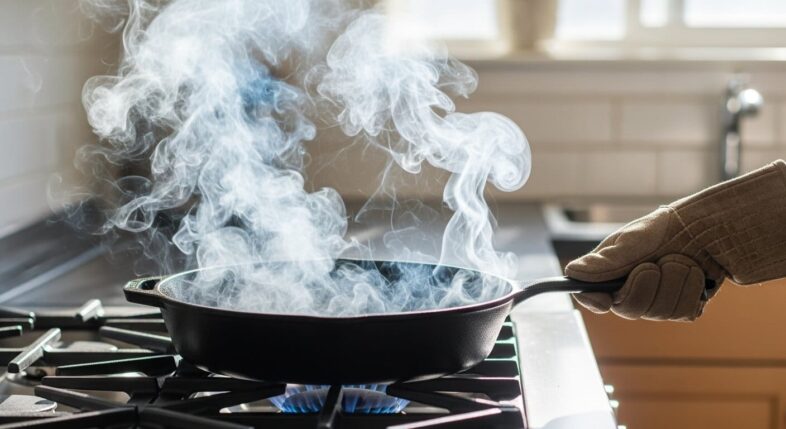
Your skillet’s smoking because it’s too hot, it’s got old oil cooked into the surface, or you’re using the wrong oil entirely. Probably all three, if we’re being honest. Good news: none of this is complicated to fix. Bad news: you actually have to fix it, not just open a window and hope for the best.
Cast iron holds heat like nothing else in your kitchen. That’s the whole point of owning one. But it also means the pan keeps climbing in temperature even after you think you’ve dialed it in — and that’s where the smoke comes from. Oil hits its smoke point, breaks down, and suddenly your kitchen looks like a fog machine went off.
Let’s get into why this happens and how to make it stop.
Why Does My Cast Iron Skillet Smoke So Much? The Main Culprits
Your skillet smokes because of six things, usually working together: too much heat, old oil buildup, the wrong oil for the job, too much oil, seasoning that’s breaking down, or leftover food burning on the surface. Pick one. Pick three. Most people are dealing with at least two at once.
Your Skillet Is Too Hot
This is the big one. Number one cause, hands down.
Cast iron doesn’t behave like your stainless steel pan. It absorbs heat slowly, sure — but it holds onto it just as stubbornly. So when you crank the burner to high because that’s what you’d do with a regular pan, you’re setting yourself up. The pan keeps getting hotter even after you think it’s stabilized.
A few things worth knowing:
- Cast iron keeps absorbing heat even on medium. It doesn’t plateau the way thin metal does.
- The pan stays hot way longer than feels intuitive.
- Oils hit their smoke point faster once the surface is overheated.
- Medium or medium-low handles almost everything you’d cook at home.
Here’s the mistake basically everyone makes at some point: cranking the dial to high because “high heat” sounds right for searing. Works fine on a thin pan that heats and cools fast. Cast iron’s a different animal. Thick metal, slow to heat, slow to cool — it’s basically a thermal battery sitting on your stove.
Old or Excess Oil Buildup on Your Cast Iron
Layers pile up. Old seasoning, leftover cooking oil, residue from three weeks ago — it all just sits there until it carbonizes and smokes the next time you heat the pan.
What buildup actually looks like:
- Thick, gummy residue — usually from going overboard with oil during seasoning
- Rancid oils that oxidized while sitting in storage (yes, oil goes bad, even on a pan)
- Uneven patches where oil pooled and hardened in one spot
- A sticky surface, which is basically a red flag for bad seasoning technique
Buildup smoke doesn’t behave like fresh oil smoke. It shows up immediately, often before you’ve even added food. If you see brownish or dark smoke with a slightly acrid smell, that’s old oil burning off — not your dinner.
The Wrong Cooking Oil for High-Heat Cooking
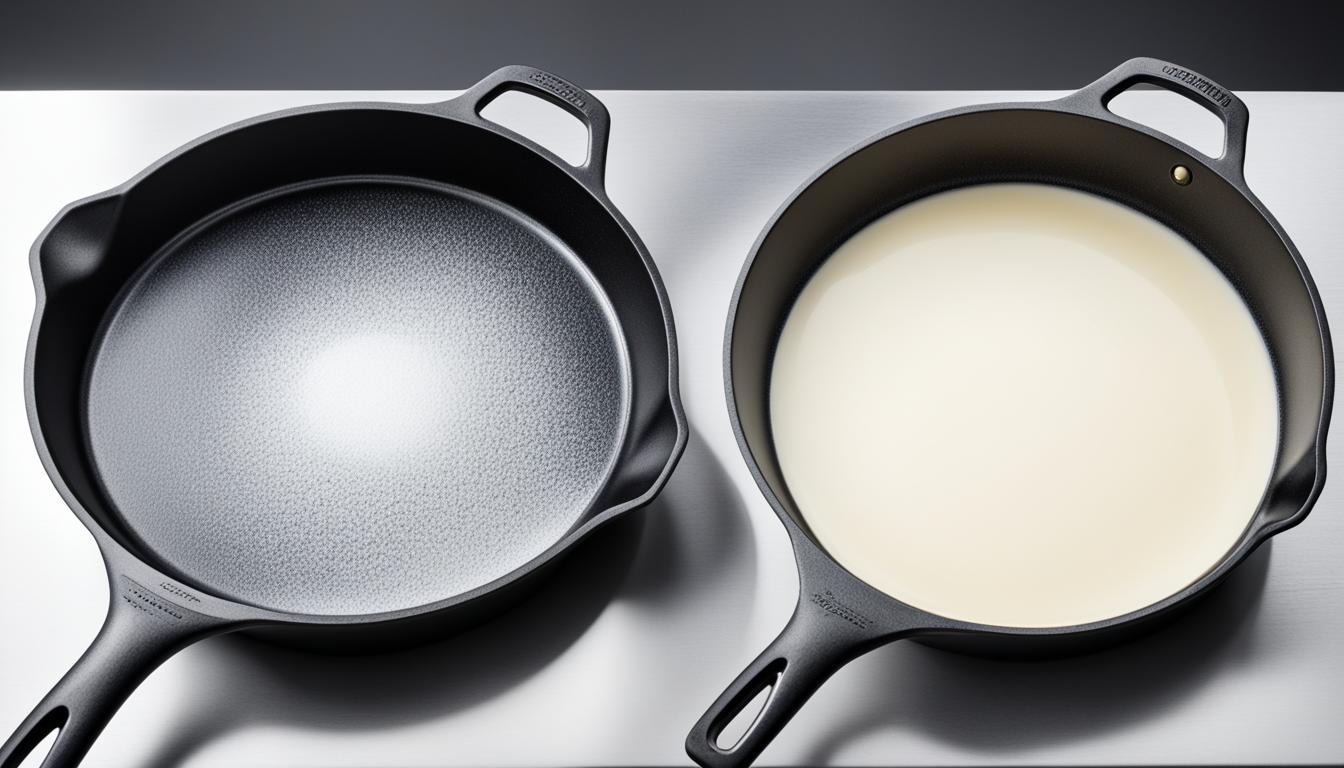
Different oils handle different temperatures. Throw butter or extra virgin olive oil into a screaming-hot skillet and you’re guaranteed smoke. Every time. No exceptions.
Smoke Points of Common Cooking Oils
| Oil Type | Smoke Point | Best For |
|---|---|---|
| Avocado Oil | 520°F | High-heat searing, frying |
| Refined Safflower Oil | 510°F | High-heat cooking, seasoning |
| Grapeseed Oil | 420°F | Medium-high cooking |
| Canola Oil | 400°F | General cooking |
| Extra Virgin Olive Oil | 350°F | Low-medium heat only |
| Butter | 300°F | Low heat, finishing touches |
The smoke point is exactly what it sounds like: the temp where oil gives up and starts smoking. Push past it and you’re not just getting smoke — you’re getting bitter, burnt flavors and compounds you really don’t want in your food.
Using Too Much Oil or Fat
People assume cast iron needs a swimming pool of oil. It doesn’t. Excess oil pools, heats unevenly, and smokes way more than a thin coating ever would.
How much you actually need:
- Sautéing — 1-2 teaspoons, that’s it, for a 10-inch skillet
- Shallow frying — enough to come halfway up whatever you’re frying
- Searing — just enough that a paper towel wipe leaves the surface lightly coated, nothing more
Think of it like lotion on your skin. Thin layer, absorbed, done. Not a puddle sitting on top going nowhere. Extra oil has nowhere to go but up — literally, as smoke.
Your Seasoning Is Breaking Down
Seasoning is just polymerized oil bonded to the iron. When that layer starts failing, the exposed metal heats unevenly, and whatever seasoning’s left starts smoking at lower temps than it should.
Signs your seasoning’s on its way out:
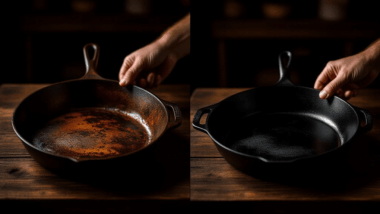
- Dull gray patches where there used to be solid black
- Food sticking in spots that used to be totally fine
- Flaking, peeling, anything that looks like it’s lifting off
- Rust creeping in wherever the seasoning’s worn thin
This happens from acid, aggressive scrubbing, or just years of use. The seasoning that’s degrading isn’t bonded properly anymore, so it burns at a lower threshold than the good stuff around it.
Food Residue and Debris Are Burning
Leftover bits from last night’s dinner. Tiny scraps you didn’t notice. They burn the second you reheat the pan, and somehow tiny amounts of residue produce way more smoke than you’d expect.
Usual suspects:
- Protein bits left from searing meat
- Caramelized sugar from sauces
- Vegetable fragments from a stir-fry
- Carbonized gunk wedged into the pan’s texture
A properly clean cast iron skillet looks dark, smooth, almost matte. See brown or black crusty bits anywhere? Those are smoking next time, guaranteed.
How to Stop Your Cast Iron Skillet From Smoking
Fix it by dropping your cooking temperature, switching oils, using less of it, cleaning properly, and keeping your seasoning in good shape. That’s basically the whole playbook. Five things. Not complicated, just requires actually doing them.
Solution 1: Lower Your Cooking Temperature
Medium or medium-low. For almost everything. That’s the rule.
Give the pan 5-10 minutes to preheat properly — going slow here keeps you from blowing past your target temperature without realizing it.
The proper preheating method:
- Cold burner, cold pan
- Turn heat to medium or medium-low
- Wait 5 minutes for a 10-inch skillet, 7-8 for a 12-inch
- Flick a few drops of water onto the surface
- If it hisses and evaporates instantly, you’re good to go
No thermometer? Use the water test:
- Too cold — water just sits there, pooling
- Just right — water beads up and skitters around (people call this the “mercury ball” effect, and it’s a real thing you’ll notice once you’ve seen it)
- Too hot — water vanishes into steam almost instantly
Recipes that call for “high heat” in a regular pan? That’s medium in cast iron. The thermal mass does the work for you. Medium-high makes sense occasionally — searing a steak, say — but even then, watch for smoke and back off if it shows up.
Solution 2: Choose High Smoke Point Oils
Match the oil to the heat. Simple as that.
High-heat cooking (searing, stir-frying):
- Avocado oil
- Refined safflower oil
- Refined peanut oil
- Grapeseed oil
Medium-heat cooking (everyday sautéing):
- Canola oil
- Vegetable oil
- Regular olive oil — not extra virgin
Low-heat cooking (gentle stuff, finishing touches):
- Extra virgin olive oil
- Butter
- Ghee
Save the fancy extra virgin olive oil for salad dressings. Anything above medium heat calls for a refined, neutral oil with a high smoke point — that’s the move, and it’ll save your kitchen from filling up with smoke every time you cook.
Solution 3: Use Less Oil
Thin, even coats. Not a pour. This alone cuts smoke dramatically while still giving you all the lubrication you need.
The paper towel method:
- Add half a teaspoon to a full teaspoon of oil to your preheated pan
- Grab a folded paper towel with tongs
- Wipe the oil around the whole cooking surface
- The pan should look glossy, not pooled or shiny with excess
- Only add more if food actually starts sticking
This works because the seasoning is already doing non-stick work for you. You’re just supplementing it, not building a moat.
Frying’s different, obviously — deep frying or shallow frying needs more oil, no way around it. But for eggs, vegetables, a quick seared chicken breast? A teaspoon goes further than you’d think.
Solution 4: Clean Your Cast Iron Properly
A quick wipe doesn’t count as cleaning. Sorry. Residue buildup is exactly what causes smoking down the line, and proper cleaning is the fix.
Step-by-step, every time:
- Clean while it’s still warm — not screaming hot, just warm
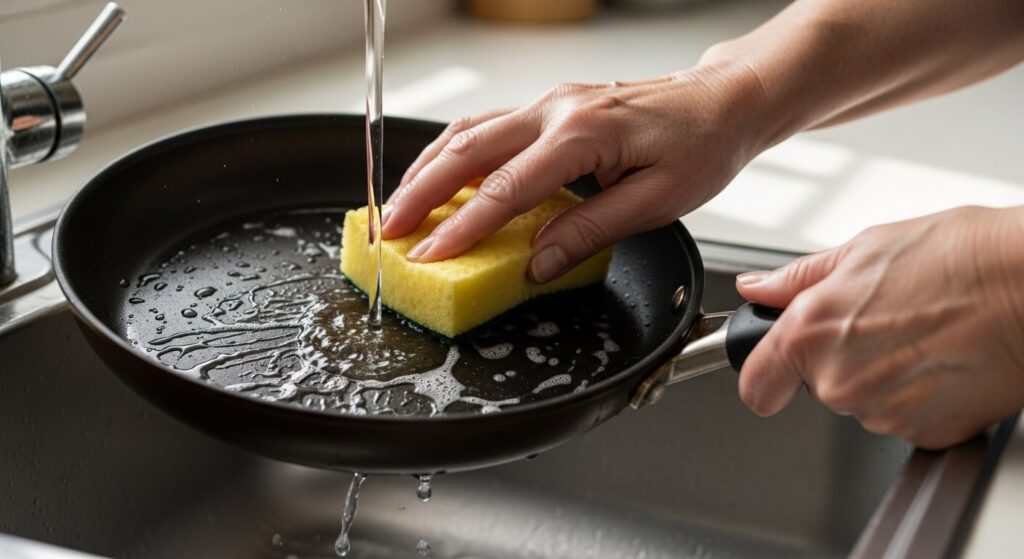
- Hot water plus a stiff brush or chain mail scrubber
- A small squirt of soap if you need it (modern dish soap is fine, this isn’t 1952)
- Scrub until the surface feels smooth, no rough patches
- Dry it immediately and completely with a towel
- Heat on the stove 1-2 minutes to cook off any leftover moisture
- Apply a barely-there layer of oil while it’s still warm
For the stubborn stuff:
- Coarse salt mixed with oil makes a solid scrubbing paste
- Chain mail scrubbers remove stuck food without tearing up seasoning
- Plastic scrapers work great on flat bottoms
- Bar Keeper’s Friend, used sparingly, handles the really tough spots
That whole “you can’t use soap on cast iron” thing? Outdated nonsense. Old soap had lye in it. Modern dish soap doesn’t. A squirt of Dawn isn’t stripping your seasoning. What will hurt your seasoning is leaving food to carbonize before your next cooking session.
Solution 5: Strip and Re-Season If Necessary
Sometimes the buildup’s too far gone, or the seasoning’s too degraded to save with a quick fix. Starting over solves it.
When it’s time to strip it down:
- Thick, gummy residue that won’t budge no matter what you try
- Heavy rust coverage
- Seasoning that’s flaking or peeling badly
- Smoking that won’t quit no matter what else you’ve tried
- You just inherited a pan or grabbed one from a thrift store with zero history
Re-seasoning, the short version:
- Strip old seasoning — oven cleaner, electrolysis, or the self-cleaning oven trick
- Scrub down to bare metal
- Dry thoroughly, then apply a thin coat of high smoke point oil
- Wipe off the excess until the surface looks nearly dry
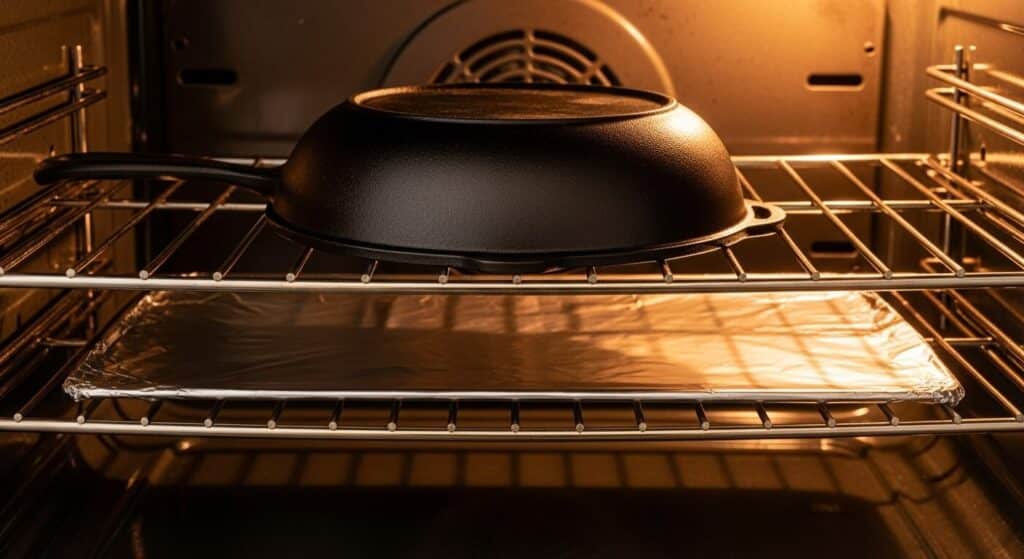
- Bake upside down at 450-500°F for an hour
- Repeat 3-5 times
A fresh seasoning job is a clean slate. Takes time, no shortcuts there, but it wipes out years of accumulated junk. The payoff: a pan that smokes way less during normal cooking.
Solution 6: Ensure Proper Ventilation
Good airflow won’t stop the smoke from happening, but it makes the whole experience a lot less miserable. And some smoke is just normal — searing at high heat produces a bit, period.
What actually helps:
- Turn on your range hood before you start preheating, not after
- Crack a window on the opposite side of the kitchen for cross-breeze
- A box fan in a window, actively pulling smoke out
- Close doors to other rooms so the smoke doesn’t spread everywhere
Even professional kitchens deal with smoke during high-heat searing. The difference is they’ve got commercial-grade ventilation pulling it out instantly. You’re not going to match that, but a decent hood and an open window get you most of the way there.
Understanding Cast Iron Seasoning and Smoke
Seasoning is oil that’s been heated past its breaking point on purpose, bonding to the iron and forming a hard, slick coating — and depending on how it’s built or how worn it gets, that same layer can be the reason you’re smoking in the first place.
What Is Cast Iron Seasoning?
Seasoning forms when oil heats past its smoke point under controlled conditions. The heat breaks the oil’s fatty acids apart, and they reorganize into a hard polymer layer that bonds right to the metal.
The polymerization process, broken down:
- Oil heats past its smoke point — usually 400°F or higher
- Fatty acid molecules break apart
- Those molecules reorganize and lock onto the iron surface
- Stack enough thin layers and you get a durable, non-stick finish
This is exactly why seasoning happens in a 450-500°F oven. You’re deliberately pushing oil past its smoke point to trigger that transformation. The difference between seasoning smoke and cooking smoke? Seasoning smoke is controlled, minimal oil, on purpose. Cooking smoke means something’s gone sideways.
Why New Cast Iron Skillets Sometimes Smoke More
Factory pre-seasoning is hit or miss. Some brands slap on thick, uneven coats that smoke like crazy until use wears them down.
What you should expect out of the box:
- The first 5-10 uses might smoke more than you’d like
- Factory seasoning can smell weird the first few times you heat it
- Performance improves the more you cook with it
- Breaking in a new pan takes patience — there’s no shortcut here
Give a new skillet several rounds before you write it off. Every cook session adds another micro-layer of seasoning. Most pans need somewhere around 10-20 sessions before they really hit their stride.
The Connection Between Seasoning and Smoking
Thin, even seasoning smokes less. Thick, uneven seasoning smokes more. That’s basically the whole relationship.
Good seasoning looks and feels like this:
- Smooth, almost glassy surface
- Even black or dark brown color, no patchiness
- A natural sheen, no stickiness anywhere
- Food releases easily without much oil at all
Bad seasoning, on the other hand:
- Sticky or tacky when you touch it
- Uneven color with thick globs in spots
- Flaking or peeling
- Rough texture you can actually feel under your fingers
Think about painting a car. Multiple thin coats beat one thick coat every time — same exact logic applies here. Thin layers bond properly and stay quiet. Thick globs of half-polymerized oil smoke at the slightest excuse.
Common Cast Iron Smoking Scenarios and Solutions
Different smoking situations need different fixes, and “just lower the heat” doesn’t cover all of them.
Why Does My Cast Iron Smoke When Empty or Preheating?
An empty pan smokes during preheat because oil left over from cooking or seasoning is burning off at high heat — nothing’s even in the pan yet, and it’s already going.
What usually causes it:
- Oil residue from your last cooking session, just sitting there
- Over-oiling after you cleaned it
- Heat set too high from the jump
- Old, rancid oil baked into the seasoning layers
What fixes it:
- Wipe the pan with a dry paper towel before you even turn on the heat
- Start low, increase gradually
- Clean more thoroughly after every use
- Re-season if the smoke keeps showing up despite cleaning
A little smoke during preheat is normal, especially if you oiled the pan right after cleaning it last time. Heavy smoke before food even touches the surface, though? Too much oil, or heat that’s too aggressive.
Why Does My Cast Iron Skillet Smoke in the Oven?
Cast iron smokes in the oven when you’re seasoning it on purpose, or because the oven’s running hotter than whatever oil you used can handle.
During seasoning:
- Smoke’s expected here. Totally normal.
- Peak smoke usually hits 10-20 minutes into the cycle
- It should taper off as the oil fully polymerizes
- Ventilation matters a lot during this step
During regular cooking:
- Too much oil on the pan’s surface
- Oven temp exceeds what your oil can handle
- Food drippings burning on the pan or the oven floor
Minimizing it:
- Use a barely-visible amount of oil when seasoning — wipe until it looks dry
- Pick oils rated above your oven’s temperature
- Slide a sheet pan on the rack below to catch drips
- Open a window and run your range hood before you even start
The trick to smoke-free oven seasoning is using way less oil than feels right. Apply it, then wipe aggressively. The pan should basically look unoiled when you’re done.
Why Does Cast Iron Smoke More Than Stainless Steel or Non-Stick?
Cast iron smokes more because it holds significantly more heat and carries a seasoning layer that can actually burn — something stainless steel and non-stick just don’t have to deal with.
Side-by-side comparison:
| Factor | Cast Iron | Stainless Steel | Non-Stick |
|---|---|---|---|
| Heat retention | Very high | Low-medium | Low |
| Smoke-producing coating | Yes (seasoning) | No | No |
| Thermal mass | High | Low-medium | Very low |
| Temperature control | Slow to adjust | Quick | Quick |
Cast iron’s thick build stores a ridiculous amount of heat energy. Turn down a stainless pan’s burner and it cools fast. Turn down cast iron’s burner and it just… keeps climbing for a while. That lag is exactly why it’s so easy to accidentally blow past your oil’s smoke point without meaning to.
And the seasoning adds a whole separate smoke source the other pans simply don’t have. Stainless is bare metal — nothing to burn off. Non-stick coatings don’t smoke either, though they can release fumes if you really overheat them, which is its own separate problem.
Why Does My Cast Iron Smoke Even on Low Heat?
If your skillet’s smoking on low heat, something’s off with the pan itself — old buildup, rancid seasoning, or food debris burning below the temperature fresh oil would even start smoking at.
What’s behind low-heat smoking:
- Carbonized food bits from cleaning that wasn’t thorough enough
- Oxidized, rancid oil sitting in thick seasoning layers
- Residue stuck in the pan’s natural texture
- Cooking spray buildup — these products leave a sticky film that’s surprisingly hard to deal with
How to fix it:
- Scrub thoroughly with hot water and a stiff brush
- Coarse salt as an abrasive, if the brush alone isn’t cutting it
- Look closely for stuck-on food or buildup you might’ve missed
- Re-season if the surface feels sticky or looks patchy
Low-heat smoking isn’t normal, and it’s not a temperature problem — it’s a dirty pan problem. A clean, properly maintained skillet shouldn’t smoke below 350°F. Period.
Preventing Your Cast Iron From Smoking: Best Practices
Prevent smoking long-term through consistent cleaning, smart temperature habits, picking the right oils, and keeping your seasoning maintained — none of which takes more than a few extra minutes per cooking session.
Proper Cast Iron Maintenance Routine
A simple post-cooking habit keeps buildup from ever becoming a problem.
After every single use:
- Clean while it’s still warm, hot water and a brush
- Dry it thoroughly with a towel
- Heat on the stove 1-2 minutes to kill any leftover moisture
- A tiny rub of oil — optional if you’re cooking with it constantly anyway
- Store somewhere dry
Monthly, give it a once-over:
- Check for wear spots or seasoning damage
- Do a quick stovetop seasoning session if anything looks off — thin oil layer, 10 minutes of heat
- Address any rust spots immediately, don’t let them sit
Storage matters more than people think:
- Tuck a paper towel inside to absorb stray moisture
- Don’t stack directly on other pans — scratches the seasoning
- Dry cabinet or a wall hook, either works
- Never, ever put it away even slightly damp
Consistency beats perfection here. A pan that gets used and cared for regularly develops better seasoning — and smokes less — than one that sits in a cabinet for three months and then gets thrown onto high heat out of nowhere.
Temperature Control Mastery
Get to know your own stove. That solves more smoking problems than any oil swap ever will.
Things that change the equation:
- Electric coils heat differently than gas or induction — not even close, really
- Burner size changes how evenly the pan heats up
- Bigger skillets need different settings than smaller ones
- Your stove’s “medium” might be someone else’s “medium-high”
The patience approach, roughly:
- Minute 0-2: Cold pan, medium heat, nothing visible happening yet
- Minute 2-5: You can feel heat radiating off it now
- Minute 5-8: Hot enough to run the water test
- Minute 8+: Fully preheated, go ahead and cook
Rushing this by cranking the dial leads straight to smoke. Cast iron rewards patience — the slow preheat spreads heat evenly across the whole surface and keeps hot spots from forming, which is exactly where oil tends to burn first.
Smart Oil Selection and Application
Build yourself a small rotation of oils for different jobs. Doesn’t need to be complicated.
For high-heat cooking:
- Avocado oil (520°F) — pricier, but worth it for searing
- Refined safflower oil (510°F) — a more affordable high-heat pick
For everyday cooking:
- Canola oil (400°F) — cheap, neutral, gets the job done
- Vegetable oil (400°F) — versatile, basically interchangeable with canola
For seasoning:
- Grapeseed oil (420°F) — builds a hard, durable layer
- Crisco or vegetable shortening — old-school, still works great
For finishing touches:
- Butter — adds flavor once the cooking’s mostly done
- Extra virgin olive oil — good for Mediterranean dishes, but only at low heat
A few application rules:
- Use less than feels right. Always.
- Apply oil to a hot pan, never a cold one
- Spread it with a paper towel for even coverage
- Only add more mid-cook if food’s actually sticking
Switching to a high smoke point oil for high-heat cooking might solve your entire smoking problem by itself. Seriously — that one change does a lot of heavy lifting.
Building and Maintaining Quality Seasoning
Good seasoning builds up slowly. Regular cooking plus the occasional dedicated seasoning session does it.
Foods that help build seasoning:
- Bacon, sausage, anything fatty
- Shallow-fried stuff
- Sautéed vegetables with a bit of oil
- Cornbread and similar baked goods
Foods that strip it back down:
- Tomato sauces — acid’s the enemy here
- Wine or vinegar-heavy dishes
- Anything citrus-forward
- Long-simmered, watery dishes
Quick stovetop touch-up:
- Clean and dry the pan completely
- Apply a very thin coat of high smoke point oil
- Heat on medium for 10 minutes, until it smokes lightly
- Let it cool, wipe off any excess
You don’t need to season after every cook. But if food’s sticking more than usual, or you spot dull patches creeping in, a 10-minute touch-up session fixes it before it turns into a bigger headache — and cuts down on future smoking too.
Troubleshooting: My Cast Iron Still Smokes
If you’ve done everything right and it’s still smoking, something deeper’s going on — time for an actual inspection instead of guessing.
Checking for Hidden Issues
A systematic look-over catches problems easy to miss during regular cooking.
Visual check:
- Hold the pan at an angle under decent light
- Look for shiny spots (over-oiled) or dull gray patches (worn seasoning)
- Check for tiny food particles caught in the surface texture
- Don’t forget the underside and handle — buildup loves to hide there
Touch test:
- Run your fingers across the cooking surface
- Properly seasoned cast iron feels smooth, slightly slick
- Sticky or tacky spots mean seasoning trouble
- Rough patches usually mean buildup or actual damage
Smell test:
- Old, rancid oil has a smell you’ll recognize once you’ve smelled it
- Sniff the pan cold, before heating it
- Rancid fat smells stale — like old crayons, honestly, or paint that’s been sitting too long
Heat distribution test:
- Preheat on medium for 5 minutes
- Sprinkle a thin layer of flour across the surface
- It should brown evenly
- Spots that darken faster than the rest mean uneven heating — not a smoking cause directly, but worth knowing about
When Smoking Is Normal (and When It’s Not)
Some smoke is fine. A lot of smoke is a problem. Knowing the difference matters.
Normal, nothing to worry about:
- A few wisps when searing a steak at high heat
- Initial smoke during oven seasoning
- Light smoke from fatty meats like bacon
- The occasional smoke from food itself, not the pan
Not normal — fix it:
- Heavy smoke the instant you heat an empty pan
- Thick, continuous smoke through regular cooking
- Black or gray smoke, as opposed to white or bluish
- Smoke paired with an acrid, unpleasant smell
- Any smoke at all while cooking on medium-low
Worth keeping in mind, health-wise:
- Burning oil adds particulate matter to your indoor air
- Repeated exposure can irritate your lungs over time
- Damaged non-stick coatings release harmful fumes — cast iron, notably, doesn’t have this issue
- Enough smoke and you’ll set off your smoke alarm, which nobody enjoys
If your cast iron’s putting out concerning amounts of smoke regularly, deal with it. Don’t just accept it as part of the deal.
Starting Fresh: Complete Restoration
When nothing else has worked, stripping the pan down and re-seasoning from scratch gives you a real reset.
When it’s actually worth doing:
- You’ve genuinely tried everything else
- The pan came with zero history — thrift store, inherited, no clue what’s been done to it
- Seasoning’s badly damaged or wildly uneven
- Smoking persists no matter what you try
Stripping options:
- Oven cleaner method — spray with a lye-based cleaner, seal in a plastic bag for 24 hours, then scrub
- Self-cleaning oven — run the pan through a self-clean cycle (controversial; this can crack older or vintage pans, so be careful)
- Electrolysis — most thorough option, but needs setup: battery charger, washing soda, a container
- Vinegar soak — good for rust removal specifically, not a full seasoning strip
After you’ve stripped it down:
- Scrub to bare gray metal
- Rinse and dry it immediately — bare iron rusts fast
- Apply the first seasoning coat within minutes of drying
- Follow the oven seasoning method with thin oil layers
- Repeat 4-6 times for a finish that’ll actually last
Full restoration eats up a day, realistically, between stripping and multiple seasoning rounds. But what you get back is a pan that performs like new and doesn’t smoke through normal, everyday cooking.