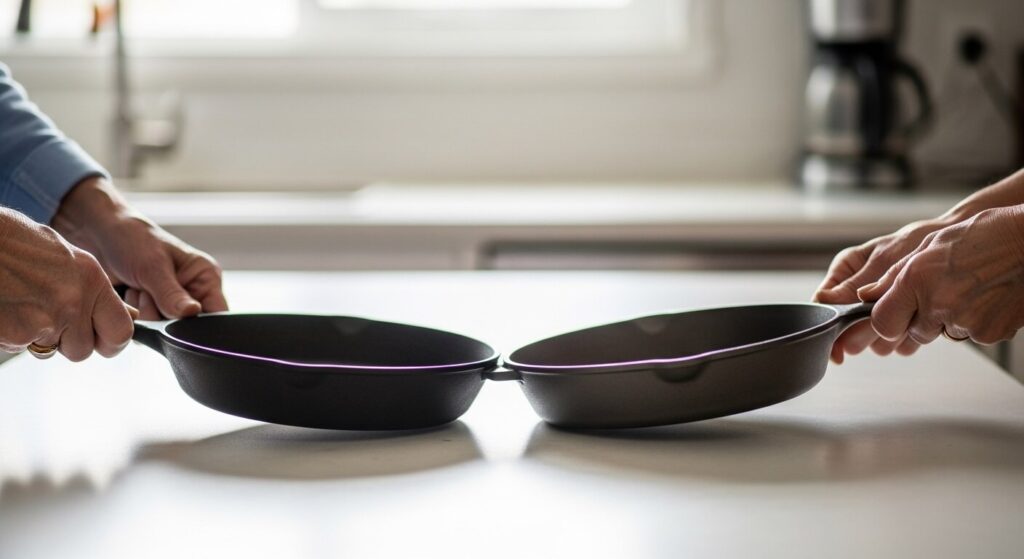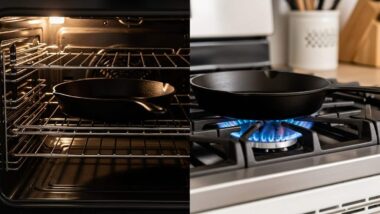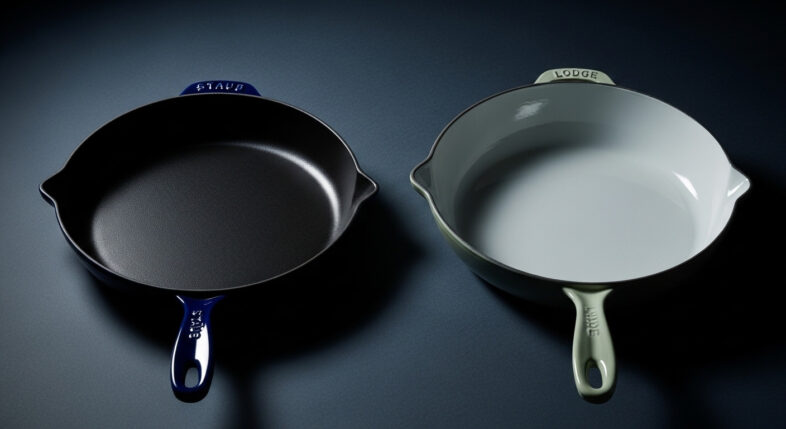
The main differences between Staub enameled cast iron skillets and Lodge enameled cast iron skillets are price, interior texture, oven-safe temperature, and country of origin — Staub costs more than double, has a rougher textured interior built for superior browning, handles temps up to 900°F, and is made in France, while Lodge comes in under $80, features a smooth matte interior, maxes out at 500°F, and is made in China.
I’ve cooked with both. My wife uses the Staub for her Sunday braises. My teenage sons have wrecked the Lodge a few times and it’s still standing. Here’s my honest take.
Quick Verdict: Which Enameled Cast Iron Skillet Wins?
Short answer: Staub is the better pan. But Lodge is the smarter buy for most people.
If you cook at high heat, sear a lot of meat, or use your skillet in a screaming-hot oven, Staub pulls ahead — and it’s not particularly close. The 900°F oven rating alone is a massive advantage over Lodge’s 500°F ceiling. The textured interior browns food better. The French craftsmanship is real.
But $180 vs $80? That gap matters. If you’re a weeknight home cook — sautéing vegetables, making a quick frittata, doing some light braising — Lodge gets the job done. It’s genuinely solid. Not perfect, but solid.
Buy Staub if: You cook seriously, prioritize high-heat performance, and want a pan that’ll last decades.
Buy Lodge if: You want a capable enameled cast iron skillet without spending $180, and you don’t need commercial-grade oven temps.
Side-by-Side: Staub vs Lodge Enameled Cast Iron Skillet
Here’s the raw comparison at a glance:
| Feature | Staub 11″ | Lodge 11″ |
|---|---|---|
| Price | ~$179.95 | ~$79.57 |
| Made in | France | China |
| Oven safe | 900°F | 500°F |
| Interior | Textured matte black | Smooth matte black |
| Handle | Cast iron | Porcelain |
| Weight | ~5.9 lbs | ~7.7 lbs |
| Induction compatible | Yes | Yes |
| Dishwasher safe | No (hand wash) | No (hand wash) |
| PFOA/PTFE free | Yes | Yes |
One thing that surprised me — the Lodge is actually heavier despite being the cheaper pan. Both are totally induction compatible, which matters since we switched to induction two years ago.
Price: Is the Staub Enameled Cast Iron Worth $100 More?
Straight up — yes, if you’ll actually use it to its potential. No, if you won’t.
The Staub runs about $179.95 for the 11-inch Traditional Skillet. Lodge comes in at roughly $79.57 for the same size. That’s a $100 difference. For some households that’s nothing. For others, that’s two weeks of groceries.
Here’s what that extra hundred gets you: French manufacturing, a higher oven temp ceiling, a textured interior that genuinely performs better for browning, and (honestly) a much prettier pan to put on the table. Staub also tends to hold its resale value well — these pans show up on secondhand markets regularly because people treat them like heirlooms.
Lodge’s value proposition is harder to dismiss though. For under $80, you’re getting real cast iron, enameled construction, no PFOA or PTFE, and a pan that works on every cooktop. That’s a lot of pan for the money.
Worth noting: Cast iron cookware, even enameled, is considered a long-term purchase. According to The American Iron and Steel Institute, cast iron products have an indefinite lifespan when properly maintained — which means either pan, if cared for, should outlive your current kitchen.
Design and Build Quality: How These Two Pans Are Actually Made
The Exterior Enamel
Both pans look great out of the box. The Staub’s Cherry finish is deep and rich. Lodge’s Red is bright and cheerful. My wife prefers the Staub on the table — it has a more refined, almost jewel-like quality to it.
Where they diverge is durability. Lodge customers have reported chipped enamel on handles — and not after years of use. Some chips showed up within months. Staub’s enamel finish is generally considered more durable, partly due to French manufacturing standards and partly due to the slightly thicker application.
The Interior — This Is Where It Really Matters
This is the biggest functional difference between these two enameled cast iron skillets. Pay attention here.
Staub’s interior is a textured black matte enamel. Run your finger across it and you’ll feel micro-bumps. That texture does two things:
- Creates more surface contact points between food and pan
- Promotes better browning, caramelization, and crust development
Lodge’s interior is smooth. Easier to clean, in theory. But that smooth surface also means food can stick “with maddening tenacity,” as one Lodge customer put it in their Amazon review. Others swear it’s practically nonstick with enough fat. It’s inconsistent.
For searing a steak or getting a proper fond on chicken thighs, Staub wins this round easily.
Handle Design
Staub uses a cast iron handle that gets very hot during stovetop cooking. No way around it — you need an oven mitt. Every single time. Lodge’s porcelain handle runs cooler but has the reported chipping issue.
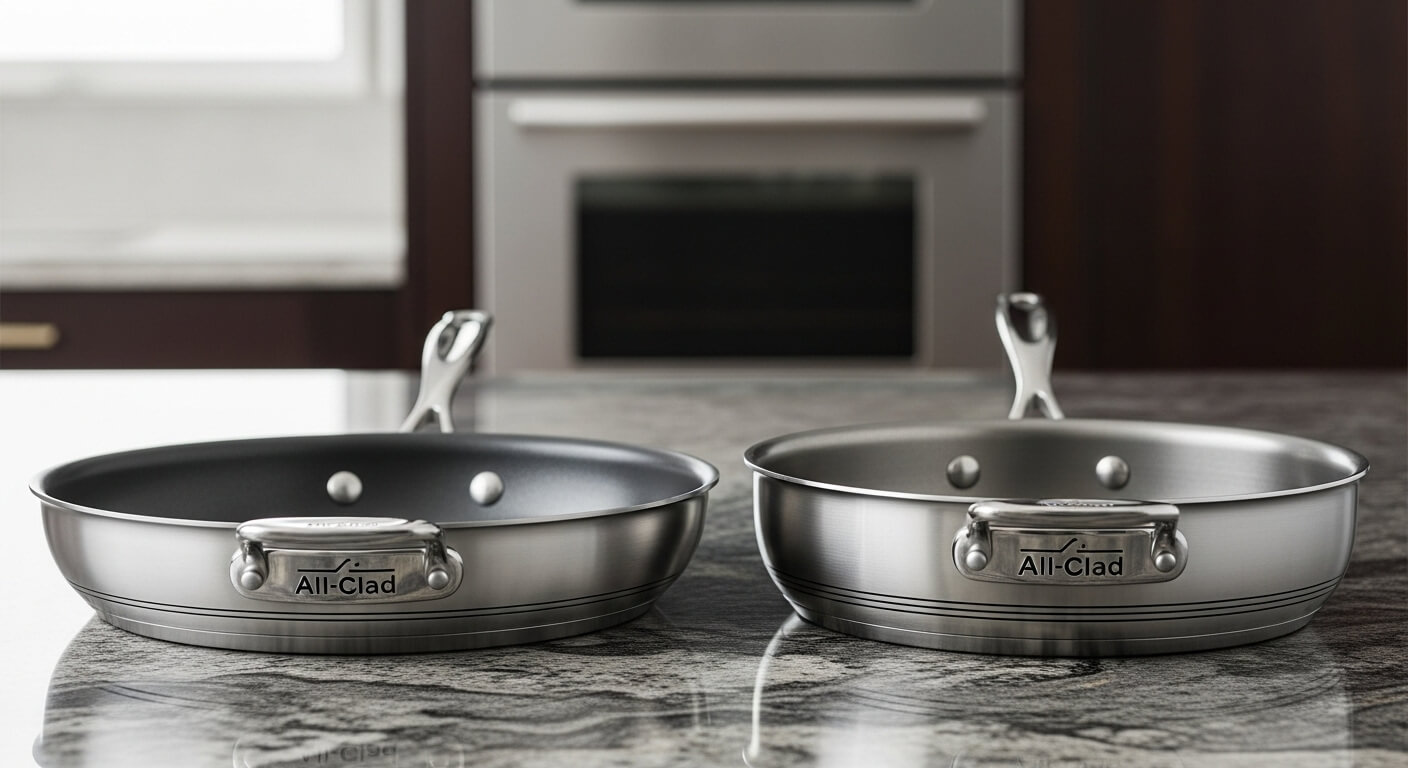
Neither handle is dishwasher safe, which brings me to…
Cooking Performance: Staub Enameled Cast Iron vs Lodge
Heat Distribution and Retention
Both pans are cast iron at their core, which means excellent heat retention and distribution — that’s the whole point of cast iron. You heat it slowly, it holds that heat, and it doesn’t drop temperature when you add cold food.
That said, cast iron’s thermal properties aren’t equal across all cookware. Research published by the Journal of Food Science has demonstrated that cooking vessel material and surface texture both affect heat transfer rates and browning outcomes — which explains why Staub’s textured interior genuinely outperforms a smooth surface for high-heat applications.
In practice: I’ve cooked the same pork chops in both pans. The Staub got a better sear. Not dramatically better — but better. The Lodge still produced a fine chop. Just not that chop.
The Oven Temperature Gap — A Bigger Deal Than You Think
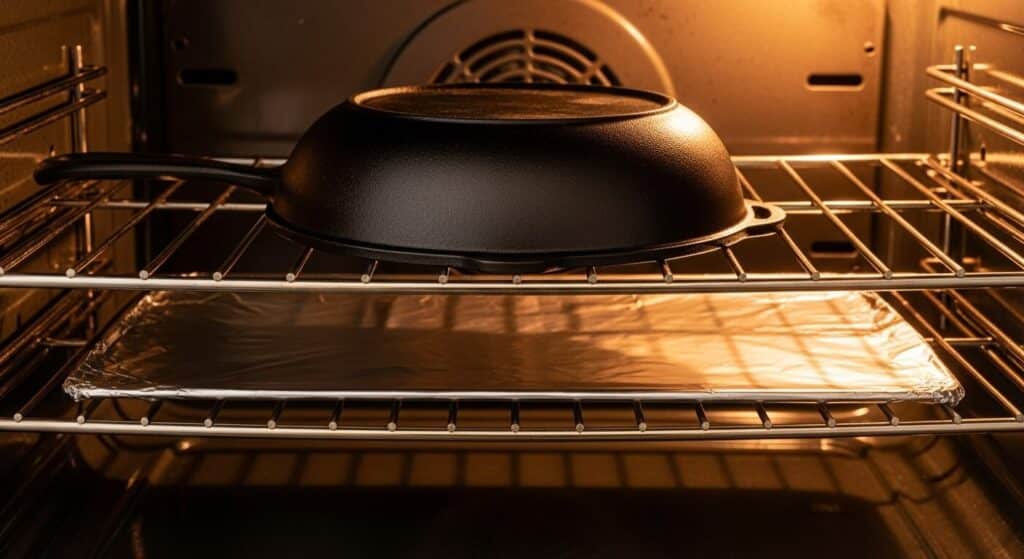
Staub: oven safe to 900°F. Lodge: 500°F.
For most weeknight cooking, 500°F is fine. But there are specific techniques where this matters a lot:
- Pizza in a cast iron skillet — pizzerias run 700-900°F. Your home oven maxes at ~550°F, but dedicated pizza ovens and some broiler configurations can hit Lodge’s ceiling uncomfortably fast.
- Broiling at close range — broilers can get extremely hot. Keeping Lodge under 500°F while broiling close to the element requires attention.
- Professional kitchen use — if you’re cooking in a restaurant or very serious home kitchen context, the Staub’s headroom matters.
For normal home cooking? Lodge’s 500°F cap is rarely a true limitation. But it’s worth knowing.
Stovetop Versatility
Both pans work on gas, electric, and induction cooktops — no issues there. The Staub’s raised sides (it’s designed as a hybrid sauté/fry pan) do a noticeably better job of containing splatter. With teenagers making their own pasta sauces on weekends, this has become a genuine quality-of-life upgrade for whoever cleans the stovetop. (Usually me.)
Braising, Sautéing, and Everyday Use
Braising is where enameled cast iron shines, full stop. The enamel coating means you can cook acidic ingredients — tomatoes, wine, citrus — without any reaction. Both pans handle this equally well. No metallic taste, no seasoning concerns.
For everyday sautéing? Both are capable. The Staub’s slightly better heat control gives it an edge for delicate work. Lodge is fine for most applications — it just requires a little more fat management to avoid sticking.
Non-Stick Performance and Food Safety
Neither pan has a nonstick coating — no PTFE (Teflon), no PFOA. That’s a feature, not a bug.
According to the U.S. Environmental Protection Agency, PFAS compounds (which include PFOA) have been associated with health concerns, making PFOA/PTFE-free cookware an increasingly popular choice among health-conscious home cooks. Both Staub and Lodge sidestep this entirely.
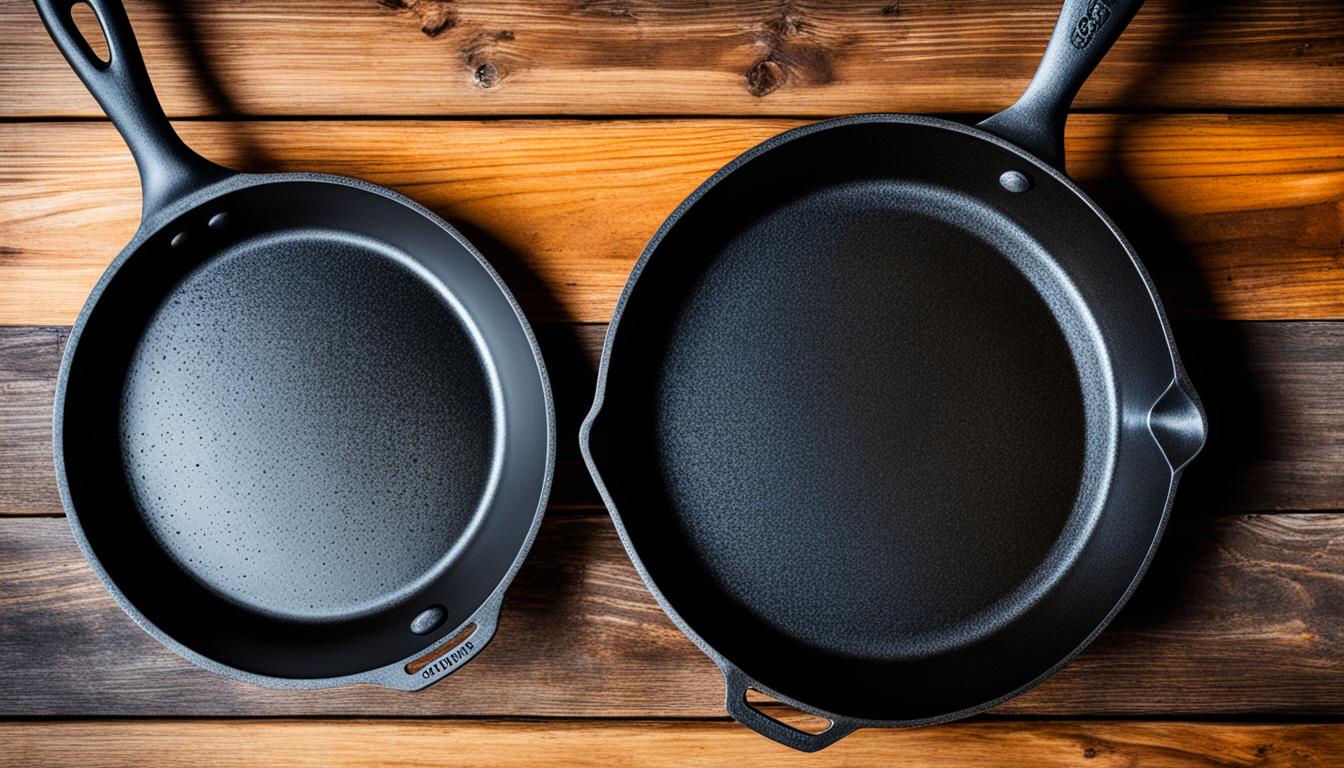
As for stickiness: Staub’s textured interior, once you learn it, actually develops better release properties over time. The micro-texture holds a small amount of cooking fat in the surface ridges, which gradually creates a more effective cooking surface. Lodge’s smooth interior can go either way — some users love it, others find it frustratingly adhesive.
The key with both pans: preheat slowly, use adequate fat, and don’t move food before it releases naturally. Standard cast iron rules apply.
Cleaning and Maintenance
What You Actually Need to Do
Hand wash only. Both pans. Full stop.
Neither is dishwasher safe despite some conflicting labeling (the Staub Amazon page says “dishwasher safe” but Staub themselves recommend hand washing — go with the manufacturer’s direct guidance).
For Lodge: Warm soapy water, a soft brush, dry immediately and thoroughly. The smooth interior cleans up a little faster after most cooks. However, if something really stuck on, you’ll know it.
For Staub: Same routine. The textured interior can trap bits of food in the micro-ridges — a slightly firmer brush helps. Not a big deal, but worth knowing.
Seasoning
Neither pan requires seasoning. That’s the whole point of the enamel coating — it eliminates the maintenance burden of bare cast iron. No oiling, no building up seasoning layers, no rust concerns (mostly — see below).
The rim areas on both pans can be bare metal. Keep those dry. A tiny bit of oil on the rims after washing is smart.
Durability: The Chipping Problem
Lodge has a real chipping issue based on customer reports. The handles specifically. Multiple reviewers noted chips appearing within months of normal use — not from drops, just from cooking. Chipped enamel in a pan you’re cooking with is a problem.
Staub’s enamel holds up significantly better. This is one area where the price difference is directly justified. A chipped Lodge pan at 18 months old is a $80 pan that’s starting to fail. A Staub at 10 years old should still look nearly new.
Size, Weight, and the Reality of Daily Use
The Weight Question
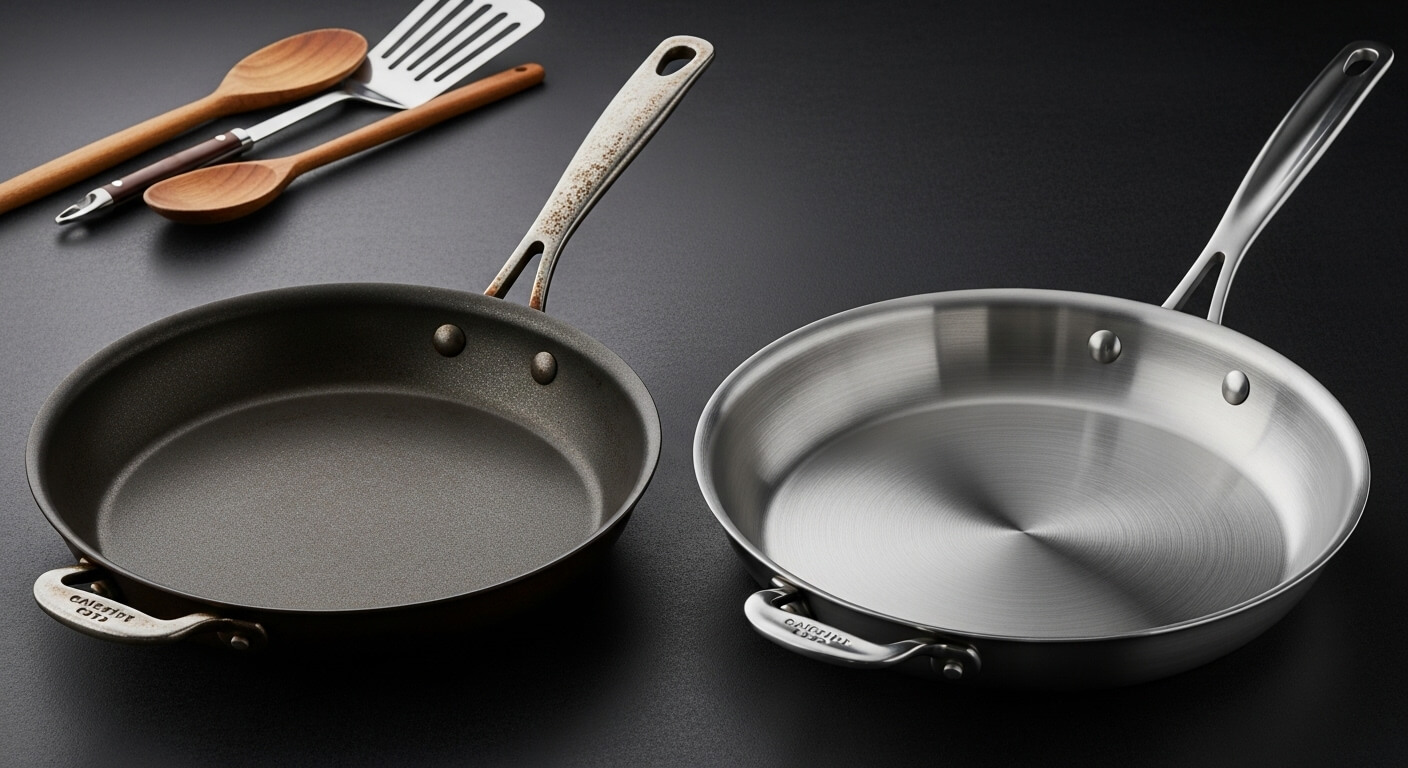
The Lodge 11-inch weighs 7.7 pounds. The Staub weighs roughly 5.9 pounds (2.7 kg). So the cheaper pan is actually heavier. That surprised me.
For my wife, the Staub’s lower weight is actually meaningful — she uses it most, and lifting a nearly 8-pound pan multiple times during cooking adds up. For my sons who mostly use Lodge for eggs and sautéed vegetables, the weight hasn’t been a complaint.
Older cooks or anyone with wrist or arm strain should factor this in. Lodge’s extra 1.8 pounds doesn’t sound like much — but it is, especially one-handed.
Side Height and the Splatter Problem
The Staub Traditional Skillet has notably higher, straighter sides compared to Lodge’s more conventional skillet profile. This matters for:
- Braising and deglazing (more room for liquid)
- Sautéing without making a mess
- Cooking for a family (more capacity, effectively)
It’s described as a hybrid between a fry pan and sauté pan. That’s accurate. It genuinely functions as both.
Aesthetics: Which Pan Looks Better?
Honestly, both look great. But they look great in different ways.
Staub is elegant. The Cherry finish is deep and glossy. It goes from stovetop to table without embarrassment — it looks intentional on a dining table, not like you forgot to put the food in a serving dish.
Lodge is cheerful. The Red is bright and unpretentious. It looks like a good, hardworking kitchen pan. Nothing wrong with that.
According to Bon Appétit, Staub is consistently rated among the most attractive cast iron cookware for table-side serving — something that matters more than people admit when entertaining.
Staub also comes in a wider color range — Graphite, White Truffle, Dark Blue, and others. Lodge’s color options are more limited.
What Real Customers Actually Say
Staub Owners
The consistent positives: beautiful appearance, exceptional browning, excellent build quality. The consistent negatives: the cast iron handle gets very hot, and a few users note uneven heat distribution near the handle end.
Overall satisfaction is high. 4.4 stars from 154 reviews. People are genuinely happy with this pan.
Lodge Owners
Mixed bag — and more interesting for it. 4.1 stars from over 1,100 reviews tells a different story. The positives: great value, easy to clean with soap, food cooks evenly. The negatives: chipped enamel on handles, inconsistent stickiness (some users love the release, others hate it), and the weight.
The stickiness complaints are worth taking seriously. It’s not unanimous, but “maddening tenacity” is a phrase that appeared in real reviews — and that’s not a description anyone wants for their cookware.
The Pattern
Staub owners tend to be satisfied and somewhat enthusiastic. Lodge owners split between “this is a great budget pan” and “I have some real frustrations.” That split is telling.
Staub vs Lodge Enameled Cast Iron: Who Should Buy Which
Buy the Staub Enameled Cast Iron Skillet if you:
- Cook frequently and at high heat
- Want to use your skillet in the oven above 500°F
- Prioritize long-term durability over upfront savings
- Entertain and want a pan that looks good on the table
- Care about superior browning and searing performance
- Are buying a pan you want to use for 20+ years
Buy the Lodge Enameled Cast Iron Skillet if you:
- Cook casually a few times a week
- Rarely use the oven above 450°F for skillet cooking
- Are newer to cast iron and don’t want to over-invest
- Want a capable enameled skillet without the premium price
- Don’t mind managing stickiness with proper fat and heat technique
Best for High-Heat Cooking: Staub. No contest.
The 900°F ceiling, the textured interior, the superior browning — it’s built for serious heat. According to Cook’s Illustrated, enameled cast iron with textured interiors consistently outperforms smooth-surface alternatives in blind searing tests. That’s not marketing — it’s physics.
Best for Budget-Conscious Home Cooks: Lodge.
Under $80 for a real enameled cast iron skillet that works on induction, handles oven temps up to 500°F, and requires no seasoning? That’s genuinely good value. The chipping concerns are real but not universal. Treat it carefully and it’ll serve you well.
Best for Oven-to-Table Presentation: Staub.
It’s not close aesthetically. The Staub is a legitimately beautiful piece of cookware. If you’re cooking for guests and want the pan to go from stove to table without anyone raising an eyebrow, Staub is the move.
Best for Beginners: Lodge.
Lower price means lower stakes. If you’re still learning how to manage cast iron — heat timing, fat usage, cleaning — Lodge is the right pan to learn on. Once you’ve mastered the basics, you’ll know whether a Staub is worth the upgrade.