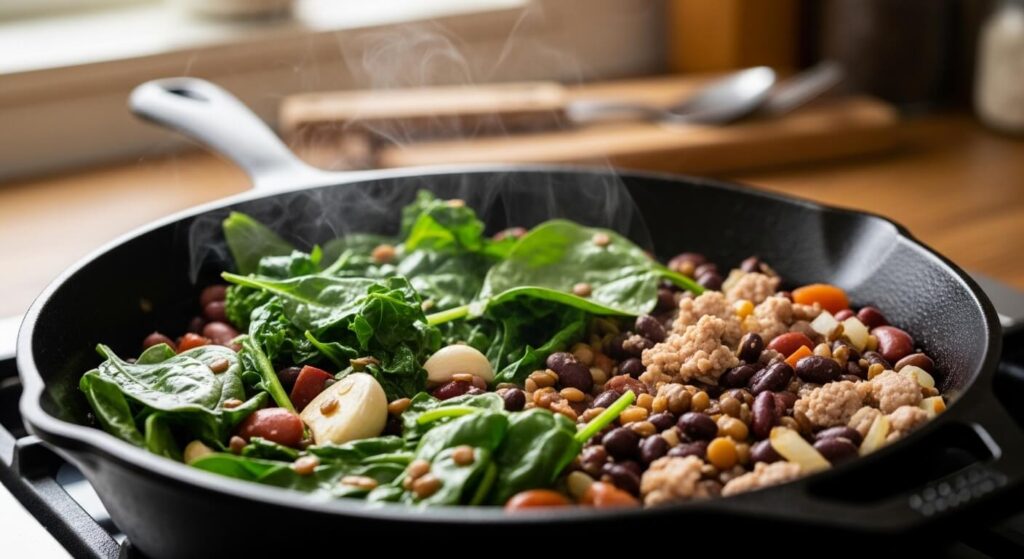
Cast iron skillet breakfast recipes deliver restaurant-quality meals with minimal cleanup — one pan, intense heat retention, and that unmistakable golden crust you can’t get anywhere else.
These 10 recipes will work for any family.
Looking to satisfy a sweet or salty craving? These recipes have something for everyone. Try cinnamon rolls or a savory frittata cooked in a skillet. They’re tested for a family of four. Some take 20 minutes. Others need an hour. All of them justify owning cast iron.
The Magic of Cast Iron Cooking for Breakfast
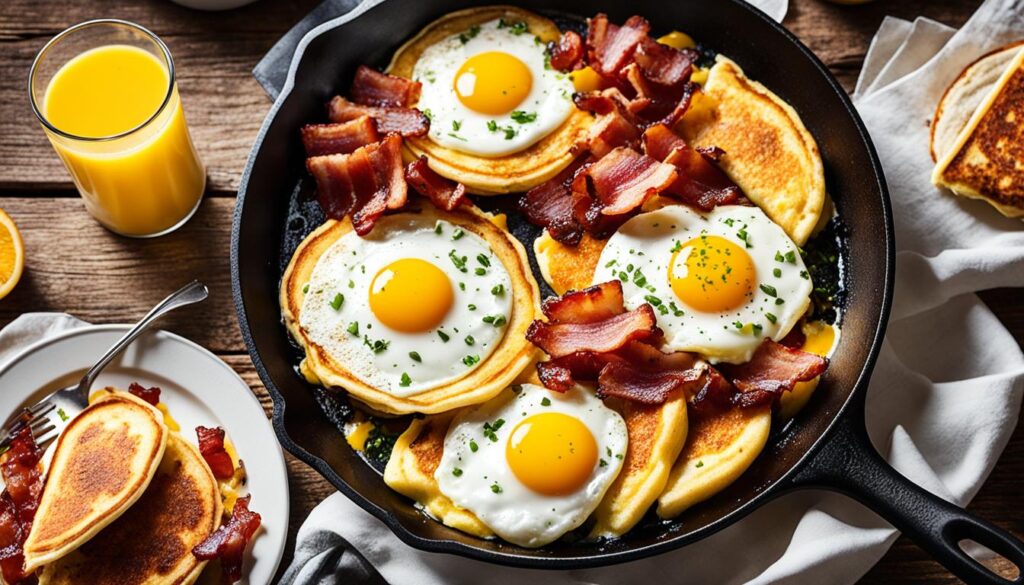
Cast iron changes how breakfast cooks — not subtly, but in ways you notice the first time you crack an egg into a properly heated pan.
Heat distributes evenly. Edge to center. No cold spots. No scorching corners while the middle stays raw.
Why It Actually Matters
Mornings move fast. Half-awake. Hungry kids. Limited time. Cast iron makes that easier instead of harder.
Goes stovetop to oven without switching pans. Holds heat so food stays warm while you’re plating. Gets better with use — seasoning builds over time. Works on everything: gas, electric, induction, campfires.
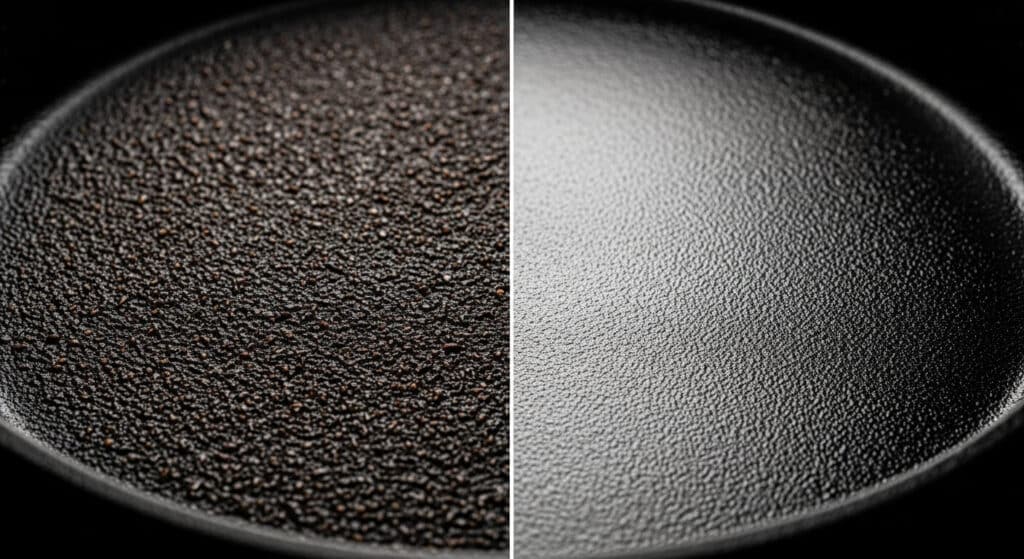
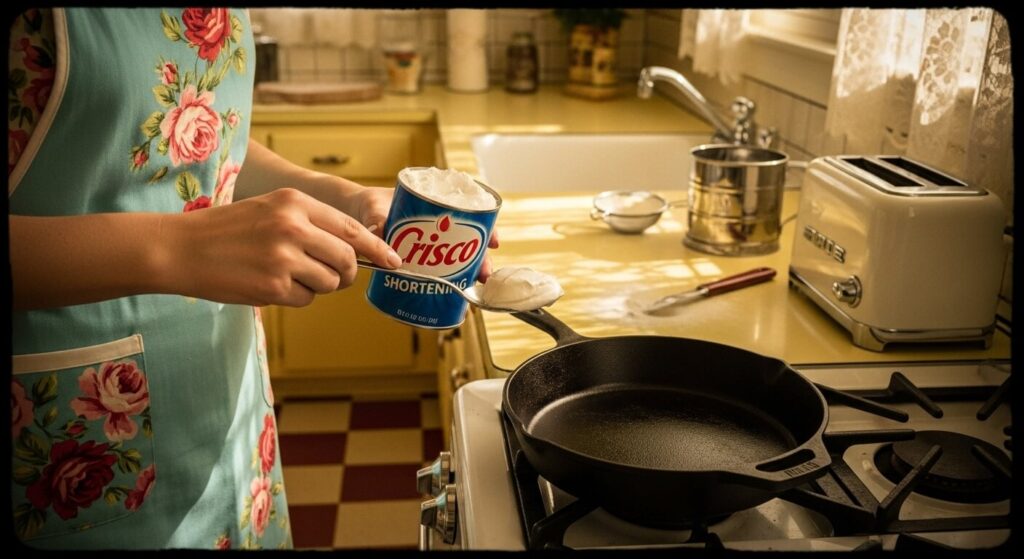
Seasoning Before You Start
New skillet? Losing its nonstick surface? Do this:
- Wash with hot water, dry completely on stovetop over low heat
- Rub thin layer of avocado or grapeseed oil everywhere — inside, outside, handle
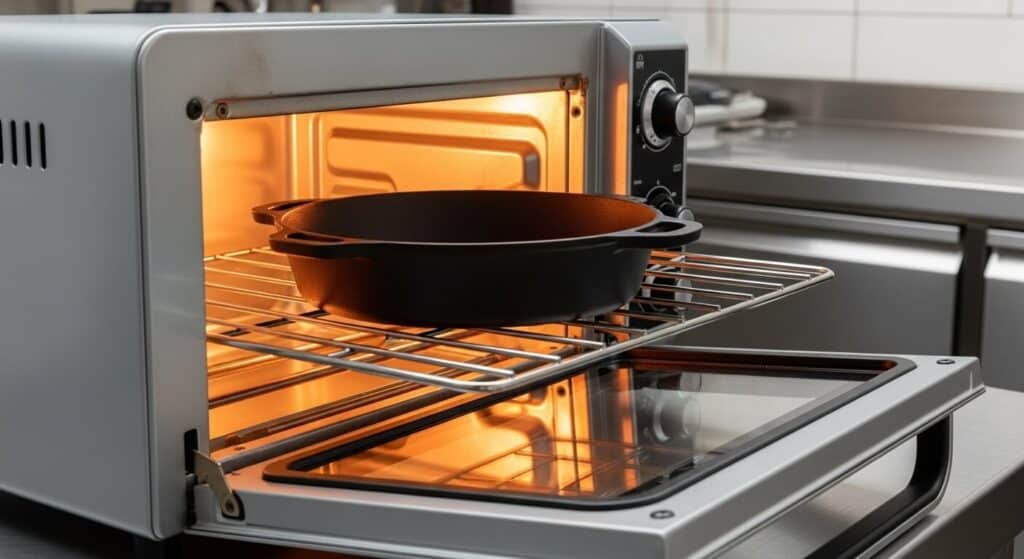
- Bake upside-down at 400°F for one hour
- Cool in oven, repeat 2-3 times
Done. After that, check out the best ways to season a cast iron skillet for more details on why avocado oil specifically works for high-heat cooking.
Cleaning Up
No soap. Ever.
Hot water and a stiff brush handle most messes. Stubborn bits? Coarse salt and paper towel. Dry fully on the stovetop, wipe with thin oil layer, put it away. Two minutes, tops.
Essential Tools and Ingredients for Skillet Breakfasts
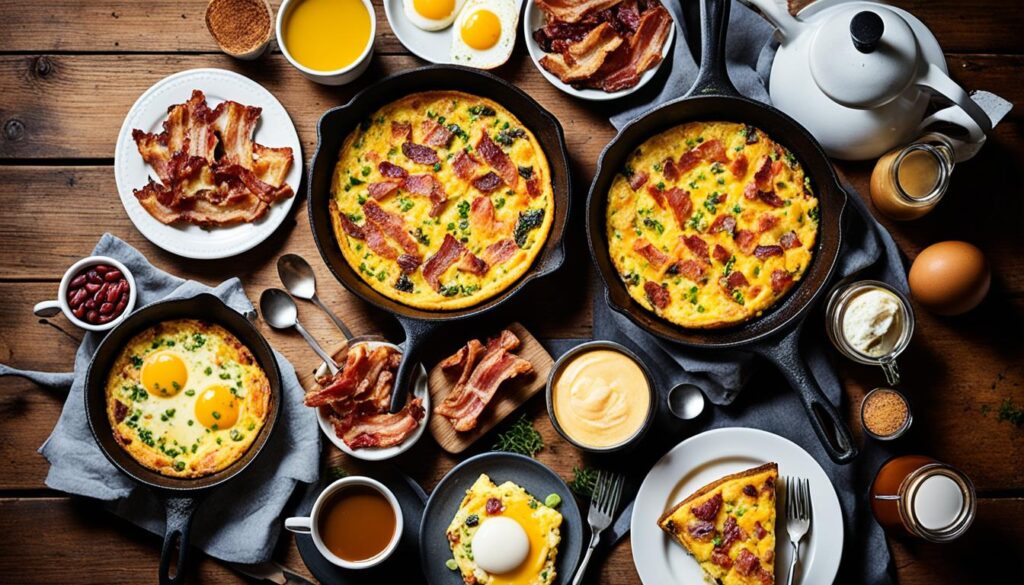
You don’t need much to make great skillet breakfasts. But having the right things means the difference between pulling off a recipe quickly and running to the store mid-cook.
The Right Skillet Size
10-inch or 10.5-inch works best for family breakfasts.
Wide enough for pancakes, frittatas, shakshuka. Deep enough for casseroles and pizza. Feeding more than four? A 12-inch works too — just adjust cooking times slightly.
Pre-seasoned cast iron is fine. Lodge is accessible, widely available, genuinely good. Any well-seasoned skillet works, though.
Pantry Basics
Stock these and you can make most recipes below without a trip to the store:
- All-purpose flour
- Cornmeal
- Baking powder and baking soda
- Granulated sugar and brown sugar
- Olive oil and neutral cooking oil
- Canned diced tomatoes
- Black beans (canned)
- Dried herbs: sage, thyme, paprika, cumin, chili powder
Fresh Ingredients Worth Having
| Ingredient | Why You Need It |
|---|---|
| Eggs (at least 8-12) | Core protein in almost every recipe |
| Whole milk or buttermilk | Pancakes, frittatas, French toast |
| Cheddar and mozzarella | Frittatas, pizza, burrito skillet |
| Russet or sweet potatoes | Hash browns, campfire skillet |
| Seasonal vegetables | Frittatas, shakshuka |
| Breakfast sausage | Multiple recipes — buy a pound |
With these stocked, you can cook any of the 10 recipes below on a moment’s notice. That’s the point. Also worth noting — this skillet works just as well for savory dinners. See cast iron skillet deep-dish pizza for proof.
Classic Skillet Hash Browns with Bacon and Eggs
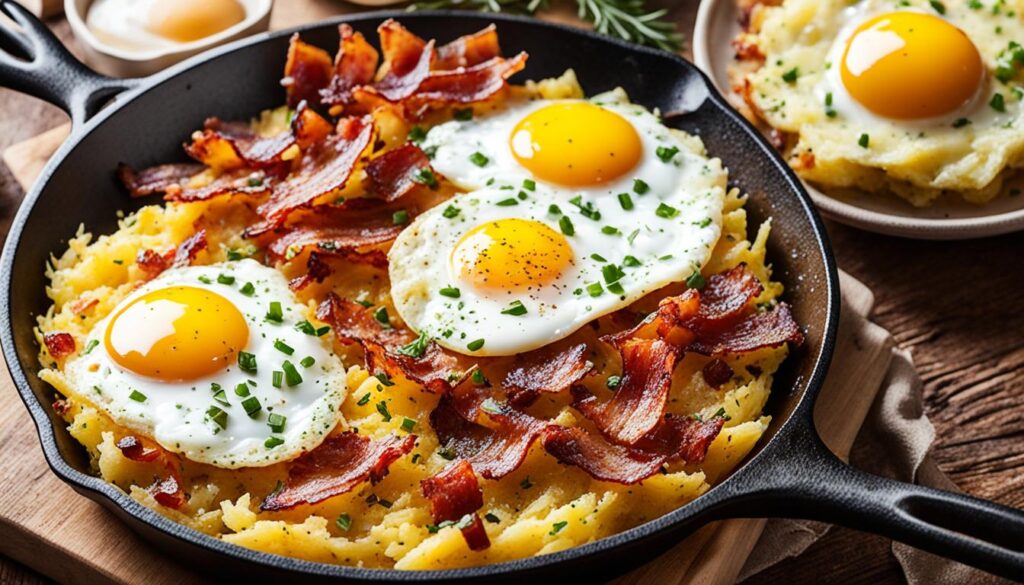
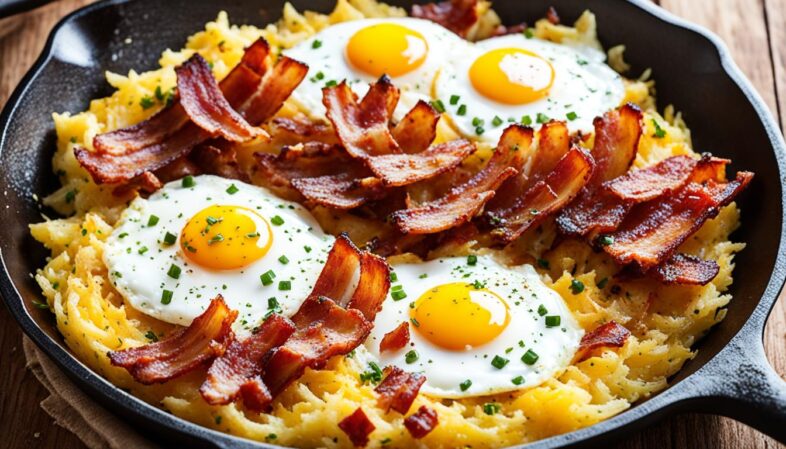
Classic skillet hash browns with bacon and eggs is the definitive one-pan breakfast — crispy potatoes, smoky bacon, perfectly cooked eggs, ready in 30 minutes.
The trick? Fat combination. Bacon drippings plus butter. Don’t skip either.
Ingredients (Serves 4)
- 4 medium russet potatoes, grated and squeezed dry (about 4 cups)
- 6 slices thick-cut bacon
- 4 large eggs
- 2 tablespoons unsalted butter
- 1 tablespoon vegetable oil
- 1/2 teaspoon garlic powder
- 1/2 teaspoon smoked paprika
- Salt and black pepper to taste
- 2 green onions, sliced
Making It Work
Cook bacon in the skillet over medium heat until crisp — about 8 minutes. Remove bacon. Leave drippings.
Add butter and vegetable oil to the drippings. Grate potatoes. Squeeze every drop of moisture out using a clean kitchen towel — this is what makes them crispy.
Press grated potatoes into the skillet in an even layer. Season with garlic powder, paprika, salt, pepper. Cook undisturbed for 6-8 minutes until the bottom is deep golden brown.
Flip in sections. Press down again. Cook another 5-6 minutes. Create 4 wells in the hash browns. Crack an egg into each.
Cover the skillet. Cook 3-4 minutes until whites are set but yolks are still runny. Crumble bacon over the top. Garnish with green onions. Serve straight from the pan.
Getting Crispiness Right
Dry potatoes. That’s the secret.
Wet potatoes steam instead of fry. You want a bone-dry shred hitting a hot, well-oiled cast iron surface. Don’t touch them for the first 6-7 minutes — let the crust form.
Nutritional Information (Per Serving)
| Nutrient | Amount per Serving |
|---|---|
| Calories | 418 |
| Carbohydrates | 38g |
| Protein | 16g |
| Fat | 24g |
| Fiber | 3g |
| Sodium | 584mg |
Fluffy Buttermilk Pancakes in a Cast Iron Skillet
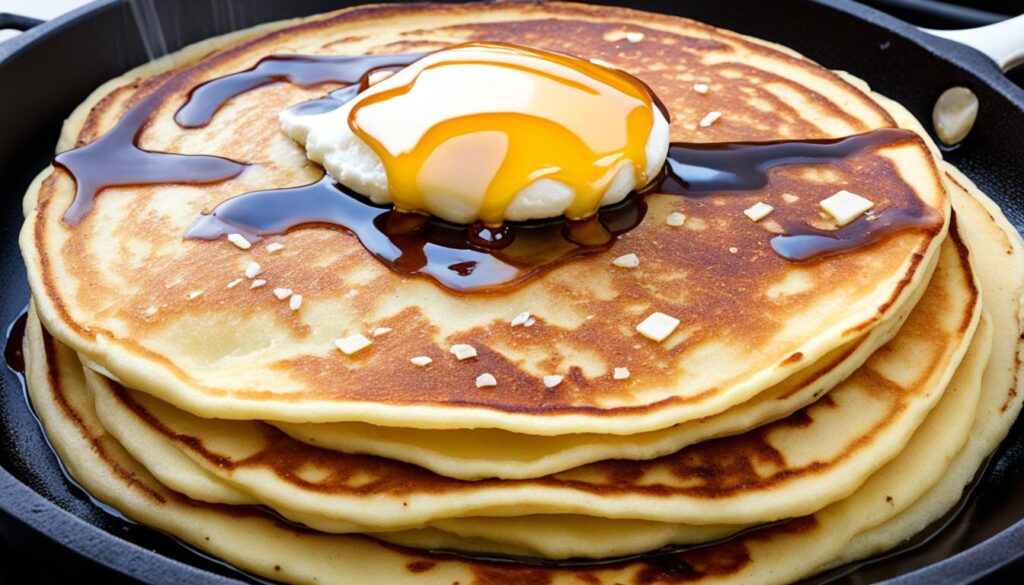
Fluffy buttermilk pancakes in a cast iron skillet are better than any other pancakes because even heat meets a properly seasoned surface — edges crisp slightly while insides stay pillow-soft.

One rule: don’t overmix. Lumps are fine. Lumps are good.
Ingredients (Serves 4 — Makes About 12 Pancakes)
Dry ingredients:
- 2 cups all-purpose flour
- 2 tablespoons granulated sugar
- 2 teaspoons baking powder
- 1 teaspoon baking soda
- 1/2 teaspoon salt
Wet ingredients:
- 2 cups buttermilk
- 2 large eggs
- 1/4 cup unsalted butter, melted and cooled
- 1 teaspoon vanilla extract
For cooking:
- Butter or neutral oil for the pan
The Batter
Whisk all dry ingredients in a large bowl. In a separate bowl, whisk buttermilk, eggs, melted butter, and vanilla.
Pour wet into dry. Stir just until combined — 10-12 stirs maximum. There should be lumps. Let the batter rest 5-10 minutes while the skillet heats up.
Cooking Them Right
Heat the skillet over medium-low. Let it warm for 3-4 minutes — cast iron takes longer to heat than thin pans, but it holds that heat perfectly once it’s there.
Add a small pat of butter. Let it melt and foam. Pour 1/4 cup batter per pancake. Cook until bubbles form across the surface and edges look set — about 2-3 minutes.
Flip once. Cook 1-2 more minutes until golden. Don’t press down on them.
Toppings That Work
Classic: real maple syrup and a pat of butter. That’s all.
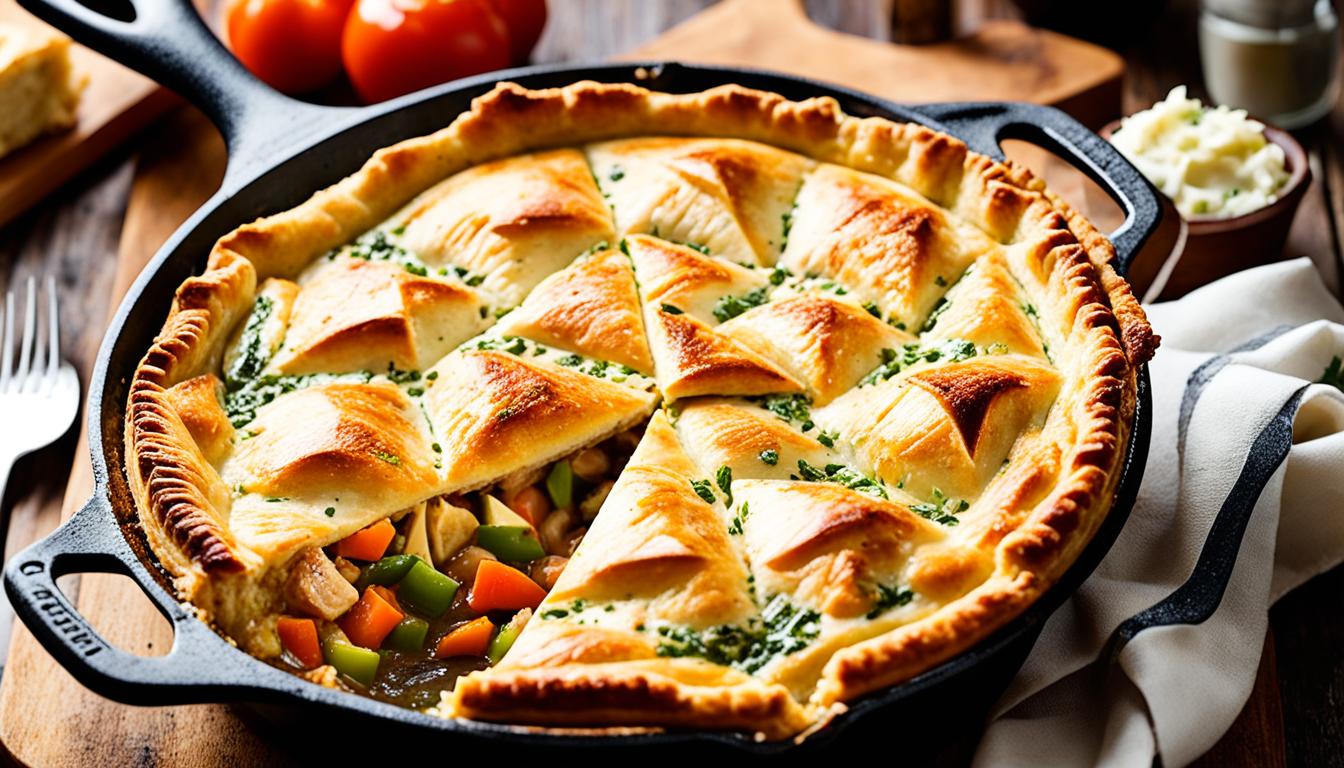
But also:
- Fresh blueberries or sliced strawberries stirred into batter
- Chocolate chips and dusting of powdered sugar
- Lemon zest and poppy seeds in batter, cream cheese and jam on top
- Savory version: remove sugar, add shredded cheddar and chives
Nutritional Information (Per Serving — 3 Pancakes)
| Nutrient | Amount per Serving |
|---|---|
| Calories | 382 |
| Carbohydrates | 54g |
| Protein | 11g |
| Fat | 14g |
| Fiber | 1.5g |
| Sodium | 618mg |
Savory Sausage and Apple Breakfast Skillet
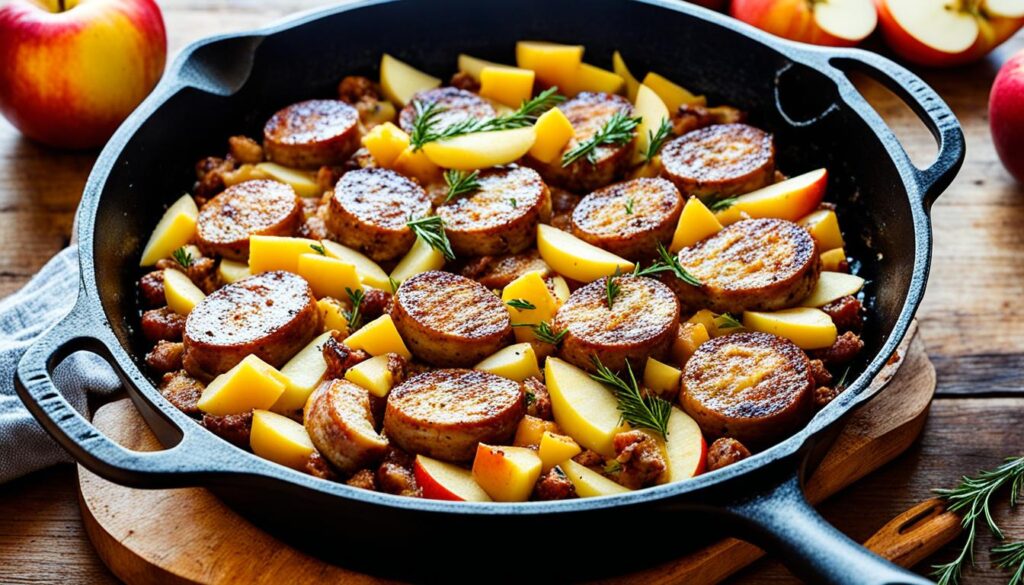
Savory sausage and apple breakfast skillet combines sweet and savory perfectly — pork sausage, caramelized onions, Granny Smith apples ready in 25 minutes.
It sounds like Thanksgiving but it works at 8am.
Ingredients (Serves 4)
- 1 pound ground pork breakfast sausage
- 2 medium Granny Smith apples, cored and diced small
- 1 medium yellow onion, diced
- 2 cloves garlic, minced
- 1 tablespoon olive oil
- 1-1/2 teaspoons dried sage
- 1/2 teaspoon dried thyme
- 1/4 teaspoon red pepper flakes (optional)
- Salt and black pepper to taste
- 1/2 cup shredded sharp cheddar cheese
- Fresh parsley for garnish
How to Make It
Heat skillet over medium-high. Add olive oil. Add sausage, breaking it apart. Cook until well browned — 6-8 minutes.
Remove sausage to a plate. Leave about 1 tablespoon of fat in the pan. Add onion. Cook 4-5 minutes until softened and golden. Add garlic. Cook 1 minute more.
Add apples, sage, thyme, and red pepper flakes — cook 4-5 minutes until apples are just tender. Return sausage to skillet. Stir everything together. Season with salt and pepper.
Sprinkle cheese over top. Cover with a lid for 1-2 minutes to melt. Garnish with fresh parsley. Serve directly from the skillet.
Nutritional Information (Per Serving)
| Nutrient | Amount per Serving |
|---|---|
| Calories | 468 |
| Carbohydrates | 18g |
| Protein | 22g |
| Fat | 34g |
| Fiber | 2.5g |
| Sodium | 712mg |
Cheesy Potato and Egg Frittata
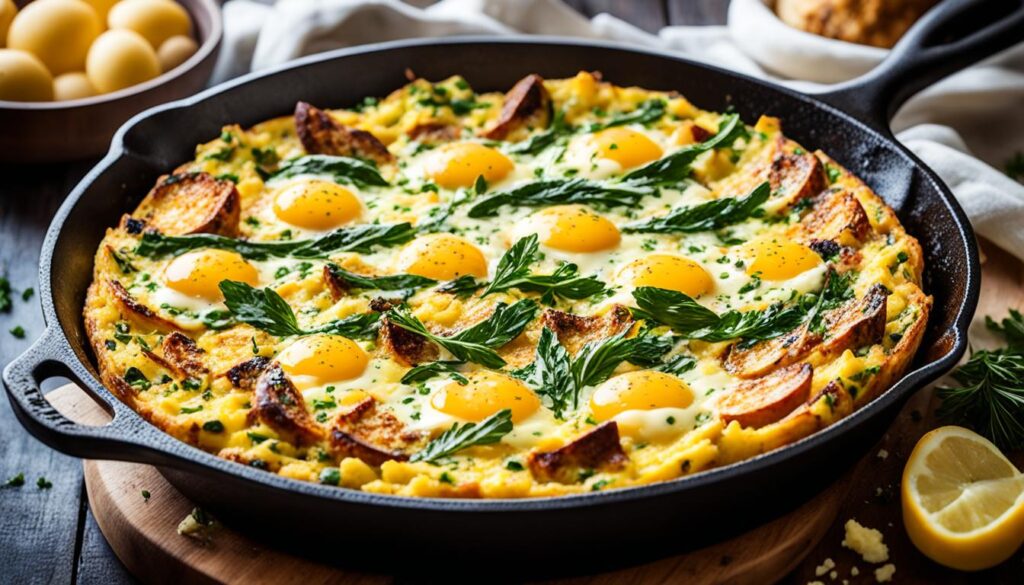
Cheesy potato and egg frittata is basically a crustless quiche that doesn’t require blind baking or a rolling pin — starts on the stovetop, finishes in the oven.
Eight eggs. Two kinds of cheese. Potatoes. Whatever vegetables you want to throw in.
Ingredients (Serves 4)
- 8 large eggs
- 1/4 cup whole milk
- 2 cups Yukon Gold potatoes, diced small (about 2 medium potatoes)
- 1 cup baby spinach, roughly chopped
- 1/2 red bell pepper, diced
- 1/4 cup yellow onion, finely diced
- 2 cloves garlic, minced
- 2/3 cup sharp cheddar, shredded
- 1/3 cup Gruyere, shredded
- 2 tablespoons olive oil
- Salt, black pepper, and fresh thyme to taste
The Cheese Blend
Sharp cheddar does the heavy lifting — tanginess, meltability, flavor. Gruyere adds nutty depth that makes the whole frittata taste more complex without being obvious.
Don’t swap Gruyere for mozzarella. Mozzarella stretches but doesn’t add much flavor. If Gruyere isn’t available, Swiss is the closest substitute.
Adding Vegetables
Spinach and bell peppers are the base here, but frittatas are forgiving. Mushrooms, zucchini, sun-dried tomatoes, broccoli — all work well.
The rule: sauté vegetables first before adding eggs. Raw vegetables release too much moisture and make the frittata watery.
Cooking Steps
Preheat your oven to 375°F before you start cooking — the transition from stovetop to oven needs to be fast.
Heat olive oil in skillet over medium. Add potatoes. Cook 6-7 minutes until golden and tender. Add onion and bell pepper. Cook 3-4 minutes. Add garlic and spinach. Cook 1-2 minutes until spinach wilts.
Whisk eggs with milk, salt, pepper, and thyme. Pour egg mixture evenly over vegetables. Sprinkle both cheeses over the top.
Cook on stovetop 3-4 minutes until edges begin to set. Transfer to oven. Bake 12-14 minutes until center is just set and top is lightly golden. Let rest 5 minutes before slicing.
Nutritional Information (Per Serving)
| Nutrient | Amount per Serving |
|---|---|
| Calories | 398 |
| Carbohydrates | 22g |
| Protein | 24g |
| Fat | 24g |
| Fiber | 2.5g |
| Sodium | 468mg |
Sweet and Gooey Cinnamon Roll Skillet
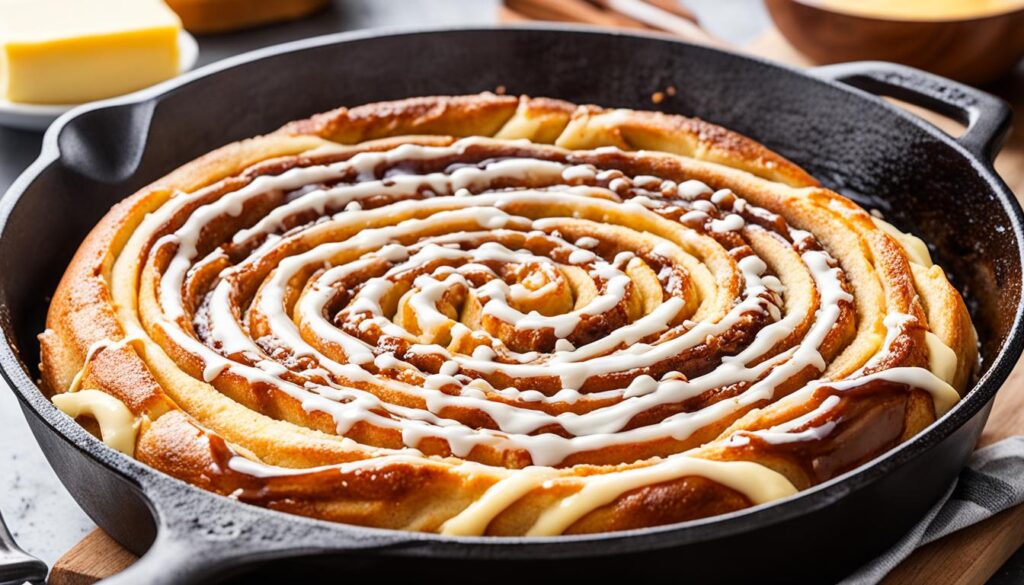
Sweet and gooey cinnamon roll skillet is the best kind of cheating — store-bought cinnamon roll dough, a cast iron skillet, 35 minutes, done.
The result looks and tastes like something that took two hours. Cast iron gives the bottom a golden, slightly caramelized crust that canned cinnamon rolls baked in a glass dish never develop.
Ingredients (Serves 4-6)
For the rolls:
- 2 cans (17.5 oz each) refrigerated jumbo cinnamon rolls (about 10 rolls)
- 1 tablespoon melted butter for the skillet
For the homemade glaze (better than the canned stuff):
- 1-1/2 cups powdered sugar, sifted
- 3 tablespoons whole milk
- 2 tablespoons cream cheese, softened
- 1/2 teaspoon vanilla extract
- Pinch of salt
Making It
Preheat oven to 350°F. Brush a 10-inch cast iron skillet with melted butter.
Arrange cinnamon rolls in a circle starting from the center — one in the middle, the rest around the edges, leaving a little space between each one (they’ll fill in as they bake).
Bake 30-35 minutes until deep golden brown on top and gooey in the center.
While they bake, make the glaze: beat cream cheese until smooth, whisk in powdered sugar, milk, vanilla, and salt until smooth and pourable.
Let rolls cool in the skillet for 5 minutes. Pour glaze over while still warm. Serve straight from the pan.
Going Further
Add 1/4 cup of pecans or walnuts over the rolls before baking. Swap the vanilla glaze for a maple version — replace milk with pure maple syrup and reduce the powdered sugar to 1 cup.
Both are worth trying.
Nutritional Information (Per Serving)
| Nutrient | Amount per Serving |
|---|---|
| Calories | 512 |
| Carbohydrates | 78g |
| Protein | 6g |
| Fat | 19g |
| Fiber | 1g |
| Sodium | 824mg |
Hearty Campfire Breakfast Skillet
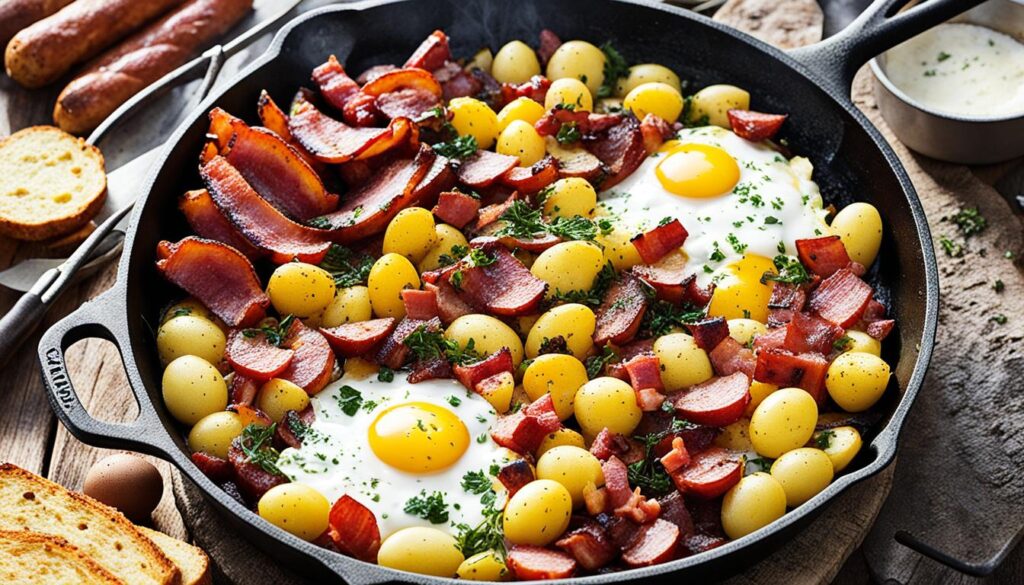
Hearty campfire breakfast skillet was built for cast iron — camping, a fire going, no kitchen, no convenience, and still a proper breakfast with sweet potatoes, poblano peppers, kale, garlic, eggs.
Everything cooks together in one pan.
Prepping for Outdoor Cooking
Do the prep work at home before you leave. Dice everything. Pack it in sealed containers or zip bags labeled in order.
At the campsite, you’re just cooking — not chopping, not measuring.
Ingredients (Serves 4):
- 2 medium sweet potatoes, diced small (about 2-1/2 cups)
- 3 poblano peppers, seeded and diced
- 3 cups kale, stems removed and roughly chopped
- 4 cloves garlic, minced
- 1 small yellow onion, diced
- 4 large eggs
- 2 tablespoons olive oil
- 1 teaspoon smoked paprika
- 1/2 teaspoon cumin
- Salt and pepper to taste
- Hot sauce for serving
Fire Management
Don’t cook over flames. Cook over coals.
Get a good fire burning. Let it burn down to hot, glowing embers — takes about 20-25 minutes. Set the skillet directly on the coals or on a grate above them. The heat is steadier, more even, won’t scorch the outside of everything.
If you’re cooking indoors, medium-high heat works perfectly.
Cooking Steps
Heat oil in skillet. Add sweet potatoes and onion. Cook 8-10 minutes, stirring occasionally, until potatoes are tender and starting to brown.
Add poblanos and garlic. Cook 3-4 minutes. Add kale. Stir to wilt — 2-3 minutes. Season with paprika, cumin, salt, and pepper.
Create 4 wells. Crack an egg into each. Cover with a lid or foil. Cook 4-5 minutes until whites are set. Serve from the skillet with hot sauce.
Clean-up at Camp
Eat straight from the pan. At camp, that means one thing to wash.
After you’re done, scrub with hot water and a stiff brush — no soap — and dry it over the dying fire. Rub with a tiny bit of oil before packing it away.
Nutritional Information (Per Serving)
| Nutrient | Amount per Serving |
|---|---|
| Calories | 312 |
| Carbohydrates | 34g |
| Protein | 11g |
| Fat | 16g |
| Fiber | 5g |
| Sodium | 384mg |
Southwestern Breakfast Burrito Skillet
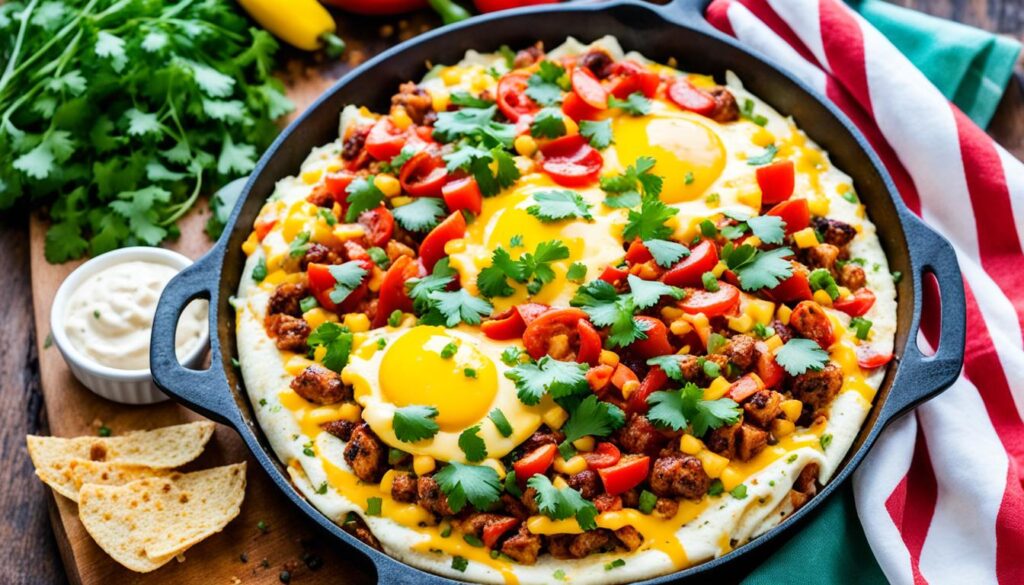
Southwestern breakfast burrito skillet delivers all the flavors of a breakfast burrito without rolling anything up — hash browns, black beans, scrambled eggs, cheese, kale, cilantro cooked in one skillet.
Serve with warm tortillas on the side so everyone builds their own.
Ingredients (Serves 4)
- 6 large eggs
- 1/3 cup whole milk
- 3 cups frozen hash browns, thawed
- 1 can (15 oz) black beans, drained and rinsed
- 3 cups kale, stemmed and torn into pieces
- 1-1/4 cups shredded cheddar cheese
- 3 green onions, sliced
- 1/3 cup fresh cilantro, roughly chopped
- 1 tablespoon olive oil
- 1 teaspoon cumin
- 1/2 teaspoon chili powder
- Salt and pepper to taste
- 4-6 large flour tortillas, warmed
- Salsa, sour cream, and hot sauce for serving
Making It Work
Heat olive oil in skillet over medium-high. Add hash browns in an even layer. Press down — cook 5-7 minutes until crispy on the bottom.
Flip hash browns in sections. Cook another 3-4 minutes. Add kale. Stir through. Cook 2-3 minutes until wilted.
Add black beans, cumin, and chili powder — stir and warm through. Whisk eggs with milk, salt, and pepper.
Push everything to the sides. Pour eggs into the center. Gently scramble eggs in the center. Fold the surrounding ingredients in as eggs begin to set. Cook until eggs are just set — not dry.
Sprinkle cheese over the top. Cover 1-2 minutes to melt. Top with green onions and cilantro. Serve immediately with warm tortillas.
Nutritional Information (Per Serving — Without Tortilla)
| Nutrient | Amount per Serving |
|---|---|
| Calories | 428 |
| Carbohydrates | 38g |
| Protein | 22g |
| Fat | 22g |
| Fiber | 6g |
| Sodium | 682mg |
French Toast Casserole in a Cast Iron Skillet
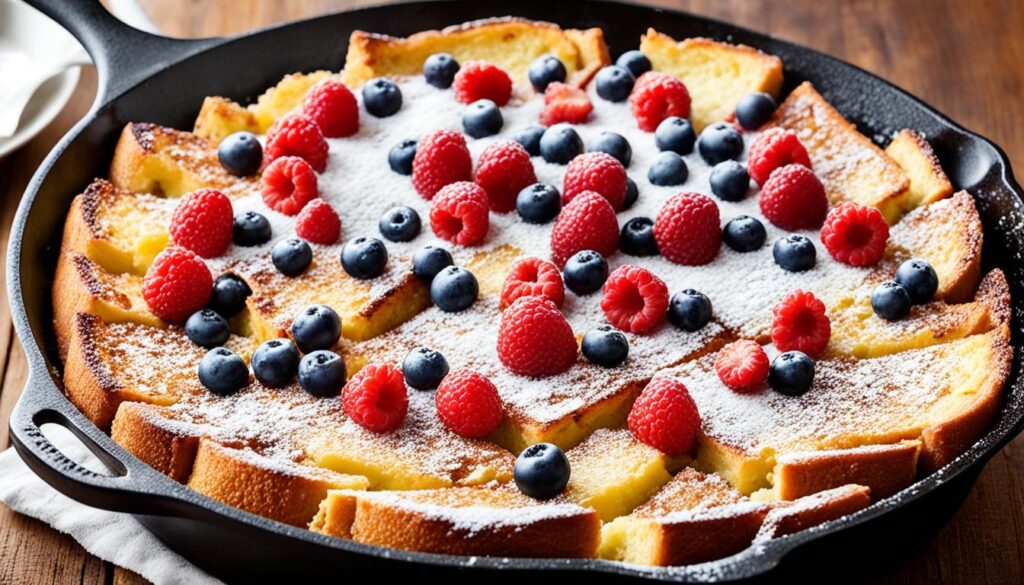
French toast casserole in a cast iron skillet is the lazy genius of weekend breakfasts — put it together the night before, slide it in the oven in the morning, done.
Cast iron gives the bread cubes a custard-soaked interior and a caramelized, crunchy streusel top.
Day-old bread is essential. Fresh bread turns to mush.
Ingredients (Serves 4-6)
For the casserole:
- 1/2 loaf day-old brioche or French bread, cubed (about 5-6 cups)
- 5 large eggs
- 1-1/4 cups whole milk
- 1/3 cup granulated sugar
- 1-1/2 teaspoons vanilla extract
- 1-1/2 teaspoons ground cinnamon
- 3 tablespoons maple syrup
- 1 tablespoon unsalted butter (for the skillet)
For the streusel topping:
- 1/3 cup all-purpose flour
- 1/3 cup brown sugar, packed
- 1/4 teaspoon cinnamon
- Pinch of salt
- 1/4 cup cold unsalted butter, cut into small cubes
- 1/2 cup pecans, roughly chopped (optional)
Night Before
Butter the cast iron skillet. Arrange bread cubes in the skillet.
Whisk eggs, milk, sugar, vanilla, cinnamon, and maple syrup together. Pour custard over bread — press down gently so bread absorbs the liquid.
Cover with plastic wrap. Refrigerate overnight (or at least 2 hours).
Morning
Preheat oven to 350°F.
Make streusel: combine flour, brown sugar, cinnamon, and salt — cut in cold butter with fingertips until crumbly, stir in pecans.
Spread streusel evenly over the soaked bread. Bake 45-55 minutes until golden brown, puffed, and a knife inserted in the center comes out clean.
Rest 5-10 minutes before serving. Serve with extra maple syrup.
Nutritional Information (Per Serving)
| Nutrient | Amount per Serving |
|---|---|
| Calories | 524 |
| Carbohydrates | 68g |
| Protein | 13g |
| Fat | 23g |
| Fiber | 2g |
| Sodium | 384mg |
Vegetarian Shakshuka with Fresh Herbs
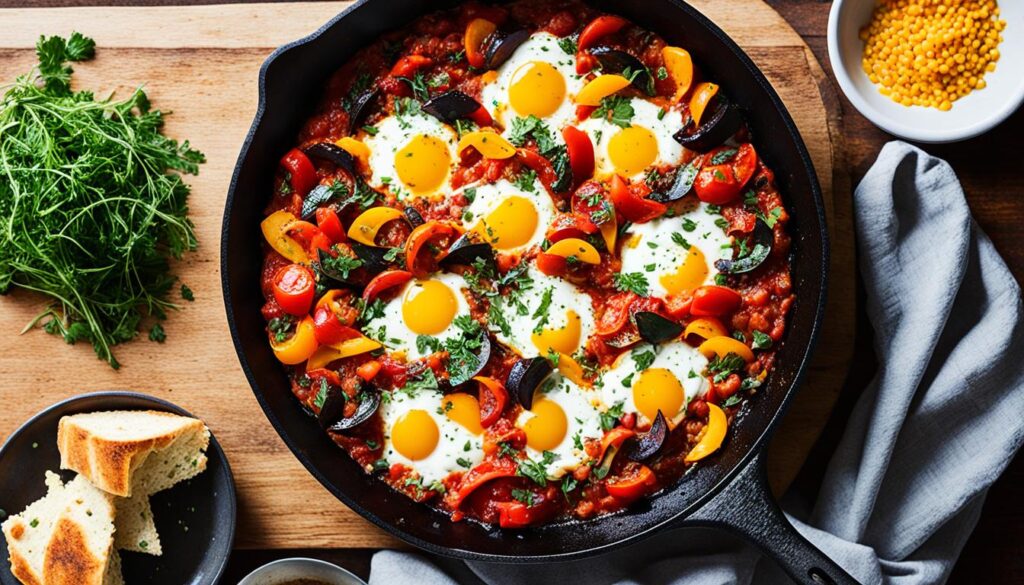
Vegetarian shakshuka with fresh herbs is a North African and Middle Eastern egg dish that’s been showing up on brunch menus everywhere — spiced tomato sauce with poached eggs, fresh herbs, feta, ready in 30 minutes.
One pan. Vegetarian but doesn’t taste like it’s missing anything.
The Tomatoes
Ripe, fresh tomatoes are ideal when they’re in season. Off-season? Canned San Marzano tomatoes are better than mediocre fresh ones. No question.
For a family of four, you’ll need a substantial amount — either 6 medium fresh tomatoes (diced) or two 14.5 oz cans of crushed or diced tomatoes.
The Spice Blend
The spice combination separates a great shakshuka from a boring one:
- 1-1/2 teaspoons smoked paprika
- 1 teaspoon cumin
- 1/2 teaspoon coriander
- 1/4 teaspoon cayenne (adjust to taste)
- 1/4 teaspoon cinnamon (yes — trust it)
Bloom them in the oil with the aromatics before adding tomatoes. That step — 60 seconds of cooking the spices — makes a real difference.
Ingredients (Serves 4)
- 8 large eggs
- 2 cans (14.5 oz each) crushed tomatoes, or 6 medium fresh tomatoes, diced
- 1 medium yellow onion, diced
- 1 red bell pepper, diced
- 4 cloves garlic, minced
- 2 tablespoons olive oil
- 1-1/2 teaspoons smoked paprika
- 1 teaspoon cumin
- 1/2 teaspoon coriander
- 1/4 teaspoon cayenne
- 1/4 teaspoon cinnamon
- Salt and pepper to taste
- 1/2 cup crumbled feta cheese
- Fresh parsley and cilantro for serving
- Crusty bread or pita for serving
Poaching the Eggs
Heat olive oil in skillet over medium. Add onion and bell pepper. Cook 6-7 minutes until soft.
Add garlic and all spices. Cook 1 minute — it should smell incredible. Add tomatoes. Stir well. Bring to a simmer. Cook sauce 10-12 minutes until thickened slightly. Season with salt and pepper.
Make 8 small wells in the sauce. Crack one egg into each well. Cover skillet. Reduce heat to medium-low. Cook 6-8 minutes until whites are set, yolks still runny.
Sprinkle feta and fresh herbs over top. Serve immediately from the skillet with plenty of bread for soaking up sauce.
Nutritional Information (Per Serving)
| Nutrient | Amount per Serving |
|---|---|
| Calories | 342 |
| Carbohydrates | 22g |
| Protein | 18g |
| Fat | 21g |
| Fiber | 4.5g |
| Sodium | 648mg |
Skillet Breakfast Pizza with Crispy Crust
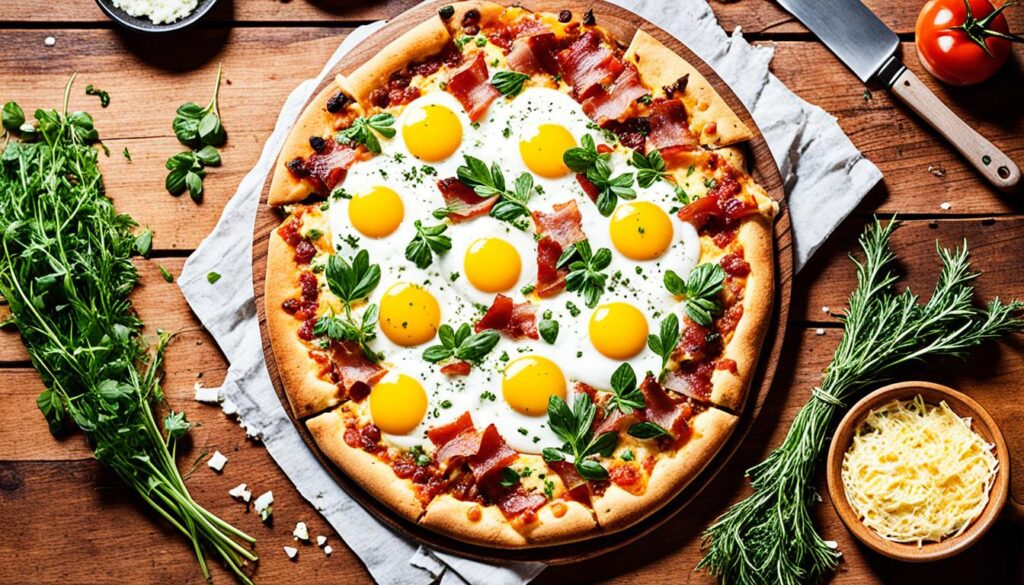
Skillet breakfast pizza with crispy crust is exactly what it sounds like and better than you expect — pizza dough pressed into a screaming-hot cast iron skillet, then topped with sausage, cheese, and a custardy egg mixture.
Crispy on the bottom. Creamy in the middle. Completely satisfying.
Weekend-only project. Worth it.
Ingredients (Serves 4-6)
For the base:
- 14 oz pizza dough (store-bought works great)
- 1 tablespoon olive oil for the skillet
For the toppings:
- 1 pound breakfast sausage, crumbled and cooked
- 1 cup shredded mozzarella
- 1 cup shredded cheddar
- 1 cup frozen tater tots, cooked (or skip and add extra sausage)
For the egg custard:
- 4 large eggs
- 1 cup whole milk
- 1/3 cup heavy cream
- Salt, pepper, and a pinch of nutmeg
For finishing:
- 2 tablespoons unsalted butter, sliced thin
- Red pepper flakes and fresh chives for garnish
How to Make It
Preheat oven to 450°F — with the cast iron skillet inside. Let the skillet heat up for at least 15 minutes.
Cook sausage in a separate pan. Break into crumbles. Set aside. Whisk eggs, milk, cream, salt, pepper, and nutmeg together.
Carefully remove hot skillet from oven (use heavy oven mitts — this is not a step to rush). Brush skillet with olive oil. Press pizza dough into the bottom and up the sides.
Work fast: add cooked sausage, tater tots, and cheese in layers. Pour egg custard over everything. Dot thin slices of butter across the top.
Return to oven. Bake 22-26 minutes until crust is deep brown and filling is set and golden. Rest 5 minutes. Garnish with red pepper flakes and chives. Slice and serve from the skillet.
Variations
Bacon instead of sausage. Roasted mushrooms and goat cheese. Spicy chorizo with jalapeños.
The base — crispy dough, egg custard, cheese — works with almost any topping combination you enjoy. Also works for dinner. Just saying.
Nutritional Information (Per Serving)
| Nutrient | Amount per Serving |
|---|---|
| Calories | 682 |
| Carbohydrates | 48g |
| Protein | 32g |
| Fat | 42g |
| Fiber | 2g |
| Sodium | 1,148mg |
Tips for Cleaning and Maintaining Your Cast Iron Skillet
A well-maintained cast iron skillet outlasts everything else in the kitchen by decades — the care routine is simple, just consistent.
After Every Use
Clean while the pan is still warm. Hot water, a stiff brush, little elbow grease handles almost everything.
Avoid soap. It strips the seasoning you’ve built up. For really stubborn bits, coarse kosher salt and a folded paper towel work better than any scrubber.
Dry it completely. Either towel-dry and then set over low heat on the stovetop for 2-3 minutes, or put it in a still-warm oven. Any moisture left behind causes rust.
Re-Oiling
While still warm from drying, wipe a very thin layer of oil across the entire cooking surface. Grapeseed, avocado, or refined coconut oil all work well.
Wipe off any excess — you want a barely-there sheen, not a pooled layer of oil.
This step, done consistently, is how the seasoning builds over time. Every cook. Every proper cleaning. Every wipe of oil adds another thin layer.
Storage and Long-Term Care
| Situation | What to Do |
|---|---|
| Stacking skillets | Place a paper towel or cloth between pans |
| Light rust spot | Scrub with salt and oil, re-season |
| Significant rust | Scrub with steel wool, wash, dry, season from scratch |
| Sticky surface | Too much oil applied — bake at 400°F for 1 hour |
| Stored for a long time | Re-season before first use |
The cast iron you use most is usually the best-maintained — because cooking in it is its own form of seasoning. Don’t let yours sit in a cabinet for months at a time.
Make breakfast in it.