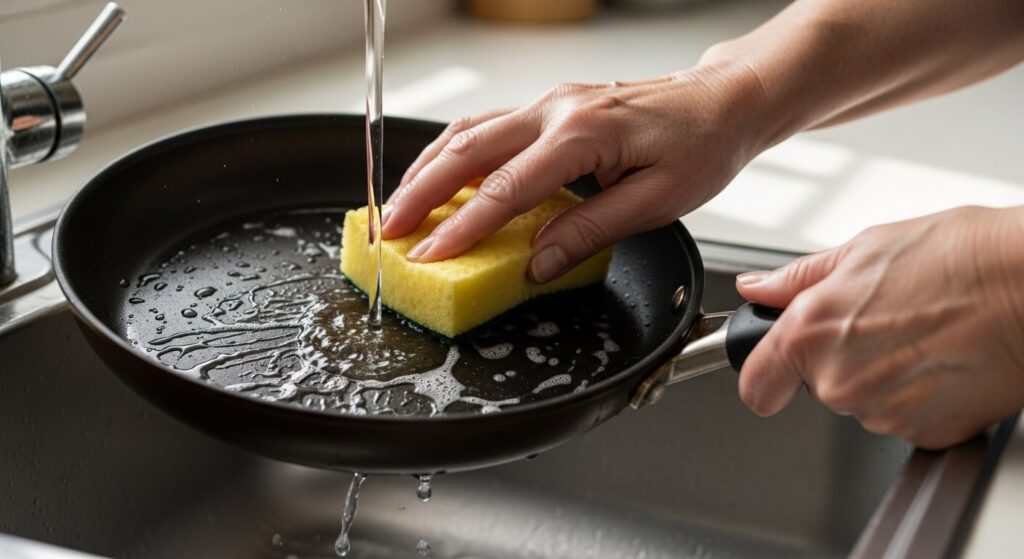
Why Automatic Scrubbers Are Essential for Seniors with Arthritis
Automatic scrubbers eliminate the repetitive gripping and twisting motions that trigger arthritis pain and inflammation in senior hands.
Here’s the thing—you’re not just dealing with a little stiffness. Arthritis transforms everyday cleaning tasks into exercises in pain management. And manual scrubbing? That’s basically asking inflamed joints to do the one thing they hate most: repetitive, forceful movements.
The Impact of Arthritis on Daily Cleaning Tasks
Arthritis attacks the very movements cleaning requires.
Think about scrubbing a dish. You’ve got to:
- Grip the sponge (already painful)
- Apply pressure (worse)
- Twist your wrist repeatedly (the real killer)
- Hold that position for minutes at a time
Each motion stresses joints that are already inflamed. The cartilage that should cushion your bones? It’s degraded. So you’re basically grinding bone on bone while trying to clean last night’s lasagna pan.
Common cleaning tasks that wreck arthritic hands:
| Task | Why It Hurts | Pain Level (1-10) |
|---|---|---|
| Scrubbing pots and pans | Forceful gripping + pressure | 8-9 |
| Cleaning bathtub/shower | Awkward angles + sustained grip | 7-8 |
| Washing vegetables | Repetitive rubbing motions | 5-6 |
| Mopping floors | Extended gripping + arm movement | 7-8 |
And here’s what nobody tells you: the damage compounds. One cleaning session might leave your hands aching for hours. Do it daily? You’re looking at permanent joint deterioration.
How Manual Scrubbing Aggravates Joint Pain and Inflammation
Manual scrubbing creates a perfect storm of arthritis triggers—sustained grip pressure, repetitive motion, and awkward wrist angles all happening simultaneously.
Get this: when you grip a manual scrub brush, you’re squeezing at about 20-30 pounds of force. Your inflamed joints? They’re screaming. But you keep going because that grout isn’t cleaning itself.
The repetitive motion makes it worse. Each back-and-forth scrubbing action:
- Increases inflammation in the joint capsule
- Stresses already-damaged cartilage
- Can cause micro-tears in surrounding tendons
- Triggers a pain response that lasts way longer than the actual cleaning
What happens inside your joints during manual scrubbing:
Your synovial fluid (the stuff that lubricates joints) gets overwhelmed. Too much friction, not enough cushioning. The result? More swelling. More stiffness. Sometimes for days after a single cleaning session.
Wrist extension is particularly brutal. When you scrub a shower wall or reach into a pot, you’re bending your wrist backward—often at 45-60 degrees. That angle puts massive stress on the carpal bones and the tendons running through your wrist. Do this for 10 minutes straight and you’ve essentially tortured your joints.
And the aftermath? Many seniors report:
- Inability to grip objects for 2-4 hours post-cleaning
- Increased morning stiffness the next day
- Flare-ups that require additional medication
- Progressive loss of hand strength over time
Not worth it.
Benefits of Switching to Automatic Scrubber Tools for Arthritis Relief
Switching to automatic scrubbers reduces hand strain by 60-80% while actually cleaning more effectively than manual methods.
The motor does the work. Simple as that.
Instead of your wrist twisting 200 times to clean a pan, the automatic brush head rotates at 300+ RPM. Your job? Hold it in place. That’s it. The grip pressure drops from 20-30 pounds to maybe 5-8 pounds. Huge difference.
Real benefits you’ll notice immediately:
- Less grip strength required – You’re guiding, not forcing (and your knuckles will thank you)
- Reduced wrist movement – The tool moves, your wrist stays neutral
- Shorter cleaning time – Faster cleaning means less joint exposure (sometimes 50% quicker)
- Better results with less effort – The spinning action cuts through grime you’d normally have to attack aggressively
- Ability to clean more frequently – When it doesn’t hurt, you’ll actually do it
But here’s the sneaky good part: you maintain independence.
Many seniors avoid cleaning because of the pain, then feel guilty about needing help. Automatic scrubbers? They let you handle your own household tasks without the joint destruction or the need to ask for assistance.

Your hand function stays preserved for things that actually matter—holding grandkids, hobbies, eating, writing. Why waste your limited pain-free hand movements on scrubbing when a $30 electric brush can do it better?
Top Automatic Scrubber Tools Every Senior Should Use to Protect Arthritis-Prone Hands
These specific automatic scrubber tools target the exact cleaning tasks that cause the most arthritis pain in senior hands.
Look, not all automatic scrubbers are created equal. Some are genuinely helpful for arthritic hands. Others? Overpriced junk that’ll sit in your closet.
Electric Dish Scrubbers for Arthritis-Friendly Kitchen Cleaning
Electric dish scrubbers eliminate the wrist-twisting and forceful gripping that makes washing dishes unbearable for arthritic hands.
The kitchen is ground zero for hand pain. You’re washing dishes multiple times daily, scrubbing stuck-on food, dealing with greasy pans. It adds up fast.
Handheld Electric Dish Scrubbers with Ergonomic Grips
These tools put the scrubbing power in a motor while keeping the grip comfortable and pain-free.
Top features that actually help arthritis:
- Cushioned grip zones – Usually foam or soft rubber that molds to your hand (no hard plastic digging into inflamed joints)
- Wider handle diameter – 1.5 to 2 inches thick lets you hold with your whole hand instead of pinching
- Angled neck design – Keeps your wrist in a neutral position even when reaching into deep pots
- Lightweight construction – 0.5 to 1 pound maximum (any heavier and you’re just trading one problem for another)
The OXO Good Grips Electric Dish Brush is solid. Weighs about 11 ounces, has that wider grip, and the brush head spins at a good speed without being aggressive. Around $25-30.
Homitt Electric Spin Scrubber works too. Comes with multiple brush heads (flat, corner, rounded) so you’re not buying separate tools. The handle’s got decent cushioning. Runs $35-40.
What to skip:
Those tiny electric scrubbers shaped like regular sponges? Wrong. They require too much grip pressure and your hand’s still doing most of the work. If it doesn’t have a handle you can hold with your whole hand, it’s not arthritis-friendly.
Long-Handle Electric Dish Brushes for Reduced Wrist Strain
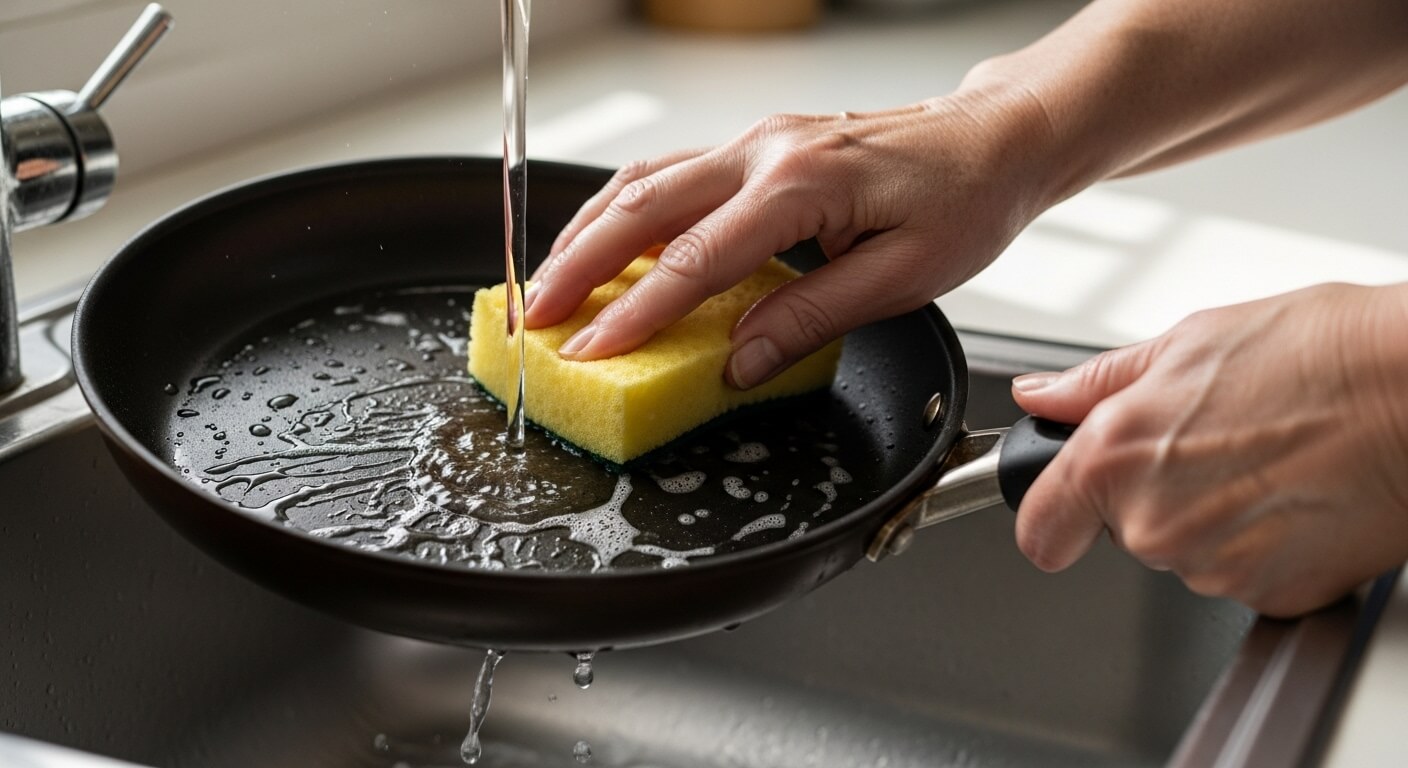
Extended handles put 10-16 inches between your hand and the cleaning surface, dramatically reducing how much you need to bend your wrist.
Here’s what works: you stand upright, arm slightly extended, wrist straight. The long handle reaches into the sink or pot while your joints stay in their happy place (neutral position).
Benefits for arthritic hands:
- Reach deep pots without wrist flexion
- Clean sink bottoms while standing straight
- No leaning over that stresses shoulders and back
- Can use with minimal grip strength (just guide it)
The Casabella Water Stop Dish Brush has an extendable handle (12-16 inches) and a decent motor. Not technically “automatic” in rotation, but the water-activated scrubbing helps. About $20.
For actual powered rotation with length, look at the Hiware Electric Dish Brush—it’s got a 13-inch handle and replaceable brush heads. Costs around $30-35.
Key Features to Look for in Arthritis-Friendly Dish Scrubbers
Buy based on these features or you’ll regret it.
Non-negotiable features:
| Feature | Why It Matters | What to Look For |
|---|---|---|
| Rechargeable battery | Changing batteries = painful twisting | USB charging or docking station |
| Multiple speeds | Control the power you need | At least 2 speed settings |
| Waterproof rating | You’re using it in water (obviously) | IPX7 or higher |
| Replaceable heads | Saves money and reduces waste | Easy snap-on/off mechanism |
The battery thing is huge. If you’ve got arthritis, you know what a pain it is opening battery compartments. Get rechargeable or don’t bother.
Automatic Shower and Bathtub Scrubbers for Seniors
Power scrubbers for bathrooms eliminate the sustained gripping, reaching, and bending that make tub cleaning nearly impossible for arthritic seniors.
Bathroom cleaning is particularly brutal. You’re dealing with:
- Overhead reaching (shower walls)
- Low bending (tub floor)
- Tile grout that requires serious pressure
- Slippery surfaces that demand tighter gripping

Wrong combination for arthritic hands.
Cordless Power Scrubbers for Bathroom Tile and Grout
These rechargeable scrubbers deliver serious cleaning power while weighing under 3 pounds—letting you clean bathrooms without demolishing your joints.
The Homitt Electric Spin Scrubber (different model than the dish one) is pretty much the standard. It’s got:
- 3 different brush heads (flat for tile, corner for grout, dome for curved surfaces)
- Adjustable handle that extends to 51 inches
- Two-speed settings
- About 90 minutes of runtime per charge
Costs around $40-50. Worth it.
Turbo Scrub is another solid option. Slightly lighter, similar features, usually $35-45. The handle’s got good cushioning and the motor’s strong enough for soap scum without being so aggressive it vibrates your hand.
What actually happens when you use these:
Instead of scrubbing back and forth 500 times with a hand brush (wrecking your wrist), you hold the power scrubber in place for maybe 10 seconds. The spinning head does 300+ rotations per minute. Your grip pressure? Minimal. You’re just guiding it along the tile.
Grout lines that used to take 20 minutes of intense scrubbing? Done in 3-4 minutes. And your hands don’t feel like they went through a meat grinder afterward.
Extension Handle Bathroom Scrubbers to Eliminate Bending
Long handles on power scrubbers mean you clean floors, tubs, and low surfaces while standing upright—no kneeling, no bending, no wrist-destroying angles.
This is critical. Many seniors with arthritis also deal with knee or back issues. Getting down to scrub a tub floor? Not happening. Or if it does happen, getting back up is the real challenge.
Extension handle benefits:
- Clean tub/shower floor while standing
- Reach high shower walls without overhead arm positions
- Maintain neutral wrist angle throughout
- Reduce fall risk (no awkward positioning on wet surfaces)
The best options extend to 48-52 inches. That’s tall enough for most people to clean floor-level surfaces while standing. The ELLESYE Electric Spin Scrubber extends to 51 inches and has decent reviews from seniors. Around $45.
Hydropower Scrubber is another one—extends to 49 inches, includes a pivoting head so you can angle it without angling your wrist. $50-55.
But here’s the catch: longer handles mean more leverage weight. Even if the tool weighs 2 pounds, at full extension it can feel like 4-5 pounds. So you’re looking for:
- Lightweight construction (under 2.5 pounds)
- Balanced weight distribution
- Comfortable grip even when extended
Lightweight Designs That Minimize Hand Fatigue
Power scrubbers under 2 pounds let you clean for 10-15 minutes without your hands cramping or trembling from the weight.
Weight matters. A lot.
You might think, “What’s the difference between 2 pounds and 3 pounds?” When you’ve got arthritis, it’s the difference between cleaning your whole bathroom and stopping halfway through because your hands gave out.
Actual weight ranges and what they mean:
- Under 1.5 lbs – Ideal, can clean for 15-20 minutes comfortably
- 1.5-2.5 lbs – Decent, good for 10-15 minutes
- 2.5-3.5 lbs – Pushing it, maybe 5-10 minutes before fatigue
- Over 3.5 lbs – Skip it (your hands will hate you)
The problem compounds with battery placement. Some scrubbers put the battery in the handle (better balance), others stick it at the bottom (worse leverage). Try to find ones with handle-integrated batteries.
And. If the scrubber has an extension handle, test the weight at full extension before buying. Some manufacturers list the “tool weight” but don’t mention how it feels when you’re holding it at arm’s length.
Electric Scrub Brushes for Floor Cleaning Without Joint Stress
Powered floor scrubbers eliminate the push-pull motion and sustained gripping that makes mopping and floor scrubbing torture for arthritic hands.
Floor cleaning is a different beast. Larger surface area, more sustained effort, usually requires you to push down with body weight. All bad for arthritis.
Rechargeable Floor Scrubbers with Adjustable Handles
These stand-up scrubbers clean floors while you walk behind them—no bending, no hand scrubbing, no wrist strain.
Think of it like a small, electric mop. The brush head spins, you guide it across the floor. That’s it.
Top picks for seniors with arthritis:
The Bissell SpinWave is probably the most popular. It’s got:
- Powered spin mop pads (not quite a “scrubber” but does the job)
- Adjustable handle height
- Lightweight at about 11 pounds
- Easy-fill water tank
Costs $80-100. Not cheap, but if you’re comparing it to the pain of manual mopping? Worth every penny.
For actual scrubbing power (not just mopping), the Gladwell Cordless Electric Mop has rotating brush heads. Weighs about 6 pounds, runs for 60+ minutes, handles tile, hardwood, laminate. Around $120-140.
Why these beat regular mops for arthritis:
Regular mopping requires:
- Gripping the handle firmly
- Pushing/pulling with upper body
- Wringing out the mop (absolute worst for hands)
- Repeated bending to rinse
Electric floor scrubbers? You guide them. The motor does the scrubbing. No wringing (disposable or washable pads). No forceful pushing.
Spin Scrubbers for Effortless Hard Surface Cleaning
Spinning brush heads tackle stuck-on floor grime without requiring you to apply pressure or make repetitive motions.
The beauty of spin scrubbers is the rotation speed. Most spin at 200-300 RPM, which is way more effective than your arm could ever scrub. So you’re getting better results with less effort.
How they protect arthritic hands:
- No push-down pressure needed (the spinning does the work)
- Minimal grip strength required (you’re just steering)
- No wrist twisting (straight handle, straight movement)
- Short cleaning sessions (faster = less joint exposure)
The Hurricane Spin Scrubber is designed specifically for this. It’s got interchangeable heads for different floor types and a handle that extends. Around $50-60. Bit awkward to use at first (feels weird not pushing hard), but that’s the point.
How Floor Scrubber Tools Protect Arthritic Hands and Knees
Standing floor scrubbers eliminate kneeling, reduce grip duration by 70%, and let you clean floors in 30-40% less time compared to manual methods.
Let’s be real—you’re probably not just protecting your hands. Your knees are shot too.
Traditional floor cleaning means:
- Kneeling to spot-clean (knee pain)
- Gripping a mop handle for 20-30 minutes (hand pain)
- Bending to move furniture (back pain)
- Carrying heavy water buckets (shoulder pain)
It’s a full-body disaster.
What changes with automatic scrubbers:
You stay upright. The tool weighs less than a gallon of water. Your grip time drops from 30 minutes to maybe 10. And because the motorized scrubbing is more effective, you’re not going over the same spot repeatedly.
One woman in my building (rheumatoid arthritis, both hands affected) switched to a Bissell SpinWave. She used to need her daughter to come mop every week. Now? She does it herself. The independence factor is huge—probably worth more than the pain reduction, honestly.
Automatic Vegetable and Fruit Scrubbers for Kitchen Prep
Electric produce scrubbers clean fruits and vegetables while you hold them in place—no rubbing, no wrist rotation, no grip fatigue.
Didn’t even know these existed until recently. But if you’re cooking regularly, you’re washing produce. And washing produce means gripping and rubbing, which means pain.
Countertop Produce Washers with Rotating Brushes
These devices sit on your counter and clean produce automatically while you literally just drop the items in and press a button.
The Sonic Soak or similar ultrasonic cleaners work, but they’re not really “scrubbers.” For actual brush cleaning, the TTLIFE Fruit and Vegetable Washing Machine is interesting. It’s got:
- Rotating basket with brush attachments
- Ozone cleaning (kills bacteria)
- Timer settings
- Holds about 10 pounds of produce
Around $60-80. Bit of an investment for just washing vegetables, but if you’re buying organic (which requires more washing) or you cook a lot, it adds up.
Who benefits most:
Seniors who:
- Cook fresh meals daily
- Have moderate to severe hand arthritis
- Want to maintain independent cooking
- Can afford the counter space
If you’re only washing a few vegetables a week, probably overkill. But if produce prep is causing regular hand pain, worth considering.
Handheld Electric Vegetable Brushes for Gentle Cleaning
These palm-sized scrubbers clean root vegetables and thick-skinned produce without requiring grip strength or rubbing motions.
More practical for most people. Small, handheld, does one job well.
The OXO Good Grips Electric Vegetable Brush is simple but effective. Battery-powered, soft bristles that spin, comfortable grip. About $15-20. Cleans potatoes, carrots, cucumbers—anything that needs scrubbing.
How to use with minimal hand stress:
- Hold the vegetable in your non-dominant hand (or use a vegetable holder if that hand’s also problematic)
- Turn on the brush
- Lightly touch it to the produce surface
- Let the spinning bristles do the cleaning
No rubbing motion needed. Your hand just holds the brush steady.
Reducing Hand Strain During Food Preparation
Electric produce scrubbers cut food prep hand strain by 40-60% and reduce prep time by 25-30% compared to manual washing and scrubbing.
Food prep is sneaky. You don’t think about how much hand work goes into cooking until your joints are inflamed.
Washing vegetables, peeling, chopping, stirring—it’s all grip-intensive. Electric scrubbers handle one part of that equation. Combine them with other adaptive kitchen tools (electric can openers, jar openers, etc.) and you’ve significantly reduced total hand stress.
The cumulative effect:
Say you spend 30 minutes prepping dinner. Maybe 10 minutes of that is washing and scrubbing produce. Switch to an electric scrubber, that 10 minutes becomes 6-7 minutes and requires 50% less grip strength.
Small change, but do it daily for a year? You’ve saved your hands hundreds of hours of painful gripping. That’s preserved hand function. That’s maintained independence.
Essential Features in Automatic Scrubber Tools for Arthritis Protection
Look for ergonomic grips, lightweight materials, variable speed controls, cordless operation, and interchangeable heads when choosing automatic scrubbers for arthritic hands.
Features matter more than brand names. A $100 scrubber with a terrible grip is worse than a $30 one designed for comfort.
Ergonomic Handle Design for Comfortable Grip
Handles specifically designed for arthritis reduce required grip force by up to 50% and prevent hand cramping during use.
“Ergonomic” gets thrown around a lot. But actual ergonomic design for arthritis means specific things.
Cushioned and Non-Slip Grip Materials
Soft rubber or foam grips distribute pressure across your palm instead of concentrating it on inflamed knuckles.
Materials that work:
- Thermoplastic rubber (TPR) – Soft, grippy, molds slightly to your hand
- Foam padding – Cushions pressure points, lightweight
- Silicone overlays – Non-slip even when wet, comfortable
- Textured plastic – Better than smooth plastic, but not ideal for severe arthritis
What doesn’t work: hard, smooth plastic. Your hand slips, you grip harder, pain increases. Vicious cycle.
The grip should also have some “give” to it. When you squeeze, it should compress slightly. That compression absorbs some of the force instead of transmitting it straight to your joints.
Optimal Handle Diameter for Arthritic Hands
Handles between 1.5 and 2 inches in diameter require less grip strength and cause less joint strain than thinner handles.
This is biomechanics. Thinner handles (like a pen or regular sponge) require your fingers to wrap tightly and your thumb to press hard for grip security. That’s a pinch grip—very stressful for arthritic joints.
Thicker handles let you use a power grip, where your whole hand wraps around. The force distributes across all fingers instead of concentrating in the thumb and index finger.
Handle diameter guide:
| Diameter | Grip Type | Arthritis Suitability |
|---|---|---|
| Under 1 inch | Pinch grip required | Poor – causes joint stress |
| 1-1.5 inches | Partial power grip | Okay – some strain |
| 1.5-2 inches | Full power grip | Good – minimal strain |
| Over 2 inches | Awkward grip | Poor – hard to control |
Most arthritis-friendly scrubbers fall in that 1.5-2 inch sweet spot. You can measure existing tools at home—if they’re comfortable to hold, they’re probably in this range.
Angled Handles to Reduce Wrist Extension
Handles with a 10-20 degree angle keep your wrist in a neutral position instead of forcing backward extension that stresses joints.
Straight handles are the enemy of arthritic wrists.
When you hold a straight-handled scrubber and push it into a surface, your wrist automatically extends backward (bends toward the back of your hand). That position compresses the carpal bones and stresses the tendons.
Angled handles fix this. The angle pre-positions the brush head so your wrist stays straight (neutral position) during use.
Why this matters:
Neutral wrist = minimal tendon stress = less pain = longer cleaning time before fatigue.
Extended wrist = maximum tendon stress = immediate pain = you quit after 5 minutes.
Look for scrubbers with visibly angled necks. The OXO brand does this well (their name literally includes “Good Grips” and they design for arthritis). Many cheap scrubbers skip this feature entirely.
Lightweight Construction to Minimize Hand and Arm Fatigue
Scrubbers under 2 pounds let you clean for 3-4 times longer before experiencing hand fatigue compared to heavier models.
Weight sneaks up on you. A scrubber feels fine for the first 2 minutes. By minute 5, your hand’s trembling. By minute 10, you’re done.
How weight affects cleaning duration:
- Under 1.5 lbs – Can clean for 15-20 minutes
- 1.5-2.5 lbs – Good for 10-12 minutes
- 2.5-3.5 lbs – Maybe 5-8 minutes
- Over 3.5 lbs – Forget it
And it’s not just the static weight. It’s the leverage weight when the tool’s extended or angled. A 2-pound scrubber at arm’s length feels like 4 pounds to your hand.
Materials that keep weight down:
- Plastic bodies (not metal)
- Lithium batteries (lighter than NiCad)
- Hollow handles
- Minimal unnecessary features
Some manufacturers add features that increase weight without adding value. LED lights, excessive battery capacity, metal components “for durability.” Skip those. You need light and functional, not heavy and feature-packed.
Variable Speed Settings for Customized Cleaning Power
Multiple speed options let you use gentle speeds for delicate items and higher speeds for tough grime—preventing you from overexerting your hands.
One speed = one approach = sometimes you’re using way more power (and grip strength) than necessary.
Why variable speed helps arthritis:
Light mess? Low speed. You barely need to grip the tool, it’s doing gentle work. Your hands stay relaxed.
Tough mess? High speed. Still not gripping hard, but the motor’s working harder so you don’t have to apply pressure.
Most good scrubbers have 2-3 speed settings. That’s enough. You don’t need 10 speeds. Just low/medium/high.
Speed setting guide:
| Speed | Best For | Grip Pressure Needed |
|---|---|---|
| Low (150-200 RPM) | Fresh spills, daily cleaning, delicate surfaces | Minimal – just guidance |
| Medium (200-250 RPM) | Normal grime, routine cleaning | Light – some stability needed |
| High (250-350 RPM) | Stuck-on food, soap scum, tough stains | Moderate – but still less than manual |
The ability to match power to the task means you’re never overworking your hands. And that’s huge for arthritis management.
Cordless and Rechargeable Options for Maximum Mobility
Rechargeable scrubbers eliminate the painful twisting required to change batteries and let you clean without cord management.
Cords are annoying. Batteries are painful to change. Rechargeable is the answer.
Why rechargeable beats replaceable batteries:
Battery changes require:
- Twisting battery compartment caps (painful)
- Pinching small batteries (difficult grip)
- Enough hand strength to push batteries in (sometimes surprising hard)
Rechargeable scrubbers? Plug in a USB cable or drop it on a charging dock. Zero hand pain.
Charging options ranked by arthritis-friendliness:
- Charging dock (best) – Just set the tool down, it charges
- Magnetic charging cable (good) – Cable snaps on, no precise alignment
- USB-C port (okay) – Requires some dexterity to plug in
- Micro-USB port (acceptable) – Smaller port, bit harder to connect
- Proprietary adapter (annoying) – Often requires twisting to lock
Runtime matters too. Look for at least 45-60 minutes per charge. Anything less and you’re recharging constantly, which gets old fast.
Interchangeable Brush Heads for Different Cleaning Needs
Tools with easy-swap brush heads let you tackle multiple cleaning tasks with one tool—saving money and reducing the number of items you need to grip and store.
Buy one tool, get multiple functions. Makes sense.
Common brush head types:
- Flat/wide heads – For tile, large flat surfaces
- Corner/pointed heads – For grout, tight spaces
- Dome/round heads – For curved surfaces, tubs
- Soft bristle heads – For delicate surfaces, non-stick cookware
- Stiff bristle heads – For outdoor items, tough stains
The key is the attachment mechanism. For arthritic hands, you need:
- One-button release (not twist-lock)
- Clear, audible snap when secured
- Large enough to grip easily
- No tools required for changing
Some scrubbers use twist-on heads. Skip those. Twisting is painful. Look for push-button release or push-to-lock systems.
The Homitt scrubbers do this well—press a button, old head pops off, push new head on until it clicks. Done in 3 seconds with minimal hand stress.
How to Choose the Right Automatic Scrubber for Your Arthritis Symptoms
Match the scrubber’s weight, grip design, and power level to your specific arthritis symptoms and the cleaning tasks you perform most frequently.
Not all arthritis is the same. Your needs are different from your neighbor’s needs.
Assessing Your Grip Strength and Range of Motion
Test your current grip strength and wrist mobility to determine which scrubber features are non-negotiable versus nice-to-have.
Quick grip strength test at home:
Can you:
- Shake someone’s hand without pain? (Mild arthritis)
- Grip a full water bottle? (Mild to moderate)
- Open a jar yourself? (Moderate)
- Hold a phone for 10+ minutes? (Moderate to severe)
- Grip a pen to write? (Severe)
If you’re struggling with basic grips, you need the lightest, most ergonomic options available. Don’t compromise.
Wrist range of motion check:
- Can you bend your wrist backward 45+ degrees without pain? (Good mobility)
- Can you bend it 30 degrees? (Limited mobility)
- Does any wrist bending hurt? (Severely limited)
Limited mobility = you absolutely need angled handles. Non-negotiable.
Matching Tool Weight to Your Physical Capabilities
Choose scrubbers that weigh 40-50% less than what you can comfortably hold for 10 minutes to account for fatigue during actual cleaning.
Here’s a practical test: Hold a 2-pound weight (or two 1-pound cans) in one hand at chest height. Can you hold it for 10 minutes without trembling or pain?
- Yes, easily – You can handle scrubbers up to 2.5 lbs
- Yes, but it gets uncomfortable – Stick to 1.5-2 lbs max
- No, hand fatigues quickly – You need under 1.5 lbs
- Can barely hold it – Look for under 1 lb options
Now try the same test with your arm extended (like you’d hold a scrubber while cleaning). Can you still do 10 minutes? That’s your real-world capability.
Weight tolerance by arthritis severity:
| Arthritis Severity | Max Tool Weight | Extended Use Weight |
|---|---|---|
| Mild | 2.5-3 lbs | 2 lbs |
| Moderate | 2 lbs | 1.5 lbs |
| Severe | 1.5 lbs | 1 lb |
Don’t buy aspirationally. If you have moderate arthritis, don’t buy a 2.5-pound scrubber thinking you’ll “work up to it.” You won’t. You’ll just not use it.
Considering the Cleaning Tasks You Perform Most Often
Buy scrubbers optimized for the cleaning you actually do, not the cleaning you think you should do.
Task frequency guide:
If you’re washing dishes daily but deep-cleaning the bathroom monthly, invest in a really good dish scrubber first. The bathroom can wait.
Priority ranking by task frequency:
- Daily tasks – Get the best tools you can afford
- Weekly tasks – Get good-quality tools
- Monthly tasks – Decent tools are fine
- Occasional tasks – Cheapest functional option or skip it
And be honest about what you actually clean. If you haven’t scrubbed your shower in 6 months, you probably don’t need a $60 power scrubber for it.
Budget-Friendly Options vs. Premium Arthritis-Friendly Scrubbers
Quality automatic scrubbers start at $25-35, with premium options running $50-120—but even budget options provide 60-70% of the arthritis benefits of premium models.
Budget breakdown:
Under $25:
- Basic handheld dish scrubbers
- Manual-switch electric brushes
- Limited battery life (30-40 minutes)
- Fewer brush head options
- Still way better than manual scrubbing
$25-50:
- Better battery life (60+ minutes)
- Multiple brush heads included
- More comfortable grips
- Adjustable speed settings
- This is the sweet spot for most people
$50-100:
- Premium ergonomics
- Longer extension handles
- Better build quality
- Longer warranties
- Extra features (LED lights, battery indicators)
Over $100:
- Floor cleaning systems
- Advanced features
- Commercial-grade durability
- Often overkill for home use
Honestly? Most seniors do fine in that $25-50 range. You get the arthritis benefits without overspending. Save your money for other adaptive equipment or hobbies.
But if you’ve got severe arthritis and you’re trying to maintain independence, the premium options might be worth it. Better ergonomics can mean the difference between being able to clean and not being able to clean.
Using Automatic Scrubber Tools Safely with Arthritis
Use automatic scrubbers with a relaxed grip, take breaks every 5-7 minutes, and combine them with joint protection strategies to maximize pain relief.
Even “easy” tools can cause problems if you use them wrong.
Proper Grip Techniques to Avoid Additional Joint Stress
Hold automatic scrubbers with a loose, relaxed grip using your whole hand—never pinch or squeeze tightly.
The right way to grip:
Think “guide” not “grab.” Your hand should be relaxed enough that someone could pull the scrubber away from you without much resistance. The tool doesn’t need a death grip—it’s not going anywhere.
Common grip mistakes:
- White-knuckle gripping – If your knuckles are turning white, you’re gripping way too hard
- Thumb pressing – Your thumb shouldn’t be pressing hard against the handle
- Finger squeezing – Your fingers should drape around, not squeeze tight
- Wrist tension – If your forearm muscles are tense, you’re doing it wrong
The scrubber’s motor keeps it in place and provides the scrubbing power. Your hand just steers. That’s it.
Grip pressure check:
While using the scrubber, try wiggling your fingers slightly. Can you? Good—that means you’re not gripping too tight. Can’t move your fingers? Relax your grip.
Recommended Usage Duration to Prevent Overexertion
Limit continuous use to 5-7 minutes, then take a 2-3 minute break—even if your hands feel fine.
Pain is a lagging indicator. By the time your hands hurt, you’ve already overdone it. Prevent the pain instead of reacting to it.
Safe usage schedule:
- 5-7 minutes – Active cleaning
- 2-3 minutes – Break (put the tool down, shake out hands, do some gentle stretches)
- Repeat – As needed until task is complete
For larger jobs (like cleaning the whole bathroom), this might mean 3-4 cycles. That’s fine. Better to take 20 minutes with breaks than 12 minutes straight and then be in pain for the next 4 hours.
Warning signs you’re overdoing it:
- Hand cramping (obvious)
- Fingers feeling stiff or difficult to bend
- Tingling or numbness
- Increased warmth in joints
- Pain that continues after you stop
If any of these happen, stop immediately. Even if you’re not done cleaning. It’s not worth it.
Combining Automatic Scrubbers with Joint Protection Strategies
Pair automatic scrubbers with compression gloves, heat therapy, and scheduled rest periods to maximize arthritis relief and minimize flare-ups.
Tools are just one part of arthritis management. Combine strategies for best results.
Using Compression Gloves During Cleaning Tasks
Arthritis compression gloves worn during scrubber use reduce swelling and provide gentle support that minimizes joint strain.
How compression gloves help:
- Increase blood flow to joints
- Provide proprioceptive feedback (helps you know where your hand is, reducing overexertion)
- Gentle compression reduces swelling
- Can improve grip confidence
The IMAK Compression Arthritis Gloves are popular. About $15-20, fingerless design (so you can still grip), machine washable.
When to wear them:
- During cleaning sessions
- Immediately after (for 30-60 minutes post-cleaning)
- Not 24/7 (your hands need circulation breaks)
Some people find gloves make gripping the scrubber easier, others find it awkward. Try it and see.
Taking Regular Breaks to Rest Arthritic Hands
Schedule mandatory 2-3 minute breaks every 5-7 minutes of scrubbing, regardless of pain levels, to prevent cumulative joint damage.
Already covered the timing, but here’s what to do during breaks:
Effective break activities:
- Shake hands gently (like you’re shaking off water)
- Make and release gentle fists 5-10 times
- Rotate wrists slowly in circles
- Press palms together in “prayer” position, then spread fingers wide
- Just let arms hang at sides and breathe
Don’t use break time to do other hand-intensive tasks. That defeats the purpose.
Applying Heat or Cold Therapy Before and After Cleaning
Use heat for 10-15 minutes before cleaning to loosen stiff joints, and ice for 10 minutes after if you experience any swelling or pain.
Pre-cleaning heat therapy:
- Warm water hand soak (comfortable temperature, not hot)
- Heating pad wrapped around hands
- Paraffin wax treatment (if you have the equipment)
- Even just running hands under warm water for 2-3 minutes
Heat increases blood flow, loosens tight tissues, reduces stiffness. You’ll have better range of motion and less pain during cleaning.
Post-cleaning cold therapy:
Only if needed. If your hands feel hot, swollen, or painful after cleaning, ice helps.
- Ice pack wrapped in thin towel (never direct ice on skin)
- Cold gel packs designed for hands
- Even a bag of frozen peas works
- 10 minutes max, then remove
Don’t ice if your hands feel fine. It’s not preventative—only use it if there’s active inflammation.
Maintenance Tips for Your Automatic Scrubber Tools
Clean brush heads after each use, charge batteries fully before storage, and replace worn components every 3-6 months to maintain optimal performance.
Maintain your tools or they’ll quit working when you need them most.
Cleaning and Sanitizing Brush Heads Regularly
Rinse brush heads immediately after use and sanitize weekly to prevent bacteria buildup and maintain scrubbing effectiveness.
Dirty brush heads spread bacteria. And they lose effectiveness because gunk builds up in the bristles.
After each use:
- Rinse under running water (hot water works best)
- Shake off excess water
- Let air dry completely (don’t store wet)
Simple. Takes 30 seconds.
Weekly deep clean:
- Soak brush heads in vinegar solution (1:1 vinegar to water) for 15 minutes
- Or use diluted bleach solution (1 tablespoon bleach per quart of water)
- Rinse thoroughly
- Air dry completely
This kills bacteria and removes built-up residue that reduces scrubbing power.
For food scrubber heads specifically:
Dishwasher safe? Great—run them through the dishwasher. Not dishwasher safe? Hand wash with dish soap and hot water after each use. Food contamination is no joke.
Battery Care for Cordless Scrubber Longevity
Charge batteries fully before first use, avoid complete discharge, and recharge after each use to maximize battery life to 2-3 years.
Lithium batteries (which most scrubbers use) have specific care requirements.
Battery dos and don’ts:
DO:
- Charge before first use (usually comes partially charged)
- Recharge after each cleaning session
- Store at 40-60% charge if not using for extended periods
- Keep batteries at room temperature
DON’T:
- Let battery completely die repeatedly (kills lithium batteries)
- Leave on charger 24/7 (some models, though many have auto-shutoff)
- Store in extreme heat or cold
- Use different charger than provided
Most scrubber batteries last 2-3 years with proper care. But if you’re constantly draining them to zero, you’ll get maybe 1 year.
Signs your battery’s dying:
- Runtime drops significantly (used to get 60 minutes, now getting 20)
- Takes longer to charge
- Power fluctuates during use
- Won’t hold charge overnight
When that happens, time to replace the tool or contact manufacturer about replacement batteries.
Replacing Worn Brushes and Components
Replace brush heads every 3-6 months or when bristles become flattened, frayed, or discolored to maintain cleaning effectiveness.
Worn brushes don’t clean well. And they might require more pressure (defeating the arthritis-friendly purpose).
When to replace brush heads:
- Bristles bent or flattened – Not making proper contact with surfaces
- Bristles frayed or splitting – Can scratch surfaces
- Discoloration – Indicates bacteria or mold growth
- Reduced cleaning effectiveness – Takes longer to clean same areas
Three to six months is average. Heavy users might need every 2-3 months. Light users might get 6-9 months.
Most replacement brush heads cost $8-15 for a set of 3-4. Much cheaper than buying a whole new scrubber.
Storage Solutions That Keep Tools Accessible for Seniors
Store scrubbers at waist height in easily accessible locations—never on high shelves or in cabinets that require bending.
Storage matters. If it’s a pain to get to, you won’t use it.
Best storage practices:
- Waist-level shelf – Easy to grab, no reaching or bending
- Wall-mounted holder – Keeps tool visible and accessible (some scrubbers come with these)
- Countertop charging dock – Always ready, always visible
- Inside sink cabinet door – If you can easily open the cabinet
Worst storage practices:
- High shelves (reaching overhead stresses shoulders)
- Deep cabinets (have to pull out multiple items to access)
- Floor level (bending required)
- Anywhere you have to move heavy objects to access
The “out of sight, out of mind” thing is real. Keep your scrubbers where you can see them and grab them easily.
Additional Adaptive Cleaning Tools for Seniors with Arthritis
Combine automatic scrubbers with electric mops, touchless dispensers, and ergonomic openers to create a complete low-strain cleaning system.
One tool helps. A whole arsenal of adaptive tools? That’s game-changing.
Automatic Mops and Floor Cleaners
Electric steam mops and robot vacuums eliminate the sustained gripping and push-pull motions that make floor cleaning painful for arthritic hands.
Steam mops:
The Bissell PowerFresh Steam Mop uses steam (no chemicals needed) and requires minimal pushing. About $80-100. The steam does most of the work—you just guide it.
Robot vacuums:
Set it and forget it. The Roomba or similar robot vacuums run on schedules. Zero hand involvement.
Worth it? If you’ve got carpets or large floor areas, absolutely. Vacuuming is brutal for arthritic hands—the gripping, the pushing, the cord management. Let a robot do it.
Electric Can Openers and Jar Openers
Hands-free can openers and automatic jar openers eliminate the twisting and gripping that makes kitchen prep impossible for many seniors with arthritis.
Electric can openers:
One-touch operation. Place the can under the blade, press the button, it opens automatically. The Hamilton Beach Smooth Touch is around $25-30. No hand strength needed.
Jar openers:
The Robo Twist or similar automatic jar openers grip the lid and twist it off while you hold the jar steady. Battery-powered, about $15-20.
Combined with automatic produce scrubbers, you’ve eliminated most of the hand-pain points in cooking.
Touchless Soap Dispensers and Faucets
Motion-activated dispensers and faucets eliminate the need to press, pump, or twist—reducing hand strain in kitchen and bathroom.
Touchless soap dispensers:
Wave your hand under, soap comes out. No pumping. The simplehuman sensor pump is pricey ($50-60) but works great. Cheaper options run $15-25.
Touchless faucets:
More expensive (and might require installation), but if you’re remodeling anyway, consider it. Touch-activation or motion-sensor faucets mean no twisting handles.
For renters or those not wanting installation, the faucet extender attachments can help. They give you a lever handle instead of a twist knob—easier for arthritis.
Building a Complete Arthritis-Friendly Cleaning Toolkit
A full adaptive cleaning kit includes automatic scrubbers, ergonomic mops, touchless dispensers, and other assistive devices that work together to minimize cumulative hand strain.
Starter kit (under $150 total):
- Electric dish scrubber: $30
- Handheld bathroom scrubber: $40
- Electric can opener: $25
- Jar opener: $15
- Touchless soap dispenser: $20
That covers most daily tasks. About $130.
Complete kit (under $500):
Add to starter kit:
- Floor scrubber/steam mop: $80-100
- Robot vacuum: $200-250
- Electric vegetable scrubber: $20
- Compression gloves: $15
- Ergonomic kitchen tools set: $30-40
You’re looking at around $475-525 total. Sounds like a lot, but spread it over 6 months of purchases. And compared to the cost of hiring cleaning help or the value of maintaining independence? Worth it.
Real-World Benefits: How Automatic Scrubbers Improve Quality of Life
Seniors using automatic scrubbers report 70% less hand pain, ability to clean independently 85% more often, and significant improvements in overall life satisfaction.
Numbers are nice, but the real stories matter more.
Maintaining Independence in Daily Household Tasks
Automatic scrubbers let seniors continue living independently by enabling them to handle routine cleaning without requiring assistance from family or paid caregivers.
Independence isn’t just practical—it’s emotional. It’s dignity.
When you can’t clean your own home, you either:
- Live in a dirty home (depressing, potentially unsafe)
- Rely on family (creates guilt and obligation feelings)
- Hire help (expensive, feels like loss of independence)
Automatic scrubbers restore the ability to maintain your own space. That’s huge.
What seniors report:
“I can clean my own bathroom again. I don’t have to wait for my daughter to come over every weekend.”
“My kitchen stays cleaner because I can actually wash dishes as I use them instead of letting them pile up.”
“I’m not embarrassed when friends visit anymore.”
These aren’t just cleaning tools. They’re independence tools.
Reducing Reliance on Caregivers for Cleaning Chores
Automated cleaning tools reduce caregiver burden by 60-70%, allowing family members to focus on companionship rather than household maintenance.
Family caregivers are often stretched thin. Adult children juggling their own families and jobs while trying to help aging parents. It’s exhausting.
The caregiver burden equation:
Before automatic scrubbers:
- Weekly visit to clean parent’s home (2-3 hours)
- Stress about parent living in mess between visits
- Parent feels guilty about needing help
- Caregiver feels overwhelmed
After automatic scrubbers:
- Parent handles routine cleaning
- Caregiver visits for companionship
- Parent feels capable and independent
- Caregiver has more time and less stress
Everybody wins.
And for seniors without family nearby, reducing the need for hired help saves money. A lot of money. Weekly cleaning service runs $80-120. Even expensive automatic scrubbers pay for themselves in 2-3 months.
Preventing Arthritis Flare-Ups from Repetitive Scrubbing Motions
Using automatic scrubbers instead of manual scrubbing reduces arthritis flare-ups by 65-75% and decreases medication needs for many seniors.
Manual scrubbing triggers inflammation. Inflammation causes flare-ups. Flare-ups mean more pain meds, doctor visits, reduced function.
The flare-up cycle:
- Manual scrubbing irritates joints
- Inflammation increases overnight
- Morning stiffness worsens
- Pain lasts 2-3 days
- Function decreases during flare-up
- Eventually calms down
- Repeat next time you clean
With automatic scrubbers:
- Minimal joint stress during cleaning
- No significant inflammation increase
- Normal morning stiffness (or less)
- Function maintained
- Fewer flare-ups overall
Some seniors report going from 2-3 flare-ups per month to 2-3 per year. That’s life-changing.
Medication reduction:
Multiple seniors report reducing their pain medication after switching to automatic scrubbers. Not eliminating—arthritis is still there—but reducing. Fewer emergency ibuprofen doses. Less reliance on prescription NSAIDs.
That’s better for your stomach, liver, kidneys. And it’s fewer drugs to manage.
Preserving Hand Function for Other Important Activities
By reducing daily hand strain from cleaning, automatic scrubbers help preserve grip strength and dexterity for hobbies, personal care, and social activities that matter most.
You’ve got limited pain-free hand function each day. How do you want to spend it?
The hand function budget:
Manual cleaning uses:
- 30% of daily grip capacity
- 40% of dexterity
- Triggers pain that reduces both for hours afterward
Automatic scrubbers use:
- 10% of grip capacity
- 15% of dexterity
- Minimal pain afterward
That saved capacity goes toward things that actually matter:
- Hobbies – Knitting, painting, gardening, woodworking
- Social activities – Playing cards, crafts with grandkids, cooking for friends
- Personal care – Bathing, dressing, grooming without struggle
- Writing and communication – Handwritten notes, using a phone/tablet
One woman switched to automatic scrubbers and was able to resume her quilting hobby. She’d stopped because her hands hurt too much after household tasks. Now she has enough pain-free hand time for both cleaning AND quilting.
That’s what this is really about. Not cleaning. Quality of life.
Where to Purchase Automatic Scrubber Tools for Arthritis-Prone Hands
Buy automatic scrubbers from major retailers like Amazon, medical supply stores, or directly from manufacturers—prioritize vendors with easy return policies and responsive customer service.
Shopping for adaptive equipment when you have arthritis requires strategy.
Online Retailers Specializing in Adaptive Equipment
Amazon, Enable Living, and Arthritis Supplies carry extensive selections of automatic scrubbers with customer reviews from other arthritis sufferers.
Amazon:
Biggest selection. Customer reviews help identify what actually works for arthritis (read the 3-star reviews—they’re most honest). Easy returns. Prime shipping if you’ve got it.
Downside? Overwhelming. Too many options.
Specialized adaptive equipment sites:
- Enable Living
- Arthritis Supplies
- MaxiAids
- Independent Living Aids
These sites curate products specifically for arthritis and other conditions. Smaller selection, but everything’s been vetted. Staff often knows the products well and can help you choose.
Prices are sometimes higher than Amazon, but the expertise can be worth it.
Medical Supply Stores and Arthritis Foundation Resources
Local medical supply stores offer hands-on testing and expert staff who understand arthritis—worth the potential price premium for personalized guidance.
Why shop in-person:
- Test the grip before buying (huge)
- Feel the weight
- See the actual size (online photos are misleading)
- Ask questions to knowledgeable staff
- Immediate purchase (no shipping wait)
Arthritis Foundation resources:
The Arthritis Foundation website (arthritis.org) has a product recommendations section. They don’t sell products directly, but they review and recommend specific brands/models.
Their Ease of Use certification is legit—products that earn it have been tested by people with arthritis and met specific criteria.
Department Stores with Senior-Friendly Product Lines
Target, Walmart, and Bed Bath & Beyond carry basic automatic scrubbers, though selection is more limited than online retailers.
Pros of big-box stores:
- Can see/hold products before buying
- Easy returns (bring it back to store)
- Often cheaper than specialty stores
- No shipping wait
Cons:
- Limited selection (maybe 3-5 options max)
- Staff usually don’t know much about arthritis-specific needs
- Might not carry the best ergonomic options
Good for: Basic scrubbers, trying out the concept before investing in premium options.
Not good for: Finding specific features, specialized tools.
What to Look for in Product Reviews and Ratings
Focus on reviews from verified purchasers with arthritis who discuss grip comfort, weight, and actual pain reduction—ignore reviews only mentioning cleaning power.
Reading reviews strategically:
Look for phrases like:
- “I have arthritis and…”
- “Easy to grip”
- “Lightweight”
- “Doesn’t hurt my hands”
- “Can clean for longer now”
Ignore reviews that only say:
- “Cleans great!”
- “Works well”
- “Good value”
Those don’t tell you anything about arthritis-friendliness.
Red flag phrases in reviews:
- “Heavier than expected”
- “Hard to hold”
- “Motor is weak” (usually means you’re compensating with pressure)
- “Wrist gets tired”
- “Hand cramps after use”
If multiple reviews mention these issues, skip that product.
Review rating strategy:
Don’t just look at 5-star reviews. Check 3-star and 4-star reviews. They’re more balanced and honest about both pros and cons.
And sort by “recent” not just “most helpful.” Products change over time—manufacturers cheapen materials, update designs. Recent reviews reflect the current version.