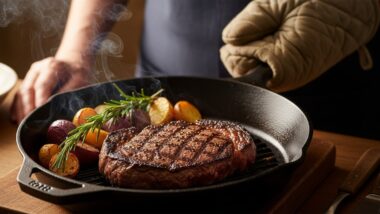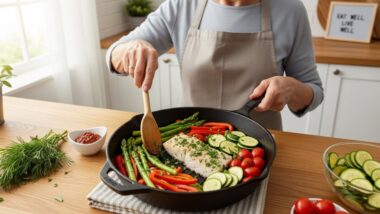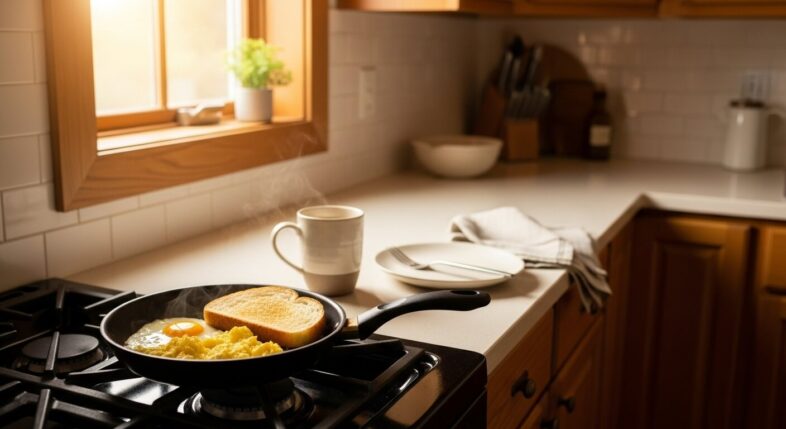
The Senior’s Guide to Arthritis-Friendly Skillet Breakfasts for One or Two

The Senior’s Guide to Arthritis-Friendly Skillet Breakfasts for One or Two

Arthritis-friendly skillet breakfasts for seniors focus on single-pan cooking that minimizes hand movements, requires little stirring or flipping, and uses lightweight equipment to reduce joint stress while providing complete nutrition.

Look—breakfast shouldn’t hurt. But when you’ve got arthritis, even cracking eggs can feel like a punishment. The good news? You don’t need fancy techniques or multiple pans. Just one good skillet and some smart shortcuts.

Why Skillet Breakfasts Work Best for Seniors with Arthritis

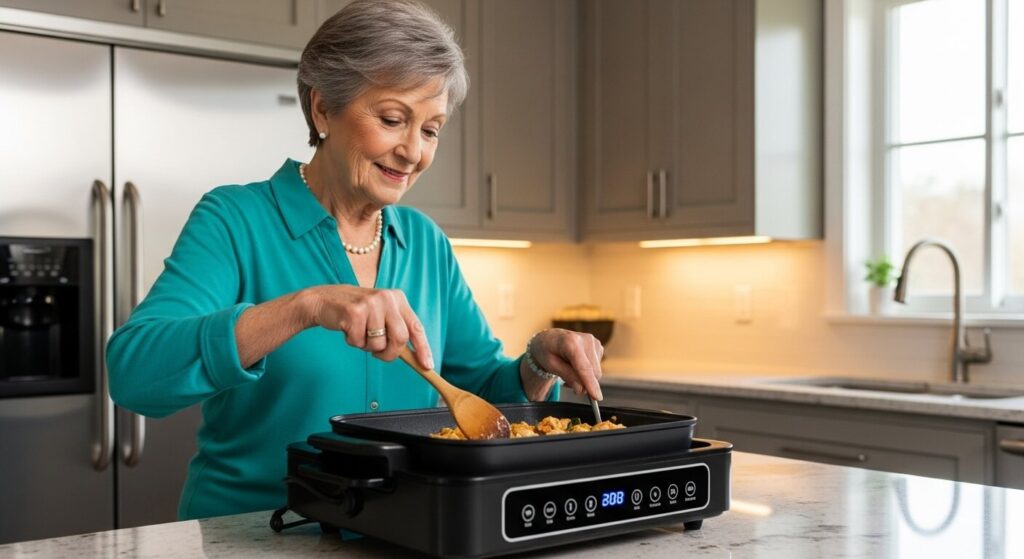
Skillet breakfasts reduce arthritis stress because everything cooks in one lightweight pan, which means fewer dishes to wash, less gripping and lifting, and minimal time standing at the stove.

Single-Pan Cooking Reduces Joint Stress

One pan. That’s it.

You’re not juggling multiple pots, transferring food between vessels, or washing a sink full of dishes afterward. Every extra pan you eliminate is one less thing your hands have to grip, lift, or scrub clean.

Think about traditional breakfasts—eggs in one pan, bacon in another, toast in the toaster, hash browns in a third pan. Your hands are constantly moving between tasks. Wrong approach for arthritis.

Minimal Prep Work Protects Morning Hands

Morning stiffness is real. Your hands haven’t warmed up yet, and you’re asking them to chop vegetables and crack eggs?

Skillet breakfasts let you use shortcuts that would feel like cheating in other meals. Pre-cracked eggs (yeah, they sell them). Frozen pre-diced vegetables. Pre-cooked proteins. Nobody’s judging your breakfast prep—they’re judging whether you ate well.

Quick Cooking Times Limit Standing Duration

Most skillet breakfasts take 8-15 minutes total. Not an hour.

Standing for long periods aggravates more than just your hands—your knees, hips, and lower back all feel it. Quick cooking means you’re in and out of the kitchen before your body starts complaining.

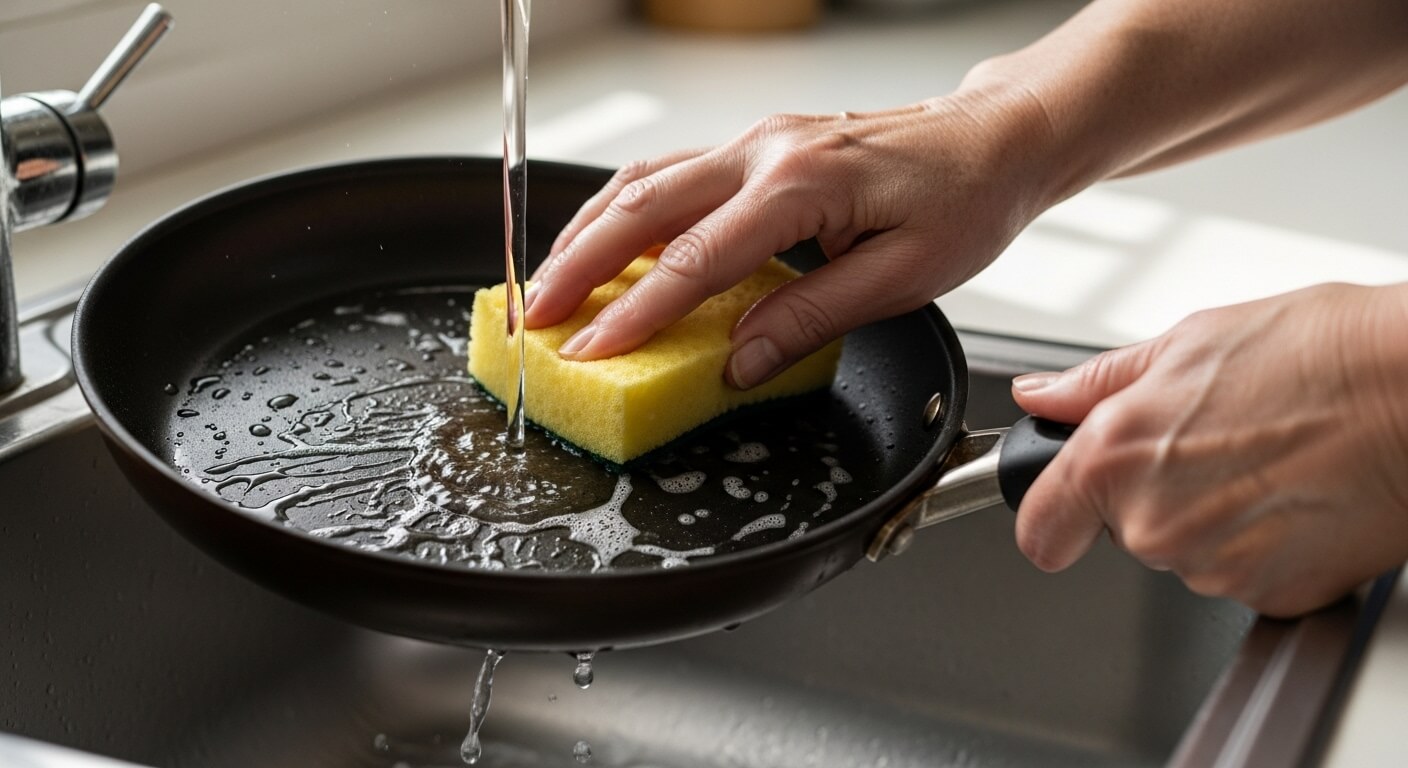
Easy Cleanup Saves Post-Meal Energy

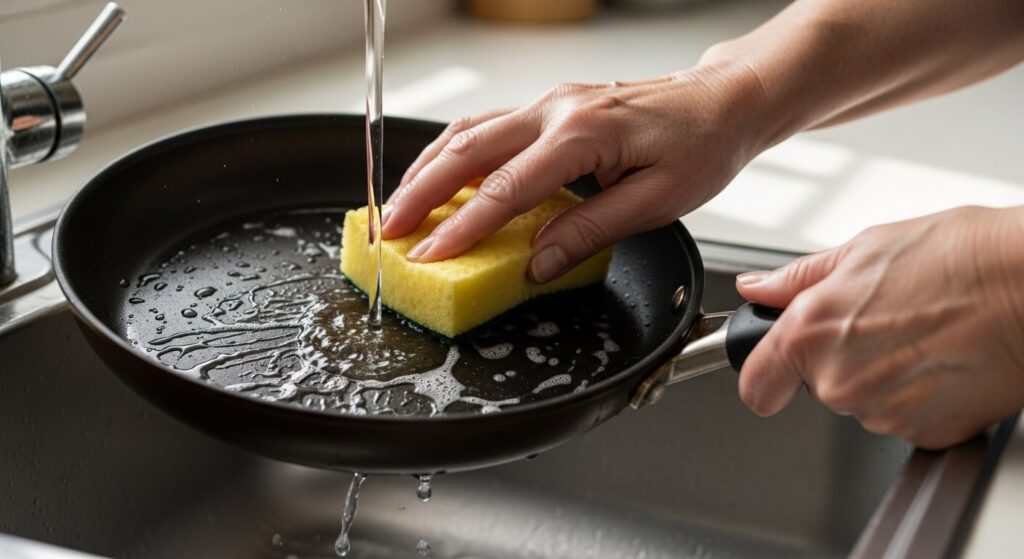
One pan means one thing to wash. Maybe a spatula.

That’s 2 minutes of cleanup versus 15 minutes scrubbing multiple pots and pans. Your hands are already tired from cooking—don’t make them do marathon cleanup sessions.

Essential Equipment for Arthritis-Friendly Breakfast Cooking

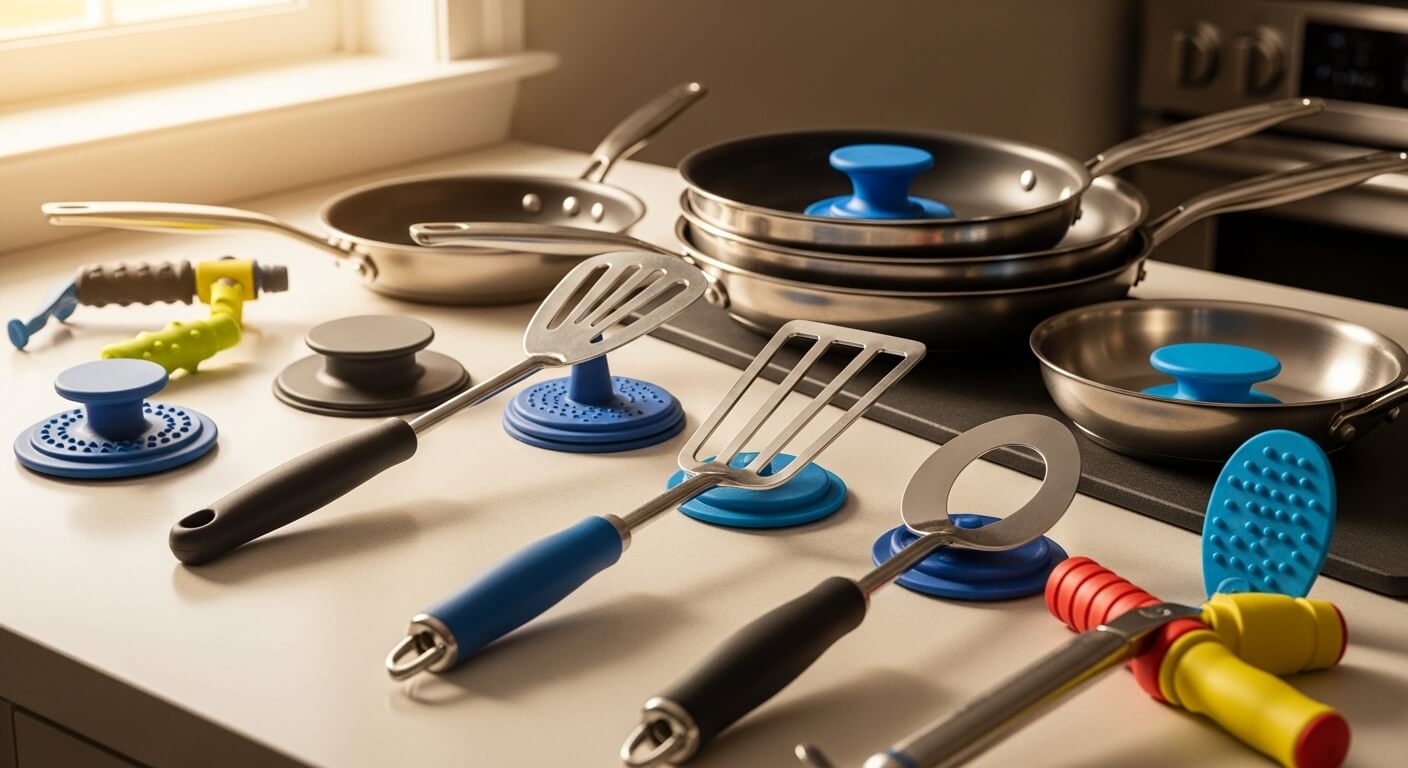
The right equipment makes arthritis-friendly breakfast cooking possible—lightweight skillets, ergonomic tools, and properly-fitted lids transform painful morning cooking into manageable meal prep.

Choosing the Right Lightweight Skillet

Your skillet is the foundation. Get this wrong and everything else struggles.

Optimal Size: 8-10 Inch Pans for Small Portions

Eight-inch skillets are perfect for one person. Ten-inch handles two servings comfortably.

Anything bigger and you’re lifting unnecessary weight—both from the pan itself and from the larger volume of food. Smaller portions mean lighter overall load on your wrists and hands.

Material Options Under 2 Pounds

Material Weight (10-inch) Arthritis Benefit Drawback
Hard-anodized aluminum 1.5-1.8 lbs Super light, great heat distribution Can’t use metal utensils
Carbon steel 2-2.3 lbs Nonstick when seasoned, durable Slightly heavier, requires maintenance
Ceramic nonstick 1.3-1.6 lbs Lightest option, easy cleanup Coating wears over time

Anything over 2.5 pounds starts becoming a burden. Cast iron? Forget it for breakfast—way too heavy for arthritic hands.

Nonstick Surfaces That Reduce Stirring

Nonstick means food doesn’t stick (obviously). But here’s what matters for arthritis—you don’t need to constantly scrape and stir to prevent burning.

Less stirring equals less gripping. Less gripping equals less pain. Simple math.

Ergonomic Handle Features for Weak Grips

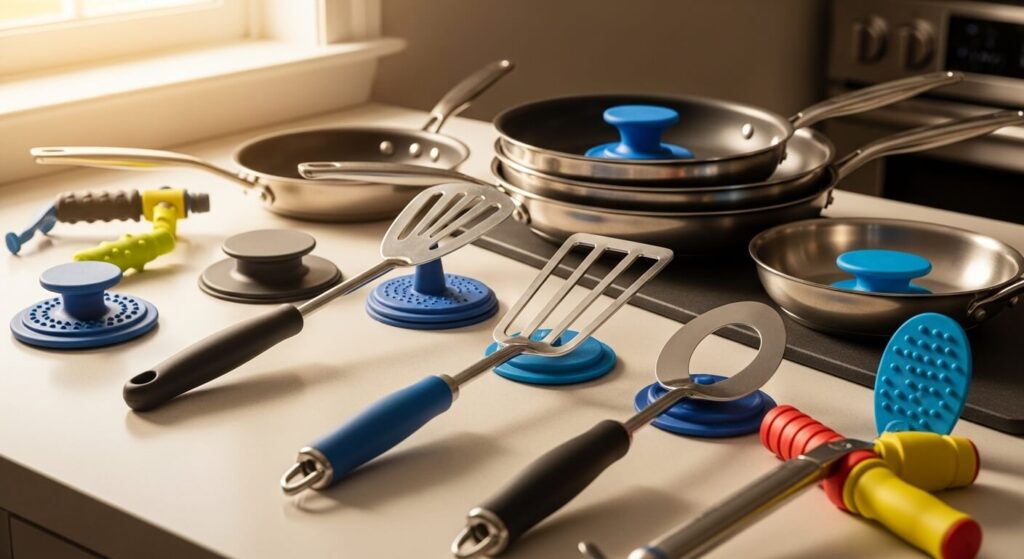
Look for handles that are:

  • At least 5 inches long (more surface area to grip)
  • Silicone-coated or stay-cool (no pot holders needed)
  • Slightly textured for better grip security
  • Helper handle on opposite side for two-handed lifting

That second handle is sneaky important. When your main hand is weak, being able to stabilize with your other hand prevents drops and spills.

Adaptive Cooking Tools for Morning Meal Prep

Tools matter almost as much as the pan itself.

Silicone Spatulas with Large Handles

Thin-handled spatulas require pinch grips. Awful for arthritis.

Fat-handled silicone spatulas (1.5-2 inches in diameter) let you use your whole hand. You’re gripping instead of pinching—way easier on finger joints.

Easy-Grip Whisks for Beating Eggs

Honestly? Skip the whisk most days.

Use a fork. Or better yet, use pre-beaten eggs from a carton. But if you’re whisking, get one with a ball-shaped handle—they’re easier to hold than traditional thin handles.

One-Handed Measuring Tools

Measuring cups with large loops instead of small handles. Measuring spoons on a ring you can hold with one hand.

Sounds minor until you’re trying to measure while gripping a container with your other hand. These tools let you work one-handed when you need to.

Jar Openers and Container Aids

That egg carton isn’t opening itself. Neither is the salsa jar or the pre-shredded cheese bag.

Good jar openers (the rubber pad kind or the under-cabinet mounted ones) save massive amounts of hand strain. Worth the $10-20 investment.

Lid Selection for Covered Breakfast Cooking

Lids transform breakfast cooking from active babysitting to mostly hands-off.

Glass Lids for Visual Monitoring

You can see eggs setting without lifting the lid. You can watch vegetables steaming without removing anything.

Every time you don’t lift a lid, you’re saving a grip action. Dozens of saved movements per week add up.

Lightweight Options Under 1 Pound

Glass lids run 0.8-1.2 pounds typically. Aluminum lids go lighter—0.5-0.8 pounds.

For breakfast cooking, visibility usually beats the weight savings. But if lifting is your primary struggle, aluminum wins.

Steam Vents for Safety

Vented lids release pressure automatically. No manual venting required.

This prevents vacuum seals (which make lids impossible to remove) and stops steam buildups that create dangerous pressure when you do lift the lid.

Proper Fit for Heat Retention

Loose lids let heat escape. Then you compensate by turning up the burner, which makes food cook unevenly, which makes you stir more.

Tight seal—not vacuum-sealed tight, just snug—keeps heat consistent. Consistent heat means less intervention needed.

Understanding Arthritis Challenges During Morning Cooking

Morning cooking with arthritis involves battling stiff joints that haven’t loosened up yet, medication timing that affects energy levels, and tasks like cracking eggs that hit inflamed finger joints especially hard.

Why Mornings Are Particularly Difficult

Mornings are brutal for arthritis. Period.

Morning Stiffness in Hand Joints

You’ve been immobile for 6-8 hours. Your joints are tight, swollen, and uncooperative.

It takes 30-60 minutes of movement for things to loosen up. But you’re hungry now, and you need to eat to take medications. Catch-22.

Reduced Grip Strength After Sleep

Your grip strength in the morning might be 40-50% of your afternoon capability.

Tasks that feel manageable at 2pm feel impossible at 7am. This isn’t weakness—it’s inflammation and stiffness that haven’t worked themselves out yet.

Medication Timing Considerations

Many arthritis meds need food. So you’re cooking when you’re at your worst, before medication even kicks in.

This is exactly why breakfast needs to be the easiest meal of the day—you’re cooking at peak difficulty.

Fasting Blood Sugar and Energy Levels

Low blood sugar from overnight fasting affects coordination and energy.

You’re operating on empty, which makes everything harder. Another reason breakfast needs to be quick and simple.

Common Breakfast Tasks That Aggravate Arthritis

Cracking and Whisking Eggs

The pinch-and-crack motion hits thumb and finger joints directly. Then whisking requires repeated wrist rotation.

These are exactly the movements arthritis hates most. And traditional breakfast demands them constantly.

Flipping Foods Repeatedly

Pancakes, eggs, bacon—traditional cooking methods require multiple flips.

Each flip is a grip, a wrist rotation, and precise motor control. Do that 10-15 times per breakfast? Your hands remember.

Gripping Cold Refrigerator Items

Cold makes arthritis worse. Grabbing cold eggs, cold milk, cold cheese from the fridge adds extra inflammation on top of morning stiffness.

Some people leave frequently-used items out overnight (if food-safe) to avoid this temperature shock.

Opening Packaging and Containers

Twist-top jars. Sealed plastic containers. Shrink-wrapped cheese blocks.

Packaging designed for factory-fresh sealing becomes torture devices for arthritic hands. Every seal that fights you adds cumulative stress.

Benefits of Routine Breakfast Cooking

But here’s the thing—cooking breakfast actually helps arthritis long-term.

Gentle Morning Movement for Joint Mobility

Light cooking provides gentle range-of-motion exercise for hands and wrists.

It’s movement without heavy resistance. Your occupational therapist would probably approve (mine does, anyway).

Consistent Medication Timing with Food

Cooking breakfast creates a routine that ensures you’re taking meds on schedule with proper food.

Consistency with arthritis medication matters hugely for symptom control. Breakfast routine supports medication routine.

Nutritional Control for Anti-Inflammatory Eating

Home-cooked breakfast lets you control ingredients—more omega-3s, more vegetables, less processed junk that increases inflammation.

Restaurant and packaged breakfasts are sodium and sugar bombs. Your joints feel the difference.

Maintaining Independence and Confidence

Being able to feed yourself matters psychologically.

Losing cooking ability feels like losing independence. Maintaining it—even with modifications—preserves dignity and self-reliance.

Arthritis-Friendly Egg-Based Skillet Breakfasts

Egg-based skillet breakfasts work perfectly for arthritis because eggs cook quickly in one pan, require minimal stirring when cooked low and slow or covered, and provide high-quality protein seniors need.

Simple Scrambled Eggs for One

Scrambled eggs are the foundation. Master these and you’ve mastered breakfast.

Crack-Free Egg Techniques

Buy pre-cracked eggs in cartons. Seriously.

They cost maybe 20% more than shell eggs but eliminate the worst hand motion in breakfast cooking. Two tablespoons from the carton equals one egg. Done.

If you’re using shell eggs, crack them on a flat surface (counter) not on the pan edge—reduces shell fragments and requires less finger precision.

Low-Heat Cooking to Reduce Stirring

Medium-low heat. Always.

High heat makes eggs cook unevenly, which requires constant stirring to prevent burning. Low heat lets eggs cook gently—you stir maybe 3-4 times total instead of constantly.

Adding Moisture for Creaminess

Tablespoon of milk or water per egg. Mix it in before cooking.

Added moisture keeps eggs soft longer, which means they’re more forgiving if you’re not stirring constantly. Forgiving recipes are arthritis-friendly recipes.

Single-Flip Method

Pour eggs in pan, let them sit for 60-90 seconds until edges start setting. Stir once. Let sit another 60 seconds. Stir once more. Done.

That’s two stir actions for perfect scrambled eggs. Compare that to the constant stirring traditional recipes demand.

Covered Skillet Frittatas

Frittatas are sneaky good for arthritis—no flipping required at all.

No-Flip Cooking Technique

Eggs and fillings go in the pan. Cover with lid. Cook 8-10 minutes on medium-low heat. The lid traps heat and cooks the top while the burner cooks the bottom.

Zero flipping. Zero wrist rotation. Just lift the lid once to check doneness.

Layering Ingredients Efficiently

Vegetables on bottom (they need direct heat). Cheese in the middle. Pour beaten eggs over everything.

This layering means you’re not stirring to distribute ingredients—gravity and eggs do the work.

Stove-to-Table in One Pan

Frittatas look fancy enough to serve directly from the skillet.

No plating required if you don’t want to deal with it. One less dish, one less transfer motion.

Portion Control for Singles and Couples

Two-egg frittata in an 8-inch pan serves one generously. Four eggs in a 10-inch pan serves two.

Scale perfectly for small households without creating massive leftovers (though frittata reheats great if you want extras).

Easy Skillet Omelets Without Flipping

Traditional omelets require precise folding and flipping. Skip that.

Fold-Over Method Versus Flipping

Cook eggs flat, add fillings to one half, fold the empty half over. That’s one fold motion instead of multiple flips.

Or don’t fold at all—just slide it flat onto the plate and call it a “flat omelet.” Nobody cares except you.

Pre-Cooked Filling Options

Raw vegetables in omelets create moisture that makes folding difficult. Pre-cooked fillings (or quick-cooking options like spinach) prevent this.

Pre-cooked = less stirring and babysitting while fillings cook. Everything’s ready to go when eggs are.

Covered Cooking for Even Setting

Lid on for the last 2-3 minutes of cooking sets the top without flipping.

The traditional flip exists to cook the top surface—lids accomplish this without the wrist motion.

Size Management for Small Appetites

Two-egg omelets are plenty for most seniors. Three eggs if you’re hungry or splitting with someone.

Smaller omelets are lighter, easier to manage in the pan, and match actual appetite (not restaurant portions).

Poached Eggs in Skillets

You don’t need special equipment for poached eggs. Just a skillet and a lid.

Shallow-Water Poaching Technique

One inch of simmering water in your skillet. Crack egg into a small bowl, then slide it gently into the water. Cover immediately.

Cook 4-5 minutes for soft yolk. The lid traps heat and steam-cooks the top while the water poaches the bottom.

Eliminating Special Equipment

No egg poacher needed. No fancy tools. Just the skillet you’re already using for everything else.

Less equipment means less to store, clean, and manage. Simpler is better for arthritis.

Gentle Removal Methods

Slotted spoon works, but a regular spoon works too if you tilt it to drain water.

The key is waiting until the egg’s fully set before attempting removal. Patience prevents the frantic scrambling that stresses your hands.

Timing for Perfect Consistency

Soft yolk: 4 minutes. Medium yolk: 5 minutes. Hard yolk: 6-7 minutes.

Set a timer. Don’t guess. Consistent timing means you don’t need to keep lifting the lid to check—another saved hand movement.

Quick Protein-Rich Breakfast Skillets

Protein-rich breakfast skillets combine pre-cooked meats or quick-cooking fish with eggs and vegetables in one pan, providing 20-30 grams of protein with minimal preparation and handling.

Turkey Sausage and Vegetable Hash

This is a complete breakfast in one pan. Takes 12 minutes.

Pre-Cooked Sausage Options

Buy fully-cooked turkey sausage links. Slice them into rounds. They just need reheating—2-3 minutes in the pan.

Pre-cooked protein eliminates the food safety stress of ensuring meat reaches safe temperatures. Less monitoring required.

One-Pan Layering Technique

Sausage first to brown slightly. Add diced vegetables (frozen hash browns and peppers work great). Pour beaten eggs over everything. Cover.

Each ingredient goes in once. No removing and re-adding. Minimal hand involvement.

Covered Cooking for Hands-Free Results

Once eggs go in and lid goes on, you’re done for 8 minutes. Walk away if you want.

The lid does all the work—eggs steam and set, vegetables soften, everything melds together. Your hands rest.

Anti-Inflammatory Vegetable Choices

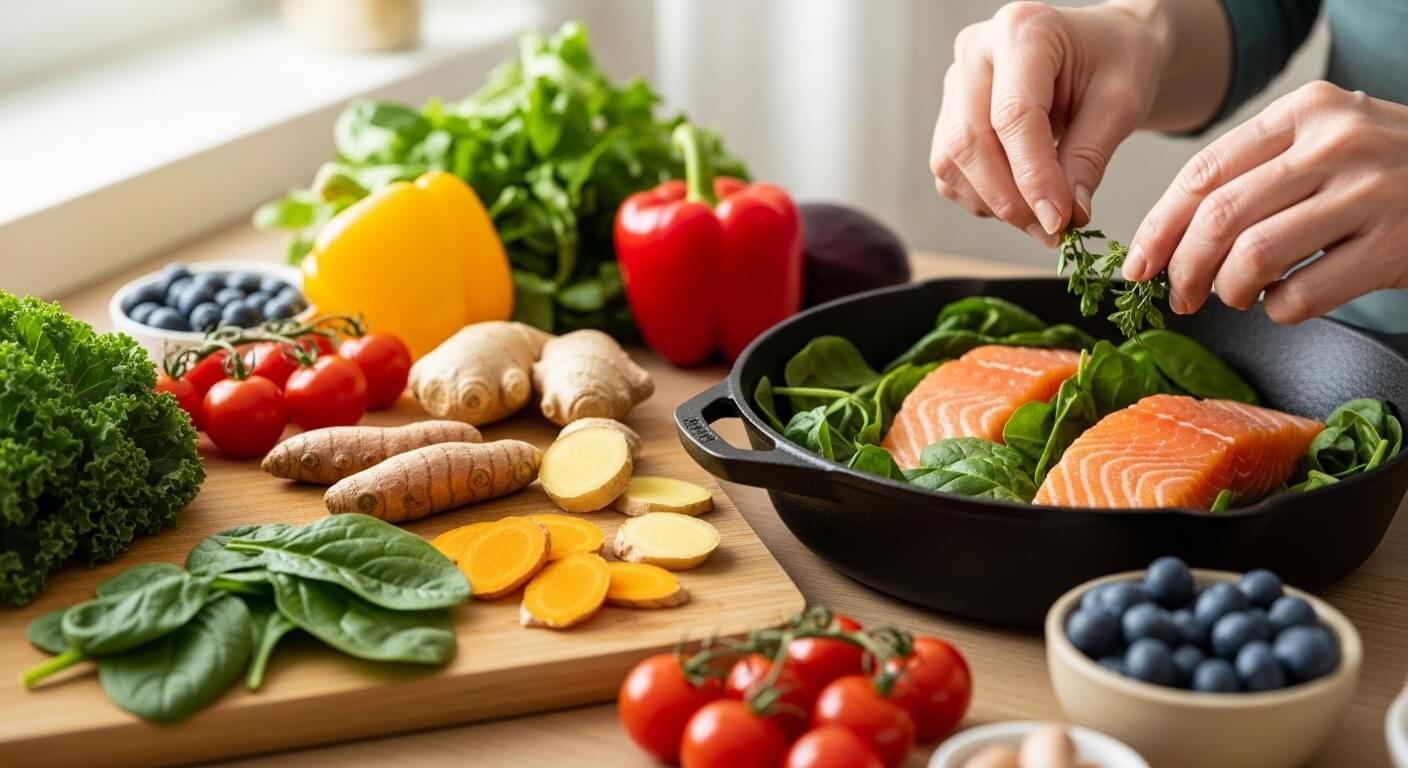
Bell peppers for vitamin C. Spinach for iron. Mushrooms for selenium. Sweet potato for beta-carotene.

These aren’t just filler vegetables—they’re actively fighting inflammation while you eat breakfast.

Smoked Salmon Breakfast Scrambles

Fancy restaurant breakfast at home. Stupid easy.

No-Cook Protein Addition

Smoked salmon goes in at the very end—like, 30 seconds before you’re done. It’s already cooked, just needs warming.

No raw meat handling. No temperature concerns. No extra cooking time.

Omega-3 Benefits for Joint Health

Salmon’s omega-3 fatty acids directly reduce joint inflammation.

You’re eating medicine that tastes good. Best kind of medicine.

Minimal Stirring Required

Scramble eggs normally (low heat, few stirs). Add torn smoked salmon pieces. Stir once to distribute. Done.

Three total stir actions for a protein-packed, anti-inflammatory breakfast.

Elegant Single-Serving Presentation

This looks impressive for how little work it requires.

Company coming for breakfast? Make this. They’ll think you slaved. You spent 6 minutes at the stove.

Cottage Cheese and Egg White Skillets

High protein, low fat, stupid simple.

High-Protein, Low-Effort Combinations

Cottage cheese adds creaminess and protein without requiring any prep—just scoop it in.

Combined with egg whites (from a carton for zero cracking), you’re getting 25+ grams of protein with basically no hand work.

Gentle Folding Technique

Low heat. Pour egg whites in pan. Let them start setting (60 seconds). Spoon cottage cheese across one half. Fold. Cover for 2 minutes.

One fold motion. That’s it.

Quick 5-Minute Cooking Time

This is one of the fastest high-protein breakfasts possible.

When you’re running late or having a high-pain morning, this delivers nutrition fast without stressing your hands.

Calcium Benefits for Bone Health

Cottage cheese is loaded with calcium—around 150mg per half-cup.

Important for seniors, especially women dealing with both arthritis and osteoporosis risk.

Leftover Chicken Breakfast Bowls

Best use of last night’s dinner.

Repurposing Dinner Proteins

Shredded rotisserie chicken. Leftover grilled chicken breast. Even chicken from last night’s stir-fry works.

It’s already cooked. You’re just reheating and adding eggs. Massive time and effort savings.

Quick Reheating Under Lids

Chicken in pan with a splash of water or broth. Cover. Medium heat for 3-4 minutes until warm.

The lid traps steam, which reheats without drying out. No stirring needed.

Adding Fresh Eggs on Top

Make a well in the center of the warm chicken. Crack egg into the well (or pour from carton). Cover again. Cook 4-5 minutes.

Egg poaches right on top of the chicken. Everything finishes together. One pan, one serving.

Complete Nutrition in One Pan

Protein from chicken and egg. Add some vegetables (frozen spinach works great). You’ve got complete breakfast nutrition without juggling multiple pans or recipes.

Vegetable-Forward Arthritis-Friendly Breakfasts

Vegetable-based breakfast skillets provide anti-inflammatory compounds, fiber, and vitamins while requiring minimal chopping when using pre-washed greens, frozen vegetables, or quick-cooking options like mushrooms and tomatoes.

Spinach and Mushroom Skillets

Classic combination. Works every time.

Pre-Washed Greens for Zero Prep

Bagged baby spinach needs zero washing, zero chopping. Dump it straight from the bag into the pan.

This eliminates the worst vegetable prep task—washing and drying leafy greens with sore hands.

Anti-Inflammatory Mushroom Benefits

Mushrooms contain ergothioneine and selenium—both reduce inflammation markers.

Pre-sliced mushrooms (they sell them that way) mean zero knife work. Dump and cook.

Wilting Technique Without Stirring

Spinach wilts down to nothing in about 90 seconds. You don’t need to stir it—just cover the pan and let steam do the work.

It goes from heaping pile to perfectly cooked without your intervention. Magic for arthritic hands.

Flavor Building with Minimal Steps

Garlic (from a jar of pre-minced). Mushrooms. Spinach. That’s three ingredients, each requiring one dump into the pan.

Add eggs at the end if you want. Or don’t—just vegetables is valid breakfast too.

Sweet Potato Hash for Joint Health

Sweet potatoes are sneaky good for inflammation.

Using Pre-Diced or Frozen Options

Frozen sweet potato cubes exist. They’re a game-changer.

No peeling. No chopping. No knife work. Open bag, pour into pan, done. They cost more but your hands will thank you.

Beta-Carotene Anti-Inflammatory Properties

Sweet potatoes are loaded with beta-carotene, which your body converts to vitamin A—an anti-inflammatory nutrient.

You’re eating breakfast that actively fights your arthritis. That’s the goal.

Covered Cooking for Tender Results

Sweet potatoes take longer to cook than regular potatoes—15-20 minutes typically. But covered cooking handles this hands-free.

Frozen cubes in pan, lid on, medium-low heat, set timer. Don’t touch it for 15 minutes. Perfect tender hash without constant stirring.

One-Handed Seasoning Methods

Shaker bottles for spices. Squeeze bottles for oil. Pre-made seasoning blends.

You can season entire dishes one-handed, which matters when your other hand is bracing the pan or you’re having a particularly bad grip day.

Tomato and Herb Breakfast Sauté

Mediterranean-style morning meal.

Lycopene Benefits for Inflammation

Cooked tomatoes release lycopene—an antioxidant that reduces inflammation.

Bonus: cooking tomatoes makes lycopene more bioavailable. You’re getting more benefit from cooked than raw.

Quick-Cooking Cherry Tomatoes

Cherry tomatoes cook in 4-5 minutes. No chopping needed—use them whole or halve them if you’re feeling ambitious.

They burst and create their own sauce. Self-saucing vegetables are perfect for arthritis cooking.

Fresh Herb Finishing Touches

Dried herbs during cooking (they’re in shaker bottles—easy one-handed use). Fresh herbs at the end if you’ve got them (pre-washed basil from the store works great).

Fresh herbs make everything taste more expensive than it actually was.

Mediterranean-Style Nutrition

Tomatoes, olive oil, herbs, maybe some feta cheese. This is the Mediterranean diet people rave about.

Anti-inflammatory, heart-healthy, and takes 8 minutes to cook. What’s not to like?

Bell Pepper and Onion Breakfast Mix

Fajita-style breakfast vegetables.

Vitamin C for Joint Support

Bell peppers pack more vitamin C than oranges. Vitamin C supports collagen production, which helps maintain cartilage health.

Red peppers have the most vitamin C. Yellow and orange come next. Green has the least (but still plenty).

Pre-Sliced Vegetable Options

Frozen pepper and onion mix exists specifically for this purpose. It’s in every grocery store’s freezer section.

Costs maybe $2 per bag. Saves 10 minutes of chopping with sore hands. Worth it.

Low-Maintenance Cooking Method

Frozen peppers and onions into pan. Medium heat. Cover. Cook 8-10 minutes, stirring once halfway through.

One stir. That’s the entire hand involvement for perfectly cooked breakfast vegetables.

Versatile Base for Multiple Recipes

These vegetables work under eggs, mixed with eggs, topped with cheese, in breakfast burritos (if you’re doing wraps), or just by themselves.

Cook a big batch, use it all week. Different meal each day with the same base ingredient.

Grain and Starch-Based Breakfast Skillets

Grain-based breakfast skillets provide sustained energy through complex carbohydrates while requiring minimal stirring when using absorption cooking methods or pre-cooked grain reheating techniques.

Quinoa Breakfast Bowls

Quinoa for breakfast works better than you’d think.

Batch-Cooked Quinoa Storage

Cook quinoa once (usually Sunday for the week). Store in fridge for 5-7 days.

Each morning, scoop out what you need, reheat in the skillet, add toppings. Your hands work hard once instead of seven times.

Quick Reheating with Add-Ins

Cold quinoa plus splash of milk or broth into skillet. Medium heat, covered, 3-4 minutes until hot.

Add dried fruit, nuts, cinnamon during reheating. Everything warms together. One stir at the end.

Complete Protein for Seniors

Quinoa contains all nine essential amino acids. It’s a complete protein—rare for plant foods.

Matters for seniors who might be reducing meat intake. You’re getting quality protein without cooking meat every morning.

Anti-Inflammatory Grain Benefits

Quinoa has a lower glycemic index than white rice or even oatmeal. Better blood sugar control means less inflammation.

Plus it’s got quercetin and kaempferol—anti-inflammatory compounds. Your breakfast is fighting back against arthritis.

Skillet Oatmeal Variations

Oatmeal’s the classic, but stovetop skillet method beats microwave for texture.

Stovetop Method for Single Servings

Half-cup oats, one cup liquid (water or milk), pinch of salt. Medium heat, stirring occasionally, 5-7 minutes.

“Occasionally” means 3-4 times, not constantly. Let it cook between stirs.

Steel-Cut Versus Rolled Oats

Steel-cut oats take 20-25 minutes and need frequent stirring. Skip them for arthritis-friendly cooking.

Rolled oats (old-fashioned) take 5-7 minutes and need minimal stirring. That’s your target.

Hands-Free Covered Cooking

Bring to boil, reduce heat, cover for 5 minutes. Don’t touch it.

Take lid off, stir once, done. That’s one stir action for creamy oatmeal.

Customizable Toppings

Toppings go on after cooking—when the pan’s off heat and you can work slowly.

Chopped nuts (from a bag), dried fruit (no cutting needed), honey (squeeze bottle), cinnamon (shaker). All one-handed friendly additions.

Breakfast Polenta in Skillets

Polenta is underrated for breakfast. Creamy, filling, versatile.

Quick-Cooking Polenta Options

Instant polenta exists. Cooks in 5 minutes versus 45 for traditional.

You sacrifice some texture, but you gain 40 minutes and save countless stirs. Fair trade for arthritis.

Creamy Texture Without Constant Stirring

Quick polenta in pan with liquid (4:1 liquid to polenta ratio). Whisk initially to break up lumps. Cover, reduce heat to low, cook 5 minutes.

Stir once at the end. Creamy polenta with two stir actions total.

Savory and Sweet Variations

Savory: top with poached egg, sautéed mushrooms, cheese.
Sweet: add maple syrup, berries, almonds.

Same base, different toppings, completely different meals. Variety without learning new techniques.

Make-Ahead Portions

Polenta solidifies when cold. Slice it, pan-fry the slices for crispy outsides and creamy insides.

Make a batch, refrigerate, slice and reheat throughout the week. Minimal daily hand work.

Hash Brown Modifications for Arthritis

Hash browns don’t have to mean shredding potatoes with a box grater (terrible for arthritic hands).

Using Frozen Pre-Shredded Options

Frozen hash browns. In a bag. Already shredded.

This is the hill I’ll die on—buying pre-shredded potatoes isn’t lazy, it’s smart arthritis management.

Covered Cooking for Crispy Results

Frozen hash browns in pan with small amount of oil. Spread evenly. Don’t touch for 5 minutes. Flip once. Cover for another 4 minutes.

One flip. That’s it. The cover traps heat and crisps the top without constant monitoring.

Single-Flip Technique

Let the first side develop a solid crust before attempting the flip—4-5 minutes. Then flip the whole thing as one piece (or break into 2-3 sections if that’s easier).

One flip beats the constant tossing and turning traditional hash browns demand.

Portion Control for One or Two

Use 1 cup frozen hash browns for one person, 2 cups for two people. More than that and you’re cooking a restaurant portion nobody needs.

Smaller portions cook faster and are easier to manage in the pan—both advantages for sore hands.

Complete One-Pan Breakfast Meals

One-pan breakfast meals combine protein, vegetables, and often grains in a single skillet to provide complete nutrition with absolute minimal dish washing and hand involvement.

All-in-One Breakfast Scrambles

Everything-but-the-kitchen-sink approach. Works great.

Combining Proteins, Vegetables, and Starches

Diced potato or frozen hash browns. Vegetables (whatever you’ve got). Pre-cooked meat or eggs. All in one pan.

This is basically a deconstructed breakfast—all the traditional breakfast foods but cooked together instead of separately.

Strategic Layering for Even Cooking

Starches first (they take longest). Then vegetables. Then protein. Then eggs last if using.

Each layer cooks while you’re adding the next. Minimal waiting around.

Lid-On Technique for Minimal Handling

Once everything’s in the pan, cover it. Medium-low heat. 10-12 minutes. Stir once halfway through.

One stir for a complete breakfast. That’s efficiency.

Balanced Nutrition in Every Bite

You’re getting complex carbs, lean protein, healthy fats, vegetables—complete nutrition. Not just eggs. Not just toast. Actual balanced meal.

Matters for blood sugar stability, which affects inflammation and energy levels.

Shakshuka-Style Eggs in Tomato Sauce

North African breakfast that’s wildly popular for good reason.

No-Stir Sauce Base

Canned crushed tomatoes, garlic, cumin, paprika. Simmer for 5 minutes. That’s your sauce.

No stirring needed during simmering. Just let it bubble gently.

Eggs Poached Directly in Sauce

Make wells in the tomato sauce. Crack eggs into the wells (or pour from carton). Cover the pan.

Eggs poach in the sauce—no flipping, no separate egg cooking. The sauce is both the cooking medium and the serving base.

North African Anti-Inflammatory Spices

Cumin reduces bloating and inflammation. Paprika has capsaicin (anti-inflammatory). Turmeric if you want extra anti-inflammatory punch.

You’re seasoning breakfast with medicine.

Rustic Single-Pan Presentation

Eat directly from the skillet if you want. It’s traditional.

Saves plating, which saves a dish and a transfer motion. Plus it looks cool.

Breakfast Stir-Fry for Seniors

Asian-inspired breakfast breaks up the monotony.

Asian-Inspired Morning Meals

Vegetables, egg, rice or noodles, soy sauce. Same stir-fry technique as dinner but breakfast-sized.

Different flavor profile than traditional American breakfast. Variety helps maintain interest.

Quick-Cooking Technique with Lids

High heat initially to sear vegetables. Then reduce heat, add egg and rice, cover for 2-3 minutes to let everything meld.

The lid tames the high heat and finishes cooking without constant stirring.

Ginger’s Anti-Inflammatory Properties

Fresh grated ginger (or jarred minced ginger for easier handling) has gingerol—proven anti-inflammatory.

Also settles stomachs, which is bonus for morning meals. Some medications cause nausea; ginger helps.

Rice or Noodle Base Options

Leftover rice from dinner. Instant ramen noodles (use half the seasoning packet—it’s salty). Rice noodles that cook in 3 minutes.

All valid bases. Pick whatever requires least hand involvement for you.

Sweet Breakfast Skillets

Sweet breakfast doesn’t have to mean pancakes.

Apple Cinnamon Breakfast Sauté

Sliced apples (pre-sliced from the produce section or frozen), butter, cinnamon, tiny bit of brown sugar.

Cook 8-10 minutes covered until apples soften. Serve over Greek yogurt or cottage cheese for protein.

Banana and Walnut Skillets

Sliced banana, chopped walnuts (buy pre-chopped), touch of maple syrup. Cook 3-4 minutes until bananas caramelize.

Walnuts have omega-3s. Bananas have potassium. Both support joint health.

Berry Compote Variations

Frozen berries (any type), splash of water, simmer covered for 10 minutes. They break down into sauce automatically.

No stirring needed. Berries do all the work. High antioxidants, low effort.

Natural Sweeteners for Blood Sugar Control

Use maple syrup, honey, or mashed banana instead of white sugar when possible.

Lower glycemic impact means less blood sugar spike, which means less inflammation. Small choices compound.

Anti-Inflammatory Ingredient Choices

Anti-inflammatory breakfast ingredients like omega-3-rich fish, colorful vegetables, healthy fats, and specific spices like turmeric and ginger actively reduce joint inflammation while providing essential nutrients seniors need.

Proteins That Support Joint Health

Protein choice matters for inflammation.

Omega-3 Rich Options: Salmon, Sardines

Smoked salmon works for breakfast. So do sardines (if you can handle the flavor at 7am—not everyone can).

Omega-3 fatty acids directly reduce inflammatory markers. You’re medicating with food.

Egg Benefits for Inflammation

Eggs got unfairly demonized. They’re fine. Actually beneficial.

The yolk contains choline and omega-3s (especially in omega-3 enriched eggs). Whole eggs are anti-inflammatory, not pro-inflammatory like old science claimed.

Plant-Based Proteins: Tofu, Tempeh

Scrambled tofu works exactly like scrambled eggs technique-wise. Crumble it, cook it low and slow, season well.

Tempeh has probiotics (fermented soy). Good for gut health, which affects whole-body inflammation.

Portion Sizes for Senior Nutrition

Aim for 20-30 grams protein at breakfast. That’s roughly:

  • 3-4 eggs
  • 4 oz salmon
  • 1 cup cottage cheese
  • 6 oz tofu

Don’t skimp on breakfast protein. Seniors need more protein than younger adults for muscle maintenance.

Vegetables with Arthritis Benefits

Not all vegetables are equally anti-inflammatory.

Leafy Greens: Spinach, Kale, Swiss Chard

Dark leafy greens have vitamin K, which regulates inflammation. Plus iron, calcium, and fiber.

Pre-washed bagged versions eliminate the handling challenge. They’re ready to cook straight from the bag.

Cruciferous Options: Broccoli in Breakfast

Broccoli for breakfast sounds weird but works. Chop it small (or buy pre-chopped florets), add to egg scrambles or frittatas.

Sulforaphane in broccoli reduces arthritis inflammation specifically. Direct benefit.

Colorful Peppers for Antioxidants

Red, yellow, orange peppers—the colorful ones—pack vitamin C and antioxidants.

More color = more benefit generally. Green peppers are fine but have less nutritional punch.

Alliums: Garlic and Onions

Garlic contains diallyl disulfide, which limits cartilage-damaging enzymes. Onions have quercetin—anti-inflammatory.

Jarred pre-minced garlic saves hand stress from peeling and chopping. Use it liberally.

Healthy Fats for Skillet Cooking

Fat choice affects inflammation levels.

Avocado Oil Benefits and Uses

High smoke point (520°F), neutral flavor, loaded with oleic acid (anti-inflammatory).

Best all-around oil for skillet cooking. Expensive but worth it for daily use.

Extra Virgin Olive Oil Considerations

Lower smoke point (375°F) so use medium or lower heat only.

Save expensive extra virgin for drizzling after cooking. Use regular olive oil for actual cooking.

Coconut Oil for Medium Heat

Controversial for heart health. But it handles medium heat well and adds slight coconut flavor.

Use sparingly—it’s saturated fat, which you want to limit.

Portion Control to Prevent Sticking

One tablespoon oil per 8-inch pan. Two tablespoons for 10-inch.

More doesn’t prevent sticking better—it just adds unnecessary calories. Proper heat control prevents sticking, not oil quantity.

Arthritis-Fighting Spices and Herbs

Spices are medicine.

Turmeric in Breakfast Dishes

Curcumin in turmeric is proven anti-inflammatory. Add half-teaspoon to scrambled eggs, breakfast hashes, or grain bowls.

Combine with black pepper—piperine increases curcumin absorption by 2000%. Not a typo.

Ginger for Morning Inflammation

Fresh or jarred minced ginger. Quarter-teaspoon in breakfast stir-fries, grain bowls, or even scrambled eggs.

Works fast—you might notice reduced morning stiffness within an hour of eating.

Cinnamon’s Blood Sugar Benefits

Cinnamon improves insulin sensitivity. Better blood sugar = less inflammation.

Plus it makes sweet breakfasts taste sweet without adding sugar. Win-win.

Fresh Herbs Versus Dried Options

Dried herbs work fine—they’re in shaker bottles, which are one-hand friendly.

Fresh herbs taste better but require more handling. Pick your battles based on how your hands feel.

Time-Saving Breakfast Prep Strategies

Time-saving breakfast strategies like night-before prep, batch cooking, and using quality convenience products reduce morning hand stress when arthritis stiffness is worst.

Night-Before Preparation

Evening hands work better than morning hands. Use that.

Pre-Cracking Eggs into Containers

Crack eggs into a sealed container the night before. Refrigerate. Pour directly from container in the morning.

This shifts the hardest hand task (cracking) to evening when you have better dexterity.

Washing and Chopping Vegetables

Prep all vegetables at night. Store in containers. Dump straight into pan in the morning.

You’re doing the same total work but timing it strategically when your hands cooperate better.

Measuring Dry Ingredients

Pre-measure oatmeal, quinoa, polenta—whatever dry ingredients you’re using. Put them in small containers ready to go.

Eliminates morning measuring, which requires fine motor control you might not have yet.

Setting Out Equipment

Pan on the stove. Utensils on the counter. Everything positioned for minimal morning movement.

Sounds obsessive. Works brilliantly when you’re moving slowly at 6am.

Batch Cooking for Multiple Mornings

Cook once, eat three times. Math works out.

Making Large Frittatas to Portion

Twelve-egg frittata in a 12-inch pan. Cut into six wedges. Refrigerate.

Reheat one wedge per morning. That’s six breakfasts from one cooking session.

Cooking Extra Proteins

When you’re cooking dinner chicken, cook extra for breakfast. Same applies to sausage, bacon, fish.

The marginal effort to cook extra is tiny compared to cooking separately each time.

Preparing Grain Bases in Advance

Cook big batch of quinoa, oatmeal, or polenta Sunday. Portion into containers.

Each morning becomes reheat + add toppings. Two-minute breakfast prep.

Proper Storage for Food Safety

Cooked food keeps 3-4 days refrigerated. Mark containers with dates.

When in doubt, smell it. If it smells off, throw it out. Food poisoning isn’t worth saving $3 of eggs.

Using Convenience Products Wisely

Convenience products aren’t cheating when you have arthritis.

Pre-Washed Vegetables and Greens

Cost about 30% more than unwashed. Save maybe 5-10 minutes of hand work.

That’s money well spent if it’s the difference between cooking breakfast or skipping it.

Frozen Vegetable Medleys

Pepper and onion mix. Stir-fry vegetables. Southwestern blend. All exist pre-chopped in freezer section.

Nutritionally equivalent to fresh. Zero prep work. Perfect for arthritis.

Pre-Cooked Proteins

Rotisserie chicken. Fully-cooked sausage. Pre-cooked bacon. Hard-boiled eggs.

All eliminate the raw meat handling and temperature monitoring. Use them liberally.

Quality Versus Cost Considerations

Buy convenience items for foods you eat most often. Skip them for occasional items.

Example: buy pre-washed spinach (you use it daily), but wash and chop onion yourself for the one recipe per month that needs it.

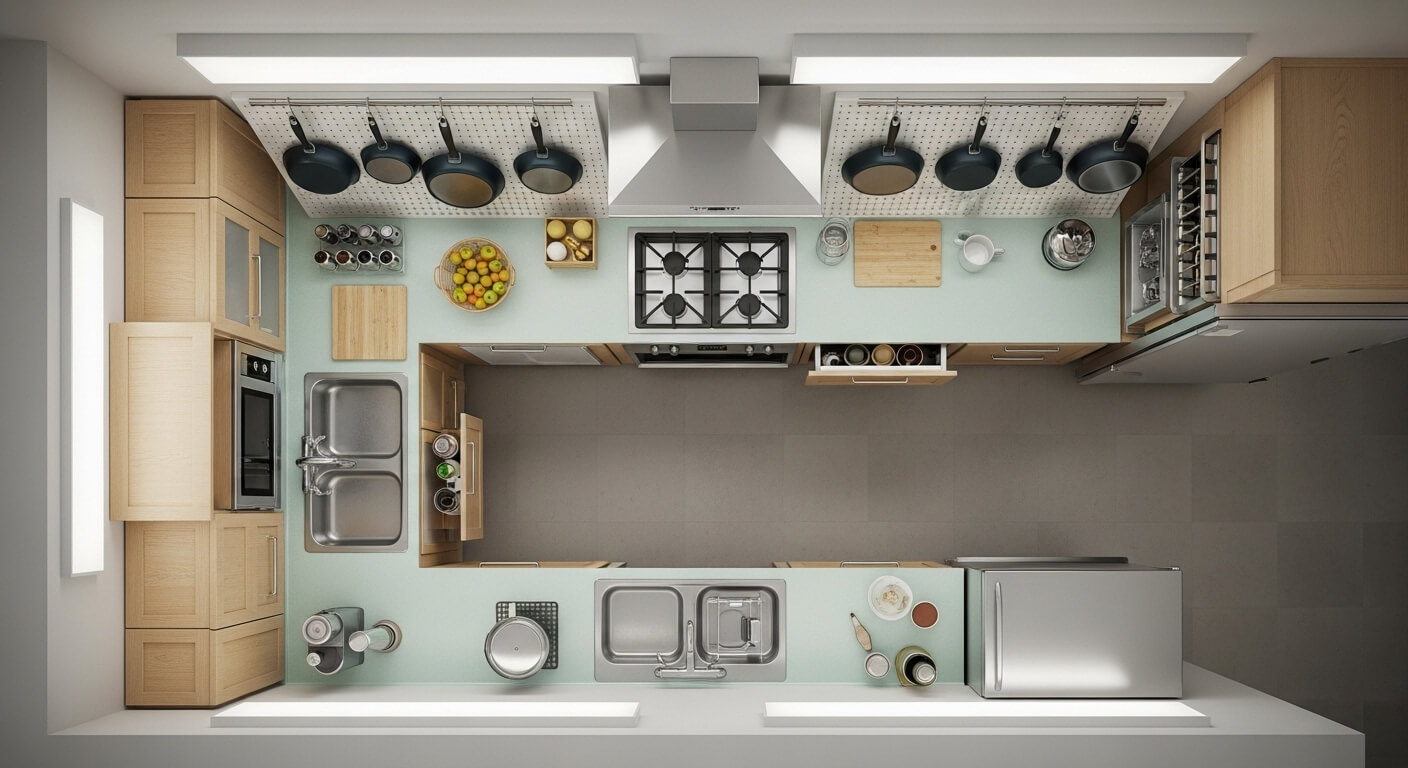
Organizing Your Breakfast Station

Setup matters enormously.

Counter-Level Ingredient Storage

Frequently-used items at counter height. Not in upper cabinets (reaching hurts shoulders). Not in lower cabinets (bending stresses knees and back).

Eye-level storage is easiest storage for arthritic bodies.

Frequently-Used Items Within Reach

Pan, spatula, eggs, most-used spices—all within arm’s reach of the stove.

Every extra step you eliminate is one less chance to drop something or stress your joints.

Eliminating Unnecessary Steps

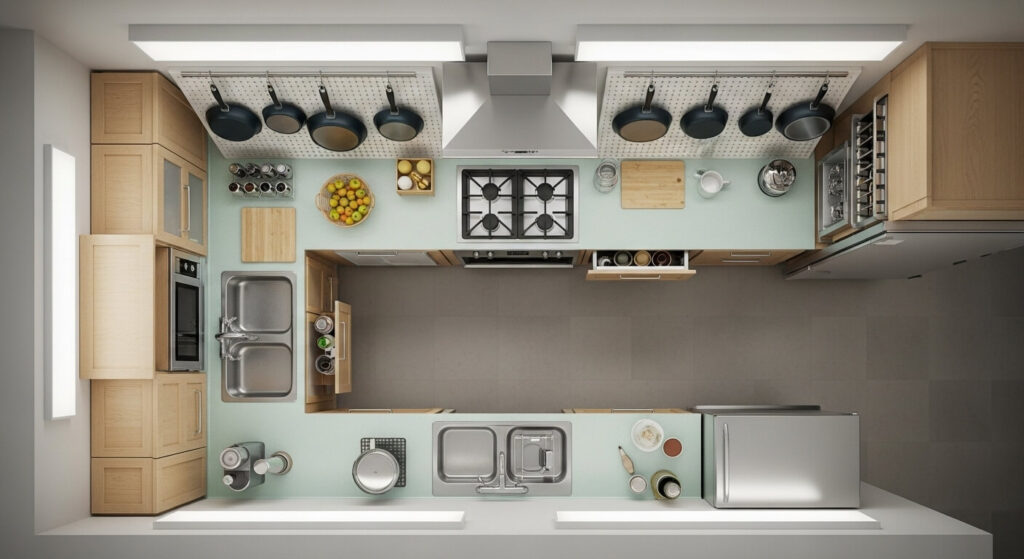
Shortest path from fridge to stove. Pan stored near stove, not across the kitchen. Utensils in a crock next to the cooktop.

Efficiency isn’t about speed—it’s about reducing physical stress.

Efficient Workflow Design

Fridge → counter (for setting items down) → stove. Linear path, no backtracking.

Set up your kitchen for assembly-line efficiency. Your hands will thank you.

Cooking Techniques That Minimize Joint Stress

Joint-friendly cooking techniques focus on low heat to reduce stirring, covered cooking for hands-free finishing, and strategic timing that eliminates constant monitoring and intervention.

Low-Heat Gentle Cooking Methods

Low heat is the secret to low-effort cooking.

Preventing Food Sticking Naturally

Properly preheated pan + adequate fat + patient cooking = nothing sticks.

The frantic scraping and stirring happens when heat’s too high. Drop the temp, gain patience, save your hands.

Reducing Flip Frequency

High heat requires frequent flipping to prevent burning. Low heat lets you flip once or not at all.

Every flip you eliminate is one less grip, one less wrist rotation.

Even Cooking Without Intervention

Low heat distributes gently throughout the food. High heat burns outsides while leaving insides raw.

Even cooking means less babysitting. Less babysitting means less hand use.

Energy Efficiency Benefits

Lower burner setting uses less gas or electricity. Small bonus on top of the arthritis benefits.

Every little cost saving helps on fixed income.

Covered Cooking for Breakfast Foods

Lids transform breakfast cooking.

Steam-Finishing Eggs and Proteins

Last 2-3 minutes of cooking under a lid finishes eggs perfectly without flipping.

Steam does the work. Your wrist gets a break.

Retaining Moisture in Vegetables

Covered vegetables steam in their own moisture. They don’t dry out and stick to the pan.

Less sticking means less scraping and stirring.

Faster Cooking Times

Covered cooking cooks about 30% faster than uncovered.

Faster cooking means less time standing, less total hand involvement.

Hands-Free Final Minutes

Once the lid goes on, you can walk away for 3-5 minutes. Seriously.

Set a timer, sit down, rest. The stove doesn’t need supervision every second.

One-Stir or No-Stir Approaches

Constant stirring is a habit, not a requirement.

Proper Heat Level Selection

Medium-low heat for almost everything at breakfast. Maybe medium for initial searing.

Right heat level eliminates the need for constant intervention.

Ingredient Placement Strategy

Ingredients that need more heat go directly on pan surface. Delicate ingredients on top.

Strategic positioning means you’re not moving things around constantly.

Trusting the Cooking Process

This is the hard part. You’ve been taught to hover and stir constantly.

Let go. Trust the pan. You’ll be shocked how well things cook without constant meddling.

When Stirring Is Actually Necessary

Scrambled eggs need a few stirs. Very thick sauces need occasional stirring to prevent bottom burning.

But “occasionally” means 2-4 times total, not continuously.

Safe Food Handling with Limited Mobility

Safety matters when your hands don’t cooperate.

Using Tongs Instead of Spatulas

Tongs require less precise grip than spatulas. Spring-loaded tongs are even easier—they do some of the gripping work for you.

Switch to tongs for flipping and you might find it easier.

Two-Handed Transfer Techniques

One hand on handle, other hand supporting pan bottom when moving skillet.

Never one-hand a hot, heavy pan. That’s how accidents happen.

Plate Positioning for Easy Serving

Put the plate right next to the stove before you start cooking.

When food’s done, slide it directly from pan to plate without carrying the pan anywhere.

Preventing Spills and Burns

Work slowly. Rush causes accidents.

Speed matters way less than safety when you’re dealing with hot pans and limited hand control.

Portion Control for Singles and Couples

Portion control for senior breakfast means cooking 1-2 servings that match actual appetite and nutritional requirements without creating waste or requiring leftover management.

Cooking Exact Amounts to Avoid Waste

Most recipes serve 4-6. You need portions for 1-2.

Single-Egg Versus Two-Egg Recipes

One egg (or two egg whites) for lighter appetite. Two whole eggs for normal appetite. Three eggs if you’re very hungry or very active.

More than three eggs is overkill for most seniors at one meal.

Vegetable Quantities for Small Servings

One cup raw vegetables per person is plenty. They cook down to about half-cup.

More than that and you’re either forcing yourself to overeat or creating leftovers.

Protein Portions for Senior Needs

Seniors need 1-1.2 grams protein per kilogram body weight daily. Breakfast should provide 25-30% of that.

For most seniors, that’s 20-30 grams protein at breakfast. Not 60 grams.

Avoiding Oversized Breakfast Mistakes

Restaurant breakfasts serve 2-3 times what seniors actually need. Don’t replicate that at home.

Smaller portions mean less cooking time, easier pan management, and better portion control.

Scaling Recipes Up or Down

Math for scaling isn’t hard.

Doubling Single-Serving Recipes

Most breakfast recipes scale linearly. Two-egg recipe becomes four-egg recipe with doubled everything else.

Exception: spices don’t always need doubling. Start with 1.5x and adjust.

Halving Standard Four-Serving Dishes

Divide everything by two. Round up on liquids, round down on spices (easier to add than remove).

Cooking time usually drops by 25-30% for halved recipes.

Maintaining Proper Ratios

Eggs to milk ratio: 1 tablespoon liquid per egg for scrambles. 2 tablespoons per egg for frittatas.

Oatmeal: 2 parts liquid to 1 part oats.

These ratios matter—get them wrong and texture suffers.

Cooking Time Adjustments

Smaller portions cook faster. Half the volume usually means 60-70% of original cooking time, not 50%.

Check doneness earlier than you think. Better to check early than burn it.

Intentional Leftover Planning

Sometimes you want leftovers. Sometimes you don’t. Plan accordingly.

Making Extra for Next-Day Ease

Cook 3-egg frittata instead of 2-egg. Eat two-thirds today, one-third tomorrow.

Tomorrow’s breakfast takes 2 minutes to reheat versus 15 minutes to cook fresh.

Refrigerator-Friendly Breakfast Options

Frittatas, grain bowls, breakfast hashes—all reheat well.
Scrambled eggs—get rubbery when reheated. Not ideal for leftovers.

Know what keeps well and plan accordingly.

Reheating Without Quality Loss

Low heat, covered, with splash of water or milk. Steam reheats gently without drying.

Microwave works but makes things rubbery. Stovetop is better if you have time.

Two Meals from One Cooking Session

This is the sweet spot—cook once, eat twice. Halves your cooking sessions per week.

Your hands get double the rest days.

Senior Nutritional Needs at Breakfast

Nutrition requirements change as you age.

Protein Requirements for Muscle Maintenance

Muscle loss (sarcopenia) starts around age 50 and accelerates after 65. Protein fights this.

Distribute protein across all meals, don’t save it for dinner. Breakfast protein matters.

Fiber for Digestive Health

Aim for 5-8 grams fiber at breakfast. Whole grains, vegetables, and fruit provide this.

Fiber prevents constipation—common side effect of arthritis medications.

Calcium and Vitamin D Considerations

Eggs provide vitamin D. Dairy provides calcium. Both support bone health.

This matters when you’re dealing with both arthritis and potential osteoporosis.

Balancing Calories on Fixed Portions

Most seniors need 1600-2200 calories daily. Breakfast should be 25-30% of that—roughly 400-550 calories.

Two eggs, vegetables, small portion of grains hits this perfectly without overshooting.

Budget-Friendly Arthritis-Friendly Breakfasts

Budget-friendly arthritis breakfasts prioritize eggs as affordable protein, frozen vegetables over fresh for cost and prep ease, and strategic use of convenience items only for highest-impact time savings.

Affordable Protein Sources

Protein doesn’t have to be expensive.

Eggs as Cost-Effective Nutrition

Eggs average $0.15-0.30 each depending on your area and egg type.

Twenty grams of protein for $0.60? That beats every other protein source on cost per gram.

Canned Fish Options

Canned sardines, mackerel, salmon. Usually $1-3 per can.

Omega-3 rich, shelf-stable, zero prep. Perfect budget protein that happens to be anti-inflammatory.

Beans for Plant-Based Protein

Black beans, pinto beans, white beans. Canned versions cost $0.80-1.50 per can.

One can provides 3-4 servings of protein. Add to breakfast hashes or scrambles.

Buying in Appropriate Quantities

Don’t buy 5-dozen eggs for a single-person household. They’ll go bad.

Buy what you’ll use in 2 weeks max. Reduces waste, which reduces actual cost.

Seasonal Vegetable Selections

Buy vegetables when they’re cheap.

What’s Affordable When

Bell peppers cheapest in summer/fall. Squash in fall. Greens in spring. Tomatoes in summer.

Buy fresh when cheap, buy frozen when expensive. Simple strategy.

Frozen Versus Fresh Cost Analysis

Frozen vegetables cost 30-50% less than fresh equivalents usually.

They’re picked at peak ripeness and frozen immediately—often more nutritious than “fresh” that’s been sitting for a week.

Growing Simple Kitchen Herbs

Basil, parsley, chives grow easily in pots. One plant provides weeks of fresh herbs.

$3 plant versus $3 per bunch at store weekly. Math works out fast.

Farmers Market Finds for Seniors

End-of-market sales (last hour) often have 50% discounts as vendors clear out.

Senior discount days exist at many farmers markets. Ask.

Reducing Food Waste

Waste is money in the trash.

Using Vegetable Scraps

Spinach stems go in scrambles—they’re edible. Broccoli stems diced small cook fine.

You’re paying for the whole vegetable. Use the whole vegetable.

Proper Storage Techniques

Eggs keep 4-5 weeks refrigerated. Most vegetables keep 1 week in crisper.

Proper storage prevents premature spoilage, which prevents waste.

First-In-First-Out Rotation

Use oldest items first. Sounds obvious but people forget.

Date everything when you buy it. Use sharpie on packaging.

Creative Leftover Integration

Yesterday’s roasted vegetables in today’s breakfast hash. Last night’s rice in this morning’s stir-fry.

Breakfast becomes the leftover repository, which prevents waste.

Cost Per Serving Calculations

Know what things actually cost.

Comparing Convenience to Scratch Cooking

Pre-cracked eggs: $0.40 per egg versus $0.20 for shell eggs. Double the cost.

Is that worth it? If it’s the difference between cooking and not cooking, yes.

Long-Term Savings from Home Cooking

Restaurant breakfast: $8-12. Home breakfast: $1.50-3.

Even with convenience items, home cooking saves 60-70%.

Balancing Cost and Joint-Friendliness

Sometimes paying extra for pre-prepped items makes sense. Sometimes it doesn’t.

Pay for prep on foods you use daily. Do it yourself for occasional items.

Worth-It Splurges for Easier Cooking

Pre-washed greens. Worth it.
Pre-minced garlic. Worth it.
Pre-shredded cheese. Maybe—depends on your hand strength.
Pre-cooked bacon. Probably not—regular bacon isn’t that hard.

Adapting Favorite Breakfast Recipes

Recipe adaptation for arthritis means identifying high-effort steps in traditional recipes and replacing them with low-effort alternatives that achieve similar results with less hand stress.

Making Traditional Pancakes Arthritis-Friendly

Pancakes are high-effort for arthritic hands. But modifications help.

Using Squeeze Bottles for Batter

Pour batter into squeeze bottle (like ketchup bottles). Squeeze onto griddle instead of pouring from bowl.

One-handed operation, better portion control, no heavy bowl to maneuver.

Lower-Flip Methods

Make smaller pancakes (3-inch diameter). They’re easier to flip than standard 6-inch.

Or make one giant pancake that fills the whole pan—flip once instead of six times.

Alternative Cooking Approaches

Pancake in a mug in the microwave. Two minutes. No flipping.

Not traditional but works when hands aren’t cooperating.

When to Skip and Substitute

Sometimes pancakes aren’t worth the effort. French toast is easier—less mixing, fewer flips.

Or skip both and do oatmeal. Save energy for meals that matter more.

Modifying Bacon and Sausage Cooking

Stovetop bacon means hot grease splatter. Pass.

Oven Methods Versus Skillet

Bacon on sheet pan in 400°F oven. 15-20 minutes. No flipping. No splatter.

Sheet pans are heavier than skillets but you’re not standing over them—you can walk away.

Pre-Cooked Options for Ease

Fully-cooked bacon strips. Microwave 30 seconds. Done.

Costs 2-3 times more than raw bacon. Saves all the grease mess and burn risk.

Turkey and Chicken Alternatives

Turkey bacon and chicken sausage have less grease, which means less splatter and easier cleanup.

Lower fat content too—bonus for heart health.

Microwave Techniques for Small Amounts

Two strips of bacon on paper towels in microwave. 2 minutes.

Works fine for small portions. Cleanup is throwing away paper towels.

Simplifying Toast and Bread Items

Toast doesn’t need a toaster.

Skillet-Toasted Bread Methods

Dry skillet, medium heat, bread directly on surface. Toast one side, flip, toast other side.

Each side takes 90 seconds. Better control than toaster, fewer small finger movements.

French Toast Without Elaborate Dipping

Beat egg in shallow dish. Lay bread directly in egg for 10 seconds per side. Cook.

No elaborate dunking and soaking process. Quick dip, straight to pan.

Quick Breakfast Sandwiches

Toast bread in skillet while egg cooks in center. Fold bread over egg. Instant sandwich.

One pan, one utensil, 4 minutes.

Open-Faced Options

One slice of bread instead of two. Everything on top.

Half the bread handling, same satisfaction.

Converting Multi-Pan Recipes to Single-Skillet

Traditional breakfasts use too many pans.

Timing Ingredient Additions

Cook items in sequence in the same pan instead of simultaneously in different pans.

Sausage first. Remove. Vegetables in same pan. Remove. Eggs in same pan. Combine everything at end.

Temperature Management

Adjust heat between ingredients. High for searing meat, medium for vegetables, medium-low for eggs.

Same pan, different heat levels, sequential cooking.

Cleanup Reduction Benefits

One greasy pan beats three greasy pans every time.

Less scrubbing, less grip strain, less time at the sink.

Maintaining Recipe Integrity

Sequential cooking takes longer than parallel cooking (obviously). But time isn’t the constraint—hand stress is.

Recipe might take 15 minutes instead of 10. But your hands only wash one pan instead of three.

Managing Arthritis Flare-Ups During Breakfast Prep

Arthritis flare-ups require ultra-simple backup breakfast plans that provide adequate nutrition with nearly zero hand involvement—think pre-made options, three-ingredient meals, or acceptable convenience foods.

Ultra-Simple Recipes for Bad Pain Days

Some mornings are disasters. Plan for them.

Three-Ingredient Breakfasts

Eggs, cheese, spinach. That’s it.
Oatmeal, banana, cinnamon. Done.
Greek yogurt, frozen berries, honey. Perfect.

When you can barely grip, simple wins.

Virtually No-Prep Options

Hard-boiled eggs (pre-cooked earlier in week). Grab and eat.
Greek yogurt cup with granola. Open and eat.
Protein shake. Drink.

Zero cooking, adequate nutrition, gets you through rough mornings.

Acceptable Convenience Foods

Frozen breakfast sandwiches aren’t ideal but they beat skipping breakfast entirely.

Microwave 90 seconds. Eat. Take your medications with food like you’re supposed to.

Asking for Help When Needed

If you live with someone, let them help on bad days.

This isn’t failure—it’s smart resource management. Save your energy for better days.

Having Backup Plans Ready

Hope for the best, plan for the worst.

Shelf-Stable Emergency Breakfasts

Instant oatmeal packets. Protein bars. Shelf-stable milk boxes.

Keep these on hand for when fresh food feels impossible.

Frozen Pre-Made Options

Frozen breakfast burritos. Frozen frittata portions. Frozen fruit smoothie packs.

These live in your freezer waiting for emergency mornings.

Delivery or Assistance Arrangements

Some areas have senior meal delivery. Some families arrange check-ins with food drop-offs.

Know your options before you need them.

Rotating Between Difficulty Levels

Easy breakfast Monday. Medium difficulty Tuesday. Easy Wednesday.

Alternate effort levels so you’re not exhausting your hands daily.

Listening to Your Body

Your body knows things your brain ignores.

Knowing When to Simplify

If gripping the spatula hurts, stop. Switch to easier recipe.

Pushing through pain today means worse pain tomorrow. Not worth it.

Avoiding Injury from Pushing Through

Forcing painful movements can cause actual injury on top of arthritis.

Tendonitis, muscle strains, dropped pans causing burns—all happen when you ignore pain signals.

Medication Timing for Cooking Windows

If medication kicks in after 30-60 minutes, take it first then cook.

Or cook the night before and reheat after medication works. Flexibility matters.

Rest Days and Nutrition Balance

Some days you eat cereal or toast. That’s fine.

One imperfect breakfast won’t destroy your nutrition. Consistency over time matters, not perfection daily.

Building Confidence Through Success

Start small, build gradually.

Starting with Easiest Recipes

Master scrambled eggs before attempting frittatas. Get comfortable with one-pan basics before complicated recipes.

Confidence comes from repeated success, not from tackling hard things first.

Gradually Increasing Complexity

Once scrambled eggs feel easy, add vegetables. Then try different proteins. Build slowly.

Each success makes the next challenge less intimidating.

Celebrating Small Victories

You made breakfast without excessive pain? That’s a win. Celebrate it.

Arthritis makes everything harder. Acknowledge when you succeed anyway.

Tracking Progress and Favorites

Keep a simple notebook. “Spinach frittata—easy, tasty, hands felt OK after.”

You’ll build a personal collection of recipes you know work for your specific arthritis presentation.

Kitchen Safety for Seniors with Arthritis

Kitchen safety for arthritic seniors focuses on preventing burns from reduced sensation and slow reflexes, avoiding falls from fatigue and balance issues, and recognizing when to stop cooking before injuries occur.

Preventing Burns and Injuries

Burns happen fast when grip fails.

Proper Pot Holder Selection

Silicone pot holders with textured grips work better than cloth ones for arthritis.

They don’t slip when damp (cloth does), and they’re easier to grip with reduced hand strength.

Steam Release Awareness

Always tilt lids away from your face and hands when removing.

Steam burns are serious—second-degree burns from steam are worse than from boiling water.

Safe Lid Removal Techniques

Two hands whenever possible. One on handle, one stabilizing the edge.

Never try to be fancy. Slow and controlled beats fast and risky.

Splash Guards and Aprons

Apron protects your body from splatter. Splash guard screen on the pan protects your hands and face.

Both are cheap insurance against burns.

Avoiding Slips and Falls

Kitchens are fall hazards.

Anti-Fatigue Mats at Cooking Station

Cushioned mat where you stand to cook reduces fatigue and provides non-slip surface.

They cost $20-40. Prevent falls. Worth it.

Spill Management Systems

Paper towels within arm’s reach. Immediate wipe of any spills.

Grease on floor becomes ice rink. Clean it immediately, not “when you’re done cooking.”

Proper Footwear for Cooking

Closed-toe shoes with non-slip soles. Not slippers. Not bare feet.

If you drop a hot pan, you want protection.

Clearing Walking Paths

Nothing on the floor between stove and table. No rugs that can slip or catch toes.

Clear path prevents trips when you’re carrying hot food.

Recognizing Fatigue and Overexertion

Know your limits.

Taking Breaks During Prep

If prep takes 10 minutes, split it into two 5-minute sessions with sitting break between.

There’s no time pressure. You’re cooking for yourself.

Sitting While Cooking When Possible

Stool or chair at the stove lets you cook sitting down when possible.

Standing is optional for many cooking tasks.

Splitting Tasks Across Time

Prep vegetables in the afternoon when hands feel better. Cook in the morning when you’re hungry.

Who says all breakfast prep must happen at breakfast time?

Knowing Personal Limits

Some days you can handle complex recipes. Other days scrambled eggs is pushing it.

Honest self-assessment prevents injuries.

Emergency Preparedness

Hope you never need it. Plan anyway.

Keeping Fire Extinguisher Accessible

Small fire extinguisher within reach of the stove (but not right next to it where fire could block access).

Know how to use it before you need it.

First Aid for Minor Burns

Cool running water immediately. Don’t ice. Don’t butter (that’s a myth).

For anything beyond very minor burns, get medical help.

Emergency Contact Information

Phone numbers visible near stove. Neighbor, family member, 911.

If you drop a pan and can’t move well, you need help quickly accessible.

When to Call for Help

If you’re feeling dizzy, unusually weak, or unsteady—stop cooking and call someone.

Food can wait. Your safety can’t.

Social Aspects of Breakfast Cooking

Social breakfast cooking involves balancing your arthritis limitations with a partner’s needs, teaching others your modifications, and maintaining pleasant morning rituals that support mental health alongside physical health.

Cooking for a Partner with Different Needs

Sharing breakfast when you have different abilities or preferences.

Customizing Single-Skillet Meals

Make base recipe in the skillet, then customize individual servings with different toppings or add-ins.

Same cooking effort, personalized results.

Accommodating Dietary Restrictions

One person needs low-sodium, the other doesn’t? Salt their portion on the plate, not in the pan.

Flexibility works better than cooking two separate meals.

Sharing Kitchen Tasks

Partner chops vegetables (fine motor you struggle with). You do the actual cooking (standing they might struggle with).

Play to each person’s strengths.

Communication About Capabilities

“My hands are really bad today—can you handle the egg cracking?” should be easy to say.

Partners who know your struggles can help appropriately.

Teaching Others Your Methods

Share what works.

Showing Family Your Techniques

When kids or grandkids visit, show them your adaptations. They’re learning practical skills for their own futures (everyone gets old eventually).

Plus they understand your challenges better when they see your solutions.

Training Caregivers or Helpers

If you have in-home help, teach them your skillet methods.

They can prep or cook on your worst days while still supporting your independence on good days.

Creating Recipe Cards for Assistance

Write down your modified recipes with specific notes: “use silicone spatula, not metal” or “cover for last 3 minutes.”

Makes it easier for others to help the way you need help.

Maintaining Independence While Accepting Help

Accepting help on bad days lets you maintain independence on good days.

It’s strategic, not surrender.

Making Breakfast a Pleasant Ritual

Morning routine matters for mental health.

Setting a Nice Table for One or Two

Real plate, not eating from the pan. Cloth napkin if that feels good.

Treating yourself well matters, especially when chronic pain makes you feel bad.

Morning Routines That Include Cooking

The cooking process itself can be meditative—quiet time before the day starts.

Even 10 minutes of focused, low-stress cooking centers you.

Mental Health Benefits of Self-Care

Taking time to cook well and eat well is self-care.

Depression often accompanies chronic pain. Small self-care rituals fight back.

Mindful Eating Practices

Sit down. Taste your food. Notice flavors.

Not just fuel—actual enjoyment. Quality of life matters.

Sharing Meals with Friends

Social connection fights isolation.

Easy Recipes for Small Gatherings

Frittatas feed 6-8 people from one pan. Perfect for small brunch gatherings.

Minimal extra effort, maximum social benefit.

Brunch Without Overwhelming Prep

One skillet dish (frittata), one fruit salad (pre-cut fruit from store), coffee. That’s a complete brunch.

Don’t overcomplicate. Your energy is limited.

Potluck Contributions from Your Skillet

Bring your skillet frittata to potlucks. It travels well, reheats fine, and you controlled the effort level.

Social participation without overwhelming yourself.

Building Community Through Food

Sharing meals creates connections that fight the isolation chronic pain can cause.

Food is social glue. Use it.

Seasonal Breakfast Variations

Seasonal breakfast adjustments account for ingredient availability and cost, weather-related cooking comfort, and how seasonal changes in weather affect arthritis inflammation and joint stiffness.

Spring and Summer Light Options

Warm weather changes both what’s available and what sounds good.

Fresh Herb Availability

Spring herbs (basil, parsley, dill) cost less and taste better. Use them generously.

Add fresh herbs after cooking—no knife work needed, just tear with your hands.

Lighter Proteins for Warm Weather

Fish and eggs feel lighter than heavy sausage when it’s hot.

Smoked salmon, hard-boiled eggs, egg white scrambles—all work well in summer.

Seasonal Vegetable Choices

Tomatoes, peppers, zucchini all peak in summer. They’re cheap, fresh, and perfect for breakfast skillets.

Buy what’s in season—it’s better quality and lower cost.

Outdoor Cooking Adaptations

Portable burner on a shaded patio keeps heat out of the kitchen.

Your skillet methods work anywhere there’s a burner.

Fall and Winter Hearty Skillets

Cold weather demands different food.

Warming Spices and Ingredients

Cinnamon, nutmeg, ginger, turmeric—warming spices that also fight inflammation.

They make breakfast feel cozy, which matters when you’re cold and stiff.

Root Vegetable Breakfast Hashes

Sweet potato, regular potato, parsnips, carrots. All cheap in fall/winter and perfect for breakfast hashes.

Hearty, filling, warming—exactly what cold mornings need.

Heartier Portions for Cold Mornings

You might want bigger breakfast in winter when you’re burning more calories staying warm.

Listen to your appetite. It’s OK to eat more when it’s cold.

Comfort Food Adaptations

Rich frittatas with cheese. Oatmeal with extra butter. Foods that comfort as well as nourish.

Mental health counts too.

Holiday Breakfast Traditions

Holidays stress arthritic hands. Plan accordingly.

Special Occasion Skillets

Fancy frittata with special ingredients (smoked salmon, asparagus, herbs) feels celebratory but uses same technique as everyday cooking.

Special without being hard.

Simplified Celebratory Meals

You don’t need elaborate multi-course breakfasts to celebrate.

One really good dish beats three mediocre ones that exhaust you.

Make-Ahead Holiday Brunch Items

Cook frittata day before. Reheat morning of. Prep fruit salad night before.

Holiday morning shouldn’t destroy your hands.

Managing Expectations and Energy

It’s OK to say “we’re doing simple breakfast this year.”

People who love you will understand. People who don’t understand don’t matter.

Adjusting for Arthritis Seasonal Changes

Weather affects arthritis.

Winter Joint Stiffness Solutions

Warm your hands before cooking—run under warm water for 2-3 minutes.

Some people wear compression gloves while cooking in winter.

Summer Heat and Inflammation

Heat can worsen inflammation for some people. Cook during coolest part of morning.

Air conditioning while cooking isn’t a luxury—it’s symptom management.

Tracking Seasonal Patterns in Pain

Keep notes on when arthritis flares worsen. Many people have clear seasonal patterns.

Understanding your pattern helps you plan easier meals during predictable bad periods.

Adapting Recipes to Body’s Needs

If winter makes your hands worse, lean heavily on convenience items and batch cooking in winter.

Summer when hands feel better? Try more complex recipes.

Building a Sustainable Breakfast Routine

Sustainable breakfast routines for arthritis rely on 5-7 core recipes you can make confidently, flexible planning that accommodates flare-ups, and continuous small adjustments that keep cooking manageable long-term.

Creating a Weekly Rotation

Variety within structure.

Five Go-To Breakfast Recipes

Pick five recipes you’ve mastered and can make even on medium-pain days:

  • Scrambled eggs with vegetables
  • Simple frittata
  • Oatmeal with toppings
  • Breakfast hash
  • Grain bowl

Rotate through these. Add variety through toppings and mix-ins, not through learning new techniques constantly.

Preventing Boredom Through Variation

Same scrambled egg base, different vegetables and seasonings each day.

Monday: spinach and feta
Tuesday: peppers and salsa
Wednesday: mushrooms and herbs

Same technique, different flavor profiles.

Shopping Lists for Rotation System

Create master shopping list for your five core recipes. Buy the same things each week.

Reduces decision fatigue and ensures you always have breakfast ingredients.

Flexibility for Flare-Up Days

Rotation is guideline, not law. Bad day? Simplify without guilt.

The goal is getting fed, not perfect adherence to a plan.

Maintaining Motivation

Long-term success requires staying engaged.

Why Consistent Breakfast Matters

Medication works better with food. Blood sugar stays stable. Energy lasts longer.

These aren’t abstract benefits—they’re daily quality-of-life improvements you’ll notice.

Rewarding Yourself for Effort

Cooked breakfast five days this week? That’s worth acknowledging.

Small rewards (new cookbook, nice coffee, whatever matters to you) reinforce positive habits.

Tracking Health Improvements

Energy levels, pain levels, medication effectiveness—all improve with consistent good nutrition.

Track how you feel. Correlation between good breakfast and good days becomes obvious.

Adjusting Goals as Needed

Some weeks you cook breakfast three days instead of seven. That’s still three more than zero.

Adjust expectations to reality. Progress isn’t linear.

Continuous Learning and Adaptation

You’ll keep finding better ways.

Trying One New Recipe Monthly

Not weekly—monthly. One new thing to learn, practice, integrate.

Slow expansion prevents overwhelm.

Reading Labels and Nutrition Info

Understanding what’s in convenience products helps you choose wisely.

Some pre-made items are nutritional disasters. Some are fine. Learn to tell the difference.

Staying Current on Arthritis Research

New anti-inflammatory foods get discovered. New cooking tools get developed.

Staying informed means finding new solutions.

Joining Senior Cooking Communities

Online groups, local senior centers, arthritis support groups—all have people sharing cooking solutions.

You’ll get ideas and give ideas. Community knowledge beats individual trial-and-error.

Long-Term Joint Health Through Nutrition

This is the big picture.

Breakfast’s Role in Daily Nutrition

Breakfast sets the tone. Good breakfast makes good lunch and dinner more likely.

Skip breakfast and you’re playing catch-up all day.

Anti-Inflammatory Eating Patterns

Consistent anti-inflammatory eating—not just occasional—reduces baseline inflammation over months.

Your joints will genuinely feel better. This isn’t placebo.

Supplements Versus Food Sources

Food sources of nutrients generally absorb better than supplements.

Omega-3s from fish beat fish oil capsules. Vitamin C from peppers beats vitamin C pills.

Working with Healthcare Providers

Share your breakfast routine with your doctor and occupational therapist.

They can suggest specific nutritional focuses based on your specific arthritis presentation and medications.

Previous Post
Low-Impact Searing How Seniors Enjoy Cast Iron Flavor Despite Arthritis
Seniors

Low-Impact Searing: How Seniors Enjoy Cast Iron Flavor Despite Arthritis

Next Post
Healthy Stir-Fry Techniques for Seniors with Arthritis Using Lightweight Skillets
Seniors

Healthy Stir-Fry Techniques for Seniors with Arthritis Using Lightweight Skillets

error: Content is protected !!