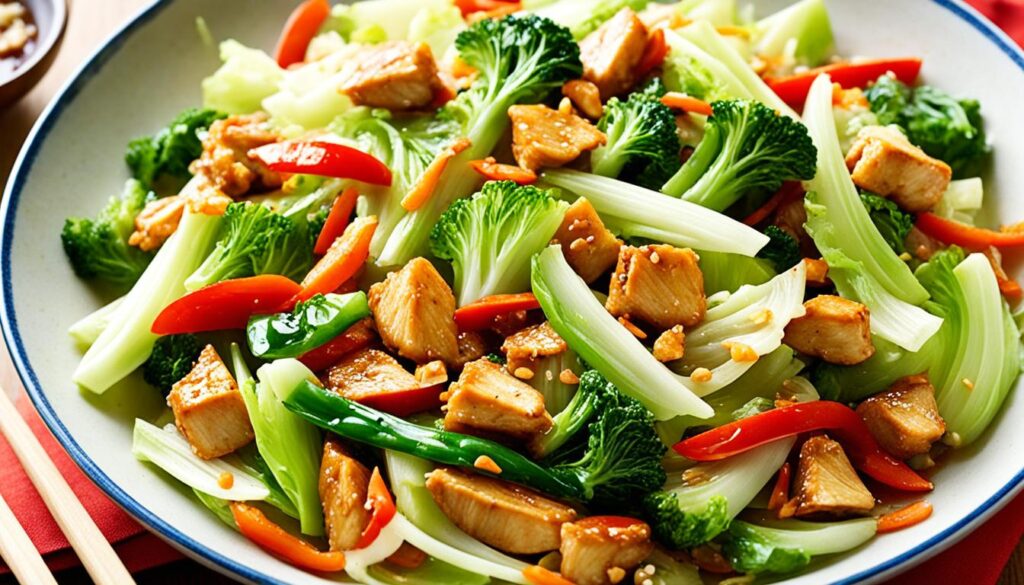
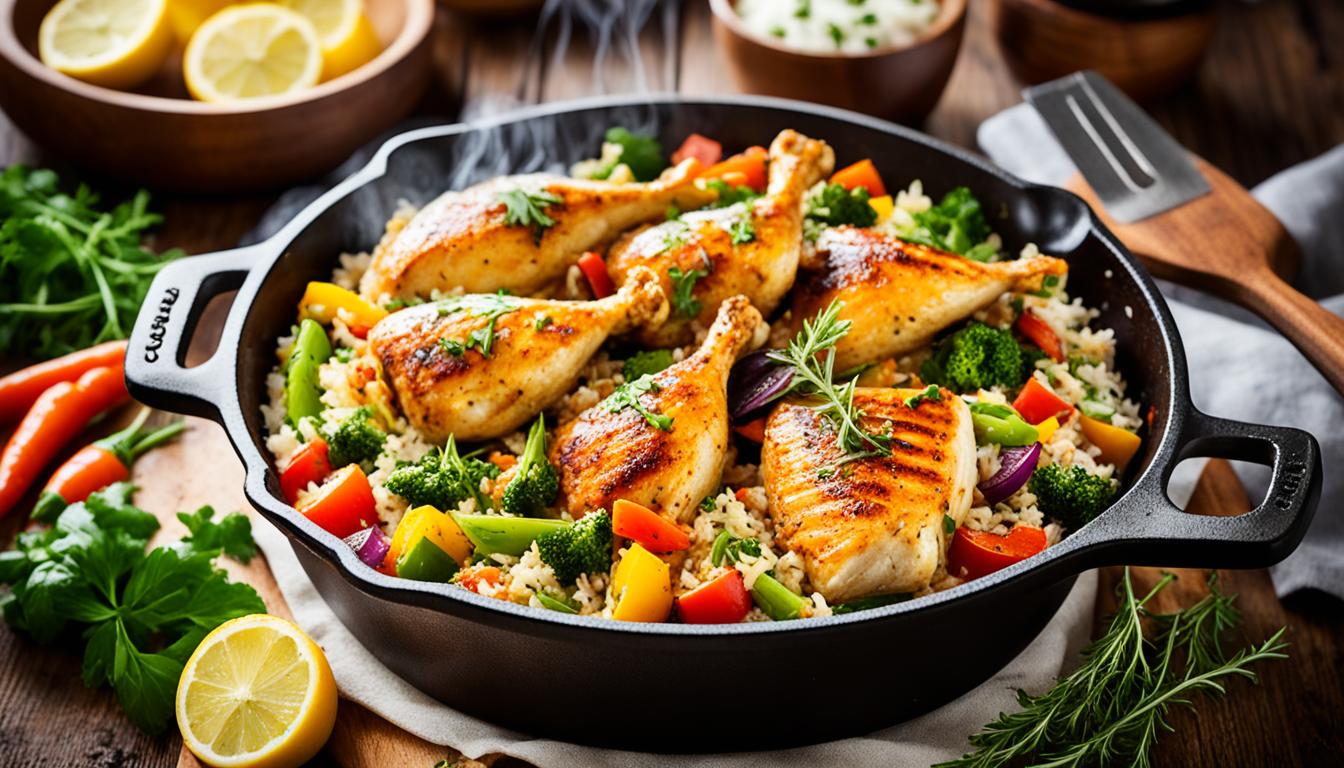
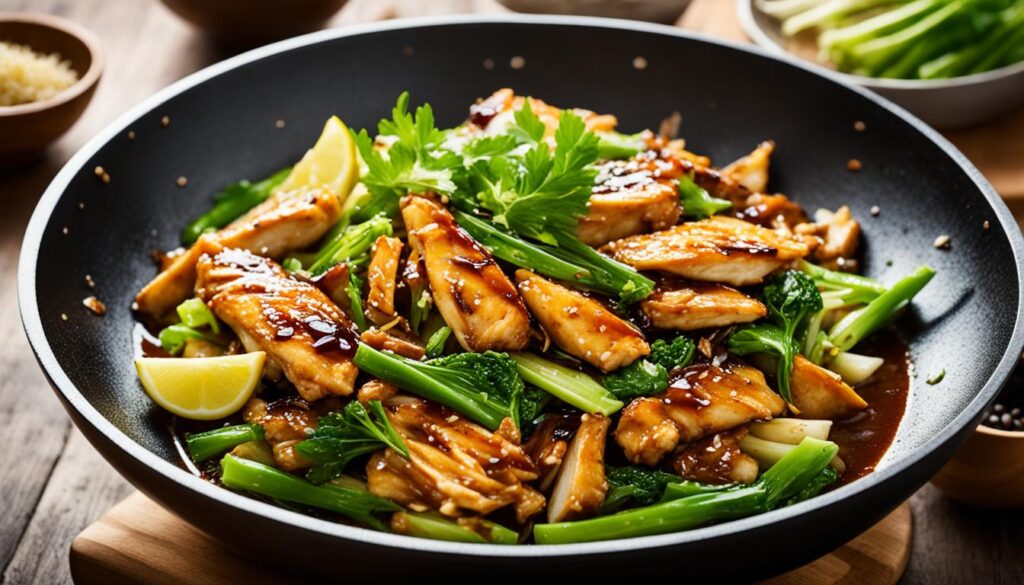
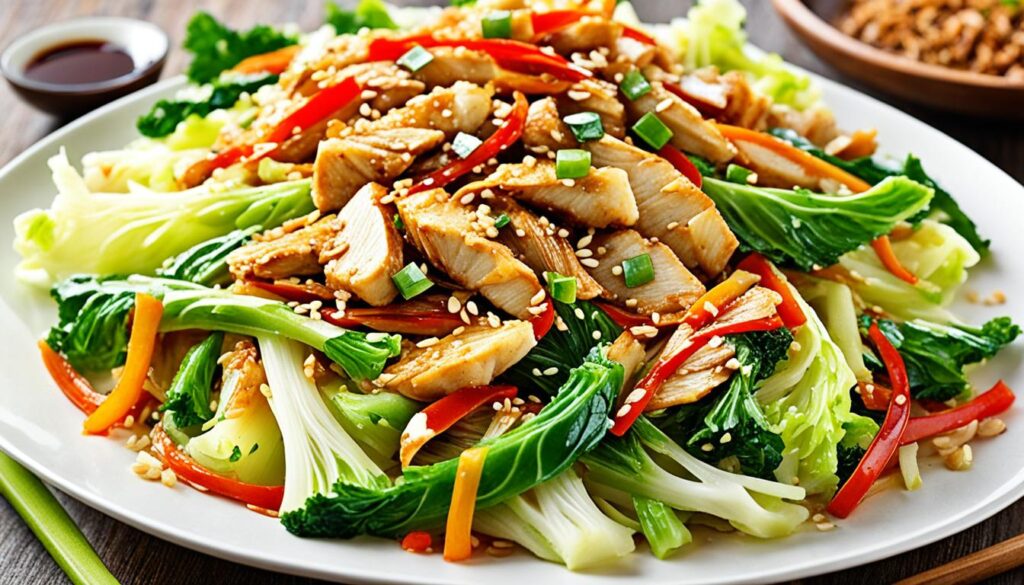
Chinese chicken cabbage stir fry with soy sauce is a 20-minute dinner — thinly sliced chicken thighs, shredded cabbage, garlic, ginger, and a soy-oyster sauce that coats everything in the last 60 seconds of cooking.
Thursday nights at my house. That’s when this gets made. Not because I planned it that way — it just became the default somewhere around three years ago when I realized by Thursday I’m tired, my wife is tired, both my sons have practice or homework or some combination of the two, and nobody wants to think about dinner. So this is dinner. It’s fast, it uses one pan, and it tastes like I actually tried.
My older son asks every single Thursday if it’s “the cabbage thing.” Every single Thursday I say yes. He seems satisfied by this.
Getting Started with Chinese Chicken Cabbage Stir Fry
Chinese chicken cabbage stir fry works on one condition: everything is prepped and ready before the pan gets hot. Not mostly ready. Completely ready.
This is not a dish where you can mince garlic while the chicken is cooking. Or shred cabbage mid-pan. Or realize the sauce isn’t mixed yet when the garlic is already starting to brown. Stir fry doesn’t wait for you. The heat is high, the timing is tight, and if your prep isn’t done when cooking starts, something is going to overcook or burn while you’re scrambling.
What actually happens if you’re not prepped: the garlic scorches while you’re grating ginger, or the chicken finishes before the cabbage is even cut, or you’re reaching across a hot pan for the sauce bowl and the whole thing becomes a stressful mess instead of a 20-minute dinner.
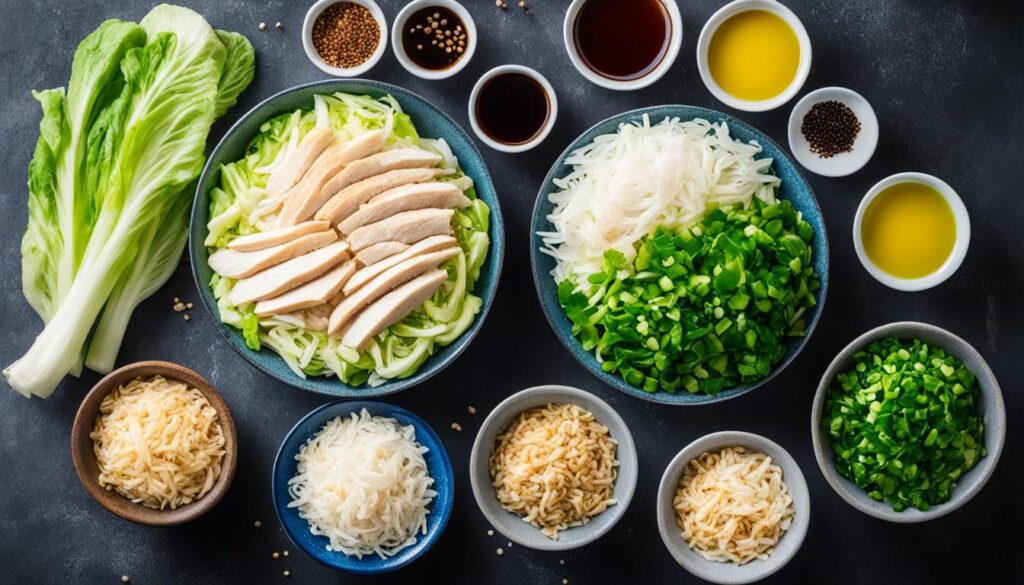
This is one of those quick meals where the cooking itself is the easy part. The prep — chicken sliced, cabbage shredded, sauce mixed, everything in small bowls next to the stove — is where the work happens. Maybe 12 minutes of prep. Eight minutes of cooking. That’s the split.
According to the USDA FoodData Central, one cup of raw green cabbage contains only about 22 calories while delivering 2 grams of fiber and over half the daily recommended vitamin C. So the cabbage here isn’t just a vehicle for sauce — it’s doing real nutritional work in this dish.
Skillet cooking at stir fry temperatures requires a preheated pan. Three minutes on high heat before anything goes in. I know that sounds like a long time to just stand there. It’s worth it.
Essential Ingredients for Chinese Chicken Cabbage Stir Fry Recipe with Soy Sauce
The essential ingredients are chicken thighs, green cabbage, soy sauce, oyster sauce, fresh garlic, fresh ginger, and sesame oil — get those right and the dish works.
Oyster sauce. Let me say something about oyster sauce because I get pushback on this every time I tell someone to buy it. It’s not expensive. It’s not hard to find — it’s at most regular grocery stores, always at Asian markets. And it is not replaceable with more soy sauce. Oyster sauce adds a glossy, savory depth that soy sauce can’t produce on its own. Skipping it makes the dish flat. Just buy a bottle. It’ll last months.
Fresh ginger and fresh garlic — not jarred, not powdered. I know the jarred stuff is convenient. But in a dish with this few ingredients, every component shows up clearly, and jarred ginger has a fermented, slightly off flavor that’s noticeable. Fresh ginger is sharp and bright. Different ingredient entirely.
Neutral oil with a high smoke point. Vegetable oil, peanut oil, or avocado oil. Not olive oil — olive oil burns at stir fry temperatures and turns bitter before the pan is even hot enough to sear the chicken.
Sesame oil goes in at the end. Or in the sauce. Never in the hot pan for cooking. It burns and goes bitter almost immediately at high heat. This is a mistake I made for longer than I’d like to admit.
A ceramic electric skillet works for this — just preheat it fully and don’t crowd it. Same principle applies regardless of pan type: cold surface equals steamed food instead of seared food.
Choosing the Right Cabbage for Your Stir Fry
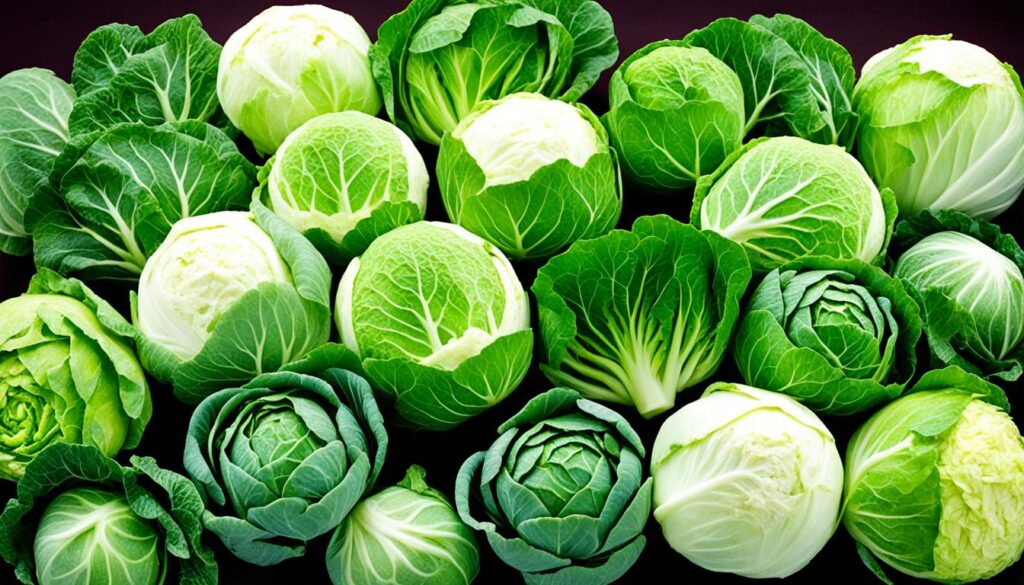
Green cabbage is the right choice for this dish — it holds its texture under high heat, sweetens slightly as it cooks, and doesn’t collapse into mush the way softer varieties do.
That’s the recommendation. Now here’s what happens if you use something else, because sometimes the grocery store doesn’t have what you want:
Napa cabbage is a close second. Softer and sweeter than green, cooks faster. Add it about a minute later in the cooking sequence or it’ll go limp while the chicken is still finishing. Good substitute.
Savoy cabbage — crinkled, slightly more tender. Works well. Roughly similar timing to napa.
Red cabbage holds texture well and adds color, which is nice visually. Fair warning though: it bleeds purple into the sauce. The dish ends up looking a bit strange. Tastes fine. Just odd to look at.
Bok choy is not technically cabbage but it’s in the same family and it works beautifully in this dish. Baby bok choy especially. Separate the stems from the leaves — stems go in with the carrots, leaves go in at the end just before the sauce.
For the skillet stir fry version of this recipe, shred the cabbage to about 1/4-inch strips. Not thin as paper — you want some structure — but thin enough to cook through in 2-3 minutes over high heat. Thick chunks stay raw in the center while the outside overcooks. Cut it thin.
One thing worth knowing: shredded cabbage releases moisture as it sits. Don’t cut it too far in advance or it’ll be wet when it goes in the pan, which creates steam instead of sear.
Selecting and Preparing the Chicken
Boneless, skinless chicken thighs are the correct cut for this dish — more fat than breast meat, which means better color in the pan and more forgiveness if the heat spikes.
Chicken breast works. I want to be honest about that. But the window between “just cooked through” and “dry and tight” in a screaming hot pan is about 30 seconds with breast meat. Thighs have more fat and connective tissue, which buffers against overcooking. I’ve been using thighs for this dish for years and the consistency is noticeably better.
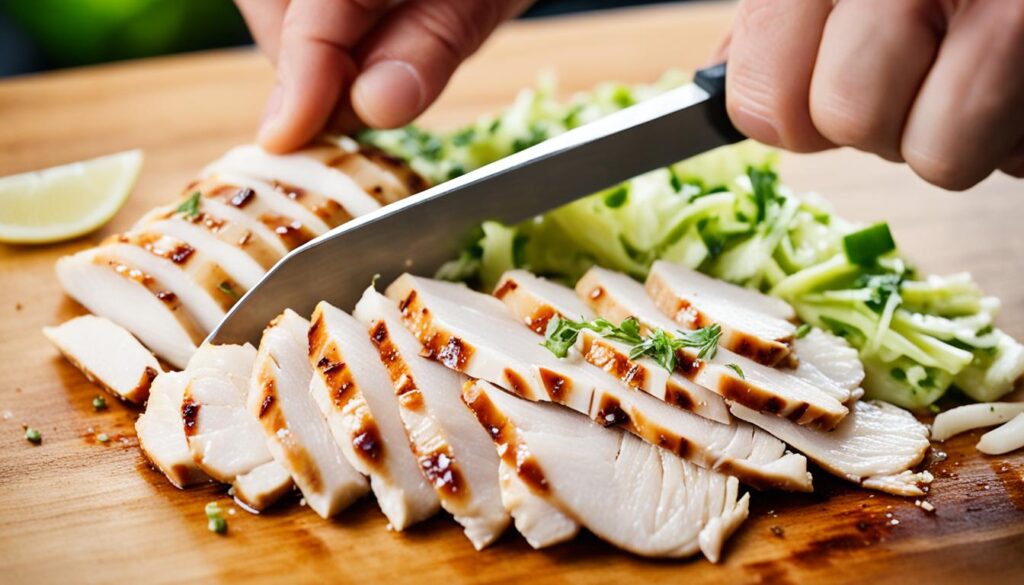
Slicing technique: put the chicken in the freezer for 20-25 minutes before slicing. Not frozen — just firm enough to cut cleanly. Then slice against the grain into strips about 1/4-inch thick. Thin strips cook in 2-3 minutes. Thick pieces don’t cook evenly in a fast stir fry.
The marinade takes 5 minutes to mix and 15 minutes to work. Don’t skip it:
1 tablespoon soy sauce
1 teaspoon cornstarch
1 teaspoon neutral oil
Pinch of white pepper
The cornstarch creates a thin coating on each piece of chicken that protects it from the high heat and gives it a silkier texture. Chinese restaurants call this velveting. It’s not a technique you need special equipment for — it’s just cornstarch in a marinade, and it genuinely changes the texture of the finished dish.
An electric skillet with a removable pan makes cleaning up after working with marinated chicken easier — marinated chicken leaves a film on cooking surfaces that’s much easier to deal with when the pan comes apart.
The Role of Soy Sauce in Chinese Stir Fry Dishes
Soy sauce is the fermented, umami backbone of this dish — not just a seasoning, but the flavor foundation that everything else builds on.
There are a few varieties worth understanding, because they behave differently:
Regular soy sauce — salty, savory, deep amber. The workhorse. This is what the base sauce is built on.
Dark soy sauce — thicker, less salty, slightly sweet, very dark. It adds color more than flavor. A tablespoon makes everything look richer and more restaurant-quality. I keep it in the pantry specifically for this dish and a few others.
Low-sodium soy sauce — same flavor at roughly 40% less sodium. Good swap if sodium is a concern. The dish tastes slightly less intense but still works well.
Tamari — wheat-free soy sauce, nearly identical flavor. Right call for anyone avoiding gluten.
Here’s something most people don’t think about: when you add soy sauce matters. Added early in cooking, it caramelizes slightly and gets deeper and less sharp. Added at the end, it stays bright and salty. This recipe does both — a small amount in the marinade early, the rest in the sauce near the finish. That layering is part of why the dish has more complexity than a simple ingredient list would suggest.
The National Institutes of Health has published research noting that fermented soy products contain bioactive compounds including isoflavones and peptides that may support cardiovascular health. Not the angle most people think about when making stir fry sauce, but worth knowing.
Step-by-Step Instructions for Making Chinese Chicken Cabbage Stir Fry
Here’s the full recipe — chicken thighs, green cabbage, carrot, garlic, ginger, and the soy-oyster sauce. Four servings. One pan. Twenty minutes from prep to table.
My wife called this “the one that tastes more complicated than it is” the first time I made it. She was being generous, but she wasn’t wrong.
1 small head green cabbage — about 6 cups shredded
1 medium carrot, julienned
4 cloves garlic, minced
1 tablespoon fresh ginger, grated
3 green onions, whites and greens separated
Sauce — mix this before anything goes in the pan:
3 tablespoons soy sauce
2 tablespoons oyster sauce
1 tablespoon dark soy sauce
1 teaspoon sesame oil
1 teaspoon sugar
1/2 teaspoon white pepper
1 tablespoon cornstarch stirred into 2 tablespoons cold water
For cooking:
3 tablespoons neutral oil, divided
Sesame seeds for garnish
Instructions
Before the pan gets hot — do all of this first:
Toss the sliced chicken with soy sauce, cornstarch, oil, and white pepper. Let it sit. Mix the sauce in a small bowl and set it right next to the stove. Shred the cabbage, julienne the carrot, mince the garlic, grate the ginger, separate the green onion whites from greens. Everything in bowls within arm’s reach. Do not start cooking until this is all done.
Getting the pan hot:
High heat. Full three minutes of preheating before oil goes in. Add 1-1/2 tablespoons of oil. Wait until the oil shimmers and starts to smoke at the edges — not just warm, actually starting to smoke. That’s the temperature you need.
Cooking the chicken:
Chicken into the hot pan, spread in a single layer. Leave it completely alone for 90 seconds. The bottom needs to form a crust and develop color before you move anything — that’s the fond, and it carries flavor. Then toss and cook another 2 minutes until just cooked through. It should look golden in spots, not pale gray all over. Remove it from the pan and set it aside. Leave any fat and fond behind.
Vegetables:
Remaining oil into the same pan. Green onion whites and julienned carrot first — they need 2 minutes, stirring every 30 seconds or so. The carrot should just start to soften at the edges. Add the garlic and ginger together. Thirty seconds of constant stirring — if the garlic starts browning before 30 seconds is up, move to the next step immediately.
Cabbage:
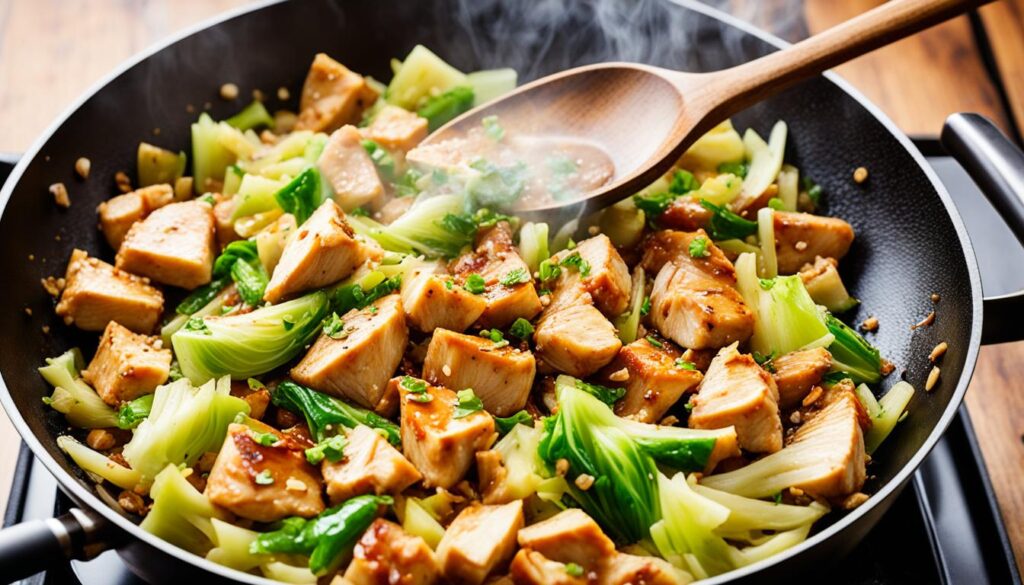
All the shredded cabbage goes in. It’ll look like way too much. It isn’t. Toss everything together and cook 2-3 minutes until the cabbage is tender-crisp — slightly wilted and translucent at the edges, but still holding structure. Completely limp means overcooked. Some lift and texture remaining means correct.
Finishing:
Chicken back in. Sauce poured over everything. Toss immediately and constantly — the cornstarch thickens the sauce in seconds and you need every piece coated before it reduces too far. Ten to fifteen seconds of tossing and you’re done. Green onion greens scattered over the top. Sesame seeds. Serve over rice while it’s hot.
Nutrition Info (per serving, serves 4)
Nutrient
Amount per Serving
Calories
340
Carbohydrates
18g
Protein
36g
Fat
14g
Fiber
4g
Sodium
920mg
Mastering the Art of Stir Frying in a Skillet
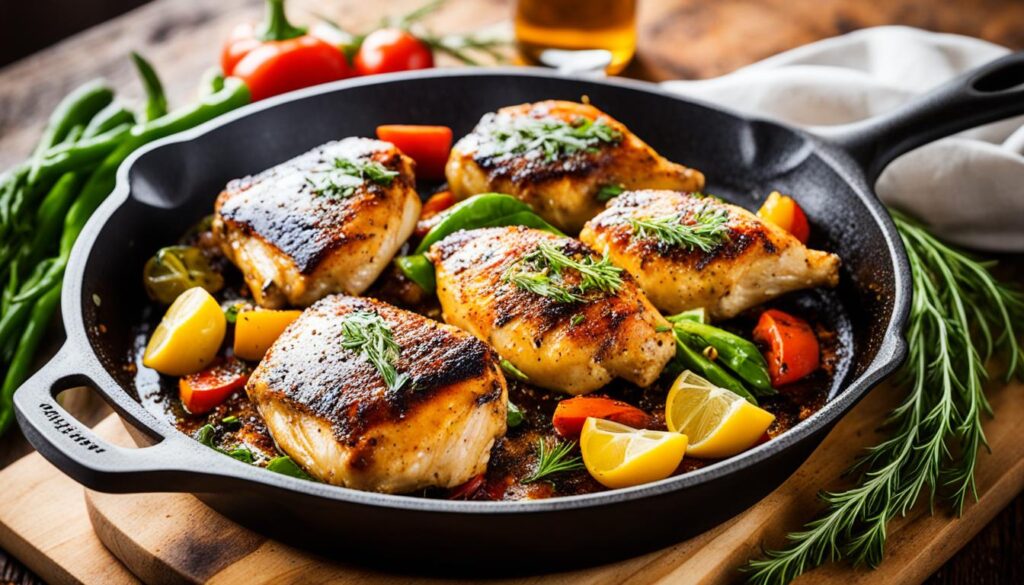
Stir frying in a skillet instead of a wok requires one adjustment above all others: even smaller batches, because the flat bottom gives you less active cooking surface than a wok’s sloped sides.
A wok’s sloped sides let food climb up and down the surface constantly, which means more of it is touching intense heat at any given moment. A skillet is flat. Food sits in one plane. So if you put too much in, the temperature drops, moisture pools, and browning stops entirely.
Crowding is the thing that ruins most home stir fry. I’ve said it already and I’ll say it again because it’s that important. One pound of chicken, spread flat, in a 12-inch skillet. That’s the limit. More than that and you’re braising.
Other things that make a real difference:
Preheat longer than feels right. Three full minutes on high heat before the oil goes in. Most people do 30 seconds and wonder why nothing browns. The pan should feel aggressively hot when held 3 inches above the surface.
Dry your ingredients. Seriously. Wet cabbage doesn’t sear — it steams. Pat the chicken dry before the marinade goes on. If you washed the cabbage, spin it dry. Water on the surface of any ingredient is the enemy of browning.
Don’t stir frantically. Every 20-30 seconds for the vegetables. The point is to expose all sides to the hot surface, not to stir so fast nothing gets color.
Research published in the Journal of Food Science found that Maillard reaction compounds produced during high-heat stir frying contribute directly to the characteristic flavor — meaning the browning isn’t cosmetic, it’s chemically adding flavor that lower-heat cooking can’t produce. This is the science behind why “get the pan hot” keeps coming up.
Enhancing Your Stir Fry with Additional Flavors and Spices
The base recipe is balanced and complete as written. But these are the additions I actually use, depending on who’s eating and what mood the kitchen is in.
For heat. A tablespoon of sambal oelek or chili garlic sauce stirred into the sauce before cooking. Or sliced fresh red chiles added with the garlic and ginger. My older son asks for this every time and always implies I should go hotter than I do. He’s probably right.
Shaoxing rice wine. A splash — maybe a tablespoon — added when the garlic and ginger go in. It hits the hot pan and sizzles up immediately, adding a depth that’s hard to articulate but very noticeable when it’s there. Dry sherry is a workable substitute.
Hoisin sauce. A teaspoon in the sauce adds sweetness and a slightly smoky undertone. Changes the character of the dish somewhat — a little richer, a little more complex. My wife prefers this version.
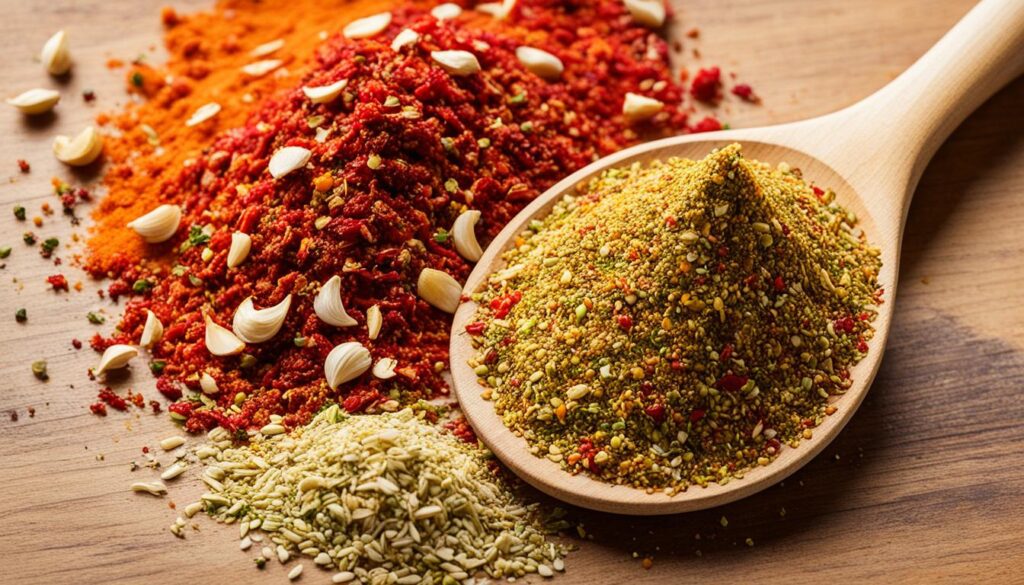
Five-spice powder. Just 1/4 teaspoon. It sounds like a small amount because it is — five-spice is assertive and a little goes a long way. But 1/4 teaspoon shifts the dish toward something that tastes distinctly Chinese rather than generic stir fry. I use this most of the time now.
Dried shiitake mushrooms. Rehydrate them in warm water for 20 minutes, slice them, add with the cabbage. Use the strained soaking liquid to replace the water in the cornstarch slurry. The umami level in the finished dish goes up noticeably. This is the version I make when I’m trying to impress someone.
One thing I’d say about additions: pick one or two. Not five. Every addition changes the balance, and if you add too many things at once they start competing with each other instead of building on the base.
Serving Suggestions and Complementary Side Dishes
Chinese chicken cabbage stir fry is a complete meal over steamed rice — but a few additions turn a weeknight dinner into something that actually feels like a spread.
Over jasmine rice. The standard. The starchy rice absorbs the sauce and the whole thing becomes more cohesive. Brown rice works and is more nutritious — but the chewier texture is slightly less complementary to the stir fry. Personal preference.
Over lo mein or wonton noodles. Toss the cooked noodles with a little sesame oil, pile the stir fry on top. My sons prefer this version. More filling, different texture, still the same dish essentially.
The cucumber salad I always make alongside this. Thin slices of cucumber, dressed with rice vinegar, sesame oil, soy sauce, and a pinch of sugar. Five minutes. Serves as a cold, acidic contrast to the warm stir fry. I started making it as an afterthought a couple years ago and now it’s become the expected pairing — my wife will specifically ask where it is if I forget.
Egg drop soup. About ten minutes start to finish and it makes the meal feel complete. Chicken broth brought to a simmer, cornstarch slurry stirred in to thicken slightly, eggs drizzled in slowly while stirring. Green onions on top. My wife requested this combination specifically about six months ago and it’s been the Thursday night standard since.
Serve the stir fry directly from the pan — or immediately after plating. Don’t let it sit while people are getting settled. The cabbage keeps cooking from residual heat, the sauce absorbs into whatever is underneath, and the texture you worked for in the pan deteriorates fast.
Storing and Reheating Leftover Chinese Chicken Cabbage Stir Fry
Leftover Chinese chicken cabbage stir fry keeps for 3 days in the refrigerator in an airtight container — refrigerated within 2 hours of cooking.
The texture changes. That’s just true. Cabbage releases moisture as it sits overnight and the sauce thins slightly. The flavor actually deepens — the chicken absorbs more of the sauce and everything tastes more integrated — but the crisp texture from the stir fry is gone by day two. You can’t get it back fully. Managing expectations here is honest.
Reheating, ranked:
A hot skillet with a splash of oil is the best method. Two minutes over medium-high heat, tossing a few times. It won’t be identical to fresh — nothing is — but the texture revives better than any other method. This is the only way I reheat it.
Microwave works and is obviously faster. Cover loosely, two minutes on medium power, stir halfway. Results in softer cabbage and slightly tighter chicken. Fine in a hurry. Not ideal.
The oven is not the right tool for stir fry leftovers. Too slow, too dry. Skip it.
Store rice and noodles separately from the stir fry. When combined, the starch absorbs the sauce overnight and the whole thing turns into a dense, clumped mass that’s harder to revive. Separate containers, reheat separately, combine when serving.
The USDA Food Safety guidelines recommend reheating all leftovers to an internal temperature of 165°F. In a hot skillet with tossing, that happens in under two minutes for a dish this size.
Freeze it? The chicken survives freezing reasonably well. The cabbage does not — it turns soft and watery after thawing in a way that’s unpleasant. If you know there will be substantial leftovers, make a smaller batch rather than freezing half of it.