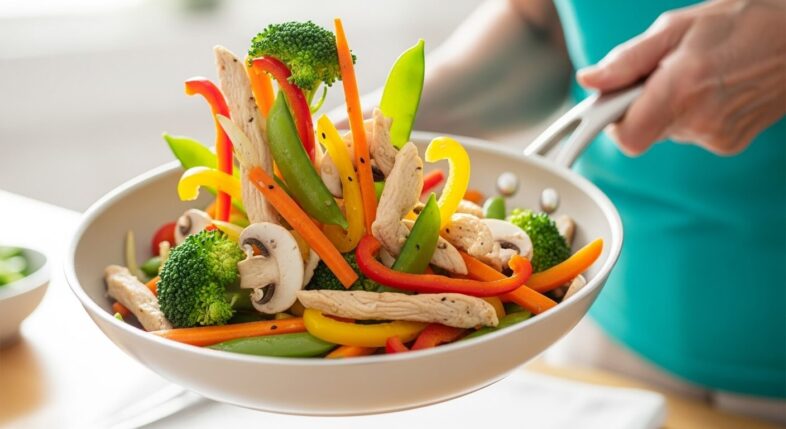
Healthy Stir-Fry Techniques for Seniors with Arthritis Using Lightweight Skillets

Healthy Stir-Fry Techniques for Seniors with Arthritis Using Lightweight Skillets

Why Stir-Frying is Ideal for Seniors with Arthritis

Stir-frying works brilliantly for arthritic hands because it’s fast, uses one pan, and doesn’t require the prolonged gripping that destroys your joints.

Here’s the thing: most cooking methods demand you hold, grip, and manipulate heavy cookware for extended periods. Not stir-frying. You’re looking at 5-10 minutes of active cooking, tops. Then you’re done.

Quick Cooking Reduces Hand Strain

The entire process takes maybe 15 minutes from start to finish—and that includes prep. Compare that to roasting (45+ minutes of waiting) or slow-cooking (hours of your day gone).

Your hands get a break. They’re not wrestling with heavy Dutch ovens or fighting with stuck lids. You’re in and out.

Short cooking sessions mean:

  • Less inflammation buildup in finger joints
  • Fewer opportunities for that grip fatigue that hits around minute 20
  • Time to rest between prep and cooking (crucial on bad days)
  • You can actually finish cooking before the pain gets unbearable

Nutrient Preservation Through High-Heat Methods

High heat for short bursts locks in vitamins better than long, slow cooking methods that leach nutrients into water or break them down over time.

Vitamin C? Stays put. B vitamins? Still there. The anti-inflammatory compounds in vegetables like broccoli and peppers—they survive the quick sear.

But here’s what really matters for arthritis: those antioxidants and anti-inflammatory phytonutrients remain active. You’re not just eating healthy food. You’re eating food that actually helps your joints.

One-Pan Cooking Minimizes Joint Stress

One skillet. That’s it.

You’re not juggling multiple pots, transferring food between containers, or doing that annoying dance where you need three burners going at once. Less lifting. Less gripping. Less overall hand punishment.

And cleanup? Single pan in the sink. Done. (Your wrists will thank you.)

Choosing the Right Lightweight Skillet for Arthritic Hands

The right skillet for arthritis weighs between 1.5 and 2.5 pounds and features an ergonomic handle that doesn’t require a death grip to control.

Weight matters more than anything else here. Period.

Best Materials for Arthritis-Friendly Cooking

Carbon Steel: Lightweight and Durable

Carbon steel skillets weigh about 2 pounds for a 12-inch pan. That’s roughly half what cast iron weighs—and they heat just as well.

They develop a natural nonstick surface over time (called seasoning). No chemicals. No coatings that flake off. Just smooth, slick metal that gets better with age.

Pros you’ll notice:

  • Heats fast, cools fast (better control)
  • Nearly indestructible
  • Gets more nonstick the longer you own it
  • Handles high heat without warping

The catch: They rust if you don’t dry them. Takes maybe 10 seconds with a towel. Not a dealbreaker.

Hard-Anodized Aluminum Options

Anodized aluminum is stupid light. We’re talking 1.5 pounds for a decent-sized skillet. Your arthritic hands barely register the weight.

The surface is tougher than regular aluminum—won’t scratch easily, distributes heat evenly, and you don’t get hot spots that burn your stir-fry.

Look for these features:

  • PFOA-free nonstick coating (the safe stuff)
  • Riveted handles, not welded (they don’t break off)
  • Oven-safe to at least 400°F
  • Dark exterior that won’t show every stain

Ceramic-Coated Nonstick Skillets

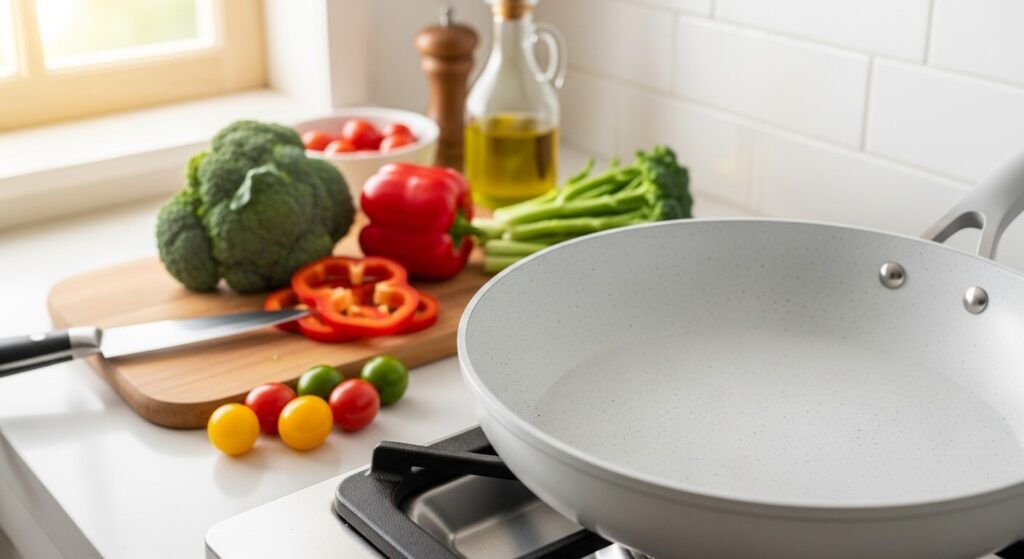
Ceramic coating means no Teflon, no sketchy chemicals when it gets hot. Just sand-derived coating that’s genuinely nonstick.

Best part? You need almost zero oil. Less oil means less weight in the pan, easier stirring, and your hands do less work overall.

But—and this matters—ceramic coating doesn’t last forever. Maybe 2-3 years with regular use. Then it starts sticking. Budget for replacement.

Titanium-Reinforced Cookware

Titanium-reinforced nonstick is the premium option. Insanely light (sometimes under 2 pounds for a 12-inch), incredibly durable, and the nonstick coating actually lasts.

Worth it if you cook daily. Probably overkill if you stir-fry twice a week.

The nonstick layer has titanium particles embedded in it—makes it scratch-resistant and extends its life to 5+ years. Your arthritis won’t improve, but at least your pan won’t quit on you.

Essential Features in Lightweight Skillets for Seniors

Ergonomic Handle Design for Reduced Grip Pressure

Fat handles beat thin ones. Every time.

A handle that’s 1.5 inches in diameter requires way less grip strength than a skinny 0.75-inch handle. Your hand wraps around it naturally—you’re holding it, not strangling it.

What to look for:

  • Soft-touch silicone coating (won’t slip when wet)
  • Slightly contoured shape that fits your palm
  • Length of at least 8 inches (better leverage, less wrist strain)
  • Stay-cool material so you don’t need a towel

Avoid those metal handles that get nuclear-hot. Just avoid them.

Optimal Weight Range: 1.5 to 2.5 Pounds

Get on a scale with your current skillet. Seriously.

If it’s over 3 pounds empty, you’re making your arthritis worse every time you cook. A stir-fry loaded with food adds another 1-2 pounds. That’s 4-5 pounds you’re lifting repeatedly.

Here’s the weight breakdown:

Skillet Type Empty Weight With Food Joint Stress Level
Cast Iron (12″) 5-8 lbs 7-10 lbs Severe—skip it
Carbon Steel (12″) 2-3 lbs 4-5 lbs Moderate—doable
Anodized Aluminum 1.5-2 lbs 3-4 lbs Low—ideal
Ceramic Nonstick 1.5-2.5 lbs 3.5-4.5 lbs Low—ideal

Numbers don’t lie. Lighter cookware means less pain.

Helper Handle Benefits for Two-Handed Lifting

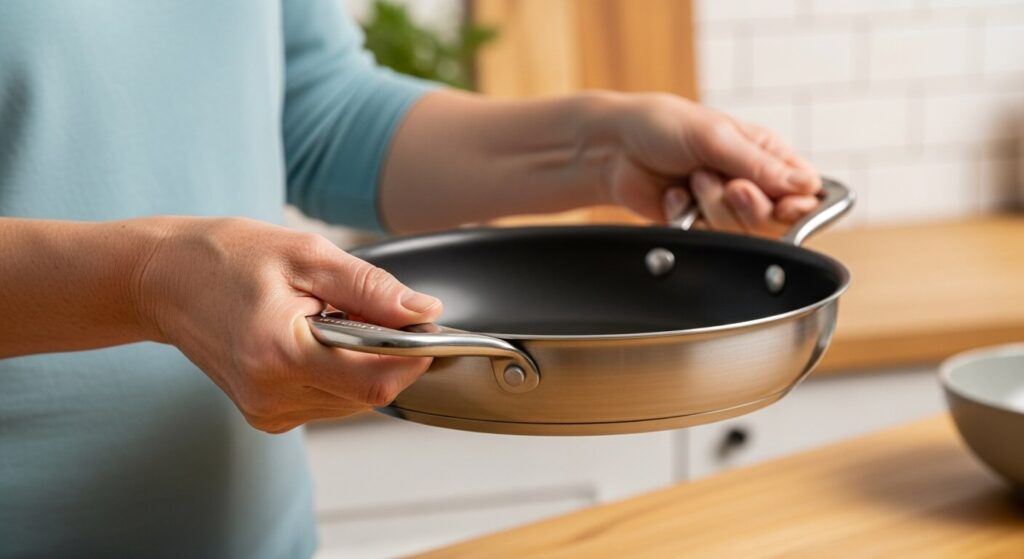
That small loop handle opposite the main handle? Game-changer.

You’re not relying on one wrist to bear all the weight when transferring a hot skillet. Both hands share the load. Your joints actually appreciate the help.

Use it every single time. Even if you think you don’t need it. (You do.)

Non-Slip Handle Materials

Silicone and rubberized coatings grip back. Bare metal or smooth wood—they slip.

When your hands are greasy from cooking or your grip strength isn’t what it used to be, non-slip handles prevent drops. Dropping a hot skillet full of food onto your feet? That’s an ER visit you don’t need.

Test the grip in the store. If it feels slippery when you’re NOT cooking, it’ll be worse when you are.

Skillet Size Recommendations for Arthritic Cooks

10-Inch Skillets for Individual Portions

Perfect for one or two servings. Light enough that even on bad pain days, you can manage it.

A 10-inch skillet weighs about 1.2-1.8 pounds empty. Add a single-serving stir-fry and you’re still under 3 pounds total. That’s handleable.

Best for:

  • Solo cooking
  • Limited counter space
  • Days when your hands are extra painful
  • Quick lunches

12-Inch Options for Meal Prep

This is the sweet spot for most seniors doing stir-fries. Big enough to cook 3-4 servings but still light enough to control with arthritic hands.

You can batch cook on good days, then reheat throughout the week. Less overall cooking = less joint stress over time.

Depth Considerations for Easy Stirring

Shallow skillets (1.5-2 inches deep) make stirring easier—food doesn’t pile up in the center where you can’t reach it.

But too shallow and ingredients fly out when you’re tossing. Aim for 2-2.5 inches deep. Goldilocks zone.

Straight sides help too. Sloped sides look nice but food slides around more, requiring extra stirring. Your hands don’t need extra anything.

Preparing Your Kitchen for Arthritis-Friendly Stir-Frying

Setting up your kitchen right cuts your active cooking time in half and prevents that exhausted, achey feeling that hits mid-recipe.

Workspace Setup to Minimize Strain

Counter Height Optimization

Standard counters sit at 36 inches. Fine for able-bodied folks. Brutal if you’ve got arthritis in your shoulders, elbows, or wrists.

You want your cooking surface at elbow height when you’re standing relaxed. For most people, that’s 2-4 inches below standard counter height.

Can’t remodel? Use a cutting board on a pull-out shelf that’s lower. Or get a portable kitchen cart that’s height-adjustable. Anything that lets you work without hunching or reaching up.

Proper Lighting for Better Visibility

Overhead lighting creates shadows. You’re squinting, leaning in close, putting extra strain on your neck and back.

Under-cabinet LED strips eliminate shadows. You see what you’re cutting, what’s cooking, whether that chicken is done. Less second-guessing, less time spent hovering over the stove.

Bright light = faster, safer cooking.

Organizing Ingredients Within Easy Reach

Everything you need should live within an arm’s length of your stove. Not across the kitchen. Not in the pantry. Right. There.

Set up a “stir-fry station”:

  • Oils and sauces in a lazy Susan next to the stove
  • Most-used spices in a shallow drawer (not deep cabinets)
  • Cutting board that lives on the counter
  • Utensil holder with spatulas, tongs, and spoons

Walking back and forth 15 times during cooking? That’s 15 unnecessary moments of joint stress.

Anti-Fatigue Mat Placement

Standing on hard floors for even 10 minutes compounds joint pain. Your knees, hips, and lower back take the hit—then your hands grip harder to compensate.

A 0.75-inch thick anti-fatigue mat where you stand to cook makes a shocking difference. Your whole body relaxes. When your body relaxes, your grip loosens. When your grip loosens, your hands hurt less.

Costs about $30. Worth every penny.

Adaptive Tools That Complement Lightweight Skillets

Ergonomic Spatulas and Cooking Utensils

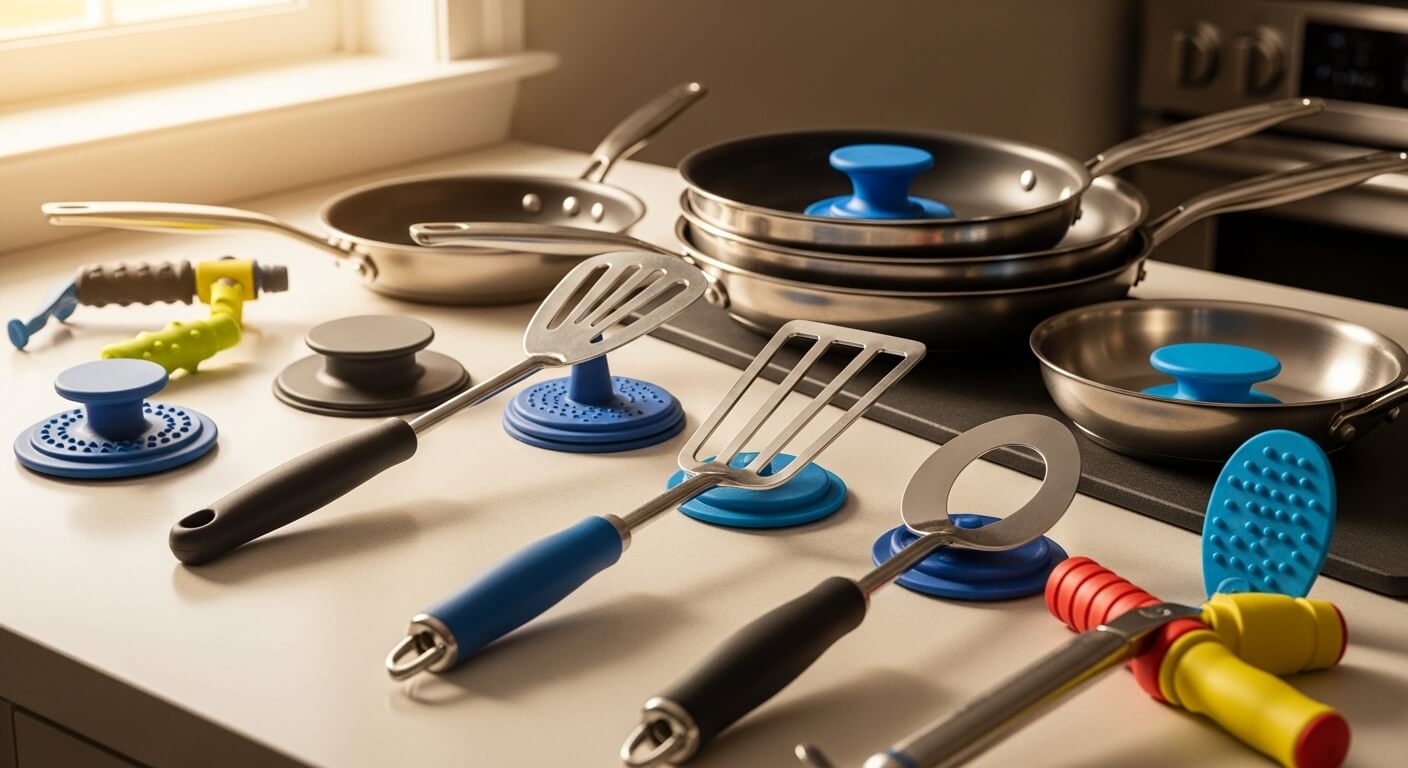
Fat-handled silicone spatulas with a 1.5-inch grip diameter are your friend. Thin metal spatulas with hard plastic handles are not.

Look for:

  • Silicone or wooden spoons (lightweight)
  • Offset handles (less wrist bending)
  • Loop on the end for hanging (no drawer digging)
  • Heat-resistant to 450°F minimum

OXO makes great adaptive utensils. So does Cuisipro. Don’t cheap out here—bad tools create extra work for your joints.

Easy-Grip Knife Options for Prep Work

A sharp knife with a chunky handle beats a dull knife with a sleek handle. Every time.

The best arthritis-friendly knives have:

  • Handles 1.25-1.5 inches thick
  • Textured grip surface
  • Lightweight blade (under 4 ounces)
  • Curved or rocking blade (less repetitive motion)

Santoku knives work better than chef’s knives for stir-fry prep. The scalloped edge prevents vegetables from sticking—you’re not fighting to peel carrots off the blade.

Jar Openers and Bottle Grippers

Opening soy sauce bottles, sesame oil jars, oyster sauce containers—these tasks murder your hands before you even start cooking.

Multi-size jar openers (the rubber ones) require almost no grip strength. Just place, twist, done. Costs $8. Saves your knuckles for actual cooking.

Silicone Pot Holders with Better Grip

Fabric pot holders slip. Silicone grips.

Silicone pot holders mold to whatever you’re holding and won’t slide around when the skillet’s hot and you’re trying to pour. That extra security means you’re not overcompensating with a tighter grip.

Get the ones that cover your whole hand. Not those tiny squares that protect two fingers and nothing else.

Pre-Cooking Organization Strategies

Mise en Place for Reduced Active Cooking Time

French for “everything in its place.” Sounds fancy. Isn’t.

You chop everything before you turn on the stove. Put ingredients in small bowls. Line them up in order of use.

When it’s time to cook, you’re just dumping and stirring. No mid-recipe chopping. No hunting for ingredients. No prolonged standing.

Your total time on your feet drops from 30 minutes to maybe 12. That difference matters.

Batch Prepping Vegetables on Low-Pain Days

Here’s what works: On days when your hands feel decent, chop vegetables for the entire week.

Store them in containers:

  • Bell peppers (last 5 days chopped)
  • Broccoli florets (good for 4 days)
  • Snap peas (3-4 days)
  • Carrots (7+ days, they’re indestructible)

High-pain days? Grab the containers. No chopping required. You still eat well even when your hands are rebelling.

Using Pre-Cut Vegetables Strategically

Frozen stir-fry vegetable mixes are sneaky good. No shame in using them.

Yes, they cost more per pound. But what’s your time worth? What’s avoiding 20 minutes of chopping worth to your joints?

Fresh pre-cut vegetables from the grocery store work too. Those containers of chopped onions, diced peppers, riced cauliflower—they’re not laziness. They’re smart resource management.

You’re cooking despite arthritis. That’s what matters. Not whether you personally wielded the knife.

Ingredient Selection for Healthy Stir-Fry Techniques

Anti-inflammatory ingredients actively help reduce joint pain while tasting good—which beats eating cardboard “health food” any day.

Anti-Inflammatory Proteins for Seniors with Arthritis

Omega-3 Rich Fish Options

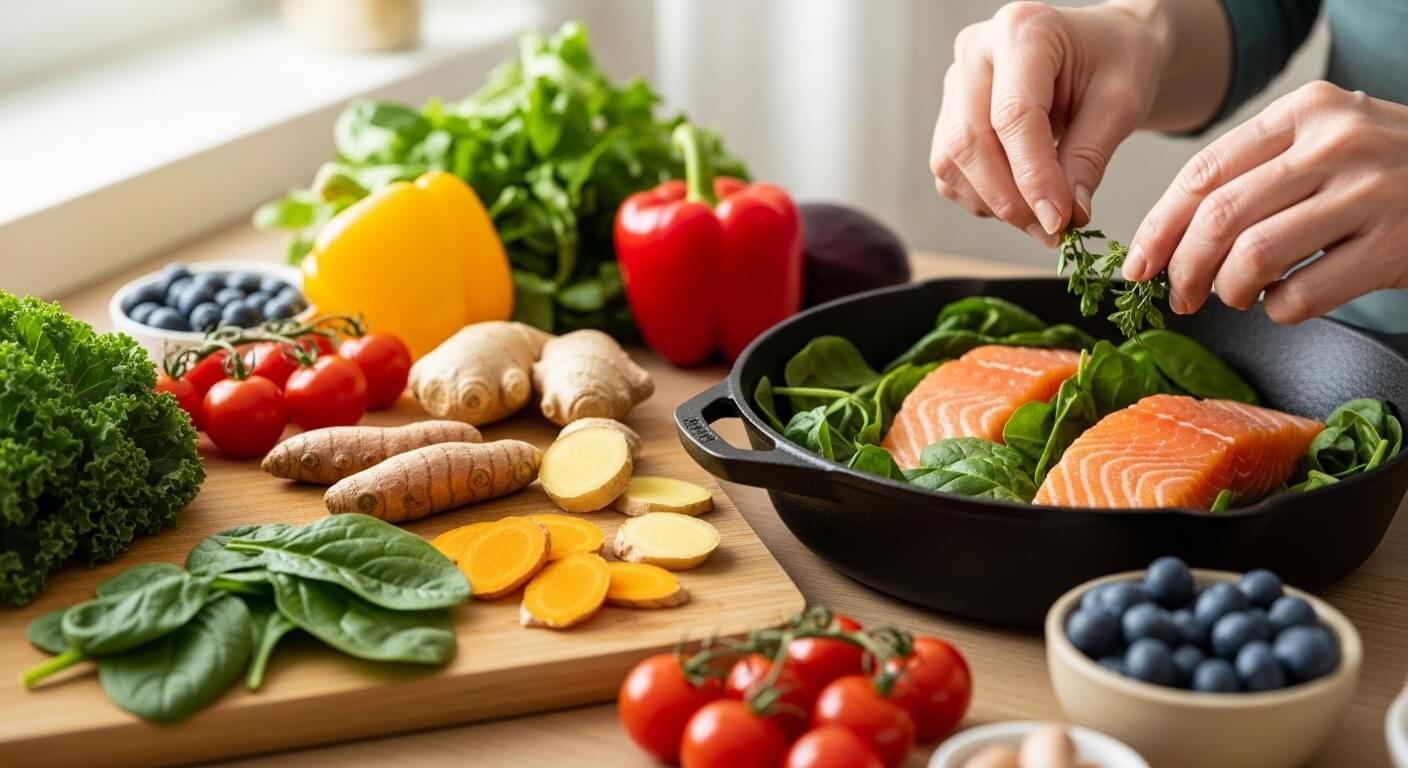
Salmon, mackerel, and sardines contain omega-3 fatty acids that genuinely reduce inflammation. Not a little. Significantly.

Stir-frying fish takes 3-4 minutes. Cut it into 1-inch pieces, sear it first, set it aside, cook your vegetables, add the fish back at the end.

Best fish for stir-fries:

  • Salmon (wild-caught, firm texture)
  • Cod (mild flavor, doesn’t fall apart)
  • Shrimp (cooks in 2 minutes, perfect protein)
  • Scallops (sear beautifully in lightweight skillets)

Canned salmon works too. Don’t be precious about it.

Lean Poultry Preparation Methods

Chicken breast or thigh meat sliced thin cooks fast and stays tender. Thighs have more flavor and don’t dry out—better for arthritic cooks who might overcook slightly.

Cut against the grain into strips. This matters. With the grain and it’s chewy. Against the grain and it’s tender.

Marinate for 15 minutes if you have time. Skip it if you don’t. The world won’t end.

Plant-Based Proteins: Tofu and Tempeh

Extra-firm tofu pressed and cubed holds up to high heat. It absorbs whatever flavors you throw at it—basically a blank canvas.

Press it for 15 minutes between paper towels (or buy pre-pressed). Cut into cubes. Pat dry. Sear it. Gets crispy edges and a creamy center.

Tempeh is nuttier, firmer, and has more protein. Some people hate it. Some people love it. Try both.

Portion Sizes for Senior Nutrition Needs

Aim for 3-4 ounces of protein per serving. That’s about the size of a deck of cards.

More isn’t better for seniors—your body can only process so much protein at once. Extra just taxes your kidneys.

What matters more: consistent protein at every meal. Not massive portions once a day.

Arthritis-Fighting Vegetables to Include

Leafy Greens: Spinach, Bok Choy, and Kale

These vegetables contain vitamins K, C, and E—all linked to reduced joint inflammation and better cartilage health.

Bok choy is the stir-fry champion. Crunchy stems, tender leaves, cooks in 3 minutes. Add it toward the end so it doesn’t turn to mush.

Spinach wilts in 30 seconds. Toss it in last. Literally last. After you turn off the heat.

Kale needs to be chopped fine or it’s too chewy. But the anti-inflammatory compounds in kale? Worth the extra knife work (or just buy it pre-chopped).

Cruciferous Vegetables: Broccoli and Cauliflower

Broccoli and cauliflower contain sulforaphane—a compound that may slow cartilage damage in joints.

Cut broccoli into small florets (bite-sized). They cook evenly and don’t require as much chewing—important if you’ve got jaw arthritis too.

Cauliflower takes longer to cook than broccoli. Start it first, let it get some color, then add faster-cooking vegetables.

Both freeze well. Stock your freezer.

Bell Peppers for Vitamin C

Red, yellow, and orange bell peppers have more vitamin C than oranges. Not a typo.

Vitamin C helps your body produce collagen—the stuff that cushions your joints. More cushioning, less bone-on-bone grinding, less pain.

They add crunch and sweetness to stir-fries without any extra work. Slice them into strips, toss them in, done.

Mushrooms for Anti-Inflammatory Properties

Shiitake, oyster, and cremini mushrooms contain beta-glucans and other compounds that reduce inflammatory markers in your blood.

Plus they’re umami bombs. Make everything taste richer without adding salt or heavy sauces.

Slice them thick (0.5-inch). They shrink when cooked. Too thin and they disappear.

Ginger and Garlic: Natural Pain Relief

Ginger contains gingerol—a compound that works similarly to NSAIDs (like ibuprofen) for reducing inflammation.

Fresh ginger beats powdered. Grate it or mince it fine. Start with a tablespoon per stir-fry. You can always use more.

Garlic has allicin, another anti-inflammatory compound. Mince it. Don’t press it—you lose too much to the press.

Cook both in oil for 30 seconds before adding anything else. Blooms the flavor.

Healthy Oils for Stir-Frying with Arthritis Benefits

Avocado Oil: High Smoke Point and Omega-3s

Avocado oil can handle 520°F before smoking. That’s higher than you’ll ever need for stir-frying.

It’s also loaded with oleic acid (an omega-9 fatty acid) and vitamin E—both help reduce joint inflammation.

Neutral flavor. Won’t interfere with your seasonings.

Extra Virgin Olive Oil Considerations

Olive oil works for lower-heat stir-fries (medium heat, not screaming hot).

The polyphenols in extra virgin olive oil are powerful anti-inflammatories. But heat destroys them. So you’re balancing flavor and health benefits against cooking requirements.

Use it for gentler stir-fries. Save the high-heat cooking for avocado oil.

Sesame Oil for Flavor and Health

Toasted sesame oil isn’t a cooking oil—it’s a finishing oil. Too strong for cooking. Burns fast.

But drizzle a teaspoon over your finished stir-fry? Adds nutty, rich flavor that makes everything taste restaurant-quality.

Regular (light) sesame oil works for cooking. Higher smoke point, milder flavor.

How Much Oil to Use in Lightweight Skillets

One to two tablespoons. That’s it.

More oil means more weight in the pan (remember, we’re keeping things light). It also means greasier food that’ll upset your stomach.

Lightweight nonstick skillets need even less—sometimes just a teaspoon.

Measure it. Don’t pour straight from the bottle. Easy to accidentally triple your intended amount.

Whole Grains and Complex Carbohydrates

Brown Rice Preparation Tips

Cook brown rice separately. Don’t try to make “fried rice” in your lightweight skillet—it needs day-old rice and really high heat, which might warp thin pans.

Serve your stir-fry over fresh brown rice instead. Same meal, less complexity.

Instant brown rice (the parboiled kind) cooks in 10 minutes. No one can tell the difference once it’s under a stir-fry.

Quinoa as a Protein-Rich Base

Quinoa has all nine essential amino acids. For seniors worried about protein intake, it’s clutch.

Fluffy texture soaks up stir-fry sauces better than rice. Cooks in 15 minutes. Rinse it first or it tastes bitter.

Red and black quinoa hold their shape better than white. Personal preference thing.

Rice Noodles for Easy Digestion

Rice noodles just need soaking in hot water. No boiling. No draining heavy pots.

Soak them for 15 minutes while you cook your stir-fry. Toss them in at the end. They absorb the sauce, bulk up the meal, and they’re gentler on sensitive stomachs than wheat noodles.

Pad Thai-style (thin) or pho-style (wide)—both work.

Stir-Fry Preparation Techniques That Protect Arthritic Joints

Smart prep work prevents the repetitive motions that inflame your knuckles, wrists, and thumbs before you even start cooking.

Cutting and Chopping Modifications

Proper Knife Grip to Reduce Hand Strain

Pinch grip, not fist grip.

Your thumb and forefinger pinch the blade just above the handle. Your other three fingers wrap the handle loosely. The knife does the work—not your grip strength.

Fist grip (wrapping all five fingers around the handle) requires way more force and strains your whole hand.

Practice the pinch grip with a butter knife first if it feels weird.

Using a Rocking Motion Instead of Repetitive Chopping

Rocking motion: keep the knife tip on the cutting board, lift the handle up and down. The blade rocks through the food.

Repetitive chopping: lifting the entire knife off the board for every cut. Murder on your wrists.

Rocking reduces the number of times you lift the knife by about 70%. Your wrists stop screaming.

Vegetable Size for Faster Cooking

Bigger pieces = longer cooking time = more stirring = more hand strain.

Cut everything roughly the same size (about 1-inch pieces). They cook at the same rate. You’re not fishing out some pieces while others are still raw.

Uniform size also means less time standing at the stove adjusting heat and babysitting.

Alternative Cutting Tools for Severe Arthritis

Food processors work if your hands can’t handle knife work. Especially for onions, garlic, and ginger—the stuff that needs fine mincing.

Vegetable choppers (the kind you press down on) let you use your palm instead of your fingers. Less strain on individual joints.

Mandoline slicers are dangerous (google “mandoline injuries” if you’re curious). Use the guard. Every time.

Marinating Strategies for Tender Results

Quick 15-Minute Marinades

Thin-sliced meat doesn’t need hours to marinate. Fifteen minutes in acid (citrus juice, rice vinegar) plus oil plus seasonings does the job.

The acid breaks down proteins on the surface. Makes meat tender without long waiting times.

Basic marinade formula:

  • 2 tablespoons acid (lime juice, rice vinegar, etc.)
  • 1 tablespoon oil
  • 1 tablespoon soy sauce or tamari
  • 1 teaspoon minced ginger or garlic

Mix it in a bowl. Add meat. Set a timer. Done.

Tenderizing Proteins to Reduce Cooking Time

Baking soda marinade (weird but works): 1 teaspoon baking soda mixed with 2 tablespoons water per pound of meat.

Marinate for 15 minutes, rinse thoroughly, pat dry. The alkaline environment tenderizes connective tissue.

Your meat cooks faster and stays juicier. Faster cooking = less time holding that skillet.

Anti-Inflammatory Marinade Ingredients

Turmeric, ginger, garlic, and olive oil all fight inflammation. Why not marinate your protein in the stuff that helps your joints?

Example anti-inflammatory marinade:

  • 1 tablespoon olive oil
  • 1 teaspoon turmeric powder
  • 1 tablespoon grated ginger
  • 2 cloves minced garlic
  • Juice of half a lemon
  • Pinch of black pepper (helps turmeric absorption)

Tastes good. Helps your arthritis. Win-win.

Strategic Ingredient Batching

Grouping Vegetables by Cooking Time

Don’t throw everything in at once. Recipe disaster.

Cooking time groups:

  • Hard vegetables (5-7 minutes): carrots, cauliflower, broccoli stems
  • Medium vegetables (3-4 minutes): broccoli florets, bell peppers, snap peas
  • Soft vegetables (1-2 minutes): bok choy, mushrooms, bean sprouts
  • Delicate greens (30 seconds): spinach, herbs

Start with hard, end with delicate. Each group gets added when the previous group is almost done.

Protein Preparation Sequence

Protein first. Always.

Cook your chicken/fish/tofu completely, remove it from the skillet, then cook vegetables. Add the protein back at the end just to heat through.

Why? Protein releases moisture. If you cook vegetables first, then add protein, everything steams instead of searing. Soggy stir-fry isn’t worth eating.

Aromatics: When to Add Garlic and Ginger

Hot oil first (30 seconds). Then aromatics. Then count to 30. Then add your next ingredient.

Thirty seconds is the sweet spot. Less and aromatics are raw-tasting. More and they burn, turning bitter.

Burned garlic ruins the whole dish. Not worth rushing.

Mastering Lightweight Skillet Stir-Fry Cooking Methods

The actual cooking process for stir-fries using lightweight skillets takes under 10 minutes if you prep correctly and understand heat management.

Proper Heating Techniques for Lightweight Cookware

Preheating Your Skillet Correctly

Medium-high heat for 2-3 minutes before adding oil. Empty pan.

How to test: hover your hand 3 inches above the surface. Feel warmth radiating? It’s ready.

Or the water droplet test: flick a few drops of water into the dry skillet. They should sizzle and evaporate in 2-3 seconds.

Medium-High Heat Settings for Arthritis-Safe Cooking

“Medium-high” on most stoves is about 6-7 out of 10 on the dial.

You want hot enough to sear without turning your lightweight skillet into a smoke alarm trigger. Thin cookware heats fast—screaming-hot heat isn’t necessary and risks warping.

If smoke appears before you add food, it’s too hot. Turn it down.

Avoiding Warping in Lightweight Materials

Never crank a lightweight skillet to maximum heat. The thin metal expands unevenly and warps. Then it wobbles on your burner forever.

Don’t move a hot skillet to a cold surface (or vice versa). Thermal shock warps metal.

Let skillets heat gradually. Let them cool gradually. They’ll last years instead of months.

The Stir-Fry Cooking Sequence for Seniors

Adding Oil: The Right Temperature Test

Add oil when the skillet is hot. The oil should shimmer and flow easily—almost like water—within 15 seconds.

If it smokes immediately, your pan’s too hot. If it just sits there looking thick, your pan’s too cold.

Swirl the oil to coat the bottom evenly. Lightweight pans heat unevenly sometimes. Swirling the oil helps distribute heat.

Aromatics First: Garlic and Ginger Timing

Minced garlic and ginger hit the hot oil first. Stir constantly for 30 seconds.

They’ll sizzle and smell incredible. Don’t walk away. Thirty seconds is fast.

Protein Cooking: Achieving Proper Sear Without Strain

Add your protein. Spread it out in a single layer. Don’t touch it for 90 seconds.

Resist the urge to stir. Let it sear. Get some color on it. Then flip/stir once or twice until cooked through (another 2-3 minutes depending on protein type).

Remove protein to a plate. Don’t wash the skillet—those browned bits add flavor.

Vegetable Addition Order for Optimal Texture

Hard vegetables go in first. Give them 3-4 minutes with occasional stirring.

Add medium vegetables. Cook for 2-3 minutes.

Add soft vegetables and the protein back in. Toss everything together for 1 minute.

Total active cooking time: under 8 minutes.

Sauce Integration at the Right Moment

Push everything to the sides of the skillet, creating a well in the center. Pour sauce into the well. Let it bubble for 10 seconds.

Then toss everything together. The sauce coats evenly instead of pooling at the bottom.

If you add sauce too early (when the skillet’s crowded with vegetables), it steams everything. Soggy city.

Stirring and Tossing with Minimal Joint Stress

Using Silicone Spatulas for Easier Movement

Silicone spatulas slide under food easily. Metal spatulas scrape and catch.

The flexibility means less force required to get under stubborn pieces. Your wrist isn’t fighting the utensil.

Long handles give you leverage. Leverage means less grip strength needed.

Push-and-Fold Technique Instead of Constant Stirring

Push from the edge to the center. Fold the center back to the edge. Repeat every 30-45 seconds.

You’re not frantically stirring every second like TV chefs. That’s exhausting and unnecessary for home cooking.

Gentle, occasional movement prevents burning while minimizing repetitive motion.

Two-Handed Utensil Use for Better Control

No law says you have to stir one-handed. Use two utensils—one in each hand.

Scoop and push simultaneously. Faster, easier, less strain on either hand.

Or hold the skillet’s helper handle with one hand while stirring with the other. Balance the load.

Reducing Flipping Frequency

Home stoves don’t generate restaurant-level heat. You don’t need to flip constantly.

Let food sit for 60-90 seconds between movements. It’ll develop color and flavor. Constant motion just steams everything.

Less flipping = less wrist strain = less pain the next day.

Managing Heat and Steam Safely

Preventing Oil Splatter Injuries

Pat proteins dry before adding to hot oil. Water + hot oil = splatter explosion.

Start protein skin-side down (if applicable) so you’re not leaning over rising steam.

Tilt the skillet away from you when adding ingredients. Splatter goes away from your face and arms.

Using Splatter Screens with Lightweight Skillets

Splatter screens are mesh lids that let steam escape while blocking oil droplets.

They’re light (a few ounces). They don’t require pressing down. Just set it on top.

Your hands stay splatter-free. Your stovetop stays cleaner. Worth the $10.

Steam Venting Techniques

Tilt the lid away from you when removing it. Steam rises up and away instead of into your face.

Stand slightly to the side of the skillet when adding liquids to hot oil. The initial steam burst goes straight up—don’t put your face there.

When to Reduce Heat to Protect Joints

If you’re struggling to manage the skillet—it feels too hot, food’s browning too fast, you’re tensing up—reduce the heat.

Pride doesn’t cook dinner. Getting through the meal without injuring yourself does.

Medium heat works fine for stir-fries. It’ll take 2 extra minutes. Your hands will thank you.

Healthy Stir-Fry Sauce Recipes for Arthritis Management

The right sauce adds anti-inflammatory ingredients while enhancing flavor without requiring complicated preparation that strains your hands.

Low-Sodium Sauce Options

Reducing Salt While Maintaining Flavor

Most commercial stir-fry sauces are sodium bombs—900+ mg per tablespoon.

Make your own. Control the salt. Boost the flavor with aromatics and acid instead.

Basic low-sodium stir-fry sauce:

  • 3 tablespoons low-sodium soy sauce or coconut aminos
  • 2 tablespoons rice vinegar
  • 1 tablespoon honey or maple syrup
  • 1 teaspoon sesame oil
  • 1 teaspoon grated ginger
  • 2 cloves minced garlic

Whisk it together. Done. Under 400mg sodium per serving.

Using Citrus for Brightness

Lime juice, lemon juice, or orange juice cut through rich flavors without adding salt.

Citrus also contains vitamin C and antioxidants. More nutrients, better taste, no sodium.

Add citrus juice at the end of cooking. Heat destroys the bright, fresh flavor.

Homemade Stir-Fry Sauce Base Recipe

This makes enough for 4-5 stir-fries. Refrigerates for 2 weeks.

  • 0.5 cup low-sodium soy sauce
  • 0.25 cup rice vinegar
  • 0.25 cup water
  • 2 tablespoons honey
  • 1 tablespoon sesame oil
  • 4 cloves garlic, minced
  • 2 tablespoons fresh ginger, grated

Mix in a jar. Shake before each use. Use 3-4 tablespoons per stir-fry.

Anti-Inflammatory Sauce Ingredients

Turmeric-Infused Stir-Fry Sauces

Turmeric contains curcumin—one of the most-studied anti-inflammatory compounds.

Add 1 teaspoon turmeric powder to any stir-fry sauce. It’ll turn the sauce golden-yellow (appetizing, actually).

Include a pinch of black pepper. Piperine in black pepper increases curcumin absorption by 2000%. Not a typo.

Ginger-Based Sauce Variations

Fresh ginger works better than dried for anti-inflammatory benefits.

Ginger-forward sauce:

  • 3 tablespoons grated fresh ginger (about a 2-inch piece)
  • 2 tablespoons low-sodium soy sauce
  • 1 tablespoon rice vinegar
  • 1 tablespoon honey
  • 1 teaspoon sesame oil
  • Pinch of red pepper flakes

Strong ginger flavor. Warming. Helps with inflammation and nausea.

Adding Apple Cider Vinegar Benefits

Apple cider vinegar may help reduce inflammatory markers (some studies show promise, others are inconclusive—try it and see).

Replace rice vinegar with apple cider vinegar in any sauce recipe. Same quantity.

Tangy, slightly fruity flavor. Different but good.

Thickening Agents That Add Nutrition

Cornstarch Slurry Technique

Mix 1 tablespoon cornstarch with 2 tablespoons cold water. Stir until smooth.

Add to your stir-fry in the last 30 seconds of cooking. The sauce will thicken and coat everything evenly.

Don’t add dry cornstarch directly to the skillet. Clumps everywhere.

Arrowroot Powder as an Alternative

Arrowroot thickens at a lower temperature than cornstarch. Better for seniors who cook at medium heat instead of high.

Use the same ratio: 1 tablespoon arrowroot to 2 tablespoons water.

It also doesn’t get chalky if you reheat leftovers (cornstarch sometimes does).

Proper Consistency for Easy Coating

Sauce should coat the back of a spoon but still drip off. Not watery. Not gloopy.

Too thin? Add more starch slurry (1 teaspoon at a time). Too thick? Add water (1 tablespoon at a time).

You want enough sauce to coat your ingredients without pooling at the bottom of the plate.

Time-Saving Stir-Fry Methods for Limited Hand Mobility

Pre-planning reduces active cooking time by 60-70%, making stir-fries doable even on high-pain days.

Batch Cooking Strategies

Cooking Multiple Portions in Lightweight Skillets

Cook 4 servings at once in a 12-inch skillet. Eat one now, refrigerate three for later.

Reheating takes 3 minutes in a microwave. No chopping, no stirring, minimal hand use.

One cooking session feeds you for 3-4 days. The math works.

Safe Storage for Meal Prep

Glass containers beat plastic (they don’t absorb smells or stain).

Let stir-fries cool for 30 minutes before refrigerating. Hot food in the fridge raises the internal temperature—bacterial growth risk.

Label containers with dates. Stir-fries last 4 days refrigerated, 3 months frozen.

Reheating Without Losing Nutrition

Microwave for 2-3 minutes at 70% power. Stir halfway through.

Or reheat in a skillet with 1 tablespoon water. Cover. Steam for 3-4 minutes.

Don’t overcook during reheating. You’ll destroy the nutrients you worked to preserve.

Using Pre-Prepped Ingredients Wisely

Quality Frozen Vegetable Options

Frozen vegetables are picked and frozen at peak ripeness. Nutritionally identical (sometimes superior) to fresh.

Best frozen options for stir-fries:

  • Stir-fry vegetable mixes (check for low-sodium versions)
  • Broccoli florets
  • Snap peas
  • Bell pepper strips
  • Cauliflower

Throw them in frozen. They’ll release some water—just cook an extra minute to evaporate it.

Pre-Marinated Protein Time-Savers

Grocery stores sell pre-marinated chicken, beef, and pork. They cost more but save 15+ minutes of prep.

Read labels. Some are sodium nightmares (1200+ mg per serving).

Or marinate a whole package of chicken yourself, portion it, freeze individual portions. Homemade convenience food.

Store-Bought Sauce Enhancements

Even quality store-bought sauces benefit from fresh additions.

Add to bottled stir-fry sauce:

  • Fresh grated ginger (1 tablespoon)
  • Minced garlic (2 cloves)
  • Splash of rice vinegar (brightens the flavor)
  • Drizzle of sesame oil (makes it taste homemade)

Two-minute upgrade. Restaurant-quality results.

One-Skillet Complete Meals

Adding Grains Directly to the Stir-Fry

Leftover rice or cooked quinoa can go straight into the skillet with your vegetables and protein.

Heat them together for the last 2-3 minutes. Everything gets coated with sauce. One less dish to wash.

Fresh grains don’t work—they need separate cooking. Only use pre-cooked.

Timing for All-in-One Cooking

Cook protein. Remove it. Cook vegetables. Add cooked grains and protein back in. Add sauce. Toss for 1-2 minutes. Done.

Total time in the skillet: 10 minutes max.

One pan. One meal. Minimal cleanup.

Moisture Management in Complete Meals

Grains absorb moisture. If your stir-fry looks dry after adding rice, splash in 2-3 tablespoons of water or broth.

Let it steam for 30 seconds. The grain absorbs the liquid and everything stays moist.

Too wet? Cook uncovered for an extra minute to evaporate excess moisture.

Safety Considerations for Seniors Using Lightweight Skillets

Lightweight skillets reduce strain but require different handling techniques to prevent burns, spills, and kitchen accidents.

Preventing Burns and Injuries

Safe Transfer from Stove to Counter

Always use both hands. Main handle in your dominant hand, helper handle in the other.

Move slowly. Don’t rush. A spilled hot skillet creates second-degree burns in seconds.

Clear a path before you start moving. Nothing in the way. Nothing to trip over.

Using Trivets and Heat-Resistant Surfaces

Never set a hot skillet on countertops, tables, or cutting boards. You’ll burn the surface or start a fire.

Trivets or thick pot holders under every hot skillet. No exceptions.

Keep trivets next to the stove. Not across the kitchen. Right there.

Recognizing Overheating Signs

Smoke rising from the skillet = too hot. Turn down the heat immediately.

Food blackening in under 60 seconds = too hot.

The skillet handle getting uncomfortably hot to touch (even through a pot holder) = way too hot.

Proper Skillet Handling with Arthritis

Two-Handed Carrying Techniques

Grip the main handle with your dominant hand. Support the bottom (using the helper handle or a pot holder) with your other hand.

Lightweight skillets feel manageable one-handed until you drop them. Then you’ve got hot oil all over your feet.

Always two hands. Even if it feels silly.

Supporting the Skillet Base

The base is wider and distributes weight better than gripping just the handle.

Use a folded kitchen towel or silicone pot holder to support the bottom while you pour or serve.

Takes pressure off your wrist. Prevents accidental tilting.

When to Ask for Assistance

If your pain level is 7+ out of 10, don’t cook with hot oil. Order takeout.

If your hands are shaking, ask someone else to handle the hot skillet transfer.

No meal is worth an ER visit for severe burns.

Cleaning and Maintenance for Joint Protection

Letting Skillets Cool Properly

Hot skillets into cold water = warping and potential steam burns.

Let them cool for 15-20 minutes before washing. Just leave them on the trivet.

You’re not being lazy. You’re being smart.

Gentle Cleaning Methods for Arthritic Hands

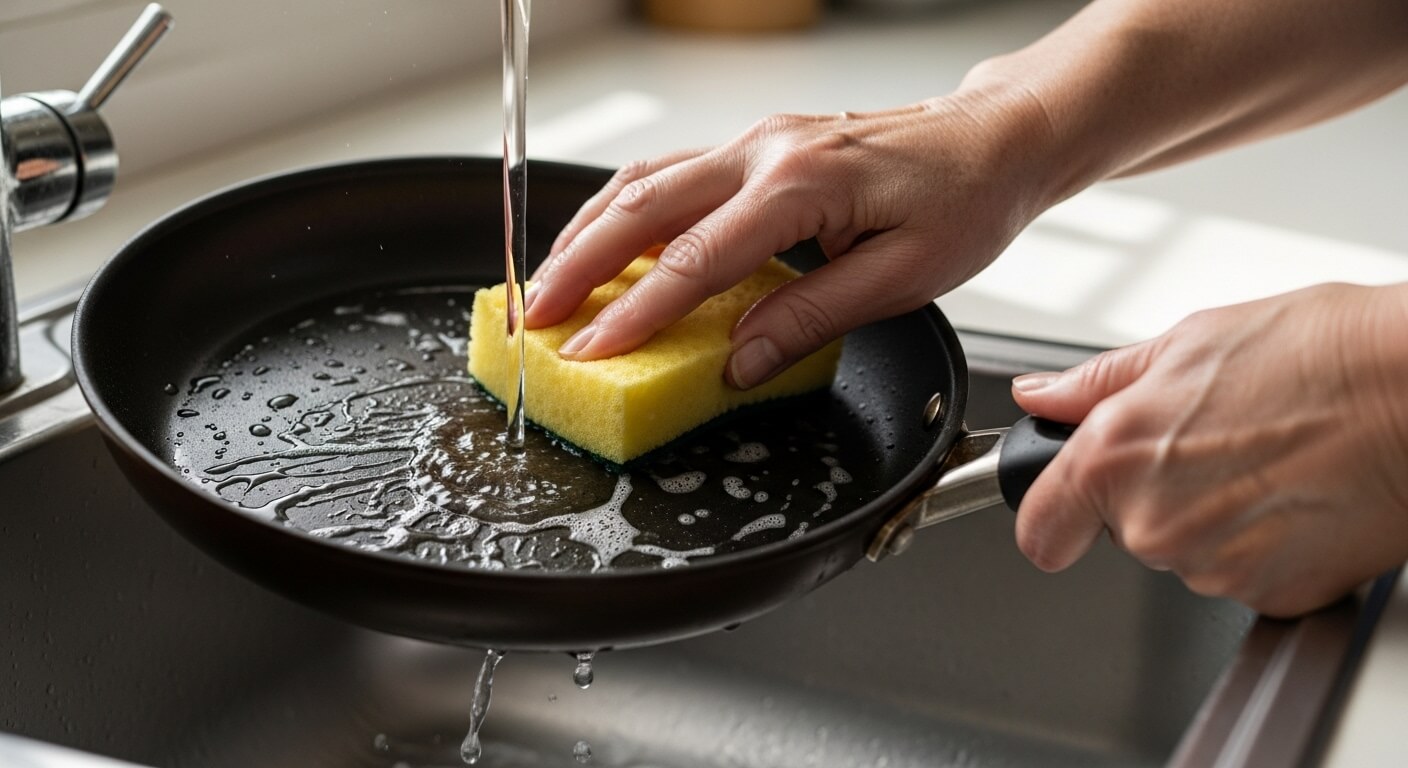
Soak the skillet for 10 minutes in warm soapy water. Most food loosens without scrubbing.

Soft sponges beat scrub brushes. Less grip strength required.

For stuck-on food: make a paste with baking soda and water. Spread it on. Wait 10 minutes. Wipe off.

Using Long-Handled Brushes

Dish brushes with 10-inch handles let you clean without bending your wrists at painful angles.

Some have built-in soap dispensers. Press a button, soap comes out. No squeezing bottles.

Your knuckles stay relaxed. Your wrists stay neutral.

Proper Drying and Storage

Air-dry on a dish rack. No towel-drying required.

Store lightweight skillets hanging from a pot rack (if possible) or stack them with felt dividers so they don’t scratch.

Heavy lifting to get them in and out of low cabinets defeats the purpose of lightweight cookware.

Adapting Traditional Stir-Fry Recipes for Arthritis Needs

Classic stir-fry recipes adapt easily to arthritis-friendly techniques without sacrificing flavor or nutrition.

Modifying Classic Asian Stir-Fries

Simplified Fried Rice in Lightweight Skillets

Traditional fried rice requires wrist-flipping the skillet to toss rice. Skip it.

Use the push-and-fold method instead. Same result, zero acrobatics.

Easy fried rice:

  • 3 cups day-old rice
  • 2 eggs, scrambled
  • 1 cup frozen peas and carrots
  • 3 green onions, chopped
  • 2 tablespoons low-sodium soy sauce
  • 1 teaspoon sesame oil

Scramble eggs first, remove them. Add vegetables (frozen is fine). Cook 3 minutes. Add rice and soy sauce. Push and fold to combine. Add eggs back in. Add sesame oil. Done in 8 minutes.

Easy Vegetable Lo Mein

Fresh noodles are expensive and require boiling a huge pot of water (which you then have to lift and drain—joint nightmare).

Use rice noodles instead. Soak them in hot tap water for 15 minutes. Drain in a small colander. Add to stir-fry at the end.

Simple lo mein sauce:

  • 3 tablespoons low-sodium soy sauce
  • 1 tablespoon hoisin sauce
  • 1 tablespoon rice vinegar
  • 1 teaspoon sesame oil

Toss with soaked noodles and vegetables. Restaurant taste, minimal hand strain.

Protein-Rich Chicken and Broccoli

Cut chicken into bite-sized pieces (not strips). Cubes cook faster.

Use frozen broccoli florets. Same nutrition, zero chopping.

Brown the chicken, remove it. Add broccoli with 2 tablespoons water, cover, steam for 4 minutes. Remove cover, let water evaporate. Add chicken back. Add sauce. Done.

Total hand-work: cutting chicken and opening a bag of frozen broccoli.

Creating Mediterranean-Style Stir-Fries

Greek-Inspired Vegetable Medleys

Mediterranean vegetables work great in stir-fries—you’re just using a skillet instead of roasting for an hour.

Greek vegetable combination:

  • Zucchini, sliced
  • Cherry tomatoes
  • Red onion
  • Bell peppers
  • Kalamata olives
  • Feta cheese (added at the end)

Season with oregano, lemon juice, and olive oil. Doesn’t need soy sauce or Asian flavors.

Serve over quinoa or farro.

Italian Herb Combinations

Basil, oregano, and thyme work in stir-fries just like Asian herbs do.

Italian stir-fry seasoning:

  • 2 teaspoons dried oregano
  • 1 teaspoon dried basil
  • 0.5 teaspoon red pepper flakes
  • 3 cloves garlic, minced

Use with chicken sausage, bell peppers, and zucchini. Add a splash of white wine at the end (optional—it cooks off).

Spanish-Style Seafood Stir-Fries

Shrimp, chorizo, and peppers—classic Spanish combination that happens to stir-fry beautifully.

Cook chorizo first (it renders fat—you won’t need added oil). Remove it. Cook shrimp in the chorizo fat. Remove shrimp. Cook peppers and onions. Add everything back. Season with smoked paprika and parsley.

Tastes like paella without the specialized equipment or long cooking time.

American Comfort Food Stir-Fry Adaptations

Southwestern Fajita Vegetables

Fajitas are basically stir-fries marketed differently.

Fajita stir-fry:

  • Sliced chicken or steak
  • Bell peppers (multiple colors)
  • Onions
  • Season with cumin, chili powder, garlic powder

Serve over rice or in tortillas (if your hands can handle wrapping them—otherwise, bowl format).

Add salsa, avocado, and a squeeze of lime.

Cajun Shrimp Stir-Fry

Cajun seasoning on shrimp + bell peppers + celery + onion = dinner in 10 minutes.

Cajun spice blend (if making your own):

  • 1 teaspoon paprika
  • 0.5 teaspoon garlic powder
  • 0.5 teaspoon onion powder
  • 0.25 teaspoon cayenne
  • 0.25 teaspoon black pepper

Or buy pre-made Cajun seasoning. No judgment.

Serve over white rice or grits.

Teriyaki Chicken Variations

Simple teriyaki sauce:

  • 0.25 cup low-sodium soy sauce
  • 2 tablespoons honey
  • 1 tablespoon rice vinegar
  • 1 teaspoon grated ginger
  • 1 clove garlic, minced

Cook chicken. Remove it. Cook vegetables (broccoli, snap peas, carrots). Add chicken back. Pour sauce over everything. Thicken with cornstarch slurry if desired.

Sweet, savory, familiar flavors.

Nutritional Timing and Portion Control for Seniors

When you eat stir-fries and how much you consume affects both nutrient absorption and arthritis inflammation levels.

When to Eat Stir-Fry for Maximum Benefits

Anti-Inflammatory Effects of Meal Timing

Eating anti-inflammatory foods at lunch might work better than dinner for reducing arthritis pain—your body’s inflammatory response peaks in the evening.

Some studies suggest front-loading anti-inflammatory nutrients earlier in the day leads to better outcomes.

Try it both ways. See what your body prefers.

Blood Sugar Management Through Stir-Fries

Protein and vegetables before carbs (rice, noodles) slows glucose absorption. Prevents blood sugar spikes and crashes.

Eat your protein and vegetables first, then the grain portion. Or mix them together—the fiber from vegetables still slows carb absorption.

Stable blood sugar = more stable energy = less inflammation.

Evening Meal Considerations

Late dinners (after 8 PM) can interfere with sleep quality. Poor sleep worsens arthritis pain.

Aim to eat stir-fry by 7 PM if possible. Gives you time to digest before bed.

If you must eat late, skip the rice/noodles. Just protein and vegetables. Lighter on your stomach.

Appropriate Serving Sizes for Senior Nutrition

Protein Portions for Muscle Maintenance

Seniors lose muscle mass faster than younger adults. Protein helps maintain muscle—and muscle supports your joints.

Aim for 25-30 grams of protein per meal. That’s roughly:

  • 4 ounces chicken breast
  • 5 ounces fish
  • 6 ounces tofu

Don’t skimp on protein to “save room” for vegetables. You need both.

Vegetable Volume for Fiber Intake

Two cups of cooked vegetables per meal. Sounds like a lot. It’s not once it’s on your plate.

Fiber keeps you full, regulates digestion, and feeds beneficial gut bacteria (which may influence inflammation).

More vegetables = less room for excess carbs or unhealthy fats.

Grain Portions for Energy Without Excess

Half cup to one cup cooked grains per meal for most seniors.

More than that and you’re likely eating excess calories you don’t need. Less than that and you might not have enough energy.

Your fist is roughly one cup. Use that as a visual guide.

Balancing Macronutrients in Healthy Stir-Fries

Protein-to-Vegetable Ratios

Aim for 1:2 protein to vegetables by volume. One part protein, two parts vegetables.

So if you have 1 cup of chicken, you should have 2 cups of vegetables.

This ratio gives you adequate protein without overwhelming your plate with meat.

Healthy Fat Integration

One to two tablespoons of healthy fat per stir-fry (from cooking oil, nuts, avocado, etc.).

Fat helps absorb fat-soluble vitamins (A, D, E, K) and keeps you satisfied longer.

But too much fat and you’re adding unnecessary calories that’ll sit heavy in your stomach.

Complex Carbohydrate Amounts

About a quarter of your plate should be complex carbs (brown rice, quinoa, etc.).

Not half. Not a third. A quarter.

Seniors need fewer total calories than younger adults. Excess carbs just convert to fat and potentially increase inflammation.

Building Confidence with Lightweight Skillet Techniques

Starting simple and gradually increasing complexity prevents frustration and builds cooking skills that accommodate your arthritis limitations.

Starting with Simple Recipes

Three-Ingredient Stir-Fries for Beginners

You don’t need 12 ingredients to make a good stir-fry.

Example: Chicken, broccoli, and garlic

  • Chicken (protein)
  • Frozen broccoli (vegetable)
  • Garlic (flavor)
  • Plus oil, soy sauce, and done

Three main ingredients. Still nutritious. Still delicious.

Master this before attempting complex multi-vegetable recipes.

Gradually Increasing Complexity

Week 1: Three-ingredient stir-fries
Week 2: Add one more vegetable
Week 3: Try making your own sauce
Week 4: Experiment with different proteins

Incremental progress. Less overwhelming. Your hands adapt to the motions over time.

Tracking Successful Techniques

Keep a notebook (or note on your phone) of what worked:

  • “Frozen vegetables cooked perfectly—no chopping needed”
  • “Medium heat prevented burning better than medium-high”
  • “Push-and-fold technique was easier on my wrists”

Refer back to it when you’re having a rough day. You have proven methods that work.

Recognizing and Celebrating Progress

Reduced Pain During Cooking

If you used to finish cooking with your hands throbbing and now they’re just mildly achy—that’s progress.

If you can cook two meals in one week instead of struggling through one—that’s progress.

Small improvements matter. Don’t dismiss them.

Increased Meal Variety

Eating the same thing daily is boring. If lightweight skillet techniques let you make 3-4 different stir-fries per week, you’ve dramatically improved your quality of life.

Variety in diet also means variety in nutrients. Better for overall health.

Greater Kitchen Independence

Relying on others to cook or eating prepared foods because cooking hurts too much—that’s frustrating.

If you’re able to prepare your own meals despite arthritis, you’ve maintained independence. That matters psychologically and nutritionally.

Troubleshooting Common Challenges

Preventing Vegetables from Getting Soggy

Soggy vegetables = too much moisture in the pan.

Solutions:

  • Pat vegetables dry if using fresh
  • Don’t crowd the pan (cook in batches if needed)
  • Use high enough heat that moisture evaporates quickly
  • Don’t cover the skillet unless specifically steaming something

Avoiding Protein Sticking

Sticking happens when:

  • The pan isn’t hot enough when you add protein
  • You move the protein too soon (let it sear)
  • There’s not enough oil

Add oil. Wait for it to shimmer. Add protein. Don’t touch it for 90 seconds. It’ll release naturally once it’s seared.

Managing Sauce Thickness Issues

Too thin? Cornstarch slurry. One teaspoon at a time.

Too thick? Water or broth. One tablespoon at a time.

Make adjustments while the skillet’s on the heat. Sauces thicken as they cool—so slightly too-thin is better than too-thick.

Dealing with Uneven Cooking

Uneven cooking means inconsistent heat or inconsistent ingredient size.

Solutions:

  • Preheat your skillet thoroughly
  • Cut all ingredients to similar sizes
  • Stir more frequently (but gently)
  • Reduce heat if hot spots are burning food

Sometimes it’s the burner. Sometimes it’s the pan. Sometimes it’s the technique. Experiment.

Seasonal Stir-Fry Variations Using Lightweight Skillets

Seasonal ingredients provide variety, keep costs down, and align with your body’s changing nutritional needs throughout the year.

Spring and Summer Light Stir-Fries

Asparagus and Snap Pea Combinations

Spring vegetables are tender and cook fast—perfect for arthritic hands that want minimal cooking time.

Asparagus needs 3-4 minutes. Snap peas need 2 minutes. Super quick.

Pair with:

  • Shrimp (cooks in 3 minutes)
  • Light sesame-ginger sauce
  • Serve over rice noodles

Bright, fresh flavors. Doesn’t weigh you down in warm weather.

Fresh Herb Integration

Basil, cilantro, mint, and parsley add huge flavor without any cooking.

Chop them (or buy pre-chopped). Toss them in after you turn off the heat.

Fresh herbs wilt from residual heat but keep their flavor. Way better than dried herbs for summer stir-fries.

Lighter Proteins for Warm Weather

Heavy beef stir-fries in July? Pass.

Summer proteins:

  • Shrimp
  • Scallops
  • White fish (cod, tilapia)
  • Chicken breast
  • Tofu

All cook quickly, don’t heat up your kitchen excessively, and feel lighter in your stomach.

Fall and Winter Hearty Options

Root Vegetable Stir-Fries

Root vegetables (sweet potatoes, carrots, parsnips) take longer to cook but they’re cheap, store well, and provide sustained energy in cold weather.

Cut them small (0.5-inch pieces). They’ll cook in 7-8 minutes.

Pair with:

  • Heartier proteins (beef, pork)
  • Warming spices (cinnamon, cumin, coriander)
  • Serve over farro or wild rice

Comfort food that happens to be healthy.

Warming Spice Additions

Ginger, garlic, cinnamon, star anise, and five-spice powder make stir-fries feel more substantial without adding calories.

They also improve circulation—helpful when arthritis pain worsens in cold weather.

Start with small amounts (0.25 teaspoon cinnamon, for example). You can always add more.

Heartier Protein Choices

Beef and pork feel more satisfying in winter. Your body craves them.

Slice them thin. They’ll cook in 3-4 minutes.

Marinate in soy sauce and ginger to tenderize and add flavor.

Adapting to Seasonal Arthritis Flare-Ups

Simplifying Recipes During High-Pain Periods

When your arthritis is flaring badly, this isn’t the time to attempt complicated recipes.

Stick to:

  • Frozen vegetables (no chopping)
  • Pre-cooked proteins (rotisserie chicken, pre-cooked shrimp)
  • Store-bought sauces

Getting food in your body matters more than cooking from scratch.

Adjusting Cooking Frequency

High-pain weeks: batch cook one big stir-fry, eat it for 3-4 days.

Low-pain weeks: cook fresh 4-5 times if you enjoy it.

Don’t force yourself to cook daily. It’s not mandatory.

Maintaining Nutrition During Difficult Times

Even on the worst days, getting anti-inflammatory foods matters.

Minimum viable stir-fry:

  • Bag of frozen vegetables
  • Protein source (whatever’s easiest)
  • Bottled sauce

Takes 10 minutes. Still nutritious. Still helps your joints more than ordering pizza.

Maximizing Flavor Without Increasing Effort

Intense flavors from minimal ingredients make stir-fries taste restaurant-quality without complicated techniques that strain arthritic hands.

Layering Flavors Efficiently

Building Depth with Minimal Ingredients

Three flavor components create complexity:

  • Fat (oil)
  • Acid (vinegar, citrus)
  • Umami (soy sauce, mushrooms, fish sauce)

You don’t need 15 ingredients. You need the right three.

One tablespoon of each creates balanced, delicious flavor.

Using High-Quality Base Ingredients

Good soy sauce costs $8 instead of $3. It tastes twice as good.

Good sesame oil (toasted, not regular) costs $10. It makes everything taste professional.

Better ingredients mean you need fewer of them. Your hands do less work for better results.

Finishing Touches That Make a Difference

Right before serving:

  • Squeeze of fresh lime
  • Sprinkle of toasted sesame seeds
  • Drizzle of sesame oil
  • Handful of fresh herbs

Takes 30 seconds. Elevates the dish dramatically.

Umami-Rich Additions for Healthy Stir-Fries

Mushroom Powder Benefits

Dried mushrooms ground into powder = concentrated umami.

Add 1 teaspoon to any stir-fry sauce. Instant depth of flavor.

You can buy it or make it (grind dried shiitakes in a spice grinder).

Low-Sodium Soy Sauce Alternatives

Coconut aminos taste similar to soy sauce with 65% less sodium.

Tamari is gluten-free soy sauce—same flavor, works if you have gluten issues.

Either one works in any stir-fry sauce recipe.

Nutritional Yeast as a Flavor Booster

Nutritional yeast adds cheesy, nutty flavor plus B vitamins.

Sprinkle it on finished stir-fries (start with 1 tablespoon). Weird ingredient. Surprisingly good results.

Fresh Herb and Citrus Finishing Techniques

Adding Herbs After Cooking

Heat destroys delicate herb flavors. Add them after you turn off the heat.

Basil, cilantro, mint, parsley—all work.

Chop them roughly (or not at all if your hands hurt). They’ll still taste great.

Lime and Lemon Zest Applications

Zest has more flavor than juice (and no liquid to make your stir-fry soggy).

Microplane grater makes zesting easy—minimal hand pressure required.

Add zest at the very end. Bright, fresh, citrusy.

Green Onion as a Final Touch

Slice green onions (or buy them pre-sliced). Sprinkle over finished stir-fries.

Raw green onion adds sharpness and crunch. Cooked green onion adds mellow sweetness.

Use both (add some while cooking, save some for garnish).

Creating an Arthritis-Friendly Stir-Fry Routine

Sustainable cooking routines accommodate pain levels, prevent burnout, and make healthy eating automatic rather than aspirational.

Weekly Meal Planning Strategies

Choosing Recipes Based on Energy Levels

Monday (usually higher energy): Cook a more complex stir-fry, make extra portions
Wednesday (mid-week slump): Reheat Monday’s leftovers or make a simple 3-ingredient version
Friday (low energy): Pre-prepped ingredients, frozen vegetables, bottled sauce

Match your cooking ambition to your realistic energy levels.

Alternating Protein Sources

Monday: Chicken
Wednesday: Shrimp
Friday: Tofu

Rotating proteins ensures nutritional variety and prevents flavor fatigue.

Plus different proteins have different prep requirements—varying the work your hands do.

Vegetable Variety Throughout the Week

Don’t eat the same vegetables seven days straight. Your body benefits from diverse phytonutrients.

Week plan:

  • Stir-fry 1: Broccoli, bell peppers
  • Stir-fry 2: Snap peas, carrots, mushrooms
  • Stir-fry 3: Bok choy, cabbage, bean sprouts

Different colors = different nutrients.

Shopping Tips for Stir-Fry Ingredients

Buying Pre-Washed and Pre-Cut Options

Pre-cut vegetables cost more. They’re still cheaper than takeout and easier on your hands than 30 minutes of chopping.

Priority pre-cut items:

  • Butternut squash (nightmare to cut with arthritis)
  • Onions (make you cry anyway)
  • Cauliflower and broccoli florets
  • Bell peppers

Save your hand strength for cooking, not prep.

Frozen Versus Fresh Considerations

Frozen vegetables are nutritionally equal (or superior) to fresh vegetables that have been sitting in your fridge for a week.

They’re pre-washed, pre-cut, and don’t go bad. Stock your freezer.

Fresh vegetables for when you want them. Frozen for convenience and backup.

Stocking a Stir-Fry Pantry

Keep these on hand always:

  • Low-sodium soy sauce or coconut aminos
  • Rice vinegar
  • Sesame oil
  • Neutral cooking oil (avocado or grapeseed)
  • Cornstarch
  • Garlic (jarred minced is fine)
  • Ginger (jarred or frozen cubes)

With these, you can make stir-fry sauce anytime without a special shopping trip.

Maintaining Motivation and Variety

Trying One New Ingredient Per Week

Week 1: Try bok choy
Week 2: Try coconut aminos instead of soy sauce
Week 3: Try adding cashews for crunch
Week 4: Try a new protein

Small changes prevent boredom without overwhelming you with too many new things.

Documenting Favorite Combinations

When you make something delicious, write it down.

“Chicken + broccoli + garlic + ginger sauce = really good”
“Shrimp + snap peas + spicy sauce = too spicy, use less next time”

Your memory isn’t perfect. Write it down. Reference it later.

Sharing Meals with Others

Cooking for one can feel pointless sometimes. Invite someone over. Share what you made.

Social eating improves mental health. Mental health affects pain perception. It all connects.

Plus someone else can help with cleanup.

Previous Post
The Senior’s Guide to Arthritis-Friendly Skillet Breakfasts for One or Two
Seniors

The Senior’s Guide to Arthritis-Friendly Skillet Breakfasts for One or Two

Next Post
One-Pan Skillet Dinners Helping Seniors Minimize Arthritis Flare-Ups
Seniors

One-Pan Skillet Dinners: Helping Seniors Minimize Arthritis Flare-Ups

error: Content is protected !!