Heart-Healthy Skillet Cooking for Seniors with Arthritis Using Minimal Oil

Heart-Healthy Skillet Cooking for Seniors with Arthritis Using Minimal Oil

Why Heart-Healthy Skillet Cooking Matters for Seniors with Arthritis

Heart-healthy skillet cooking for seniors with arthritis using minimal oil solves two problems at once—it reduces cardiovascular risk by cutting excess fats while making meal preparation easier on painful, stiff joints through simplified one-pan techniques.

Here’s the reality. Most seniors deal with both. Heart disease and arthritis. The two conditions feed off each other in the worst way.

Joint pain keeps you from moving. Less movement wrecks your heart health. Meanwhile, cooking becomes this impossible task—heavy pots, lots of oil splattering everywhere, standing for too long.

So what happens? You stop cooking. Order takeout. Heat up frozen meals. And your heart health tanks even more.

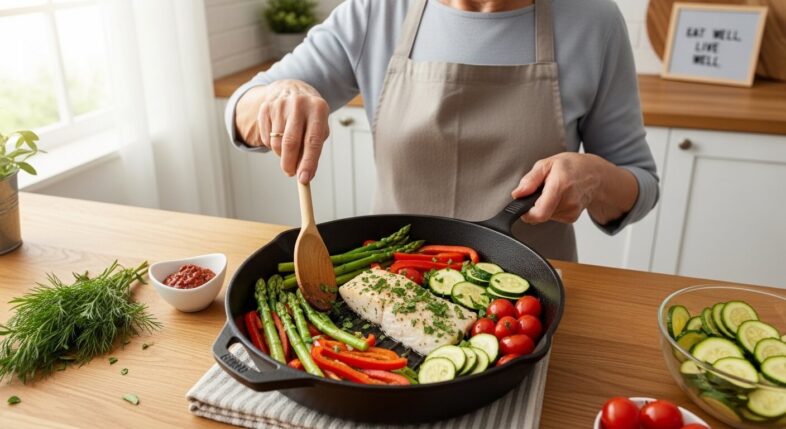
Skillet cooking with minimal oil breaks this cycle. One pan. Less fat. Easier on your hands.

What you’re getting here:

  • Why these two conditions collide in the kitchen
  • Actual techniques that work (not theory)
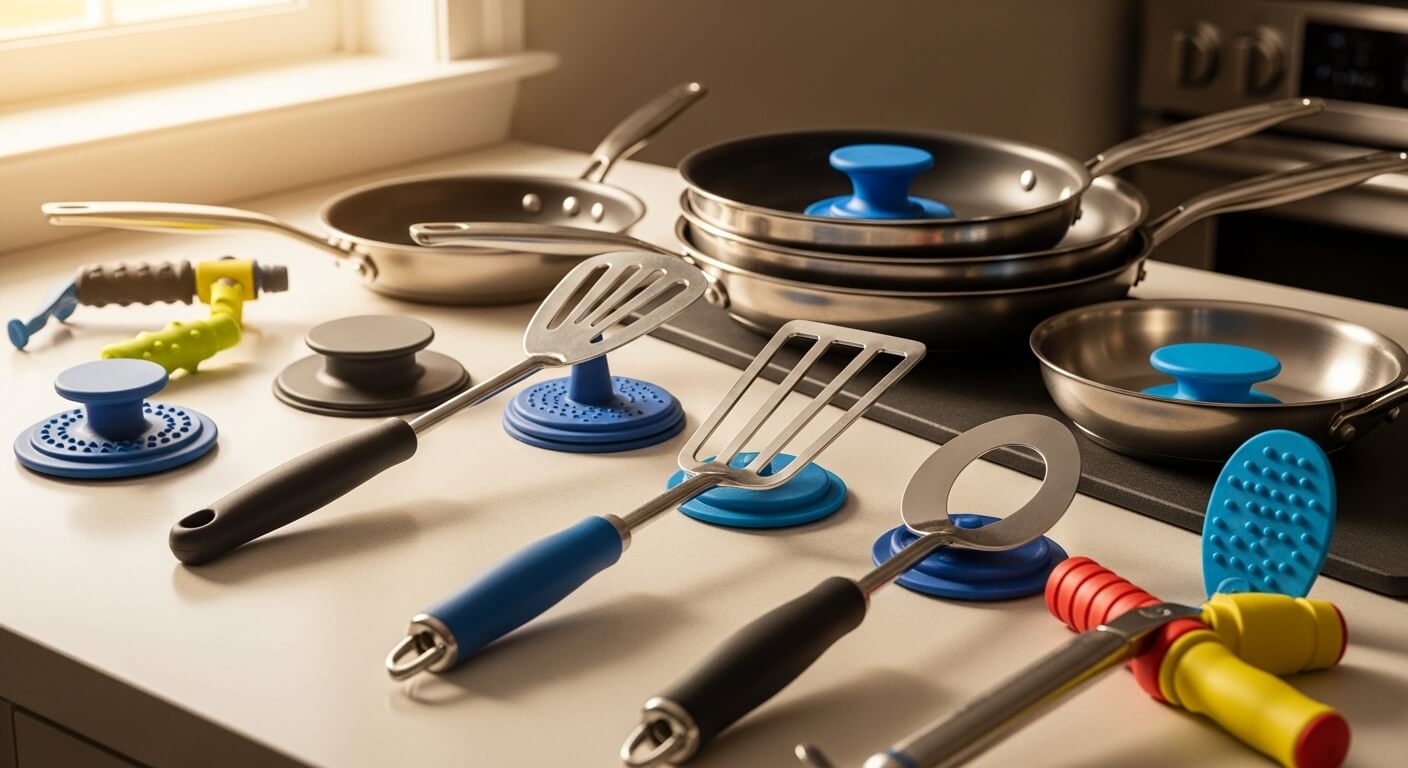
  • Which skillets make sense for arthritic hands
  • Recipes you’ll actually make
  • How to measure results

Not complicated. Just different.

Understanding the Connection Between Heart Health, Arthritis, and Cooking Methods

The connection between heart health and arthritis in cooking methods is direct—arthritis limits your ability to prepare fresh meals, pushing you toward processed foods high in unhealthy fats that damage cardiovascular health.

Why Seniors with Arthritis Face Unique Heart Health Challenges

Your joints hurt, so you move less. That’s problem number one.

The cascade effect:

  • Less activity → weight gain → more stress on joints AND heart
  • NSAIDs (ibuprofen, naproxen) → increased blood pressure and heart attack risk
  • Chronic inflammation from arthritis → damages blood vessels
  • Can’t cook proper meals → eating garbage → cholesterol goes up

And here’s the kicker. The medications that help your arthritis? Many of them mess with your heart. COX-2 inhibitors, high-dose NSAIDs—they all carry cardiovascular warnings.

Studies show seniors with rheumatoid arthritis have 50% higher risk of heart attack. Not because arthritis directly causes heart attacks. But because everything connects.

You’re in pain. You don’t exercise. You take medications with side effects. You eat poorly because cooking is too hard. Each piece makes the others worse.

The Impact of Excess Dietary Oil on Senior Heart Health

Excess dietary oil in seniors directly raises LDL cholesterol, contributes to arterial plaque buildup, and adds empty calories that lead to weight gain—all major risk factors for heart disease and stroke.

Most people cook with way too much oil. Not intentionally. They just pour it in the pan without measuring.

Here’s what happens:

A tablespoon of oil = 120 calories. Pure fat. If you’re using 2-3 tablespoons per meal (common), that’s 250-360 calories from oil alone.

Three meals a day? You’re looking at 750+ calories just from cooking oil. That’s insane.

And it’s not just calories. The type of fat matters. Saturated fats (butter, coconut oil) raise LDL cholesterol. Even “healthy” oils like olive oil add up fast when you use too much.

Daily fat recommendations for seniors:

  • Total fat: 44-78 grams (based on 1,600-2,400 calorie diet)
  • Saturated fat: Less than 16 grams
  • Trans fat: Zero (avoid completely)

One tablespoon of olive oil = 14 grams of fat. Use three tablespoons and you’ve hit half your daily limit. Before you even count the fat in your actual food.

Why Traditional Frying and Sautéing Are Problematic

Traditional frying and sautéing require 3-4 tablespoons of oil, create dangerous splatter that can burn arthritic hands, and demand constant attention and stirring that’s exhausting for seniors with limited mobility.

The classic “coat the bottom of the pan” approach uses too much oil. Period.

Problems with conventional methods:

Safety issues—Hot oil pops and splatters. When your hands don’t grip well, you can’t react quickly. Burns happen.

Temperature control—More oil = harder to manage heat. Oil starts smoking. You panic. Turn it down too much. Food doesn’t cook right.

Cleanup nightmares—Greasy pans are slippery when wet. Hard to scrub with arthritic hands. The whole thing’s a mess.

Wasted money—Oil isn’t cheap. Using tablespoons per meal adds up over a month.

And honestly? Your food doesn’t need that much fat to taste good. It’s habit. Not necessity.

The Benefits of Skillet Cooking for Seniors with Arthritis

Skillet cooking benefits seniors with arthritis by consolidating entire meals into one manageable pan, eliminating the need to juggle multiple pots and reducing the lifting, transferring, and washing that aggravates painful joints.

Why Skillets Are Ideal for Arthritis Management

One pan. That’s the whole game.

Skillet advantages for arthritis:

Low sides mean you can see your food. Access it easily. Not digging into a deep pot with a spoon you can barely grip.

Even heat distribution (in good skillets) cuts down on stirring. Food cooks uniformly. You’re not constantly moving things around to prevent burning.

Versatile enough to handle proteins, vegetables, grains—everything in one place. Brown your chicken, throw in your vegetables, add some broth. Done.

Stovetop to oven capability (most skillets). Start on the burner, finish in the oven. No transferring to a baking dish.

And the cleanup. One pan beats three pots any day of the week.

How Minimal Oil Cooking Supports Heart Health

Minimal oil cooking supports heart health by cutting caloric intake by 200-400 calories per day, reducing saturated fat consumption, and preventing the formation of harmful oxidized compounds that occur when oils are overheated.

Less oil = less fat = healthier heart. Pretty straightforward.

But there’s more to it. When you overheat oil (which happens all the time with excess amounts), you create oxidized compounds. These damaged fats contribute to inflammation and arterial damage.

Minimal oil benefits:

  • Lower total cholesterol
  • Reduced LDL (“bad” cholesterol)
  • Better weight management (every tablespoon of oil saved = 120 calories)
  • Less inflammation from oxidized fats
  • Improved blood pressure (less weight, less sodium from processed foods you’re replacing)

And you don’t sacrifice flavor. That’s the myth—that you need lots of oil for food to taste good. Wrong. You need technique and the right ingredients.

The Ergonomic Advantages of One-Pan Cooking

One-pan cooking reduces arthritis strain by eliminating transfers between cookware, cutting cleanup time by 60%, and allowing you to cook entire meals while seated or with minimal standing.

Think about traditional cooking. You’re sautéing onions in one pan. Boiling pasta in a pot. Maybe steaming vegetables in another pot. That’s three items to lift, stir, drain, and wash.

Each transfer—from stove to sink, from burner to counter—stresses your wrists and fingers. Each grip on a hot handle tests your strength.

One-pan changes everything:

You touch the skillet handle maybe 5-6 times total. Put it on the stove. Adjust it once or twice. Move it to a trivet. That’s it.

Stirring happens in one place. No transferring ingredients back and forth.

Cleanup is one pan, one utensil, maybe one cutting board. Your hands are done in five minutes instead of twenty.

Choosing the Right Skillet for Heart-Healthy, Arthritis-Friendly Cooking

The right skillet for heart-healthy minimal oil cooking with arthritis is a 10-inch non-stick pan with a long handle and helper handle, weighing under 2.5 pounds, that allows you to cook with just 1-2 teaspoons of oil or cooking spray.

Non-Stick Skillet Options for Minimal Oil Cooking

Non-stick skillets are essential for minimal oil cooking because they prevent food from sticking even with just a light spray, reducing the temptation to add extra fat.

Your main options:

Type Best For Watch Out For
Ceramic-coated Great non-stick initially, pretty colors Coating degrades fast (1-2 years max)
PTFE (Teflon) Lasts longer, extremely non-stick Don’t overheat (stay under 500°F)
Hard-anodized Durable, decent non-stick Heavier than regular non-stick

Honestly? Start with a good PTFE non-stick. The ceramic ones are trendy but they don’t last. The non-stick properties fade within a year of regular use.

And despite the rumors, modern non-stick is safe. Don’t heat it empty, don’t put it in a 600°F oven, and you’re fine. The old concerns about PFOA? Not used in cookware anymore since 2013.

What to look for:

  • Oven-safe to at least 400°F
  • Dishwasher-safe (though hand washing extends life)
  • PFOA-free (should say on the box)
  • Even bottom thickness (cheap ones warp)

Brands that work: T-fal, Calphalon, Cuisinart, All-Clad (if you want to splurge). Skip the ultra-cheap stuff from discount stores—they warp and the coating flakes.

Stainless Steel Skillets with Proper Technique

Stainless steel can work with minimal oil if you master the temperature—preheat the pan properly, use the water-droplet test to confirm readiness, and add protein only when the pan is at the right heat to prevent sticking.

Stainless steel isn’t naturally non-stick. But it can release food without tons of oil if you do it right.

The technique:

Heat your pan over medium heat for 2-3 minutes. Drop a bead of water on the surface. If it breaks into little balls that skitter around (the “mercury ball” effect), your pan is ready.

Add your minimal oil. Let it heat for 30 seconds. Add your protein. Don’t touch it for 3-4 minutes. It’ll release naturally when it’s ready.

The problem? This requires patience and good timing. If your arthritis brain fog is bad or you’re easily distracted, stainless steel might frustrate you.

Pros: Lasts forever, can take high heat, no coating to worry about

Cons: Steeper learning curve, food sticks if you mess up timing, heavier than non-stick

For minimal oil cooking with arthritis, non-stick is usually the smarter choice. But if you already own good stainless steel, it’s doable.

Cast Iron and Carbon Steel Alternatives

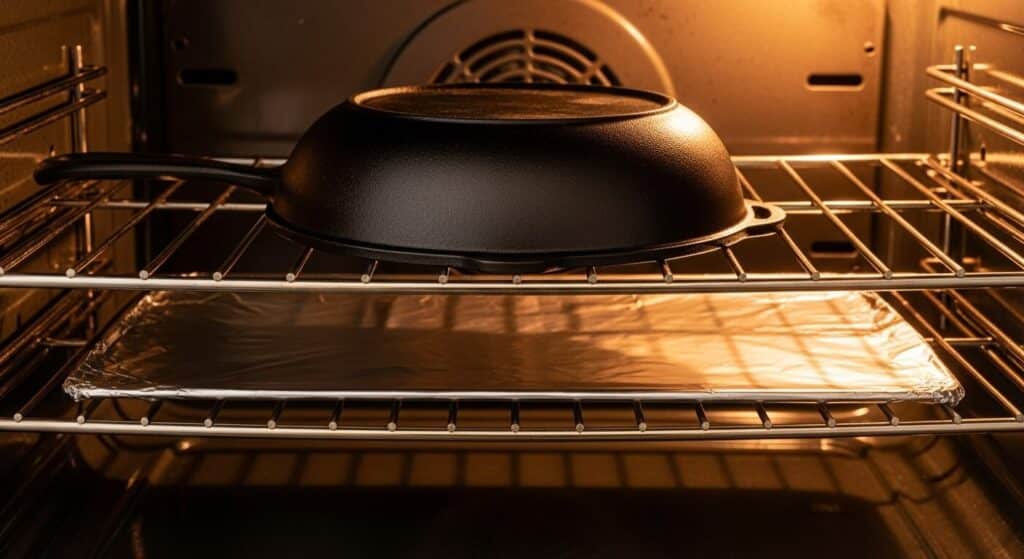
Cast iron and carbon steel offer natural non-stick properties when properly seasoned and can work with minimal oil—but they’re significantly heavier, which makes them difficult for most seniors with arthritis to handle safely.

Yeah, cast iron builds up a non-stick surface. Yeah, carbon steel does too. But here’s the issue: weight.

A 10-inch cast iron skillet weighs 5-8 pounds empty. Add food? You’re looking at 10+ pounds.

Can you safely lift that with arthritis? Maybe. Maybe not.

When these make sense:

  • You already own them and can handle the weight
  • Someone else can help with the heavy lifting
  • You’re using them for oven cooking (less stovetop handling)
  • You slide them instead of lifting them

Carbon steel is lighter than cast iron—usually 3-4 pounds for a 10-inch pan. Still heavier than non-stick, but more manageable.

Both require seasoning maintenance. Not hard exactly, but it’s an extra step. After each use, you need to oil and dry them properly. With arthritis, that might be annoying.

Size and Handle Design Considerations

For seniors with arthritis, an 8-10 inch skillet with a handle at least 7 inches long and a helper handle on the opposite side provides the best balance of capacity, weight, and safe two-handed lifting ability.

Sizing guide:

8-inch skillet—Best for single servings. Lighter weight (1.5-2 pounds). Perfect if you’re cooking just for yourself.

10-inch skillet—The sweet spot. Handles 2-3 servings. Still manageable weight (2-2.5 pounds for non-stick). Most versatile.

12-inch skillet—Only if you’re feeding more people regularly. Gets heavy. Harder to control. Probably too much for arthritis.

Go smaller rather than larger. You can always cook twice if needed. Can’t unburn yourself when you drop a too-heavy pan.

Handle requirements:

Long handles give you leverage. Short stubby handles force you to grip closer to the heat and use more hand strength. Aim for 7-9 inches minimum.

Helper handles (that little loop on the opposite side)? Non-negotiable. You should be lifting with both hands anyway. The helper handle makes this possible.

Avoid thin metal handles that get scorching hot. Look for handles that stay cool or come with silicone grips.

Essential Techniques for Minimal Oil Skillet Cooking

Essential minimal oil skillet techniques include water-sautéing vegetables using broth instead of fat, applying cooking spray in 1-2 second bursts rather than pouring oil, and using covered braising methods that create moisture without added fats.

The Water-Sauté Method for Heart-Healthy Cooking

Water-sautéing means cooking vegetables and aromatics in small amounts of water or broth instead of oil—add 2-3 tablespoons of liquid at a time, let it evaporate, and repeat until vegetables are tender and lightly caramelized.

This technique works shockingly well. Sounds weird if you’ve never done it. But it works.

How to water-sauté:

  1. Heat your skillet over medium heat
  2. Add 2-3 tablespoons water or broth
  3. Add your vegetables (onions, peppers, whatever)
  4. Stir occasionally as liquid evaporates
  5. When pan looks dry, add another 2-3 tablespoons
  6. Repeat until vegetables are soft and starting to brown

The vegetables release their own moisture as they cook. The water prevents sticking and burning. And here’s the magic—once the water evaporates, you get caramelization just like you would with oil.

Best for: Onions, peppers, mushrooms, zucchini, celery, carrots

Timing: Usually takes 8-12 minutes total (about the same as oil-sautéing)

Flavor boost: Use low-sodium vegetable or chicken broth instead of plain water

At the very end, if you want that oil richness, add 1 teaspoon of olive oil and toss. You get the flavor without the excessive calories.

Using Cooking Spray Effectively and Safely

Cooking spray should be applied in 1-2 second bursts while the pan is cool—this uses roughly 1/4 teaspoon of oil instead of the 1-2 tablespoons you’d pour, cutting fat by 90% or more.

But most people do it wrong. They spray for way too long.

Proper spray technique:

Turn your burner OFF. Spray the cool pan. Then turn the heat on. If you spray over an open flame, you can get a flare-up. Dangerous.

One second of spray = about 1/4 teaspoon oil. That’s 10 calories instead of 120.

Hold the can 6-8 inches from the pan. Quick burst. That’s it.

Spray options:

Aerosol cans (Pam, etc.)—Convenient but contain propellants and emulsifiers. Fine for most people.

Pump misters—You fill them with your own oil. No additives. But they clog sometimes and need cleaning.

Lecithin-based sprays—Work better for baking, less ideal for high-heat cooking

For heart health, use olive oil or avocado oil spray. Skip the butter-flavored sprays (they’re not real butter anyway—just chemicals).

The Parchment Paper Technique

Using parchment paper rounds in your skillet creates a non-stick surface without any oil—the paper sits directly on the pan surface and prevents food from touching the metal, though it only works for certain cooking methods like gentle searing or baking.

Cut parchment paper into a circle slightly smaller than your skillet. Place it in the pan. Cook on top of it.

Sounds odd. Works great for delicate proteins.

What it handles well:

  • Fish fillets (they don’t stick or break apart)
  • Eggs (surprisingly good)
  • Pancakes or flatbreads
  • Anything you’re finishing in the oven

What it doesn’t work for:

  • High-heat searing (paper can scorch)
  • Anything needing a crispy crust
  • Stir-fries with lots of movement

The parchment can handle oven temps up to 425°F (check your brand’s rating). Above that, it gets too brown and fragile.

Not a technique you’ll use daily. But for arthritis sufferers who struggle with flipping delicate fish? It’s a lifesaver. The fish slides right off the paper onto your plate.

Steaming and Braising in Skillets with Minimal Oil

Braising in a skillet means searing protein with minimal oil (1 teaspoon), then adding liquid (broth, wine, tomatoes), covering, and cooking gently—the moisture prevents sticking while the food absorbs flavor from the liquid instead of fat.

This is your secret weapon for minimal oil cooking that actually tastes amazing.

Basic braising process:

  1. Pat protein dry (chicken thighs, pork chops, whatever)
  2. Season with salt, pepper, spices
  3. Heat skillet, add 1 teaspoon oil
  4. Brown protein on both sides (2-3 minutes per side)
  5. Add aromatic vegetables if using
  6. Pour in liquid (1/2 to 1 cup)
  7. Cover and simmer 20-30 minutes

The liquid does the work. Keeps everything moist. Prevents burning. Creates a sauce automatically.

Best liquids for braising:

  • Low-sodium chicken or vegetable broth
  • Canned tomatoes (diced or crushed)
  • White wine (the alcohol cooks off)
  • A combination (broth + wine + tomatoes)

Temperature matters. Keep it at a gentle simmer. Not a rolling boil. Medium-low heat works for most stovetops.

And if your skillet has a lid, use it. No lid? Aluminum foil works fine.

Heart-Healthy Oils: Choosing and Using Them Wisely

Heart-healthy oils for minimal cooking include extra virgin olive oil and avocado oil—but even these should be limited to 1-2 teaspoons per serving, measured carefully rather than poured freely from the bottle.

Best Oils for Heart Health in Minimal Amounts

Extra virgin olive oil wins for heart health because of its high monounsaturated fat content and anti-inflammatory compounds—but avocado oil beats it for higher-heat cooking since it has a smoke point of 520°F versus olive oil’s 375-405°F.

The tier list:

Tier 1 (use these):

  • Extra virgin olive oil
  • Avocado oil
  • Canola oil (yes, really—it’s heart-healthy despite the reputation)

Tier 2 (okay occasionally):

  • Regular olive oil (less flavor, higher smoke point than EVOO)
  • Grapeseed oil

Tier 3 (skip these):

  • Coconut oil (too much saturated fat)
  • Butter (same issue)
  • Palm oil (environmental and health concerns)

Olive oil has the research backing. Study after study shows it reduces cardiovascular disease risk. The polyphenols have anti-inflammatory effects.

But it’s not magic. Two tablespoons of olive oil = 240 calories. Doesn’t matter that it’s “healthy” oil—too many calories still wreck your heart health through weight gain.

When to use what:

Low to medium heat (under 375°F): Extra virgin olive oil
High heat (400°F+): Avocado oil or light olive oil
Baking or neutral flavor needed: Canola oil

Understanding Smoke Points and Cooking Temperatures

Smoke points matter because when oil starts smoking, it’s breaking down into harmful compounds including free radicals and acrolein—cooking below the smoke point keeps your oil stable and prevents these toxic byproducts from forming.

Every oil has a temperature where it starts smoking. Push past that, and you’re creating problems.

Common smoke points:

Oil Smoke Point Best For
Extra virgin olive oil 375°F Low-medium heat, finishing
Light/refined olive oil 465°F Most stovetop cooking
Avocado oil 520°F High heat, searing
Canola oil 400°F All-purpose cooking

Why does this matter for heart health? When oil smokes, it forms compounds like acrolein and aldehydes. These damage blood vessels and contribute to atherosclerosis.

Plus it tastes nasty. And fills your kitchen with smoke (which isn’t great for your lungs either).

How to avoid smoking:

Don’t crank the heat to high. Medium heat handles most cooking. Medium-high if you’re searing protein.

Preheat your pan gradually. If you blast it on high, the oil hits smoke point instantly when you add it.

Use oils appropriate for your cooking temperature. Don’t use extra virgin olive oil for a screaming-hot stir-fry.

Measuring and Controlling Oil Portions

Measuring oil portions with arthritis is easier with a pump spray bottle that delivers 1/4 teaspoon per spray, or by using a small medicine cup (easier to grip than measuring spoons) to pour exactly 1-2 teaspoons into the pan.

Nobody measures their oil. That’s the problem.

You tip the bottle. Oil glugs out. Way too much. But you don’t know exactly how much, so you can’t fix it.

Visual guides for minimal amounts:

1 teaspoon oil = about the size of your fingertip (just the fleshy part, not the whole finger)

1 tablespoon oil = three fingertips

For minimal oil cooking, you want 1-2 teaspoons max per meal. That’s 40-80 calories from oil.

Easier measuring for arthritis:

Pump spray bottles (like Misto). Each pump = 1/4 teaspoon. Four pumps = 1 teaspoon. You can count that.

Small silicone medicine cups with measurement lines. Wider and easier to grip than skinny measuring spoons.

Pre-portioned oil packets (they make these for camping). Open, pour, done. No guessing.

The tablespoon-sized scoops from protein powder containers. If you have one lying around, it’s perfect—wide handle, clear measurement.

Oil Alternatives and Flavor Enhancers

Oil alternatives that add moisture and flavor without fat include low-sodium broths, citrus juices, wine for deglazing, and unsweetened applesauce or mashed banana in certain cooking applications.

Oil isn’t the only way to add moisture and richness to food. Not even close.

Non-oil flavor builders:

Broth—Chicken, vegetable, beef. Use it for sautéing, deglazing, adding to grains. Go for low-sodium versions.

Wine—White wine for chicken and fish. Red wine for beef. The alcohol cooks off, leaving flavor. 1/4 cup has negligible calories.

Citrus juice—Lemon, lime, orange. Adds brightness and acidity. Helps with browning reactions.

Vinegar—Balsamic, red wine, apple cider. Use like wine. Deglazes beautifully.

Tomatoes—Canned diced, crushed, or sauce. Creates richness without fat. Works in almost everything.

And don’t forget: spices and herbs. They’re calorie-free and flavor-packed. Garlic powder, onion powder, smoked paprika, cumin, Italian seasoning—go wild.

A little acid + herbs + aromatics = you won’t miss the oil nearly as much as you think.

Arthritis-Friendly Cooking Techniques That Reduce Oil Needs

Arthritis-friendly minimal oil techniques include proper preheating (so food releases naturally), avoiding overcrowding (which causes steaming and sticking), and using patience instead of constant stirring—all of which prevent the need to add extra fat.

Proper Preheating to Prevent Sticking

Proper preheating—heating your empty skillet for 3-4 minutes before adding oil and 5-6 minutes total before adding food—creates an even cooking surface that prevents sticking even with minimal oil.

Cold pan = sticky food. Always.

Doesn’t matter if you use non-stick. Doesn’t matter how much oil you add. Put food in a cold pan, it’ll stick.

Why preheating works:

Metal expands when heated. The microscopic pores in the pan surface close up. Food has less surface area to grab onto.

With proper preheating, you can use 1 teaspoon of oil and get the same results as 2-3 tablespoons in a cold pan.

The right process:

  1. Put empty skillet on burner
  2. Turn to medium heat
  3. Wait 3-4 minutes (feel the heat radiating off it)
  4. Add your minimal oil
  5. Wait 30 seconds for oil to heat
  6. Add food

Test if it’s ready: Hold your hand 4 inches above the pan. Feel strong heat? Good to go.

The water-droplet test works too—drop water in the pan. If it sizzles and evaporates fast, you’re ready.

Patience here saves you oil later.

The Importance of Not Overcrowding the Pan

Overcrowding the pan drops the temperature instantly, causing food to steam in its own moisture rather than sear—this steamed food sticks to the pan and forces you to add more oil to compensate.

This is the mistake everyone makes. Especially when cooking for one or two people and using a 10-inch skillet.

What happens when you overcrowd:

Too much food at once = pan temperature plummets. Your protein or vegetables start releasing water. That water turns to steam. Now instead of searing, you’re boiling.

Boiled/steamed food sticks like crazy. So you reach for more oil. Doesn’t help much because the problem is temperature, not fat.

The fix:

Leave space between pieces. Each piece of chicken, each chunk of vegetable should have breathing room.

For a 10-inch skillet:

  • 2-3 chicken thighs (not 4-5)
  • 2 cups chopped vegetables (not 4)
  • 2-3 pork chops (not a pile)

Cook in batches if you’re making more. Yeah, it takes longer. But the food turns out better and you use less oil total.

With arthritis, batch cooking might sound annoying. But here’s the thing—properly seared food releases from the pan easily. Overcrowded steamed food fights you. Which is actually harder?

Gentle Flipping and Turning Techniques

Gentle flipping with the right tools—a thin metal spatula for non-stick pans or a fish spatula for everything else—reduces the urge to add extra oil when food doesn’t release immediately, because proper tools slide under food more easily.

Food will tell you when it’s ready to flip. Seriously.

If it won’t release, it’s not ready. Don’t force it. Don’t add more oil.

Flipping rules:

Let protein cook 70% of the way on the first side. Then flip once. That’s it. Not every 30 seconds. Once.

For chicken breast (medium heat): 5-6 minutes first side, 3-4 minutes second side.

For fish fillets: 3-4 minutes first side, 2-3 minutes second side.

Vegetables? Stir every 2-3 minutes. Not constantly.

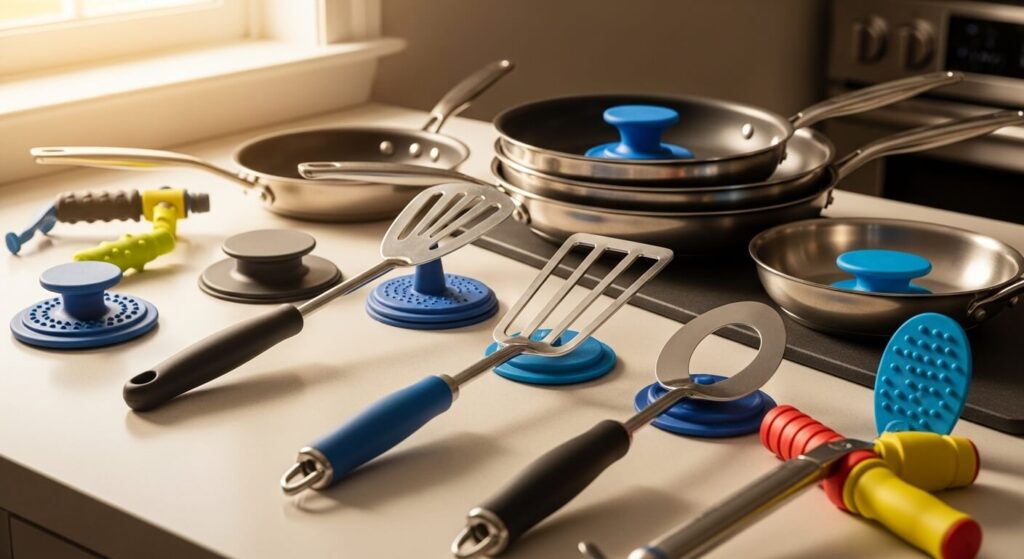
Tools that help with arthritis:

Fish spatulas—Thin, slotted, slightly flexible. They slide under stuff beautifully. Work for more than just fish.

Silicone-tipped tongs—Better grip than metal tongs. Won’t scratch non-stick. Easier on weak hands.

Offset spatulas—Angled design gives you better leverage with less wrist strain.

Get long-handled versions of everything. Keeps your hands away from heat. Less risk of burns.

Temperature Management for Heart-Healthy Results

Temperature management for minimal oil cooking means using medium heat (around 300-350°F) instead of high heat—this allows food to cook through without burning while using far less oil than high-heat methods that require constant fat to prevent sticking.

High heat needs lots of oil. Medium heat doesn’t. Simple as that.

Why medium heat wins:

At medium heat, food cooks gently and evenly. The surface doesn’t dry out immediately, so it doesn’t grab the pan.

At high heat, the outside burns while the inside stays raw. You compensate by adding oil. Then more oil. Cycle continues.

Medium heat for arthritis makes sense anyway—less urgent flipping and stirring. You have time to react. Can sit down for a minute. Food won’t punish you for it.

What medium heat looks like:

On most stoves: Setting 4 or 5 out of 10
On an electric coil: 3 out of 5
Surface temp: 300-350°F (if you have an infrared thermometer)

Food should sizzle gently when it hits the pan. Not explosive sputtering. Just a nice steady sizzle.

Using lids strategically:

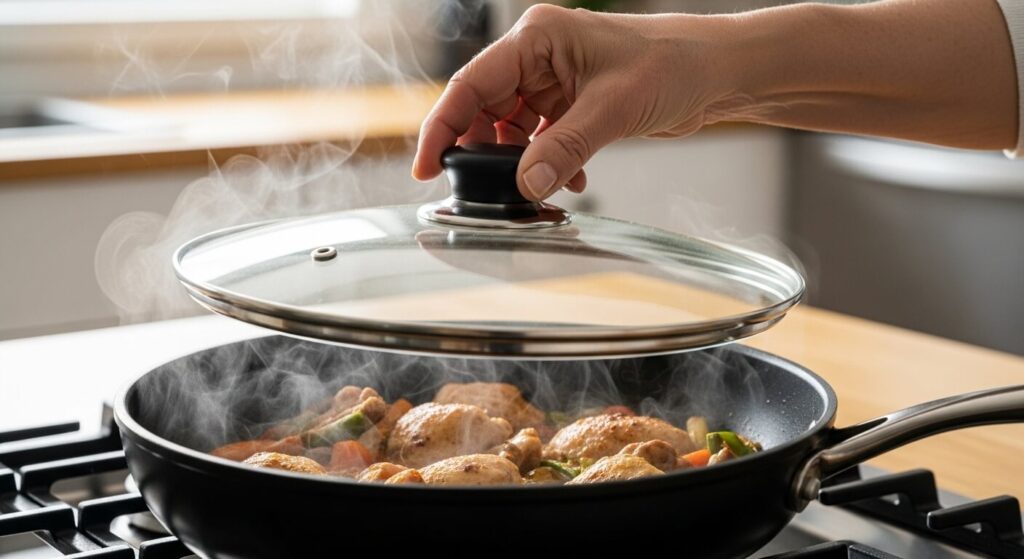
Cover your skillet partway through cooking. Traps moisture. Creates a gentle steam environment. Food stays tender without extra oil.

Works great for chicken breasts (notorious for drying out). Sear both sides, add a splash of broth, cover, cook 5 more minutes. Perfectly moist.

Heart-Healthy Ingredients That Work Well with Minimal Oil

Heart-healthy ingredients for minimal oil skillet cooking include lean proteins like skinless chicken and fish, moisture-rich vegetables like mushrooms and tomatoes, and fiber-packed whole grains—all of which cook well with just 1-2 teaspoons of fat.

Lean Proteins for Skillet Cooking

Lean proteins for heart-healthy skillet meals include skinless chicken breast and thighs, fish like salmon and cod, turkey, and plant-based options like firm tofu—all of which develop good flavor with minimal oil when cooked using proper technique.

Chicken (skinless):

Breasts are leaner. Thighs have more flavor and stay moist easier. Both work.

Pat them dry before cooking. Wet protein steams instead of sears. Season aggressively—salt, pepper, garlic powder, paprika.

1 teaspoon oil in a preheated pan. Brown both sides. Finish with a lid on and 1/4 cup broth. Perfect every time.

Fish and seafood:

Salmon, cod, tilapia, shrimp. All cook fast with minimal oil.

Fish is naturally oily (the good omega-3 kind). Doesn’t need much added fat.

Use the parchment paper trick. Or 1 teaspoon oil in a screaming-hot pan, cook skin-side down 4 minutes, flip for 2 minutes. Done.

Turkey:

Ground turkey (93% lean or higher). Makes great skillet meals.

Browns nicely with just cooking spray. Add onions, peppers, spices. Toss in some beans or rice. Complete meal.

Plant-based proteins:

Extra-firm tofu (pressed to remove water). Cubed and seared in minimal oil develops crispy edges.

Tempeh—similar deal. Higher in protein than tofu.

Canned beans—chickpeas, black beans, white beans. Rinse them, toss in the skillet with vegetables and spices. No oil required (they’re cooked already).

Vegetables That Caramelize Without Much Oil

Vegetables that caramelize with minimal oil include mushrooms (which release their own liquid), bell peppers, onions, zucchini, and tomatoes—all high-moisture vegetables that cook down without added fat.

Mushrooms are magic. They’re like 90% water.

Slice them. Throw them in a dry skillet over medium heat. They release all that moisture. It evaporates. They start browning. Zero oil required.

At the end, toss with 1/2 teaspoon oil if you want. Or not. Up to you.

Vegetables that work great with minimal oil:

Bell peppers—Water-sauté them. They get sweet and soft.

Onions—Same deal. Start with water/broth. Let them caramelize slowly. Takes 20 minutes but mostly hands-off.

Zucchini—Releases tons of water. Needs basically no oil.

Cherry tomatoes—Blister them in a hot skillet with just a spray of oil. They burst and create a sauce.

Spinach and greens—Wilt with zero oil. They’re wet enough already.

Dry vegetables (broccoli, cauliflower, carrots) benefit from steam-roasting: Spray the pan, add vegetables, add 1/4 cup water, cover for 5 minutes, uncover and let water evaporate while vegetables brown.

Whole Grains and Heart-Healthy Starches

Whole grains and starches for skillet cooking include quinoa (cooked in broth directly in the skillet), farro, brown rice, and sweet potatoes—all adding fiber and nutrients without requiring any cooking oil.

You can cook grains in your skillet. No separate pot needed.

Skillet grain method:

Toast dry quinoa in your skillet for 2 minutes (no oil). Adds nutty flavor.

Add broth—usually 2:1 ratio (2 cups liquid to 1 cup grain). Bring to boil. Reduce to simmer. Cover. Cook 15-20 minutes.

Everything happens in one pan. The grain absorbs the flavors from whatever you cooked before (if you use the same skillet).

Sweet potatoes:

Dice them small (1/2-inch cubes). They cook faster.

Spray the pan. Add potatoes. Add 1/4 cup water. Cover. Steam for 8-10 minutes until tender. Uncover. Let them brown a bit.

The natural sugars caramelize with minimal oil. You get that crispy edge.

Brown rice:

Takes longer (40-45 minutes). But you can cook it alongside protein in one large skillet.

Push protein to the side. Add rice and broth. Cover. Let it simmer. Check occasionally. Add more liquid if needed.

Flavor Builders That Replace Oil’s Richness

Flavor builders that replace oil’s richness include caramelized onions (made with water-sauté method), roasted garlic, sun-dried tomatoes, miso paste, and nutritional yeast—all adding umami and depth without fat.

Oil carries flavor. That’s its job. But other things do it too.

Umami bombs (savory richness without fat):

Tomato paste—Sauté 1 tablespoon in your skillet (use minimal oil or water). Cooks down, gets intense. Adds depth to everything.

Miso paste—Fermented soybean paste. Stir into broths, sauces. Incredibly savory. Full of glutamates.

Soy sauce or tamari—Low-sodium versions. Adds saltiness and umami. Use for deglazing.

Nutritional yeast—Cheesy, nutty flavor. Sprinkle on vegetables, stir into sauces. Zero fat.

Mushroom powder—Dried mushrooms ground up. Adds earthiness.

Aromatics cooked until golden:

Onions and garlic cooked until they’re sweet and caramelized. Takes time but no oil (use water-sauté method).

Shallots—same deal, slightly milder.

These create a flavor base that makes people think there’s more fat in the dish than there is.

Recipe Categories for Heart-Healthy Skillet Cooking with Minimal Oil

Heart-healthy skillet recipes with minimal oil span all meals—from vegetable-packed egg scrambles for breakfast to quick chicken stir-fries for lunch to one-pan salmon dinners, all using 1-2 teaspoons of oil total.

Quick Breakfast Options for Seniors with Arthritis

Veggie-Packed Egg White Scramble

Spray pan. Water-sauté diced peppers, onions, mushrooms (5 minutes). Pour in egg whites (from carton—easier than separating). Scramble gently. Season with herbs.

Total oil: One spray (about 1/4 teaspoon)
Time: 8 minutes
Heart benefits: High protein, low fat, loaded with vegetables

Turkey Sausage and Sweet Potato Hash

Dice pre-cooked turkey sausage (the kind in tubes). Dice one small sweet potato. Spray pan. Add potato with 1/4 cup water. Cover. Steam 8 minutes. Add sausage. Brown everything together.

Total oil: One spray
Time: 12 minutes
Heart benefits: Lean protein, complex carbs, filling

Whole Grain Toast Topped Skillet

Toast whole grain bread. Meanwhile, sauté tomatoes and spinach in skillet (water-sauté method). Top toast with vegetables and a poached egg if desired.

Total oil: Zero (unless you brush toast with minimal olive oil)
Time: 6 minutes
Heart benefits: Fiber from whole grains, antioxidants from vegetables

Simple Lunch Skillets Under 30 Minutes

Lemon Garlic Chicken and Broccoli

Cut chicken breast into strips. Season. Brown in 1 teaspoon olive oil (3 minutes per side). Remove. Add broccoli florets and 1/4 cup broth. Cover. Steam 4 minutes. Return chicken. Squeeze lemon over everything.

Total oil: 1 teaspoon
Time: 18 minutes
Servings: 2

Mediterranean Tuna Skillet

Drain canned tuna. In skillet, water-sauté cherry tomatoes, olives, garlic. Add white beans (canned, rinsed). Heat through. Stir in tuna. Finish with lemon juice and fresh basil.

Total oil: Olives contain some, otherwise minimal
Time: 12 minutes
Heart benefits: Omega-3s from tuna, fiber from beans

Turkey and Spinach Quick Meal

Brown ground turkey (spray the pan first). Add frozen spinach (it has moisture already). Season with garlic, red pepper flakes. Cook until spinach wilts. Serve over whole wheat pasta or brown rice (cooked separately or in same pan if you plan ahead).

Total oil: Cooking spray
Time: 15 minutes

Heart-Healthy Dinner Recipes in One Skillet

Balsamic Chicken with Roasted Vegetables

Chicken thighs (skinless). Season. Brown in 1 teaspoon olive oil. Remove. Add bell peppers, zucchini, red onion (all sliced). Water-sauté 5 minutes. Return chicken. Drizzle balsamic vinegar. Cover. Bake in 375°F oven for 25 minutes.

Total oil: 1 teaspoon
Time: 40 minutes (mostly hands-off)
Servings: 3-4

Salmon with Asparagus and Lemon

Preheat oven to 400°F. Spray oven-safe skillet. Lay asparagus spears in pan. Season. Place salmon fillets on top. Lemon slices on salmon. Bake 15 minutes.

Total oil: Cooking spray
Time: 20 minutes total
Heart benefits: Omega-3s, minimal cleanup, zero stovetop time

Shrimp and Zucchini Noodles

Spiralize zucchini (or buy pre-spiralized). Quick spray of avocado oil in hot skillet. Add shrimp. Cook 2 minutes per side. Remove. Add zucchini noodles. Cook 2-3 minutes (they release water). Toss with shrimp. Season with garlic, red pepper, lemon.

Total oil: 1/4 teaspoon
Time: 12 minutes
Heart benefits: Low-calorie, high-protein, vegetable-focused

Batch Cooking Options for Easier Meal Planning

Turkey and Bean Chili (6 servings)

Brown 1 lb ground turkey (spray pan). Add diced onions, bell peppers (water-sauté). Add 2 cans beans, 1 can diced tomatoes, chili powder, cumin. Simmer 30 minutes. Portion into containers.

Total oil per serving: Minimal (spray divided by 6)
Reheats beautifully
Freezes well

Chicken and Brown Rice Skillet (4-5 servings)

Brown chicken pieces (1 teaspoon oil). Remove. In same pan, toast brown rice (2 minutes, no oil). Add broth, frozen mixed vegetables, chicken. Cover. Simmer 45 minutes. Portion for the week.

Total oil per serving: About 1/4 teaspoon
Make Sunday, eat through Thursday

Lentil Vegetable Curry (6 servings)

Water-sauté onions, garlic, ginger. Add curry powder. Add lentils, diced tomatoes, coconut milk (light version), vegetables. Simmer 25 minutes. Divide into portions.

Total oil per serving: From coconut milk, minimal
High in protein and fiber
Satisfying and filling

Adapting Traditional Recipes to Minimal Oil Methods

Traditional recipes can be adapted to minimal oil by replacing half to three-quarters of the oil with broth or water, using non-stick skillets, and adding finishing touches of oil (1/2 teaspoon) at the end for flavor instead of cooking with large amounts.

Converting Sautéed Dishes to Water-Sauté Versions

The conversion process:

Original recipe says: “Heat 3 tablespoons olive oil, sauté onions until soft.”

Your version: “Heat skillet, add 2 tablespoons water or broth, cook onions until soft, adding more liquid as needed.”

Works for 90% of vegetable sautés.

When you might need a tiny bit of oil:

For spices (cumin seeds, mustard seeds). They toast better in fat. Use 1/2 teaspoon.

For delicate herbs at the end. A drizzle of finishing oil brings out their flavor.

Otherwise? Water/broth does the job.

Modifying Stir-Fry Recipes for Heart Health

Traditional stir-fries use 2-3 tablespoons of oil. Totally unnecessary.

Better approach:

Use 1 teaspoon high-smoke-point oil (avocado). Get your pan hot. Add protein. Don’t move it for 2 minutes. Flip. Another 2 minutes. Remove.

Add vegetables with 3 tablespoons broth. Stir-fry 3-4 minutes.

Make sauce (soy sauce, garlic, ginger, cornstarch). Pour over everything. The cornstarch thickens it and helps it cling—which is what the oil was doing before.

Return protein. Toss together. Done.

The key: Cornstarch slurry (1 tablespoon cornstarch + 2 tablespoons water) creates that glossy coating without oil.

Transforming Fried Foods to Skillet-Cooked Alternatives

You can’t exactly replicate deep-frying. But you can get crispy with minimal oil.

Pan-seared “fried” chicken:

Coat chicken in seasoned breadcrumbs (whole wheat if possible). Spray both sides of chicken with oil. Heat skillet over medium. Add chicken. Cook 5-6 minutes per side. The spray oil on the chicken provides the crispness.

Uses about 1 teaspoon oil total vs. cups of oil for frying.

Crispy tofu:

Press tofu. Cut into cubes. Toss with 1 teaspoon cornstarch. Spray pan. Add tofu. Don’t move it. Let each side get golden (3-4 minutes per side). The cornstarch + spray = crispy edges.

“Fried” potatoes:

Cube potatoes small. Toss with 1 teaspoon oil and seasonings. Spray pan. Add potatoes in single layer. Cover 8 minutes (they steam). Uncover. Let them brown and crisp up.

Not deep-fried. But pretty close.

Adjusting Family Recipes for Health Without Sacrificing Taste

Don’t announce the changes. Seriously.

Make your grandma’s chicken recipe with 1 teaspoon oil instead of 1/4 cup. Don’t tell anyone. See if they notice.

Gradual reduction strategy:

Week 1: Use 75% of the oil the recipe calls for
Week 2: Use 50%
Week 3: Use 25%
Week 4: Use minimal oil

By doing it gradually, you (and anyone you’re cooking for) adjust. Taste buds adapt.

Compensation tactics:

Add more herbs and spices. Oil carries flavor, so when you reduce it, you need other flavors.

Include something acidic—lemon juice, vinegar. Brightens dishes and makes up for richness.

Use good quality ingredients. When you’re not hiding everything in fat, quality matters more.

And remember: some recipes genuinely need fat. Baking, especially. Pick your battles. Focus minimal oil approach on savory skillet meals where it works best.

Kitchen Setup and Organization for Arthritis-Friendly Minimal Oil Cooking

An arthritis-friendly kitchen for minimal oil cooking keeps the most-used skillet on the stovetop permanently, positions oil spray bottles within arm’s reach next to the stove, and uses a rolling cart to bring all ingredients to the cooking area at once.

Optimal Workspace Arrangement

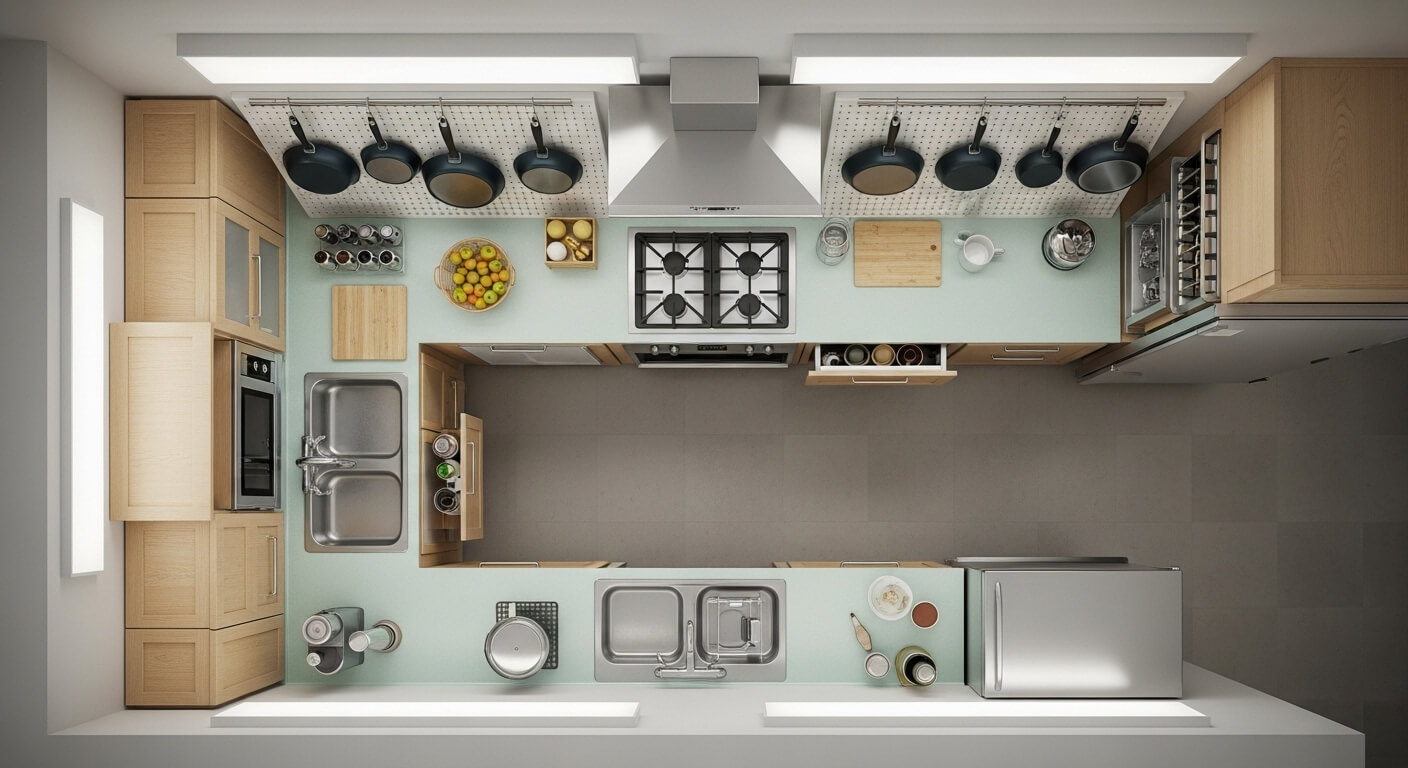
Store skillets where you use them. Don’t stack them in a low cabinet where you have to bend and dig.

Options:

  • Hanging pot rack (if you can reach it safely)
  • On the stovetop (most convenient)
  • On a shelf right next to the stove
  • In a slide-out drawer at counter height

Never store your main skillet somewhere you need a step stool to reach. That’s dangerous with arthritis.

Ingredients within reach:

Rolling cart next to your cooking area. Load it with everything you need for a recipe. Roll it to the stove. Everything’s right there. No walking back and forth.

Lazy Susan in corner cabinets. Spins so you can reach everything without digging.

Clear containers for frequently used items—you can see what you have without moving things around.

Essential Tools for Minimal Oil Success

Must-haves:

Oil mister (pump style)—Misto is the common brand. You fill it with your oil. Pump to pressurize. Spray. Gives you control.

Fish spatula—Thin, slotted, flexible. Works for everything, not just fish. Makes flipping easy.

Long-handled silicone spatula—Heat-resistant. Won’t scratch non-stick. Easier to grip than wood.

Splatter screen—Mesh cover that lets steam escape but catches splatter. Reduces the mess and burn risk with minimal oil cooking.

Trivets or heat-proof mats—Set next to your stove. Slide pan onto trivet instead of lifting to the sink.

Nice-to-haves:

Digital kitchen scale (for portioning proteins accurately)
Silicone pot holders (better grip than cloth)
Kitchen timer (so you don’t have to watch constantly)

Storage Solutions for Limited Mobility

Lower your storage. Everything you use regularly should be between waist and shoulder height.

Reorganization priorities:

Top cabinets: Holiday dishes, rarely used items
Eye-level cabinets: Daily dishes, glasses
Lower cabinets: Pots, pans, heavy appliances (wait—these should be higher if you can manage it)

Actually, here’s better logic: Store heavy items at counter height where you can slide them out. Light items can go higher or lower.

Install pull-out shelves in lower cabinets. No crouching and reaching to the back.

Use drawer organizers so everything has a spot. No digging through tangled utensils.

Cleaning and Maintenance with Arthritis Considerations

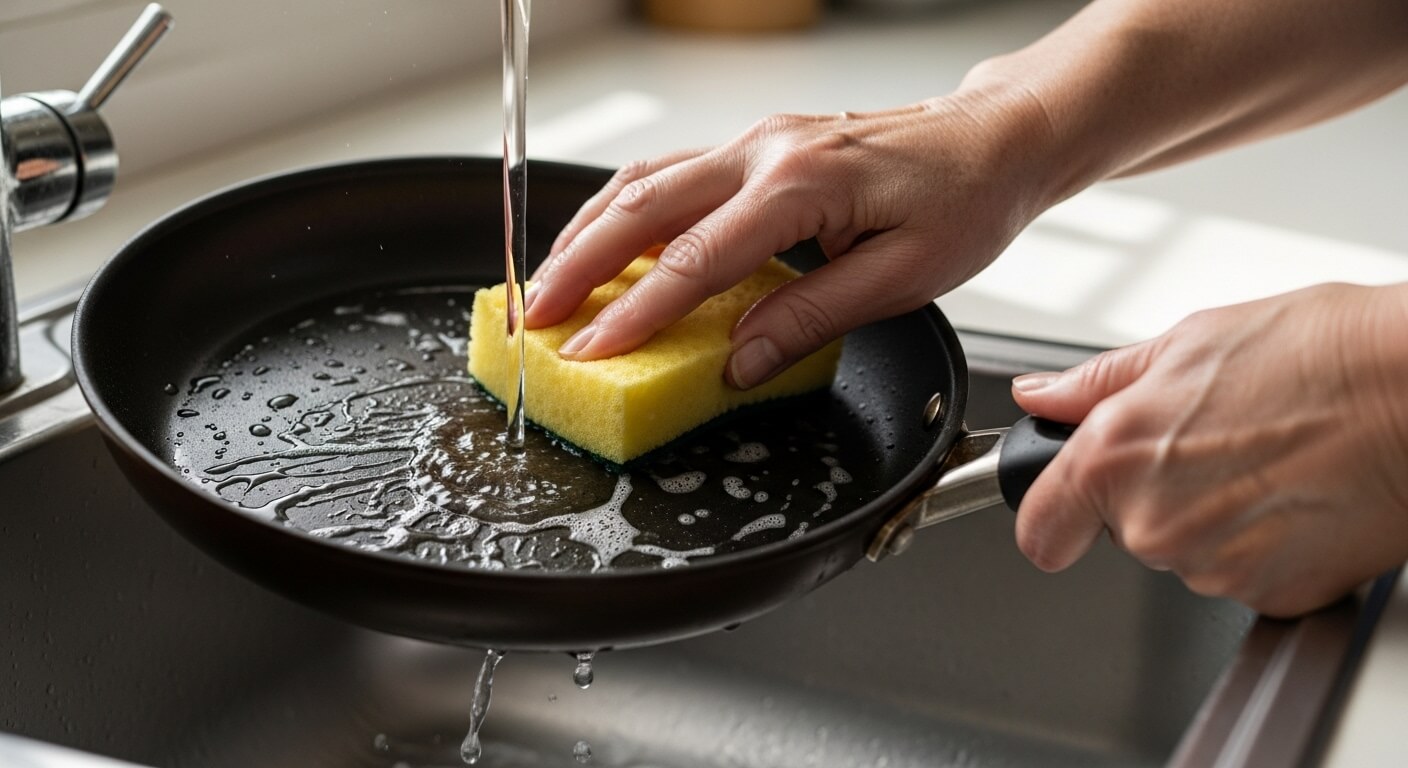
Non-stick cleaning for arthritis hands:

Let the pan cool slightly. Run hot water over it. The stuck bits usually rinse right off.

Use a soft sponge or dishcloth. No scrubbing required with good non-stick.

Dry with a towel (or let air dry if gripping towels hurts).

Wipe with paper towel before storing.

That’s it. Two minutes.

When pans need deep cleaning:

Soak in hot soapy water for 15 minutes. Scrub gently. Most stuff releases.

For stubborn residue: Make a paste of baking soda and water. Spread in pan. Let sit 20 minutes. Wipe out.

Never use steel wool on non-stick. Ruins the coating.

Knowing when to replace:

When food starts sticking despite proper technique—your non-stick coating is worn out. Time for a new pan.

When you see scratches or flaking—don’t keep using it. The coating shouldn’t be in your food.

When the pan warps (bottom isn’t flat anymore)—get a new one.

A good non-stick skillet lasts 2-5 years with proper care. Budget $30-60 every few years.

Combining Cardiovascular Nutrition with Arthritis Management

Combining cardiovascular nutrition with arthritis management means choosing foods that fight inflammation (like fatty fish and colorful vegetables) while keeping saturated fats and sodium low—a dual approach that addresses both conditions simultaneously.

Anti-Inflammatory Foods in Heart-Healthy Skillet Meals

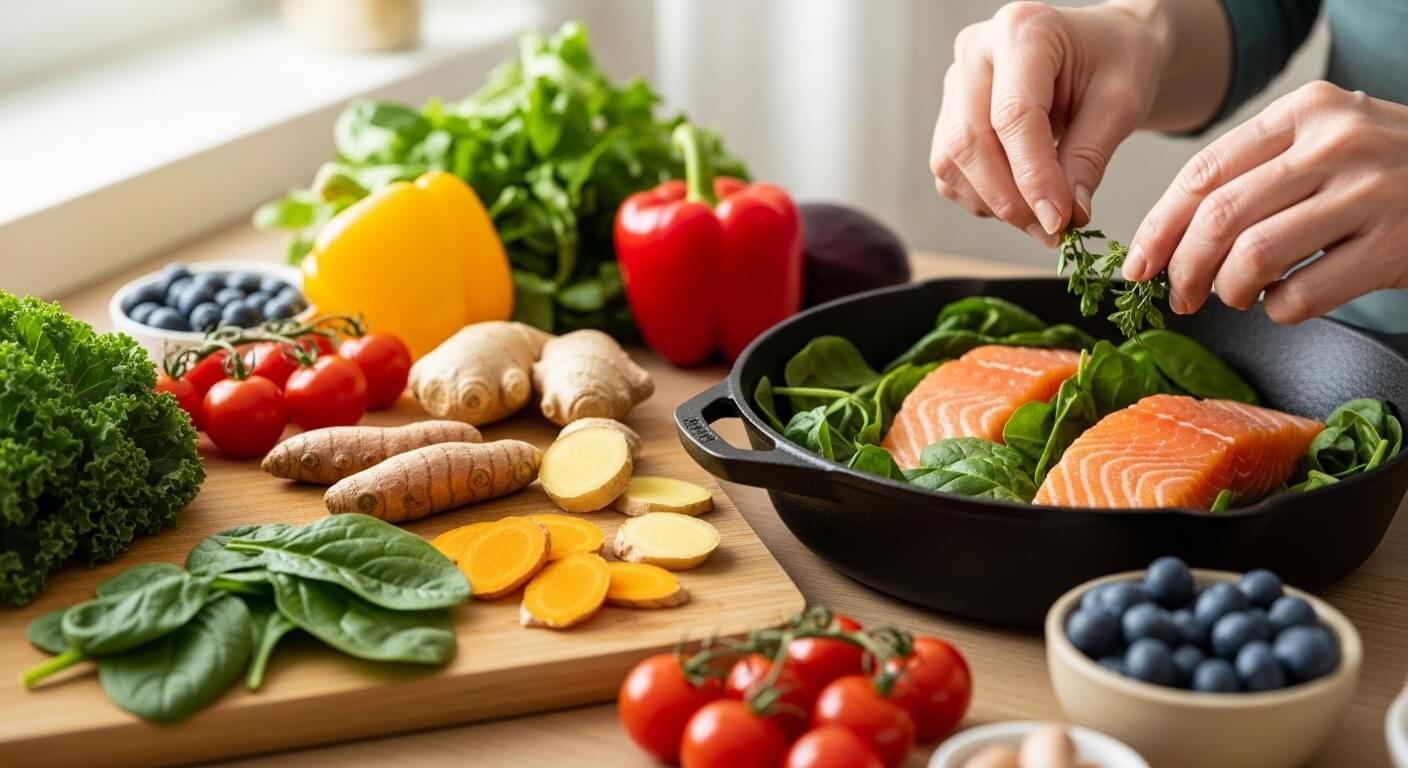
Anti-inflammatory foods for arthritis that also support heart health include fatty fish (salmon, mackerel), colorful vegetables (bell peppers, tomatoes), olive oil in minimal amounts, and whole grains—all of which can be prepared in a skillet with 1-2 teaspoons of fat.

The inflammation-fighting roster:

Fatty fish—Omega-3s reduce inflammation and protect your heart. Aim for 2-3 servings weekly.

Berries—Toss them on your breakfast skillet eggs or oatmeal. Antioxidants galore.

Leafy greens—Spinach, kale, Swiss chard. Wilt them into everything. Vitamins K, C, and loads of phytonutrients.

Nuts and seeds—As garnishes, not cooked in. Sprinkle walnuts or pumpkin seeds on finished dishes.

Turmeric and ginger—The research on these for arthritis is solid. Add them to stir-fries, curries, anything.

Sample anti-inflammatory skillet meal:

Salmon (omega-3s) with roasted bell peppers and cherry tomatoes (antioxidants) over quinoa (whole grain), finished with a sprinkle of walnuts (more omega-3s).

Total oil needed: 1 teaspoon. But you’re getting healthy fats from the salmon and walnuts anyway.

Sodium Considerations for Both Conditions

High sodium worsens blood pressure (heart issue) and can increase inflammation (arthritis issue)—so keep sodium under 1,500-2,000 mg daily by using low-sodium broths, limiting salt, and relying on herbs and spices.

Salt makes everything taste better. That’s the problem.

But too much sodium makes your heart work harder. Raises blood pressure. Increases heart attack risk.

Some research suggests it might worsen inflammation too (though this is less established).

Sodium limit for seniors with heart disease: 1,500 mg daily (American Heart Association recommendation)

That’s not much. One can of regular soup = 800-1,000 mg.

How to keep sodium low in skillet cooking:

Use low-sodium or no-salt-added broths. Regular broths have 700+ mg per cup.

Skip the salt during cooking. Add a tiny pinch at the end if needed.

Use acid instead—lemon juice, vinegar. They brighten flavors like salt does.

Load up on herbs and spices. They’re naturally sodium-free.

Flavor without sodium:

Garlic powder (not garlic salt)
Onion powder (not onion salt)
Black pepper, red pepper flakes
Fresh herbs—cilantro, basil, parsley
Smoked paprika, cumin, oregano

Mrs. Dash and other salt-free blends work fine too (though fresh is better).

Fiber-Rich Ingredients for Cardiovascular Health

Fiber reduces cholesterol, controls blood sugar, and promotes healthy weight—add beans, lentils, whole grains, and vegetables to skillet meals to hit the 25-30 grams daily target for heart health.

Most seniors don’t get enough fiber. Not close.

Daily fiber target: 25 grams for women, 30 grams for men

What high fiber does:

  • Binds to cholesterol in your gut (removes it before absorption)
  • Slows digestion (prevents blood sugar spikes)
  • Keeps you full longer (helps with weight management)
  • Improves gut health (which affects inflammation)

Easy fiber additions to skillet meals:

Beans—Add to anything. They’re already cooked (canned). Half a cup = 6-8 grams fiber.

Lentils—Cook from dry in your skillet. One cup cooked = 15 grams fiber. Massive.

Whole grains—Brown rice, quinoa, farro. Three to four grams per half-cup serving.

Vegetables—Every vegetable has some. Broccoli, Brussels sprouts, and artichokes are especially high.

One skillet meal with 1 cup beans, 1 cup quinoa, and 2 cups vegetables? You’ve hit 20+ grams of fiber easily.

Portion Control for Weight Management

Skillet cooking naturally controls portions because the pan size limits how much you make—a 10-inch skillet holds 2-3 servings maximum, preventing the mindless overeating that happens when you cook huge batches.

Smaller pan = smaller servings. Not rocket science.

Visual portion guides for heart health:

Protein—3-4 oz (size of deck of cards or your palm)
Whole grains—1/2 cup cooked (size of a tennis ball)
Vegetables—1-2 cups (as much as you can fit)

In a 10-inch skillet, this looks like:

  • One chicken breast or two thighs
  • Vegetables filling half the pan
  • Grain filling the rest

Make it. Plate it directly from the skillet. Put the skillet away. You can’t mindlessly grab seconds if the food isn’t sitting out.

Why portion control matters for both conditions:

Excess weight stresses your joints (arthritis pain increases).
Excess weight stresses your heart (blood pressure, cholesterol rise).
Losing just 10 pounds can reduce knee arthritis pain significantly.
Losing 5-10% of body weight improves cardiovascular markers.

Not saying it’s easy. Saying it matters.

Safety Considerations for Seniors Cooking with Minimal Oil

Safety in minimal oil cooking actually improves because less oil means less splatter, lower fire risk, and easier cleanup—but seniors still need proper pot holders, should use both hands when lifting, and must never leave cooking unattended.

Preventing Burns and Splatters

Minimal oil = minimal splatter. This is actually safer than traditional cooking.

When you pour 3 tablespoons of oil in a hot pan, it pops and spits everywhere. Tiny oil drops flying around. That’s how you get burned.

With 1 teaspoon oil or cooking spray? Way less movement. Food sizzles, but the oil isn’t jumping out of the pan.

Additional splatter prevention:

Pat food dry before cooking. Wet food hitting hot oil = splatter city.

Use a splatter screen. $10-15. Sits on top of your skillet. Steam escapes, splatter doesn’t.

Don’t drop food from a height. Lower it gently into the pan.

If you do get burned:

Run cool water over it immediately. Not ice. Just cool water.

Don’t pop blisters if they form.

Small burns heal fine. Large burns or burns on the face—see a doctor.

Managing Hot Cookware with Limited Hand Strength

Two-handed rule: Always lift hot skillets with both hands.

Use the main handle and helper handle. Distribute weight evenly.

Keep it close to your body as you move it. Don’t extend your arms out.

If you can’t lift it safely, slide it. Slide from burner to trivet. Slide from stove to counter.

Pot holder selection:

Thick oven mitts (not thin towels). Silicone ones with good grip.

Make sure they’re completely dry. Wet pot holders conduct heat.

Long mitts that cover your wrists and forearms.

When to ask for help:

Transferring heavy skillets from oven.
Pouring off cooking liquid (too awkward with arthritis).
Moving full skillets long distances.

Not a failure. Just smart.

Fire Safety with Oil-Based Cooking

Minimal oil reduces fire risk dramatically—there’s simply less fuel for a potential fire.

But oil can still smoke and ignite if overheated.

Never do this:

Leave heating oil unattended. Not even for 30 seconds to grab something.

Heat oil over high heat. Medium is plenty.

Use the wrong oil for high temps (don’t use extra virgin olive oil for searing).

If oil starts smoking:

Turn off the heat immediately.
Remove the pan from the burner (if you can safely).
Let it cool down.

If oil catches fire:

DO NOT throw water on it. Water makes oil fires spread.

Turn off the heat.

Cover with a lid (starves it of oxygen).

If it doesn’t go out immediately, use a fire extinguisher or call 911.

This is rare with minimal oil cooking. But know what to do.

Preventing Falls and Kitchen Accidents

Oil on the floor = slip hazard. Even minimal oil.

Immediate cleanup:

Any spill gets wiped immediately. Keep paper towels handy.

Grease on hands gets washed off before touching door handles or other surfaces.

Splatter on the floor around the stove gets mopped.

Kitchen safety setup:

Non-slip mats in front of the stove and sink.

Good lighting—overhead lights plus under-cabinet lights.

Clear pathways. No clutter, cords, or rugs to trip on.

Shoes with grip (not slippers or socks).

Most kitchen falls aren’t from cooking directly. They’re from poor setup and clutter.

Monitoring Health Outcomes from Heart-Healthy Minimal Oil Cooking

Monitor your results by tracking cholesterol and blood pressure quarterly, noting changes in energy levels and joint pain weekly, and weighing yourself monthly—consistent minimal oil cooking should show measurable improvements within 3-6 months.

Tracking Cardiovascular Improvements

What to measure:

Cholesterol panel (every 3-6 months)

  • Total cholesterol (goal: under 200 mg/dL)
  • LDL cholesterol (goal: under 100 mg/dL)
  • HDL cholesterol (goal: 60+ mg/dL for women, 40+ for men)
  • Triglycerides (goal: under 150 mg/dL)

Blood pressure (monthly at home, or every doctor visit)

  • Goal: Under 130/80 for most seniors
  • Under 140/90 if you’re 65+ and otherwise healthy

Weight (weekly or monthly)

  • Even 5-10 pound loss can improve numbers

Expected timeline:

1-2 months: Might see slight blood pressure improvement and weight loss
3-4 months: Cholesterol starts improving, more weight loss
6+ months: Significant improvements if you’re consistent

Keep a simple log. Date, blood pressure, weight. Track trends over time.

Recognizing Benefits to Arthritis Symptoms

Inflammation indicators:

Less morning stiffness. Your hands feel better when you wake up.

Reduced swelling in joints. Rings fit better. Knees look less puffy.

Improved mobility. You can grip things better. Walk further without pain.

More energy. Chronic inflammation causes fatigue. Less inflammation = more energy.

Keep a pain journal:

Rate your pain daily (1-10 scale). Note what you ate.

After 4-6 weeks of minimal oil, anti-inflammatory eating, see if your average pain score drops.

Many people notice arthritis improvements from weight loss alone. Every pound lost = 4 pounds less pressure on your knees.

Adjusting Cooking Methods Based on Results

If your numbers are improving—great. Keep doing what you’re doing.

If they’re not improving after 3 months of consistent minimal oil cooking:

Check your overall diet. Minimal oil in cooking doesn’t help if you’re eating fast food five times a week.

Look at portion sizes. Healthy food in massive quantities still causes weight gain.

Consider other fats. Cheese, nuts, avocados—healthy but calorie-dense. Watch portions.

Review your recipes. Are you actually using minimal oil or creeping back up to tablespoons?

Talk to your doctor. Sometimes you need medication in addition to diet changes. That’s okay.

Don’t expect diet alone to fix severe cardiovascular disease. But it absolutely helps, especially combined with medication when needed.

Working with Dietitians and Medical Professionals

When to see a registered dietitian:

Your cholesterol isn’t improving despite diet changes.

You have multiple conditions to manage (diabetes + heart disease + arthritis).

You need help planning meals and tracking nutrition.

You’re losing too much weight or not enough.

What to tell your doctor:

“I’ve been cooking with minimal oil for heart health. Here’s what I’m doing…” (Explain your methods.)

“Can we check my cholesterol again to see if it’s helping?”

“I’m concerned about [specific symptom]. Could it be related to my diet changes?”

Bring your food journal or a sample week of meals. Makes the conversation more productive.

And coordinate between specialists. Your cardiologist cares about your heart. Your rheumatologist cares about your arthritis. But diet affects both. Make sure they’re all aware of your approach.

Troubleshooting Common Challenges in Minimal Oil Skillet Cooking

Common minimal oil cooking problems—food sticking, bland taste, weak grip control, and perceived time investment—all have straightforward solutions involving better technique, flavor layering, adaptive tools, and recipe selection.

“My Food Keeps Sticking Even with Non-Stick Pans”

Likely causes:

Pan isn’t hot enough. Preheat longer.

Pan is TOO hot. Try medium instead of medium-high.

Food is wet. Pat it dry.

Your non-stick coating is shot. Time for a new pan.

The fix:

Preheat 3-5 minutes. Add tiny amount of oil. Wait 30 seconds. Add food.

Don’t move food immediately. Let it cook undisturbed for the first few minutes.

If using water-sauté method, make sure you’re adding enough liquid.

“Everything Tastes Bland Without Oil”

Oil isn’t flavor. It’s a flavor carrier. Big difference.

You can get flavor without it.

Flavor-building checklist:

✓ Did you season with salt? (Even a small amount helps)
✓ Did you brown anything? (Maillard reaction creates flavor)
✓ Did you add acid? (Lemon, vinegar, tomatoes)
✓ Did you use aromatics? (Garlic, onions, ginger)
✓ Did you include umami? (Soy sauce, mushrooms, tomato paste)
✓ Did you finish with fresh herbs?

If you hit 4-5 of these, your food won’t taste bland.

The finishing oil trick:

Cook with minimal oil. At the very end, drizzle 1/2 teaspoon of good olive oil over the finished dish.

You taste it more when it’s added at the end vs. cooked throughout. Uses less oil, more flavor impact.

“I Don’t Have the Strength to Control the Pan”

Switch to a lighter pan. Period.

A 10-inch hard-anodized non-stick weighs about 2.5 pounds. That’s manageable for most people.

A 10-inch cast iron weighs 7-8 pounds. That’s not manageable for many.

Other solutions:

Use two hands always.

Cook smaller portions (8-inch skillet instead of 10-inch).

Sit on a stool while cooking. Less energy required.

Use utensils to move food rather than tilting the pan.

When sliding is smarter than lifting:

Slide from burner to trivet (next to stove).

Slide into oven instead of lifting.

Use a spatula to transfer food to plates instead of pouring from the pan.

“Minimal Oil Cooking Takes Too Long”

It doesn’t. Not if you’re doing it right.

Time-saving strategies:

Buy pre-cut vegetables. Costs more. Saves significant prep time.

Use canned beans and tomatoes. Already cooked.

Choose quick-cooking proteins (fish, shrimp, thin chicken breasts).

Cook grains ahead. Reheat in the skillet with your protein and vegetables.

Quick recipes under 20 minutes:

Shrimp and zucchini noodles (12 minutes)
Scrambled eggs with vegetables (8 minutes)
Turkey and bean skillet (15 minutes)
Pan-seared fish with steamed broccoli (18 minutes)

These use minimal oil AND take less time than ordering delivery.

Budget-Friendly Approaches to Heart-Healthy Skillet Cooking

Budget-friendly minimal oil skillet cooking focuses on affordable proteins like chicken thighs and canned beans, seasonal vegetables bought on sale, and investing in just one quality non-stick skillet that will last 3-5 years.

Affordable Heart-Healthy Ingredients

Cheap proteins that work great:

Chicken thighs (bone-in, skin-off)—Often $1.50-2.00/lb on sale. More flavor than breasts. Remove the skin yourself.

Canned tuna or salmon—$1-3 per can. Omega-3s on a budget.

Eggs—Protein for pennies. A dozen for $3-5.

Dried beans and lentils—Under $2 per pound dry. Makes multiple meals.

Vegetable strategies:

Buy seasonal. Zucchini in summer, butternut squash in fall, etc. Way cheaper.

Frozen vegetables are fine. Often cheaper than fresh and last longer.

Shop sales. Buy extra when peppers or onions are 50% off. Chop and freeze them.

Grains and starches:

Brown rice in bulk. Cheaper than packaged.

Dried oats for breakfast skillets.

Sweet potatoes (usually under $1/lb).

Investing in Quality Skillets Without Breaking the Bank

You don’t need a $200 All-Clad skillet for minimal oil cooking. You really don’t.

Budget options that work:

T-fal non-stick 10-inch: $20-30 (lasts 2-3 years)
Cuisinart non-stick 10-inch: $30-40 (lasts 3-4 years)
Tramontina non-stick 10-inch: $25-35 (good quality for price)

When to splurge:

If you can afford $80-120 for a Calphalon or All-Clad, it’ll last 5+ years. Better long-term value.

But if budget is tight, the $25-30 options work fine. Just accept you’ll replace them more often.

Care extends life:

Hand wash (even if dishwasher-safe—it lasts longer).

Don’t overheat.

Use silicone or wood utensils (not metal).

A $30 pan treated well lasts as long as a $100 pan treated poorly.

Reducing Food Waste with One-Pan Cooking

Save vegetable scraps:

Onion peels, celery ends, carrot tops—freeze them. When you have a gallon bag full, simmer in water for 2 hours. Free vegetable broth.

Leftover strategies:

Cooked chicken from Monday’s skillet becomes Tuesday’s soup or salad.

Extra vegetables get added to scrambled eggs the next morning.

Brown rice from dinner becomes fried rice tomorrow (spray the pan, add rice, egg, vegetables, soy sauce).

Portion planning:

Cook exactly what you’ll eat in 2-3 days. More than that and stuff goes bad.

One 10-inch skillet meal typically makes 2-3 servings. Perfect for one person (with leftovers) or a couple.

Meal Planning to Maximize Budget and Health

Weekly planning approach:

Sunday: Plan 4-5 skillet meals for the week
Shop once with a specific list
Prep vegetables Sunday evening (if you have energy)
Cook Monday, Wednesday, Friday (leftovers fill the gaps)

Shopping list structure:

1 protein on sale (chicken thighs, ground turkey, whatever)
5-6 vegetables (mix of fresh and frozen)
2-3 grains/starches
Basics: onions, garlic, canned tomatoes
Low-sodium broth

This covers multiple meals. Budget: $30-50 depending on location.

Pantry staples to keep stocked:

Olive oil (one bottle lasts months with minimal oil cooking)
Spices and dried herbs
Canned beans
Rice or quinoa
Low-sodium broth (buy when on sale)

When your pantry is stocked, you only need to buy fresh items weekly.

Advanced Techniques for Experienced Minimal Oil Cooks

Advanced minimal oil techniques include developing natural non-stick properties on stainless steel through proper heat and protein manipulation, creating restaurant-quality browning with just 1/2 teaspoon of oil, and combining multiple cooking methods (steam, sear, braise) in one pan for complex flavors.

Developing Natural Non-Stick Properties in Skillets

Stainless steel develops a temporary non-stick surface when you do this:

Heat pan over medium heat (3 minutes). Add 1/2 teaspoon oil. Heat 30 seconds. Add protein (patted very dry).

Don’t touch it for 4-5 minutes. It literally builds a barrier layer between the protein and pan through the Maillard reaction.

When it’s ready to flip, it releases. If you try to flip too early, it tears and sticks.

This is advanced because it requires patience and experience knowing when to flip.

Carbon steel seasoning:

Similar to cast iron but lighter. Build up seasoning layers over time through repeated cooking.

Each time you cook with a thin layer of oil, wipe the pan, heat it until it smokes slightly—you’re adding to the seasoning.

After 20-30 uses, carbon steel becomes naturally non-stick.

Creating Restaurant-Quality Results with Less Fat

The secret: High heat, dry food, minimal movement.

Restaurants use lots of oil and butter. But they also use technique.

You can replicate the technique with minimal fat:

Protein dried completely (paper towels).
Pan screaming hot (but not burning).
Just 1/2 teaspoon oil (spread with paper towel).
Place protein. Don’t touch it. Leave it.

The surface caramelizes. Gets crispy. Releases naturally when ready.

Deglazing for sauce:

After cooking protein, the brown bits stick to the pan (fond).

Add 1/4 cup wine or broth. Scrape with wooden spoon.

The liquid lifts all that flavor. Reduces into a sauce.

Restaurant technique. Zero added oil.

Mastering Multiple Cooking Methods in One Pan

Sear → Steam → Finish:

Sear chicken in 1 teaspoon oil (3 minutes per side).
Add vegetables and 1/4 cup broth.
Cover. Steam 10 minutes.
Uncover. Let liquid evaporate while everything finishes cooking.

This gives you: crispy exterior, moist interior, cooked vegetables, pan sauce. One skillet.

Roast → Sauté → Deglaze:

Oven-roast vegetables in skillet at 425°F (cooking spray only).
Transfer skillet to stovetop. Add garlic (sauté 30 seconds).
Deglaze with lemon juice.

Multiple techniques. Multiple flavor layers. Minimal oil.

Experimenting with International Minimal Oil Cuisines

Mediterranean minimal oil:

Greek-style: Lemon, oregano, garlic, tomatoes. Everything cooked in broth instead of olive oil (save 1 teaspoon olive oil for finishing).

Asian stir-fry adapted:

Use 1 teaspoon sesame oil (it’s potent—a little goes far). Stir-fry with broth. Finish with soy sauce, rice vinegar, ginger, scallions.

Latin American:

Sofrito base (onions, peppers, garlic) water-sautéed. Add beans, tomatoes, cumin. Finish with lime and cilantro.

Indian-inspired:

Toast spices in dry pan. Add minimal oil. Water-sauté onions. Add tomatoes and coconut milk (light version). Simmer with protein and vegetables.

The flavors are bold enough that you don’t miss the oil.

Building Long-Term Habits for Heart-Healthy Skillet Cooking

Building sustainable minimal oil cooking habits requires starting with just one meal per day, celebrating small wins like improved energy or easier cleanup, adapting techniques when arthritis flares, and finding a support system to stay motivated.

Creating Sustainable Cooking Routines

Start small. One minimal oil meal per day. Maybe dinner.

Don’t try to overhaul everything at once. That’s overwhelming and fails.

Week 1-2: Dinner in the skillet with minimal oil. Eat whatever for breakfast and lunch.

Week 3-4: Add breakfast skillet meals.

Month 2: Most meals minimal oil, occasional regular cooking.

Month 3+: This is just how you cook now.

Make it easy:

Same skillet. Same utensils. Same spot on the stove. Routine reduces decision fatigue.

Rotate 5-7 favorite recipes. You don’t need variety every single day.

Prep on good days. When arthritis flares, reheat what you made earlier.

Adapting to Changing Arthritis Symptoms

Some days are better than others. That’s arthritis.

Bad pain days:

Use the simplest recipes. Eggs and toast. Canned soup heated in the skillet.

Ask for help if someone’s available.

It’s okay to eat a sandwich instead of cooking. One meal off-plan doesn’t ruin everything.

Good days:

Batch cook. Make extra. Freeze portions.

Prep ingredients for the week (chop vegetables, portion proteins).

Experiment with new recipes when you have energy.

Flare-ups:

Switch to seated cooking entirely.

Use lighter skillets.

Focus on one-pot meals that don’t require transfers.

Consider a slow cooker or instant pot for days when skillet cooking is too much.

The goal is nutrition, not perfection.

Staying Motivated for Heart Health Goals

Track non-scale victories:

“My blood pressure dropped 10 points.”
“I walked further without getting winded.”
“My wedding ring fits again.”
“I have energy in the afternoons now.”

These matter more than pounds lost.

Set process goals, not just outcome goals:

Outcome goal: “Lose 20 pounds” (you can’t always control this)
Process goal: “Cook with minimal oil 5 days per week” (you CAN control this)

Hit your process goals. The outcome goals usually follow.

Reward yourself:

After 30 days of consistent minimal oil cooking, buy yourself something nice (not food). New kitchen tool. Book. Whatever you enjoy.

After 90 days, celebrate bigger.

Positive reinforcement works.

Teaching Others Your Techniques

Once you’ve got this down, share it.

Family members: Show them how to water-sauté. How to measure oil properly. How to use cooking spray.

Friends with similar health issues: Invite them over. Cook a minimal oil meal together.

Online communities: Join heart-healthy or arthritis support groups. Share what’s working for you.

Teaching reinforces your own knowledge. And you help people who are where you were months ago.

Resources and Support for Heart-Healthy Skillet Cooking

Resources for heart-healthy minimal oil skillet cooking include American Heart Association cookbooks, arthritis cooking communities on social media, registered dietitian consultations (often covered by insurance), and adaptive kitchen equipment suppliers for seniors.

Heart-healthy cookbooks:

  • “American Heart Association Quick & Easy Cookbook” (lots of skillet meals)
  • “The Mediterranean Diet for Beginners” by Rockridge Press
  • “500 Heart-Healthy Slow Cooker Recipes” (adapt to skillet)

Arthritis-friendly cooking:

  • Arthritis Foundation website has free recipes and cooking tips
  • “The Easy Anti-Inflammatory Diet” by Karissa
  • Long (skillet-adaptable recipes)

Free online:

  • Heart.org (American Heart Association recipe database)
  • MyPlate.gov (USDA recipes and meal planning)
  • AllRecipes.com (filter by “healthy” and “one-pan”)

YouTube channels for visual learners—lots of healthy cooking channels demonstrate techniques.

Online Communities and Support Groups

Facebook groups:

  • “Heart Healthy Cooking and Living”
  • “Arthritis Kitchen Hacks”
  • “Senior Meal Prep and Planning”

Reddit:

  • r/HealthyFood
  • r/EatCheapAndHealthy
  • r/Arthritis (has cooking threads)

Forums:

  • Arthritis Foundation Community (inspire.arthritis.org)
  • American Heart Association Support Network

These communities answer questions, share recipes, provide encouragement.

Medical and Nutritional Resources

Finding a registered dietitian:

  • eatright.org (Academy of Nutrition and Dietetics) has a “Find a Nutrition Expert” tool
  • Many insurance plans cover nutrition counseling (especially for heart disease or diabetes)
  • Ask your doctor for a referral

Telehealth options:

  • Many dietitians offer video consultations now
  • Easier if mobility is limited
  • Often covered by Medicare or private insurance

Free resources:

  • County extension offices often have nutrition classes
  • Senior centers sometimes offer cooking classes
  • Library has cookbooks and health resources

Apps for tracking:

  • MyFitnessPal (tracks calories and fat)
  • Carb Manager (tracks macros)
  • Blood pressure apps (log BP readings)

Shopping Resources and Ingredient Guides

Grocery delivery/pickup:

  • Instacart, Amazon Fresh, Walmart Grocery
  • Order online, pick up or get delivery
  • Reduces physical strain of shopping

Heart-healthy shopping lists:

  • American Heart Association website has printable lists
  • Mayo Clinic has grocery guides
  • Print and keep in your wallet

Adaptive kitchen equipment:

  • MaxiAids.com (adaptive kitchen tools)
  • Amazon “arthritis kitchen tools” search
  • Specialized grips, jar openers, ergonomic utensils

Local resources:

  • Ask your doctor about medical supply stores in your area
  • Occupational therapists can recommend specific tools
  • Senior centers sometimes have equipment lending programs
Previous Post
Best Ergonomic Kitchen Layout for Seniors with Arthritis and Their Skillets
Seniors

Best Ergonomic Kitchen Layout for Seniors with Arthritis and Their Skillets

Next Post
How Cooking in Cast Iron Helps Seniors with Arthritis Meet Their Daily Iron Needs
Seniors

How Cooking in Cast Iron Helps Seniors with Arthritis Meet Their Daily Iron Needs

error: Content is protected !!