Direct Answer: Lard vs Vegetable Oil for Cast Iron Skillet Seasoning
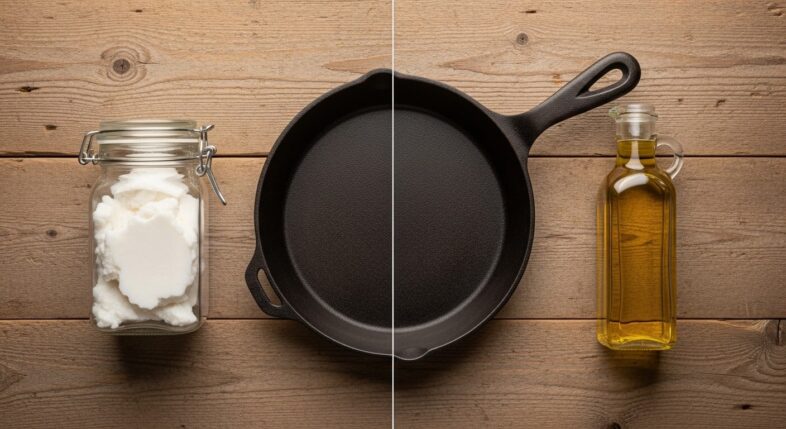
Lard creates darker, more traditional-looking seasoning that’s exceptionally durable for everyday skillet cooking, while vegetable oil produces harder, slicker seasoning that performs better at high temperatures—but honestly, both work well enough that your choice comes down to availability, dietary preferences, and what you’ve already got in your kitchen.
There. Settled.
Sort of.
Look, people have been arguing about this for decades, and here’s the truth: your grandmother’s skillet seasoned with lard has lasted 60 years, and your neighbor’s vegetable oil-seasoned Lodge works just fine too. The difference isn’t as dramatic as cast iron forums would have you believe, but there ARE real differences worth understanding before you commit to one method or the other.
Why This Comparison Matters for Your Cast Iron
The fat you choose for seasoning determines how your cast iron performs for the next several years, affects maintenance requirements, and influences whether your seasoning holds up to your actual cooking style or fails after a few months.
Here’s the thing—you’re making a time investment either way. Three to five hours of seasoning work. Multiple coats. Heating your kitchen. You want to pick the right fat from the start instead of stripping everything six months later because you chose poorly.
And different fats age differently. Some get better with time. Others peak early then decline. Some handle high-heat searing without flinching. Others work great for everyday eggs and bacon but struggle when you’re blasting a steak at 500°F.
Your cooking style matters here. What works perfectly for someone making cornbread and frying chicken might fail miserably for someone doing restaurant-style sears and stir-fries.
Quick Reference: Lard vs. Vegetable Oil Performance Overview
| Factor | Lard | Vegetable Oil |
|---|---|---|
| Ease of application | Stays put (solid at room temp) | Runs around (liquid form) |
| Seasoning color | Medium brown to dark brown | Dark brown to black |
| Initial non-stick quality | Good after 3-4 coats | Excellent after 3-4 coats |
| High-heat durability | Very good up to 450°F | Excellent up to 475°F+ |
| Long-term stability | Gets better with age | Can get brittle over years |
| Dietary restrictions | Not vegetarian/vegan | Works for everyone |
Quick takeaway? Neither one is universally “better.” They’re different tools for different situations.
Understanding How Fats Create Cast Iron Seasoning
Fat becomes seasoning when heat breaks down its molecular structure and bonds it permanently to iron through a chemical process called polymerization—basically, you’re creating a plastic-like coating from cooking fat.
The Science of Polymerization in Cast Iron Seasoning
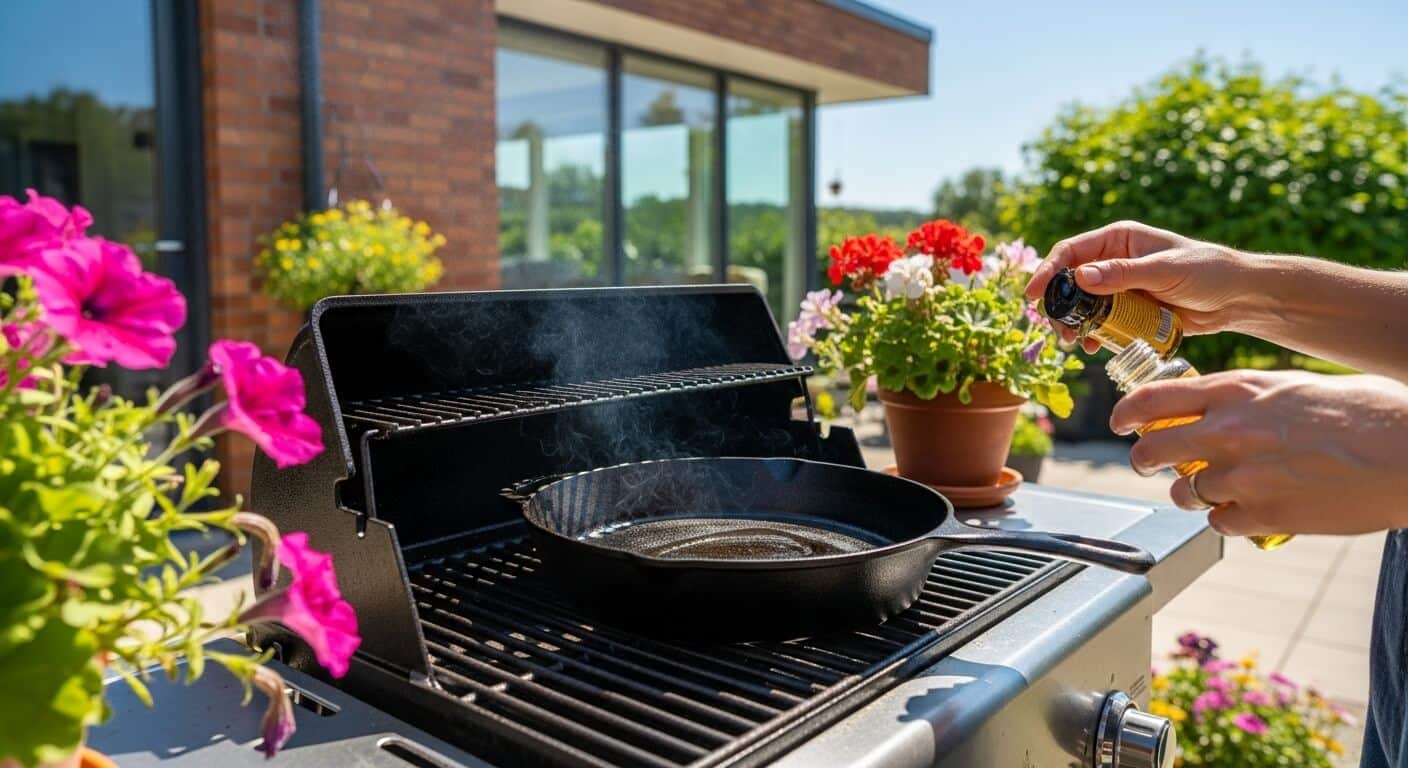
When you heat fat above its smoke point, triglyceride molecules split apart and recombine into polymers that bond with iron oxide on your skillet’s surface, creating a hard, slick layer that’s no longer grease but rather a durable coating chemically bonded to the metal.
Think of it like this: liquid fat goes in, hard plastic comes out. Same basic chemistry that makes paint dry or wood finishes cure.
But not all fats polymerize the same way. The type of fatty acids in your chosen fat—saturated vs. unsaturated, chain length, molecular weight—all affect how quickly polymerization happens, how hard the final coating gets, and how durable it is once formed.
Lard and vegetable oil have fundamentally different fatty acid profiles. This isn’t just trivia—it’s why they create different seasoning characteristics.
What Makes a Fat Good for Seasoning
Good seasoning fats have high smoke points (400°F+), contain polyunsaturated fatty acids that cross-link well, lack additives or water that interfere with bonding, and remain stable during the heating process without excessive smoking or burning.
The ideal seasoning fat:
- Smoke point above 400°F (preferably 450°F+)
- High percentage of unsaturated fats (these polymerize best)
- No water content or emulsifiers
- Neutral flavor that won’t smell weird when heated repeatedly
- Reasonable cost—you’ll use it multiple times
Both lard and vegetable oil check most of these boxes. But they hit them differently.
Smoke Point and Why It Matters for Lard vs. Vegetable Oil
Smoke point is the temperature where fat starts breaking down and smoking—you want to season just above this point for complete polymerization, which is why lard’s 370-385°F smoke point and vegetable oil’s 400-450°F smoke point create different optimal seasoning temperatures.
Here’s where things get interesting. Lard smokes at a lower temperature than most vegetable oils. This means it starts polymerizing sooner, which sounds good but creates practical challenges.
Season lard at 450°F and you’re way above its smoke point—you’ll get polymerization but also some burning. Season it at 375°F (just above smoke point) and the process takes longer and might not complete fully.
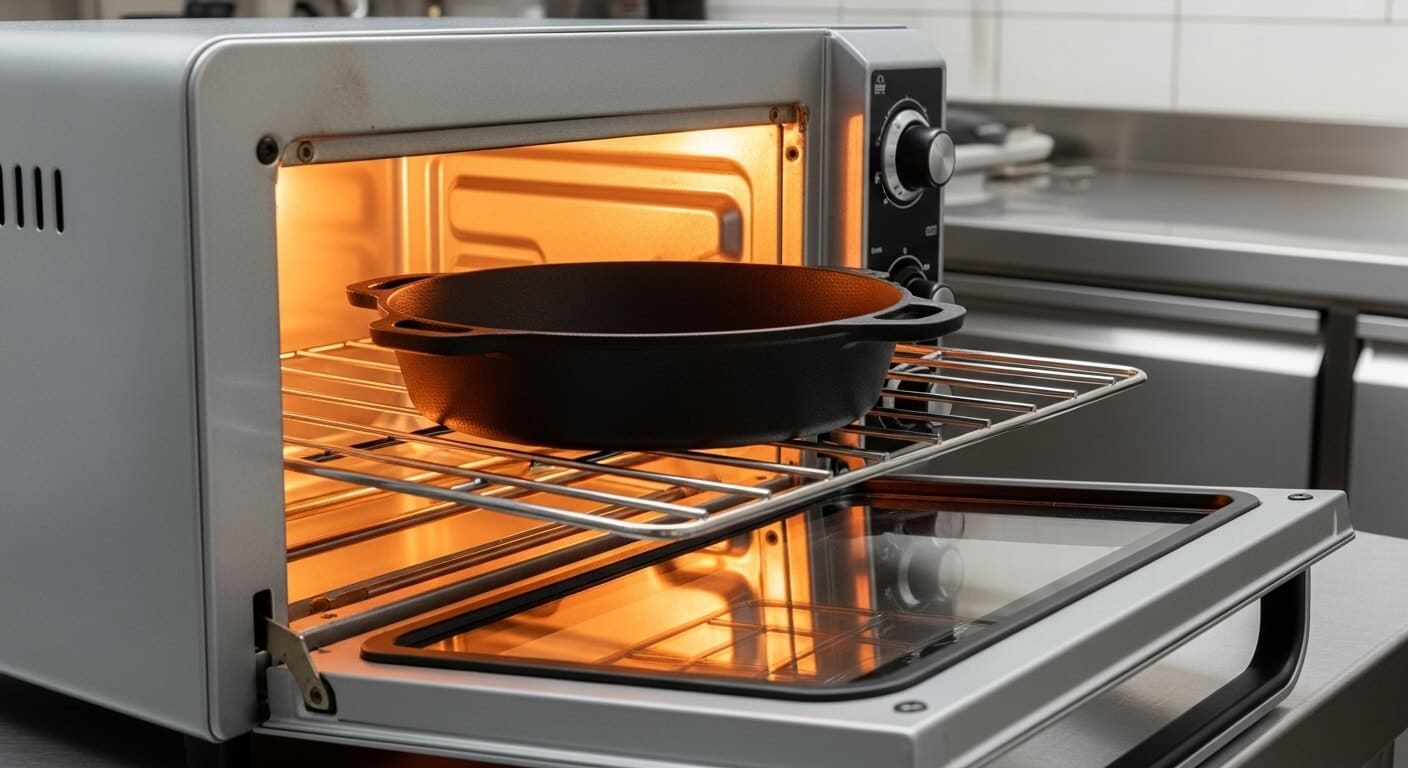
Vegetable oil handles 450°F easily. It’s right in the sweet spot—hot enough for complete polymerization without excessive burning. This is one reason vegetable oil has become the modern standard.
Fatty Acid Composition: Saturated vs. Unsaturated Fats
Lard contains roughly 40% saturated fats and 45% monounsaturated fats with minimal polyunsaturated content, while vegetable oils typically contain 60-80% polyunsaturated fats—and it’s those polyunsaturated fats that cross-link most effectively during seasoning.
Get this: saturated fats don’t polymerize well. They’re too stable. The molecular structure doesn’t want to break apart and reform. This is why butter (highly saturated) makes terrible seasoning—it just sits there getting sticky.
Polyunsaturated fats? They’re reactive. Multiple double bonds in the molecular chain mean multiple sites where cross-linking can occur. They WANT to polymerize.
So vegetable oil, with its higher polyunsaturated content, should theoretically create better seasoning. And in some ways it does—harder, slicker, more heat-resistant. But lard’s mixed composition (some saturated, mostly monounsaturated) creates seasoning with different properties that some cooks prefer.
Lard for Cast Iron Seasoning: The Traditional Choice
Lard is rendered pork fat that’s been used for cast iron seasoning since the 1800s, creating a medium-brown, moderately hard coating that’s incredibly durable for normal cooking temperatures and gets better the more you use it.
Your great-great-grandmother used lard. Not because she read blog posts comparing polymerization rates. Because it worked, it was cheap (they butchered their own pigs), and every farmhouse had a jar of it sitting by the stove.
What Is Lard and Why Cooks Have Used It for Centuries
Lard is pure pork fat that’s been slowly melted (rendered) to remove impurities, resulting in a shelf-stable cooking fat that was historically the most available and affordable option for both cooking and maintaining cookware.
Before vegetable oils became commercially available in the late 1800s and early 1900s, your fat options were basically: butter (expensive), tallow (beef fat—okay but not ideal), or lard (cheap and abundant). If you raised pigs or bought pork, you got lard as a byproduct.
People discovered through trial and error that lard-seasoned skillets developed a beautiful patina, didn’t rust, and cooked eggs without sticking. The method stuck around because it worked reliably for generations.
Types of Lard: Rendered vs. Leaf Lard vs. Commercial
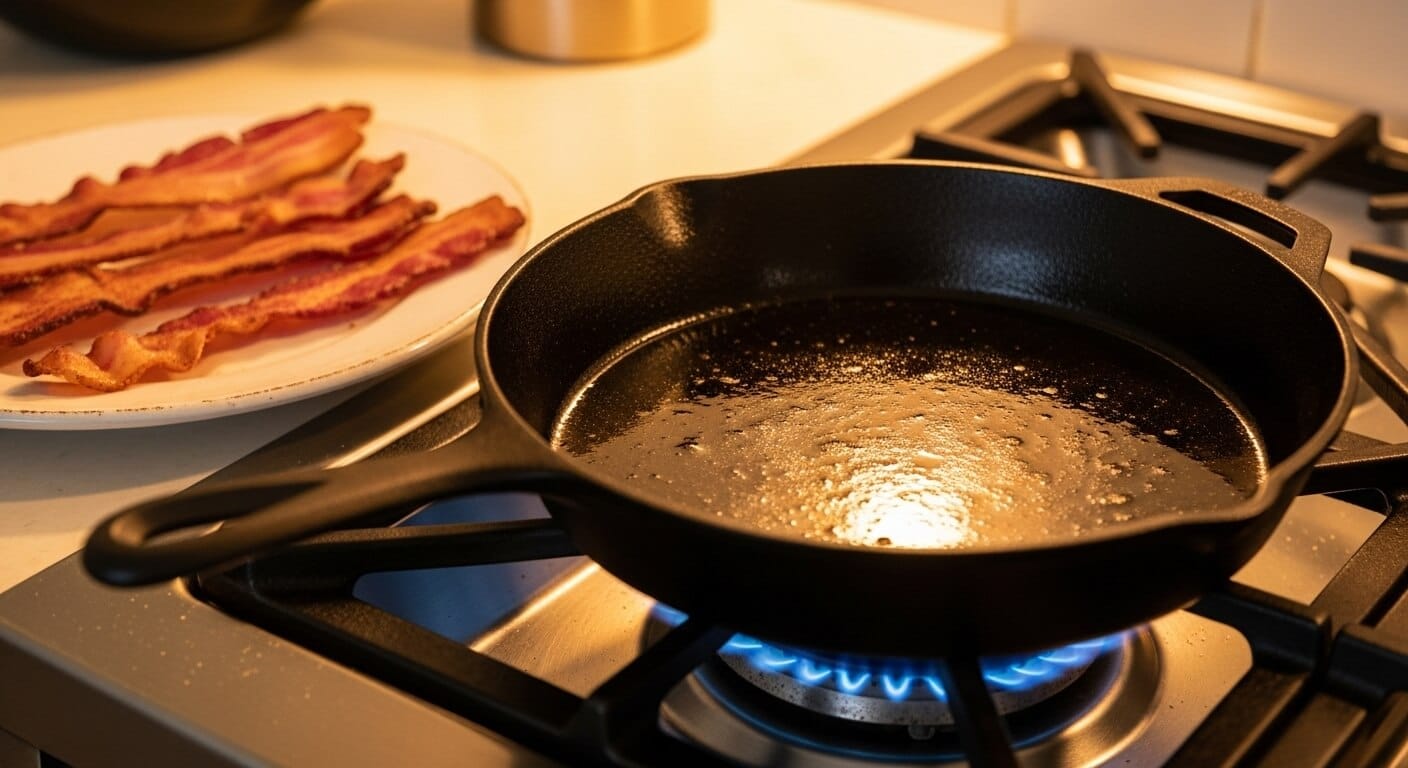
Leaf lard (from around the kidneys) is the highest quality with minimal pork flavor and works best for seasoning, while commercial shelf-stable lard often contains preservatives that can interfere with polymerization—stick with fresh-rendered lard or high-quality brands without additives.
Not all lard is equal for seasoning purposes.
Your options:
- Leaf lard – premium stuff, renders white and clean, minimal flavor
- Fatback lard – slightly more porky, works fine for seasoning
- Commercial lard (hydrogenated) – shelf-stable but contains additives, less ideal
- Home-rendered lard – fresh, no additives, perfect if you can get it
That hydrogenated commercial lard in the grocery store? It’ll work in a pinch. But fresh-rendered lard from a butcher or farmers market gives noticeably better results because there’s nothing interfering with the polymerization process.
How Lard Performs When Seasoning Cast Iron Skillets
Lard creates seasoning that builds up relatively quickly, develops a traditional medium-to-dark brown color rather than jet black, and produces a coating that’s hard enough to resist scratching but soft enough to remain flexible through temperature changes.
Three coats of lard and you’ve got functional seasoning. Not perfect. Not bulletproof. But good enough to cook with immediately.
The color stays lighter than vegetable oil seasoning. Even after a dozen coats, lard-seasoned cast iron tends toward rich brown rather than black. Some people love this traditional look. Others want that modern black finish and feel disappointed.
Lard’s Smoke Point and Polymerization Properties
With a smoke point between 370-385°F depending on quality, lard polymerizes best at 400-425°F—hot enough to complete the process but not so hot you’re burning the coating as fast as you’re building it.
This lower optimal temperature is actually an advantage if you’ve got an oven that runs hot or can’t maintain precise temps. There’s more forgiveness. A 25-degree fluctuation at 400°F isn’t as catastrophic as the same fluctuation at 475°F.
But you sacrifice some of that ultra-hard finish you get from high-temp polymerization. Lard seasoning is durable but not quite as rock-hard as properly-done vegetable oil seasoning.
The Color and Finish Lard Creates
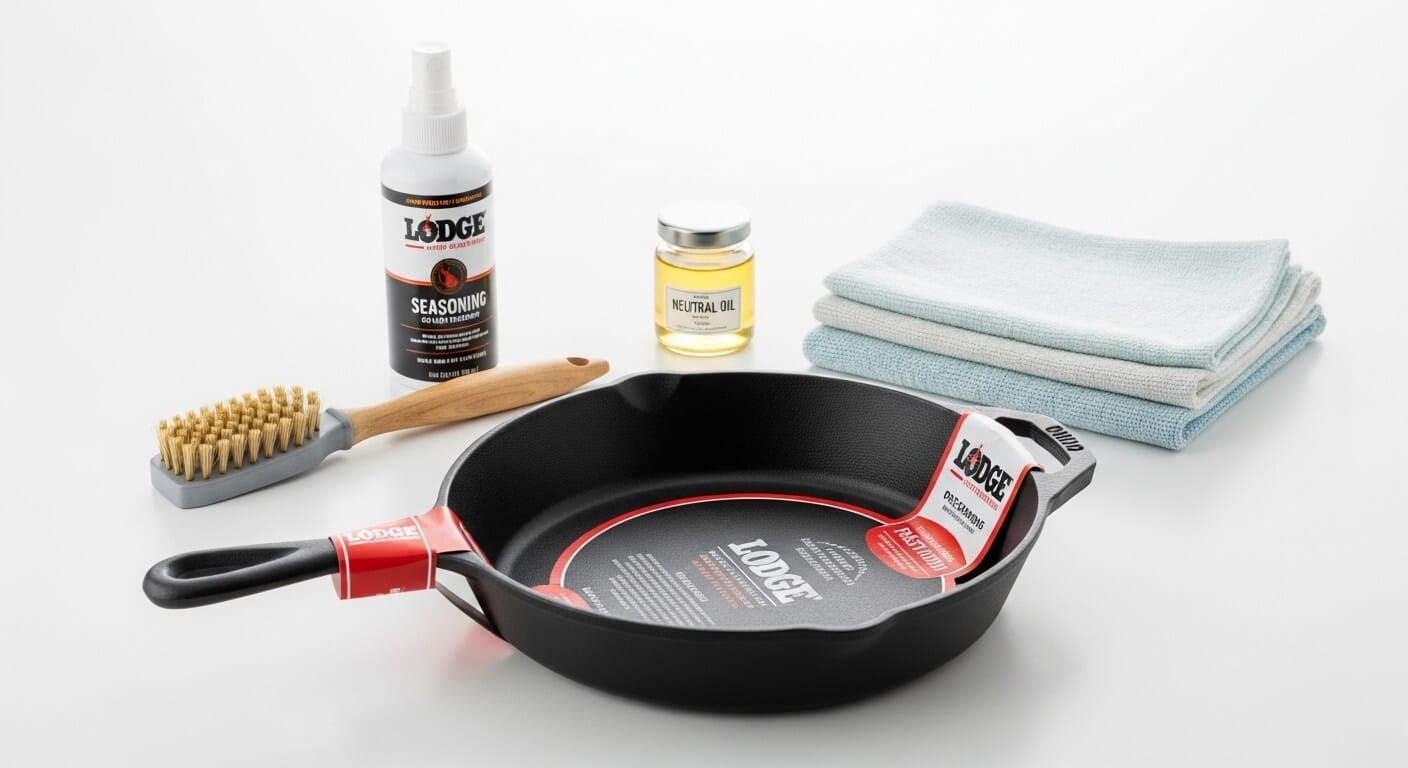
Lard-seasoned cast iron develops a rich brown patina with slight variations in color across the surface—this uneven coloring is normal and historically considered the sign of well-used, properly maintained cookware.
Don’t expect uniform black. You won’t get it with lard. The center might be darker brown, the edges lighter, with maybe some golden tones near the handle. This is traditional cast iron appearance.
Modern cooks used to black Lodge skillets sometimes think this coloring means something’s wrong. Nope. That’s just how lard seasons. It’s not better or worse, just different.
The finish feels slightly softer than vegetable oil seasoning—less glassy, more satiny. Run your finger across it and there’s a subtle texture rather than that super-slick feel of hard polymerized vegetable oil.
Durability of Lard-Based Seasoning
Lard seasoning holds up exceptionally well to normal cooking (up to 450°F), resists flaking better than most oils because it’s slightly more flexible, and actually improves with use as cooking adds more fat-based layers over the original seasoning.
Here’s where lard shines: longevity through use. Those 60-year-old skillets seasoned with lard? They’ve survived because lard seasoning gets better with age and normal cooking. Every time you fry bacon or cook a pork chop, you’re reinforcing the original seasoning with more pork fat.
It’s self-maintaining in a way vegetable oil isn’t. Vegetable oil seasoning doesn’t get much help from cooking vegetable oil—they’re different oils with different properties. But lard on lard? Perfect match.
Advantages of Using Lard for Skillet Seasoning
Why lard works:
- Solid at room temp—way easier to apply thin, even coats without dripping
- Lower smoke point means more forgiving seasoning temperature
- Creates flexible seasoning that resists cracking and flaking
- Traditional appearance if you care about vintage aesthetics
- Self-reinforcing if you cook pork or other animal fats regularly
- Cheaper than specialty oils (if you buy it in bulk from butchers)
- Time-tested—literally centuries of proven results
The ease of application alone is worth considering. Spreading solid fat exactly where you want it beats chasing liquid oil around a pan.
Disadvantages and Limitations of Lard Seasoning
Where lard falls short:
- Not suitable for vegetarians or vegans (obvious but worth stating)
- Can go rancid if stored improperly—fresh lard needs refrigeration
- Doesn’t create that jet-black finish modern cooks often want
- Slightly lower heat resistance than vegetable oil seasoning (still fine for most cooking)
- Harder to find quality lard—grocery store options often contain additives
- Some people object to the faint pork smell during initial seasoning (goes away after first coat)
That rancidity issue is real. Old lard smells awful and creates terrible seasoning. If you’re buying lard for seasoning, use it within a few months or keep it refrigerated.
Best Practices for Seasoning with Lard
To season cast iron with lard, use leaf lard or high-quality rendered pork fat without additives, apply paper-thin coats, season at 400-425°F for one hour per coat, and plan on 4-5 coats minimum to build durable protection.
The process:
- Start with clean, dry cast iron
- Scoop out about a teaspoon of lard (it should be soft but not melted)
- Spread it everywhere with a paper towel—inside, outside, handle, bottom
- Wipe off aggressively until the pan looks almost dry
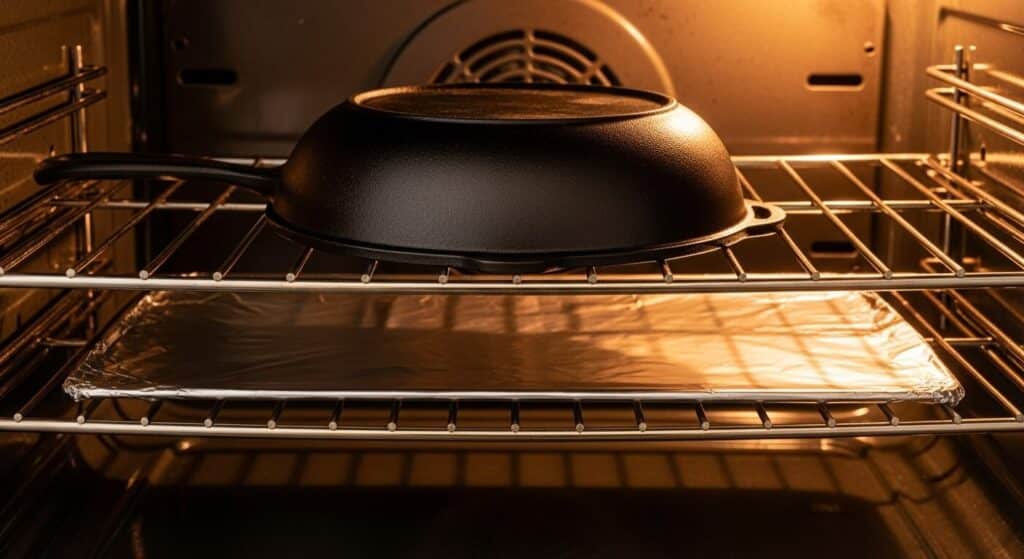
- Bake upside-down at 400-425°F for one hour
- Let cool completely in the oven
- Repeat 3-4 more times
The lower temperature compared to vegetable oil is key. Don’t season lard at 475°F—you’ll burn it.
Vegetable Oil for Cast Iron Seasoning: The Modern Standard
Vegetable oil creates jet-black, extremely hard seasoning that’s more heat-resistant than lard and has become the default recommendation because it’s vegetarian-friendly, readily available, and produces consistently excellent results when applied correctly.
Walk into any kitchen store today and ask about cast iron seasoning—they’ll tell you vegetable oil. Or canola. Or some other liquid plant-based oil.
This is the modern approach. It works. Really well, actually.
What Counts as Vegetable Oil for Seasoning Purposes
“Vegetable oil” is typically soybean oil or a soybean-canola blend sold in generic bottles, though the term broadly includes any plant-based cooking oil like canola, corn, sunflower, or grapeseed—all of which work for seasoning with slightly different results.
That bottle labeled “vegetable oil” at the grocery store? Usually soybean oil or a blend. The manufacturer doesn’t always specify because it varies based on commodity prices. Sometimes it’s pure soybean, sometimes soy-canola mix, occasionally corn oil.
For seasoning purposes, this ambiguity doesn’t matter much. They’re all high in polyunsaturated fats and smoke above 400°F. Any of them work.
Common Vegetable Oils Used for Cast Iron (Canola, Corn, Soybean)
Canola oil (smoke point ~400°F) is the most popular choice, soybean oil (~450°F) creates harder seasoning, and corn oil (~450°F) falls somewhere between the two—all three produce similar enough results that most home cooks won’t notice significant differences.
Quick comparison:
- Canola – 400°F smoke point, 32% polyunsaturated, dirt cheap, widely available
- Soybean – 450°F smoke point, 58% polyunsaturated, hardens beautifully
- Corn – 450°F smoke point, 55% polyunsaturated, slightly darker finish
- Sunflower – 440°F smoke point, 69% polyunsaturated, bit more expensive
They’re all good. Pick what’s cheap and available. Don’t overthink it.
How Vegetable Oil Performs When Seasoning Skillets
Vegetable oil creates seasoning faster than lard (noticeable improvement after just 2 coats), develops a deep black color by the fourth or fifth coat, and produces an extremely hard, glass-like surface that’s exceptionally slick when properly applied.
Two coats and you can cook. Three coats and you’ve got legitimately good seasoning. Five coats and your pan rivals factory pre-seasoned Lodge.
The black color shows up quickly. By coat three, your skillet looks properly seasoned. This appeals to people who want that traditional black cast iron aesthetic.
Vegetable Oil Smoke Points and Polymerization
Most vegetable oils smoke between 400-450°F, making 450-475°F the ideal seasoning temperature—hot enough to fully polymerize the high polyunsaturated content without excessive burning or smoking.
This higher temperature creates harder seasoning. The polymer chains cross-link more completely. You end up with a coating that’s more resistant to scratching, more heat-stable, and slicker than lower-temperature lard seasoning.
But it’s less forgiving. Your oven needs to maintain accurate temperature. Fluctuations create problems—uneven seasoning, sticky spots, or burnt patches.
The Appearance of Vegetable Oil Seasoning
Properly-done vegetable oil seasoning is jet black, glossy, and uniform across the entire cooking surface—this modern appearance matches what most people expect cast iron to look like based on new pre-seasoned pans they’ve seen in stores.
It’s pretty. Really pretty. That black glass finish catches light and looks professional.
Some people prefer this to lard’s browner, more rustic appearance. It’s personal preference, but there’s no denying vegetable oil creates a more contemporary look.
Long-Term Durability of Vegetable Oil Seasoning
Vegetable oil seasoning is extremely durable for the first few years but can become brittle over time—especially with flaxseed or other high-polyunsaturated oils—occasionally developing micro-cracks or flaking if the coating gets too thick or is exposed to repeated thermal shock.
Here’s the catch: that super-hard finish isn’t always permanent. After years of use, some vegetable oil seasoning becomes TOO hard. It loses flexibility. Thermal cycling (hot to cold, hot to cold, hundreds of times) can cause microscopic cracks.
Lard seasoning stays slightly softer and more flexible, so it handles temperature changes better long-term. But vegetable oil gives you better performance in the short to medium term (first 5-10 years).
Advantages of Using Vegetable Oil for Skillet Seasoning
Why vegetable oil wins for many cooks:
- Works for vegetarians, vegans, and anyone avoiding animal products
- Widely available—every grocery store carries multiple options
- Stupid cheap—a $3 bottle seasons dozens of pans
- Creates that black finish people associate with well-seasoned cast iron
- Higher heat tolerance for searing and high-temp cooking
- Longer shelf life—doesn’t go rancid like animal fats
- Proven track record—Lodge and other manufacturers recommend it
The dietary flexibility alone makes it the default choice for many people. Not everyone eats pork or wants animal products touching their cookware.
Disadvantages and Drawbacks of Vegetable Oil Seasoning
Where vegetable oil struggles:
- Liquid form makes thin, even application harder (it runs and drips)
- Can become brittle and flake after years of use
- Some oils (especially flaxseed) are prone to chipping
- Requires higher, more precise oven temperatures
- Doesn’t self-reinforce the way lard does when cooking with animal fats
- Super-thin layers needed—easy to apply too much and get sticky results
That application difficulty is real. You’ll use more paper towels wiping off excess because liquid oil spreads everywhere and pools in corners.
Best Practices for Seasoning with Vegetable Oil
Season cast iron with vegetable oil by applying the thinnest possible liquid coat (thinner than you think you need), wiping aggressively until the surface looks dry, then baking at 450-475°F for one hour—repeat 4-5 times for durable, black seasoning.
The method:
- Clean and dry your skillet completely
- Pour a small amount of oil on the cooking surface (1/2 teaspoon for a 12-inch pan)
- Spread it with a paper towel—everywhere, including handle and bottom
- Wipe it off aggressively—this is critical with liquid oil
- Keep wiping until you think you’ve removed all the oil
- Then wipe again
- Bake upside-down at 450-475°F for one hour
- Cool completely in the oven
- Repeat 3-4 more times minimum
The key difference from lard: you need to wipe even more thoroughly because liquid oil is harder to control during application.
Head-to-Head Comparison: Lard vs. Vegetable Oil for Seasoning
When directly comparing lard vs. vegetable oil for cast iron seasoning, vegetable oil produces harder, blacker, more heat-resistant seasoning while lard creates more traditional-looking, flexible, self-maintaining seasoning—both work well, but they excel in different situations.
Let’s break down the actual performance differences instead of generalizing.
Initial Application and Ease of Use
Lard is significantly easier to apply evenly because its solid consistency stays exactly where you put it, while liquid vegetable oil requires more careful wiping and runs toward the pan’s lowest points during application, making thin, uniform coats harder to achieve.
Winner: Lard
Not even close. Spreading soft lard with a paper towel gives you complete control. It doesn’t drip off the sides while you’re working. It doesn’t pool in the center while you’re trying to coat the handle.
Vegetable oil fights you. It runs. It drips. You spend extra time chasing it around with paper towels.
First-timers especially will find lard much more forgiving.
Seasoning Build-Up Speed and Layer Formation
Vegetable oil creates noticeable seasoning improvement faster than lard—you’ll see good results after 2-3 coats compared to lard’s 4-5 coats needed for comparable protection and performance.
Winner: Vegetable oil
The high polyunsaturated content really matters here. Vegetable oil polymers form quicker and harder. By coat three, you’ve got excellent seasoning. Lard takes another coat or two to reach the same level.
If you’re in a hurry to start cooking, vegetable oil gets you there faster.
Non-Stick Performance
For pure non-stick performance, properly-seasoned vegetable oil creates a slightly slicker surface than lard—eggs slide around more freely and delicate fish releases more cleanly on the glass-like vegetable oil finish.
Winner: Vegetable oil (barely)
But honestly? The difference is minimal once both are well-established. We’re talking 5-10% performance difference, not night and day.
Fresh seasoning (first month): vegetable oil is noticeably slicker. After six months of regular use: they’re basically equal. After several years: lard might actually edge ahead because it maintains flexibility better.
Heat Resistance and High-Temperature Cooking
Vegetable oil seasoning handles sustained high temperatures (475°F+) better than lard seasoning, making it the better choice if you frequently sear steaks, cook stir-fries, or use your cast iron for high-heat applications regularly.
Winner: Vegetable oil
Lard seasoning starts showing stress at 475°F+. Not catastrophic failure. Just… stress. You might notice some dulling or slight degradation over time.
Vegetable oil laughs at 475°F. Season it at that temp and it performs great at that temp. Simple.
For most home cooking (90% of which happens below 450°F), this doesn’t matter. But if you’re running a hot kitchen or love restaurant-style sears, go with vegetable oil.
Seasoning Durability Over Time
Lard seasoning remains flexible and durable for decades without flaking, while vegetable oil seasoning can become brittle after 5-10 years of heavy use—though it performs better than lard in those first several years.
Winner: Lard (long-term) / Vegetable oil (short-term)
This is the real trade-off. Vegetable oil gives you better performance now. Lard gives you better performance in 2040.
Those century-old skillets that are still going strong? Mostly lard-seasoned. The slight flexibility in lard’s molecular structure handles decades of thermal cycling without developing the micro-cracks that plague old vegetable oil seasoning.
But who keeps the same seasoning for 20 years anyway? Most people re-season or touch up long before brittleness becomes an issue.
Maintenance Requirements for Each Fat
Both fats require similar maintenance (clean after use, dry thoroughly, occasional oil wipe-down), but lard seasoning gets passive reinforcement when you cook fatty meats while vegetable oil seasoning needs more intentional maintenance coats every few months.
Winner: Lard (if you cook meat regularly)
Cook bacon in a lard-seasoned pan and you’re literally adding to your seasoning without trying. The rendered bacon fat bonds with the existing lard seasoning. It’s self-maintaining.
Vegetable oil doesn’t get this benefit. Cooking with canola oil doesn’t reinforce canola oil seasoning the same way—the seasoning is already polymerized and won’t absorb more liquid oil like fresh iron would.
For vegetarians cooking only plant-based foods, this advantage disappears. Then it’s a tie.
Cost Comparison
Vegetable oil is cheaper per ounce in most grocery stores ($0.10-0.15/oz) compared to quality lard ($0.25-0.40/oz), though both are inexpensive enough that cost shouldn’t be the deciding factor unless you’re seasoning dozens of pans.
Winner: Vegetable oil
But we’re talking pennies per seasoning session. A $3 bottle of vegetable oil seasons 50+ pans. Even expensive $8 leaf lard seasons 20+ pans.
Unless you’re starting a cast iron restoration business, don’t let cost drive this decision.
Availability and Convenience Factors
Vegetable oil is universally available in every grocery store in multiple varieties, while quality lard without additives often requires visiting a butcher, farmers market, or specialty store—making vegetable oil the more convenient choice for most people.
Winner: Vegetable oil
Walk into any store. Grab a bottle of canola, soybean, corn, or generic vegetable oil. Done.
Finding good lard? Hit or miss. The grocery store might have hydrogenated commercial lard (less than ideal). Or you might need to special order from a butcher. Or render your own if you’re really committed.
Convenience matters when you need to re-season tonight and don’t want to drive across town hunting for quality pork fat.
The Results After Multiple Seasoning Layers
After five coats of either lard or vegetable oil, both create functional non-stick seasoning that will serve you well—vegetable oil looks blacker and feels slicker, while lard looks more traditional and develops a warm brown patina, but both cook eggs without sticking and protect against rust.
Let’s talk real results.
What to Expect After 3 Coats of Lard vs. Vegetable Oil
Three coats of vegetable oil produces a dark brown to black surface that’s already quite slick and functional, while three coats of lard creates a medium brown surface that’s good enough for cooking but benefits from 1-2 additional coats for optimal performance.
Vegetable oil after 3 coats:
- Color: Dark brown to black
- Feel: Noticeably slick, almost glassy
- Performance: Can cook eggs with minimal oil
- Durability: Handles normal cooking well
Lard after 3 coats:
- Color: Medium to light brown
- Feel: Smooth but not super-slick yet
- Performance: Needs a bit more cooking oil for delicate foods
- Durability: Solid for everyday use
Both are usable. Vegetable oil just looks and feels more “done.”
Appearance Differences Between Lard and Vegetable Oil Seasoning
The visual difference is striking—vegetable oil seasoning is uniformly black with a slight sheen, while lard seasoning is varying shades of brown (lighter at the edges, darker in the center) with a more matte, traditional finish.
Put them side by side and you’ll immediately see which is which. Vegetable oil looks modern, almost factory-fresh. Lard looks vintage, like it came from your grandmother’s kitchen.
Neither appearance is “better.” It’s aesthetic preference. Do you want cast iron that looks like a new Lodge? Use vegetable oil. Want cast iron that looks like it’s been in your family for generations? Use lard.
Some people find the brown lard finish disappointing at first because they’ve been conditioned to think cast iron should be black. Give it time. That brown patina grows on you (and darkens gradually with use).
Performance Differences in Real Cooking Situations
In daily cooking, both perform nearly identically for normal tasks like frying eggs, searing meat, sautéing vegetables, or baking cornbread—you’d be hard-pressed to notice which fat was used for seasoning in a blind test with well-established coatings on both pans.
Seriously. Once both are properly seasoned and broken in, the performance gap narrows to almost nothing.
Eggs slide on both. Bacon doesn’t stick on either. Cornbread releases cleanly from both. Grilled cheese browns evenly on both.
The differences show up in edge cases: extreme high heat (vegetable oil wins), decades-long durability (lard wins), reinforcement from cooking animal fats (lard wins), initial slickness (vegetable oil wins).
For normal home cooking? Both nail it.
How Each Seasoning Ages Over Months of Use
Lard seasoning improves steadily over 6-12 months of regular use, gradually darkening and becoming smoother as cooking adds natural layers, while vegetable oil seasoning looks and performs great from the start but doesn’t change much over time.
Lard is a slow burn. Month one: pretty good. Month six: really good. Year two: fantastic. It builds character and depth through use.
Vegetable oil peaks early. Month one: excellent. Month six: still excellent, no real change. Year two: still excellent (unless brittleness starts appearing, which is rare).
Think of it like cast iron pans themselves—some vintage pieces just get better with age and develop that perfect patina you can’t replicate quickly. That’s lard. Modern pre-seasoned pans work great out of the box but don’t evolve much. That’s vegetable oil.
Special Considerations and Situational Factors
Your choice between lard vs. vegetable oil for cast iron seasoning should factor in your local climate (humidity affects rancidity), dietary restrictions, storage capabilities, and how you actually cook rather than following blanket recommendations that ignore your specific situation.
Context matters. What works for someone in Arizona differs from what works in Louisiana. What works for a meat-eater differs from what works for a vegan.
Climate and Humidity Effects
In humid climates, vegetable oil seasoning offers an advantage because it doesn’t risk rancidity during storage, while lard—especially if not refrigerated—can go rancid in hot, humid conditions and create foul-smelling seasoning that needs to be stripped and redone.
Live in Florida? Louisiana? Coastal areas? Think twice about lard unless you’re storing it properly in the fridge and using it quickly.
Rancid lard is nasty. It smells like old gym socks mixed with spoiled meat. And if you season with rancid lard, that smell gets baked into your pan. Not fun.
Dry climates or cool regions? Lard stores fine at room temperature for months. No issues.
Vegetable oil doesn’t care about climate. Shelf-stable everywhere.
Dietary Restrictions: Vegetarian and Vegan Considerations
Vegetable oil is the only option for vegetarians and vegans who won’t use animal products on their cookware, while lard is off the table entirely—this alone makes vegetable oil the more inclusive, universally-applicable choice despite lard’s traditional advantages.
Not complicated. Don’t eat pork? Don’t use pork fat on your pans.
Some vegetarians don’t care about what’s used for seasoning (“it’s not food, it’s bonded to the metal, whatever”). Others absolutely care and won’t touch lard-seasoned cast iron.
If you’re cooking for diverse groups or running a shared kitchen, vegetable oil eliminates this issue entirely.
Shelf Life and Storage
Vegetable oil lasts 1-2 years on the shelf in a cool, dark place without degradation, while quality fresh lard should be refrigerated and used within 3-6 months to prevent rancidity—commercial hydrogenated lard lasts longer but contains additives that affect seasoning quality.
Storage guidelines:
| Fat Type | Room Temp | Refrigerated | Signs of Spoilage |
|---|---|---|---|
| Vegetable oil | 12-24 months | Not needed | Smells paint-like or off |
| Fresh lard | 1-2 months | 6-12 months | Sour smell, discoloration |
| Commercial lard | 12+ months | Longer | Less obvious (additives preserve it) |
If you season twice a year and keep the fat between sessions, vegetable oil is way less fussy.
Rancidity Concerns with Different Fats
Rancidity occurs when unsaturated fats oxidize and break down—ironically, this happens faster with stored vegetable oil than stored lard, BUT lard’s rancidity is more noticeable and problematic for seasoning while vegetable oil’s gradual oxidation has minimal impact on already-polymerized seasoning.
Here’s the twist: polymerized fat can’t go rancid. Once it’s bonded to your pan, it’s stable. The rancidity concern only matters for the fat you’re storing in your pantry to use for future seasoning sessions.
Old vegetable oil might smell a bit off. Old lard smells TERRIBLE. The nose knows.
For this reason alone, many people prefer vegetable oil—one less thing to worry about, and you don’t need to dedicate fridge space to storing cooking fat.
Historical Context: Traditional Seasoning Methods
Historically, cooks seasoned cast iron with whatever fat was locally available and affordable—lard dominated in pork-producing regions while beef tallow was common in cattle country, and vegetable oils only became widespread options in the mid-20th century when industrial processing made them cheap and shelf-stable.
The “traditional” method isn’t really one method. It’s dozens of regional variations based on what people had access to.
Why Lard Dominated Cast Iron Seasoning Historically
Lard became the standard seasoning fat in America and Europe because pigs were easy to raise on small farms, every part of the animal was used (including rendered fat), and lard was significantly cheaper than butter while being more neutral-flavored than tallow or other animal fats.
Economics drove this. Plain and simple.
A family that butchered one pig a year had pounds of lard. Free seasoning fat that was already sitting in the pantry. Why would they buy anything else?
Lard also worked better than the alternatives available at the time. Butter burns too easily and contains water. Tallow (beef fat) works but has a stronger smell. Lard hit the sweet spot—mild flavor, good polymerization, widely available.
When and Why Vegetable Oil Became Popular
Vegetable oils became viable for cast iron seasoning in the 1950s-1970s when improved industrial processing made oils like soybean, corn, and canola affordable enough for everyday use, and health campaigns promoting vegetable oils over animal fats convinced home cooks to switch their cooking (and seasoning) fats.
The anti-saturated-fat movement changed everything. Suddenly lard was “bad” and vegetable oil was “good” (whether this was accurate or not is a whole different debate).
Home cooks stopped keeping jars of lard around. Vegetable oil took over kitchen shelves. Naturally, when people needed to season cast iron, they reached for what was already in the cabinet.
Lodge and other manufacturers started recommending vegetable oil in their instructions because that’s what consumers actually had. The method worked well enough that it became the new standard.
Regional Differences in Traditional Seasoning Fats
Southern U.S. cooks traditionally used lard or bacon grease because of the region’s pork-heavy cuisine, while Western ranching areas often used beef tallow, Northern cooks sometimes used butter-based fats, and immigrant communities brought their own traditional fats—no single method was universal.
My grandmother in Texas? Lard and bacon grease, always. Friend’s grandmother in Montana? Beef tallow from their ranch cattle. Italian immigrants in New York? Olive oil sometimes (though it’s not ideal for seasoning—low smoke point).
Geography and culture shaped the methods. Which makes modern debates kinda funny—people arguing their way is “traditional” when fifty different traditional methods existed simultaneously across different regions.
What Professional Chefs and Foundries Recommend
Modern cast iron manufacturers like Lodge recommend vegetable oil or shortening for initial seasoning, while professional chefs remain split—some prefer lard for its traditional results and self-maintaining properties, others stick with vegetable oil for consistency and dietary inclusivity.
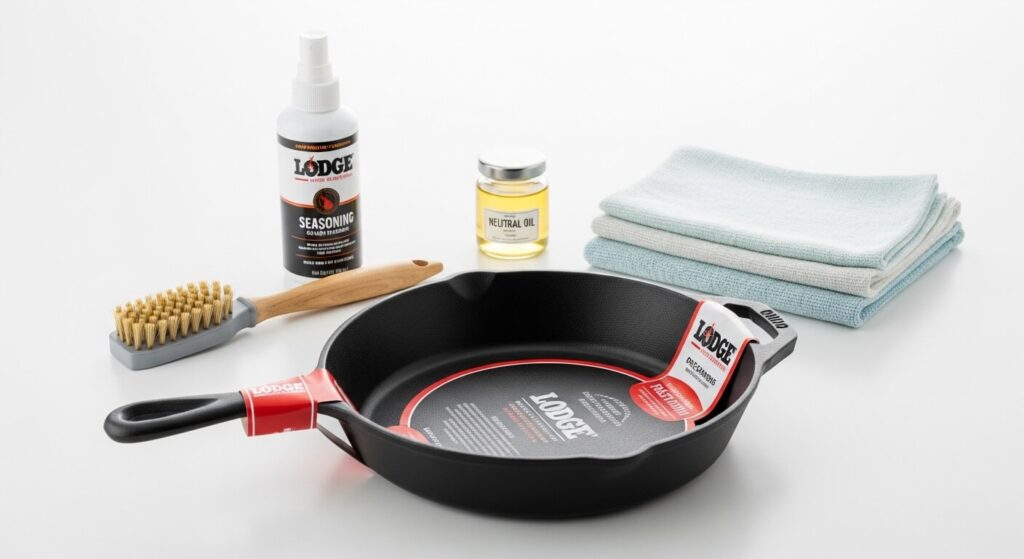
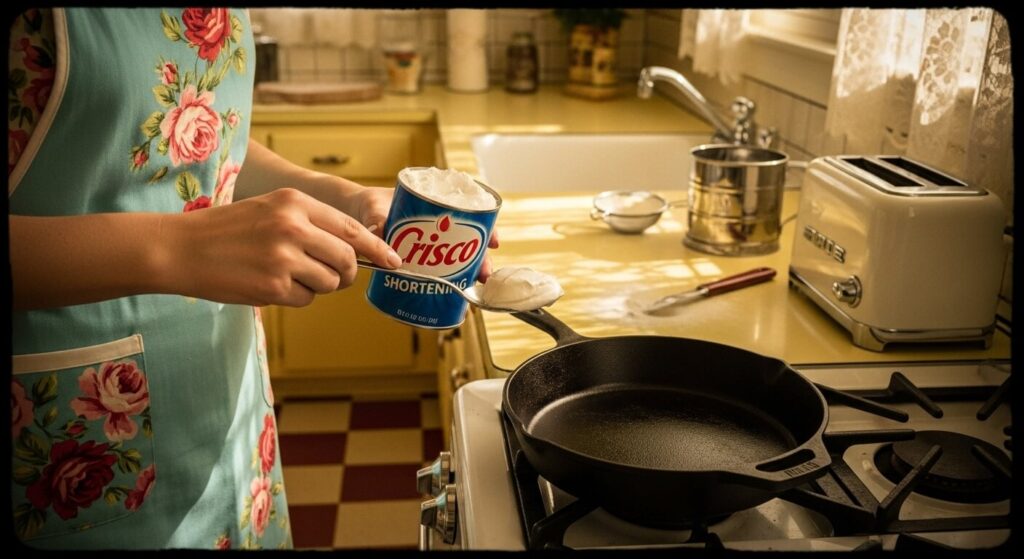
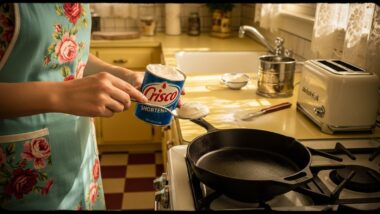
Lodge’s official guidance: vegetable oil or vegetable shortening (like Crisco). Why? It works for everyone regardless of dietary restrictions, it’s cheap, it’s available everywhere, and it produces consistent results that won’t bring customer complaints.
Professional chefs who cook meat-heavy menus often prefer lard because it integrates with their cooking style. Vegan restaurants obviously use vegetable oil. High-end restaurants doing lots of searing might choose vegetable oil for the heat resistance.
There’s no industry consensus. Both methods have professional-level support.
Hybrid Approaches: Combining Lard and Vegetable Oil
You don’t have to pick one fat and stick with it forever—many experienced cast iron users combine lard and vegetable oil strategically, using each fat’s strengths for different purposes or different stages of the seasoning process.
Who says you have to choose?
Using Both Fats in Your Seasoning Routine
Some cooks alternate coats of lard and vegetable oil (lard-oil-lard-oil-lard) to combine lard’s flexibility and traditional appearance with vegetable oil’s hardness and heat resistance, creating seasoning that theoretically gets the best of both worlds.
Does this actually work better than using one fat consistently? Debatable.
The theory makes sense—layering different polymers with different properties might create more robust seasoning. Like laminated wood being stronger than solid wood.
In practice, most people can’t tell the difference. If you’ve got both fats sitting around and want to experiment, go for it. But don’t expect dramatic improvements over single-fat seasoning.
Starting with Lard and Maintaining with Vegetable Oil
A common approach is building initial seasoning with 3-4 coats of lard (for ease of application and traditional appearance), then maintaining that base with vegetable oil touch-ups as needed—this gives you lard’s application advantages without committing to long-term lard storage.
This actually makes practical sense. Use lard for the fussy initial seasoning when even coats really matter. Once you’ve got a good base, maintenance coats are less critical and vegetable oil’s application difficulty doesn’t matter as much.
Plus you get that traditional lard appearance as your foundation, with vegetable oil just maintaining and protecting it.
Starting with Vegetable Oil and Switching to Lard
Less common but totally valid: season initially with vegetable oil (for speed and that black finish), then reinforce with lard during regular cooking and occasional maintenance—this is especially useful if you cook a lot of pork and want your cooking to naturally maintain your seasoning.
The vegetable oil gives you quick, functional seasoning. Then every time you fry bacon or cook pork chops, the rendered lard adds to your base. Over months, you’re gradually building lard layers on top of the vegetable oil foundation.
End result: hybrid seasoning that performs like vegetable oil but maintains like lard.
Again, probably overthinking it. But it works.
Common Problems and Solutions with Each Fat
Both lard and vegetable oil can create sticky, flaking, or uneven seasoning if applied incorrectly, but the specific problems and fixes differ slightly based on each fat’s properties and optimal seasoning temperatures.
Things go wrong. Here’s how to fix them.
Sticky Seasoning Issues with Lard
Sticky lard seasoning usually means you seasoned at too low a temperature (under 375°F) and the fat only partially polymerized—fix this by putting the pan back in a 400-425°F oven for another hour to complete the process, or scrub off the sticky layer and re-season properly.
Lard needs adequate heat. Season it at 350°F and you’re basically just baking grease onto your pan. It’ll never harden properly.
If your oven runs cool or you were being cautious with temperature, you might end up with tacky lard that feels gross and attracts dust.
The fix:
- Heat the sticky pan to 400-425°F for another 60-90 minutes
- Let it cool completely
- If still sticky, scrub with coarse salt and a little oil to remove the failed layer
- Start over with proper temperature
Flaking Problems with Vegetable Oil
Vegetable oil seasoning flakes when layers get too thick (from too many coats without proper thinning) or when seasoned at excessively high temperatures (500°F+) that create brittle coatings—scrub away loose flakes and add thinner maintenance coats at 450°F.
Too much of a good thing. People get excited about vegetable oil’s performance and start doing 10, 15, 20 coats. Eventually the coating gets so thick it loses flexibility and starts popping off in sheets.
Or they crank their oven to 500°F thinking “hotter equals better polymerization.” Nope. Just creates brittle seasoning that flakes prematurely.
The solution:
- Remove all loose, flaking material with a stiff brush
- Don’t strip to bare metal unless flaking is everywhere—just clean the bad spots
- Re-season those areas with 2-3 super-thin coats at 450-475°F (not higher)
- Stop adding coats once you’ve got good coverage—more isn’t always better
Troubleshooting Uneven Seasoning with Both Fats
Uneven seasoning (blotchy color, thick spots, thin spots) happens with both lard and vegetable oil when you don’t wipe thoroughly enough or when your oven has hot spots—fix it by doing a full-pan seasoning round with extra-aggressive wiping to even everything out.
Blotchiness is usually cosmetic. Doesn’t affect cooking unless you’ve got actual bare metal showing.
But if it bothers you:
- Clean the whole pan thoroughly
- Apply your chosen fat normally
- Wipe it off even more aggressively than usual—like you’re trying to remove ALL of it
- Season at the appropriate temp for your fat
- The thin, even coat will help blend the irregular areas
One or two rounds like this usually evens out minor blotching.
Fixing Failed Seasoning Attempts
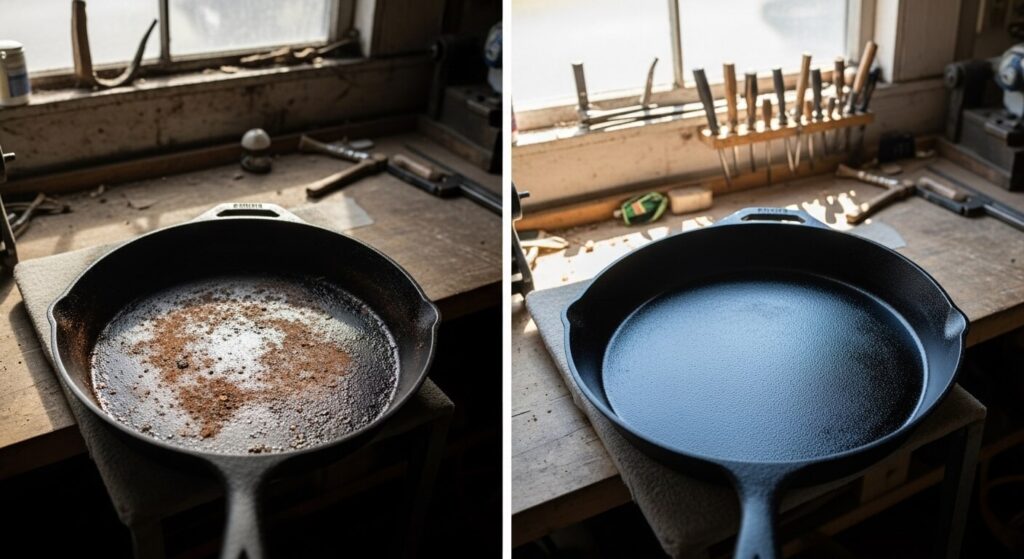
If your seasoning is a complete disaster (sticky everywhere, flaking extensively, or rust showing through), strip it completely with oven cleaner or electrolysis, scrub back to bare metal, and start fresh—don’t try to patch catastrophically failed seasoning.
Know when to quit and start over. Trying to salvage truly terrible seasoning is more work than just stripping and redoing it properly.
When to strip completely:
- Sticky and tacky across more than 50% of the surface
- Heavy flaking on the cooking surface
- Visible rust appearing despite seasoning
- Weird smell that won’t go away
- You used rancid fat (that smell never leaves—trust me)
Start fresh, follow the process correctly, and you’ll have good seasoning in a few hours.
Alternative Traditional Fats for Comparison
Beyond lard vs. vegetable oil, other traditional fats like bacon grease, beef tallow, and even butter have been used for cast iron seasoning with varying results—understanding how these compare helps clarify why lard and vegetable oil became the dominant choices.
Quick look at the alternatives.
Bacon Grease vs. Lard vs. Vegetable Oil
Bacon grease (rendered bacon fat) is similar to lard but contains salt and smoky flavors that can create slightly different seasoning—it works well and was commonly used historically, though pure lard gives more neutral results and doesn’t risk salt corrosion or flavor transfer.
Bacon grease is basically lard with extras. The base fat is pork fat (same as lard), but you’ve also got salt, sugar, smoke compounds, and various proteins from the bacon cure.
For seasoning purposes, it works. Your grandmother probably used it. The main downsides: salt can corrode iron if concentrated in certain spots, and that bacon smell never entirely disappears from the seasoning (which might be a plus or minus depending on your perspective).
Performance-wise, it’s close enough to lard that the difference doesn’t matter much. Use it if you’ve got jars of bacon grease sitting around and don’t want to buy lard separately.
Tallow (Beef Fat) Compared to Lard and Vegetable Oil
Beef tallow creates seasoning similar to lard but with a slightly harder finish and higher smoke point (around 400°F)—it’s a solid traditional choice that was common in cattle-ranching regions, though it’s now harder to find than either lard or vegetable oil.
Tallow works. Not quite as flexible as lard, not quite as hard as vegetable oil. Somewhere in the middle.
The fatty acid profile is similar to lard—mostly saturated and monounsaturated, minimal polyunsaturated. This means it polymerizes okay but not as readily as vegetable oil.
Finding quality tallow is the challenge. Most grocery stores don’t carry it. You’ll need a butcher or specialty shop. Which is why it fell out of favor even though it performs well.
Butter and Why It Doesn’t Work for Seasoning
Butter fails as a seasoning fat because it contains 15-20% water that prevents proper polymerization, plus milk solids that burn and stick rather than forming smooth coatings—clarified butter (ghee) works slightly better by removing water and solids but still underperforms compared to pure fats.
Just don’t. Butter is terrible for seasoning.
The water content alone disqualifies it. You can’t polymerize something that’s only 80% fat. The water evaporates, the milk solids burn, and you end up with a sticky, burnt mess instead of seasoning.
Ghee removes the water and milk solids, so it’s theoretically better. In practice, it’s expensive and still doesn’t perform as well as lard or vegetable oil. Not worth it.
The Verdict: Which Fat Wins for Skillet Seasoning?
For most home cooks, vegetable oil is the better choice because it’s universally available, works for all dietary preferences, creates excellent seasoning quickly, and requires no special storage—but lard remains the superior option if you cook primarily with animal fats, want traditional appearance, value long-term durability over decades, or simply prefer working with solid fats.
There’s no universal winner. Context determines the right choice.
Best Overall Choice for Most Home Cooks
Vegetable oil wins for the average home cook because it’s already in your kitchen, works for everyone regardless of diet, produces professional-looking results, and requires zero special considerations for storage or maintenance.
If you’re new to cast iron, just use vegetable oil. Canola, soybean, corn—whatever’s cheapest at your store. You’ll get good results without overthinking it.
The ease factor alone makes it the default recommendation. No hunting for quality lard. No refrigerating fat between uses. No dietary concerns. Just grab the bottle and go.
When to Choose Lard Over Vegetable Oil
Pick lard if you cook a lot of pork and other fatty meats (the natural reinforcement is valuable), prefer traditional brown patina over modern black finish, want seasoning that lasts for decades without becoming brittle, or find solid fats easier to work with during application.
Lard makes sense when:
- You’re a meat-focused cook who won’t benefit from vegetable oil anyway
- You have easy access to quality lard (from a butcher or you render your own)
- You’re restoring vintage cast iron and want historically accurate seasoning
- You’ve got storage space to keep lard refrigerated
- You value the traditional aesthetic and don’t care about that jet-black finish
Lard isn’t worse. It’s just more niche. For the right cook in the right situation, it’s actually the better choice.
When to Choose Vegetable Oil Over Lard
Use vegetable oil if you’re vegetarian/vegan, cook at high temperatures frequently (475°F+ searing), want black seasoning that looks like modern pre-seasoned pans, need quick results (2-3 coats instead of 4-5), or simply prefer not dealing with animal fat storage and rancidity concerns.
Vegetable oil wins when:
- Dietary restrictions rule out animal products
- You do lots of high-heat cooking (searing, stir-frying, etc.)
- You want seasoning that looks “done” quickly
- Convenience and availability matter to you
- You live in a humid climate where lard storage is problematic
For most modern kitchens and cooking styles, these factors tip the scale toward vegetable oil.
The Practical Reality of Choosing Between Lard and Vegetable Oil
Honestly? Both work well enough that you probably won’t regret whichever you choose—the difference in daily cooking performance is minimal once seasoning is established, and factors like proper application technique and adequate number of coats matter more than whether you used lard or vegetable oil.
Here’s what nobody wants to hear: the fat matters less than doing the process correctly.
Thin coats. Multiple layers. Proper temperature. Thorough wiping. These determine success way more than lard vs. vegetable oil.
I’ve seen beautifully seasoned pans done with cheap vegetable oil and absolute disasters done with expensive leaf lard. Technique beats ingredients every time.
So pick what’s convenient, what fits your diet, what you can actually source easily. Then focus on doing it right rather than second-guessing your fat choice.
Your cast iron doesn’t care whether it’s seasoned with lard or vegetable oil. It cares that you applied thin coats, heated it properly, and gave it enough layers to build protection. Do that with either fat and you’ll have a skillet that cooks great and lasts for years.
And if you ever change your mind? Strip it and start over with the other fat. Not a big deal. Cast iron is forgiving that way.