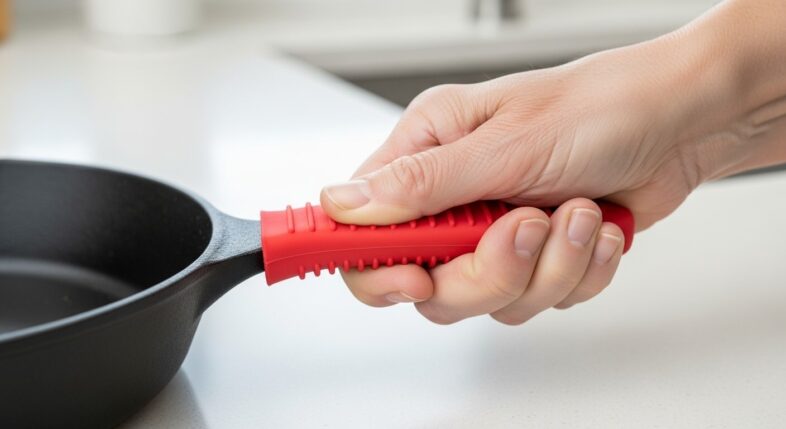
Understanding How Silicone Handle Grips Support Seniors with Arthritis
Silicone handle grips work by creating a cushioned, non-slip surface that reduces the force needed to hold everyday objects—which directly addresses the grip weakness and joint pain that arthritis causes.
Here’s the thing. Arthritis doesn’t just make your hands hurt. It actively sabotages your ability to hold stuff. The inflammation attacks your joints, reduces grip strength, and makes even simple tasks feel like you’re trying to hold onto wet glass with numb fingers.
That’s where silicone grips come in.
What Makes Silicone Grips Essential for Arthritic Hands
These grips aren’t optional comfort items. They’re functional tools that compensate for what arthritis takes away.
Think about it this way—when you’ve got arthritis, your hand strength drops by 50-70% in severe cases. You can’t just “grip harder” when your joints are screaming. Silicone grips increase the contact surface area and add friction, so you need way less force to maintain control.
Key reasons they’re essential:
- They reduce the actual pounds of pressure you need to apply (sometimes by half)
- Cushioning distributes force across your palm instead of concentrating it on inflamed joints
- The tacky surface does the gripping work your weakened hands can’t
- They prevent the compensation patterns that lead to wrist and elbow pain
And here’s what most people miss. It’s not about making things easier. It’s about making things possible.
The Science Behind Improved Grip Strength with Silicone Materials
Silicone doesn’t actually make you stronger. It makes the physics work in your favor.
The material has a high coefficient of friction (usually 0.5-1.5 depending on the formulation). What does that mean for you? It means objects don’t slip. Period. Compare that to smooth metal or plastic (coefficient around 0.2-0.4), and you’re talking about a massive difference in required grip force.
But there’s more going on. Silicone compresses under pressure, which increases the contact patch between your hand and the object. Bigger contact area = better force distribution = less stress on any single joint.
The Shore hardness (we’ll get into this later) determines how much the material gives. Too soft, and it squishes uselessly. Too hard, and you’ve just got expensive plastic. The sweet spot for arthritis? Usually Shore A 40-70.
Common Grip Challenges Faced by Seniors with Arthritis
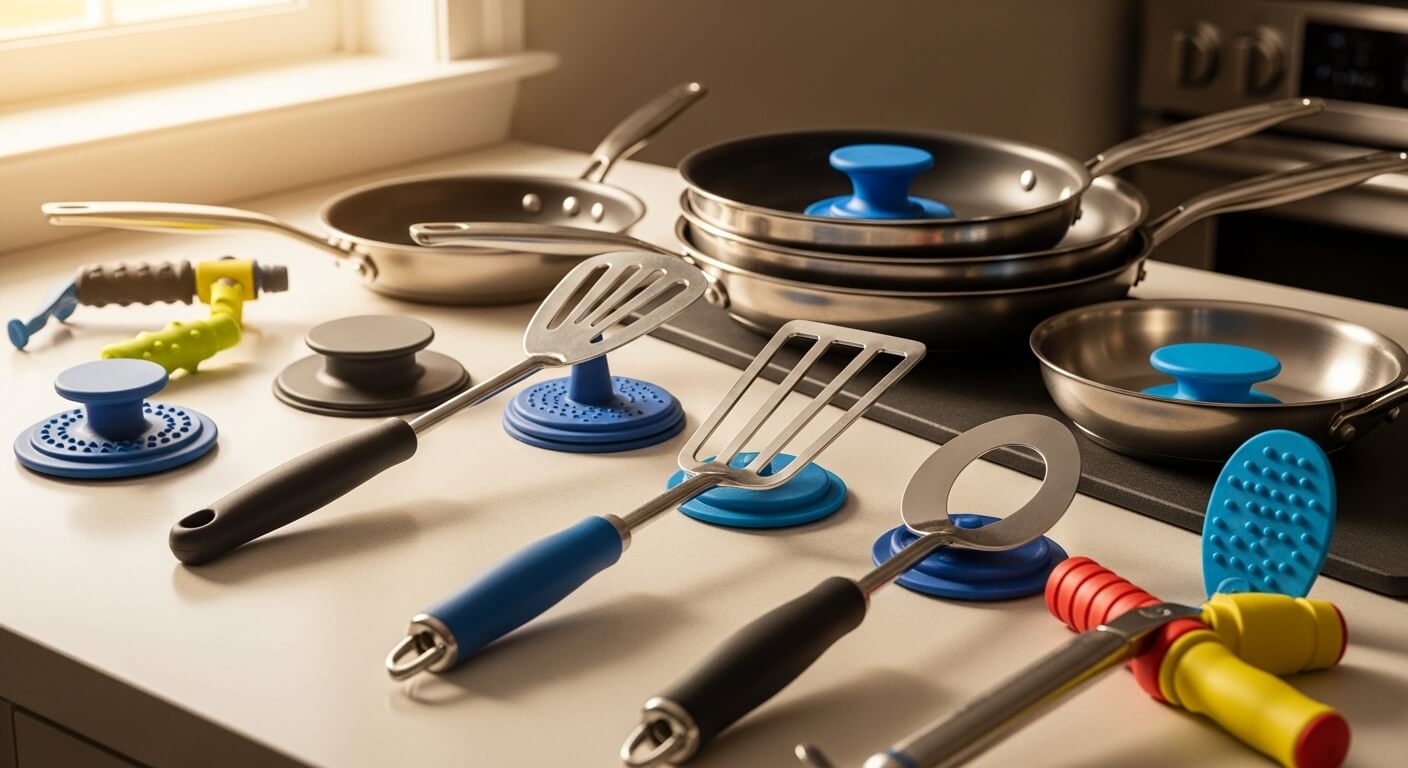
Let’s get specific about what you’re actually dealing with.
Morning stiffness. You wake up and your hands feel like they belong to someone else. Frozen. Swollen. Can’t even hold a toothbrush properly for the first hour.
Weak pinch grip. Opening medication bottles? Forget it. That safety cap might as well be welded shut when your thumb joint feels like broken glass.
Reduced hand span. Your fingers don’t open as wide anymore. Gripping larger objects (like jar lids or pot handles) becomes this awkward, frustrating wrestling match you keep losing.
Pain on pressure. Every time you squeeze something, it hurts. So you avoid gripping things properly, which leads to dropping stuff, which leads to anxiety about breaking things or getting hurt.
Temperature sensitivity is sneaky bad too. Cold metal handles in winter? They make stiff joints even worse. Hot pan handles? You can’t feel them properly through numb fingers.
Key Benefits of Silicone Handle Grips for Arthritis Management
Silicone grips reduce joint strain, prevent slipping, and enable seniors with arthritis to perform daily tasks without the excessive force that triggers pain.
Not hype. Just physics and material science working together.
Enhanced Friction and Non-Slip Properties
The grip happens before you even squeeze.
Silicone’s surface texture—whether it’s ribbed, dotted, or smooth—creates instant friction against your skin. You’re not fighting the object anymore. It stays put with minimal effort, which means you’re not constantly re-gripping and stressing those inflamed joints.

Here’s what works:
- Textured surfaces increase friction by 40-60% over smooth silicone
- Soft-touch formulations (Shore A 50-60) conform to your hand’s shape
- Oil resistance means they don’t get slippery when wet or greasy
And they don’t degrade like foam. Foam grips absorb moisture, get gross, lose their grip. Silicone? Wipe it off. Keeps working.
Cushioning Effect That Reduces Joint Pressure
Think of it as a shock absorber for your joints.
When you grip a hard handle directly, all that pressure concentrates on the knuckles and finger joints where arthritis already lives. Silicone spreads that force across your entire palm and finger surface. The material compresses slightly (we’re talking millimeters, but it matters), absorbing the impact instead of transferring it straight to your bones.
Real-world impact:
- Reduces pressure points by distributing force over 2-3x more surface area
- Lessens the “dig-in” sensation from thin handles
- Provides give that hard surfaces can’t
Some people describe it as the difference between holding a baseball bat and holding a foam roller. Same grip diameter, completely different feel.
Temperature Resistance for Year-Round Comfort
Silicone doesn’t conduct heat or cold like metal and plastic do.
You grab a metal spoon that’s been sitting in hot soup? Burns. You grab the same spoon with a silicone grip? Warm, but tolerable. This matters more than you’d think because temperature extremes make arthritis symptoms worse.
Cold constricts blood flow to already-inflamed joints. Heat can cause swelling. Silicone acts as a thermal barrier—not perfect insulation, but enough to take the edge off.
Works in temperature ranges from -40°F to 450°F (depending on the grade). Your hands never have to.
Easy Maintenance and Hygiene for Daily Use
Let’s be honest. If something’s hard to clean, you won’t use it.
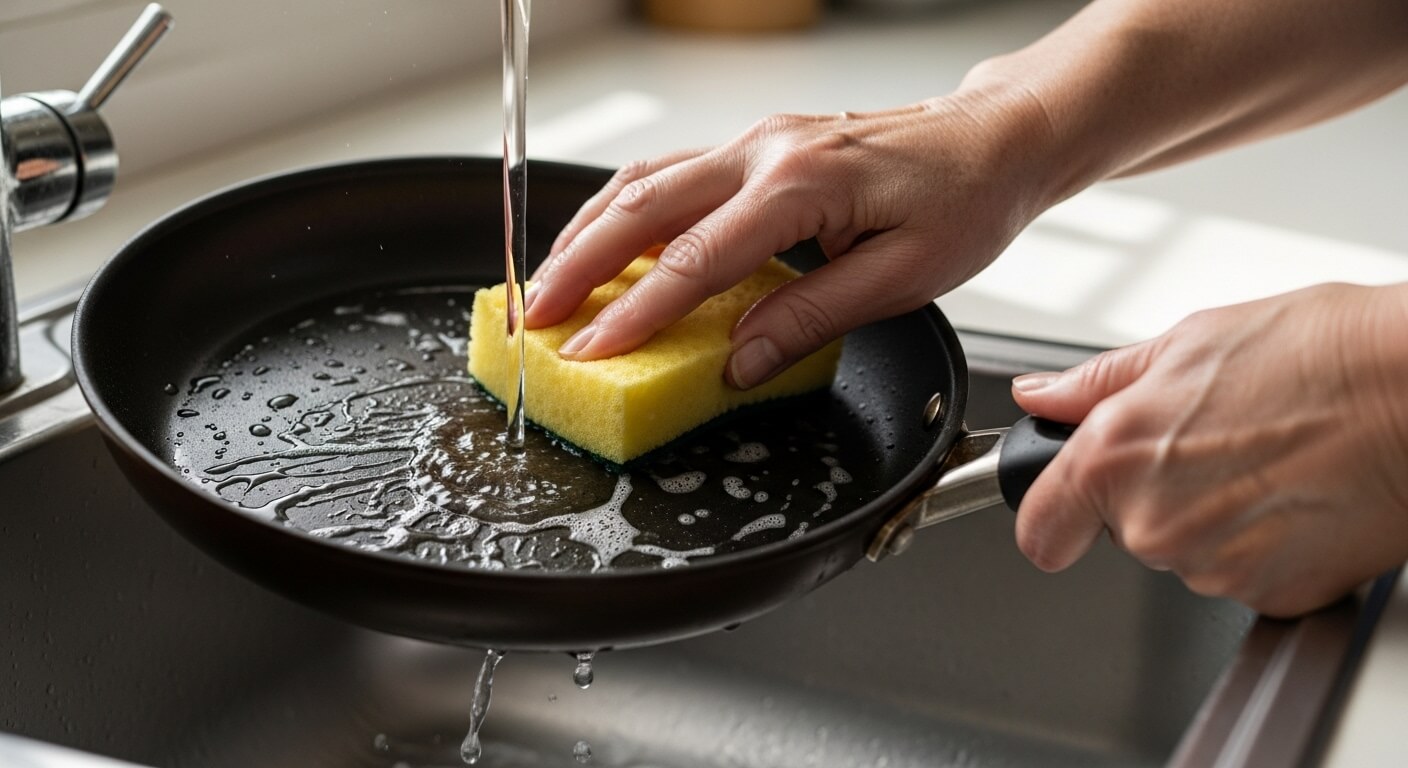
Silicone is stupid easy to maintain:
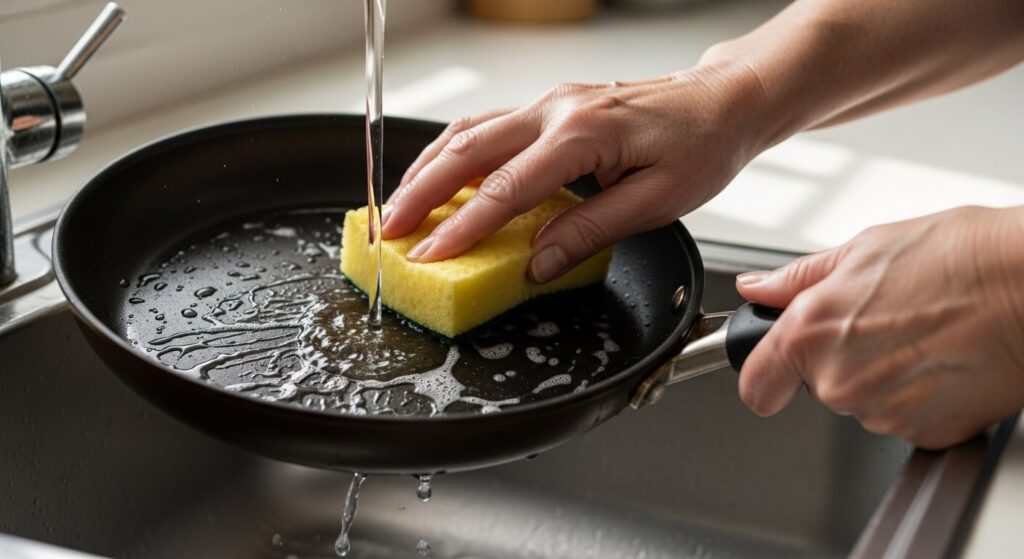
- Rinse under water
- Wipe with a damp cloth
- Throw in the dishwasher (most are dishwasher-safe to 400°F)
- Air dry in minutes
It doesn’t absorb liquids or odors like foam or fabric grips. Bacteria and mold can’t penetrate the surface. For seniors dealing with arthritis who might also have compromised immune systems? That’s not a small thing.
Types of Silicone Handle Grips Available for Seniors
You’ve got options. Lots of them. Some work better than others depending on what you’re trying to grip.
Universal Slip-On Silicone Grips
These are the workhorses. Slip them on, they fit, done.
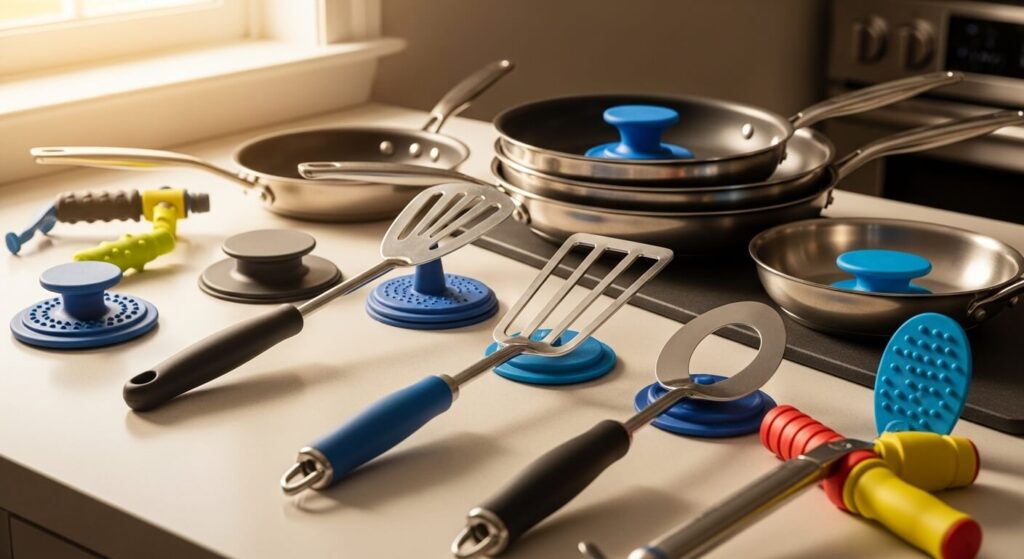
Cylindrical grip sleeves for kitchen utensils
Basic tubes of silicone. They stretch over handles for spoons, spatulas, whisks—anything with a relatively straight handle under about 1 inch in diameter.
What makes them work:
- Elastic enough to stretch during installation
- Firm enough to stay put during use
- Usually come in multiple diameters (0.5″, 0.75″, 1″)
They’re not fancy. But they’re effective and cheap (usually $5-15 for a set of 4-6).
Expandable grips for multiple diameters
These have a slit running down the length. You can fit them onto handles of varying thicknesses without the stretching battle.
Good for people with severe hand arthritis who can’t wrestle a tight grip into place. Just wrap and go. The tradeoff? They can rotate on the handle if you’re not careful during installation.
Ergonomic Molded Silicone Grips
Pre-shaped for specific purposes. More expensive, but often worth it.
Contoured designs for natural hand positioning

These grips have curves, bumps, and finger grooves that guide your hand into the optimal position. Your fingers fall into place naturally—no awkward angles that stress your joints.
The best ones mirror the natural curve of a relaxed hand (slightly curved, not straight). This reduces muscle tension and joint strain during extended use.
Textured surfaces for maximum traction
We’re talking aggressive patterns here:
- Raised dots (best for wet conditions)
- Cross-hatching (good all-around grip)
- Wave patterns (comfortable for extended holding)
- Honeycomb (maximum surface area contact)
Match the texture to your use case. Aggressive textures can be uncomfortable for long-duration holding. Smooth textures might slip when wet.
Tool-Specific Silicone Grip Solutions
Pre-made grips designed for specific items. Higher upfront cost, but they just work.
Kitchen and cooking utensil grips
Built for knives, peelers, can openers. These usually come with the grip already attached to the tool, or they’re molded to fit specific brands.
Worth it? Depends. If you cook daily, absolutely. If you’re barely using your kitchen, probably not.
Writing instrument grips
Small silicone sleeves for pens, pencils, markers. These are game-changers for seniors who still write checks, do crosswords, or maintain journals.
The best ones are triangular or contoured—they prevent the pen from rolling and guide proper finger placement. Less gripping force needed, less hand fatigue.
Personal care item grips
Toothbrush grips, razor grips, comb grips. These are often overlooked but incredibly useful for maintaining independence in daily hygiene tasks.
Look for ones with extra cushioning. You’re using these when you’re tired, first thing in the morning, or right before bed—times when grip strength is naturally lower.
Adaptive Silicone Grips with Built-In Features
These combine grips with other adaptive functions.
Some have attachment loops for wrist straps (so you don’t drop things). Others have built-in stands (for toothbrushes or razors). A few even incorporate weighted elements to reduce tremors.
Premium options, usually $15-40 per grip. But if you need the extra features, they prevent you from buying multiple products.
How Silicone Grips Help Seniors Maintain Independence
Silicone grips enable seniors to perform essential daily tasks without assistance, preserving dignity and reducing reliance on caregivers for basic activities.
Independence isn’t abstract. It’s making your own breakfast. Brushing your own teeth. Opening your own medication.
Enabling Safe Food Preparation in the Kitchen
Cooking becomes dangerous when you can’t hold things securely.
With proper silicone grips on kitchen tools, you can:
- Chop vegetables without the knife slipping (which prevents cuts)
- Stir hot liquids without losing grip and spilling
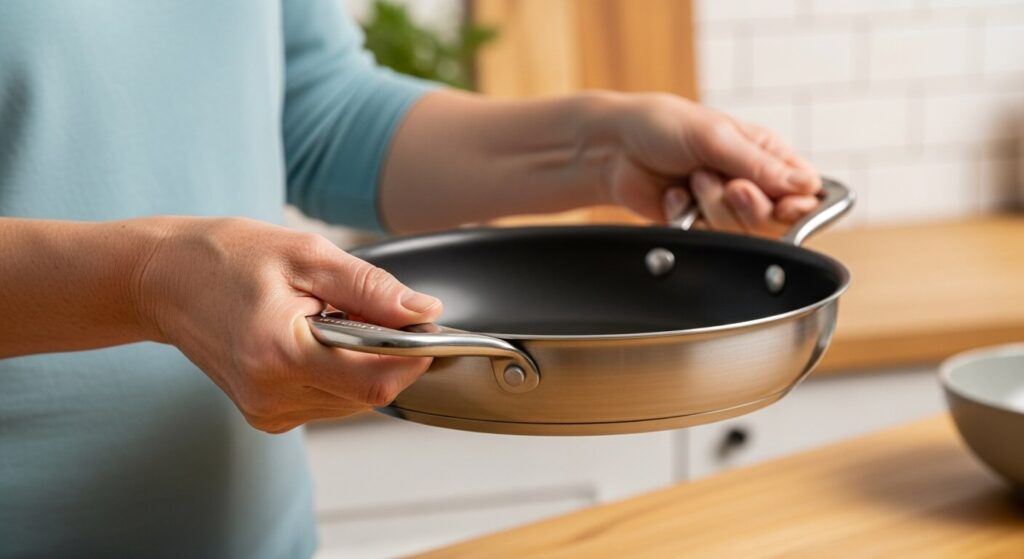
- Lift pots and pans using both handles comfortably
- Open jars and cans with specialized grip tools
Here’s what this actually means. You can make a real meal instead of eating cold cereal for dinner because you’re afraid of hurting yourself with the stove.
Supporting Personal Hygiene and Grooming Tasks
Nothing tanks morale faster than needing help with basic hygiene.
Silicone grips on toothbrushes, razors, hairbrushes, and combs mean you can:
- Brush your teeth properly (not just a quick swipe)
- Shave without assistance
- Style your hair the way you want it
- Apply makeup or skin care products
These seem small until you can’t do them. Then they’re everything.
Facilitating Household Cleaning and Maintenance
Being able to clean your own space matters for mental health.
Grips on brooms, mops, dusters, and spray bottles let you maintain your home on your own terms. You’re not waiting for someone else’s schedule. You’re not living in mess because asking for help feels embarrassing.
And honestly? Cleaning is light exercise for arthritic hands. Controlled, purposeful movement. Using grips makes it possible without overdoing it.
Assisting with Medication Management
This one’s critical.
Medication bottles have those safety caps specifically designed to be hard to open. Great for child safety. Terrible for arthritic hands. Silicone grips on bottle openers or even wrapped around the bottles themselves give you the friction and leverage to access your own medications.
Missing doses because you physically can’t open the bottle? Not acceptable. Grips fix that.
Choosing the Right Silicone Handle Grips for Arthritic Needs
The right grip matches your hand size, arthritis severity, and the specific tasks you need to perform—there’s no one-size-fits-all solution.
You wouldn’t wear the wrong shoe size. Don’t settle for the wrong grip size either.
Assessing Grip Diameter and Hand Size Requirements
Measure your hand. Seriously.
What you need to know:
- Your palm width (measured across the widest part)
- Your finger length (from palm to fingertip)
- How wide you can comfortably spread your fingers
Smaller hands (palm width under 3 inches) need grips around 0.75-1 inch in diameter. Average hands (3-3.5 inches) work with 1-1.25 inch grips. Larger hands need 1.25-1.5 inches.
Too thick, and you can’t close your hand around it. Too thin, and you’re not getting the cushioning benefit.
Evaluating Texture Patterns for Maximum Hold
Not all textures work for all situations.
| Texture Type | Best For | Avoid When |
|---|---|---|
| Smooth/minimal | Long-duration holding, sensitive skin | Wet conditions, heavy objects |
| Light ribbing | General purpose, most kitchen tools | You need aggressive grip |
| Heavy texturing | Wet environments, maximum security | Skin is fragile, prolonged use causes discomfort |
| Dotted/studded | Precise control tasks | Texture feels uncomfortable |
Test if you can. What feels good in the store might irritate after 20 minutes of use.
Considering Grip Length and Coverage Area
Longer isn’t always better.
Short grips (2-3 inches):
- Good for utensils and writing instruments
- Let you adjust hand position easily
- Lighter, less bulky
Medium grips (4-6 inches):
- Work for most kitchen tools and cleaning implements
- Provide good coverage without excess
- Most versatile option
Long grips (7+ inches):
- Necessary for tools like brooms and mops
- Two-handed tasks
- Can be overkill for smaller items
Match the grip length to where your hand actually contacts the object during use. Extra length just adds weight.
Matching Firmness Levels to Arthritis Severity
Shore hardness matters. A lot.
Shore A 30-40 (very soft):
- Maximum cushioning
- Best for severe arthritis with significant pain
- Can feel mushy, lacks support for heavy tasks
Shore A 50-60 (medium):
- Balanced cushion and support
- Good for moderate arthritis
- Most popular range
Shore A 70-80 (firm):
- Minimal compression
- Better for mild arthritis or when you need precise control
- Less fatigue reduction
Most packaging won’t list Shore hardness (annoying, I know). If it says “soft touch” or “cushioned,” it’s probably 40-60. “Firm grip” usually means 60-80.
Where to Use Silicone Grips Throughout the Home
You can retrofit almost every handle in your house with silicone grips—and you probably should if arthritis is limiting your daily function.
Start where you struggle most. Then expand.
Kitchen Applications for Safer Meal Preparation
The kitchen is ground zero for grip problems.
Pots, pans, and cookware handles
Wrap pot handles with heat-resistant silicone grips (rated to at least 400°F). This gives you secure hold when moving hot, heavy cookware.
Skip the cheap ones that slide around. Get grips that stay put or use high-temp silicone tape to secure them.
Knives and cutting tools
Knife grips need to be slip-resistant and textured. Period.
Look for grips with finger grooves or contours that prevent your hand from sliding forward onto the blade. This isn’t about comfort—it’s about not ending up in the ER.
Mixing spoons and spatulas
These get overlooked, but you’re holding them constantly while cooking.
Simple cylindrical grips work fine. Get ones that are dishwasher-safe because you’re washing these after every meal.
Can openers and jar openers
Specialized grips here make a huge difference.
The best jar openers have V-shaped silicone grips that bite into the lid. Can opener grips should be thick enough to distribute the twisting force across your whole hand, not just your fingertips.
Bathroom Safety and Personal Care
Where most falls and injuries happen. Grips help.
Toothbrushes and razors
Fat, cushioned grips. That’s what you want.
Your grip strength is weakest in the morning (when you’re brushing) and evening (when you might be shaving). Grips compensate for that daily variation.
Electric toothbrush handles are already thick, but adding a textured grip can help if you’re dealing with moisture.
Hairbrushes and combs
Lightweight plastic handles slip. Silicone grips don’t.
Especially useful if you’re raising your arms overhead to style hair—gravity’s working against you, and tired hands drop things.
Faucet handles and shower controls
Wet hands + smooth chrome handles = frustration.
You can get silicone covers for faucet knobs and lever handles. They’re not pretty, but they work. Some clip on, others slide over existing handles.
Bedroom and Living Areas
Comfort and function zones.
Door knobs and handles
Silicone covers for doorknobs turn that twisting motion (which murders arthritic thumbs) into a simple squeeze-and-turn.
For lever handles, textured grip tape prevents your hand from slipping off when pushing down.
Remote controls
Chunky silicone cases for TV remotes, gaming controllers, phones.
The added diameter makes them easier to hold. The texture means you’re not death-gripping them to keep them from sliding out of your hands.
Reading materials and books
Book holders with silicone grips, or silicone finger grips that help you turn pages.
Holding a book open strains your thumbs. Grips reduce that strain significantly.
Walking canes and mobility aids
This is huge.
Most canes come with basic foam or plastic handles. Swap them for contoured silicone grips. You’re putting your full body weight through that grip multiple times per minute. Cushioning matters.
Outdoor and Garden Tools
Don’t give up your hobbies.
Garden tools—trowels, pruners, watering cans—all benefit from thick silicone grips. Gardening is therapeutic, but not when your hands hurt so bad you can’t do it anymore.
Same for outdoor tools like rakes, hoes, and shovels. Wrap those handles. Keep doing what you love.
Installation and Proper Fitting of Silicone Handle Grips
Installing silicone grips correctly ensures they won’t slip during use and actually provide the support you need—poor installation defeats the purpose.
Most people just shove them on and wonder why they rotate or slide off.
Step-by-Step Guide to Installing Slip-On Grips
Here’s how to do it right.
For stretch-fit grips:
- Clean the handle (remove any oil, food residue, or dirt)
- Wet the inside of the grip with water or rubbing alcohol (makes it slide easier)
- Start one end of the grip onto the handle
- Roll and push—don’t pull—the grip onto the handle
- Adjust position while still wet
- Let it dry completely (alcohol evaporates fast, water takes longer)
The alcohol trick is clutch. It reduces friction temporarily, then evaporates and leaves you with a tight fit.
For split grips:
- Open the split and position around the handle
- Press firmly to close the seam
- If there’s adhesive, hold pressure for 30-60 seconds
- Twist slightly to test security
Ensuring Secure Attachment Without Sliding
Nothing’s more annoying than a grip that rotates while you’re using it.
Prevention methods:
- Choose grips slightly smaller than the handle diameter (they stretch to fit and stay tight)
- Use spray adhesive on the handle before installation (permanent but secure)
- Wrap thin rubber grip tape under the silicone grip for extra friction
- Select grips with internal ridges that bite into the handle
If a grip keeps sliding, it’s the wrong size. Don’t try to force it to work with tape or glue on the outside—that’s a Band-Aid on a sizing problem.
Adjusting Grip Position for Optimal Comfort
Where you place the grip matters as much as which grip you choose.
Position it where your hand naturally falls during use. For most tools, that’s not centered on the handle—it’s offset toward one end.
Hold the tool like you normally would. Mark where your palm sits. Install the grip there.
And leave some handle exposed if possible. This gives you options to adjust your hand position during use, which reduces fatigue.
When to Use Adhesives or Additional Securing Methods
Sometimes friction alone isn’t enough.
Use adhesive when:
- The tool gets wet frequently (dish brushes, shower scrubbers)
- You’re applying significant torque (can openers, jar wrenches)
- The handle material is super smooth (polished metal, glazed ceramic)
- You need absolute security and won’t be removing the grip
Best adhesives:
- Silicone-specific spray adhesive (bonds to silicone and handle)
- Double-sided foam tape (allows some compression, reduces vibration)
- High-temp silicone sealant (for cookware handles)
Don’t use super glue. It gets brittle and fails. Don’t use hot glue. It melts.
Material Properties That Make Silicone Ideal for Arthritis Support
Silicone’s unique combination of flexibility, durability, and hypoallergenic properties makes it superior to other grip materials for arthritic hands.
This isn’t marketing hype. It’s material science.
Hypoallergenic Characteristics of Medical-Grade Silicone
Medical-grade silicone (usually platinum-cured) doesn’t cause allergic reactions in 99.9% of people.
Compare that to:
- Latex (5-10% of people have reactions)
- Rubber (contains allergenic proteins)
- Foam (can harbor allergens and irritants)
For seniors with sensitive skin or compromised immune systems, this matters. You’re holding these grips multiple times daily. Skin irritation isn’t just uncomfortable—it can lead to avoiding the grips altogether.
Flexibility and Compression Resistance
Silicone maintains its shape under repeated compression.
Foam grips bottom out—compress them enough times and they lose their cushioning. Silicone bounces back. You get the same level of support on day 500 as you did on day 1.
The flexibility means it conforms to your hand’s shape without permanently deforming. It molds during use, recovers at rest.
Durability Compared to Foam and Rubber Alternatives
Expected lifespan comparison:
| Material | Typical Lifespan | Failure Mode |
|---|---|---|
| Silicone | 5-10+ years | Rarely fails, might discolor |
| Foam | 6-18 months | Compression set, material breakdown |
| Rubber | 2-4 years | Drying, cracking, hardening |
| Fabric/neoprene | 1-3 years | Wear, odor absorption, fraying |
You’re paying more upfront for silicone. But you’re replacing it way less often.
Chemical Resistance and Food Safety
Silicone doesn’t react with most household chemicals.
Won’t degrade when exposed to:
- Cooking oils and fats
- Acidic foods (tomato sauce, citrus, vinegar)
- Cleaning products
- Soap and detergents
It’s FDA-approved for food contact. You can use it on utensils that touch food directly without worrying about chemical leaching.
Rubber and some plastics? Not so much. They can absorb flavors, odors, and potentially leach chemicals over time.
Comparing Silicone Grips to Other Grip Enhancement Options
Silicone grips outperform foam, rubber, and built-in ergonomic handles for arthritis support due to superior durability, hygiene, and grip-enhancing properties.
But let’s break down the specifics.
Silicone vs. Foam Handle Grips
Foam is cheaper. That’s about where its advantages end for arthritis.
Foam problems:
- Absorbs moisture (gets gross, breeds bacteria)
- Compresses permanently (loses cushioning)
- Tears easily with fingernails
- Can’t be properly sanitized
Where foam wins:
- Initial cost (usually $2-5 vs. $8-15 for silicone)
- Ultra-lightweight
- Maximum softness for extreme sensitivity
If you’ve got severe skin sensitivity and can’t tolerate any pressure, foam might be your only option. Otherwise? Silicone beats it.
Silicone vs. Rubber and Latex Grips
Rubber grips have good friction but age terribly.
Rubber issues:
- Gets sticky and gross as it degrades
- Hardens and cracks over time
- Latex allergies are common
- Smells bad when new
Rubber advantages:
- Can be slightly cheaper than silicone
- Natural rubber has excellent initial grip
- Wide availability
Silicone’s lack of degradation makes it the better long-term choice. You’re not replacing grips every year because they turned into sticky, cracked messes.
Silicone vs. Built-In Ergonomic Handles
Some tools come with ergonomic handles already attached.
Built-in ergonomic handles:
- Optimized for the specific tool
- Can’t slip or rotate
- Often use harder plastics with texture
Why you might still add silicone grips:
- Extra cushioning beyond what the manufacturer provides
- Customization to your specific hand size
- Additional diameter for weakened grip strength
Think of silicone grips as an upgrade to existing ergonomic features, not a replacement.
Why Silicone Offers Superior Performance for Seniors
Bottom line. Silicone combines everything you need:
- Doesn’t degrade
- Easy to clean
- Won’t cause allergies
- Provides cushioning that lasts
- Offers excellent friction
- Handles temperature extremes
- Food-safe and chemical-resistant
No other single material checks all those boxes.
Specific Features to Look for in Quality Silicone Grips
Quality silicone grips have specific measurable characteristics—knowing what to look for prevents wasting money on inferior products.
Don’t just grab the cheapest option on Amazon.
Shore Hardness Ratings Explained
This number tells you how much the silicone compresses.
The scale:
- Lower number = softer (compresses easily)
- Higher number = harder (resists compression)
Shore A is the scale for silicone. Shore OO is for super-soft materials. Shore D is for hard plastics.
For arthritis grips, you want Shore A 40-70. Anything softer feels mushy and unstable. Anything harder defeats the cushioning purpose.
Problem is, most consumer products don’t list this spec. You have to go by feel or look for medical-grade products that actually provide technical data.
Thickness Considerations for Joint Protection
Thicker isn’t automatically better.
Thin grips (2-3mm):
- Add minimal diameter
- Good when you need to maintain tool feel
- Less cushioning, less protection
Medium grips (4-6mm):
- Sweet spot for most applications
- Balances cushioning with control
- Most popular for arthritis
Thick grips (7-10mm+):
- Maximum joint protection
- Significantly changes tool feel and balance
- Can make handles too large for small hands
Start with medium thickness. Adjust from there based on your pain level and hand size.
Surface Texture Options and Their Benefits
Texture affects both grip and comfort.
Ribbed patterns
Raised parallel lines that run perpendicular to the grip.
- Good general-purpose texture
- Comfortable for extended use
- Works well when dry
- Adequate when wet (not the best)
Dotted surfaces
Raised bumps or nubs.
- Excellent in wet conditions
- Can feel aggressive on sensitive skin
- Provides maximum friction
- Best for slippery or greasy tasks
Waffle or diamond textures
Cross-hatched patterns creating diamond or square shapes.
- Great all-around performance
- Balances grip and comfort
- Looks professional
- Works wet or dry
Smooth vs. aggressive textures
Smooth silicone still has some natural tackiness. It’s comfortable for long-duration use but can slip when wet.
Aggressive textures (deep patterns, sharp edges) maximize grip but can cause discomfort or even skin irritation during prolonged contact.
Match texture intensity to your task demands and skin sensitivity.
Color Options for Visual Impairment Considerations
Color matters for visibility.
Bright colors (orange, yellow, lime green):
- Easy to locate in drawers or on counters
- Good for people with low vision
- Prevents accidentally grabbing hot items (you see the grip, you know it’s the right end)
Dark colors (black, navy, charcoal):
- Hide stains and discoloration
- Professional appearance
- Can be harder to see in dim lighting
Clear/translucent:
- Shows the original handle underneath
- Less visible (pro or con depending on preference)
- Can discolor over time
If vision is an issue, go bright. No contest.
Maintaining and Cleaning Silicone Handle Grips
Regular cleaning extends the life of silicone grips and prevents bacterial buildup—simple maintenance takes less than five minutes per grip.
Neglected grips get gross. Don’t let them.
Daily Cleaning Recommendations
After each use (especially kitchen grips):
- Rinse with warm water
- Wipe with a damp cloth
- Shake off excess water
- Air dry
That’s it. Takes 30 seconds.
For grips that contacted food directly, use a drop of dish soap during the rinse. The silicone won’t absorb oils or particles, so surface cleaning is sufficient.
Deep Cleaning Methods for Hygiene
Weekly or bi-weekly, depending on use:
Method 1: Dishwasher
- Top rack only
- Normal cycle
- Air dry setting preferred (heat dry is fine for most silicone, but check manufacturer specs)
Method 2: Soaking
- Remove grip from handle if possible
- Soak in warm water with dish soap or white vinegar (1:1 ratio)
- 15-30 minutes
- Scrub with soft brush if needed
- Rinse thoroughly
- Air dry completely
Method 3: Sanitizing
- Mix 1 tablespoon bleach per gallon of water
- Soak for 5-10 minutes
- Rinse extremely well (multiple times)
- Air dry
Only sanitize if you’re concerned about pathogens. Overkill for normal use.
Dishwasher Safety and Heat Tolerance
Most food-grade silicone handles dishwasher temperatures fine (up to 400°F for short periods).
But check the specs. Some lower-grade silicone can warp at sustained high heat.
If the grip came with the tool, put the whole thing in the dishwasher (unless the handle itself isn’t dishwasher-safe). If you added the grip afterward, you might want to hand-wash to prevent it from slipping off during the wash cycle.
Signs That Grips Need Replacement
Silicone lasts a long time, but it doesn’t last forever.
Replace when:
- Visible cracks or tears appear
- The grip has stretched and slides around the handle
- Surface feels sticky or tacky (degradation)
- Permanent discoloration that won’t clean off (indicates chemical breakdown)
- Loss of texture (worn smooth from use)
Quality grips should last 3-5 years minimum with regular use. If you’re replacing them annually, you bought cheap ones or you’re using them wrong.
Medical and Therapeutic Perspectives on Grip Aids
Occupational therapists routinely recommend silicone grips as part of comprehensive arthritis management because they reduce joint stress while maintaining functional independence.
This is standard clinical practice, not alternative medicine.
How Occupational Therapists Recommend Silicone Grips
OTs assess your specific limitations and match grips to tasks.
They’ll evaluate:
- Your grip strength (measured with a dynamometer)
- Range of motion in fingers and wrists
- Pain levels during specific activities
- Hand size and shape
Then they recommend specific grip types and placements. It’s personalized, not generic.
Common OT recommendations:
- Start with 3-5 key items you use daily
- Practice with the grips to build familiarity
- Gradually expand to more tools as you see benefits
- Combine grips with other adaptive equipment
The Role of Grip Aids in Arthritis Treatment Plans
Grips aren’t treatment. They’re management tools.
Think of them like reading glasses. They don’t fix your vision, but they let you function normally despite the limitation.
Where grips fit in comprehensive care:
- Medication manages inflammation
- Physical therapy maintains range of motion
- Grips enable function during daily activities
- Exercise strengthens supporting muscles
You need all of it. Grips alone won’t fix arthritis, but they make living with it substantially easier.
Complementary Therapies That Work with Silicone Grips
Hand exercises while using grips. Paraffin wax treatments before gripping tasks. Compression gloves worn while using gripped tools.
These aren’t competing approaches. They stack.
Warm up stiff hands with heat therapy. Do some range-of-motion exercises. Then use your silicone-gripped tools while your joints are at their best. You’ll perform tasks more easily and with less pain.
When to Consult Healthcare Providers About Grip Solutions
See an OT or hand specialist if:
- You’re dropping things frequently despite using grips
- Pain continues to worsen even with assistive aids
- You’ve lost significant hand function in the past few months
- Simple grips aren’t helping and you need custom solutions
Sometimes you need specialized adaptive equipment beyond off-the-shelf grips. That’s fine. That’s what professionals are for.
Cost Considerations and Value Assessment
Silicone grips typically cost $5-25 per grip, with the investment paying off through maintained independence and reduced need for assistance with daily tasks.
Money matters. Let’s talk real numbers.
Price Ranges for Different Silicone Grip Types
Budget options ($3-8):
- Basic slip-on grips
- Minimal texturing
- Standard sizes only
- Works, but might not last as long
Mid-range ($8-20):
- Better quality silicone
- Multiple texture options
- Various sizes available
- Longer durability
Premium ($20-50):
- Medical-grade silicone
- Ergonomic molding
- Tool-specific designs
- Guaranteed materials and construction
Specialty/custom ($50-150+):
- Custom-fitted to your hand
- Prescription adaptive equipment
- Integrated features (straps, stands, etc.)
For most people, mid-range hits the sweet spot. You get quality without overpaying for marginal improvements.
Bulk Purchasing Options for Multiple Applications
Buy sets instead of individual grips.
Most manufacturers offer multipacks:
- 4-pack: usually saves 15-20%
- 8-pack: saves 25-30%
- Mixed sets (different sizes): saves 20% and gives you options
If you’re outfitting your whole kitchen, a bulk set makes sense. If you’re testing whether grips work for you, start with 2-3 individual grips on your most-used items.
Insurance and Medicare Coverage Possibilities
Sometimes yes, usually no.
Medicare Part B might cover grips if:
- They’re prescribed by a doctor
- They’re deemed “medically necessary”
- They’re ordered through a Medicare-approved supplier
- You meet your deductible
Reality check: most basic grips won’t meet the coverage threshold. Custom adaptive equipment or prescription devices have better chances.
Private insurance varies wildly. Some plans cover durable medical equipment (DME) broadly. Others don’t.
Worth checking, but don’t count on it. These are usually out-of-pocket expenses.
Long-Term Cost Savings from Increased Independence
Here’s the real value calculation.
Cost of grips: $50-150 for outfitting a home
Cost of in-home care: $20-30/hour
If grips let you avoid even 5-10 hours per month of assistance with cooking, cleaning, and personal care, they’ve paid for themselves in the first month.
Not to mention the dignity and autonomy value, which you can’t really put a price on.
Safety Considerations When Using Silicone Grips
While silicone grips significantly improve safety for seniors with arthritis, they don’t eliminate all risks and shouldn’t create false confidence in handling dangerous items.
Don’t get reckless just because you’ve got better grip.
Preventing Over-Reliance on Grip Aids
Grips help. They’re not magic.
You still have arthritis. You still have limited strength. A good grip on a sharp knife doesn’t mean you should attempt complicated knife skills that could get you hurt.
Stay realistic about:
- How much weight you can safely lift
- How long you can maintain grip strength
- What tasks still require assistance
The goal is safe independence, not stubborn independence.
Recognizing When Additional Adaptive Equipment Is Needed
Sometimes a grip isn’t enough.
Signs you need more help:
- You’re still struggling despite grips
- You’re compensating with poor posture or awkward positions
- Tasks take 3-4x longer than they should
- You’re exhausted after basic activities
Additional equipment might include:
- Jar openers with leverage mechanisms
- Reachers for items on high shelves
- Cutting boards with food stabilizers
- Electric versions of manual tools
Avoiding Grip Fatigue and Overexertion
Better grip doesn’t mean unlimited grip.
Your hands still get tired. Maybe it takes longer with grips, but fatigue happens.
Prevent overexertion:
- Take breaks every 10-15 minutes during extended tasks
- Switch hands when possible
- Use two hands for heavy or awkward items
- Stop if you feel pain (not just discomfort)
Pushing through pain causes more inflammation and worsens arthritis long-term.
Combining Grips with Other Arthritis Management Strategies
Grips are one tool in the toolbox.
Comprehensive approach includes:
- Anti-inflammatory medication as prescribed
- Regular gentle exercise and stretching
- Heat/cold therapy for flare-ups
- Rest during bad days
- Proper nutrition (anti-inflammatory diet)
Use grips as part of this bigger picture, not as a replacement for medical care.
Special Considerations for Different Arthritis Types
Different types of arthritis create distinct grip challenges that require specific silicone grip adaptations—rheumatoid arthritis affects hands differently than osteoarthritis.
Not all arthritis is the same. Your grip solutions shouldn’t be either.
Silicone Grips for Rheumatoid Arthritis
RA causes inflammation, swelling, and joint deformity.
What works for RA:
- Softer grips (Shore A 40-50) for maximum cushioning during flares
- Larger diameters to accommodate swollen joints
- Smooth or lightly textured surfaces (aggressive textures can irritate inflamed skin)
- Quick-release grips for when you need to drop items due to sudden pain
RA pain fluctuates daily. You might need different grips for good days vs. bad days.
Adaptations for Osteoarthritis in the Hands
OA involves bone-on-bone grinding and bone spur formation.
OA-specific solutions:
- Firmer grips (Shore A 60-70) for better support
- Contoured shapes that avoid pressure points on bone spurs
- Consistent diameter (irregular shapes can aggravate specific joint areas)
- Vibration dampening if using power tools (reduces aggravation)
OA is mechanical wear. Grips need to redistribute force away from damaged joints.
Addressing Psoriatic Arthritis Grip Challenges
PsA combines joint inflammation with skin issues.
Special considerations:
- Hypoallergenic medical-grade silicone only (skin is already compromised)
- Smooth surfaces where possible (textured grips can irritate psoriasis plaques)
- Easy-clean options (frequent washing is necessary for skin management)
- Light colors that show when cleaning is needed
Skin health is as important as joint support with PsA.
Solutions for Thumb Arthritis and CMC Joint Issues
Thumb base arthritis (carpometacarpal joint) is incredibly common and debilitating.
CMC-specific grips:
- Fat cylindrical grips that allow whole-hand grasping instead of pinch grip
- Trigger-style handles for spray bottles and tools
- Spring-loaded options that reduce thumb pressure
- Built-up handles on pens and utensils
The goal is eliminating or reducing thumb opposition movements that stress the CMC joint.
Customization and DIY Solutions with Silicone Grips
You can modify silicone grips to create custom solutions that perfectly match your specific hand anatomy and functional limitations.
Off-the-shelf doesn’t always cut it. Get creative.
Trimming Grips for Perfect Fit
Too long? Cut them.
Use sharp scissors or a craft knife. Make clean, straight cuts perpendicular to the grip.
Trimming tips:
- Measure twice, cut once
- Leave slightly longer than needed (you can trim more, can’t add back)
- Smooth cut edges with sandpaper if they’re rough
- Cut at an angle if you need a tapered end
Some grips have reinforced ends. Cut through carefully—they’re tougher than the main body.
Layering Multiple Grips for Extra Cushioning
Stack them.
Put a thin, firm grip directly on the handle. Add a thicker, softer grip over it.
This creates a composite system:
- Inner grip prevents rotation
- Outer grip provides cushioning
- Combined thickness fills your hand better
Works especially well for people with severe arthritis who need maximum cushioning without losing control.
Creating Custom Grip Combinations
Mix and match different grip styles on the same handle.
Example: Use a smooth grip where your palm contacts the handle and a textured grip where your fingers wrap around. This gives comfort where you need it and traction where it matters.
Or alternate colors to create visual zones that guide hand placement.
Working with Occupational Therapists for Personalized Solutions
OTs can create custom grips using moldable silicone putty.
They heat it, mold it around your hand while you grip the tool, let it cure. Result: a grip perfectly matched to your hand’s unique shape and your specific limitations.
Insurance sometimes covers custom adaptive equipment when off-the-shelf options don’t work. Worth exploring if standard grips aren’t cutting it.
Real-World Applications and Success Stories
Seniors using silicone grips report maintained cooking abilities, continued personal care independence, and sustained hobby participation that would otherwise be impossible with severe arthritis.
This stuff actually works.
Impact on Daily Cooking and Meal Independence
Real people. Real results.
Users report being able to:
- Prepare full meals again after years of relying on pre-made food
- Use knives safely for the first time in months
- Stir and mix without dropping utensils
- Open their own jars and containers
One common theme: meal quality improves. You eat better when you can actually cook for yourself.
Improvements in Personal Care Routines
Dignity matters.
Being able to brush your own teeth, comb your own hair, handle your own razor—these aren’t luxuries. They’re fundamental to feeling like yourself.
Grips make this possible for people who’d otherwise need assistance with basic hygiene. The psychological impact is massive.
Enhanced Ability to Pursue Hobbies and Crafts
Arthritis doesn’t have to end your hobbies.
- Gardeners can keep gardening
- Crafters can keep crafting
- Woodworkers can keep working
Grips on hobby tools mean you don’t lose the activities that give life meaning. That’s not small stuff.
Psychological Benefits of Maintained Independence
Here’s what people don’t talk about enough.
Losing independence causes depression. Feeling like a burden on family destroys morale. Being unable to do basic tasks yourself creates anxiety and learned helplessness.
Grips help prevent that spiral. They’re not just about physical function—they’re about mental health and quality of life.
Integrating Silicone Grips into a Comprehensive Arthritis Strategy
Silicone grips work best when combined with medical treatment, physical therapy, and other adaptive strategies—they’re part of arthritis management, not the entire solution.
Holistic approach wins.
Combining with Hand Exercises and Physical Therapy
Use grips during your PT exercises.
The added cushioning and diameter make it easier to perform strengthening exercises. You can actually complete your reps instead of stopping early due to pain.
And using gripped tools during daily activities is functional exercise. You’re maintaining range of motion and strength through real-world movements.
Using Alongside Anti-Inflammatory Medications
Medication reduces inflammation. Grips reduce mechanical stress.
They work together. Take your meds as prescribed. Use your grips during activities. The combination lets you function at a higher level than either approach alone.
Don’t stop medication because grips make things easier. That’s backwards.
Coordination with Other Adaptive Equipment
Build a complete system:
- Grips on hand tools
- Electric appliances for heavy-duty tasks
- Reachers for overhead items
- Adapted seating for tasks like food prep
- Voice-activated devices for things you can’t grip
None of these replace the others. They complement.
Building a Complete Independent Living Toolkit
What a comprehensive toolkit looks like:
Kitchen:
- Silicone grips on all utensils and pot handles
- Electric can opener
- Jar opener with grip
- Lightweight cookware
- Cutting board with stabilizers
Bathroom:
- Gripped personal care items
- Grab bars with silicone coating
- Lever faucets (add grips if needed)
- Long-handled sponges with grips
Bedroom/Living:
- Gripped TV remote
- Button hook and zipper pull
- Gripped writing instruments
- Lever door handles
Start with the areas causing the most difficulty. Build out from there as needed and as budget allows.