How to Season Cast Iron on the Stovetop in 10 Minutes (The Quick Method)
You can season a cast iron skillet on the stovetop in about 10 minutes by heating it over medium-high heat, applying a thin layer of oil, wiping off the excess, and continuing to heat until the oil smokes and polymerizes—but this creates a single thin layer best suited for touch-ups and maintenance, not building seasoning from scratch.
Let’s be honest upfront.
This isn’t the same as proper oven seasoning. Not even close. You’re getting one layer, applied to primarily just the cooking surface, with uneven heat distribution that creates inconsistent results. But sometimes that’s exactly what you need.
Quick fix before dinner. Spot repair on a damaged area. Maintenance layer after cleaning. These are the situations where 10-minute stovetop seasoning shines.
What Stovetop Seasoning Actually Accomplishes
A single, functional layer of polymerized oil on your cooking surface. That’s it.
The stovetop method heats the bottom of your skillet hot enough to reach oil’s smoke point and create actual polymerization—those polymer bonds that make seasoning durable. So you’re getting real seasoning, not just an oil coating.
But the heat is concentrated. The cooking surface gets way hotter than the sides. The handle barely heats up at all. You end up with great seasoning in the center, okay seasoning near the edges, and basically nothing on the handle or exterior.
Uneven? Absolutely. Functional? Also yes.
Why 10 Minutes Works for Touch-Ups (But Not Full Seasoning)
Because you’re not trying to build a complete seasoning foundation in 10 minutes. You’re adding one layer. Fixing one spot. Maintaining what’s already there.
Think of it like touching up paint on a wall versus painting the whole room. Quick. Targeted. Good enough for the immediate need.
For bare cast iron that’s never been seasoned? You’d need 6-10 stovetop sessions to build adequate protection. That’s an hour of work spread across multiple days. At that point, just use your oven for 60 minutes and get better results.
But for adding a protective layer to already-seasoned cookware? 10 minutes nails it.
When Fast Stovetop Seasoning Makes Sense
Here’s when you should actually use this method:
- After aggressive cleaning that stripped a bit of seasoning
- Before cooking when you notice a dull spot that needs attention
- Spot repairs on small damaged areas (rust spots you just scrubbed off, flaking patches)
- Regular maintenance to keep building on existing seasoning
- You need the pan in 15 minutes and it needs a fresh layer first
When it doesn’t make sense? New cast iron. Completely stripped skillets. Cookware with major seasoning damage. Anything requiring comprehensive seasoning coverage.
Understanding the Difference: Quick Stovetop vs. Full Oven Seasoning
Two different beasts entirely.
What You Get in 10 Minutes on the Stovetop
One thin layer. Mostly on the cooking surface. Polymerized enough to be functional. Applied and finished in the time it takes to preheat your oven.
The bottom of your skillet—where food actually touches—gets legitimate seasoning. Oil reaches smoke point. Polymers form. The coating bonds to the iron. It’s real, it’s durable (relatively), and it works for cooking.
But coverage is limited. And quality varies based on your burner’s hot spots.
What You Miss Compared to Oven Methods
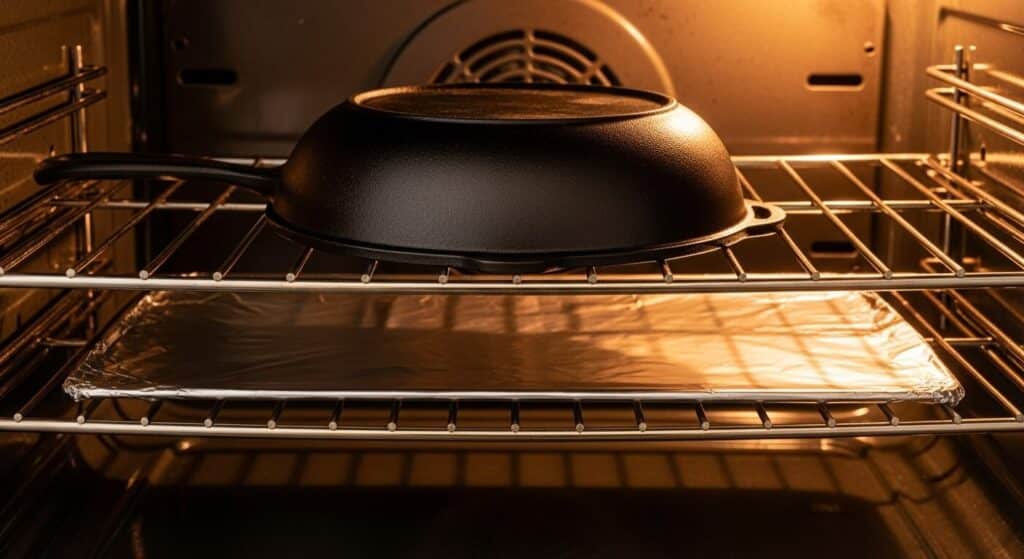
Even heat distribution. Ovens surround your cookware with consistent temperature. Every surface—top, bottom, sides, handle—gets the same heat treatment. Stovetops concentrate heat on the bottom with some conduction to the sides.
Complete coverage. Oven seasoning covers every exposed surface evenly. Stovetop seasoning leaves the handle and upper sides barely treated.
Multiple layers in one session. In an oven, you can do 3-4 layers in an afternoon (each layer takes 60 minutes, but you can walk away). On the stovetop, you’re babysitting each 10-minute layer individually.
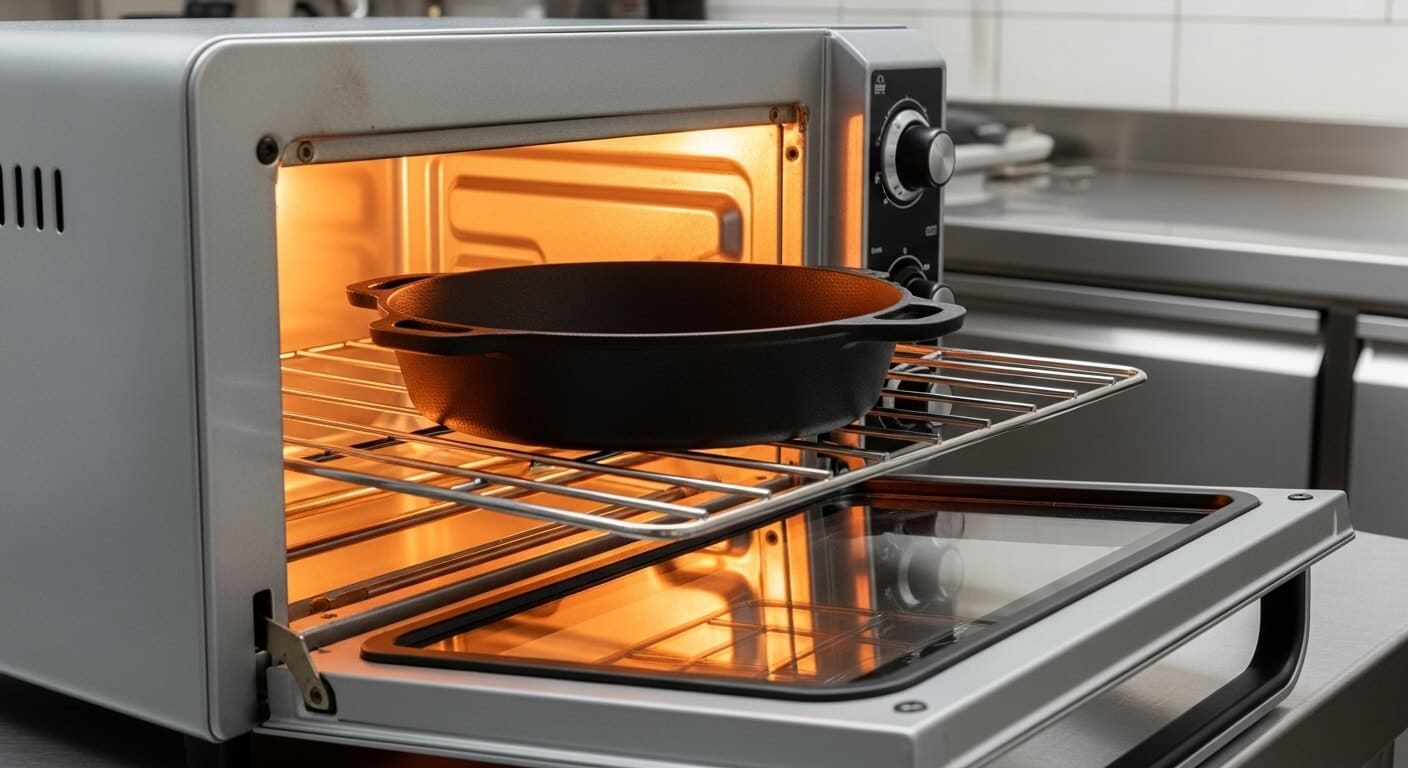
Temperature precision. Ovens maintain consistent temps. Stovetops have hot spots, cold zones, and variations based on burner output.
| Method | Time Per Layer | Coverage | Heat Evenness | Best For |
|---|---|---|---|---|
| Stovetop | 10 min | Cooking surface mainly | Uneven, hot spots | Quick touch-ups |
| Oven | 60 min | Complete, all surfaces | Very even | Building full seasoning |
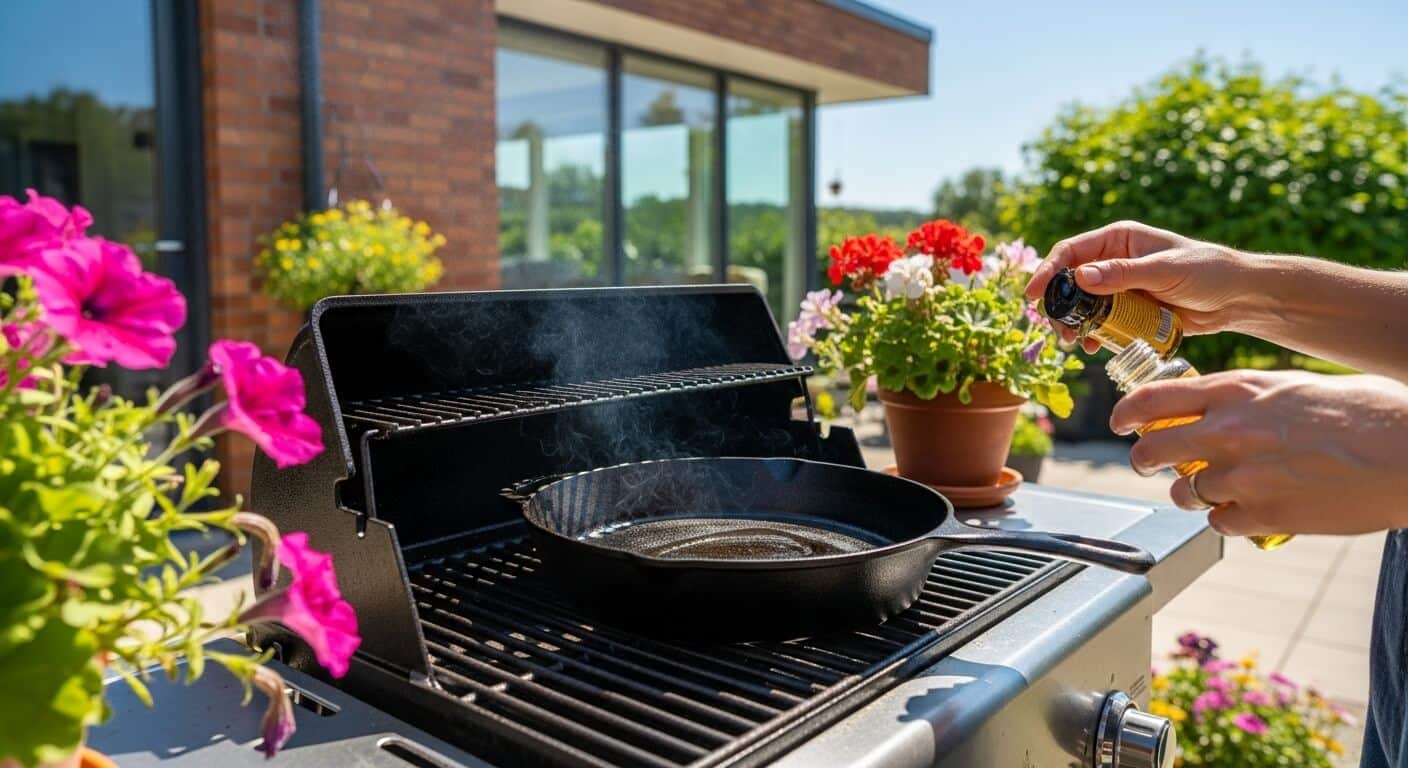
| Grill | 60 min | Complete coverage | Mostly even | Outdoor seasoning |
Realistic Expectations for Stovetop Cast Iron Seasoning
You’re getting functional, not beautiful.
The cooking surface will darken and develop some non-stick properties. Great. But the sides might stay lighter. The handle definitely will. And you’ll probably see some variation in color across the bottom—darker in the center (hot spot), lighter toward the edges.
That’s normal. That’s how stovetop seasoning looks. If you’re okay with imperfection in exchange for speed, this method delivers.
If you want uniformly black, perfectly seasoned cast iron that looks magazine-ready? Use the oven.
What You Need for 10-Minute Stovetop Seasoning
Keep it simple. You don’t need much.
Essential Tools and Materials
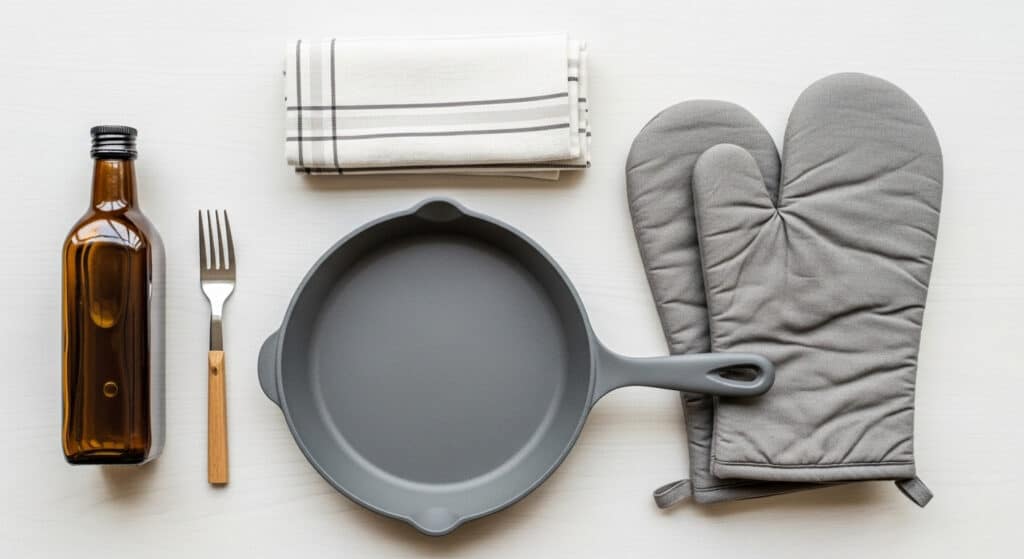
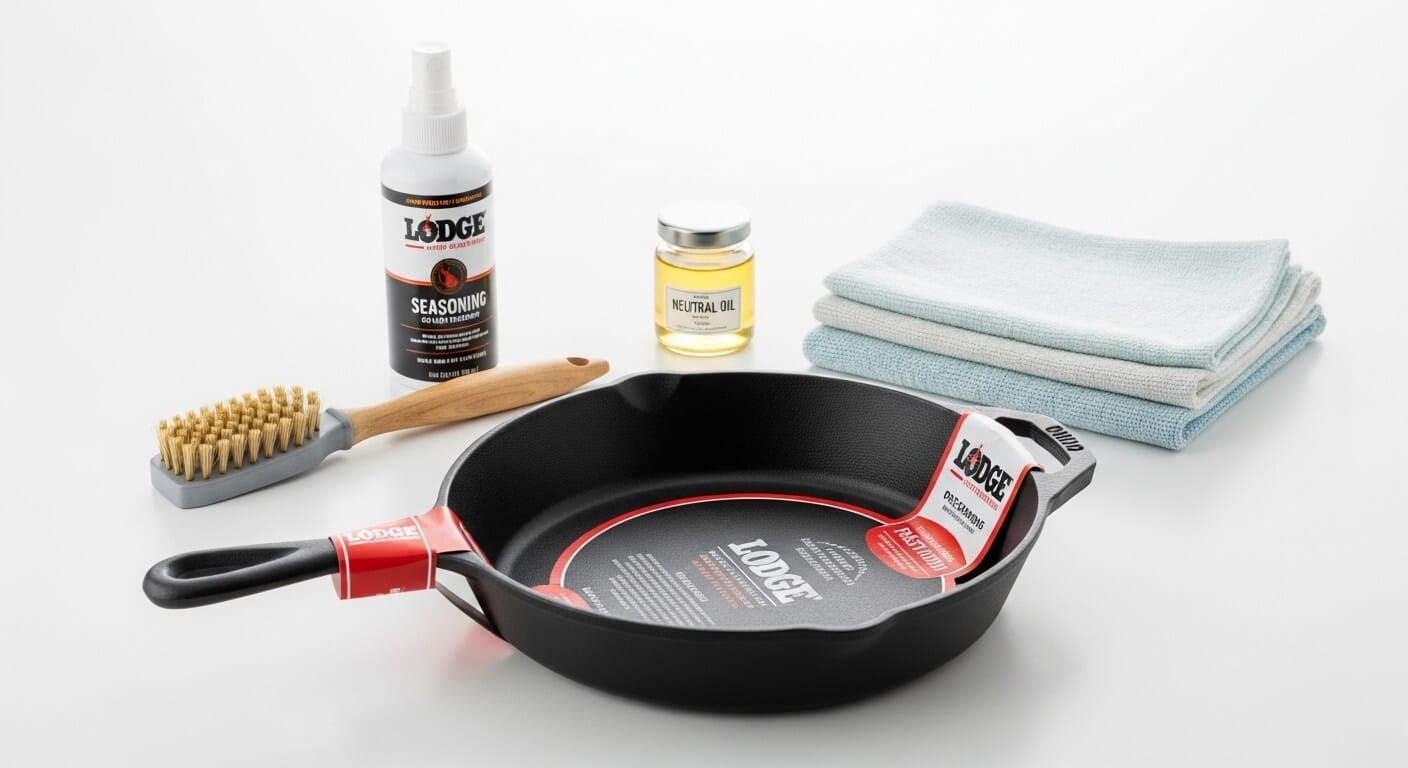
- Your cast iron skillet (obviously)
- High smoke point oil – 1 teaspoon to 1 tablespoon depending on skillet size
- Paper towels – several, you’ll use more than you think
- Tongs or heat-resistant gloves – for handling hot cast iron safely
- Good ventilation – open windows, turn on range hood, or accept some smoke
- A burner – gas or electric both work
That’s it. No special equipment. No temperature gauges. Just basic kitchen stuff.
Best Oils for Fast Stovetop Seasoning
For quick stovetop work, you want oils that smoke and polymerize quickly at the temps your burner can produce.
Canola or vegetable oil – Cheap. Effective. Smoke point around 400°F which most burners hit easily. This is what I use for 99% of stovetop seasoning.
Grapeseed oil – Slightly higher smoke point (420°F). Creates excellent seasoning. Costs more but works great if you’ve got it.
Avocado oil – Overkill for stovetop (smoke point 520°F) but won’t hurt if that’s what’s in your pantry.
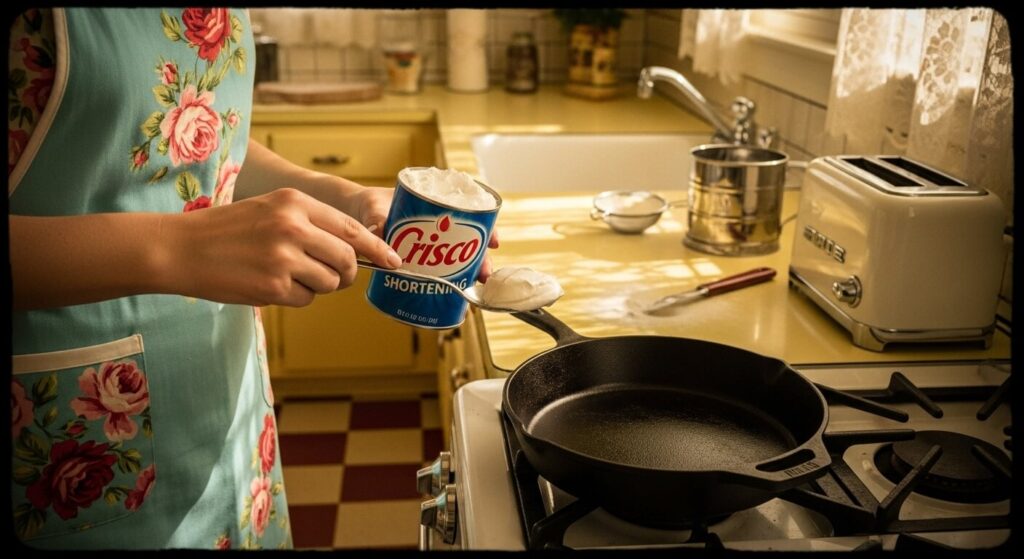
Crisco or shortening – Works fine, though solid fats are slightly messier to apply on hot cast iron.
Skip flaxseed oil for stovetop seasoning. It’s finicky and tends to flake when applied thick (which is easy to do in quick stovetop sessions where you can’t be as precise).
Why Oil Choice Matters Less for Quick Methods
Here’s the thing—stovetop seasoning happens fast and hot. You’re not carefully controlling temperature or timing multiple layers in a controlled environment.
Any high smoke point oil will polymerize when you heat it past its smoke point on your burner. The differences between grapeseed and canola at stovetop temps are minimal. Both create functional seasoning layers.
So use what you have. Don’t overthink it.
Preparing Your Cast Iron for Quick Stovetop Seasoning
Prep work is minimal but critical.
Cleaning Your Skillet Before Seasoning
For touch-up seasoning on already-seasoned cast iron: rinse with hot water, scrub with a brush if there’s stuck food, dry immediately.
For spot repairs where you’ve scrubbed off rust or damaged seasoning: clean the area thoroughly with steel wool or a scrubber, then clean the whole pan with hot water and a bit of dish soap, dry completely.
You’re not doing a full strip-and-restore here. Just clean off any food residue, old oil, or loose flaking seasoning.
When to Skip Full Stripping for Touch-Ups
If your existing seasoning is mostly intact and you’re just adding a maintenance layer? Don’t strip anything. Clean and go.
Stripping is for major restoration projects. Not for quick 10-minute touch-ups. You’d be creating way more work than necessary.
Add layers on top of what’s there (as long as the existing seasoning is solid, not flaking or gummy).
Drying Your Cast Iron Completely
Critical step. Don’t skip.
Towel dry first. Then put the skillet on the burner over low-medium heat for 2-3 minutes. All moisture evaporates. You’ll see the pan go from slightly damp-looking to completely dry with maybe a dull appearance.
Water causes rust. It also interferes with oil bonding during seasoning. Bone dry or don’t proceed.
Step-by-Step: 10-Minute Stovetop Cast Iron Seasoning
Here’s how you actually do this.
Step 1: Heat Your Skillet on Medium-High Heat (2 Minutes)
Place your clean, dry skillet on the burner. Turn heat to medium-high. Let it preheat for 2 minutes.
You want the iron hot—not just warm. Hot enough that oil will immediately start smoking when applied.
Choosing the Right Burner Size
Match burner size to your skillet if possible. Using a small burner under a large skillet creates extreme hot spots in the center. Using a large burner under a small skillet works fine (just wastes energy).
Gas burners heat faster and more intensely. Electric burners (especially coil-style) take longer to heat but distribute across a wider area.
Target Temperature for Stovetop Seasoning
You’re aiming for 400-450°F on the cooking surface. How do you know? The water drop test—flick a drop of water onto the hot skillet. If it sizzles and evaporates in 1-2 seconds, you’re ready.
Or just trust that 2 minutes on medium-high gets most skillets hot enough. When you add oil in the next step, it should start smoking within 10-15 seconds.
Step 2: Apply Oil to the Hot Skillet (30 Seconds)
Pour a small amount of oil into the hot pan. For a 10″ skillet, start with 1 teaspoon. For a 12″ skillet, maybe 1 tablespoon.
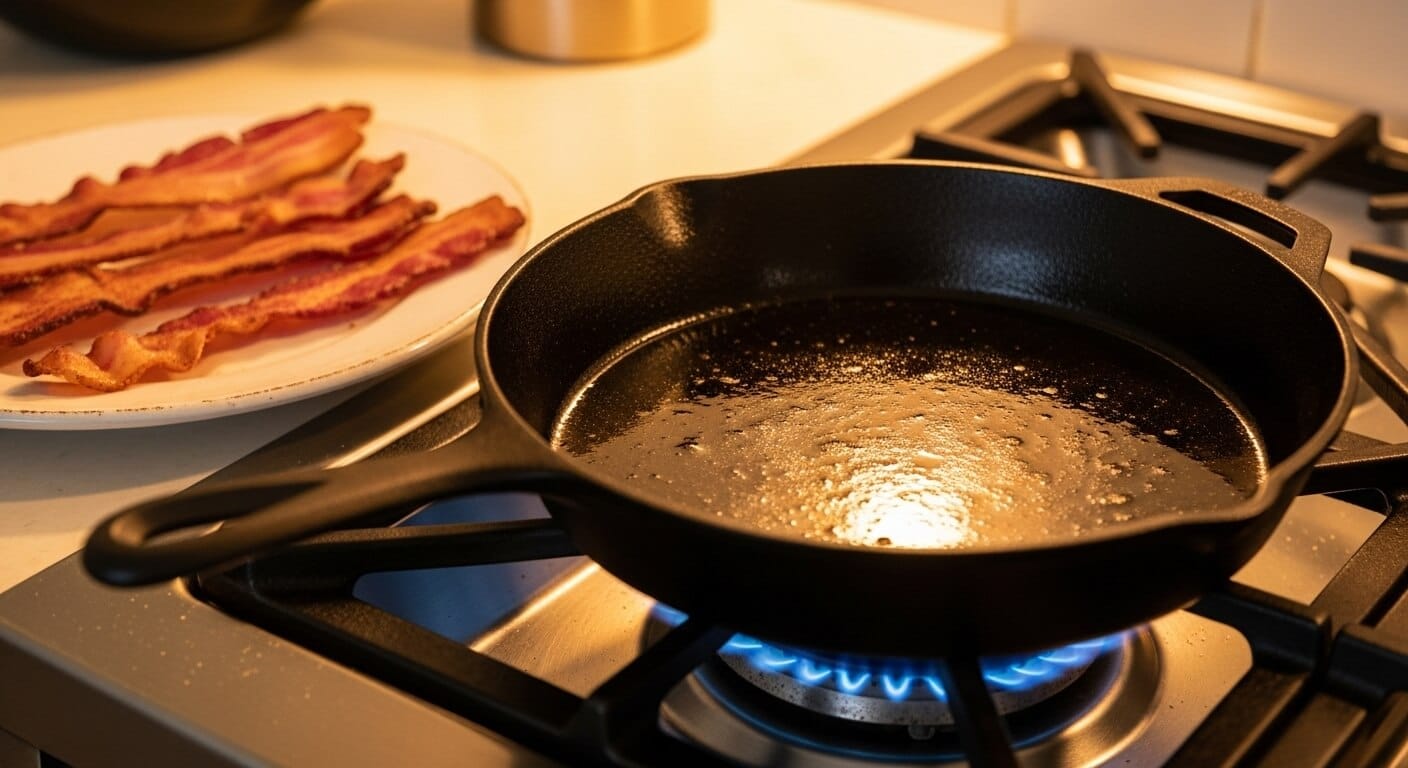
Immediately grab a paper towel with tongs (don’t use your hands—hot oil splatters). Spread the oil across the entire cooking surface quickly. The oil will be smoking. That’s normal. That’s good.
How Much Oil to Use
Less than you think. Way less.
The oil should create a thin film across the surface, not puddle anywhere. If you can see oil pooling, you used too much (wipe out the excess immediately).
Start with a teaspoon. You can always add more. You can’t easily remove excess once it’s started smoking.
Application Technique for Even Coverage
Work fast. The pan is hot. The oil is smoking. Use the paper towel to spread oil in circular motions, covering the entire cooking surface and working up the sides as far as you can reach.
Don’t worry about perfect coverage. Good enough is fine for stovetop seasoning. You’re moving quickly to avoid burning yourself or letting oil pool and gum up.
Step 3: Wipe Off Excess Oil Immediately (30 Seconds)
This is the most important step. And the one people skip.
Grab a fresh paper towel with your tongs. Wipe out the oil like you’re trying to remove all of it. Press hard. Buff the surface. The goal is leaving behind only the microscopic layer that’s already soaked into the iron’s pores.
The pan should look almost dry when you’re done. Maybe a faint sheen. That’s it.
Why This Step is Critical
Thick oil = gummy, sticky seasoning. Always. No exceptions.
On the stovetop where heat is uneven and concentrated, thick oil creates an even worse mess than in an oven. The center might polymerize okay, but the edges where it’s slightly cooler will stay tacky and gross.
Wipe it thin. Can’t emphasize this enough.
The Barely-There Oil Layer
If you can see wet oil on the surface after wiping, wipe more. It should look like you just rubbed the pan with an oil-stained rag—oil was there, but now it’s mostly gone.
That invisible layer polymerizes perfectly. Everything else causes problems.
Step 4: Continue Heating Until Smoking Stops (5-6 Minutes)
Leave the skillet on the burner. Don’t touch it. Let the heat do its work.
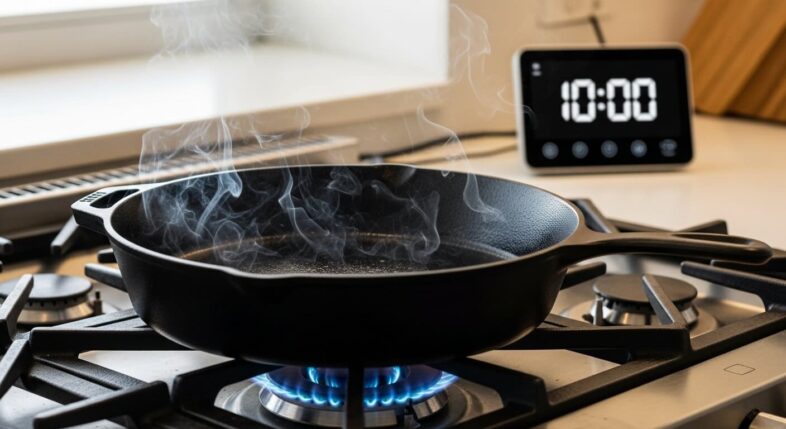
For the first 2-3 minutes, you’ll see smoke rising (assuming you properly hit the oil’s smoke point). This is polymerization happening in real-time. The oil is breaking down and reorganizing into polymers that bond to the iron.
After 3-4 minutes, smoking decreases. By 5-6 minutes, it should stop completely (or nearly so). That’s your signal that polymerization is complete for this layer.
Watching for Polymerization Signs
The smoking is your visual indicator. When oil stops smoking, the reaction is basically done.
The surface will also start to look different—less shiny, more matte. The color darkens slightly. These are signs that liquid oil has transformed into solid seasoning.
Managing Smoke in Your Kitchen
Yeah, it’s gonna smoke. That’s the whole point of hitting the smoke point.
Turn on your range hood if you have one. Open a window. Point a fan toward the window to push smoke outside. Warn family members so they don’t freak out about the smell.
If your smoke detector goes off, you either used too much oil or your burner is running too hot. Reduce heat slightly and make sure you wiped the oil thin enough.
Step 5: Cool and Assess (1 Minute)
After 5-6 minutes of continuous heating and the smoking has stopped, turn off the burner.
Let the skillet cool for 1 minute on the burner (residual heat). Then you can move it to a heat-resistant surface or just leave it on the burner to cool completely.
When One Layer is Enough
For maintenance seasoning or spot repairs, one layer is fine. The skillet is protected. The surface is functional. You can cook with it immediately once it cools (or even while still warm if you’re in a rush).
How to Tell if You Need More Layers
If you’re working with a problem area that was bare metal or heavily damaged, one layer might not provide adequate coverage. The surface will still look light gray or patchy.
In that case, let it cool enough to handle comfortably (5-10 minutes), then repeat the whole process. Apply oil. Wipe thin. Heat until smoking stops. Cool. You can do 3-4 layers in 45 minutes if needed.
Managing Heat and Hot Spots During Stovetop Seasoning
The uneven heat is stovetop seasoning’s fundamental weakness.
The Uneven Heat Problem with Stovetop Methods
Your burner creates a concentrated heat source under the center of the pan. That area gets way hotter than the edges. On a 12″ skillet over a standard burner, the center might hit 500°F while the outer edge barely reaches 350°F.
This means the center polymerizes perfectly. The edges? Maybe partially. Maybe not at all.
You’ll see this in the final results—dark seasoning in the middle, lighter color toward the rim. That’s normal for stovetop application.
Moving the Skillet for Better Distribution
Here’s a trick that helps: shift the pan around during heating.
After 2 minutes centered on the burner, move it so the front edge is over the heat. Wait 30 seconds. Shift to the back edge. Another 30 seconds. Shift to each side.
This exposes different areas to direct heat, improving overall polymerization. It’s not perfect (you’re still only heating the bottom), but it helps even things out.
Compensating for Burner Hot Spots
Gas burners often have ring-shaped hot spots (following the flame pattern). Electric coils create hot zones wherever the coil touches the pan.
You can’t eliminate these. But rotating the pan 180 degrees halfway through the heating process (after 2-3 minutes) exposes different areas to the hot spots and reduces the visual difference in seasoning darkness.
Or just accept uneven results. It’s stovetop seasoning. It’s never going to be perfect.
Quick Stovetop Seasoning for Specific Areas
One of stovetop seasoning’s best features—targeted treatment.
Spot-Treating Damaged Seasoning
Got a rust spot you just scrubbed off? A patch where seasoning flaked? An area that food always sticks to?
Apply oil specifically to that area. Use a paper towel or your finger (on cooled cast iron) to coat just the problem spot. Heat the pan. The oil on that specific area will polymerize while the rest of the seasoning stays unchanged.
This is sneaky good for repairs. Way faster than re-seasoning the entire pan in an oven.
Seasoning Just the Cooking Surface
Sometimes the sides and handle are fine. You just need to refresh the cooking surface where food touches.
Apply oil only to the bottom interior. Wipe thin. Heat. Done. The rest of the skillet is unaffected. Five minutes of actual work for a freshly seasoned cooking surface.
Why Handles Stay Un-Seasoned with Stovetop Methods
Because handles don’t get hot enough. Heat conducts from the burner through the cooking surface up through the sides a bit, but by the time it reaches the handle, it’s dropped below polymerization temperatures.
You’d need to specifically heat the handle with a torch or different burner to season it on the stovetop. Not worth the effort. If handles need seasoning, use an oven or grill where heat surrounds the entire piece.
Building Multiple Layers with the 10-Minute Method
You can stack quick stovetop sessions. Just manage your expectations.
How Many Layers Can You Do in One Session?
Realistically? 3-4 layers in about 45 minutes if you’re pushing it.
Each layer: 2 minutes preheat + 30 seconds oil application + 30 seconds wipe-off + 6 minutes heating = roughly 9-10 minutes total. Plus 2-3 minutes cooling between layers so the pan isn’t dangerously hot when you’re applying the next oil coat.
So about 12-13 minutes per layer including cooling time. Four layers = 50 minutes. At that point, you might as well use an oven for better results.
Timing Between Stovetop Seasoning Layers
Cool the skillet enough that you can apply oil without it smoking on contact. You want the pan warm (helps oil spread), not screaming hot (makes application impossible).
Wait 2-3 minutes after turning off the burner. Test by hovering your hand a few inches above the surface—if you can hold it there comfortably, you’re ready for the next layer.
Don’t let it cool completely to room temperature. Starting with a warm pan speeds up the next layer.
Cumulative Results from Repeated Quick Seasoning
Here’s where stovetop seasoning gets interesting. One layer is okay. Three layers from one session is decent. But 15 layers from doing quick stovetop seasoning after every use over a month? That’s actually quite good.
The cumulative effect of regular maintenance seasoning adds up. Each cooking session followed by a quick 10-minute re-season builds your seasoning depth gradually. Over time, you end up with thick, durable seasoning that rivals oven-built layers.
This is how people seasoned cast iron before modern ovens existed. They just kept using and re-seasoning their pans on the stovetop. It works—just requires consistency.
Common Mistakes in Fast Stovetop Cast Iron Seasoning
People screw this up in predictable ways.
Using Too Much Oil (The Sticky Disaster)
Most common mistake. By far.
Too much oil = thick layer that can’t polymerize completely at stovetop temps = sticky, gummy surface that attracts dust and makes food stick worse than before.
The fix? Use less oil. Then use even less than that. Then wipe more aggressively. If the pan looks oily after wiping, you haven’t wiped enough.
Not Heating Long Enough
Impatient people turn off the heat after 2-3 minutes when the pan is still smoking heavily. They think “it’s hot enough, must be done.”
Wrong. The smoking means polymerization is happening. You need to wait until smoking stops (or nearly stops). That’s when the oil has finished transforming into seasoning.
Cut it short and you’ve got partially polymerized oil that stays tacky. Let it finish and you get hard, functional seasoning.
Applying Oil to Cold Cast Iron
Some people add oil to a cold pan, then heat it up together. Bad idea.
The oil spreads unevenly as the pan heats. It pools in cool spots and burns in hot spots. You get wildly inconsistent application and mediocre results.
Heat the pan first. Then add and spread oil on the already-hot surface. Way better control and distribution.
Skipping the Wipe-Off Step
“But I just put the oil on, why am I wiping it off?”
Because you applied too much. You always apply too much. Everyone does. The wipe-off step removes the excess and leaves behind only what’s needed for proper polymerization.
Skip it at your peril. Sticky seasoning awaits.
Troubleshooting Stovetop Seasoning Issues
When things go wrong…
Dealing with Smoke Alarm Activation
If your smoke detector goes off, you’re either using too much oil or your heat is too high.
Immediate fix: Turn down the burner slightly. Open more windows. Point a fan out the window.
Prevention: Use less oil. Wipe thinner. Make sure your range hood is on. Warn household members before you start.
Some smoke is normal and expected. Excessive smoke that sets off alarms means something’s wrong with your technique.
Fixing Sticky or Tacky Results
Your seasoning layer feels sticky or tacky to the touch after cooling. This sucks, but it’s fixable.
Quick fix: Put the pan back on the burner at medium-high for another 5-10 minutes. No additional oil. Just heat. This finishes polymerizing whatever didn’t complete the first time.
If that doesn’t work: The layer is too thick. You’ll need to scrub it off with steel wool or a scrubber, then try again with way less oil.
Uneven Seasoning from Hot Spots
Your pan has a dark circle in the center and lighter areas around the edges. Classic stovetop seasoning pattern.
It’s not really a “problem” unless it bothers you aesthetically. The darker areas are better seasoned, but the lighter areas still have some protection.
Fix for future layers: Rotate and move the pan during heating (mentioned earlier). Or accept the uneven appearance as the price of speed.
When Stovetop Seasoning Doesn’t Harden
If your seasoning never hardens—stays oily or tacky even hours after cooling—you’ve got one of two problems:
- Not enough heat – Your burner didn’t get hot enough for polymerization. Crank it higher and go longer.
- Too much oil – Even with heat, thick oil can’t fully polymerize. Strip it and start over with thinner application.
Test which one by putting it back on high heat for 10 minutes. If it hardens, it was problem #1. If it stays tacky, it’s problem #2.
The 10-Minute Method vs. Traditional Seasoning
Let’s compare honestly.
Stovetop Speed vs. Oven Quality
Stovetop wins on speed. 10 minutes versus 60 minutes for a single layer. No preheating wait. No cooldown inside the oven. Just heat and go.
Oven wins on quality. Even heat distribution. Complete coverage. Predictable results. Better final appearance. More durable seasoning per layer.
If I’m building seasoning from scratch on bare cast iron? Oven. Every time. The quality difference is worth the extra time.
If I’m doing quick maintenance or touch-ups? Stovetop. The speed advantage is worth the uneven results.
When to Use Each Method
| Situation | Best Method | Why |
|---|---|---|
| New/bare cast iron | Oven | Need multiple even layers |
| Touch-up after cleaning | Stovetop | Speed, single layer sufficient |
| Major restoration | Oven or grill | Even coverage crucial |
| Spot repairs | Stovetop | Targeted application |
| Pre-dinner refresh | Stovetop | 10 minutes vs. 60 matters |
Combining Stovetop Touch-Ups with Oven Maintenance
Here’s the smart approach: build your foundation with oven seasoning (3-6 layers when new or after stripping), then maintain with quick stovetop touch-ups after use.
You get the best of both methods. The oven creates a solid, even base. The stovetop adds regular maintenance layers that keep building depth and durability.
Once or twice a year, throw the pan in the oven for a proper seasoning session to refresh the whole piece. Between those sessions, stovetop maintenance keeps everything functional.
Best Use Cases for 10-Minute Stovetop Seasoning
When this method actually makes sense.
Post-Cooking Maintenance Seasoning
Right after cooking (and cleaning), the pan is already warm. Add a quick seasoning layer before putting it away. Takes 10 minutes, uses residual heat from cooking, keeps your seasoning building continuously.
This is probably the single best use case for stovetop seasoning. You’re already at the stove. The pan is already warm. Why not add a protective layer?
Quick Fixes Before You Need to Use the Skillet
Pulled out your skillet to make dinner and noticed a dull spot or light rust? Don’t want to wait an hour for oven seasoning?
Ten-minute stovetop treatment fixes it well enough to cook on tonight. Problem solved. Dinner happens on time.
Repairing Small Damaged Spots
Dropped the pan and chipped the seasoning? Scrubbed too aggressively and removed a patch? Small flaking area that needs attention?
Spot-treat with stovetop seasoning. Apply oil just to the damaged area. Heat. Done. The rest of your seasoning remains intact.
Way more efficient than re-seasoning the entire pan for one small problem area.
Regular Maintenance Between Deep Seasoning Sessions
If you cook with cast iron daily (or several times a week), adding a quick stovetop layer once a week or after every few uses builds seasoning depth gradually.
Think of it like applying hand lotion. One application doesn’t do much. Daily application over months? Your hands stay soft. Same principle with seasoning.
Advanced Stovetop Seasoning Techniques
For people who want to maximize the method.
The Double-Heat Method for Better Coverage
Use two burners. Place your skillet across both (works best with rectangular griddles or large skillets).
Both burners on medium heat create more even temperature distribution across the cooking surface. Less extreme hot spot in the center, better overall polymerization.
Rotate the pan halfway through (swap which end is over which burner) for even better results.
Tilting and Rotating for Handle Seasoning
Want to get some heat into the handle on the stovetop? Tilt the pan.
Place the skillet on the burner at an angle, with the handle resting over the burner. Obviously this is unstable—you need to hold it or prop it carefully against something. Heat the handle area for 1-2 minutes.
Not as effective as oven seasoning for handles, but it’s something. For people who really want their handles darkened and only have stovetop access.
Using Multiple Burners for Large Skillets
For 14″ or 15″ skillets, one burner creates ridiculous hot spots. The center is blazing, the edges are barely warm.
Use two burners. Position the large skillet so it spans both. Both burners on medium or medium-low. More even heat across the large surface area.
Then halfway through heating, rotate the pan 180 degrees. Each area gets time over both burners. Results are way more consistent than single-burner heating.
Maintaining Your Stovetop-Seasoned Cast Iron
Keeping what you built.
Daily Cleaning That Preserves Quick Seasoning
Stovetop seasoning is thinner and sometimes more delicate than oven-built layers. Clean gently.
Hot water and a brush for most cleaning. Avoid aggressive scrubbing that removes seasoning. A bit of dish soap is fine if needed (modern soap won’t hurt polymerized seasoning).
Dry immediately—either towel dry plus stovetop drying, or just heat dry on the burner for 2 minutes.
When to Add Another Quick Layer
After any cooking session that seemed to dull the seasoning. After aggressive cleaning. Whenever the pan looks less dark or less slick than usual.
Or just make it routine—add a maintenance layer once a week or after every 3-4 uses. Ten minutes isn’t a big time investment for continuous improvement.
Building Long-Term Seasoning with Regular Touch-Ups
This is how cast iron seasoning worked for centuries before modern ovens. Constant use. Regular re-seasoning after each cook. Gradual accumulation of layers.
After a year of regular stovetop maintenance seasoning, you’ll have incredibly well-seasoned cast iron even though you never did a formal oven seasoning session. The layers just keep stacking.
Stovetop Seasoning Safety and Ventilation
Don’t burn your house down or yourself.
Managing Kitchen Smoke
Expect smoke. Plan for it.
- Turn on range hood before starting
- Open windows before you begin
- Point a box fan out an open window if needed
- Warn other people in the house
- Consider doing this when others are out if your kitchen has poor ventilation
The smoke isn’t dangerous (it’s just oil vapor). But it smells. And it will set off detectors if you’re not careful.
Preventing Oil Fires
Oil fires happen when oil gets too hot and ignites. With thin seasoning layers this is unlikely but not impossible.
Prevention: Don’t use excessive oil. Don’t crank burner to maximum heat. Don’t walk away and forget about it.
If it happens: Turn off burner. Cover the pan with a lid to smother flames. Never use water on an oil fire. Keep a fire extinguisher in your kitchen (general safety advice, not just for seasoning).
Proper Ventilation Setup
Best setup: range hood vented to outside + open window on opposite side of kitchen creating cross-breeze.
Adequate setup: range hood (even if it just recirculates) + one open window.
Minimal setup: open window + box fan pointed out.
Don’t attempt stovetop seasoning in a kitchen with zero ventilation unless you want smoke everywhere and potential detector problems.
Safe Handling of Hot Cast Iron
Cast iron stays hot forever. That 10″ skillet you just seasoned? Still dangerously hot 15 minutes later.
Always use heat-resistant gloves or tongs. Never grab the handle without protection—even handles that don’t feel hot can burn you.
Set hot cast iron on heat-resistant surfaces only. Not plastic cutting boards. Not wooden counters. Not your nice table. Trivets, cooling racks, or leave it on the stovetop.
Limitations of the 10-Minute Stovetop Method
Be realistic about what this can’t do.
What This Method Cannot Do
Build complete seasoning from scratch efficiently. Season handles and exterior surfaces evenly. Create uniformly dark, magazine-perfect appearance. Replace proper oven seasoning for major projects.
It’s a tool. A useful one. But not the right tool for every job.
Why You Still Need Occasional Oven Seasoning
Because handles need seasoning too. Because you eventually want uniform color. Because building 6 layers in one afternoon (oven) beats doing 6 separate stovetop sessions over six days.
Use stovetop for maintenance. Use oven for foundation-building and comprehensive treatment.
Accepting Imperfect Results for Speed
Stovetop seasoning looks uneven. The center is darker. The edges are lighter. The handle stays gray. That’s just how it is.
If you’re okay with functional over beautiful, this method works great. If you want your cast iron to look perfect, you need different methods.
Upgrading to Full Seasoning When Needed
Knowing when stovetop isn’t enough anymore.
Signs Your Cast Iron Needs More Than Touch-Ups
- Widespread dull gray appearance (not just one spot)
- Rust appearing in multiple areas
- Food sticking consistently across the whole cooking surface
- Flaking seasoning in many places, not just one patch
- You’ve been doing stovetop touch-ups for months but the pan isn’t improving
These signal that quick fixes aren’t sufficient. Time for comprehensive oven seasoning.
Transitioning from Stovetop to Oven Methods
When you realize your cast iron needs more than 10-minute touch-ups, don’t panic. Just commit an afternoon to proper oven seasoning.
Strip the pan if the existing seasoning is problematic (flaking, gummy, rust underneath). Or build directly on top if the existing layers are solid.
Do 4-6 oven layers at 450°F for 60 minutes each. This creates the foundation you should have built in the first place. Then go back to stovetop maintenance as needed.
When 10 Minutes Isn’t Enough Anymore
You’ll know. The pan just won’t perform well despite your quick seasoning efforts. Food sticks. Rust reappears. The surface feels rough instead of smooth.
That’s the signal to invest in proper seasoning. Stop trying to band-aid the problem with quick fixes. Take the time to do it right.
Ten-minute stovetop seasoning is great for maintaining good seasoning. It’s terrible at rescuing bad seasoning. Know the difference.