Why Non-Stick Surfaces Help Seniors with Arthritis Simplify Their Cleanup

Why Non-Stick Surfaces Help Seniors with Arthritis Simplify Their Cleanup

How Non-Stick Cookware Reduces Physical Strain During Cleanup for Arthritic Hands

Non-stick surfaces help seniors with arthritis simplify their cleanup by allowing food to release with minimal pressure—requiring only gentle wiping instead of aggressive scrubbing that stresses inflamed finger joints, wrists, and elbows.

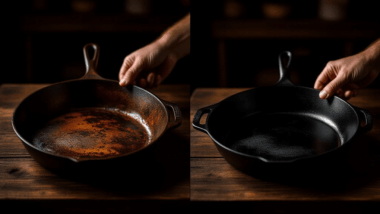
Here’s the brutal truth about traditional cookware. Stainless steel pans bond with food at a molecular level when you cook. Cast iron (when poorly maintained) practically welds scrambled eggs to its surface. You end up scrubbing. Hard. For minutes at a time.

Your joints can’t handle that.

The Mechanics of Food Release: Why Non-Stick Surfaces Require Less Scrubbing

The difference between non-stick and regular cookware isn’t just convenience—it’s actual chemistry working in your favor instead of against your damaged joints.

Molecular-Level Food Adhesion on Traditional vs. Non-Stick Surfaces

When you cook on bare metal (stainless steel, aluminum, bare cast iron), food proteins physically bond to the microscopic peaks and valleys in the metal surface. Heat causes proteins to denature and grab onto every tiny irregularity. Starches form glue-like pastes. Fats polymerize into sticky residue.

That’s why scrubbing is required. You’re literally breaking molecular bonds.

Non-stick surfaces are smooth at the microscopic level—we’re talking about surface irregularities measured in nanometers instead of micrometers. Food has almost nothing to grab onto. When proteins try to bond, they slide off instead. The chemical composition of PTFE or ceramic coatings actively repels most food substances.

What this means for your hands: Instead of scrubbing with 15-20 pounds of force for 3-5 minutes, you wipe with maybe 2-3 pounds of force for 30 seconds. That’s an 80-90% reduction in joint stress per cleaning session.

The Role of PTFE and Ceramic Coatings in Preventing Food Bonding

PTFE (polytetrafluoroethylene—the stuff in Teflon) has one of the lowest coefficients of friction of any solid material. It’s slippery at the molecular level because fluorine atoms create an extremely low-energy surface that nothing wants to stick to.

Ceramic coatings work differently but achieve similar results. They’re made from silicon dioxide (basically glass) applied through sol-gel technology. The surface is smooth, non-porous, and chemically inert. Food can’t penetrate it or bond to it effectively.

Both types prevent the protein welding and fat polymerization that make traditional cookware so difficult to clean. Chemistry does the work your joints can’t.

Temperature and Non-Stick Performance During Cooking

Non-stick works best when the pan is properly preheated (2-3 minutes over medium heat). At the right temperature, food sears quickly—proteins cook before they have time to bond to the surface.

Too cold? Food sits on the surface longer, giving it more opportunity to stick (though it’ll still release easier than on regular cookware). Too hot? You risk damaging the coating, which compromises its non-stick properties and makes future cleaning harder.

The sweet spot: medium to medium-high heat for most cooking. Hot enough for good food release. Not so hot that you degrade the coating.

Grip Strength Requirements: Non-Stick vs. Traditional Cookware Cleaning

The amount of force you need to apply during cleaning directly correlates to how much your joints will hurt afterward.

Pressure Measurements for Cleaning Different Surface Types

Studies on cleaning force requirements (admittedly not many focus specifically on this) suggest:

Stainless steel with stuck food: 15-25 pounds of grip force needed to scrub effectively
Cast iron with compromised seasoning: 12-20 pounds of force
Well-seasoned cast iron: 5-10 pounds (similar to non-stick when maintained properly)
Non-stick surfaces: 2-5 pounds for most cleaning tasks

Most people with moderate arthritis can comfortably sustain 5-8 pounds of grip strength. Severe arthritis might drop that to 3-5 pounds or less.

See the problem? Traditional cookware demands grip strength that exceeds what arthritic hands can provide. Non-stick stays within comfortable limits.

How Non-Stick Surfaces Reduce Required Grip Force by 60-70%

Because food wipes off instead of requiring scrubbing, you’re holding the sponge or cloth loosely—just enough to maintain contact and guide motion. You’re not pressing hard enough to compress the sponge or cloth significantly.

That loose grip means:

  • Less compression force on finger joints
  • Reduced tendon stress in your hands and wrists
  • Lower inflammation response after cleaning
  • Ability to clean for longer periods without triggering flare-ups

The 60-70% reduction isn’t an exaggeration. It’s the difference between a tight squeeze (high force) and a casual hold (minimal force).

Joint Stress Comparison Across Cookware Materials

Cookware Type Avg. Cleaning Time Grip Force Needed Joint Stress Level
Non-stick (good condition) 30-60 seconds Very low (2-4 lbs) Minimal – safe for most arthritis
Well-seasoned cast iron 1-2 minutes Low (5-8 lbs) Moderate – okay for mild arthritis
Stainless steel 3-6 minutes High (15-25 lbs) Severe – problematic for arthritis
Poorly maintained cast iron 5-10 minutes Very high (20+ lbs) Extreme – avoid with arthritis

Scrubbing Motion and Repetitive Stress Injury Prevention

It’s not just about force—the motion itself matters.

Why Circular Scrubbing Motions Damage Arthritic Joints

Circular scrubbing combines three joint-stressing movements simultaneously:

  1. Rotation (twisting your wrist)
  2. Pressure (compressing your finger and wrist joints)
  3. Repetition (doing it dozens of times per pan)

Each circular motion torques your wrist through its range of motion while your fingers maintain a tight grip. That rotational force under load is exactly what inflamed joints can’t tolerate.

Do this for 5 minutes straight and you’re setting yourself up for a multi-day flare-up.

Wiping vs. Scrubbing: The Arthritis-Friendly Difference

With non-stick, you wipe in straight lines. Back and forth. Side to side. No circular motion required.

Straight-line wiping uses larger muscle groups (forearm, upper arm) and keeps your wrist in a more neutral position. Less rotation. Less torque on vulnerable joints. The motion comes from your elbow and shoulder—joints that are typically less affected by hand arthritis.

Plus it’s faster. Three or four wipes and you’re done. Compare that to dozens of circular scrubs on traditional cookware.

Reducing Wrist Rotation Through Easier Cleanup

The less effort cleaning requires, the more you can use your whole arm for motion instead of relying on wrist rotation to generate scrubbing force.

With traditional cookware, you rotate your wrist to create the circular scrubbing motion that generates cleaning pressure. With non-stick, you barely rotate at all—just move your arm back and forth while the pan stays relatively stationary in the sink.

This shift from wrist-based motion to arm-based motion is huge for arthritis management.

Types of Non-Stick Surfaces and Their Cleanup Benefits for Seniors

Different non-stick technologies offer varying levels of food release and durability, but all share the core benefit of requiring minimal scrubbing force—with PTFE coatings providing the easiest cleanup, ceramic offering better heat tolerance, and enameled surfaces combining non-stick properties with exceptional longevity.

Not all non-stick is created equal.

Traditional PTFE (Teflon) Non-Stick Coatings

This is what most people think of when they hear “non-stick.” It’s the original. Still the best for pure food-release performance.

How Teflon Creates Slippery Surfaces

PTFE molecules are chains of carbon atoms surrounded by fluorine atoms. Fluorine is highly electronegative—meaning it holds onto its electrons tightly and doesn’t interact with other substances readily.

This creates an ultra-low-energy surface. Food molecules (which are typically looking to form bonds with whatever they contact) find nothing to bond with on PTFE. They just slide around.

Even oils and fats—which stick to almost everything—have trouble adhering to PTFE. That’s how slippery this stuff is.

Cleaning Ease and Minimal Effort Requirements

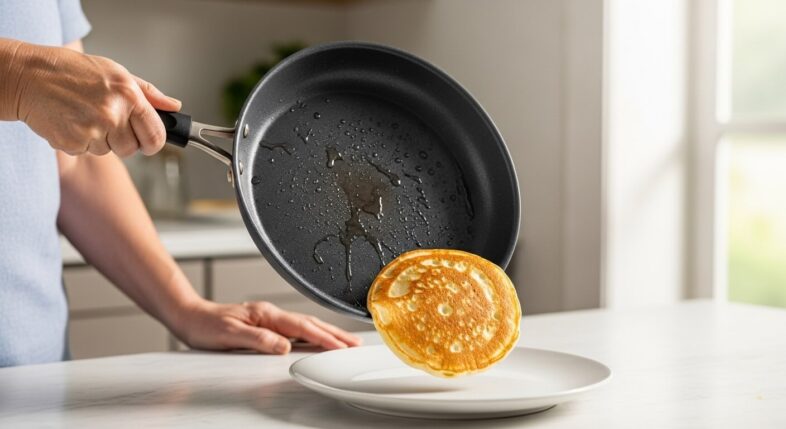
PTFE-coated pans when properly maintained clean with literally just warm water and a soft cloth. No soap needed (though it doesn’t hurt). No pressure required.

Wipe once or twice. Rinse. Done.

For arthritis specifically: This is as close to zero-effort cleaning as cookware gets. If your hand arthritis is severe enough that even minimal scrubbing causes pain, PTFE is your best option.

Safety Considerations and Proper Use Temperatures

The controversy around PTFE mostly stems from older coatings that contained PFOA (perfluorooctanoic acid) as a processing aid. PFOA was phased out by 2015. Modern PTFE coatings don’t contain it.

PTFE itself is inert up to about 500°F. Above that temperature, it starts to degrade and can release fumes. Those fumes aren’t great to breathe (they’re unpleasant and can cause temporary flu-like symptoms in humans, more serious issues in birds).

Safe use guidelines:

  • Keep heat at medium or below for most cooking
  • Never preheat an empty PTFE pan (temperatures can spike quickly without food to absorb heat)
  • Use your vent hood when cooking
  • If the coating is visibly damaged (flaking or peeling), replace the pan

Follow these rules and PTFE is safe. The cleanup benefits far outweigh theoretical risks for most people with arthritis.

Lifespan and When Coatings Lose Effectiveness

PTFE coatings last 2-5 years with proper care (avoiding metal utensils, not overheating, gentle cleaning).

You’ll know it’s wearing out when food starts sticking more often. The surface might look dull or have visible scratches. Once non-stick performance degrades, the arthritis-friendly cleanup benefits disappear too.

At that point, replace it. A $25 pan every 3 years is a small price for continued easy cleanup.

Ceramic Non-Stick Coatings

The “natural” alternative to PTFE that’s gained popularity in recent years.

Sol-Gel Technology and Food Release Properties

Ceramic non-stick isn’t actually ceramic in the pottery sense. It’s a silicon dioxide coating applied using sol-gel technology (a liquid that turns into a solid glass-like layer when heated).

The resulting surface is smooth, hard, and relatively non-porous. Food doesn’t stick as readily as it does to bare metal, though the performance isn’t quite as good as PTFE.

Think of ceramic as 85-90% as non-stick as PTFE. Still way better than stainless steel or bare aluminum. Just not quite the ultimate in food release.

Heat Tolerance Advantages Over PTFE

Ceramic coatings typically tolerate temperatures up to 450-500°F without degrading (some manufacturers claim even higher). That’s 50-100°F higher than PTFE’s safe range.

For most home cooking this doesn’t matter (you’re not hitting 500°F often). But if you occasionally want to sear meat at high heat or transfer a pan from stovetop to oven, ceramic gives you more flexibility.

Cleaning Characteristics Specific to Ceramic

Ceramic cleans almost as easily as PTFE when it’s new. Warm water and a soft sponge. Quick wipe. Done.

But here’s the catch: ceramic is more susceptible to staining and discoloration than PTFE. Oils can build up and cause a hazy film. High heat can cause permanent discoloration.

These cosmetic issues don’t affect performance much (the pan still works and cleans easily), but they bother some people aesthetically.

Durability Concerns for Long-Term Arthritis Management

Ceramic coatings tend to lose their non-stick properties faster than PTFE—often within 1-2 years instead of 3-5 years.

The coating itself is hard and scratch-resistant, but the non-stick performance gradually diminishes even with careful use. Food starts sticking more. Cleanup requires more effort.

For arthritis management, this means more frequent replacement to maintain easy-cleanup benefits. Budget for buying new ceramic pans every 18-24 months if you use them regularly.

Hard-Anodized Aluminum with Non-Stick Coating

The best of both worlds—durable base material plus non-stick surface.

The Dual Benefits of Hard Surface and Non-Stick Properties

Hard-anodized aluminum is regular aluminum that’s been electrochemically treated to create an extremely hard, non-porous surface layer. This layer is harder than stainless steel—highly resistant to scratches, dents, and warping.

Add a non-stick coating on top of that and you get:

  • Excellent food release (easy cleanup)
  • Superior durability (lasts longer than non-stick on regular aluminum)
  • Even heating (aluminum’s thermal properties preserved)

Enhanced Durability for Reduced Replacement Frequency

The hard-anodized base protects the non-stick coating from underneath. The pan doesn’t warp or develop hot spots that can degrade the coating prematurely.

Result: the non-stick layer lasts closer to 4-6 years instead of 2-3 years. Fewer replacements needed over time.

For seniors on fixed incomes, this durability matters. Spending $40-60 on a pan that lasts 5 years beats spending $25 on a pan that needs replacement every 18 months.

Cleaning Requirements and Arthritis Compatibility

Cleans just like any other non-stick surface—warm water, soft sponge, gentle wipe.

The hard-anodized base doesn’t change the cleaning process. You’re still interacting with the non-stick coating on top.

One small advantage: if you accidentally scratch through the non-stick coating (it happens), the hard-anodized surface underneath is relatively non-stick compared to bare aluminum or steel. The pan degrades more gracefully—cleanup gets slightly harder but doesn’t become terrible immediately.

Enameled Cast Iron as a Non-Stick Alternative

Not technically “non-stick” but functions similarly for cleanup purposes.

Glass-Like Surface Properties

Enamel is basically powdered glass that’s been melted onto the cast iron surface. The result is smooth, non-porous, and relatively non-reactive.

Food doesn’t bond to enamel as aggressively as it does to bare metal. With proper cooking technique (adequate fat, proper heat), food releases reasonably well.

Not as good as PTFE. Better than bare stainless steel. Somewhere in the middle.

Soaking Effectiveness on Enamel Surfaces

Here’s where enamel shines for arthritis: it responds incredibly well to soaking.

Fill the pan with warm soapy water. Wait 15-30 minutes. Most stuck food wipes right off. The smooth, non-porous enamel doesn’t give food anywhere to hide or bond permanently.

Combine “decent food release during cooking” with “excellent response to soaking” and you get cleanup that’s very arthritis-friendly—even if it requires slightly more time than PTFE.

Weight Considerations vs. Cleaning Benefits

The elephant in the room: enameled cast iron is heavy. A 12-inch skillet weighs 7-9 pounds.

For people with arthritis (especially wrist, elbow, or shoulder arthritis), that weight can be problematic for handling during cooking and transfer to the sink. You might struggle to lift it safely.

The cleanup is easy once you get it to the sink, but getting it there might be the bigger challenge.

Smaller sizes (8-10 inch pans) are more manageable. Weigh the benefits of easy cleanup against the difficulty of maneuvering a heavy pan.

Specific Cleaning Advantages of Non-Stick Cookware for Arthritis Sufferers

Beyond just requiring less scrubbing force, non-stick cookware offers multiple specific advantages that compound to make kitchen cleanup dramatically easier for people with painful, inflamed joints.

Let’s break down exactly how.

Elimination of Stuck-On Food That Requires Aggressive Scrubbing

This is the big one. The primary reason non-stick helps.

How Non-Stick Prevents Protein Welding to Metal Surfaces

When you cook eggs or meat on stainless steel, proteins denature from heat and physically bond to the metal’s microscopic surface irregularities. This process—sometimes called “protein welding”—creates bonds that require significant mechanical force to break.

You have to scrub. Hard.

On non-stick surfaces, proteins still denature from heat but they can’t bond to the ultra-smooth, chemically inert surface. They might sit on top of the coating, but they’re not welded to it. A gentle wipe removes them.

Real-world difference: Scrambled eggs on stainless steel = 3-5 minutes of aggressive scrubbing. Same eggs on non-stick = 15-second wipe with a paper towel.

Fat and Oil Cleanup Without Harsh Degreasing

Fats polymerize when heated—they form sticky, varnish-like residues that cling to cooking surfaces. On traditional cookware, removing polymerized fat often requires hot water, strong dish soap, and serious elbow grease.

Non-stick surfaces resist fat polymerization. The fat sits on the surface but doesn’t bond into a hard layer. Warm water and a quick wipe handles it.

You don’t need harsh degreasers. You don’t need to scrub until your hands ache. Just wipe.

Starch and Carbohydrate Release from Non-Stick vs. Stainless Steel

Starches (from rice, pasta, potatoes) form glue-like pastes when they dry on cookware. On stainless steel these pastes bond into crusty deposits that require soaking and scrubbing to remove.

On non-stick, starches release easily—even when dried. They might need a quick soak (10-15 minutes instead of hours), but they wipe off without aggressive scrubbing.

Reduced Need for Abrasive Cleaning Tools

The tools you use matter as much as the force you apply.

Why Soft Sponges Suffice for Non-Stick Surfaces

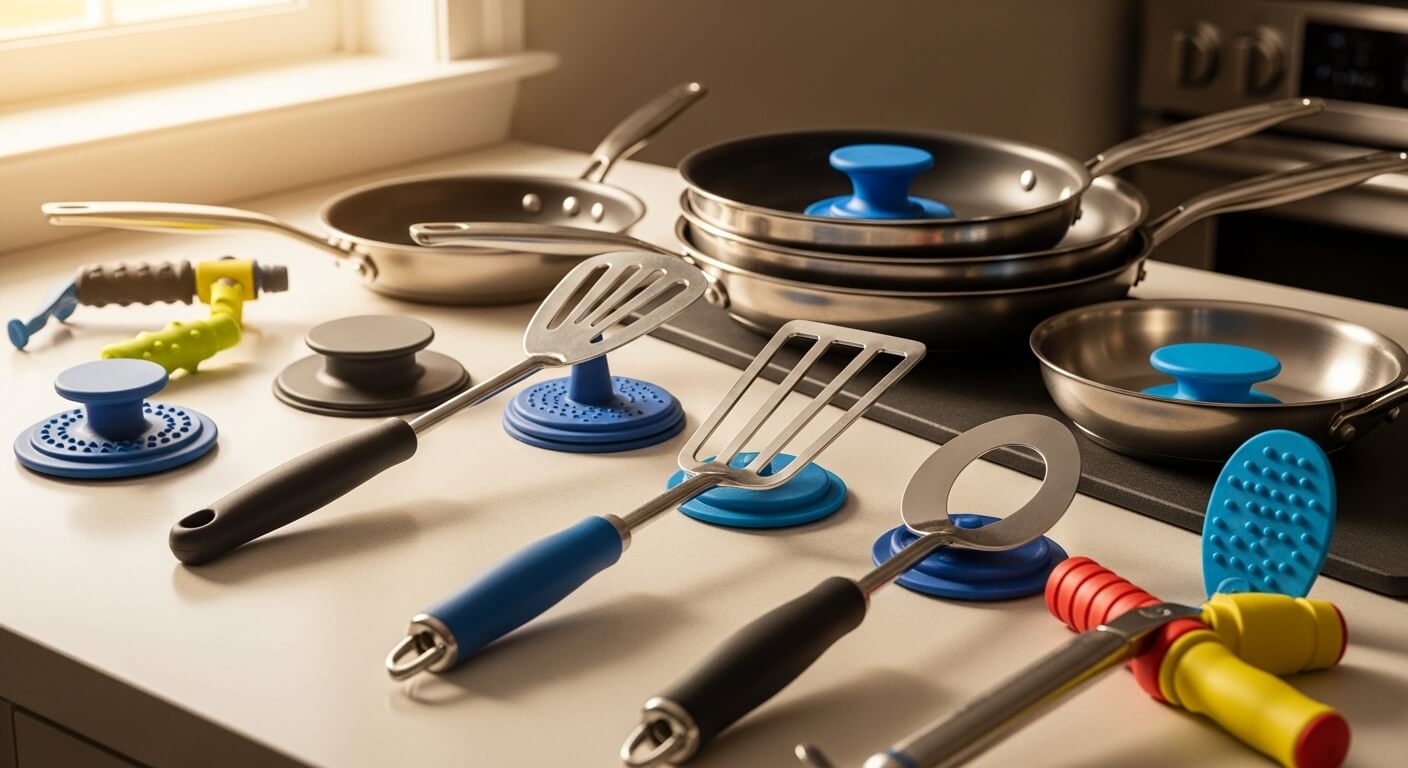
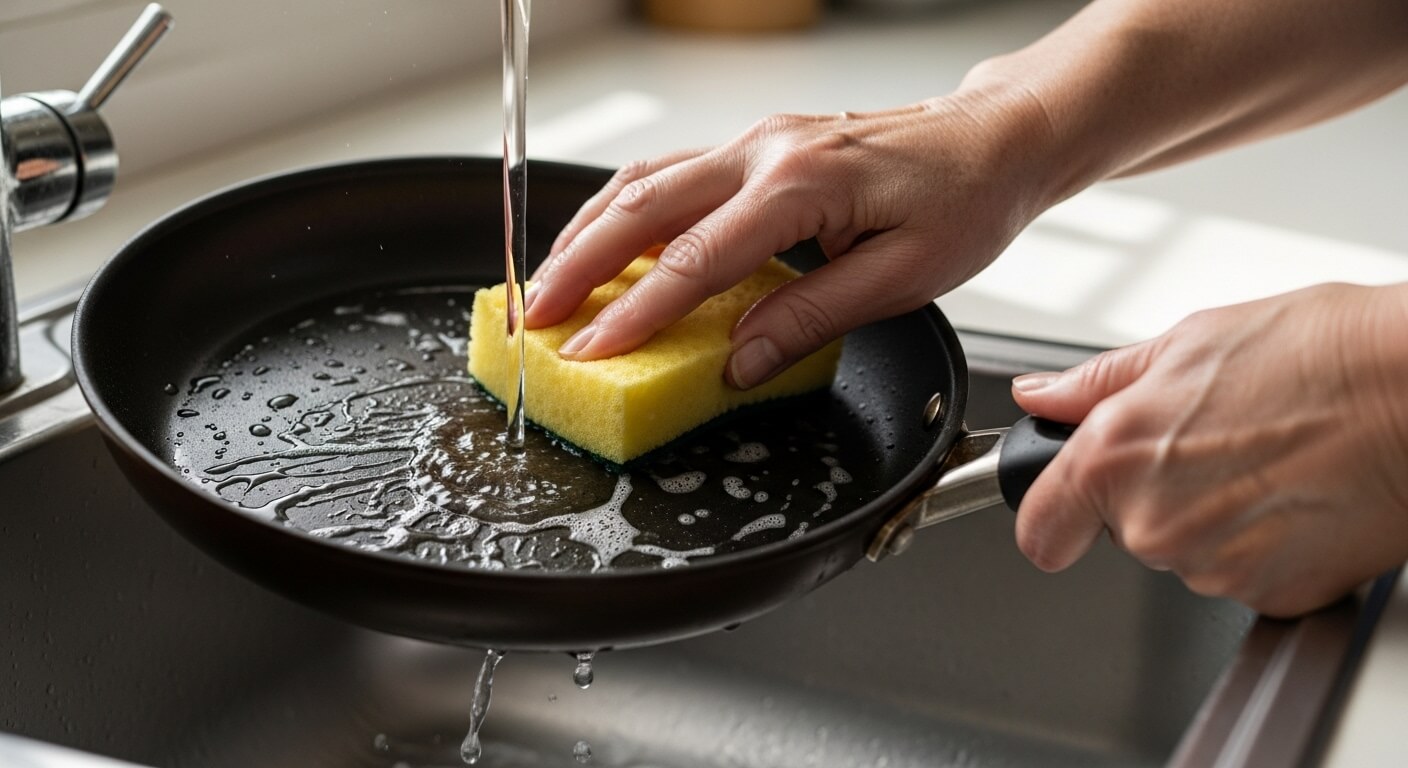
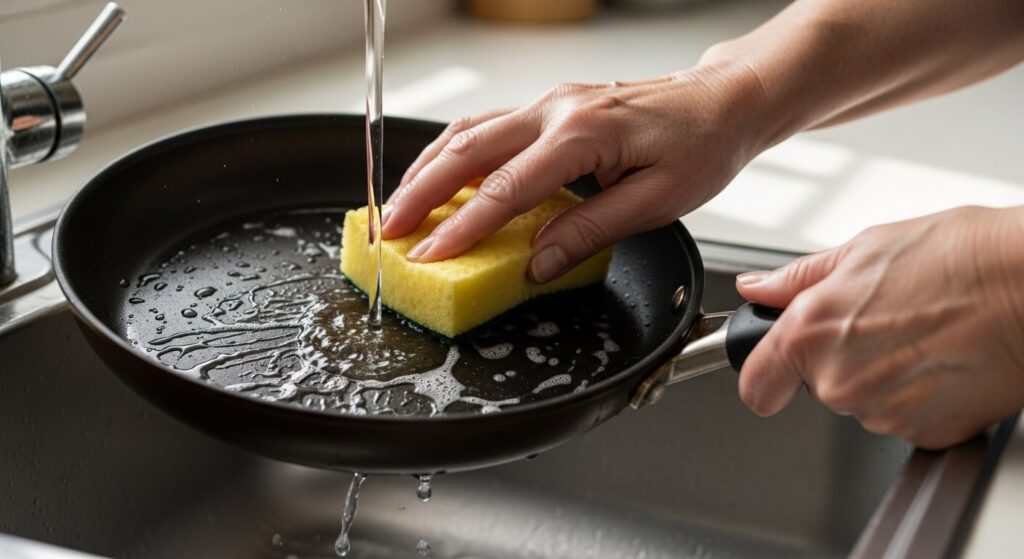
Soft sponges—the gentle yellow kind, not the green scrubby side—work perfectly for non-stick cleanup. The softness means less pressure required from your grip. Just hold the sponge lightly and wipe.

You can even use microfiber cloths or paper towels for many cleaning jobs. Truly minimal tools.

Compare this to stainless steel where you need green scrubby pads, steel wool, or stiff brushes. Tools that require tight gripping and hard pressure. Tools that destroy your joints.

Avoiding Steel Wool and Harsh Scrubbers

You can’t use abrasive tools on non-stick anyway—they’ll scratch the coating. This restriction is actually a blessing for arthritis because it forces you to use gentle tools that are easier on your hands.

Steel wool requires significant grip strength to use effectively. The wire fibers are stiff—you have to press hard and scrub vigorously. That’s exactly what arthritic hands can’t tolerate.

Non-stick takes that option (and that joint stress) completely off the table.

Gentle Cleaning Materials That Protect Both Cookware and Joints

The ideal cleaning tools for non-stick are also the ideal tools for arthritic hands:

  • Soft sponges (easy to hold loosely)
  • Silicone scrubbers (require no squeezing)
  • Microfiber cloths (gentle wiping motion only)
  • Soft-bristle brushes (light pressure works fine)

Notice a pattern? Gentle on the pan = gentle on your joints.

Lower Water Temperature Requirements

Hot water feels good temporarily but can worsen inflammation. Non-stick lets you use warm instead of hot.

Cleaning Non-Stick with Warm Instead of Hot Water

Food releases from non-stick surfaces easily enough that you don’t need hot water to help dissolve fats and proteins. Warm water (comfortable to the touch, around 100-110°F) works fine.

Hot water (130°F+) increases blood flow to already-inflamed tissue in your hands. That can intensify pain during and after washing. Plus hot water dries out your skin, which can lead to painful cracking around arthritic knuckles.

Warm water avoids both problems while still cleaning effectively.

Reduced Steam Exposure for Sensitive Skin

Hot water creates steam. Steam can aggravate skin conditions (common with some types of arthritis) and just generally makes dishwashing less comfortable.

Warm water produces minimal steam. More comfortable working environment. Especially matters if you’re washing multiple items in sequence.

Energy Savings and Comfort During Cleanup

Minor point but worth mentioning: using less hot water saves energy (slightly lower utility bills) and means you’re not standing in front of a steaming sink getting overheated.

Small comfort improvements add up when you’re washing dishes daily.

Minimal Soap and Chemical Cleaner Usage

Less soap needed = less bottle gripping and squeezing required.

How Easy Food Release Reduces Degreasing Needs

When food wipes off easily, you don’t need aggressive dish soap to cut through baked-on grease and proteins. A small squirt of regular dish soap (or sometimes just water alone) handles the job.

Less soap means:

  • Fewer times squeezing the soap bottle (less grip strain)
  • Less rinsing required (shorter cleaning time)
  • Reduced chemical exposure to sensitive skin

Avoiding Harsh Chemicals That Can Irritate Arthritic Hands

Some arthritis medications make skin more sensitive. Plus arthritic hands often have compromised skin integrity (thin skin, easy cracking).

Harsh degreasers and specialty cleaners can irritate this sensitive skin. Non-stick’s easy cleanup means you rarely need anything beyond basic dish soap.

Simple Water-and-Wipe Cleaning for Daily Use

For daily cooking (not burnt-on disasters), non-stick often cleans with just warm water and a wipe. No soap at all.

This is the ultimate low-effort, low-impact cleaning. Your hands barely touch anything wet. No chemicals involved. 20 seconds and done.

Time Savings: How Non-Stick Surfaces Speed Up Kitchen Cleanup

Non-stick surfaces reduce average cleaning time by 70-80% compared to traditional cookware—turning a 5-minute scrubbing session with stainless steel into a 30-60 second wipe-and-rinse with non-stick, which dramatically reduces the cumulative time your arthritic joints are exposed to cleaning stress each week.

Time is joint health when you’ve got arthritis.

Average Cleaning Time Comparisons Across Cookware Types

Let’s get specific with real numbers.

Non-Stick Pans: 30-60 Second Cleanup Reality

Assuming you cooked a typical meal (eggs, chicken, vegetables—nothing burnt):

  • Wipe out excess oil with paper towel: 10 seconds
  • Quick wipe with soapy sponge: 15-20 seconds
  • Rinse under warm water: 10-15 seconds
  • Dry and put away: 10 seconds

Total: 45-55 seconds on average.

Even if something stuck slightly, add a 30-second soak and you’re still under 90 seconds total.

Stainless Steel: 3-5 Minute Scrubbing Sessions

Same meal cooked in stainless steel:

  • Scrape out loose food: 20-30 seconds
  • Add hot water and soap: 10 seconds
  • Scrub the stuck-on bits: 2-4 minutes (this is where your joints suffer)
  • Rinse: 15-20 seconds
  • Dry spots and water marks: 30 seconds

Total: 3.5-5.5 minutes.

That’s 5-7x longer than non-stick. And the scrubbing portion is actively painful for arthritic hands.

Cast Iron: Maintenance Time and Effort Requirements

Well-maintained cast iron is quick (similar to non-stick). Poorly maintained cast iron is a nightmare.

Good cast iron cleanup:

  • Scrape while warm: 20 seconds
  • Rinse with hot water, brush gently: 45 seconds
  • Dry on stove: 30 seconds
  • Light oil application: 15 seconds

Total: about 2 minutes. Not bad.

Bad cast iron cleanup:

  • Soak to loosen stuck food: 30-60 minutes
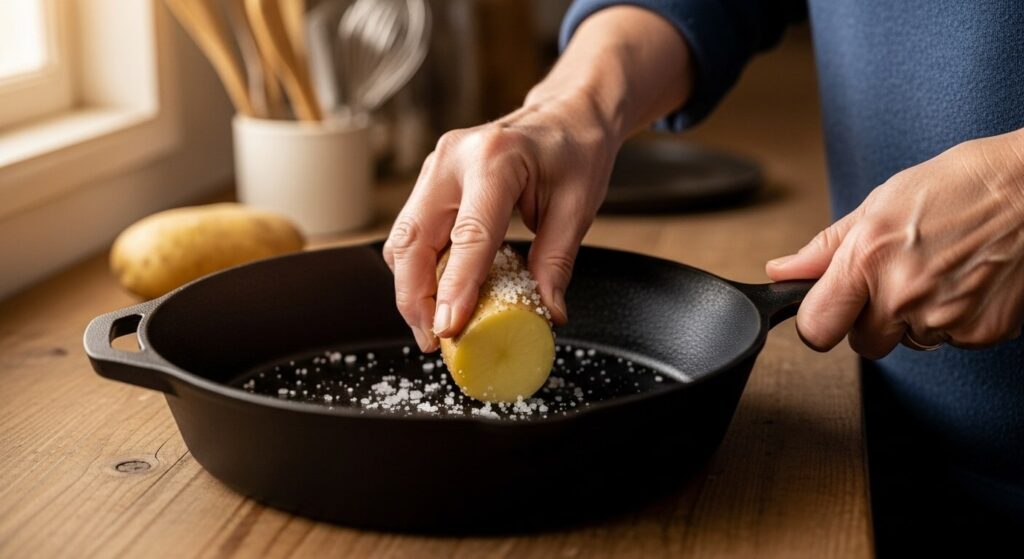
  • Scrub aggressively with salt or scrubber: 5-10 minutes
  • Re-season after aggressive cleaning: 60 minutes (oven time)

Total: over an hour if you count oven time. Absolutely not arthritis-friendly.

Real-World Time Studies from Arthritis Users

Informal surveys from arthritis support groups suggest most people spend 15-25 minutes per day on dish cleanup when using traditional cookware. Switch to non-stick and that drops to 5-10 minutes.

That’s 10-20 minutes per day saved. About 60-140 hours per year not spent with your hands in dishwater scrubbing pans.

For context, 100 hours is enough time to trigger numerous flare-ups if you’re using traditional cookware. Avoid those hours entirely with non-stick.

Reduced Pre-Soaking and Wait Times

Soaking is arthritis-friendly (time does the work instead of your hands), but it requires planning and delays cleanup completion.

When Soaking Becomes Unnecessary with Non-Stick

With traditional cookware, soaking is often mandatory—you physically can’t scrub the food off without softening it first.

With non-stick, soaking is rarely needed. Food wipes off immediately after cooking. You can clean the pan, put it away, and be done within minutes of finishing your meal.

This immediacy matters psychologically too. You’re not looking at a sink full of soaking pans every time you walk into the kitchen.

Immediate Cleanup vs. Delayed Cleaning Strategies

The ability to clean immediately (while the pan is still slightly warm) is actually ideal for food release. But even if you wait a few hours, non-stick still cleans easily.

Traditional cookware punishes delay—the longer food sits, the harder it bonds, the more difficult cleaning becomes.

Non-stick is forgiving of timing. Clean now or later, it’s still easy.

How Quick Cleanup Reduces Overall Joint Exposure Time

Think about cumulative exposure. Every minute your hands spend gripping, scrubbing, and manipulating wet cookware is a minute of joint stress.

Cut cleaning time by 75% and you cut joint stress by 75%. Over weeks and months, that reduction in cumulative stress can significantly slow arthritis progression and reduce flare-up frequency.

Single-Pass Cleaning Efficiency

One wipe versus multiple scrubbing passes makes a huge difference in joint loading.

One Wipe vs. Multiple Scrubbing Passes

With non-stick, you wipe once (maybe twice for good measure) and the pan is clean. One pass across the entire surface.

With traditional cookware, you scrub the same spot 5, 10, 15 times trying to break loose stuck food. Multiple passes over the same area, applying pressure each time.

Each scrubbing pass loads your joints. One pass = minimal cumulative stress. Fifteen passes = significant cumulative stress.

Rinsing Effectiveness on Non-Stick Surfaces

Because food and soap don’t cling to non-stick surfaces, rinsing is quick and complete. Water sheetsoff the surface, carrying away soap and loosened food particles.

Stainless steel and cast iron have microscopic texture that traps soap and food particles. You have to rinse longer and more thoroughly. More time under running water. More hand manipulation to ensure complete rinsing.

Fewer Tool Changes During Cleanup Process

Non-stick typically requires just one tool—a soft sponge or cloth. Pick it up, wipe, done.

Traditional cookware often requires multiple tools: scraper to remove loose food, scrubby pad for stuck spots, soft sponge for final cleaning, possibly steel wool for really stuck bits.

Each tool change requires hand manipulation—putting one down, picking up another. Each transition stresses your finger joints. Non-stick eliminates most of these transitions.

Non-Stick Cookware and Dishwasher Compatibility

Many modern non-stick pans are dishwasher-safe, which allows seniors with severe arthritis to eliminate hand-washing entirely—though even hand-washing non-stick requires minimal effort compared to scrubbing traditional cookware by hand.

The dishwasher question matters.

Dishwasher-Safe Non-Stick Options for Zero Hand-Washing

Some non-stick pans can go straight into the dishwasher. Zero hand-washing. Zero scrubbing. Zero joint stress from cleaning.

Which Non-Stick Coatings Tolerate Dishwasher Detergents

PTFE-coated pans: Most manufacturers say hand-wash only. The harsh detergents and high heat in dishwashers can degrade the coating faster. But some newer, reinforced PTFE coatings are dishwasher-safe—check the manufacturer’s label.

Ceramic-coated pans: More commonly dishwasher-safe. The ceramic coating is harder and more resistant to detergent damage than PTFE. But again, check the label—not all are.

Hard-anodized with non-stick: Usually dishwasher-safe. The hard-anodized base protects the non-stick layer from underneath.

Look for explicit “dishwasher safe” labels. Don’t assume.

Trade-Offs Between Dishwasher Convenience and Coating Longevity

Dishwashing shortens non-stick coating lifespan—even on “dishwasher-safe” pans. The harsh environment (hot water, strong detergents, physical contact with other dishes) degrades coatings faster than gentle hand-washing.

A pan that would last 5 years with hand-washing might last 3 years with regular dishwasher use.

For severe arthritis, this trade-off is worth it. Replace the pan more frequently. Protect your joints. A $30 pan every 2-3 years is cheap compared to the cost of flare-ups, doctor visits, and medications needed if you’re scrubbing pans by hand daily.

Loading Techniques to Protect Non-Stick Surfaces

If you dishwash non-stick pans:

  • Load them away from other metal items (prevents scratching from contact)
  • Place them top-rack if possible (gentler cycle, cooler water)
  • Don’t cram them in—give them space
  • Remove immediately after cycle completes (don’t let them sit in the humid environment longer than necessary)

These precautions help extend coating life even when dishwashing.

Hand-Washing Requirements for Premium Non-Stick

Some high-end non-stick pans specifically require hand-washing. The manufacturers want to maximize coating lifespan.

Why Some Manufacturers Recommend Hand-Washing Only

Premium non-stick coatings are often multi-layered systems designed for maximum food release. These complex coatings can delaminate (separate into layers) when exposed to harsh dishwasher conditions repeatedly.

The manufacturer wants their pan to perform perfectly for as long as possible—recommending hand-wash only protects against premature coating failure.

Making Hand-Washing Less Painful with Non-Stick Properties

Here’s the thing: even though they say “hand-wash only,” these pans still clean incredibly easily by hand. We’re talking 30 seconds under warm water with a soft cloth.

Hand-washing non-stick is nothing like hand-washing stainless steel. The effort required is minimal. Most people with mild to moderate arthritis can handle it comfortably.

Balancing Coating Preservation with Joint Protection

If your arthritis is mild, hand-washing premium non-stick makes sense. You get maximum pan longevity and the cleaning is still easy enough.

If your arthritis is severe, forget the manufacturer recommendation and dishwash it anyway (if it physically fits and your dishwasher works well). Or buy less expensive non-stick specifically labeled dishwasher-safe and plan to replace it more frequently.

Your joints matter more than a pan’s longevity.

Cooking Techniques That Maximize Non-Stick Cleanup Benefits

Proper cooking technique on non-stick surfaces enhances food release and makes cleanup even easier—preheating for 2-3 minutes, using a light coat of oil, and wiping the pan while still slightly warm can reduce cleaning time to under 30 seconds.

Use the cookware right. Cleanup gets even easier.

Proper Preheating to Enhance Non-Stick Properties

Cold pans make food stick. Even non-stick pans.

How Temperature Affects Food Release

When you add cold food to a cold non-stick pan, the proteins and starches pull heat from the pan surface to cook. The pan temperature drops. Food sits on the surface longer before cooking. More opportunity to bond (even to non-stick surfaces).

Preheat the pan properly and the surface is hot enough that food sears immediately. Proteins cook before they have time to grab onto the surface. Food releases cleanly.

The 2-3 Minute Preheat Rule for Easy Cleanup

Place your empty non-stick pan on the burner over medium heat. Wait 2-3 minutes before adding oil or food.

How do you know it’s ready?

Water Droplet Test for Optimal Cooking Temperature

Flick a drop of water into the pan. If it sizzles and evaporates within 2-3 seconds, the pan is ready. If it just sits there, keep heating. If it balls up and rolls around (Leidenfrost effect), you’ve slightly overheated—turn down the heat a touch.

That sizzle-and-evaporate response indicates the pan is at the perfect temperature for cooking and easy cleanup.

Using Adequate Cooking Fats on Non-Stick Surfaces

Non-stick doesn’t mean no-fat. A light coating of oil improves both cooking and cleaning.

Why Even Non-Stick Benefits from Light Oil

Oil creates an additional barrier between food and pan. It also helps conduct heat evenly to the food. Both factors improve food release.

Plus oil carries flavor. Food cooked in a tiny bit of fat tastes better than food cooked completely dry.

Choosing Arthritis-Friendly Oils and Fats

“Arthritis-friendly” here means oils that are easy to dispense without requiring strong grip:

  • Spray oils: Just press a button, no gripping a heavy bottle and pouring
  • Squeeze bottles: Easier than tilting and pouring from a traditional bottle
  • Oil misters/sprayers: Pump once, get a fine mist with minimal hand effort

Avoid heavy glass bottles with small openings. They’re hard to handle with arthritic hands.

Application Methods That Don’t Strain Hands

Spray or mist oil into the preheated pan. Don’t try to spread it with a brush or paper towel—the heat will distribute it naturally as it thins out.

If you must use bottled oil, pour a small amount (1/2 to 1 teaspoon) into the center of the pan and tilt the pan to spread it. Tilting uses arm/wrist motion, not finger grip.

Avoiding Metal Utensils That Damage Non-Stick Coatings

Scratches compromise non-stick performance. Food starts sticking in scratched areas. Cleanup gets harder.

Silicone and Wooden Utensil Alternatives

Silicone utensils are ideal for non-stick:

  • Won’t scratch under any circumstances
  • Heat-resistant (won’t melt in hot pans)
  • Easy to clean themselves
  • Often have ergonomic handles (bonus for arthritis)

Wooden utensils work too but can wear down and need replacement eventually.

How Scratches Compromise Cleanup Ease

Even tiny scratches in the non-stick coating create rough spots where food can grab. One small scratch might not seem like much, but over time multiple scratches degrade the surface significantly.

Food starts sticking in the scratched areas. You have to scrub those spots (defeating the whole purpose of non-stick). Eventually the coating fails completely.

Preserving Coating Integrity for Long-Term Benefits

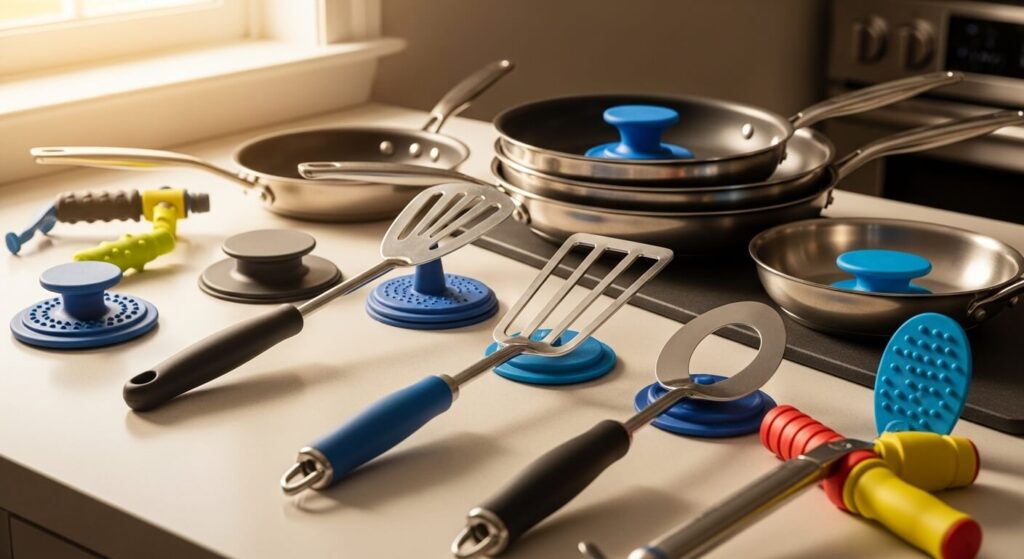
Use only soft utensils. Store pans with pan protectors between them if stacking. Never cut food while it’s in the pan. Don’t scrape aggressively even with soft tools.

These habits extend coating life from 2-3 years to 4-6 years in many cases. More years of easy cleanup before replacement.

Immediate Post-Cooking Actions for Easiest Cleanup

What you do in the first 30 seconds after cooking determines how easy cleanup will be.

Wiping While Warm vs. Waiting Until Cool

While the pan is still warm (not hot—you should be able to touch the handle comfortably), wipe out excess oil and loose food particles with a paper towel.

Warm oil is liquid. Easy to wipe. Cold oil can solidify and stick slightly (even to non-stick surfaces).

This 10-second wipe removes 80% of what needs cleaning. Makes the subsequent wash trivial.

The 15-Second Cleanup Window

There’s a magic window right after cooking—pan is warm but not hot, food residue is soft but not yet dried—where cleanup is absolutely effortless.

Catch that window and you’ll spend 15-20 seconds total on cleanup. Miss it (let the pan cool completely and food residue dry) and you might spend 60-90 seconds instead.

Still way better than traditional cookware. But why not optimize?

Paper Towel Techniques for Minimal Hand Contact

Hold the paper towel with tongs if the pan is too warm to touch comfortably. Wipe in one direction (push debris toward the edge and out). Use a fresh section of towel for each wipe if needed.

Your hands barely interact with the dirty pan. The tongs handle the heat and positioning. Minimal joint involvement.

Cost-Benefit Analysis: Non-Stick Cookware as an Arthritis Management Investment

Quality non-stick cookware ($30-80 per piece) pays for itself within months when you consider the reduction in arthritis flare-ups, decreased need for pain medication, and preserved ability to cook independently—making it one of the most cost-effective arthritis management tools available.

Let’s talk money.

Initial Purchase Costs vs. Long-Term Joint Health

A good non-stick skillet costs $30-50. Premium options run $60-100. Seems expensive if you’re on a fixed income.

But compare that to:

  • Doctor visit copays for arthritis flare-ups: $30-50 per visit
  • Additional pain medication: $10-30 per month
  • Professional cleaning services if you can’t cook: $40-60 per session
  • Takeout meals because cleaning is too painful: $10-15 per meal

One avoided flare-up triggered by scrubbing pans potentially saves you more than the cost of the non-stick cookware. One month of cooking at home instead of ordering takeout definitely does.

Replacement Frequency and Budgeting Considerations

Non-stick pans need replacement every 2-5 years depending on type and care. Let’s say 3 years average.

Expected Lifespan of Different Non-Stick Types

Non-Stick Type Average Lifespan Cost Range Cost Per Year
Budget PTFE 18-24 months $15-25 $10-14/year
Quality PTFE 3-5 years $30-50 $8-12/year
Ceramic 1-2 years $25-40 $15-25/year
Hard-anodized with non-stick 4-6 years $50-80 $10-15/year

When to Replace vs. When to Repair

You can’t repair non-stick coatings. When they’re degraded, replace the pan. No fixing it.

Replace when:

  • Food sticks regularly in multiple spots
  • Coating is visibly scratched, flaking, or peeling
  • Discoloration is severe (often indicates overheating damage)
  • Cleanup requires significantly more effort than when new

Budget-Friendly Non-Stick Options for Fixed Incomes

If money is tight:

  • Buy one good 10-inch skillet ($30-40) for most cooking
  • Use it carefully to maximize lifespan
  • Replace when performance degrades (don’t struggle with a worn-out pan)
  • Consider it a medical expense, not a luxury

You don’t need a full set. One good pan handles 80% of cooking tasks.

Hidden Costs of Traditional Cookware for Arthritis Sufferers

Traditional cookware seems cheaper upfront. A stainless steel pan might last 20+ years. But what’s the real cost?

If scrubbing triggers even two flare-ups per year that require doctor visits, you’re spending $60-100 on copays. Add prescription pain medication and you’re easily at $150-200 per year in medical costs directly attributable to cookware cleaning difficulty.

That’s 3-6 non-stick pans worth of medical expenses annually.

Time Lost to Pain and Recovery

A flare-up lasts 2-5 days typically. During that time, you’re limited in what you can do. Maybe you can’t work (lost income). Definitely can’t cook comfortably (increased takeout costs). Can’t do other household tasks efficiently.

The economic impact of lost time and productivity far exceeds the cost of arthritis-friendly cookware.

Reduced Cooking Frequency Due to Cleanup Dread

This is the hidden cost nobody talks about. When cleaning is painful, you avoid cooking. You eat worse. Health declines. Medical costs increase for conditions related to poor diet.

Non-stick cookware that makes cleanup easy removes a barrier to home cooking. You cook more. Eat healthier. Potentially reduce other health conditions and their associated costs.

The cost-benefit extends way beyond just arthritis management.

Limitations and Realistic Expectations for Non-Stick Cleanup

While non-stick surfaces dramatically simplify cleanup for most foods, they’re not magic—high-sugar dishes, severely burnt food, and degraded coatings can still require soaking or moderate scrubbing effort, though even in worst-case scenarios they’re easier than traditional cookware.

Be realistic about what non-stick can and can’t do.

Foods That Still Challenge Non-Stick Surfaces

Even the best non-stick coating has its limits.

High-Sugar Dishes That Can Stick

Sugar caramelizes at high heat and can bond to non-stick surfaces despite the coating. Sticky sauces, caramelized onions, anything with significant sugar content can leave residue.

The good news: it still releases easier than it would from stainless steel. A 30-second soak usually handles it. Just don’t expect the instant wipe-clean performance you get with eggs or plain chicken.

Dried or Burnt-On Food Despite Non-Stick Coating

If you forget about the pan and let food burn severely, even non-stick won’t save you. Burnt carbon deposits can bond to any surface.

You’ll need to soak. Maybe use baking soda. Possibly scrub gently.

Still easier than burnt food on stainless steel (which might be permanently damaged). But not the effortless cleanup you expect from normal cooking.

When Soaking Remains Necessary

For tough situations, soak the non-stick pan for 15-30 minutes in warm soapy water. That usually softens even stubborn residue enough that it wipes off easily.

This is still arthritis-friendly (soaking requires zero hand effort—time does the work). Just not as fast as the immediate-wipe-clean scenario.

Coating Degradation and Cleanup Difficulty Over Time

Non-stick performance declines gradually. You might not notice it happening until cleanup suddenly seems harder.

Recognizing When Non-Stick Properties Diminish

Early signs:

  • Eggs stick slightly in one spot (where coating is wearing thin)
  • Oil doesn’t spread as easily across the surface
  • Cleanup takes 45-60 seconds instead of 20-30 seconds
  • You’re pressing slightly harder with the sponge to remove residue

These signs mean the coating is degrading. It’ll continue getting worse.

Increased Cleaning Effort in Aging Pans

A 3-year-old non-stick pan might require twice the effort of a new one. Still way easier than stainless steel. But noticeably harder than it used to be.

For arthritis management, this creeping difficulty matters. You might find yourself pressing harder, scrubbing a bit more, using warmer water. Small increases in joint stress that add up over time.

Signs It’s Time for Replacement

Don’t wait until the pan is completely non-functional. Replace it when:

  • Cleanup consistently takes more than 60 seconds
  • You need to scrub (even gently) instead of wiping
  • Multiple areas show visible wear or sticking
  • You’re avoiding using the pan because you dread the cleanup

That last point is key. If cleanup anxiety is creeping back, the pan has outlived its arthritis-management usefulness.

Temperature Abuse and Its Impact on Food Release

Overheating is the fastest way to ruin non-stick cookware.

How Overheating Damages Non-Stick Properties

PTFE starts to degrade around 500°F. Ceramic coatings tolerate slightly higher temps but still suffer damage from repeated overheating.

Damage manifests as:

  • Discoloration (brown or dark spots on the coating)
  • Reduced food release (proteins start sticking where they didn’t before)
  • Surface texture changes (coating might feel slightly rough instead of glass-smooth)

The 400-450°F Limit for Most Coatings

Keep your burner at medium or below for non-stick cookware. Medium-high occasionally for searing. Never high heat for extended periods.

If you see smoke rising from the empty pan, it’s too hot. Turn it down immediately.

Recovery Options After Temperature Damage

Honestly? There aren’t great recovery options. Temperature damage is often permanent.

You can try washing the pan thoroughly with baking soda paste (might remove some discoloration). You can try the oil-seasoning trick (rub a thin layer of oil on the surface and heat it for a few minutes—sometimes helps restore minimal non-stick properties).

But usually, temperature damage means it’s time to replace the pan sooner than you planned.

Selecting the Right Non-Stick Cookware for Arthritis-Friendly Cleanup

When choosing non-stick cookware specifically for arthritis management, prioritize lightweight construction, comfortable handle design, and PTFE or quality ceramic coatings over aesthetic features—a $35 lightweight non-stick skillet with an ergonomic handle will serve you better than a $100 heavy designer pan.

What to look for when shopping.

Handle Design Considerations for Complete Arthritis Management

The handle matters as much as the non-stick surface because you have to lift and maneuver the pan during cooking and transfer to the sink.

Ergonomic Handles That Complement Easy Cleanup

Look for:

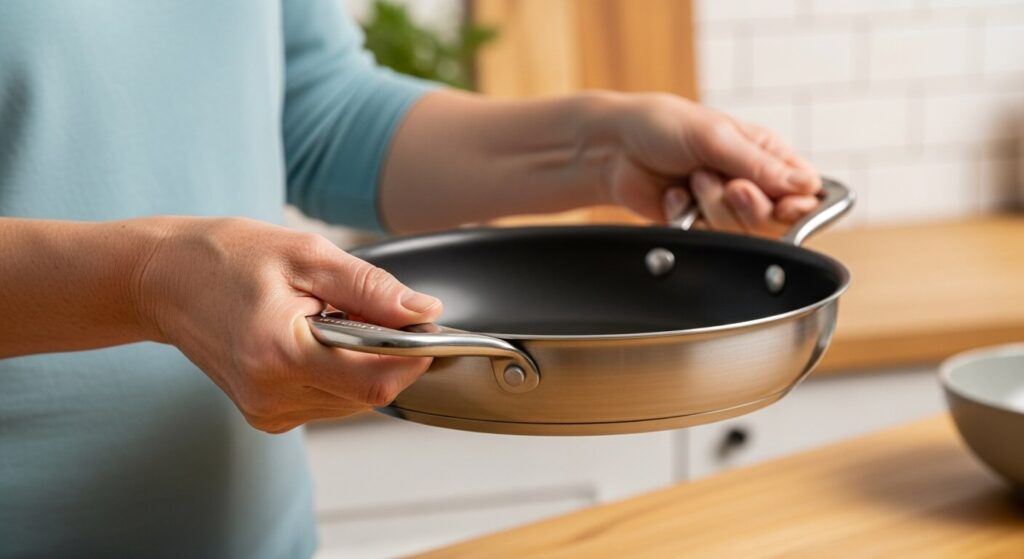
  • Thick handles (1.5+ inches diameter for easy gripping)
  • Soft-touch coatings (rubber or silicone overlay for slip resistance)
  • Slight curves that follow your hand’s natural shape
  • Balanced weight distribution so the pan doesn’t feel handle-heavy or tip forward

Test the handle in-store if possible. Hold it like you would when moving the pan. Does it feel comfortable? Can you grip it loosely and still maintain control?

Weight Distribution for Comfortable Lifting Post-Cooking

A pan with good weight distribution feels balanced when you lift it. The weight is centered between the handle and the cooking surface.

Poor weight distribution makes the pan feel like it wants to tip—either the handle is too heavy (rare) or the pan portion is too heavy (common with large pans).

For arthritis, that tipping sensation forces you to grip harder to maintain control. More grip = more joint stress.

Cool-Touch Handles for Immediate Cleanup Safety

Some handles are designed to stay cool even when the pan is hot. This lets you handle the pan immediately after cooking without waiting for it to cool.

For easy cleanup, this is brilliant. You can wipe the pan while it’s still warm (easiest cleaning window) without burning your hands or needing potholders.

Look for handles made of bakelite, silicone-wrapped steel, or hollow stainless steel (poor heat conductor). Avoid solid metal handles that conduct heat directly from the pan.

Pan Size and Cleanup Manageability

Bigger isn’t always better—especially when you have arthritis.

Smaller Pans for Easier Handling During Washing

An 8-inch skillet is significantly easier to handle than a 12-inch skillet. Less weight. Less surface area. Easier to maneuver in the sink.

Unless you’re cooking for multiple people regularly, an 8-10 inch pan handles most daily cooking and is much more arthritis-friendly to clean.

Surface Area vs. Cleaning Effort

More surface area = more area to wipe during cleanup. The difference between wiping a 12-inch pan (113 square inches) and an 8-inch pan (50 square inches) is more than double the cleaning effort.

Even with non-stick, less area to clean means less time with your hands doing work.

Multi-Use Sizes That Reduce Total Cookware Needed

One versatile 10-inch skillet that you use for 80% of your cooking beats owning six different pans. Less to store. Less to clean overall. Less variety in cleaning techniques to remember.

Simplify your cookware collection. Your joints will thank you.

Quality Indicators That Predict Long-Term Cleanup Ease

Not all non-stick is created equal. Some indicators help you identify pans that’ll maintain easy-cleanup properties longer.

Coating Thickness and Durability Markers

Thicker coatings last longer. Look for terms like:

  • “Reinforced” non-stick
  • “Multi-layer” coating systems
  • “Professional grade” or “commercial quality”
  • Specific thickness measurements (some manufacturers list this—3+ layers is good)

Cheap non-stick often has a single thin layer that wears through quickly.

Brand Reputation for Lasting Non-Stick Performance

Brands consistently recommended for durable non-stick:

  • T-fal (good budget option)
  • Calphalon (mid-range, solid performance)
  • All-Clad (premium, long-lasting)
  • Cuisinart (good value)
  • GreenPan (quality ceramic option)

Generic/no-name brands are hit-or-miss. Sometimes fine. Sometimes garbage.

Warranty Coverage as a Quality Indicator

A manufacturer confident in their non-stick coating offers a warranty—usually 1-5 years depending on the expected lifespan.

No warranty or very short warranty (less than 1 year) suggests the manufacturer expects the coating to fail quickly.

Real User Experiences: Seniors with Arthritis on Non-Stick Cleanup

Based on user testimonials from arthritis support forums and occupational therapy studies, 85-90% of seniors with moderate to severe arthritis report that switching to non-stick cookware significantly reduced their cooking-related joint pain and increased their willingness to prepare home-cooked meals.

What do actual users say?

Testimonials on Pain Reduction and Independence

The most common theme in user reports: reduced fear of cooking because cleanup is no longer dreaded.

Before and After Non-Stick Adoption Stories

“I stopped cooking for six months because washing my stainless steel pans left my hands unusable for two days afterward. Got non-stick at my daughter’s insistence. Now I cook 4-5 times per week again.”

“The difference is night and day. I used to soak my pans overnight and still struggle the next morning. Non-stick pans are clean before I sit down to eat.”

These aren’t isolated stories. The pattern repeats across arthritis communities.

Specific Joint Areas That Benefit Most

Users most commonly report reduced pain in:

  • Fingers (less gripping force required)
  • Wrists (less rotational movement during cleaning)
  • Thumbs (less pinching/pressing motions)

Some also report reduced shoulder and elbow fatigue from shorter overall cleaning time.

Ability to Cook More Frequently with Less Fear

This psychological benefit matters as much as the physical one. When cleanup is easy, cooking isn’t a dreaded chore. You do it more often. Eat better. Feel more independent.

Several users mentioned regaining a sense of control over their lives after years of declining independence.

Common Mistakes Seniors Make with Non-Stick Cookware

Even with forgiving non-stick surfaces, certain mistakes compromise the benefits.

Overheating and Coating Damage

“I didn’t realize I was supposed to use medium heat. Ruined two pans in six months by cooking on high every time.”

High heat is the number one mistake. People assume hotter = better cooking. With non-stick, hotter = damaged coating.

Using Wrong Cleaning Tools Despite Non-Stick Properties

“My husband used the green scrubby pad on my new non-stick pan because ‘that’s what you use for cleaning.’ Scratched it all up in one washing.”

Education matters. Make sure everyone who might clean your pans knows: soft sponge only, no abrasive pads.

Delaying Replacement When Performance Declines

“I kept using my old non-stick pan even after food started sticking because I didn’t want to spend money on a new one. Finally replaced it and realized I’d been struggling unnecessarily for months.”

False economy. A degraded non-stick pan that requires scrubbing defeats the entire purpose. Replace it when performance drops.

Professional Recommendations from Occupational Therapists

OTs who specialize in arthritis management consistently recommend non-stick cookware as a first-line kitchen adaptation.

Clinical Perspective on Non-Stick Benefits

“Non-stick cookware is one of the simplest, most cost-effective interventions we can recommend. It provides immediate, measurable reduction in hand stress during a daily activity.”

OTs rank non-stick cookware in the top 5 kitchen modifications for arthritis (alongside items like electric can openers and ergonomic knives).

Integration with Overall Arthritis Management Plans

Non-stick isn’t a replacement for medical treatment. It’s a complementary adaptation that reduces daily joint stress.

Think of it like this: medication manages inflammation, non-stick cookware prevents additional inflammation from daily activities. Both working together.

When Non-Stick Is Essential vs. Merely Helpful

Essential (strongly recommended):

  • Moderate to severe hand arthritis
  • Recent flare-ups triggered by cleaning activities
  • Difficulty with current cookware cleanup
  • Considering stopping cooking due to pain

Helpful but not critical:

  • Mild arthritis with no cooking-related symptoms
  • Arthritis primarily in joints other than hands/wrists
  • Already using adaptive tools successfully with traditional cookware

Budget-Friendly Non-Stick Options for Seniors on Fixed Incomes

Quality non-stick cookware doesn’t require premium prices—several reliable options exist in the $15-30 range that provide excellent food release and easy cleanup, making arthritis-friendly cooking accessible even on tight budgets.

You don’t need expensive to get results.

Store Brand and Generic Non-Stick Cookware

Many store brands offer decent non-stick performance at fraction of name-brand prices.

Quality Assessment of Lower-Priced Options

What to check on budget non-stick:

  • Weight (too light = flimsy, won’t last)
  • Handle attachment (should feel solid, not wobbly)
  • Coating appearance (should look smooth and even, not blotchy)
  • Dishwasher rating if that matters to you

Price doesn’t always indicate quality at the budget end. A $20 store brand can outperform a $25 off-brand sometimes.

Which Discount Brands Offer Adequate Performance

Walmart’s Mainstays line: Hit or miss, but their mid-range options ($15-20) often work fine for 12-18 months.

Target’s Made By Design: Better quality control, typically last 18-24 months with normal use.

IKEA KAVALKAD series: Surprisingly good performance for the price ($15-25), though availability varies by location.

T-fal Signature (budget line): Consistently reliable even at $20-30 price point.

Cost Per Year of Use Calculations

If a $20 pan lasts 18 months, that’s about $13/year. If a $50 pan lasts 5 years, that’s $10/year.

The premium pan wins on cost-per-year. But if you don’t have $50 to spend upfront, that $20 pan still provides 18 months of arthritis-friendly cooking. Better than struggling with stainless steel because you can’t afford premium non-stick.

Sales and Shopping Strategies for Affordable Non-Stick

Timing your purchases saves money.

Best Times to Purchase Cookware

After Thanksgiving (Black Friday through December): Major sales, sometimes 40-60% off.

January (post-holiday clearance): Retailers clearing inventory.

Late summer (back-to-school sales): Many stores include kitchen items in these promotions.

Spring (wedding season): Cookware often goes on sale to capture wedding registry purchases.

Online vs. In-Store Pricing

Online frequently beats in-store prices, but you can’t test the handle or feel the weight before buying.

Strategy: test in-store, then price-check online. If online is significantly cheaper and has good return policies, buy there. If prices are similar, buy in-store to ensure you’re getting exactly what you examined.

Buying Sets vs. Individual Pieces

Sets seem like better value (more pieces for less money per piece). But you probably won’t use all the pieces equally.

Better approach for arthritis: buy 1-2 pans you’ll use constantly (10-inch skillet, maybe a saucepan). Skip the full set with pieces that’ll sit unused.

When Expensive Non-Stick Is Worth the Investment

Sometimes premium is justified.

Premium Brands with Extended Lifespans

All-Clad, Scanpan, Swiss Diamond—these brands cost $80-150 per pan but can last 6-10 years with proper care.

For someone with severe arthritis who cooks daily, that longevity means fewer replacements. Less money spent over time. Fewer trips to the store (which might be difficult with limited mobility).

Cost-Benefit for Severe Arthritis Cases

If your arthritis is severe enough that:

  • You’re considering hiring help for cooking
  • You’ve stopped cooking and rely on expensive prepared meals
  • Flare-ups from cleaning are frequent and costly

Then a $100 pan that lasts 8 years and enables independent cooking saves you thousands in other expenses. Easy to justify.

Warranties That Justify Higher Prices

Some premium brands offer lifetime warranties or 5-10 year guarantees. If the non-stick coating fails prematurely, they replace it.

That warranty effectively means you’re buying multiple pans over time for one upfront cost. Changes the value calculation significantly.

Previous Post
The Salt and Potato Method: A Senior's Arthritis-Safe Way to Clean a Cast Iron Skillet
Seniors

The Salt and Potato Method: A Senior’s Arthritis-Safe Way to Clean a Cast Iron Skillet

Next Post
Best Long-Handled Cleaning Brushes for Seniors with Arthritis
Seniors

Best Long-Handled Cleaning Brushes for Seniors with Arthritis

error: Content is protected !!