Best Long-Handled Cleaning Brushes for Seniors with Arthritis

Best Long-Handled Cleaning Brushes for Seniors with Arthritis

What Makes a Cleaning Brush Arthritis-Friendly: Key Features to Look For

The best long-handled cleaning brushes for seniors with arthritis feature thick handles (1.5-2 inches diameter), soft-grip materials, and lengths between 9-14 inches that shift cleaning effort from weak finger joints to stronger arm muscles.

Here’s the thing about most cleaning brushes. They’re designed for people with perfectly functioning hands. Not for joints that scream when you grip too hard or wrists that can’t twist without pain.

Wrong approach entirely.

Ergonomic Handle Design That Reduces Grip Strain

A truly ergonomic handle lets you hold the brush loosely—almost casually—while still maintaining complete control during cleaning.

That’s the test. If you have to grip hard, the design failed.

Optimal Handle Diameter for Arthritic Hands

Thin handles are your enemy. Period.

Handles under 1 inch in diameter require a tight, forceful grip to maintain control. That grip strength—somewhere between 15-25 pounds of force—is exactly what arthritic hands can’t sustain. Most people with moderate hand arthritis can comfortably maintain about 5-10 pounds of grip force. Maybe less during a flare-up.

The sweet spot: 1.5 to 2 inches in diameter. This thickness lets you hold the brush with a loose, open hand position (think holding a tennis ball, not a pencil). The larger surface area distributes pressure across your entire palm instead of concentrating it in your finger joints.

Brushes with 2+ inch diameter handles are even better for severe arthritis, though they can feel awkward if you’ve got small hands. Try before you buy if possible.

Textured vs. Smooth Grip Surfaces

Smooth handles slip. You grip harder to compensate. Your joints pay the price.

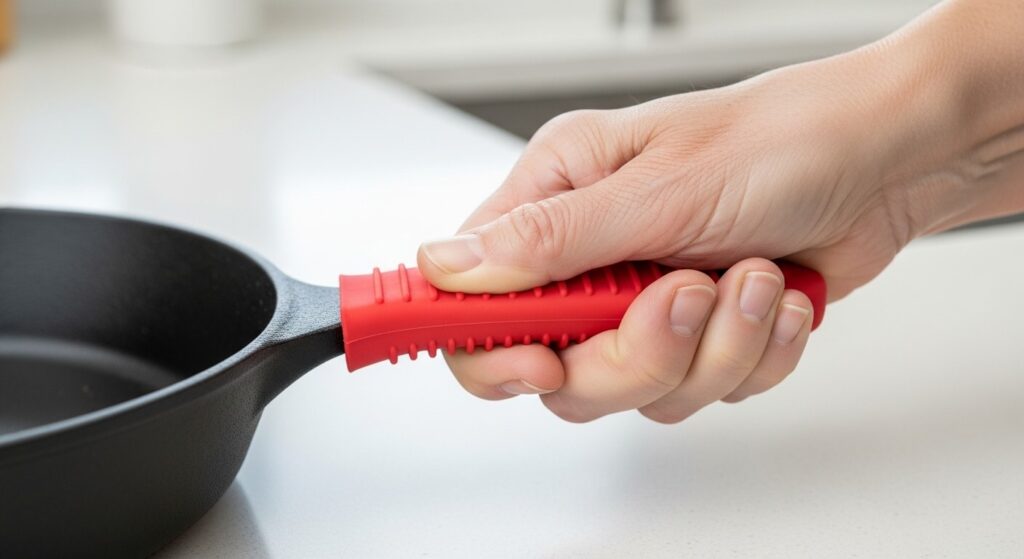
Textured surfaces—soft rubber with raised patterns, foam padding, or silicone with tiny nubs—provide friction without requiring a death grip. You can hold loosely and the brush stays put.

But here’s where it gets tricky. Some textures are too aggressive (hard plastic ridges that dig into your palm) or too soft (foam that compresses completely and loses all grip). The best textures have some give but maintain their shape under moderate pressure.

Look for: Soft-touch rubber coatings, cushioned foam with a thin protective layer, or silicone with subtle texture patterns. Avoid hard plastic ribs or heavily textured grips that can actually cause more hand fatigue.

Angle and Curvature Considerations

Straight handles force your wrist into uncomfortable positions. Curved handles follow your hand’s natural angle.

A slight curve (10-15 degrees) in the handle means your wrist stays closer to neutral position during use. Less bending. Less twisting. Less pain afterward.

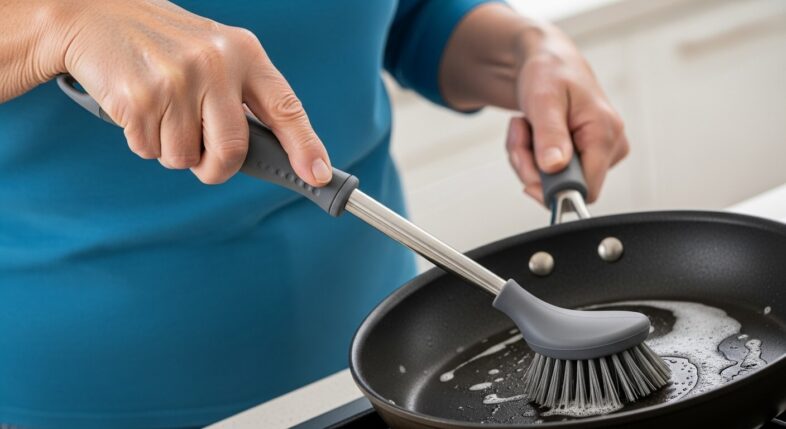
Some brushes have an S-curve design—straight at the grip area, angled where it connects to the brush head. This design is sneaky good for reaching into pans and bowls without excessive wrist rotation.

Handle Length Requirements for Different Cleaning Tasks

Longer isn’t always better (sometimes it’s worse). Match handle length to the task.

Short Handles (8-12 inches) for Dish Cleaning

This length range works best for daily dish washing at the sink because you’re working close to your body and don’t need extended reach.

An 8-10 inch handle gives you enough distance to keep your hands out of dirty dish water while maintaining good control. Go longer than 12 inches for dish work and the brush becomes unwieldy—you’re fighting leverage issues and the brush head wants to rotate away from where you’re trying to clean.

Best for: Pots, pans, plates, bowls, everyday dish washing

Medium Handles (12-18 inches) for Counter and Sink Work

This is the versatile middle ground. Long enough to reach into deep pots and the back of sinks without bending over. Short enough to maintain control and precision.

A 14-16 inch brush lets you clean counters, stovetops, and sink basins while standing relatively upright. Less back strain. Less reaching. Your whole body thanks you, not just your hands.

Long Handles (18-24+ inches) for Floor and Tub Cleaning

These lengths eliminate bending and kneeling—movements that stress your entire body when you’ve got arthritis.

But get this: handles over 24 inches can actually be harder to use because the leverage works against you. The brush head is so far from your grip point that you need more strength to control it. For most seniors with arthritis, 18-22 inches hits the sweet spot between reach and controllability.

Some brushes have telescoping handles that adjust from 30-48 inches. Sounds great. Works okay. The adjustment mechanisms sometimes require grip strength to operate, which defeats the purpose.

Brush Head Materials and Firmness Levels

The bristles matter as much as the handle—wrong bristle choice means you’ll press harder to compensate, which stresses your joints unnecessarily.

Soft Nylon Bristles for Gentle Scrubbing

Soft nylon works for non-stick pans, delicate dishes, and any surface where you can’t risk scratching.

These bristles are forgiving. They clean through contact and motion rather than abrasion. You don’t need to push hard. Just move the brush across the surface and let the bristles do their thing.

Downside: Won’t handle seriously stuck-on food without help from soaking or chemical cleaners. That’s okay. Soaking is more arthritis-friendly than scrubbing anyway.

Medium-Stiff Bristles for General Purpose

This is what most people want most of the time. Firm enough to remove normal food residue. Soft enough to not scratch most surfaces (test on an inconspicuous spot first).

Medium-stiff nylon bristles—the kind that bend under moderate pressure but spring back to shape—handle everyday cleaning without requiring excessive force. They’re the workhorses of dish brushing.

Silicone Bristles for Non-Scratch Applications

Silicone bristles are different animals entirely. They’re not really “bristles” in the traditional sense—more like flexible rubber nubs.

Won’t scratch anything. Ever. You could scrub non-stick coating with silicone and cause zero damage. They’re also heat-resistant (can use on warm pans), odor-resistant (don’t get funky like sponges), and last basically forever.

The trade-off? Less aggressive cleaning action. Silicone excels at wiping and light scrubbing. For stuck-on food, you’ll need to soak first or use a different brush.

Natural Fiber Options and Their Limitations

Boar bristle, plant fiber, coconut husk—these natural options appeal to eco-conscious buyers.

They work. But they have drawbacks for arthritis specifically. Natural bristles often require more pressure to clean effectively than synthetic options. They also break down faster when exposed to hot water and dish soap (which you’ll be using constantly).

If sustainability matters deeply to you, fine. But know you’re making a slight functionality trade-off.

Weight Distribution and Balance Points

A poorly balanced brush fatigues your hand faster than a heavier brush with proper weight distribution.

Why Top-Heavy Brushes Strain Wrists

When the brush head weighs significantly more than the handle, physics works against you. You’re constantly fighting a rotational force that wants to tip the brush forward. Your wrist and hand muscles work overtime just to keep the brush level.

This is especially problematic with large scrub brushes or those with water-logged sponge heads. The weight pulls forward. You compensate by gripping tighter and tensing your wrist. Ten minutes later, your hand is screaming.

Balanced Design for Reduced Fatigue

A well-balanced brush feels almost neutral in your hand. The center of gravity sits close to where you’re gripping.

You can tell instantly when you pick it up. A balanced brush requires minimal effort to control. An unbalanced brush feels like it’s pulling away from you.

Some manufacturers add weight to the handle specifically to counterbalance heavier brush heads. It sounds counterintuitive (making the brush heavier overall) but it actually reduces hand fatigue because you’re not fighting constant rotational force.

Lightweight Materials That Don’t Sacrifice Durability

The lightest brushes use hollow plastic handles and minimal bristle mass. Great for people with very weak grip strength or advanced arthritis.

But ultra-lightweight can mean flimsy. You want light, not cheap. Look for reinforced plastic, aluminum cores, or composite materials that keep weight down while maintaining structural integrity.

A brush that weighs 2-3 ounces but lasts three months is better than a 1-ounce brush that breaks after three weeks.

Top-Rated Long-Handled Dish Brushes for Seniors with Arthritis

Based on user reviews, ergonomic testing, and arthritis-specific design features, the OXO Good Grips line, Scotch-Brite Advanced models, and Joseph Joseph Palm Scrub consistently rank as the best long-handled cleaning brushes for seniors with arthritis.

Let’s get specific.

OXO Good Grips Dish Brush with Long Handle

This brush shows up on every “best of” list for a reason—OXO actually understands ergonomic design for people with hand limitations.

Handle Design and Comfort Features

The handle is 9.5 inches long with a 1.4-inch diameter grip section. Covered in their signature soft, non-slip rubber that provides friction without being sticky or grabby.

What makes it work: the handle has a slight taper and gentle curve that follows natural hand position. You’re not fighting the tool to hold it comfortably. Plus there’s a soft cushion effect in the grip area—not mushy foam, but enough give that your hand doesn’t feel like it’s gripping hard plastic.

The hanging hole at the end is oversized (about 0.5 inches). Sounds minor. Actually matters because you can hang it up without precise aim or fine motor control.

Bristle Quality and Replacement Options

Medium-firm nylon bristles arranged in a dense cluster. They’re stiff enough to scrub but flexible enough to conform to curved surfaces.

The brush head isn’t replaceable on the standard model (there’s a separate OXO model with replaceable heads). This one’s designed as a complete unit. When the bristles wear out (usually 3-6 months with daily use), you replace the whole thing.

Some people hate this (wasteful). Others prefer it (one less mechanism to fiddle with when your hands hurt).

Price Point and Value Assessment

Around $8-12 depending on where you buy it. Not the cheapest. Not premium either.

For that price you get solid construction, genuinely ergonomic design, and a brush that’ll last several months of daily use. Compare that to dollar-store brushes that break in three weeks or cause hand pain after ten minutes of use.

Worth it? If you wash dishes by hand regularly and have arthritis, absolutely.

Best Use Cases for Arthritic Hands

This brush excels at:

  • Daily dish washing (plates, bowls, cups)
  • Light to moderate pot and pan scrubbing
  • Counter wiping (the bristles are gentle enough for most surfaces)

Not ideal for:

  • Seriously stuck-on, burnt food (bristles aren’t aggressive enough)
  • Heavy-duty scrubbing (the handle, while comfortable, isn’t built for intense pressure)
  • Reaching into narrow bottles (brush head is too wide)

Scotch-Brite Advanced Soap Control Dish Brush

The built-in soap dispenser makes this brush a game-changer for people who can’t easily grip and squeeze a soap bottle while also holding a brush.

Built-In Soap Dispenser Benefits

Press a button on the handle and soap flows directly onto the bristles. No bottle gripping required. No trying to squirt soap while holding the brush in your other hand.

You fill the reservoir in the handle once (holds about 2-3 tablespoons of dish soap), and it lasts for several washing sessions. The filling process requires minimal dexterity—just unscrew the button, pour in soap, screw it back on.

This is one of those features that seems like a gimmick until you actually use it. Then you realize how much easier dish washing becomes when you eliminate that bottle-squeezing step.

Ergonomic Handle Analysis

Handle is about 8 inches long, roughly 1.3 inches in diameter. Slightly thinner than the OXO, which some people prefer (easier to hold) and others don’t (requires slightly more grip strength).

The soft-grip material is adequate but not exceptional. It’s textured plastic with a rubber coating—provides some slip resistance but doesn’t have the cushioned feel of premium grips.

The soap dispenser button sits where your thumb naturally rests. Requires about 3-5 pounds of force to press. Most people with mild to moderate arthritis can handle that. Severe arthritis might struggle.

Durability Over Extended Use

Here’s where this brush disappoints some users. The dispenser mechanism can clog if you use thick soap or don’t clean it occasionally. The button sometimes sticks after a few months of use.

The bristles hold up well. The handle construction is solid. But that dispenser mechanism—which is the whole point of this brush—can be the weak link.

Expected lifespan: 2-4 months with daily use before you start having dispenser issues. Your mileage may vary based on the soap you use and how well you maintain it.

Grip Strength Requirements

Holding the brush: minimal grip needed, similar to other soft-grip designs.

Pressing the soap button: low to moderate force required. If your thumb joints are particularly compromised, this might be challenging during flare-ups.

Overall assessment: good for mild to moderate hand arthritis. People with severe grip limitations might still struggle with the button.

Joseph Joseph Palm Scrub Dish Brush

This brush looks weird. Works great. The oversized, palm-fitting design is brilliant for people who can’t maintain a traditional grip.

Oversized Grip Design Advantages

Instead of a handle, it’s basically a large dome that fits in your palm. About 3 inches in diameter and 2.5 inches tall.

You don’t “grip” it in the traditional sense. You just place your hand on top and press down. All the force comes from your palm and arm, not your fingers. Your fingers barely have to do anything.

This design completely eliminates the need for grip strength. If you’ve got severe finger arthritis but decent palm and arm function, this brush might be your solution.

Non-Slip Material Performance

The top surface (where your palm goes) is covered in soft, grippy silicone with raised texture patterns. Even with wet, soapy hands, your palm doesn’t slide off.

The bristles are on the bottom—firm nylon arranged in a circular pattern. They poke through a silicone base that provides structure and helps with the non-slip properties.

Standing Storage Feature

Because of its dome shape, you just set it down on the counter or in the sink when you’re done. Bristles face down, they drain naturally.

No hanging required. No storage caddy needed. Just put it down. For people with limited hand dexterity who find hanging brushes frustrating, this is actually a significant advantage.

Limitations for Severe Arthritis

The pressing motion requires decent palm and wrist strength. If your wrist arthritis is severe enough that pressing down causes pain, this won’t help.

Also, the lack of a handle means less reach. You’re working closer to the item you’re cleaning, which sometimes means your hands get wetter or you can’t reach into deep pots as easily.

And the price. Around $10-15. Not outrageous, but for a brush without a handle, some people balk.

Casabella Smart Scrub Heavy Duty Dish Brush

The “heavy duty” name is slightly misleading—this brush is actually quite gentle to use despite having stiff bristles.

Soft-Touch Handle Material

11-inch handle with 1.5-inch diameter grip section. Covered in what Casabella calls “Smart Scrub” material—it’s a soft, slightly squishy rubber coating over firm plastic.

Feels good in the hand. Cushioned but not mushy. Provides excellent slip resistance even when wet.

The handle is straight (not curved), which some people prefer for precision work and others find less comfortable for extended use. Try it if you can before buying.

Angled Head Benefits for Wrist Comfort

The brush head connects to the handle at about a 20-degree angle. This lets you scrub with your wrist in a more neutral position—less bending required to get the bristles flat against a surface.

For people with wrist arthritis (not just finger/hand arthritis), this angled design can make a real difference in comfort during and after cleaning.

Sturdiness for Tough Cleaning Jobs

The bristles are genuinely stiff—firmer than most “gentle” dish brushes but still nylon (not steel or super-aggressive materials).

This stiffness means the brush handles stuck-on food better than softer options. You still need to apply some pressure, but less than you would with a softer brush.

The trade-off: not safe for non-stick cookware. Too aggressive. Could scratch.

Cost vs. Longevity Analysis

Typically $12-16 depending on the retailer. That’s moving into premium territory.

But this brush lasts. Users report 6-12 months of regular use before bristles wear down significantly. The handle materials hold up well—no degradation of the soft-touch coating even after months of hot water exposure.

Cost per month of use: roughly $1-2. Comparable to mid-range options that need replacement more frequently.

Full Circle Bubble Up Ceramic Soap Dispensing Dish Brush

Eco-friendly design meets functionality—mostly successfully, with a few caveats.

Eco-Friendly Design Considerations

The handle is made from recycled plastic and sustainable bamboo. The bristles are plant-based nylon (derived from castor oil instead of petroleum).

If environmental impact matters to you, this brush has solid green credentials. If you don’t care about that, these materials don’t provide any arthritis-specific advantages over conventional plastics.

Refillable Soap Chamber Functionality

Similar to the Scotch-Brite model, this brush has a built-in soap reservoir. But instead of a button, you squeeze the handle slightly to dispense soap.

Squeezing requires more force than button-pressing—probably 5-8 pounds of grip strength. That’s manageable for some people with arthritis, a dealbreaker for others.

The soap chamber is ceramic (hence the name), which is durable and doesn’t absorb odors. Nice feature.

Handle Thickness for Easy Gripping

About 1.6 inches in diameter—nice and thick. The bamboo section provides natural texture for grip.

But here’s the issue: bamboo can get slippery when wet. The recycled plastic sections have some grip texture, but the bamboo sections (which comprise about 40% of the handle length) don’t.

Some users solve this by wrapping the bamboo sections with grip tape. Adds a step but improves usability.

When to Choose This Over Competitors

Choose this brush if:

  • Environmental sustainability is a priority alongside arthritis-friendliness
  • You have mild to moderate arthritis (can handle the squeeze-dispensing mechanism)
  • You like the aesthetic (it’s an attractive brush, honestly)

Skip it if:

  • Severe grip limitations mean you can’t squeeze effectively
  • You want maximum ergonomic design without compromises
  • Price is a concern (usually $14-18, on the higher end)

Best Extra-Long Reach Brushes for Kitchen and Bathroom Cleaning

Extra-long brushes (18+ inches) eliminate bending and kneeling for floor and bathroom cleaning, but the best models for seniors with arthritis include telescoping features, lightweight construction, and swivel heads to minimize the grip strength and wrist rotation typically required with extended-reach tools.

Length creates new challenges.

Unger Telescoping Tile and Tub Wand

This isn’t marketed specifically for arthritis, but the design inadvertently solves a lot of arthritis-related problems.

Adjustable Length Range (28-48 inches)

Twist-lock telescoping handle extends from about 28 inches (good for tub scrubbing from a standing position) to 48 inches (can clean shower walls and floors without bending).

The twist-lock mechanism requires two hands to operate but doesn’t demand excessive grip strength. You’re rotating large-diameter sections against each other, not trying to grip a small knob.

Once locked, the extension is solid. No wobbling or collapsing during use.

Swivel Head for Reduced Wrist Rotation

The brush head connects via a pivot joint that allows about 180 degrees of rotation. This means you can angle the brush head without twisting the handle (and therefore your wrist).

For bathroom tile cleaning, this is brilliant. You’re standing upright, arm extended comfortably, and you can reach corners and edges by angling the brush head instead of contorting your body or wrist.

The pivot isn’t motorized—you angle it with your other hand before you start scrubbing, then it holds that position. Simple. Effective.

Multiple Brush Head Attachments

Comes with three different heads:

  • Medium-stiff nylon brush for general scrubbing
  • Softer sponge pad for delicate surfaces
  • Rubber squeegee for water removal

They snap on and off relatively easily—requires pinching a release button while pulling. About 3-5 pounds of force. Doable for most people with arthritis, though it might be challenging during severe flare-ups.

Setup and Assembly for Limited Hand Strength

Arrives mostly assembled. You just need to attach whichever brush head you want to use.

The telescoping mechanism is intuitive—twist one direction to loosen, extend to desired length, twist back to tighten. No tools required. No complex instructions.

Price check: Around $25-35. More expensive than standard dish brushes but you’re getting a specialized tool for specific high-impact tasks.

OXO Good Grips All-Purpose Scrub Brush

Another OXO entry because they consistently get the ergonomics right.

Extended Handle Length (10 inches)

This sits in the “medium-long” category—not short enough to be a standard dish brush, not long enough to be a floor brush.

That 10-inch length is perfect for deep pot scrubbing, oven rack cleaning, and refrigerator shelf work. Tasks where you need some reach but still want control and precision.

Comfort Grip Material Breakdown

Same soft, non-slip rubber that OXO uses across their Good Grips line. About 1.5 inches in diameter with subtle finger contours molded into the grip area.

The grip zone runs about 4 inches of the handle length—plenty of space to adjust your hand position without slipping off onto the hard plastic sections.

Hanging Hole for Easy Storage

Oversized hanging hole (approximately 0.6 inches diameter) at the handle end. Easily accommodates standard hooks or even a thick nail.

Why does this matter? Because fumbling to hang up a brush when your hands are wet and soapy is frustrating. Large holes mean less precision required.

Versatility Across Multiple Surfaces

Medium-firm bristles arranged in a rectangular pattern. About 2.5 inches wide by 1.5 inches tall.

Safe for most surfaces:

  • Counters and stovetops
  • Sinks and tubs
  • Pots and pans (except non-stick)
  • Appliance exteriors

Not appropriate for:

  • Non-stick cookware (too abrasive)
  • Polished wood (could scratch)
  • Very delicate surfaces

Price: $9-13. Solid value for a versatile brush.

Holikme 5 Pack Long Handle Scrub Brush Set

Budget option alert. These aren’t premium brushes. But for the price, they’re surprisingly functional.

Individual Brush Specifications

The set includes five different brushes:

  1. Dish brush with soft nylon bristles (9 inches)
  2. Bottle brush with stiff bristles (10 inches)
  3. General scrub brush with medium bristles (9.5 inches)
  4. Grout brush with angled head (8.5 inches)
  5. Detail brush with firm, narrow bristles (8 inches)

Handle diameters range from 1.2 to 1.4 inches—thinner than ideal for arthritis but acceptable for mild cases.

Handle Length and Diameter Measurements

All handles fall in the 8-10 inch range. Good for dish work and general cleaning. Too short for floor work or deep reaching.

The grip sections are hard plastic with molded texture patterns—not soft-touch material. This is where the budget nature of the set shows. Your hand will feel it after extended use.

Material Quality Assessment

Honestly? These are plastic bristles on plastic handles. Nothing special about the materials.

But they’re functional. The bristles are dense enough to clean effectively. The handles don’t flex or feel flimsy. They’ll last 1-3 months of regular use before bristles start splaying or handles crack.

For occasional use or as backup brushes, perfectly adequate.

Best Value for Multiple Cleaning Needs

The entire set costs $11-15. That’s $2-3 per brush.

If you need variety (different brushes for different tasks) and don’t want to spend $50+ buying individual premium brushes, this set makes sense.

Think of them as disposable but functional. When they wear out, replace them. At this price point, you’re not making a significant investment.

Mr. Clean Magic Eraser Roller Mop

This is technically a mop, not a brush—but it solves similar problems for floor cleaning without the joint stress of traditional methods.

Unique Roller Design Benefits for Arthritis

Instead of bristles, it uses a cylindrical Magic Eraser (that white melamine foam stuff) that rolls across the floor as you push.

The rolling action means less friction resistance than scrubbing. You’re pushing forward, not pressing down and scrubbing back-and-forth. Way easier on your joints.

The handle is about 48 inches—plenty of length to avoid bending.

Minimal Pressure Requirements

The Magic Eraser material is abrasive at a microscopic level but soft to the touch. It removes marks and dirt through the foam structure, not through pressure you apply.

Light forward pressure as you roll it along is enough. Maybe 2-3 pounds of force. Compare that to scrubbing with a traditional mop (10-15 pounds of pressure typically).

Handle Length and Ergonomics

48-inch plastic handle with a 1.2-inch diameter. Thinner than ideal for gripping, but since you’re mostly just guiding it forward (not gripping and scrubbing), the thin handle is less of an issue.

The handle is straight with no ergonomic grip zone. This is the main weakness. If Mr. Clean added a soft-grip section, this would be nearly perfect for arthritis users.

Replacement Head Costs

Here’s where this gets expensive. Magic Eraser refills for the roller cost $8-12 for a pack of two. Each roller lasts maybe 2-4 floor cleaning sessions before it’s shredded.

The initial unit (handle plus one roller) is about $20-25. Then you’re buying refills regularly.

If you clean floors weekly, expect to spend $50-80 per year just on replacement rollers. Compare that to a traditional mop where the head lasts months or a year.

Only worth it if the reduced joint stress justifies the ongoing cost.

Specialized Long-Handled Brushes for Specific Cleaning Tasks

Task-specific brushes with extended handles can make certain challenging cleaning jobs manageable for seniors with arthritis, particularly when those brushes are designed with features like angled heads for grout, flexible handles for bottles, or soft bristles specifically for cast iron maintenance.

Sometimes you need the right tool for the specific job.

Cast Iron Skillet Brushes with Extended Handles

Cast iron demands unique cleaning approaches—you can’t use soap regularly (damages seasoning) and you need something that removes food without harsh abrasion.

Bamboo Long-Handle Scrub Brush Features

Bamboo handles are naturally antibacterial and water-resistant (though they will eventually degrade with constant moisture exposure).

Length typically 12-15 inches—perfect for reaching into deep skillets without your hands getting too close to residual heat.

The bamboo itself provides natural grip texture. No rubber coating needed.

Bristle Stiffness for Seasoned Cast Iron

For well-seasoned cast iron, you want medium-stiff bristles that remove food particles without scraping away the polymerized oil layer (the seasoning).

Most cast iron-specific brushes use natural palmyra fibers or medium-stiff nylon. They’re firm enough to dislodge stuck food when combined with hot water, but not so aggressive that they damage seasoning.

Length Options (12-15 inches)

12 inches is minimum for cast iron work. Gets your hand far enough from the pan to avoid residual heat.

15 inches is better if you’re cleaning while the pan is still quite warm (which is ideal—food comes off easier).

Longer than 15 inches and you lose the control needed for scrubbing curved skillet surfaces effectively.

Water Resistance and Longevity

Bamboo handles will last 6-18 months depending on how well you dry them between uses.

The bristles typically wear out before the handle fails. When bristles start splaying significantly (losing their parallel alignment), replace the brush.

Price range: $8-15 for quality bamboo options.

Electric and Battery-Powered Scrubbing Brushes for Minimal Effort

Electric spin scrubbers eliminate 90% of the physical effort required for cleaning by using battery-powered rotation instead of hand scrubbing, making them the best option for seniors with severe arthritis who struggle with any manual cleaning motion.

Let motors do what your joints can’t.

Homitt Electric Spin Scrubber

This is the entry-level electric option that doesn’t feel entry-level in performance.

Battery Life and Charging Requirements

Rechargeable lithium battery provides about 60-90 minutes of runtime per charge (depending on speed setting and how hard you’re pressing).

That’s enough for several cleaning sessions. Most people won’t drain the battery in one go.

Charging takes 3-4 hours using the included adapter. Some users complain about this (would prefer faster charging), but it’s comparable to other cordless tools.

Battery lifespan (before it won’t hold a charge anymore): roughly 300-500 charge cycles, which translates to 2-3 years of regular use.

RPM Speed and Cleaning Power

Spins at 300 RPM—fast enough to be effective, slow enough to maintain control.

Two speed settings: normal and high. Normal handles most jobs. High is for stubborn stuck-on stuff.

The spinning motion means you’re just guiding the brush across the surface. The motor provides all the actual scrubbing force. Your hand just steers.

Multiple Brush Head Options

Comes with four different heads:

  • Large flat brush (3.5 inches) for tubs and counters
  • Small flat brush (2 inches) for detail work
  • Corner brush with angled bristles for grout
  • Sponge pad for non-scratch applications

They twist on and off—requires about 3-5 pounds of grip strength to change. Some people with severe arthritis need help with this part.

Weight and Maneuverability for Arthritic Users

The unit weighs about 1.2 pounds with battery installed. That’s light enough to hold comfortably but heavy enough that extended use (20+ minutes) can fatigue your arm.

The handle is about 1.3 inches in diameter—adequate but not exceptional for arthritis. Adding grip tape helps.

Extension Handle Length

The included extension handle adds about 17 inches to the length, bringing total reach to approximately 28 inches.

Attachment is secure but requires two hands and moderate force to connect. Not difficult, but worth noting if you have very limited hand function.

Price: $35-45. Mid-range for electric scrubbers.

Tilswall Electric Spin Scrubber with Long Handle

Step up in price and features from the Homitt.

Adjustable Handle Length (up to 51 inches)

Telescoping handle extends from about 31 inches to 51 inches. This lets you clean shower walls, bathtub floors, and even some ceiling areas without ladders or excessive reaching.

The adjustment mechanism is a twist-lock system that’s smoother and requires less force than many telescoping tools. If you can open a jar lid, you can adjust this handle.

Cordless Design Advantages

Like the Homitt, this is fully cordless. No dragging a power cord around. No worrying about getting the cord wet.

Battery runtime is similar—60-90 minutes per charge. Charging time is faster though: 2.5-3 hours.

Brush Head Variety and Purposes

Includes six brush heads:

  • Two sizes of flat scrubbing brushes
  • Corner/grout brush
  • Dome brush for curved surfaces
  • Sponge pad
  • Polishing cloth attachment

More variety than cheaper models. The dome brush specifically is useful for cleaning large pots and bowls.

Vibration Levels and Hand Comfort

At 300-350 RPM, there’s noticeable vibration in the handle. Not terrible, but definitely present.

For people with arthritis, this vibration can be either neutral (doesn’t bother them) or uncomfortable (aggravates sensitive joints).

No way to know until you try it. Some retailers have decent return policies—worth testing if vibration is a concern for you.

Price Justification for Severe Arthritis

$60-75 depending on sales and where you buy.

That’s real money. But consider: if this tool lets you continue cleaning your bathroom independently instead of hiring help or asking family for assistance, it pays for itself quickly.

If your arthritis is mild and you can manage with manual brushes, skip this. If your arthritis is severe and manual cleaning causes multi-day flare-ups, this is worth serious consideration.

BLACK+DECKER Handheld Power Scrubber

Compact electric scrubber without an extension handle—different use case than the previous models.

Compact Design vs. Long-Handle Comparison

This is a handheld unit about 11 inches long total. No extension handle available.

Better for: countertops, sinks, stovetops, dishes that you’re holding in one hand while scrubbing with the other.

Worse for: tubs, showers, floors—anything that requires reaching or bending.

Think of it as an electric version of a standard dish brush rather than a mop-style tool.

Grip Requirements and Trigger Mechanism

The handle is shaped like a power drill handle (BLACK+DECKER makes power tools, so this makes sense).

You press a trigger to activate the spinning. The trigger requires about 4-6 pounds of force—moderate resistance.

For people whose arthritis primarily affects their fingers/hands but have decent thumb strength, this can work. If thumb arthritis is severe, the trigger will be problematic.

Charging Time and Runtime

40-50 minutes per charge. Shorter than the larger units, but adequate for most kitchen cleaning sessions.

Charges in about 3 hours.

The battery isn’t replaceable (it’s built into the unit), so when the battery dies (after a few years), you replace the whole scrubber.

Best Applications for Kitchen Use

Excels at:

  • Daily dish washing (hold the dish, scrub with the spinning brush)
  • Sink cleaning
  • Stovetop scrubbing
  • Countertop spot-cleaning

Not ideal for:

  • Large pots and pans (the compact size means more time spent on big surfaces)
  • Areas requiring reach
  • Very delicate surfaces (the spinning action is aggressive)

Price: $25-35. Cheaper than the long-handled models but less versatile.

Silicone Long-Handled Brushes and Scrubbers

Silicone bristle brushes offer unique advantages for seniors with arthritis—they require less grip strength since they don’t compress like sponges, they’re heat-resistant for cleaning warm pans, and they last significantly longer than traditional nylon bristles without developing odor or mildew.

Different material. Different cleaning style.

Full Circle Bubble Up Silicone Dish Brush

Silicone bristles on a medium-length handle with soap-dispensing capability.

Heat Resistance Properties

Silicone handles heat up to about 450°F without melting or degrading. This means you can use it on pans that are still quite warm (not hot enough to burn you when holding the pan, but warmer than you’d want to touch with bare hands).

Warm pans clean easier than cold pans. Being able to scrub immediately after cooking (while residual heat helps loosen food) is a real advantage.

Flexibility vs. Cleaning Effectiveness

Silicone bristles are very flexible—they bend easily under pressure. This makes them gentle on surfaces (won’t scratch anything) but less effective at scrubbing truly stuck food.

You’ll need to either soak first or scrub longer. The trade-off for that scratch-proof gentle cleaning.

For everyday cleaning where food isn’t seriously stuck, silicone works fine. For burnt-on disasters, reach for nylon bristles.

No-Squeeze Advantage for Arthritis

Unlike sponges, silicone doesn’t absorb water. Nothing to squeeze out. You just rinse it and shake off excess water.

This eliminates one of the most joint-stressing motions in traditional dish washing—that repetitive squeezing to wring out the sponge.

Odor Resistance and Hygiene

Silicone doesn’t harbor bacteria the way sponges do. It won’t develop that sour smell even if you forget to rinse it out after use.

Dishwasher safe for sanitizing (though you can also just rinse it well—silicone doesn’t really hold onto food particles).

Expected lifespan: 1-2 years of daily use before the bristles start tearing or the handle connection weakens.

Price: $10-14.

Casabella Silicone Flex Kitchen Cleaning Duo

Two-sided cleaning tool with different textures on each side.

Dual Texture Design Benefits

One side has short, stiff silicone nubs (like tiny pyramids). Other side has longer, flexible silicone bristles.

The nub side handles tougher scrubbing. The bristle side is gentler for delicate surfaces or light cleaning.

Having both options in one tool means less switching between implements. Flip it over instead of putting one brush down and picking up another.

Handle Length and Thickness

9-inch handle, about 1.4 inches in diameter. Comfortable for most hand sizes.

The handle is semi-flexible—has some give to it. This flex can reduce joint stress (the handle absorbs some impact/pressure instead of transmitting it directly to your hand).

Dishwasher Safety

Fully dishwasher safe. Top rack recommended but it’ll survive the bottom rack if you’re not worried about it getting knocked around.

This makes sanitizing effortless—just toss it in with your regular dish load.

Comparison to Traditional Bristle Brushes

Feature Silicone Brushes Nylon Bristle Brushes
Scrubbing power Moderate (good for fresh messes) High (handles stuck-on food better)
Surface safety Won’t scratch anything Can scratch soft surfaces
Grip strength needed Minimal (nothing to squeeze) Low to moderate
Lifespan 1-2 years 3-6 months
Odor resistance Excellent Poor (holds smells over time)

Budget-Friendly Long-Handled Brush Options for Seniors

Quality long-handled cleaning brushes for arthritis don’t require premium prices—several options under $8 provide adequate ergonomic features like thick handles and soft grips, though they typically sacrifice durability and may need replacement every 2-3 months instead of lasting 6-12 months like premium models.

You don’t always need expensive.

Dollar Store and Discount Options Worth Considering

Not all dollar store brushes are garbage. Some are surprisingly functional.

Quality Indicators to Look For

Even at discount stores, examine these features:

  • Handle thickness: Minimum 1.2 inches diameter (measure with your hand—if it feels thin, it probably is)
  • Bristle density: Sparse bristles don’t clean well and wear out fast. Look for tightly packed bristles.
  • Connection points: Where the brush head meets the handle should feel solid, not loose or wobbly
  • Material smell: Strong chemical smells might indicate lower-quality plastic that’ll degrade quickly

If a $1-2 brush has these qualities, it’s worth trying. If it doesn’t, pass—even at a dollar, it’s not worth hand pain.

Handle Materials That Last

Solid plastic handles outlast hollow ones. Check by tapping the handle—hollow sounds empty, solid sounds dull.

Rubber or foam grip coatings at this price point are usually cheap and will peel or degrade within weeks. Better to have textured hard plastic than cheap rubber that flakes off.

When to Invest More vs. Save Money

Buy budget brushes for:

  • Infrequent cleaning tasks
  • Backups
  • Testing whether you like a particular brush style before investing in a premium version

Buy premium brushes for:

  • Daily use items
  • Your primary dish brush
  • Tasks where poor ergonomics cause significant pain

Specific Brand Recommendations Under $5

Dollar Tree: Their 9-inch dish brushes with textured plastic handles (usually in cleaning aisle) are hit-or-miss but sometimes decent.

Walmart Great Value brand: The soft-grip dish brush (usually $3-4) has acceptable ergonomics for mild arthritis.

IKEA PLASTIS: Various brush styles under $3. Quality is inconsistent but when you find a good one, it performs well.

Amazon Basics Dish Brush with Handle

Amazon’s house brand for cleaning tools is surprisingly competent.

Specifications and Measurements

10-inch handle, 1.3-inch diameter grip section. Medium-firm nylon bristles arranged in a rectangular head about 2.5 x 1.5 inches.

Hanging hole at the end. Basic design with no special features.

Build Quality Assessment

The handle is solid plastic with molded texture (not a separate grip coating that can peel). This is smart—keeps costs down while maintaining functionality.

Bristles are decently dense. Not as luxurious as premium brands but adequate for normal use.

The connection between handle and brush head is the weak point. Some units develop wobble after a month or two of use.

Value Proposition Analysis

$5-7 typically. You’re getting maybe 70% of the performance of a $12 OXO brush at half the price.

For people on tight budgets, this is a solid choice. For people who can afford better, the extra $5-7 for OXO is probably worth it.

Limitations Compared to Premium Options

The grip texture isn’t as comfortable during extended use. The handle diameter is okay but not optimal. The bristles wear out faster (splaying after 6-8 weeks instead of 3-4 months).

But it works. It’ll clean your dishes without breaking within days.

Using Long-Handled Brushes Safely with Arthritis

Proper technique with long-handled brushes involves using whole-arm motion from the shoulder instead of repetitive wrist rotation, maintaining a loose grip, and taking frequent breaks every 5-7 minutes to prevent cumulative joint stress that can trigger flare-ups.

The tool is half the equation. Your technique is the other half.

Proper Technique to Minimize Joint Stress

How you use the brush matters as much as which brush you’re using.

Arm Movement vs. Wrist Rotation

Move from your shoulder and elbow. Keep your wrist relatively still.

Think of your arm as one long unit that pivots from the shoulder. The scrubbing motion comes from moving this entire unit back and forth, not from rotating your wrist while your arm stays stationary.

This shifts work from small, vulnerable wrist joints to larger, stronger shoulder and elbow joints.

Bad technique: Hold your upper arm still, rotate your wrist and hand to scrub in circles.

Good technique: Keep your wrist straight, move your entire arm in broad strokes.

It feels less precise at first. You’ll adjust.

Optimal Pressure Application

Light to moderate pressure only. If you’re pressing hard enough that the bristles are fully compressed against the surface, you’re pressing too hard.

The bristles should maintain most of their shape while you’re scrubbing. They clean through motion and contact, not through compression and force.

If light pressure doesn’t clean effectively, the problem is either: (1) the food needs more soaking time first, or (2) you need stiffer bristles, or (3) you need a different cleaning method entirely (like deglazing or chemical cleaners).

Don’t compensate for ineffective tools by pressing harder. Fix the tool situation.

Body Positioning at the Sink

Stand close enough that you’re not reaching forward. Reaching adds arm strain and makes you more likely to compensate with wrist movements.

Your elbow should be at about 90-110 degrees when the brush contacts the dish. Too straight (arms extended) or too bent (elbows tucked in tight) both create awkward joint angles.

Break Frequency During Extended Cleaning

Every 5-7 minutes of continuous scrubbing, stop for 30-60 seconds. Put the brush down. Shake out your hands gently. Roll your shoulders.

This prevents cumulative stress from building to the point where it triggers inflammation.

Most people skip breaks because they want to “just finish this one last pan.” That last pan might be the one that pushes you into a two-day flare-up.

Recognizing Overuse Signs

Your body warns you before serious damage occurs. Listen to it.

Early Warning Symptoms

  • Mild aching in your hand, wrist, or forearm that wasn’t there when you started
  • Stiffness when you try to straighten your fingers
  • Warmth or slight swelling in the joints
  • Reduced grip strength compared to when you started cleaning

Any of these = stop immediately. You’re approaching or at your limit.

When to Stop and Rest

Stop when you notice the early warning signs. Don’t push through.

Rest means putting down the brush for at least 15-20 minutes. Longer is better. Ideally, finish cleaning later or the next day.

If you’re mid-dish and need to stop, just leave it. Soaking overnight doesn’t hurt anything (except cast iron—don’t leave that soaking).

Alternating Between Tools

Use your long-handled brush for 5 minutes. Switch to a different tool (sponge, silicone scrubber, whatever) for 5 minutes. Switch back.

The different grip positions and motions mean you’re not stressing the exact same joints continuously. This distributes wear more evenly and extends your working time before fatigue sets in.

Daily Cleaning Time Limits

For moderate arthritis, aim to keep total scrubbing time under 20 minutes per day. Severe arthritis? Maybe 10-15 minutes max.

More than that and you’re likely to trigger inflammation even with perfect technique and ideal tools.

If your dish load requires more time than this, you have a few options:

  • Spread cleaning across multiple sessions (some in morning, some in evening)
  • Soak more aggressively to reduce scrubbing time
  • Accept that some dishes sit overnight
  • Use the dishwasher more
  • Get help from family/roommates
  • Consider disposable options for particularly difficult items

None of these are failures. They’re adaptations that protect your joint health.

Previous Post
Why Non-Stick Surfaces Help Seniors with Arthritis Simplify Their Cleanup
Seniors

Why Non-Stick Surfaces Help Seniors with Arthritis Simplify Their Cleanup

Next Post
How to Season a Rough Cast Iron Skillet to Make it Smooth as Silk
How to Season

How to Season a Rough Cast Iron Skillet to Make it Smooth as Silk

error: Content is protected !!