Cast iron and sweet potatoes. That’s it. That’s the whole secret.
Not a fancy technique. Not expensive equipment. Just a heavy pan that holds heat and an orange root vegetable that turns genuinely magical when those two things meet. The caramelization that happens in cast iron — that deep, amber browning on the edges — you can’t get that from a sheet pan. You can’t fake it in nonstick. Cast iron does it because it stays hot when cold food hits it, and it doesn’t flinch.
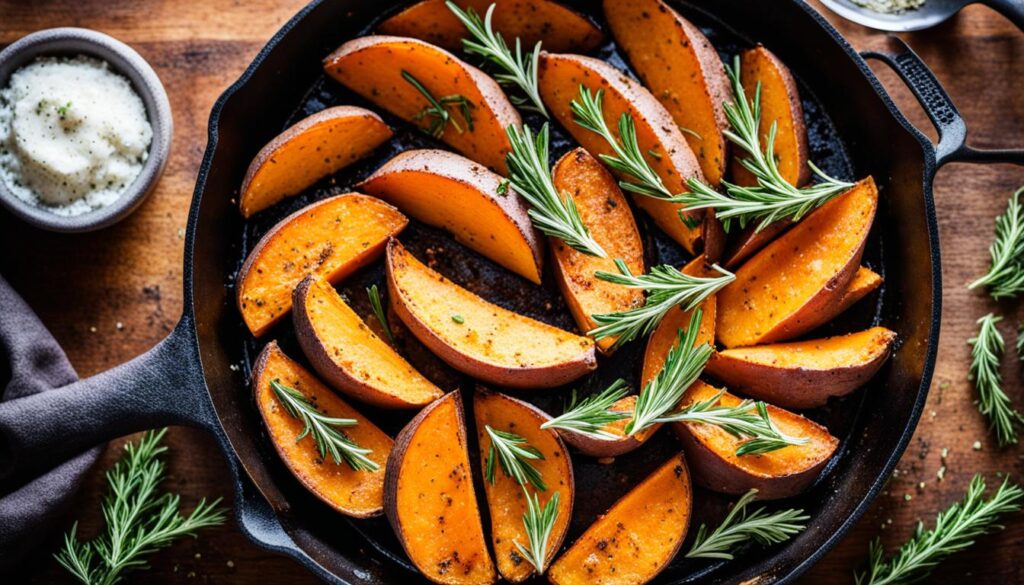
Some of these recipes take 20 minutes flat. Others — looking at you, sweet potato pie — require real commitment. Most fall somewhere in the middle. All of them need a well-seasoned skillet. So if yours is sitting in a cabinet with a rust spot, go fix that first.
The Versatility of Sweet Potatoes in Cast Iron Cooking
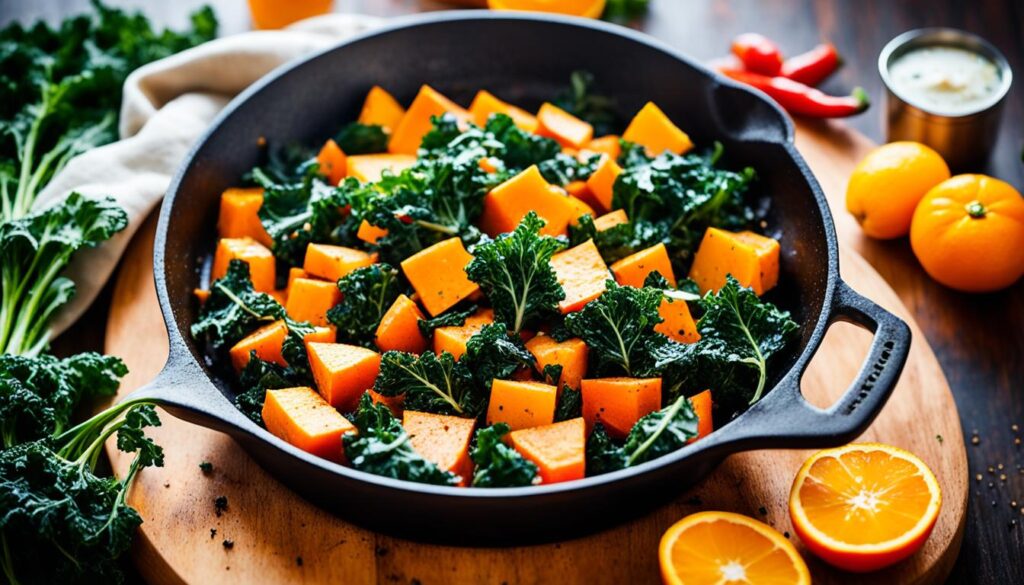
Sweet potatoes are genuinely one of the best ingredients to cook in cast iron, and honestly the reason is simple: sugar. The natural sugar in sweet potatoes reacts fast to high, sustained heat — which is exactly what cast iron delivers. You get caramelization that nonstick can’t touch and browning that sheet pans only partially achieve.
But here’s the thing. Not all sweet potatoes behave the same.
Beauregard and Jewel — the deep-orange varieties most grocery stores carry — are the ones worth using for the savory recipes and the roasted dishes. Firm flesh, high moisture, genuinely sweet. The paler, drier types? Fine for the cornbread. Fine for the pie filling. Not ideal for anything you’re searing or roasting.
A few things I’ve figured out after making these dishes more times than I can count:
- Fat is not interchangeable. Butter for the caramelized slices and the pie — always. Avocado oil for the fries because it handles real heat. Olive oil for everything in the middle. These aren’t just preferences; they affect the end result.
- Crowding the pan ruins everything. Crowded sweet potatoes steam instead of sear. They come out pale, soft, and kind of depressing. Leave space.
- Cut sizes have to match. If you’ve got one piece at 1/2 inch and another at 1 inch, the thin one will be done — actually overdone — while the thick one is still raw in the middle. Take the extra 2 minutes to cut evenly.
- Start hot, drop the heat. High heat builds the crust. Lower heat cooks the interior without burning. Sweet potatoes have enough sugar to blacken fast if you leave the heat too high for too long.
Essential Tools and Ingredients for Cast Iron Sweet Potato Dishes
You need less than you think. But the things you do need have to be right.
The Pan
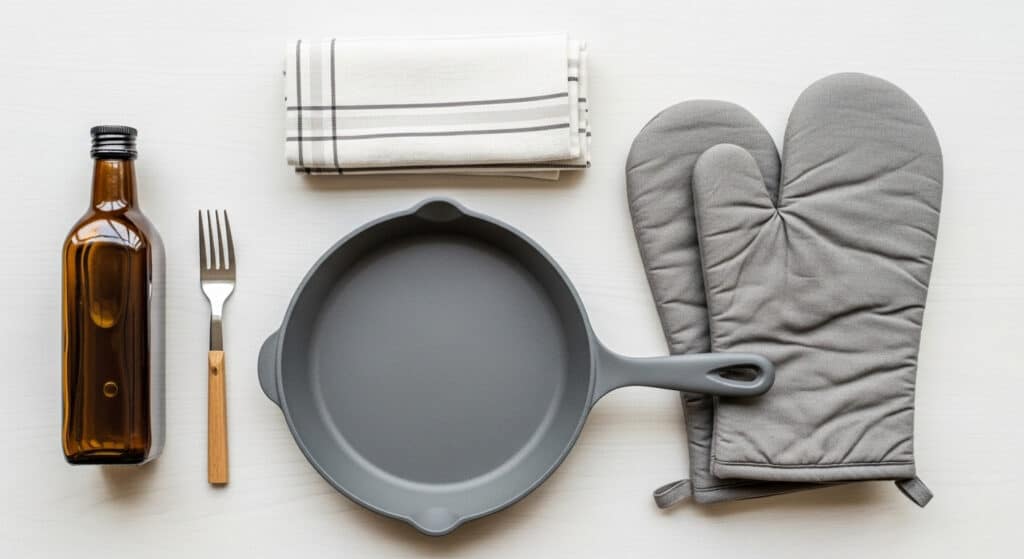
A 12-inch cast iron skillet covers everything on this list. Ten inches works too — you’ll just cook more in batches, especially for the fries and the nachos where surface area matters. If you only have a 10-inch, that’s not a dealbreaker. It just means more batches.
What to Have Ready
| Ingredient | What It Actually Does |
|---|---|
| Beauregard or Jewel sweet potatoes | Better flavor, firmer texture, caramelize without turning mushy |
| Avocado oil | Handles high heat without smoking — good for searing |
| Unsalted butter | Better browning and richer flavor, essential for the dessert recipes |
| Smoked paprika | Adds real depth without turning things spicy |
| Fresh garlic cloves | Better than powder in most of these — worth the extra 30 seconds |
| Kosher salt | More control, less chance of oversalting compared to table salt |
| Cornstarch | What actually makes fries and wedges crispy. Don’t skip it. |
One Prep Note
Sweet potatoes roll. Put a damp kitchen towel under your cutting board before you start. Also — a Y-peeler moves faster on that tapered shape than a standard peeler does. Minor thing. Annoying if you don’t know it.
Mastering the Art of Seasoning Your Cast Iron Skillet
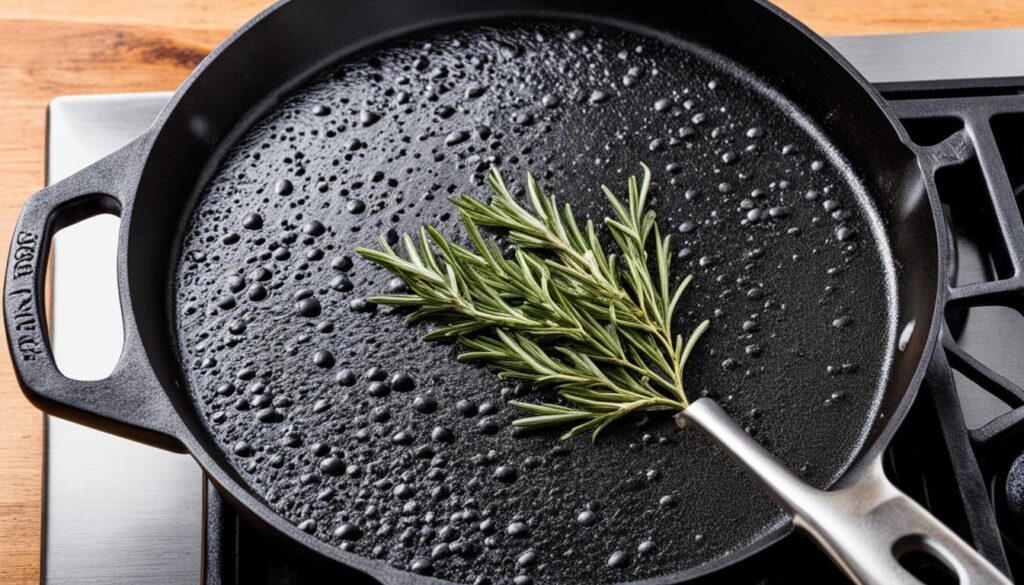
This matters more for sweet potatoes than for almost anything else you’ll cook in cast iron. The natural sugar content means sticking happens fast on a surface that isn’t properly seasoned. Get ahead of it.
Seasoning From Scratch
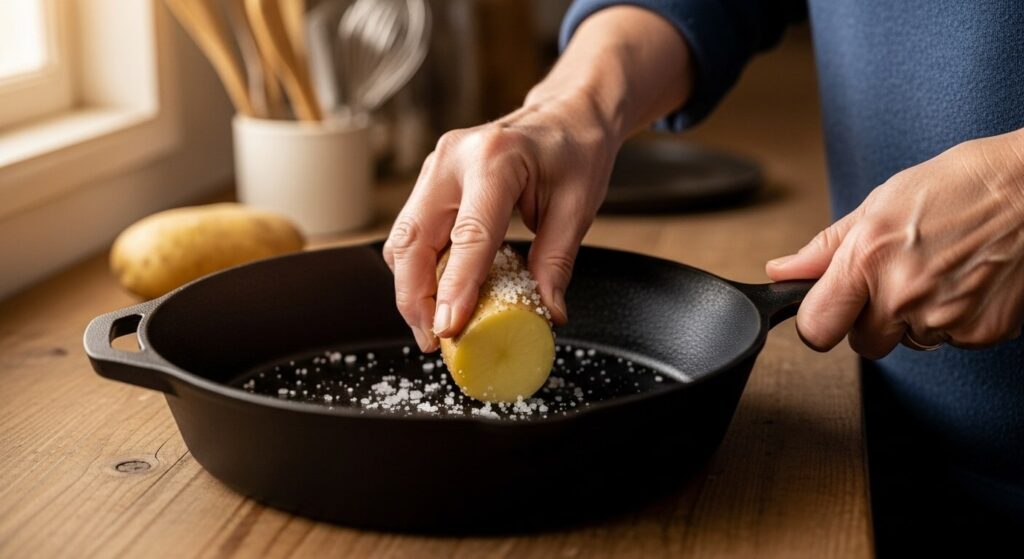
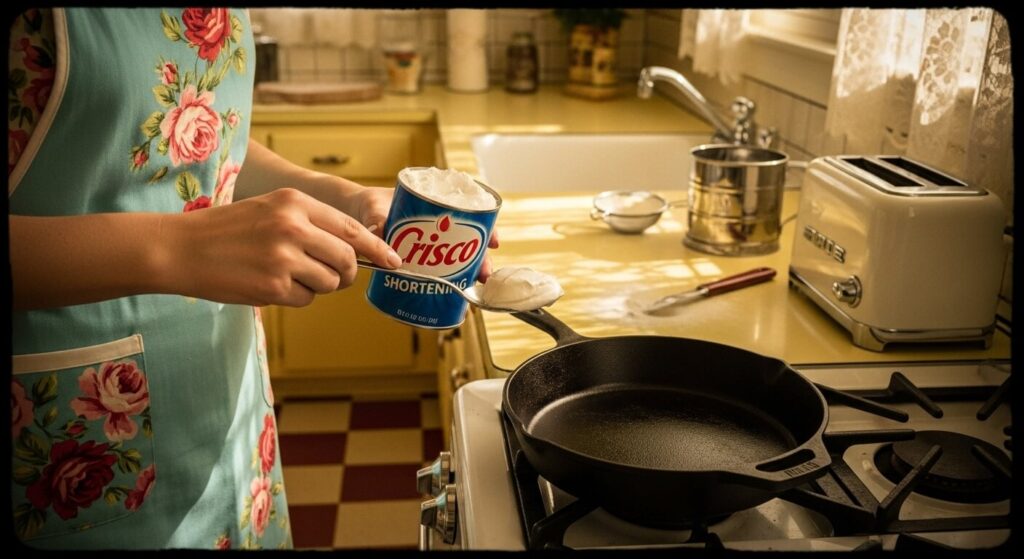
Wash the skillet with mild soap once — just to start completely clean. Dry it in a 200°F oven for 10 minutes. Then apply a very thin layer of flaxseed or vegetable oil over every surface, inside and out. Thin means thin. If you can see it shining or pooling, you’ve used too much — wipe off most of it. Bake upside down at 450°F for one hour. Cool it in the oven.
Repeat that two or three times total before cooking anything.
After Every Single Use
Rinse with hot water. Scrub with a stiff brush or a chain-mail scrubber. Dry it immediately on the stovetop over low heat — air drying leaves moisture in the metal. Rub in a tiny amount of oil while the pan is still warm.
That’s it. No soap after every use. No soaking. No putting it in the drying rack wet.
A properly maintained skillet is the difference between sweet potato hash that lifts cleanly from the pan and hash that welds itself to the surface and takes 20 minutes to scrub off. Same principle is why Chicago-style deep dish pizza works so well in cast iron — the seasoning does the heavy lifting.
Spiral Sweet Potato Bake: A Showstopping Side Dish
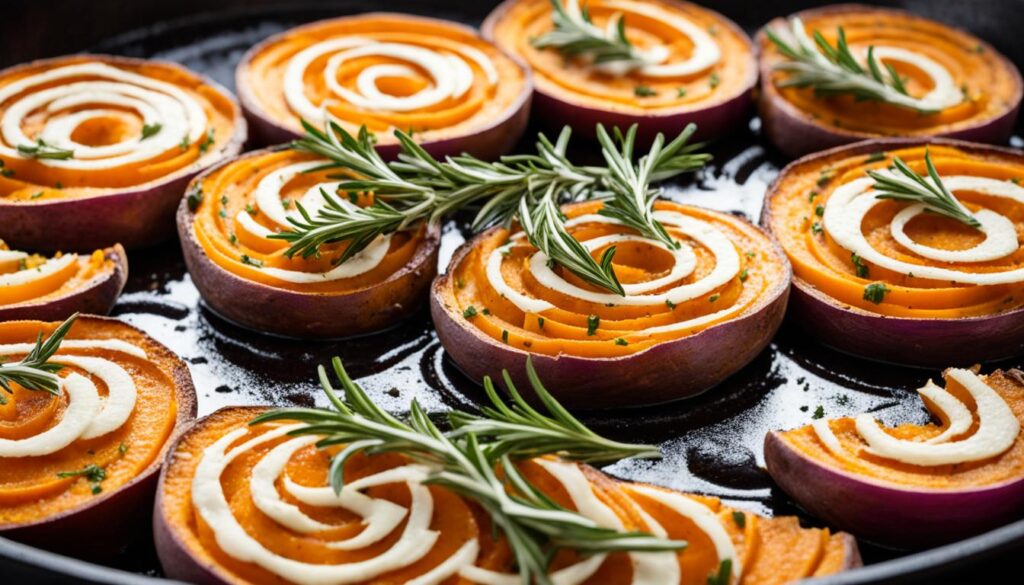
Out of everything on this list, this is the one I’d put in front of guests. It looks like it took real skill. It didn’t. The spiral arrangement creates the impression of effort, the cast iron browns the sides of each standing slice while the oven works from above, and the whole thing smells like garlic butter and herbs coming out of the oven. People comment on it before they eat it.
Ingredients (Serves 4)
- 3 large sweet potatoes, peeled and sliced into 1/8-inch rounds
- 3 tablespoons unsalted butter, melted
- 2 tablespoons olive oil
- 3 cloves garlic, minced
- 1 teaspoon fresh thyme leaves
- 1 teaspoon fresh rosemary, finely chopped
- 1/2 teaspoon smoked paprika
- 1 teaspoon kosher salt
- 1/2 teaspoon black pepper
- 1/4 cup grated Parmesan cheese
Instructions
Oven to 375°F. Combine the melted butter, olive oil, garlic, thyme, rosemary, smoked paprika, salt, and pepper in a large bowl. Stir well — you want the garlic distributed evenly, not sitting in one clump at the bottom.
Toss the sweet potato rounds in the butter mixture. Use your hands. A spoon won’t get into the stack properly, and dry spots on the slices will show up as pale, under-flavored patches once it bakes.
Now the arrangement — and yes, it’s slightly tedious, but it takes maybe 5 minutes and it’s worth it. Lightly oil a 12-inch cast iron skillet. Starting at the outer edge, stand the slices upright at a slight angle, overlapping each one by about half, and work your way inward in a spiral. Some will lean. Some will fall. Tuck them back. Press any remaining slices into the center wherever they fit. It doesn’t need to be perfect going in — it photographs beautifully coming out regardless.
Pour any leftover butter mixture over the top. Scatter the Parmesan over everything.
Cover loosely with foil and bake 35 minutes. The slices should feel like they’re starting to soften when you press the foil gently. Pull the foil off — bake another 20 to 25 minutes until the edges are deep golden and the Parmesan looks toasted, not pale. Rest 5 minutes before serving.
Nutritional Information (Per Serving)
| Nutrient | Amount per Serving |
|---|---|
| Calories | 285 |
| Carbohydrates | 38g |
| Protein | 4g |
| Fat | 13g |
| Fiber | 5g |
| Sodium | 490mg |
Savory Sweet Potato Hash: A Breakfast Favorite
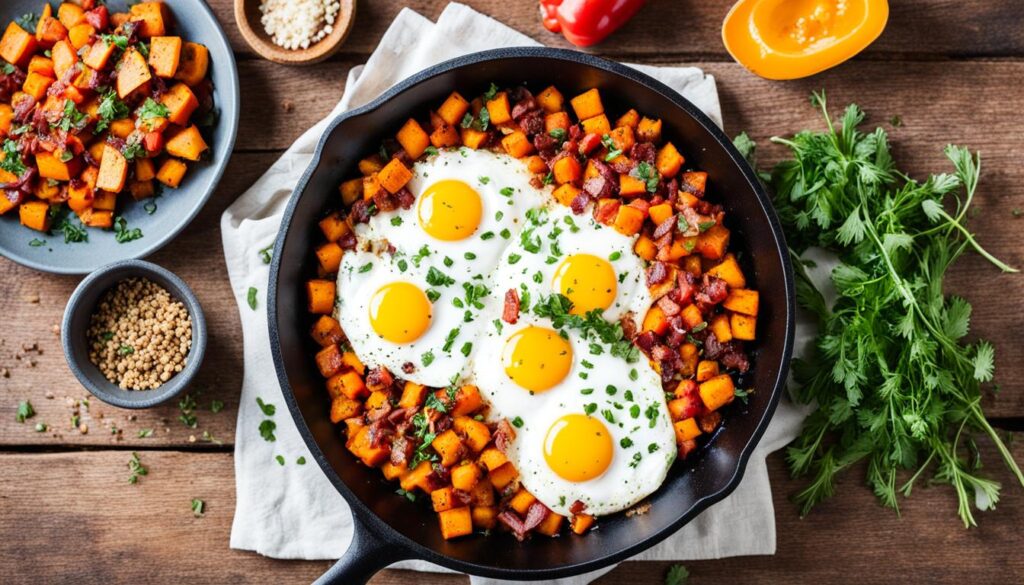
This one gets made more often than anything else in my kitchen. Saturday morning, leftovers on Sunday, occasionally for dinner when I can’t think of what else to cook. The base is simple enough that it takes on whatever direction you want — hot sauce and a fried egg, or served alongside a chicken and cabbage stir-fry if you’re doing a bigger meal.
The one thing that ruins sweet potato hash every time? Stirring it too early.
Ingredients (Serves 4)
- 2 large sweet potatoes, peeled and cut into 1/2-inch cubes
- 1 medium yellow onion, diced
- 1 red bell pepper, diced
- 1 green bell pepper, diced
- 3 cloves garlic, minced
- 2 tablespoons olive oil
- 1 teaspoon smoked paprika
- 1/2 teaspoon cumin
- 1/2 teaspoon onion powder
- 1/2 teaspoon kosher salt, plus more at the end
- 1/4 teaspoon black pepper
- 1/4 teaspoon cayenne pepper (leave it out if heat’s a problem)
- 4 eggs, for topping
- 2 tablespoons fresh cilantro or parsley, chopped
Instructions
Heat the cast iron over medium-high for 2 full minutes before the oil goes in. It should feel genuinely hot when you hold your palm a few inches above the surface. Add the olive oil. Let it shimmer — not smoke, shimmer.
Add the sweet potato cubes. Spread them out. Then put the spoon down.
Don’t stir them. Not at 2 minutes because you’re worried. Not at 3 minutes because they smell good. They need 4 to 5 minutes of uninterrupted contact with that hot surface to build a crust. If you move them before that crust forms, they’ll tear and you’ll have pale, steamed cubes instead of golden ones. When the bottom side is genuinely brown and the cubes release from the pan without pulling — then stir once. One stir. Leave them again for 3 to 4 more minutes.
Now add the onion and both bell peppers. Stir more freely from here — every minute or two is fine. About 6 minutes. The onion should be translucent and soft, starting to smell sweet rather than sharp.
Add the garlic, smoked paprika, cumin, onion powder, salt, pepper, and cayenne. Stir everything to coat it. Cook 2 more minutes — the spices toast against the fat and that’s where most of the flavor comes from.
Taste it. Fix the salt if it needs it. Make 4 small wells with a spoon, crack an egg into each one, cover the skillet with a lid or foil, and cook 4 to 5 minutes for runny yolks — 6 to 7 if you want them set. Top with herbs and serve from the pan.
Nutritional Information (Per Serving)
| Nutrient | Amount per Serving |
|---|---|
| Calories | 268 |
| Carbohydrates | 32g |
| Protein | 10g |
| Fat | 11g |
| Fiber | 5g |
| Sodium | 370mg |
Crispy Sweet Potato Wedges: The Ultimate Comfort Food
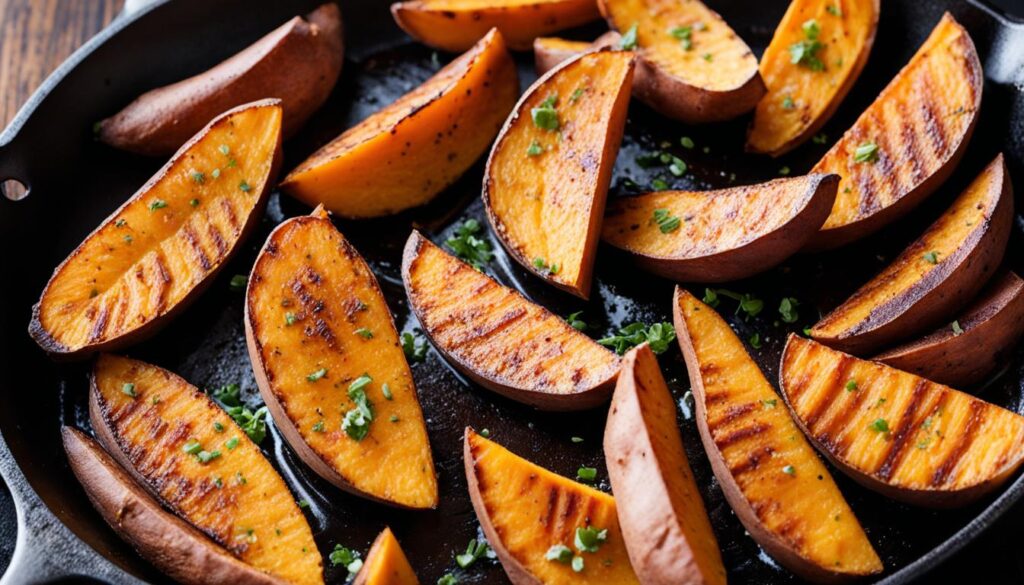
Getting sweet potato wedges actually crispy — not just firm, not just golden-colored, but genuinely crunchy — is harder than it sounds. The sugar in sweet potatoes wants to caramelize and then burn before the surface gets a real crust. Cast iron’s consistent heat is what makes it manageable. Pair these with this shrimp and broccoli stir-fry if you want something that feels like a full meal.
The cornstarch in this recipe is not optional. It’s the whole reason the crust forms. Don’t decide to skip it.
Ingredients (Serves 4)
- 4 medium sweet potatoes, scrubbed, cut into 1-inch wedges, skin on
- 3 tablespoons avocado oil
- 1 teaspoon garlic powder
- 1 teaspoon smoked paprika
- 1/2 teaspoon onion powder
- 1/2 teaspoon cumin
- 1/2 teaspoon kosher salt
- 1/4 teaspoon black pepper
- 1/4 teaspoon cayenne pepper
- 2 tablespoons cornstarch
Instructions
Cut each sweet potato in half lengthwise, then cut each half into wedges roughly 1 inch wide at the thickest point. Even cuts are critical here. Thin wedges will burn while thick ones are still raw in the center — they have to be the same.
Toss the wedges with 2 tablespoons of the avocado oil in a large bowl. Then add the cornstarch, garlic powder, smoked paprika, onion powder, cumin, salt, pepper, and cayenne. Toss until coated on every surface.
Heat the cast iron over medium — not medium-high — and add the last tablespoon of oil. When it shimmers, lay wedges flat-side down. Single layer. Two batches if necessary; crowding means steam, and steam is the enemy of crust.

Five to 6 minutes per flat side. Here’s how you know they’re ready to flip: try to lift one gently. If it resists — if it sticks even a little — it’s not ready. Give it another minute. A properly seared wedge lifts cleanly. When both flat sides are deep golden, slide the whole skillet into a 400°F oven for 10 to 12 minutes. Pierce one in the center with a fork — it should go in with no pushback at all. The outside should still look slightly rough and cragged.
Season with extra salt the moment they come out.
Nutritional Information (Per Serving)
| Nutrient | Amount per Serving |
|---|---|
| Calories | 255 |
| Carbohydrates | 42g |
| Protein | 3g |
| Fat | 9g |
| Fiber | 6g |
| Sodium | 310mg |
Sweet Potato and Black Bean Skillet: A Vegetarian Delight
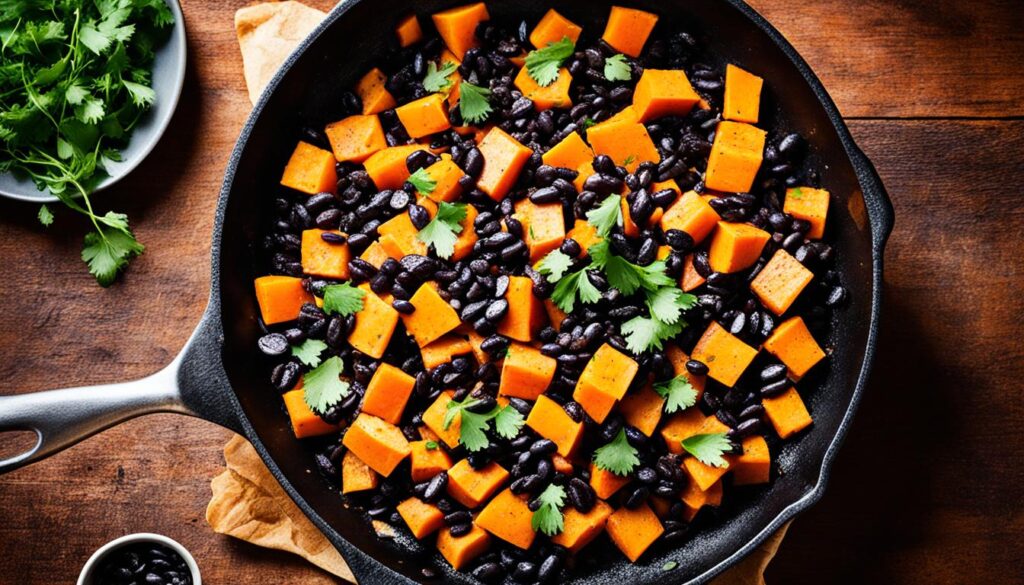
This is a full dinner, not a side dish. The black beans add enough protein to make it genuinely filling, the sweet potato gives it body, and the spice blend makes it taste like it simmered all afternoon. It didn’t. It took 30 minutes.
I’ve served this to people who eat meat and didn’t mention it was vegetarian. Nobody complained.
Ingredients (Serves 4)
- 2 large sweet potatoes, peeled and cut into 3/4-inch cubes
- 2 cans (15 oz each) black beans, drained and rinsed
- 1 can (14-1/2 oz) diced tomatoes, drained
- 1 medium yellow onion, diced
- 4 cloves garlic, minced
- 1 jalapeño, seeded and minced
- 2 tablespoons olive oil
- 1-1/2 teaspoons cumin
- 1 teaspoon smoked paprika
- 1/2 teaspoon chili powder
- 1/2 teaspoon coriander
- 1/2 teaspoon kosher salt
- 1/4 cup vegetable broth
- Juice of 1 lime
- 1/3 cup fresh cilantro, chopped
- Sour cream or Greek yogurt, for serving
Instructions
Heat the olive oil in the cast iron over medium-high. Add the sweet potato cubes and — same rule as the hash — don’t touch them for 4 to 5 minutes. You want some color on the outside before everything else goes in. They’ll be raw in the middle still. That’s fine; they’ll finish later.
Push the sweet potato to the outer edges of the pan. Drop the onion and jalapeño into the center, where it’s still hottest. Cook the onion and jalapeño for 3 to 4 minutes, stirring those while the potatoes sit undisturbed at the edges. The onion should start to soften and look translucent.
Bring everything together. Add the garlic, stir for one minute — the smell will sharpen fast, which means keep moving — then add the cumin, smoked paprika, chili powder, and coriander. Stir to coat everything.
Pour in the vegetable broth and the drained tomatoes. Scrape the bottom of the pan. Whatever is stuck down there dissolves into the broth and makes the dish taste better, so don’t skip that step.
Add the black beans and fold them in gently. You’re not trying to mash them — fold, not stir hard. Reduce to medium, cover the pan, and cook for 12 to 15 minutes. Check at 12: a fork should go into the sweet potato without any resistance.
Squeeze the lime over everything. Taste for salt. Stir in most of the cilantro, scatter the rest on top, and serve with a spoonful of sour cream or Greek yogurt.
Nutritional Information (Per Serving)
| Nutrient | Amount per Serving |
|---|---|
| Calories | 348 |
| Carbohydrates | 61g |
| Protein | 14g |
| Fat | 8g |
| Fiber | 16g |
| Sodium | 520mg |
Caramelized Sweet Potato Slices: A Simple Yet Elegant Side
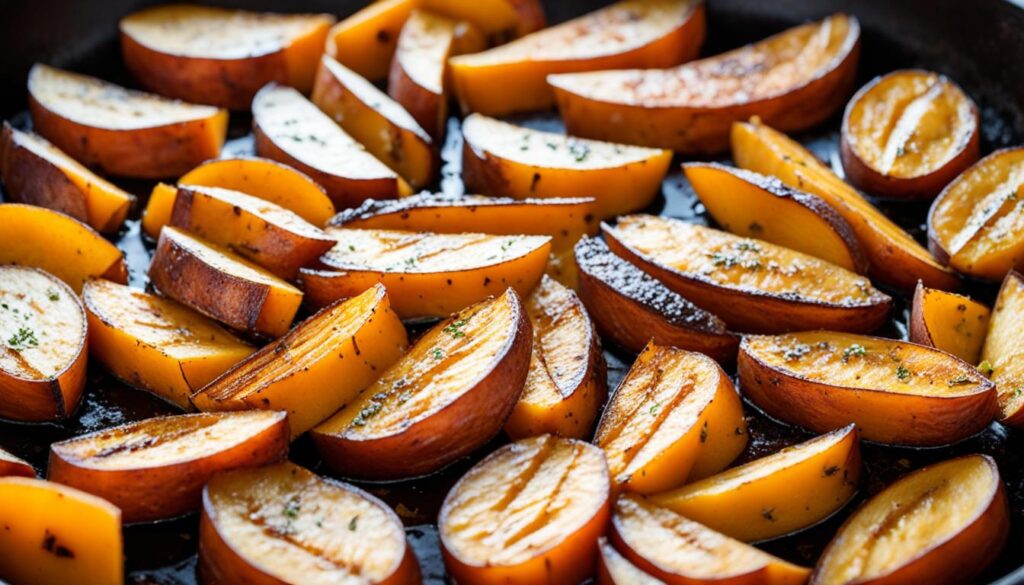
Three ingredients. Technically five if you count the finishing salt and the thyme, but the point stands: this is as simple as sweet potato cooking gets. The result looks and tastes like it came from somewhere more impressive than your stovetop. That’s what cast iron does with low, patient heat and a bit of butter and sugar — it pulls out something genuinely elegant.
Patience is the whole skill here. Don’t rush it with high heat.
Ingredients (Serves 4)
- 3 large sweet potatoes, peeled and cut into 1/2-inch rounds
- 3 tablespoons unsalted butter
- 2 tablespoons brown sugar
- 1/2 teaspoon cinnamon
- 1/4 teaspoon nutmeg
- 1/2 teaspoon kosher salt
- 1 tablespoon fresh thyme leaves
- Flaky sea salt, to finish
Instructions
Slice the sweet potatoes to an even 1/2-inch thickness. Thinner than that and they’ll fall apart when you flip them. Thicker and the center won’t be fully cooked before the outside starts to burn.
Melt the butter in the cast iron over medium heat. Add the brown sugar and stir until it dissolves into the butter — it’ll look like a thin, amber glaze bubbling gently in the pan. Give it 30 seconds of bubbling before the potatoes go in.
Lay the sweet potato rounds into the glaze. They’ll sizzle. From here: medium-low heat. That’s the setting. Not medium. Not medium-high. Medium-low for the whole cook. High heat will caramelize the sugar too fast and it’ll turn bitter before the sweet potato softens. The glaze should be bubbling very gently around the edges of each slice — not aggressively, not scorching.
Five to 6 minutes on the first side. The underside should be deep amber — the color of dark honey — and should lift cleanly when you slide a thin spatula under it. Sprinkle cinnamon, nutmeg, and kosher salt over the tops, then flip each round carefully. One at a time is fine. Cook another 4 to 5 minutes on the second side.
Press the center of a round with a fingertip. Should give immediately with no firmness underneath. If it still has resistance, 2 more minutes. When done, scatter thyme leaves and flaky salt across the top and serve.
Nutritional Information (Per Serving)
| Nutrient | Amount per Serving |
|---|---|
| Calories | 218 |
| Carbohydrates | 38g |
| Protein | 2g |
| Fat | 7g |
| Fiber | 4g |
| Sodium | 295mg |
Skillet Sweet Potato Nachos: A Crowd-Pleasing Appetizer
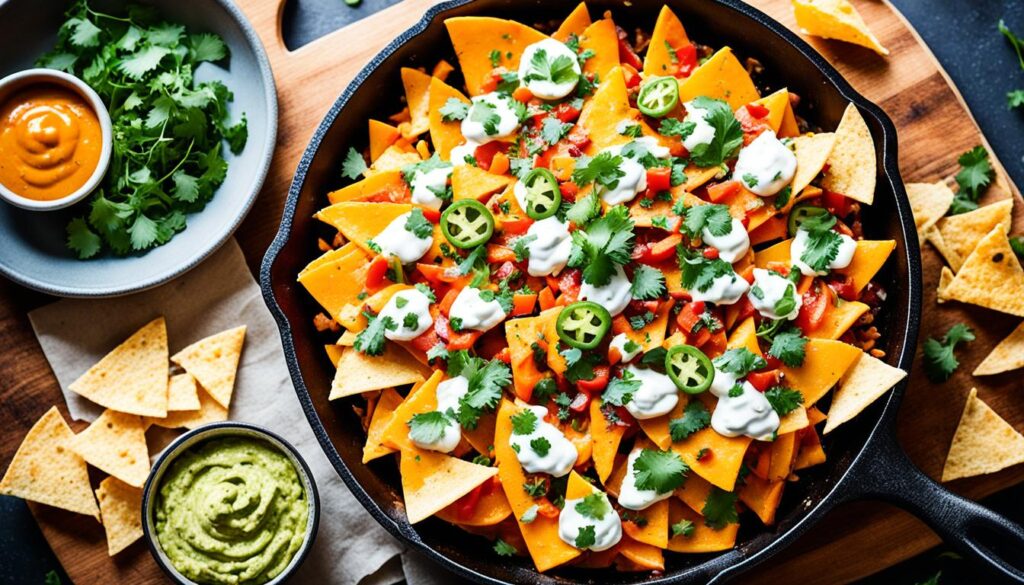
Every time I make these, someone says some version of “I wasn’t sure about this but it’s actually really good.” And they’re right on both counts. Sweet potato as the base instead of chips sounds like a stretch. It isn’t. The cast iron crisps the bottom layer properly, the cheese melts through the middle, and the fresh toppings at the end give it the contrast and brightness that makes nachos worth eating in the first place.
Serve directly from the skillet. This isn’t a dish you plate.
Ingredients (Serves 4)
- 3 medium sweet potatoes, peeled and sliced into 1/4-inch rounds
- 2 tablespoons avocado oil
- 1 teaspoon smoked paprika
- 1/2 teaspoon garlic powder
- 1/2 teaspoon kosher salt
- 1 can (15 oz) black beans, drained and rinsed
- 1-1/2 cups shredded Mexican cheese blend
- 1/2 cup corn kernels, thawed if frozen
- 1/3 cup red onion, finely diced
- 1 jalapeño, thinly sliced
- 1/2 cup sour cream
- 1/3 cup fresh salsa
- 1 avocado, diced
- 1/4 cup fresh cilantro, chopped
- Juice of 1/2 lime
Instructions
Oven to 400°F. Toss the sweet potato rounds with avocado oil, smoked paprika, garlic powder, and salt. Get every slice coated.
Arrange them in the cast iron skillet — overlapping is unavoidable, especially in a 12-inch pan. That’s fine. Roast for 15 minutes, then pull the skillet out and flip each round. They should be lightly golden and just starting to firm up at the edges. Back in for another 10 to 12 minutes. They should look cooked but not crispy at this point — the crisping happens in the final round.
Scatter the black beans over the sweet potato layer. Add the corn and red onion. Distribute the cheese across the whole surface, making sure it gets to the edges — edge cheese is the best cheese.
Oven again for 8 to 10 minutes. The cheese should be fully melted and bubbling. The bottom sweet potato layer — you can check by lifting an edge slightly with a spatula — should be properly crispy.
Pull it out. Wait 2 minutes. Then add the jalapeño, avocado, cilantro, a squeeze of lime, and dollops of sour cream and salsa across the top.
Serve immediately. The base softens as it sits, and nobody wants soft nacho bases.
Nutritional Information (Per Serving)
| Nutrient | Amount per Serving |
|---|---|
| Calories | 462 |
| Carbohydrates | 55g |
| Protein | 16g |
| Fat | 21g |
| Fiber | 12g |
| Sodium | 640mg |
Sweet Potato and Sausage Skillet: A Hearty One-Pan Meal
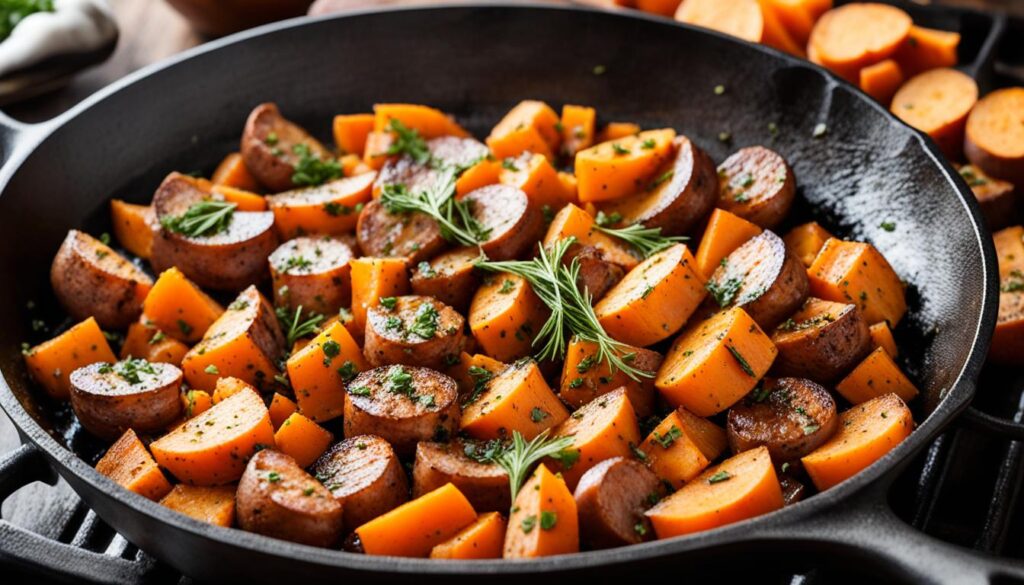
This is what I cook when I want dinner to happen and I don’t want to think about it. One pan. Thirty-five minutes. Nothing technically difficult. The real reason it tastes good has nothing to do with technique and everything to do with what happens when sausage renders its fat into a cast iron pan and sweet potato cooks in that fat. That exchange of flavor is the whole recipe.
Andouille is the best call here. Italian sausage works too. Don’t use something mild and sweet — it’ll disappear into the sweet potato.
Ingredients (Serves 4)
- 2 large sweet potatoes, peeled and cut into 3/4-inch cubes
- 1 lb smoked andouille sausage, sliced into 1/2-inch rounds
- 1 medium yellow onion, diced
- 1 red bell pepper, diced
- 3 cloves garlic, minced
- 2 cups kale or baby spinach, roughly chopped
- 1 tablespoon olive oil
- 1 teaspoon smoked paprika
- 1/2 teaspoon garlic powder
- 1/2 teaspoon onion powder
- 1/2 teaspoon dried thyme
- 1/2 teaspoon kosher salt
- 1/4 teaspoon black pepper
- 1/4 cup chicken broth
Instructions
Heat the cast iron over medium-high with the olive oil. When the oil shimmers, add the sausage rounds in a single layer. What you’re after here is a dark, proper sear on the cut faces — not gray and cooked through, but deep brown and caramelized. Two to 3 minutes per side. Remove to a plate and leave whatever fat is in the pan.
Add the sweet potato cubes to the sausage fat. Add a small drizzle of oil only if the pan looks dry. Spread them out and leave them alone for 4 to 5 minutes over medium-high.
Add the onion and bell pepper. Stir everything together — more freely now — and cook for about 5 minutes. The onion should lose its sharp raw smell and start to soften. The bell pepper should be giving slightly when you press it.
Add the garlic, smoked paprika, garlic powder, onion powder, thyme, salt, and pepper. One minute of stirring, just enough to bloom the spices.
Pour in the broth. Scrape the bottom of the pan — there’s going to be a layer of fond from the sausage sear and the sweet potato, and all of it should come up into the liquid. Return the sausage to the skillet. Stir gently, reduce to medium, cover, and cook for 10 to 12 minutes until the sweet potato is fork-tender.
Uncover, add the kale or spinach, and fold it through. Residual heat wilts it in about 2 minutes. Taste for salt. Serve from the pan.
Nutritional Information (Per Serving)
| Nutrient | Amount per Serving |
|---|---|
| Calories | 482 |
| Carbohydrates | 36g |
| Protein | 22g |
| Fat | 27g |
| Fiber | 5g |
| Sodium | 890mg |
Skillet Sweet Potato Pie: A Twist on a Classic Dessert
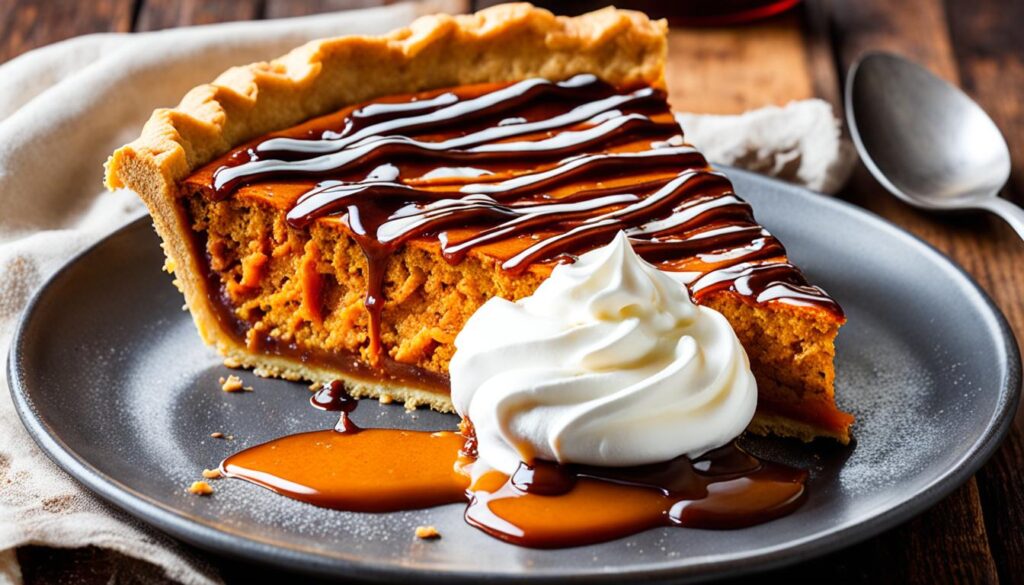
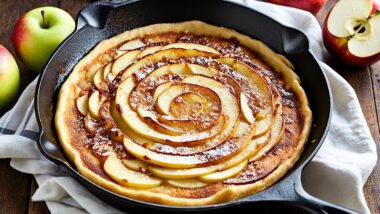
Cast iron sweet potato pie has a better crust than any version I’ve made in a ceramic pie dish. Not marginally better. Noticeably better — the bottom is properly crisp, not just firm, because the cast iron holds heat from below and sets the crust before the filling has time to make it soggy. The edges of the filling also pick up a faint caramelized flavor from contact with the pan walls that a standard dish just doesn’t produce.
This is a Thanksgiving dish. It’s also a November-through-March any-night dish. It doesn’t need a special occasion.
Ingredients (Serves 4-6)
For the crust:
- 1-1/4 cups all-purpose flour
- 1/2 teaspoon kosher salt
- 1 tablespoon granulated sugar
- 6 tablespoons cold unsalted butter, cut into small cubes
- 3-4 tablespoons ice water
For the filling:
- 2 cups mashed sweet potato, from about 2 large sweet potatoes, roasted and scooped
- 1/3 cup packed brown sugar
- 1/4 cup granulated sugar
- 2 large eggs
- 1/2 cup heavy cream
- 2 tablespoons unsalted butter, melted
- 1 teaspoon vanilla extract
- 1 teaspoon cinnamon
- 1/2 teaspoon ground ginger
- 1/4 teaspoon nutmeg
- 1/4 teaspoon allspice
- 1/4 teaspoon kosher salt
Instructions
Start with the crust. Combine flour, salt, and sugar in a bowl. Add the cold butter and work it in with your fingertips — press and pinch until you have something that looks like coarse crumbs with some pea-sized chunks still visible. Don’t overwork it. Those chunks are what creates the flaky layers. Add ice water one tablespoon at a time, mixing with a fork after each, until the dough just barely holds together when pressed. It shouldn’t feel sticky. Flatten into a disk, wrap, and refrigerate for at least 30 minutes. Cold dough is easier to roll and bakes better.
For the filling, halve the sweet potatoes and place them cut-side down on a foil-lined baking sheet. Roast at 400°F for 45 minutes. The flesh should be very soft — almost custard-like near the edges — and the cut surfaces should look caramelized and slightly tacky. Scoop out 2 cups and mash until smooth, or process briefly for a completely silky texture.
Whisk in both sugars, the eggs, heavy cream, melted butter, vanilla, cinnamon, ginger, nutmeg, allspice, and salt. Keep whisking until the mixture is completely uniform with no egg streaks visible.
Assembly: preheat the oven to 350°F. Butter a 10-inch cast iron skillet lightly. Roll the dough on a floured surface to about 12 inches across. Drape it over the skillet, press it into the bottom and sides, fold the overhang under at the rim, and crimp. Pour in the filling and smooth the top.
Bake 45 to 50 minutes. The edges will be fully set and slightly puffed. The center — just the very middle — should have a gentle wobble, not a liquid slosh. It firms fully as it cools. Let it rest at least 1 hour before cutting. Slicing it hot means cutting through custard, not pie.
Nutritional Information (Per Serving)
| Nutrient | Amount per Serving |
|---|---|
| Calories | 395 |
| Carbohydrates | 52g |
| Protein | 6g |
| Fat | 18g |
| Fiber | 3g |
| Sodium | 310mg |
Gluten-Free Sweet Potato Skillet Cornbread
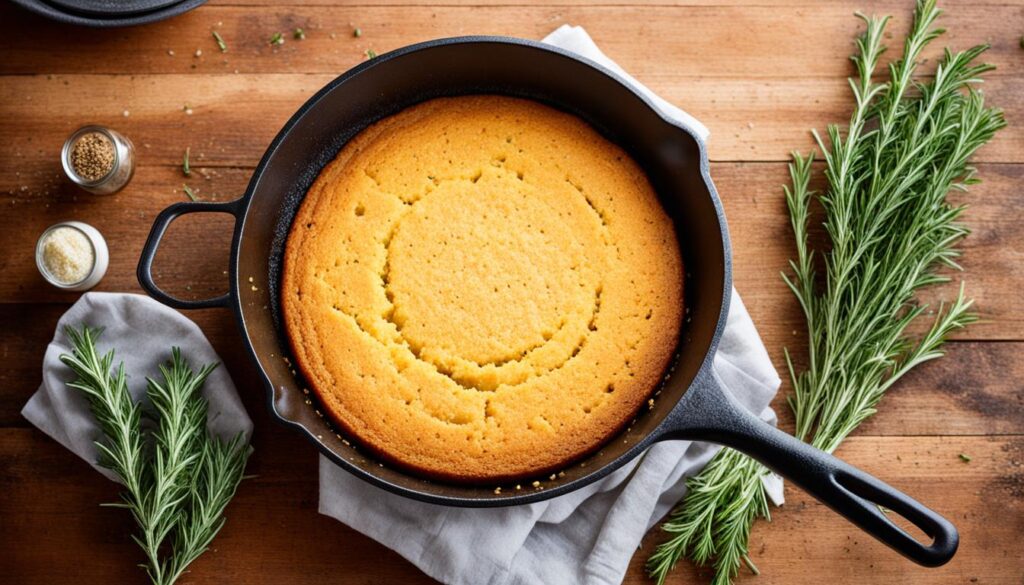
Cornbread baked in a cold pan and cornbread baked in a preheated cast iron skillet are two different products. The preheated skillet creates a crackerlike bottom crust that forms the moment the batter hits the hot surface — you can hear it sizzle. The interior stays moist and tender. Adding sweet potato to the batter makes it even more moist, adds a gentle sweetness, and helps it stay soft for a day or two at room temperature. It’s the kind of cornbread that doesn’t need butter, though I still add butter.
Ingredients (Serves 4-6)
- 1 cup medium-grind cornmeal
- 1/2 cup sweet rice flour or a GF all-purpose flour blend
- 1 cup mashed sweet potato, from 1 large sweet potato, roasted
- 2 large eggs
- 1 cup buttermilk
- 1/4 cup honey
- 3 tablespoons unsalted butter, melted, plus more for the pan
- 1-1/2 teaspoons baking powder
- 1/2 teaspoon baking soda
- 1/2 teaspoon kosher salt
- 1/4 teaspoon cinnamon
Instructions
Cast iron skillet goes into the oven cold. Preheat everything together to 425°F. The skillet needs to be fully up to temperature — at least 15 minutes at full heat — before the batter goes in. This is the step most people skip and it’s the reason their cornbread comes out without the crust.
In one bowl, whisk together the cornmeal, sweet rice flour, baking powder, baking soda, salt, and cinnamon. In a second bowl, whisk the mashed sweet potato, eggs, buttermilk, honey, and melted butter until smooth and uniform. No streaks.
Pour the wet into the dry. Stir until the dry flour disappears — then stop. Lumps are expected and fine. Overmixing gluten-free cornbread makes it gummy. Stop early rather than late.
Pull the hot skillet from the oven — use proper oven mitts, the handle is at 425°F and will cause a real burn. Add a generous knob of butter and swirl it immediately. It’ll foam and melt on contact. Pour the batter in. It’ll sizzle and the edges will start to set right away.
Back into the oven for 20 to 22 minutes. Top should be golden. Edges should pull slightly away from the sides. Toothpick in the center should come out clean. Cool 10 minutes in the pan before slicing. Tap the bottom of the pan — if it sounds firm and hollow, the crust is right.
Nutritional Information (Per Serving)
| Nutrient | Amount per Serving |
|---|---|
| Calories | 298 |
| Carbohydrates | 50g |
| Protein | 7g |
| Fat | 9g |
| Fiber | 3g |
| Sodium | 380mg |
Spicy Sweet Potato Fries: A Healthier Alternative
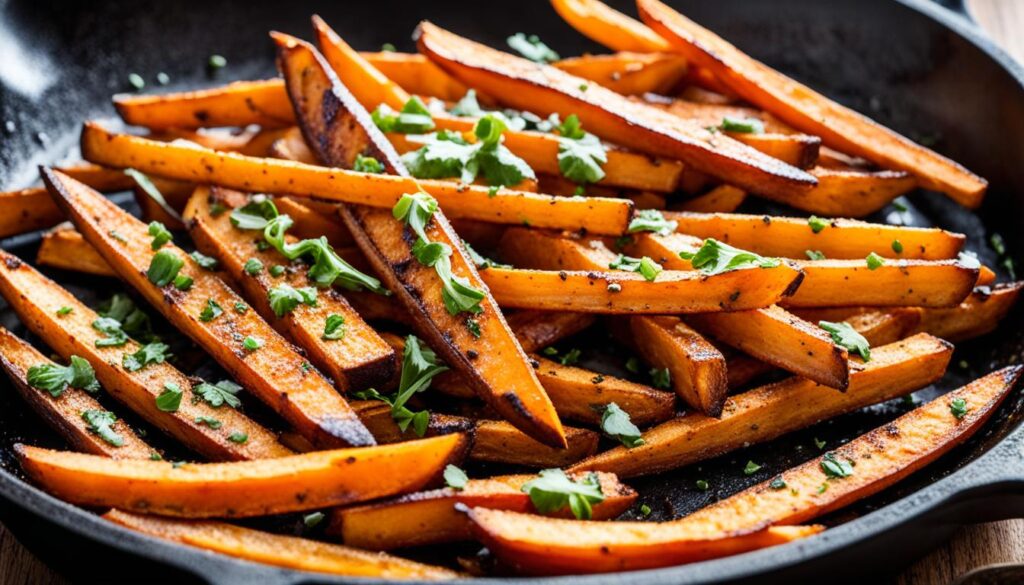
These are pan-fried in cast iron, not deep-fried in a pot of oil. The difference: you get more control, less oil, and — when it works — a genuinely crispy exterior that holds up for the duration of the meal. The spice level is real here. Not “spicy for a sweet potato fry” real — actually spicy. Back off the cayenne if that’s going to be an issue.
Also: the 30-minute soak is not optional. It’s the reason these work.
Ingredients (Serves 4)
- 4 medium sweet potatoes, cut into 1/4-inch strips, skin on or peeled
- 3 tablespoons avocado oil, divided
- 1-1/2 teaspoons smoked paprika
- 1 teaspoon garlic powder
- 1/2 teaspoon onion powder
- 1/2 teaspoon cumin
- 1/2 teaspoon kosher salt
- 1/3 teaspoon cayenne pepper
- 1/4 teaspoon black pepper
- 2 tablespoons cornstarch
- Flaky sea salt, to finish
For dipping:
- 1/2 cup mayonnaise
- 1 tablespoon sriracha
- 1 teaspoon fresh lime juice
Instructions
Cut the fries as uniformly as possible — 1/4 inch thick, roughly 3 inches long. A fry that’s 1/2 inch thick sitting next to one that’s 1/8 inch will not be done at the same time. It’s that simple.
Soak the cut fries in a bowl of cold water for 30 minutes. Drain. Then dry them thoroughly — paper towels, a kitchen towel, whatever you have. Press out the moisture. Any water left on the surface of the fry turns to steam in the hot pan, and steam creates soft fries, not crispy ones.
Toss the dried fries in a large bowl with 2 tablespoons of avocado oil. Add the cornstarch, smoked paprika, garlic powder, onion powder, cumin, salt, cayenne, and black pepper. Toss until every fry is coated.
Heat the cast iron over medium-high for 3 full minutes. Add the last tablespoon of avocado oil. Lay the fries in a single layer — they should sizzle loudly on contact. Work in batches; crowding means steam. Cook 4 to 5 minutes without moving them. Try to lift one: if it pulls away from the pan cleanly, it’s ready to flip. If it resists at all, another minute.
Flip. Cook 4 to 5 more minutes on the second side.
Transfer to a wire rack immediately — not paper towels, which trap steam. Season right away with flaky salt.
Mix mayonnaise, sriracha, and lime juice together in a small bowl. Serve the fries while hot.
Nutritional Information (Per Serving)
| Nutrient | Amount per Serving |
|---|---|
| Calories | 310 |
| Carbohydrates | 44g |
| Protein | 3g |
| Fat | 14g |
| Fiber | 6g |
| Sodium | 420mg |
Sweet Potato Frittata: A Versatile Brunch Option
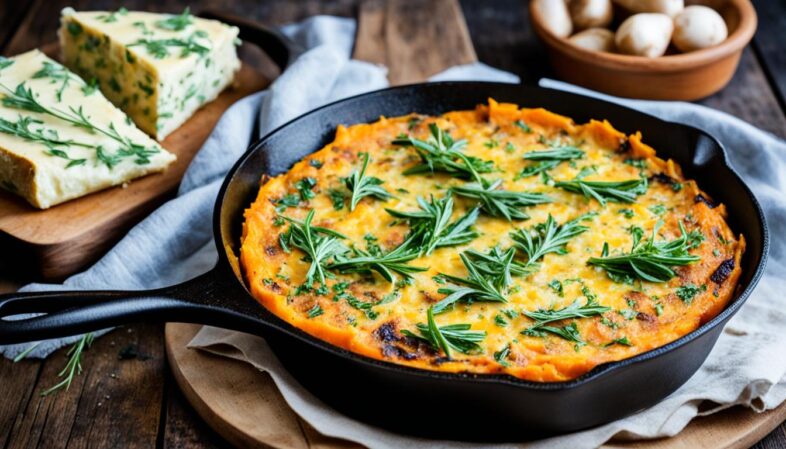
Sweet potato frittata starts on the stovetop and finishes in the oven. Cast iron is genuinely the only pan designed for that kind of transition — it retains stovetop heat and then transfers to oven heat without losing momentum. The sweet potato layer gives the frittata real structure. Plain egg frittatas have a tendency to feel thin and flat; this one doesn’t.
The caramelized onion step takes longer than most recipes admit. Don’t shortcut it.
Ingredients (Serves 4)
- 2 medium sweet potatoes, peeled and cut into 1/4-inch rounds
- 8 large eggs
- 1/4 cup whole milk
- 1 medium yellow onion, thinly sliced
- 3 cloves garlic, minced
- 1 cup fresh spinach, roughly chopped
- 1/2 cup crumbled feta cheese
- 2 tablespoons olive oil, divided
- 1/2 teaspoon smoked paprika
- 1/2 teaspoon dried oregano
- 1/2 teaspoon kosher salt
- 1/4 teaspoon black pepper
- 1/4 teaspoon red pepper flakes
- 2 tablespoons fresh chives or parsley, chopped
Instructions
Oven to 375°F.
Heat 1 tablespoon of olive oil in a 10-inch cast iron skillet over medium. Add the sweet potato rounds in a single layer — slight overlapping is fine. Cook 4 minutes per side. They should be golden on both surfaces and starting to soften when pressed, but not cooked through yet. Remove to a plate.
Add the second tablespoon of oil and the sliced onion. Medium heat. Eight to 10 minutes, stirring every couple of minutes. The onion needs to actually caramelize — turn golden, go sweet and jammy, smell rich rather than sharp. Not just translucent. If your onion looks pale and limp at 5 minutes, it hasn’t gotten there. Keep going. This step is the difference between a frittata that tastes like eggs and one that tastes like a real dish.
Add the garlic and red pepper flakes — one minute. Add the spinach and fold it through until wilted — about 1 minute from the pan heat. Season with smoked paprika, oregano, salt, and pepper.
Arrange the sweet potato rounds back over the onion layer. Overlapping is fine.
Whisk the eggs and milk together with a pinch of salt. Pour slowly and evenly over the sweet potato and onion. Let it settle and seep into the gaps for a moment. Scatter the feta across the top.
Stovetop on medium-low for 3 to 4 minutes. The egg should be opaque and just barely set around the edges — maybe an inch in from the rim — while the center is still very liquid. That’s the moment to move it.
Into the oven for 12 to 15 minutes. Done when the center has a very slight wobble — a gentle quiver, not a liquid movement — when you nudge the pan. Pull it out and rest for 5 minutes. It’ll finish setting from residual heat.
Slice into wedges. Top with chives or parsley.
Nutritional Information (Per Serving)
| Nutrient | Amount per Serving |
|---|---|
| Calories | 318 |
| Carbohydrates | 24g |
| Protein | 18g |
| Fat | 17g |
| Fiber | 3g |
| Sodium | 510mg |